

Tokenist
2.8k Paylaşımlar

Tokenist
 Square Verified+
Şikayət et
İstifadəçini blokla
The Tokenist is your trusted home for the latest finance news on stocks, crypto, forex, and more. Join us.
0 İzlənilir
11.7K+ İzləyicilər
44.5K+ Bəyəndi
Postlar
·
--
Məqalə
Tərcüməyə bax
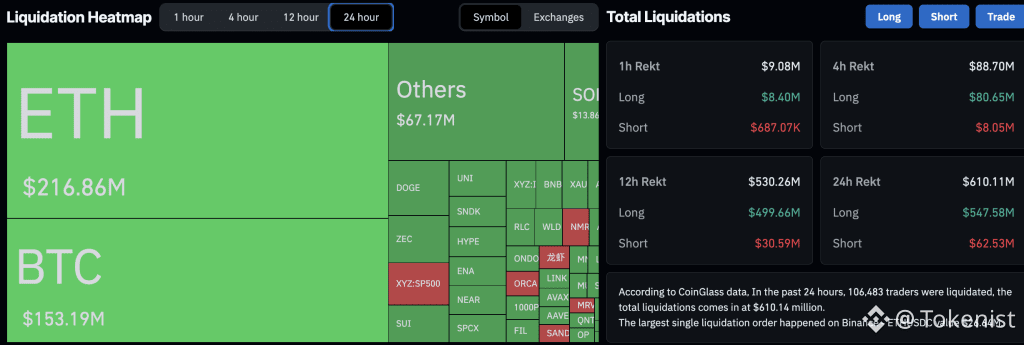
Crowded Leverage Amplified Bitcoin Sharp Market Drop Following $400M in LiquidationsA $1,551 Bitcoin drop from $85,341 to $83,790 over 25 minutes on October 7 coincided with $412.62M in crypto liquidations in a single hour, with more than 97% on the long side, according to CoinGlass data.
The episode showed how crowded leverage can turn a relatively limited BTC price decline into a broader forced-selling cascade, but the available reporting did not establish a confirmed fundamental catalyst for the initial move.
Bitcoin briefly traded as low as $83,577, extending the decline below the closely watched $84,000 level. The central question is therefore not whether leveraged positions amplified the move, which the liquidation imbalance strongly indicates, but what triggered the first leg lower; the cited data do not answer that question.
SOURCE: CoinGlass Bitcoin’s One-sided Liquidation Flush Exposed Crowded Leverage: What Caused the Crash?
The decline began at 01:45 UTC, and over 15 minutes Bitcoin fell to $83,577, down roughly 2.1%, with little intervening recovery. The market suffered $412.62M in liquidations across crypto markets over one hour, including $11.79M in short liquidations.
That leaves more than $400M on the long side, consistent with the report’s estimate that longs represented over 97% of the hourly total. The time window matters: the one-hour total is distinct from the $479M in long liquidations reported across 24 hours.
CoinGlass also shows that 104,836 traders liquidated over that 24-hour period. Those figures describe forced closures, not the amount of selling that initiated the decline, so the data support an amplification mechanism rather than proof that liquidations caused the first price drop.
Other large-cap tokens weakened alongside Bitcoin. Ethereum fell from about $2,688 to $2,591, while XRP moved from $1.49 to $1.43 before both recovered some ground.
Bitcoin dropped fast due to leveraged long cascades where automated liquidations amplified a modest dip into a fast flush, highlighting the risks of high leverage use derivatives. Whilst this might look like bad news, it means that longs can now rebuild and start buying using… pic.twitter.com/SWjjXk9yNV
— Caffe' Satoshi (@CaffeSatoshi) October 7, 2026
The October 10 Comparison Puts This Current Selloff in Perspective
On October 7, 2026, a flush occurred just days before the anniversary of the October 10, 2025 liquidation event, which saw over $19Bn in leveraged-position liquidations impacting more than 1.6 million traders.
The October 7 report noted $479M in long liquidations (about 2.5% of the 2025 total) affecting approximately 104,836 traders (6.5% of the earlier figure). This event was smaller than the previous week’s shakeout, where Bitcoin dipped below $83,000, resulting in 129,197 liquidations.
While anniversary risk might influence trader exposure, there’s no evidence suggesting that memories of the 2025 event affected positioning ahead of the recent decline. Additionally, large derivatives expiries can impact market volatility, separate from the current liquidation event.
Crypto Expert Report: What is the Best Meme Coin to Buy and Forget Until the Next Bull Run?
Bitcoin Liquidation Maps Show Risk Zones, Not a Confirmed Catalyst
SOURCE: bitcoincounterflow.com
On-chain analytics across social media reported that four newly created wallets deposited $1M in USDC to Hyperliquid and opened 40x shorts on 148.49 BTC, worth about $12.5M, shortly before the decline.
The timing drew attention, but whether the trades reflected luck, skill or advance knowledge remains unproven. The observation does not establish wrongdoing, manipulation or a causal role in the selloff.
The same report noted scrutiny of two linked Hyperliquid accounts holding $1.58Bn in shorts, but that position data alone does not establish a connection to the October 7 move.
Separately, reports of weakness in Asian markets, higher oil prices, rising yields and a stronger dollar were contemporaneous conditions; the primary reporting did not confirm any of them as the trigger for Bitcoin’s drop.
CoinGlass mapped a dense liquidity pool around $82,600 below the market and another around $87,400 overhead. Bitcoin’s $83,577 low stopped about $1,000 short of the lower cluster.
This leaves a potential concentration of long liquidations beneath the intraday low. These maps identify areas where leveraged positioning may be vulnerable, not guaranteed price destinations.
Crypto Expert Report: What Are The Next 10 Crypto to Explode?
The post Crowded Leverage Amplified Bitcoin Sharp Market Drop Following $400M in Liquidations appeared first on Tokenist.
Crowded Leverage Amplified Bitcoin Sharp Market Drop Following $400M in Liquidations
A $1,551 Bitcoin drop from $85,341 to $83,790 over 25 minutes on October 7 coincided with $412.62M in crypto liquidations in a single hour, with more than 97% on the long side, according to CoinGlass data.
The episode showed how crowded leverage can turn a relatively limited BTC price decline into a broader forced-selling cascade, but the available reporting did not establish a confirmed fundamental catalyst for the initial move.
Bitcoin briefly traded as low as $83,577, extending the decline below the closely watched $84,000 level. The central question is therefore not whether leveraged positions amplified the move, which the liquidation imbalance strongly indicates, but what triggered the first leg lower; the cited data do not answer that question.
SOURCE: CoinGlass Bitcoin’s One-sided Liquidation Flush Exposed Crowded Leverage: What Caused the Crash?
The decline began at 01:45 UTC, and over 15 minutes Bitcoin fell to $83,577, down roughly 2.1%, with little intervening recovery. The market suffered $412.62M in liquidations across crypto markets over one hour, including $11.79M in short liquidations.
That leaves more than $400M on the long side, consistent with the report’s estimate that longs represented over 97% of the hourly total. The time window matters: the one-hour total is distinct from the $479M in long liquidations reported across 24 hours.
CoinGlass also shows that 104,836 traders liquidated over that 24-hour period. Those figures describe forced closures, not the amount of selling that initiated the decline, so the data support an amplification mechanism rather than proof that liquidations caused the first price drop.
Other large-cap tokens weakened alongside Bitcoin. Ethereum fell from about $2,688 to $2,591, while XRP moved from $1.49 to $1.43 before both recovered some ground.
Bitcoin dropped fast due to leveraged long cascades where automated liquidations amplified a modest dip into a fast flush, highlighting the risks of high leverage use derivatives. Whilst this might look like bad news, it means that longs can now rebuild and start buying using… pic.twitter.com/SWjjXk9yNV
— Caffe' Satoshi (@CaffeSatoshi) October 7, 2026
The October 10 Comparison Puts This Current Selloff in Perspective
On October 7, 2026, a flush occurred just days before the anniversary of the October 10, 2025 liquidation event, which saw over $19Bn in leveraged-position liquidations impacting more than 1.6 million traders.
The October 7 report noted $479M in long liquidations (about 2.5% of the 2025 total) affecting approximately 104,836 traders (6.5% of the earlier figure). This event was smaller than the previous week’s shakeout, where Bitcoin dipped below $83,000, resulting in 129,197 liquidations.
While anniversary risk might influence trader exposure, there’s no evidence suggesting that memories of the 2025 event affected positioning ahead of the recent decline. Additionally, large derivatives expiries can impact market volatility, separate from the current liquidation event.
Crypto Expert Report: What is the Best Meme Coin to Buy and Forget Until the Next Bull Run?
Bitcoin Liquidation Maps Show Risk Zones, Not a Confirmed Catalyst
SOURCE: bitcoincounterflow.com
On-chain analytics across social media reported that four newly created wallets deposited $1M in USDC to Hyperliquid and opened 40x shorts on 148.49 BTC, worth about $12.5M, shortly before the decline.
The timing drew attention, but whether the trades reflected luck, skill or advance knowledge remains unproven. The observation does not establish wrongdoing, manipulation or a causal role in the selloff.
The same report noted scrutiny of two linked Hyperliquid accounts holding $1.58Bn in shorts, but that position data alone does not establish a connection to the October 7 move.
Separately, reports of weakness in Asian markets, higher oil prices, rising yields and a stronger dollar were contemporaneous conditions; the primary reporting did not confirm any of them as the trigger for Bitcoin’s drop.
CoinGlass mapped a dense liquidity pool around $82,600 below the market and another around $87,400 overhead. Bitcoin’s $83,577 low stopped about $1,000 short of the lower cluster.
This leaves a potential concentration of long liquidations beneath the intraday low. These maps identify areas where leveraged positioning may be vulnerable, not guaranteed price destinations.
Crypto Expert Report: What Are The Next 10 Crypto to Explode?
The post Crowded Leverage Amplified Bitcoin Sharp Market Drop Following $400M in Liquidations appeared first on Tokenist.
The episode showed how crowded leverage can turn a relatively limited BTC price decline into a broader forced-selling cascade, but the available reporting did not establish a confirmed fundamental catalyst for the initial move.
Bitcoin briefly traded as low as $83,577, extending the decline below the closely watched $84,000 level. The central question is therefore not whether leveraged positions amplified the move, which the liquidation imbalance strongly indicates, but what triggered the first leg lower; the cited data do not answer that question.
SOURCE: CoinGlass Bitcoin’s One-sided Liquidation Flush Exposed Crowded Leverage: What Caused the Crash?
The decline began at 01:45 UTC, and over 15 minutes Bitcoin fell to $83,577, down roughly 2.1%, with little intervening recovery. The market suffered $412.62M in liquidations across crypto markets over one hour, including $11.79M in short liquidations.
That leaves more than $400M on the long side, consistent with the report’s estimate that longs represented over 97% of the hourly total. The time window matters: the one-hour total is distinct from the $479M in long liquidations reported across 24 hours.
CoinGlass also shows that 104,836 traders liquidated over that 24-hour period. Those figures describe forced closures, not the amount of selling that initiated the decline, so the data support an amplification mechanism rather than proof that liquidations caused the first price drop.
Other large-cap tokens weakened alongside Bitcoin. Ethereum fell from about $2,688 to $2,591, while XRP moved from $1.49 to $1.43 before both recovered some ground.
Bitcoin dropped fast due to leveraged long cascades where automated liquidations amplified a modest dip into a fast flush, highlighting the risks of high leverage use derivatives. Whilst this might look like bad news, it means that longs can now rebuild and start buying using… pic.twitter.com/SWjjXk9yNV
— Caffe' Satoshi (@CaffeSatoshi) October 7, 2026
The October 10 Comparison Puts This Current Selloff in Perspective
On October 7, 2026, a flush occurred just days before the anniversary of the October 10, 2025 liquidation event, which saw over $19Bn in leveraged-position liquidations impacting more than 1.6 million traders.
The October 7 report noted $479M in long liquidations (about 2.5% of the 2025 total) affecting approximately 104,836 traders (6.5% of the earlier figure). This event was smaller than the previous week’s shakeout, where Bitcoin dipped below $83,000, resulting in 129,197 liquidations.
While anniversary risk might influence trader exposure, there’s no evidence suggesting that memories of the 2025 event affected positioning ahead of the recent decline. Additionally, large derivatives expiries can impact market volatility, separate from the current liquidation event.
Crypto Expert Report: What is the Best Meme Coin to Buy and Forget Until the Next Bull Run?
Bitcoin Liquidation Maps Show Risk Zones, Not a Confirmed Catalyst
SOURCE: bitcoincounterflow.com
On-chain analytics across social media reported that four newly created wallets deposited $1M in USDC to Hyperliquid and opened 40x shorts on 148.49 BTC, worth about $12.5M, shortly before the decline.
The timing drew attention, but whether the trades reflected luck, skill or advance knowledge remains unproven. The observation does not establish wrongdoing, manipulation or a causal role in the selloff.
The same report noted scrutiny of two linked Hyperliquid accounts holding $1.58Bn in shorts, but that position data alone does not establish a connection to the October 7 move.
Separately, reports of weakness in Asian markets, higher oil prices, rising yields and a stronger dollar were contemporaneous conditions; the primary reporting did not confirm any of them as the trigger for Bitcoin’s drop.
CoinGlass mapped a dense liquidity pool around $82,600 below the market and another around $87,400 overhead. Bitcoin’s $83,577 low stopped about $1,000 short of the lower cluster.
This leaves a potential concentration of long liquidations beneath the intraday low. These maps identify areas where leveraged positioning may be vulnerable, not guaranteed price destinations.
Crypto Expert Report: What Are The Next 10 Crypto to Explode?
The post Crowded Leverage Amplified Bitcoin Sharp Market Drop Following $400M in Liquidations appeared first on Tokenist.
317
·
--
Tərcüməyə bax
SEC Filing Outlines 24/7 Plan for 63 OKX Tokenized StocksOKXICE LLC filed a proposal with the U.S. SEC on Sunday, October 4, 2026, seeking approval for a 24/7 venue covering OKX tokenized stocks of an initial 63 public companies.
The joint venture between crypto exchange operator OKX tokenized stocks and Intercontinental Exchange (ICE), the parent of the New York Stock Exchange, is testing whether blockchain-based equity trading can enter US markets; the filing is not SEC approval or evidence of a market launch.
The proposed stock list includes Nvidia, Apple, Coca-Cola, Cisco Systems and McDonald’s. The distinction between a filing and an operating venue matters: the proposal identifies a possible trading model, while regulatory review and issuer participation still stand between that plan and trading.
OKX just asked the SEC for permission to sell tokenized U.S. stocks. The filing is the boring part. The tell is who is asking. For three years tokenized equities lived offshore, where the pitch was that U.S. rules made them impossible. A major exchange just walked into the… https://t.co/puODfvNN5u
— Shawn Chauhan (@shawnchauhan1) October 5, 2026
What Does the OKX Tokenized Stocks Filing Propose? 63 Stocks and a 24/7 Schedule
Bloomberg has reported that OKXICE plans to seek approval to offer tokenized shares of 63 companies. Under the SEC framework described in the report, issuers have 30 days to opt out before trading can begin, making the initial list a proposal rather than a guaranteed final roster.
The opt-out period leaves companies with a role in determining which names could ultimately appear on the venue. If issuers decline participation, the eligible universe may be smaller or otherwise differ from the 63 companies named in the filing. The report does not provide a final list or identify any issuer decisions.
The proposed 24/7 schedule would extend access beyond conventional US stock trading hours. The filing brings together a crypto exchange operator and the parent of the NYSE, but the available reporting does not specify the venue’s technical design, custody arrangements, or settlement assets.
In particular, it does not establish whether trading would use OKX tokenized stocks X Layer, how stablecoins might factor into settlement, or what legal rights token holders would have. Those details cannot be treated as settled features of the proposal on the basis of the filing summary.
The broader effort to place traditional equities on blockchain infrastructure is also visible in the NYSE’s on-chain equities initiative with Securitize. That context reinforces the strategic overlap between established exchange groups and blockchain firms, while leaving the specific design of OKXICE’s venue open.
Crypto Expert: What is The Best Meme Coin To Buy and Forget Until The Next Bull Run?
Regulatory Status and Issuer Choices Remain Decisive in OKX Tokenized Stocks Filing
The next generation of financial markets needs technology and policy to evolve together. Our Founder & CEO @star_okx and OKXICE Co-Chair, former NY Governor @andrewcuomo joined @HenriArslanian at the OKX Main Stage to discuss how clear regulation, strong compliance and resilient… pic.twitter.com/twAF9eNwEm
— OKX (@okx) October 7, 2026
The central constraint is regulatory: OKXICE has filed to seek approval, but the reporting does not say the SEC has approved the venue. It also doesn’t give a launch date. A filing is a step toward a possible market, not proof that investors can already trade tokenized versions of the named stocks.
The 30-day issuer opt-out process is another condition between the proposed list and any trading. It could affect which shares are available, while the source does not confirm whether any company has opted out or how participation would be finalized. The stated 63-company scope should therefore be read as an initial proposal.
Other implementation questions remain open. The reporting does not specify investor protections, custody, liquidity arrangements, or how token holders would be treated in relation to the underlying shares. It also does not establish dividend or voting rights, leaving the rights attached to the tokenized shares unspecified in the available reporting.
The filing summary likewise does not confirm that the venue would use X Layer, stablecoins, automated market makers, or liquidity pools. These features may be relevant to how a blockchain-based market operates, but attributing them to this proposal without verified documentation would overstate what has been disclosed.
Round-the-Clock Trading Could Reshape Market Access
BOOOOOOOOOOOOOOOM!!! THE NEW YORK STOCK EXCHANGE JUST ANNOUNCED 'THE FUTURE OF CAPITAL MARKETS': 1. MONEY, STABLECOINS 2. TOKENIZED STOCKS, BONDS, SECURITIES 3. COMMODITY MARKETS TRANSLATION: The ENTIRE financial system will be ON-CHAIN! pic.twitter.com/T0NyoEmRaB
— DonaldTrumpjr Q (@DonaldTrumpQ7) October 6, 2026
For exchanges, the proposal connects crypto-native trading infrastructure with a major traditional-market group at a time when round-the-clock access is drawing wider interest.
Reuters separately reported that NYSE, Nasdaq and the London Stock Exchange are preparing their own initiatives for around-the-clock trading. That activity points to a broader contest over trading hours, although the exchanges’ plans do not establish how OKXICE’s proposal will perform.
Continuous availability could let investors respond to company news outside standard U.S. market hours. But 24/7 access does not itself guarantee deep liquidity or prices that closely track shares traded on conventional exchanges.
Overnight or weekend trading could bring thinner liquidity, wider spreads, and greater divergence from the underlying market; these are potential market-structure risks, not outcomes established by the filing.
Existing blockchain-based equity exposure offers a point of comparison, but it should not be conflated with an SEC-reviewed U.S. venue. Available reporting does not address Robinhood Chain, while tokenized stocks offered through Base raise separate questions about availability and regulatory scope.
For OKX and ICE, the next meaningful milestones are whether the SEC permits the proposed venue to proceed and which issuers remain in the eligible group after the opt-out window.
Until those points are resolved, the filing signals an attempt to bring tokenized equities into U.S. markets, not a new source of live 24/7 stock access.
Crypto Expert Report: What Are The Next 10 Cryptos to Explode?
This article is for informational purposes only and does not constitute investment advice or a recommendation to buy any stock or token.
The post SEC Filing Outlines 24/7 Plan for 63 OKX Tokenized Stocks appeared first on Tokenist.
SEC Filing Outlines 24/7 Plan for 63 OKX Tokenized Stocks
OKXICE LLC filed a proposal with the U.S. SEC on Sunday, October 4, 2026, seeking approval for a 24/7 venue covering OKX tokenized stocks of an initial 63 public companies.
The joint venture between crypto exchange operator OKX tokenized stocks and Intercontinental Exchange (ICE), the parent of the New York Stock Exchange, is testing whether blockchain-based equity trading can enter US markets; the filing is not SEC approval or evidence of a market launch.
The proposed stock list includes Nvidia, Apple, Coca-Cola, Cisco Systems and McDonald’s. The distinction between a filing and an operating venue matters: the proposal identifies a possible trading model, while regulatory review and issuer participation still stand between that plan and trading.
OKX just asked the SEC for permission to sell tokenized U.S. stocks. The filing is the boring part. The tell is who is asking. For three years tokenized equities lived offshore, where the pitch was that U.S. rules made them impossible. A major exchange just walked into the… https://t.co/puODfvNN5u
— Shawn Chauhan (@shawnchauhan1) October 5, 2026
What Does the OKX Tokenized Stocks Filing Propose? 63 Stocks and a 24/7 Schedule
Bloomberg has reported that OKXICE plans to seek approval to offer tokenized shares of 63 companies. Under the SEC framework described in the report, issuers have 30 days to opt out before trading can begin, making the initial list a proposal rather than a guaranteed final roster.
The opt-out period leaves companies with a role in determining which names could ultimately appear on the venue. If issuers decline participation, the eligible universe may be smaller or otherwise differ from the 63 companies named in the filing. The report does not provide a final list or identify any issuer decisions.
The proposed 24/7 schedule would extend access beyond conventional US stock trading hours. The filing brings together a crypto exchange operator and the parent of the NYSE, but the available reporting does not specify the venue’s technical design, custody arrangements, or settlement assets.
In particular, it does not establish whether trading would use OKX tokenized stocks X Layer, how stablecoins might factor into settlement, or what legal rights token holders would have. Those details cannot be treated as settled features of the proposal on the basis of the filing summary.
The broader effort to place traditional equities on blockchain infrastructure is also visible in the NYSE’s on-chain equities initiative with Securitize. That context reinforces the strategic overlap between established exchange groups and blockchain firms, while leaving the specific design of OKXICE’s venue open.
Crypto Expert: What is The Best Meme Coin To Buy and Forget Until The Next Bull Run?
Regulatory Status and Issuer Choices Remain Decisive in OKX Tokenized Stocks Filing
The next generation of financial markets needs technology and policy to evolve together. Our Founder & CEO @star_okx and OKXICE Co-Chair, former NY Governor @andrewcuomo joined @HenriArslanian at the OKX Main Stage to discuss how clear regulation, strong compliance and resilient… pic.twitter.com/twAF9eNwEm
— OKX (@okx) October 7, 2026
The central constraint is regulatory: OKXICE has filed to seek approval, but the reporting does not say the SEC has approved the venue. It also doesn’t give a launch date. A filing is a step toward a possible market, not proof that investors can already trade tokenized versions of the named stocks.
The 30-day issuer opt-out process is another condition between the proposed list and any trading. It could affect which shares are available, while the source does not confirm whether any company has opted out or how participation would be finalized. The stated 63-company scope should therefore be read as an initial proposal.
Other implementation questions remain open. The reporting does not specify investor protections, custody, liquidity arrangements, or how token holders would be treated in relation to the underlying shares. It also does not establish dividend or voting rights, leaving the rights attached to the tokenized shares unspecified in the available reporting.
The filing summary likewise does not confirm that the venue would use X Layer, stablecoins, automated market makers, or liquidity pools. These features may be relevant to how a blockchain-based market operates, but attributing them to this proposal without verified documentation would overstate what has been disclosed.
Round-the-Clock Trading Could Reshape Market Access
BOOOOOOOOOOOOOOOM!!! THE NEW YORK STOCK EXCHANGE JUST ANNOUNCED 'THE FUTURE OF CAPITAL MARKETS': 1. MONEY, STABLECOINS 2. TOKENIZED STOCKS, BONDS, SECURITIES 3. COMMODITY MARKETS TRANSLATION: The ENTIRE financial system will be ON-CHAIN! pic.twitter.com/T0NyoEmRaB
— DonaldTrumpjr Q (@DonaldTrumpQ7) October 6, 2026
For exchanges, the proposal connects crypto-native trading infrastructure with a major traditional-market group at a time when round-the-clock access is drawing wider interest.
Reuters separately reported that NYSE, Nasdaq and the London Stock Exchange are preparing their own initiatives for around-the-clock trading. That activity points to a broader contest over trading hours, although the exchanges’ plans do not establish how OKXICE’s proposal will perform.
Continuous availability could let investors respond to company news outside standard U.S. market hours. But 24/7 access does not itself guarantee deep liquidity or prices that closely track shares traded on conventional exchanges.
Overnight or weekend trading could bring thinner liquidity, wider spreads, and greater divergence from the underlying market; these are potential market-structure risks, not outcomes established by the filing.
Existing blockchain-based equity exposure offers a point of comparison, but it should not be conflated with an SEC-reviewed U.S. venue. Available reporting does not address Robinhood Chain, while tokenized stocks offered through Base raise separate questions about availability and regulatory scope.
For OKX and ICE, the next meaningful milestones are whether the SEC permits the proposed venue to proceed and which issuers remain in the eligible group after the opt-out window.
Until those points are resolved, the filing signals an attempt to bring tokenized equities into U.S. markets, not a new source of live 24/7 stock access.
Crypto Expert Report: What Are The Next 10 Cryptos to Explode?
This article is for informational purposes only and does not constitute investment advice or a recommendation to buy any stock or token.
The post SEC Filing Outlines 24/7 Plan for 63 OKX Tokenized Stocks appeared first on Tokenist.
The joint venture between crypto exchange operator OKX tokenized stocks and Intercontinental Exchange (ICE), the parent of the New York Stock Exchange, is testing whether blockchain-based equity trading can enter US markets; the filing is not SEC approval or evidence of a market launch.
The proposed stock list includes Nvidia, Apple, Coca-Cola, Cisco Systems and McDonald’s. The distinction between a filing and an operating venue matters: the proposal identifies a possible trading model, while regulatory review and issuer participation still stand between that plan and trading.
OKX just asked the SEC for permission to sell tokenized U.S. stocks. The filing is the boring part. The tell is who is asking. For three years tokenized equities lived offshore, where the pitch was that U.S. rules made them impossible. A major exchange just walked into the… https://t.co/puODfvNN5u
— Shawn Chauhan (@shawnchauhan1) October 5, 2026
What Does the OKX Tokenized Stocks Filing Propose? 63 Stocks and a 24/7 Schedule
Bloomberg has reported that OKXICE plans to seek approval to offer tokenized shares of 63 companies. Under the SEC framework described in the report, issuers have 30 days to opt out before trading can begin, making the initial list a proposal rather than a guaranteed final roster.
The opt-out period leaves companies with a role in determining which names could ultimately appear on the venue. If issuers decline participation, the eligible universe may be smaller or otherwise differ from the 63 companies named in the filing. The report does not provide a final list or identify any issuer decisions.
The proposed 24/7 schedule would extend access beyond conventional US stock trading hours. The filing brings together a crypto exchange operator and the parent of the NYSE, but the available reporting does not specify the venue’s technical design, custody arrangements, or settlement assets.
In particular, it does not establish whether trading would use OKX tokenized stocks X Layer, how stablecoins might factor into settlement, or what legal rights token holders would have. Those details cannot be treated as settled features of the proposal on the basis of the filing summary.
The broader effort to place traditional equities on blockchain infrastructure is also visible in the NYSE’s on-chain equities initiative with Securitize. That context reinforces the strategic overlap between established exchange groups and blockchain firms, while leaving the specific design of OKXICE’s venue open.
Crypto Expert: What is The Best Meme Coin To Buy and Forget Until The Next Bull Run?
Regulatory Status and Issuer Choices Remain Decisive in OKX Tokenized Stocks Filing
The next generation of financial markets needs technology and policy to evolve together. Our Founder & CEO @star_okx and OKXICE Co-Chair, former NY Governor @andrewcuomo joined @HenriArslanian at the OKX Main Stage to discuss how clear regulation, strong compliance and resilient… pic.twitter.com/twAF9eNwEm
— OKX (@okx) October 7, 2026
The central constraint is regulatory: OKXICE has filed to seek approval, but the reporting does not say the SEC has approved the venue. It also doesn’t give a launch date. A filing is a step toward a possible market, not proof that investors can already trade tokenized versions of the named stocks.
The 30-day issuer opt-out process is another condition between the proposed list and any trading. It could affect which shares are available, while the source does not confirm whether any company has opted out or how participation would be finalized. The stated 63-company scope should therefore be read as an initial proposal.
Other implementation questions remain open. The reporting does not specify investor protections, custody, liquidity arrangements, or how token holders would be treated in relation to the underlying shares. It also does not establish dividend or voting rights, leaving the rights attached to the tokenized shares unspecified in the available reporting.
The filing summary likewise does not confirm that the venue would use X Layer, stablecoins, automated market makers, or liquidity pools. These features may be relevant to how a blockchain-based market operates, but attributing them to this proposal without verified documentation would overstate what has been disclosed.
Round-the-Clock Trading Could Reshape Market Access
BOOOOOOOOOOOOOOOM!!! THE NEW YORK STOCK EXCHANGE JUST ANNOUNCED 'THE FUTURE OF CAPITAL MARKETS': 1. MONEY, STABLECOINS 2. TOKENIZED STOCKS, BONDS, SECURITIES 3. COMMODITY MARKETS TRANSLATION: The ENTIRE financial system will be ON-CHAIN! pic.twitter.com/T0NyoEmRaB
— DonaldTrumpjr Q (@DonaldTrumpQ7) October 6, 2026
For exchanges, the proposal connects crypto-native trading infrastructure with a major traditional-market group at a time when round-the-clock access is drawing wider interest.
Reuters separately reported that NYSE, Nasdaq and the London Stock Exchange are preparing their own initiatives for around-the-clock trading. That activity points to a broader contest over trading hours, although the exchanges’ plans do not establish how OKXICE’s proposal will perform.
Continuous availability could let investors respond to company news outside standard U.S. market hours. But 24/7 access does not itself guarantee deep liquidity or prices that closely track shares traded on conventional exchanges.
Overnight or weekend trading could bring thinner liquidity, wider spreads, and greater divergence from the underlying market; these are potential market-structure risks, not outcomes established by the filing.
Existing blockchain-based equity exposure offers a point of comparison, but it should not be conflated with an SEC-reviewed U.S. venue. Available reporting does not address Robinhood Chain, while tokenized stocks offered through Base raise separate questions about availability and regulatory scope.
For OKX and ICE, the next meaningful milestones are whether the SEC permits the proposed venue to proceed and which issuers remain in the eligible group after the opt-out window.
Until those points are resolved, the filing signals an attempt to bring tokenized equities into U.S. markets, not a new source of live 24/7 stock access.
Crypto Expert Report: What Are The Next 10 Cryptos to Explode?
This article is for informational purposes only and does not constitute investment advice or a recommendation to buy any stock or token.
The post SEC Filing Outlines 24/7 Plan for 63 OKX Tokenized Stocks appeared first on Tokenist.
172
·
--
Məqalə
Tərcüməyə bax
Bitcoin Rebound Faces a Test in Strategy’s STRC FundingBitcoin price was trading near $85,500 when Peter Schiff discussed its rebound, after gaining almost +2.5% over the week and recovering above $80,000.
The economist and longtime Bitcoin critic argued that renewed confidence and short covering may have helped drive the move, but warned that a technology-stock correction could reverse it, particularly if Strategy’s ability to finance substantial new Bitcoin purchases through STRC has weakened.
Schiff links the market’s vulnerability to two potential pressures: technology stocks that, in his view, have yet to correct, and a financing channel he believes may no longer support Strategy’s former buying pace.
Peter Schiff says @Strategy's preferred stock bounced back to $99, but he doesn't think that means much. His read: @saylor burned through the one funding channel that actually bought Bitcoin, and a calmer chart doesn't bring it back.#Bitcoin #Strategy #Saylor pic.twitter.com/43inpTr48B
— Web3 News Wire (@Web3newswire) October 5, 2026
Bitcoin Rebound Meets Schiff’s Tech Stock Warning
In a later market update, Bitcoin was near $86,000, up over 2.5% in a week and more than 6.5% in a month, yet it remained about -30% below its level a year ago. This highlights that while there has been a short-term rebound, it hasn’t offset a longer decline.
Analyst Schiff’s bearish outlook stems from a broader market view, noting that equities have absorbed weak economic signals, such as softer inflation and disappointing employment data, without significant corrections.
He believes this resilience may expose markets to risks if investors reevaluate. He also mentioned falling bond prices and oil prices around $91 a barrel, interpreting these as signs of underlying market strain.
While he doesn’t predict an imminent correction or a direct link to Bitcoin’s movements, a selloff in technology stocks could affect Bitcoin by reducing risk appetite and shifting investment positioning. There are also concerns that overvaluation in AI and tech stocks could affect portfolio concentration.
Crypto Expert: What is The Best Meme Coin To Buy and Forget Until The Next Bull Run?
STRC and Strategy’s Financing Test
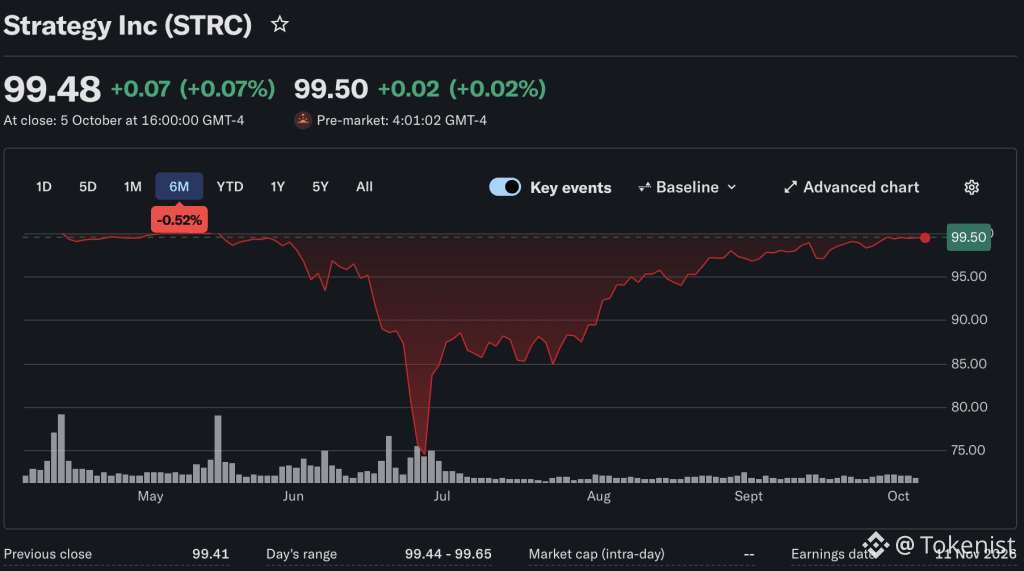
SOURCE: Yahoo Finance
Schiff argues that Strategy may struggle to raise capital for Bitcoin accumulation, as he believes it has lost the ability to generate sufficient funds through STRC for large-scale purchases.
While STRC recovered to about $99.40 after a summer drop to $75, attributed to share repurchases and Bitcoin’s rise above $80,000, this does not confirm the company can easily raise new capital.
Strategy holds 848,000 BTC, over 4% of total supply, along with $4.8Bn in reserves and $833M in cash. STRC has a notional value of $8.93Bn, with a 12% variable dividend and a 12.07% effective yield. However, these figures alone do not determine future financing capabilities or costs.
The link between dividend obligations and capital raising matters but is distinct. STRC’s dividend and effective yield describe the financing instrument, while Strategy’s ability to issue or repurchase shares depends on market conditions and company decisions.
The interplay between dividend policies and Bitcoin purchases remains crucial to Strategy’s overall financing and dividend strategy.
Continued Purchases Complicate the Bearish Case from Schiff
Strategy reports a $21 billion gain on digital assets in Q3 2026. Last week, we acquired 334 $BTC and repurchased $176M of $STRC. As of 10/4/26, we hold 848,000 BTC and $5.7B of USD Assets. $MSTR https://t.co/jvwiJahdMm
— Michael Saylor (@saylor) October 5, 2026
Strategy continued to buy despite Schiff’s skepticism, recently acquiring 334 BTC for about $28.7M, and repurchasing around $176M of STRC. This was less than the 1,665 BTC purchased in late September for approximately $142.8M, raising questions about the pace of their accumulation.
Bitcoin was priced near $86,000, up from $84,500 when Schiff made his comments. This price increase doesn’t rule out a potential correction, and the ongoing accumulation highlights a debate over Strategy’s Bitcoin treasury approach.
Investors should distinguish between reported performance and potential risks. While Bitcoin’s recovery and STRC’s movement toward $100 are notable, they don’t guarantee sustained buying levels by Strategy.
Schiff argues that a technology-stock correction may trigger future shifts, depending on risk appetite, purchase pace, and STRC’s ability to maintain its financing role amid market pressures. The reported dividend and yield should be viewed as security terms in this context, rather than investment recommendations.
Crypto Expert Report: What Are The Next 10 Cryptos to Explode?
The author does not own any securities mentioned in this article.
The post Bitcoin Rebound Faces a Test in Strategy’s STRC Funding appeared first on Tokenist.
Bitcoin Rebound Faces a Test in Strategy’s STRC Funding
Bitcoin price was trading near $85,500 when Peter Schiff discussed its rebound, after gaining almost +2.5% over the week and recovering above $80,000.
The economist and longtime Bitcoin critic argued that renewed confidence and short covering may have helped drive the move, but warned that a technology-stock correction could reverse it, particularly if Strategy’s ability to finance substantial new Bitcoin purchases through STRC has weakened.
Schiff links the market’s vulnerability to two potential pressures: technology stocks that, in his view, have yet to correct, and a financing channel he believes may no longer support Strategy’s former buying pace.
Peter Schiff says @Strategy's preferred stock bounced back to $99, but he doesn't think that means much. His read: @saylor burned through the one funding channel that actually bought Bitcoin, and a calmer chart doesn't bring it back.#Bitcoin #Strategy #Saylor pic.twitter.com/43inpTr48B
— Web3 News Wire (@Web3newswire) October 5, 2026
Bitcoin Rebound Meets Schiff’s Tech Stock Warning
In a later market update, Bitcoin was near $86,000, up over 2.5% in a week and more than 6.5% in a month, yet it remained about -30% below its level a year ago. This highlights that while there has been a short-term rebound, it hasn’t offset a longer decline.
Analyst Schiff’s bearish outlook stems from a broader market view, noting that equities have absorbed weak economic signals, such as softer inflation and disappointing employment data, without significant corrections.
He believes this resilience may expose markets to risks if investors reevaluate. He also mentioned falling bond prices and oil prices around $91 a barrel, interpreting these as signs of underlying market strain.
While he doesn’t predict an imminent correction or a direct link to Bitcoin’s movements, a selloff in technology stocks could affect Bitcoin by reducing risk appetite and shifting investment positioning. There are also concerns that overvaluation in AI and tech stocks could affect portfolio concentration.
Crypto Expert: What is The Best Meme Coin To Buy and Forget Until The Next Bull Run?
STRC and Strategy’s Financing Test
SOURCE: Yahoo Finance
Schiff argues that Strategy may struggle to raise capital for Bitcoin accumulation, as he believes it has lost the ability to generate sufficient funds through STRC for large-scale purchases.
While STRC recovered to about $99.40 after a summer drop to $75, attributed to share repurchases and Bitcoin’s rise above $80,000, this does not confirm the company can easily raise new capital.
Strategy holds 848,000 BTC, over 4% of total supply, along with $4.8Bn in reserves and $833M in cash. STRC has a notional value of $8.93Bn, with a 12% variable dividend and a 12.07% effective yield. However, these figures alone do not determine future financing capabilities or costs.
The link between dividend obligations and capital raising matters but is distinct. STRC’s dividend and effective yield describe the financing instrument, while Strategy’s ability to issue or repurchase shares depends on market conditions and company decisions.
The interplay between dividend policies and Bitcoin purchases remains crucial to Strategy’s overall financing and dividend strategy.
Continued Purchases Complicate the Bearish Case from Schiff
Strategy reports a $21 billion gain on digital assets in Q3 2026. Last week, we acquired 334 $BTC and repurchased $176M of $STRC. As of 10/4/26, we hold 848,000 BTC and $5.7B of USD Assets. $MSTR https://t.co/jvwiJahdMm
— Michael Saylor (@saylor) October 5, 2026
Strategy continued to buy despite Schiff’s skepticism, recently acquiring 334 BTC for about $28.7M, and repurchasing around $176M of STRC. This was less than the 1,665 BTC purchased in late September for approximately $142.8M, raising questions about the pace of their accumulation.
Bitcoin was priced near $86,000, up from $84,500 when Schiff made his comments. This price increase doesn’t rule out a potential correction, and the ongoing accumulation highlights a debate over Strategy’s Bitcoin treasury approach.
Investors should distinguish between reported performance and potential risks. While Bitcoin’s recovery and STRC’s movement toward $100 are notable, they don’t guarantee sustained buying levels by Strategy.
Schiff argues that a technology-stock correction may trigger future shifts, depending on risk appetite, purchase pace, and STRC’s ability to maintain its financing role amid market pressures. The reported dividend and yield should be viewed as security terms in this context, rather than investment recommendations.
Crypto Expert Report: What Are The Next 10 Cryptos to Explode?
The author does not own any securities mentioned in this article.
The post Bitcoin Rebound Faces a Test in Strategy’s STRC Funding appeared first on Tokenist.
The economist and longtime Bitcoin critic argued that renewed confidence and short covering may have helped drive the move, but warned that a technology-stock correction could reverse it, particularly if Strategy’s ability to finance substantial new Bitcoin purchases through STRC has weakened.
Schiff links the market’s vulnerability to two potential pressures: technology stocks that, in his view, have yet to correct, and a financing channel he believes may no longer support Strategy’s former buying pace.
Peter Schiff says @Strategy's preferred stock bounced back to $99, but he doesn't think that means much. His read: @saylor burned through the one funding channel that actually bought Bitcoin, and a calmer chart doesn't bring it back.#Bitcoin #Strategy #Saylor pic.twitter.com/43inpTr48B
— Web3 News Wire (@Web3newswire) October 5, 2026
Bitcoin Rebound Meets Schiff’s Tech Stock Warning
In a later market update, Bitcoin was near $86,000, up over 2.5% in a week and more than 6.5% in a month, yet it remained about -30% below its level a year ago. This highlights that while there has been a short-term rebound, it hasn’t offset a longer decline.
Analyst Schiff’s bearish outlook stems from a broader market view, noting that equities have absorbed weak economic signals, such as softer inflation and disappointing employment data, without significant corrections.
He believes this resilience may expose markets to risks if investors reevaluate. He also mentioned falling bond prices and oil prices around $91 a barrel, interpreting these as signs of underlying market strain.
While he doesn’t predict an imminent correction or a direct link to Bitcoin’s movements, a selloff in technology stocks could affect Bitcoin by reducing risk appetite and shifting investment positioning. There are also concerns that overvaluation in AI and tech stocks could affect portfolio concentration.
Crypto Expert: What is The Best Meme Coin To Buy and Forget Until The Next Bull Run?
STRC and Strategy’s Financing Test
SOURCE: Yahoo Finance
Schiff argues that Strategy may struggle to raise capital for Bitcoin accumulation, as he believes it has lost the ability to generate sufficient funds through STRC for large-scale purchases.
While STRC recovered to about $99.40 after a summer drop to $75, attributed to share repurchases and Bitcoin’s rise above $80,000, this does not confirm the company can easily raise new capital.
Strategy holds 848,000 BTC, over 4% of total supply, along with $4.8Bn in reserves and $833M in cash. STRC has a notional value of $8.93Bn, with a 12% variable dividend and a 12.07% effective yield. However, these figures alone do not determine future financing capabilities or costs.
The link between dividend obligations and capital raising matters but is distinct. STRC’s dividend and effective yield describe the financing instrument, while Strategy’s ability to issue or repurchase shares depends on market conditions and company decisions.
The interplay between dividend policies and Bitcoin purchases remains crucial to Strategy’s overall financing and dividend strategy.
Continued Purchases Complicate the Bearish Case from Schiff
Strategy reports a $21 billion gain on digital assets in Q3 2026. Last week, we acquired 334 $BTC and repurchased $176M of $STRC. As of 10/4/26, we hold 848,000 BTC and $5.7B of USD Assets. $MSTR https://t.co/jvwiJahdMm
— Michael Saylor (@saylor) October 5, 2026
Strategy continued to buy despite Schiff’s skepticism, recently acquiring 334 BTC for about $28.7M, and repurchasing around $176M of STRC. This was less than the 1,665 BTC purchased in late September for approximately $142.8M, raising questions about the pace of their accumulation.
Bitcoin was priced near $86,000, up from $84,500 when Schiff made his comments. This price increase doesn’t rule out a potential correction, and the ongoing accumulation highlights a debate over Strategy’s Bitcoin treasury approach.
Investors should distinguish between reported performance and potential risks. While Bitcoin’s recovery and STRC’s movement toward $100 are notable, they don’t guarantee sustained buying levels by Strategy.
Schiff argues that a technology-stock correction may trigger future shifts, depending on risk appetite, purchase pace, and STRC’s ability to maintain its financing role amid market pressures. The reported dividend and yield should be viewed as security terms in this context, rather than investment recommendations.
Crypto Expert Report: What Are The Next 10 Cryptos to Explode?
The author does not own any securities mentioned in this article.
The post Bitcoin Rebound Faces a Test in Strategy’s STRC Funding appeared first on Tokenist.
200
·
--
Məqalə
Tərcüməyə bax
SEC Approval Expands Leveraged ETP MenuBitcoin trades at $85,900, up +1.3%, as investors assess whether a new US regulatory approval will translate into immediately accessible leveraged crypto exposure. The SEC approved a Cboe BZX rule change allowing Volatility Shares to list six triple-leveraged exchange-traded products, but the approval did not establish that any of them had begun trading.
The distinction matters: the decision opens a route to a broader set of exchange-listed exposures, while registration requirements remain a separate step before shares can be publicly offered. Bitcoin had briefly moved above $87,000 earlier in the week and was still trading in a relatively narrow range, according to Investing.com’s October 4 market report.
The price action, therefore, offered little evidence of an immediate market repricing around the decision. The more consequential question is whether this is now a practical expansion of access or another regulatory milestone that still needs to clear the gap between approval and launch; Bitcoin’s ability to hold above $85,000 also remains part of the market backdrop discussed in the Bitcoin and Treasury-yield outlook.
Six Products Extend the Regulated Leveraged Offerings: What Joins Bitcoin on the Menu?
The SEC approved a listing rule for 3x Bitcoin and 3x Ether products on Cboe BZX (order dated Oct 2). Read this carefully before anyone hypes it: Exchange listing path cleared for Volatility Shares' VS Trust series That does NOT mean you can buy them yet Registration…
— James Rule XRP ⟐ (@allthemoney) October 5, 2026
The SEC’s October 2 order approved Cboe BZX’s proposed rule change for six leveraged products from Volatility Shares, including 3x Bitcoin, 3x Ethereum, and 3x Gold, among others.
These products aim to achieve three times the daily performance of their reference assets, using futures for Bitcoin and Ether instead of direct holdings. This approval expands the range of offerings to include both crypto and traditional commodities.
The SEC ruling addressed Cboe’s listing rule but did not indicate that the products were ready for public trading. It stated the proposal met Exchange Act requirements for investor protection and market fairness.
This action follows a separate SEC proposal concerning crypto custody rules, signaling ongoing developments in the U.S. crypto framework.
Overall, interest is growing in new formats for crypto-linked trading through established financial channels, although each regulatory move remains distinct.
Crypto Expert Report: What Are The Next 10 Cryptos to Explode?
Approval Cleared One Hurdle, Not the Launch
The market report’s key takeaway is that registration requirements must be completed before shares can be publicly offered.
While the SEC approved Cboe BZX’s rule change to list and trade the six products, this approval does not confirm effective registration or a trading start date. Therefore, a gap remains between regulatory approval and investors’ ability to trade.
The SEC’s order detailed the six funds as part of the VS Trust, outlining their exposure to futures benchmarks and listing requirements, but did not indicate that registration is complete.
Until the remaining registration is confirmed and public trading begins, these products remain a potential expansion of access rather than available instruments, mirroring other crypto-linked proposals in U.S. regulatory processes.
Daily Leverage Changes the Risk Profile
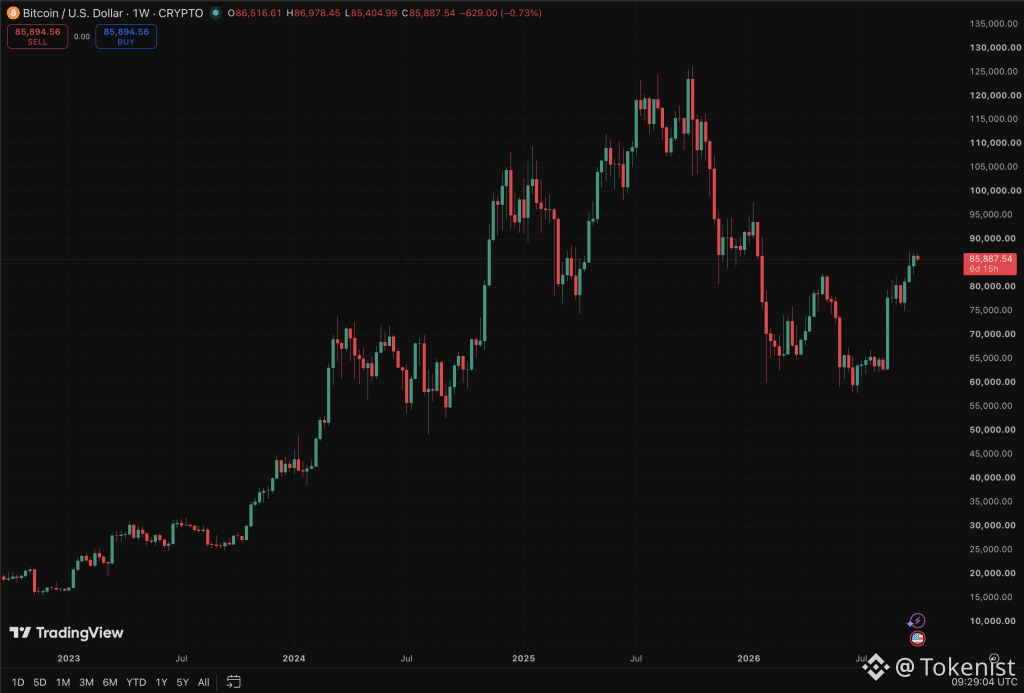
SOURCE: TradingView
Three times daily performance does not equate to three times Bitcoin or Ethereum’s returns over longer periods. The SEC order specifies a daily investment objective tied to futures benchmarks, making these products structurally different from simply holding Bitcoin or Ethereum. Futures-based products use contracts for exposure, affecting results based on the specified benchmark rather than direct asset ownership.
The SEC approval does not imply these instruments are suitable for all investors or holding periods. The order allows Cboe BZX to list and trade the shares, while broker-dealer recommendations must still follow regulations like Regulation Best Interest for retail customers.
Bitcoin’s market response was modest, with a +1.3% increase to $86,300, suggesting a broader product range without eliminating the distinction between spot and futures-based exposure.
The new product group links Bitcoin and Ethereum to leveraged exposure in commodities like gold and oil, but trading implications depend on registration and public availability, which were not fully confirmed as of October 5.
Crypto Expert: What is The Best Meme Coin To Buy and Forget Until The Next Bull Run?
The post SEC Approval Expands Leveraged ETP Menu appeared first on Tokenist.
SEC Approval Expands Leveraged ETP Menu
Bitcoin trades at $85,900, up +1.3%, as investors assess whether a new US regulatory approval will translate into immediately accessible leveraged crypto exposure. The SEC approved a Cboe BZX rule change allowing Volatility Shares to list six triple-leveraged exchange-traded products, but the approval did not establish that any of them had begun trading.
The distinction matters: the decision opens a route to a broader set of exchange-listed exposures, while registration requirements remain a separate step before shares can be publicly offered. Bitcoin had briefly moved above $87,000 earlier in the week and was still trading in a relatively narrow range, according to Investing.com’s October 4 market report.
The price action, therefore, offered little evidence of an immediate market repricing around the decision. The more consequential question is whether this is now a practical expansion of access or another regulatory milestone that still needs to clear the gap between approval and launch; Bitcoin’s ability to hold above $85,000 also remains part of the market backdrop discussed in the Bitcoin and Treasury-yield outlook.
Six Products Extend the Regulated Leveraged Offerings: What Joins Bitcoin on the Menu?
The SEC approved a listing rule for 3x Bitcoin and 3x Ether products on Cboe BZX (order dated Oct 2). Read this carefully before anyone hypes it: Exchange listing path cleared for Volatility Shares' VS Trust series That does NOT mean you can buy them yet Registration…
— James Rule XRP ⟐ (@allthemoney) October 5, 2026
The SEC’s October 2 order approved Cboe BZX’s proposed rule change for six leveraged products from Volatility Shares, including 3x Bitcoin, 3x Ethereum, and 3x Gold, among others.
These products aim to achieve three times the daily performance of their reference assets, using futures for Bitcoin and Ether instead of direct holdings. This approval expands the range of offerings to include both crypto and traditional commodities.
The SEC ruling addressed Cboe’s listing rule but did not indicate that the products were ready for public trading. It stated the proposal met Exchange Act requirements for investor protection and market fairness.
This action follows a separate SEC proposal concerning crypto custody rules, signaling ongoing developments in the U.S. crypto framework.
Overall, interest is growing in new formats for crypto-linked trading through established financial channels, although each regulatory move remains distinct.
Crypto Expert Report: What Are The Next 10 Cryptos to Explode?
Approval Cleared One Hurdle, Not the Launch
The market report’s key takeaway is that registration requirements must be completed before shares can be publicly offered.
While the SEC approved Cboe BZX’s rule change to list and trade the six products, this approval does not confirm effective registration or a trading start date. Therefore, a gap remains between regulatory approval and investors’ ability to trade.
The SEC’s order detailed the six funds as part of the VS Trust, outlining their exposure to futures benchmarks and listing requirements, but did not indicate that registration is complete.
Until the remaining registration is confirmed and public trading begins, these products remain a potential expansion of access rather than available instruments, mirroring other crypto-linked proposals in U.S. regulatory processes.
Daily Leverage Changes the Risk Profile
SOURCE: TradingView
Three times daily performance does not equate to three times Bitcoin or Ethereum’s returns over longer periods. The SEC order specifies a daily investment objective tied to futures benchmarks, making these products structurally different from simply holding Bitcoin or Ethereum. Futures-based products use contracts for exposure, affecting results based on the specified benchmark rather than direct asset ownership.
The SEC approval does not imply these instruments are suitable for all investors or holding periods. The order allows Cboe BZX to list and trade the shares, while broker-dealer recommendations must still follow regulations like Regulation Best Interest for retail customers.
Bitcoin’s market response was modest, with a +1.3% increase to $86,300, suggesting a broader product range without eliminating the distinction between spot and futures-based exposure.
The new product group links Bitcoin and Ethereum to leveraged exposure in commodities like gold and oil, but trading implications depend on registration and public availability, which were not fully confirmed as of October 5.
Crypto Expert: What is The Best Meme Coin To Buy and Forget Until The Next Bull Run?
The post SEC Approval Expands Leveraged ETP Menu appeared first on Tokenist.
The distinction matters: the decision opens a route to a broader set of exchange-listed exposures, while registration requirements remain a separate step before shares can be publicly offered. Bitcoin had briefly moved above $87,000 earlier in the week and was still trading in a relatively narrow range, according to Investing.com’s October 4 market report.
The price action, therefore, offered little evidence of an immediate market repricing around the decision. The more consequential question is whether this is now a practical expansion of access or another regulatory milestone that still needs to clear the gap between approval and launch; Bitcoin’s ability to hold above $85,000 also remains part of the market backdrop discussed in the Bitcoin and Treasury-yield outlook.
Six Products Extend the Regulated Leveraged Offerings: What Joins Bitcoin on the Menu?
The SEC approved a listing rule for 3x Bitcoin and 3x Ether products on Cboe BZX (order dated Oct 2). Read this carefully before anyone hypes it: Exchange listing path cleared for Volatility Shares' VS Trust series That does NOT mean you can buy them yet Registration…
— James Rule XRP ⟐ (@allthemoney) October 5, 2026
The SEC’s October 2 order approved Cboe BZX’s proposed rule change for six leveraged products from Volatility Shares, including 3x Bitcoin, 3x Ethereum, and 3x Gold, among others.
These products aim to achieve three times the daily performance of their reference assets, using futures for Bitcoin and Ether instead of direct holdings. This approval expands the range of offerings to include both crypto and traditional commodities.
The SEC ruling addressed Cboe’s listing rule but did not indicate that the products were ready for public trading. It stated the proposal met Exchange Act requirements for investor protection and market fairness.
This action follows a separate SEC proposal concerning crypto custody rules, signaling ongoing developments in the U.S. crypto framework.
Overall, interest is growing in new formats for crypto-linked trading through established financial channels, although each regulatory move remains distinct.
Crypto Expert Report: What Are The Next 10 Cryptos to Explode?
Approval Cleared One Hurdle, Not the Launch
The market report’s key takeaway is that registration requirements must be completed before shares can be publicly offered.
While the SEC approved Cboe BZX’s rule change to list and trade the six products, this approval does not confirm effective registration or a trading start date. Therefore, a gap remains between regulatory approval and investors’ ability to trade.
The SEC’s order detailed the six funds as part of the VS Trust, outlining their exposure to futures benchmarks and listing requirements, but did not indicate that registration is complete.
Until the remaining registration is confirmed and public trading begins, these products remain a potential expansion of access rather than available instruments, mirroring other crypto-linked proposals in U.S. regulatory processes.
Daily Leverage Changes the Risk Profile
SOURCE: TradingView
Three times daily performance does not equate to three times Bitcoin or Ethereum’s returns over longer periods. The SEC order specifies a daily investment objective tied to futures benchmarks, making these products structurally different from simply holding Bitcoin or Ethereum. Futures-based products use contracts for exposure, affecting results based on the specified benchmark rather than direct asset ownership.
The SEC approval does not imply these instruments are suitable for all investors or holding periods. The order allows Cboe BZX to list and trade the shares, while broker-dealer recommendations must still follow regulations like Regulation Best Interest for retail customers.
Bitcoin’s market response was modest, with a +1.3% increase to $86,300, suggesting a broader product range without eliminating the distinction between spot and futures-based exposure.
The new product group links Bitcoin and Ethereum to leveraged exposure in commodities like gold and oil, but trading implications depend on registration and public availability, which were not fully confirmed as of October 5.
Crypto Expert: What is The Best Meme Coin To Buy and Forget Until The Next Bull Run?
The post SEC Approval Expands Leveraged ETP Menu appeared first on Tokenist.
349
·
--
Məqalə
SEC 3x Leveraglı Ethereum və Bitcoin ETP-lərini təsdiqləyirSEC, Cboe BZX-in Volatility Shares-dən altı dəfəlik (triple) leveraglı birja ilə ticarət edilən məhsulların (ETP) siyahıya alınmasına imkan verən qayda dəyişikliyini təsdiqləyib. Bu siyahıya Bitcoin, Ethereum, qızıl, gümüş, neft və təbii qazla bağlı məhsullar daxildir.
Bu məhsullar əsas aktivlərinin gündəlik göstəricilərini üç dəfə artırmağı hədəfləyir. Məsələn, əsas aktiv 1% artarsa, ona uyğun məhsulun təxminən 3% artması gözlənilir. Əksinə, əsas aktiv 1% azalarsa, məhsulun təxminən 3% itirməsi mümkündür.
SEC 3x Leveraglı Ethereum və Bitcoin ETP-lərini təsdiqləyir
SEC, Cboe BZX-in Volatility Shares-dən altı dəfəlik (triple) leveraglı birja ilə ticarət edilən məhsulların (ETP) siyahıya alınmasına imkan verən qayda dəyişikliyini təsdiqləyib. Bu siyahıya Bitcoin, Ethereum, qızıl, gümüş, neft və təbii qazla bağlı məhsullar daxildir.
Bu məhsullar əsas aktivlərinin gündəlik göstəricilərini üç dəfə artırmağı hədəfləyir. Məsələn, əsas aktiv 1% artarsa, ona uyğun məhsulun təxminən 3% artması gözlənilir. Əksinə, əsas aktiv 1% azalarsa, məhsulun təxminən 3% itirməsi mümkündür.
Bu məhsullar əsas aktivlərinin gündəlik göstəricilərini üç dəfə artırmağı hədəfləyir. Məsələn, əsas aktiv 1% artarsa, ona uyğun məhsulun təxminən 3% artması gözlənilir. Əksinə, əsas aktiv 1% azalarsa, məhsulun təxminən 3% itirməsi mümkündür.
1
938
·
--
Məqalə
Tərcüməyə bax
Crypto Boom 2026: Is a New Cycle Starting After a 44% Q3?Bitcoin gained about 44%, and Ethereum climbed more than 70% in the third quarter, reviving talk of a new crypto boom. Bitcoin posted its best third quarter since 2017, while Ethereum had its strongest quarter on record. The question now is whether a new cycle is forming, or whether prices are rebounding ahead of another macro-driven reversal.
For the wider crypto market, the coming challenge is whether demand for investment products continues. Rising real yields, a stronger dollar, and shocks to risk appetite may undermine the liquidity that frequently influences speculative assets.
The rebound has put Bitcoin and Ethereum back at the center of the cycle debate, but the case for continuation requires evidence beyond prices. A sustained spot Bitcoin ETF rally would help demonstrate that institutional demand is reinforcing the move rather than simply following it.
𝗕𝗨𝗟𝗟𝗜𝗦𝗛: The weakest month is done. Next up are the two strongest months for $BTC, October and November. pic.twitter.com/IxVqup4d2H
— Blockto (@TheBlocktoApp) October 1, 2026
Crypto Expert Report: What Are the 10 Next Crypto to Explode in 2026?
Crypto Boom: Bitcoin and Ethereum’s Third-Quarter Rebound
The scale of the gains is the clearest fact in the available account. Bitcoin rose more than 40% during the third quarter, while Ethereum climbed more than 70%.
The relative strength of Ethereum suggests the advance was not confined to Bitcoin, while Bitcoin’s gain provides the central benchmark for the renewed discussion of a broader digital-asset cycle. Still, two large quarterly returns cannot establish that the market has entered a lasting expansion.
Bitcoin is the core market reference, while Ethereum’s larger percentage advance indicates that the rally reached beyond Bitcoin. Recent investment-product flows into Bitcoin and Ether are a useful measure to watch, but no specific flow figure should be treated as established by the excerpt.
Are ETF Flows Strong Enough to Sustain the Crypto Boom?
ETF demand is the clearest test of whether institutions are driving the move or following it. A sustained spot Bitcoin ETF rally would show buyers reinforcing the trend.
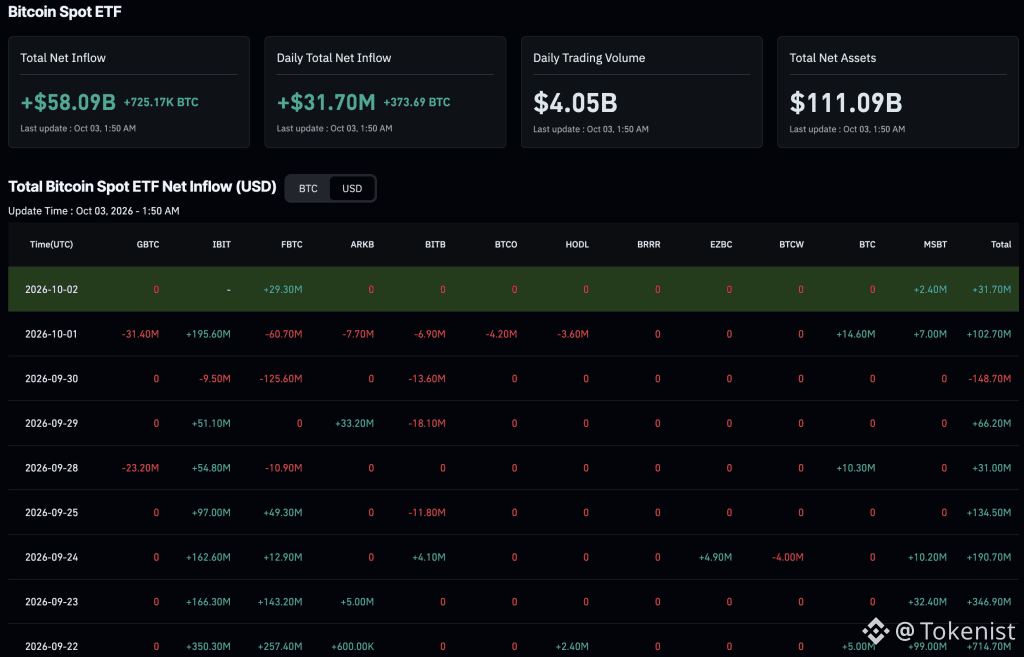
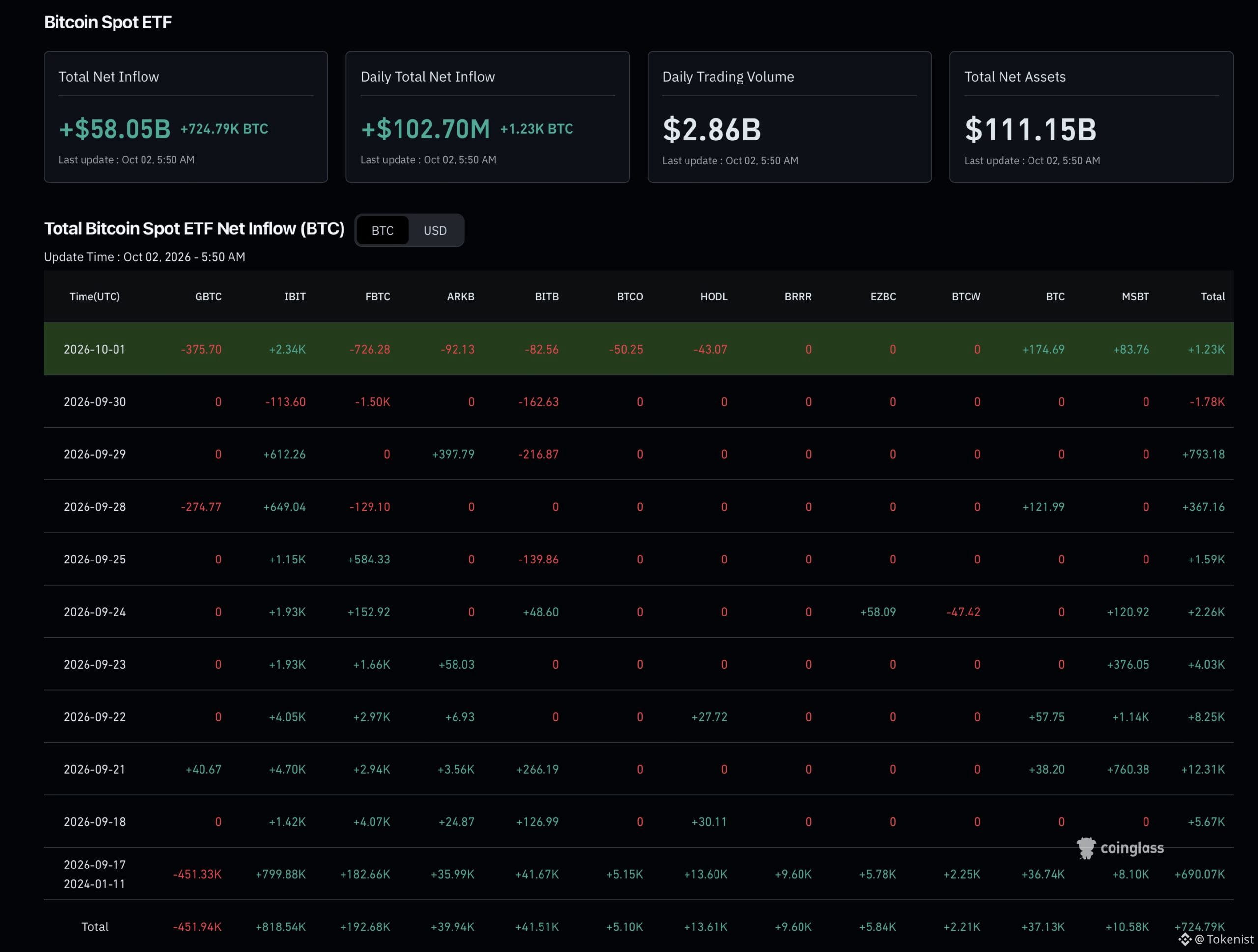
So far, the signal is positive but uneven. U.S. spot Bitcoin ETFs took in about $2.39 billion between September 21 and 25, the largest weekly total since October 2025, CoinGlass data shows. Flows then cooled sharply. The funds saw a 1,780 BTC outflow on September 30, before returning to a $102.7 million inflow on October 1.
Cumulative net inflows now stand near $58 billion. Several weeks of steady inflows would be stronger evidence of lasting demand than a single strong week. A return to outflows would weaken the case.
BTC ETF Flow Coinglass Can Fed Liquidity Offset Higher Yields and a Strong Dollar?
The macro risks are clear. ETF outflows, higher real yields, a stronger dollar, or a broader economic shock could all reduce demand for risk assets.
The Fed’s stance is mixed. Its focus on keeping bank reserves ample may help at the margin, but it is not a new round of quantitative easing. The Federal Reserve’s H.4.1 balance-sheet release showed reserves of $2.930 trillion for the week ended September 23, down $83.6 billion from the prior week. That is one weekly snapshot, not a verdict on market liquidity.
Meanwhile, the 10-year Treasury yield sits above 5%. Higher yields and a firm dollar could still outweigh any support from reserve management.
The related tension between Treasury yields, Federal Reserve policy, and Bitcoin ETF flows is not a side issue: it goes directly to whether demand can withstand a less favorable macro environment.
Crypto Expert Report: What is the Best Meme Coin to Buy and Forget Until the Next Bullrun?
The post Crypto Boom 2026: Is a New Cycle Starting After a 44% Q3? appeared first on Tokenist.
Crypto Boom 2026: Is a New Cycle Starting After a 44% Q3?
Bitcoin gained about 44%, and Ethereum climbed more than 70% in the third quarter, reviving talk of a new crypto boom. Bitcoin posted its best third quarter since 2017, while Ethereum had its strongest quarter on record. The question now is whether a new cycle is forming, or whether prices are rebounding ahead of another macro-driven reversal.
For the wider crypto market, the coming challenge is whether demand for investment products continues. Rising real yields, a stronger dollar, and shocks to risk appetite may undermine the liquidity that frequently influences speculative assets.
The rebound has put Bitcoin and Ethereum back at the center of the cycle debate, but the case for continuation requires evidence beyond prices. A sustained spot Bitcoin ETF rally would help demonstrate that institutional demand is reinforcing the move rather than simply following it.
𝗕𝗨𝗟𝗟𝗜𝗦𝗛: The weakest month is done. Next up are the two strongest months for $BTC, October and November. pic.twitter.com/IxVqup4d2H
— Blockto (@TheBlocktoApp) October 1, 2026
Crypto Expert Report: What Are the 10 Next Crypto to Explode in 2026?
Crypto Boom: Bitcoin and Ethereum’s Third-Quarter Rebound
The scale of the gains is the clearest fact in the available account. Bitcoin rose more than 40% during the third quarter, while Ethereum climbed more than 70%.
The relative strength of Ethereum suggests the advance was not confined to Bitcoin, while Bitcoin’s gain provides the central benchmark for the renewed discussion of a broader digital-asset cycle. Still, two large quarterly returns cannot establish that the market has entered a lasting expansion.
Bitcoin is the core market reference, while Ethereum’s larger percentage advance indicates that the rally reached beyond Bitcoin. Recent investment-product flows into Bitcoin and Ether are a useful measure to watch, but no specific flow figure should be treated as established by the excerpt.
Are ETF Flows Strong Enough to Sustain the Crypto Boom?
ETF demand is the clearest test of whether institutions are driving the move or following it. A sustained spot Bitcoin ETF rally would show buyers reinforcing the trend.
So far, the signal is positive but uneven. U.S. spot Bitcoin ETFs took in about $2.39 billion between September 21 and 25, the largest weekly total since October 2025, CoinGlass data shows. Flows then cooled sharply. The funds saw a 1,780 BTC outflow on September 30, before returning to a $102.7 million inflow on October 1.
Cumulative net inflows now stand near $58 billion. Several weeks of steady inflows would be stronger evidence of lasting demand than a single strong week. A return to outflows would weaken the case.
BTC ETF Flow Coinglass Can Fed Liquidity Offset Higher Yields and a Strong Dollar?
The macro risks are clear. ETF outflows, higher real yields, a stronger dollar, or a broader economic shock could all reduce demand for risk assets.
The Fed’s stance is mixed. Its focus on keeping bank reserves ample may help at the margin, but it is not a new round of quantitative easing. The Federal Reserve’s H.4.1 balance-sheet release showed reserves of $2.930 trillion for the week ended September 23, down $83.6 billion from the prior week. That is one weekly snapshot, not a verdict on market liquidity.
Meanwhile, the 10-year Treasury yield sits above 5%. Higher yields and a firm dollar could still outweigh any support from reserve management.
The related tension between Treasury yields, Federal Reserve policy, and Bitcoin ETF flows is not a side issue: it goes directly to whether demand can withstand a less favorable macro environment.
Crypto Expert Report: What is the Best Meme Coin to Buy and Forget Until the Next Bullrun?
The post Crypto Boom 2026: Is a New Cycle Starting After a 44% Q3? appeared first on Tokenist.
For the wider crypto market, the coming challenge is whether demand for investment products continues. Rising real yields, a stronger dollar, and shocks to risk appetite may undermine the liquidity that frequently influences speculative assets.
The rebound has put Bitcoin and Ethereum back at the center of the cycle debate, but the case for continuation requires evidence beyond prices. A sustained spot Bitcoin ETF rally would help demonstrate that institutional demand is reinforcing the move rather than simply following it.
𝗕𝗨𝗟𝗟𝗜𝗦𝗛: The weakest month is done. Next up are the two strongest months for $BTC, October and November. pic.twitter.com/IxVqup4d2H
— Blockto (@TheBlocktoApp) October 1, 2026
Crypto Expert Report: What Are the 10 Next Crypto to Explode in 2026?
Crypto Boom: Bitcoin and Ethereum’s Third-Quarter Rebound
The scale of the gains is the clearest fact in the available account. Bitcoin rose more than 40% during the third quarter, while Ethereum climbed more than 70%.
The relative strength of Ethereum suggests the advance was not confined to Bitcoin, while Bitcoin’s gain provides the central benchmark for the renewed discussion of a broader digital-asset cycle. Still, two large quarterly returns cannot establish that the market has entered a lasting expansion.
Bitcoin is the core market reference, while Ethereum’s larger percentage advance indicates that the rally reached beyond Bitcoin. Recent investment-product flows into Bitcoin and Ether are a useful measure to watch, but no specific flow figure should be treated as established by the excerpt.
Are ETF Flows Strong Enough to Sustain the Crypto Boom?
ETF demand is the clearest test of whether institutions are driving the move or following it. A sustained spot Bitcoin ETF rally would show buyers reinforcing the trend.
So far, the signal is positive but uneven. U.S. spot Bitcoin ETFs took in about $2.39 billion between September 21 and 25, the largest weekly total since October 2025, CoinGlass data shows. Flows then cooled sharply. The funds saw a 1,780 BTC outflow on September 30, before returning to a $102.7 million inflow on October 1.
Cumulative net inflows now stand near $58 billion. Several weeks of steady inflows would be stronger evidence of lasting demand than a single strong week. A return to outflows would weaken the case.
BTC ETF Flow Coinglass Can Fed Liquidity Offset Higher Yields and a Strong Dollar?
The macro risks are clear. ETF outflows, higher real yields, a stronger dollar, or a broader economic shock could all reduce demand for risk assets.
The Fed’s stance is mixed. Its focus on keeping bank reserves ample may help at the margin, but it is not a new round of quantitative easing. The Federal Reserve’s H.4.1 balance-sheet release showed reserves of $2.930 trillion for the week ended September 23, down $83.6 billion from the prior week. That is one weekly snapshot, not a verdict on market liquidity.
Meanwhile, the 10-year Treasury yield sits above 5%. Higher yields and a firm dollar could still outweigh any support from reserve management.
The related tension between Treasury yields, Federal Reserve policy, and Bitcoin ETF flows is not a side issue: it goes directly to whether demand can withstand a less favorable macro environment.
Crypto Expert Report: What is the Best Meme Coin to Buy and Forget Until the Next Bullrun?
The post Crypto Boom 2026: Is a New Cycle Starting After a 44% Q3? appeared first on Tokenist.
276
·
--
Tərcüməyə bax
High Treasury Yields Put the Bitcoin PCE Rally to the TestBitcoin briefly reached about $85,500 after August PCE inflation came in softer than expected on Wednesday, September 30, but the move faded as the 10-year Treasury yield held near 5.3% and the 30-year yield stayed near its highest level since 2002.
The contrast put the market’s immediate test in view: could reduced concern about another Federal Reserve rate increase support crypto markets while long-term borrowing costs continued to weigh on risk appetite? CoinGecko data shows that Bitcoin was trading just above $83,100 during Thursday morning hours.
The distinction is between a less restrictive signal from near-term policy expectations and actual relief in broader financial conditions. The inflation data gave traders a reason to buy risk assets, but the bond market did not deliver the sustained yield drop that could help keep those gains intact.
BREAKING: Bitcoin surges above $85,000 and ETH has reclaimed $2700 after PCE inflation came at a 6 month low. Over $75 million shorts liquidated in the last 60 minutes. pic.twitter.com/yRDESokpLk
— Bull Theory (@BullTheoryio) September 30, 2026
Cooler PCE Gave Bitcoin a Brief Lift, What Does It Mean Going Forward?
The U.S. Bureau of Economic Analysis reported that the headline PCE price index rose 0.3% from July and 3.4% from a year earlier in August. The core index, which excludes food and energy, increased 0.2% month over month and 3.0% year over year. Those figures explain the report’s softer-than-expected reception, but they do not by themselves establish a sustained easing trend.
The release also showed household income and spending rising: personal income increased $66.6 billion, or 0.2%, while disposable personal income advanced $68.6Bn, or 0.3%. Personal consumption expenditures rose $190.8Bn, or 0.9%, and real PCE increased 0.6% month over month. The combination matters for rate expectations: easing price growth was a welcome signal, while firm spending left the economic picture more complex than a simple cooling-inflation narrative.
$BTC recorded its highest monthly close since January! BULLISH pic.twitter.com/pnzKYYF6H2
— Crypto Rover (@cryptorover) October 1, 2026
Dan Khus, chief analyst at LVRG Research, said the report reduced the odds of another October Federal Reserve rate increase and made December look like the more likely next move. “August’s PCE report showed inflation cooling more than expected, with prices up 3.4% from a year earlier and 3.0% excluding food and energy, which has reduced the odds of another Federal Reserve rate increase in October and made December look like the more likely next move,” Khus said in an email to CoinDesk.
That shift in the near-term policy outlook helps explain bitcoin’s first response, but it is not equivalent to lower market-wide financing costs. PCE remains a key inflation measure in the policy debate, and a softer monthly reading can change expectations without settling what the Federal Reserve will do next. The connection between the inflation data and rate expectations is central to how PCE shapes Federal Reserve expectations.
Treasury Yields Kept the Rally From Holding
Some investors are freaking out over the US treasury yield rising above 5%. Is it way too high? if you look at the last 73 years, the average (mean) 10Y yield was at 5.52%. So, we are still below the long term average. Will high yields crash the stock market? Well, if you look… pic.twitter.com/DL3ZE2R4t0
— Adam Khoo (@adamkhootrader) October 1, 2026
The bond market supplied the counter-signal. The 10-year Treasury yield traded around 5.28%, close to its Wednesday peak, while the 30-year yield steadied at 5.62% after reaching its highest level since 2002 during New York trading, according to CoinDesk’s market report. A softer inflation print did not produce enough of a decline in long-term yields to sustain bitcoin above $85,000.
Late swings on Wall Street erased much of the crypto advance. Oil prices declined, helping pause the bond selloff, while the dollar strengthened; those moves did not dislodge the elevated yields that remained a constraint on risk assets. The 10-year yield was the clearest barometer in the immediate session: it stayed near 5.3% even as markets took some comfort from the inflation data.
This is why the PCE reaction was a partial rather than complete bullish signal. Expectations for a near-term rate hike may have eased, but long-duration yields still reflect the market’s demand for compensation over a longer horizon. When those yields remain high, the macro backdrop can continue to limit enthusiasm for assets such as bitcoin even if the next policy move looks less hawkish.
The relationship is not unique to this session: elevated Treasury yields can stall a crypto rally even when other indicators appear supportive. A sustained decline in the 10-year yield, rather than a brief move around a data release, would give a subsequent bitcoin rally more room to hold, the primary report noted.
Disclaimer: This article is for informational purposes only and does not constitute investment advice. The author may hold digital assets discussed in this article.
The post High Treasury Yields Put the Bitcoin PCE Rally to the Test appeared first on Tokenist.
High Treasury Yields Put the Bitcoin PCE Rally to the Test
Bitcoin briefly reached about $85,500 after August PCE inflation came in softer than expected on Wednesday, September 30, but the move faded as the 10-year Treasury yield held near 5.3% and the 30-year yield stayed near its highest level since 2002.
The contrast put the market’s immediate test in view: could reduced concern about another Federal Reserve rate increase support crypto markets while long-term borrowing costs continued to weigh on risk appetite? CoinGecko data shows that Bitcoin was trading just above $83,100 during Thursday morning hours.
The distinction is between a less restrictive signal from near-term policy expectations and actual relief in broader financial conditions. The inflation data gave traders a reason to buy risk assets, but the bond market did not deliver the sustained yield drop that could help keep those gains intact.
BREAKING: Bitcoin surges above $85,000 and ETH has reclaimed $2700 after PCE inflation came at a 6 month low. Over $75 million shorts liquidated in the last 60 minutes. pic.twitter.com/yRDESokpLk
— Bull Theory (@BullTheoryio) September 30, 2026
Cooler PCE Gave Bitcoin a Brief Lift, What Does It Mean Going Forward?
The U.S. Bureau of Economic Analysis reported that the headline PCE price index rose 0.3% from July and 3.4% from a year earlier in August. The core index, which excludes food and energy, increased 0.2% month over month and 3.0% year over year. Those figures explain the report’s softer-than-expected reception, but they do not by themselves establish a sustained easing trend.
The release also showed household income and spending rising: personal income increased $66.6 billion, or 0.2%, while disposable personal income advanced $68.6Bn, or 0.3%. Personal consumption expenditures rose $190.8Bn, or 0.9%, and real PCE increased 0.6% month over month. The combination matters for rate expectations: easing price growth was a welcome signal, while firm spending left the economic picture more complex than a simple cooling-inflation narrative.
$BTC recorded its highest monthly close since January! BULLISH pic.twitter.com/pnzKYYF6H2
— Crypto Rover (@cryptorover) October 1, 2026
Dan Khus, chief analyst at LVRG Research, said the report reduced the odds of another October Federal Reserve rate increase and made December look like the more likely next move. “August’s PCE report showed inflation cooling more than expected, with prices up 3.4% from a year earlier and 3.0% excluding food and energy, which has reduced the odds of another Federal Reserve rate increase in October and made December look like the more likely next move,” Khus said in an email to CoinDesk.
That shift in the near-term policy outlook helps explain bitcoin’s first response, but it is not equivalent to lower market-wide financing costs. PCE remains a key inflation measure in the policy debate, and a softer monthly reading can change expectations without settling what the Federal Reserve will do next. The connection between the inflation data and rate expectations is central to how PCE shapes Federal Reserve expectations.
Treasury Yields Kept the Rally From Holding
Some investors are freaking out over the US treasury yield rising above 5%. Is it way too high? if you look at the last 73 years, the average (mean) 10Y yield was at 5.52%. So, we are still below the long term average. Will high yields crash the stock market? Well, if you look… pic.twitter.com/DL3ZE2R4t0
— Adam Khoo (@adamkhootrader) October 1, 2026
The bond market supplied the counter-signal. The 10-year Treasury yield traded around 5.28%, close to its Wednesday peak, while the 30-year yield steadied at 5.62% after reaching its highest level since 2002 during New York trading, according to CoinDesk’s market report. A softer inflation print did not produce enough of a decline in long-term yields to sustain bitcoin above $85,000.
Late swings on Wall Street erased much of the crypto advance. Oil prices declined, helping pause the bond selloff, while the dollar strengthened; those moves did not dislodge the elevated yields that remained a constraint on risk assets. The 10-year yield was the clearest barometer in the immediate session: it stayed near 5.3% even as markets took some comfort from the inflation data.
This is why the PCE reaction was a partial rather than complete bullish signal. Expectations for a near-term rate hike may have eased, but long-duration yields still reflect the market’s demand for compensation over a longer horizon. When those yields remain high, the macro backdrop can continue to limit enthusiasm for assets such as bitcoin even if the next policy move looks less hawkish.
The relationship is not unique to this session: elevated Treasury yields can stall a crypto rally even when other indicators appear supportive. A sustained decline in the 10-year yield, rather than a brief move around a data release, would give a subsequent bitcoin rally more room to hold, the primary report noted.
Disclaimer: This article is for informational purposes only and does not constitute investment advice. The author may hold digital assets discussed in this article.
The post High Treasury Yields Put the Bitcoin PCE Rally to the Test appeared first on Tokenist.
The contrast put the market’s immediate test in view: could reduced concern about another Federal Reserve rate increase support crypto markets while long-term borrowing costs continued to weigh on risk appetite? CoinGecko data shows that Bitcoin was trading just above $83,100 during Thursday morning hours.
The distinction is between a less restrictive signal from near-term policy expectations and actual relief in broader financial conditions. The inflation data gave traders a reason to buy risk assets, but the bond market did not deliver the sustained yield drop that could help keep those gains intact.
BREAKING: Bitcoin surges above $85,000 and ETH has reclaimed $2700 after PCE inflation came at a 6 month low. Over $75 million shorts liquidated in the last 60 minutes. pic.twitter.com/yRDESokpLk
— Bull Theory (@BullTheoryio) September 30, 2026
Cooler PCE Gave Bitcoin a Brief Lift, What Does It Mean Going Forward?
The U.S. Bureau of Economic Analysis reported that the headline PCE price index rose 0.3% from July and 3.4% from a year earlier in August. The core index, which excludes food and energy, increased 0.2% month over month and 3.0% year over year. Those figures explain the report’s softer-than-expected reception, but they do not by themselves establish a sustained easing trend.
The release also showed household income and spending rising: personal income increased $66.6 billion, or 0.2%, while disposable personal income advanced $68.6Bn, or 0.3%. Personal consumption expenditures rose $190.8Bn, or 0.9%, and real PCE increased 0.6% month over month. The combination matters for rate expectations: easing price growth was a welcome signal, while firm spending left the economic picture more complex than a simple cooling-inflation narrative.
$BTC recorded its highest monthly close since January! BULLISH pic.twitter.com/pnzKYYF6H2
— Crypto Rover (@cryptorover) October 1, 2026
Dan Khus, chief analyst at LVRG Research, said the report reduced the odds of another October Federal Reserve rate increase and made December look like the more likely next move. “August’s PCE report showed inflation cooling more than expected, with prices up 3.4% from a year earlier and 3.0% excluding food and energy, which has reduced the odds of another Federal Reserve rate increase in October and made December look like the more likely next move,” Khus said in an email to CoinDesk.
That shift in the near-term policy outlook helps explain bitcoin’s first response, but it is not equivalent to lower market-wide financing costs. PCE remains a key inflation measure in the policy debate, and a softer monthly reading can change expectations without settling what the Federal Reserve will do next. The connection between the inflation data and rate expectations is central to how PCE shapes Federal Reserve expectations.
Treasury Yields Kept the Rally From Holding
Some investors are freaking out over the US treasury yield rising above 5%. Is it way too high? if you look at the last 73 years, the average (mean) 10Y yield was at 5.52%. So, we are still below the long term average. Will high yields crash the stock market? Well, if you look… pic.twitter.com/DL3ZE2R4t0
— Adam Khoo (@adamkhootrader) October 1, 2026
The bond market supplied the counter-signal. The 10-year Treasury yield traded around 5.28%, close to its Wednesday peak, while the 30-year yield steadied at 5.62% after reaching its highest level since 2002 during New York trading, according to CoinDesk’s market report. A softer inflation print did not produce enough of a decline in long-term yields to sustain bitcoin above $85,000.
Late swings on Wall Street erased much of the crypto advance. Oil prices declined, helping pause the bond selloff, while the dollar strengthened; those moves did not dislodge the elevated yields that remained a constraint on risk assets. The 10-year yield was the clearest barometer in the immediate session: it stayed near 5.3% even as markets took some comfort from the inflation data.
This is why the PCE reaction was a partial rather than complete bullish signal. Expectations for a near-term rate hike may have eased, but long-duration yields still reflect the market’s demand for compensation over a longer horizon. When those yields remain high, the macro backdrop can continue to limit enthusiasm for assets such as bitcoin even if the next policy move looks less hawkish.
The relationship is not unique to this session: elevated Treasury yields can stall a crypto rally even when other indicators appear supportive. A sustained decline in the 10-year yield, rather than a brief move around a data release, would give a subsequent bitcoin rally more room to hold, the primary report noted.
Disclaimer: This article is for informational purposes only and does not constitute investment advice. The author may hold digital assets discussed in this article.
The post High Treasury Yields Put the Bitcoin PCE Rally to the Test appeared first on Tokenist.
212
·
--
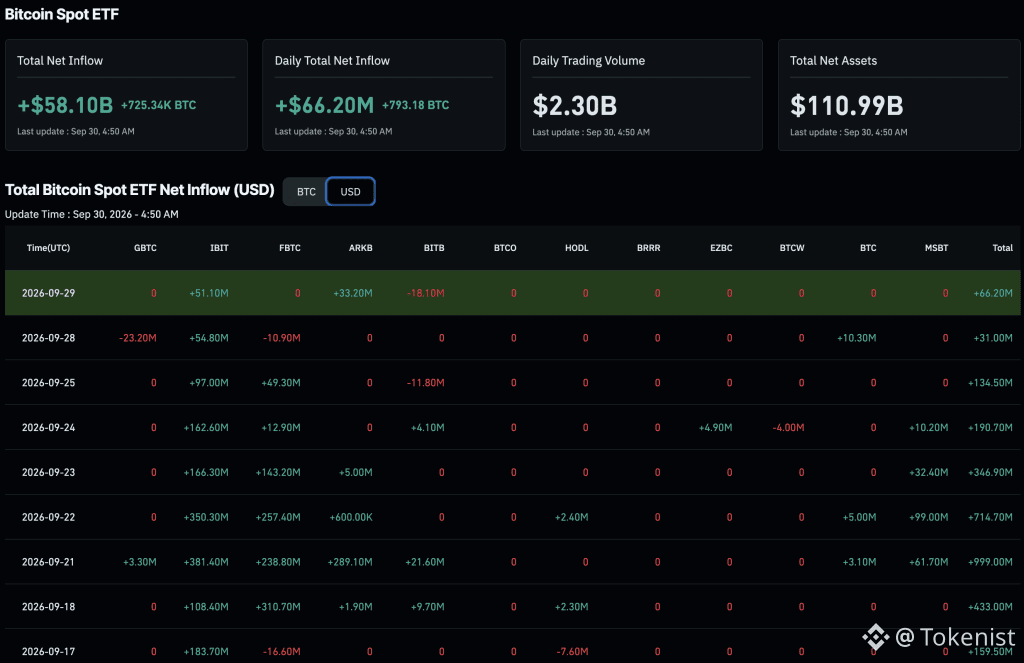
Məqalə
ETF axınları hekayəni çətinləşdirərkən Bitcoin sentyabr rekorduna yaxınlaşırBitcoin sentyabrın 29-dək təxminən +7.3% artıb, sentyabr 2024-ün +7.29%-indən azca qabağa düşərək, CoinGlass məlumatlarına görə ən güclü sentyabr ayı üçün göstəricilərini formalaşdırır.
Fərq olduqca incədir: nəticəni təmin etmək üçün sentyabrın 30-da təxminən $83,600-dən yuxarı aylıq bağlanış lazımdır və dördüncü ardıcıl müsbət sentyabr həmin bağlanışdan asılı olaraq qalır. Hazırda BTC USD $83,300 səviyyəsində ticarət edir — tələb olunan səviyyədən bir qədər aşağı.
Gələcək seriya məlumatlarda ən uzun müsbət sentyabrlar ardıcıllığını işarə edə bilər, amma bu ayın tarixi zəifliyini ləğv etmir. Əsas sual sentyabr mövsümlülüyünün dəyişib-dəyişmədiyidir, yoxsa son ETF tələbi və makro mövqeləşdirmə qurulmuş tendensiyaları müvəqqəti olaraq kölgədə qoyur.
ETF axınları hekayəni çətinləşdirərkən Bitcoin sentyabr rekorduna yaxınlaşır
Bitcoin sentyabrın 29-dək təxminən +7.3% artıb, sentyabr 2024-ün +7.29%-indən azca qabağa düşərək, CoinGlass məlumatlarına görə ən güclü sentyabr ayı üçün göstəricilərini formalaşdırır.
Fərq olduqca incədir: nəticəni təmin etmək üçün sentyabrın 30-da təxminən $83,600-dən yuxarı aylıq bağlanış lazımdır və dördüncü ardıcıl müsbət sentyabr həmin bağlanışdan asılı olaraq qalır. Hazırda BTC USD $83,300 səviyyəsində ticarət edir — tələb olunan səviyyədən bir qədər aşağı.
Gələcək seriya məlumatlarda ən uzun müsbət sentyabrlar ardıcıllığını işarə edə bilər, amma bu ayın tarixi zəifliyini ləğv etmir. Əsas sual sentyabr mövsümlülüyünün dəyişib-dəyişmədiyidir, yoxsa son ETF tələbi və makro mövqeləşdirmə qurulmuş tendensiyaları müvəqqəti olaraq kölgədə qoyur.
Fərq olduqca incədir: nəticəni təmin etmək üçün sentyabrın 30-da təxminən $83,600-dən yuxarı aylıq bağlanış lazımdır və dördüncü ardıcıl müsbət sentyabr həmin bağlanışdan asılı olaraq qalır. Hazırda BTC USD $83,300 səviyyəsində ticarət edir — tələb olunan səviyyədən bir qədər aşağı.
Gələcək seriya məlumatlarda ən uzun müsbət sentyabrlar ardıcıllığını işarə edə bilər, amma bu ayın tarixi zəifliyini ləğv etmir. Əsas sual sentyabr mövsümlülüyünün dəyişib-dəyişmədiyidir, yoxsa son ETF tələbi və makro mövqeləşdirmə qurulmuş tendensiyaları müvəqqəti olaraq kölgədə qoyur.
139
·
--
Məqalə
Blockchain.com 4 mlrd.-6 mlrd. dollarlıq IPO qiymətləndirməsi sınağı ilə üz-üzəBloomberg-in istinad etdiyi məlumatlı şəxslərə görə, Blockchain.com 2026-cı ilin sonrakı dövründə ABŞ-da keçiriləcək ilkin kütləvi təklif (IPO) çərçivəsində təxminən 500 mln. dollar cəlb etməyi hədəfləyir; şirkətin dəyərinin 4 mlrd. dollardan 6 mlrd. dollara qədər qiymətləndirilməsi gözlənilir.
Bu hədəf kriptovalyuta xidmətləri şirkətinin 2022-ci ildə zirvədə nümayiş etdirdiyi təxminən 14 mlrd. dollar dəyərdən xeyli aşağıda yerləşir və bir nəfər bildirib ki, Blockchain.com bazar şərtləri tələb edərsə, daha kiçik qiymətləndirmə (maliyyələşdirmə) dəyəri barədə də düşünə bilər.
YENİ: Blockchain․com IPO-nu 5 mlrd. dollar qiymətləndirmə ilə hədəfləyir, potensial olaraq 500 mln. dollar cəlb edə bilər. • SEC-ə may ayında məxfi şəkildə təqdim edilmiş layihə sənəd. • Hədəf qiymətləndirməsi 14 mlrd. dollarlıq zirvədən 65% aşağıdır. Daha çox kripto IPO-larına maraq varmı? pic.twitter.com/T6xwsGGaKh
Blockchain.com 4 mlrd.-6 mlrd. dollarlıq IPO qiymətləndirməsi sınağı ilə üz-üzə
Bloomberg-in istinad etdiyi məlumatlı şəxslərə görə, Blockchain.com 2026-cı ilin sonrakı dövründə ABŞ-da keçiriləcək ilkin kütləvi təklif (IPO) çərçivəsində təxminən 500 mln. dollar cəlb etməyi hədəfləyir; şirkətin dəyərinin 4 mlrd. dollardan 6 mlrd. dollara qədər qiymətləndirilməsi gözlənilir.
Bu hədəf kriptovalyuta xidmətləri şirkətinin 2022-ci ildə zirvədə nümayiş etdirdiyi təxminən 14 mlrd. dollar dəyərdən xeyli aşağıda yerləşir və bir nəfər bildirib ki, Blockchain.com bazar şərtləri tələb edərsə, daha kiçik qiymətləndirmə (maliyyələşdirmə) dəyəri barədə də düşünə bilər.
YENİ: Blockchain․com IPO-nu 5 mlrd. dollar qiymətləndirmə ilə hədəfləyir, potensial olaraq 500 mln. dollar cəlb edə bilər. • SEC-ə may ayında məxfi şəkildə təqdim edilmiş layihə sənəd. • Hədəf qiymətləndirməsi 14 mlrd. dollarlıq zirvədən 65% aşağıdır. Daha çox kripto IPO-larına maraq varmı? pic.twitter.com/T6xwsGGaKh
Bu hədəf kriptovalyuta xidmətləri şirkətinin 2022-ci ildə zirvədə nümayiş etdirdiyi təxminən 14 mlrd. dollar dəyərdən xeyli aşağıda yerləşir və bir nəfər bildirib ki, Blockchain.com bazar şərtləri tələb edərsə, daha kiçik qiymətləndirmə (maliyyələşdirmə) dəyəri barədə də düşünə bilər.
YENİ: Blockchain․com IPO-nu 5 mlrd. dollar qiymətləndirmə ilə hədəfləyir, potensial olaraq 500 mln. dollar cəlb edə bilər. • SEC-ə may ayında məxfi şəkildə təqdim edilmiş layihə sənəd. • Hədəf qiymətləndirməsi 14 mlrd. dollarlıq zirvədən 65% aşağıdır. Daha çox kripto IPO-larına maraq varmı? pic.twitter.com/T6xwsGGaKh
115
·
--

Məqalə
Tərcüməyə bax
Coinbase Gains CFTC Clearing Role for Collateralized DerivativesIn Coinbase crypto news today, the firm was registered as a US derivatives clearing organization by the Commodity Futures Trading Commission (CFTC), effective Monday, September 28, 2026, with authorization covering fully collateralized futures, options on futures, and swaps.
The order explicitly excludes leveraged products, which means Coinbase now controls the clearing layer of its regulated derivatives business without yet controlling all of it. The registration slots directly into an existing structure. Coinbase Derivatives LLC operates as the exchange, listing U.S.-regulated futures on Bitcoin and Ethereum alongside commodity and equity-index contracts, plus long-dated perpetual-style crypto futures.
NEW: @coinbase RECEIVES CFTC APPROVAL FOR COINBASE CLEARING LLC “TOGETHER WITH OUR DERIVATIVES BROKER, A FUTURES COMMISSION MERCHANT (FCM) AND DERIVATIVES EXCHANGE, A DESIGNATED CONTRACT MARKET (DCM), COINBASE CLEARING LLC… pic.twitter.com/Q2hPatAJWF
— DEGEN NEWS (@DegenerateNews) September 28, 2026
Coinbase Financial Markets Inc. serves as the futures broker. Coinbase Clearing LLC now adds the third leg, sitting between buyers and sellers to manage settlement and counterparty risk, including what happens if one side defaults. Coinbase General Counsel Molly Abraham characterized the approval as completing the company’s end-to-end derivatives infrastructure.
It has been framed as a step toward bringing more regulated products to market with USDC collateral and continuous settlement rather than the batch-based cycles typical of legacy clearinghouses. That framing matters because the CFTC’s approach to crypto derivatives rulemaking has moved toward accommodating digital-asset-native infrastructure rather than forcing it into traditional margining frameworks.
What Does the CFTC Authorization Mean for Coinbase Crypto Operations?
Coinbase just got CFTC approval for Coinbase Clearing as a DCO. That means it now runs its own US exchange, broker, and clearing stack. They’re calling it the first USDC-native clearinghouse: USDC as collateral, 24/7 settlement. The license is limited to fully collateralized… pic.twitter.com/UHvs8rxP67
— Captain GM (@g13m) September 29, 2026
The CFTC’s public registry lists Coinbase Clearing under Derivatives Clearing Organization entry 64361, with remarks noting that the entity may clear fully collateralized futures, options on futures, and swaps.
Fully collateralized, in CFTC parlance, means the clearinghouse holds enough funds at all times to cover the maximum possible loss on a position, the opposite of a margined structure where traders post a fraction of notional exposure and borrow against the rest.
That distinction is the entire story of what this approval does and doesn’t do. It authorizes Coinbase to clear a defined category of collateralized products directly, but it does not extend to leveraged derivatives, which remain outside the order’s scope.
Coinbase’s existing margined business and any conventionally leveraged contracts will continue to route through outside clearing arrangements for now.
Crypto Expert Report: What Are The Next 10 Crypto to Explode?
Coinbase Continues to Shift from an Exchange to a Full Stack Platform
SOURCE: Yahoo Finance
The practical effect is that Coinbase now holds exchange, broker, and clearinghouse licenses under one roof for a specific slice of its derivatives lineup, a materially different position than relying on third parties for every function.
It also reinforces Coinbase’s shift from a crypto trading venue to a vertically integrated financial-market infrastructure provider, a trajectory that runs parallel to its recent push into perpetual futures products, where the same fully collateralized-versus-leveraged distinction determines which entity clears the trade.
Coinbase is not alone in pursuing this structure. Kraken parent Payward completed its acquisition of Bitnomial in May, gaining a CFTC-regulated exchange, clearinghouse, and futures brokerage of its own, according to the primary reporting on the Coinbase order.
The two moves suggest that owning the clearing layer, rather than renting it, is becoming a competitive baseline among U.S.-regulated crypto derivatives platforms, not a one-off differentiator.
The approval does not eliminate Coinbase’s reliance on outside clearing partners across its broader derivatives suite. Third-party arrangements remain in place for products outside the current authorization.
Crypto Expert Report: What is the Best Meme Coin to Buy and Forget Until the Next Bull Run?
This article is for informational purposes only and does not constitute investment advice. Tokenist does not hold positions in the securities or assets discussed.
The post Coinbase Gains CFTC Clearing Role for Collateralized Derivatives appeared first on Tokenist.
Coinbase Gains CFTC Clearing Role for Collateralized Derivatives
In Coinbase crypto news today, the firm was registered as a US derivatives clearing organization by the Commodity Futures Trading Commission (CFTC), effective Monday, September 28, 2026, with authorization covering fully collateralized futures, options on futures, and swaps.
The order explicitly excludes leveraged products, which means Coinbase now controls the clearing layer of its regulated derivatives business without yet controlling all of it. The registration slots directly into an existing structure. Coinbase Derivatives LLC operates as the exchange, listing U.S.-regulated futures on Bitcoin and Ethereum alongside commodity and equity-index contracts, plus long-dated perpetual-style crypto futures.
NEW: @coinbase RECEIVES CFTC APPROVAL FOR COINBASE CLEARING LLC “TOGETHER WITH OUR DERIVATIVES BROKER, A FUTURES COMMISSION MERCHANT (FCM) AND DERIVATIVES EXCHANGE, A DESIGNATED CONTRACT MARKET (DCM), COINBASE CLEARING LLC… pic.twitter.com/Q2hPatAJWF
— DEGEN NEWS (@DegenerateNews) September 28, 2026
Coinbase Financial Markets Inc. serves as the futures broker. Coinbase Clearing LLC now adds the third leg, sitting between buyers and sellers to manage settlement and counterparty risk, including what happens if one side defaults. Coinbase General Counsel Molly Abraham characterized the approval as completing the company’s end-to-end derivatives infrastructure.
It has been framed as a step toward bringing more regulated products to market with USDC collateral and continuous settlement rather than the batch-based cycles typical of legacy clearinghouses. That framing matters because the CFTC’s approach to crypto derivatives rulemaking has moved toward accommodating digital-asset-native infrastructure rather than forcing it into traditional margining frameworks.
What Does the CFTC Authorization Mean for Coinbase Crypto Operations?
Coinbase just got CFTC approval for Coinbase Clearing as a DCO. That means it now runs its own US exchange, broker, and clearing stack. They’re calling it the first USDC-native clearinghouse: USDC as collateral, 24/7 settlement. The license is limited to fully collateralized… pic.twitter.com/UHvs8rxP67
— Captain GM (@g13m) September 29, 2026
The CFTC’s public registry lists Coinbase Clearing under Derivatives Clearing Organization entry 64361, with remarks noting that the entity may clear fully collateralized futures, options on futures, and swaps.
Fully collateralized, in CFTC parlance, means the clearinghouse holds enough funds at all times to cover the maximum possible loss on a position, the opposite of a margined structure where traders post a fraction of notional exposure and borrow against the rest.
That distinction is the entire story of what this approval does and doesn’t do. It authorizes Coinbase to clear a defined category of collateralized products directly, but it does not extend to leveraged derivatives, which remain outside the order’s scope.
Coinbase’s existing margined business and any conventionally leveraged contracts will continue to route through outside clearing arrangements for now.
Crypto Expert Report: What Are The Next 10 Crypto to Explode?
Coinbase Continues to Shift from an Exchange to a Full Stack Platform
SOURCE: Yahoo Finance
The practical effect is that Coinbase now holds exchange, broker, and clearinghouse licenses under one roof for a specific slice of its derivatives lineup, a materially different position than relying on third parties for every function.
It also reinforces Coinbase’s shift from a crypto trading venue to a vertically integrated financial-market infrastructure provider, a trajectory that runs parallel to its recent push into perpetual futures products, where the same fully collateralized-versus-leveraged distinction determines which entity clears the trade.
Coinbase is not alone in pursuing this structure. Kraken parent Payward completed its acquisition of Bitnomial in May, gaining a CFTC-regulated exchange, clearinghouse, and futures brokerage of its own, according to the primary reporting on the Coinbase order.
The two moves suggest that owning the clearing layer, rather than renting it, is becoming a competitive baseline among U.S.-regulated crypto derivatives platforms, not a one-off differentiator.
The approval does not eliminate Coinbase’s reliance on outside clearing partners across its broader derivatives suite. Third-party arrangements remain in place for products outside the current authorization.
Crypto Expert Report: What is the Best Meme Coin to Buy and Forget Until the Next Bull Run?
This article is for informational purposes only and does not constitute investment advice. Tokenist does not hold positions in the securities or assets discussed.
The post Coinbase Gains CFTC Clearing Role for Collateralized Derivatives appeared first on Tokenist.
The order explicitly excludes leveraged products, which means Coinbase now controls the clearing layer of its regulated derivatives business without yet controlling all of it. The registration slots directly into an existing structure. Coinbase Derivatives LLC operates as the exchange, listing U.S.-regulated futures on Bitcoin and Ethereum alongside commodity and equity-index contracts, plus long-dated perpetual-style crypto futures.
NEW: @coinbase RECEIVES CFTC APPROVAL FOR COINBASE CLEARING LLC “TOGETHER WITH OUR DERIVATIVES BROKER, A FUTURES COMMISSION MERCHANT (FCM) AND DERIVATIVES EXCHANGE, A DESIGNATED CONTRACT MARKET (DCM), COINBASE CLEARING LLC… pic.twitter.com/Q2hPatAJWF
— DEGEN NEWS (@DegenerateNews) September 28, 2026
Coinbase Financial Markets Inc. serves as the futures broker. Coinbase Clearing LLC now adds the third leg, sitting between buyers and sellers to manage settlement and counterparty risk, including what happens if one side defaults. Coinbase General Counsel Molly Abraham characterized the approval as completing the company’s end-to-end derivatives infrastructure.
It has been framed as a step toward bringing more regulated products to market with USDC collateral and continuous settlement rather than the batch-based cycles typical of legacy clearinghouses. That framing matters because the CFTC’s approach to crypto derivatives rulemaking has moved toward accommodating digital-asset-native infrastructure rather than forcing it into traditional margining frameworks.
What Does the CFTC Authorization Mean for Coinbase Crypto Operations?
Coinbase just got CFTC approval for Coinbase Clearing as a DCO. That means it now runs its own US exchange, broker, and clearing stack. They’re calling it the first USDC-native clearinghouse: USDC as collateral, 24/7 settlement. The license is limited to fully collateralized… pic.twitter.com/UHvs8rxP67
— Captain GM (@g13m) September 29, 2026
The CFTC’s public registry lists Coinbase Clearing under Derivatives Clearing Organization entry 64361, with remarks noting that the entity may clear fully collateralized futures, options on futures, and swaps.
Fully collateralized, in CFTC parlance, means the clearinghouse holds enough funds at all times to cover the maximum possible loss on a position, the opposite of a margined structure where traders post a fraction of notional exposure and borrow against the rest.
That distinction is the entire story of what this approval does and doesn’t do. It authorizes Coinbase to clear a defined category of collateralized products directly, but it does not extend to leveraged derivatives, which remain outside the order’s scope.
Coinbase’s existing margined business and any conventionally leveraged contracts will continue to route through outside clearing arrangements for now.
Crypto Expert Report: What Are The Next 10 Crypto to Explode?
Coinbase Continues to Shift from an Exchange to a Full Stack Platform
SOURCE: Yahoo Finance
The practical effect is that Coinbase now holds exchange, broker, and clearinghouse licenses under one roof for a specific slice of its derivatives lineup, a materially different position than relying on third parties for every function.
It also reinforces Coinbase’s shift from a crypto trading venue to a vertically integrated financial-market infrastructure provider, a trajectory that runs parallel to its recent push into perpetual futures products, where the same fully collateralized-versus-leveraged distinction determines which entity clears the trade.
Coinbase is not alone in pursuing this structure. Kraken parent Payward completed its acquisition of Bitnomial in May, gaining a CFTC-regulated exchange, clearinghouse, and futures brokerage of its own, according to the primary reporting on the Coinbase order.
The two moves suggest that owning the clearing layer, rather than renting it, is becoming a competitive baseline among U.S.-regulated crypto derivatives platforms, not a one-off differentiator.
The approval does not eliminate Coinbase’s reliance on outside clearing partners across its broader derivatives suite. Third-party arrangements remain in place for products outside the current authorization.
Crypto Expert Report: What is the Best Meme Coin to Buy and Forget Until the Next Bull Run?
This article is for informational purposes only and does not constitute investment advice. Tokenist does not hold positions in the securities or assets discussed.
The post Coinbase Gains CFTC Clearing Role for Collateralized Derivatives appeared first on Tokenist.
143
·
--
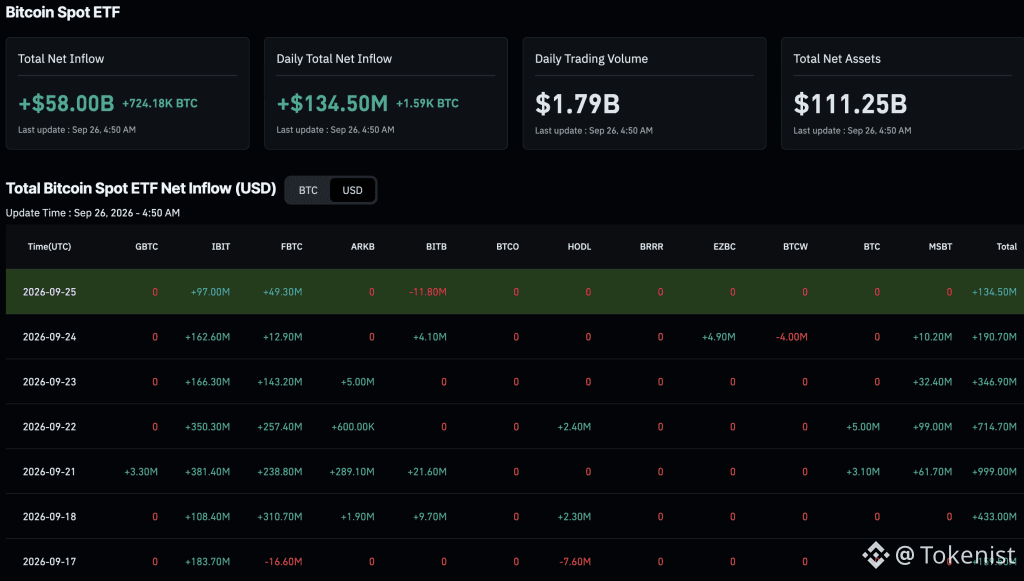
Məqalə
İran Şoku və Bitget Sınması Fonunda Bitcoin Uğuru Ucuzlaşmaya Baxmayaraq DayanırBitcoin (BTC) 28 sentyabr 2026-cı il tarixində təxminən $82,900-a düşdü, 24 saat ərzində -1.8% azalaraq, həftəsonu təxminən $84,400 yaxınlığında ticarət edirdi.
Azalma, Prezident Donald Trampın ABŞ-ın dəniz blokadasını və sanksiyalarını qaldıracağı təqdirdə İranın Hormuz boğazını yenidən açmaq təklifini rədd etməsindən sonra baş verib.
Buna baxmayaraq, Bitcoin dayanıqlı qaldı, son bir həftə ərzində təxminən +1.5% artım göstərdi; bu, ABŞ spot Bitcoin ETF-lərinə tələbin artması ilə üst-üstə düşüb. Brent markalı neft əvvəlki həftəni bir barel üçün təxminən $104 səviyyəsində bağladı və Yaxın Şərqdəki gərginliyin kripto sentimentinə təsir etdiyini göstərir.
İran Şoku və Bitget Sınması Fonunda Bitcoin Uğuru Ucuzlaşmaya Baxmayaraq Dayanır
Bitcoin (BTC) 28 sentyabr 2026-cı il tarixində təxminən $82,900-a düşdü, 24 saat ərzində -1.8% azalaraq, həftəsonu təxminən $84,400 yaxınlığında ticarət edirdi.
Azalma, Prezident Donald Trampın ABŞ-ın dəniz blokadasını və sanksiyalarını qaldıracağı təqdirdə İranın Hormuz boğazını yenidən açmaq təklifini rədd etməsindən sonra baş verib.
Buna baxmayaraq, Bitcoin dayanıqlı qaldı, son bir həftə ərzində təxminən +1.5% artım göstərdi; bu, ABŞ spot Bitcoin ETF-lərinə tələbin artması ilə üst-üstə düşüb. Brent markalı neft əvvəlki həftəni bir barel üçün təxminən $104 səviyyəsində bağladı və Yaxın Şərqdəki gərginliyin kripto sentimentinə təsir etdiyini göstərir.
Azalma, Prezident Donald Trampın ABŞ-ın dəniz blokadasını və sanksiyalarını qaldıracağı təqdirdə İranın Hormuz boğazını yenidən açmaq təklifini rədd etməsindən sonra baş verib.
Buna baxmayaraq, Bitcoin dayanıqlı qaldı, son bir həftə ərzində təxminən +1.5% artım göstərdi; bu, ABŞ spot Bitcoin ETF-lərinə tələbin artması ilə üst-üstə düşüb. Brent markalı neft əvvəlki həftəni bir barel üçün təxminən $104 səviyyəsində bağladı və Yaxın Şərqdəki gərginliyin kripto sentimentinə təsir etdiyini göstərir.
221
·
--
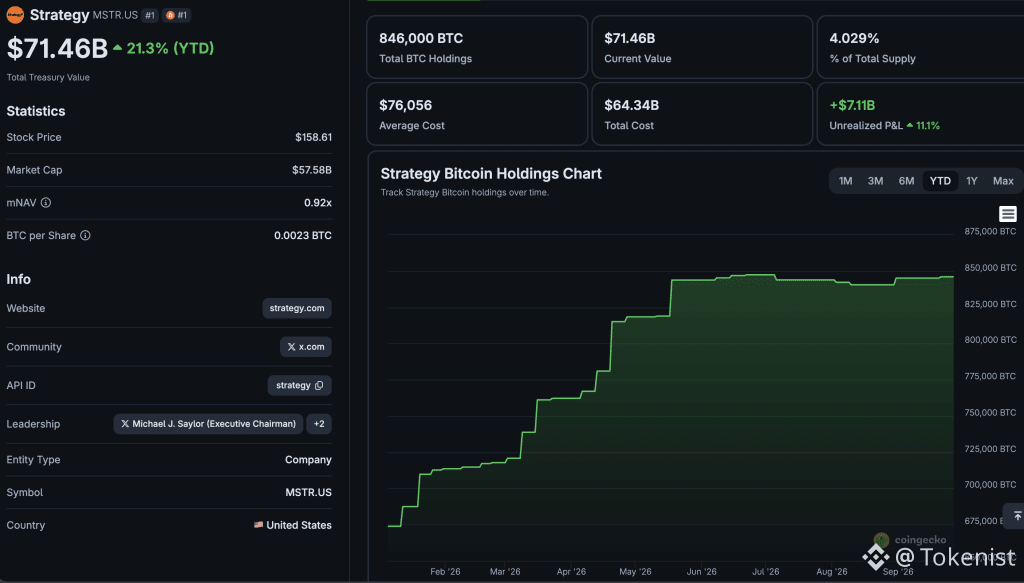
Məqalə
Saylor Bazar Bazar Strategiyası Bitcoin İpucu PaylaşırStrategy Inc. (Nasdaq: MSTR) tərəfindən daha bir Bitcoin alışının gələ biləcəyi bildirilir; belə ki, İcraçı sədr Michael Saylor sentyabrın 27-də şirkətin portfelini əks etdirən bir qrafik paylaşıb. “Daha da çox narıncı əlavə edin” barədə mesajı, Strategy-nin Bitcoin alışlarını narıncı dairələrlə işarələyən qrafiklə müşayiət olunub. Saylor yazıb: “Hələ də daha çox narıncı.”
Qrafik 846,000 BTC-ni və çəkiliş anında bazar dəyəri olaraq 71,81 mlrd. dolları göstərir. O, bir bitcoinə orta əldəetmə qiymətini 75,416 dollar kimi qeyd edir. Dollar dəyəri bitkoinin bazar qiymətini əks etdirir və sikkələrin sayı eyni qalsa belə dəyişə bilər.
Saylor Bazar Bazar Strategiyası Bitcoin İpucu Paylaşır
Strategy Inc. (Nasdaq: MSTR) tərəfindən daha bir Bitcoin alışının gələ biləcəyi bildirilir; belə ki, İcraçı sədr Michael Saylor sentyabrın 27-də şirkətin portfelini əks etdirən bir qrafik paylaşıb. “Daha da çox narıncı əlavə edin” barədə mesajı, Strategy-nin Bitcoin alışlarını narıncı dairələrlə işarələyən qrafiklə müşayiət olunub. Saylor yazıb: “Hələ də daha çox narıncı.”
Qrafik 846,000 BTC-ni və çəkiliş anında bazar dəyəri olaraq 71,81 mlrd. dolları göstərir. O, bir bitcoinə orta əldəetmə qiymətini 75,416 dollar kimi qeyd edir. Dollar dəyəri bitkoinin bazar qiymətini əks etdirir və sikkələrin sayı eyni qalsa belə dəyişə bilər.
Qrafik 846,000 BTC-ni və çəkiliş anında bazar dəyəri olaraq 71,81 mlrd. dolları göstərir. O, bir bitcoinə orta əldəetmə qiymətini 75,416 dollar kimi qeyd edir. Dollar dəyəri bitkoinin bazar qiymətini əks etdirir və sikkələrin sayı eyni qalsa belə dəyişə bilər.
209
·
--
Hack VC-ni ifşa ilə hədələdikdən günlər sonra Hsin-Ju Chuang ölü tapıldıKripto vençur kapital şirkəti Hack VC-də keçmiş tərəfdaş olan Hsin-Ju Chuang, polis hesabatlarına görə, 24 avqust tarixində Kaliforniya Avtomobil Yolları Patrulu əməkdaşlarının Field Road-dan cənubda, İ-15-in cənub istiqamətindəki hissəsinə çağırışdan sonra 37 yaşında dünyasını dəyişib.
O, axtarış yerində ölü elan edilib və səlahiyyətlilər ölümün səbəbini və ya ölüm hallarını ictimai şəkildə açıqlamayıblar. Bu iş kripto dairələrində çox böyük diqqət çəkib; təsdiqlənmiş hər hansı qəsdən zorakılıqla bağlı deyil, Chuangın sektorun təşəbbüs və tərtibatçı ekosisteminə verdiyi töhfəyə görə
Hack VC-ni ifşa ilə hədələdikdən günlər sonra Hsin-Ju Chuang ölü tapıldı
Kripto vençur kapital şirkəti Hack VC-də keçmiş tərəfdaş olan Hsin-Ju Chuang, polis hesabatlarına görə, 24 avqust tarixində Kaliforniya Avtomobil Yolları Patrulu əməkdaşlarının Field Road-dan cənubda, İ-15-in cənub istiqamətindəki hissəsinə çağırışdan sonra 37 yaşında dünyasını dəyişib.
O, axtarış yerində ölü elan edilib və səlahiyyətlilər ölümün səbəbini və ya ölüm hallarını ictimai şəkildə açıqlamayıblar. Bu iş kripto dairələrində çox böyük diqqət çəkib; təsdiqlənmiş hər hansı qəsdən zorakılıqla bağlı deyil, Chuangın sektorun təşəbbüs və tərtibatçı ekosisteminə verdiyi töhfəyə görə
O, axtarış yerində ölü elan edilib və səlahiyyətlilər ölümün səbəbini və ya ölüm hallarını ictimai şəkildə açıqlamayıblar. Bu iş kripto dairələrində çox böyük diqqət çəkib; təsdiqlənmiş hər hansı qəsdən zorakılıqla bağlı deyil, Chuangın sektorun təşəbbüs və tərtibatçı ekosisteminə verdiyi töhfəyə görə
102
·
--
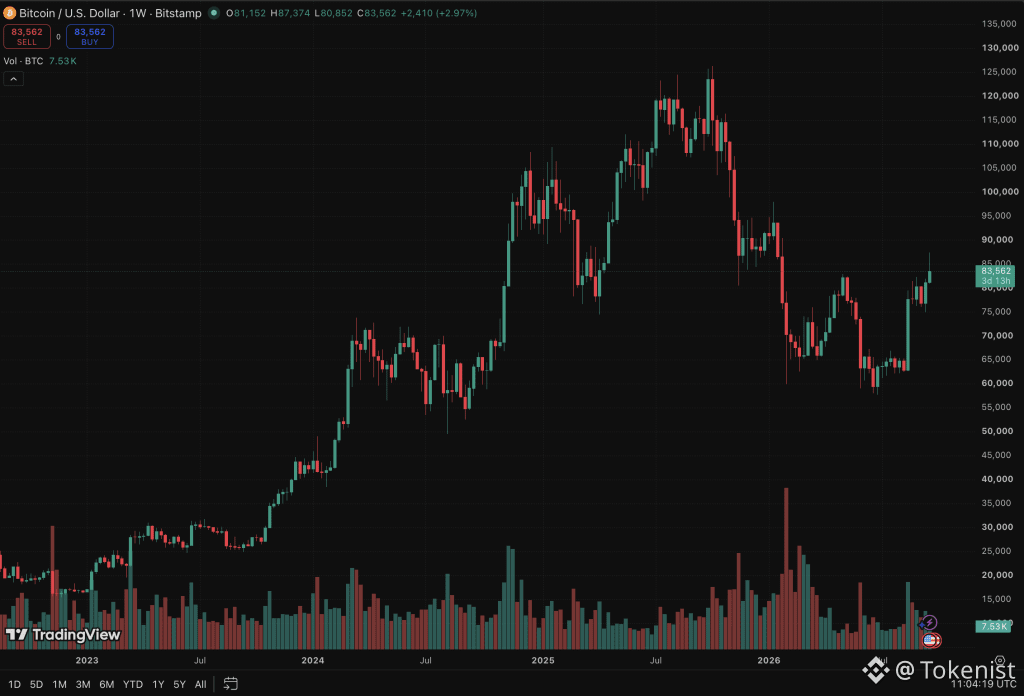
Məqalə
BlackRock Bitcoin Xəbərləri: AI Agentləri Stablecoin-lər üçün Yeni Tələbat Yaradə BilərBlackRock-un Bitcoin xəbərlərində şirkət 23 sentyabr 2026-cı ildə “The Machine-Native Economy” adlı tədqiqat işi dərc edib və geniş miqyaslı süni intellekt (AI) qəbulunun rəqəmsal aktivlərə tələbat mənbəyi kimi “az qiymətləndirilən” bir faktor olduğunu iddia edib.
Dünyanın ən böyük aktiv meneceri bunu qiymət çağırışı kimi deyil, struktur səviyyədə qəbul (adoptiya) tezisi kimi təqdim edir; Bitcoin proqnozu deyil, yaxınmüddətli mexanizm kimi stablecoin-ləri və tokenləşdirilmiş hesablama gücünü hədəfləyir.
Son tədqiqat sənədimiz AI ilə rəqəmsal aktivlər arasındakı artan əlaqəni araşdırır və geniş miqyaslı AI qəbulunun rəqəmsal aktivlər iqtisadiyyatında yeni tələbat, yararlılıq və tətbiqləri necə yarada biləcəyini izah edir. https://t.co/z5T88Orble pic.twitter.com/GMxQqTVmUN
BlackRock Bitcoin Xəbərləri: AI Agentləri Stablecoin-lər üçün Yeni Tələbat Yaradə Bilər
BlackRock-un Bitcoin xəbərlərində şirkət 23 sentyabr 2026-cı ildə “The Machine-Native Economy” adlı tədqiqat işi dərc edib və geniş miqyaslı süni intellekt (AI) qəbulunun rəqəmsal aktivlərə tələbat mənbəyi kimi “az qiymətləndirilən” bir faktor olduğunu iddia edib.
Dünyanın ən böyük aktiv meneceri bunu qiymət çağırışı kimi deyil, struktur səviyyədə qəbul (adoptiya) tezisi kimi təqdim edir; Bitcoin proqnozu deyil, yaxınmüddətli mexanizm kimi stablecoin-ləri və tokenləşdirilmiş hesablama gücünü hədəfləyir.
Son tədqiqat sənədimiz AI ilə rəqəmsal aktivlər arasındakı artan əlaqəni araşdırır və geniş miqyaslı AI qəbulunun rəqəmsal aktivlər iqtisadiyyatında yeni tələbat, yararlılıq və tətbiqləri necə yarada biləcəyini izah edir. https://t.co/z5T88Orble pic.twitter.com/GMxQqTVmUN
Dünyanın ən böyük aktiv meneceri bunu qiymət çağırışı kimi deyil, struktur səviyyədə qəbul (adoptiya) tezisi kimi təqdim edir; Bitcoin proqnozu deyil, yaxınmüddətli mexanizm kimi stablecoin-ləri və tokenləşdirilmiş hesablama gücünü hədəfləyir.
Son tədqiqat sənədimiz AI ilə rəqəmsal aktivlər arasındakı artan əlaqəni araşdırır və geniş miqyaslı AI qəbulunun rəqəmsal aktivlər iqtisadiyyatında yeni tələbat, yararlılıq və tətbiqləri necə yarada biləcəyini izah edir. https://t.co/z5T88Orble pic.twitter.com/GMxQqTVmUN
BTC-3,51%
BLKUS-1,68%
183
·
--
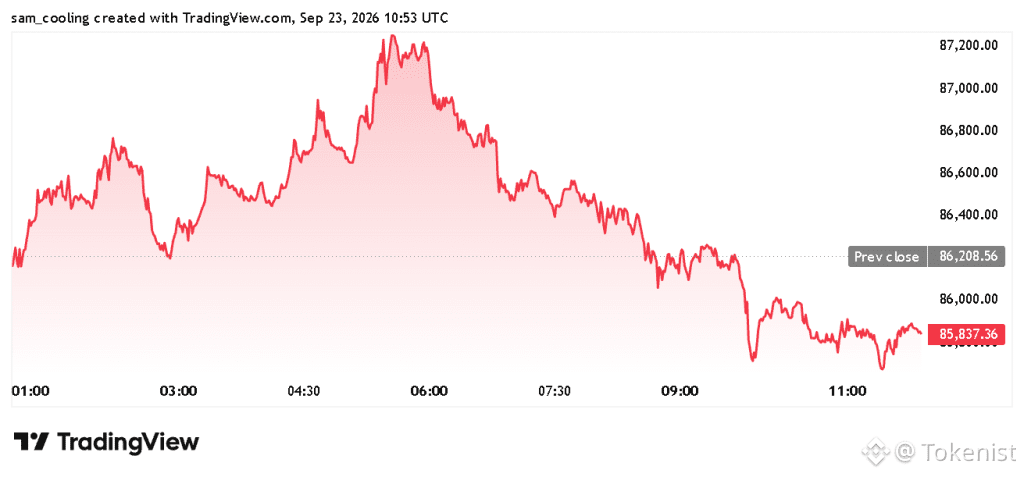
Məqalə
OpenAI və Anthropic BMT-nin Təhlükəsizlik Şurasına süni intellekt riskləri barədə brifinq verəcəkBitcoin (BTC) 85,825.01 ABŞ dolları səviyyəsində ticarət edir, son 24 saat ərzində 0.44% aşağıdır; kripto bazarının diqqəti qrafikdəki səviyyələrə və treyderlərin çoxunun gözləmədiyi “iclas otağından diplomatiyaya” hekayəsinə bölündüyü üçün. Sam Altman (OpenAI) və Dario Amodei (Anthropic) 23 sentyabr 2026-cı il çərşənbə günü Birləşmiş Millətlər Təşkilatının Təhlükəsizlik Şurasına beynəlxalq təhlükəsizliklə bağlı süni intellekt riskləri barədə brifinq verəcəklər; hətta dəvət siyahısı belə hökumətlərin indi bunu nə qədər ciddi qəbul etdiyini sizə göstərir. Başlığın altında qurulan rotasiya mexanizmi yaxından izləməyə dəyər.
OpenAI və Anthropic BMT-nin Təhlükəsizlik Şurasına süni intellekt riskləri barədə brifinq verəcək
Bitcoin (BTC) 85,825.01 ABŞ dolları səviyyəsində ticarət edir, son 24 saat ərzində 0.44% aşağıdır; kripto bazarının diqqəti qrafikdəki səviyyələrə və treyderlərin çoxunun gözləmədiyi “iclas otağından diplomatiyaya” hekayəsinə bölündüyü üçün. Sam Altman (OpenAI) və Dario Amodei (Anthropic) 23 sentyabr 2026-cı il çərşənbə günü Birləşmiş Millətlər Təşkilatının Təhlükəsizlik Şurasına beynəlxalq təhlükəsizliklə bağlı süni intellekt riskləri barədə brifinq verəcəklər; hətta dəvət siyahısı belə hökumətlərin indi bunu nə qədər ciddi qəbul etdiyini sizə göstərir. Başlığın altında qurulan rotasiya mexanizmi yaxından izləməyə dəyər.
1
32
·
--
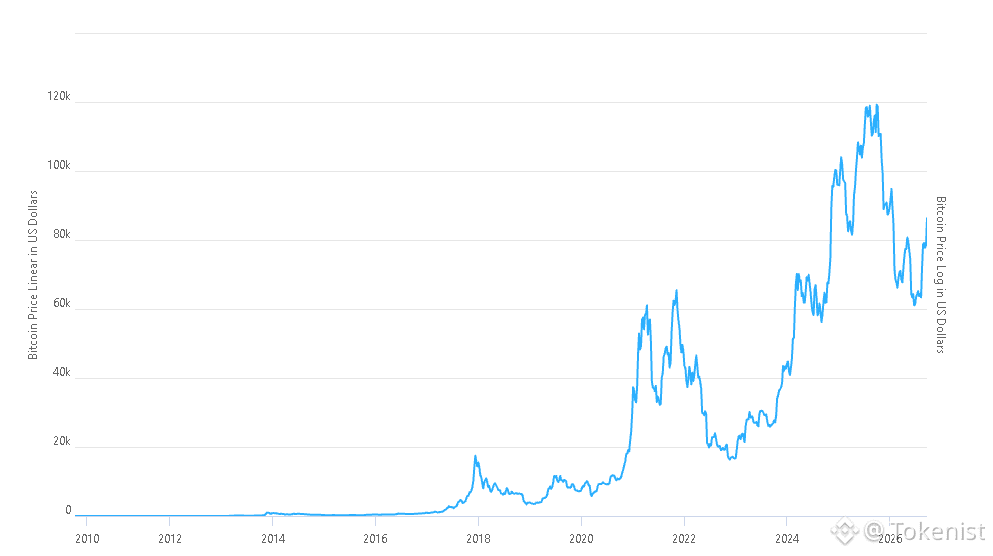
Məqalə
BTC ETF tələbi, yoxsa tarix, Bitcoin-in rallisini yoxlayacaqBitcoin (BTC) sentyabr ayında 23 sentyabr tarixinə olan məlumata görə 85,929 ABŞ dolları səviyyəsində 10,9% yüksək ticarət edirdi və iyulda qazancını 4,8%, avqustdakı qazancını isə 25,2% təşkil edən artımlara əlavə edirdi. Əgər bu sentyabr göstəricisi ayın sonuna qədər qüvvədə qalsa, bu, Bitcoin-in 2012-ci ildən bəri ilk dəfə olaraq iyuldan sentyabradək ardıcıl uğurlu aylara sahib olması demək olacaq — belə bir ardıcıllıq aktivin ticarət tarixində tam olaraq bir dəfə baş verib və tarixi tendensiyanın təsdiqi təkbaşına onu oktyabradək uzatmaq üçün etibar edilə bilməz.
Müqayisə məhz nadirliyinə görə diqqət çəkir. Bitcoin ən azı 2010-cu ilin sonlarından bəri ticarət edir və bu bütöv dövr ərzində iyuldan sentyabradək üç ardıcıl müsbət ay yalnız bir dəfə qeydə alınıb — 2012-ci ildə, CoinDesk-in məlumatına görə, BTC iyulda 41,0%, avqustdə 6,4% və sentyabrda 24,4% artıb. Bu tək məlumat nöqtəsi hazırkı müzakirənin mərkəzindədir və bu, bugünkü vəziyyətə demək olar ki, bənzəməyən bir bazardan gəlir; 2012-ci ilin nazik order book-ları ilə bugünkü spot Bitcoin ETF axın məlumatlarını müqayisə edəndə aradakı fərq aydın görünür.
BTC ETF tələbi, yoxsa tarix, Bitcoin-in rallisini yoxlayacaq
Bitcoin (BTC) sentyabr ayında 23 sentyabr tarixinə olan məlumata görə 85,929 ABŞ dolları səviyyəsində 10,9% yüksək ticarət edirdi və iyulda qazancını 4,8%, avqustdakı qazancını isə 25,2% təşkil edən artımlara əlavə edirdi. Əgər bu sentyabr göstəricisi ayın sonuna qədər qüvvədə qalsa, bu, Bitcoin-in 2012-ci ildən bəri ilk dəfə olaraq iyuldan sentyabradək ardıcıl uğurlu aylara sahib olması demək olacaq — belə bir ardıcıllıq aktivin ticarət tarixində tam olaraq bir dəfə baş verib və tarixi tendensiyanın təsdiqi təkbaşına onu oktyabradək uzatmaq üçün etibar edilə bilməz.
Müqayisə məhz nadirliyinə görə diqqət çəkir. Bitcoin ən azı 2010-cu ilin sonlarından bəri ticarət edir və bu bütöv dövr ərzində iyuldan sentyabradək üç ardıcıl müsbət ay yalnız bir dəfə qeydə alınıb — 2012-ci ildə, CoinDesk-in məlumatına görə, BTC iyulda 41,0%, avqustdə 6,4% və sentyabrda 24,4% artıb. Bu tək məlumat nöqtəsi hazırkı müzakirənin mərkəzindədir və bu, bugünkü vəziyyətə demək olar ki, bənzəməyən bir bazardan gəlir; 2012-ci ilin nazik order book-ları ilə bugünkü spot Bitcoin ETF axın məlumatlarını müqayisə edəndə aradakı fərq aydın görünür.
Müqayisə məhz nadirliyinə görə diqqət çəkir. Bitcoin ən azı 2010-cu ilin sonlarından bəri ticarət edir və bu bütöv dövr ərzində iyuldan sentyabradək üç ardıcıl müsbət ay yalnız bir dəfə qeydə alınıb — 2012-ci ildə, CoinDesk-in məlumatına görə, BTC iyulda 41,0%, avqustdə 6,4% və sentyabrda 24,4% artıb. Bu tək məlumat nöqtəsi hazırkı müzakirənin mərkəzindədir və bu, bugünkü vəziyyətə demək olar ki, bənzəməyən bir bazardan gəlir; 2012-ci ilin nazik order book-ları ilə bugünkü spot Bitcoin ETF axın məlumatlarını müqayisə edəndə aradakı fərq aydın görünür.
1
366
·
--
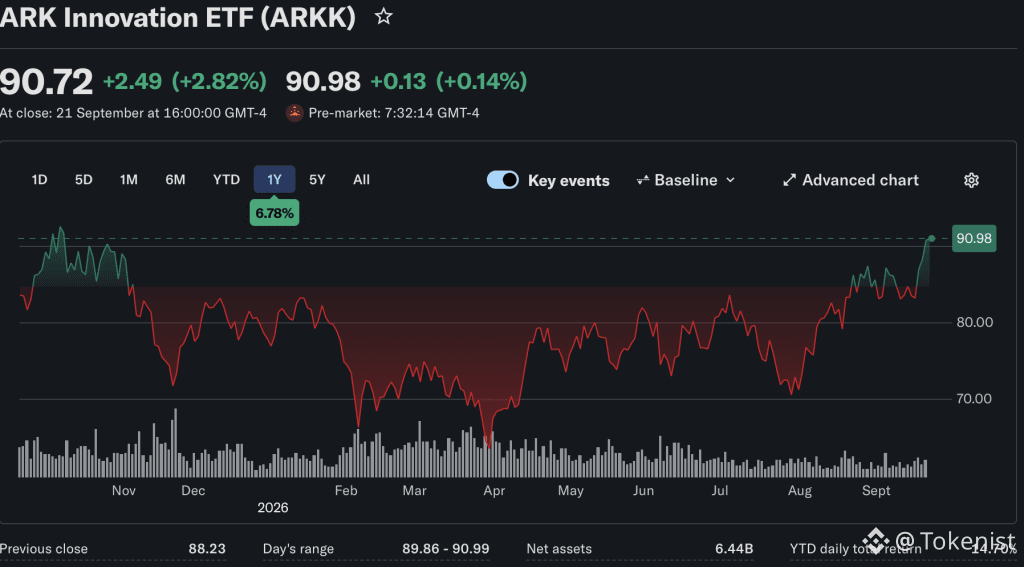
Məqalə
Ark Invest portfelin yenidən balanslaşdırılması çərçivəsində $40M-lıq Bitcoin ETF payını satırARK Invest ARK 21Shares Bitcoin ETF-sinin (ARKB) 1.53 milyon səhmindən 39.8 milyon ABŞ dollarına yaxın dəyəri olan hissəsini satıb; eyni zamanda təxminən 239,000 səhm CoreWeave-ə (CRWV) 24.7 milyon ABŞ dolları dəyərində sərmayə qoyub. Bu barədə Yahoo Finance-in 21 sentyabr 2026-cı il hesabatında məlumat verilir.
Bu uyğunluq Cathie Wood-un əsas strategiyalarında AI infrastrukturu istiqamətində mümkün resurs bölgüsünün dəyişməsinə işarə edə bilər, amma təkcə bu əməliyyatlar ARK-ın daha uzunmüddətli Bitcoin tezisini tərk etdiyini sübut etmir.
Axınlarında +1 milyard dollar olan Bitcoin ETF-lər: son ilin oktyabrındakı “köhnə günlər”dən bəri ən böyük birgünlük axın həcmi. $IBIT 381 milyon dollarla (ümumilikdə 4-cü) öndə gedib, $ARKB və $FBTC isə hər biri 200 milyon dollardan çox paya malik olub, amma Böyük Altılığın hamısı töhfə verib. Üstəlik, bu axınların çoxunun yəqin ki, cümə gününün (Fri) fəaliyyəti ilə bağlı olduğunu, yəni dünənki ilə yox… pic.twitter.com/fbi61a5gR3
Ark Invest portfelin yenidən balanslaşdırılması çərçivəsində $40M-lıq Bitcoin ETF payını satır
ARK Invest ARK 21Shares Bitcoin ETF-sinin (ARKB) 1.53 milyon səhmindən 39.8 milyon ABŞ dollarına yaxın dəyəri olan hissəsini satıb; eyni zamanda təxminən 239,000 səhm CoreWeave-ə (CRWV) 24.7 milyon ABŞ dolları dəyərində sərmayə qoyub. Bu barədə Yahoo Finance-in 21 sentyabr 2026-cı il hesabatında məlumat verilir.
Bu uyğunluq Cathie Wood-un əsas strategiyalarında AI infrastrukturu istiqamətində mümkün resurs bölgüsünün dəyişməsinə işarə edə bilər, amma təkcə bu əməliyyatlar ARK-ın daha uzunmüddətli Bitcoin tezisini tərk etdiyini sübut etmir.
Axınlarında +1 milyard dollar olan Bitcoin ETF-lər: son ilin oktyabrındakı “köhnə günlər”dən bəri ən böyük birgünlük axın həcmi. $IBIT 381 milyon dollarla (ümumilikdə 4-cü) öndə gedib, $ARKB və $FBTC isə hər biri 200 milyon dollardan çox paya malik olub, amma Böyük Altılığın hamısı töhfə verib. Üstəlik, bu axınların çoxunun yəqin ki, cümə gününün (Fri) fəaliyyəti ilə bağlı olduğunu, yəni dünənki ilə yox… pic.twitter.com/fbi61a5gR3
Bu uyğunluq Cathie Wood-un əsas strategiyalarında AI infrastrukturu istiqamətində mümkün resurs bölgüsünün dəyişməsinə işarə edə bilər, amma təkcə bu əməliyyatlar ARK-ın daha uzunmüddətli Bitcoin tezisini tərk etdiyini sübut etmir.
Axınlarında +1 milyard dollar olan Bitcoin ETF-lər: son ilin oktyabrındakı “köhnə günlər”dən bəri ən böyük birgünlük axın həcmi. $IBIT 381 milyon dollarla (ümumilikdə 4-cü) öndə gedib, $ARKB və $FBTC isə hər biri 200 milyon dollardan çox paya malik olub, amma Böyük Altılığın hamısı töhfə verib. Üstəlik, bu axınların çoxunun yəqin ki, cümə gününün (Fri) fəaliyyəti ilə bağlı olduğunu, yəni dünənki ilə yox… pic.twitter.com/fbi61a5gR3
1
241
·
--
CFTC Prerule Senatda məğlubiyyətdən sonra kripto törəmələrini diqqətə gətirirAmerika Birləşmiş Ştatlarının Əmtəə Fyüçers Ticarəti üzrə Komissiyası bu həftə, bu həftə yerləşdirilmiş bir müraciətə görə, Ağ Ev yanında İnformasiya və Tənzimləyici Məsələlər üzrə Ofisə (OIRA) “Kriptoaktiv əməliyyatlarına dair tənzimləmə və Kriptoaktiv bazarlarına dair tənzimləmə” adlı ilkin qayda (prerule) təqdim edib. Mətn ictimaiyyət üçün açıq deyil və bu müraciət yekun tənzimləmə deyil, daha çox erkən prosedur mərhələsini göstərir – amma hekayənin əsas məqamı zamanıdır: Konqresin hərtərəfli bazar-struktur qanun layihəsi olan “Clarity Act” Senatın 60 səslik filibusterə son qoyma (cloture) həddini keçə bilmədikdən bir neçə gün sonra bunu qəbul edir.
CFTC Prerule Senatda məğlubiyyətdən sonra kripto törəmələrini diqqətə gətirir
Amerika Birləşmiş Ştatlarının Əmtəə Fyüçers Ticarəti üzrə Komissiyası bu həftə, bu həftə yerləşdirilmiş bir müraciətə görə, Ağ Ev yanında İnformasiya və Tənzimləyici Məsələlər üzrə Ofisə (OIRA) “Kriptoaktiv əməliyyatlarına dair tənzimləmə və Kriptoaktiv bazarlarına dair tənzimləmə” adlı ilkin qayda (prerule) təqdim edib. Mətn ictimaiyyət üçün açıq deyil və bu müraciət yekun tənzimləmə deyil, daha çox erkən prosedur mərhələsini göstərir – amma hekayənin əsas məqamı zamanıdır: Konqresin hərtərəfli bazar-struktur qanun layihəsi olan “Clarity Act” Senatın 60 səslik filibusterə son qoyma (cloture) həddini keçə bilmədikdən bir neçə gün sonra bunu qəbul edir.
1
140
·
--
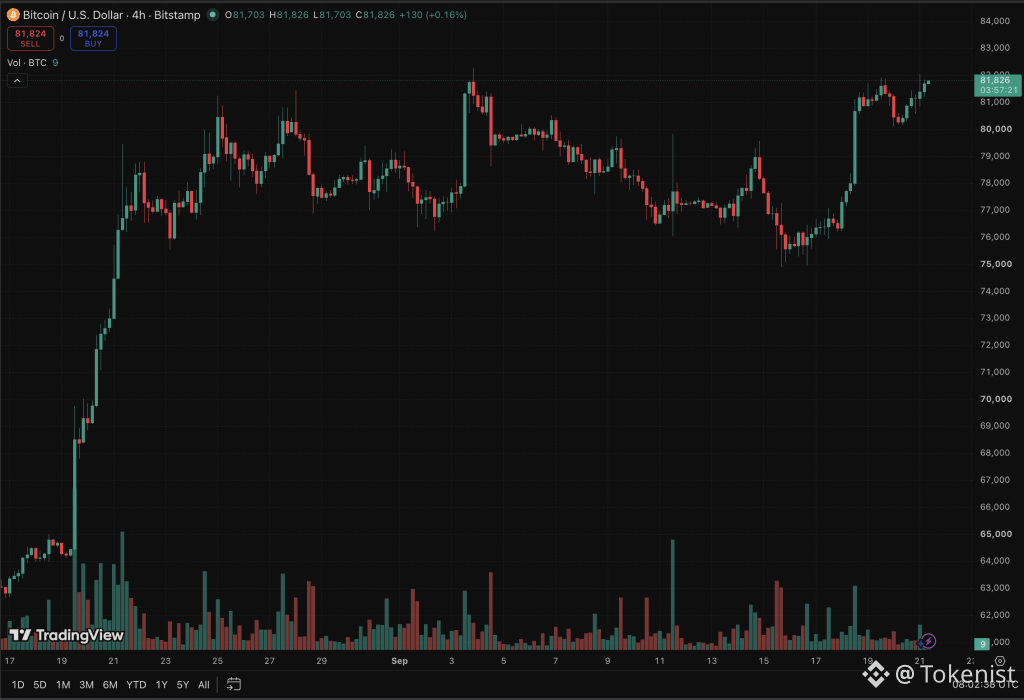
Məqalə
Bitcoinin Həftəlik Bağlanışı Bir Trendin Tərsinə Dönməsini Nə Deyir?CoinGecko məlumatlarına görə, Sentyabrın 20-də bitən həftə üzrə Bitkoin 45 həftə ərzində ilk dəfə özünün 50 həftəlik hərəkətli orta göstəricisindən yuxarı bağlanıb; həftə ərzində demək olar ki, +1.5% artdıqdan və əvvəlki 35 gündə +20% yüksəldikdən sonra qiymət $81,600 yaxınlığında ticarət edib.
Hərəkətli orta göstəricinin özü təxminən $78,115 yaxınlığında yerləşir və bu da Bitkoinin eniş zamanı maneə kimi çıxış etmiş uzunmüddətli trend xəttinin üzərində olmasına işarə edir.
Galaxy Research-in məlumatlarına görə, #Bitcoin ilk dəfə 45 həftə ərzində 50 həftəlik hərəkətli orta göstəricisinin üzərində bağlanıb; bu, son 35 gündə qiymətin 29% artmasından sonra baş verib. Bitkoin sentyabrın 20-də bitən həftəni $81,159 səviyyəsində tamamlayıb, 50 həftəlik hərəkətli…
Bitcoinin Həftəlik Bağlanışı Bir Trendin Tərsinə Dönməsini Nə Deyir?
CoinGecko məlumatlarına görə, Sentyabrın 20-də bitən həftə üzrə Bitkoin 45 həftə ərzində ilk dəfə özünün 50 həftəlik hərəkətli orta göstəricisindən yuxarı bağlanıb; həftə ərzində demək olar ki, +1.5% artdıqdan və əvvəlki 35 gündə +20% yüksəldikdən sonra qiymət $81,600 yaxınlığında ticarət edib.
Hərəkətli orta göstəricinin özü təxminən $78,115 yaxınlığında yerləşir və bu da Bitkoinin eniş zamanı maneə kimi çıxış etmiş uzunmüddətli trend xəttinin üzərində olmasına işarə edir.
Galaxy Research-in məlumatlarına görə, #Bitcoin ilk dəfə 45 həftə ərzində 50 həftəlik hərəkətli orta göstəricisinin üzərində bağlanıb; bu, son 35 gündə qiymətin 29% artmasından sonra baş verib. Bitkoin sentyabrın 20-də bitən həftəni $81,159 səviyyəsində tamamlayıb, 50 həftəlik hərəkətli…
Hərəkətli orta göstəricinin özü təxminən $78,115 yaxınlığında yerləşir və bu da Bitkoinin eniş zamanı maneə kimi çıxış etmiş uzunmüddətli trend xəttinin üzərində olmasına işarə edir.
Galaxy Research-in məlumatlarına görə, #Bitcoin ilk dəfə 45 həftə ərzində 50 həftəlik hərəkətli orta göstəricisinin üzərində bağlanıb; bu, son 35 gündə qiymətin 29% artmasından sonra baş verib. Bitkoin sentyabrın 20-də bitən həftəni $81,159 səviyyəsində tamamlayıb, 50 həftəlik hərəkətli…
2
3.4k
·
--

Məqalə
XRP News: Ledger Kit MPP Dəstəyi Qazanır, XRP və RLUSD üçün AI Ödənişlərini Təminkan edirXRP xəbərlərində RippleX 17 sentyabr 2026-cı il tarixində XRP Ledger AI Starter Kit-in 1.1 versiyasını təqdim edib; Stripe və Tempo-nun həmmüəllifliyi ilə Machine Payments Protocol (MPP) dəstəyini daxil edib.
Bu yeniləmə AI agentlərinə XRP və Ripple-in RLUSD-si ilə API-lar və xidmətlər üçün ödəniş etməyə imkan verir; dəftəri inkişaf edən AI-ödəniş iqtisadiyyatında əsas hesablaşma variantı kimi mövqeləndirir.
MPP sadə bir prosesə əsaslanır: agent resurs tələb edir, qiymət alır, ödənişi təsdiqləyir və sonra resursu əldə edir.
XRP News: Ledger Kit MPP Dəstəyi Qazanır, XRP və RLUSD üçün AI Ödənişlərini Təminkan edir
XRP xəbərlərində RippleX 17 sentyabr 2026-cı il tarixində XRP Ledger AI Starter Kit-in 1.1 versiyasını təqdim edib; Stripe və Tempo-nun həmmüəllifliyi ilə Machine Payments Protocol (MPP) dəstəyini daxil edib.
Bu yeniləmə AI agentlərinə XRP və Ripple-in RLUSD-si ilə API-lar və xidmətlər üçün ödəniş etməyə imkan verir; dəftəri inkişaf edən AI-ödəniş iqtisadiyyatında əsas hesablaşma variantı kimi mövqeləndirir.
MPP sadə bir prosesə əsaslanır: agent resurs tələb edir, qiymət alır, ödənişi təsdiqləyir və sonra resursu əldə edir.
Bu yeniləmə AI agentlərinə XRP və Ripple-in RLUSD-si ilə API-lar və xidmətlər üçün ödəniş etməyə imkan verir; dəftəri inkişaf edən AI-ödəniş iqtisadiyyatında əsas hesablaşma variantı kimi mövqeləndirir.
MPP sadə bir prosesə əsaslanır: agent resurs tələb edir, qiymət alır, ödənişi təsdiqləyir və sonra resursu əldə edir.
424
Daha çox kontent araşdırmaq üçün daxil olun
Binance Square-də qlobal kriptovalyuta istifadəçilərinə qoşulun
⚡️ Kriptovalyuta haqqında ən son və faydalı məlumatları əldə edin.
💬 Dünyanın ən böyük kriptovalyuta birjası tərəfindən etibar edilir.
👍 Doğrulanmış yaradıcılardan gələn real məlumatları kəşf edin.
E-poçt/Telefon nömrəsi
Trenddə olan mövzular
FedMinutesFocusOnOctoberPause
4,912 baxış
Müzakirə edir: 233
#fedminutesfocusonoctoberpause
🚨 OKTYABRDA FED-İN FAİZ ARTIRIMI EHTİMALI 21.6%-Ə QƏDƏR KƏSKİN DÜŞDÜ… $BTC Reaksiya vermək üzrədir? 👀
Fed bazarlara daha bir mühüm ipucu vermək üzrədir.
İnvestorlar bu gün açıqlanacaq FOMC protokolunu gözləyirlər — ən böyük sual isə oktyabrda daha bir faiz artımının, yoxsa fasilənin olub-olmayacağıdır.
Hazırda oktyabrda faizlərin 25 baza bəndi artırılması ehtimalı cəmi 21.6%-ə düşüb.
Bu, gözləntilərdə böyük dəyişiklikdir.
Amma məsələni maraqlı edən budur… 👀
Fed sentyabrda faizləri 3.75%–4.00%-ə qaldırdı, lakin məşğulluq göstəricilərindəki son zəifləmə və inflyasiyanın səngiməsi yaxın vaxtlarda daha bir artımı daha az ehtimallı edir.
Kripto üçün isə bu, əhəmiyyətlidir.
Fed-in fasiləsi maliyyə şərtlərinə təzyiqi azalda və risk iştahasını potensial olaraq artıra bilər.
Bu, BTC üçün dəstək amilinə çevrilə bilər
Amma bir məqam var…
Dollar və ABŞ Xəzinədarlıq istiqrazlarının gəlirliliyi yüksəldikcə Bitcoin artıq təzyiq altındadır.
Ona görə də bu axşam açıqlanacaq protokol bazarda kəskin dalğalanmalara səbəb ola bilər.
Fed-in yumşaq mövqeyi → likvidlik ümidləri → BTC üçün yüksəliş ssenarisi?
Fed-in sərt mövqeyi → yüksək faiz qorxusu → riskli aktivlərə daha çox təzyiq?
Əsas sual budur:
Oktyabr Bitcoin öküzlərinin gözlədiyi fasilə ayına çevrilirmi… yoxsa Fed bazarı yenidən təəccübləndirə bilər? 👀
BTC-ni, Fed-in gözləntilərini və ABŞ Xəzinədarlıq istiqrazlarının gəlirliliyini yaxından izləyin.
#FederalReserve #Fed #Crypto #InterestRates
$ETH
$SOL
Shae Cassler Sw9r
·5 bəyənmə
·7.8k baxış
BinanceLaunchesBinanceIntelligence
900,809 baxış
Müzakirə edir: 5,497
RobinhoodAdds$25MInBitcoinToBalanceSheet
417 baxış
Müzakirə edir: 22