

TamaraSolovei
34 Paylaşımlar

TamaraSolovei
Şikayət et
İstifadəçini blokla
7 İzlənilir
2 İzləyicilər
5 Bəyəndi
Postlar
Tərcüməyə bax
#dusk $DUSK @Dusk_Foundation
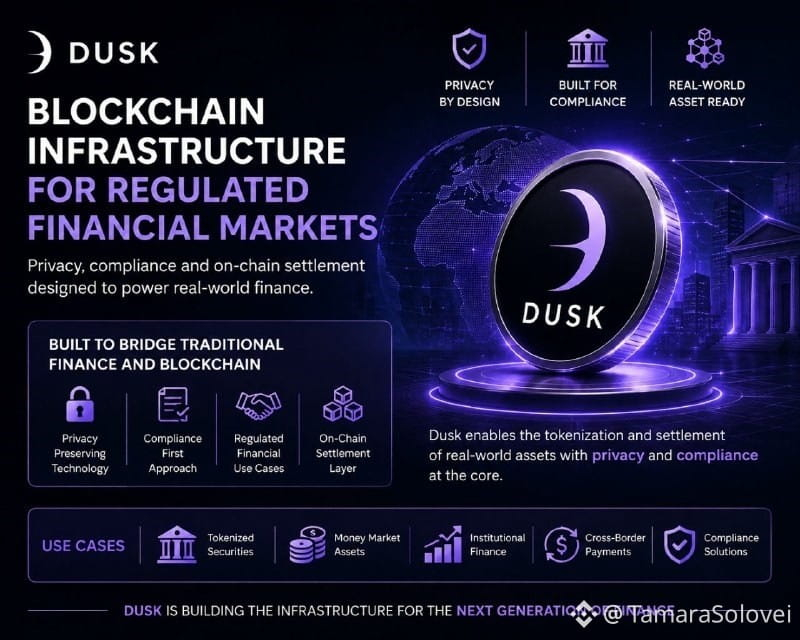
One of the most important things for institutional finance is knowing exactly what happens when a transaction is completed.
That's why Dusk's approach to settlement caught my attention.
In traditional financial markets, settlement can involve multiple systems and intermediaries. On-chain infrastructure offers the possibility of making the process more direct and programmable.
@Dusk_Foundation is building around deterministic settlement, while combining it with privacy and compliance features needed for regulated assets.
This matters because a tokenized security isn't useful simply because it exists on a blockchain.
The infrastructure also needs to answer:
🔹 Who is allowed to hold it?
🔹 Can it be transferred?
🔹 What information must be verified?
🔹 When is the transaction final?
Dusk is trying to make those rules part of the network itself.
For me, that's the more interesting RWA thesis: not just tokenizing assets, but making the entire financial transaction lifecycle programmable and verifiable.
#dusk $DUSK @Dusk
One of the most important things for institutional finance is knowing exactly what happens when a transaction is completed.
That's why Dusk's approach to settlement caught my attention.
In traditional financial markets, settlement can involve multiple systems and intermediaries. On-chain infrastructure offers the possibility of making the process more direct and programmable.
@Dusk is building around deterministic settlement, while combining it with privacy and compliance features needed for regulated assets.
This matters because a tokenized security isn't useful simply because it exists on a blockchain.
The infrastructure also needs to answer:
🔹 Who is allowed to hold it?
🔹 Can it be transferred?
🔹 What information must be verified?
🔹 When is the transaction final?
Dusk is trying to make those rules part of the network itself.
For me, that's the more interesting RWA thesis: not just tokenizing assets, but making the entire financial transaction lifecycle programmable and verifiable.
One of the most important things for institutional finance is knowing exactly what happens when a transaction is completed.
That's why Dusk's approach to settlement caught my attention.
In traditional financial markets, settlement can involve multiple systems and intermediaries. On-chain infrastructure offers the possibility of making the process more direct and programmable.
@Dusk is building around deterministic settlement, while combining it with privacy and compliance features needed for regulated assets.
This matters because a tokenized security isn't useful simply because it exists on a blockchain.
The infrastructure also needs to answer:
🔹 Who is allowed to hold it?
🔹 Can it be transferred?
🔹 What information must be verified?
🔹 When is the transaction final?
Dusk is trying to make those rules part of the network itself.
For me, that's the more interesting RWA thesis: not just tokenizing assets, but making the entire financial transaction lifecycle programmable and verifiable.
103
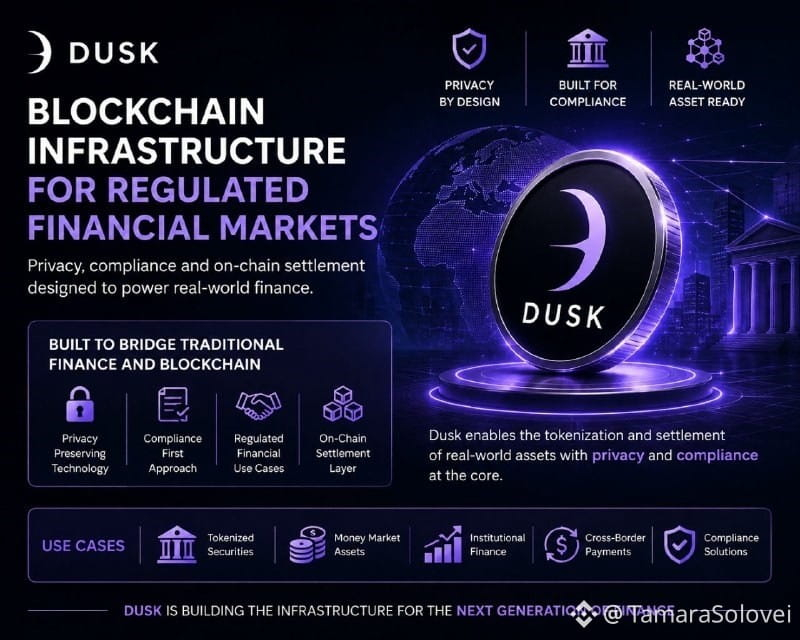
#dusk $DUSK @Dusk_Foundation Bir müddət Dusk-i izlədikdən sonra diqqətimi çəkən əsas məqam şəbəkənin maliyyə bazarları ətrafında necə xüsusi qurulduğudur.
Dusk hər mümkün blokçeyn istifadəsi halını həll etməyə çalışmır.
Onun infrastrukturu daha dar, amma potensial olaraq çox vacib bir problemə fokuslanıb: tənzimlənən maliyyə aktivlərinin on-çeynə işləməsini təmin etmək.
Bu isə ən əvvələn ənənəvi maliyyəni mürəkkəb edən məsələlərlə məşğul olmağı tələb edir:
🔹 İnvestor uyğunluğu
🔹 Aktiv köçürmələri
🔹 Məxfilik və selektiv açıqlama
🔹 Uyğunluq (compliance) tələbləri
🔹 Deterministik settlement
🔹 Tərtibatçılar üçün fərqli icra mühitləri
Və məncə, RWA bazarına yanaşma tərzi elə budur.
Bir aktivin tokenləşdirilməsi sadəcə başlanğıcdır. Əsl çətinlik həmin aktivin real olaraq buraxıla, köçürülə, ticarət edilə və yekunlaşdırıla (settle) biləcəyi infrastrukturun qurulmasıdır—üstəlik onu əhatə edən qaydalar da icra oluna bilsin.
Mənim ən inandırıcı gördüyüm Dusk konsepsiyası budur.
“Hər şey üçün blokçeyn” deyil.
Xüsusilə maliyyə bazarları üçün dizayn edilmiş blokçeyn infrastrukturu.
Dusk bu arxitekturanı əhəmiyyətli real dünya mənimsənilməsinə çevirə biləcəkmi—böyük sual da budur.
Amma RWA sektoru inkişaf etdikcə, məncə infrastruktur problemini həll edən layihələr diqqətə layiqdir.
Hələlik $DUSK mənim izləmə siyahımda qalır.
#dusk $DUSK @Dusk Bir müddət Dusk-i izlədikdən sonra diqqətimi çəkən əsas məqam şəbəkənin maliyyə bazarları ətrafında necə xüsusi qurulduğudur.
Dusk hər mümkün blokçeyn istifadəsi halını həll etməyə çalışmır.
Onun infrastrukturu daha dar, amma potensial olaraq çox vacib bir problemə fokuslanıb: tənzimlənən maliyyə aktivlərinin on-çeynə işləməsini təmin etmək.
Bu isə ən əvvələn ənənəvi maliyyəni mürəkkəb edən məsələlərlə məşğul olmağı tələb edir:
🔹 İnvestor uyğunluğu
🔹 Aktiv köçürmələri
🔹 Məxfilik və selektiv açıqlama
🔹 Uyğunluq (compliance) tələbləri
🔹 Deterministik settlement
🔹 Tərtibatçılar üçün fərqli icra mühitləri
Və məncə, RWA bazarına yanaşma tərzi elə budur.
Bir aktivin tokenləşdirilməsi sadəcə başlanğıcdır. Əsl çətinlik həmin aktivin real olaraq buraxıla, köçürülə, ticarət edilə və yekunlaşdırıla (settle) biləcəyi infrastrukturun qurulmasıdır—üstəlik onu əhatə edən qaydalar da icra oluna bilsin.
Mənim ən inandırıcı gördüyüm Dusk konsepsiyası budur.
“Hər şey üçün blokçeyn” deyil.
Xüsusilə maliyyə bazarları üçün dizayn edilmiş blokçeyn infrastrukturu.
Dusk bu arxitekturanı əhəmiyyətli real dünya mənimsənilməsinə çevirə biləcəkmi—böyük sual da budur.
Amma RWA sektoru inkişaf etdikcə, məncə infrastruktur problemini həll edən layihələr diqqətə layiqdir.
Hələlik $DUSK mənim izləmə siyahımda qalır.
Dusk hər mümkün blokçeyn istifadəsi halını həll etməyə çalışmır.
Onun infrastrukturu daha dar, amma potensial olaraq çox vacib bir problemə fokuslanıb: tənzimlənən maliyyə aktivlərinin on-çeynə işləməsini təmin etmək.
Bu isə ən əvvələn ənənəvi maliyyəni mürəkkəb edən məsələlərlə məşğul olmağı tələb edir:
🔹 İnvestor uyğunluğu
🔹 Aktiv köçürmələri
🔹 Məxfilik və selektiv açıqlama
🔹 Uyğunluq (compliance) tələbləri
🔹 Deterministik settlement
🔹 Tərtibatçılar üçün fərqli icra mühitləri
Və məncə, RWA bazarına yanaşma tərzi elə budur.
Bir aktivin tokenləşdirilməsi sadəcə başlanğıcdır. Əsl çətinlik həmin aktivin real olaraq buraxıla, köçürülə, ticarət edilə və yekunlaşdırıla (settle) biləcəyi infrastrukturun qurulmasıdır—üstəlik onu əhatə edən qaydalar da icra oluna bilsin.
Mənim ən inandırıcı gördüyüm Dusk konsepsiyası budur.
“Hər şey üçün blokçeyn” deyil.
Xüsusilə maliyyə bazarları üçün dizayn edilmiş blokçeyn infrastrukturu.
Dusk bu arxitekturanı əhəmiyyətli real dünya mənimsənilməsinə çevirə biləcəkmi—böyük sual da budur.
Amma RWA sektoru inkişaf etdikcə, məncə infrastruktur problemini həll edən layihələr diqqətə layiqdir.
Hələlik $DUSK mənim izləmə siyahımda qalır.
83
Tərcüməyə bax
#dusk $DUSK @Dusk_Foundation
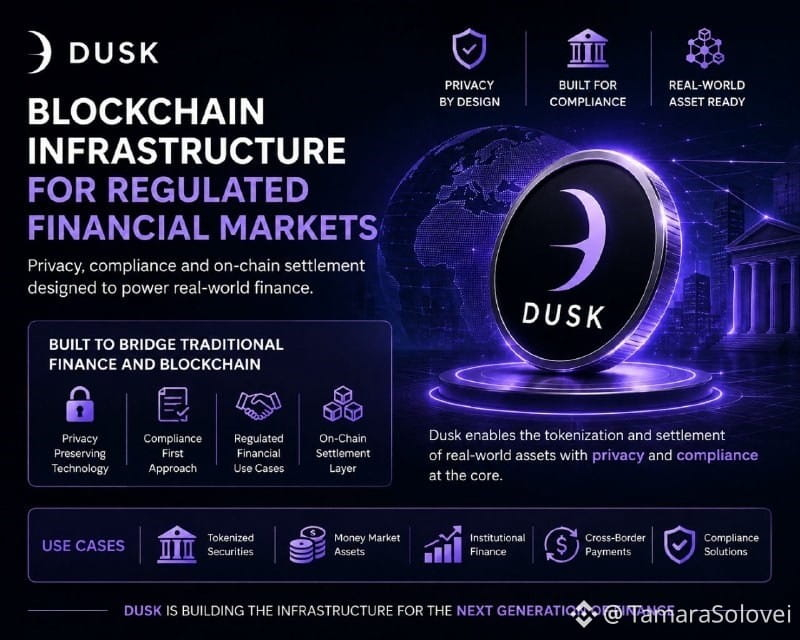
The most interesting part of Dusk might be what happens between the moment an asset is issued and the moment it reaches an investor.
Regulated finance has a lot of conditions that need to be enforced before an asset can actually move: investor eligibility, transfer restrictions, compliance checks and settlement.
@Dusk_Foundation is building these requirements into the blockchain infrastructure itself.
That means the network isn't treating compliance as a separate layer that has to be bolted onto every application. Instead, regulated asset workflows can be built around native access controls, privacy-preserving transactions and deterministic settlement.
I think this approach makes sense for institutional markets.
A public blockchain can provide transparency, but financial institutions also need controlled access and predictable execution.
Dusk is trying to combine both:
Transparent infrastructure where it helps.
Privacy where it's necessary.
Verification where regulation requires it.
If tokenized securities eventually become a major market, these details could matter far more than simply having another blockchain capable of issuing tokens.
The real test is whether financial institutions can actually operate on the network.
That's what I'll be watching with $DUSK .
#dusk $DUSK @Dusk
The most interesting part of Dusk might be what happens between the moment an asset is issued and the moment it reaches an investor.
Regulated finance has a lot of conditions that need to be enforced before an asset can actually move: investor eligibility, transfer restrictions, compliance checks and settlement.
@Dusk is building these requirements into the blockchain infrastructure itself.
That means the network isn't treating compliance as a separate layer that has to be bolted onto every application. Instead, regulated asset workflows can be built around native access controls, privacy-preserving transactions and deterministic settlement.
I think this approach makes sense for institutional markets.
A public blockchain can provide transparency, but financial institutions also need controlled access and predictable execution.
Dusk is trying to combine both:
Transparent infrastructure where it helps.
Privacy where it's necessary.
Verification where regulation requires it.
If tokenized securities eventually become a major market, these details could matter far more than simply having another blockchain capable of issuing tokens.
The real test is whether financial institutions can actually operate on the network.
That's what I'll be watching with $DUSK .
The most interesting part of Dusk might be what happens between the moment an asset is issued and the moment it reaches an investor.
Regulated finance has a lot of conditions that need to be enforced before an asset can actually move: investor eligibility, transfer restrictions, compliance checks and settlement.
@Dusk is building these requirements into the blockchain infrastructure itself.
That means the network isn't treating compliance as a separate layer that has to be bolted onto every application. Instead, regulated asset workflows can be built around native access controls, privacy-preserving transactions and deterministic settlement.
I think this approach makes sense for institutional markets.
A public blockchain can provide transparency, but financial institutions also need controlled access and predictable execution.
Dusk is trying to combine both:
Transparent infrastructure where it helps.
Privacy where it's necessary.
Verification where regulation requires it.
If tokenized securities eventually become a major market, these details could matter far more than simply having another blockchain capable of issuing tokens.
The real test is whether financial institutions can actually operate on the network.
That's what I'll be watching with $DUSK .
80
Tərcüməyə bax
#dusk $DUSK @Dusk_Foundation
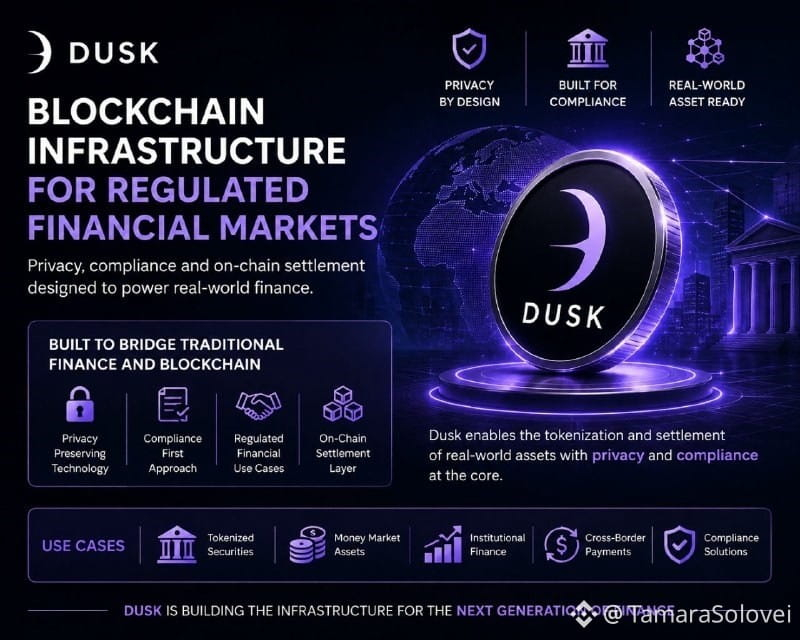
Most people hear “RWA” and immediately think about tokenizing government bonds or putting real estate onchain.
But I think the more interesting opportunity is much broader.
Private markets.
A huge amount of economic activity happens outside public markets.
Private companies need financing.
Investors need access to opportunities.
Ownership needs to be recorded.
Transfers need to be controlled.
Payments and settlement need to happen.
And every participant needs to know who is actually allowed to do what.
Today, a lot of this infrastructure is fragmented across issuers, banks, custodians, administrators, brokers and other intermediaries.
Tokenization doesn't automatically solve that.
Putting an asset on a blockchain doesn't magically create liquidity, demand or legal certainty.
The interesting part is what happens when the entire lifecycle of an asset can be represented digitally.
Issuance.
Investor eligibility.
Ownership.
Transfers.
Dividends.
Voting.
Settlement.
That's where @Dusk_Foundation _Foundation is taking an interesting approach.
Dusk isn't simply saying “let's put more assets onchain.”
It's trying to build infrastructure where regulated assets can exist onchain while still dealing with the requirements that financial markets can't ignore.
Privacy.
Selective disclosure.
Access controls.
Compliance.
Deterministic settlement.
And that's particularly important for private markets.
A public blockchain gives you transparency by default.
Financial markets often need the opposite: controlled visibility.
An investor may need to prove they're eligible without exposing every piece of personal information.
A company may need to keep sensitive positions private.
A regulated venue may need to know exactly who can hold or transfer an asset.
That doesn't mean blockchain has to choose between transparency and privacy.
It means the infrastructure needs to be designed for both.
This is why I'm paying attention to Dusk.
The interesting question isn't whether we can tokenize another asset.
#dusk $DUSK @Dusk
Most people hear “RWA” and immediately think about tokenizing government bonds or putting real estate onchain.
But I think the more interesting opportunity is much broader.
Private markets.
A huge amount of economic activity happens outside public markets.
Private companies need financing.
Investors need access to opportunities.
Ownership needs to be recorded.
Transfers need to be controlled.
Payments and settlement need to happen.
And every participant needs to know who is actually allowed to do what.
Today, a lot of this infrastructure is fragmented across issuers, banks, custodians, administrators, brokers and other intermediaries.
Tokenization doesn't automatically solve that.
Putting an asset on a blockchain doesn't magically create liquidity, demand or legal certainty.
The interesting part is what happens when the entire lifecycle of an asset can be represented digitally.
Issuance.
Investor eligibility.
Ownership.
Transfers.
Dividends.
Voting.
Settlement.
That's where @Dusk _Foundation is taking an interesting approach.
Dusk isn't simply saying “let's put more assets onchain.”
It's trying to build infrastructure where regulated assets can exist onchain while still dealing with the requirements that financial markets can't ignore.
Privacy.
Selective disclosure.
Access controls.
Compliance.
Deterministic settlement.
And that's particularly important for private markets.
A public blockchain gives you transparency by default.
Financial markets often need the opposite: controlled visibility.
An investor may need to prove they're eligible without exposing every piece of personal information.
A company may need to keep sensitive positions private.
A regulated venue may need to know exactly who can hold or transfer an asset.
That doesn't mean blockchain has to choose between transparency and privacy.
It means the infrastructure needs to be designed for both.
This is why I'm paying attention to Dusk.
The interesting question isn't whether we can tokenize another asset.
Most people hear “RWA” and immediately think about tokenizing government bonds or putting real estate onchain.
But I think the more interesting opportunity is much broader.
Private markets.
A huge amount of economic activity happens outside public markets.
Private companies need financing.
Investors need access to opportunities.
Ownership needs to be recorded.
Transfers need to be controlled.
Payments and settlement need to happen.
And every participant needs to know who is actually allowed to do what.
Today, a lot of this infrastructure is fragmented across issuers, banks, custodians, administrators, brokers and other intermediaries.
Tokenization doesn't automatically solve that.
Putting an asset on a blockchain doesn't magically create liquidity, demand or legal certainty.
The interesting part is what happens when the entire lifecycle of an asset can be represented digitally.
Issuance.
Investor eligibility.
Ownership.
Transfers.
Dividends.
Voting.
Settlement.
That's where @Dusk _Foundation is taking an interesting approach.
Dusk isn't simply saying “let's put more assets onchain.”
It's trying to build infrastructure where regulated assets can exist onchain while still dealing with the requirements that financial markets can't ignore.
Privacy.
Selective disclosure.
Access controls.
Compliance.
Deterministic settlement.
And that's particularly important for private markets.
A public blockchain gives you transparency by default.
Financial markets often need the opposite: controlled visibility.
An investor may need to prove they're eligible without exposing every piece of personal information.
A company may need to keep sensitive positions private.
A regulated venue may need to know exactly who can hold or transfer an asset.
That doesn't mean blockchain has to choose between transparency and privacy.
It means the infrastructure needs to be designed for both.
This is why I'm paying attention to Dusk.
The interesting question isn't whether we can tokenize another asset.
71
Tərcüməyə bax
#dusk $DUSK @Dusk_Foundation
Most people hear “RWA” and immediately think about tokenizing government bonds or putting real estate onchain.
But I think the more interesting opportunity is much broader.
Private markets.
A huge amount of economic activity happens outside public markets.
Private companies need financing.
Investors need access to opportunities.
Ownership needs to be recorded.
Transfers need to be controlled.
Payments and settlement need to happen.
And every participant needs to know who is actually allowed to do what.
Today, a lot of this infrastructure is fragmented across issuers, banks, custodians, administrators, brokers and other intermediaries.
Tokenization doesn't automatically solve that.
Putting an asset on a blockchain doesn't magically create liquidity, demand or legal certainty.
The interesting part is what happens when the entire lifecycle of an asset can be represented digitally.
Issuance.
Investor eligibility.
Ownership.
Transfers.
Dividends.
Voting.
Settlement.
That's where @Dusk_Foundation _Foundation is taking an interesting approach.
Dusk isn't simply saying “let's put more assets onchain.”
It's trying to build infrastructure where regulated assets can exist onchain while still dealing with the requirements that financial markets can't ignore.
Privacy.
Selective disclosure.
Access controls.
Compliance.
Deterministic settlement.
And that's particularly important for private markets.
A public blockchain gives you transparency by default.
Financial markets often need the opposite: controlled visibility.
An investor may need to prove they're eligible without exposing every piece of personal information.
A company may need to keep sensitive positions private.
A regulated venue may need to know exactly who can hold or transfer an asset.
That doesn't mean blockchain has to choose between transparency and privacy.
It means the infrastructure needs to be designed for both.
This is why I'm paying attention to Dusk.
The interesting question isn't whether we can tokenize another asset.
#dusk $DUSK @Dusk
Most people hear “RWA” and immediately think about tokenizing government bonds or putting real estate onchain.
But I think the more interesting opportunity is much broader.
Private markets.
A huge amount of economic activity happens outside public markets.
Private companies need financing.
Investors need access to opportunities.
Ownership needs to be recorded.
Transfers need to be controlled.
Payments and settlement need to happen.
And every participant needs to know who is actually allowed to do what.
Today, a lot of this infrastructure is fragmented across issuers, banks, custodians, administrators, brokers and other intermediaries.
Tokenization doesn't automatically solve that.
Putting an asset on a blockchain doesn't magically create liquidity, demand or legal certainty.
The interesting part is what happens when the entire lifecycle of an asset can be represented digitally.
Issuance.
Investor eligibility.
Ownership.
Transfers.
Dividends.
Voting.
Settlement.
That's where @Dusk _Foundation is taking an interesting approach.
Dusk isn't simply saying “let's put more assets onchain.”
It's trying to build infrastructure where regulated assets can exist onchain while still dealing with the requirements that financial markets can't ignore.
Privacy.
Selective disclosure.
Access controls.
Compliance.
Deterministic settlement.
And that's particularly important for private markets.
A public blockchain gives you transparency by default.
Financial markets often need the opposite: controlled visibility.
An investor may need to prove they're eligible without exposing every piece of personal information.
A company may need to keep sensitive positions private.
A regulated venue may need to know exactly who can hold or transfer an asset.
That doesn't mean blockchain has to choose between transparency and privacy.
It means the infrastructure needs to be designed for both.
This is why I'm paying attention to Dusk.
The interesting question isn't whether we can tokenize another asset.
Most people hear “RWA” and immediately think about tokenizing government bonds or putting real estate onchain.
But I think the more interesting opportunity is much broader.
Private markets.
A huge amount of economic activity happens outside public markets.
Private companies need financing.
Investors need access to opportunities.
Ownership needs to be recorded.
Transfers need to be controlled.
Payments and settlement need to happen.
And every participant needs to know who is actually allowed to do what.
Today, a lot of this infrastructure is fragmented across issuers, banks, custodians, administrators, brokers and other intermediaries.
Tokenization doesn't automatically solve that.
Putting an asset on a blockchain doesn't magically create liquidity, demand or legal certainty.
The interesting part is what happens when the entire lifecycle of an asset can be represented digitally.
Issuance.
Investor eligibility.
Ownership.
Transfers.
Dividends.
Voting.
Settlement.
That's where @Dusk _Foundation is taking an interesting approach.
Dusk isn't simply saying “let's put more assets onchain.”
It's trying to build infrastructure where regulated assets can exist onchain while still dealing with the requirements that financial markets can't ignore.
Privacy.
Selective disclosure.
Access controls.
Compliance.
Deterministic settlement.
And that's particularly important for private markets.
A public blockchain gives you transparency by default.
Financial markets often need the opposite: controlled visibility.
An investor may need to prove they're eligible without exposing every piece of personal information.
A company may need to keep sensitive positions private.
A regulated venue may need to know exactly who can hold or transfer an asset.
That doesn't mean blockchain has to choose between transparency and privacy.
It means the infrastructure needs to be designed for both.
This is why I'm paying attention to Dusk.
The interesting question isn't whether we can tokenize another asset.
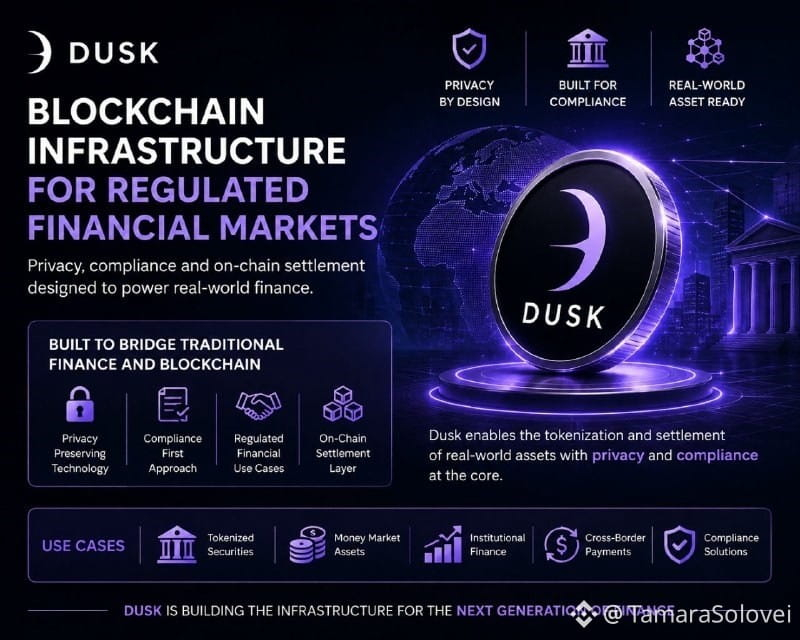
64
Tərcüməyə bax
#termmax @termmax DeFi becomes much more interesting when financial positions can be built like Lego blocks.
That’s one reason I’m watching TermMax.
The protocol is focused on fixed-rate lending and borrowing with defined maturities, but the bigger idea is what these predictable positions can enable on top of them.
A fixed-rate position can become a building block for:
🔹 Hedging interest-rate exposure
🔹 More predictable leverage
🔹 Fixed-income strategies
🔹 Vaults and structured products
🔹 More precise capital management
Instead of every strategy depending on whatever the floating market rate happens to be at a particular moment, users can build around a known rate and a defined time horizon.
That's important because sophisticated financial strategies usually need more than liquidity. They need predictability.
TermMax is essentially bringing another primitive from traditional fixed-income markets into DeFi and making it composable with on-chain infrastructure.
The interesting question is how far fixed-rate markets can go once they become programmable.
$TMX is one token I'll be watching as this sector develops.
#termmax @TermMax DeFi becomes much more interesting when financial positions can be built like Lego blocks.
That’s one reason I’m watching TermMax.
The protocol is focused on fixed-rate lending and borrowing with defined maturities, but the bigger idea is what these predictable positions can enable on top of them.
A fixed-rate position can become a building block for:
🔹 Hedging interest-rate exposure
🔹 More predictable leverage
🔹 Fixed-income strategies
🔹 Vaults and structured products
🔹 More precise capital management
Instead of every strategy depending on whatever the floating market rate happens to be at a particular moment, users can build around a known rate and a defined time horizon.
That's important because sophisticated financial strategies usually need more than liquidity. They need predictability.
TermMax is essentially bringing another primitive from traditional fixed-income markets into DeFi and making it composable with on-chain infrastructure.
The interesting question is how far fixed-rate markets can go once they become programmable.
$TMX is one token I'll be watching as this sector develops.
That’s one reason I’m watching TermMax.
The protocol is focused on fixed-rate lending and borrowing with defined maturities, but the bigger idea is what these predictable positions can enable on top of them.
A fixed-rate position can become a building block for:
🔹 Hedging interest-rate exposure
🔹 More predictable leverage
🔹 Fixed-income strategies
🔹 Vaults and structured products
🔹 More precise capital management
Instead of every strategy depending on whatever the floating market rate happens to be at a particular moment, users can build around a known rate and a defined time horizon.
That's important because sophisticated financial strategies usually need more than liquidity. They need predictability.
TermMax is essentially bringing another primitive from traditional fixed-income markets into DeFi and making it composable with on-chain infrastructure.
The interesting question is how far fixed-rate markets can go once they become programmable.
$TMX is one token I'll be watching as this sector develops.
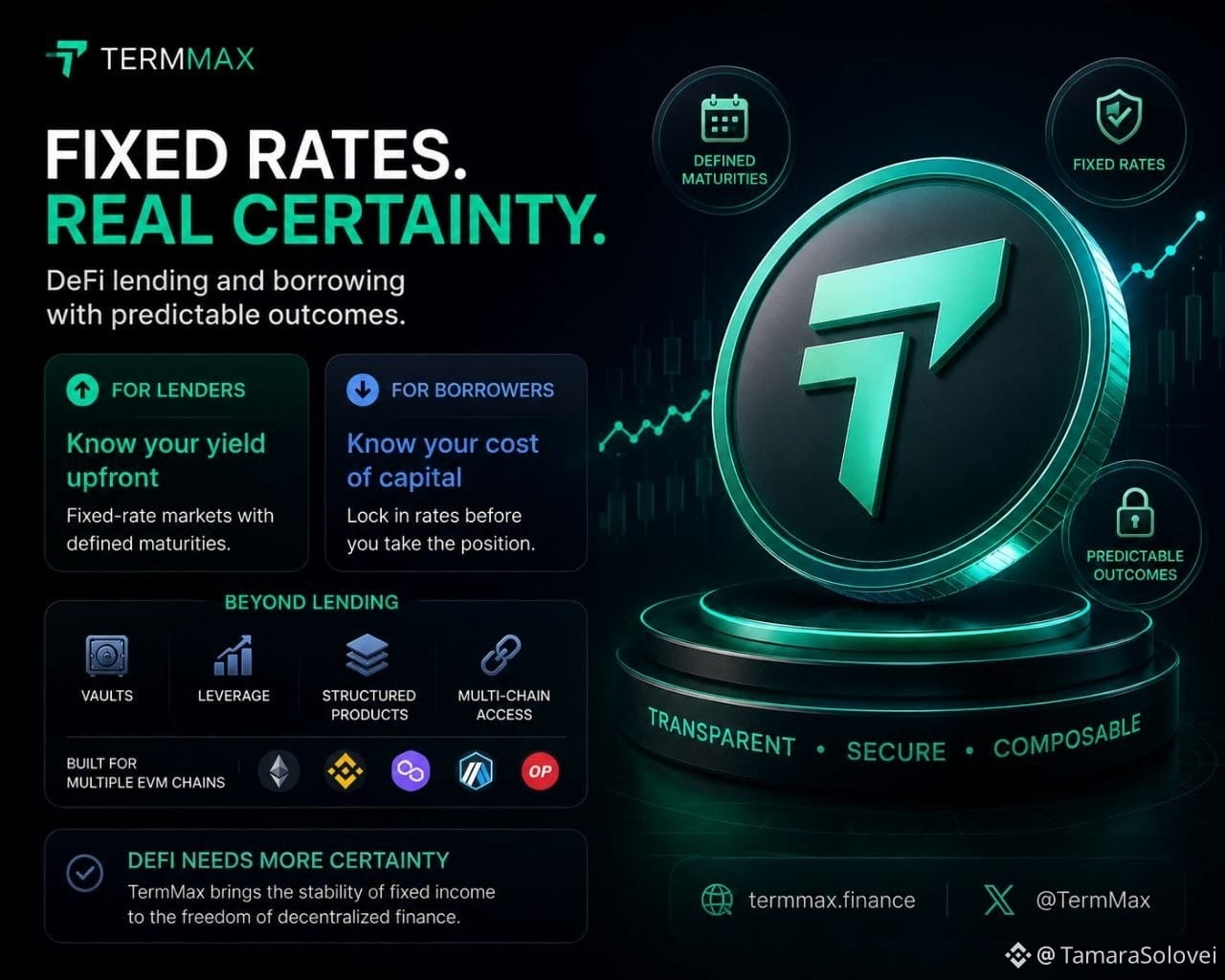
57
Tərcüməyə bax
#dusk $DUSK @Dusk_Foundation
One thing I find interesting about Dusk is that it isn't trying to force every financial application into the same execution model.
The network provides DuskVM for native Rust/WASM applications and DuskEVM for developers who want an Ethereum-compatible environment.
That creates an interesting balance.
Developers can use familiar EVM tooling and smart-contract languages, while applications that need deeper access to Dusk's native capabilities can build directly on DuskVM.
Underneath both environments is DuskDS, providing the settlement and data-availability layer.
This architecture makes sense for a network focused on financial applications. Different products can have different technical requirements without necessarily needing completely separate chains.
And the native $DUSK token ties the ecosystem together through transaction fees and network staking.
For me, the interesting question isn't whether Dusk can attract developers — it's whether this architecture can turn into real financial activity on-chain.
If it does, $DUSK becomes more than just a token attached to an RWA narrative. It becomes part of the infrastructure powering the applications built on Dusk.
#dusk $DUSK @Dusk
One thing I find interesting about Dusk is that it isn't trying to force every financial application into the same execution model.
The network provides DuskVM for native Rust/WASM applications and DuskEVM for developers who want an Ethereum-compatible environment.
That creates an interesting balance.
Developers can use familiar EVM tooling and smart-contract languages, while applications that need deeper access to Dusk's native capabilities can build directly on DuskVM.
Underneath both environments is DuskDS, providing the settlement and data-availability layer.
This architecture makes sense for a network focused on financial applications. Different products can have different technical requirements without necessarily needing completely separate chains.
And the native $DUSK token ties the ecosystem together through transaction fees and network staking.
For me, the interesting question isn't whether Dusk can attract developers — it's whether this architecture can turn into real financial activity on-chain.
If it does, $DUSK becomes more than just a token attached to an RWA narrative. It becomes part of the infrastructure powering the applications built on Dusk.
One thing I find interesting about Dusk is that it isn't trying to force every financial application into the same execution model.
The network provides DuskVM for native Rust/WASM applications and DuskEVM for developers who want an Ethereum-compatible environment.
That creates an interesting balance.
Developers can use familiar EVM tooling and smart-contract languages, while applications that need deeper access to Dusk's native capabilities can build directly on DuskVM.
Underneath both environments is DuskDS, providing the settlement and data-availability layer.
This architecture makes sense for a network focused on financial applications. Different products can have different technical requirements without necessarily needing completely separate chains.
And the native $DUSK token ties the ecosystem together through transaction fees and network staking.
For me, the interesting question isn't whether Dusk can attract developers — it's whether this architecture can turn into real financial activity on-chain.
If it does, $DUSK becomes more than just a token attached to an RWA narrative. It becomes part of the infrastructure powering the applications built on Dusk.
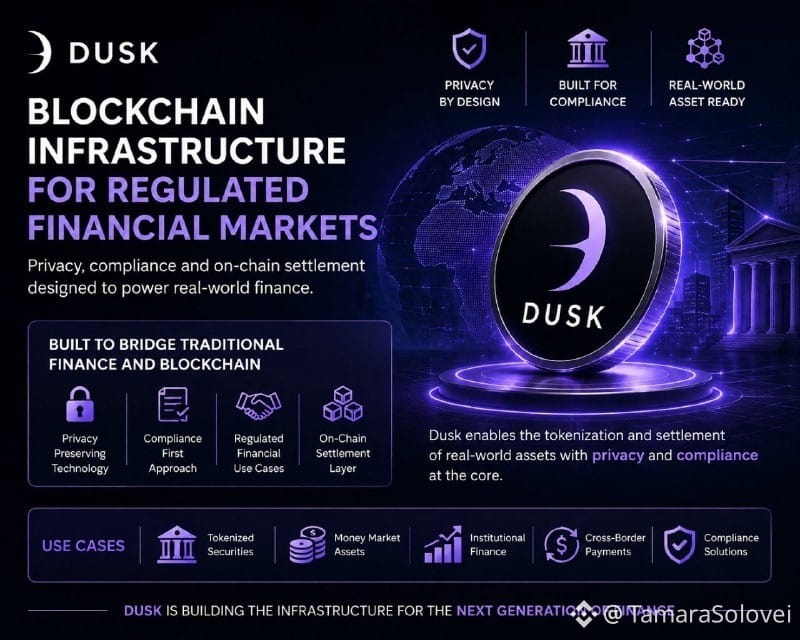
79
Tərcüməyə bax
#dusk $DUSK @Dusk_Foundation
Dusk is taking an interesting approach to one of the biggest problems in on-chain finance: making different parts of the market work together.
A tokenized security needs more than a blockchain address. It needs rules around who can hold it, how it can move, what information can be disclosed and how settlement is finalized.
Dusk is building these requirements into its network rather than treating them as separate infrastructure.
What stands out to me is the combination of:
🔹 Permissioned access where required
🔹 Privacy-preserving transactions
🔹 Selective disclosure
🔹 Deterministic settlement
🔹 EVM compatibility for developers
That combination could make Dusk useful for financial applications where completely public transactions aren't practical, but completely private systems aren't acceptable either.
The interesting part of the Dusk thesis isn't putting finance on a blockchain. It's making blockchain infrastructure fit the way regulated finance actually works.
If RWAs continue moving toward institutional adoption, that's a niche worth watching.
#dusk $DUSK @Dusk
Dusk is taking an interesting approach to one of the biggest problems in on-chain finance: making different parts of the market work together.
A tokenized security needs more than a blockchain address. It needs rules around who can hold it, how it can move, what information can be disclosed and how settlement is finalized.
Dusk is building these requirements into its network rather than treating them as separate infrastructure.
What stands out to me is the combination of:
🔹 Permissioned access where required
🔹 Privacy-preserving transactions
🔹 Selective disclosure
🔹 Deterministic settlement
🔹 EVM compatibility for developers
That combination could make Dusk useful for financial applications where completely public transactions aren't practical, but completely private systems aren't acceptable either.
The interesting part of the Dusk thesis isn't putting finance on a blockchain. It's making blockchain infrastructure fit the way regulated finance actually works.
If RWAs continue moving toward institutional adoption, that's a niche worth watching.
Dusk is taking an interesting approach to one of the biggest problems in on-chain finance: making different parts of the market work together.
A tokenized security needs more than a blockchain address. It needs rules around who can hold it, how it can move, what information can be disclosed and how settlement is finalized.
Dusk is building these requirements into its network rather than treating them as separate infrastructure.
What stands out to me is the combination of:
🔹 Permissioned access where required
🔹 Privacy-preserving transactions
🔹 Selective disclosure
🔹 Deterministic settlement
🔹 EVM compatibility for developers
That combination could make Dusk useful for financial applications where completely public transactions aren't practical, but completely private systems aren't acceptable either.
The interesting part of the Dusk thesis isn't putting finance on a blockchain. It's making blockchain infrastructure fit the way regulated finance actually works.
If RWAs continue moving toward institutional adoption, that's a niche worth watching.
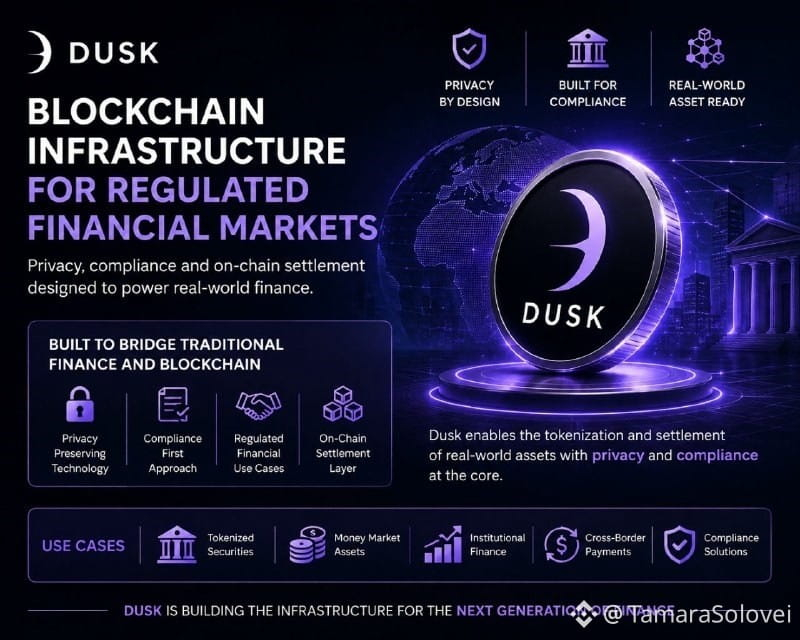
62
Tərcüməyə bax
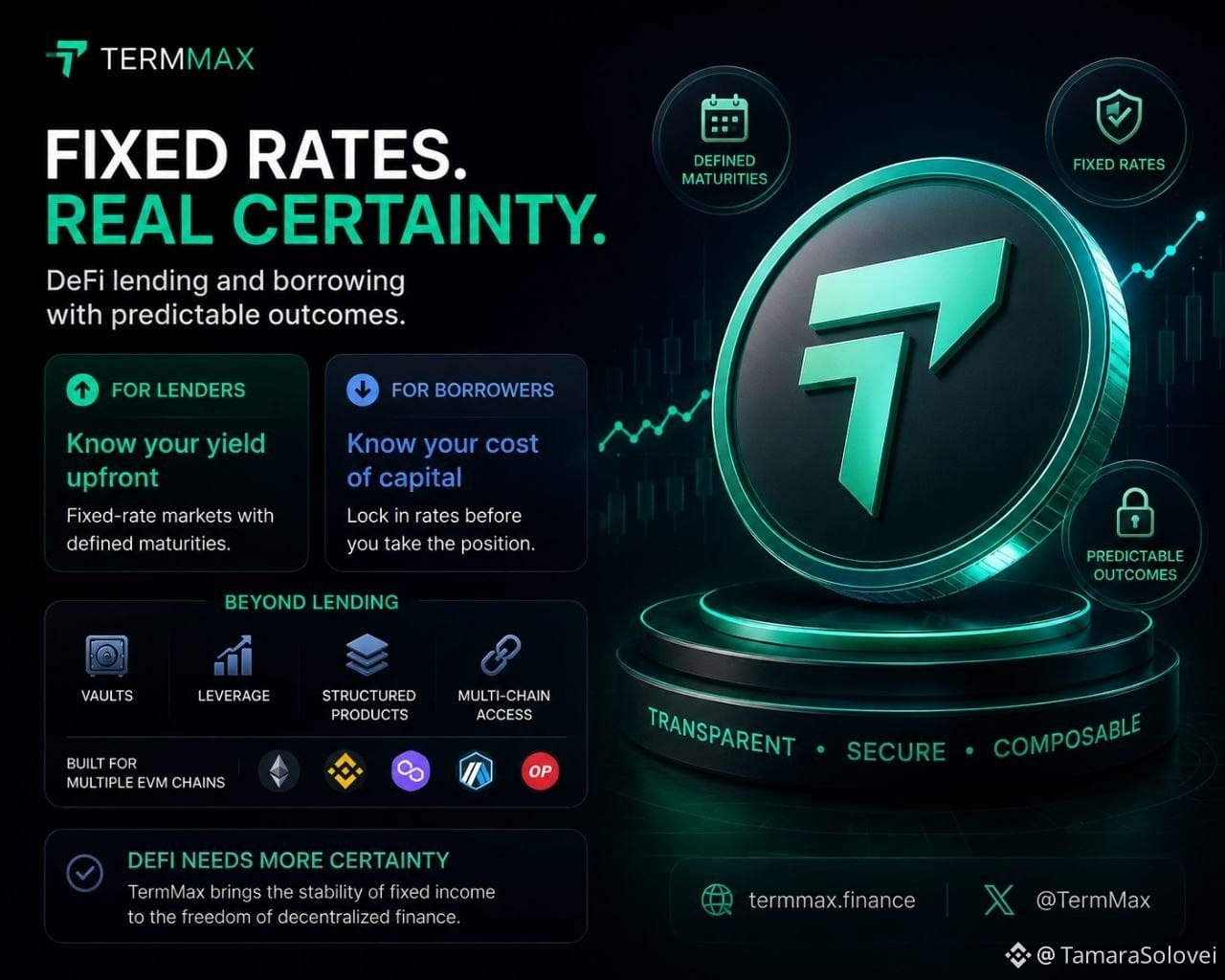
#termmax @termmax
Predictability can be just as valuable as yield in DeFi.
When borrowing rates constantly change, managing a position becomes a moving target. A strategy that looks attractive today can become expensive tomorrow simply because market conditions changed.
TermMax approaches this with fixed-rate markets and defined maturities.
That gives users something DeFi often lacks: a clearer framework for planning capital.
Borrowers can know their financing cost in advance, while lenders can evaluate an expected return over a specific period instead of relying entirely on a floating rate.
This also creates interesting possibilities for more sophisticated strategies:
🔹 Hedging interest-rate risk
🔹 Planning leverage more precisely
🔹 Building fixed-income strategies
🔹 Combining lending with structured products
🔹 Creating more predictable vault strategies
I think this is an important step if DeFi wants to move beyond short-term speculation and become a more complete financial ecosystem.
The ability to know your rate and maturity in advance may sound simple — but in a volatile market, predictability itself has value.
That’s what makes the TermMax approach worth watching.
#termmax @TermMax
Predictability can be just as valuable as yield in DeFi.
When borrowing rates constantly change, managing a position becomes a moving target. A strategy that looks attractive today can become expensive tomorrow simply because market conditions changed.
TermMax approaches this with fixed-rate markets and defined maturities.
That gives users something DeFi often lacks: a clearer framework for planning capital.
Borrowers can know their financing cost in advance, while lenders can evaluate an expected return over a specific period instead of relying entirely on a floating rate.
This also creates interesting possibilities for more sophisticated strategies:
🔹 Hedging interest-rate risk
🔹 Planning leverage more precisely
🔹 Building fixed-income strategies
🔹 Combining lending with structured products
🔹 Creating more predictable vault strategies
I think this is an important step if DeFi wants to move beyond short-term speculation and become a more complete financial ecosystem.
The ability to know your rate and maturity in advance may sound simple — but in a volatile market, predictability itself has value.
That’s what makes the TermMax approach worth watching.
Predictability can be just as valuable as yield in DeFi.
When borrowing rates constantly change, managing a position becomes a moving target. A strategy that looks attractive today can become expensive tomorrow simply because market conditions changed.
TermMax approaches this with fixed-rate markets and defined maturities.
That gives users something DeFi often lacks: a clearer framework for planning capital.
Borrowers can know their financing cost in advance, while lenders can evaluate an expected return over a specific period instead of relying entirely on a floating rate.
This also creates interesting possibilities for more sophisticated strategies:
🔹 Hedging interest-rate risk
🔹 Planning leverage more precisely
🔹 Building fixed-income strategies
🔹 Combining lending with structured products
🔹 Creating more predictable vault strategies
I think this is an important step if DeFi wants to move beyond short-term speculation and become a more complete financial ecosystem.
The ability to know your rate and maturity in advance may sound simple — but in a volatile market, predictability itself has value.
That’s what makes the TermMax approach worth watching.
77
Tərcüməyə bax
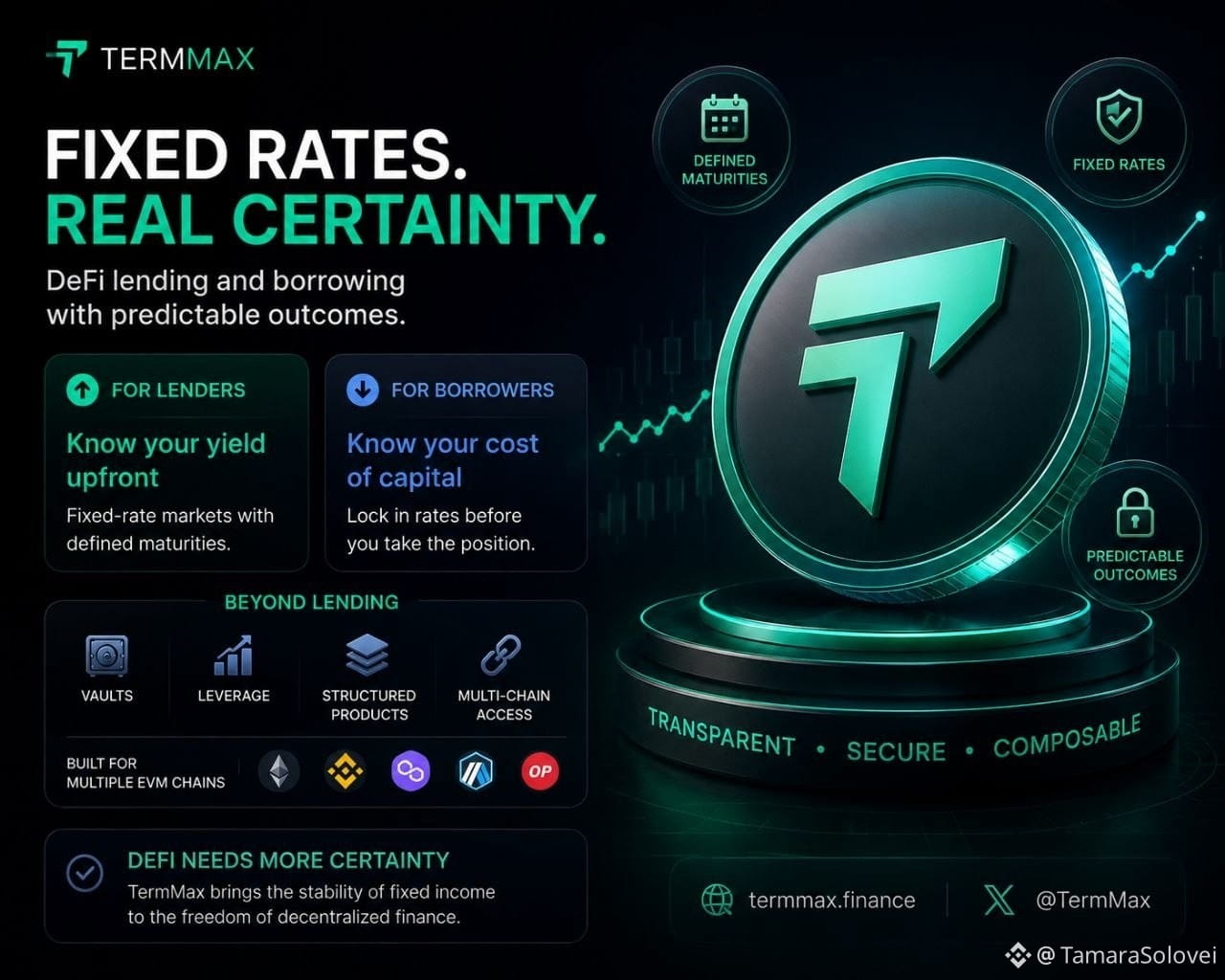
#termmax @termmax
What makes TermMax interesting isn't only fixed-rate lending. It's the idea of turning predictable debt into a building block for DeFi.
Fixed-rate markets can give users something that is often missing from on-chain finance: a clear timeline for a position.
Instead of constantly reacting to changing borrowing costs, users can structure positions around a known rate and maturity.
This creates interesting possibilities for more advanced strategies:
🔹 Fixed-rate borrowing
🔹 Predictable lending returns
🔹 Leveraged strategies
🔹 Vault-based products
🔹 Structured positions
The goal isn't simply to copy traditional fixed-income products on-chain. It's to make these financial primitives composable with the rest of DeFi.
That's where I think $TMX becomes interesting as part of the bigger TermMax ecosystem.
If DeFi wants to attract more sophisticated capital, predictable rates and defined maturities could become just as important as liquidity.
The next evolution of DeFi might not be about more leverage. It might be about better control over risk.
#termmax @TermMax
What makes TermMax interesting isn't only fixed-rate lending. It's the idea of turning predictable debt into a building block for DeFi.
Fixed-rate markets can give users something that is often missing from on-chain finance: a clear timeline for a position.
Instead of constantly reacting to changing borrowing costs, users can structure positions around a known rate and maturity.
This creates interesting possibilities for more advanced strategies:
🔹 Fixed-rate borrowing
🔹 Predictable lending returns
🔹 Leveraged strategies
🔹 Vault-based products
🔹 Structured positions
The goal isn't simply to copy traditional fixed-income products on-chain. It's to make these financial primitives composable with the rest of DeFi.
That's where I think $TMX becomes interesting as part of the bigger TermMax ecosystem.
If DeFi wants to attract more sophisticated capital, predictable rates and defined maturities could become just as important as liquidity.
The next evolution of DeFi might not be about more leverage. It might be about better control over risk.
What makes TermMax interesting isn't only fixed-rate lending. It's the idea of turning predictable debt into a building block for DeFi.
Fixed-rate markets can give users something that is often missing from on-chain finance: a clear timeline for a position.
Instead of constantly reacting to changing borrowing costs, users can structure positions around a known rate and maturity.
This creates interesting possibilities for more advanced strategies:
🔹 Fixed-rate borrowing
🔹 Predictable lending returns
🔹 Leveraged strategies
🔹 Vault-based products
🔹 Structured positions
The goal isn't simply to copy traditional fixed-income products on-chain. It's to make these financial primitives composable with the rest of DeFi.
That's where I think $TMX becomes interesting as part of the bigger TermMax ecosystem.
If DeFi wants to attract more sophisticated capital, predictable rates and defined maturities could become just as important as liquidity.
The next evolution of DeFi might not be about more leverage. It might be about better control over risk.
56
Tərcüməyə bax
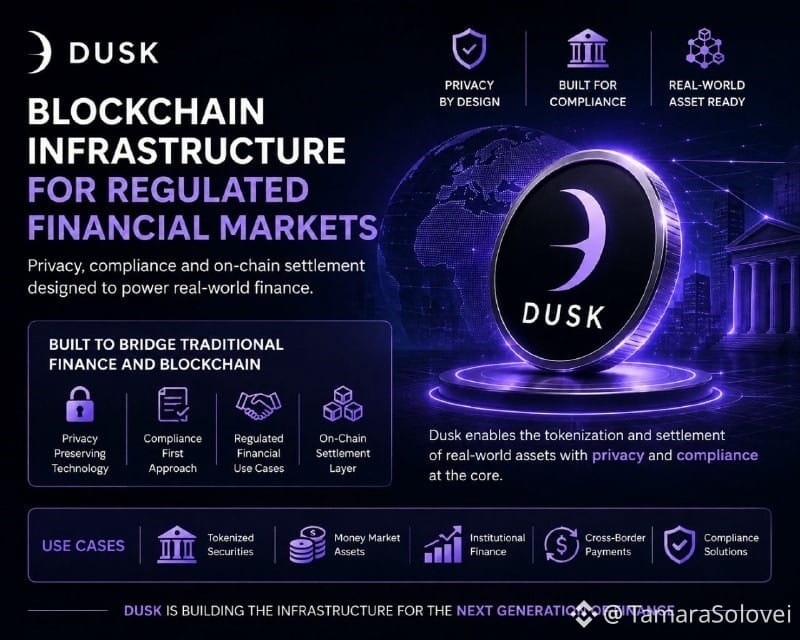
#dusk $DUSK @Dusk_Foundation
Why does regulated finance need its own blockchain infrastructure instead of simply using a public chain?
That question is becoming increasingly important as tokenized securities and real-world assets move on-chain.
@Dusk_Foundation is built around the idea that financial markets have different requirements from ordinary crypto applications. Issuers, investors, custodians and regulators all need to interact with the same infrastructure while sensitive financial information remains protected.
One of the most interesting concepts is selective disclosure.
Instead of choosing between complete transparency or complete privacy, Dusk is designed to let authorized parties verify the information they need without exposing every transaction or portfolio detail publicly. Combined with deterministic settlement and access controls, this creates infrastructure tailored for regulated digital assets.
I think that distinction is what makes Dusk worth watching. The future of RWAs may depend less on creating tokens and more on creating networks capable of handling the real-world rules behind them.
#dusk $DUSK @Dusk
Why does regulated finance need its own blockchain infrastructure instead of simply using a public chain?
That question is becoming increasingly important as tokenized securities and real-world assets move on-chain.
@Dusk is built around the idea that financial markets have different requirements from ordinary crypto applications. Issuers, investors, custodians and regulators all need to interact with the same infrastructure while sensitive financial information remains protected.
One of the most interesting concepts is selective disclosure.
Instead of choosing between complete transparency or complete privacy, Dusk is designed to let authorized parties verify the information they need without exposing every transaction or portfolio detail publicly. Combined with deterministic settlement and access controls, this creates infrastructure tailored for regulated digital assets.
I think that distinction is what makes Dusk worth watching. The future of RWAs may depend less on creating tokens and more on creating networks capable of handling the real-world rules behind them.
Why does regulated finance need its own blockchain infrastructure instead of simply using a public chain?
That question is becoming increasingly important as tokenized securities and real-world assets move on-chain.
@Dusk is built around the idea that financial markets have different requirements from ordinary crypto applications. Issuers, investors, custodians and regulators all need to interact with the same infrastructure while sensitive financial information remains protected.
One of the most interesting concepts is selective disclosure.
Instead of choosing between complete transparency or complete privacy, Dusk is designed to let authorized parties verify the information they need without exposing every transaction or portfolio detail publicly. Combined with deterministic settlement and access controls, this creates infrastructure tailored for regulated digital assets.
I think that distinction is what makes Dusk worth watching. The future of RWAs may depend less on creating tokens and more on creating networks capable of handling the real-world rules behind them.
78
Tərcüməyə bax
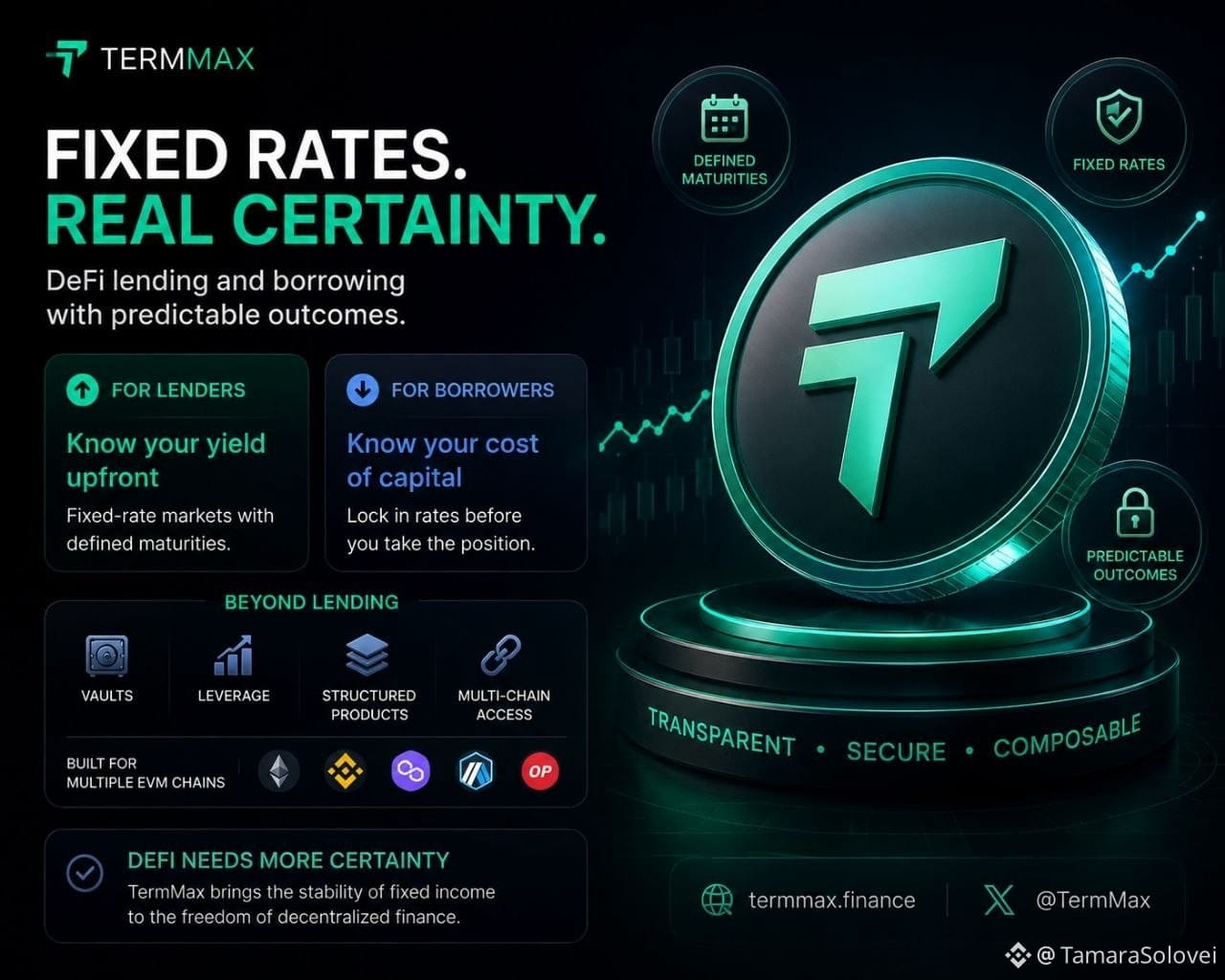
#termmax @termmax
DeFi is great at giving users flexibility, but flexibility often comes with uncertainty.
Interest rates can change quickly, making it difficult to plan the cost of borrowing or the return on lending.
@termmax approaches this problem with fixed-rate markets and defined maturities.
Instead of constantly watching the lending rate, users can know the key parameters of a position in advance.
For lenders, that can mean clearer expectations around yield. For borrowers, it can make the cost of capital easier to plan.
I think this is an important direction for DeFi because predictable financial products could make on-chain markets more useful beyond short-term speculation.
More certainty doesn't have to mean less flexibility. It can simply mean better tools for managing risk.
#termmax @TermMax
DeFi is great at giving users flexibility, but flexibility often comes with uncertainty.
Interest rates can change quickly, making it difficult to plan the cost of borrowing or the return on lending.
@TermMax approaches this problem with fixed-rate markets and defined maturities.
Instead of constantly watching the lending rate, users can know the key parameters of a position in advance.
For lenders, that can mean clearer expectations around yield. For borrowers, it can make the cost of capital easier to plan.
I think this is an important direction for DeFi because predictable financial products could make on-chain markets more useful beyond short-term speculation.
More certainty doesn't have to mean less flexibility. It can simply mean better tools for managing risk.
DeFi is great at giving users flexibility, but flexibility often comes with uncertainty.
Interest rates can change quickly, making it difficult to plan the cost of borrowing or the return on lending.
@TermMax approaches this problem with fixed-rate markets and defined maturities.
Instead of constantly watching the lending rate, users can know the key parameters of a position in advance.
For lenders, that can mean clearer expectations around yield. For borrowers, it can make the cost of capital easier to plan.
I think this is an important direction for DeFi because predictable financial products could make on-chain markets more useful beyond short-term speculation.
More certainty doesn't have to mean less flexibility. It can simply mean better tools for managing risk.
40
#dusk $DUSK @Dusk_Foundation
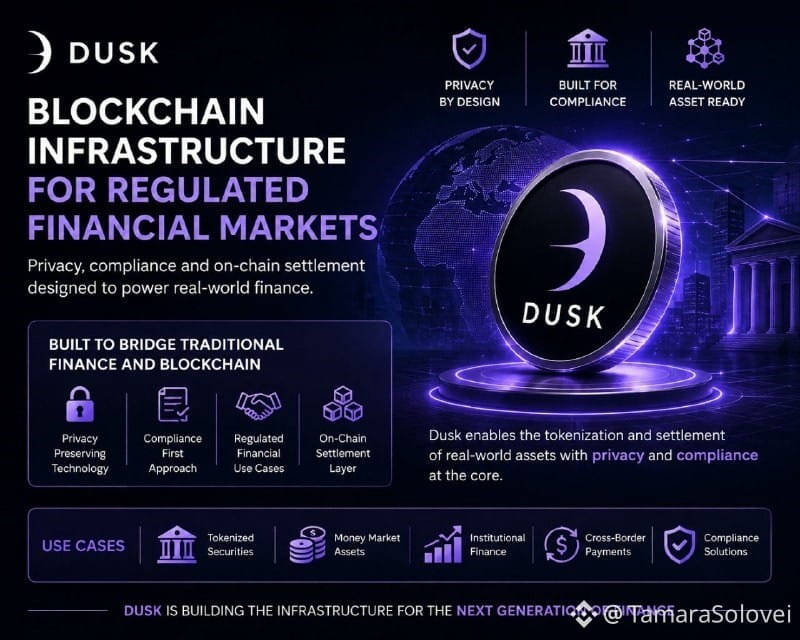
Ticarət başa çatanda maliyyə aktivinin səyahəti də bitmir.
Ona görə də tokenləşdirilmiş aktivlərin arxasındakı infrastrukturun, tokenin özündən daha vacib olduğunu düşünürəm.
Ənənəvi bazarlarda bir aktiv emissiya, ticarət, hesablaşma, dividend, hesabatlılıq, köçürmələr və digər korporativ aksiyalar mərhələlərindən keçə bilər. Hər mərhələdə fərqli sistemlər və vasitəçilər iştirak edə bilər.
@Dusk_Foundation bunu tam bir on-çeyn iş axını kimi qəbul edir.
Onun infrastrukturu aktivin həyat dövrü boyunca uyğunluq yoxlamaları, köçürmə məhdudiyyətləri, məxfilik, hesablaşma, hesabatlılıq və korporativ aksiyalar kimi məsələləri idarə etmək üçün nəzərdə tutulub.
Həmçinin ictimai şəffaflıq ilə özəl maliyyə məlumatı arasında maraqlı bir fərq var.
Dusk, Moonlight vasitəsilə şəffaf əməliyyatları dəstəkləyir, Phoenix isə sıfır-bilik sübutları ilə qorunan (shielded) köçürmələrə imkan verir. Məlumat, səlahiyyətli tərəf ehtiyac duyduqda, seçici şəkildə də açıqlana bilər.
Bu önəmlidir, çünki tənzimlənən maliyyə mütləq hər şeyin ictimai olmasını tələb etmir.
Sadəcə doğru məlumatın, doğru iştirakçılara, doğru zamanda görünməsi lazımdır.
Və bu, mövcud bir maliyyə aktivini sadəcə ictimai blokçeynə yerləşdirməkdən tamamilə fərqli dizayn fəlsəfəsidir.
Əgər tokenləşdirilmiş qiymətli kağızlar Web3-un növbəti mərhələsində əsas hissəyə çevriləcəksə, düşünürəm ki, belə infrastrukturlar aktivlərin özləri qədər önəmli olacaq.
Dusk yalnız maliyyəni on-çeynə keçirmək istəmir. O, bütün maliyyə iş axınının orada işləməsini təmin etməyə çalışır.
#dusk $DUSK @Dusk
Ticarət başa çatanda maliyyə aktivinin səyahəti də bitmir.
Ona görə də tokenləşdirilmiş aktivlərin arxasındakı infrastrukturun, tokenin özündən daha vacib olduğunu düşünürəm.
Ənənəvi bazarlarda bir aktiv emissiya, ticarət, hesablaşma, dividend, hesabatlılıq, köçürmələr və digər korporativ aksiyalar mərhələlərindən keçə bilər. Hər mərhələdə fərqli sistemlər və vasitəçilər iştirak edə bilər.
@Dusk bunu tam bir on-çeyn iş axını kimi qəbul edir.
Onun infrastrukturu aktivin həyat dövrü boyunca uyğunluq yoxlamaları, köçürmə məhdudiyyətləri, məxfilik, hesablaşma, hesabatlılıq və korporativ aksiyalar kimi məsələləri idarə etmək üçün nəzərdə tutulub.
Həmçinin ictimai şəffaflıq ilə özəl maliyyə məlumatı arasında maraqlı bir fərq var.
Dusk, Moonlight vasitəsilə şəffaf əməliyyatları dəstəkləyir, Phoenix isə sıfır-bilik sübutları ilə qorunan (shielded) köçürmələrə imkan verir. Məlumat, səlahiyyətli tərəf ehtiyac duyduqda, seçici şəkildə də açıqlana bilər.
Bu önəmlidir, çünki tənzimlənən maliyyə mütləq hər şeyin ictimai olmasını tələb etmir.
Sadəcə doğru məlumatın, doğru iştirakçılara, doğru zamanda görünməsi lazımdır.
Və bu, mövcud bir maliyyə aktivini sadəcə ictimai blokçeynə yerləşdirməkdən tamamilə fərqli dizayn fəlsəfəsidir.
Əgər tokenləşdirilmiş qiymətli kağızlar Web3-un növbəti mərhələsində əsas hissəyə çevriləcəksə, düşünürəm ki, belə infrastrukturlar aktivlərin özləri qədər önəmli olacaq.
Dusk yalnız maliyyəni on-çeynə keçirmək istəmir. O, bütün maliyyə iş axınının orada işləməsini təmin etməyə çalışır.
Ticarət başa çatanda maliyyə aktivinin səyahəti də bitmir.
Ona görə də tokenləşdirilmiş aktivlərin arxasındakı infrastrukturun, tokenin özündən daha vacib olduğunu düşünürəm.
Ənənəvi bazarlarda bir aktiv emissiya, ticarət, hesablaşma, dividend, hesabatlılıq, köçürmələr və digər korporativ aksiyalar mərhələlərindən keçə bilər. Hər mərhələdə fərqli sistemlər və vasitəçilər iştirak edə bilər.
@Dusk bunu tam bir on-çeyn iş axını kimi qəbul edir.
Onun infrastrukturu aktivin həyat dövrü boyunca uyğunluq yoxlamaları, köçürmə məhdudiyyətləri, məxfilik, hesablaşma, hesabatlılıq və korporativ aksiyalar kimi məsələləri idarə etmək üçün nəzərdə tutulub.
Həmçinin ictimai şəffaflıq ilə özəl maliyyə məlumatı arasında maraqlı bir fərq var.
Dusk, Moonlight vasitəsilə şəffaf əməliyyatları dəstəkləyir, Phoenix isə sıfır-bilik sübutları ilə qorunan (shielded) köçürmələrə imkan verir. Məlumat, səlahiyyətli tərəf ehtiyac duyduqda, seçici şəkildə də açıqlana bilər.
Bu önəmlidir, çünki tənzimlənən maliyyə mütləq hər şeyin ictimai olmasını tələb etmir.
Sadəcə doğru məlumatın, doğru iştirakçılara, doğru zamanda görünməsi lazımdır.
Və bu, mövcud bir maliyyə aktivini sadəcə ictimai blokçeynə yerləşdirməkdən tamamilə fərqli dizayn fəlsəfəsidir.
Əgər tokenləşdirilmiş qiymətli kağızlar Web3-un növbəti mərhələsində əsas hissəyə çevriləcəksə, düşünürəm ki, belə infrastrukturlar aktivlərin özləri qədər önəmli olacaq.
Dusk yalnız maliyyəni on-çeynə keçirmək istəmir. O, bütün maliyyə iş axınının orada işləməsini təmin etməyə çalışır.
60
Tərcüməyə bax
#bstockscis @BinanceCIS
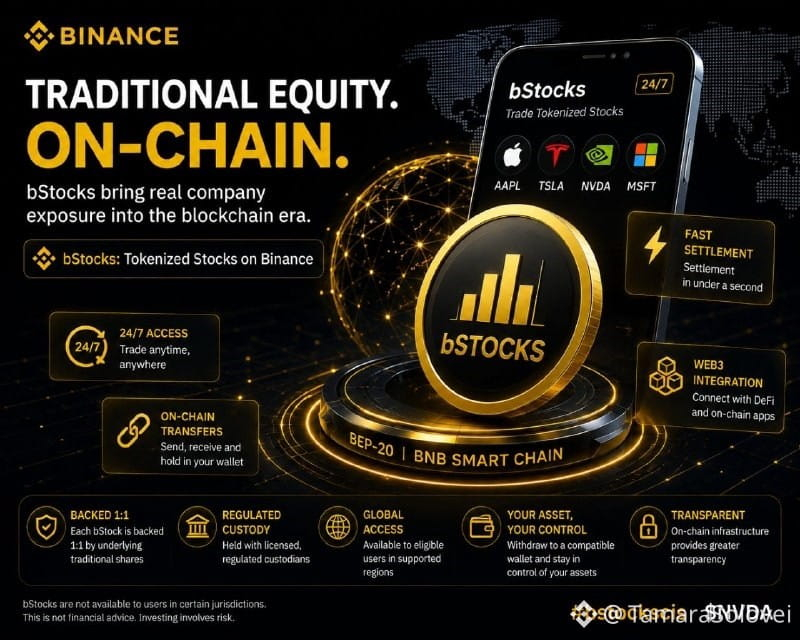
What makes tokenized stocks interesting isn't just the ability to buy them on-chain. It's what happens after you own them.
bStocks bring traditional equity exposure into a blockchain environment, opening the door to features that don't exist in the same way with conventional brokerage accounts.
With bStocks operating as BEP-20 tokens on BNB Smart Chain, the asset can become part of a broader on-chain ecosystem rather than remaining locked inside a traditional financial platform.
That creates some interesting possibilities:
🔹
On-chain transfers
🔹
24/7 access
🔹
Blockchain-based settlement
🔹
Potential integration with Web3 infrastructure
🔹
The ability to hold tokenized equity in a compatible wallet
But the most important part for me is the bridge between two financial worlds.
Traditional stocks provide exposure to established companies and real businesses. Blockchain infrastructure adds programmability, portability and continuous settlement.
Put those two things together, and tokenized equities start looking less like a simple crypto product and more like a new financial primitive.
The RWA market is still developing, but this is exactly the kind of infrastructure I think is worth watching.
Which traditional asset would you most like to see become fully integrated with on-chain finance?
#bstockscis @BinanceCIS
What makes tokenized stocks interesting isn't just the ability to buy them on-chain. It's what happens after you own them.
bStocks bring traditional equity exposure into a blockchain environment, opening the door to features that don't exist in the same way with conventional brokerage accounts.
With bStocks operating as BEP-20 tokens on BNB Smart Chain, the asset can become part of a broader on-chain ecosystem rather than remaining locked inside a traditional financial platform.
That creates some interesting possibilities:
🔹
On-chain transfers
🔹
24/7 access
🔹
Blockchain-based settlement
🔹
Potential integration with Web3 infrastructure
🔹
The ability to hold tokenized equity in a compatible wallet
But the most important part for me is the bridge between two financial worlds.
Traditional stocks provide exposure to established companies and real businesses. Blockchain infrastructure adds programmability, portability and continuous settlement.
Put those two things together, and tokenized equities start looking less like a simple crypto product and more like a new financial primitive.
The RWA market is still developing, but this is exactly the kind of infrastructure I think is worth watching.
Which traditional asset would you most like to see become fully integrated with on-chain finance?
What makes tokenized stocks interesting isn't just the ability to buy them on-chain. It's what happens after you own them.
bStocks bring traditional equity exposure into a blockchain environment, opening the door to features that don't exist in the same way with conventional brokerage accounts.
With bStocks operating as BEP-20 tokens on BNB Smart Chain, the asset can become part of a broader on-chain ecosystem rather than remaining locked inside a traditional financial platform.
That creates some interesting possibilities:
🔹
On-chain transfers
🔹
24/7 access
🔹
Blockchain-based settlement
🔹
Potential integration with Web3 infrastructure
🔹
The ability to hold tokenized equity in a compatible wallet
But the most important part for me is the bridge between two financial worlds.
Traditional stocks provide exposure to established companies and real businesses. Blockchain infrastructure adds programmability, portability and continuous settlement.
Put those two things together, and tokenized equities start looking less like a simple crypto product and more like a new financial primitive.
The RWA market is still developing, but this is exactly the kind of infrastructure I think is worth watching.
Which traditional asset would you most like to see become fully integrated with on-chain finance?
147
Tərcüməyə bax
#termmax @termmax
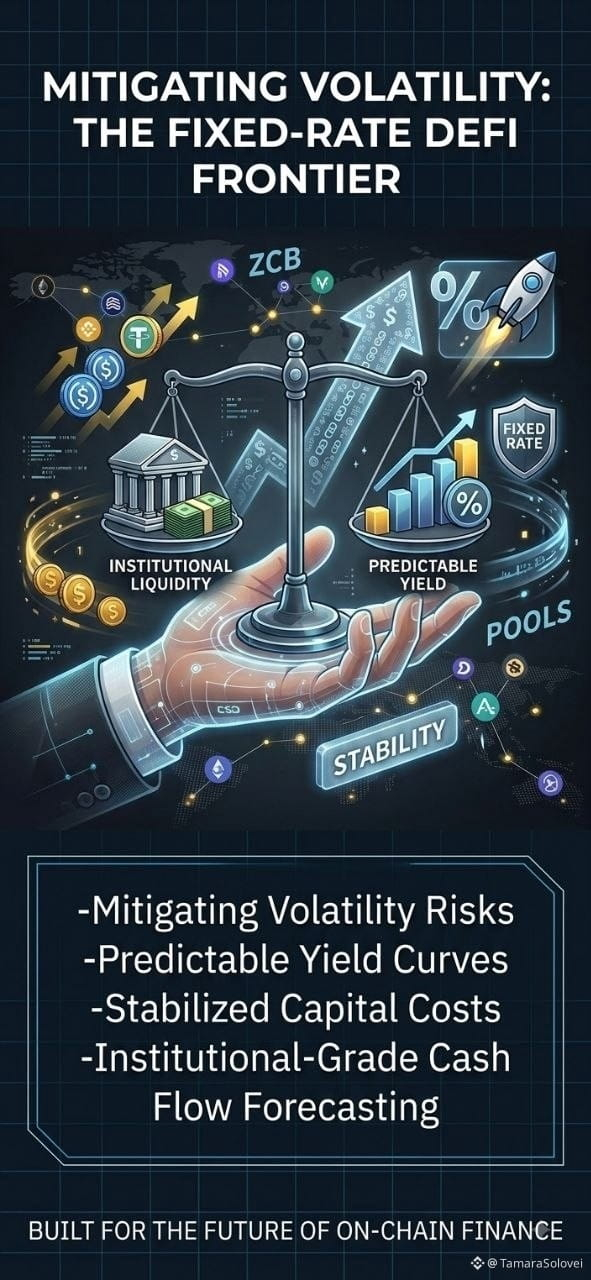
The maturity of the DeFi ecosystem is directly correlated with the introduction of primitive financial instruments capable of mitigating volatility risks. A significant gap in current credit markets is the lack of robust fixed-rate lending solutions. This is where @termmax introduces a crucial innovation.
By utilizing Zero-Coupon Bonds and Liquidity Pools, TermMax provides predictable yield curves for lenders and guaranteed capital costs for borrowers. This model dramatically reduces slippage and the uncertainty associated with variable interest rates. From my perspective, this approach is essential for attracting large-scale institutional liquidity, which requires accurate cash flow forecasting. Moving beyond variable-rate dependence is a critical step toward the long-term stabilization of capital markets on the blockchain.
#termmax @TermMax
The maturity of the DeFi ecosystem is directly correlated with the introduction of primitive financial instruments capable of mitigating volatility risks. A significant gap in current credit markets is the lack of robust fixed-rate lending solutions. This is where @TermMax introduces a crucial innovation.
By utilizing Zero-Coupon Bonds and Liquidity Pools, TermMax provides predictable yield curves for lenders and guaranteed capital costs for borrowers. This model dramatically reduces slippage and the uncertainty associated with variable interest rates. From my perspective, this approach is essential for attracting large-scale institutional liquidity, which requires accurate cash flow forecasting. Moving beyond variable-rate dependence is a critical step toward the long-term stabilization of capital markets on the blockchain.
The maturity of the DeFi ecosystem is directly correlated with the introduction of primitive financial instruments capable of mitigating volatility risks. A significant gap in current credit markets is the lack of robust fixed-rate lending solutions. This is where @TermMax introduces a crucial innovation.
By utilizing Zero-Coupon Bonds and Liquidity Pools, TermMax provides predictable yield curves for lenders and guaranteed capital costs for borrowers. This model dramatically reduces slippage and the uncertainty associated with variable interest rates. From my perspective, this approach is essential for attracting large-scale institutional liquidity, which requires accurate cash flow forecasting. Moving beyond variable-rate dependence is a critical step toward the long-term stabilization of capital markets on the blockchain.
47
Tərcüməyə bax
#dusk $DUSK @Dusk_Foundation
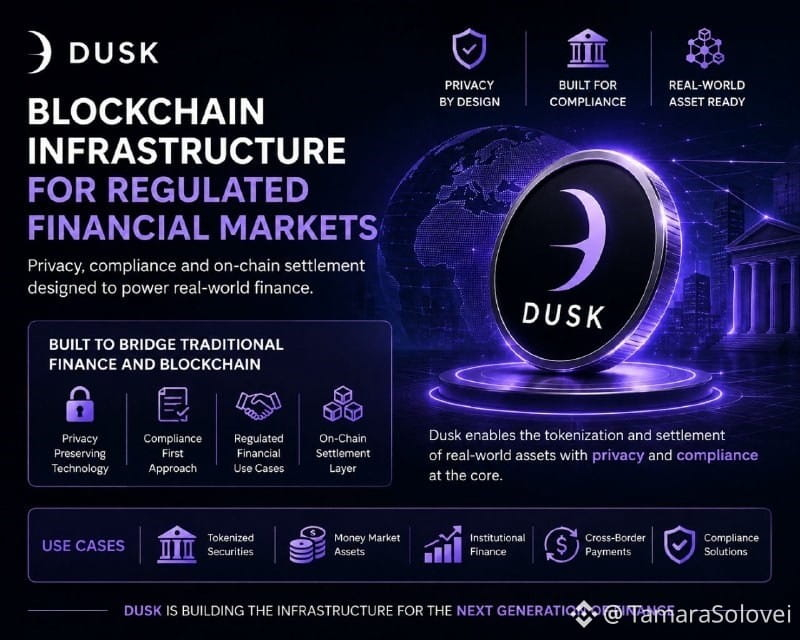
Tokenizing an asset is only the first step. The real challenge is building the market around it.
This is why I’m interested in what @Dusk_Foundation is building.
Dusk Trade is designed as an application layer for tokenized financial assets, covering more than simply buying and selling. The workflow can include investor onboarding, eligibility checks, wallet connection, payment coordination and settlement.
Underneath it, Dusk provides the infrastructure for regulated workflows: access controls, privacy, selective disclosure and deterministic settlement.
That approach makes sense to me because real financial markets aren't just token contracts. They involve issuers, investors, venues, custodians, compliance and settlement — all of which need to work together.
If RWAs are going to scale, the infrastructure has to support the entire market workflow, not just put another asset on-chain.
That's the direction I'm watching with Dusk.
#dusk $DUSK @Dusk
Tokenizing an asset is only the first step. The real challenge is building the market around it.
This is why I’m interested in what @Dusk is building.
Dusk Trade is designed as an application layer for tokenized financial assets, covering more than simply buying and selling. The workflow can include investor onboarding, eligibility checks, wallet connection, payment coordination and settlement.
Underneath it, Dusk provides the infrastructure for regulated workflows: access controls, privacy, selective disclosure and deterministic settlement.
That approach makes sense to me because real financial markets aren't just token contracts. They involve issuers, investors, venues, custodians, compliance and settlement — all of which need to work together.
If RWAs are going to scale, the infrastructure has to support the entire market workflow, not just put another asset on-chain.
That's the direction I'm watching with Dusk.
Tokenizing an asset is only the first step. The real challenge is building the market around it.
This is why I’m interested in what @Dusk is building.
Dusk Trade is designed as an application layer for tokenized financial assets, covering more than simply buying and selling. The workflow can include investor onboarding, eligibility checks, wallet connection, payment coordination and settlement.
Underneath it, Dusk provides the infrastructure for regulated workflows: access controls, privacy, selective disclosure and deterministic settlement.
That approach makes sense to me because real financial markets aren't just token contracts. They involve issuers, investors, venues, custodians, compliance and settlement — all of which need to work together.
If RWAs are going to scale, the infrastructure has to support the entire market workflow, not just put another asset on-chain.
That's the direction I'm watching with Dusk.
61
#bstockscis @BinanceCIS
Bəs birjada portfeliniz on-chain maliyyə strategiyanızın bir hissəsinə çevrilə bilərsə?
Məhz burada tokenləşdirilmiş səhm anlayışı daha da maraqlı olur.
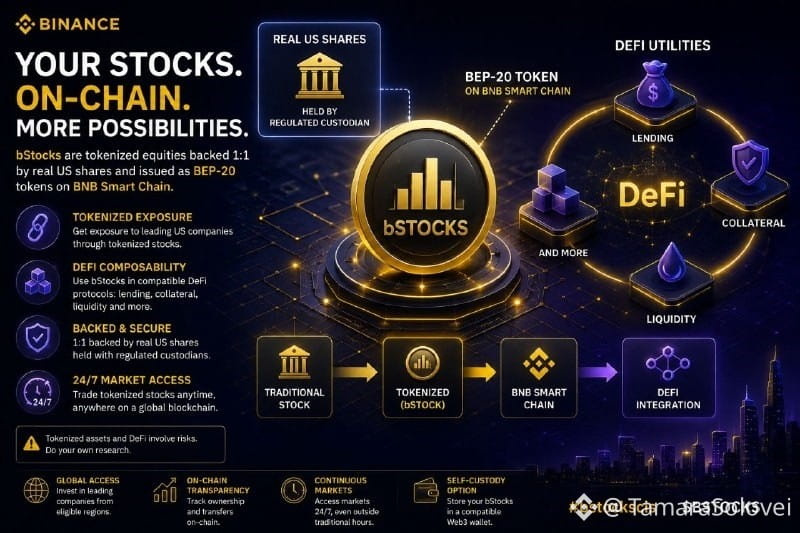
Səhm sadəcə ənənəvi səhmə rəqəmsal bənzətmə deyil. BEP-20 tokenləri kimi BNB Smart Chain üzərində mövcud olduğuna görə, digər rəqəmsal aktivləri dəstəkləyən eyni blokçeyn infrastrukturuyla potensial olaraq qarşılıqlı təsirə girə bilər.
Bu, tamamilə fərqli bir dizayn imkanları sahəsi yaradır.
Təsəvvür edin: bir şirkətə məruz qalmaq üçün tokeni əldə edirsiniz və həmin tokeni ənənəvi broker hesabında aktivin təcrid olunmuş şəkildə qalması əvəzinə, uyğun DeFi tətbiqləri daxilində istifadə edə bilirsiniz.
Burada əsas söz “kompozisyonluq”dur.
Ənənəvi səhmlər adətən broker infrastrukturu daxilində yaşayır. Tokenləşdirilmiş aktivlər isə digər maliyyə tətbiqləri üçün tikinti elementlərinə çevrilə bilər — kreditləşdirmə, girov, likvidlik və digər on-chain strategiyalar, konkret protokollar və uyğunluq tələblərindən asılı olaraq.
Binance-in mövcud bStocks çərçivəsi tokenin özünün BNB Smart Chain üzərində işləməsinə baxmayaraq, tənzimlənən qəyyumda saxlanılan müvafiq ABŞ səhmləri ilə 1:1 əsaslı dəstəyə qurulub.
Bu isə maraqlı bir kombinasiyadır:
Ənənəvi aktiv → tokenləşdirilmiş nümayəndəlik → blokçeyn infrastrukturu → potensial DeFi istifadə imkanı.
Mən də elə buna görə düşünürəm ki, RWA hekayəsi sadəcə bazarları 24/7 açmaqdan daha böyükdür.
Əsl yenilik əvvəl təcrid olunmuş maliyyə aktivlərini tamamilə yeni maliyyə “stack”i ilə kompozisyonlu etmək ola bilər.
Əlbəttə, DeFi inteqrasiyası əlavə smart-kontrat, likvidlik və bazar riskləri də gətirir; ona görə də “on-chain” avtomatik olaraq “daha yaxşı” demək deyil.
Amma belə bir imkanın özü heyrətamizdir.
Siz həqiqətən tokenləşdirilmiş səhm girov kimi və ya DeFi daxilində istifadə edərdiniz, yoxsa onu sırf investisiya kimi saxlayardınız?
#bstockscis @BinanceCIS
Bəs birjada portfeliniz on-chain maliyyə strategiyanızın bir hissəsinə çevrilə bilərsə?
Məhz burada tokenləşdirilmiş səhm anlayışı daha da maraqlı olur.
Səhm sadəcə ənənəvi səhmə rəqəmsal bənzətmə deyil. BEP-20 tokenləri kimi BNB Smart Chain üzərində mövcud olduğuna görə, digər rəqəmsal aktivləri dəstəkləyən eyni blokçeyn infrastrukturuyla potensial olaraq qarşılıqlı təsirə girə bilər.
Bu, tamamilə fərqli bir dizayn imkanları sahəsi yaradır.
Təsəvvür edin: bir şirkətə məruz qalmaq üçün tokeni əldə edirsiniz və həmin tokeni ənənəvi broker hesabında aktivin təcrid olunmuş şəkildə qalması əvəzinə, uyğun DeFi tətbiqləri daxilində istifadə edə bilirsiniz.
Burada əsas söz “kompozisyonluq”dur.
Ənənəvi səhmlər adətən broker infrastrukturu daxilində yaşayır. Tokenləşdirilmiş aktivlər isə digər maliyyə tətbiqləri üçün tikinti elementlərinə çevrilə bilər — kreditləşdirmə, girov, likvidlik və digər on-chain strategiyalar, konkret protokollar və uyğunluq tələblərindən asılı olaraq.
Binance-in mövcud bStocks çərçivəsi tokenin özünün BNB Smart Chain üzərində işləməsinə baxmayaraq, tənzimlənən qəyyumda saxlanılan müvafiq ABŞ səhmləri ilə 1:1 əsaslı dəstəyə qurulub.
Bu isə maraqlı bir kombinasiyadır:
Ənənəvi aktiv → tokenləşdirilmiş nümayəndəlik → blokçeyn infrastrukturu → potensial DeFi istifadə imkanı.
Mən də elə buna görə düşünürəm ki, RWA hekayəsi sadəcə bazarları 24/7 açmaqdan daha böyükdür.
Əsl yenilik əvvəl təcrid olunmuş maliyyə aktivlərini tamamilə yeni maliyyə “stack”i ilə kompozisyonlu etmək ola bilər.
Əlbəttə, DeFi inteqrasiyası əlavə smart-kontrat, likvidlik və bazar riskləri də gətirir; ona görə də “on-chain” avtomatik olaraq “daha yaxşı” demək deyil.
Amma belə bir imkanın özü heyrətamizdir.
Siz həqiqətən tokenləşdirilmiş səhm girov kimi və ya DeFi daxilində istifadə edərdiniz, yoxsa onu sırf investisiya kimi saxlayardınız?
Bəs birjada portfeliniz on-chain maliyyə strategiyanızın bir hissəsinə çevrilə bilərsə?
Məhz burada tokenləşdirilmiş səhm anlayışı daha da maraqlı olur.
Səhm sadəcə ənənəvi səhmə rəqəmsal bənzətmə deyil. BEP-20 tokenləri kimi BNB Smart Chain üzərində mövcud olduğuna görə, digər rəqəmsal aktivləri dəstəkləyən eyni blokçeyn infrastrukturuyla potensial olaraq qarşılıqlı təsirə girə bilər.
Bu, tamamilə fərqli bir dizayn imkanları sahəsi yaradır.
Təsəvvür edin: bir şirkətə məruz qalmaq üçün tokeni əldə edirsiniz və həmin tokeni ənənəvi broker hesabında aktivin təcrid olunmuş şəkildə qalması əvəzinə, uyğun DeFi tətbiqləri daxilində istifadə edə bilirsiniz.
Burada əsas söz “kompozisyonluq”dur.
Ənənəvi səhmlər adətən broker infrastrukturu daxilində yaşayır. Tokenləşdirilmiş aktivlər isə digər maliyyə tətbiqləri üçün tikinti elementlərinə çevrilə bilər — kreditləşdirmə, girov, likvidlik və digər on-chain strategiyalar, konkret protokollar və uyğunluq tələblərindən asılı olaraq.
Binance-in mövcud bStocks çərçivəsi tokenin özünün BNB Smart Chain üzərində işləməsinə baxmayaraq, tənzimlənən qəyyumda saxlanılan müvafiq ABŞ səhmləri ilə 1:1 əsaslı dəstəyə qurulub.
Bu isə maraqlı bir kombinasiyadır:
Ənənəvi aktiv → tokenləşdirilmiş nümayəndəlik → blokçeyn infrastrukturu → potensial DeFi istifadə imkanı.
Mən də elə buna görə düşünürəm ki, RWA hekayəsi sadəcə bazarları 24/7 açmaqdan daha böyükdür.
Əsl yenilik əvvəl təcrid olunmuş maliyyə aktivlərini tamamilə yeni maliyyə “stack”i ilə kompozisyonlu etmək ola bilər.
Əlbəttə, DeFi inteqrasiyası əlavə smart-kontrat, likvidlik və bazar riskləri də gətirir; ona görə də “on-chain” avtomatik olaraq “daha yaxşı” demək deyil.
Amma belə bir imkanın özü heyrətamizdir.
Siz həqiqətən tokenləşdirilmiş səhm girov kimi və ya DeFi daxilində istifadə edərdiniz, yoxsa onu sırf investisiya kimi saxlayardınız?
69
#dusk $DUSK @Dusk_Foundation
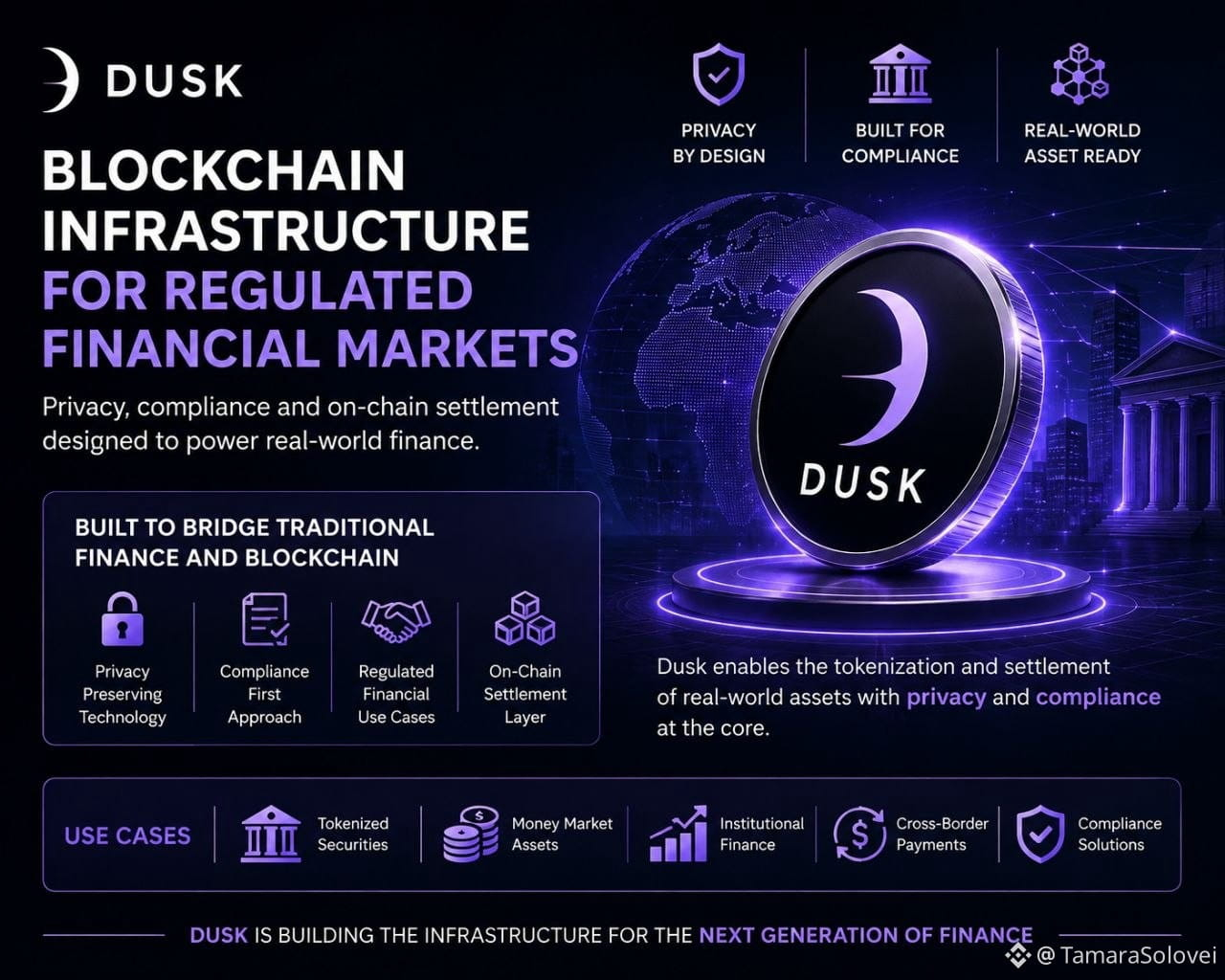
RWAlar tokenizasiya ilə kifayətlənmir. Onların real maliyyə bazarları üçün infrastruktur qurulmalıdır.
Məhz bu səbəbdən @Dusk_Foundation mənim üçün maraqlıdır.
Dusk tənzimlənən aktivlər ətrafında dizayn olunub: məxfilik, uyğunluq (compliance) və on-çeyn (on-chain) hesablaşmanı birləşdirir. Hər bir əməliyyatı tam şəkildə ictimai etmək əvəzinə, onun arxitekturası seçmə açıqlamaya imkan verir — hər şeyi hamıya ifşa etmədən, yalnız uyğun məlumatın təsdiqlənməsini təmin edir.
Bu, xüsusilə qiymətli kağızlar, istiqrazlar və digər tənzimlənən aktivlər üçün faydalı ola bilər; burada investor məxfiliyi ilə tənzimləmə tələbləri birgə mövcud olmalıdır.
Digər maraqlı məqam Dusk-un EVM uyğunluğudur — bu, Ethereum alətləri ilə tanış olan tərtibatçılar üçün şəbəkədə tətbiqlər qurmağı daha asan edir.
Əgər RWAlar Web3-ün əsas hissəsinə çevriləcəksə, onların arxasındakı infrastruktur sadə token köçürmələrindən qat-qat çoxunu idarə etməlidir.
Dusk-un yaratmağa çalışdığı nişanə məhz budur.
#dusk $DUSK @Dusk
RWAlar tokenizasiya ilə kifayətlənmir. Onların real maliyyə bazarları üçün infrastruktur qurulmalıdır.
Məhz bu səbəbdən @Dusk mənim üçün maraqlıdır.
Dusk tənzimlənən aktivlər ətrafında dizayn olunub: məxfilik, uyğunluq (compliance) və on-çeyn (on-chain) hesablaşmanı birləşdirir. Hər bir əməliyyatı tam şəkildə ictimai etmək əvəzinə, onun arxitekturası seçmə açıqlamaya imkan verir — hər şeyi hamıya ifşa etmədən, yalnız uyğun məlumatın təsdiqlənməsini təmin edir.
Bu, xüsusilə qiymətli kağızlar, istiqrazlar və digər tənzimlənən aktivlər üçün faydalı ola bilər; burada investor məxfiliyi ilə tənzimləmə tələbləri birgə mövcud olmalıdır.
Digər maraqlı məqam Dusk-un EVM uyğunluğudur — bu, Ethereum alətləri ilə tanış olan tərtibatçılar üçün şəbəkədə tətbiqlər qurmağı daha asan edir.
Əgər RWAlar Web3-ün əsas hissəsinə çevriləcəksə, onların arxasındakı infrastruktur sadə token köçürmələrindən qat-qat çoxunu idarə etməlidir.
Dusk-un yaratmağa çalışdığı nişanə məhz budur.
RWAlar tokenizasiya ilə kifayətlənmir. Onların real maliyyə bazarları üçün infrastruktur qurulmalıdır.
Məhz bu səbəbdən @Dusk mənim üçün maraqlıdır.
Dusk tənzimlənən aktivlər ətrafında dizayn olunub: məxfilik, uyğunluq (compliance) və on-çeyn (on-chain) hesablaşmanı birləşdirir. Hər bir əməliyyatı tam şəkildə ictimai etmək əvəzinə, onun arxitekturası seçmə açıqlamaya imkan verir — hər şeyi hamıya ifşa etmədən, yalnız uyğun məlumatın təsdiqlənməsini təmin edir.
Bu, xüsusilə qiymətli kağızlar, istiqrazlar və digər tənzimlənən aktivlər üçün faydalı ola bilər; burada investor məxfiliyi ilə tənzimləmə tələbləri birgə mövcud olmalıdır.
Digər maraqlı məqam Dusk-un EVM uyğunluğudur — bu, Ethereum alətləri ilə tanış olan tərtibatçılar üçün şəbəkədə tətbiqlər qurmağı daha asan edir.
Əgər RWAlar Web3-ün əsas hissəsinə çevriləcəksə, onların arxasındakı infrastruktur sadə token köçürmələrindən qat-qat çoxunu idarə etməlidir.
Dusk-un yaratmağa çalışdığı nişanə məhz budur.
1
79
Tərcüməyə bax
#bstockscis @BinanceCIS
What happens when a stock stops being locked inside a brokerage account?
That’s one of the more interesting ideas behind bStocks.
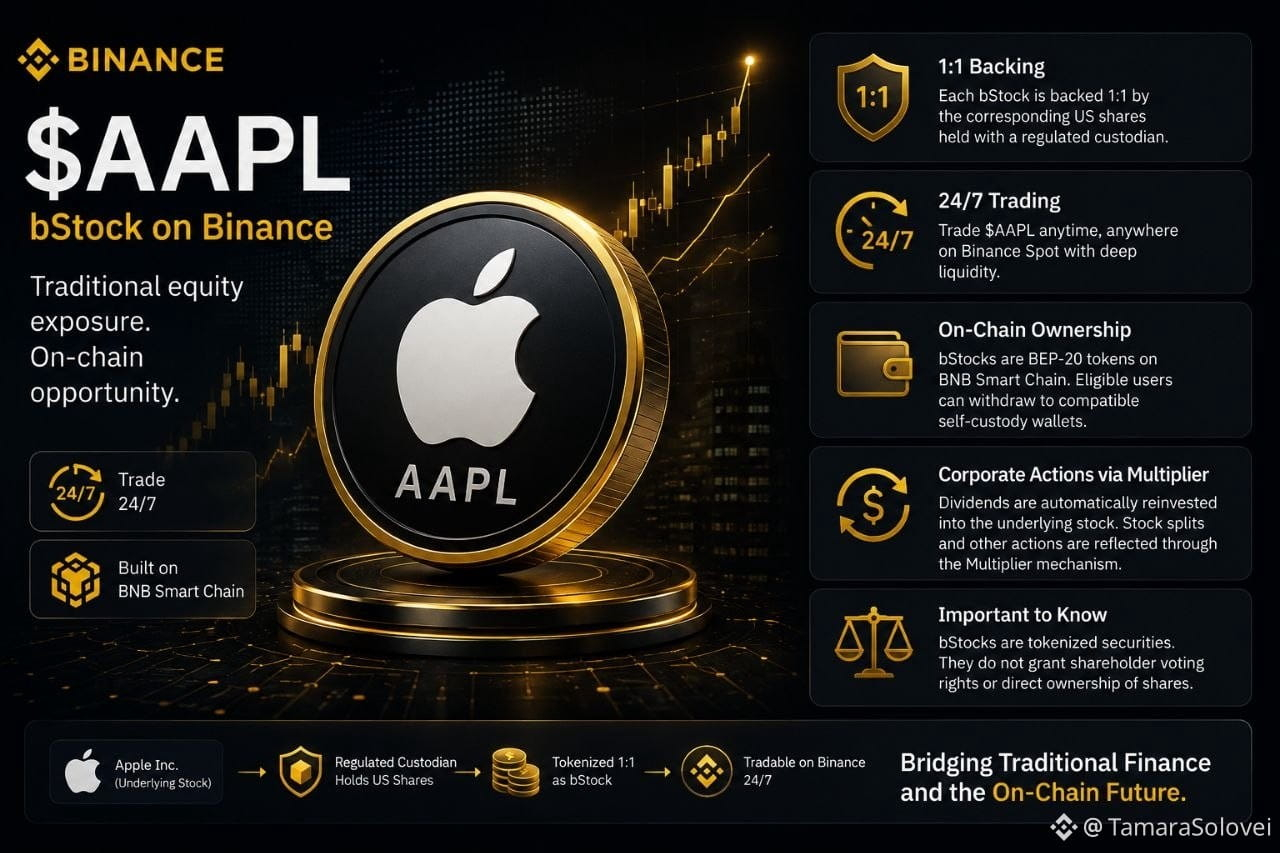
A tokenized stock such as $AAPL isn't simply a ticker displayed on an exchange. bStocks are backed 1:1 by corresponding US shares held with a regulated custodian, while the token itself exists as a BEP-20 asset on BNB Smart Chain.
The interesting part is what this enables.
Instead of keeping your exposure exclusively inside a traditional brokerage environment, eligible users can withdraw the tokenized asset to a compatible Web3 wallet.
That opens the door to something traditional shares can't easily provide:
🔗 Blockchain-native transfers
🌐 On-chain composability
🔐 Self-custody through a compatible wallet
🕐 24/7 trading infrastructure
And this is where tokenization becomes more than just changing the format of an asset.
The underlying economic exposure remains connected to the traditional security, while the representation of that exposure can interact with blockchain infrastructure.
That's the part of tokenized equities I find most interesting: bringing real-world financial assets into an environment where ownership and blockchain applications can finally start to interact.
Would you keep a tokenized stock on Binance or move it to your own compatible wallet?
#bstockscis @BinanceCIS
What happens when a stock stops being locked inside a brokerage account?
That’s one of the more interesting ideas behind bStocks.
A tokenized stock such as $AAPL isn't simply a ticker displayed on an exchange. bStocks are backed 1:1 by corresponding US shares held with a regulated custodian, while the token itself exists as a BEP-20 asset on BNB Smart Chain.
The interesting part is what this enables.
Instead of keeping your exposure exclusively inside a traditional brokerage environment, eligible users can withdraw the tokenized asset to a compatible Web3 wallet.
That opens the door to something traditional shares can't easily provide:
🔗 Blockchain-native transfers
🌐 On-chain composability
🔐 Self-custody through a compatible wallet
🕐 24/7 trading infrastructure
And this is where tokenization becomes more than just changing the format of an asset.
The underlying economic exposure remains connected to the traditional security, while the representation of that exposure can interact with blockchain infrastructure.
That's the part of tokenized equities I find most interesting: bringing real-world financial assets into an environment where ownership and blockchain applications can finally start to interact.
Would you keep a tokenized stock on Binance or move it to your own compatible wallet?
What happens when a stock stops being locked inside a brokerage account?
That’s one of the more interesting ideas behind bStocks.
A tokenized stock such as $AAPL isn't simply a ticker displayed on an exchange. bStocks are backed 1:1 by corresponding US shares held with a regulated custodian, while the token itself exists as a BEP-20 asset on BNB Smart Chain.
The interesting part is what this enables.
Instead of keeping your exposure exclusively inside a traditional brokerage environment, eligible users can withdraw the tokenized asset to a compatible Web3 wallet.
That opens the door to something traditional shares can't easily provide:
🔗 Blockchain-native transfers
🌐 On-chain composability
🔐 Self-custody through a compatible wallet
🕐 24/7 trading infrastructure
And this is where tokenization becomes more than just changing the format of an asset.
The underlying economic exposure remains connected to the traditional security, while the representation of that exposure can interact with blockchain infrastructure.
That's the part of tokenized equities I find most interesting: bringing real-world financial assets into an environment where ownership and blockchain applications can finally start to interact.
Would you keep a tokenized stock on Binance or move it to your own compatible wallet?
1
2
116
Tərcüməyə bax
#dusk $DUSK @Dusk_Foundation
One thing that makes Dusk interesting is that it doesn't force every application to use blockchain infrastructure in exactly the same way.
Dusk separates settlement from execution through its modular architecture.
At the foundation is DuskDS, responsible for consensus, finality and data availability. On top of that, developers can use DuskVM for native Rust/WASM smart contracts or DuskEVM when they want an EVM-compatible environment and familiar Solidity tooling.
Why is that important for regulated finance?
Different financial applications have different requirements. A native asset workflow may need direct access to Dusk's privacy and transaction models, while another application may benefit from existing Ethereum tooling and developer infrastructure.
Dusk is essentially trying to provide both paths without giving up its underlying settlement layer.
And this is where the architecture becomes more interesting than the usual “RWA blockchain” narrative.
The network is designed around requirements such as:
🔹 eligibility and access controls
🔹 selective disclosure of sensitive information
🔹 confidential transactions
🔹 deterministic settlement
🔹 regulated asset issuance and servicing
Its documentation specifically describes use cases ranging from tokenized equity and debt to institutional DeFi and delivery-versus-payment settlement.
For me, the key question isn't whether institutions will eventually use blockchain. It's whether the underlying infrastructure is flexible enough to meet the requirements of real financial markets.
That's the part of the Dusk thesis I'm watching.
#dusk $DUSK @Dusk
One thing that makes Dusk interesting is that it doesn't force every application to use blockchain infrastructure in exactly the same way.
Dusk separates settlement from execution through its modular architecture.
At the foundation is DuskDS, responsible for consensus, finality and data availability. On top of that, developers can use DuskVM for native Rust/WASM smart contracts or DuskEVM when they want an EVM-compatible environment and familiar Solidity tooling.
Why is that important for regulated finance?
Different financial applications have different requirements. A native asset workflow may need direct access to Dusk's privacy and transaction models, while another application may benefit from existing Ethereum tooling and developer infrastructure.
Dusk is essentially trying to provide both paths without giving up its underlying settlement layer.
And this is where the architecture becomes more interesting than the usual “RWA blockchain” narrative.
The network is designed around requirements such as:
🔹 eligibility and access controls
🔹 selective disclosure of sensitive information
🔹 confidential transactions
🔹 deterministic settlement
🔹 regulated asset issuance and servicing
Its documentation specifically describes use cases ranging from tokenized equity and debt to institutional DeFi and delivery-versus-payment settlement.
For me, the key question isn't whether institutions will eventually use blockchain. It's whether the underlying infrastructure is flexible enough to meet the requirements of real financial markets.
That's the part of the Dusk thesis I'm watching.
One thing that makes Dusk interesting is that it doesn't force every application to use blockchain infrastructure in exactly the same way.
Dusk separates settlement from execution through its modular architecture.
At the foundation is DuskDS, responsible for consensus, finality and data availability. On top of that, developers can use DuskVM for native Rust/WASM smart contracts or DuskEVM when they want an EVM-compatible environment and familiar Solidity tooling.
Why is that important for regulated finance?
Different financial applications have different requirements. A native asset workflow may need direct access to Dusk's privacy and transaction models, while another application may benefit from existing Ethereum tooling and developer infrastructure.
Dusk is essentially trying to provide both paths without giving up its underlying settlement layer.
And this is where the architecture becomes more interesting than the usual “RWA blockchain” narrative.
The network is designed around requirements such as:
🔹 eligibility and access controls
🔹 selective disclosure of sensitive information
🔹 confidential transactions
🔹 deterministic settlement
🔹 regulated asset issuance and servicing
Its documentation specifically describes use cases ranging from tokenized equity and debt to institutional DeFi and delivery-versus-payment settlement.
For me, the key question isn't whether institutions will eventually use blockchain. It's whether the underlying infrastructure is flexible enough to meet the requirements of real financial markets.
That's the part of the Dusk thesis I'm watching.
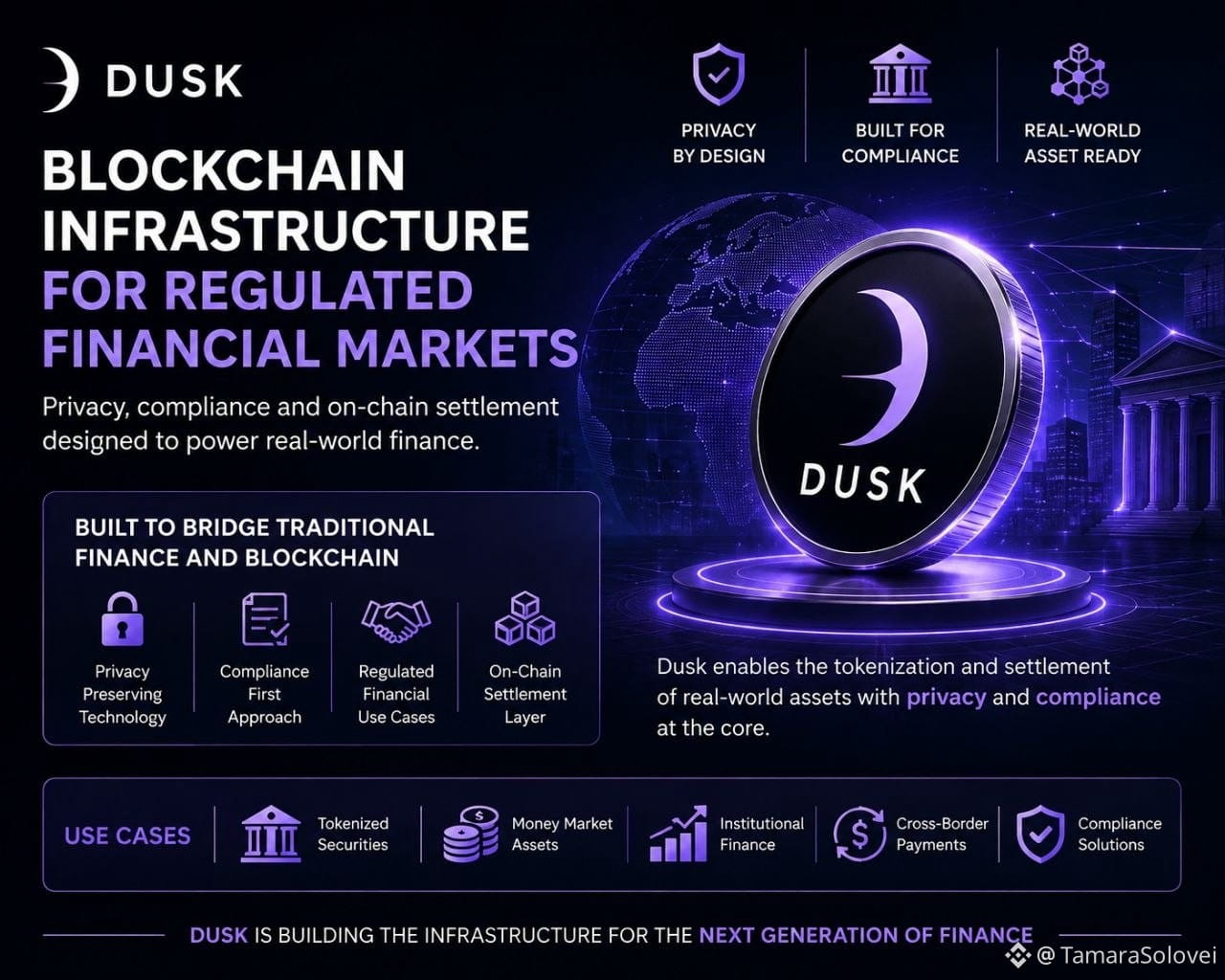
2
1
57
Daha çox kontent araşdırmaq üçün daxil olun
Binance Square-də qlobal kriptovalyuta istifadəçilərinə qoşulun
⚡️ Kriptovalyuta haqqında ən son və faydalı məlumatları əldə edin.
💬 Dünyanın ən böyük kriptovalyuta birjası tərəfindən etibar edilir.
👍 Doğrulanmış yaradıcılardan gələn real məlumatları kəşf edin.
E-poçt/Telefon nömrəsi
Trenddə olan mövzular
TrumpRejectsIranHormuzReopening
2,175 baxış
Müzakirə edir: 127
TRAMP HORMUZ RELEF TİCARƏTİNİ DƏRDƏLƏDİ. 🚨
İran Vaşinqtonun hərbi təzyiqi yumşaldıb blokadasını dayandıracağı təqdirdə Hormuz boğazını açmaq üçün 7 günlük yol təklif edib. Neft bazarları üçün bu, masadakı ən təmiz mənfi katalizator idi.
Sonra Tramp İranın atəşkəs şərtlərini rədd etdi.
İki tərəf hələ də uzaqdadır və Vaşinqtonun iyun çərçivəsinə qayıtmaq üçün az təcili hərəkət göstərdiyi görünür.
Bu da bazarı yenidən risk-mükafat (risk-premium) ticarətinə qaytarır:
Hormuz məhdud qalır → neft təchizatı riski yüksək səviyyədə qalır.
Diplomatiya baş tutmur → $CL və $BZ tezliklə daha yüksək qiymətə yenidən qiymətləndirilə bilər.
Hər hansı yenilənmiş zərbələr → volatillik yenə də partlayacaq.
Müharibədən əvvəl boğaz qlobal neft və LNG yüklərinin təxminən beşdə birini daşıyırdı, yəni bu, sadəcə növbəti geosiyasi xəbər deyil.
Bazar ümidə görə nefti satdı.
Tramp həmin ümidin böyük bir hissəsini götürdü. 👀
$CL $BZ #TrumpRejectsIranHormuzReopening #CircleTetherFreezeBitgetHackerWallet
KimHotbae
·1 bəyənmə
·230 baxış
CircleTetherFreezeBitgetHackerWallet
25,358 baxış
Müzakirə edir: 358
SECSaysTokenBuybacksNotAutoSecurities
6,559 baxış
Müzakirə edir: 143