

SawJan
20 Paylaşımlar

SawJan
Şikayət et
İstifadəçini blokla
Açıq ticarət

SOL sahibi
Təsadüfi treyder
4.6 il
8 İzlənilir
28 İzləyicilər
21 Bəyəndi
Postlar
Portfel
·
--
Tərcüməyə bax
📉 Crypto Market Update: Bears Have a Slight Edge
The crypto market is showing mild downside pressure, with major assets trading in the red over the last 24 hours.
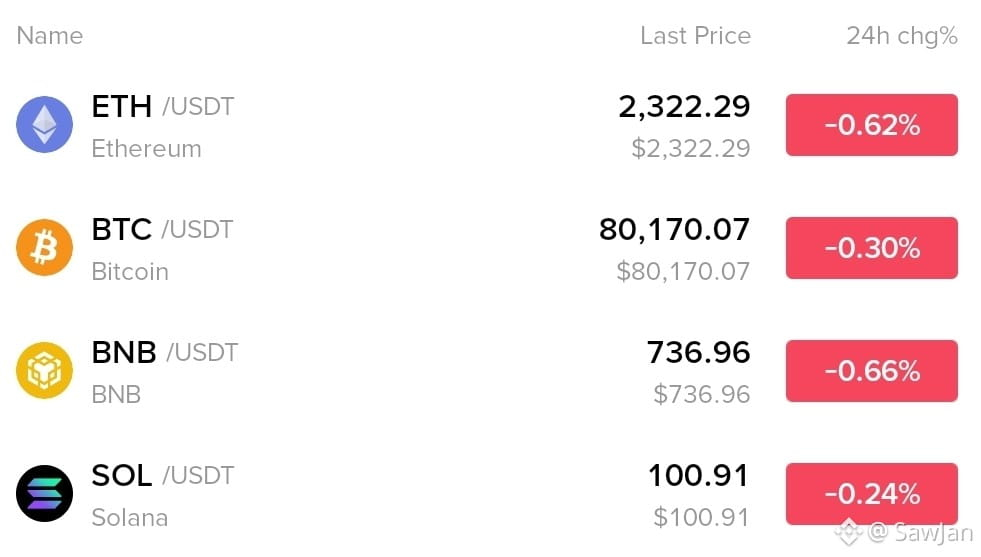
📊 Market Snapshot: 🔹 BTC: $80,170.07 | -0.30% 🔹 ETH: $2,322.29 | -0.62% 🔹 BNB: $736.96 | -0.66% 🔹 SOL: $100.91 | -0.24%
🔍 What does the data tell us?
• Bitcoin is showing relative strength, recording the smallest decline among these four assets. • Ethereum and BNB are under slightly greater selling pressure, with BNB posting the largest decline. • Solana is showing relative resilience, with the smallest percentage drop at -0.24%.
🧠 My takeaway:
This looks like a mild market pullback rather than clear evidence of a major trend reversal. However, one 24-hour snapshot isn't enough to confirm the next move.
The key things to watch next are BTC's price stability, trading volume, and whether ETH, BNB, and SOL can recover their short-term losses.
The next move matters more than the current red candles. 👀
Are we seeing a healthy correction or the beginning of a deeper pullback?
#Bitcoin #Ethereum #BNB #Solana #CryptoMarket
57
·
--
📉 Kriptovalyuta bazarının icmalı: Ayılar bir qədər üstünlükdədir
Kriptovalyuta bazarında zəif eniş təzyiqi müşahidə olunur; son 24 saat ərzində əsas aktivlər qırmızı zonada ticarət edilir.
📊 Bazarın qısa icmalı:
🔹 BTC: $80,170.07 | -0.30%
🔹 ETH: $2,322.29 | -0.62%
🔹 BNB: $736.96 | -0.66%
🔹 SOL: $100.91 | -0.24%
🔍 Məlumatlar bizə nə deyir?
• Bitcoin nisbətən güclü görünür və bu dörd aktiv arasında ən kiçik enişi qeydə alıb.
• Ethereum və BNB daha güclü satış təzyiqi altındadır; ən böyük eniş isə BNB-də qeydə alınıb.
• Solana nisbətən dayanıqlı görünür və -0.24% ilə faiz baxımından ən kiçik enişi göstərir.
🧠 Mənim qənaətim:
Bu, əsas trendin dəyişdiyinə dair aydın sübutdan daha çox, bazarda mülayim geriləməyə bənzəyir. Bununla belə, növbəti hərəkəti təsdiqləmək üçün 24 saatlıq bir mənzərə kifayət deyil.
İndi diqqət yetirilməli əsas məqamlar BTC qiymətinin sabitliyi, ticarət həcmi, həmçinin ETH, BNB və SOL-un qısamüddətli itkilərini bərpa edə bilib-bilməyəcəyidir.
Növbəti hərəkət indiki qırmızı şamlardan daha vacibdir. 👀
Sizcə, sağlam korreksiya ilə qarşılaşırıq, yoxsa daha dərin geriləmənin başlanğıcıdır?
#bitcoin #Ethereum #BNB #solana #CryptoMarket
79
·
--
Azalma
Tərcüməyə bax
Instead of green, everything is red today 😬
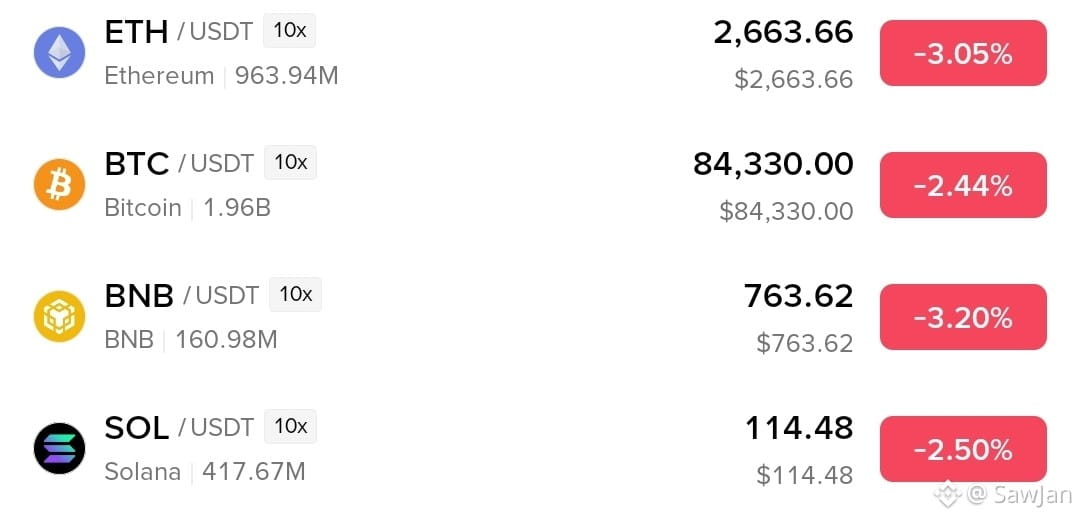
ETH -3.05% | BTC -2.44% | BNB -3.20% | SOL -2.50%
Every chart seems to be flashing red today 🔴
Looks like the bulls are taking a little break 🐂
Time to stay patient and watch the next move 👀
Let’s see where the market goes from here 📉
Instead of green, everything is red today 😬
ETH -3.05% | BTC -2.44% | BNB -3.20% | SOL -2.50%
Every chart seems to be flashing red today 🔴
Looks like the bulls are taking a little break 🐂
Time to stay patient and watch the next move 👀
Let’s see where the market goes from here 📉
ETH -3.05% | BTC -2.44% | BNB -3.20% | SOL -2.50%
Every chart seems to be flashing red today 🔴
Looks like the bulls are taking a little break 🐂
Time to stay patient and watch the next move 👀
Let’s see where the market goes from here 📉
116
·
--
Tərcüməyə bax
DeFi is evolving beyond chasing the highest APY.
@termmax is taking a different approach with fixed-rate lending and borrowing, giving users more predictability when managing capital on-chain.
That predictability can make a big difference. Borrowers can plan ahead, lenders can understand their expected returns, and capital can be allocated with a clearer strategy instead of constantly reacting to rate fluctuations.
With support for multi-chain markets, TermMax is building toward a DeFi experience where financial decisions can be made with more confidence.
Less uncertainty.
More structure.
Better capital planning.
That’s the direction DeFi needs.
#TermMax #DeFi #Web3
#termmax @termmax
DeFi is evolving beyond chasing the highest APY.
@TermMax is taking a different approach with fixed-rate lending and borrowing, giving users more predictability when managing capital on-chain.
That predictability can make a big difference. Borrowers can plan ahead, lenders can understand their expected returns, and capital can be allocated with a clearer strategy instead of constantly reacting to rate fluctuations.
With support for multi-chain markets, TermMax is building toward a DeFi experience where financial decisions can be made with more confidence.
Less uncertainty.
More structure.
Better capital planning.
That’s the direction DeFi needs.
#TermMax #DeFi #Web3
#termmax @TermMax
68
·
--
Tərcüməyə bax
DeFi needs more than hype—it needs better tools for managing capital.
@termmax is building fixed-rate lending and borrowing markets that bring more predictability to on-chain finance. With multi-chain support and clearer capital allocation, users can approach lending strategies with greater confidence.
The ability to lock in rates can be especially useful when markets become volatile and variable borrowing costs move quickly.
As DeFi continues evolving, predictable liquidity and efficient capital management will matter more than ever.
That’s why #termmax is a project worth watching as the next generation of on-chain financial infrastructure takes shape.
#termmax @termmax
DeFi needs more than hype—it needs better tools for managing capital.
@TermMax is building fixed-rate lending and borrowing markets that bring more predictability to on-chain finance. With multi-chain support and clearer capital allocation, users can approach lending strategies with greater confidence.
The ability to lock in rates can be especially useful when markets become volatile and variable borrowing costs move quickly.
As DeFi continues evolving, predictable liquidity and efficient capital management will matter more than ever.
That’s why #termmax is a project worth watching as the next generation of on-chain financial infrastructure takes shape.
#termmax @TermMax
66
·
--
Tərcüməyə bax
#TermMax @termmax
DeFi has plenty of lending protocols, but predictable rates are still underrated.
That’s why TermMax caught my attention.
Fixed-rate lending and borrowing makes capital planning much easier. You can understand the cost upfront instead of constantly reacting to changing market conditions.
I also like the multi-chain direction. More markets and liquidity across different ecosystems can make fixed-rate products much more useful over time.
The bigger picture is simple: DeFi needs infrastructure that helps users manage capital with more confidence.
TermMax is building in that direction, and I’m interested to see how far the ecosystem can grow.There’s a difference between DeFi products that chase attention and infrastructure that solves a real problem.
@termmax is interesting because it focuses on something practical: predictable borrowing and lending.
Fixed rates can give users more control over capital allocation, especially when markets become volatile.
Instead of constantly asking where rates might move next, users can structure positions around clearer costs and expectations.
The multi-chain approach adds another layer, potentially opening access to more liquidity and markets.
For me, this is the kind of DeFi infrastructure worth paying attention to.
Less noise. More utility.
#TermMaxOne thing DeFi still needs is better predictability.
That’s where @termmax makes an interesting case.
Fixed-rate lending and borrowing can make on-chain capital easier to plan around. Whether you’re borrowing for a strategy or allocating liquidity, knowing the rate upfront can remove a lot of uncertainty.
I also think the multi-chain vision is important.
Liquidity shouldn’t be trapped inside isolated ecosystems forever.
If TermMax can continue building reliable fixed-rate markets across chains, it could become useful infrastructure for a much broader range of DeFi users.
The narrative is simple:
Predictable rates.
Better capital planning.
More efficient DeFi.
#termmax @termmax
#TermMax @termmax
DeFi has plenty of lending protocols, but predictable rates are still underrated.
That’s why TermMax caught my attention.
Fixed-rate lending and borrowing makes capital planning much easier. You can understand the cost upfront instead of constantly reacting to changing market conditions.
I also like the multi-chain direction. More markets and liquidity across different ecosystems can make fixed-rate products much more useful over time.
The bigger picture is simple: DeFi needs infrastructure that helps users manage capital with more confidence.
TermMax is building in that direction, and I’m interested to see how far the ecosystem can grow.There’s a difference between DeFi products that chase attention and infrastructure that solves a real problem.
@TermMax is interesting because it focuses on something practical: predictable borrowing and lending.
Fixed rates can give users more control over capital allocation, especially when markets become volatile.
Instead of constantly asking where rates might move next, users can structure positions around clearer costs and expectations.
The multi-chain approach adds another layer, potentially opening access to more liquidity and markets.
For me, this is the kind of DeFi infrastructure worth paying attention to.
Less noise. More utility.
#TermMaxOne thing DeFi still needs is better predictability.
That’s where @TermMax makes an interesting case.
Fixed-rate lending and borrowing can make on-chain capital easier to plan around. Whether you’re borrowing for a strategy or allocating liquidity, knowing the rate upfront can remove a lot of uncertainty.
I also think the multi-chain vision is important.
Liquidity shouldn’t be trapped inside isolated ecosystems forever.
If TermMax can continue building reliable fixed-rate markets across chains, it could become useful infrastructure for a much broader range of DeFi users.
The narrative is simple:
Predictable rates.
Better capital planning.
More efficient DeFi.
#termmax @TermMax
77
·
--
Tərcüməyə bax
TermMax is making DeFi feel more predictable by bringing fixed-rate lending, borrowing, and leverage on-chain. Instead of dealing with constantly changing rates, users can lock in borrowing costs or expected yields until maturity. The protocol also supports managed vaults, multi-chain markets, and one-click leverage, making complex strategies easier to access. What stands out to me is the focus on predictable capital allocation rather than simply chasing short-term incentives. As DeFi matures, fixed-rate markets could become an important building block for both users and institutions. TermMax is definitely one protocol worth watching as this category develops. #termmax @termmax #termmax @termmax
TermMax is making DeFi feel more predictable by bringing fixed-rate lending, borrowing, and leverage on-chain. Instead of dealing with constantly changing rates, users can lock in borrowing costs or expected yields until maturity. The protocol also supports managed vaults, multi-chain markets, and one-click leverage, making complex strategies easier to access. What stands out to me is the focus on predictable capital allocation rather than simply chasing short-term incentives. As DeFi matures, fixed-rate markets could become an important building block for both users and institutions. TermMax is definitely one protocol worth watching as this category develops. #termmax @TermMax #termmax @TermMax
68
·
--
Tərcüməyə bax
TermMax is building a more flexible way to access fixed-term DeFi markets, giving users better control over yield, maturity, and capital efficiency. What stands out to me about @TermMax is the focus on structured, term-based financial products rather than treating every DeFi position as purely variable. As DeFi evolves, predictable maturity and clearer risk-return profiles could become increasingly important for both users and protocols. TermMax is working toward making these markets more accessible while expanding the possibilities of onchain fixed-term finance. I’ll be watching how the ecosystem develops and how users leverage its growing product stack.
#termmax @termmax
TermMax is building a more flexible way to access fixed-term DeFi markets, giving users better control over yield, maturity, and capital efficiency. What stands out to me about @TermMax is the focus on structured, term-based financial products rather than treating every DeFi position as purely variable. As DeFi evolves, predictable maturity and clearer risk-return profiles could become increasingly important for both users and protocols. TermMax is working toward making these markets more accessible while expanding the possibilities of onchain fixed-term finance. I’ll be watching how the ecosystem develops and how users leverage its growing product stack.
#termmax @TermMax
#termmax @TermMax

68
·
--
Tərcüməyə bax
The future of trading isn't about choosing between earning yield and staying liquid—it's about having both in one seamless experience.
That's what makes GRVT stand out. By combining the speed and efficiency of a centralized exchange with the transparency and security of decentralized infrastructure, it creates a platform where users remain in control of their assets while accessing a smoother trading experience.
Whether you're trading crypto or real-world assets, your eligible balances don't have to sit idle. Instead, your capital can continue working in the background while remaining available for your next opportunity.
Self-custody, fast execution, and on-chain settlement aren't just technical features—they're building blocks for a more efficient financial system. As more users look for platforms that maximize both flexibility and capital efficiency, solutions like GRVT are becoming increasingly relevant.
The next generation of exchanges won't simply focus on lower fees or faster trades. They'll focus on making every asset more productive without compromising ownership or transparency.
GRVT is moving in that direction by bringing trading, earning, and self-custody together in a single unified experience. That's the kind of innovation that has the potential to reshape how we interact with digital and real-world assets.
@grvt_io #grvt
65
·
--
Artım
Tərcüməyə bax
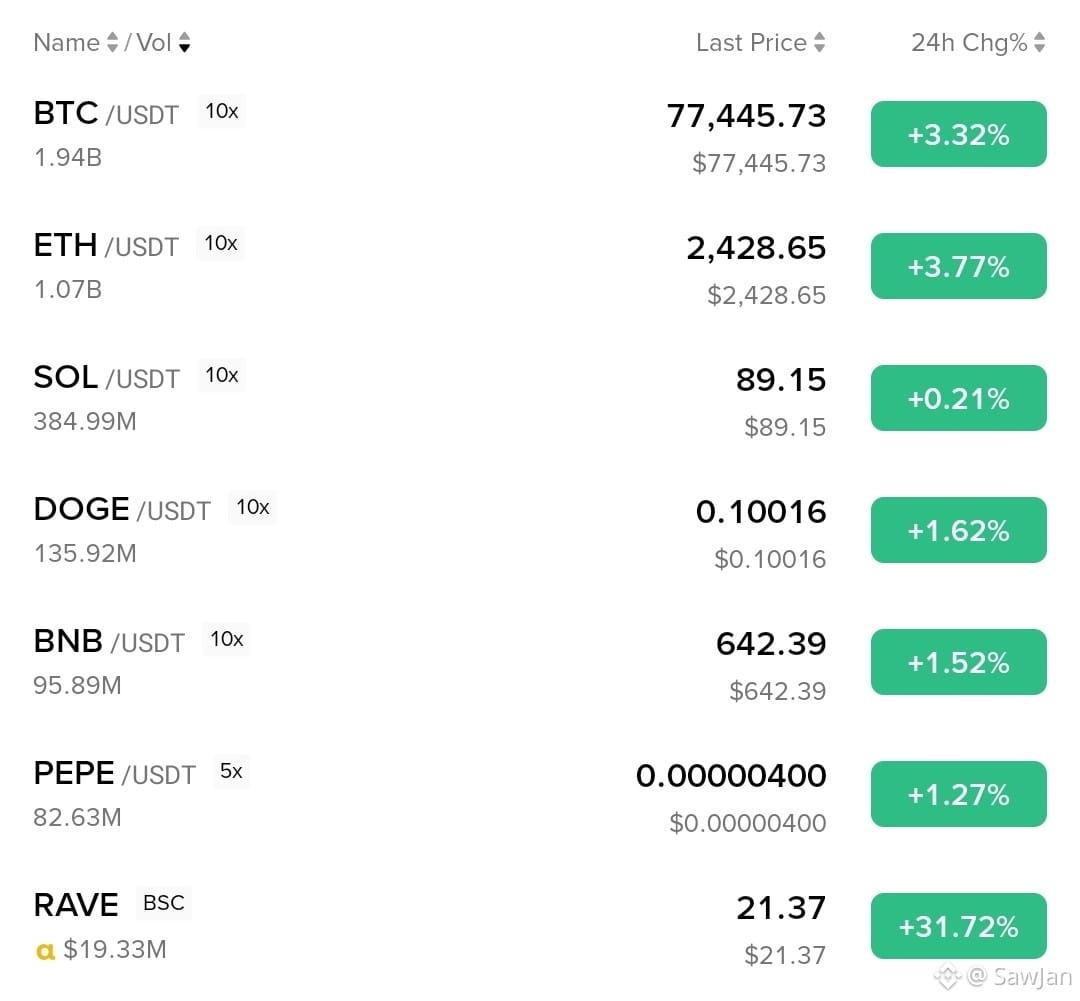
After long time the market is going to be green 💚 and $BTC , $ETH , $SOL and other coin going up start pump and i hope market going well a every coin gain they'res previous price.
After long time the market is going to be green 💚 and $BTC , $ETH , $SOL and other coin going up start pump and i hope market going well a every coin gain they'res previous price.
65
·
--

Məqalə
Tərcüməyə bax
pixelThe evolution of @Pixels is becoming one of the most interesting case studies in web3 gaming right now. What started as a simple farming-style game has gradually transformed into a much deeper and more structured ecosystem through its Stacked approach. This shift is not just about adding features, but about creating a sustainable loop where players, creators, and the in-game economy all reinforce each other.
At the center of this system is $PIXEL. Instead of being just another in-game currency, it’s being positioned as the core layer that connects activity, rewards, and long-term participation. As more mechanics are introduced into the Stacked ecosystem, the role of $PIXEL becomes more meaningful, especially as utility expands across different parts of the platform.
One of the most important aspects of this evolution is how @Pixels is aligning incentives. Players are no longer just grinding for short-term rewards; they are contributing to a broader system that benefits from active participation. Creators, on the other hand, are becoming key drivers of growth by bringing attention, education, and narrative to the ecosystem. This combination creates a flywheel effect that is hard to replicate.
Another thing worth noting is the focus on scalability. Many web3 games struggle to maintain user interest over time, but the Stacked ecosystem appears designed to continuously introduce new layers of engagement. This keeps the experience fresh while also strengthening the value proposition of $PIXEL .
If this direction continues, @Pixels could set a strong example for how web3 gaming ecosystems should be built — not around short-term hype, but around long-term value creation. The integration of gameplay, economy, and community is what makes this model stand out.
Overall, the growth of @Pixels and its Stacked ecosystem shows that we are moving toward a more mature phase of web3 gaming. It’s no longer just about playing; it’s about participating in an evolving digital economy. And with $PIXEL at the center of it all, the foundation looks solid for future expansion.
pixel
The evolution of @Pixels is becoming one of the most interesting case studies in web3 gaming right now. What started as a simple farming-style game has gradually transformed into a much deeper and more structured ecosystem through its Stacked approach. This shift is not just about adding features, but about creating a sustainable loop where players, creators, and the in-game economy all reinforce each other.
At the center of this system is $PIXEL . Instead of being just another in-game currency, it’s being positioned as the core layer that connects activity, rewards, and long-term participation. As more mechanics are introduced into the Stacked ecosystem, the role of $PIXEL becomes more meaningful, especially as utility expands across different parts of the platform.
One of the most important aspects of this evolution is how @Pixels is aligning incentives. Players are no longer just grinding for short-term rewards; they are contributing to a broader system that benefits from active participation. Creators, on the other hand, are becoming key drivers of growth by bringing attention, education, and narrative to the ecosystem. This combination creates a flywheel effect that is hard to replicate.
Another thing worth noting is the focus on scalability. Many web3 games struggle to maintain user interest over time, but the Stacked ecosystem appears designed to continuously introduce new layers of engagement. This keeps the experience fresh while also strengthening the value proposition of $PIXEL .
If this direction continues, @Pixels could set a strong example for how web3 gaming ecosystems should be built — not around short-term hype, but around long-term value creation. The integration of gameplay, economy, and community is what makes this model stand out.
Overall, the growth of @Pixels and its Stacked ecosystem shows that we are moving toward a more mature phase of web3 gaming. It’s no longer just about playing; it’s about participating in an evolving digital economy. And with $PIXEL at the center of it all, the foundation looks solid for future expansion.
18
·
--
Tərcüməyə bax
pixelThe evolution of @Pixels is becoming one of the most interesting case studies in web3 gaming right now. What started as a simple farming-style game has gradually transformed into a much deeper and more structured ecosystem through its Stacked approach. This shift is not just about adding features, but about creating a sustainable loop where players, creators, and the in-game economy all reinforce each other.
At the center of this system is $PIXEL. Instead of being just another in-game currency, it’s being positioned as the core layer that connects activity, rewards, and long-term participation. As more mechanics are introduced into the Stacked ecosystem, the role of $PIXEL becomes more meaningful, especially as utility expands across different parts of the platform.
One of the most important aspects of this evolution is how @Pixels is aligning incentives. Players are no longer just grinding for short-term rewards; they are contributing to a broader system that benefits from active participation. Creators, on the other hand, are becoming key drivers of growth by bringing attention, education, and narrative to the ecosystem. This combination creates a flywheel effect that is hard to replicate.
Another thing worth noting is the focus on scalability. Many web3 games struggle to maintain user interest over time, but the Stacked ecosystem appears designed to continuously introduce new layers of engagement. This keeps the experience fresh while also strengthening the value proposition of $PIXEL.
If this direction continues, @Pixels could set a strong example for how web3 gaming ecosystems should be built — not around short-term hype, but around long-term value creation. The integration of gameplay, economy, and community is what makes this model stand out.
Overall, the growth of @Pixels and its Stacked ecosystem shows that we are moving toward a more mature phase of web3 gaming. It’s no longer just about playing; it’s about participating in an evolving digital economy. And with $PIXEL at the center of it all, the foundation looks solid for future expansion. #pixel
pixel
The evolution of @Pixels is becoming one of the most interesting case studies in web3 gaming right now. What started as a simple farming-style game has gradually transformed into a much deeper and more structured ecosystem through its Stacked approach. This shift is not just about adding features, but about creating a sustainable loop where players, creators, and the in-game economy all reinforce each other.
At the center of this system is $PIXEL. Instead of being just another in-game currency, it’s being positioned as the core layer that connects activity, rewards, and long-term participation. As more mechanics are introduced into the Stacked ecosystem, the role of $PIXEL becomes more meaningful, especially as utility expands across different parts of the platform.
One of the most important aspects of this evolution is how @Pixels is aligning incentives. Players are no longer just grinding for short-term rewards; they are contributing to a broader system that benefits from active participation. Creators, on the other hand, are becoming key drivers of growth by bringing attention, education, and narrative to the ecosystem. This combination creates a flywheel effect that is hard to replicate.
Another thing worth noting is the focus on scalability. Many web3 games struggle to maintain user interest over time, but the Stacked ecosystem appears designed to continuously introduce new layers of engagement. This keeps the experience fresh while also strengthening the value proposition of $PIXEL.
If this direction continues, @Pixels could set a strong example for how web3 gaming ecosystems should be built — not around short-term hype, but around long-term value creation. The integration of gameplay, economy, and community is what makes this model stand out.
Overall, the growth of @Pixels and its Stacked ecosystem shows that we are moving toward a more mature phase of web3 gaming. It’s no longer just about playing; it’s about participating in an evolving digital economy. And with $PIXEL at the center of it all, the foundation looks solid for future expansion. #pixel
18
·
--
Tərcüməyə bax
Seeing @Pixels grow into a full Stacked ecosystem is honestly impressive. What started as a simple web3 game is now evolving into something much bigger, where $PIXEL plays a key role in connecting gameplay, economy, and creators. The way they are building utility around the token shows long-term thinking rather than short-term hype. More players, more creators, and more use cases mean stronger network effects over time. If this momentum continues, Pixels could become a benchmark for how web3 gaming ecosystems should scale. Definitely worth paying attention to how this develops. #pixel
Seeing @Pixels grow into a full Stacked ecosystem is honestly impressive. What started as a simple web3 game is now evolving into something much bigger, where $PIXEL plays a key role in connecting gameplay, economy, and creators. The way they are building utility around the token shows long-term thinking rather than short-term hype. More players, more creators, and more use cases mean stronger network effects over time. If this momentum continues, Pixels could become a benchmark for how web3 gaming ecosystems should scale. Definitely worth paying attention to how this develops. #pixel
20
·
--
Tərcüməyə bax
Alpha Trading Competition you just see last day of events close no Trading Volume but you just start tarding then end event time . then see you are the last person never win event and Trading leaderboard is high 😂😂😂😂
Alpha Trading Competition you just see last day of events close no Trading Volume but you just start tarding then end event time . then see you are the last person never win event and Trading leaderboard is high 😂😂😂😂
2
·
--
Məqalə
Tərcüməyə bax
Most DeFi is still stateless execution.Most DeFi is still stateless execution. @mira_network introduces persistent, context-aware agents that learn, adapt, and coordinate capital over time. By combining verifiable data, memory, and programmable liquidity, Mira enables continuous strategy evolution instead of isolated trades. $MIRA aligns data, execution, and incentives into one feedback loop, creating infrastructure for AI-native markets that compound intelligence and capital together. #Mira
Most DeFi is still stateless execution.
Most DeFi is still stateless execution. @mira_network introduces persistent, context-aware agents that learn, adapt, and coordinate capital over time. By combining verifiable data, memory, and programmable liquidity, Mira enables continuous strategy evolution instead of isolated trades. $MIRA aligns data, execution, and incentives into one feedback loop, creating infrastructure for AI-native markets that compound intelligence and capital together. #Mira
1
·
--
Tərcüməyə bax
Most DeFi is still stateless execution. @mira_network.Most DeFi is still stateless execution. @mira_network introduces persistent, context-aware agents that learn, adapt, and coordinate capital over time. By combining verifiable data, memory, and programmable liquidity, Mira enables continuous strategy evolution instead of isolated trades. $MIRA aligns data, execution, and incentives into one feedback loop, creating infrastructure for AI-native markets that compound intelligence and capital. #mira $MIRA
Most DeFi is still stateless execution. @mira_network.
Most DeFi is still stateless execution. @mira_network introduces persistent, context-aware agents that learn, adapt, and coordinate capital over time. By combining verifiable data, memory, and programmable liquidity, Mira enables continuous strategy evolution instead of isolated trades. $MIRA aligns data, execution, and incentives into one feedback loop, creating infrastructure for AI-native markets that compound intelligence and capital. #mira $MIRA
4
·
--
Tərcüməyə bax
Composable intelligence will define the next phase of onchain markets, and @mira_network is building the coordination layer for it. By enabling agents with persistent memory, verifiable data access, and programmable execution, Mira turns isolated smart contract calls into adaptive financial behavior. $MIRA aligns incentives across data providers, strategists, and liquidity venues, creating a feedback loop where strategies improve over time instead of resetting each transaction. This is infrastructure for AI-native DeFi—stateful, context-aware, and capital efficient by design. #mira $MIRA
Composable intelligence will define the next phase of onchain markets, and @mira_network is building the coordination layer for it. By enabling agents with persistent memory, verifiable data access, and programmable execution, Mira turns isolated smart contract calls into adaptive financial behavior. $MIRA aligns incentives across data providers, strategists, and liquidity venues, creating a feedback loop where strategies improve over time instead of resetting each transaction. This is infrastructure for AI-native DeFi—stateful, context-aware, and capital efficient by design. #mira $MIRA
3
·
--
Tərcüməyə bax
Autonomous agents need unified rails to manage data, memory, and capital without fragmentation.Autonomous agents need unified rails to manage data, memory, and capital without fragmentation. That’s the core of @mira_network—stateful AI actors executing on verifiable infrastructure with continuous context. $MIRA aligns incentives across data, liquidity, and execution, turning isolated transactions into adaptive financial behavior. This is coordination infrastructure for AI-native DeFi, where strategies learn, persist, and compound onchain. #Mira
Autonomous agents need unified rails to manage data, memory, and capital without fragmentation.
Autonomous agents need unified rails to manage data, memory, and capital without fragmentation. That’s the core of @mira_network—stateful AI actors executing on verifiable infrastructure with continuous context. $MIRA aligns incentives across data, liquidity, and execution, turning isolated transactions into adaptive financial behavior. This is coordination infrastructure for AI-native DeFi, where strategies learn, persist, and compound onchain. #Mira
6
12
·
--
Tərcüməyə bax
Liquidity, identity, and execution need to live in the same layer for AI-driven finance to scale. That’s the vision behind @mira_network—autonomous agents operating on unified rails with verifiable context and programmable capital. $MIRA isn’t just a token, it’s coordination infrastructure for the next machine economy.
#mira $MIRA
#mira $MIRA
10
22
·
--
Tərcüməyə bax
#BinanceTurns8 Join us in the #BinanceTurns8 celebration and win a share of up to $888,888 in BNB!
#BinanceTurns8 Join us in the #BinanceTurns8 celebration and win a share of up to $888,888 in BNB!
5
5
Daha çox kontent araşdırmaq üçün daxil olun
Binance Square-də qlobal kriptovalyuta istifadəçilərinə qoşulun
⚡️ Kriptovalyuta haqqında ən son və faydalı məlumatları əldə edin.
💬 Dünyanın ən böyük kriptovalyuta birjası tərəfindən etibar edilir.
👍 Doğrulanmış yaradıcılardan gələn real məlumatları kəşf edin.
E-poçt/Telefon nömrəsi
Trenddə olan mövzular
BinancePick
3.3M baxış
Müzakirə edir: 164,285
#GəlirlərMövsümünə qoşulun: Binance Pick-də gəlirləri proqnozlaşdırın, fikirlərinizi Binance Square-də bölüşün!
Binance Square Official
·418 bəyənmə
·345.3k baxış
EarningsSeason
5.5M baxış
Müzakirə edir: 26,837
StrategySkipsBitcoinPurchasesSpends$205MOnSTRCBuybacks
761 baxış
Müzakirə edir: 24