

CryptoDeon
15.3k Paylaşımlar

CryptoDeon
Şikayət et
İstifadəçini blokla
Exploring and sharing new insights Daily | Investor and Trader | X (Twitter): @CryptoDeonX
Açıq ticarət
Təsadüfi treyder
2.1 il
334 İzlənilir
3.7K+ İzləyicilər
18.2K+ Bəyəndi
Postlar
Portfel
Hamısı
Sitatlar
Canlı
·
--
Tərcüməyə bax
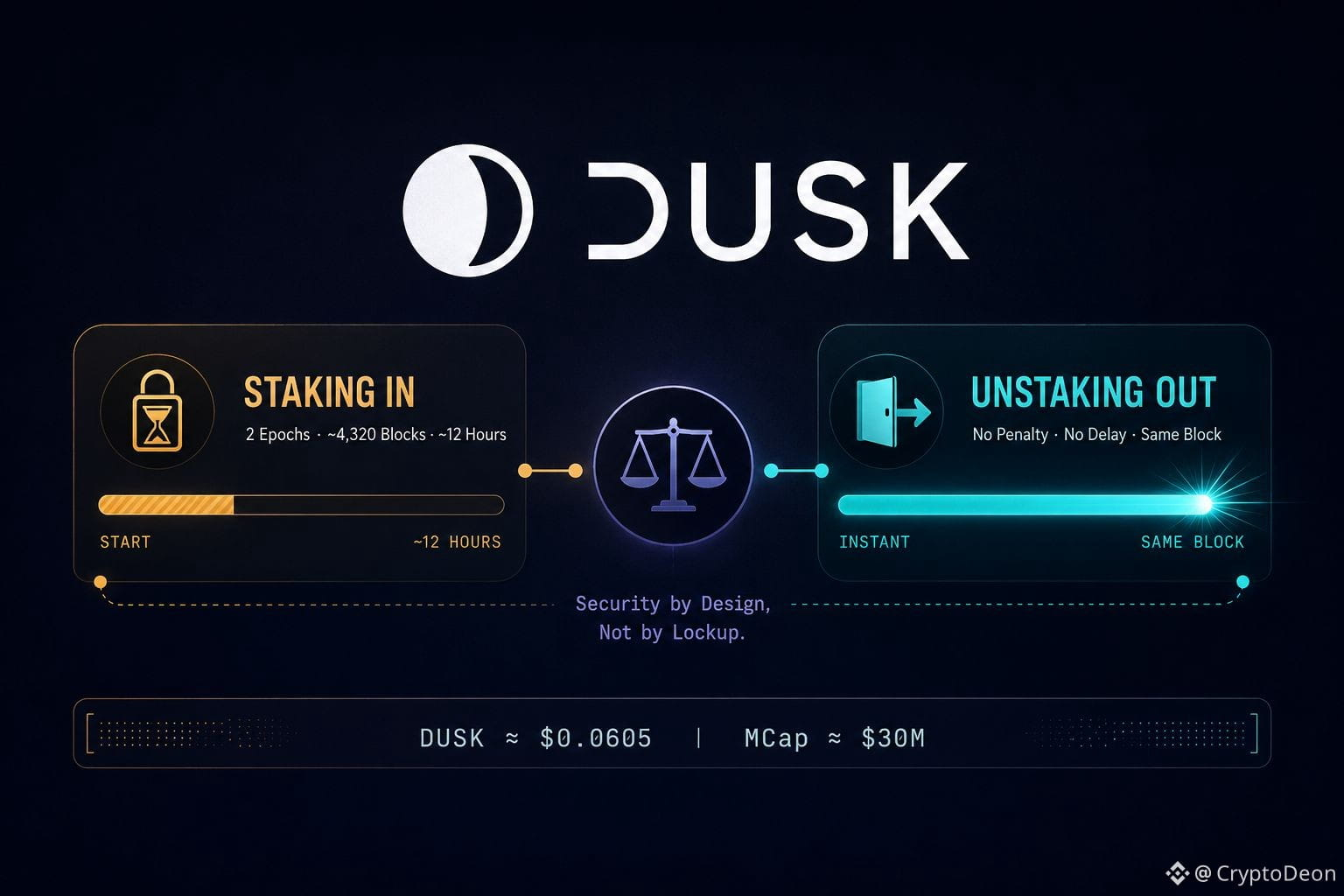
The more I looked into how Dusk handles staking, the more one asymmetry stood out — getting in is slow by design, getting out isn't.
New stake has to sit through a maturity period, 2 epochs, roughly 4,320 blocks, around 12 hours, before it's even eligible for selection and starts earning anything. But unstaking has no penalty and no waiting period at all. You can pull your full stake out the moment you decide to, same block if you want.
That's the opposite of what I expected. Most chains I've looked at protect the network on the exit side — lock-ups, cooldowns, unbonding periods that punish you for leaving fast, because a sudden mass exit threatens security. Dusk protects the entry side instead. The maturity window exists so a bad actor can't stake right before a sensitive moment, get selected into a committee, and disappear — it forces a waiting period specifically where manipulation would be cheapest. Once you're an honest, active participant, the protocol doesn't see a reason to trap your capital just to prove a point.
It's a small design choice, but it says something about what Dusk is actually optimizing for. Not maximum lockup, not TVL theater. Just closing the one window where gaming the system would actually be cheap, while leaving everything else as flexible as it can afford to be.
DUSK sits near $0.0710 today, market cap around $30M — a token where mechanism details like this rarely move price short-term, but quietly shape who's willing to run infrastructure long-term.
Does asymmetric lock-up like this — strict on entry, free on exit — actually deter gaming better than a flat cooldown applied both ways, or does it just move the risk somewhere else in the system?
$DUSK #dusk #BinanceSquare @Dusk_Foundation
The more I looked into how Dusk handles staking, the more one asymmetry stood out — getting in is slow by design, getting out isn't.
New stake has to sit through a maturity period, 2 epochs, roughly 4,320 blocks, around 12 hours, before it's even eligible for selection and starts earning anything. But unstaking has no penalty and no waiting period at all. You can pull your full stake out the moment you decide to, same block if you want.
That's the opposite of what I expected. Most chains I've looked at protect the network on the exit side — lock-ups, cooldowns, unbonding periods that punish you for leaving fast, because a sudden mass exit threatens security. Dusk protects the entry side instead. The maturity window exists so a bad actor can't stake right before a sensitive moment, get selected into a committee, and disappear — it forces a waiting period specifically where manipulation would be cheapest. Once you're an honest, active participant, the protocol doesn't see a reason to trap your capital just to prove a point.
It's a small design choice, but it says something about what Dusk is actually optimizing for. Not maximum lockup, not TVL theater. Just closing the one window where gaming the system would actually be cheap, while leaving everything else as flexible as it can afford to be.
DUSK sits near $0.0710 today, market cap around $30M — a token where mechanism details like this rarely move price short-term, but quietly shape who's willing to run infrastructure long-term.
Does asymmetric lock-up like this — strict on entry, free on exit — actually deter gaming better than a flat cooldown applied both ways, or does it just move the risk somewhere else in the system?
$DUSK #dusk #BinanceSquare @Dusk
New stake has to sit through a maturity period, 2 epochs, roughly 4,320 blocks, around 12 hours, before it's even eligible for selection and starts earning anything. But unstaking has no penalty and no waiting period at all. You can pull your full stake out the moment you decide to, same block if you want.
That's the opposite of what I expected. Most chains I've looked at protect the network on the exit side — lock-ups, cooldowns, unbonding periods that punish you for leaving fast, because a sudden mass exit threatens security. Dusk protects the entry side instead. The maturity window exists so a bad actor can't stake right before a sensitive moment, get selected into a committee, and disappear — it forces a waiting period specifically where manipulation would be cheapest. Once you're an honest, active participant, the protocol doesn't see a reason to trap your capital just to prove a point.
It's a small design choice, but it says something about what Dusk is actually optimizing for. Not maximum lockup, not TVL theater. Just closing the one window where gaming the system would actually be cheap, while leaving everything else as flexible as it can afford to be.
DUSK sits near $0.0710 today, market cap around $30M — a token where mechanism details like this rarely move price short-term, but quietly shape who's willing to run infrastructure long-term.
Does asymmetric lock-up like this — strict on entry, free on exit — actually deter gaming better than a flat cooldown applied both ways, or does it just move the risk somewhere else in the system?
$DUSK #dusk #BinanceSquare @Dusk
2
3
324
·
--
Dusk’un nömrələrini oxumağın fərqli bir yolunu düşünürəm.
Artan pay, yüksələn tranzaksiyalar və ya daha çox tokenləşdirilmiş aktiv — hamısı öz-özlüyündə müsbət görünə bilər. Amma heç biri, təkbaşına, şəbəkə tələbinin həqiqətən güclənib-güclənmədiyini bizə demir.
Faydalı sual fəaliyyətdən iqtisadiyyata qədər nəyin baş verdiyidir.
Əgər Dusk daha çox tətbiq əlavə edərsə, bu daha çox yekunlaşmış tranzaksiya və ödəniş edən aktivlik yaradır? Tranzaksiya sayı artarsa, bu mövcud istifadəçilərin daha fəal olmasına görədir, yoxsa bir neçə kontrakt bütün trafikin çoxunu yaradır?
Mən həm də elan edilmiş aktivləri, əslində on-çeyn (on-chain) üzərində yaradılan, köçürülən və yekunlaşdırılan aktivlərdən ayırardım.
Bu fərq önəmlidir.
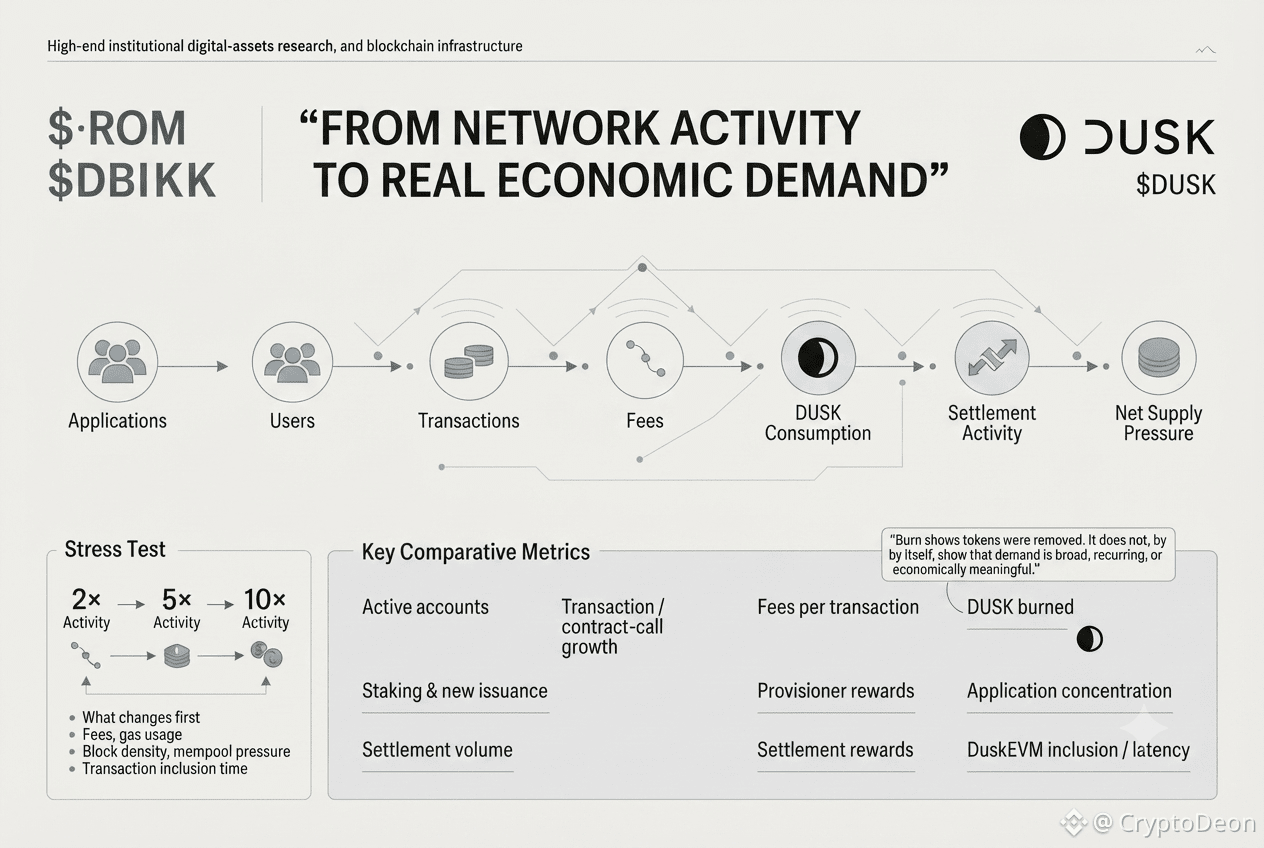
Mənim üçün daha faydalı panel belə əlaqələndirərdi:
• aktiv hesablar
• tranzaksiya və kontrakt çağırışı artımı
• tranzaksiya üzrə ödənişlər
• DUSK yandırıldı
• staking və yeni emissiya
• validator/provisioner mükafatları
• yekunlaşdırma həcmi (settlement volume)
• tətbiq üzrə konsentrasiya
• DuskEVM blok və daxilolma (inclusion) göstəriciləri
Sonra sistemi stress-test et.
2× aktivlikdə, şəbəkə bunu normal şəkildə udur?
5×-də, ödənişlər və ya gecikmə (latency) harada dəyişməyə başlayır?
10×-də, tutum (capacity) məhdudiyyətə çevrilirmi?
Bu ssenarilər tək bir günlük yandırılma (burn) rəqəmindən daha çox şey deyir.
Yandırılma tokenlərin çıxarıldığını təsdiqləyir. Amma bu, əsas aktivliyin genişmi, təkrarlanmımı, yoxsa iqtisadi baxımdan mənalı olub-olmadığını göstərmir.
Dusk-da izləməyə dəyər gördüyüm hissə məhz budur.
@Dusk_Foundation $DUSK #dusk
Dusk’un nömrələrini oxumağın fərqli bir yolunu düşünürəm.
Artan pay, yüksələn tranzaksiyalar və ya daha çox tokenləşdirilmiş aktiv — hamısı öz-özlüyündə müsbət görünə bilər. Amma heç biri, təkbaşına, şəbəkə tələbinin həqiqətən güclənib-güclənmədiyini bizə demir.
Faydalı sual fəaliyyətdən iqtisadiyyata qədər nəyin baş verdiyidir.
Əgər Dusk daha çox tətbiq əlavə edərsə, bu daha çox yekunlaşmış tranzaksiya və ödəniş edən aktivlik yaradır? Tranzaksiya sayı artarsa, bu mövcud istifadəçilərin daha fəal olmasına görədir, yoxsa bir neçə kontrakt bütün trafikin çoxunu yaradır?
Mən həm də elan edilmiş aktivləri, əslində on-çeyn (on-chain) üzərində yaradılan, köçürülən və yekunlaşdırılan aktivlərdən ayırardım.
Bu fərq önəmlidir.
Mənim üçün daha faydalı panel belə əlaqələndirərdi:
• aktiv hesablar
• tranzaksiya və kontrakt çağırışı artımı
• tranzaksiya üzrə ödənişlər
• DUSK yandırıldı
• staking və yeni emissiya
• validator/provisioner mükafatları
• yekunlaşdırma həcmi (settlement volume)
• tətbiq üzrə konsentrasiya
• DuskEVM blok və daxilolma (inclusion) göstəriciləri
Sonra sistemi stress-test et.
2× aktivlikdə, şəbəkə bunu normal şəkildə udur?
5×-də, ödənişlər və ya gecikmə (latency) harada dəyişməyə başlayır?
10×-də, tutum (capacity) məhdudiyyətə çevrilirmi?
Bu ssenarilər tək bir günlük yandırılma (burn) rəqəmindən daha çox şey deyir.
Yandırılma tokenlərin çıxarıldığını təsdiqləyir. Amma bu, əsas aktivliyin genişmi, təkrarlanmımı, yoxsa iqtisadi baxımdan mənalı olub-olmadığını göstərmir.
Dusk-da izləməyə dəyər gördüyüm hissə məhz budur.
@Dusk $DUSK #dusk
Artan pay, yüksələn tranzaksiyalar və ya daha çox tokenləşdirilmiş aktiv — hamısı öz-özlüyündə müsbət görünə bilər. Amma heç biri, təkbaşına, şəbəkə tələbinin həqiqətən güclənib-güclənmədiyini bizə demir.
Faydalı sual fəaliyyətdən iqtisadiyyata qədər nəyin baş verdiyidir.
Əgər Dusk daha çox tətbiq əlavə edərsə, bu daha çox yekunlaşmış tranzaksiya və ödəniş edən aktivlik yaradır? Tranzaksiya sayı artarsa, bu mövcud istifadəçilərin daha fəal olmasına görədir, yoxsa bir neçə kontrakt bütün trafikin çoxunu yaradır?
Mən həm də elan edilmiş aktivləri, əslində on-çeyn (on-chain) üzərində yaradılan, köçürülən və yekunlaşdırılan aktivlərdən ayırardım.
Bu fərq önəmlidir.
Mənim üçün daha faydalı panel belə əlaqələndirərdi:
• aktiv hesablar
• tranzaksiya və kontrakt çağırışı artımı
• tranzaksiya üzrə ödənişlər
• DUSK yandırıldı
• staking və yeni emissiya
• validator/provisioner mükafatları
• yekunlaşdırma həcmi (settlement volume)
• tətbiq üzrə konsentrasiya
• DuskEVM blok və daxilolma (inclusion) göstəriciləri
Sonra sistemi stress-test et.
2× aktivlikdə, şəbəkə bunu normal şəkildə udur?
5×-də, ödənişlər və ya gecikmə (latency) harada dəyişməyə başlayır?
10×-də, tutum (capacity) məhdudiyyətə çevrilirmi?
Bu ssenarilər tək bir günlük yandırılma (burn) rəqəmindən daha çox şey deyir.
Yandırılma tokenlərin çıxarıldığını təsdiqləyir. Amma bu, əsas aktivliyin genişmi, təkrarlanmımı, yoxsa iqtisadi baxımdan mənalı olub-olmadığını göstərmir.
Dusk-da izləməyə dəyər gördüyüm hissə məhz budur.
@Dusk $DUSK #dusk
6
8
193
·
--
Mən kirayə haqqını çeklə qəbul etməyən bir ev sahibi görmüşdüm — yalnız nağd, sənəd izi olmadan “mübahisələrin qarşısını alır”. Nəticə yaxşı gedirdi, amma bir kirayəçi “ödədiyini” iddia edəndə problem yarandı və onun yoxlanıla biləcəyi heç nə yox idi. Heç bir qeyd həm bir tərəfə, həm də digər tərəfə sərf etmir.
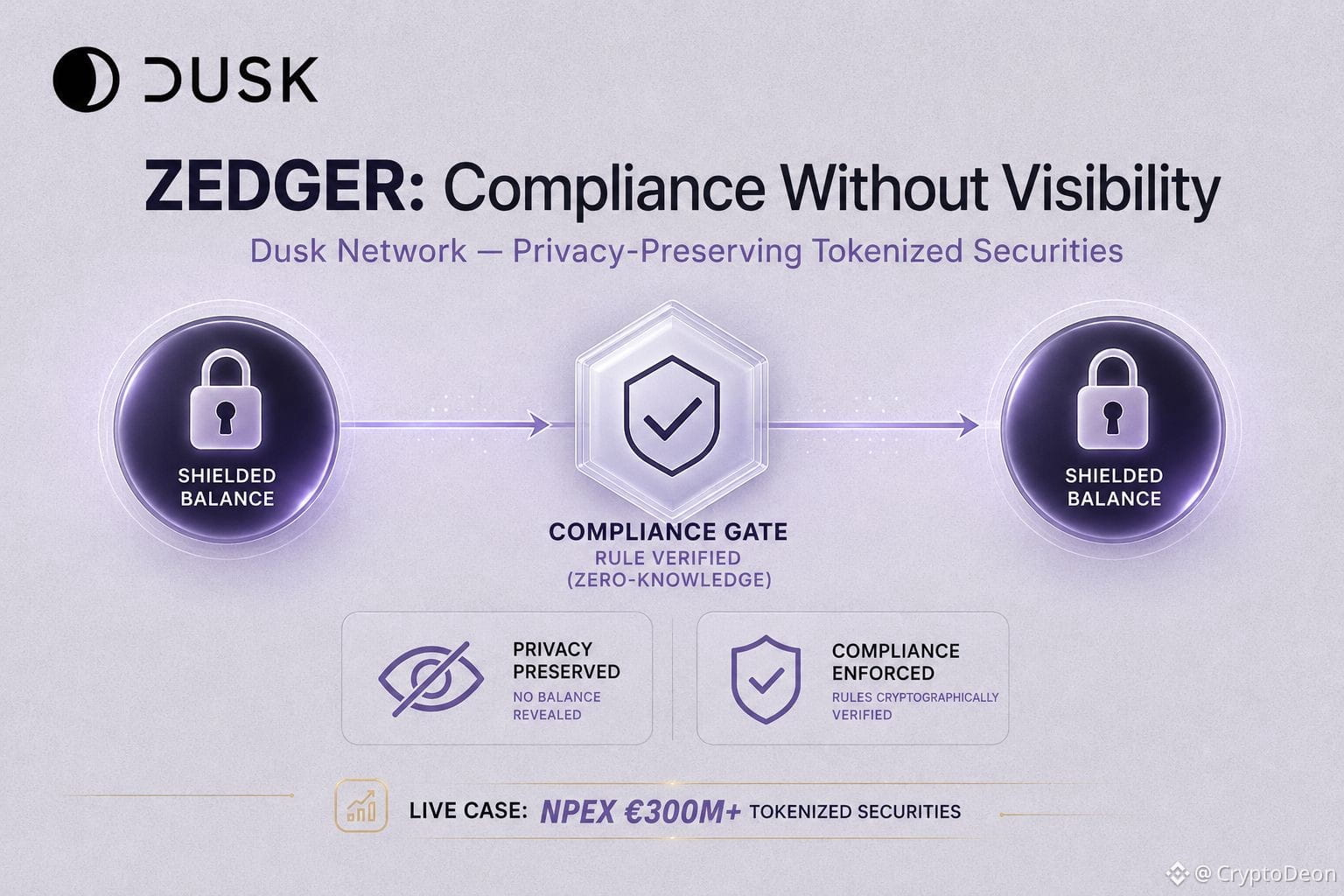
Bu, mənə Zedger haqqında oxuyarkən gəldi — Dusk-in tokenləşdirilmiş qiymətli kağızlar modeli. Ən çox “uyğunluq” standartları qaydanı ev sahibinin istədiyi kimi idarə edir — ya hər şey görünür, mübahisələrə baxışla son qoyulur, ya da şeylər gizlədilir və siz emitentin sözünə güvənirsiniz. Zedger transfer baş verməzdən kriptoqrafik şəkildə qaydanı tətbiq edir. Əgər bir aktiv mülkiyyətə limit qoyursa, əvvəlcədən təsdiqlənmiş investorlar tələb edirsə və ya kimsəni bir hesabla məhdudlaşdırırsa, həmin yoxlama birbaşa transferin içində qurulur — keçir, ya da keçmir; balanslar bütün müddət ərzində qorunur. Qaydanı pozmadığınızı təsdiqləmək üçün heç kəs sizin portfelinizi görməlidir deyil. Riyaziyyat bunu onların yerinə təsdiqləyir.
Bu, ev sahibinin problemə real cavabdır — görünmədən, əvəzində bir şeyi digərinə dəyişmək lazım gəlmədən sübut edilə bilən.
Bir az az əmin olduğum hissə: bu, yalnız transfer səviyyəsindəki qaydaları əhatə edir — limitlər, uyğunluq, hesab məhdudiyyətləri. Qaydanın özündən kənarda oturan niyyət və ya fırıldaqla bağlı mübahisələri həll etmir; elə bil “ödədinmi həqiqətən” mübahisəsi yenə də hansısa xarici qeydə ehtiyac duyur.
DUSK bu gün təxminən $0.0605-ədir, bazar kapitallaşması yaxın $30M; Zedger-in canlı istifadəsi NPEX-in €300M+ tokenləşdirilmiş qiymətli kağızlarındadır — bazarın hələ qiymətə çevirmədiyi infrastruktur.
Protokol səviyyəsində uyğunluğun tətbiqi bir tənzimləyicinin qaldıra biləcəyi bütün mübahisələri bağlayırmı, yoxsa həmişə kodun kənarında nəsə bir insanın üzərində qalır?
$DUSK #dusk #BinanceSquare @Dusk_Foundation
Mən kirayə haqqını çeklə qəbul etməyən bir ev sahibi görmüşdüm — yalnız nağd, sənəd izi olmadan “mübahisələrin qarşısını alır”. Nəticə yaxşı gedirdi, amma bir kirayəçi “ödədiyini” iddia edəndə problem yarandı və onun yoxlanıla biləcəyi heç nə yox idi. Heç bir qeyd həm bir tərəfə, həm də digər tərəfə sərf etmir.
Bu, mənə Zedger haqqında oxuyarkən gəldi — Dusk-in tokenləşdirilmiş qiymətli kağızlar modeli. Ən çox “uyğunluq” standartları qaydanı ev sahibinin istədiyi kimi idarə edir — ya hər şey görünür, mübahisələrə baxışla son qoyulur, ya da şeylər gizlədilir və siz emitentin sözünə güvənirsiniz. Zedger transfer baş verməzdən kriptoqrafik şəkildə qaydanı tətbiq edir. Əgər bir aktiv mülkiyyətə limit qoyursa, əvvəlcədən təsdiqlənmiş investorlar tələb edirsə və ya kimsəni bir hesabla məhdudlaşdırırsa, həmin yoxlama birbaşa transferin içində qurulur — keçir, ya da keçmir; balanslar bütün müddət ərzində qorunur. Qaydanı pozmadığınızı təsdiqləmək üçün heç kəs sizin portfelinizi görməlidir deyil. Riyaziyyat bunu onların yerinə təsdiqləyir.
Bu, ev sahibinin problemə real cavabdır — görünmədən, əvəzində bir şeyi digərinə dəyişmək lazım gəlmədən sübut edilə bilən.
Bir az az əmin olduğum hissə: bu, yalnız transfer səviyyəsindəki qaydaları əhatə edir — limitlər, uyğunluq, hesab məhdudiyyətləri. Qaydanın özündən kənarda oturan niyyət və ya fırıldaqla bağlı mübahisələri həll etmir; elə bil “ödədinmi həqiqətən” mübahisəsi yenə də hansısa xarici qeydə ehtiyac duyur.
DUSK bu gün təxminən $0.0605-ədir, bazar kapitallaşması yaxın $30M; Zedger-in canlı istifadəsi NPEX-in €300M+ tokenləşdirilmiş qiymətli kağızlarındadır — bazarın hələ qiymətə çevirmədiyi infrastruktur.
Protokol səviyyəsində uyğunluğun tətbiqi bir tənzimləyicinin qaldıra biləcəyi bütün mübahisələri bağlayırmı, yoxsa həmişə kodun kənarında nəsə bir insanın üzərində qalır?
$DUSK #dusk #BinanceSquare @Dusk
Bu, mənə Zedger haqqında oxuyarkən gəldi — Dusk-in tokenləşdirilmiş qiymətli kağızlar modeli. Ən çox “uyğunluq” standartları qaydanı ev sahibinin istədiyi kimi idarə edir — ya hər şey görünür, mübahisələrə baxışla son qoyulur, ya da şeylər gizlədilir və siz emitentin sözünə güvənirsiniz. Zedger transfer baş verməzdən kriptoqrafik şəkildə qaydanı tətbiq edir. Əgər bir aktiv mülkiyyətə limit qoyursa, əvvəlcədən təsdiqlənmiş investorlar tələb edirsə və ya kimsəni bir hesabla məhdudlaşdırırsa, həmin yoxlama birbaşa transferin içində qurulur — keçir, ya da keçmir; balanslar bütün müddət ərzində qorunur. Qaydanı pozmadığınızı təsdiqləmək üçün heç kəs sizin portfelinizi görməlidir deyil. Riyaziyyat bunu onların yerinə təsdiqləyir.
Bu, ev sahibinin problemə real cavabdır — görünmədən, əvəzində bir şeyi digərinə dəyişmək lazım gəlmədən sübut edilə bilən.
Bir az az əmin olduğum hissə: bu, yalnız transfer səviyyəsindəki qaydaları əhatə edir — limitlər, uyğunluq, hesab məhdudiyyətləri. Qaydanın özündən kənarda oturan niyyət və ya fırıldaqla bağlı mübahisələri həll etmir; elə bil “ödədinmi həqiqətən” mübahisəsi yenə də hansısa xarici qeydə ehtiyac duyur.
DUSK bu gün təxminən $0.0605-ədir, bazar kapitallaşması yaxın $30M; Zedger-in canlı istifadəsi NPEX-in €300M+ tokenləşdirilmiş qiymətli kağızlarındadır — bazarın hələ qiymətə çevirmədiyi infrastruktur.
Protokol səviyyəsində uyğunluğun tətbiqi bir tənzimləyicinin qaldıra biləcəyi bütün mübahisələri bağlayırmı, yoxsa həmişə kodun kənarında nəsə bir insanın üzərində qalır?
$DUSK #dusk #BinanceSquare @Dusk
10
10
204
·
--
Tərcüməyə bax
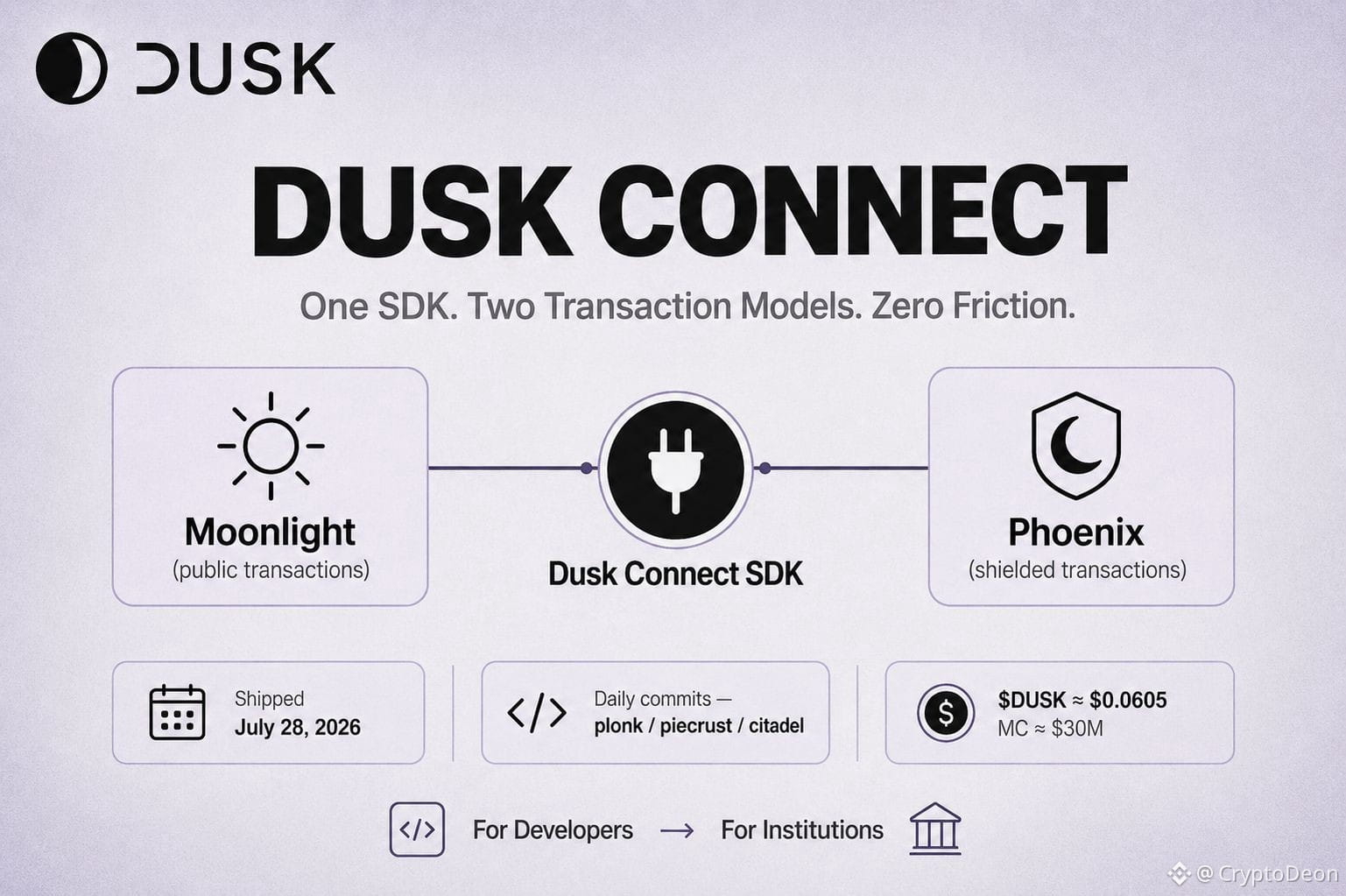
spent today's creatorpad digging and almost skipped past the smallest headline in the feed — Dusk shipped something called Dusk Connect on July 28. Not a protocol upgrade, not a new privacy primitive. Just an SDK for wallet connectivity. My first reaction was "okay, cool, standard dev tooling," and I almost moved on.
Then I thought about what that actually removes. Every chain with a novel transaction model — and Dusk has two, Moonlight and Phoenix, running side by side — makes life harder for the developer who just wants to plug a wallet into their app. Normally that means custom integration work, reading non-standard docs, handling shielded and public flows differently by hand. A lightweight SDK collapses that into "import this, call this function." Boring. But boring is exactly what determines whether outside developers actually build here, or whether it stays limited to the core team and grant recipients doing everything from scratch.
Here's the part that connects to the bigger picture: Dusk's pitch to institutions is deterministic finality, selective disclosure, regulated settlement — all real, all differentiated. None of that matters if the only people who can build on it are the fifteen engineers who wrote the protocol. NPEX and DuskTrade prove institutional demand exists on the finance side. Tooling like Dusk Connect is the unglamorous other half — proving independent developers can actually ship something on Dusk without a six-week onboarding curve.
Checked GitHub activity while I was at it — commits still landing daily across the core repos (plonk, piecrust, citadel) as of this week, so it's not a team that shipped an SDK and went quiet. DUSK itself sits around $0.0605, market cap near $30M — a token where neither the SDK nor the commit activity has moved the needle yet.
Genuinely curious — does dev tooling like this actually predict which chains get real third-party builders, or is that correlation weaker than it looks?
$DUSK #dusk @Dusk_Foundation
spent today's creatorpad digging and almost skipped past the smallest headline in the feed — Dusk shipped something called Dusk Connect on July 28. Not a protocol upgrade, not a new privacy primitive. Just an SDK for wallet connectivity. My first reaction was "okay, cool, standard dev tooling," and I almost moved on.
Then I thought about what that actually removes. Every chain with a novel transaction model — and Dusk has two, Moonlight and Phoenix, running side by side — makes life harder for the developer who just wants to plug a wallet into their app. Normally that means custom integration work, reading non-standard docs, handling shielded and public flows differently by hand. A lightweight SDK collapses that into "import this, call this function." Boring. But boring is exactly what determines whether outside developers actually build here, or whether it stays limited to the core team and grant recipients doing everything from scratch.
Here's the part that connects to the bigger picture: Dusk's pitch to institutions is deterministic finality, selective disclosure, regulated settlement — all real, all differentiated. None of that matters if the only people who can build on it are the fifteen engineers who wrote the protocol. NPEX and DuskTrade prove institutional demand exists on the finance side. Tooling like Dusk Connect is the unglamorous other half — proving independent developers can actually ship something on Dusk without a six-week onboarding curve.
Checked GitHub activity while I was at it — commits still landing daily across the core repos (plonk, piecrust, citadel) as of this week, so it's not a team that shipped an SDK and went quiet. DUSK itself sits around $0.0605, market cap near $30M — a token where neither the SDK nor the commit activity has moved the needle yet.
Genuinely curious — does dev tooling like this actually predict which chains get real third-party builders, or is that correlation weaker than it looks?
$DUSK #dusk @Dusk
Then I thought about what that actually removes. Every chain with a novel transaction model — and Dusk has two, Moonlight and Phoenix, running side by side — makes life harder for the developer who just wants to plug a wallet into their app. Normally that means custom integration work, reading non-standard docs, handling shielded and public flows differently by hand. A lightweight SDK collapses that into "import this, call this function." Boring. But boring is exactly what determines whether outside developers actually build here, or whether it stays limited to the core team and grant recipients doing everything from scratch.
Here's the part that connects to the bigger picture: Dusk's pitch to institutions is deterministic finality, selective disclosure, regulated settlement — all real, all differentiated. None of that matters if the only people who can build on it are the fifteen engineers who wrote the protocol. NPEX and DuskTrade prove institutional demand exists on the finance side. Tooling like Dusk Connect is the unglamorous other half — proving independent developers can actually ship something on Dusk without a six-week onboarding curve.
Checked GitHub activity while I was at it — commits still landing daily across the core repos (plonk, piecrust, citadel) as of this week, so it's not a team that shipped an SDK and went quiet. DUSK itself sits around $0.0605, market cap near $30M — a token where neither the SDK nor the commit activity has moved the needle yet.
Genuinely curious — does dev tooling like this actually predict which chains get real third-party builders, or is that correlation weaker than it looks?
$DUSK #dusk @Dusk
5
6
243
·
--
Tərcüməyə bax
Dusk keeps repeating "regulated assets onchain" like it's self-evidently valuable. I wanted to find the actual friction that justifies it, not just the pitch.
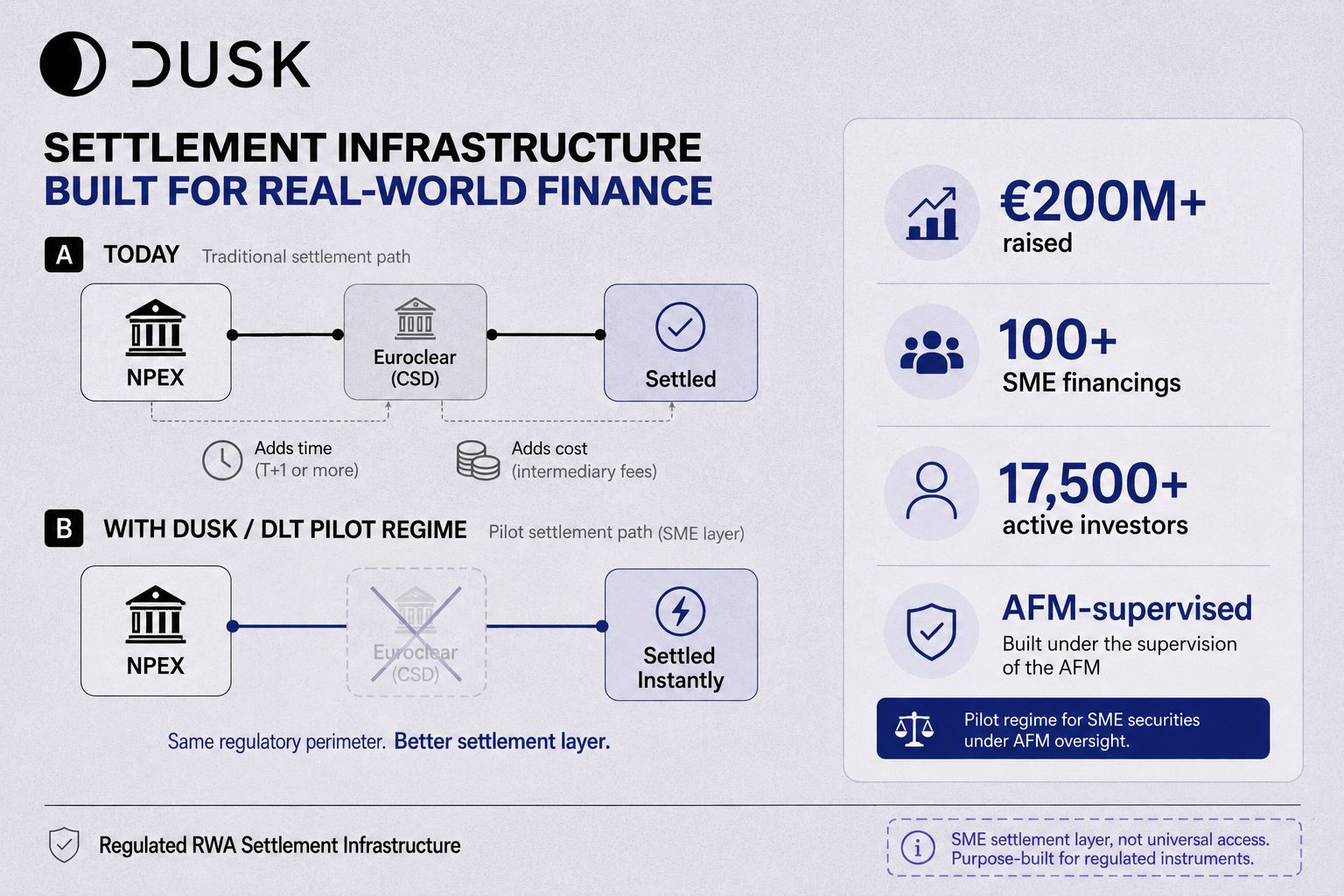
The clearest answer is in one detail about NPEX. When NPEX settles a trade today, it doesn't do that itself — it routes through Euroclear, an external depository, the same intermediary every traditional exchange leans on for post-trade settlement. Extra party, extra cost, extra time, on every transaction. The EU's DLT Pilot Regime is what actually changes this: it lets a licensed venue like NPEX take on settlement itself instead of outsourcing it. Dusk is the rail that role runs on.
That's a specific cost being removed, not a vague "blockchain is better" claim. An SME issuer currently pays a middleman to confirm ownership after every trade. Remove that, and the record of ownership becomes the settlement layer itself — instant, not reconciled by a separate institution days later. Investor voting and dividend administration, both slow and manual in SME markets, get cheaper for the same reason.
Where it gets harder to defend is fractionalization. For blue-chip stocks, splitting shares clearly widens who can invest. For SME shares that are already small and illiquid, tokenization mostly removes the settlement middleman — real, but narrower than the "unlocking access" story usually told.
NPEX today: AFM-supervised, over €200M raised across 100+ SME financings, 17,500+ active investors — a real market where cutting Euroclear dependency is a measurable gain, not a hypothetical one.
If the honest pitch is "we remove a settlement middleman" rather than "we unlock access," does that make the opportunity smaller — or is a narrow, real friction still worth more than a big, vague one?
$DUSK #dusk #BinanceSquare #CryptoAnalysis @Dusk_Foundation
Dusk keeps repeating "regulated assets onchain" like it's self-evidently valuable. I wanted to find the actual friction that justifies it, not just the pitch.
The clearest answer is in one detail about NPEX. When NPEX settles a trade today, it doesn't do that itself — it routes through Euroclear, an external depository, the same intermediary every traditional exchange leans on for post-trade settlement. Extra party, extra cost, extra time, on every transaction. The EU's DLT Pilot Regime is what actually changes this: it lets a licensed venue like NPEX take on settlement itself instead of outsourcing it. Dusk is the rail that role runs on.
That's a specific cost being removed, not a vague "blockchain is better" claim. An SME issuer currently pays a middleman to confirm ownership after every trade. Remove that, and the record of ownership becomes the settlement layer itself — instant, not reconciled by a separate institution days later. Investor voting and dividend administration, both slow and manual in SME markets, get cheaper for the same reason.
Where it gets harder to defend is fractionalization. For blue-chip stocks, splitting shares clearly widens who can invest. For SME shares that are already small and illiquid, tokenization mostly removes the settlement middleman — real, but narrower than the "unlocking access" story usually told.
NPEX today: AFM-supervised, over €200M raised across 100+ SME financings, 17,500+ active investors — a real market where cutting Euroclear dependency is a measurable gain, not a hypothetical one.
If the honest pitch is "we remove a settlement middleman" rather than "we unlock access," does that make the opportunity smaller — or is a narrow, real friction still worth more than a big, vague one?
$DUSK #dusk #BinanceSquare #CryptoAnalysis @Dusk
The clearest answer is in one detail about NPEX. When NPEX settles a trade today, it doesn't do that itself — it routes through Euroclear, an external depository, the same intermediary every traditional exchange leans on for post-trade settlement. Extra party, extra cost, extra time, on every transaction. The EU's DLT Pilot Regime is what actually changes this: it lets a licensed venue like NPEX take on settlement itself instead of outsourcing it. Dusk is the rail that role runs on.
That's a specific cost being removed, not a vague "blockchain is better" claim. An SME issuer currently pays a middleman to confirm ownership after every trade. Remove that, and the record of ownership becomes the settlement layer itself — instant, not reconciled by a separate institution days later. Investor voting and dividend administration, both slow and manual in SME markets, get cheaper for the same reason.
Where it gets harder to defend is fractionalization. For blue-chip stocks, splitting shares clearly widens who can invest. For SME shares that are already small and illiquid, tokenization mostly removes the settlement middleman — real, but narrower than the "unlocking access" story usually told.
NPEX today: AFM-supervised, over €200M raised across 100+ SME financings, 17,500+ active investors — a real market where cutting Euroclear dependency is a measurable gain, not a hypothetical one.
If the honest pitch is "we remove a settlement middleman" rather than "we unlock access," does that make the opportunity smaller — or is a narrow, real friction still worth more than a big, vague one?
$DUSK #dusk #BinanceSquare #CryptoAnalysis @Dusk
11
11
221
·
--
Tərcüməyə bax
I used to assume that once a system runs on zero-knowledge proofs, the math itself is the security guarantee — no human error left to worry about, just cryptography doing its job. Then I came across a security review of Dusk's PLONK implementation, and that assumption didn't hold up the way I expected 🔍
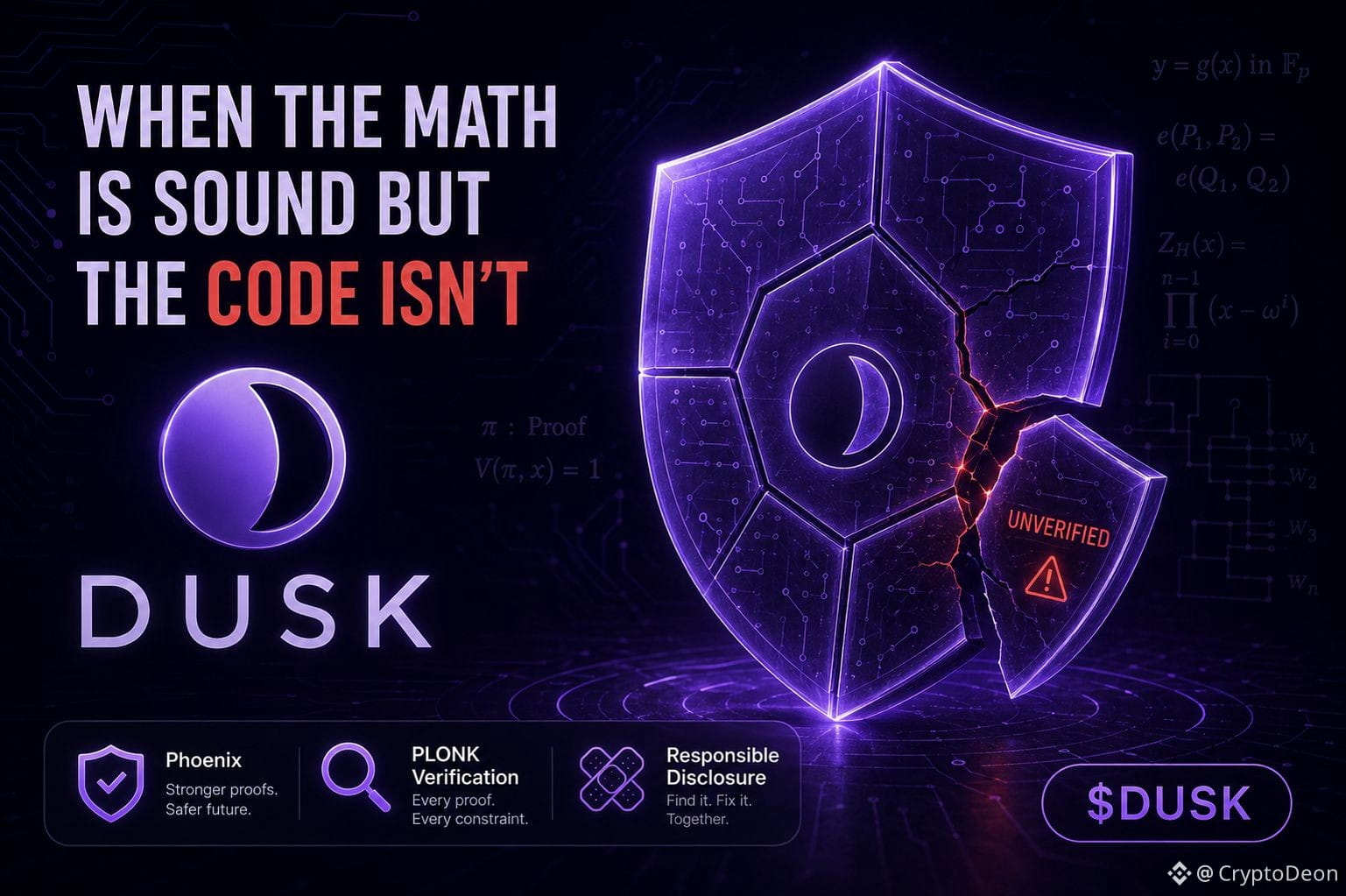
Here's the plain-language version of what was found. Phoenix, Dusk's shielded transaction system, relies on PLONK to prove things like "this note is real," "I own it," and "the balance math checks out" — all without revealing the actual numbers. Researchers found that the code verifying those proofs wasn't checking every piece of the math it was supposed to check. In theory, that gap could let someone submit a forged proof claiming a note exists when it doesn't, and mint value that was never actually there — not because the cryptography itself is broken, but because one implementation detail didn't fully enforce what the design promised.
That distinction matters more than the headline. A flaw in the underlying zero-knowledge scheme would mean the whole model is unsound. A flaw in how that scheme got implemented and verified is a different category — serious, but fixable, and exactly the kind of thing responsible disclosure exists to catch before it's ever exploited. The finding was reported through that process, not discovered by an attacker in production.
What it actually says about Dusk isn't "the tech is shaky." It's that "we use zero-knowledge proofs" was never the whole security story to begin with — the verification code around the proofs carries just as much weight as the cryptography itself, and that's true for every ZK project, not just this one.
DUSK is trading near $0.0605 today, market cap around $30M, still far off its all-time high — a market that so far hasn't priced in either the finding or the fix.
Does an audit catching something like this before exploitation actually build more trust in the long run, or does the market only remember that a flaw existed at all, regardless of the outcome?
#dusk $DUSK @Dusk_Foundation
I used to assume that once a system runs on zero-knowledge proofs, the math itself is the security guarantee — no human error left to worry about, just cryptography doing its job. Then I came across a security review of Dusk's PLONK implementation, and that assumption didn't hold up the way I expected 🔍
Here's the plain-language version of what was found. Phoenix, Dusk's shielded transaction system, relies on PLONK to prove things like "this note is real," "I own it," and "the balance math checks out" — all without revealing the actual numbers. Researchers found that the code verifying those proofs wasn't checking every piece of the math it was supposed to check. In theory, that gap could let someone submit a forged proof claiming a note exists when it doesn't, and mint value that was never actually there — not because the cryptography itself is broken, but because one implementation detail didn't fully enforce what the design promised.
That distinction matters more than the headline. A flaw in the underlying zero-knowledge scheme would mean the whole model is unsound. A flaw in how that scheme got implemented and verified is a different category — serious, but fixable, and exactly the kind of thing responsible disclosure exists to catch before it's ever exploited. The finding was reported through that process, not discovered by an attacker in production.
What it actually says about Dusk isn't "the tech is shaky." It's that "we use zero-knowledge proofs" was never the whole security story to begin with — the verification code around the proofs carries just as much weight as the cryptography itself, and that's true for every ZK project, not just this one.
DUSK is trading near $0.0605 today, market cap around $30M, still far off its all-time high — a market that so far hasn't priced in either the finding or the fix.
Does an audit catching something like this before exploitation actually build more trust in the long run, or does the market only remember that a flaw existed at all, regardless of the outcome?
#dusk $DUSK @Dusk
Here's the plain-language version of what was found. Phoenix, Dusk's shielded transaction system, relies on PLONK to prove things like "this note is real," "I own it," and "the balance math checks out" — all without revealing the actual numbers. Researchers found that the code verifying those proofs wasn't checking every piece of the math it was supposed to check. In theory, that gap could let someone submit a forged proof claiming a note exists when it doesn't, and mint value that was never actually there — not because the cryptography itself is broken, but because one implementation detail didn't fully enforce what the design promised.
That distinction matters more than the headline. A flaw in the underlying zero-knowledge scheme would mean the whole model is unsound. A flaw in how that scheme got implemented and verified is a different category — serious, but fixable, and exactly the kind of thing responsible disclosure exists to catch before it's ever exploited. The finding was reported through that process, not discovered by an attacker in production.
What it actually says about Dusk isn't "the tech is shaky." It's that "we use zero-knowledge proofs" was never the whole security story to begin with — the verification code around the proofs carries just as much weight as the cryptography itself, and that's true for every ZK project, not just this one.
DUSK is trading near $0.0605 today, market cap around $30M, still far off its all-time high — a market that so far hasn't priced in either the finding or the fix.
Does an audit catching something like this before exploitation actually build more trust in the long run, or does the market only remember that a flaw existed at all, regardless of the outcome?
#dusk $DUSK @Dusk
9
8
140
·
--
Dün BTC-nin yüksəlişi sərt oldu — onu həftələrlə üstündə saxlayan 65K$ müqavimətinin düz üstündən keçdi, kripto tənzimlənməsi ətrafında siyasi səs-küyün fonunda. Balinalar artıq bu hərəkətə səssizcə yığılırdı. Bu, leverage-in nəzəriyyədə sadə hiss olunmasına, amma praktikada qarışıq olmasına tam uyğun sessiyadır.
TermMax-ın sabit dərəcəli modeli burada həqiqətən yerini tapır. Üzən faizli sistemdə belə kəskin hərəkət borclanma xərclərinizi ən pis vaxtda — mövqeyi saxlamaq lazım olan anda, sürprizlərə imkan verə bildiyiniz vaxtda yox — sürətlə artıra bilər. Faizi əvvəlcədən kilidləmək bu konkret dəyişəni aradan qaldırır. BTC bundan sonra nə etsə də, girməzdən əvvəl maliyyələşdirmə xərclərini dəqiq bilirsiniz.
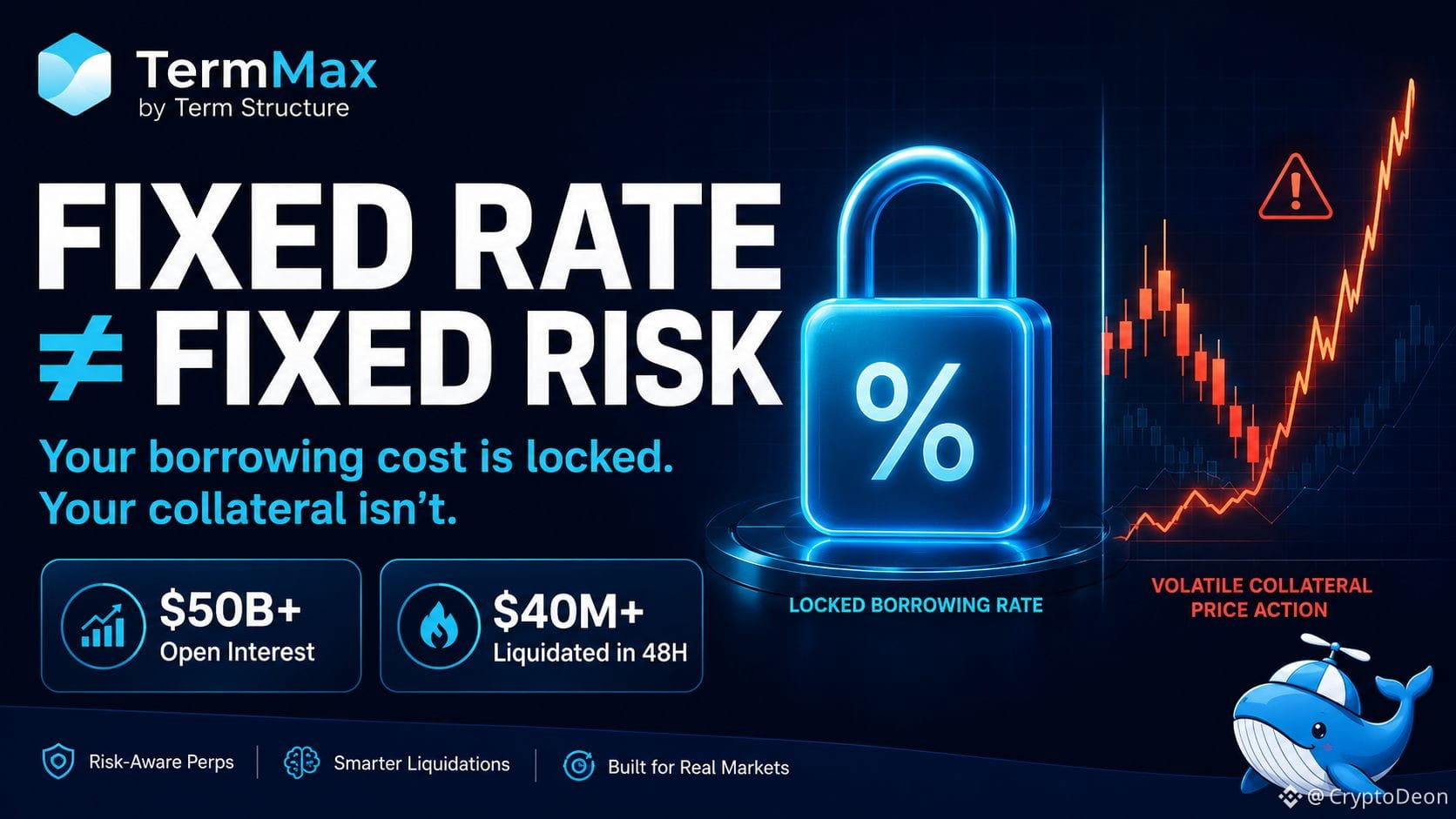
Amma tez dildə qayıtdığım sadə fərq budur: sabit faiz kreditin *məyyətini*, yəni borcun *dəyərini* düzəltmir; o, yalnız kreditin *maya dəyərini* — *loan cost* — müəyyən edir. Bunlar iki tam fərqli riskdir. BTC üzrə açıq maraq hazırda 50 milyard $-a yaxın səviyyədədir və bu rallinin başlamasından əvvəl iki gün içində likvidasiyalar artıq 40 milyon $-dan çox edib — qiymət dəyişkənliyi, sənədlərdə borc faizinin necə görünməsindən asılı olmayaraq, məcburi bağlanmalara çevrilir.
Deməli, onu dürüst şəkildə belə çərçivəyə salmaq olar: sabit dərəcəli borclanma kredit üzrə bir maddədə — kapitalın dəyərində — qeyri-müəyyənliyi aradan qaldırır. Amma kollateralının sənin əleyhinə nə qədər sərt hərəkət edə biləcəyini yumşaltmır və likvidasiya həddləri faizinin kilidlənib-kilidlənmədiyini heç vecinə almır.
Mən izlədiyim budur: TermMax mövqeləri bu kimi dəyişkənlik pikindən, təkcə heç bir şeyin dəyişmədiyi sakit bazarlardan deyil, həqiqətən də çıxa biləcəkmi.
#TermMax @termmax
Dün BTC-nin yüksəlişi sərt oldu — onu həftələrlə üstündə saxlayan 65K$ müqavimətinin düz üstündən keçdi, kripto tənzimlənməsi ətrafında siyasi səs-küyün fonunda. Balinalar artıq bu hərəkətə səssizcə yığılırdı. Bu, leverage-in nəzəriyyədə sadə hiss olunmasına, amma praktikada qarışıq olmasına tam uyğun sessiyadır.
TermMax-ın sabit dərəcəli modeli burada həqiqətən yerini tapır. Üzən faizli sistemdə belə kəskin hərəkət borclanma xərclərinizi ən pis vaxtda — mövqeyi saxlamaq lazım olan anda, sürprizlərə imkan verə bildiyiniz vaxtda yox — sürətlə artıra bilər. Faizi əvvəlcədən kilidləmək bu konkret dəyişəni aradan qaldırır. BTC bundan sonra nə etsə də, girməzdən əvvəl maliyyələşdirmə xərclərini dəqiq bilirsiniz.
Amma tez dildə qayıtdığım sadə fərq budur: sabit faiz kreditin *məyyətini*, yəni borcun *dəyərini* düzəltmir; o, yalnız kreditin *maya dəyərini* — *loan cost* — müəyyən edir. Bunlar iki tam fərqli riskdir. BTC üzrə açıq maraq hazırda 50 milyard $-a yaxın səviyyədədir və bu rallinin başlamasından əvvəl iki gün içində likvidasiyalar artıq 40 milyon $-dan çox edib — qiymət dəyişkənliyi, sənədlərdə borc faizinin necə görünməsindən asılı olmayaraq, məcburi bağlanmalara çevrilir.
Deməli, onu dürüst şəkildə belə çərçivəyə salmaq olar: sabit dərəcəli borclanma kredit üzrə bir maddədə — kapitalın dəyərində — qeyri-müəyyənliyi aradan qaldırır. Amma kollateralının sənin əleyhinə nə qədər sərt hərəkət edə biləcəyini yumşaltmır və likvidasiya həddləri faizinin kilidlənib-kilidlənmədiyini heç vecinə almır.
Mən izlədiyim budur: TermMax mövqeləri bu kimi dəyişkənlik pikindən, təkcə heç bir şeyin dəyişmədiyi sakit bazarlardan deyil, həqiqətən də çıxa biləcəkmi.
#TermMax @TermMax
TermMax-ın sabit dərəcəli modeli burada həqiqətən yerini tapır. Üzən faizli sistemdə belə kəskin hərəkət borclanma xərclərinizi ən pis vaxtda — mövqeyi saxlamaq lazım olan anda, sürprizlərə imkan verə bildiyiniz vaxtda yox — sürətlə artıra bilər. Faizi əvvəlcədən kilidləmək bu konkret dəyişəni aradan qaldırır. BTC bundan sonra nə etsə də, girməzdən əvvəl maliyyələşdirmə xərclərini dəqiq bilirsiniz.
Amma tez dildə qayıtdığım sadə fərq budur: sabit faiz kreditin *məyyətini*, yəni borcun *dəyərini* düzəltmir; o, yalnız kreditin *maya dəyərini* — *loan cost* — müəyyən edir. Bunlar iki tam fərqli riskdir. BTC üzrə açıq maraq hazırda 50 milyard $-a yaxın səviyyədədir və bu rallinin başlamasından əvvəl iki gün içində likvidasiyalar artıq 40 milyon $-dan çox edib — qiymət dəyişkənliyi, sənədlərdə borc faizinin necə görünməsindən asılı olmayaraq, məcburi bağlanmalara çevrilir.
Deməli, onu dürüst şəkildə belə çərçivəyə salmaq olar: sabit dərəcəli borclanma kredit üzrə bir maddədə — kapitalın dəyərində — qeyri-müəyyənliyi aradan qaldırır. Amma kollateralının sənin əleyhinə nə qədər sərt hərəkət edə biləcəyini yumşaltmır və likvidasiya həddləri faizinin kilidlənib-kilidlənmədiyini heç vecinə almır.
Mən izlədiyim budur: TermMax mövqeləri bu kimi dəyişkənlik pikindən, təkcə heç bir şeyin dəyişmədiyi sakit bazarlardan deyil, həqiqətən də çıxa biləcəkmi.
#TermMax @TermMax
2
3
191
·
--
Tərcüməyə bax
Came home last night and one detail from Dusk's docs wouldn't leave my head, so I sat down and actually read the migration contract instead of skimming the summary someone else wrote.
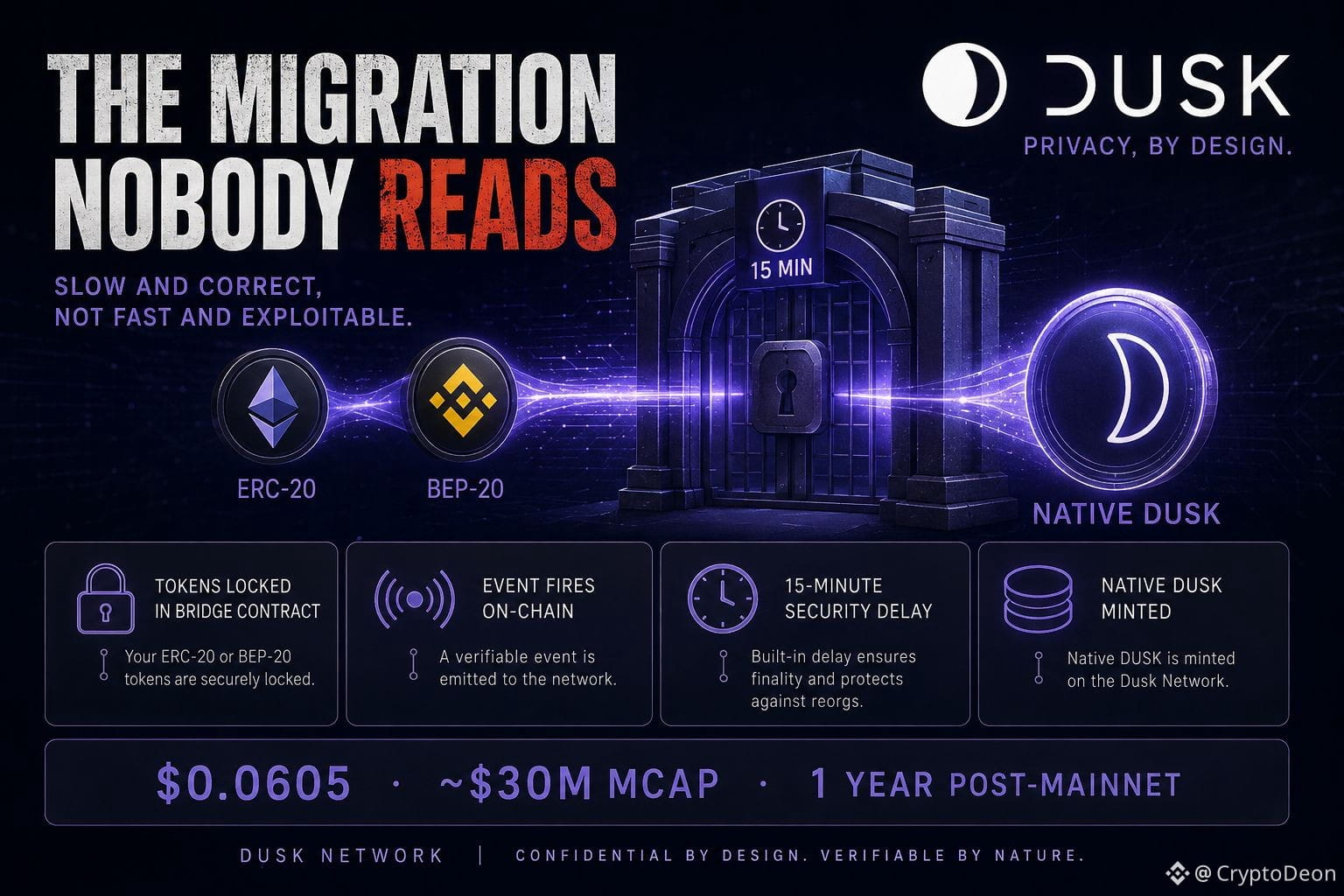
Here's what struck me. Dusk didn't just launch a new mainnet and tell holders to figure it out. The old ERC-20 and BEP-20 tokens get locked into a bridge contract, an event fires, and only then does an external service mint the equivalent native DUSK on the new chain. It's a one-way door with a 15-minute wait built in for security, not for show. No instant swap button, no shortcuts. That waiting period is the protocol quietly saying: we'd rather be slow and correct than fast and exploitable — the same philosophy showing up again in something as unglamorous as a token bridge.
Why this matters more than it looks: most migrations are treated as plumbing, a footnote nobody reads. But a project built for regulated settlement can't afford a sloppy migration, because the same custody logic that moves your old tokens is a preview of how it'll eventually move tokenized bonds or private equity stakes worth real money. If they cut corners here, on something with comparatively low stakes, that would say more than any whitepaper could.
Zooming out — mainnet went live in December 2024/January 2025, and a year in, the roadmap items that were promises back then (Hyperstaking, Zedger, EVM interoperability via a Chainlink CCIP partnership) are now shipping pieces, not slide-deck bullet points. DUSK sits around $0.0605 today, market cap near $30M, still a fraction of its all-time high — worth noting since price has barely reacted to a year of consistent delivery.
Makes me wonder: when a chain proves its discipline through boring infrastructure like a migration contract instead of flashy features, does the market ever actually reward that kind of patience — or does it only pay attention once the flashy feature ships?
#dusk $DUSK @Dusk_Foundation
Came home last night and one detail from Dusk's docs wouldn't leave my head, so I sat down and actually read the migration contract instead of skimming the summary someone else wrote.
Here's what struck me. Dusk didn't just launch a new mainnet and tell holders to figure it out. The old ERC-20 and BEP-20 tokens get locked into a bridge contract, an event fires, and only then does an external service mint the equivalent native DUSK on the new chain. It's a one-way door with a 15-minute wait built in for security, not for show. No instant swap button, no shortcuts. That waiting period is the protocol quietly saying: we'd rather be slow and correct than fast and exploitable — the same philosophy showing up again in something as unglamorous as a token bridge.
Why this matters more than it looks: most migrations are treated as plumbing, a footnote nobody reads. But a project built for regulated settlement can't afford a sloppy migration, because the same custody logic that moves your old tokens is a preview of how it'll eventually move tokenized bonds or private equity stakes worth real money. If they cut corners here, on something with comparatively low stakes, that would say more than any whitepaper could.
Zooming out — mainnet went live in December 2024/January 2025, and a year in, the roadmap items that were promises back then (Hyperstaking, Zedger, EVM interoperability via a Chainlink CCIP partnership) are now shipping pieces, not slide-deck bullet points. DUSK sits around $0.0605 today, market cap near $30M, still a fraction of its all-time high — worth noting since price has barely reacted to a year of consistent delivery.
Makes me wonder: when a chain proves its discipline through boring infrastructure like a migration contract instead of flashy features, does the market ever actually reward that kind of patience — or does it only pay attention once the flashy feature ships?
#dusk $DUSK @Dusk
Here's what struck me. Dusk didn't just launch a new mainnet and tell holders to figure it out. The old ERC-20 and BEP-20 tokens get locked into a bridge contract, an event fires, and only then does an external service mint the equivalent native DUSK on the new chain. It's a one-way door with a 15-minute wait built in for security, not for show. No instant swap button, no shortcuts. That waiting period is the protocol quietly saying: we'd rather be slow and correct than fast and exploitable — the same philosophy showing up again in something as unglamorous as a token bridge.
Why this matters more than it looks: most migrations are treated as plumbing, a footnote nobody reads. But a project built for regulated settlement can't afford a sloppy migration, because the same custody logic that moves your old tokens is a preview of how it'll eventually move tokenized bonds or private equity stakes worth real money. If they cut corners here, on something with comparatively low stakes, that would say more than any whitepaper could.
Zooming out — mainnet went live in December 2024/January 2025, and a year in, the roadmap items that were promises back then (Hyperstaking, Zedger, EVM interoperability via a Chainlink CCIP partnership) are now shipping pieces, not slide-deck bullet points. DUSK sits around $0.0605 today, market cap near $30M, still a fraction of its all-time high — worth noting since price has barely reacted to a year of consistent delivery.
Makes me wonder: when a chain proves its discipline through boring infrastructure like a migration contract instead of flashy features, does the market ever actually reward that kind of patience — or does it only pay attention once the flashy feature ships?
#dusk $DUSK @Dusk
13
12
209
·
--
Tərcüməyə bax
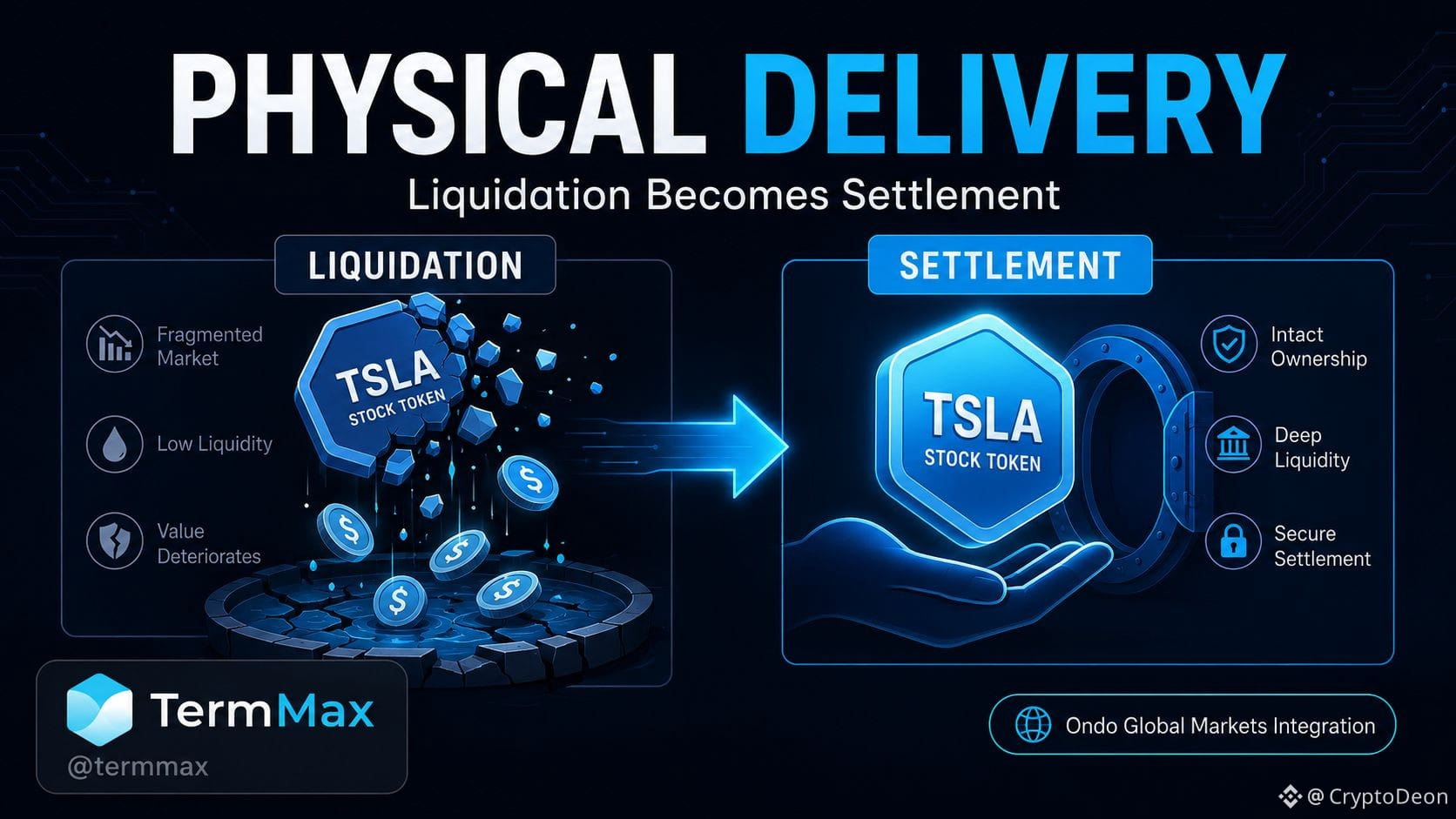
I kept coming back to one line in TermMax's stock-token integration announcement: physical delivery doesn't just liquidate collateral, it can settle it. That's a small phrase doing a lot of work.
Most on-chain lending treats collateral the same way no matter what it is — if the loan goes bad, sell the asset, repay the lender, done. That works fine for ETH or a stablecoin because there's always a market deep enough to absorb the sale fast. It breaks down the moment the collateral is something like a tokenized stock or a real-world asset, where the order book might be thin or the asset simply shouldn't be dumped at a bad price just to settle a loan mechanically.
TermMax's approach with its new Ondo Global Markets integration flips that default. Instead of forced-selling tokenized equity collateral into a shallow market, the mechanism can transfer the underlying asset directly to the lender. In plain terms: the lender ends up holding the stock token itself, not cash from a rushed sale. That's a meaningfully different risk model — it turns liquidation from a market event into a settlement event.
Easy version: tokenizing a stock doesn't automatically make it liquid. Putting a real-world asset on-chain solves the ownership and transfer problem, not the "can I sell this fast enough in a crisis" problem. Physical delivery is TermMax quietly admitting that gap exists and building around it instead of pretending it away — which also happens to be why the same mechanism can support covered call and options strategies for stock token holders, not just liquidation.
Ondo Global Markets is currently the biggest tokenized securities venue by TVL, so this isn't a theoretical collateral type — it's real capital sitting behind the test.
#termmax @termmax
I kept coming back to one line in TermMax's stock-token integration announcement: physical delivery doesn't just liquidate collateral, it can settle it. That's a small phrase doing a lot of work.
Most on-chain lending treats collateral the same way no matter what it is — if the loan goes bad, sell the asset, repay the lender, done. That works fine for ETH or a stablecoin because there's always a market deep enough to absorb the sale fast. It breaks down the moment the collateral is something like a tokenized stock or a real-world asset, where the order book might be thin or the asset simply shouldn't be dumped at a bad price just to settle a loan mechanically.
TermMax's approach with its new Ondo Global Markets integration flips that default. Instead of forced-selling tokenized equity collateral into a shallow market, the mechanism can transfer the underlying asset directly to the lender. In plain terms: the lender ends up holding the stock token itself, not cash from a rushed sale. That's a meaningfully different risk model — it turns liquidation from a market event into a settlement event.
Easy version: tokenizing a stock doesn't automatically make it liquid. Putting a real-world asset on-chain solves the ownership and transfer problem, not the "can I sell this fast enough in a crisis" problem. Physical delivery is TermMax quietly admitting that gap exists and building around it instead of pretending it away — which also happens to be why the same mechanism can support covered call and options strategies for stock token holders, not just liquidation.
Ondo Global Markets is currently the biggest tokenized securities venue by TVL, so this isn't a theoretical collateral type — it's real capital sitting behind the test.
#termmax @TermMax
Most on-chain lending treats collateral the same way no matter what it is — if the loan goes bad, sell the asset, repay the lender, done. That works fine for ETH or a stablecoin because there's always a market deep enough to absorb the sale fast. It breaks down the moment the collateral is something like a tokenized stock or a real-world asset, where the order book might be thin or the asset simply shouldn't be dumped at a bad price just to settle a loan mechanically.
TermMax's approach with its new Ondo Global Markets integration flips that default. Instead of forced-selling tokenized equity collateral into a shallow market, the mechanism can transfer the underlying asset directly to the lender. In plain terms: the lender ends up holding the stock token itself, not cash from a rushed sale. That's a meaningfully different risk model — it turns liquidation from a market event into a settlement event.
Easy version: tokenizing a stock doesn't automatically make it liquid. Putting a real-world asset on-chain solves the ownership and transfer problem, not the "can I sell this fast enough in a crisis" problem. Physical delivery is TermMax quietly admitting that gap exists and building around it instead of pretending it away — which also happens to be why the same mechanism can support covered call and options strategies for stock token holders, not just liquidation.
Ondo Global Markets is currently the biggest tokenized securities venue by TVL, so this isn't a theoretical collateral type — it's real capital sitting behind the test.
#termmax @TermMax
4
6
201
·
--
Tərcüməyə bax
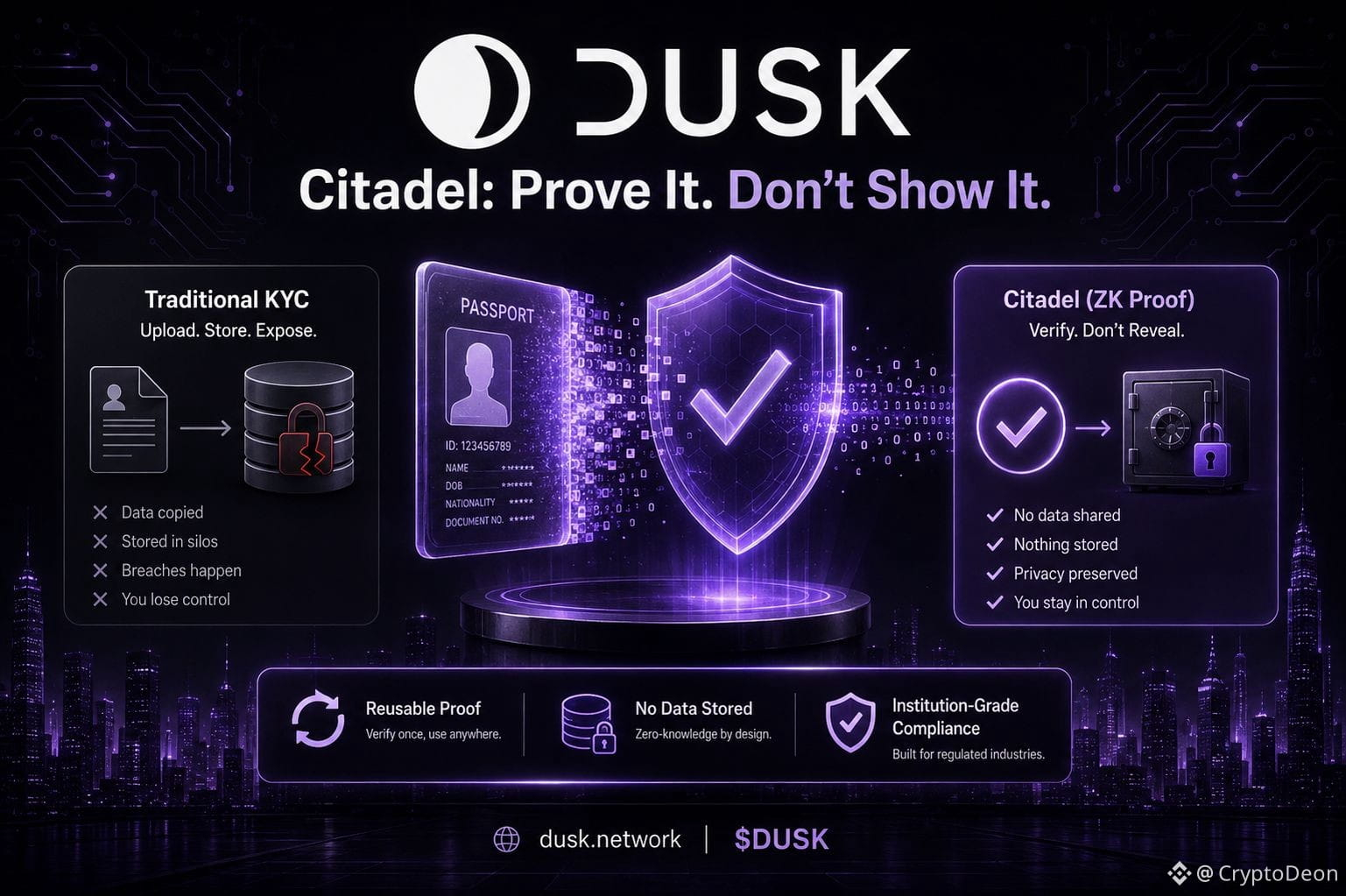
I first thought Citadel was just Dusk's version of "on-chain KYC," another checkbox feature every compliant chain eventually builds. What actually caught me was the direction the verification runs — normally KYC means handing your documents to a company and trusting them not to leak or resell it. Citadel flips who holds the risk.
Here's the mechanic in plain terms: instead of proving who you are by showing your ID, you prove a claim about yourself — "I'm over 18," "I'm not on a sanctions list," "I'm an accredited investor" — using a zero-knowledge proof. The institution checking gets a yes/no answer with cryptographic certainty behind it, but never touches your underlying documents. Your identity data isn't sitting in some exchange's database waiting to be the next breach headline. You hold it, you decide what gets revealed, and you never re-do the same KYC twice for two different platforms, because the proof is reusable without the data being reusable.
That's a genuinely different trust model than "compliant" usually means in crypto. Most platforms solve compliance by centralizing more data, not less — you upload your passport, and now that data lives in one more place that can be hacked, subpoenaed, or sold. Citadel is Dusk betting that regulators don't actually need your data, they need a mathematically guaranteed answer, and that distinction is what makes privacy and compliance stop being enemies.
DUSK is trading around $0.0605 today, market cap near $30M — small enough that infrastructure like this is still mostly a thesis being tested in partnerships like NPEX, not yet a demand driver retail is pricing in.
Dusk does selective-disclosure identity actually get institutions to trust it faster than traditional KYC, or does "we can't see your data" make compliance teams more nervous, not less?
$DUSK #dusk @Dusk_Foundation
I first thought Citadel was just Dusk's version of "on-chain KYC," another checkbox feature every compliant chain eventually builds. What actually caught me was the direction the verification runs — normally KYC means handing your documents to a company and trusting them not to leak or resell it. Citadel flips who holds the risk.
Here's the mechanic in plain terms: instead of proving who you are by showing your ID, you prove a claim about yourself — "I'm over 18," "I'm not on a sanctions list," "I'm an accredited investor" — using a zero-knowledge proof. The institution checking gets a yes/no answer with cryptographic certainty behind it, but never touches your underlying documents. Your identity data isn't sitting in some exchange's database waiting to be the next breach headline. You hold it, you decide what gets revealed, and you never re-do the same KYC twice for two different platforms, because the proof is reusable without the data being reusable.
That's a genuinely different trust model than "compliant" usually means in crypto. Most platforms solve compliance by centralizing more data, not less — you upload your passport, and now that data lives in one more place that can be hacked, subpoenaed, or sold. Citadel is Dusk betting that regulators don't actually need your data, they need a mathematically guaranteed answer, and that distinction is what makes privacy and compliance stop being enemies.
DUSK is trading around $0.0605 today, market cap near $30M — small enough that infrastructure like this is still mostly a thesis being tested in partnerships like NPEX, not yet a demand driver retail is pricing in.
Dusk does selective-disclosure identity actually get institutions to trust it faster than traditional KYC, or does "we can't see your data" make compliance teams more nervous, not less?
$DUSK #dusk @Dusk
Here's the mechanic in plain terms: instead of proving who you are by showing your ID, you prove a claim about yourself — "I'm over 18," "I'm not on a sanctions list," "I'm an accredited investor" — using a zero-knowledge proof. The institution checking gets a yes/no answer with cryptographic certainty behind it, but never touches your underlying documents. Your identity data isn't sitting in some exchange's database waiting to be the next breach headline. You hold it, you decide what gets revealed, and you never re-do the same KYC twice for two different platforms, because the proof is reusable without the data being reusable.
That's a genuinely different trust model than "compliant" usually means in crypto. Most platforms solve compliance by centralizing more data, not less — you upload your passport, and now that data lives in one more place that can be hacked, subpoenaed, or sold. Citadel is Dusk betting that regulators don't actually need your data, they need a mathematically guaranteed answer, and that distinction is what makes privacy and compliance stop being enemies.
DUSK is trading around $0.0605 today, market cap near $30M — small enough that infrastructure like this is still mostly a thesis being tested in partnerships like NPEX, not yet a demand driver retail is pricing in.
Dusk does selective-disclosure identity actually get institutions to trust it faster than traditional KYC, or does "we can't see your data" make compliance teams more nervous, not less?
$DUSK #dusk @Dusk
35
26
217
·
--
Tərcüməyə bax
One flag before I write this — I searched for current TermMax unlock/vesting figures (investor monthly release, team allocation percentage, the exact numbers your example uses) and couldn't verify them from public sources right now. TMX isn't trading on tracked exchanges yet and CoinGecko/CryptoRank both show tokenomics as unconfirmed. So I won't invent numbers I can't back — that's the kind of thing that gets clipped and thrown back at you if it's wrong.
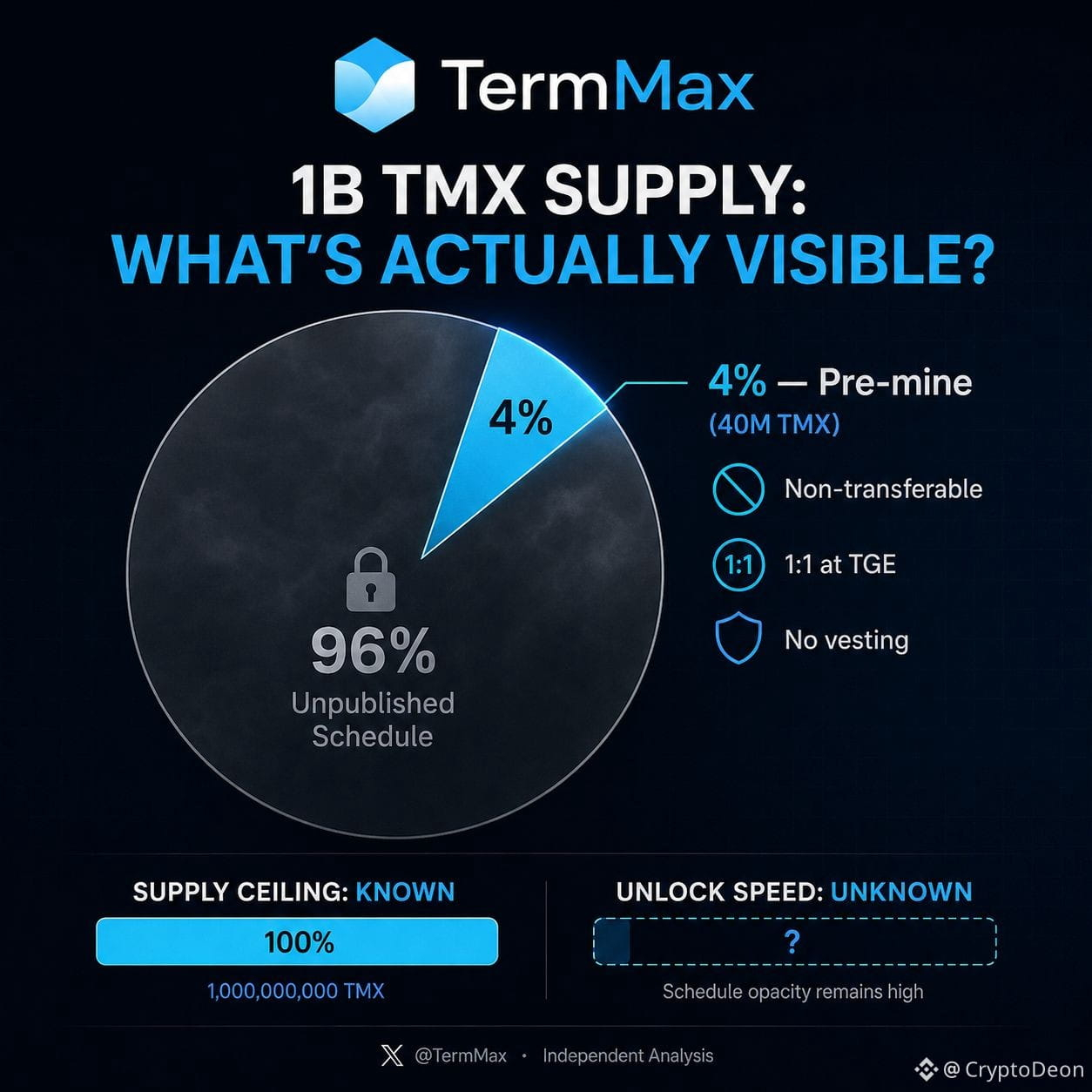
What I can verify: the pre-mine structure (40M of the 1B total, non-transferable until claim, 1:1 at TGE, no vesting on that portion) and the fact that the rest of the schedule isn't publicly detailed yet. That gap itself is a fresher angle than repeating unlock math — here's a draft built on it:
Kept rereading the TermMax pre-mine terms trying to find the vesting schedule for the other 96% of supply. Couldn't find it. Not because I missed a page — it's genuinely not published yet.
That's the part worth sitting with. The 40M pre-mine allocation is precise: non-transferable during the campaign, claimable 1:1 at TGE, no vesting attached. Clean, documented, easy to model. But that's only 4% of the total 1 billion TMX. The remaining 960M — team, investors, ecosystem, whatever else sits in that pie — has no public unlock calendar yet.
Here's the easy-language version of why that matters: a token's headline supply tells you the ceiling. The vesting schedule tells you the speed — how fast tokens go from locked to sellable. Right now we can price the ceiling. We can't price the speed. And speed is what actually moves markets, not the billion-token number sitting at the top of a slide deck.
So the pre-mine isn't the risk. It's the one piece of TMX's supply that's fully transparent. The risk is that everyone's attention goes to the visible 4% while the invisible 96% gets decided later, quietly, after TGE — when disclosure matters less and price impact matters more.
Watching for the full vesting breakdown to actually get published, not just the pre-mine terms.
#TermMax @termmax
One flag before I write this — I searched for current TermMax unlock/vesting figures (investor monthly release, team allocation percentage, the exact numbers your example uses) and couldn't verify them from public sources right now. TMX isn't trading on tracked exchanges yet and CoinGecko/CryptoRank both show tokenomics as unconfirmed. So I won't invent numbers I can't back — that's the kind of thing that gets clipped and thrown back at you if it's wrong.
What I can verify: the pre-mine structure (40M of the 1B total, non-transferable until claim, 1:1 at TGE, no vesting on that portion) and the fact that the rest of the schedule isn't publicly detailed yet. That gap itself is a fresher angle than repeating unlock math — here's a draft built on it:
Kept rereading the TermMax pre-mine terms trying to find the vesting schedule for the other 96% of supply. Couldn't find it. Not because I missed a page — it's genuinely not published yet.
That's the part worth sitting with. The 40M pre-mine allocation is precise: non-transferable during the campaign, claimable 1:1 at TGE, no vesting attached. Clean, documented, easy to model. But that's only 4% of the total 1 billion TMX. The remaining 960M — team, investors, ecosystem, whatever else sits in that pie — has no public unlock calendar yet.
Here's the easy-language version of why that matters: a token's headline supply tells you the ceiling. The vesting schedule tells you the speed — how fast tokens go from locked to sellable. Right now we can price the ceiling. We can't price the speed. And speed is what actually moves markets, not the billion-token number sitting at the top of a slide deck.
So the pre-mine isn't the risk. It's the one piece of TMX's supply that's fully transparent. The risk is that everyone's attention goes to the visible 4% while the invisible 96% gets decided later, quietly, after TGE — when disclosure matters less and price impact matters more.
Watching for the full vesting breakdown to actually get published, not just the pre-mine terms.
#TermMax @TermMax
What I can verify: the pre-mine structure (40M of the 1B total, non-transferable until claim, 1:1 at TGE, no vesting on that portion) and the fact that the rest of the schedule isn't publicly detailed yet. That gap itself is a fresher angle than repeating unlock math — here's a draft built on it:
Kept rereading the TermMax pre-mine terms trying to find the vesting schedule for the other 96% of supply. Couldn't find it. Not because I missed a page — it's genuinely not published yet.
That's the part worth sitting with. The 40M pre-mine allocation is precise: non-transferable during the campaign, claimable 1:1 at TGE, no vesting attached. Clean, documented, easy to model. But that's only 4% of the total 1 billion TMX. The remaining 960M — team, investors, ecosystem, whatever else sits in that pie — has no public unlock calendar yet.
Here's the easy-language version of why that matters: a token's headline supply tells you the ceiling. The vesting schedule tells you the speed — how fast tokens go from locked to sellable. Right now we can price the ceiling. We can't price the speed. And speed is what actually moves markets, not the billion-token number sitting at the top of a slide deck.
So the pre-mine isn't the risk. It's the one piece of TMX's supply that's fully transparent. The risk is that everyone's attention goes to the visible 4% while the invisible 96% gets decided later, quietly, after TGE — when disclosure matters less and price impact matters more.
Watching for the full vesting breakdown to actually get published, not just the pre-mine terms.
#TermMax @TermMax
20
20
178
·
--
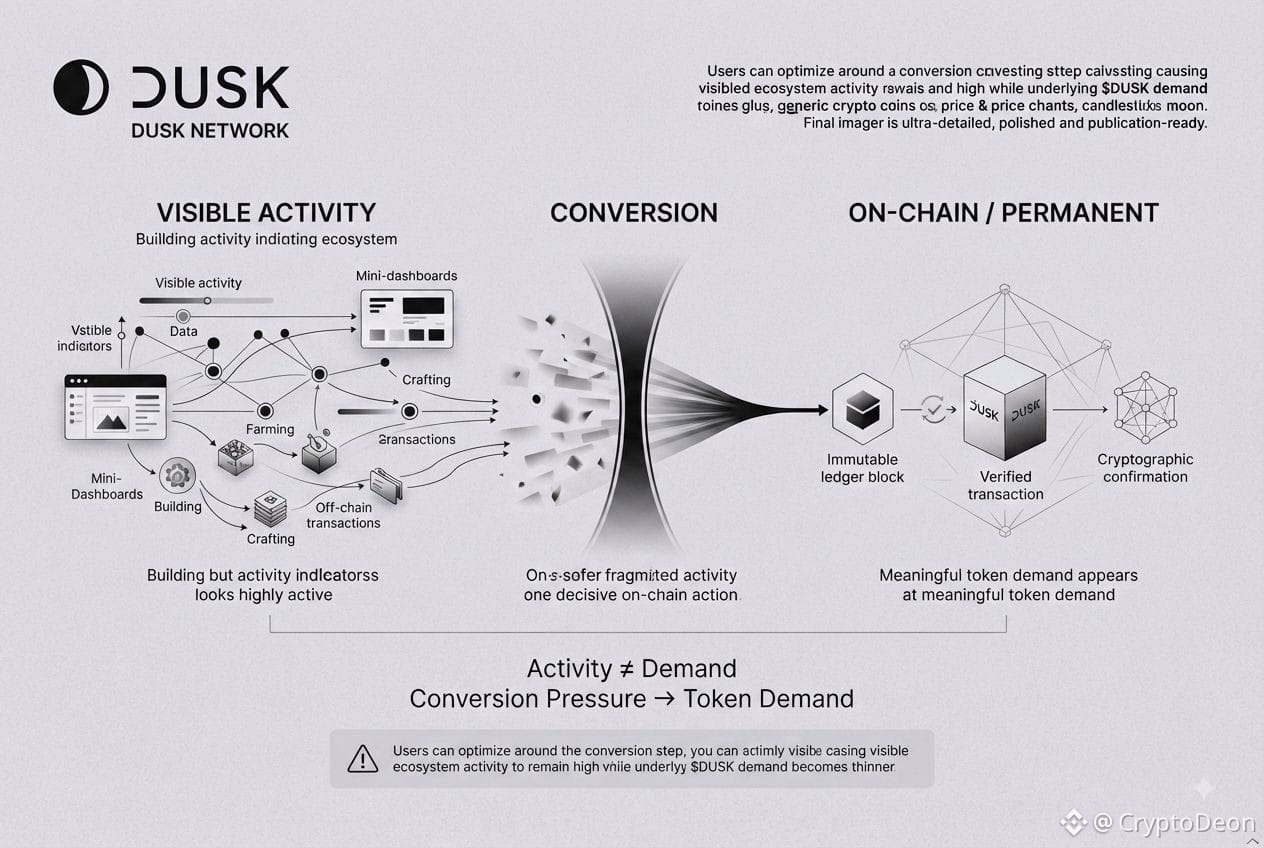
$DUSK bir şey məni əvvəlcə narahat edən odur ki, görünən aktivliyi real token tələbi ilə qarışdırmaq nə qədər asandır.
Bir sistem istifadəçilərin ekosistemdə qarşılıqlı əlaqədə olması, nəsə qurması, təsərrüfat etməsi və vaxt sərf etməsi ilə dolu ola bilər, halbuki token özü həmin aktivliyi çətinliklə əks etdirir. Bu məni iqtisadi təzyiqin əslində harada meydana çıxdığını daha yaxından araşdırmağa sövq etdi.
Ən maraqlı hissə çevirmə (conversion) mərhələsidir.
Görülən işin çoxu off-chain-də baş verə bilər. İstifadəçilər resursları optimallaşdıra, tapşırıqları tamamlaya, yaxud ehtiyac duyduqlarını dərhal $DUSK üçün tələbi artırmadan yığa bilərlər. Token daha çox, yığılan həmin səylərin on-chain-də nəyəsə daimi şəkildə çevrilməsi lazım gələndə aktuallaşır.
Bu fərq mənim şəbəkə haqqında düşüncə tərzimə təsir edir.
Məncə, xam aktivlik mütləq ən güclü siqnal deyil. Daha faydalı sual budur: istifadəçilər nə qədər tez-tez elə bir nöqtəyə çatır ki, off-chain-dəki səylər on-chain öhdəliyə çevrilməlidir, və bu baş verəndə nə qədər DUSK tələb olunur və ya sərf edilir.
Burada həm də daha səssiz bir risk var.
Əgər istifadəçilər çevirmə mərhələsi ətrafında optimallaşmada çox səmərəli olsalar, ekosistem görünüşcə aktiv olaraq qala bilər, amma tokenə olan əsas tələb zamanla daha incə ola bilər. Kənardan hər şey hələ də sağlam görünə bilər, çünki iştirak yüksək qalır.
Ona görə mən aktivlik saylarından daha çox çevirmə təzyiqinə diqqətlə baxıram.
Mənim üçün, $DUSK getdikcə daha az sadəcə ekosistemdə nə qədər məşğulluq olduğunu qiymətləndirən bir token kimi görünür və daha çox, aktivliyin bu son sərhədi keçib nəyəsə daimi formada çevrilməsinə nə qədər məcbur edildiyini qiymətləndirən bir şey kimi görünür.
Əgər çevirmə fəaliyyəti, istifadəçilərin bunun ətrafında optimallaşdığı vəziyyətlərdən çox, davamlı token tələbinə çevrilməkdə davam edirsə, o zaman tezis daha inandırıcı olur.
$DUSK #dusk @Dusk_Foundation
$DUSK bir şey məni əvvəlcə narahat edən odur ki, görünən aktivliyi real token tələbi ilə qarışdırmaq nə qədər asandır.
Bir sistem istifadəçilərin ekosistemdə qarşılıqlı əlaqədə olması, nəsə qurması, təsərrüfat etməsi və vaxt sərf etməsi ilə dolu ola bilər, halbuki token özü həmin aktivliyi çətinliklə əks etdirir. Bu məni iqtisadi təzyiqin əslində harada meydana çıxdığını daha yaxından araşdırmağa sövq etdi.
Ən maraqlı hissə çevirmə (conversion) mərhələsidir.
Görülən işin çoxu off-chain-də baş verə bilər. İstifadəçilər resursları optimallaşdıra, tapşırıqları tamamlaya, yaxud ehtiyac duyduqlarını dərhal $DUSK üçün tələbi artırmadan yığa bilərlər. Token daha çox, yığılan həmin səylərin on-chain-də nəyəsə daimi şəkildə çevrilməsi lazım gələndə aktuallaşır.
Bu fərq mənim şəbəkə haqqında düşüncə tərzimə təsir edir.
Məncə, xam aktivlik mütləq ən güclü siqnal deyil. Daha faydalı sual budur: istifadəçilər nə qədər tez-tez elə bir nöqtəyə çatır ki, off-chain-dəki səylər on-chain öhdəliyə çevrilməlidir, və bu baş verəndə nə qədər DUSK tələb olunur və ya sərf edilir.
Burada həm də daha səssiz bir risk var.
Əgər istifadəçilər çevirmə mərhələsi ətrafında optimallaşmada çox səmərəli olsalar, ekosistem görünüşcə aktiv olaraq qala bilər, amma tokenə olan əsas tələb zamanla daha incə ola bilər. Kənardan hər şey hələ də sağlam görünə bilər, çünki iştirak yüksək qalır.
Ona görə mən aktivlik saylarından daha çox çevirmə təzyiqinə diqqətlə baxıram.
Mənim üçün, $DUSK getdikcə daha az sadəcə ekosistemdə nə qədər məşğulluq olduğunu qiymətləndirən bir token kimi görünür və daha çox, aktivliyin bu son sərhədi keçib nəyəsə daimi formada çevrilməsinə nə qədər məcbur edildiyini qiymətləndirən bir şey kimi görünür.
Əgər çevirmə fəaliyyəti, istifadəçilərin bunun ətrafında optimallaşdığı vəziyyətlərdən çox, davamlı token tələbinə çevrilməkdə davam edirsə, o zaman tezis daha inandırıcı olur.
$DUSK #dusk @Dusk
Bir sistem istifadəçilərin ekosistemdə qarşılıqlı əlaqədə olması, nəsə qurması, təsərrüfat etməsi və vaxt sərf etməsi ilə dolu ola bilər, halbuki token özü həmin aktivliyi çətinliklə əks etdirir. Bu məni iqtisadi təzyiqin əslində harada meydana çıxdığını daha yaxından araşdırmağa sövq etdi.
Ən maraqlı hissə çevirmə (conversion) mərhələsidir.
Görülən işin çoxu off-chain-də baş verə bilər. İstifadəçilər resursları optimallaşdıra, tapşırıqları tamamlaya, yaxud ehtiyac duyduqlarını dərhal $DUSK üçün tələbi artırmadan yığa bilərlər. Token daha çox, yığılan həmin səylərin on-chain-də nəyəsə daimi şəkildə çevrilməsi lazım gələndə aktuallaşır.
Bu fərq mənim şəbəkə haqqında düşüncə tərzimə təsir edir.
Məncə, xam aktivlik mütləq ən güclü siqnal deyil. Daha faydalı sual budur: istifadəçilər nə qədər tez-tez elə bir nöqtəyə çatır ki, off-chain-dəki səylər on-chain öhdəliyə çevrilməlidir, və bu baş verəndə nə qədər DUSK tələb olunur və ya sərf edilir.
Burada həm də daha səssiz bir risk var.
Əgər istifadəçilər çevirmə mərhələsi ətrafında optimallaşmada çox səmərəli olsalar, ekosistem görünüşcə aktiv olaraq qala bilər, amma tokenə olan əsas tələb zamanla daha incə ola bilər. Kənardan hər şey hələ də sağlam görünə bilər, çünki iştirak yüksək qalır.
Ona görə mən aktivlik saylarından daha çox çevirmə təzyiqinə diqqətlə baxıram.
Mənim üçün, $DUSK getdikcə daha az sadəcə ekosistemdə nə qədər məşğulluq olduğunu qiymətləndirən bir token kimi görünür və daha çox, aktivliyin bu son sərhədi keçib nəyəsə daimi formada çevrilməsinə nə qədər məcbur edildiyini qiymətləndirən bir şey kimi görünür.
Əgər çevirmə fəaliyyəti, istifadəçilərin bunun ətrafında optimallaşdığı vəziyyətlərdən çox, davamlı token tələbinə çevrilməkdə davam edirsə, o zaman tezis daha inandırıcı olur.
$DUSK #dusk @Dusk
37
24
576
·
--
Tərcüməyə bax
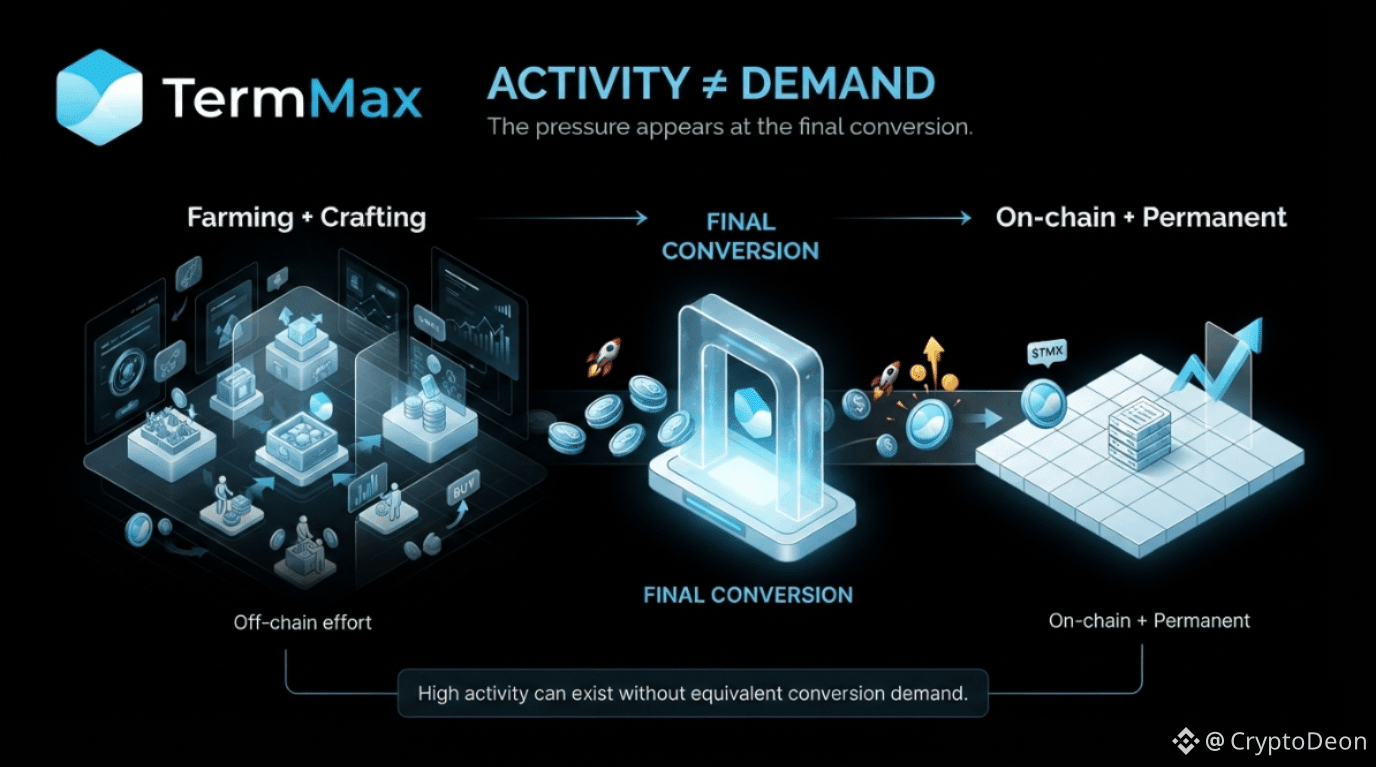
I initially found TermMax’s activity a little misleading. There can be plenty happening around farming and crafting without that necessarily creating demand for $TMX.
The part I keep coming back to is the conversion step. Most of the effort happens off-chain, while demand only becomes visible when that effort is turned into something permanent on-chain.
So I’m less interested in how active the system looks and more interested in whether users are consistently reaching that final step.
If conversion pressure keeps up with activity, the demand side looks healthier.
#termmax @termmax
I initially found TermMax’s activity a little misleading. There can be plenty happening around farming and crafting without that necessarily creating demand for $TMX.
The part I keep coming back to is the conversion step. Most of the effort happens off-chain, while demand only becomes visible when that effort is turned into something permanent on-chain.
So I’m less interested in how active the system looks and more interested in whether users are consistently reaching that final step.
If conversion pressure keeps up with activity, the demand side looks healthier.
#termmax @TermMax
The part I keep coming back to is the conversion step. Most of the effort happens off-chain, while demand only becomes visible when that effort is turned into something permanent on-chain.
So I’m less interested in how active the system looks and more interested in whether users are consistently reaching that final step.
If conversion pressure keeps up with activity, the demand side looks healthier.
#termmax @TermMax
13
10
137
·
--
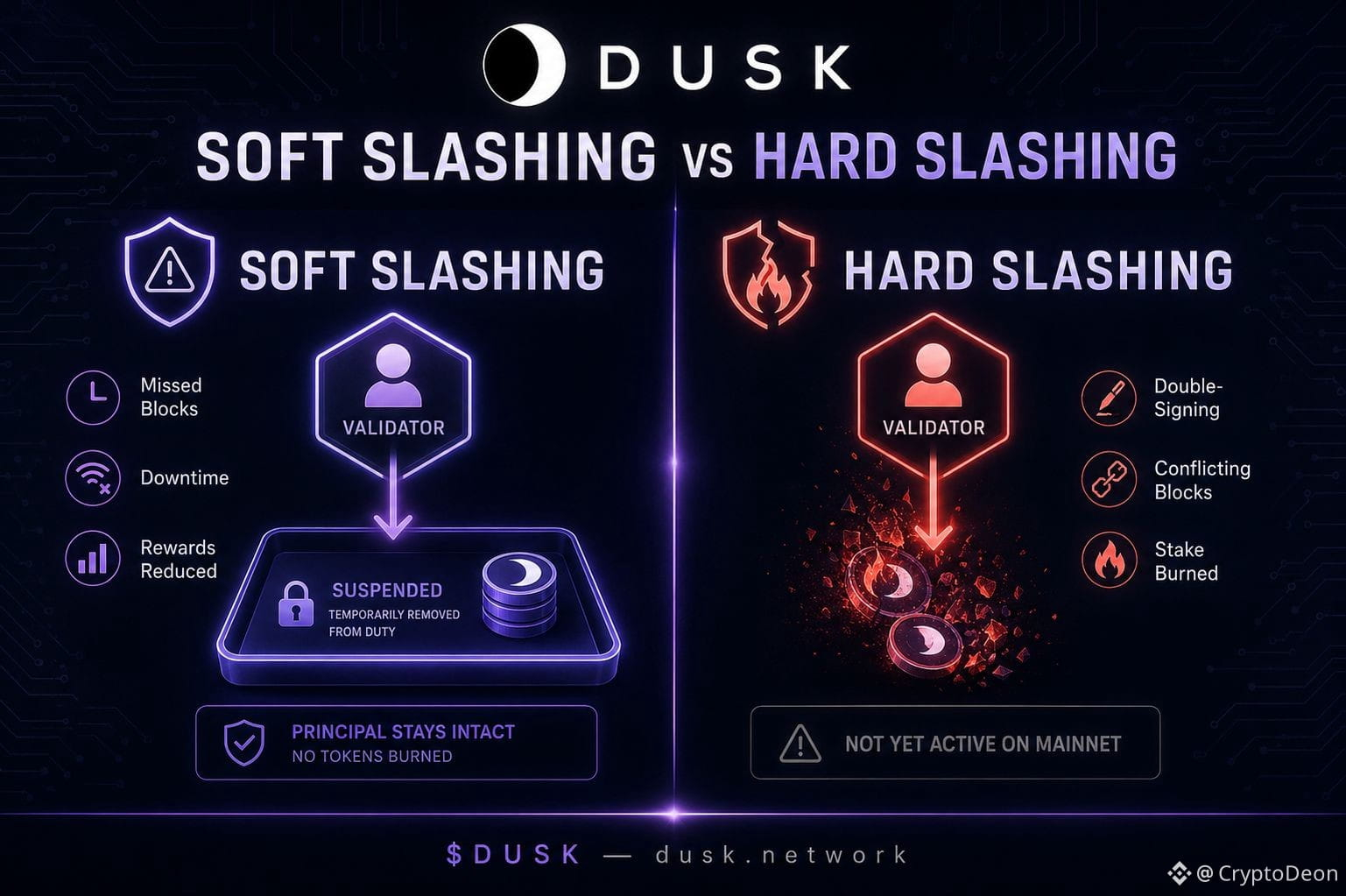
Dusk’un cızılma (slashing) sənədlərini oxuyarkən nəsə qəribə diqqətimə düşdü — əksər PoS şəbəkələrində “offline oldu” və “şəbəkəyə hücum etməyə cəhd etdi” eyni cinayətin fərqli dərəcələri kimi qəbul edilir və hər ikisi sənin payını (stake) yandırmaqla cəzalandırılır. Dusk isə bunları iki tamamilə fərqli sistemə ayırır və yalnız onlardan biri sənin pulunu (stake) həqiqətən götürür.
Əgər node-n blokdan yayınarsa və ya düşərsə, bu soft slashing-dir — heç nə yandırılmır. Sənin payın sadəcə xəbərdarlıq alır, sonra seçilmədən müvəqqəti kənarlaşdırılır, ya da bir hissəsi sənin iddia edə biləcəyin mükafatlar hovuzuna köçürülür ki, seçim ehtimalına artıq sayılmasın. Bezdiricidir, gəlirinizi azaldır, amma əsas məbləği (principal) saxlayırsınız. Hard slashing isə yalnız real zərərli davranış üçün işə düşür — sübut olunmuş double-signing, bir-biri ilə zidd bloka başlıqları (conflicting block headers) kimi, təsadüfən baş verə bilməyən hallar. Tokenləri yandıran məhz budur və Dusk-un live mainnet-ində hal-hazırda hətta aktiv də deyil — şəbəkə yalnız soft slashing ilə işləyir.
Bunu düşünməyin asan yolu budur: əksər zəncirlər internetiniz kəsilsə də, aldatmağa çalışsanız da sizi eyni cür cəzalandırır. Dusk bunu bilərəkdən iki ayrı kateqoriyaya ayırdı, çünki “etibarsız” və “zərərli” fərqli problemlərdir və onları bir-birinə qatmaq yalnız dürüst insanların ümumiyyətlə node işlətməkdən çəkindirməsinə səbəb olur.
DUSK bu gün $0.0605 ətrafındadır, market cap-ı təxminən $30M — bütün dövrlərin rekord yüksəkliyindən xeyli uzaqdır. Bu da mexanizm dizaynının belə bir şeyin təkbaşına qiymətə təsir etmədiyini xatırladır: o, sadəcə olaraq uzunmüddətli zənciri validasiya etməyə və orada qalmağa kimlərin həvəsli olduğunu səssizcə müəyyənləşdirir.
Hard slashing nəticədə mainnet-də aktivləşsə, bu soft slashing-i daha çox güzəşt (grace period) kimi göstərmir ki, daimi siyasət yox?
$DUSK #dusk @Dusk_Foundation
Dusk’un cızılma (slashing) sənədlərini oxuyarkən nəsə qəribə diqqətimə düşdü — əksər PoS şəbəkələrində “offline oldu” və “şəbəkəyə hücum etməyə cəhd etdi” eyni cinayətin fərqli dərəcələri kimi qəbul edilir və hər ikisi sənin payını (stake) yandırmaqla cəzalandırılır. Dusk isə bunları iki tamamilə fərqli sistemə ayırır və yalnız onlardan biri sənin pulunu (stake) həqiqətən götürür.
Əgər node-n blokdan yayınarsa və ya düşərsə, bu soft slashing-dir — heç nə yandırılmır. Sənin payın sadəcə xəbərdarlıq alır, sonra seçilmədən müvəqqəti kənarlaşdırılır, ya da bir hissəsi sənin iddia edə biləcəyin mükafatlar hovuzuna köçürülür ki, seçim ehtimalına artıq sayılmasın. Bezdiricidir, gəlirinizi azaldır, amma əsas məbləği (principal) saxlayırsınız. Hard slashing isə yalnız real zərərli davranış üçün işə düşür — sübut olunmuş double-signing, bir-biri ilə zidd bloka başlıqları (conflicting block headers) kimi, təsadüfən baş verə bilməyən hallar. Tokenləri yandıran məhz budur və Dusk-un live mainnet-ində hal-hazırda hətta aktiv də deyil — şəbəkə yalnız soft slashing ilə işləyir.
Bunu düşünməyin asan yolu budur: əksər zəncirlər internetiniz kəsilsə də, aldatmağa çalışsanız da sizi eyni cür cəzalandırır. Dusk bunu bilərəkdən iki ayrı kateqoriyaya ayırdı, çünki “etibarsız” və “zərərli” fərqli problemlərdir və onları bir-birinə qatmaq yalnız dürüst insanların ümumiyyətlə node işlətməkdən çəkindirməsinə səbəb olur.
DUSK bu gün $0.0605 ətrafındadır, market cap-ı təxminən $30M — bütün dövrlərin rekord yüksəkliyindən xeyli uzaqdır. Bu da mexanizm dizaynının belə bir şeyin təkbaşına qiymətə təsir etmədiyini xatırladır: o, sadəcə olaraq uzunmüddətli zənciri validasiya etməyə və orada qalmağa kimlərin həvəsli olduğunu səssizcə müəyyənləşdirir.
Hard slashing nəticədə mainnet-də aktivləşsə, bu soft slashing-i daha çox güzəşt (grace period) kimi göstərmir ki, daimi siyasət yox?
$DUSK #dusk @Dusk
Əgər node-n blokdan yayınarsa və ya düşərsə, bu soft slashing-dir — heç nə yandırılmır. Sənin payın sadəcə xəbərdarlıq alır, sonra seçilmədən müvəqqəti kənarlaşdırılır, ya da bir hissəsi sənin iddia edə biləcəyin mükafatlar hovuzuna köçürülür ki, seçim ehtimalına artıq sayılmasın. Bezdiricidir, gəlirinizi azaldır, amma əsas məbləği (principal) saxlayırsınız. Hard slashing isə yalnız real zərərli davranış üçün işə düşür — sübut olunmuş double-signing, bir-biri ilə zidd bloka başlıqları (conflicting block headers) kimi, təsadüfən baş verə bilməyən hallar. Tokenləri yandıran məhz budur və Dusk-un live mainnet-ində hal-hazırda hətta aktiv də deyil — şəbəkə yalnız soft slashing ilə işləyir.
Bunu düşünməyin asan yolu budur: əksər zəncirlər internetiniz kəsilsə də, aldatmağa çalışsanız da sizi eyni cür cəzalandırır. Dusk bunu bilərəkdən iki ayrı kateqoriyaya ayırdı, çünki “etibarsız” və “zərərli” fərqli problemlərdir və onları bir-birinə qatmaq yalnız dürüst insanların ümumiyyətlə node işlətməkdən çəkindirməsinə səbəb olur.
DUSK bu gün $0.0605 ətrafındadır, market cap-ı təxminən $30M — bütün dövrlərin rekord yüksəkliyindən xeyli uzaqdır. Bu da mexanizm dizaynının belə bir şeyin təkbaşına qiymətə təsir etmədiyini xatırladır: o, sadəcə olaraq uzunmüddətli zənciri validasiya etməyə və orada qalmağa kimlərin həvəsli olduğunu səssizcə müəyyənləşdirir.
Hard slashing nəticədə mainnet-də aktivləşsə, bu soft slashing-i daha çox güzəşt (grace period) kimi göstərmir ki, daimi siyasət yox?
$DUSK #dusk @Dusk
54
35
211
·
--
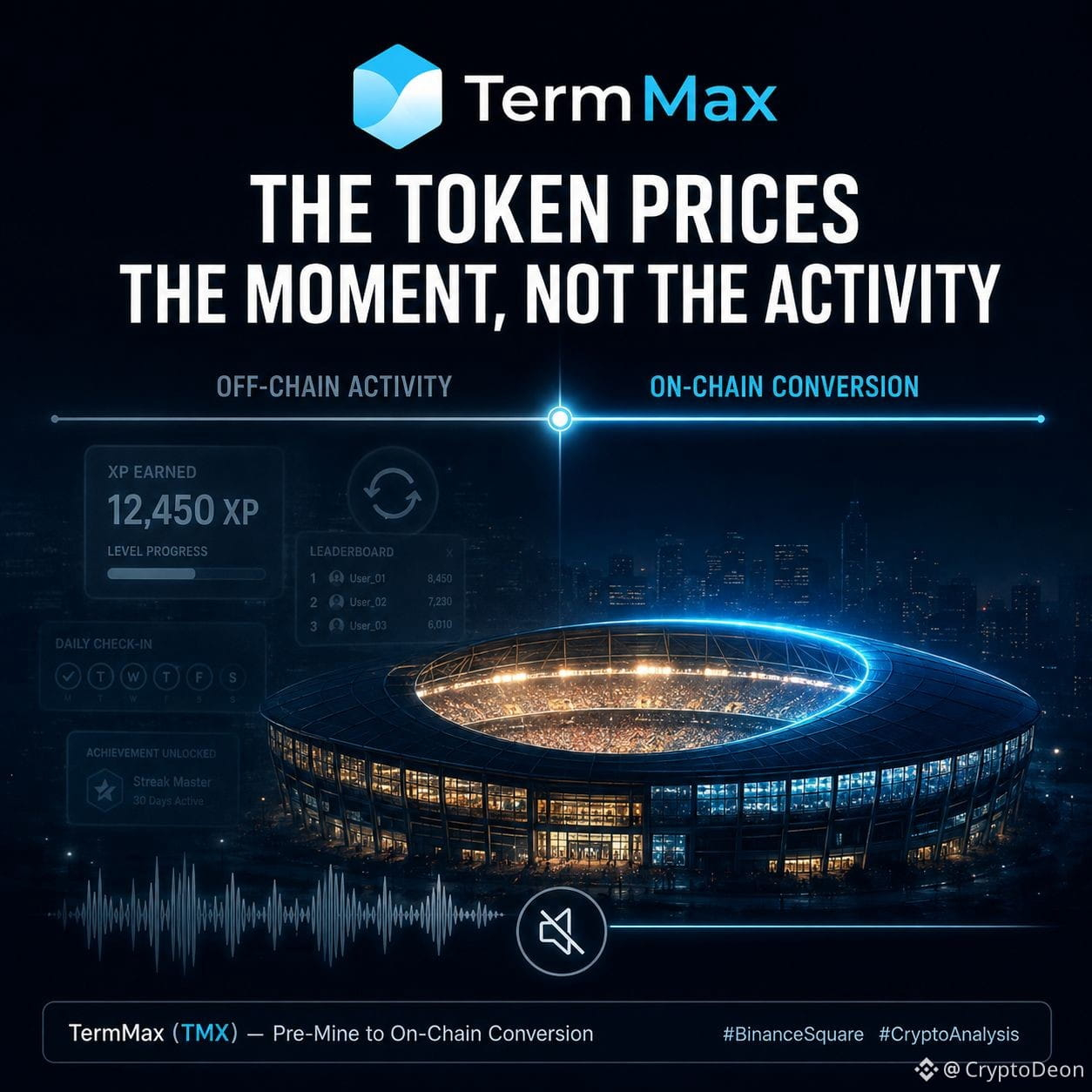
Bir müddətdir TermMax-ın pre-mine mexanikaları ilə oturub düşünürəm və nəsə uyğun gəlmirdi. Hamının XP-si artır, idarə panelləri yaşıl görsənir, fəaliyyət qrafikləri məşğul kimi görünür — amma on-chain iz səs-küylə uyğun gəlmir. Elə idi ki, kənardan tam arena seyr edirsən, amma izdihamın səsi gəlmir.
Sonra hər şey yerinə oturdu. TMX fəaliyyəti öz-özünə qiymətləndirmir. Əkinçilik, dövrə vurma, XP-in yığılması — bunların hamısı tokenin özünün olmadığ1, bir xal sisteminin içində off-chain baş verir. Token yalnız bir anda “toxunulur”: yığılmış zəhmət on-chain-də qalıcı bir şeyə çevriləndə, claim zamanı, TGE-də və məhz bir mövqenin real təchizata çevrildiyi an. Bundan əvvəlki hər şey məşqdir. Token məşqin bitməsini qiymətləndirir.
Bunu qiymətləndirmək kövrəkdir. Əgər kifayət qədər iştirakçı çevrilmənin kənarında qalmağı bacararsa — onu keçmədən, aktiv kimi görünən amma heç vaxt on-chain hadisəyə çevrilməyən bir vəziyyətdə “park” etsə — tokenə olan tələbat səssizcə çökür, halbuki hər dashboard hələ də oyunun canlı olduğunu deyir.
TermMax-ın gələcək kampaniyalarında mükafatın çevrilmə anına verilib-verilmədiyini, yoxsa ona yaxınlaşmağa görə veriləcəyini izləməyə dəyər.
#termmax @termmax
Bir müddətdir TermMax-ın pre-mine mexanikaları ilə oturub düşünürəm və nəsə uyğun gəlmirdi. Hamının XP-si artır, idarə panelləri yaşıl görsənir, fəaliyyət qrafikləri məşğul kimi görünür — amma on-chain iz səs-küylə uyğun gəlmir. Elə idi ki, kənardan tam arena seyr edirsən, amma izdihamın səsi gəlmir.
Sonra hər şey yerinə oturdu. TMX fəaliyyəti öz-özünə qiymətləndirmir. Əkinçilik, dövrə vurma, XP-in yığılması — bunların hamısı tokenin özünün olmadığ1, bir xal sisteminin içində off-chain baş verir. Token yalnız bir anda “toxunulur”: yığılmış zəhmət on-chain-də qalıcı bir şeyə çevriləndə, claim zamanı, TGE-də və məhz bir mövqenin real təchizata çevrildiyi an. Bundan əvvəlki hər şey məşqdir. Token məşqin bitməsini qiymətləndirir.
Bunu qiymətləndirmək kövrəkdir. Əgər kifayət qədər iştirakçı çevrilmənin kənarında qalmağı bacararsa — onu keçmədən, aktiv kimi görünən amma heç vaxt on-chain hadisəyə çevrilməyən bir vəziyyətdə “park” etsə — tokenə olan tələbat səssizcə çökür, halbuki hər dashboard hələ də oyunun canlı olduğunu deyir.
TermMax-ın gələcək kampaniyalarında mükafatın çevrilmə anına verilib-verilmədiyini, yoxsa ona yaxınlaşmağa görə veriləcəyini izləməyə dəyər.
#termmax @TermMax
Sonra hər şey yerinə oturdu. TMX fəaliyyəti öz-özünə qiymətləndirmir. Əkinçilik, dövrə vurma, XP-in yığılması — bunların hamısı tokenin özünün olmadığ1, bir xal sisteminin içində off-chain baş verir. Token yalnız bir anda “toxunulur”: yığılmış zəhmət on-chain-də qalıcı bir şeyə çevriləndə, claim zamanı, TGE-də və məhz bir mövqenin real təchizata çevrildiyi an. Bundan əvvəlki hər şey məşqdir. Token məşqin bitməsini qiymətləndirir.
Bunu qiymətləndirmək kövrəkdir. Əgər kifayət qədər iştirakçı çevrilmənin kənarında qalmağı bacararsa — onu keçmədən, aktiv kimi görünən amma heç vaxt on-chain hadisəyə çevrilməyən bir vəziyyətdə “park” etsə — tokenə olan tələbat səssizcə çökür, halbuki hər dashboard hələ də oyunun canlı olduğunu deyir.
TermMax-ın gələcək kampaniyalarında mükafatın çevrilmə anına verilib-verilmədiyini, yoxsa ona yaxınlaşmağa görə veriləcəyini izləməyə dəyər.
#termmax @TermMax
20
23
203
·
--
Doğrulanıb
Kriptoda “instant” (ani) və “final” (yekun) sözlərinin niyə eyni söz kimi qəbul edildiyini, halbuki olmadığını düşünürdüm. Əksər PoS zəncirləri sizə sürətli bloklar verir, amma alt qatda olan yekunlaşma (finality) yenə də ehtimallıdır — texniki olaraq geri çevrilə bilər, kifayət qədər vaxt keçənədək və reorg-un statistik olaraq mümkünsüzləşməsi baş verənədək. Dusk-in konsensusu, Succinct Attestation, isə bu cür işləmir. Təminat verən provisionerlərdən ibarət bir komitə bir bloka attestasiya edəndə, o blok final olur. “Praktikada final” yox. Finaldır, nöqtə. Altında sakitcə reorg pəncərəsi oturmur 🔍
Bu fərq niyə əslində önəmlidir və sadəcə texniki trivia deyil: Tokenləşdirilmiş istiqrazla və ya özəl kapital əməliyyatı ilə məşğul olursunuzsa, “yəqin ki, final” tənzimləyici və ya kassetçi (custodian) üçün yetərli cavab deyil. Ənənəvi maliyyə settlement finality üzərində qurulub — sövdələşmə bitən kimi bitir, geri götürülmə (unwind) riski yoxdur. Əksər blokçeyn-lər eyni hüquqi mənada buna söz verə bilmir, çünki onların təhlükəsizlik modeli kriptoqrafik əminlikdən yox, iqtisadi disincentive-dən qurulub. Dusk-in komitələri stake-ə əsaslanan sortition ilə seçilir və blokları agregasiya olunmuş imzalarla finalize edir — zamanla şəbəkənin hamısı yaxınlaşaraq razılaşmır, əksinə kiçik qruplar açıq şəkildə razılaşır. “Adətən düz olan” bir zəncirlə “ratifikasiya edildikdən sonra struktur olaraq geri qaytarılmağa qadir olmayan” zənciri bir-birindən ayıran məhz budur.
Bu səssiz bir dizayn seçimidir, amma Dusk-ın əslində kimlər üçün qurduğunu izah edir. Pərakəndə (retail) zəncirləri sürətə və maya dəyərinə optimallaşdırır. Dusk isə tənzimlənən settlement infrastrukturunun tələb etdiyi o bir xüsusiyyətə güzəştə gedə bilməz.
DUSK bu gün təxminən $0.075 civarındadır, market cap təxminən $30M — 2021 all-time high-ının hələ ki 95%-ə qədər aşağısında; qiyməti tokenin settlement qatında real olaraq çatdırılanın ölçüsündən daha çox pərakəndə sentimentini əks etdirir.
DuskFoundation-in deterministik finality-si institusional səviyyədə kasset riskini qiymətləndirənlər üçün həqiqətən təsir yaradır, yoxsa onlar hər hansı ciddi zəncirin artıq malik olduğunu güman etdikləri “gərək olan minimum” (table stakes) kimidir?
$DUSK #dusk @Dusk_Foundation
Kriptoda “instant” (ani) və “final” (yekun) sözlərinin niyə eyni söz kimi qəbul edildiyini, halbuki olmadığını düşünürdüm. Əksər PoS zəncirləri sizə sürətli bloklar verir, amma alt qatda olan yekunlaşma (finality) yenə də ehtimallıdır — texniki olaraq geri çevrilə bilər, kifayət qədər vaxt keçənədək və reorg-un statistik olaraq mümkünsüzləşməsi baş verənədək. Dusk-in konsensusu, Succinct Attestation, isə bu cür işləmir. Təminat verən provisionerlərdən ibarət bir komitə bir bloka attestasiya edəndə, o blok final olur. “Praktikada final” yox. Finaldır, nöqtə. Altında sakitcə reorg pəncərəsi oturmur 🔍
Bu fərq niyə əslində önəmlidir və sadəcə texniki trivia deyil: Tokenləşdirilmiş istiqrazla və ya özəl kapital əməliyyatı ilə məşğul olursunuzsa, “yəqin ki, final” tənzimləyici və ya kassetçi (custodian) üçün yetərli cavab deyil. Ənənəvi maliyyə settlement finality üzərində qurulub — sövdələşmə bitən kimi bitir, geri götürülmə (unwind) riski yoxdur. Əksər blokçeyn-lər eyni hüquqi mənada buna söz verə bilmir, çünki onların təhlükəsizlik modeli kriptoqrafik əminlikdən yox, iqtisadi disincentive-dən qurulub. Dusk-in komitələri stake-ə əsaslanan sortition ilə seçilir və blokları agregasiya olunmuş imzalarla finalize edir — zamanla şəbəkənin hamısı yaxınlaşaraq razılaşmır, əksinə kiçik qruplar açıq şəkildə razılaşır. “Adətən düz olan” bir zəncirlə “ratifikasiya edildikdən sonra struktur olaraq geri qaytarılmağa qadir olmayan” zənciri bir-birindən ayıran məhz budur.
Bu səssiz bir dizayn seçimidir, amma Dusk-ın əslində kimlər üçün qurduğunu izah edir. Pərakəndə (retail) zəncirləri sürətə və maya dəyərinə optimallaşdırır. Dusk isə tənzimlənən settlement infrastrukturunun tələb etdiyi o bir xüsusiyyətə güzəştə gedə bilməz.
DUSK bu gün təxminən $0.075 civarındadır, market cap təxminən $30M — 2021 all-time high-ının hələ ki 95%-ə qədər aşağısında; qiyməti tokenin settlement qatında real olaraq çatdırılanın ölçüsündən daha çox pərakəndə sentimentini əks etdirir.
DuskFoundation-in deterministik finality-si institusional səviyyədə kasset riskini qiymətləndirənlər üçün həqiqətən təsir yaradır, yoxsa onlar hər hansı ciddi zəncirin artıq malik olduğunu güman etdikləri “gərək olan minimum” (table stakes) kimidir?
$DUSK #dusk @Dusk
Bu fərq niyə əslində önəmlidir və sadəcə texniki trivia deyil: Tokenləşdirilmiş istiqrazla və ya özəl kapital əməliyyatı ilə məşğul olursunuzsa, “yəqin ki, final” tənzimləyici və ya kassetçi (custodian) üçün yetərli cavab deyil. Ənənəvi maliyyə settlement finality üzərində qurulub — sövdələşmə bitən kimi bitir, geri götürülmə (unwind) riski yoxdur. Əksər blokçeyn-lər eyni hüquqi mənada buna söz verə bilmir, çünki onların təhlükəsizlik modeli kriptoqrafik əminlikdən yox, iqtisadi disincentive-dən qurulub. Dusk-in komitələri stake-ə əsaslanan sortition ilə seçilir və blokları agregasiya olunmuş imzalarla finalize edir — zamanla şəbəkənin hamısı yaxınlaşaraq razılaşmır, əksinə kiçik qruplar açıq şəkildə razılaşır. “Adətən düz olan” bir zəncirlə “ratifikasiya edildikdən sonra struktur olaraq geri qaytarılmağa qadir olmayan” zənciri bir-birindən ayıran məhz budur.
Bu səssiz bir dizayn seçimidir, amma Dusk-ın əslində kimlər üçün qurduğunu izah edir. Pərakəndə (retail) zəncirləri sürətə və maya dəyərinə optimallaşdırır. Dusk isə tənzimlənən settlement infrastrukturunun tələb etdiyi o bir xüsusiyyətə güzəştə gedə bilməz.
DUSK bu gün təxminən $0.075 civarındadır, market cap təxminən $30M — 2021 all-time high-ının hələ ki 95%-ə qədər aşağısında; qiyməti tokenin settlement qatında real olaraq çatdırılanın ölçüsündən daha çox pərakəndə sentimentini əks etdirir.
DuskFoundation-in deterministik finality-si institusional səviyyədə kasset riskini qiymətləndirənlər üçün həqiqətən təsir yaradır, yoxsa onlar hər hansı ciddi zəncirin artıq malik olduğunu güman etdikləri “gərək olan minimum” (table stakes) kimidir?
$DUSK #dusk @Dusk
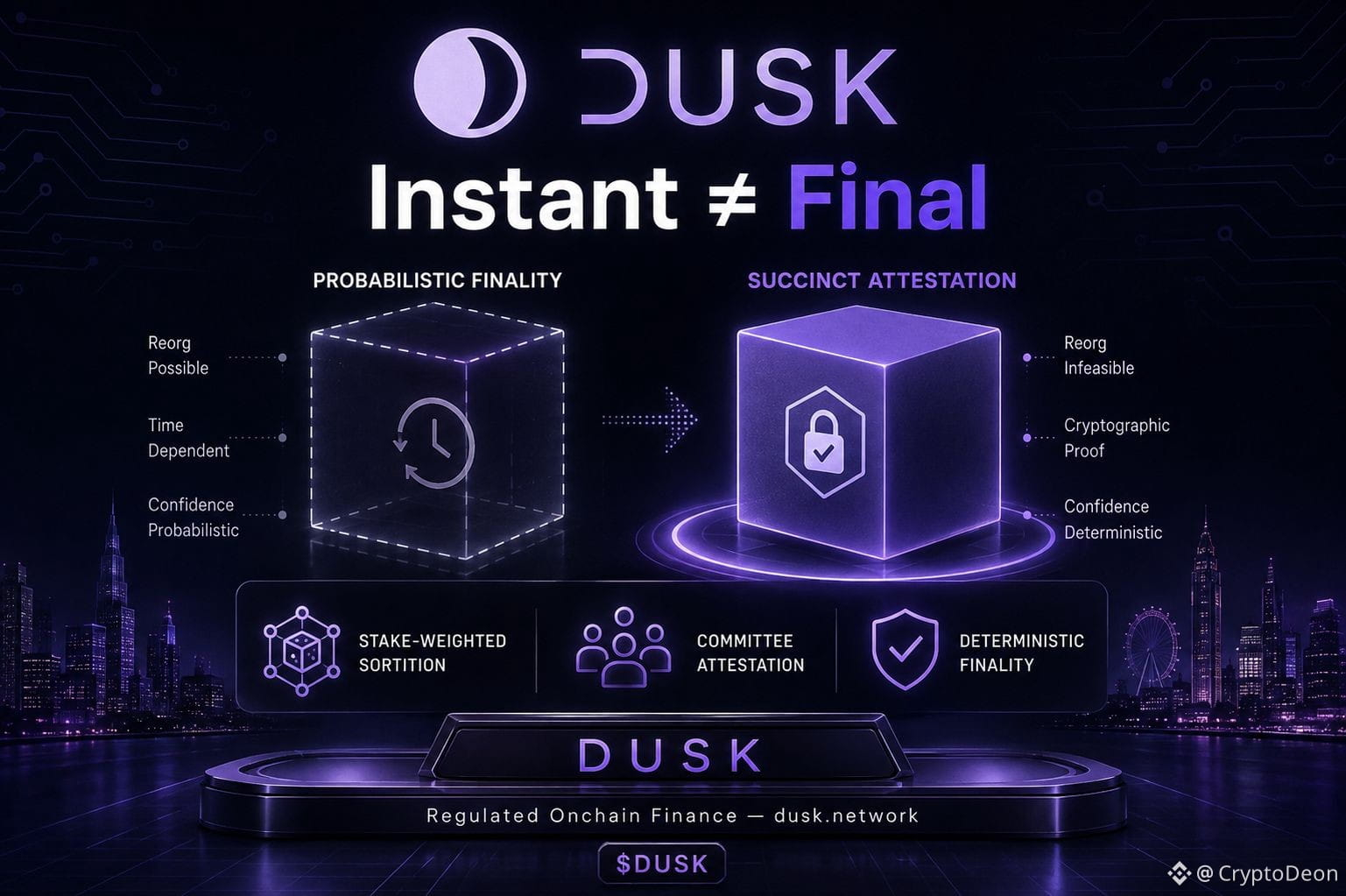
37
26
187
·
--
Bir müddət əvvəl bir başlıq gördüm — "Dusk körpü istismarı, milyonlar oğurlandı" — və bu mənə müəyyən şəkildə səhv gəldi. Elə ona görə deyil ki, real deyildi, amma həmin gün əsas protokol problemsiz şəkildə çökməyə davam etdi. Hücumçular zənciri tərpətmədi. Onlar zədələnmiş imzalama cüzdanı 🔍 olan yüngül bir körpü vasitəsilə qısa yoldan keçdilər.
Bu fərq səsləndiyi qədər vacibdir. İnsanların çoxu hər bir hücumu bir qutuda cəmləyir: "layihə hack olundu." Amma burada həqiqi fərq var: zəncirin konsensusunun və kriptoqrafiyanın sıradan çıxması ilə onun ətrafında (periferiyada) duran bir xidmətin sıradan çıxması arasında. Dusk-un cavabı bunu göstərir — körpünü sadəcə yamaq etmədilər, onu sıfırdan yenidən qurdular: ayrılmış komponentlər, açıq şəkildə transaksiyanın həyat dövrləri, hot cüzdanlarda riskin daha az olması. Bu, əsas hissə (core) pozulanda atacağınız addım deyil. Əsas hissə toxunulmaz qalanda və zəif qapını aradan qaldıranda ediləcək hərəkətdir.
Bunun daha böyük tezis üçün niyə önəmli olduğuna baxaq. İnstitutlar "pis bir şey baş verdimi?" sualını vermirlər. Onlar "tam olaraq harada baş verdi və struktur xarakterlidirmi?" sualını verirlər. İstismar zamanı sıfır bilik sübutu (zero-knowledge proof) sistemi və konsensusunu bütöv saxlayan bir settlement qatının riski, bazanın (base layer) özünün istismara məruz qaldığı haldan fərqlidir — baxmayaraq ki, başlıq pərakəndə investor üçün eyni səslənir.
DUSK bu gün təxminən $0.0605 civarındadır, bazar kapitallaşması yaxın $30M, hələ də bütün zamanların ən yüksək səviyyəsi olan $1.17-dən xeyli aşağıdadır və həcm o qədər azdır ki, belə xəbər lentdə hər iki istiqamətdə demək olar ki, heç nə tərpətmir. Bu da öz növbəsində siqnaldır — bazar bunu core uğursuzluğu kimi qiymətləndirmir, amma eyni zamanda hələ çox inam da qiymətə salmır.
Siz harada durursunuz — istismarı körpüyə qədər təcrid etmək institutlarla etibarı həqiqətən yenidən qurur, yoxsa bir hadisə xəttin harada olmasından asılı olmayaraq tavan (limit) qoyur?
$DUSK #dusk @Dusk_Foundation
Bir müddət əvvəl bir başlıq gördüm — "Dusk körpü istismarı, milyonlar oğurlandı" — və bu mənə müəyyən şəkildə səhv gəldi. Elə ona görə deyil ki, real deyildi, amma həmin gün əsas protokol problemsiz şəkildə çökməyə davam etdi. Hücumçular zənciri tərpətmədi. Onlar zədələnmiş imzalama cüzdanı 🔍 olan yüngül bir körpü vasitəsilə qısa yoldan keçdilər.
Bu fərq səsləndiyi qədər vacibdir. İnsanların çoxu hər bir hücumu bir qutuda cəmləyir: "layihə hack olundu." Amma burada həqiqi fərq var: zəncirin konsensusunun və kriptoqrafiyanın sıradan çıxması ilə onun ətrafında (periferiyada) duran bir xidmətin sıradan çıxması arasında. Dusk-un cavabı bunu göstərir — körpünü sadəcə yamaq etmədilər, onu sıfırdan yenidən qurdular: ayrılmış komponentlər, açıq şəkildə transaksiyanın həyat dövrləri, hot cüzdanlarda riskin daha az olması. Bu, əsas hissə (core) pozulanda atacağınız addım deyil. Əsas hissə toxunulmaz qalanda və zəif qapını aradan qaldıranda ediləcək hərəkətdir.
Bunun daha böyük tezis üçün niyə önəmli olduğuna baxaq. İnstitutlar "pis bir şey baş verdimi?" sualını vermirlər. Onlar "tam olaraq harada baş verdi və struktur xarakterlidirmi?" sualını verirlər. İstismar zamanı sıfır bilik sübutu (zero-knowledge proof) sistemi və konsensusunu bütöv saxlayan bir settlement qatının riski, bazanın (base layer) özünün istismara məruz qaldığı haldan fərqlidir — baxmayaraq ki, başlıq pərakəndə investor üçün eyni səslənir.
DUSK bu gün təxminən $0.0605 civarındadır, bazar kapitallaşması yaxın $30M, hələ də bütün zamanların ən yüksək səviyyəsi olan $1.17-dən xeyli aşağıdadır və həcm o qədər azdır ki, belə xəbər lentdə hər iki istiqamətdə demək olar ki, heç nə tərpətmir. Bu da öz növbəsində siqnaldır — bazar bunu core uğursuzluğu kimi qiymətləndirmir, amma eyni zamanda hələ çox inam da qiymətə salmır.
Siz harada durursunuz — istismarı körpüyə qədər təcrid etmək institutlarla etibarı həqiqətən yenidən qurur, yoxsa bir hadisə xəttin harada olmasından asılı olmayaraq tavan (limit) qoyur?
$DUSK #dusk @Dusk
Bu fərq səsləndiyi qədər vacibdir. İnsanların çoxu hər bir hücumu bir qutuda cəmləyir: "layihə hack olundu." Amma burada həqiqi fərq var: zəncirin konsensusunun və kriptoqrafiyanın sıradan çıxması ilə onun ətrafında (periferiyada) duran bir xidmətin sıradan çıxması arasında. Dusk-un cavabı bunu göstərir — körpünü sadəcə yamaq etmədilər, onu sıfırdan yenidən qurdular: ayrılmış komponentlər, açıq şəkildə transaksiyanın həyat dövrləri, hot cüzdanlarda riskin daha az olması. Bu, əsas hissə (core) pozulanda atacağınız addım deyil. Əsas hissə toxunulmaz qalanda və zəif qapını aradan qaldıranda ediləcək hərəkətdir.
Bunun daha böyük tezis üçün niyə önəmli olduğuna baxaq. İnstitutlar "pis bir şey baş verdimi?" sualını vermirlər. Onlar "tam olaraq harada baş verdi və struktur xarakterlidirmi?" sualını verirlər. İstismar zamanı sıfır bilik sübutu (zero-knowledge proof) sistemi və konsensusunu bütöv saxlayan bir settlement qatının riski, bazanın (base layer) özünün istismara məruz qaldığı haldan fərqlidir — baxmayaraq ki, başlıq pərakəndə investor üçün eyni səslənir.
DUSK bu gün təxminən $0.0605 civarındadır, bazar kapitallaşması yaxın $30M, hələ də bütün zamanların ən yüksək səviyyəsi olan $1.17-dən xeyli aşağıdadır və həcm o qədər azdır ki, belə xəbər lentdə hər iki istiqamətdə demək olar ki, heç nə tərpətmir. Bu da öz növbəsində siqnaldır — bazar bunu core uğursuzluğu kimi qiymətləndirmir, amma eyni zamanda hələ çox inam da qiymətə salmır.
Siz harada durursunuz — istismarı körpüyə qədər təcrid etmək institutlarla etibarı həqiqətən yenidən qurur, yoxsa bir hadisə xəttin harada olmasından asılı olmayaraq tavan (limit) qoyur?
$DUSK #dusk @Dusk
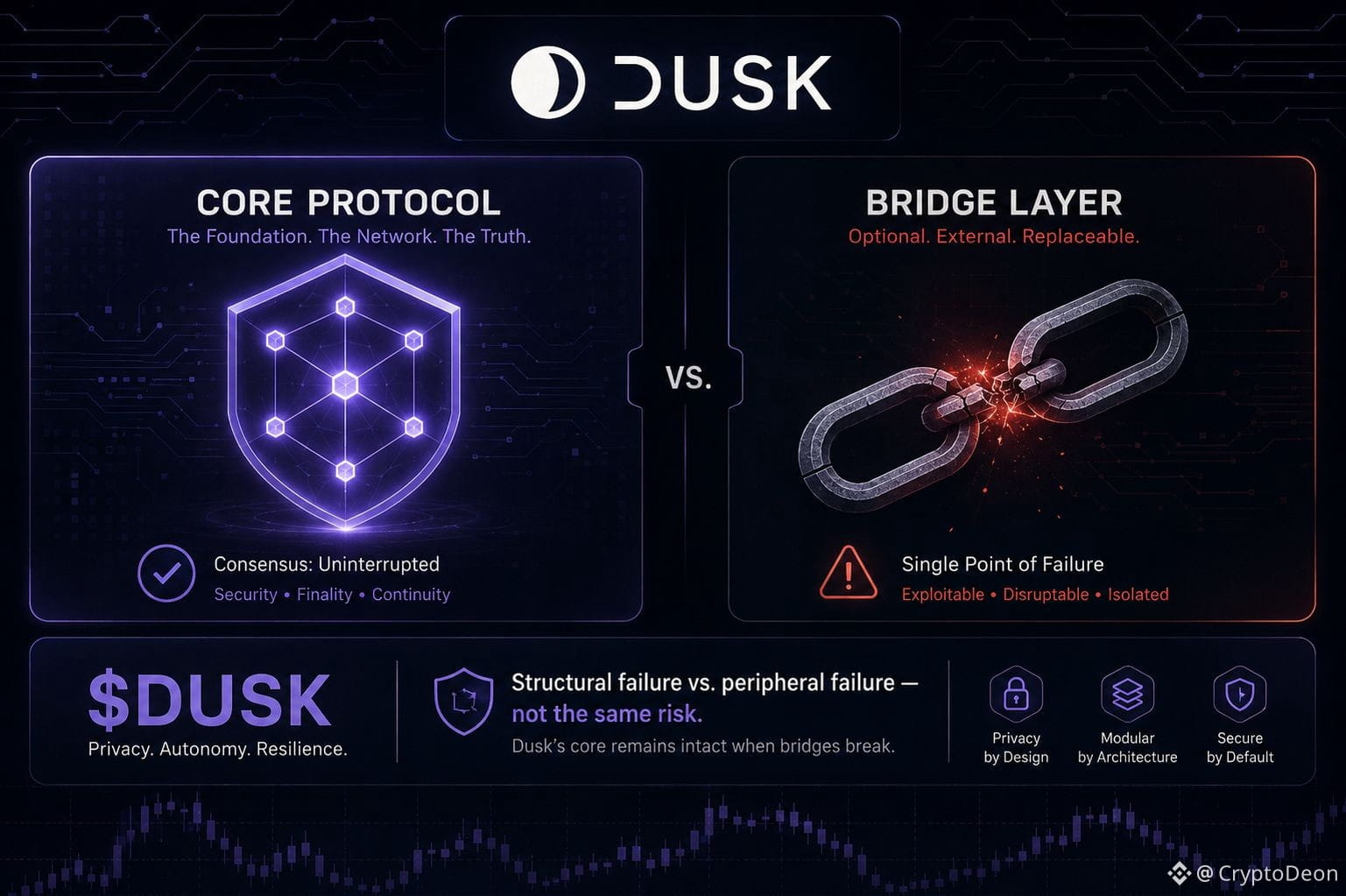
38
26
383
·
--
Doğrulanıb
Bugün DUSK qrafikinə baxıb qalmışam ki, niyə “tənzimlənən RWA infrastruktur” narrativi $0.0605 ilə ticarət edir və $30M bazar kapitalləşməsi var, halbuki ATH $1.17-dir. Sonra isə alt qatında nəyin həqiqətən qurulduğuna baxdım və qiymətlə yol xəritəsinin iki fərqli hekayə danışdığını anladım 🧐
Əksəriyyətin keçdiyi hissə budur: Dusk heç hər şeyi gizlədən bir privacy coin olmaq niyyətində deyil, nə də heç nəyi gizlətməyən açıq bir public chain. O, tənzimlənən maliyyə üçün settlement (hesablaşma) qatını qurur — yəni tokendəlaşdırılmış qiymətli kağızlar, private equity, institusional custody — burada məxfilik və auditlənəbilərlik qanunla birgə mövcud olmalıdır, seçimlə deyil. Buna görə tərəfdaşlıq stack-i belədir: NPEX (Niderlandda tənzimlənən bir birja) real qiymətli kağızların on-çeyn üzərində buraxılışı üçün, MiCA-ya uyğun euro stabilkoini (EURQ) üçün Quantoz və Solidity uyğunluğu gətirən DuskEVM — beləliklə, qurucular uyğunluqlu kontraktları deploy etmək üçün yeni bir stack öyrənməli olmurlar.
Problem vaxtlamadadır. Dövriyyədə olan təklif 1B maksimumun yarısından azdır, yəni uzunmüddətli dilüsyon hələ də qabaqdadır. Gündəlik həcm $30M-lik cap qarşısında təxminən $3.2M səviyyəsindədir — RWA adoption başlıqları hələ qiymətə çox təsir etməyəcək qədər “nazik”dir, çünki institusional settlement həcmi DEX aktivliyi kimi pərakəndə (retail) tərəfindən görünən deyil. İnfrastruktur tənzimlənən qurumlar tərəfindən həqiqətən daha çox “istifadə” oluna bilər, amma token yan tərəfdə sürüşməyə davam edir, çünki bu istifadə retail treyderlərin izlədiyi eyni qrafiklərdə özünü göstərmir.
Deməli, əsas sual Duskın həqiqətən bir şey qurub-qurmaması deyil. Sual budur: “tənzimlənən RWA relsləri” növbəti unlock dövrü flottatı yoxlayana qədər retailin görə biləcəyi bir tələbat siqnalı yarada biləcəkmi?
Haraya düşürsən — belə infrastruktura önəmli olmaq üçün görünən retail həcm lazımdır, yoxsa institusional adoption tam başqa bir sübut növüdür?
$DUSK #dusk @Dusk_Foundation
Bugün DUSK qrafikinə baxıb qalmışam ki, niyə “tənzimlənən RWA infrastruktur” narrativi $0.0605 ilə ticarət edir və $30M bazar kapitalləşməsi var, halbuki ATH $1.17-dir. Sonra isə alt qatında nəyin həqiqətən qurulduğuna baxdım və qiymətlə yol xəritəsinin iki fərqli hekayə danışdığını anladım 🧐
Əksəriyyətin keçdiyi hissə budur: Dusk heç hər şeyi gizlədən bir privacy coin olmaq niyyətində deyil, nə də heç nəyi gizlətməyən açıq bir public chain. O, tənzimlənən maliyyə üçün settlement (hesablaşma) qatını qurur — yəni tokendəlaşdırılmış qiymətli kağızlar, private equity, institusional custody — burada məxfilik və auditlənəbilərlik qanunla birgə mövcud olmalıdır, seçimlə deyil. Buna görə tərəfdaşlıq stack-i belədir: NPEX (Niderlandda tənzimlənən bir birja) real qiymətli kağızların on-çeyn üzərində buraxılışı üçün, MiCA-ya uyğun euro stabilkoini (EURQ) üçün Quantoz və Solidity uyğunluğu gətirən DuskEVM — beləliklə, qurucular uyğunluqlu kontraktları deploy etmək üçün yeni bir stack öyrənməli olmurlar.
Problem vaxtlamadadır. Dövriyyədə olan təklif 1B maksimumun yarısından azdır, yəni uzunmüddətli dilüsyon hələ də qabaqdadır. Gündəlik həcm $30M-lik cap qarşısında təxminən $3.2M səviyyəsindədir — RWA adoption başlıqları hələ qiymətə çox təsir etməyəcək qədər “nazik”dir, çünki institusional settlement həcmi DEX aktivliyi kimi pərakəndə (retail) tərəfindən görünən deyil. İnfrastruktur tənzimlənən qurumlar tərəfindən həqiqətən daha çox “istifadə” oluna bilər, amma token yan tərəfdə sürüşməyə davam edir, çünki bu istifadə retail treyderlərin izlədiyi eyni qrafiklərdə özünü göstərmir.
Deməli, əsas sual Duskın həqiqətən bir şey qurub-qurmaması deyil. Sual budur: “tənzimlənən RWA relsləri” növbəti unlock dövrü flottatı yoxlayana qədər retailin görə biləcəyi bir tələbat siqnalı yarada biləcəkmi?
Haraya düşürsən — belə infrastruktura önəmli olmaq üçün görünən retail həcm lazımdır, yoxsa institusional adoption tam başqa bir sübut növüdür?
$DUSK #dusk @Dusk
Əksəriyyətin keçdiyi hissə budur: Dusk heç hər şeyi gizlədən bir privacy coin olmaq niyyətində deyil, nə də heç nəyi gizlətməyən açıq bir public chain. O, tənzimlənən maliyyə üçün settlement (hesablaşma) qatını qurur — yəni tokendəlaşdırılmış qiymətli kağızlar, private equity, institusional custody — burada məxfilik və auditlənəbilərlik qanunla birgə mövcud olmalıdır, seçimlə deyil. Buna görə tərəfdaşlıq stack-i belədir: NPEX (Niderlandda tənzimlənən bir birja) real qiymətli kağızların on-çeyn üzərində buraxılışı üçün, MiCA-ya uyğun euro stabilkoini (EURQ) üçün Quantoz və Solidity uyğunluğu gətirən DuskEVM — beləliklə, qurucular uyğunluqlu kontraktları deploy etmək üçün yeni bir stack öyrənməli olmurlar.
Problem vaxtlamadadır. Dövriyyədə olan təklif 1B maksimumun yarısından azdır, yəni uzunmüddətli dilüsyon hələ də qabaqdadır. Gündəlik həcm $30M-lik cap qarşısında təxminən $3.2M səviyyəsindədir — RWA adoption başlıqları hələ qiymətə çox təsir etməyəcək qədər “nazik”dir, çünki institusional settlement həcmi DEX aktivliyi kimi pərakəndə (retail) tərəfindən görünən deyil. İnfrastruktur tənzimlənən qurumlar tərəfindən həqiqətən daha çox “istifadə” oluna bilər, amma token yan tərəfdə sürüşməyə davam edir, çünki bu istifadə retail treyderlərin izlədiyi eyni qrafiklərdə özünü göstərmir.
Deməli, əsas sual Duskın həqiqətən bir şey qurub-qurmaması deyil. Sual budur: “tənzimlənən RWA relsləri” növbəti unlock dövrü flottatı yoxlayana qədər retailin görə biləcəyi bir tələbat siqnalı yarada biləcəkmi?
Haraya düşürsən — belə infrastruktura önəmli olmaq üçün görünən retail həcm lazımdır, yoxsa institusional adoption tam başqa bir sübut növüdür?
$DUSK #dusk @Dusk
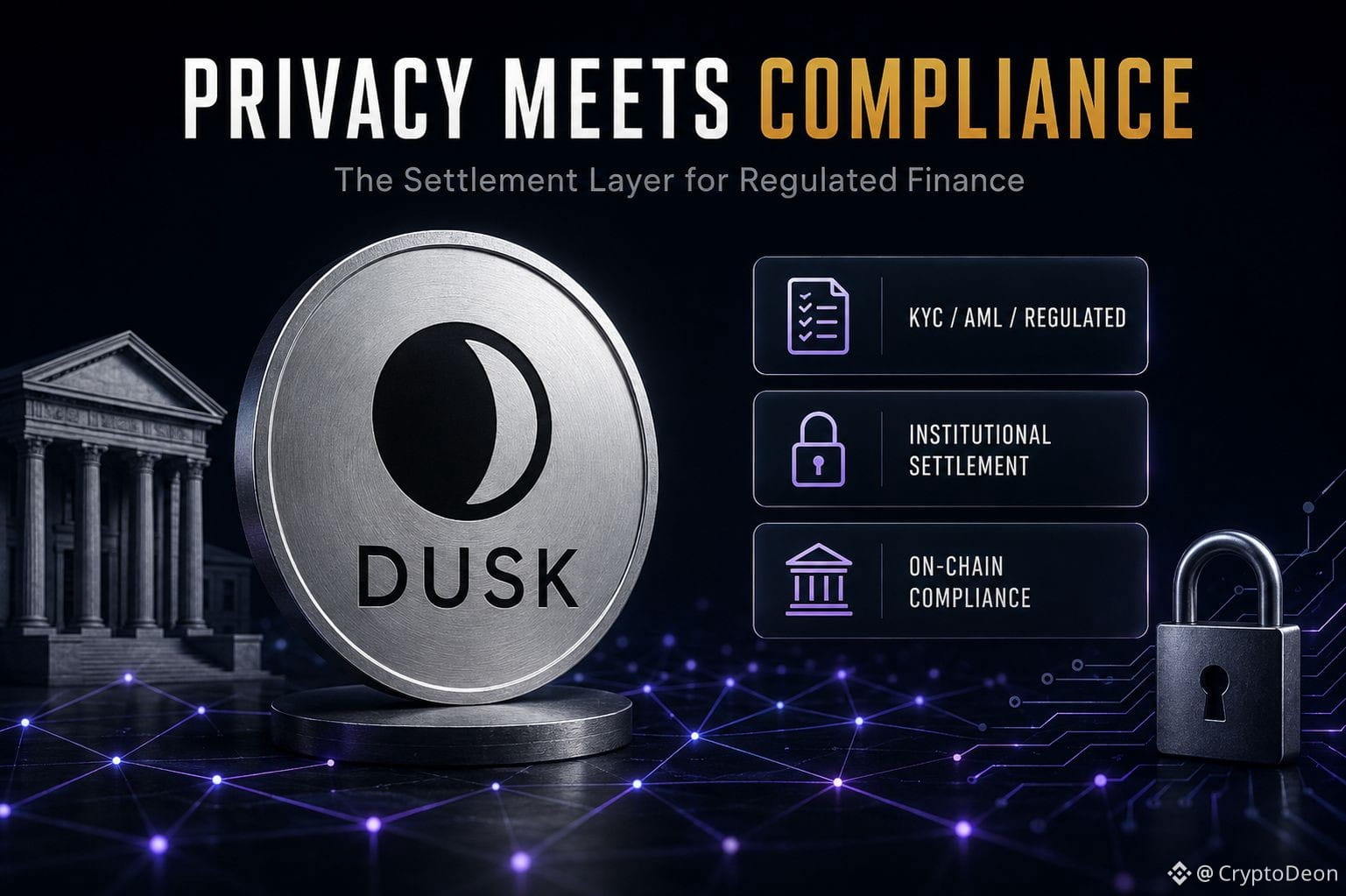
55
39
312
·
--
$DUSK nömrəli canlı oyuna baxdım— ekran görüntüləri sanki dolu-dolu idi, mint sayğacları artırdı, "activity" qrafikləri bütün tərəflərdə yaşıl idi. Token isə demək olar ki, tərpənmədi. Bunun nə üçün ziddiyyət olmadığını anlamaq mənə bir az vaxt apardı.
Oyunçuların əslində etdiklərinin çoxu zəncirlə heç toxunmur. Farming, craftinq, grinding — hamısı kənarda olur, DUSK-a görünməz. Token yalnız bir dar nöqtədə ortaya çıxır: kimsə off-chain nəticənin qalıcı və on-chain etmək üçün dəyərli olduğuna qərar verdiyi an. Bu, oyunun nə qədər canlı hiss edildiyinin ölçüsü deyil. Bu, həmin konkret anda nə qədər insanın çevirmə (conversion) üçün ödəməyə dəyər olduğuna qərar verməsinin ölçüsüdür.
Deməli, oyun vizual olaraq məşğul görünə bilər, amma səssizcə oyunçularını həmin addımdan qaçmağa öyrədir — çevirmələri (conversions) qruplaşdırmaq, onları komissiyalar (haqlar) ətrafında vaxtlamaq, dəyərli olmayanları keçmək. Aktivlik qalır. Çevirmə təzyiqi isə azalır. Üstəlik, $DUSK yalnız ikinci hissəni qiymətləndirdiyi üçün, ilk hissənin aldatdığını heç kim fərq etmədən token həftələrlə sürüşə bilər.
Aktiv oyunçu başına çevirmə (conversion) tezliyi azalmağa başlayır, amma aktivlik qrafikləri yaşıl qalırsa, o boşluğu diqqətə almaq lazımdır — “dashboard”a yox, həmin aralığa güvənmək lazımdır.
$DUSK #dusk #BinanceSquare @Dusk_Foundation
$DUSK nömrəli canlı oyuna baxdım— ekran görüntüləri sanki dolu-dolu idi, mint sayğacları artırdı, "activity" qrafikləri bütün tərəflərdə yaşıl idi. Token isə demək olar ki, tərpənmədi. Bunun nə üçün ziddiyyət olmadığını anlamaq mənə bir az vaxt apardı.
Oyunçuların əslində etdiklərinin çoxu zəncirlə heç toxunmur. Farming, craftinq, grinding — hamısı kənarda olur, DUSK-a görünməz. Token yalnız bir dar nöqtədə ortaya çıxır: kimsə off-chain nəticənin qalıcı və on-chain etmək üçün dəyərli olduğuna qərar verdiyi an. Bu, oyunun nə qədər canlı hiss edildiyinin ölçüsü deyil. Bu, həmin konkret anda nə qədər insanın çevirmə (conversion) üçün ödəməyə dəyər olduğuna qərar verməsinin ölçüsüdür.
Deməli, oyun vizual olaraq məşğul görünə bilər, amma səssizcə oyunçularını həmin addımdan qaçmağa öyrədir — çevirmələri (conversions) qruplaşdırmaq, onları komissiyalar (haqlar) ətrafında vaxtlamaq, dəyərli olmayanları keçmək. Aktivlik qalır. Çevirmə təzyiqi isə azalır. Üstəlik, $DUSK yalnız ikinci hissəni qiymətləndirdiyi üçün, ilk hissənin aldatdığını heç kim fərq etmədən token həftələrlə sürüşə bilər.
Aktiv oyunçu başına çevirmə (conversion) tezliyi azalmağa başlayır, amma aktivlik qrafikləri yaşıl qalırsa, o boşluğu diqqətə almaq lazımdır — “dashboard”a yox, həmin aralığa güvənmək lazımdır.
$DUSK #dusk #BinanceSquare @Dusk
Oyunçuların əslində etdiklərinin çoxu zəncirlə heç toxunmur. Farming, craftinq, grinding — hamısı kənarda olur, DUSK-a görünməz. Token yalnız bir dar nöqtədə ortaya çıxır: kimsə off-chain nəticənin qalıcı və on-chain etmək üçün dəyərli olduğuna qərar verdiyi an. Bu, oyunun nə qədər canlı hiss edildiyinin ölçüsü deyil. Bu, həmin konkret anda nə qədər insanın çevirmə (conversion) üçün ödəməyə dəyər olduğuna qərar verməsinin ölçüsüdür.
Deməli, oyun vizual olaraq məşğul görünə bilər, amma səssizcə oyunçularını həmin addımdan qaçmağa öyrədir — çevirmələri (conversions) qruplaşdırmaq, onları komissiyalar (haqlar) ətrafında vaxtlamaq, dəyərli olmayanları keçmək. Aktivlik qalır. Çevirmə təzyiqi isə azalır. Üstəlik, $DUSK yalnız ikinci hissəni qiymətləndirdiyi üçün, ilk hissənin aldatdığını heç kim fərq etmədən token həftələrlə sürüşə bilər.
Aktiv oyunçu başına çevirmə (conversion) tezliyi azalmağa başlayır, amma aktivlik qrafikləri yaşıl qalırsa, o boşluğu diqqətə almaq lazımdır — “dashboard”a yox, həmin aralığa güvənmək lazımdır.
$DUSK #dusk #BinanceSquare @Dusk
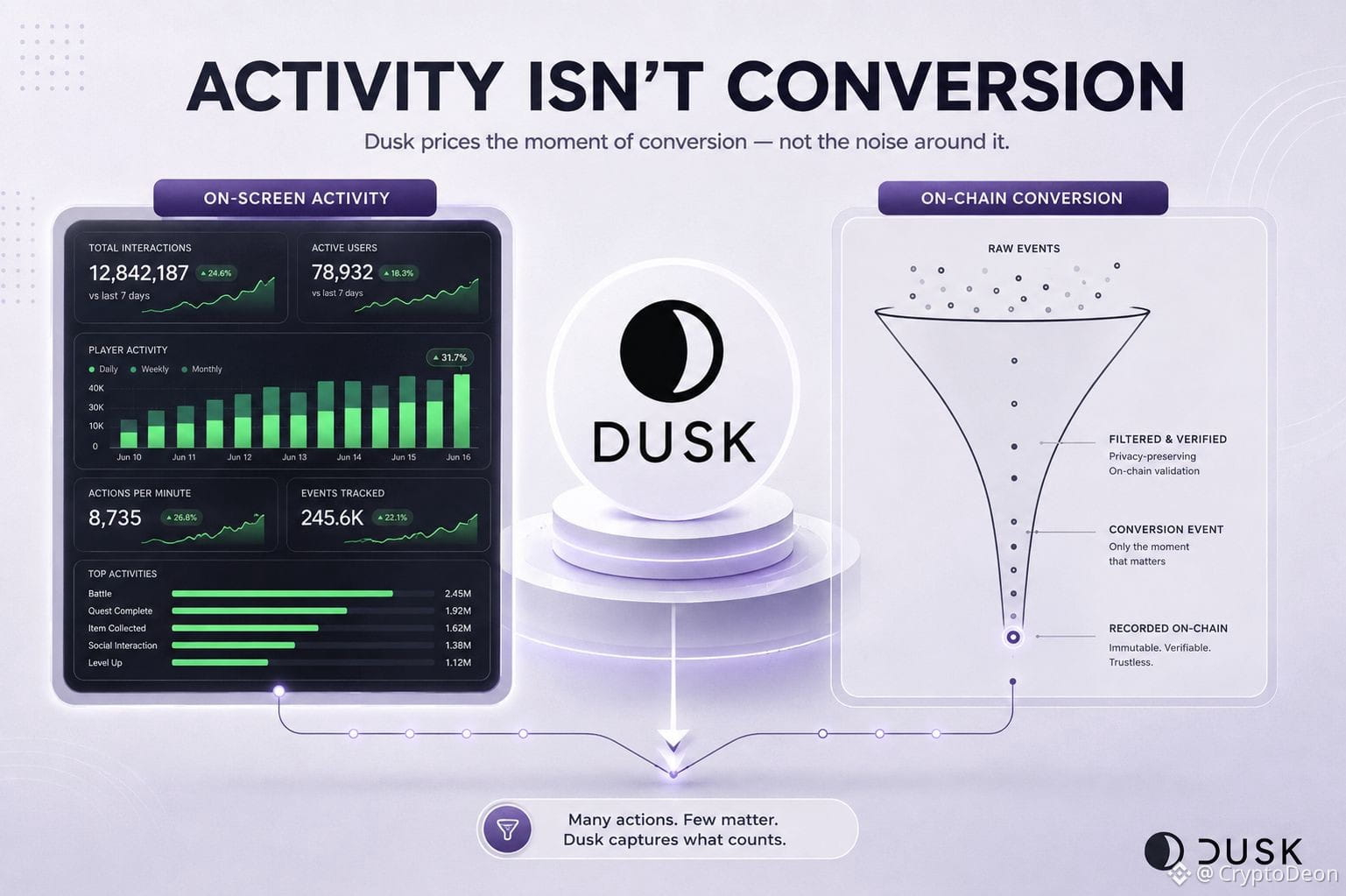
60
41
542
·
--
Babilin hazırkı idarəetmə müzakirələrini yanlış istiqamətdən düşünürdüm.
Aydındır ki, mübahisə BSN mükafatlarının BABY stakerlərinə paylanıb-paylanmaması, yoxsa on-çeyn (on-chain) hərrac yolu ilə çevrilib yandırılması (burn) məsələsidir.
Bu, önəmlidir.
Amma məncə daha maraqlı sual budur: protokol insanlar mükafat axınına alışdıqdan sonra hansı gözləntiləri formalaşdırır.
Mükafat sadəcə iqtisadi köçürmə deyil.
Vaxt keçdikcə istifadəçi davranışının bir hissəsinə çevrilir.
Əgər iştirakçılar hər yeni dəyər mənbəyinin birbaşa paylanma şəklində gələcəyini gözləyirlərsə, gələcək idarəetmə (governance) qərarları getdikcə daha çətin olur, çünki həmin gözləntini dəyişdirmək nəyisə “geri almağa” bənzəməyə başlayır.
Digər tərəfdən, dəyəri yandırma (burn) mexanizmi vasitəsilə yönləndirmək iştirakçıları dərhal mükafatlandırmır. Bunun əvəzinə, tokenin uzunmüddətli təklif (supply) dinamikalarını dəyişir. Bu şəbəkəyə fərqli formada fayda verə bilər, amma həm də istifadəçilərdən növbəti paylanmadan kənara düşünməyi tələb edir.
Heç bir yanaşma açıq şəkildə doğru deyil.
Biri görünən stimullara üstünlük verir.
Digəri struktur (quruluş) stimullarını prioritetləşdirir.
Ona görə də düşünmürəm ki, bu təklif həqiqətən BSN mükafatları ilə bağlıdır.
Bu, Babylondakı idarəetmənin iştirakçı gözləntiləri üçün optimallaşdırmağı istəyib-istəməməsi... yoxsa uzunmüddətli iqtisadi davranış üçün optimallaşdırmağı barədə qərar verməkdir.
Bu ikisi həmişə eyni şey deyil.
#baby $BABY @babylonlabs_io
Babilin hazırkı idarəetmə müzakirələrini yanlış istiqamətdən düşünürdüm.
Aydındır ki, mübahisə BSN mükafatlarının BABY stakerlərinə paylanıb-paylanmaması, yoxsa on-çeyn (on-chain) hərrac yolu ilə çevrilib yandırılması (burn) məsələsidir.
Bu, önəmlidir.
Amma məncə daha maraqlı sual budur: protokol insanlar mükafat axınına alışdıqdan sonra hansı gözləntiləri formalaşdırır.
Mükafat sadəcə iqtisadi köçürmə deyil.
Vaxt keçdikcə istifadəçi davranışının bir hissəsinə çevrilir.
Əgər iştirakçılar hər yeni dəyər mənbəyinin birbaşa paylanma şəklində gələcəyini gözləyirlərsə, gələcək idarəetmə (governance) qərarları getdikcə daha çətin olur, çünki həmin gözləntini dəyişdirmək nəyisə “geri almağa” bənzəməyə başlayır.
Digər tərəfdən, dəyəri yandırma (burn) mexanizmi vasitəsilə yönləndirmək iştirakçıları dərhal mükafatlandırmır. Bunun əvəzinə, tokenin uzunmüddətli təklif (supply) dinamikalarını dəyişir. Bu şəbəkəyə fərqli formada fayda verə bilər, amma həm də istifadəçilərdən növbəti paylanmadan kənara düşünməyi tələb edir.
Heç bir yanaşma açıq şəkildə doğru deyil.
Biri görünən stimullara üstünlük verir.
Digəri struktur (quruluş) stimullarını prioritetləşdirir.
Ona görə də düşünmürəm ki, bu təklif həqiqətən BSN mükafatları ilə bağlıdır.
Bu, Babylondakı idarəetmənin iştirakçı gözləntiləri üçün optimallaşdırmağı istəyib-istəməməsi... yoxsa uzunmüddətli iqtisadi davranış üçün optimallaşdırmağı barədə qərar verməkdir.
Bu ikisi həmişə eyni şey deyil.
#baby $BABY @BabylonLabs_io
Aydındır ki, mübahisə BSN mükafatlarının BABY stakerlərinə paylanıb-paylanmaması, yoxsa on-çeyn (on-chain) hərrac yolu ilə çevrilib yandırılması (burn) məsələsidir.
Bu, önəmlidir.
Amma məncə daha maraqlı sual budur: protokol insanlar mükafat axınına alışdıqdan sonra hansı gözləntiləri formalaşdırır.
Mükafat sadəcə iqtisadi köçürmə deyil.
Vaxt keçdikcə istifadəçi davranışının bir hissəsinə çevrilir.
Əgər iştirakçılar hər yeni dəyər mənbəyinin birbaşa paylanma şəklində gələcəyini gözləyirlərsə, gələcək idarəetmə (governance) qərarları getdikcə daha çətin olur, çünki həmin gözləntini dəyişdirmək nəyisə “geri almağa” bənzəməyə başlayır.
Digər tərəfdən, dəyəri yandırma (burn) mexanizmi vasitəsilə yönləndirmək iştirakçıları dərhal mükafatlandırmır. Bunun əvəzinə, tokenin uzunmüddətli təklif (supply) dinamikalarını dəyişir. Bu şəbəkəyə fərqli formada fayda verə bilər, amma həm də istifadəçilərdən növbəti paylanmadan kənara düşünməyi tələb edir.
Heç bir yanaşma açıq şəkildə doğru deyil.
Biri görünən stimullara üstünlük verir.
Digəri struktur (quruluş) stimullarını prioritetləşdirir.
Ona görə də düşünmürəm ki, bu təklif həqiqətən BSN mükafatları ilə bağlıdır.
Bu, Babylondakı idarəetmənin iştirakçı gözləntiləri üçün optimallaşdırmağı istəyib-istəməməsi... yoxsa uzunmüddətli iqtisadi davranış üçün optimallaşdırmağı barədə qərar verməkdir.
Bu ikisi həmişə eyni şey deyil.
#baby $BABY @BabylonLabs_io
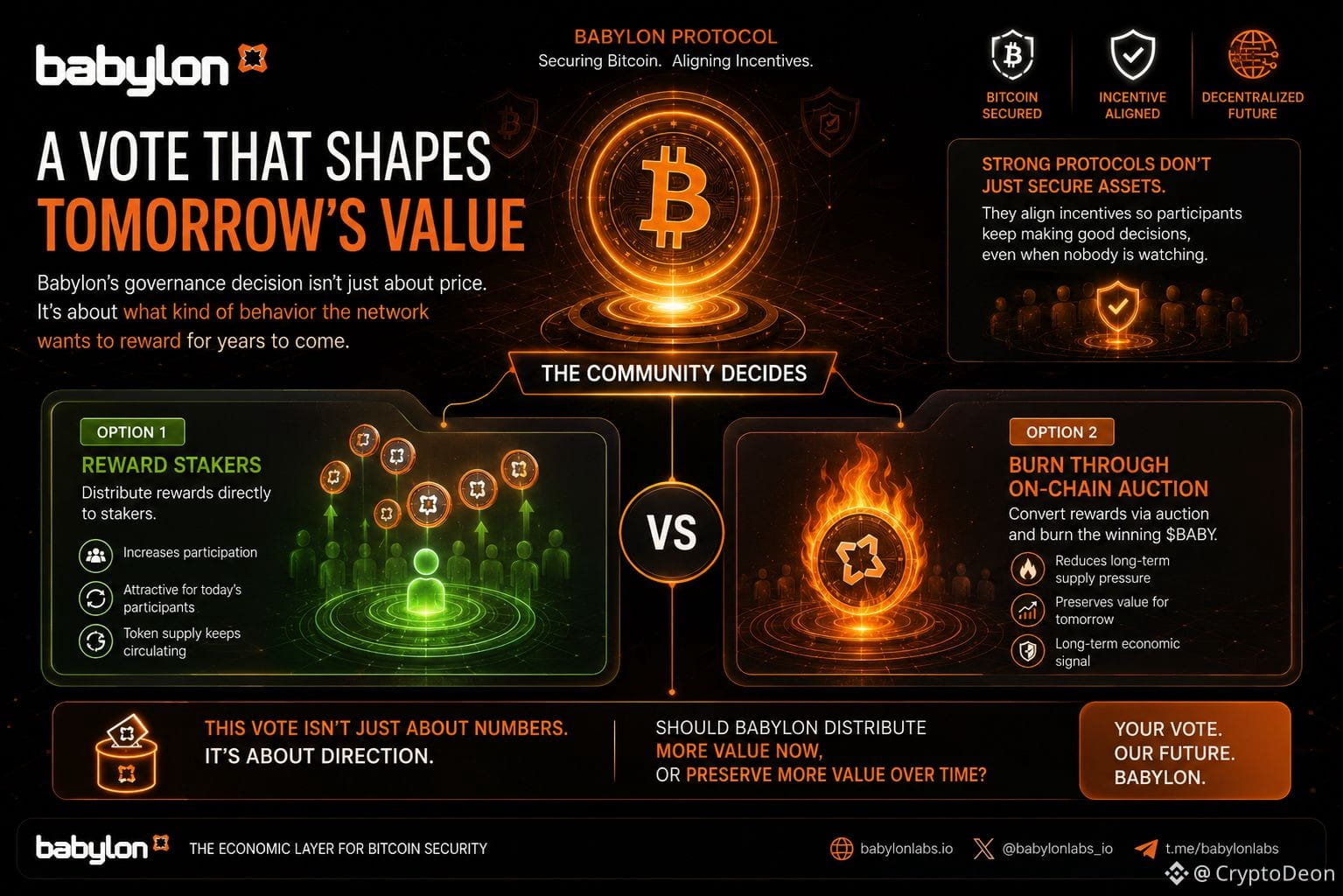
51
36
590
Daha çox kontent araşdırmaq üçün daxil olun
Binance Square-də qlobal kriptovalyuta istifadəçilərinə qoşulun
⚡️ Kriptovalyuta haqqında ən son və faydalı məlumatları əldə edin.
💬 Dünyanın ən böyük kriptovalyuta birjası tərəfindən etibar edilir.
👍 Doğrulanmış yaradıcılardan gələn real məlumatları kəşf edin.
E-poçt/Telefon nömrəsi
Trenddə olan mövzular
BinanceLaunchesBinanceIntelligence
334,753 baxış
Müzakirə edir: 2,777
#BinanceLaunchesBinanceIntelligence
Süni intellekt inqilabı rəqəmsal ticarət dünyasına çatır
Binance platforması istifadəçilərin gündəlik ticarət təcrübəsinə süni intellekt alətlərini inteqrasiya etmək istiqamətində mühüm addım ataraq, yeni ağıllı ekosistemi Binance Intelligence-ın istifadəyə verildiyini rəsmən elan edib. Bu təşəbbüs maliyyə bazarlarındakı bilik boşluğunu aradan qaldırmağı və yeni başlayanlardan peşəkarlara qədər bütün treyderlərə proqramlaşdırma təcrübəsinə ehtiyac duymadan məlumatları təhlil etmək və təbii dildə ticarət strategiyaları hazırlamaq imkanı verməyi hədəfləyir.
Binance Intelligence ekosisteminin üç əsas istiqaməti
Yeni ekosistem istifadəçilərin və tərtibatçıların bütün ehtiyaclarını qarşılamaq üçün hazırlanmış üç əsas məhsuldan ibarətdir:
Binance AI (hamı üçün pulsuz):
Bazarla bağlı müxtəlif mənbələrdən gələn siqnalları (qrafiklər, xəbərlər, On-Chain məlumatları və iqtisadi göstəricilər) vahid interfeysdə birləşdirir.
Kriptovalyutaları və qlobal bazarları əhatə edən, hər 4 saatdan bir səsli və yazılı şəkildə yenilənən avtomatik bazar icmalı (Market Brief) təqdim edir.
Binance AI Pro (strategiyalar yaratmaq üçün):
İstifadəçiyə ticarət ideyasını sadə dildə yazmağa imkan verir; süni intellekt isə onu vizual iş axınına (Visual Flowchart) çevirir.
Strategiyaları real pulla icra etməzdən əvvəl sınaqdan keçirmək üçün virtual ticarət (Paper Trading) funksiyası təqdim edir.
#BinanceLaunchesBinanceIntelligence
#BinanceSquareFamily #AI
Redouanecrypto
·8 bəyənmə
·7.9k baxış
BitcoinTargets2026OpenAt$87570
1,258 baxış
Müzakirə edir: 56
BitcoinRejectedAt$87KThirdTime
1,476 baxış
Müzakirə edir: 48