

naim_xd7
6 Paylaşımlar

naim_xd7
Şikayət et
İstifadəçini blokla
Açıq ticarət
9.9 ay
2 İzlənilir
0 İzləyicilər
0 Bəyəndi
Postlar
Portfel
·
--
Məqalə
Tərcüməyə bax
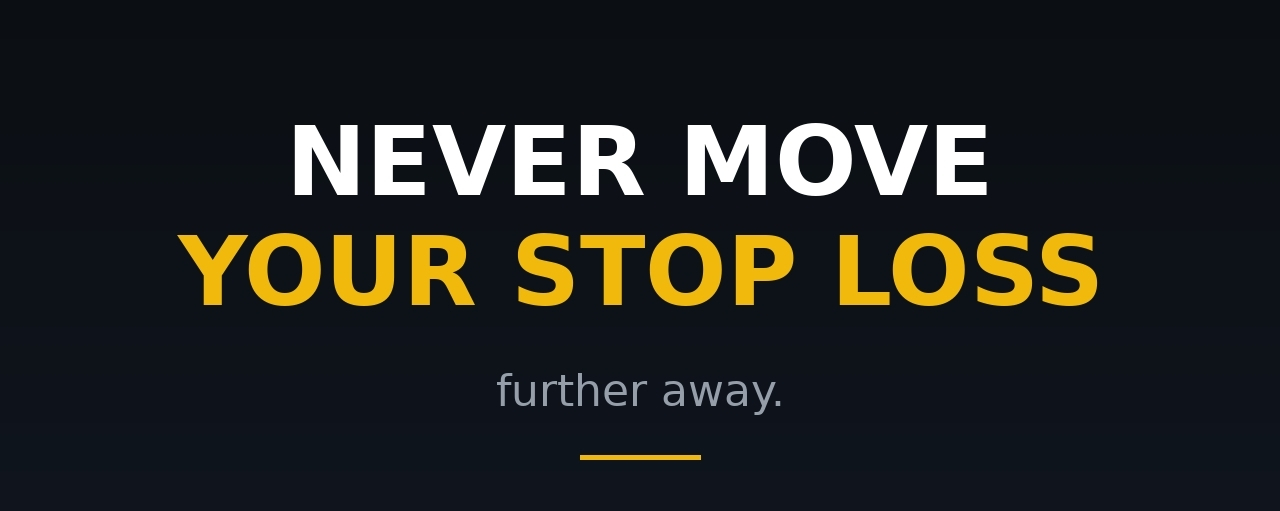
Never move your stop loss further away.It feels like hope. In reality, it is one of the most common ways a small loss becomes a big one.
The stop was set before you entered, when you were calm and had the full picture. Moving it later means your emotions are making the decision.
Before you move it, ask: has the setup actually changed, or do I just not want to be wrong?
If it is the second, you already know the move is a mistake.
A stop you respect is what keeps one bad trade from becoming a bad month.
Educational only. Not financial advice. Trade with a plan.
#BinanceSquare #RiskManagement #CryptoTrading
Never move your stop loss further away.
It feels like hope. In reality, it is one of the most common ways a small loss becomes a big one.
The stop was set before you entered, when you were calm and had the full picture. Moving it later means your emotions are making the decision.
Before you move it, ask: has the setup actually changed, or do I just not want to be wrong?
If it is the second, you already know the move is a mistake.
A stop you respect is what keeps one bad trade from becoming a bad month.
Educational only. Not financial advice. Trade with a plan.
#BinanceSquare #RiskManagement #CryptoTrading
53
·
--
Məqalə
Tərcüməyə bax
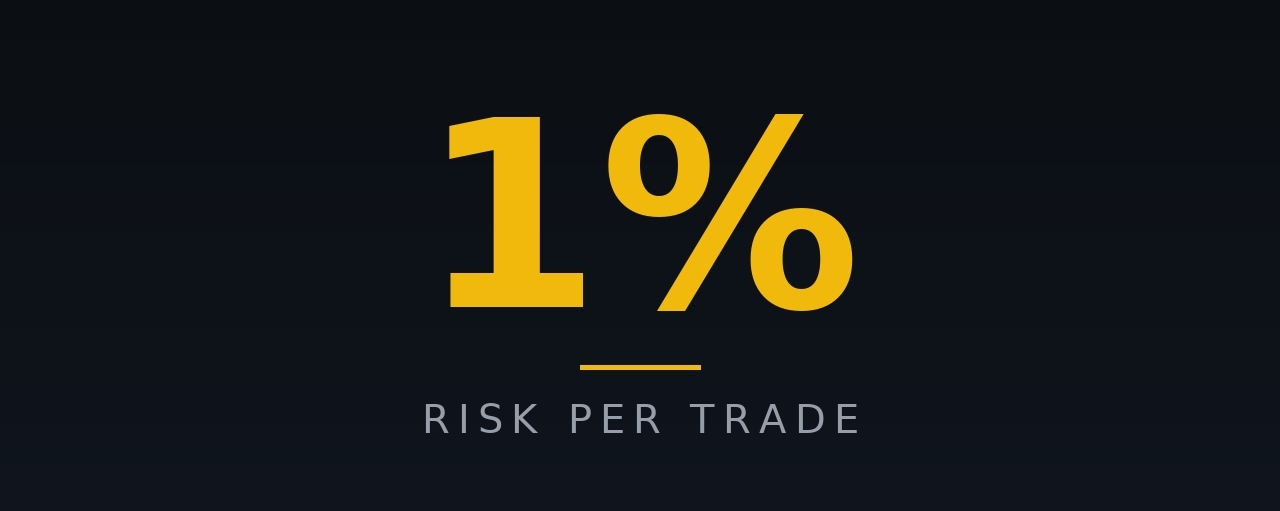
The 1% Rule: The Rule That Keeps You TradingMost traders spend hours looking for the perfect entry. Few spend ten minutes deciding how much they can lose. That second decision is the one that keeps you in the game.
Most Accounts Die Before the Strategy Matters
Good strategies still fail when each trade risks too much of the account. A few bad trades in a row can wipe out months of work.
The Math Nobody Likes
Losses are harder to recover from than they look:- Lose 20% of your account, and you need 25% to break even.- Lose 50%, and you need 100%.Losing streaks happen to everyone:- Risk 1% per trade. Ten losses in a row cost about 9.6% of the account.- Risk 10% per trade. Ten losses in a row cost about 65%.
What the 1% Rule Means
Before you enter, decide the most you can lose on that trade. For many traders, that is 1% of the account. On a $1,000 account, that is $10. If the trade hits its stop, you lose $10 and move on.
How to Size a Trade
Position size = amount you can lose ÷ distance to your stop loss (as a decimal, so 2% = 0.02).Example:- Account: $1,000- Risk: $10- Stop loss: 2% below your entry- Position size = $10 ÷ 0.02 = $500- If price hits your stop, the loss is 2% of $500, which is $10.
Keep a Simple Journal
For every trade, write down the reason, entry, stop, target, position size, result, and how you felt. Review it once a week. Patterns show up fast: the same mistake, the same time of day, the same emotion.
Quick Checklist :
- Did I decide my maximum loss before entering?- Did the position size come from the formula, not a feeling?- Is my stop where my idea is wrong?- Is the trade written in my journal?
Your edge only works if you are still trading. Protect the account first. Then give your strategy time to work.
Our Telegram channel is built around this: every setup comes with a clear entry, stop loss, and target. Join to follow along.
Disclaimer
This article is for education only. It is not financial advice. Trading involves risk. Only use money you can afford to lose.
#BinanceSquare #RiskManagement #CryptoTrading #TradingPsychology #PositionSizing
The 1% Rule: The Rule That Keeps You Trading
Most traders spend hours looking for the perfect entry. Few spend ten minutes deciding how much they can lose. That second decision is the one that keeps you in the game.
Most Accounts Die Before the Strategy Matters
Good strategies still fail when each trade risks too much of the account. A few bad trades in a row can wipe out months of work.
The Math Nobody Likes
Losses are harder to recover from than they look:- Lose 20% of your account, and you need 25% to break even.- Lose 50%, and you need 100%.Losing streaks happen to everyone:- Risk 1% per trade. Ten losses in a row cost about 9.6% of the account.- Risk 10% per trade. Ten losses in a row cost about 65%.
What the 1% Rule Means
Before you enter, decide the most you can lose on that trade. For many traders, that is 1% of the account. On a $1,000 account, that is $10. If the trade hits its stop, you lose $10 and move on.
How to Size a Trade
Position size = amount you can lose ÷ distance to your stop loss (as a decimal, so 2% = 0.02).Example:- Account: $1,000- Risk: $10- Stop loss: 2% below your entry- Position size = $10 ÷ 0.02 = $500- If price hits your stop, the loss is 2% of $500, which is $10.
Keep a Simple Journal
For every trade, write down the reason, entry, stop, target, position size, result, and how you felt. Review it once a week. Patterns show up fast: the same mistake, the same time of day, the same emotion.
Quick Checklist :
- Did I decide my maximum loss before entering?- Did the position size come from the formula, not a feeling?- Is my stop where my idea is wrong?- Is the trade written in my journal?
Your edge only works if you are still trading. Protect the account first. Then give your strategy time to work.
Our Telegram channel is built around this: every setup comes with a clear entry, stop loss, and target. Join to follow along.
Disclaimer
This article is for education only. It is not financial advice. Trading involves risk. Only use money you can afford to lose.
#BinanceSquare #RiskManagement #CryptoTrading #TradingPsychology #PositionSizing
105
·
--
🧠 Əksər treyderlər pis girişlərə görə uduzmurlar. Pis kontekstə görə uduzurlar.
Qiymət hərəkəti. Likvidlik. Sifariş blokları. Ədalətli dəyər boşluqları.
Hər treyder qrafiki görür, amma heç də hamı onun arxasındakı hekayəni görmür. 📊
Əsas sual budur: Növbəti hərəkətdən əvvəl likvidliyin haradan götürüləcəyini müəyyən edə bilərsinizmi?
🎯 Ağıllı pul konsepsiyaları hər şamı proqnozlaşdırmaqla bağlı deyil. Təsdiqi gözləmək, riski idarə etmək və nə vaxt TİCARƏT ETMƏMƏK lazım olduğunu bilməkdir.
👇 Gəlin, treyder düşüncə tərzinizi yoxlayaq:
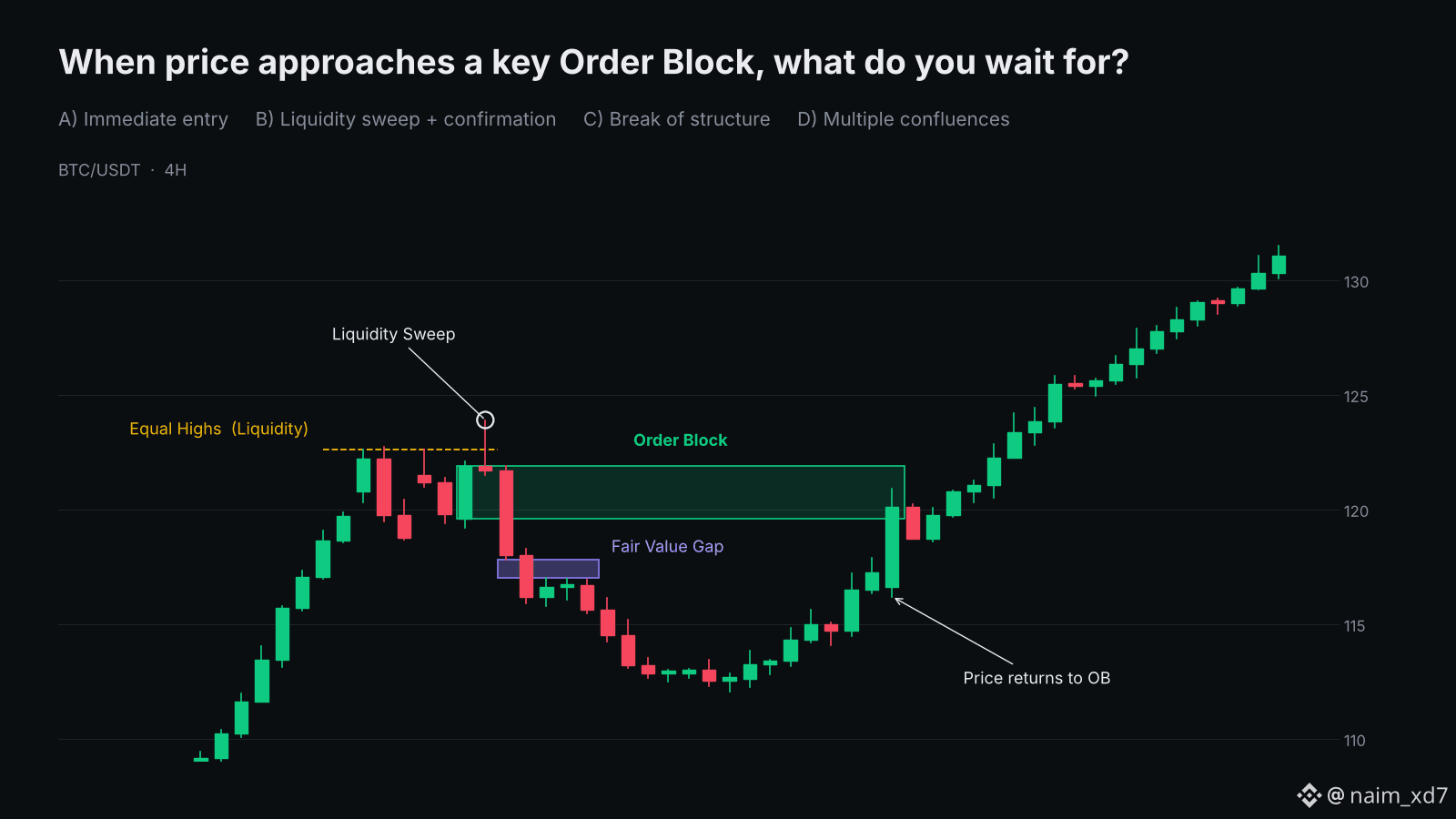
Qiymət əsas Sifariş Blokuna yaxınlaşanda nəyi gözləyirsiniz?
A) Dərhal mövqeyə daxil olmaq
B) Likvidliyin süpürülməsi + təsdiq
C) Strukturun qırılması
D) Mövqeyə girməzdən əvvəl bir neçə uyğun siqnal
💬 A, B, C və ya D şərh edin və səbəbini deyin.
Görək treyderlər əslində necə düşünürlər. 👀
#CryptoTrading #PriceAction #SmartMoneyConcepts #Liquidity #BTC
62
·
--
Məqalə
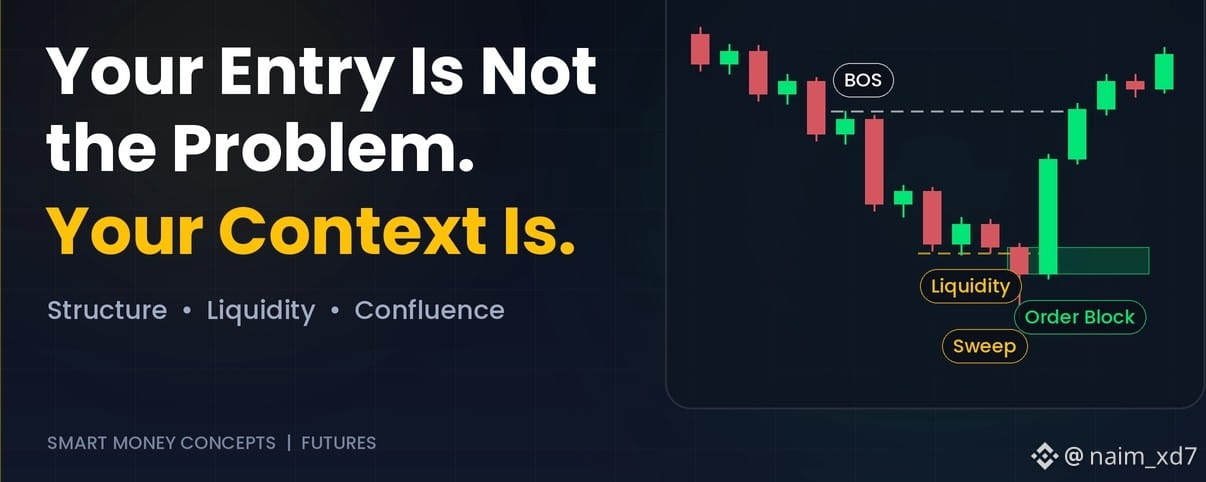
Problem giriş nöqtəniz deyil. Problem kontekstdir.Təcrübəli treyderlərin əksəriyyəti Sifariş Blokunu müəyyən edə və ya Ədalətli Dəyər Boşluğunu görə bilər.
Bəs niyə yaxşı görünən ticarət fürsətləri yenə də uğursuz olur?
Çünki ticarət fürsəti zona deyil. Əsas məsələ kontekstdir.
1. Zonadan deyil, strukturdan başlayın
Aydın Strukturun Qırılması daxilindəki Sifariş Bloku ticarət fürsətidir.
Daha yüksək zaman çərçivəsinin trendinə qarşı olan eyni Sifariş Bloku isə tələdir.
Hər hansı girişdən əvvəl iki suala cavab verin:
- Daha yüksək zaman çərçivəsində istiqamət hansıdır?
Qiymət impulsla strukturu qırdı, yoxsa səviyyəni sadəcə şamın kölgəsi ilə keçdi?
Hər iki suala cavab verə bilmirsinizsə, hələ ticarət etmək olmaz.
Problem giriş nöqtəniz deyil. Problem kontekstdir.
Təcrübəli treyderlərin əksəriyyəti Sifariş Blokunu müəyyən edə və ya Ədalətli Dəyər Boşluğunu görə bilər.
Bəs niyə yaxşı görünən ticarət fürsətləri yenə də uğursuz olur?
Çünki ticarət fürsəti zona deyil. Əsas məsələ kontekstdir.
1. Zonadan deyil, strukturdan başlayın
Aydın Strukturun Qırılması daxilindəki Sifariş Bloku ticarət fürsətidir.
Daha yüksək zaman çərçivəsinin trendinə qarşı olan eyni Sifariş Bloku isə tələdir.
Hər hansı girişdən əvvəl iki suala cavab verin:
- Daha yüksək zaman çərçivəsində istiqamət hansıdır?
Qiymət impulsla strukturu qırdı, yoxsa səviyyəni sadəcə şamın kölgəsi ilə keçdi?
Hər iki suala cavab verə bilmirsinizsə, hələ ticarət etmək olmaz.
90
·
--
Əksər treyderlər bir sadə səbəbə görə pul itirir. 👀
Onlar plansız əməliyyata başlayırlar.
Plansız ticarət gecə işıqsız maşın sürməyə bənzəyir. 🚗
marketx_nova-da hər siqnalda bunlar var:
✅ Giriş: əməliyyata haradan başlamaq
✅ Stop Loss: təhlükəsizlik kəməriniz 🛡️
✅ Hədəf: mənfəəti harada götürmək 🎯
Cəmi 48 saat ərzində 450-dən çox treyder qoşuldu.
İlk canlı siqnallar tezliklə gələcək. ⏳
Erkən qoşulan üzvlər ilk gündən etibarən hər siqnalı görəcəklər.
⚠️ Bu, maliyyə məsləhəti deyil. Ticarət risklidir.
#Binance #CryptoTrading #Futures #TradingSignals #MarketXnova
48
Daha çox kontent araşdırmaq üçün daxil olun
Binance Square-də qlobal kriptovalyuta istifadəçilərinə qoşulun
⚡️ Kriptovalyuta haqqında ən son və faydalı məlumatları əldə edin.
💬 Dünyanın ən böyük kriptovalyuta birjası tərəfindən etibar edilir.
👍 Doğrulanmış yaradıcılardan gələn real məlumatları kəşf edin.
E-poçt/Telefon nömrəsi