

Kyber Network
511 Paylaşımlar

Kyber Network
 Square Verified+
Şikayət et
İstifadəçini blokla
Swap crypto at the best rates with KyberSwap, the Multichain Aggregator available on 16 chains.
Website: https://kyberswap.com/
0 İzlənilir
655 İzləyicilər
142 Bəyəndi
Postlar
Hamısı
Sitatlar
Videolar
BƏRKİDİLDİ
SON DƏQİQƏ: Agregatorun yönləndirməsi üçün əhəmiyyətli bir irəliləyiş EVM-də başlayır.
Smart Settlement ilə tanış olun, bu, istifadəçiləri slippage, PropAMM manipulyasiyası, MEV, JIT-dən qorumaq üçün daha dayanıqlı swaps üçün icra təkmilləşdirməsidir, eyni zamanda daha Yüksək Swap Çıxışı təmin edir.
Siz ən yaxşı təklifi aldınız, indi isə ən yaxşı icra əldə edirsiniz.
SON DƏQİQƏ: Agregatorun yönləndirməsi üçün əhəmiyyətli bir irəliləyiş EVM-də başlayır.
Smart Settlement ilə tanış olun, bu, istifadəçiləri slippage, PropAMM manipulyasiyası, MEV, JIT-dən qorumaq üçün daha dayanıqlı swaps üçün icra təkmilləşdirməsidir, eyni zamanda daha Yüksək Swap Çıxışı təmin edir.
Siz ən yaxşı təklifi aldınız, indi isə ən yaxşı icra əldə edirsiniz.
Smart Settlement ilə tanış olun, bu, istifadəçiləri slippage, PropAMM manipulyasiyası, MEV, JIT-dən qorumaq üçün daha dayanıqlı swaps üçün icra təkmilləşdirməsidir, eyni zamanda daha Yüksək Swap Çıxışı təmin edir.
Siz ən yaxşı təklifi aldınız, indi isə ən yaxşı icra əldə edirsiniz.
1
164
Məqalə
Tərcüməyə bax
Where Do New Tokens Launch on Robinhood Chain and How Can You Trade Them Early?Robinhood Chain went live on mainnet on July 1, 2026, and new tokens started appearing almost immediately. Most of them launch on third-party launchpads, trade on a bonding curve for a while, then move into a DEX pool once they graduate. Knowing where a token sits in that journey decides where you can buy it and what price you get.
The short answer is simple. New tokens on Robinhood Chain launch on platforms like Pons and Flap, and most DEX liquidity on the chain sits in Uniswap pools. KyberSwap lets you trade at both stages, routing into Pons and Flap bonding curves before graduation and across 650+ liquidity sources after it, so you get the best available rate without checking each venue yourself.
Where Do New Tokens Launch on Robinhood Chain?
Robinhood Chain has no official launchpad of its own. The network is a permissionless Ethereum Layer 2 built on Arbitrum technology, so anyone can deploy a token, and launch activity runs entirely through third-party platforms. Treat any token or site claiming to be the “official” Robinhood Chain launchpad with caution.
Two launchpads carry much of that activity. Pons is built for Robinhood Chain and lets anyone create a fixed-supply token and trade it straight from their wallet. Flap is a multi-chain launchpad that supports Robinhood Chain with a bonding curve model.
The pace has been fast. According to Dune data, 42,709 new tokens launched on Robinhood Chain in a single 24-hour period ending July 17, 2026, with Pons accounting for 11,547 and Flap for 9,935. Launch counts change daily, so treat these figures as a snapshot rather than a steady rate.
How Does a New Token Go From Launch to Open Market?
Every new token follows one of two paths. Some start on a bonding curve and graduate to a DEX pool later, while others skip the curve and launch straight into a pool. The path tells you where liquidity sits at each moment.
On a bonding curve, the launchpad’s own contract sets the price with a formula. Each buy pushes the price up, and each sell pulls it down. Once the curve reaches its graduation target, the launchpad moves liquidity into a regular DEX pool and the curve closes for good. On Pons, graduated tokens move into a Uniswap v4 pool.
Direct-to-pool launches work differently. The token goes live with a Uniswap pool from day one, so it trades like any other token from its first block. There is no curve phase and no graduation event to wait for.
Why Does Most New-Token Liquidity End Up on Uniswap?
Uniswap has been part of Robinhood Chain since day one. Robinhood named it a launch partner, with a dedicated AMM serving as the chain’s primary public liquidity protocol. Graduating tokens and direct launches both tend to land in Uniswap pools as a result.
The numbers reflect that position. At the time of writing, Uniswap v3 and v4 account for roughly 90% of DEX liquidity on Robinhood Chain. For traders, the real question is rarely which DEX to use, but which pool offers the right price at the right moment.
That is where a single venue falls short. A direct Uniswap swap quotes only the pools it trades against, and it cannot reach a token that is still on a launchpad curve. If you want to be early, you need a way to trade before graduation and still get a fair price after it.
How Can You Trade New Robinhood Chain Tokens Early With KyberSwap?
KyberSwap covers a new token across its whole journey. The KyberSwap Aggregator is live on Robinhood Chain (chain ID 4663) and connects to 650+ liquidity sources across 20 chains, including Uniswap pools and launchpad bonding curves.
Trade before graduation. KyberSwap routes trades into Pons and Flap bonding curves directly. You can buy a token while it is still on the curve, from the same swap screen you use for any other trade. After graduation, KyberSwap routes through the token’s DEX liquidity, so you don’t need to switch apps or hunt for pool addresses.
Get the best available rate after launch. Once a token trades in DEX pools, the Aggregator compares available liquidity and splits your trade across the most capital-efficient route. KyberSwap charges no platform fee on swaps.
Find tokens worth a closer look. Token Discovery surfaces trending tokens and onchain signals such as holder counts and flows. It gives you a quick read on a new token before you commit funds.
Set your entry price. Limit Order lets you choose the exact price you want to buy or sell at, with gasless order placement and zero maker fee. That suits volatile new tokens, where chasing the price with instant swaps can get expensive.
Fund your wallet from any chain. Cross-chain Swap moves and exchanges assets across 23 networks, so you can bring funds onto Robinhood Chain and start trading in one flow.
Launchpad vs Uniswap vs KyberSwap: Where Should You Trade a New Token?
Each venue covers a different part of a token’s life. The launchpad is the source during the curve phase, Uniswap holds most liquidity after graduation, and KyberSwap reaches both from one place.
How Do You Trade Brand-New Tokens More Safely?
New tokens carry real risk, and a few habits go a long way. Early prices move fast, liquidity is often thin, and lookalike tokens are common on permissionless chains.
Verify the contract address from the project’s official channels before you buy.Check liquidity depth, since a shallow curve or pool can move sharply on a modest order.Set slippage deliberately rather than accepting a wide default.Read the launchpad’s fee terms, as some bonding curves charge trading fees and creator taxes on each buy and sell.Know where the token trades now, because a graduated curve closes and all trading moves to the DEX pool.
KyberSwap gives you access to tokens that already trade onchain, but it does not vet the projects behind them. That research is yours to do, and it matters most in a token’s first hours.
Frequently Asked Questions
Does Robinhood Chain have an official launchpad?
No. All launchpads on Robinhood Chain are third-party platforms, including Pons and Flap. Be cautious with any token or site that claims to be the chain’s official launchpad.
What does it mean when a token graduates?
A token graduates when its bonding curve reaches the launchpad’s target. The launchpad then moves liquidity into a DEX pool, such as a Uniswap v4 pool for Pons tokens, and the curve stops trading.
Can you buy a Robinhood Chain token before it graduates?
Yes. You can buy on the launchpad itself or through KyberSwap, which routes into Pons and Flap bonding curves directly. After graduation, KyberSwap routes through the token’s DEX liquidity instead.
Is KyberSwap live on Robinhood Chain?
Yes. KyberSwap supports Robinhood Chain (chain ID 4663), with the Aggregator, Limit Order, KyberZap and Cross-chain Swap all live on the network.
How do you get funds onto Robinhood Chain to trade new tokens?
Use KyberSwap Cross-chain Swap to move and exchange assets across 23 networks in one flow. Robinhood Chain uses ETH for gas, so keep some ETH in your wallet before you start trading.
Start Trading New Robinhood Chain Tokens With KyberSwap
New tokens on Robinhood Chain move from launchpad curves to DEX pools, and you can trade them at either stage. KyberSwap follows the whole journey, routing into Pons and Flap curves before graduation and across 650+ liquidity sources after it. Open KyberSwap, select Robinhood Chain and trade new tokens at the best available rate.
Where Do New Tokens Launch on Robinhood Chain and How Can You Trade Them Early?
Robinhood Chain went live on mainnet on July 1, 2026, and new tokens started appearing almost immediately. Most of them launch on third-party launchpads, trade on a bonding curve for a while, then move into a DEX pool once they graduate. Knowing where a token sits in that journey decides where you can buy it and what price you get.
The short answer is simple. New tokens on Robinhood Chain launch on platforms like Pons and Flap, and most DEX liquidity on the chain sits in Uniswap pools. KyberSwap lets you trade at both stages, routing into Pons and Flap bonding curves before graduation and across 650+ liquidity sources after it, so you get the best available rate without checking each venue yourself.
Where Do New Tokens Launch on Robinhood Chain?
Robinhood Chain has no official launchpad of its own. The network is a permissionless Ethereum Layer 2 built on Arbitrum technology, so anyone can deploy a token, and launch activity runs entirely through third-party platforms. Treat any token or site claiming to be the “official” Robinhood Chain launchpad with caution.
Two launchpads carry much of that activity. Pons is built for Robinhood Chain and lets anyone create a fixed-supply token and trade it straight from their wallet. Flap is a multi-chain launchpad that supports Robinhood Chain with a bonding curve model.
The pace has been fast. According to Dune data, 42,709 new tokens launched on Robinhood Chain in a single 24-hour period ending July 17, 2026, with Pons accounting for 11,547 and Flap for 9,935. Launch counts change daily, so treat these figures as a snapshot rather than a steady rate.
How Does a New Token Go From Launch to Open Market?
Every new token follows one of two paths. Some start on a bonding curve and graduate to a DEX pool later, while others skip the curve and launch straight into a pool. The path tells you where liquidity sits at each moment.
On a bonding curve, the launchpad’s own contract sets the price with a formula. Each buy pushes the price up, and each sell pulls it down. Once the curve reaches its graduation target, the launchpad moves liquidity into a regular DEX pool and the curve closes for good. On Pons, graduated tokens move into a Uniswap v4 pool.
Direct-to-pool launches work differently. The token goes live with a Uniswap pool from day one, so it trades like any other token from its first block. There is no curve phase and no graduation event to wait for.
Why Does Most New-Token Liquidity End Up on Uniswap?
Uniswap has been part of Robinhood Chain since day one. Robinhood named it a launch partner, with a dedicated AMM serving as the chain’s primary public liquidity protocol. Graduating tokens and direct launches both tend to land in Uniswap pools as a result.
The numbers reflect that position. At the time of writing, Uniswap v3 and v4 account for roughly 90% of DEX liquidity on Robinhood Chain. For traders, the real question is rarely which DEX to use, but which pool offers the right price at the right moment.
That is where a single venue falls short. A direct Uniswap swap quotes only the pools it trades against, and it cannot reach a token that is still on a launchpad curve. If you want to be early, you need a way to trade before graduation and still get a fair price after it.
How Can You Trade New Robinhood Chain Tokens Early With KyberSwap?
KyberSwap covers a new token across its whole journey. The KyberSwap Aggregator is live on Robinhood Chain (chain ID 4663) and connects to 650+ liquidity sources across 20 chains, including Uniswap pools and launchpad bonding curves.
Trade before graduation. KyberSwap routes trades into Pons and Flap bonding curves directly. You can buy a token while it is still on the curve, from the same swap screen you use for any other trade. After graduation, KyberSwap routes through the token’s DEX liquidity, so you don’t need to switch apps or hunt for pool addresses.
Get the best available rate after launch. Once a token trades in DEX pools, the Aggregator compares available liquidity and splits your trade across the most capital-efficient route. KyberSwap charges no platform fee on swaps.
Find tokens worth a closer look. Token Discovery surfaces trending tokens and onchain signals such as holder counts and flows. It gives you a quick read on a new token before you commit funds.
Set your entry price. Limit Order lets you choose the exact price you want to buy or sell at, with gasless order placement and zero maker fee. That suits volatile new tokens, where chasing the price with instant swaps can get expensive.
Fund your wallet from any chain. Cross-chain Swap moves and exchanges assets across 23 networks, so you can bring funds onto Robinhood Chain and start trading in one flow.
Launchpad vs Uniswap vs KyberSwap: Where Should You Trade a New Token?
Each venue covers a different part of a token’s life. The launchpad is the source during the curve phase, Uniswap holds most liquidity after graduation, and KyberSwap reaches both from one place.
How Do You Trade Brand-New Tokens More Safely?
New tokens carry real risk, and a few habits go a long way. Early prices move fast, liquidity is often thin, and lookalike tokens are common on permissionless chains.
Verify the contract address from the project’s official channels before you buy.Check liquidity depth, since a shallow curve or pool can move sharply on a modest order.Set slippage deliberately rather than accepting a wide default.Read the launchpad’s fee terms, as some bonding curves charge trading fees and creator taxes on each buy and sell.Know where the token trades now, because a graduated curve closes and all trading moves to the DEX pool.
KyberSwap gives you access to tokens that already trade onchain, but it does not vet the projects behind them. That research is yours to do, and it matters most in a token’s first hours.
Frequently Asked Questions
Does Robinhood Chain have an official launchpad?
No. All launchpads on Robinhood Chain are third-party platforms, including Pons and Flap. Be cautious with any token or site that claims to be the chain’s official launchpad.
What does it mean when a token graduates?
A token graduates when its bonding curve reaches the launchpad’s target. The launchpad then moves liquidity into a DEX pool, such as a Uniswap v4 pool for Pons tokens, and the curve stops trading.
Can you buy a Robinhood Chain token before it graduates?
Yes. You can buy on the launchpad itself or through KyberSwap, which routes into Pons and Flap bonding curves directly. After graduation, KyberSwap routes through the token’s DEX liquidity instead.
Is KyberSwap live on Robinhood Chain?
Yes. KyberSwap supports Robinhood Chain (chain ID 4663), with the Aggregator, Limit Order, KyberZap and Cross-chain Swap all live on the network.
How do you get funds onto Robinhood Chain to trade new tokens?
Use KyberSwap Cross-chain Swap to move and exchange assets across 23 networks in one flow. Robinhood Chain uses ETH for gas, so keep some ETH in your wallet before you start trading.
Start Trading New Robinhood Chain Tokens With KyberSwap
New tokens on Robinhood Chain move from launchpad curves to DEX pools, and you can trade them at either stage. KyberSwap follows the whole journey, routing into Pons and Flap curves before graduation and across 650+ liquidity sources after it. Open KyberSwap, select Robinhood Chain and trade new tokens at the best available rate.
The short answer is simple. New tokens on Robinhood Chain launch on platforms like Pons and Flap, and most DEX liquidity on the chain sits in Uniswap pools. KyberSwap lets you trade at both stages, routing into Pons and Flap bonding curves before graduation and across 650+ liquidity sources after it, so you get the best available rate without checking each venue yourself.
Where Do New Tokens Launch on Robinhood Chain?
Robinhood Chain has no official launchpad of its own. The network is a permissionless Ethereum Layer 2 built on Arbitrum technology, so anyone can deploy a token, and launch activity runs entirely through third-party platforms. Treat any token or site claiming to be the “official” Robinhood Chain launchpad with caution.
Two launchpads carry much of that activity. Pons is built for Robinhood Chain and lets anyone create a fixed-supply token and trade it straight from their wallet. Flap is a multi-chain launchpad that supports Robinhood Chain with a bonding curve model.
The pace has been fast. According to Dune data, 42,709 new tokens launched on Robinhood Chain in a single 24-hour period ending July 17, 2026, with Pons accounting for 11,547 and Flap for 9,935. Launch counts change daily, so treat these figures as a snapshot rather than a steady rate.
How Does a New Token Go From Launch to Open Market?
Every new token follows one of two paths. Some start on a bonding curve and graduate to a DEX pool later, while others skip the curve and launch straight into a pool. The path tells you where liquidity sits at each moment.
On a bonding curve, the launchpad’s own contract sets the price with a formula. Each buy pushes the price up, and each sell pulls it down. Once the curve reaches its graduation target, the launchpad moves liquidity into a regular DEX pool and the curve closes for good. On Pons, graduated tokens move into a Uniswap v4 pool.
Direct-to-pool launches work differently. The token goes live with a Uniswap pool from day one, so it trades like any other token from its first block. There is no curve phase and no graduation event to wait for.
Why Does Most New-Token Liquidity End Up on Uniswap?
Uniswap has been part of Robinhood Chain since day one. Robinhood named it a launch partner, with a dedicated AMM serving as the chain’s primary public liquidity protocol. Graduating tokens and direct launches both tend to land in Uniswap pools as a result.
The numbers reflect that position. At the time of writing, Uniswap v3 and v4 account for roughly 90% of DEX liquidity on Robinhood Chain. For traders, the real question is rarely which DEX to use, but which pool offers the right price at the right moment.
That is where a single venue falls short. A direct Uniswap swap quotes only the pools it trades against, and it cannot reach a token that is still on a launchpad curve. If you want to be early, you need a way to trade before graduation and still get a fair price after it.
How Can You Trade New Robinhood Chain Tokens Early With KyberSwap?
KyberSwap covers a new token across its whole journey. The KyberSwap Aggregator is live on Robinhood Chain (chain ID 4663) and connects to 650+ liquidity sources across 20 chains, including Uniswap pools and launchpad bonding curves.
Trade before graduation. KyberSwap routes trades into Pons and Flap bonding curves directly. You can buy a token while it is still on the curve, from the same swap screen you use for any other trade. After graduation, KyberSwap routes through the token’s DEX liquidity, so you don’t need to switch apps or hunt for pool addresses.
Get the best available rate after launch. Once a token trades in DEX pools, the Aggregator compares available liquidity and splits your trade across the most capital-efficient route. KyberSwap charges no platform fee on swaps.
Find tokens worth a closer look. Token Discovery surfaces trending tokens and onchain signals such as holder counts and flows. It gives you a quick read on a new token before you commit funds.
Set your entry price. Limit Order lets you choose the exact price you want to buy or sell at, with gasless order placement and zero maker fee. That suits volatile new tokens, where chasing the price with instant swaps can get expensive.
Fund your wallet from any chain. Cross-chain Swap moves and exchanges assets across 23 networks, so you can bring funds onto Robinhood Chain and start trading in one flow.
Launchpad vs Uniswap vs KyberSwap: Where Should You Trade a New Token?
Each venue covers a different part of a token’s life. The launchpad is the source during the curve phase, Uniswap holds most liquidity after graduation, and KyberSwap reaches both from one place.
How Do You Trade Brand-New Tokens More Safely?
New tokens carry real risk, and a few habits go a long way. Early prices move fast, liquidity is often thin, and lookalike tokens are common on permissionless chains.
Verify the contract address from the project’s official channels before you buy.Check liquidity depth, since a shallow curve or pool can move sharply on a modest order.Set slippage deliberately rather than accepting a wide default.Read the launchpad’s fee terms, as some bonding curves charge trading fees and creator taxes on each buy and sell.Know where the token trades now, because a graduated curve closes and all trading moves to the DEX pool.
KyberSwap gives you access to tokens that already trade onchain, but it does not vet the projects behind them. That research is yours to do, and it matters most in a token’s first hours.
Frequently Asked Questions
Does Robinhood Chain have an official launchpad?
No. All launchpads on Robinhood Chain are third-party platforms, including Pons and Flap. Be cautious with any token or site that claims to be the chain’s official launchpad.
What does it mean when a token graduates?
A token graduates when its bonding curve reaches the launchpad’s target. The launchpad then moves liquidity into a DEX pool, such as a Uniswap v4 pool for Pons tokens, and the curve stops trading.
Can you buy a Robinhood Chain token before it graduates?
Yes. You can buy on the launchpad itself or through KyberSwap, which routes into Pons and Flap bonding curves directly. After graduation, KyberSwap routes through the token’s DEX liquidity instead.
Is KyberSwap live on Robinhood Chain?
Yes. KyberSwap supports Robinhood Chain (chain ID 4663), with the Aggregator, Limit Order, KyberZap and Cross-chain Swap all live on the network.
How do you get funds onto Robinhood Chain to trade new tokens?
Use KyberSwap Cross-chain Swap to move and exchange assets across 23 networks in one flow. Robinhood Chain uses ETH for gas, so keep some ETH in your wallet before you start trading.
Start Trading New Robinhood Chain Tokens With KyberSwap
New tokens on Robinhood Chain move from launchpad curves to DEX pools, and you can trade them at either stage. KyberSwap follows the whole journey, routing into Pons and Flap curves before graduation and across 650+ liquidity sources after it. Open KyberSwap, select Robinhood Chain and trade new tokens at the best available rate.
101
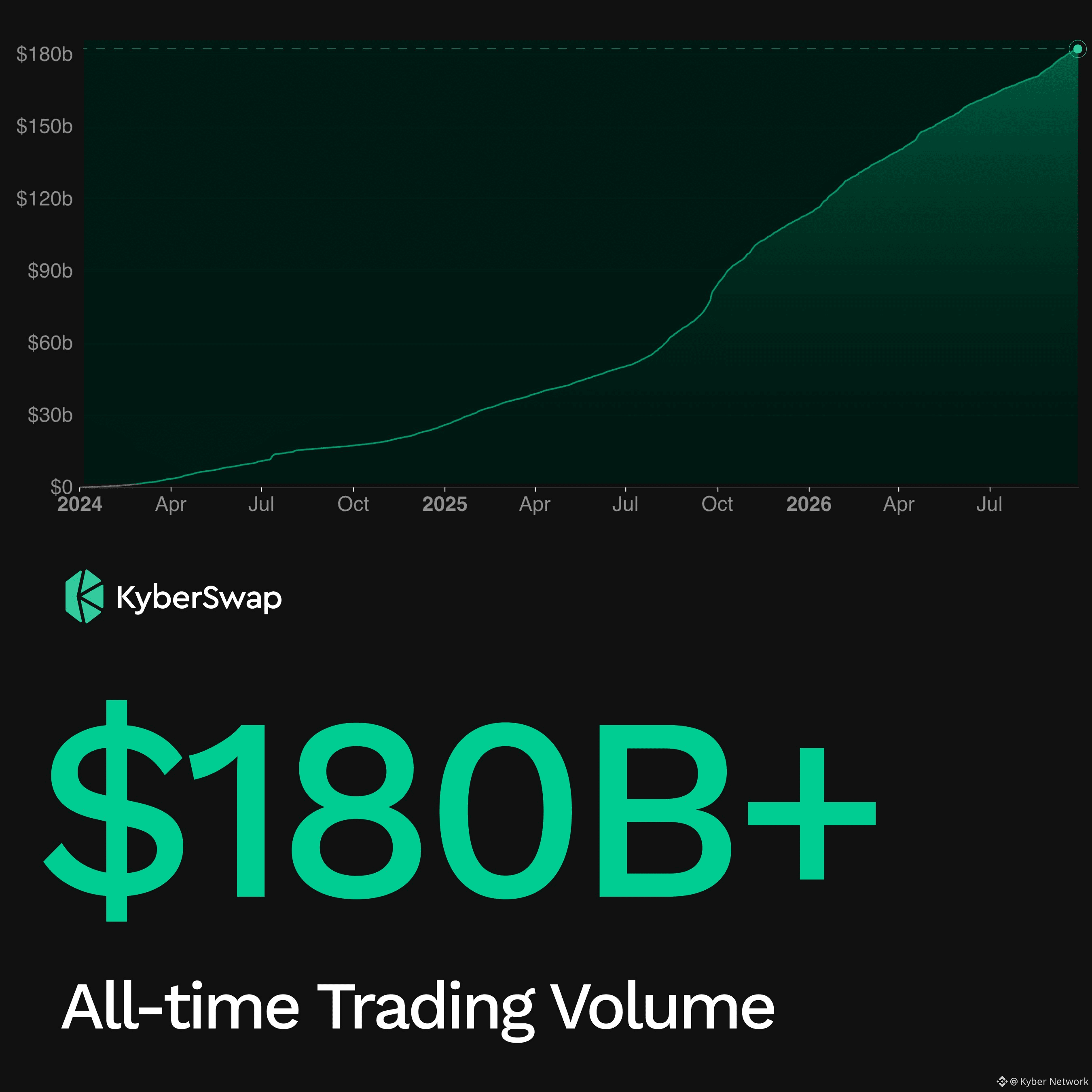
növbəti dayanacaq: iki yüz milyard dollar.
növbəti dayanacaq: iki yüz milyard dollar.
192
Tərcüməyə bax
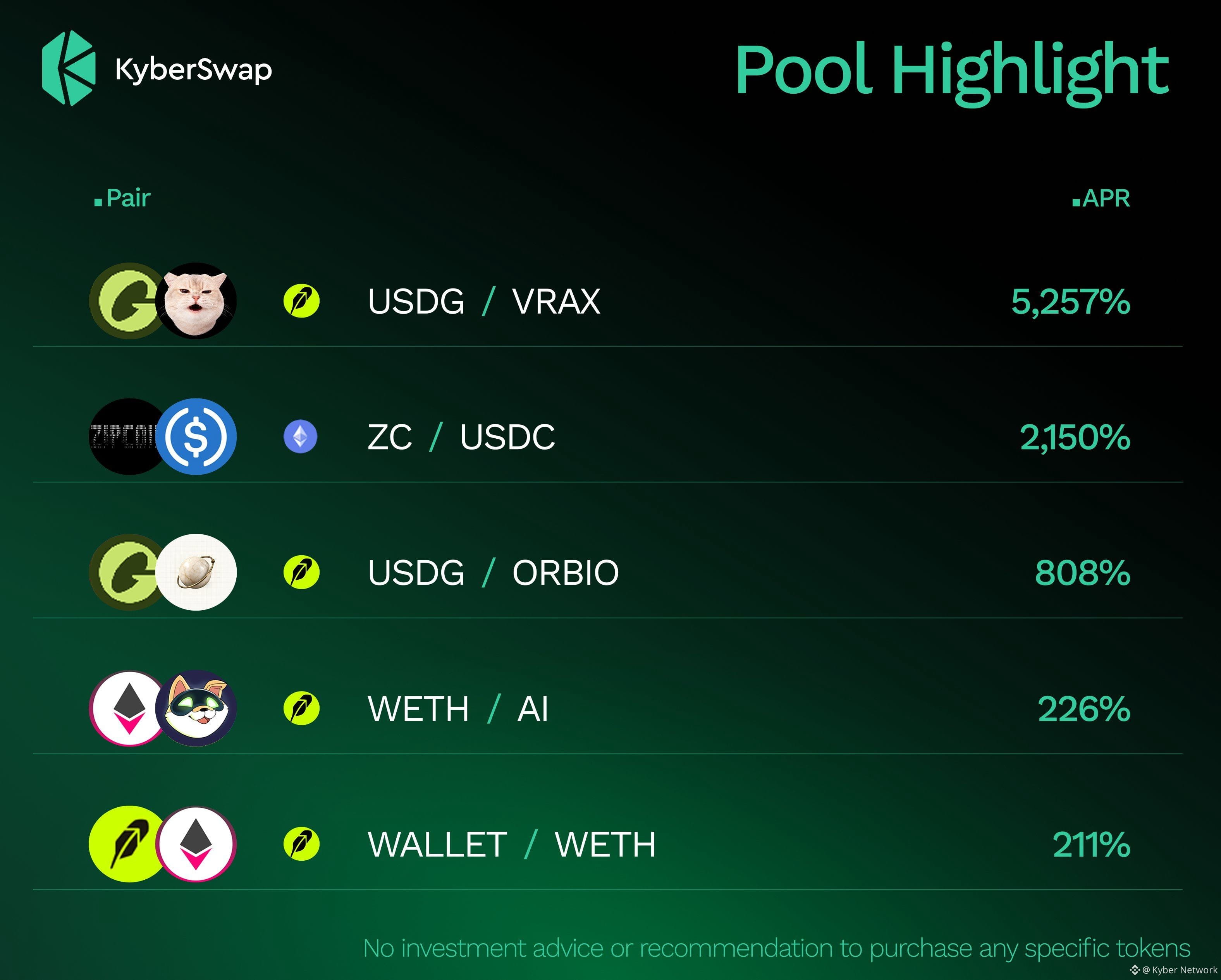
Fresh pool picks on KyberEarn today, based on 24h fees. Which one’s got your attention? 👀
• USDG/VRAX
• ZC/USDC
• USDG/ORBIO
• WETH/AI
• WALLET/WETH
👉 Explore more: https://kyberswap.com/earn/pools
Fresh pool picks on KyberEarn today, based on 24h fees. Which one’s got your attention? 👀
• USDG/VRAX
• ZC/USDC
• USDG/ORBIO
• WETH/AI
• WALLET/WETH
👉 Explore more: https://kyberswap.com/earn/pools
• USDG/VRAX
• ZC/USDC
• USDG/ORBIO
• WETH/AI
• WALLET/WETH
👉 Explore more: https://kyberswap.com/earn/pools
123
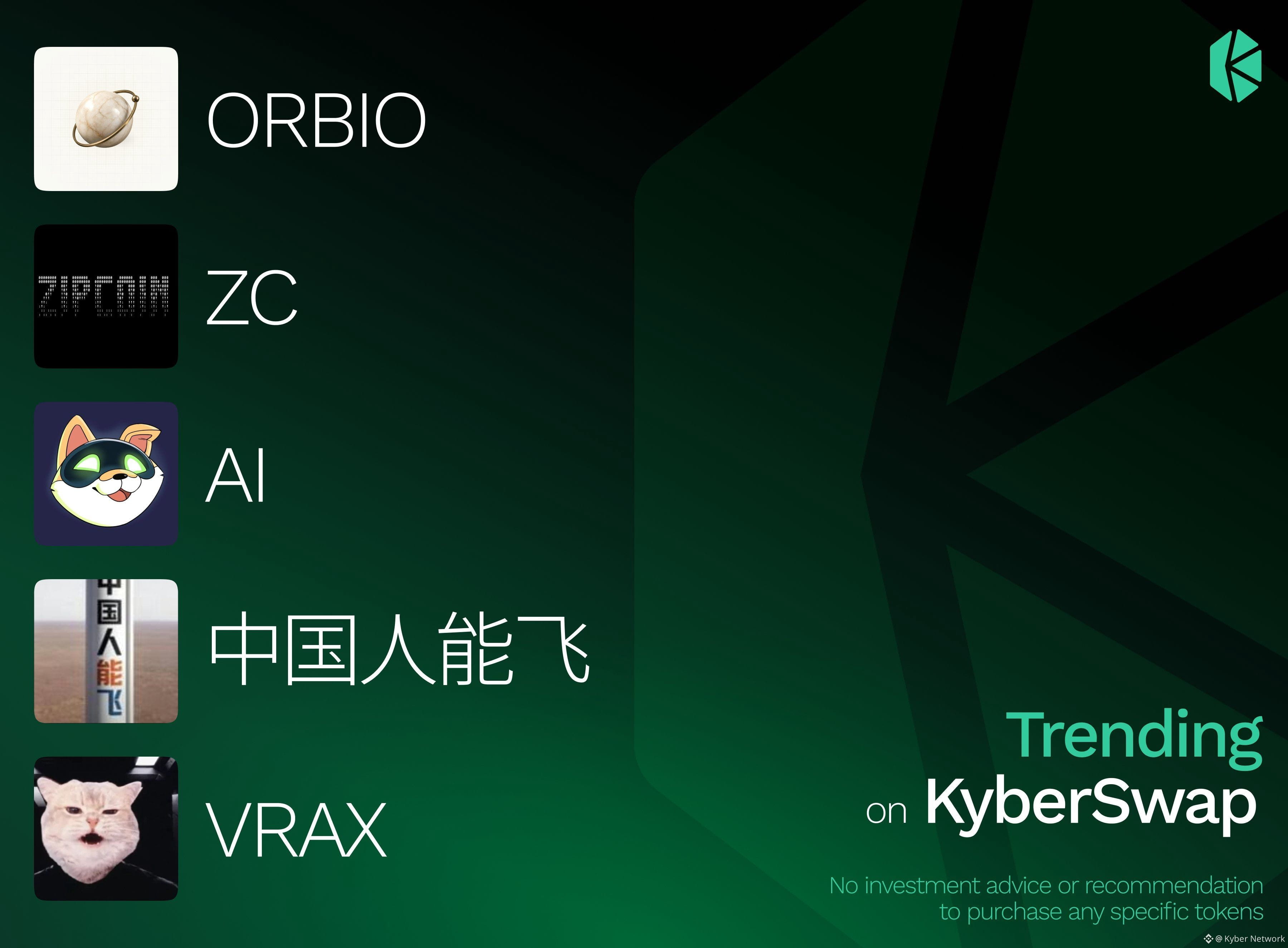
Diqqət zəncirlər arasında hərəkət edir. İndi hansı zənciri izləyirsən? 👀
#ORBIO
#ZC
#AI
#中国人能飞
#VRAX
👉 kyberswap.com/swap
Diqqət zəncirlər arasında hərəkət edir. İndi hansı zənciri izləyirsən? 👀
#ORBIO
#ZC
#AI
#中国人能飞
#VRAX
👉 kyberswap.com/swap
#ORBIO
#ZC
#AI
#中国人能飞
#VRAX
👉 kyberswap.com/swap
275
113
Tərcüməyə bax
KyberSwap is heading to Korea Blockchain Week 🇰🇷
If you're at #KBW2026, come say hi 👋
KyberSwap is heading to Korea Blockchain Week 🇰🇷
If you're at #KBW2026, come say hi 👋
If you're at #KBW2026, come say hi 👋
161
$1,000,000.
Bununla Smart Settlement işə düşdüyündən bəri svopların nəticəsinə əlavə etdiyi məbləğ budur.
Nəticələr özü üçün danışır: Smart Settlement istifadəçiləri zərərli hook-lardan, PropAMM manipulyasiyasından və MEV-dən qorumağa kömək edir.
$1,000,000.
Bununla Smart Settlement işə düşdüyündən bəri svopların nəticəsinə əlavə etdiyi məbləğ budur.
Nəticələr özü üçün danışır: Smart Settlement istifadəçiləri zərərli hook-lardan, PropAMM manipulyasiyasından və MEV-dən qorumağa kömək edir.
Bununla Smart Settlement işə düşdüyündən bəri svopların nəticəsinə əlavə etdiyi məbləğ budur.
Nəticələr özü üçün danışır: Smart Settlement istifadəçiləri zərərli hook-lardan, PropAMM manipulyasiyasından və MEV-dən qorumağa kömək edir.
1
144
KyberSwap × Aero
Aero Lite-in likvidliyi artıq Arc üzərində KyberSwap marşrutlaşdırmasına daxil edilib və istifadəçilərə daha çox likvidliyə və daha yaxşı swap marşrutlarına çıxış imkanı verir.
KyberSwap × Aero
Aero Lite-in likvidliyi artıq Arc üzərində KyberSwap marşrutlaşdırmasına daxil edilib və istifadəçilərə daha çox likvidliyə və daha yaxşı swap marşrutlarına çıxış imkanı verir.
Aero Lite-in likvidliyi artıq Arc üzərində KyberSwap marşrutlaşdırmasına daxil edilib və istifadəçilərə daha çox likvidliyə və daha yaxşı swap marşrutlarına çıxış imkanı verir.
1
178
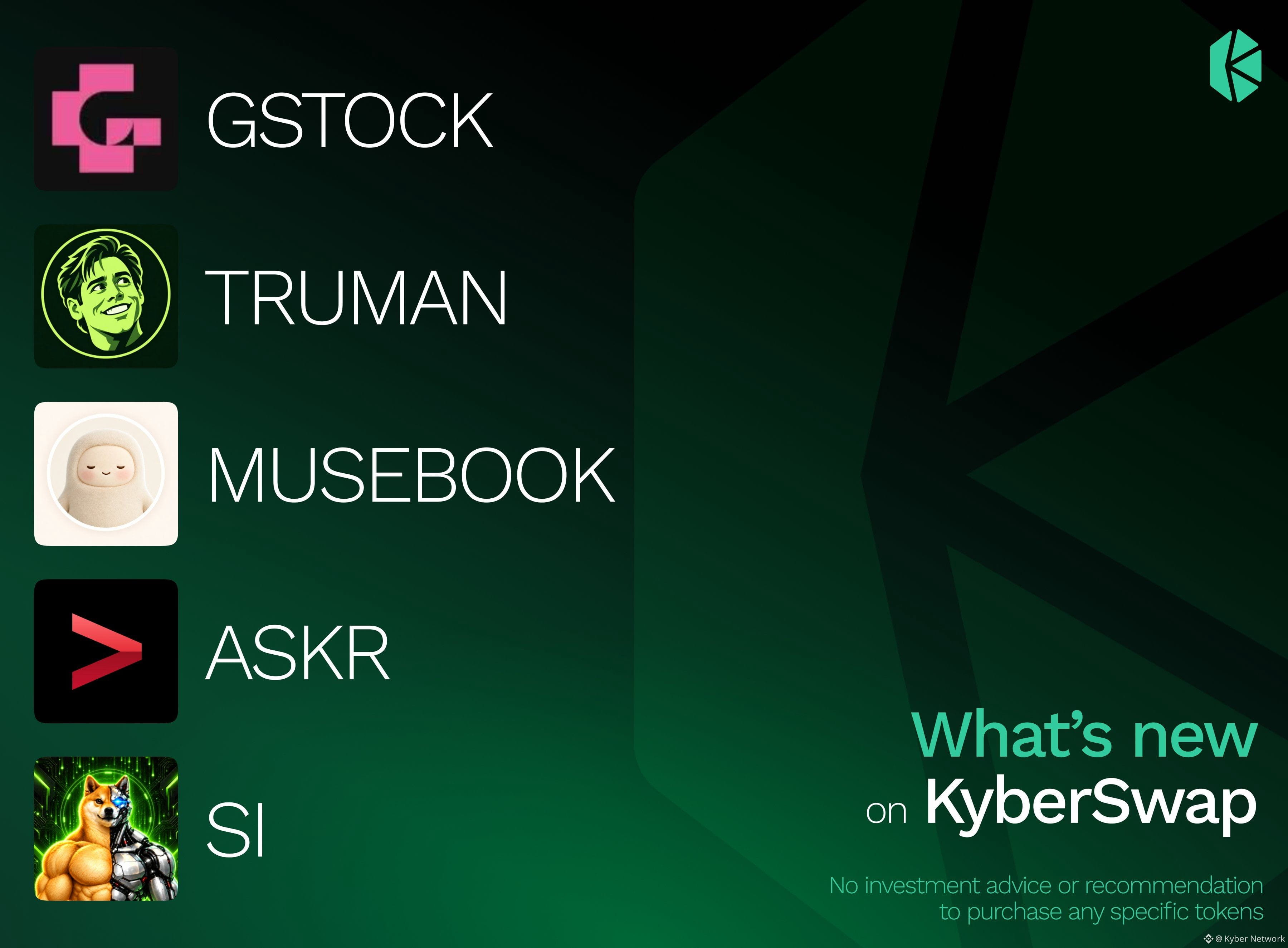
KyberSwap-ın yeni siyahısına yenicə təzə partiya gəldi 👀 Əvvəl hansına baxırsınız?
#GSTOCK
#TRUMAN
#MUSEBOOK
#ASKR
#SI
👉 https://kyberswap.com/swap
KyberSwap-ın yeni siyahısına yenicə təzə partiya gəldi 👀 Əvvəl hansına baxırsınız?
#GSTOCK
#TRUMAN
#MUSEBOOK
#ASKR
#SI
👉 https://kyberswap.com/swap
#GSTOCK
#TRUMAN
#MUSEBOOK
#ASKR
#SI
👉 https://kyberswap.com/swap
1
562
Məqalə
Arc-a Çarpaz-Zəncir Swap-lar üçün Ən Yaxşı Platform Hansıdır?Arc mainnet indi canlıdır, amma kapitalınız hələ də Ethereum, Base, Solana, BNB, Robinhood və ya başqa şəbəkədə otura bilər. Siz Arc-da artıq olmayan aktiv axtarırsınızsa, əl ilə (manual) marşrut adətən əvvəlcə bridgeləşdirmə, köçürməni gözləmə və sonra həqiqətən ehtiyacınız olan tokendə swap etmək üçün başqa bir tətbiqi açmaq deməkdir. Arc USDC-ni native gas aktiv kimi istifadə edir və Circle-in çarpaz-zəncir infrastrukturuna əsaslanan interoperabilitetlə işə salınıb.
Çarpaz-zəncir swap aktivin hərəkətini və token konvertasiyasını bir axın içində birləşdirərək bu addımları azaldır. Arc istifadəçiləri üçün ən yaxşı platform düzgün mənbə zəncirlərinə çatmalı, marşrut xərclərini aydın göstərməli və istədiyiniz aktivi çatdırmalıdır.
Arc-a Çarpaz-Zəncir Swap-lar üçün Ən Yaxşı Platform Hansıdır?
Arc mainnet indi canlıdır, amma kapitalınız hələ də Ethereum, Base, Solana, BNB, Robinhood və ya başqa şəbəkədə otura bilər. Siz Arc-da artıq olmayan aktiv axtarırsınızsa, əl ilə (manual) marşrut adətən əvvəlcə bridgeləşdirmə, köçürməni gözləmə və sonra həqiqətən ehtiyacınız olan tokendə swap etmək üçün başqa bir tətbiqi açmaq deməkdir. Arc USDC-ni native gas aktiv kimi istifadə edir və Circle-in çarpaz-zəncir infrastrukturuna əsaslanan interoperabilitetlə işə salınıb.
Çarpaz-zəncir swap aktivin hərəkətini və token konvertasiyasını bir axın içində birləşdirərək bu addımları azaldır. Arc istifadəçiləri üçün ən yaxşı platform düzgün mənbə zəncirlərinə çatmalı, marşrut xərclərini aydın göstərməli və istədiyiniz aktivi çatdırmalıdır.
Çarpaz-zəncir swap aktivin hərəkətini və token konvertasiyasını bir axın içində birləşdirərək bu addımları azaldır. Arc istifadəçiləri üçün ən yaxşı platform düzgün mənbə zəncirlərinə çatmalı, marşrut xərclərini aydın göstərməli və istədiyiniz aktivi çatdırmalıdır.
168

Məqalə
Arc-da meme tokenləri ticarət etmək üçün ən yaxşı yer hansıdır?Arc mainnet artıq canlıdır və tətbiqlər, tokenlər və likvidlik üçün yeni onçeyn bazar yaradır. Arc maliyyə tətbiqləri üçün nəzərdə tutulmuş, stablecoin-native və EVM-uyğun Layer 1-dir, amma onun permissionless dizaynı likvidlik onçeyndə göründükcə yeni token bazarlarının, o cümlədən meme tokenlərin, inkişafına da imkan verir.
Əgər siz Arc-da bir meme token tapsanız və onu ticarət etmək istəyirsinizsə, sual sadədir: onu harada ticarət etməlisiniz?
Uniswap Arc-da Uniswap likvidliyinə birbaşa çıxış verir, KyberSwap isə DEX likvidlik yönləndirməsi, Limit Sifarişləri, Çoxzəncirli Swap və daha çox ilə daha geniş ticarət iş axını təqdim edir.
Arc-da meme tokenləri ticarət etmək üçün ən yaxşı yer hansıdır?
Arc mainnet artıq canlıdır və tətbiqlər, tokenlər və likvidlik üçün yeni onçeyn bazar yaradır. Arc maliyyə tətbiqləri üçün nəzərdə tutulmuş, stablecoin-native və EVM-uyğun Layer 1-dir, amma onun permissionless dizaynı likvidlik onçeyndə göründükcə yeni token bazarlarının, o cümlədən meme tokenlərin, inkişafına da imkan verir.
Əgər siz Arc-da bir meme token tapsanız və onu ticarət etmək istəyirsinizsə, sual sadədir: onu harada ticarət etməlisiniz?
Uniswap Arc-da Uniswap likvidliyinə birbaşa çıxış verir, KyberSwap isə DEX likvidlik yönləndirməsi, Limit Sifarişləri, Çoxzəncirli Swap və daha çox ilə daha geniş ticarət iş axını təqdim edir.
Əgər siz Arc-da bir meme token tapsanız və onu ticarət etmək istəyirsinizsə, sual sadədir: onu harada ticarət etməlisiniz?
Uniswap Arc-da Uniswap likvidliyinə birbaşa çıxış verir, KyberSwap isə DEX likvidlik yönləndirməsi, Limit Sifarişləri, Çoxzəncirli Swap və daha çox ilə daha geniş ticarət iş axını təqdim edir.
128
Məqalə
Arc Chain-də Trend Tokenləri Tapmaq və Almağın YoluCircle, maliyyə bazarları, real vaxt ödənişlər və agent idarəçili fəaliyyət üçün qurulmuş açıq Layer 1 olan Arc-ın ictimai mainnetini 16 sentyabr 2026-cı ildə təqdim etdi. 1-ci gün aktivlik artıq görünməyə başladı: launchpad-lər, memecoin-lər və yeni hovuzlar bir neçə saat içində meydana çıxdı. Bu bələdçi Arc-ın nə olduğunu, trend tokenləri harada görəcəyinizi və onları düzgün alətlərlə necə alacağınızı izah edir.
Arc Chain nədir?
Arc Circle-ın öz blokçeynidir və ən böyük fərqi haqları necə ödəməyinizdir. Mainnet chain ID 5042-də işləyir və qaz üçün doğma valyuta kimi USDC istifadə olunur; ilk ticarətinizdən əvvəl ayrıca qaz tokeni almağa ehtiyac qalmır.
Arc Chain-də Trend Tokenləri Tapmaq və Almağın Yolu
Circle, maliyyə bazarları, real vaxt ödənişlər və agent idarəçili fəaliyyət üçün qurulmuş açıq Layer 1 olan Arc-ın ictimai mainnetini 16 sentyabr 2026-cı ildə təqdim etdi. 1-ci gün aktivlik artıq görünməyə başladı: launchpad-lər, memecoin-lər və yeni hovuzlar bir neçə saat içində meydana çıxdı. Bu bələdçi Arc-ın nə olduğunu, trend tokenləri harada görəcəyinizi və onları düzgün alətlərlə necə alacağınızı izah edir.
Arc Chain nədir?
Arc Circle-ın öz blokçeynidir və ən böyük fərqi haqları necə ödəməyinizdir. Mainnet chain ID 5042-də işləyir və qaz üçün doğma valyuta kimi USDC istifadə olunur; ilk ticarətinizdən əvvəl ayrıca qaz tokeni almağa ehtiyac qalmır.
Arc Chain nədir?
Arc Circle-ın öz blokçeynidir və ən böyük fərqi haqları necə ödəməyinizdir. Mainnet chain ID 5042-də işləyir və qaz üçün doğma valyuta kimi USDC istifadə olunur; ilk ticarətinizdən əvvəl ayrıca qaz tokeni almağa ehtiyac qalmır.
1
329
Arc 🤝 KyberSwap
KyberSwap Arc-da ilk gündən etibarən yayındadır və bunları açır:
• Ən yaxşı məzənnələr və smart settlement ilə dərhal swap edin
• Provayderlər arasında ən yaxşı Cross-chain swap məzənnələrini seçin
• Limit Order ilə sevdiyiniz qiymətə ticarət edin
Gəlin Arc-da başlayaq:
👉 https://kyberswap.com
👉 https://arc.io
Arc 🤝 KyberSwap
KyberSwap Arc-da ilk gündən etibarən yayındadır və bunları açır:
• Ən yaxşı məzənnələr və smart settlement ilə dərhal swap edin
• Provayderlər arasında ən yaxşı Cross-chain swap məzənnələrini seçin
• Limit Order ilə sevdiyiniz qiymətə ticarət edin
Gəlin Arc-da başlayaq:
👉 https://kyberswap.com
👉 https://arc.io
KyberSwap Arc-da ilk gündən etibarən yayındadır və bunları açır:
• Ən yaxşı məzənnələr və smart settlement ilə dərhal swap edin
• Provayderlər arasında ən yaxşı Cross-chain swap məzənnələrini seçin
• Limit Order ilə sevdiyiniz qiymətə ticarət edin
Gəlin Arc-da başlayaq:
👉 https://kyberswap.com
👉 https://arc.io
349
Tərcüməyə bax
Ready to serve Arc from Day 1.
Swap, Limit Order, Cross-chain Swap, Zap, Earn and more.
Ready to serve Arc from Day 1.
Swap, Limit Order, Cross-chain Swap, Zap, Earn and more.
Swap, Limit Order, Cross-chain Swap, Zap, Earn and more.
1
1
272
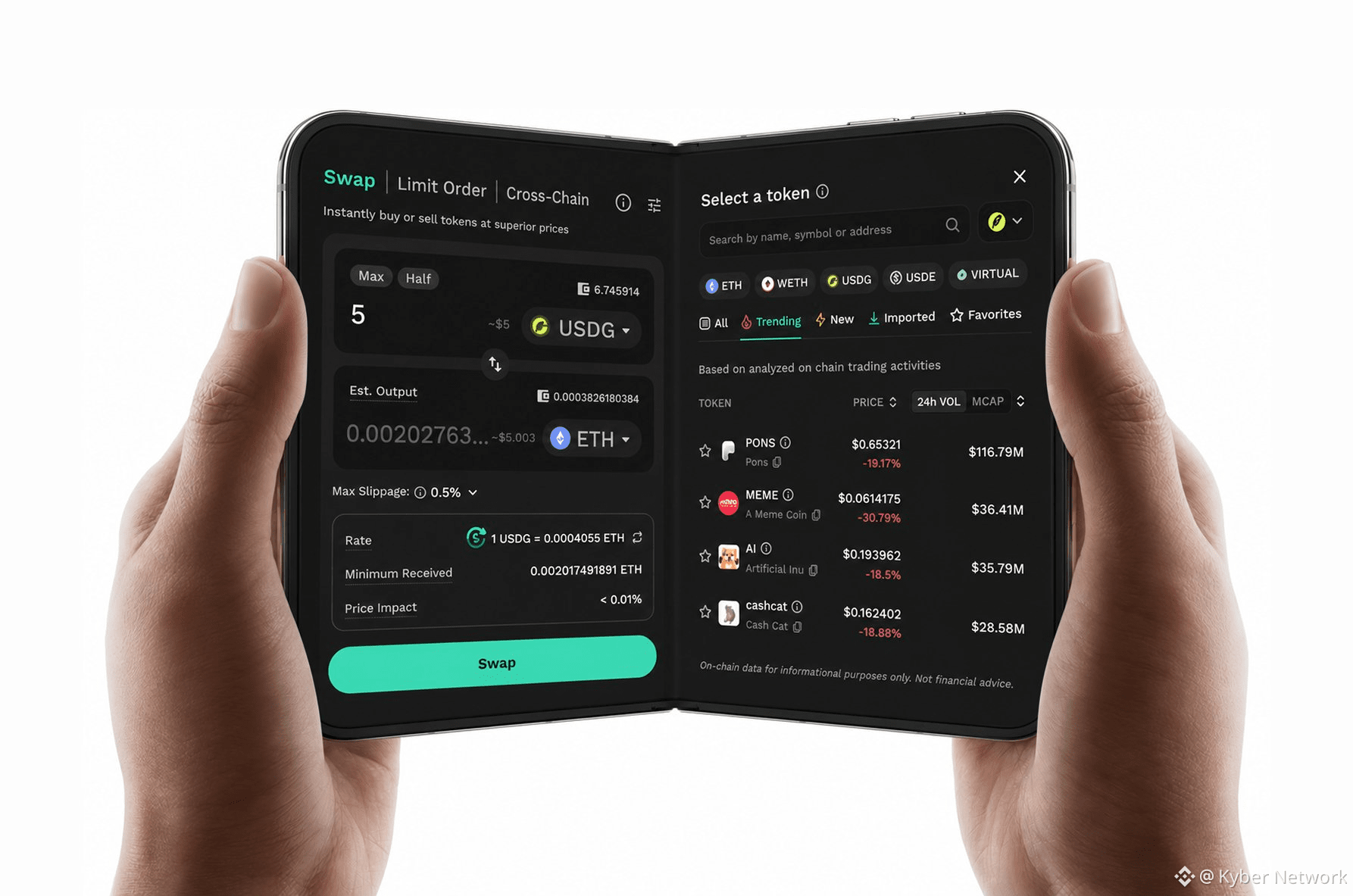
daha böyük ekranda trendləşən tokenləri kəşf etmək üçün 1,999$-lıq iPhone Duo aldım
dəydi
daha böyük ekranda trendləşən tokenləri kəşf etmək üçün 1,999$-lıq iPhone Duo aldım
dəydi
dəydi
833
Tərcüməyə bax
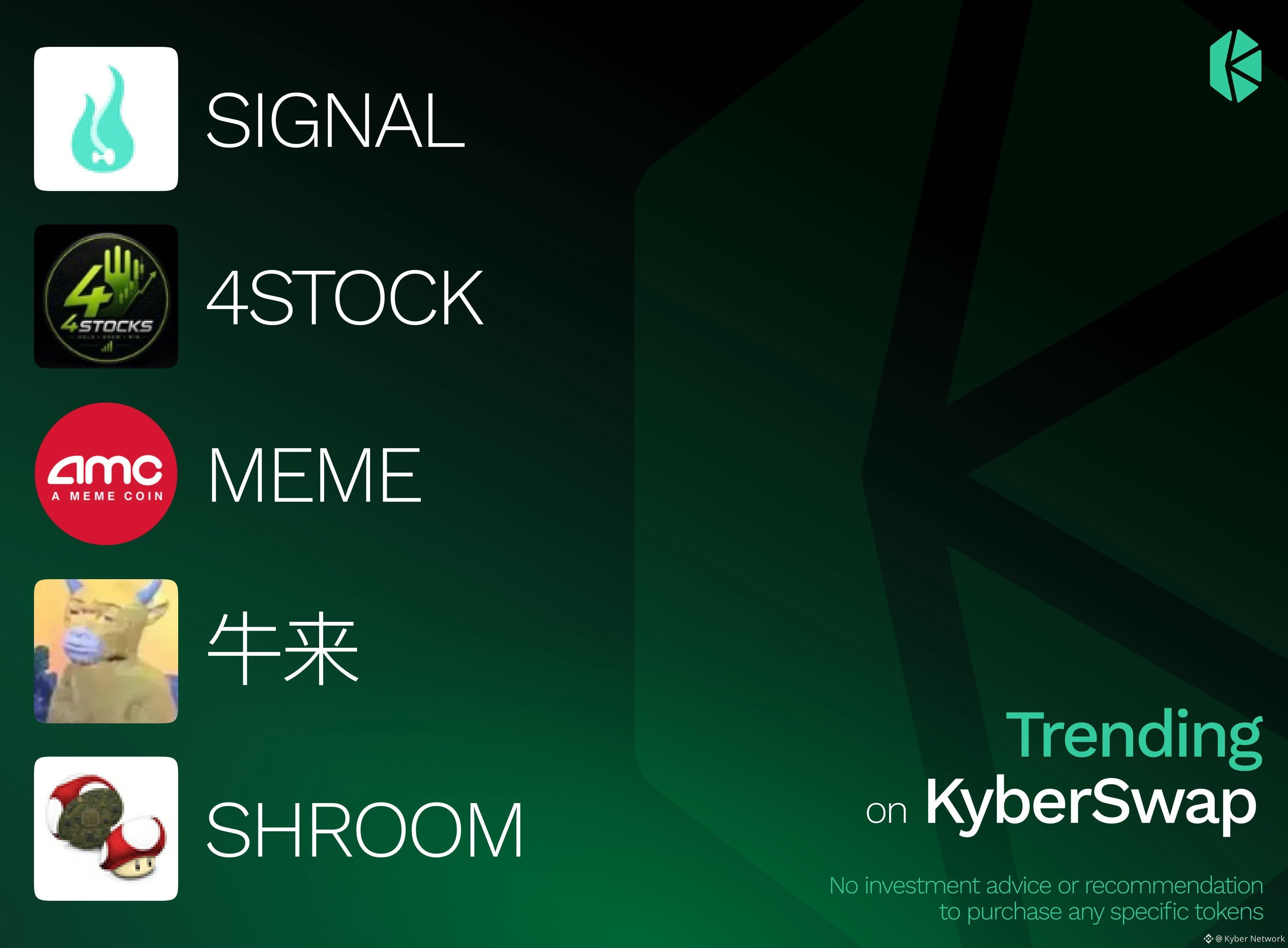
Here's where attention is going onchain right now. Tell us if we missed one. 👇
#SIGNAL
#4STOCK
#MEME
#牛来
#SHROOM
Trade at the best rate: https://kyberswap.com
Here's where attention is going onchain right now. Tell us if we missed one. 👇
#SIGNAL
#4STOCK
#MEME
#牛来
#SHROOM
Trade at the best rate: https://kyberswap.com
#SIGNAL
#4STOCK
#MEME
#牛来
#SHROOM
Trade at the best rate: https://kyberswap.com
484
Məqalə
Tərcüməyə bax
What Is a Limit Order on DEX Platforms?A limit order is an instruction to buy or sell a token at a specific price or better. Instead of accepting whatever rate the market offers right now, you name your price and the trade executes only when the market reaches it. On decentralized exchanges, this removes the need to sit in front of a chart waiting for an entry.
Most onchain trading still happens through market orders. You click swap, you get the current rate, and you move on. Limit orders give you a second mode of trading where timing and price control matter more than speed. This guide explains how they work on DEX platforms, where they help, and how KyberSwap implements them.
What Is a Limit Order?
A limit order lets you set your price before you trade.
There are two directions. A buy limit order sets the maximum price you are willing to pay, so it sits below the current market price. A sell limit order sets the minimum price you are willing to accept, so it sits above the current market price.
Say ETH trades at $3,000 and you want exposure at $2,800. You place a buy limit order at $2,800 with the USDC you hold. If ETH drops to that level, your order fills. If it never drops, the order simply expires and your USDC stays where it was.
The same logic works on exits. If you hold ETH and want to take profit at $3,500, a sell limit order handles it without you watching the market.
How Is a Limit Order Different From a Market Order?
The difference comes down to what you control. A market order guarantees execution but not price. A limit order guarantees price but not execution.
Market order Limit order Execution Immediate Only when your price is reached Price control None, you take the current rate Full, you set the rate Certainty Trade always completes Trade may never fill Slippage exposure Yes, especially on large or thin trades Minimal, your rate is fixed in advance Best for Speed and urgency Planned entries and exits
Neither one is better in the abstract. Traders who need a position now use market orders. Traders working to a plan use limit orders.
How Do Limit Orders Work on a DEX?
Onchain limit orders rely on a maker and taker model.
You are the maker. You sign an order that states what you want to trade, at what rate, and for how long. That signed order is stored off-chain rather than on the blockchain itself, which is why creating one costs nothing in gas.
A taker is anyone willing to fill your order at the terms you set. Takers monitor open orders and execute them onchain when the price makes sense for them. The taker pays the gas fee for settlement, not you.
This design is called off-chain relay with onchain settlement. Early DeFi orderbooks stored every order onchain, which made placing and adjusting orders expensive during volatility. Moving order storage off-chain keeps the safety of a cryptographic signature while removing the cost of maintaining open positions.
Your tokens stay in your wallet the entire time. They only move when a matching taker order settles onchain. Until then you retain full ownership and can still use those tokens elsewhere.
Partial fills are normal. A taker may fill part of your order and leave the rest open, so you often see an order complete in several pieces rather than one.
When Should You Use a Limit Order?
Limit orders fit any trade where price matters more than immediacy.
Buying dips. Set a bid below market and let volatility come to you instead of chasing it.Taking profit. Define your exit level in advance so a target does not pass while you sleep.Range trading. Place bids near support and asks near resistance to work a range systematically.Sizing into a position. Break a large trade into several orders at different levels rather than one market swap that moves the price against you.
The common thread is removing emotion and screen time from execution.
How Does KyberSwap Limit Order Work?
KyberSwap is a DeFi trading platform that combines an aggregator, cross-chain swaps, liquidity tools and limit orders in one interface. Its Limit Order product runs on the maker and taker model described above, with a few implementation details worth knowing.
Creating an order is free. You sign the order rather than broadcasting a transaction, so no gas is spent to open or modify a position. A one-time token approval is still required the first time you trade a given token on a given chain.
You get two ways to cancel. Gasless Cancel removes an order off-chain at no cost, with a wait of up to 90 seconds in cases where the order was already quoted to a taker. Hard Cancel nullifies the order onchain immediately for a small gas fee, which suits traders who need certainty during fast markets.
Orders can fill better than your set price. Settlement happens when conditions favor the maker, so filled orders sometimes return more tokens than the quote showed at creation.
Aggregator routing adds fill pressure. KyberSwap Limit Orders are integrated as a liquidity source inside the KyberSwap Aggregator, which routes across 18 chains and 420+ liquidity sources. Ordinary aggregator swaps can therefore be routed through your open limit order, which widens the pool of potential takers well beyond dedicated market makers.
Coverage. Limit Order is live on 18 chains, including Ethereum, Robinhood Chain, Base, and BNB.
How Do DEX Limit Orders Compare to CEX Limit Orders?
Centralized exchanges have offered limit orders for years, but the custody model is fundamentally different.
CEX limit order DEX limit order Custody Exchange holds your funds Tokens stay in your wallet Order storage Internal orderbook Signed order on an off-chain relay Who fills it Exchange orderbook participants Any taker, plus aggregator routing Access Account and verification required Wallet connection only Settlement Internal ledger entry Onchain transaction
The tradeoff is straightforward. A CEX orderbook is usually deeper for major pairs. A DEX keeps you in control of your assets and open to any token that meets the ERC20 standard.
What Are the Limitations of Onchain Limit Orders?
A limit order is a conditional trade, not a promise.
Fills are not guaranteed. If the market never reaches your price, nothing happens.Thin pairs attract fewer takers. Exotic tokens have a smaller pool of participants watching for fills.Your balance must hold. If you spend the committed tokens elsewhere, the order cannot settle when a taker arrives.
How Do You Place a Limit Order on KyberSwap?
The flow takes under a minute.
Connect your wallet and choose your network, then open the Limit tab on the swap interface. Select your token pair and enter the amount you want to trade. KyberSwap shows how far your chosen rate sits from the current market price, which makes it easy to judge how realistic a target is.
Next, set an expiry. You can pick a preset window or a custom date, and unfilled orders cancel automatically once that window closes. Approve the token if it is your first trade with it on that chain, review the order, then sign.
Your order appears under Active Orders with a progress bar showing how much has been filled. Completed orders move to Order History, where you can expand each one to see the individual taker fills behind it.
Frequently Asked Questions
Is a limit order guaranteed to fill?
No. A limit order only executes if the market reaches your specified price and a taker chooses to fill it. Orders that never reach their target expire at the end of the time window you set.
Do limit orders cost gas on KyberSwap?
Creating and modifying an order costs no gas because orders are signed rather than broadcast. The taker pays the gas to settle the trade onchain. A one-time token approval transaction is required the first time you trade a token on a chain.
Can I cancel a limit order for free?
Yes. Gasless Cancel removes an order at no cost, with a wait of up to 90 seconds in some cases. Hard Cancel is available for a small gas fee when you need cancellation to be immediate.
Why is my limit order not being filled?
The most common reasons are that the market has not reached your price, the order is too small for a taker to profit after gas, or the pair has low trading volume and few takers watching it.
Can a limit order fill at a better price than I set?
Yes. Orders settle when conditions favor the maker, so you may receive more tokens than the original quote indicated. You will never receive less than the rate you signed.
Which chains support KyberSwap Limit Order?
Limit Order is available on 16 chains, including Ethereum, BNB Chain, Base, Arbitrum, Optimism, Polygon, Linea, Avalanche, Berachain, Sonic, Ronin and Monad. The full and current list is maintained in the KyberSwap docs.
Trade at Your Own Price
Limit orders turn trading from a reaction into a plan. You define the level, the size and the deadline, then let the market do the rest while your assets stay in your wallet.
Open the Limit tab on KyberSwap, set your rate, and place your first order.
What Is a Limit Order on DEX Platforms?
A limit order is an instruction to buy or sell a token at a specific price or better. Instead of accepting whatever rate the market offers right now, you name your price and the trade executes only when the market reaches it. On decentralized exchanges, this removes the need to sit in front of a chart waiting for an entry.
Most onchain trading still happens through market orders. You click swap, you get the current rate, and you move on. Limit orders give you a second mode of trading where timing and price control matter more than speed. This guide explains how they work on DEX platforms, where they help, and how KyberSwap implements them.
What Is a Limit Order?
A limit order lets you set your price before you trade.
There are two directions. A buy limit order sets the maximum price you are willing to pay, so it sits below the current market price. A sell limit order sets the minimum price you are willing to accept, so it sits above the current market price.
Say ETH trades at $3,000 and you want exposure at $2,800. You place a buy limit order at $2,800 with the USDC you hold. If ETH drops to that level, your order fills. If it never drops, the order simply expires and your USDC stays where it was.
The same logic works on exits. If you hold ETH and want to take profit at $3,500, a sell limit order handles it without you watching the market.
How Is a Limit Order Different From a Market Order?
The difference comes down to what you control. A market order guarantees execution but not price. A limit order guarantees price but not execution.
Market order Limit order Execution Immediate Only when your price is reached Price control None, you take the current rate Full, you set the rate Certainty Trade always completes Trade may never fill Slippage exposure Yes, especially on large or thin trades Minimal, your rate is fixed in advance Best for Speed and urgency Planned entries and exits
Neither one is better in the abstract. Traders who need a position now use market orders. Traders working to a plan use limit orders.
How Do Limit Orders Work on a DEX?
Onchain limit orders rely on a maker and taker model.
You are the maker. You sign an order that states what you want to trade, at what rate, and for how long. That signed order is stored off-chain rather than on the blockchain itself, which is why creating one costs nothing in gas.
A taker is anyone willing to fill your order at the terms you set. Takers monitor open orders and execute them onchain when the price makes sense for them. The taker pays the gas fee for settlement, not you.
This design is called off-chain relay with onchain settlement. Early DeFi orderbooks stored every order onchain, which made placing and adjusting orders expensive during volatility. Moving order storage off-chain keeps the safety of a cryptographic signature while removing the cost of maintaining open positions.
Your tokens stay in your wallet the entire time. They only move when a matching taker order settles onchain. Until then you retain full ownership and can still use those tokens elsewhere.
Partial fills are normal. A taker may fill part of your order and leave the rest open, so you often see an order complete in several pieces rather than one.
When Should You Use a Limit Order?
Limit orders fit any trade where price matters more than immediacy.
Buying dips. Set a bid below market and let volatility come to you instead of chasing it.Taking profit. Define your exit level in advance so a target does not pass while you sleep.Range trading. Place bids near support and asks near resistance to work a range systematically.Sizing into a position. Break a large trade into several orders at different levels rather than one market swap that moves the price against you.
The common thread is removing emotion and screen time from execution.
How Does KyberSwap Limit Order Work?
KyberSwap is a DeFi trading platform that combines an aggregator, cross-chain swaps, liquidity tools and limit orders in one interface. Its Limit Order product runs on the maker and taker model described above, with a few implementation details worth knowing.
Creating an order is free. You sign the order rather than broadcasting a transaction, so no gas is spent to open or modify a position. A one-time token approval is still required the first time you trade a given token on a given chain.
You get two ways to cancel. Gasless Cancel removes an order off-chain at no cost, with a wait of up to 90 seconds in cases where the order was already quoted to a taker. Hard Cancel nullifies the order onchain immediately for a small gas fee, which suits traders who need certainty during fast markets.
Orders can fill better than your set price. Settlement happens when conditions favor the maker, so filled orders sometimes return more tokens than the quote showed at creation.
Aggregator routing adds fill pressure. KyberSwap Limit Orders are integrated as a liquidity source inside the KyberSwap Aggregator, which routes across 18 chains and 420+ liquidity sources. Ordinary aggregator swaps can therefore be routed through your open limit order, which widens the pool of potential takers well beyond dedicated market makers.
Coverage. Limit Order is live on 18 chains, including Ethereum, Robinhood Chain, Base, and BNB.
How Do DEX Limit Orders Compare to CEX Limit Orders?
Centralized exchanges have offered limit orders for years, but the custody model is fundamentally different.
CEX limit order DEX limit order Custody Exchange holds your funds Tokens stay in your wallet Order storage Internal orderbook Signed order on an off-chain relay Who fills it Exchange orderbook participants Any taker, plus aggregator routing Access Account and verification required Wallet connection only Settlement Internal ledger entry Onchain transaction
The tradeoff is straightforward. A CEX orderbook is usually deeper for major pairs. A DEX keeps you in control of your assets and open to any token that meets the ERC20 standard.
What Are the Limitations of Onchain Limit Orders?
A limit order is a conditional trade, not a promise.
Fills are not guaranteed. If the market never reaches your price, nothing happens.Thin pairs attract fewer takers. Exotic tokens have a smaller pool of participants watching for fills.Your balance must hold. If you spend the committed tokens elsewhere, the order cannot settle when a taker arrives.
How Do You Place a Limit Order on KyberSwap?
The flow takes under a minute.
Connect your wallet and choose your network, then open the Limit tab on the swap interface. Select your token pair and enter the amount you want to trade. KyberSwap shows how far your chosen rate sits from the current market price, which makes it easy to judge how realistic a target is.
Next, set an expiry. You can pick a preset window or a custom date, and unfilled orders cancel automatically once that window closes. Approve the token if it is your first trade with it on that chain, review the order, then sign.
Your order appears under Active Orders with a progress bar showing how much has been filled. Completed orders move to Order History, where you can expand each one to see the individual taker fills behind it.
Frequently Asked Questions
Is a limit order guaranteed to fill?
No. A limit order only executes if the market reaches your specified price and a taker chooses to fill it. Orders that never reach their target expire at the end of the time window you set.
Do limit orders cost gas on KyberSwap?
Creating and modifying an order costs no gas because orders are signed rather than broadcast. The taker pays the gas to settle the trade onchain. A one-time token approval transaction is required the first time you trade a token on a chain.
Can I cancel a limit order for free?
Yes. Gasless Cancel removes an order at no cost, with a wait of up to 90 seconds in some cases. Hard Cancel is available for a small gas fee when you need cancellation to be immediate.
Why is my limit order not being filled?
The most common reasons are that the market has not reached your price, the order is too small for a taker to profit after gas, or the pair has low trading volume and few takers watching it.
Can a limit order fill at a better price than I set?
Yes. Orders settle when conditions favor the maker, so you may receive more tokens than the original quote indicated. You will never receive less than the rate you signed.
Which chains support KyberSwap Limit Order?
Limit Order is available on 16 chains, including Ethereum, BNB Chain, Base, Arbitrum, Optimism, Polygon, Linea, Avalanche, Berachain, Sonic, Ronin and Monad. The full and current list is maintained in the KyberSwap docs.
Trade at Your Own Price
Limit orders turn trading from a reaction into a plan. You define the level, the size and the deadline, then let the market do the rest while your assets stay in your wallet.
Open the Limit tab on KyberSwap, set your rate, and place your first order.
Most onchain trading still happens through market orders. You click swap, you get the current rate, and you move on. Limit orders give you a second mode of trading where timing and price control matter more than speed. This guide explains how they work on DEX platforms, where they help, and how KyberSwap implements them.
What Is a Limit Order?
A limit order lets you set your price before you trade.
There are two directions. A buy limit order sets the maximum price you are willing to pay, so it sits below the current market price. A sell limit order sets the minimum price you are willing to accept, so it sits above the current market price.
Say ETH trades at $3,000 and you want exposure at $2,800. You place a buy limit order at $2,800 with the USDC you hold. If ETH drops to that level, your order fills. If it never drops, the order simply expires and your USDC stays where it was.
The same logic works on exits. If you hold ETH and want to take profit at $3,500, a sell limit order handles it without you watching the market.
How Is a Limit Order Different From a Market Order?
The difference comes down to what you control. A market order guarantees execution but not price. A limit order guarantees price but not execution.
Market order Limit order Execution Immediate Only when your price is reached Price control None, you take the current rate Full, you set the rate Certainty Trade always completes Trade may never fill Slippage exposure Yes, especially on large or thin trades Minimal, your rate is fixed in advance Best for Speed and urgency Planned entries and exits
Neither one is better in the abstract. Traders who need a position now use market orders. Traders working to a plan use limit orders.
How Do Limit Orders Work on a DEX?
Onchain limit orders rely on a maker and taker model.
You are the maker. You sign an order that states what you want to trade, at what rate, and for how long. That signed order is stored off-chain rather than on the blockchain itself, which is why creating one costs nothing in gas.
A taker is anyone willing to fill your order at the terms you set. Takers monitor open orders and execute them onchain when the price makes sense for them. The taker pays the gas fee for settlement, not you.
This design is called off-chain relay with onchain settlement. Early DeFi orderbooks stored every order onchain, which made placing and adjusting orders expensive during volatility. Moving order storage off-chain keeps the safety of a cryptographic signature while removing the cost of maintaining open positions.
Your tokens stay in your wallet the entire time. They only move when a matching taker order settles onchain. Until then you retain full ownership and can still use those tokens elsewhere.
Partial fills are normal. A taker may fill part of your order and leave the rest open, so you often see an order complete in several pieces rather than one.
When Should You Use a Limit Order?
Limit orders fit any trade where price matters more than immediacy.
Buying dips. Set a bid below market and let volatility come to you instead of chasing it.Taking profit. Define your exit level in advance so a target does not pass while you sleep.Range trading. Place bids near support and asks near resistance to work a range systematically.Sizing into a position. Break a large trade into several orders at different levels rather than one market swap that moves the price against you.
The common thread is removing emotion and screen time from execution.
How Does KyberSwap Limit Order Work?
KyberSwap is a DeFi trading platform that combines an aggregator, cross-chain swaps, liquidity tools and limit orders in one interface. Its Limit Order product runs on the maker and taker model described above, with a few implementation details worth knowing.
Creating an order is free. You sign the order rather than broadcasting a transaction, so no gas is spent to open or modify a position. A one-time token approval is still required the first time you trade a given token on a given chain.
You get two ways to cancel. Gasless Cancel removes an order off-chain at no cost, with a wait of up to 90 seconds in cases where the order was already quoted to a taker. Hard Cancel nullifies the order onchain immediately for a small gas fee, which suits traders who need certainty during fast markets.
Orders can fill better than your set price. Settlement happens when conditions favor the maker, so filled orders sometimes return more tokens than the quote showed at creation.
Aggregator routing adds fill pressure. KyberSwap Limit Orders are integrated as a liquidity source inside the KyberSwap Aggregator, which routes across 18 chains and 420+ liquidity sources. Ordinary aggregator swaps can therefore be routed through your open limit order, which widens the pool of potential takers well beyond dedicated market makers.
Coverage. Limit Order is live on 18 chains, including Ethereum, Robinhood Chain, Base, and BNB.
How Do DEX Limit Orders Compare to CEX Limit Orders?
Centralized exchanges have offered limit orders for years, but the custody model is fundamentally different.
CEX limit order DEX limit order Custody Exchange holds your funds Tokens stay in your wallet Order storage Internal orderbook Signed order on an off-chain relay Who fills it Exchange orderbook participants Any taker, plus aggregator routing Access Account and verification required Wallet connection only Settlement Internal ledger entry Onchain transaction
The tradeoff is straightforward. A CEX orderbook is usually deeper for major pairs. A DEX keeps you in control of your assets and open to any token that meets the ERC20 standard.
What Are the Limitations of Onchain Limit Orders?
A limit order is a conditional trade, not a promise.
Fills are not guaranteed. If the market never reaches your price, nothing happens.Thin pairs attract fewer takers. Exotic tokens have a smaller pool of participants watching for fills.Your balance must hold. If you spend the committed tokens elsewhere, the order cannot settle when a taker arrives.
How Do You Place a Limit Order on KyberSwap?
The flow takes under a minute.
Connect your wallet and choose your network, then open the Limit tab on the swap interface. Select your token pair and enter the amount you want to trade. KyberSwap shows how far your chosen rate sits from the current market price, which makes it easy to judge how realistic a target is.
Next, set an expiry. You can pick a preset window or a custom date, and unfilled orders cancel automatically once that window closes. Approve the token if it is your first trade with it on that chain, review the order, then sign.
Your order appears under Active Orders with a progress bar showing how much has been filled. Completed orders move to Order History, where you can expand each one to see the individual taker fills behind it.
Frequently Asked Questions
Is a limit order guaranteed to fill?
No. A limit order only executes if the market reaches your specified price and a taker chooses to fill it. Orders that never reach their target expire at the end of the time window you set.
Do limit orders cost gas on KyberSwap?
Creating and modifying an order costs no gas because orders are signed rather than broadcast. The taker pays the gas to settle the trade onchain. A one-time token approval transaction is required the first time you trade a token on a chain.
Can I cancel a limit order for free?
Yes. Gasless Cancel removes an order at no cost, with a wait of up to 90 seconds in some cases. Hard Cancel is available for a small gas fee when you need cancellation to be immediate.
Why is my limit order not being filled?
The most common reasons are that the market has not reached your price, the order is too small for a taker to profit after gas, or the pair has low trading volume and few takers watching it.
Can a limit order fill at a better price than I set?
Yes. Orders settle when conditions favor the maker, so you may receive more tokens than the original quote indicated. You will never receive less than the rate you signed.
Which chains support KyberSwap Limit Order?
Limit Order is available on 16 chains, including Ethereum, BNB Chain, Base, Arbitrum, Optimism, Polygon, Linea, Avalanche, Berachain, Sonic, Ronin and Monad. The full and current list is maintained in the KyberSwap docs.
Trade at Your Own Price
Limit orders turn trading from a reaction into a plan. You define the level, the size and the deadline, then let the market do the rest while your assets stay in your wallet.
Open the Limit tab on KyberSwap, set your rate, and place your first order.
290
Məqalə
Tərcüməyə bax
What Is the Best Place to Provide Liquidity on Robinhood Chain?Robinhood Chain went from zero to one of the busiest tokenized asset and meme venues in DeFi in a matter of weeks. The network opened its public mainnet on July 1, 2026 as an Ethereum Layer 2 built with Arbitrum technology. Cumulative tokenized stock volume has since passed $1 billion.
That growth pulled in liquidity providers fast. It also left a practical question unanswered: where should you actually put capital, and how do you manage it once it is in?
This guide covers what makes LPing on Robinhood Chain different, where the pools live, and three concrete strategies you can pick from based on your risk tolerance.
What Makes LPing on Robinhood Chain Different?
The asset mix is the main difference. Most chains give you crypto pairs and a meme market. Robinhood Chain gives you both plus tokenized equities, and equities behave nothing like ETH.
A tokenized stock pool keeps trading when the underlying market is closed. Fees accrue overnight and through the weekend, which sounds like free yield until Monday morning arrives. Price risk for an equity LP is concentrated into market opens and weekend gaps rather than spread evenly across the week.
The chain identifiers matter too. On Robinhood Chain, USDG and WETH serve as the main base pairs across most pools.
Where Does the Liquidity Actually Sit?
Uniswap is close to the entire DEX market on Robinhood Chain. Uniswap v3 and Uniswap v4 alone account for roughly 90*% of DEX liquidity* on Robinhood Chain.
The practical consequence is that “which DEX” is the wrong question. The pools are concentrated in one protocol family already. The real question is which pool, and how you find, enter and exit it without opening five tabs.
Where Can You Access These Pools in One Place?
KyberEarn aggregates Robinhood Chain pools into a single interface. On this chain it surfaces Uniswap v4, Uniswap v3 and PancakeSwap v3 pools, including FairFlow pools, so you can compare across protocols before committing capital.
Three things make that useful in practice rather than just tidy.
KyberZap lets you enter a position with one token instead of manually sourcing both sides. It converts and balances in a single transaction, routed through the KyberSwap Aggregator and its liquidity sources.A unified dashboard tracks every position, with fees and rewards visible in one place instead of split across protocol frontends.Smart Exit lets you set exit conditions in advance. Robinhood Chain is the seventh supported chain, alongside Ethereum, BNB Chain, Base, Arbitrum, Optimism and Monad.
FairFlow deserves a note of its own. It is a Uniswap v4 hook that captures arbitrage value by making the KyberSwap Aggregator the exclusive taker, then returns that value to liquidity providers as Equilibrium Gain. For LPs, it converts a leak into a revenue line.
What Are the Three Main LP Strategies on Robinhood Chain?
Different pools solve different problems. Pick based on how much volatility you want to absorb and how much attention you can give the position.
Strategy 1: Blue Chip Pairs Like WETH/USDG
This is the baseline. WETH paired against USDG gives you the deepest liquidity on the chain and the most consistent volume, which translates into steady fee flow rather than spiky returns.
Impermanent loss is still present because ETH moves against a dollar-pegged asset. It is bounded and predictable though, and deep pools mean your position is a small share of a large pot rather than the entire pot. Fee tiers on these pairs tend to sit low, so returns come from volume rather than margin.
Best for LPs who want a position they can leave running with periodic checks.
Strategy 2: Tokenized Stock Pairs Like SPY/MU
Equity pools are the strategy that only exists here. Robinhood Chain has canonical Stock Tokens for major US listings including AAPL, NVDA, SPY, MU, META and TSLA, and pools built on them trade continuously.
The appeal is fee capture during hours when no traditional venue is open. Off hours trading tends to be thinner, and Uniswap v4 hooks can widen fees when depth drops, which works in an LP’s favor. The risk is directional. A weekend of news repricing a stock lands as a single gap at open, and a concentrated position sitting in the wrong range absorbs it in full.
Pairing two equities against each other changes the profile again. Correlated tickers reduce divergence risk relative to a stock against USDG, but they also reduce the volume that generates fees. Check depth and volume before assuming a stock to stock pool is worth the range management.
Best for LPs who understand equity volatility and will actively manage ranges around earnings and market opens.
Strategy 3: Meme and Long Tail Pairs Like CASHCAT/USDG
Highest fee potential, highest everything else. Meme pools on Robinhood Chain generate outsized trading volume relative to their size, and fee tiers on volatile pairs run considerably higher than blue chip pools.
The math is a race between fee income and impermanent loss, and on a token that can move 50% in a session, IL wins more often than LPs expect. Pool depth can also evaporate quickly, leaving you holding the side nobody wants.
This is where automated exits stop being a convenience and become the strategy. Setting a Smart Exit condition on fee yield, pool price or elapsed time means the position closes on your rules instead of on your availability.
Best for LPs treating a defined slice of capital as high variance and sizing accordingly.
How Do the Three Strategies Compare?
WETH/USDGTokenized stock pairsMeme pairsVolatilityLow to moderateModerate, gap drivenHighImpermanent loss riskBounded and predictableConcentrated at market openSevere and fastFee potentialSteady, volume drivenModerate, higher in off hoursHigh but unstablePool depthDeepest on chainVaries by tickerOften thinAttention requiredLowMedium to highHighBest forSet and monitorActive range managersSized speculation
What Should You Check Before Entering Any Pool?
Headline APR is the least reliable number on the page. It is backward looking, it moves daily, and on a new pool it can be driven entirely by a single large trade.
Look at these instead.
Volume to TVL ratio. This tells you how hard each dollar of liquidity is working. A high ratio means real fee generation rather than parked capital.Fee tier against volatility. A volatile pair on a low fee tier is a poor trade for an LP. The fee has to compensate for the divergence risk.Pool depth. Thin pools mean your entry and exit both move the price against you.Range width. Narrow ranges earn more while price stays inside and stop earning entirely when it leaves.Your exit condition. Decide it before you enter, not while watching a chart.
How Do You Manage a Position Once It Is Live?
Entry is the easy part. Most LP losses come from positions nobody closed in time.
KyberEarn keeps every position on one dashboard, so fees earned, rewards accrued and current range status are visible without protocol hopping. From there, Smart Exit turns a plan into an instruction. You set a condition once, based on fee yield reaching a target, pool price crossing a level, or a fixed time elapsing, and the position closes automatically when it triggers.
Execution is gasless and the feature has been audited by Hexens. For meme and equity positions in particular, that removes the requirement to be awake at the right moment.
Frequently Asked Questions
Can you provide liquidity on Robinhood Chain?
Yes. Robinhood Chain supports standard AMM liquidity provision, and pools cover crypto pairs, tokenized stocks and long tail tokens.
Which pools are available through KyberSwap on Robinhood Chain?
KyberEarn surfaces Uniswap v4, Uniswap v3 and PancakeSwap v3 pools on Robinhood Chain, including FairFlow pools built on the Uniswap v4 hook.
Do you need both tokens to add liquidity?
No. KyberZap converts a single token into a balanced position in one transaction, so you can enter with whatever you already hold.
Which strategy is safest for a first position?
A deep blue chip pair such as WETH/USDG carries the least divergence risk and the most consistent volume, which makes it a reasonable place to learn how ranges and fees behave.
What happens to tokenized stock pools when markets are closed?
They keep trading. Liquidity is usually thinner during those hours, and price can gap when traditional markets reopen, so range management matters more on equity pools than on crypto pairs.
Can you exit a liquidity position automatically?
Yes. Smart Exit closes a position when your chosen condition is met, based on fee yield, pool price or time, and it is live on Robinhood Chain.
Start Comparing Robinhood Chain Pools in One Place
The best place to LP on Robinhood Chain is not a single pool. It is wherever you can see every option side by side, enter with the token you already hold, and set your exit before you need it.
Open KyberEarn, switch to Robinhood Chain, and compare pools across Uniswap v4, Uniswap v3 and PancakeSwap v3 in one view.
What Is the Best Place to Provide Liquidity on Robinhood Chain?
Robinhood Chain went from zero to one of the busiest tokenized asset and meme venues in DeFi in a matter of weeks. The network opened its public mainnet on July 1, 2026 as an Ethereum Layer 2 built with Arbitrum technology. Cumulative tokenized stock volume has since passed $1 billion.
That growth pulled in liquidity providers fast. It also left a practical question unanswered: where should you actually put capital, and how do you manage it once it is in?
This guide covers what makes LPing on Robinhood Chain different, where the pools live, and three concrete strategies you can pick from based on your risk tolerance.
What Makes LPing on Robinhood Chain Different?
The asset mix is the main difference. Most chains give you crypto pairs and a meme market. Robinhood Chain gives you both plus tokenized equities, and equities behave nothing like ETH.
A tokenized stock pool keeps trading when the underlying market is closed. Fees accrue overnight and through the weekend, which sounds like free yield until Monday morning arrives. Price risk for an equity LP is concentrated into market opens and weekend gaps rather than spread evenly across the week.
The chain identifiers matter too. On Robinhood Chain, USDG and WETH serve as the main base pairs across most pools.
Where Does the Liquidity Actually Sit?
Uniswap is close to the entire DEX market on Robinhood Chain. Uniswap v3 and Uniswap v4 alone account for roughly 90*% of DEX liquidity* on Robinhood Chain.
The practical consequence is that “which DEX” is the wrong question. The pools are concentrated in one protocol family already. The real question is which pool, and how you find, enter and exit it without opening five tabs.
Where Can You Access These Pools in One Place?
KyberEarn aggregates Robinhood Chain pools into a single interface. On this chain it surfaces Uniswap v4, Uniswap v3 and PancakeSwap v3 pools, including FairFlow pools, so you can compare across protocols before committing capital.
Three things make that useful in practice rather than just tidy.
KyberZap lets you enter a position with one token instead of manually sourcing both sides. It converts and balances in a single transaction, routed through the KyberSwap Aggregator and its liquidity sources.A unified dashboard tracks every position, with fees and rewards visible in one place instead of split across protocol frontends.Smart Exit lets you set exit conditions in advance. Robinhood Chain is the seventh supported chain, alongside Ethereum, BNB Chain, Base, Arbitrum, Optimism and Monad.
FairFlow deserves a note of its own. It is a Uniswap v4 hook that captures arbitrage value by making the KyberSwap Aggregator the exclusive taker, then returns that value to liquidity providers as Equilibrium Gain. For LPs, it converts a leak into a revenue line.
What Are the Three Main LP Strategies on Robinhood Chain?
Different pools solve different problems. Pick based on how much volatility you want to absorb and how much attention you can give the position.
Strategy 1: Blue Chip Pairs Like WETH/USDG
This is the baseline. WETH paired against USDG gives you the deepest liquidity on the chain and the most consistent volume, which translates into steady fee flow rather than spiky returns.
Impermanent loss is still present because ETH moves against a dollar-pegged asset. It is bounded and predictable though, and deep pools mean your position is a small share of a large pot rather than the entire pot. Fee tiers on these pairs tend to sit low, so returns come from volume rather than margin.
Best for LPs who want a position they can leave running with periodic checks.
Strategy 2: Tokenized Stock Pairs Like SPY/MU
Equity pools are the strategy that only exists here. Robinhood Chain has canonical Stock Tokens for major US listings including AAPL, NVDA, SPY, MU, META and TSLA, and pools built on them trade continuously.
The appeal is fee capture during hours when no traditional venue is open. Off hours trading tends to be thinner, and Uniswap v4 hooks can widen fees when depth drops, which works in an LP’s favor. The risk is directional. A weekend of news repricing a stock lands as a single gap at open, and a concentrated position sitting in the wrong range absorbs it in full.
Pairing two equities against each other changes the profile again. Correlated tickers reduce divergence risk relative to a stock against USDG, but they also reduce the volume that generates fees. Check depth and volume before assuming a stock to stock pool is worth the range management.
Best for LPs who understand equity volatility and will actively manage ranges around earnings and market opens.
Strategy 3: Meme and Long Tail Pairs Like CASHCAT/USDG
Highest fee potential, highest everything else. Meme pools on Robinhood Chain generate outsized trading volume relative to their size, and fee tiers on volatile pairs run considerably higher than blue chip pools.
The math is a race between fee income and impermanent loss, and on a token that can move 50% in a session, IL wins more often than LPs expect. Pool depth can also evaporate quickly, leaving you holding the side nobody wants.
This is where automated exits stop being a convenience and become the strategy. Setting a Smart Exit condition on fee yield, pool price or elapsed time means the position closes on your rules instead of on your availability.
Best for LPs treating a defined slice of capital as high variance and sizing accordingly.
How Do the Three Strategies Compare?
WETH/USDGTokenized stock pairsMeme pairsVolatilityLow to moderateModerate, gap drivenHighImpermanent loss riskBounded and predictableConcentrated at market openSevere and fastFee potentialSteady, volume drivenModerate, higher in off hoursHigh but unstablePool depthDeepest on chainVaries by tickerOften thinAttention requiredLowMedium to highHighBest forSet and monitorActive range managersSized speculation
What Should You Check Before Entering Any Pool?
Headline APR is the least reliable number on the page. It is backward looking, it moves daily, and on a new pool it can be driven entirely by a single large trade.
Look at these instead.
Volume to TVL ratio. This tells you how hard each dollar of liquidity is working. A high ratio means real fee generation rather than parked capital.Fee tier against volatility. A volatile pair on a low fee tier is a poor trade for an LP. The fee has to compensate for the divergence risk.Pool depth. Thin pools mean your entry and exit both move the price against you.Range width. Narrow ranges earn more while price stays inside and stop earning entirely when it leaves.Your exit condition. Decide it before you enter, not while watching a chart.
How Do You Manage a Position Once It Is Live?
Entry is the easy part. Most LP losses come from positions nobody closed in time.
KyberEarn keeps every position on one dashboard, so fees earned, rewards accrued and current range status are visible without protocol hopping. From there, Smart Exit turns a plan into an instruction. You set a condition once, based on fee yield reaching a target, pool price crossing a level, or a fixed time elapsing, and the position closes automatically when it triggers.
Execution is gasless and the feature has been audited by Hexens. For meme and equity positions in particular, that removes the requirement to be awake at the right moment.
Frequently Asked Questions
Can you provide liquidity on Robinhood Chain?
Yes. Robinhood Chain supports standard AMM liquidity provision, and pools cover crypto pairs, tokenized stocks and long tail tokens.
Which pools are available through KyberSwap on Robinhood Chain?
KyberEarn surfaces Uniswap v4, Uniswap v3 and PancakeSwap v3 pools on Robinhood Chain, including FairFlow pools built on the Uniswap v4 hook.
Do you need both tokens to add liquidity?
No. KyberZap converts a single token into a balanced position in one transaction, so you can enter with whatever you already hold.
Which strategy is safest for a first position?
A deep blue chip pair such as WETH/USDG carries the least divergence risk and the most consistent volume, which makes it a reasonable place to learn how ranges and fees behave.
What happens to tokenized stock pools when markets are closed?
They keep trading. Liquidity is usually thinner during those hours, and price can gap when traditional markets reopen, so range management matters more on equity pools than on crypto pairs.
Can you exit a liquidity position automatically?
Yes. Smart Exit closes a position when your chosen condition is met, based on fee yield, pool price or time, and it is live on Robinhood Chain.
Start Comparing Robinhood Chain Pools in One Place
The best place to LP on Robinhood Chain is not a single pool. It is wherever you can see every option side by side, enter with the token you already hold, and set your exit before you need it.
Open KyberEarn, switch to Robinhood Chain, and compare pools across Uniswap v4, Uniswap v3 and PancakeSwap v3 in one view.
That growth pulled in liquidity providers fast. It also left a practical question unanswered: where should you actually put capital, and how do you manage it once it is in?
This guide covers what makes LPing on Robinhood Chain different, where the pools live, and three concrete strategies you can pick from based on your risk tolerance.
What Makes LPing on Robinhood Chain Different?
The asset mix is the main difference. Most chains give you crypto pairs and a meme market. Robinhood Chain gives you both plus tokenized equities, and equities behave nothing like ETH.
A tokenized stock pool keeps trading when the underlying market is closed. Fees accrue overnight and through the weekend, which sounds like free yield until Monday morning arrives. Price risk for an equity LP is concentrated into market opens and weekend gaps rather than spread evenly across the week.
The chain identifiers matter too. On Robinhood Chain, USDG and WETH serve as the main base pairs across most pools.
Where Does the Liquidity Actually Sit?
Uniswap is close to the entire DEX market on Robinhood Chain. Uniswap v3 and Uniswap v4 alone account for roughly 90*% of DEX liquidity* on Robinhood Chain.
The practical consequence is that “which DEX” is the wrong question. The pools are concentrated in one protocol family already. The real question is which pool, and how you find, enter and exit it without opening five tabs.
Where Can You Access These Pools in One Place?
KyberEarn aggregates Robinhood Chain pools into a single interface. On this chain it surfaces Uniswap v4, Uniswap v3 and PancakeSwap v3 pools, including FairFlow pools, so you can compare across protocols before committing capital.
Three things make that useful in practice rather than just tidy.
KyberZap lets you enter a position with one token instead of manually sourcing both sides. It converts and balances in a single transaction, routed through the KyberSwap Aggregator and its liquidity sources.A unified dashboard tracks every position, with fees and rewards visible in one place instead of split across protocol frontends.Smart Exit lets you set exit conditions in advance. Robinhood Chain is the seventh supported chain, alongside Ethereum, BNB Chain, Base, Arbitrum, Optimism and Monad.
FairFlow deserves a note of its own. It is a Uniswap v4 hook that captures arbitrage value by making the KyberSwap Aggregator the exclusive taker, then returns that value to liquidity providers as Equilibrium Gain. For LPs, it converts a leak into a revenue line.
What Are the Three Main LP Strategies on Robinhood Chain?
Different pools solve different problems. Pick based on how much volatility you want to absorb and how much attention you can give the position.
Strategy 1: Blue Chip Pairs Like WETH/USDG
This is the baseline. WETH paired against USDG gives you the deepest liquidity on the chain and the most consistent volume, which translates into steady fee flow rather than spiky returns.
Impermanent loss is still present because ETH moves against a dollar-pegged asset. It is bounded and predictable though, and deep pools mean your position is a small share of a large pot rather than the entire pot. Fee tiers on these pairs tend to sit low, so returns come from volume rather than margin.
Best for LPs who want a position they can leave running with periodic checks.
Strategy 2: Tokenized Stock Pairs Like SPY/MU
Equity pools are the strategy that only exists here. Robinhood Chain has canonical Stock Tokens for major US listings including AAPL, NVDA, SPY, MU, META and TSLA, and pools built on them trade continuously.
The appeal is fee capture during hours when no traditional venue is open. Off hours trading tends to be thinner, and Uniswap v4 hooks can widen fees when depth drops, which works in an LP’s favor. The risk is directional. A weekend of news repricing a stock lands as a single gap at open, and a concentrated position sitting in the wrong range absorbs it in full.
Pairing two equities against each other changes the profile again. Correlated tickers reduce divergence risk relative to a stock against USDG, but they also reduce the volume that generates fees. Check depth and volume before assuming a stock to stock pool is worth the range management.
Best for LPs who understand equity volatility and will actively manage ranges around earnings and market opens.
Strategy 3: Meme and Long Tail Pairs Like CASHCAT/USDG
Highest fee potential, highest everything else. Meme pools on Robinhood Chain generate outsized trading volume relative to their size, and fee tiers on volatile pairs run considerably higher than blue chip pools.
The math is a race between fee income and impermanent loss, and on a token that can move 50% in a session, IL wins more often than LPs expect. Pool depth can also evaporate quickly, leaving you holding the side nobody wants.
This is where automated exits stop being a convenience and become the strategy. Setting a Smart Exit condition on fee yield, pool price or elapsed time means the position closes on your rules instead of on your availability.
Best for LPs treating a defined slice of capital as high variance and sizing accordingly.
How Do the Three Strategies Compare?
WETH/USDGTokenized stock pairsMeme pairsVolatilityLow to moderateModerate, gap drivenHighImpermanent loss riskBounded and predictableConcentrated at market openSevere and fastFee potentialSteady, volume drivenModerate, higher in off hoursHigh but unstablePool depthDeepest on chainVaries by tickerOften thinAttention requiredLowMedium to highHighBest forSet and monitorActive range managersSized speculation
What Should You Check Before Entering Any Pool?
Headline APR is the least reliable number on the page. It is backward looking, it moves daily, and on a new pool it can be driven entirely by a single large trade.
Look at these instead.
Volume to TVL ratio. This tells you how hard each dollar of liquidity is working. A high ratio means real fee generation rather than parked capital.Fee tier against volatility. A volatile pair on a low fee tier is a poor trade for an LP. The fee has to compensate for the divergence risk.Pool depth. Thin pools mean your entry and exit both move the price against you.Range width. Narrow ranges earn more while price stays inside and stop earning entirely when it leaves.Your exit condition. Decide it before you enter, not while watching a chart.
How Do You Manage a Position Once It Is Live?
Entry is the easy part. Most LP losses come from positions nobody closed in time.
KyberEarn keeps every position on one dashboard, so fees earned, rewards accrued and current range status are visible without protocol hopping. From there, Smart Exit turns a plan into an instruction. You set a condition once, based on fee yield reaching a target, pool price crossing a level, or a fixed time elapsing, and the position closes automatically when it triggers.
Execution is gasless and the feature has been audited by Hexens. For meme and equity positions in particular, that removes the requirement to be awake at the right moment.
Frequently Asked Questions
Can you provide liquidity on Robinhood Chain?
Yes. Robinhood Chain supports standard AMM liquidity provision, and pools cover crypto pairs, tokenized stocks and long tail tokens.
Which pools are available through KyberSwap on Robinhood Chain?
KyberEarn surfaces Uniswap v4, Uniswap v3 and PancakeSwap v3 pools on Robinhood Chain, including FairFlow pools built on the Uniswap v4 hook.
Do you need both tokens to add liquidity?
No. KyberZap converts a single token into a balanced position in one transaction, so you can enter with whatever you already hold.
Which strategy is safest for a first position?
A deep blue chip pair such as WETH/USDG carries the least divergence risk and the most consistent volume, which makes it a reasonable place to learn how ranges and fees behave.
What happens to tokenized stock pools when markets are closed?
They keep trading. Liquidity is usually thinner during those hours, and price can gap when traditional markets reopen, so range management matters more on equity pools than on crypto pairs.
Can you exit a liquidity position automatically?
Yes. Smart Exit closes a position when your chosen condition is met, based on fee yield, pool price or time, and it is live on Robinhood Chain.
Start Comparing Robinhood Chain Pools in One Place
The best place to LP on Robinhood Chain is not a single pool. It is wherever you can see every option side by side, enter with the token you already hold, and set your exit before you need it.
Open KyberEarn, switch to Robinhood Chain, and compare pools across Uniswap v4, Uniswap v3 and PancakeSwap v3 in one view.
371
Tərcüməyə bax
Newest names on KyberSwap. Which one are you watching? 👀
#BEN
#ROBIN
#STONKS
#ZZZ
#BREW
👉 https://kyberswap.com
Newest names on KyberSwap. Which one are you watching? 👀
#BEN
#ROBIN
#STONKS
#ZZZ
#BREW
👉 https://kyberswap.com
#BEN
#ROBIN
#STONKS
#ZZZ
#BREW
👉 https://kyberswap.com
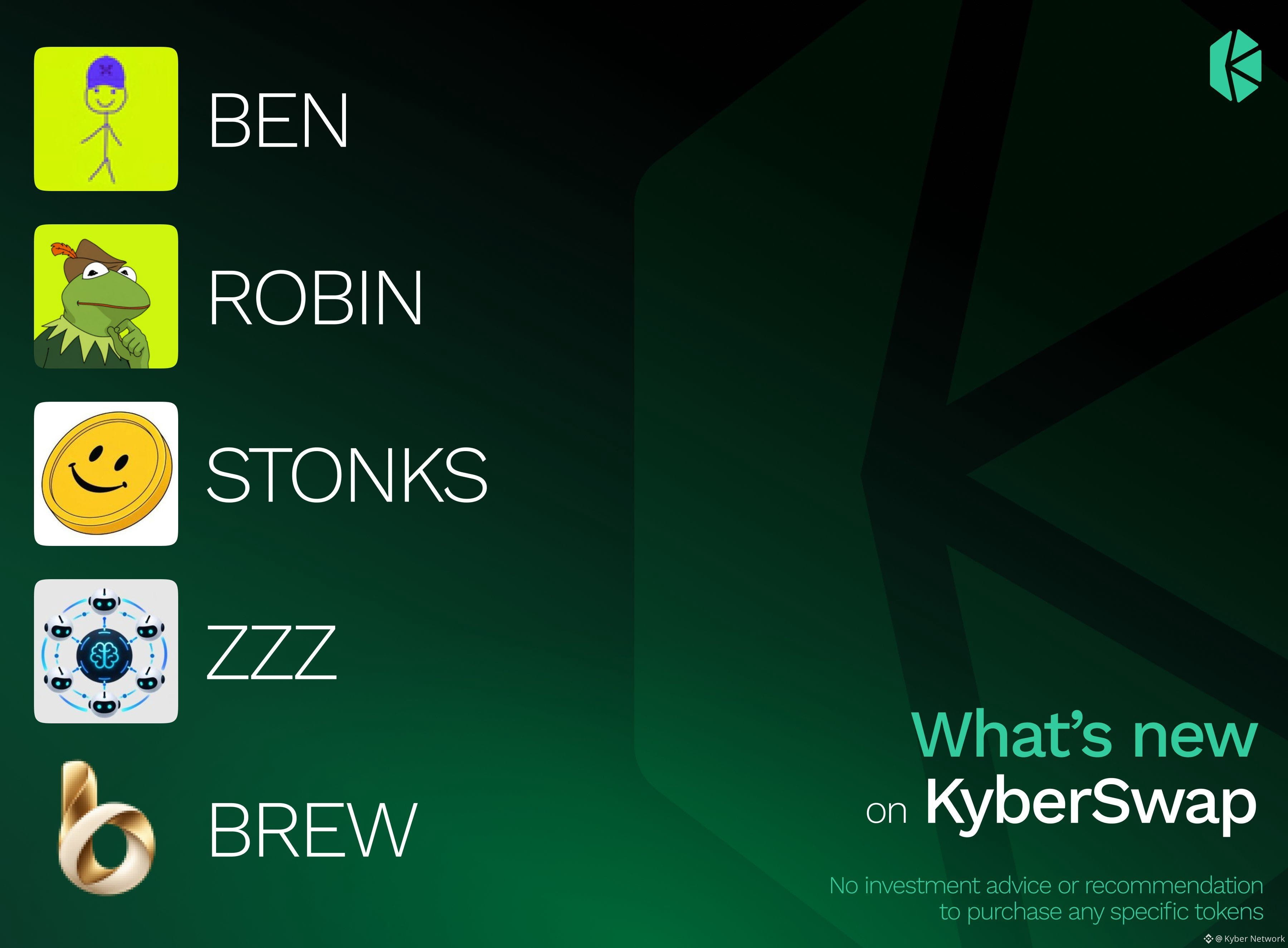
1
178
Daha çox kontent araşdırmaq üçün daxil olun
Binance Square-də qlobal kriptovalyuta istifadəçilərinə qoşulun
⚡️ Kriptovalyuta haqqında ən son və faydalı məlumatları əldə edin.
💬 Dünyanın ən böyük kriptovalyuta birjası tərəfindən etibar edilir.
👍 Doğrulanmış yaradıcılardan gələn real məlumatları kəşf edin.
E-poçt/Telefon nömrəsi
Trenddə olan mövzular
ZcashETFPostsFirstWeeklyOutflow$93.6M
35 baxış
Müzakirə edir: 15
ZCASH ETF YENİLƏNMƏSİ
Zcash-in ETF-i avqustda istifadəyə verildikdən sonra ilk dəfə həftəlik xalis çıxış qeydə alıb.
İnvestorlar $ZEC $1,300-ə doğru enərkən $93,6M vəsait çıxarıb. Grayscale-in ZCSH-i iki həftə əvvəl $98,2M cəlb etmişdi, lakin SoSoValue-ə görə sentyabrın 22-dən bəri heç bir günlük xalis daxilolma qeydə alınmayıb.
ZEC oktyabrın 3-də təxminən $1,308 səviyyəsində idi; həftə ərzində təxminən 17,5% düşüb və son $1,690 pikindən təxminən 23% aşağıdır.
$ZEC
Vicky-143
·0 bəyənmə
·133 baxış
GreekPoliceBustCryptoScamRingArrest17
103 baxış
Müzakirə edir: 27
BitcoinRejectedAt$87K
46,633 baxış
Müzakirə edir: 83