

Gregory_fs
18 Paylaşımlar

Gregory_fs
Şikayət et
İstifadəçini blokla
NOTHING is imposible.
Crypto Market can be predicted,
You just need to be persistant and patient.
Açıq ticarət
Təsadüfi treyder
5.6 il
7 İzlənilir
2 İzləyicilər
12 Bəyəndi
Postlar
Portfel
·
--

Məqalə
Tərcüməyə bax
Ethereum – Part 2: The Hack That Changed Everything#trandingtopic
After the launch of $ETH
{spot}(ETHUSDT)
, the concept of smart contracts began to attract increasing interest.
If you can program money and rules directly onto the blockchain, you can attempt to build organizations, financial applications, and systems that operate without a central authority.
In 2016, one of the most ambitious attempts was The DAO.
The DAO attracted a massive amount of Ether for that time.
Everything seemed to be going according to plan.
Until someone discovered a vulnerability in the code.
And that was when theory met reality.
An attacker exploited the vulnerability and managed to redirect a significant amount of funds.
The Ethereum community found itself facing a very unpleasant dilemma:
What do you do when a smart contract does exactly what its code allows, yet the outcome is something people never intended?
"Code is law"... until things get complicated.
One of the fundamental ideas behind blockchain technology is that rules are defined by code.
But now, there was a problem.
If we strictly adhere to the code, the stolen funds remain where they are.
If we modify the blockchain to recover the funds, we are altering its history.
The community debated the issue intensely.
Ultimately, the decision was made to execute a hard fork.
The blockchain split into two versions.
One continued under the name Ethereum.
The other became Ethereum Classic.
It was a pivotal moment for the crypto industry, as it demonstrated that behind the seemingly mathematical and impersonal technology, there are still people who must make decisions. And people, as we know, have a knack for not always agreeing.
From smart contracts to an entire industry
After 2016, Ethereum continued to develop.
An increasing number of decentralized applications, tokens, and projects built directly on the Ethereum infrastructure began to emerge.
The ICO boom followed in 2017.
Ethereum had already become much more than just a cryptocurrency.
It was a platform.
Developers could create tokens and applications without having to build their own blockchain from scratch.
This contributed enormously to the expansion of the ecosystem.
But success brought a problem with it.
The more people used Ethereum, the more congested the network became.
And when a decentralized network becomes heavily congested, users quickly discover one thing:
gas fees.
Sometimes, the transaction cost more than the item you were trying to buy.
But Ethereum hadn't said its last word yet.
Because the next major issue was far more serious:
energy consumption and the Proof of Work mechanism.
And Ethereum was about to attempt one of the most difficult transitions in blockchain history.
$USDC
Ethereum – Part 2: The Hack That Changed Everything
#trandingtopic
After the launch of $ETH
, the concept of smart contracts began to attract increasing interest.
If you can program money and rules directly onto the blockchain, you can attempt to build organizations, financial applications, and systems that operate without a central authority.
In 2016, one of the most ambitious attempts was The DAO.
The DAO attracted a massive amount of Ether for that time.
Everything seemed to be going according to plan.
Until someone discovered a vulnerability in the code.
And that was when theory met reality.
An attacker exploited the vulnerability and managed to redirect a significant amount of funds.
The Ethereum community found itself facing a very unpleasant dilemma:
What do you do when a smart contract does exactly what its code allows, yet the outcome is something people never intended?
"Code is law"... until things get complicated.
One of the fundamental ideas behind blockchain technology is that rules are defined by code.
But now, there was a problem.
If we strictly adhere to the code, the stolen funds remain where they are.
If we modify the blockchain to recover the funds, we are altering its history.
The community debated the issue intensely.
Ultimately, the decision was made to execute a hard fork.
The blockchain split into two versions.
One continued under the name Ethereum.
The other became Ethereum Classic.
It was a pivotal moment for the crypto industry, as it demonstrated that behind the seemingly mathematical and impersonal technology, there are still people who must make decisions. And people, as we know, have a knack for not always agreeing.
From smart contracts to an entire industry
After 2016, Ethereum continued to develop.
An increasing number of decentralized applications, tokens, and projects built directly on the Ethereum infrastructure began to emerge.
The ICO boom followed in 2017.
Ethereum had already become much more than just a cryptocurrency.
It was a platform.
Developers could create tokens and applications without having to build their own blockchain from scratch.
This contributed enormously to the expansion of the ecosystem.
But success brought a problem with it.
The more people used Ethereum, the more congested the network became.
And when a decentralized network becomes heavily congested, users quickly discover one thing:
gas fees.
Sometimes, the transaction cost more than the item you were trying to buy.
But Ethereum hadn't said its last word yet.
Because the next major issue was far more serious:
energy consumption and the Proof of Work mechanism.
And Ethereum was about to attempt one of the most difficult transitions in blockchain history.
$USDC
After the launch of $ETH
, the concept of smart contracts began to attract increasing interest.
If you can program money and rules directly onto the blockchain, you can attempt to build organizations, financial applications, and systems that operate without a central authority.
In 2016, one of the most ambitious attempts was The DAO.
The DAO attracted a massive amount of Ether for that time.
Everything seemed to be going according to plan.
Until someone discovered a vulnerability in the code.
And that was when theory met reality.
An attacker exploited the vulnerability and managed to redirect a significant amount of funds.
The Ethereum community found itself facing a very unpleasant dilemma:
What do you do when a smart contract does exactly what its code allows, yet the outcome is something people never intended?
"Code is law"... until things get complicated.
One of the fundamental ideas behind blockchain technology is that rules are defined by code.
But now, there was a problem.
If we strictly adhere to the code, the stolen funds remain where they are.
If we modify the blockchain to recover the funds, we are altering its history.
The community debated the issue intensely.
Ultimately, the decision was made to execute a hard fork.
The blockchain split into two versions.
One continued under the name Ethereum.
The other became Ethereum Classic.
It was a pivotal moment for the crypto industry, as it demonstrated that behind the seemingly mathematical and impersonal technology, there are still people who must make decisions. And people, as we know, have a knack for not always agreeing.
From smart contracts to an entire industry
After 2016, Ethereum continued to develop.
An increasing number of decentralized applications, tokens, and projects built directly on the Ethereum infrastructure began to emerge.
The ICO boom followed in 2017.
Ethereum had already become much more than just a cryptocurrency.
It was a platform.
Developers could create tokens and applications without having to build their own blockchain from scratch.
This contributed enormously to the expansion of the ecosystem.
But success brought a problem with it.
The more people used Ethereum, the more congested the network became.
And when a decentralized network becomes heavily congested, users quickly discover one thing:
gas fees.
Sometimes, the transaction cost more than the item you were trying to buy.
But Ethereum hadn't said its last word yet.
Because the next major issue was far more serious:
energy consumption and the Proof of Work mechanism.
And Ethereum was about to attempt one of the most difficult transitions in blockchain history.
$USDC
72
·
--

Məqalə
Tərcüməyə bax
Ethereum – Part 1: How It All Began #story
By 2013, Bitcoin had already demonstrated that money could exist on the internet without being controlled by a bank. For most people, that was already complex enough.
For Vitalik Buterin, however, it wasn't enough.
The young programmer began to wonder if the technology behind Bitcoin—blockchain—could be used for something more than just transferring money.
His idea was ambitious: if a blockchain can store transactions, why couldn't it also store programs that execute automatically?
That is how the concept of Ethereum emerged.
In November 2013, Vitalik published the Ethereum Whitepaper, describing a generalized blockchain platform capable of running smart contracts and decentralized applications.
In short, Bitcoin said:
"We can transfer money without a bank."
Ethereum proposed:
"Yes, but what if we also built a decentralized computer?"
And, apparently, no one told him it would be simpler to just stop there.
2014: The Project Comes to Life
In 2014, the Ethereum project began to transform from an idea into a real project.
Key team members joined, and the technical components required for the future network were developed.
Gavin Wood’s "Yellow Paper" was also published, formally describing the technical aspects of the Ethereum protocol.
The Ethereum crowdsale also took place in 2014.
Investors could purchase Ether using Bitcoin. The campaign raised approximately 31,000 BTC—equivalent to about $18 million at the time. And here comes one of the favorite jokes in crypto history.
31,000 BTC.
If someone had held onto those bitcoins until today, the math would likely have become far more interesting than any economics lesson.
2015: Ethereum enters the scene
On July 30, 2015, Ethereum officially launched its mainnet.
The first block was mined, and the network became operational.
However, Ethereum wasn't yet the giant we know today.
It was, in essence, a new, experimental infrastructure designed primarily for developers.
But the concept was revolutionary.
Ethereum offered more than just a currency.
It offered developers the ability to build programs that run on the blockchain.
And that was set to completely change the crypto industry.
The catch?
If you build a platform that is interesting enough, people will inevitably start doing very interesting things on it.
And sometimes, very, very expensive things.
Because the next chapter of Ethereum was about to begin with a project called The DAO.
And that is where the story gets much more complicated.
$ETH $USDC $USDT
{spot}(ETHUSDT)
Ethereum – Part 1: How It All Began
#story
By 2013, Bitcoin had already demonstrated that money could exist on the internet without being controlled by a bank. For most people, that was already complex enough.
For Vitalik Buterin, however, it wasn't enough.
The young programmer began to wonder if the technology behind Bitcoin—blockchain—could be used for something more than just transferring money.
His idea was ambitious: if a blockchain can store transactions, why couldn't it also store programs that execute automatically?
That is how the concept of Ethereum emerged.
In November 2013, Vitalik published the Ethereum Whitepaper, describing a generalized blockchain platform capable of running smart contracts and decentralized applications.
In short, Bitcoin said:
"We can transfer money without a bank."
Ethereum proposed:
"Yes, but what if we also built a decentralized computer?"
And, apparently, no one told him it would be simpler to just stop there.
2014: The Project Comes to Life
In 2014, the Ethereum project began to transform from an idea into a real project.
Key team members joined, and the technical components required for the future network were developed.
Gavin Wood’s "Yellow Paper" was also published, formally describing the technical aspects of the Ethereum protocol.
The Ethereum crowdsale also took place in 2014.
Investors could purchase Ether using Bitcoin. The campaign raised approximately 31,000 BTC—equivalent to about $18 million at the time. And here comes one of the favorite jokes in crypto history.
31,000 BTC.
If someone had held onto those bitcoins until today, the math would likely have become far more interesting than any economics lesson.
2015: Ethereum enters the scene
On July 30, 2015, Ethereum officially launched its mainnet.
The first block was mined, and the network became operational.
However, Ethereum wasn't yet the giant we know today.
It was, in essence, a new, experimental infrastructure designed primarily for developers.
But the concept was revolutionary.
Ethereum offered more than just a currency.
It offered developers the ability to build programs that run on the blockchain.
And that was set to completely change the crypto industry.
The catch?
If you build a platform that is interesting enough, people will inevitably start doing very interesting things on it.
And sometimes, very, very expensive things.
Because the next chapter of Ethereum was about to begin with a project called The DAO.
And that is where the story gets much more complicated.
$ETH $USDC $USDT
By 2013, Bitcoin had already demonstrated that money could exist on the internet without being controlled by a bank. For most people, that was already complex enough.
For Vitalik Buterin, however, it wasn't enough.
The young programmer began to wonder if the technology behind Bitcoin—blockchain—could be used for something more than just transferring money.
His idea was ambitious: if a blockchain can store transactions, why couldn't it also store programs that execute automatically?
That is how the concept of Ethereum emerged.
In November 2013, Vitalik published the Ethereum Whitepaper, describing a generalized blockchain platform capable of running smart contracts and decentralized applications.
In short, Bitcoin said:
"We can transfer money without a bank."
Ethereum proposed:
"Yes, but what if we also built a decentralized computer?"
And, apparently, no one told him it would be simpler to just stop there.
2014: The Project Comes to Life
In 2014, the Ethereum project began to transform from an idea into a real project.
Key team members joined, and the technical components required for the future network were developed.
Gavin Wood’s "Yellow Paper" was also published, formally describing the technical aspects of the Ethereum protocol.
The Ethereum crowdsale also took place in 2014.
Investors could purchase Ether using Bitcoin. The campaign raised approximately 31,000 BTC—equivalent to about $18 million at the time. And here comes one of the favorite jokes in crypto history.
31,000 BTC.
If someone had held onto those bitcoins until today, the math would likely have become far more interesting than any economics lesson.
2015: Ethereum enters the scene
On July 30, 2015, Ethereum officially launched its mainnet.
The first block was mined, and the network became operational.
However, Ethereum wasn't yet the giant we know today.
It was, in essence, a new, experimental infrastructure designed primarily for developers.
But the concept was revolutionary.
Ethereum offered more than just a currency.
It offered developers the ability to build programs that run on the blockchain.
And that was set to completely change the crypto industry.
The catch?
If you build a platform that is interesting enough, people will inevitably start doing very interesting things on it.
And sometimes, very, very expensive things.
Because the next chapter of Ethereum was about to begin with a project called The DAO.
And that is where the story gets much more complicated.
$ETH $USDC $USDT
76
·
--
Artım
Tərcüməyə bax
#TradingCommunity
$USDT The crypto market is one of the few places where you can open the app in the morning and discover you’ve become 20% richer, only to wonder by evening if you hadn't just dreamt it all.
$RAY In crypto, the only certainty is uncertainty. The rest is just charts, probabilities, and people saying "to the moon" with extraordinary conviction. 🚀🚀🚀🚀🚀🚀
$DOT
{spot}(DOTUSDT)
#TradingCommunity
$USDT The crypto market is one of the few places where you can open the app in the morning and discover you’ve become 20% richer, only to wonder by evening if you hadn't just dreamt it all.
$RAY In crypto, the only certainty is uncertainty. The rest is just charts, probabilities, and people saying "to the moon" with extraordinary conviction. 🚀🚀🚀🚀🚀🚀
$DOT
$USDT The crypto market is one of the few places where you can open the app in the morning and discover you’ve become 20% richer, only to wonder by evening if you hadn't just dreamt it all.
$RAY In crypto, the only certainty is uncertainty. The rest is just charts, probabilities, and people saying "to the moon" with extraordinary conviction. 🚀🚀🚀🚀🚀🚀
$DOT
263
·
--
Artım
#TrendingTopic
$RAY
{spot}(RAYUSDT)
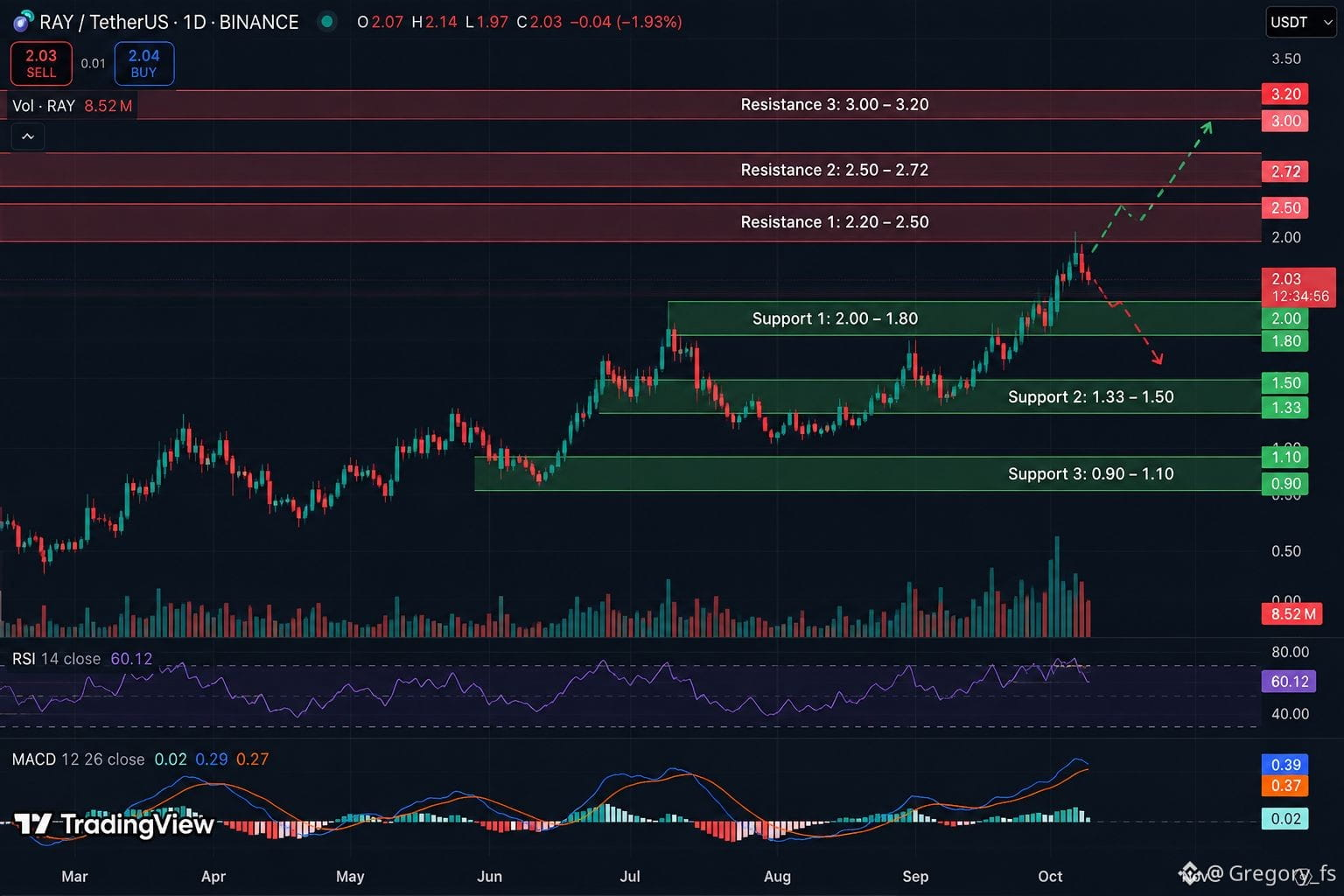
hazırda $2.0–2.1 civarında ticarət edir və son bir ayda əhəmiyyətli qazancla güclü momentum göstərir. Raydium-un əsas göstəriciləri yüksək TVL, artan ticarət aktivliyi və protokol haqları hesabına maliyyələşdirilən RAY geri alımları ilə dəstəklənməkdədir. Texniki baxımdan $2.00 mühüm dəstək səviyyəsidir, halbuki $2.50-dən yuxarı hərəkət $3.00-a doğru yolu aça bilər. Növbəti ay üçün RAY ümumi kripto və Solana bazar şərtlərindən asılı olaraq son dərəcə volatilliklə $1.40–3.20 aralığında ticarət edə bilər.
Sən bununla bağlı nə düşünürsən?
$USDT
#TrendingTopic
$RAY
hazırda $2.0–2.1 civarında ticarət edir və son bir ayda əhəmiyyətli qazancla güclü momentum göstərir. Raydium-un əsas göstəriciləri yüksək TVL, artan ticarət aktivliyi və protokol haqları hesabına maliyyələşdirilən RAY geri alımları ilə dəstəklənməkdədir. Texniki baxımdan $2.00 mühüm dəstək səviyyəsidir, halbuki $2.50-dən yuxarı hərəkət $3.00-a doğru yolu aça bilər. Növbəti ay üçün RAY ümumi kripto və Solana bazar şərtlərindən asılı olaraq son dərəcə volatilliklə $1.40–3.20 aralığında ticarət edə bilər.
Sən bununla bağlı nə düşünürsən?
$USDT
$RAY
hazırda $2.0–2.1 civarında ticarət edir və son bir ayda əhəmiyyətli qazancla güclü momentum göstərir. Raydium-un əsas göstəriciləri yüksək TVL, artan ticarət aktivliyi və protokol haqları hesabına maliyyələşdirilən RAY geri alımları ilə dəstəklənməkdədir. Texniki baxımdan $2.00 mühüm dəstək səviyyəsidir, halbuki $2.50-dən yuxarı hərəkət $3.00-a doğru yolu aça bilər. Növbəti ay üçün RAY ümumi kripto və Solana bazar şərtlərindən asılı olaraq son dərəcə volatilliklə $1.40–3.20 aralığında ticarət edə bilər.
Sən bununla bağlı nə düşünürsən?
$USDT
1
465
·
--
Artım
Tərcüməyə bax
#TrendingTopic
Now it's YOUR turn,
What do you suggest I buy for the short to medium term?
I have around 700 $USDT .
Write in the comments.
#TrendingTopic
Now it's YOUR turn,
What do you suggest I buy for the short to medium term?
I have around 700 $USDT .
Write in the comments.
Now it's YOUR turn,
What do you suggest I buy for the short to medium term?
I have around 700 $USDT .
Write in the comments.
2
2
751
·
--
Artım
Tərcüməyə bax
#TradingSignals
How are you feeling today?
What did I tell you last week?
This is just the beginning—take my word for it, the future is promising.
$RAY
$XRP
$DOT
#TradingSignals
How are you feeling today?
What did I tell you last week?
This is just the beginning—take my word for it, the future is promising.
$RAY
$XRP
$DOT
How are you feeling today?
What did I tell you last week?
This is just the beginning—take my word for it, the future is promising.
$RAY
$XRP
$DOT

3
765
·
--
Artım
#TrendingTopic
Təsəvvür edin:
Kim daha çox peşman olar:
Kripto alıb indi bir az zərərdə olan şəxs, yoxsa
Almayan və bazar qalxdığı üçün indi heç nə qazana bilməyən şəxs?
Bir az alın; sonradan mənə təşəkkür edəcəksiniz.
$APT
$DOT
$RAY
{spot}(RAYUSDT)
#TrendingTopic
Təsəvvür edin:
Kim daha çox peşman olar:
Kripto alıb indi bir az zərərdə olan şəxs, yoxsa
Almayan və bazar qalxdığı üçün indi heç nə qazana bilməyən şəxs?
Bir az alın; sonradan mənə təşəkkür edəcəksiniz.
$APT
$DOT
$RAY
Təsəvvür edin:
Kim daha çox peşman olar:
Kripto alıb indi bir az zərərdə olan şəxs, yoxsa
Almayan və bazar qalxdığı üçün indi heç nə qazana bilməyən şəxs?
Bir az alın; sonradan mənə təşəkkür edəcəksiniz.
$APT
$DOT
$RAY
Person 1
88%
Person 2
12%
8 Səslər • Səsvermə bağlanıb
2
2.2k
·
--
Artım
#TrendingTopic
Gizlənqaç
Necəsən???
Şəxsi olaraq mən özümü BÜLL kimi hiss edirəm. Necə də olmasın, qarşıma çıxan hər şey yalnız yaşılıqdır... $RAY $DOT $INJ
#TrendingTopic
Gizlənqaç
Necəsən???
Şəxsi olaraq mən özümü BÜLL kimi hiss edirəm. Necə də olmasın, qarşıma çıxan hər şey yalnız yaşılıqdır... $RAY $DOT $INJ
Gizlənqaç
Necəsən???
Şəxsi olaraq mən özümü BÜLL kimi hiss edirəm. Necə də olmasın, qarşıma çıxan hər şey yalnız yaşılıqdır... $RAY $DOT $INJ

2
475
·
--
Artım
#TrendingTopic
#TradingCommunity
Məgər əminsən?
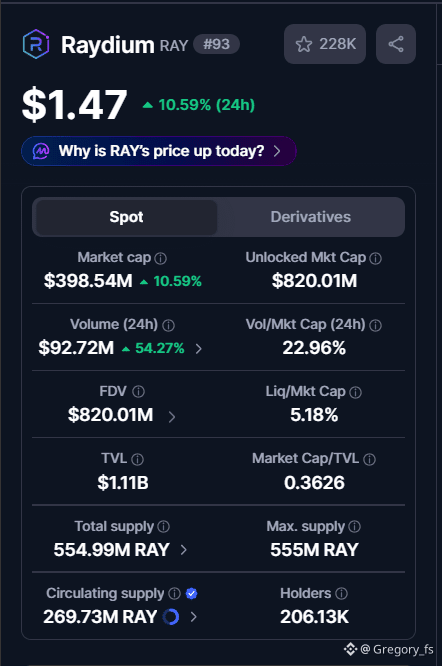
Əlbəttə ki, əminəm—mən həqiqətən RAY-ə inanıram; onun potensialı var və ən son nəticələr mənə daha da çox inam verir.
Mənim portfelim əsasən $RAY -dən ibarətdir, yanında isə $DOT və $INJ var. İndi sən də qoşula bilərsən, elə ki, ikimiz də mənfəətdən yararlanaq.
Mənimlə razısan?
#TrendingTopic
#TradingCommunity
Məgər əminsən?
Əlbəttə ki, əminəm—mən həqiqətən RAY-ə inanıram; onun potensialı var və ən son nəticələr mənə daha da çox inam verir.
Mənim portfelim əsasən $RAY -dən ibarətdir, yanında isə $DOT və $INJ var. İndi sən də qoşula bilərsən, elə ki, ikimiz də mənfəətdən yararlanaq.
Mənimlə razısan?
#TradingCommunity
Məgər əminsən?
Əlbəttə ki, əminəm—mən həqiqətən RAY-ə inanıram; onun potensialı var və ən son nəticələr mənə daha da çox inam verir.
Mənim portfelim əsasən $RAY -dən ibarətdir, yanında isə $DOT və $INJ var. İndi sən də qoşula bilərsən, elə ki, ikimiz də mənfəətdən yararlanaq.
Mənimlə razısan?
591
·
--
Artım
{spot}(TRUMPUSDT)
#TrendingTopic
CLARITY Aktı ABŞ-da kriptovalyutaların tənzimlənmə qaydasını dəyişəcək.
Rəqəmsal aktivlərin nəzarəti SEC və CFTC arasında bölünəcək və əsasən məhkəmə iddialarına söykənən parçalanmış sistemi əvəz edəcək.
Donald Trump kriptovalyutalarla bağlı yeni etik qaydaları qəbul edib.
Federal rəsmilər və onların həyat yoldaşları əhəmiyyətli kripto iştiraklarını satmalı və ya onları kor (görməz) etibarlı idarəetməyə (blind trust) yerləşdirməli, həmçinin vəzifədə olduqları müddətdə rəqəmsal aktivlərin buraxılmasına və ya sponsorluğuna qadağa qoyulacaq.
Razılaşma uzun müddətdir davam edən siyasi münaqişənin nəticəsidir.
Layihə aylar boyunca Ağ Evin etik məhdudiyyətlərə qarşı çıxışına görə ləngimişdi, lakin yekun mətn indi ştatların baş prokurorlarına da bu qaydaların icrasına imkan verir.
Siz nə düşünürsünüz?
Kaboom Rico?
$USDT
{spot}(USDCUSDT)
#TrendingTopic
CLARITY Aktı ABŞ-da kriptovalyutaların tənzimlənmə qaydasını dəyişəcək.
Rəqəmsal aktivlərin nəzarəti SEC və CFTC arasında bölünəcək və əsasən məhkəmə iddialarına söykənən parçalanmış sistemi əvəz edəcək.
Donald Trump kriptovalyutalarla bağlı yeni etik qaydaları qəbul edib.
Federal rəsmilər və onların həyat yoldaşları əhəmiyyətli kripto iştiraklarını satmalı və ya onları kor (görməz) etibarlı idarəetməyə (blind trust) yerləşdirməli, həmçinin vəzifədə olduqları müddətdə rəqəmsal aktivlərin buraxılmasına və ya sponsorluğuna qadağa qoyulacaq.
Razılaşma uzun müddətdir davam edən siyasi münaqişənin nəticəsidir.
Layihə aylar boyunca Ağ Evin etik məhdudiyyətlərə qarşı çıxışına görə ləngimişdi, lakin yekun mətn indi ştatların baş prokurorlarına da bu qaydaların icrasına imkan verir.
Siz nə düşünürsünüz?
Kaboom Rico?
$USDT
CLARITY Aktı ABŞ-da kriptovalyutaların tənzimlənmə qaydasını dəyişəcək.
Rəqəmsal aktivlərin nəzarəti SEC və CFTC arasında bölünəcək və əsasən məhkəmə iddialarına söykənən parçalanmış sistemi əvəz edəcək.
Donald Trump kriptovalyutalarla bağlı yeni etik qaydaları qəbul edib.
Federal rəsmilər və onların həyat yoldaşları əhəmiyyətli kripto iştiraklarını satmalı və ya onları kor (görməz) etibarlı idarəetməyə (blind trust) yerləşdirməli, həmçinin vəzifədə olduqları müddətdə rəqəmsal aktivlərin buraxılmasına və ya sponsorluğuna qadağa qoyulacaq.
Razılaşma uzun müddətdir davam edən siyasi münaqişənin nəticəsidir.
Layihə aylar boyunca Ağ Evin etik məhdudiyyətlərə qarşı çıxışına görə ləngimişdi, lakin yekun mətn indi ştatların baş prokurorlarına da bu qaydaların icrasına imkan verir.
Siz nə düşünürsünüz?
Kaboom Rico?
$USDT
KABOOM
75%
NO kaboom
25%
12 Səslər • Səsvermə bağlanıb
3
2k
·
--
Tərcüməyə bax
$ARB The trigger has been hit.
TP1--- 0.159
TP2--- 0.165
TP3--- 0.171
Show me the results in the comments.
{spot}(ARBUSDT)
$ARB The trigger has been hit.
TP1--- 0.159
TP2--- 0.165
TP3--- 0.171
Show me the results in the comments.
TP1--- 0.159
TP2--- 0.165
TP3--- 0.171
Show me the results in the comments.
2
79
·
--
Artım
Tərcüməyə bax
$SYN The right moment—buy now.
TP1--- 0.145
TP2--- 0.149
TP3--- 0.155
{spot}(SYNUSDT)
$SYN The right moment—buy now.
TP1--- 0.145
TP2--- 0.149
TP3--- 0.155
TP1--- 0.145
TP2--- 0.149
TP3--- 0.155
57
·
--
Artım
Tərcüməyə bax
#fedratewatch
I’m not sure if what’s coming next will be good or bad, but I know that taking risks always pays off, so some coins might just go "boom." That’s what everyone is waiting for.
$ETH $RAY $DOT
Just check it out.
#fedratewatch
I’m not sure if what’s coming next will be good or bad, but I know that taking risks always pays off, so some coins might just go "boom." That’s what everyone is waiting for.
$ETH $RAY $DOT
Just check it out.
I’m not sure if what’s coming next will be good or bad, but I know that taking risks always pays off, so some coins might just go "boom." That’s what everyone is waiting for.
$ETH $RAY $DOT
Just check it out.
1
1
394
·
--

1
275
Daha çox kontent araşdırmaq üçün daxil olun
Binance Square-də qlobal kriptovalyuta istifadəçilərinə qoşulun
⚡️ Kriptovalyuta haqqında ən son və faydalı məlumatları əldə edin.
💬 Dünyanın ən böyük kriptovalyuta birjası tərəfindən etibar edilir.
👍 Doğrulanmış yaradıcılardan gələn real məlumatları kəşf edin.
E-poçt/Telefon nömrəsi
Trenddə olan mövzular
QNTRises287%
3,558 baxış
Müzakirə edir: 153
🚨 QNT PARTLADI +287%! 🔥
+287% NORMAL HƏRƏKƏT DEYİL. 👀
QNT birdən-birə parabolikləşib, treyderləri yüksək ayıqlığa salır, çünki impuls və həcm artır.
⚠️ Bu qədər sərt bir hərəkətdən sonra FOMO təhlükəli ola bilər — volatillik
hər iki istiqamətdə də dəyişə bilər.
📈 Diqqət: davamlı həcm + sıçrayış (breakout) təsdiqi
📉 Risk: kəskin mənfəət götürmə / geri dönüş (pullback)
🔥 QNT yenicə başlayır… yoxsa bu hərəkət böyük bir korreksiya üçün hazırdır?
Sənin QNT hədəfin nədir? 👇
#qntrises287% #QNT #Quant #crypto #BinanceSquare
$QNT
ASHFAQ NAEEM
·3 bəyənmə
·1.7k baxış
HSBCNamesStablecoinRedCoinForPhasedLaunch
0 baxış
Müzakirə edir: 0
TrumpRejectsAIRulesForVoluntaryAudits
7,942 baxış
Müzakirə edir: 291