

S H A H_
2k Paylaşımlar

S H A H_
Şikayət et
İstifadəçini blokla
Building knowledge in crypto | Sharing alpha, insights & trends. NFA DYOR
Açıq ticarət
Daimi treyder
3.5 il
350 İzlənilir
1.0K+ İzləyicilər
2.5K+ Bəyəndi
Postlar
Portfel
Hamısı
Sitatlar
Canlı
·
--
Tərcüməyə bax
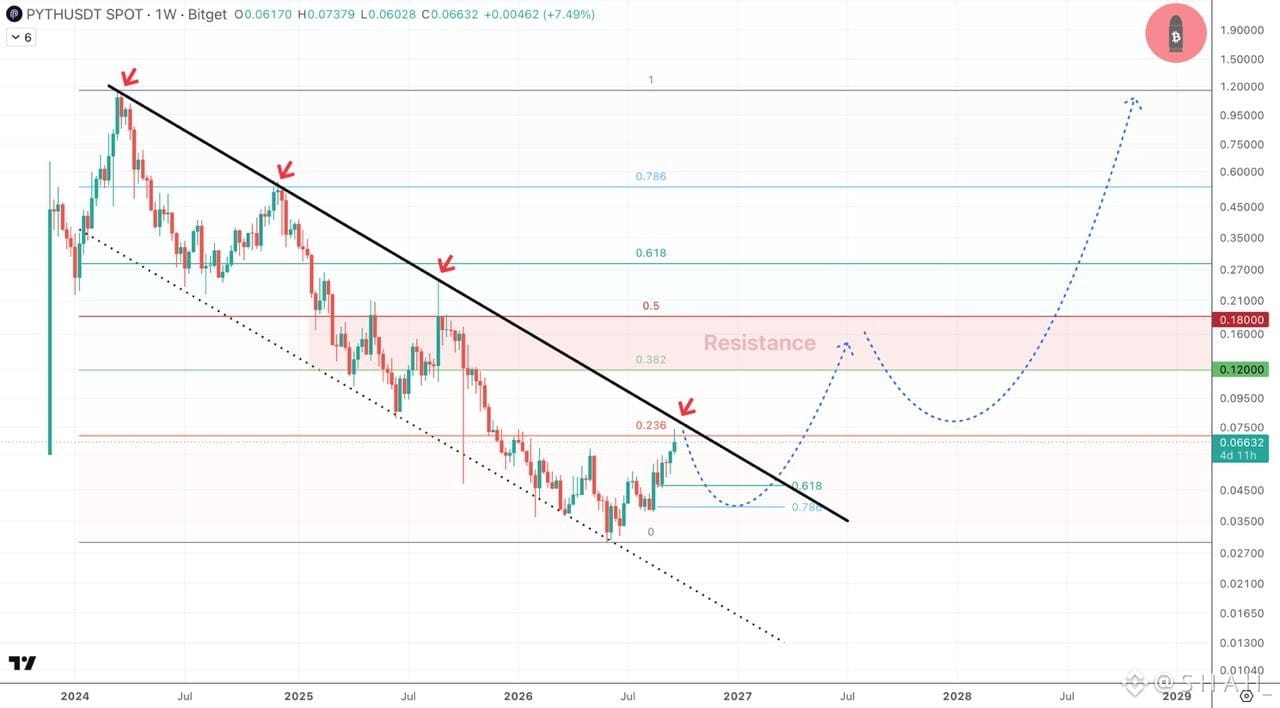
$PYTH Macro chart
$PYTH is facing Resistance here and I wouldn't be surprised to see a pullback to $0.04-0.05 before breaking out of this giant Downward Channel 📈
🔨 Major Resistance/Target 1 - $0.12-0.18
🎯 My main targets are $0.5 - $1 - $1.8
$PYTH Macro chart
$PYTH is facing Resistance here and I wouldn't be surprised to see a pullback to $0.04-0.05 before breaking out of this giant Downward Channel 📈
🔨 Major Resistance/Target 1 - $0.12-0.18
🎯 My main targets are $0.5 - $1 - $1.8
$PYTH is facing Resistance here and I wouldn't be surprised to see a pullback to $0.04-0.05 before breaking out of this giant Downward Channel 📈
🔨 Major Resistance/Target 1 - $0.12-0.18
🎯 My main targets are $0.5 - $1 - $1.8
93
·
--
Tərcüməyə bax
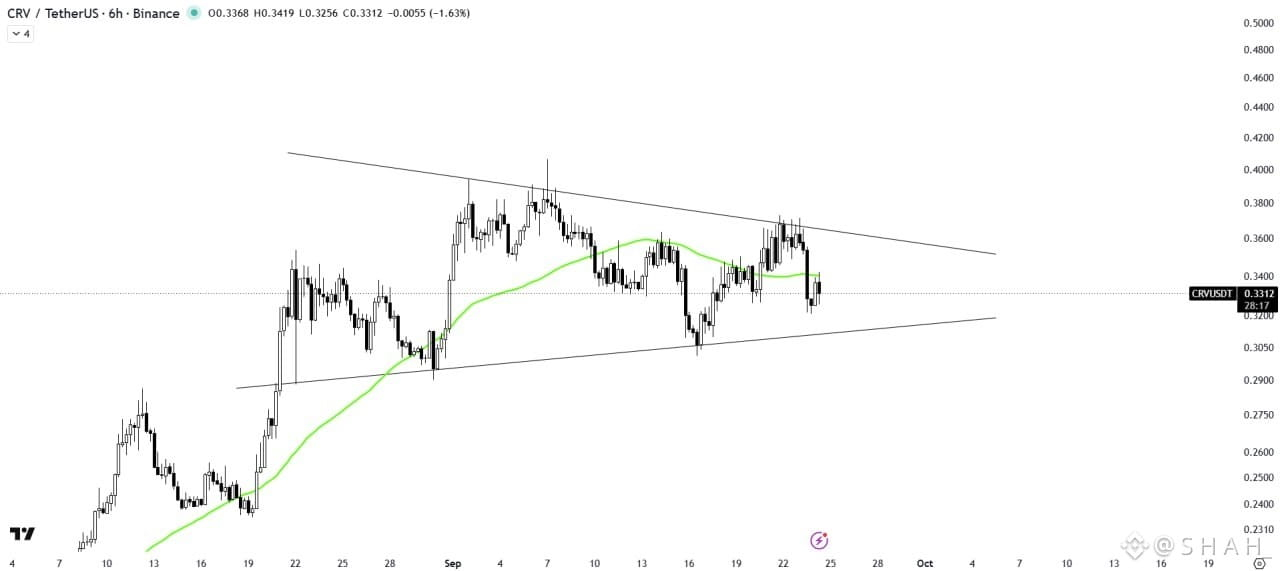
$CRV /USDT ANALYSIS
CRV is consolidating within the symmetrical triangle pattern and is currently trading below the 50MA.
The 50MA is acting as a key resistance barrier above the current price action.
We need to wait for a solid breakout or breakdown to confirm the next directional move.
$CRV /USDT ANALYSIS
CRV is consolidating within the symmetrical triangle pattern and is currently trading below the 50MA.
The 50MA is acting as a key resistance barrier above the current price action.
We need to wait for a solid breakout or breakdown to confirm the next directional move.
CRV is consolidating within the symmetrical triangle pattern and is currently trading below the 50MA.
The 50MA is acting as a key resistance barrier above the current price action.
We need to wait for a solid breakout or breakdown to confirm the next directional move.
80
·
--
Azalma
Tərcüməyə bax
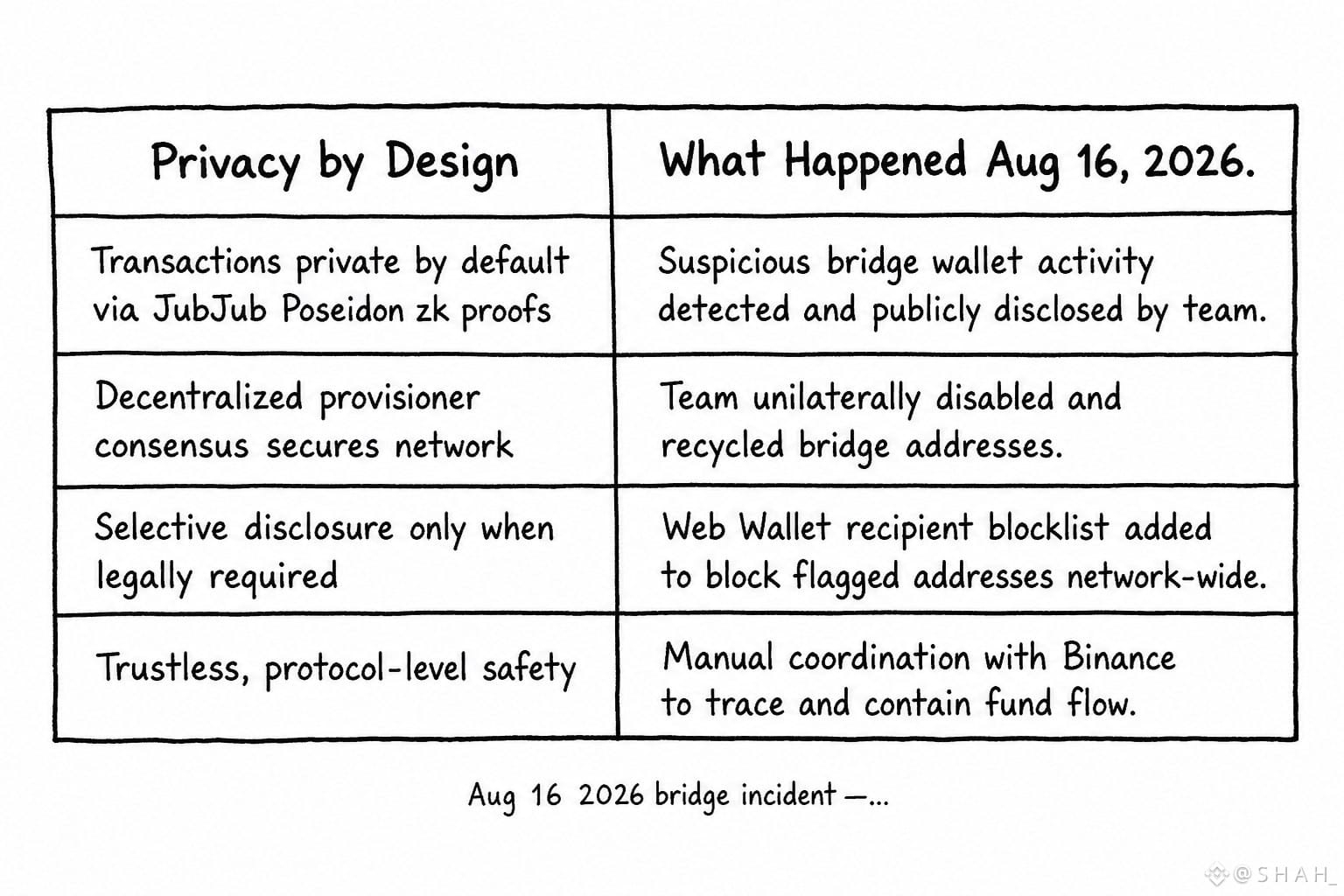
Dusk's JubJub curve implementation for a CreatorPad task and honestly the crypto wasn't the part that stuck with me. It was something adjacent — the bridge incident from Aug 16.
Quick context: #Dusk detected suspicious activity on a team managed bridge wallet, paused bridge services, recycled the compromised addresses and rolled out a Web Wallet recipient blocklist. All within hours. @DuskFoundation coordinated with Binance once part of the flow touched their platform. Fine, standard incident response.
This is a chain built around private by default, auditable when required using JubJub Poseidon specifically so transactions don't leak metadata. And the fix for a real security event was a centralized blocklist address recycling, decided and executed by the team. Not governance. Not some on chain slashing mechanism triggered by provisioners. Just the team, moving fast, doing exactly what a custodian would do.
Not a criticism, actually kind of reassuring speed wise. But it's a clean example of the gap between privacy preserving protocol as the pitch and centralized ops team with emergency levers as the actual safety net in practice. $DUSK price barely blinked, which tells you the market read it the same way I did.
At what point does that ops layer get formalized on-chain, or does it just stay a quiet assumption everyone's fine with until it isn't?
@Dusk_Foundation $DUSK #dusk
Dusk's JubJub curve implementation for a CreatorPad task and honestly the crypto wasn't the part that stuck with me. It was something adjacent — the bridge incident from Aug 16.
Quick context: #Dusk detected suspicious activity on a team managed bridge wallet, paused bridge services, recycled the compromised addresses and rolled out a Web Wallet recipient blocklist. All within hours. @DuskFoundation coordinated with Binance once part of the flow touched their platform. Fine, standard incident response.
This is a chain built around private by default, auditable when required using JubJub Poseidon specifically so transactions don't leak metadata. And the fix for a real security event was a centralized blocklist address recycling, decided and executed by the team. Not governance. Not some on chain slashing mechanism triggered by provisioners. Just the team, moving fast, doing exactly what a custodian would do.
Not a criticism, actually kind of reassuring speed wise. But it's a clean example of the gap between privacy preserving protocol as the pitch and centralized ops team with emergency levers as the actual safety net in practice. $DUSK price barely blinked, which tells you the market read it the same way I did.
At what point does that ops layer get formalized on-chain, or does it just stay a quiet assumption everyone's fine with until it isn't?
@Dusk $DUSK #dusk
Quick context: #Dusk detected suspicious activity on a team managed bridge wallet, paused bridge services, recycled the compromised addresses and rolled out a Web Wallet recipient blocklist. All within hours. @DuskFoundation coordinated with Binance once part of the flow touched their platform. Fine, standard incident response.
This is a chain built around private by default, auditable when required using JubJub Poseidon specifically so transactions don't leak metadata. And the fix for a real security event was a centralized blocklist address recycling, decided and executed by the team. Not governance. Not some on chain slashing mechanism triggered by provisioners. Just the team, moving fast, doing exactly what a custodian would do.
Not a criticism, actually kind of reassuring speed wise. But it's a clean example of the gap between privacy preserving protocol as the pitch and centralized ops team with emergency levers as the actual safety net in practice. $DUSK price barely blinked, which tells you the market read it the same way I did.
At what point does that ops layer get formalized on-chain, or does it just stay a quiet assumption everyone's fine with until it isn't?
@Dusk $DUSK #dusk
1
2
94
·
--
Tərcüməyə bax
From Bug Bounties to 24/7 Monitoring one thing that stuck with me... TermMax security setup and almost skimmed past the number that actually mattered.
TVL sitting at $31.22M right now, down 7.2% over the past 30 days, while fees stayed steady around $19.9K. Small protocol, quiet outflow.
Nobody's panicking, nobody's tweeting about it either. the bug bounty caps critical payouts at $50K, calculated as 10% of funds directly at risk at time of submission.
So the reward literally scales with how much is actually in the pool that day... which means the incentive to report goes down as TVL drains, not up. that's the opposite of what you'd want during a slow bleed like this one.
Pair that with the Hypernative 24/7 on chain monitoring layer and it starts looking less like always watching and more like watching proportionally to what's left. Not a red flag exactly, just… a design detail that doesn't show up in the marketing copy and kept staring at that 7.2% number.
Does declining TVL quietly shrink your own security budget without anyone announcing it?
@termmax #TermMax
From Bug Bounties to 24/7 Monitoring one thing that stuck with me... TermMax security setup and almost skimmed past the number that actually mattered.
TVL sitting at $31.22M right now, down 7.2% over the past 30 days, while fees stayed steady around $19.9K. Small protocol, quiet outflow.
Nobody's panicking, nobody's tweeting about it either. the bug bounty caps critical payouts at $50K, calculated as 10% of funds directly at risk at time of submission.
So the reward literally scales with how much is actually in the pool that day... which means the incentive to report goes down as TVL drains, not up. that's the opposite of what you'd want during a slow bleed like this one.
Pair that with the Hypernative 24/7 on chain monitoring layer and it starts looking less like always watching and more like watching proportionally to what's left. Not a red flag exactly, just… a design detail that doesn't show up in the marketing copy and kept staring at that 7.2% number.
Does declining TVL quietly shrink your own security budget without anyone announcing it?
@TermMax #TermMax
TVL sitting at $31.22M right now, down 7.2% over the past 30 days, while fees stayed steady around $19.9K. Small protocol, quiet outflow.
Nobody's panicking, nobody's tweeting about it either. the bug bounty caps critical payouts at $50K, calculated as 10% of funds directly at risk at time of submission.
So the reward literally scales with how much is actually in the pool that day... which means the incentive to report goes down as TVL drains, not up. that's the opposite of what you'd want during a slow bleed like this one.
Pair that with the Hypernative 24/7 on chain monitoring layer and it starts looking less like always watching and more like watching proportionally to what's left. Not a red flag exactly, just… a design detail that doesn't show up in the marketing copy and kept staring at that 7.2% number.
Does declining TVL quietly shrink your own security budget without anyone announcing it?
@TermMax #TermMax
1
2
65
·
--
Tərcüməyə bax
Dusk's bridge infra, half expecting the usual zk = untraceable marketing loop and then ran straight into the Aug 16 incident instead.
Team caught suspicious activity on a wallet tied to bridge ops, pulled the plug on the affected addresses and rolled out a Web Wallet recipient blocklist almost immediately.
The whole pitch is "private by default, accountable when required." Fine, sounds nice on a landing page. But watching it happen live was different.
The blocklist wasn't some optional compliance module tucked away for institutions later it went live fast, functioning as an actual operational safety valve.
Selective disclosure isn't just a regulatory checkbox here, it's the thing that let them contain a live problem without freezing the whole chain.
Made me pause a bit, honestly.
I went in assuming auditable privacy was mostly a story for banks and RWA issuers down the line the advanced tier feature nobody touches yet. Turns out it's also just… infrastructure hygiene. Default users benefit from it whether they notice or not.
Still chewing on this one if the accountability layer is what saves you during an incident, is privacy by default really the headline feature, or is it the audit trail underneath doing the real work?
@Dusk_Foundation $DUSK #dusk
Dusk's bridge infra, half expecting the usual zk = untraceable marketing loop and then ran straight into the Aug 16 incident instead.
Team caught suspicious activity on a wallet tied to bridge ops, pulled the plug on the affected addresses and rolled out a Web Wallet recipient blocklist almost immediately.
The whole pitch is "private by default, accountable when required." Fine, sounds nice on a landing page. But watching it happen live was different.
The blocklist wasn't some optional compliance module tucked away for institutions later it went live fast, functioning as an actual operational safety valve.
Selective disclosure isn't just a regulatory checkbox here, it's the thing that let them contain a live problem without freezing the whole chain.
Made me pause a bit, honestly.
I went in assuming auditable privacy was mostly a story for banks and RWA issuers down the line the advanced tier feature nobody touches yet. Turns out it's also just… infrastructure hygiene. Default users benefit from it whether they notice or not.
Still chewing on this one if the accountability layer is what saves you during an incident, is privacy by default really the headline feature, or is it the audit trail underneath doing the real work?
@Dusk $DUSK #dusk
Team caught suspicious activity on a wallet tied to bridge ops, pulled the plug on the affected addresses and rolled out a Web Wallet recipient blocklist almost immediately.
The whole pitch is "private by default, accountable when required." Fine, sounds nice on a landing page. But watching it happen live was different.
The blocklist wasn't some optional compliance module tucked away for institutions later it went live fast, functioning as an actual operational safety valve.
Selective disclosure isn't just a regulatory checkbox here, it's the thing that let them contain a live problem without freezing the whole chain.
Made me pause a bit, honestly.
I went in assuming auditable privacy was mostly a story for banks and RWA issuers down the line the advanced tier feature nobody touches yet. Turns out it's also just… infrastructure hygiene. Default users benefit from it whether they notice or not.
Still chewing on this one if the accountability layer is what saves you during an incident, is privacy by default really the headline feature, or is it the audit trail underneath doing the real work?
@Dusk $DUSK #dusk
1
2
78
·
--
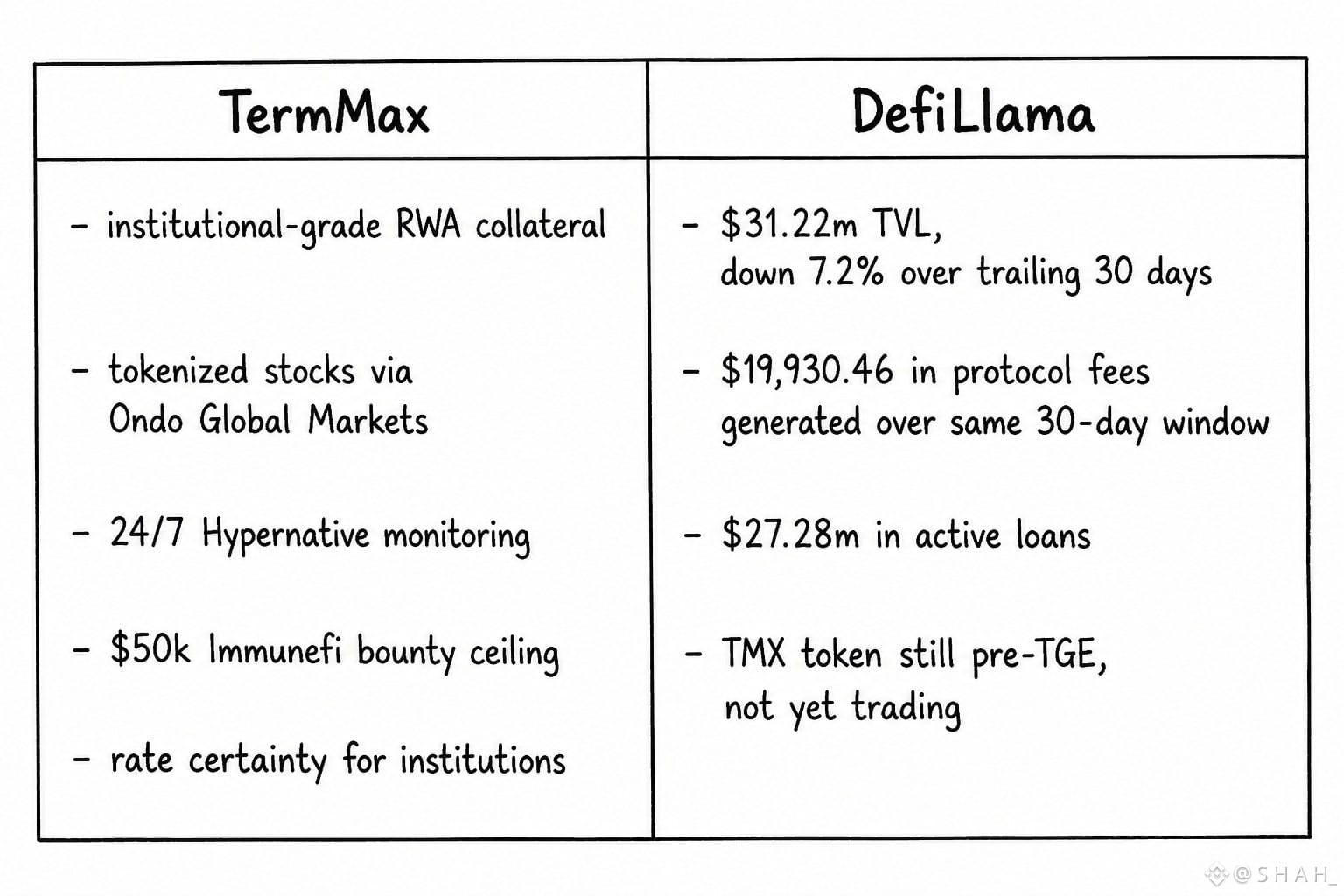
TermMax mənim feedimdə daim çıxırdı: 24/7 monitorinq, bug bounty dəstəyi. Ona görə də nəhayət pablisinqə yox, real rəqəmlərə oturdum.
TVL təxminən 31.22 milyon dollar civarındadır, son 30 gün üzrə 7.2% azalıb. Elə həmin pəncərədə yaradılan ödənişlər? 19,930.46$. İncentivlə şişirdilməmiş real protokol gəliri.
Məndə qalan məqam budur: RWA başlıqlarında tokenləşdirilmiş səhmlər girov kimi təqdim olunur, institusional səviyyədə faiz dərəcəsi barədə aydınlıq var—üstəlik Ondo inteqrasiyası var. Amma bunun üzərində qurulan haqq bazası dürüst desək, olduqca mülayimdir.
Təhlükəsizlik səviyyəsi isə Hypernative tərəfindən real vaxtda izlənir, Immunefi bounty isə 50 min dollara qədərdir, dəyişikliklərin timelock ilə qorunması var. Həqiqətən də hələ tam gəlməyən miqyas üçün qurulub: infrastruktur istifadəyə yetişir, infrastrukturun təsdiqi isə istifadədən öncə görünür.
Bir an şübhə gəldi: onu yoxlayarkən düşündüm ki, sadəcə TVL-in düşüşünü tənəzzül kimi oxuyuram, amma bu, bəlkə də sadəcə sakit mövsümdür.
Bəlkə də əsas dərs budur: “təhlükəsizlik birinci” yanaşma veriləcəyi söz verilən institutlar üçün dizayn edilir—amma bu günün haqq (fee) gəliri sizə kimlərin həqiqətən burada olduğunu göstərir.
Tokenləşdirilmiş səhmlər girov axını on-çeynə çıxanda fee-to-TVL nisbəti necə görünəcək.
@termmax #TermMax
TermMax mənim feedimdə daim çıxırdı: 24/7 monitorinq, bug bounty dəstəyi. Ona görə də nəhayət pablisinqə yox, real rəqəmlərə oturdum.
TVL təxminən 31.22 milyon dollar civarındadır, son 30 gün üzrə 7.2% azalıb. Elə həmin pəncərədə yaradılan ödənişlər? 19,930.46$. İncentivlə şişirdilməmiş real protokol gəliri.
Məndə qalan məqam budur: RWA başlıqlarında tokenləşdirilmiş səhmlər girov kimi təqdim olunur, institusional səviyyədə faiz dərəcəsi barədə aydınlıq var—üstəlik Ondo inteqrasiyası var. Amma bunun üzərində qurulan haqq bazası dürüst desək, olduqca mülayimdir.
Təhlükəsizlik səviyyəsi isə Hypernative tərəfindən real vaxtda izlənir, Immunefi bounty isə 50 min dollara qədərdir, dəyişikliklərin timelock ilə qorunması var. Həqiqətən də hələ tam gəlməyən miqyas üçün qurulub: infrastruktur istifadəyə yetişir, infrastrukturun təsdiqi isə istifadədən öncə görünür.
Bir an şübhə gəldi: onu yoxlayarkən düşündüm ki, sadəcə TVL-in düşüşünü tənəzzül kimi oxuyuram, amma bu, bəlkə də sadəcə sakit mövsümdür.
Bəlkə də əsas dərs budur: “təhlükəsizlik birinci” yanaşma veriləcəyi söz verilən institutlar üçün dizayn edilir—amma bu günün haqq (fee) gəliri sizə kimlərin həqiqətən burada olduğunu göstərir.
Tokenləşdirilmiş səhmlər girov axını on-çeynə çıxanda fee-to-TVL nisbəti necə görünəcək.
@TermMax #TermMax
TVL təxminən 31.22 milyon dollar civarındadır, son 30 gün üzrə 7.2% azalıb. Elə həmin pəncərədə yaradılan ödənişlər? 19,930.46$. İncentivlə şişirdilməmiş real protokol gəliri.
Məndə qalan məqam budur: RWA başlıqlarında tokenləşdirilmiş səhmlər girov kimi təqdim olunur, institusional səviyyədə faiz dərəcəsi barədə aydınlıq var—üstəlik Ondo inteqrasiyası var. Amma bunun üzərində qurulan haqq bazası dürüst desək, olduqca mülayimdir.
Təhlükəsizlik səviyyəsi isə Hypernative tərəfindən real vaxtda izlənir, Immunefi bounty isə 50 min dollara qədərdir, dəyişikliklərin timelock ilə qorunması var. Həqiqətən də hələ tam gəlməyən miqyas üçün qurulub: infrastruktur istifadəyə yetişir, infrastrukturun təsdiqi isə istifadədən öncə görünür.
Bir an şübhə gəldi: onu yoxlayarkən düşündüm ki, sadəcə TVL-in düşüşünü tənəzzül kimi oxuyuram, amma bu, bəlkə də sadəcə sakit mövsümdür.
Bəlkə də əsas dərs budur: “təhlükəsizlik birinci” yanaşma veriləcəyi söz verilən institutlar üçün dizayn edilir—amma bu günün haqq (fee) gəliri sizə kimlərin həqiqətən burada olduğunu göstərir.
Tokenləşdirilmiş səhmlər girov axını on-çeynə çıxanda fee-to-TVL nisbəti necə görünəcək.
@TermMax #TermMax
56
25
322
·
--
Artım
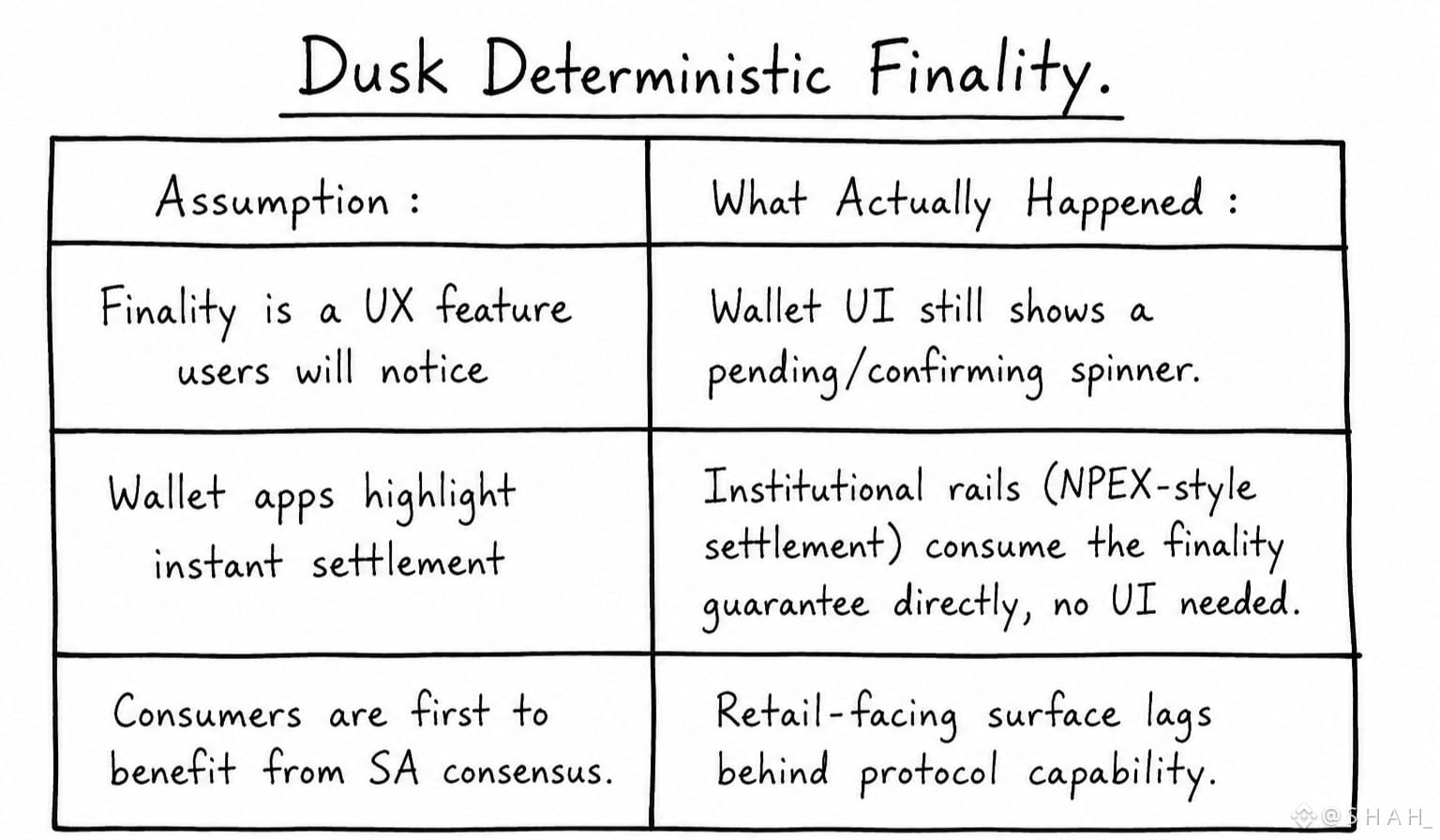
15 avqust şəbəkə yeniləməsindən sonra dusk.network-də təqdim edilən "Dusk explorer" — möhtəşəm bir şey yox, sadəcə adi məhsul qeydləri, amma məni həqiqətən bu zəncirdə "deterministik sonlanma"nın nə demək olduğunu yoxlamağa itələdi; sadəcə ifadəyə uyğun olaraq baş sallamamaq əvəzinə.
SA konsensusu bir raundda heç bir altı-təsdiq gözləməsi olmadan bir bloku sonuncu vəziyyətə gətirir: PoW zəncirlərində gördüyünüz kimi "yəqin qalacaq" tipli ehtimallı bir şey yox. Bu marketinq mətni deyil — sadəcə hazırda mainnetdə blok istehsalçısı axınının necə işlədiyi kimidir. Amma mən kliklədiyim pul kisəsi interfeysi hələ də, yerləşmədən əvvəl bir az pending (gözləyir) spineri göstərirdi; hər hansı bir zəncirdə görəcəyiniz eyni nümunədir.
Deməli, protokol NPEX tipli tokenləşdirilmiş qiymətli kağızların heç bir yerdə probabilistik sonlanma istəmədiyi cür məskunlaşma üçün institutların həqiqətən ehtiyac duyduğu zəmanəti artıq verir, amma pərakəndə istifadəçiyə yönəlmiş görünən tərəf reklamda deyilənlərlə hələ uyğunlaşmayıb.
İlk olaraq fayda görən real istifadəçilər pul kisəsi düyməsinə tapanlar deyil. Bu, arxa plandakı məskunlaşma "rels"ləridir (backend settlement rails). Çox gülməlidir ki, ən parlaq texniki xüsusiyyət standart istifadəçi təcrübəsində ən az görünəndir.
Kim başqa diqqət yetirib ki, institutlar üçün hansı funksiyalar istehlakçı tətbiqində görünməyəndən əvvəl səssizcə göndərilir?
@Dusk_Foundation $DUSK #dusk
15 avqust şəbəkə yeniləməsindən sonra dusk.network-də təqdim edilən "Dusk explorer" — möhtəşəm bir şey yox, sadəcə adi məhsul qeydləri, amma məni həqiqətən bu zəncirdə "deterministik sonlanma"nın nə demək olduğunu yoxlamağa itələdi; sadəcə ifadəyə uyğun olaraq baş sallamamaq əvəzinə.
SA konsensusu bir raundda heç bir altı-təsdiq gözləməsi olmadan bir bloku sonuncu vəziyyətə gətirir: PoW zəncirlərində gördüyünüz kimi "yəqin qalacaq" tipli ehtimallı bir şey yox. Bu marketinq mətni deyil — sadəcə hazırda mainnetdə blok istehsalçısı axınının necə işlədiyi kimidir. Amma mən kliklədiyim pul kisəsi interfeysi hələ də, yerləşmədən əvvəl bir az pending (gözləyir) spineri göstərirdi; hər hansı bir zəncirdə görəcəyiniz eyni nümunədir.
Deməli, protokol NPEX tipli tokenləşdirilmiş qiymətli kağızların heç bir yerdə probabilistik sonlanma istəmədiyi cür məskunlaşma üçün institutların həqiqətən ehtiyac duyduğu zəmanəti artıq verir, amma pərakəndə istifadəçiyə yönəlmiş görünən tərəf reklamda deyilənlərlə hələ uyğunlaşmayıb.
İlk olaraq fayda görən real istifadəçilər pul kisəsi düyməsinə tapanlar deyil. Bu, arxa plandakı məskunlaşma "rels"ləridir (backend settlement rails). Çox gülməlidir ki, ən parlaq texniki xüsusiyyət standart istifadəçi təcrübəsində ən az görünəndir.
Kim başqa diqqət yetirib ki, institutlar üçün hansı funksiyalar istehlakçı tətbiqində görünməyəndən əvvəl səssizcə göndərilir?
@Dusk $DUSK #dusk
SA konsensusu bir raundda heç bir altı-təsdiq gözləməsi olmadan bir bloku sonuncu vəziyyətə gətirir: PoW zəncirlərində gördüyünüz kimi "yəqin qalacaq" tipli ehtimallı bir şey yox. Bu marketinq mətni deyil — sadəcə hazırda mainnetdə blok istehsalçısı axınının necə işlədiyi kimidir. Amma mən kliklədiyim pul kisəsi interfeysi hələ də, yerləşmədən əvvəl bir az pending (gözləyir) spineri göstərirdi; hər hansı bir zəncirdə görəcəyiniz eyni nümunədir.
Deməli, protokol NPEX tipli tokenləşdirilmiş qiymətli kağızların heç bir yerdə probabilistik sonlanma istəmədiyi cür məskunlaşma üçün institutların həqiqətən ehtiyac duyduğu zəmanəti artıq verir, amma pərakəndə istifadəçiyə yönəlmiş görünən tərəf reklamda deyilənlərlə hələ uyğunlaşmayıb.
İlk olaraq fayda görən real istifadəçilər pul kisəsi düyməsinə tapanlar deyil. Bu, arxa plandakı məskunlaşma "rels"ləridir (backend settlement rails). Çox gülməlidir ki, ən parlaq texniki xüsusiyyət standart istifadəçi təcrübəsində ən az görünəndir.
Kim başqa diqqət yetirib ki, institutlar üçün hansı funksiyalar istehlakçı tətbiqində görünməyəndən əvvəl səssizcə göndərilir?
@Dusk $DUSK #dusk
43
15
317
·
--
Artım
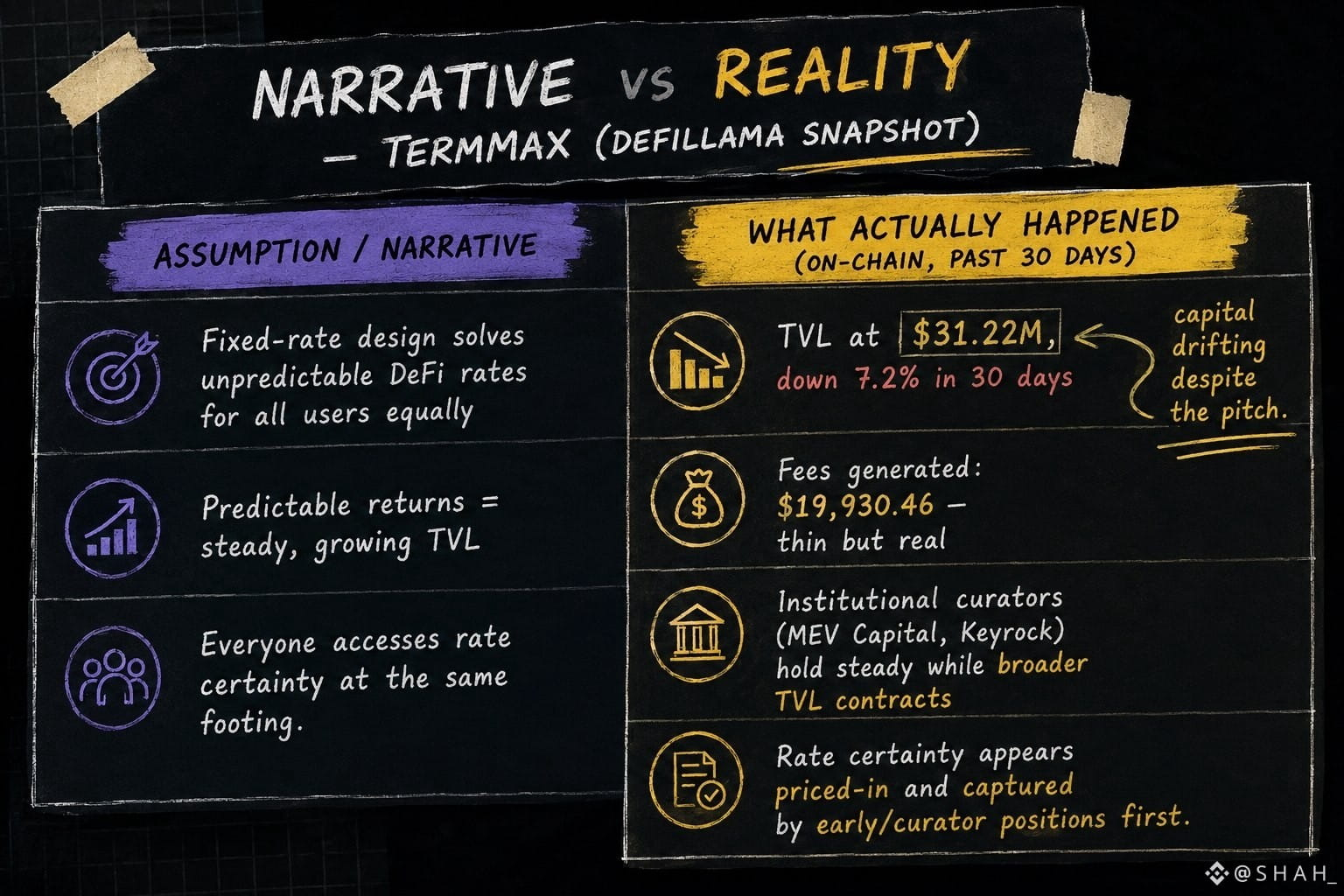
@termmax DefiLlama-ya sadəcə sabit faiz dərəcəsi hər şeyi həll edir iddiasını yoxlamaq üçün baxdım. TVL hazırda 31,22 milyon dollardır, son 30 gün ərzində 7,2% azalıb. Eyni pəncərədə yaradılan komissiyalar: 19.930,46$. Kiçik rəqəmlər. Amma real rəqəmlərdir—reklam şüarları deyil.
Protokolun dizaynı həqiqətən də ağıllıdır: sıfır-kupon FT/XT split-i, kuryator vault-ları, risk dəyişikliklərinə timelock… hamısı elan olunduğu kimi işləyir.
Amma TVL-nin yavaş-yavaş “qanaxladığını” izlədikcə, kuryatorlar—MEV Capital və Keyrock kimi—ayırmalarını sabit saxlayır; bu isə hamı üçün proqnozlaşdırıla bilən dərəcələr “hər şeyi izah edir” hekayəsindən fərqli bir şey göstərir.
Əminlik qiymətə çevrilir və onsuz da mövqeyini alan institutional kuryatorların, vault menecerlərinin əlində tutulur—bu, pərakəndə depozitora, Earn səhifəsini aşağı-yuxarı skrollayanadək çatmazdan əvvəl.
Düzünü desəm, mənə real həyatda hər hansı sabit gəlirli məhsulu xatırladır. “Sabit” olan yalnız ilk gedən üçün sabitdir.
Ayuq deyil, öküz də deyil—sadəcə gözlənilməz dərəcələri həll etdik deyən tərəflə TVL-in hələ də dib tapmağa çalışması arasındakı boşluğu qeyd edirəm.
Yoxsa o 7,2%-in hara getdiyini başqa kim də izləyir, yoxsa bir dashboard snapshot-dan çox şey oxuyuram?
@termmax #TermMax
@TermMax DefiLlama-ya sadəcə sabit faiz dərəcəsi hər şeyi həll edir iddiasını yoxlamaq üçün baxdım. TVL hazırda 31,22 milyon dollardır, son 30 gün ərzində 7,2% azalıb. Eyni pəncərədə yaradılan komissiyalar: 19.930,46$. Kiçik rəqəmlər. Amma real rəqəmlərdir—reklam şüarları deyil.
Protokolun dizaynı həqiqətən də ağıllıdır: sıfır-kupon FT/XT split-i, kuryator vault-ları, risk dəyişikliklərinə timelock… hamısı elan olunduğu kimi işləyir.
Amma TVL-nin yavaş-yavaş “qanaxladığını” izlədikcə, kuryatorlar—MEV Capital və Keyrock kimi—ayırmalarını sabit saxlayır; bu isə hamı üçün proqnozlaşdırıla bilən dərəcələr “hər şeyi izah edir” hekayəsindən fərqli bir şey göstərir.
Əminlik qiymətə çevrilir və onsuz da mövqeyini alan institutional kuryatorların, vault menecerlərinin əlində tutulur—bu, pərakəndə depozitora, Earn səhifəsini aşağı-yuxarı skrollayanadək çatmazdan əvvəl.
Düzünü desəm, mənə real həyatda hər hansı sabit gəlirli məhsulu xatırladır. “Sabit” olan yalnız ilk gedən üçün sabitdir.
Ayuq deyil, öküz də deyil—sadəcə gözlənilməz dərəcələri həll etdik deyən tərəflə TVL-in hələ də dib tapmağa çalışması arasındakı boşluğu qeyd edirəm.
Yoxsa o 7,2%-in hara getdiyini başqa kim də izləyir, yoxsa bir dashboard snapshot-dan çox şey oxuyuram?
@TermMax #TermMax
Protokolun dizaynı həqiqətən də ağıllıdır: sıfır-kupon FT/XT split-i, kuryator vault-ları, risk dəyişikliklərinə timelock… hamısı elan olunduğu kimi işləyir.
Amma TVL-nin yavaş-yavaş “qanaxladığını” izlədikcə, kuryatorlar—MEV Capital və Keyrock kimi—ayırmalarını sabit saxlayır; bu isə hamı üçün proqnozlaşdırıla bilən dərəcələr “hər şeyi izah edir” hekayəsindən fərqli bir şey göstərir.
Əminlik qiymətə çevrilir və onsuz da mövqeyini alan institutional kuryatorların, vault menecerlərinin əlində tutulur—bu, pərakəndə depozitora, Earn səhifəsini aşağı-yuxarı skrollayanadək çatmazdan əvvəl.
Düzünü desəm, mənə real həyatda hər hansı sabit gəlirli məhsulu xatırladır. “Sabit” olan yalnız ilk gedən üçün sabitdir.
Ayuq deyil, öküz də deyil—sadəcə gözlənilməz dərəcələri həll etdik deyən tərəflə TVL-in hələ də dib tapmağa çalışması arasındakı boşluğu qeyd edirəm.
Yoxsa o 7,2%-in hara getdiyini başqa kim də izləyir, yoxsa bir dashboard snapshot-dan çox şey oxuyuram?
@TermMax #TermMax
43
21
331
·
--
Artım
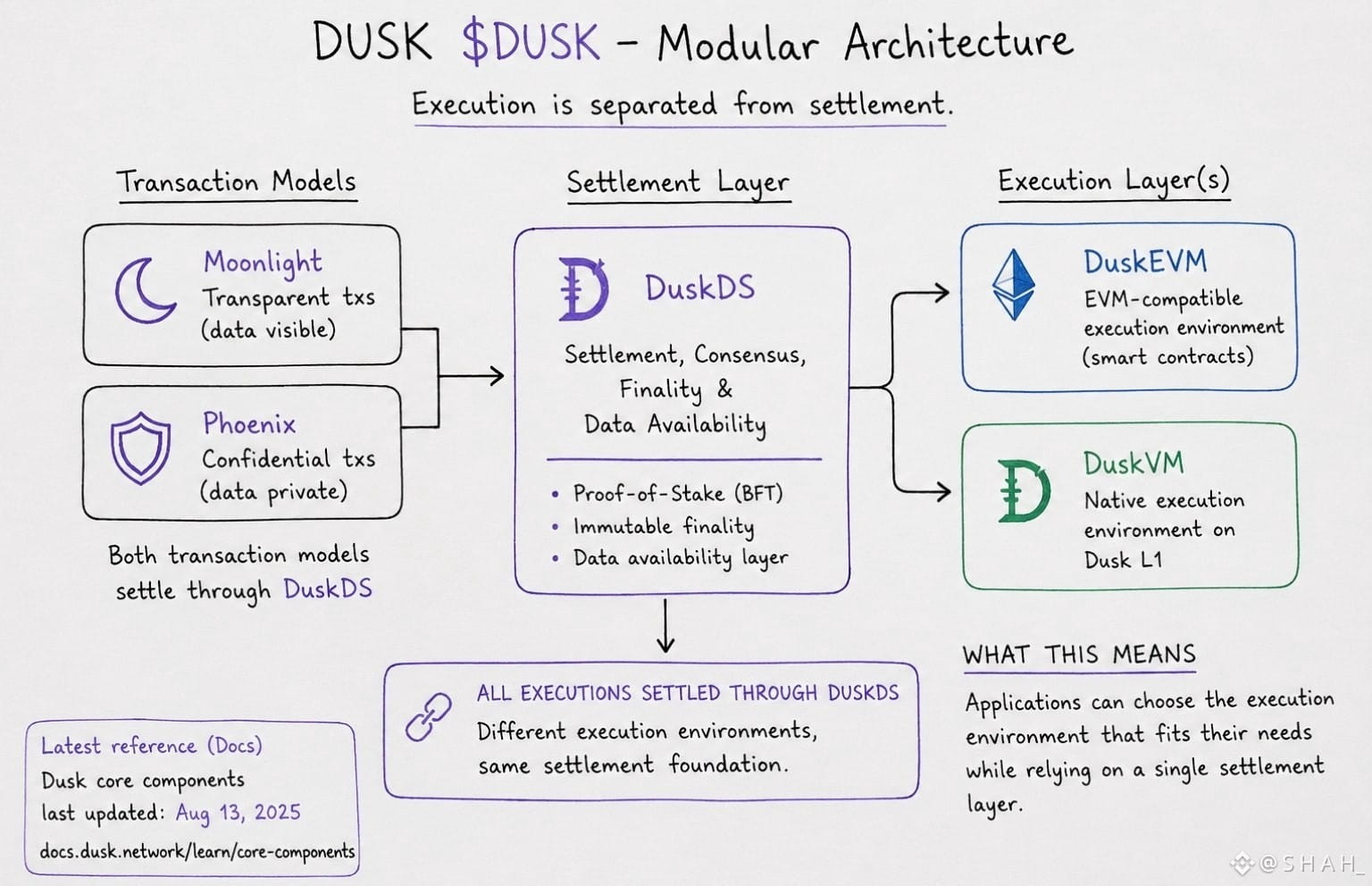
@Dusk_Foundation modul bitin sadəcə daha çox komponentə sahib olmaqla bağlı olmadığını dərk edirdim. $DUSK əslində hesablaşmanın harada baş verdiyini icranın harada baş verdiyindən ayırır və bu, zəncir haqqında düşüncəmə təsir edir.
Son Dusk sənədlərinə baxarkən DuskDS ilə DuskEVM-i daim izləyirdim. DuskDS konsensus, finalitet və məlumatın əlçatanlığını idarə edir, DuskEVM isə onun vasitəsilə hesablaşan EVM icra qatıdır.
DuskVM isə L1 üzərində birbaşa yerləşən başqa icra mühitidir. Maraqlı olan odur ki, onların hamısı hər bir tətbiqi tək bir icra modelinə məcbur etmədən eyni hesablaşma əsasına söykənə bilirlər.
Mən bunu əvvəlcə standart modul arxitektura dili kimi oxudum və demək olar ki, keçib atacaqdım. Sonra Dusk-ın real tranzaksiyaları necə idarə etməsinə daha yaxından baxdım: Moonlight və Phoenix hər ikisi DuskDS vasitəsilə hesablaşır, ağıllı müqavilələrin icrası isə başqa yerdə otura bilər. Bu, ayırmanı diaqramın göstərdiyindən daha praktik hiss etdirdi.
Yenə də məni kompromis maraqlandırır. Tətbiqlər bu icra mühitləri arasında hərəkət etməyə başlayanda, modul struktura həqiqətən builder-lər üçün mürəkkəbliyi azaldır, yoxsa sadəcə onu aralarındakı interfeyslərə köçürür…
@Dusk_Foundation $DUSK #dusk
@Dusk modul bitin sadəcə daha çox komponentə sahib olmaqla bağlı olmadığını dərk edirdim. $DUSK əslində hesablaşmanın harada baş verdiyini icranın harada baş verdiyindən ayırır və bu, zəncir haqqında düşüncəmə təsir edir.
Son Dusk sənədlərinə baxarkən DuskDS ilə DuskEVM-i daim izləyirdim. DuskDS konsensus, finalitet və məlumatın əlçatanlığını idarə edir, DuskEVM isə onun vasitəsilə hesablaşan EVM icra qatıdır.
DuskVM isə L1 üzərində birbaşa yerləşən başqa icra mühitidir. Maraqlı olan odur ki, onların hamısı hər bir tətbiqi tək bir icra modelinə məcbur etmədən eyni hesablaşma əsasına söykənə bilirlər.
Mən bunu əvvəlcə standart modul arxitektura dili kimi oxudum və demək olar ki, keçib atacaqdım. Sonra Dusk-ın real tranzaksiyaları necə idarə etməsinə daha yaxından baxdım: Moonlight və Phoenix hər ikisi DuskDS vasitəsilə hesablaşır, ağıllı müqavilələrin icrası isə başqa yerdə otura bilər. Bu, ayırmanı diaqramın göstərdiyindən daha praktik hiss etdirdi.
Yenə də məni kompromis maraqlandırır. Tətbiqlər bu icra mühitləri arasında hərəkət etməyə başlayanda, modul struktura həqiqətən builder-lər üçün mürəkkəbliyi azaldır, yoxsa sadəcə onu aralarındakı interfeyslərə köçürür…
@Dusk $DUSK #dusk
Son Dusk sənədlərinə baxarkən DuskDS ilə DuskEVM-i daim izləyirdim. DuskDS konsensus, finalitet və məlumatın əlçatanlığını idarə edir, DuskEVM isə onun vasitəsilə hesablaşan EVM icra qatıdır.
DuskVM isə L1 üzərində birbaşa yerləşən başqa icra mühitidir. Maraqlı olan odur ki, onların hamısı hər bir tətbiqi tək bir icra modelinə məcbur etmədən eyni hesablaşma əsasına söykənə bilirlər.
Mən bunu əvvəlcə standart modul arxitektura dili kimi oxudum və demək olar ki, keçib atacaqdım. Sonra Dusk-ın real tranzaksiyaları necə idarə etməsinə daha yaxından baxdım: Moonlight və Phoenix hər ikisi DuskDS vasitəsilə hesablaşır, ağıllı müqavilələrin icrası isə başqa yerdə otura bilər. Bu, ayırmanı diaqramın göstərdiyindən daha praktik hiss etdirdi.
Yenə də məni kompromis maraqlandırır. Tətbiqlər bu icra mühitləri arasında hərəkət etməyə başlayanda, modul struktura həqiqətən builder-lər üçün mürəkkəbliyi azaldır, yoxsa sadəcə onu aralarındakı interfeyslərə köçürür…
@Dusk $DUSK #dusk
25
13
255
·
--
Artım
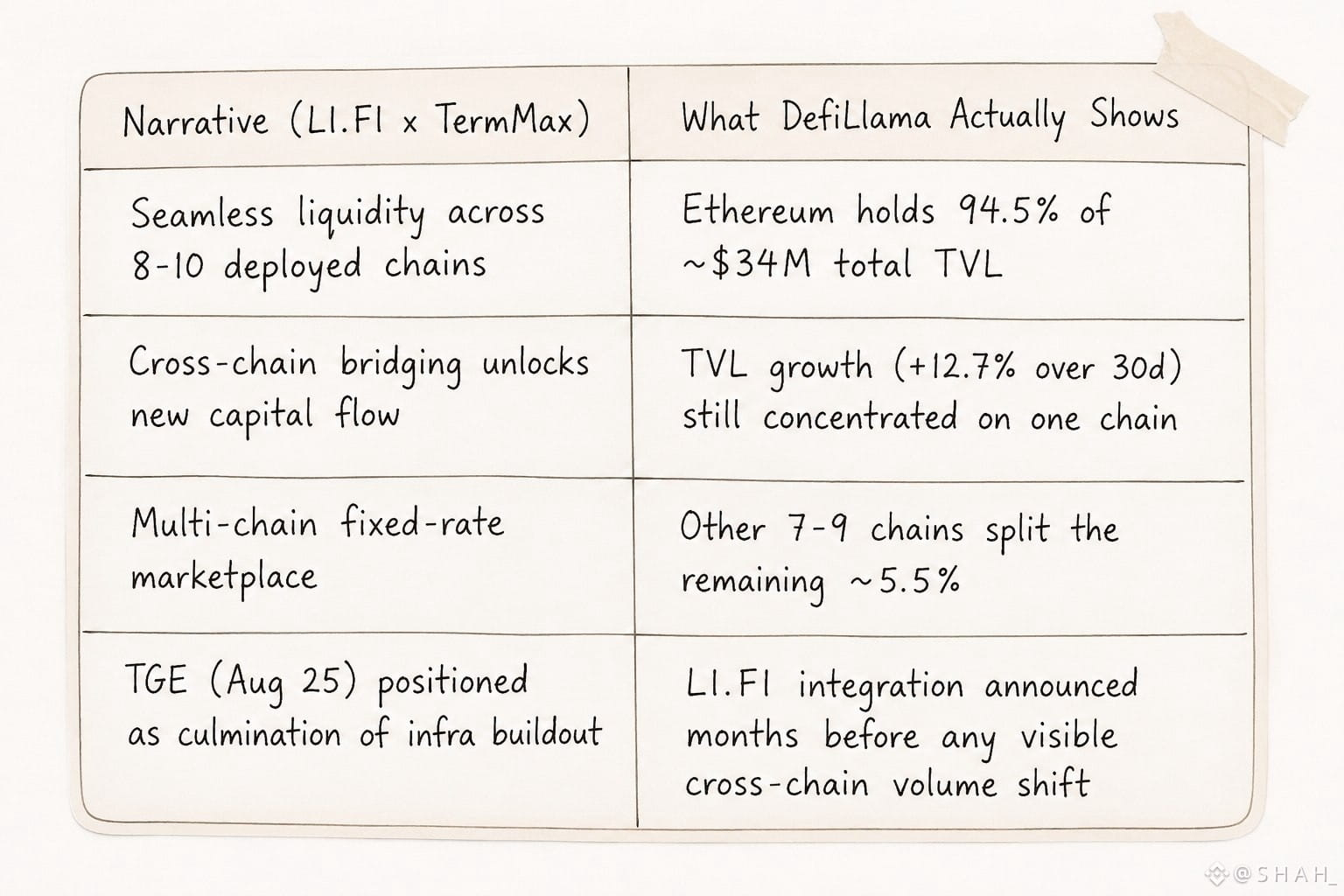
TermMax'ın LI.FI inteqrasiyası tapşırıq üçündür: cross-chain hekayəsinin rəqəmlərdə həqiqətən görsənməsini gözləyirdim. Amma olmadı, elə də çox yox. İndi @termmax 8-10 zəncirdən birində (təxminən) aktivdir və LI.FI TMX likvidliyinin aralarında sərbəst hərəkət etməsinə imkan verən “borulama” (plumbing) kimi təqdim olunur.
Amma DefiLlama-ya baxdım və bir dəqiqə dayandım… Bu gün protokolun təxminən $34M TVL-sinin 94.5%-i təkcə Ethereumdadır. On zəncir deploy edilib, amma işin əsas hissəsini bir zəncir görür.
Körpü (bridge) var, SDK qoşulub, marketinq slaydları problemsiz multi-zəncir əlçatanlığından danışır və istifadəçilər isə hələ ki bunu elə həmin cür istifadə etmir.
Kapital hovuzları elə hovuzda saxlanır (həmişə pooled olur). Bu, məni ikinci dəfə düşünməyə vadar etdi: cross chain ready və cross chain used eyni iddia deyilmiş kimi görünür; aydın şəkildə fərqlidirlər.
Zamanlama da çox “vəhşi”dir: TGE elə indi avqustun 25-i üçün təsdiqləndi. Yəni bu bütün LI.FI borulama söhbəti token işə düşməzdən literally günlər əvvəl gedir—sonra yox.
Elə bil likvidlik hadisəsinə reaksiya verməkdənsə infrastruktur əvvəlcədən qurulur; bu ya ağıllı ardıcıllıqdır, ya da TMX incentivi işə düşəndən sonra körpüləşdirmənin qəbul ediləcəyinə bahis.
Cross-chain alətləri səbəb olmadan—yəni köçürmək üçün bir “niyə” yaranmadan—istifadə olunurmu, yoxsa səbəb həmişə əvvəl gəlməlidir?
@termmax #TermMax
TermMax'ın LI.FI inteqrasiyası tapşırıq üçündür: cross-chain hekayəsinin rəqəmlərdə həqiqətən görsənməsini gözləyirdim. Amma olmadı, elə də çox yox. İndi @TermMax 8-10 zəncirdən birində (təxminən) aktivdir və LI.FI TMX likvidliyinin aralarında sərbəst hərəkət etməsinə imkan verən “borulama” (plumbing) kimi təqdim olunur.
Amma DefiLlama-ya baxdım və bir dəqiqə dayandım… Bu gün protokolun təxminən $34M TVL-sinin 94.5%-i təkcə Ethereumdadır. On zəncir deploy edilib, amma işin əsas hissəsini bir zəncir görür.
Körpü (bridge) var, SDK qoşulub, marketinq slaydları problemsiz multi-zəncir əlçatanlığından danışır və istifadəçilər isə hələ ki bunu elə həmin cür istifadə etmir.
Kapital hovuzları elə hovuzda saxlanır (həmişə pooled olur). Bu, məni ikinci dəfə düşünməyə vadar etdi: cross chain ready və cross chain used eyni iddia deyilmiş kimi görünür; aydın şəkildə fərqlidirlər.
Zamanlama da çox “vəhşi”dir: TGE elə indi avqustun 25-i üçün təsdiqləndi. Yəni bu bütün LI.FI borulama söhbəti token işə düşməzdən literally günlər əvvəl gedir—sonra yox.
Elə bil likvidlik hadisəsinə reaksiya verməkdənsə infrastruktur əvvəlcədən qurulur; bu ya ağıllı ardıcıllıqdır, ya da TMX incentivi işə düşəndən sonra körpüləşdirmənin qəbul ediləcəyinə bahis.
Cross-chain alətləri səbəb olmadan—yəni köçürmək üçün bir “niyə” yaranmadan—istifadə olunurmu, yoxsa səbəb həmişə əvvəl gəlməlidir?
@TermMax #TermMax
Amma DefiLlama-ya baxdım və bir dəqiqə dayandım… Bu gün protokolun təxminən $34M TVL-sinin 94.5%-i təkcə Ethereumdadır. On zəncir deploy edilib, amma işin əsas hissəsini bir zəncir görür.
Körpü (bridge) var, SDK qoşulub, marketinq slaydları problemsiz multi-zəncir əlçatanlığından danışır və istifadəçilər isə hələ ki bunu elə həmin cür istifadə etmir.
Kapital hovuzları elə hovuzda saxlanır (həmişə pooled olur). Bu, məni ikinci dəfə düşünməyə vadar etdi: cross chain ready və cross chain used eyni iddia deyilmiş kimi görünür; aydın şəkildə fərqlidirlər.
Zamanlama da çox “vəhşi”dir: TGE elə indi avqustun 25-i üçün təsdiqləndi. Yəni bu bütün LI.FI borulama söhbəti token işə düşməzdən literally günlər əvvəl gedir—sonra yox.
Elə bil likvidlik hadisəsinə reaksiya verməkdənsə infrastruktur əvvəlcədən qurulur; bu ya ağıllı ardıcıllıqdır, ya da TMX incentivi işə düşəndən sonra körpüləşdirmənin qəbul ediləcəyinə bahis.
Cross-chain alətləri səbəb olmadan—yəni köçürmək üçün bir “niyə” yaranmadan—istifadə olunurmu, yoxsa səbəb həmişə əvvəl gəlməlidir?
@TermMax #TermMax
74
29
381
·
--
Artım
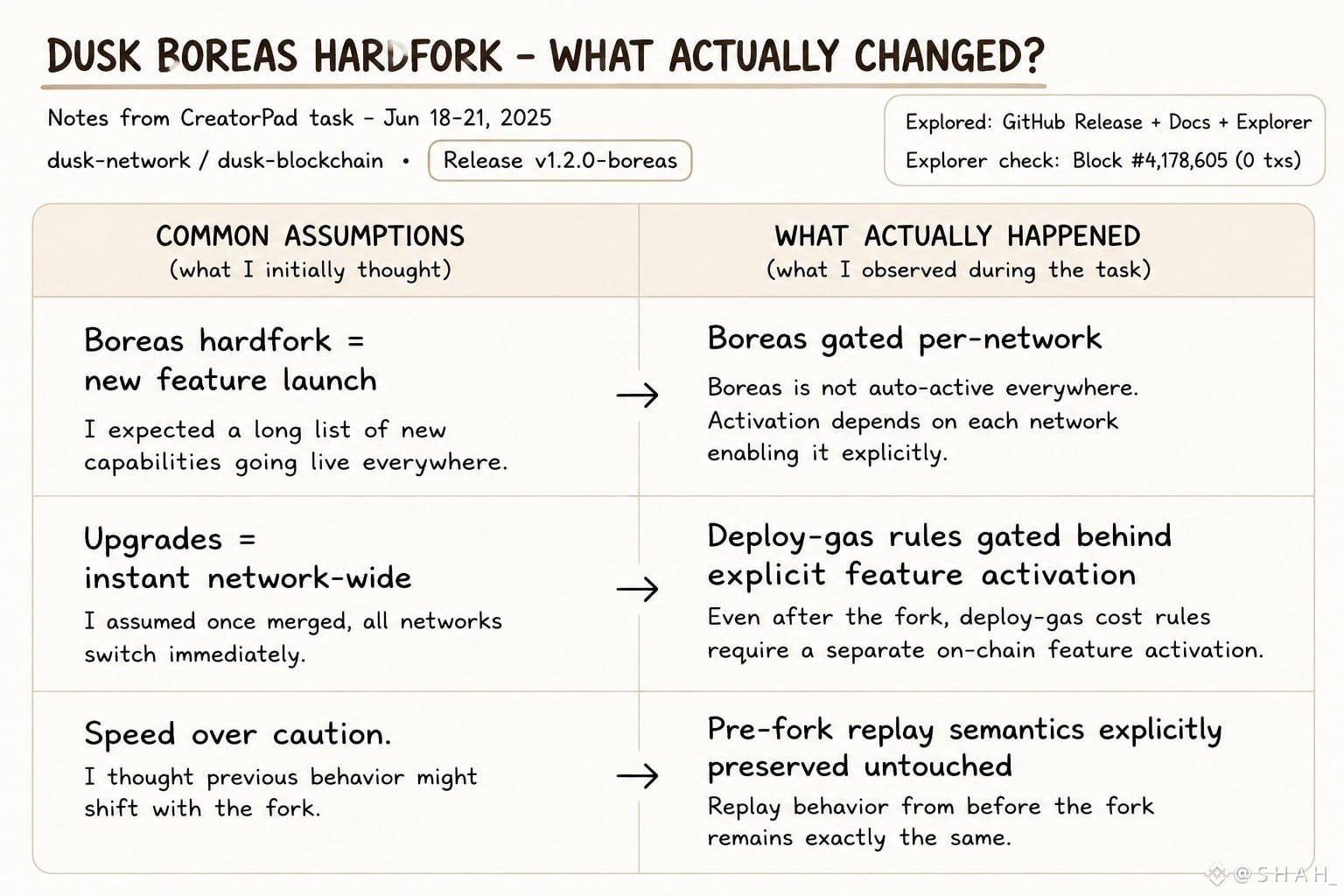
$DUSK release notes for the Rusk client və bir sətir dayandıthe Boreas hardfork host sorğuları aktivləşdirmələri əsas şəbəkə (mainnet), testnet və devnet/localnet üçün ayrıca bağlanaraq (gated) əlaqələndirildi. Deploy üçün qaz (gas) qaydaları isə feature activation-un arxasında (gated) qorunur ki, pre fork replay toxunulmadan qalsın.
Yəni bu, elə bil ki bir şeyi necə göndərməlisən deyil. Bazara tələsik çıxarırsan deyə deyil. Qırmaqdan qorxduğun bir şeyi elə belə göndərirsən.
Komanda chain state continuity-ni müqəddəs kimi qəbul edir: pre fork replay semantikasının hətta yeni qiymətləndirmə məntiqi (pricing) aktivləşsə belə, yerindən tərpənə bilməyəcəyini düşünür. Devnet Boreas-u genesis-dən alır, mainnet isə almır.
Bu mühitlər arasındakı boşluq real məhsul yol xəritəsidir, elan (announcement) postunun özü deyil. CreatorPad tapşırıqları zamanı ilişdirdiyim layihələrin çoxu gur (loud) upgrade-ləri sevir.
@Dusk_Foundation isə əksini edir: difflərə baxacaq auditoarlar üçün qururmuş kimi activation gate-lər qatlayır, tviti oxuyub qiymətləndirən investorlar üçün yox.
İlk növbədə privacy və compliance-in prioritet kimi təqdimatı nəhayət həqiqi commit davranışı ilə uyğunlaşır... ya da mən çox niyyət oxuyuram, axı bu, sadəcə diqqətli engineering gigiyenasıdır?
Yenə də: layihənin release notes-u marketinqi ilə uyğun gəlirdimi—son dəfə nə vaxt yoxladın?😵
@Dusk_Foundation $DUSK #dusk
$DUSK release notes for the Rusk client və bir sətir dayandıthe Boreas hardfork host sorğuları aktivləşdirmələri əsas şəbəkə (mainnet), testnet və devnet/localnet üçün ayrıca bağlanaraq (gated) əlaqələndirildi. Deploy üçün qaz (gas) qaydaları isə feature activation-un arxasında (gated) qorunur ki, pre fork replay toxunulmadan qalsın.
Yəni bu, elə bil ki bir şeyi necə göndərməlisən deyil. Bazara tələsik çıxarırsan deyə deyil. Qırmaqdan qorxduğun bir şeyi elə belə göndərirsən.
Komanda chain state continuity-ni müqəddəs kimi qəbul edir: pre fork replay semantikasının hətta yeni qiymətləndirmə məntiqi (pricing) aktivləşsə belə, yerindən tərpənə bilməyəcəyini düşünür. Devnet Boreas-u genesis-dən alır, mainnet isə almır.
Bu mühitlər arasındakı boşluq real məhsul yol xəritəsidir, elan (announcement) postunun özü deyil. CreatorPad tapşırıqları zamanı ilişdirdiyim layihələrin çoxu gur (loud) upgrade-ləri sevir.
@Dusk isə əksini edir: difflərə baxacaq auditoarlar üçün qururmuş kimi activation gate-lər qatlayır, tviti oxuyub qiymətləndirən investorlar üçün yox.
İlk növbədə privacy və compliance-in prioritet kimi təqdimatı nəhayət həqiqi commit davranışı ilə uyğunlaşır... ya da mən çox niyyət oxuyuram, axı bu, sadəcə diqqətli engineering gigiyenasıdır?
Yenə də: layihənin release notes-u marketinqi ilə uyğun gəlirdimi—son dəfə nə vaxt yoxladın?😵
@Dusk $DUSK #dusk
Yəni bu, elə bil ki bir şeyi necə göndərməlisən deyil. Bazara tələsik çıxarırsan deyə deyil. Qırmaqdan qorxduğun bir şeyi elə belə göndərirsən.
Komanda chain state continuity-ni müqəddəs kimi qəbul edir: pre fork replay semantikasının hətta yeni qiymətləndirmə məntiqi (pricing) aktivləşsə belə, yerindən tərpənə bilməyəcəyini düşünür. Devnet Boreas-u genesis-dən alır, mainnet isə almır.
Bu mühitlər arasındakı boşluq real məhsul yol xəritəsidir, elan (announcement) postunun özü deyil. CreatorPad tapşırıqları zamanı ilişdirdiyim layihələrin çoxu gur (loud) upgrade-ləri sevir.
@Dusk isə əksini edir: difflərə baxacaq auditoarlar üçün qururmuş kimi activation gate-lər qatlayır, tviti oxuyub qiymətləndirən investorlar üçün yox.
İlk növbədə privacy və compliance-in prioritet kimi təqdimatı nəhayət həqiqi commit davranışı ilə uyğunlaşır... ya da mən çox niyyət oxuyuram, axı bu, sadəcə diqqətli engineering gigiyenasıdır?
Yenə də: layihənin release notes-u marketinqi ilə uyğun gəlirdimi—son dəfə nə vaxt yoxladın?😵
@Dusk $DUSK #dusk
8
9
254
·
--
Artım
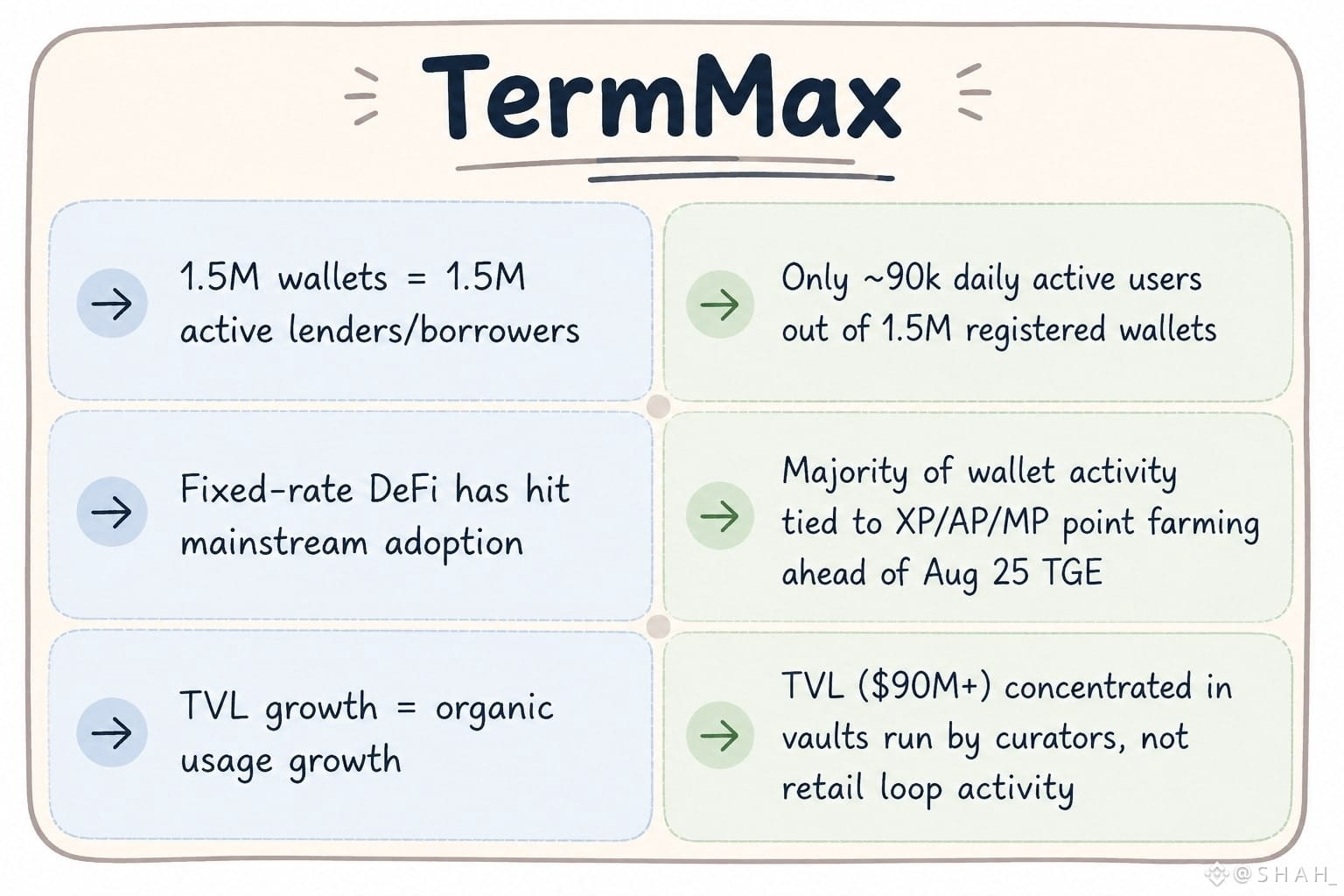
TermMax üçün TGE təsdiqləndi və qeydiyyatdan keçmiş cüzdanlar: 1,5 milyondan çox. Gündəlik aktiv istifadəçilər: təxminən 90k. Bu boşluq gözlədiyimdən daha uzun müddət məndə qaldı.
Hər kəs TGE-dən sonra claim etmək üçün XP/AP/MP mövqeyini saxlayır, əlbəttə, amma əslində bazarı açıb gündən-günə sabit faiz dərəcəsini kilidləyənlərin sayı yalnız bir hissədir.
TVL on EVM zəncirinin üzrə 90 milyon ABŞ dollarından yuxarıdır; Morpho, Aave, Venus, Pendle inteqrasiyaları ilə birlikdə yerləşdirilib—yəni “boru kəməri” gerçəkdir. Sadəcə istifadəçilərin çoxu token üçün gəlib, kreditləşmə (lendinq) əyrisi üçün yox.
İnfrastrukturun FT/XT/GT mexanikası sabit faizli borclanma üçün həqiqətən də zərifdir, amma hazırda qəbul olunma prosesi indiki kimi daha çox airdrop üçün mövqe tutmağa bənzəyir; insanlar yield üçün term loan-ları davam etdirmir—sabitlik üçün deyil, bu cür şeylər adətən TGE-dən əvvəlki protokollarda görünür.
Sual budur: claim hadisəsi keçəndən və “farming” tərəfi çıxdıqdan sonra bu 90k sabit qalacaq, yoxsa artacaq… kim TGE-dən sonrakı bu nisbətə izləyir?
@termmax #TermMax
TermMax üçün TGE təsdiqləndi və qeydiyyatdan keçmiş cüzdanlar: 1,5 milyondan çox. Gündəlik aktiv istifadəçilər: təxminən 90k. Bu boşluq gözlədiyimdən daha uzun müddət məndə qaldı.
Hər kəs TGE-dən sonra claim etmək üçün XP/AP/MP mövqeyini saxlayır, əlbəttə, amma əslində bazarı açıb gündən-günə sabit faiz dərəcəsini kilidləyənlərin sayı yalnız bir hissədir.
TVL on EVM zəncirinin üzrə 90 milyon ABŞ dollarından yuxarıdır; Morpho, Aave, Venus, Pendle inteqrasiyaları ilə birlikdə yerləşdirilib—yəni “boru kəməri” gerçəkdir. Sadəcə istifadəçilərin çoxu token üçün gəlib, kreditləşmə (lendinq) əyrisi üçün yox.
İnfrastrukturun FT/XT/GT mexanikası sabit faizli borclanma üçün həqiqətən də zərifdir, amma hazırda qəbul olunma prosesi indiki kimi daha çox airdrop üçün mövqe tutmağa bənzəyir; insanlar yield üçün term loan-ları davam etdirmir—sabitlik üçün deyil, bu cür şeylər adətən TGE-dən əvvəlki protokollarda görünür.
Sual budur: claim hadisəsi keçəndən və “farming” tərəfi çıxdıqdan sonra bu 90k sabit qalacaq, yoxsa artacaq… kim TGE-dən sonrakı bu nisbətə izləyir?
@TermMax #TermMax
Hər kəs TGE-dən sonra claim etmək üçün XP/AP/MP mövqeyini saxlayır, əlbəttə, amma əslində bazarı açıb gündən-günə sabit faiz dərəcəsini kilidləyənlərin sayı yalnız bir hissədir.
TVL on EVM zəncirinin üzrə 90 milyon ABŞ dollarından yuxarıdır; Morpho, Aave, Venus, Pendle inteqrasiyaları ilə birlikdə yerləşdirilib—yəni “boru kəməri” gerçəkdir. Sadəcə istifadəçilərin çoxu token üçün gəlib, kreditləşmə (lendinq) əyrisi üçün yox.
İnfrastrukturun FT/XT/GT mexanikası sabit faizli borclanma üçün həqiqətən də zərifdir, amma hazırda qəbul olunma prosesi indiki kimi daha çox airdrop üçün mövqe tutmağa bənzəyir; insanlar yield üçün term loan-ları davam etdirmir—sabitlik üçün deyil, bu cür şeylər adətən TGE-dən əvvəlki protokollarda görünür.
Sual budur: claim hadisəsi keçəndən və “farming” tərəfi çıxdıqdan sonra bu 90k sabit qalacaq, yoxsa artacaq… kim TGE-dən sonrakı bu nisbətə izləyir?
@TermMax #TermMax
21
16
208
·
--
Artım
Tərcüməyə bax
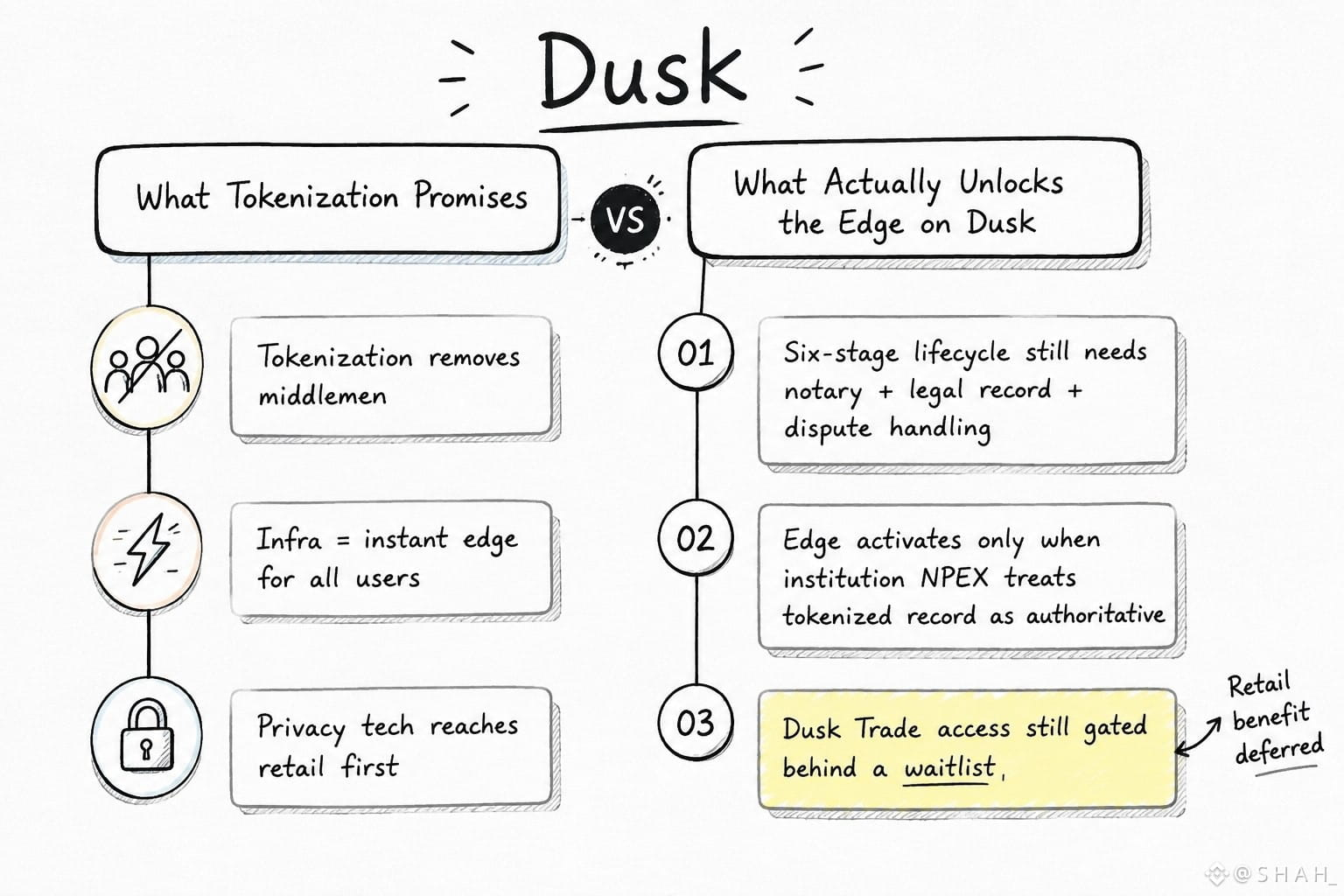
Dusk's own writeup instead of the usual price charts, and one detail stuck the Aug 15 post on tokenized SME lays out a six-stage ownership lifecycle table, and right there in black and white it admits what tokenization doesn't fix. Notarial deeds, dispute handling, legal record authority still there. Still human.
That's the part that stayed with me. The pitch is "infrastructure edge," but reading the actual before/after table, the edge only activates once an institution like NPEX plugs in and agrees to treat the tokenized record as authoritative. Retail doesn't get that first — the Dusk Trade waitlist is still... a waitlist. The infra is real, the selective-disclosure stuff for regulators is genuinely different from the usual "privacy coin" framing, but it's built for the NPEX side of the table first, everyone else later.
Made me pause mid-snack, ngl most L1s market infra as something you feel immediately. Dusk's version is closer to a compliance rail sitting quietly underneath, waiting on other institutions to decide it's trustworthy enough to reference.
Hmm. Is a long-term edge still an edge if the people it's built for aren't the ones holding the token day one?
@Dusk_Foundation $DUSK #dusk
Dusk's own writeup instead of the usual price charts, and one detail stuck the Aug 15 post on tokenized SME lays out a six-stage ownership lifecycle table, and right there in black and white it admits what tokenization doesn't fix. Notarial deeds, dispute handling, legal record authority still there. Still human.
That's the part that stayed with me. The pitch is "infrastructure edge," but reading the actual before/after table, the edge only activates once an institution like NPEX plugs in and agrees to treat the tokenized record as authoritative. Retail doesn't get that first — the Dusk Trade waitlist is still... a waitlist. The infra is real, the selective-disclosure stuff for regulators is genuinely different from the usual "privacy coin" framing, but it's built for the NPEX side of the table first, everyone else later.
Made me pause mid-snack, ngl most L1s market infra as something you feel immediately. Dusk's version is closer to a compliance rail sitting quietly underneath, waiting on other institutions to decide it's trustworthy enough to reference.
Hmm. Is a long-term edge still an edge if the people it's built for aren't the ones holding the token day one?
@Dusk $DUSK #dusk
That's the part that stayed with me. The pitch is "infrastructure edge," but reading the actual before/after table, the edge only activates once an institution like NPEX plugs in and agrees to treat the tokenized record as authoritative. Retail doesn't get that first — the Dusk Trade waitlist is still... a waitlist. The infra is real, the selective-disclosure stuff for regulators is genuinely different from the usual "privacy coin" framing, but it's built for the NPEX side of the table first, everyone else later.
Made me pause mid-snack, ngl most L1s market infra as something you feel immediately. Dusk's version is closer to a compliance rail sitting quietly underneath, waiting on other institutions to decide it's trustworthy enough to reference.
Hmm. Is a long-term edge still an edge if the people it's built for aren't the ones holding the token day one?
@Dusk $DUSK #dusk
4
2
82
·
--
Azalma
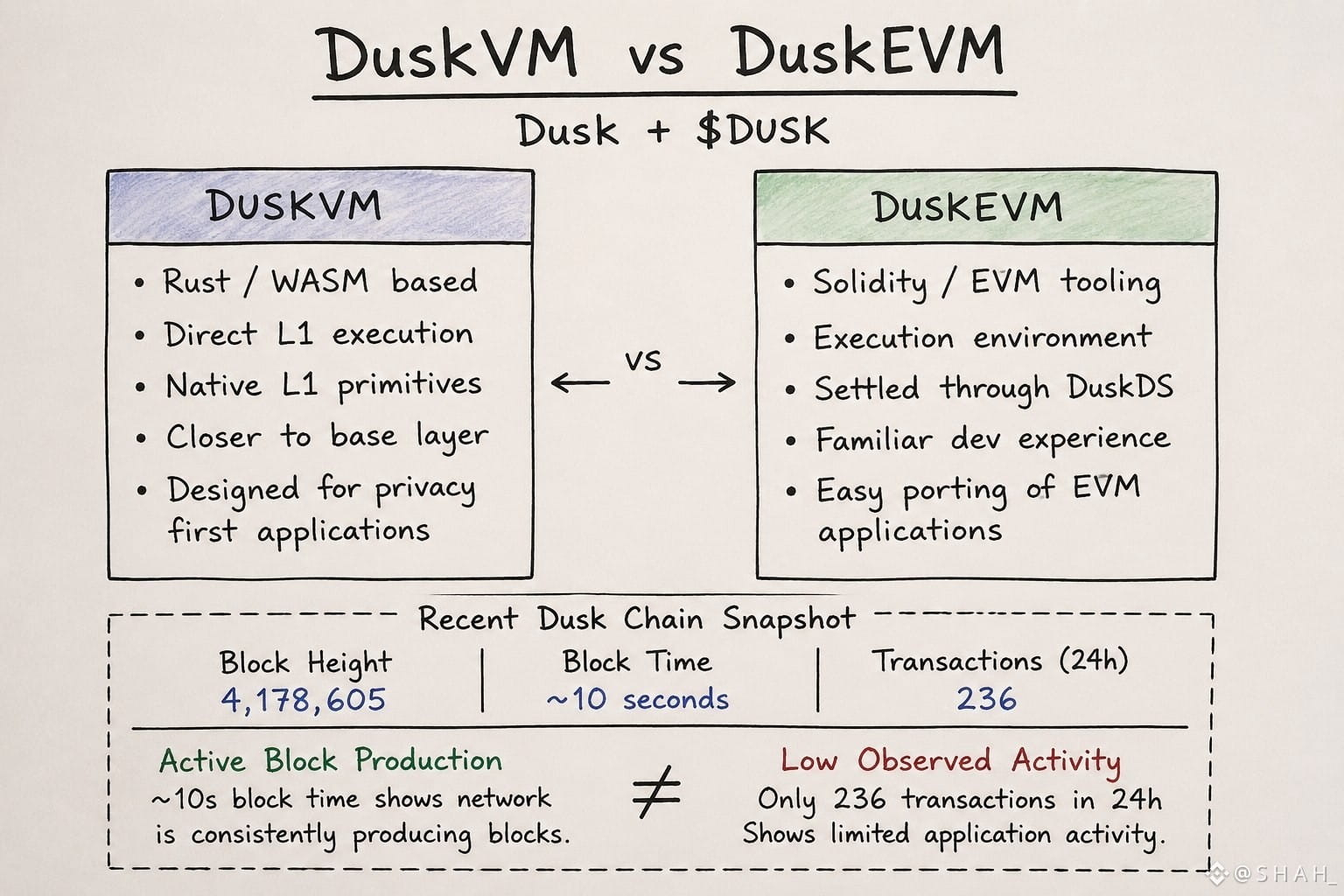
DuskVM və DuskEVM ayrımında dayandım, çünki kağız üzərində daha sadə görünür, amma nəyin harada işlədiyini izləyəndə hiss olunur ki, elə də deyil.
Tapşırıq zamanı Dusk zəncirini yoxladım və şəbəkənin hələ də təxminən 10 saniyəlik aralıqlarla blok istehsal etdiyini görərək #4,178,605 bloku ilə qarşılaşdım, amma 24 saat ərzində yalnız 236 transaksiya qeydə alınmışdı. Bu fərq məndə qaldı.
@Dusk_Foundation , DuskVM və DuskEVM-i həqiqətən eyni şeyin iki versiyası kimi qəbul etmir. DuskVM L1 üzərində birbaşa Rust/WASM icrasıdır, DuskEVM isə DuskDS vasitəsilə “yerləşdirilmiş” EVM icra mühitidir.
Praktik fərq məni tutan oldu. DuskVM sizə L1-in yerli (native) primitivlərinə daha dərin əlaqə verir, DuskEVM isə tərtibatçılara tanış Solidity EVM yolunu təqdim edir.
Əvvəlcə düşündüm ki, EVM qat təbii olaraq fəaliyyətin əsas mərkəzi olacaq, amma son zəncir göstəriciləri məni bir az ləngitdi. Yüklü (aktiv) blok istehsalçısı avtomatik olaraq aktiv tətbiq istifadəsini də demək deyil.
Hələ də düşünürəm: DuskEVM sonda ən çox tətbiq fəaliyyətinin həqiqətən yerləşdiyi yerə çevriləcək, yoxsa yerli VM daha vacib yük işlərini əsas təbəqəyə yaxın saxlayacaq…
@Dusk_Foundation $DUSK #dusk
DuskVM və DuskEVM ayrımında dayandım, çünki kağız üzərində daha sadə görünür, amma nəyin harada işlədiyini izləyəndə hiss olunur ki, elə də deyil.
Tapşırıq zamanı Dusk zəncirini yoxladım və şəbəkənin hələ də təxminən 10 saniyəlik aralıqlarla blok istehsal etdiyini görərək #4,178,605 bloku ilə qarşılaşdım, amma 24 saat ərzində yalnız 236 transaksiya qeydə alınmışdı. Bu fərq məndə qaldı.
@Dusk , DuskVM və DuskEVM-i həqiqətən eyni şeyin iki versiyası kimi qəbul etmir. DuskVM L1 üzərində birbaşa Rust/WASM icrasıdır, DuskEVM isə DuskDS vasitəsilə “yerləşdirilmiş” EVM icra mühitidir.
Praktik fərq məni tutan oldu. DuskVM sizə L1-in yerli (native) primitivlərinə daha dərin əlaqə verir, DuskEVM isə tərtibatçılara tanış Solidity EVM yolunu təqdim edir.
Əvvəlcə düşündüm ki, EVM qat təbii olaraq fəaliyyətin əsas mərkəzi olacaq, amma son zəncir göstəriciləri məni bir az ləngitdi. Yüklü (aktiv) blok istehsalçısı avtomatik olaraq aktiv tətbiq istifadəsini də demək deyil.
Hələ də düşünürəm: DuskEVM sonda ən çox tətbiq fəaliyyətinin həqiqətən yerləşdiyi yerə çevriləcək, yoxsa yerli VM daha vacib yük işlərini əsas təbəqəyə yaxın saxlayacaq…
@Dusk $DUSK #dusk
Tapşırıq zamanı Dusk zəncirini yoxladım və şəbəkənin hələ də təxminən 10 saniyəlik aralıqlarla blok istehsal etdiyini görərək #4,178,605 bloku ilə qarşılaşdım, amma 24 saat ərzində yalnız 236 transaksiya qeydə alınmışdı. Bu fərq məndə qaldı.
@Dusk , DuskVM və DuskEVM-i həqiqətən eyni şeyin iki versiyası kimi qəbul etmir. DuskVM L1 üzərində birbaşa Rust/WASM icrasıdır, DuskEVM isə DuskDS vasitəsilə “yerləşdirilmiş” EVM icra mühitidir.
Praktik fərq məni tutan oldu. DuskVM sizə L1-in yerli (native) primitivlərinə daha dərin əlaqə verir, DuskEVM isə tərtibatçılara tanış Solidity EVM yolunu təqdim edir.
Əvvəlcə düşündüm ki, EVM qat təbii olaraq fəaliyyətin əsas mərkəzi olacaq, amma son zəncir göstəriciləri məni bir az ləngitdi. Yüklü (aktiv) blok istehsalçısı avtomatik olaraq aktiv tətbiq istifadəsini də demək deyil.
Hələ də düşünürəm: DuskEVM sonda ən çox tətbiq fəaliyyətinin həqiqətən yerləşdiyi yerə çevriləcək, yoxsa yerli VM daha vacib yük işlərini əsas təbəqəyə yaxın saxlayacaq…
@Dusk $DUSK #dusk
2
76
·
--
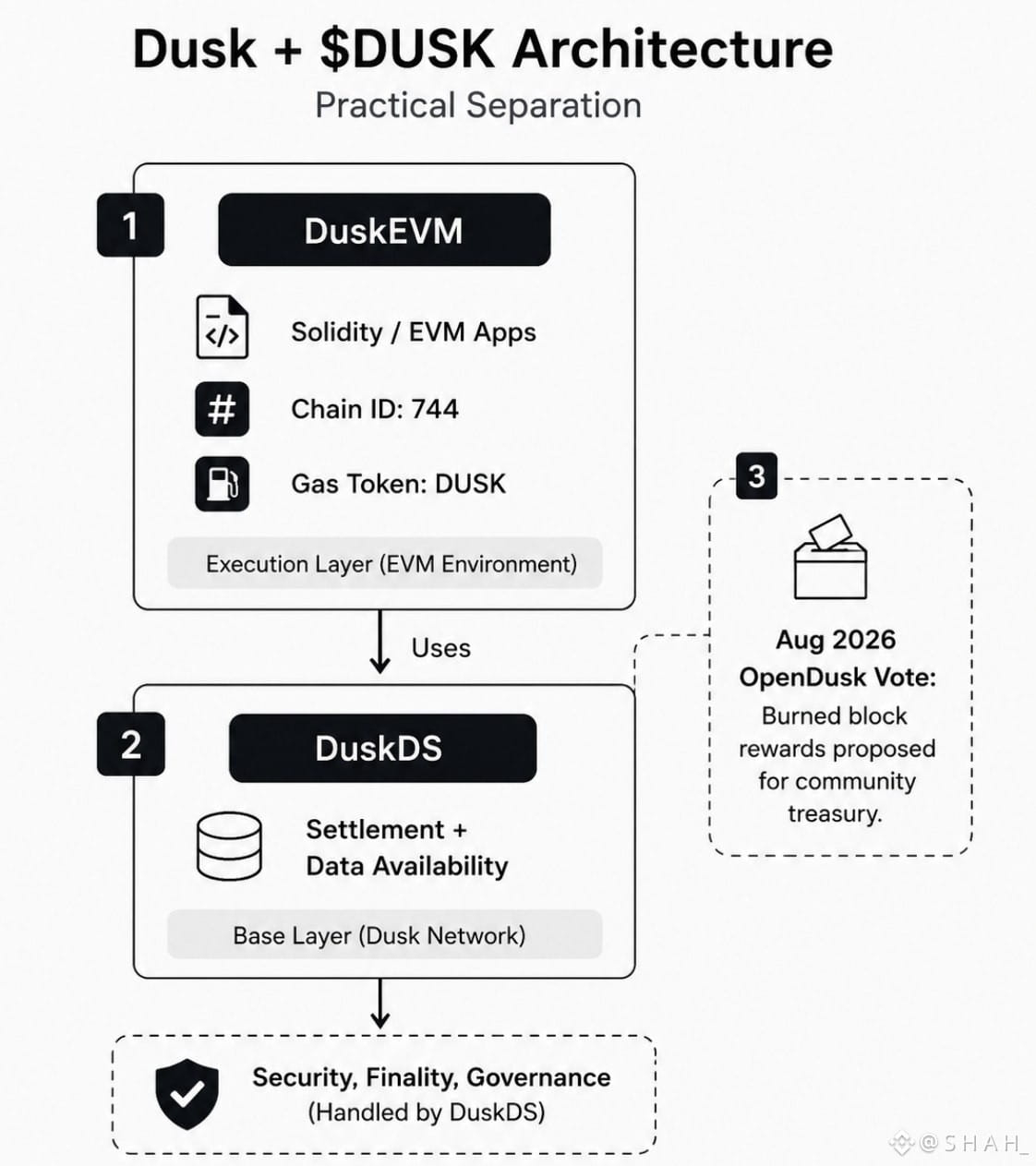
DuskEVM-ə qazma apararkən məni tutan şey EVM-in özünün olmasından daha çox icra (execution) məhz harada yerləşdiyidir.
@DuskNetwork-a baxırdım; hazırkı sənədlərdə DuskEVM-in zəncir ID 744-dən istifadə etdiyi, DUSK-un isə yerli qaz tokeni olduğu göstərilir. DuskDS isə ödənişin (settlement) və məlumatların mövcudluğunun (data availability) məsuliyyətini daşıyır. Kağız üzərində bu ayrım səliqəli görünür, amma şəbəkəyə baxışımı dəyişdi: EVM mühiti Dusk-un baza qatını əvəz etmir; onun üstündə oturur.
Məni dayandıran səbəb yaxın dövrdə OpenDusk idarəetmə (governance) fəaliyyəti oldu.
Avqust səsverməsi yandırılmış blok mükafatlarının icma xəzinəsinə (community treasury) yönəldilib-yönəldilməməsi haqqındadır; halbuki DuskEVM tətbiq qatı kimi təqdim edilir. Burada maraqlı bir ziddiyyət var: idarəetmə və settlement DuskDS-ə bağlı qalır, tərtibatçılar isə onun üstündə tanış Solidity/EVM mühitini alırlar.
Əvvəlcə düşündüm ki, Dusk-da EVM əsasən daha asan yerləşdirmə (deployment) deməkdir. Amma arxitekturanı izlədikdən sonra bunun vacib hissə olduğuna daha az əmin oldum.
Mənim üçün real sual budur: tərtibatçılar həqiqətən bu ayrımdan praktikada istifadə edirlərmi, yoxsa DuskEVM daha çox uyğunluq (compatibility) qatı kimi qalır, dərin fəaliyyət isə DuskDS-də davam edir…
@Dusk_Foundation $DUSK #dusk
DuskEVM-ə qazma apararkən məni tutan şey EVM-in özünün olmasından daha çox icra (execution) məhz harada yerləşdiyidir.
@DuskNetwork-a baxırdım; hazırkı sənədlərdə DuskEVM-in zəncir ID 744-dən istifadə etdiyi, DUSK-un isə yerli qaz tokeni olduğu göstərilir. DuskDS isə ödənişin (settlement) və məlumatların mövcudluğunun (data availability) məsuliyyətini daşıyır. Kağız üzərində bu ayrım səliqəli görünür, amma şəbəkəyə baxışımı dəyişdi: EVM mühiti Dusk-un baza qatını əvəz etmir; onun üstündə oturur.
Məni dayandıran səbəb yaxın dövrdə OpenDusk idarəetmə (governance) fəaliyyəti oldu.
Avqust səsverməsi yandırılmış blok mükafatlarının icma xəzinəsinə (community treasury) yönəldilib-yönəldilməməsi haqqındadır; halbuki DuskEVM tətbiq qatı kimi təqdim edilir. Burada maraqlı bir ziddiyyət var: idarəetmə və settlement DuskDS-ə bağlı qalır, tərtibatçılar isə onun üstündə tanış Solidity/EVM mühitini alırlar.
Əvvəlcə düşündüm ki, Dusk-da EVM əsasən daha asan yerləşdirmə (deployment) deməkdir. Amma arxitekturanı izlədikdən sonra bunun vacib hissə olduğuna daha az əmin oldum.
Mənim üçün real sual budur: tərtibatçılar həqiqətən bu ayrımdan praktikada istifadə edirlərmi, yoxsa DuskEVM daha çox uyğunluq (compatibility) qatı kimi qalır, dərin fəaliyyət isə DuskDS-də davam edir…
@Dusk $DUSK #dusk
@DuskNetwork-a baxırdım; hazırkı sənədlərdə DuskEVM-in zəncir ID 744-dən istifadə etdiyi, DUSK-un isə yerli qaz tokeni olduğu göstərilir. DuskDS isə ödənişin (settlement) və məlumatların mövcudluğunun (data availability) məsuliyyətini daşıyır. Kağız üzərində bu ayrım səliqəli görünür, amma şəbəkəyə baxışımı dəyişdi: EVM mühiti Dusk-un baza qatını əvəz etmir; onun üstündə oturur.
Məni dayandıran səbəb yaxın dövrdə OpenDusk idarəetmə (governance) fəaliyyəti oldu.
Avqust səsverməsi yandırılmış blok mükafatlarının icma xəzinəsinə (community treasury) yönəldilib-yönəldilməməsi haqqındadır; halbuki DuskEVM tətbiq qatı kimi təqdim edilir. Burada maraqlı bir ziddiyyət var: idarəetmə və settlement DuskDS-ə bağlı qalır, tərtibatçılar isə onun üstündə tanış Solidity/EVM mühitini alırlar.
Əvvəlcə düşündüm ki, Dusk-da EVM əsasən daha asan yerləşdirmə (deployment) deməkdir. Amma arxitekturanı izlədikdən sonra bunun vacib hissə olduğuna daha az əmin oldum.
Mənim üçün real sual budur: tərtibatçılar həqiqətən bu ayrımdan praktikada istifadə edirlərmi, yoxsa DuskEVM daha çox uyğunluq (compatibility) qatı kimi qalır, dərin fəaliyyət isə DuskDS-də davam edir…
@Dusk $DUSK #dusk
7
2
94
·
--
Artım
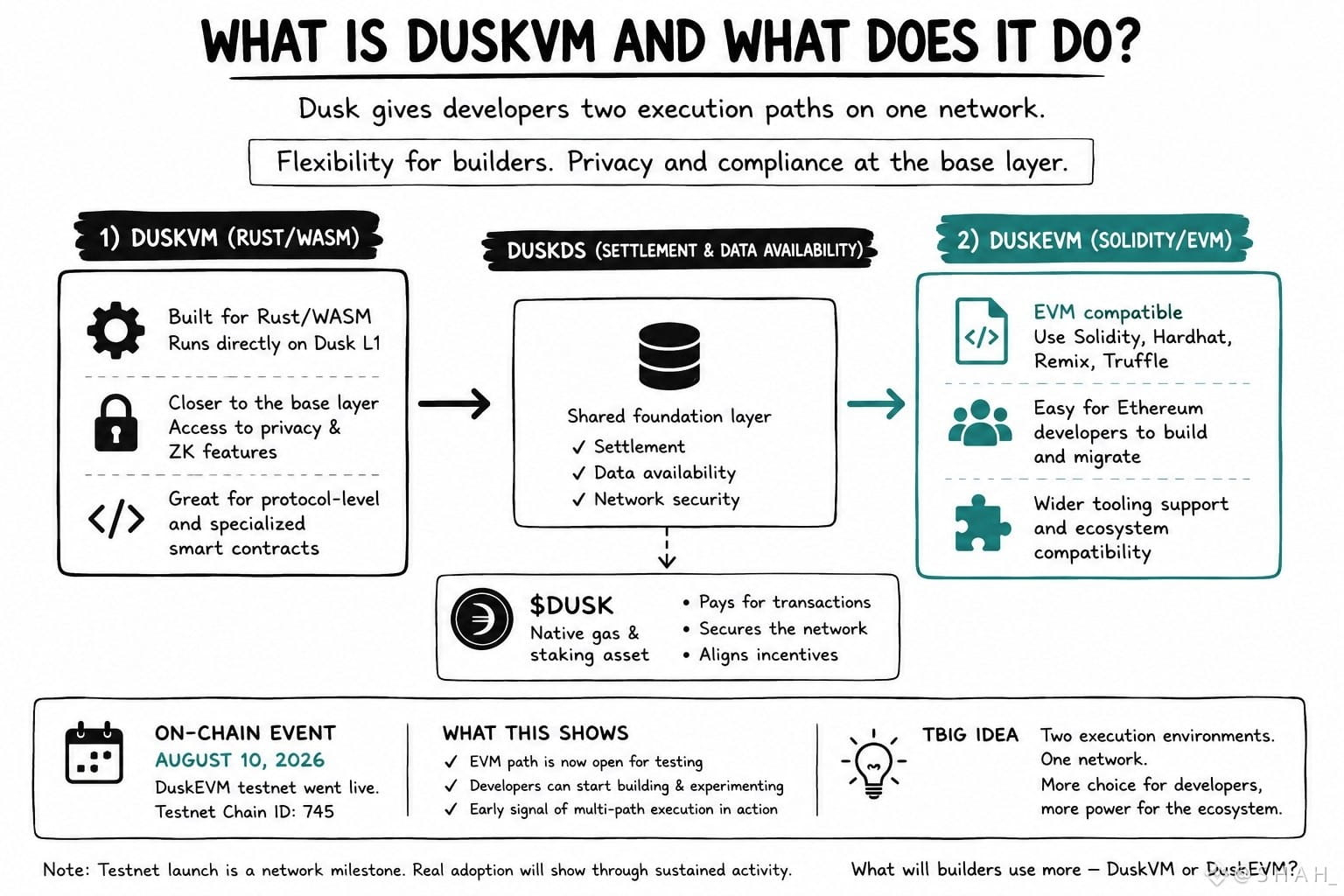
DuskVM, ilk baxışdan göründüyündən çox güman ki, daha vacibdir.
Mən Dusk-ın icra qatını araşdırırdım və bir detal mənim diqqətimi çəkdi:
Dusk hər bir tərtibatçını EVM-ə məcbur etmir.
DuskVM Rust/WASM smart kontraktlarını birbaşa Dusk L1 üzərində işlətir, DuskEVM isə tərtibatçılara SolidityEVM yolunu verir. Bu ayrım maraqlıdır, çünki iki mühit fərqli problemləri həll edir.
Sonra, avqustun 10-da DuskEVM testnet-i işə düşdü və Solidity və Hardhat-a əsaslanan testlər üçün EVM-uyğun tərəf açıldı.
Mənim üçün maraqlı olan buradakı arxitekturalıdır:
DuskVM → birbaşa L1 icra
Rust/WASM → protokol səviyyəli və ixtisaslaşmış kontraktlar
Privacy/ZK access → baza qatına daha yaxın
DuskEVM → tanış Ethereum alətləri
$DUSK → yerli qaz və staking aktiv
İlk reaksiyam həqiqətən bu oldu: iki icra yolunu niyə qururlar?
Cavab, görünür, sadəcə uyğunluq yox, çeviklikdir.
Amma təkcə testnet-in işə buraxılması bizə demir ki, tərtibatçılar hər iki mühiti miqyasda həqiqətən istifadə edəcəklərmi. İndi mən izlədiyim hissə budur.
Həqiqi qurucular birbaşa L1 icra önəmli olanda DuskVM-i seçəcəklər, yoxsa bütün fəaliyyət nəticədə daha çox DuskEVM-ə yönələcək?
@Dusk_Foundation $DUSK #dusk
DuskVM, ilk baxışdan göründüyündən çox güman ki, daha vacibdir.
Mən Dusk-ın icra qatını araşdırırdım və bir detal mənim diqqətimi çəkdi:
Dusk hər bir tərtibatçını EVM-ə məcbur etmir.
DuskVM Rust/WASM smart kontraktlarını birbaşa Dusk L1 üzərində işlətir, DuskEVM isə tərtibatçılara SolidityEVM yolunu verir. Bu ayrım maraqlıdır, çünki iki mühit fərqli problemləri həll edir.
Sonra, avqustun 10-da DuskEVM testnet-i işə düşdü və Solidity və Hardhat-a əsaslanan testlər üçün EVM-uyğun tərəf açıldı.
Mənim üçün maraqlı olan buradakı arxitekturalıdır:
DuskVM → birbaşa L1 icra
Rust/WASM → protokol səviyyəli və ixtisaslaşmış kontraktlar
Privacy/ZK access → baza qatına daha yaxın
DuskEVM → tanış Ethereum alətləri
$DUSK → yerli qaz və staking aktiv
İlk reaksiyam həqiqətən bu oldu: iki icra yolunu niyə qururlar?
Cavab, görünür, sadəcə uyğunluq yox, çeviklikdir.
Amma təkcə testnet-in işə buraxılması bizə demir ki, tərtibatçılar hər iki mühiti miqyasda həqiqətən istifadə edəcəklərmi. İndi mən izlədiyim hissə budur.
Həqiqi qurucular birbaşa L1 icra önəmli olanda DuskVM-i seçəcəklər, yoxsa bütün fəaliyyət nəticədə daha çox DuskEVM-ə yönələcək?
@Dusk $DUSK #dusk
Mən Dusk-ın icra qatını araşdırırdım və bir detal mənim diqqətimi çəkdi:
Dusk hər bir tərtibatçını EVM-ə məcbur etmir.
DuskVM Rust/WASM smart kontraktlarını birbaşa Dusk L1 üzərində işlətir, DuskEVM isə tərtibatçılara SolidityEVM yolunu verir. Bu ayrım maraqlıdır, çünki iki mühit fərqli problemləri həll edir.
Sonra, avqustun 10-da DuskEVM testnet-i işə düşdü və Solidity və Hardhat-a əsaslanan testlər üçün EVM-uyğun tərəf açıldı.
Mənim üçün maraqlı olan buradakı arxitekturalıdır:
DuskVM → birbaşa L1 icra
Rust/WASM → protokol səviyyəli və ixtisaslaşmış kontraktlar
Privacy/ZK access → baza qatına daha yaxın
DuskEVM → tanış Ethereum alətləri
$DUSK → yerli qaz və staking aktiv
İlk reaksiyam həqiqətən bu oldu: iki icra yolunu niyə qururlar?
Cavab, görünür, sadəcə uyğunluq yox, çeviklikdir.
Amma təkcə testnet-in işə buraxılması bizə demir ki, tərtibatçılar hər iki mühiti miqyasda həqiqətən istifadə edəcəklərmi. İndi mən izlədiyim hissə budur.
Həqiqi qurucular birbaşa L1 icra önəmli olanda DuskVM-i seçəcəklər, yoxsa bütün fəaliyyət nəticədə daha çox DuskEVM-ə yönələcək?
@Dusk $DUSK #dusk
2
90
·
--
Artım
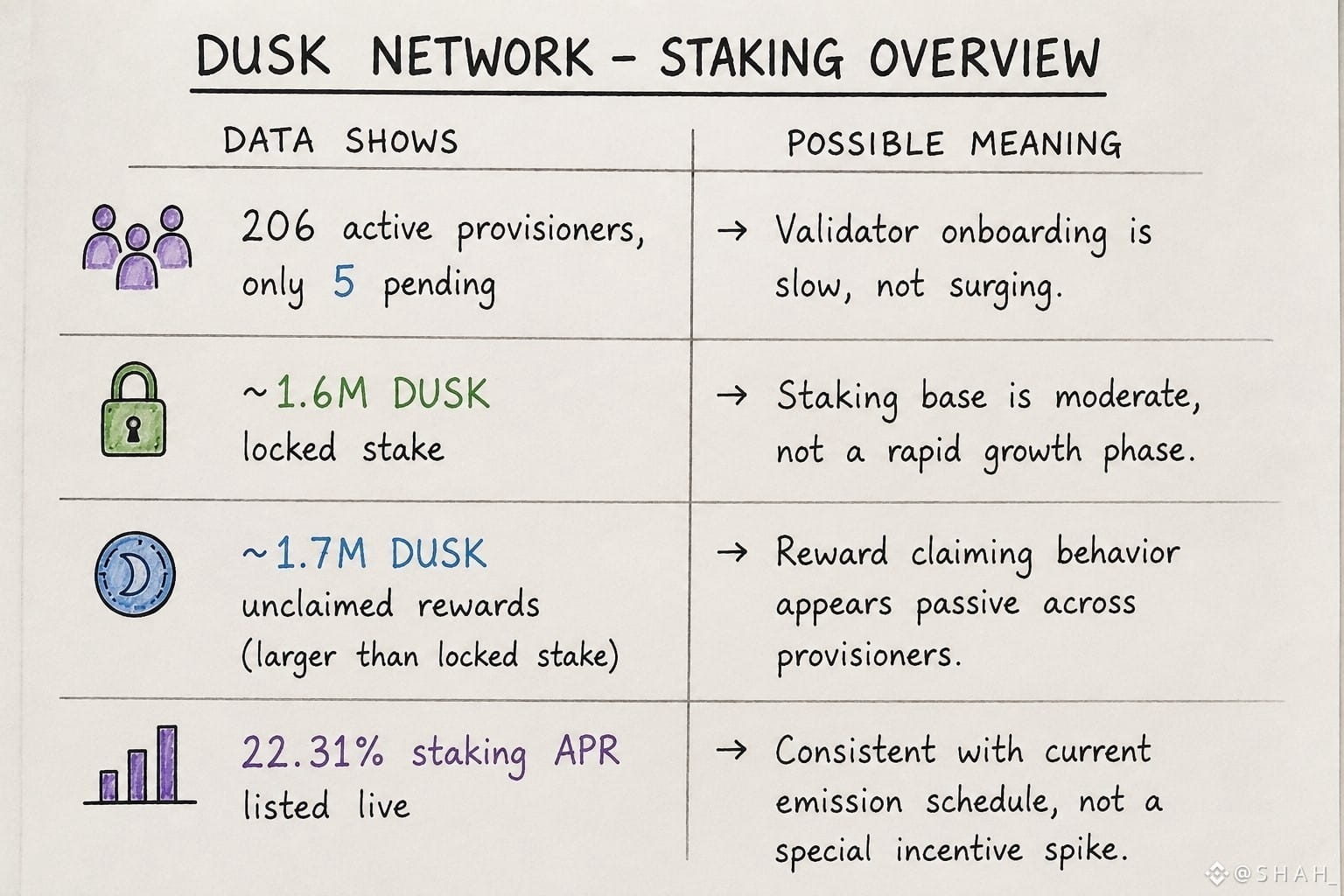
Dusk haqqında yazmağa başlamazdan əvvəl onun sənədləri əvəzinə explorer-i açdım. İlk diqqətimi çəkən budur: cəmi 5 pending olduğu halda 206 aktiv provisioner var.
DuskEVM və RWA settlement ətrafında hələ də özünü formalaşdıran bir zəncir üçün bu qədər incə validator növbəsi (queue) əlbəttə çox sıx görünmür.
Hazırkı kilidlənmiş stake təxminən 1.6M DUSK ətrafındadır, iddia olunmamış rewards isə təxminən 1.7M DUSK təşkil edir.
İddia olunmamış rəqəmin məni dayandıran tərəfi odur ki, bu, kilidlənmiş stake-in ölçüsünə təxminən eyni həcmdədir. Ya əksər stakerlər üçün iddiaetmə avtomatlaşdırılmayıb, ya da provisioner-lərin bir hissəsi hələlik geri çəkib withdraw etməyə sadəcə maraq göstərmir.
Bizə bunu deyən: iştirak sabitdir, amma hazırda aqressiv şəkildə artmır və reward-claiming davranışı passiv kimi görünür, aktiv yox.
Bunun bizə demədiyi: bu rəqəmlərin keçən həftənin snapshot-u ilə necə müqayisə olunduğunu təsdiqləyə bilmədim və iddia olunmamış rewards-un bir neçə böyük holder-ə aid olub-olmadığını, yoxsa çox sayda kiçik hissəçilərə dağıldığını da aydınlaşdıra bilmədim; explorer bunu təmiz şəkildə ayırmır.
Dusk-ın provisioner setini birbaşa izləyən hər kəs: aşağı pending validator sayı bottleneck-dirmi, yoxsa daha kiçik, məqsədli bir şəbəkənin sadəcə əlamətidir?
#dusk @Dusk_Foundation $DUSK
Dusk haqqında yazmağa başlamazdan əvvəl onun sənədləri əvəzinə explorer-i açdım. İlk diqqətimi çəkən budur: cəmi 5 pending olduğu halda 206 aktiv provisioner var.
DuskEVM və RWA settlement ətrafında hələ də özünü formalaşdıran bir zəncir üçün bu qədər incə validator növbəsi (queue) əlbəttə çox sıx görünmür.
Hazırkı kilidlənmiş stake təxminən 1.6M DUSK ətrafındadır, iddia olunmamış rewards isə təxminən 1.7M DUSK təşkil edir.
İddia olunmamış rəqəmin məni dayandıran tərəfi odur ki, bu, kilidlənmiş stake-in ölçüsünə təxminən eyni həcmdədir. Ya əksər stakerlər üçün iddiaetmə avtomatlaşdırılmayıb, ya da provisioner-lərin bir hissəsi hələlik geri çəkib withdraw etməyə sadəcə maraq göstərmir.
Bizə bunu deyən: iştirak sabitdir, amma hazırda aqressiv şəkildə artmır və reward-claiming davranışı passiv kimi görünür, aktiv yox.
Bunun bizə demədiyi: bu rəqəmlərin keçən həftənin snapshot-u ilə necə müqayisə olunduğunu təsdiqləyə bilmədim və iddia olunmamış rewards-un bir neçə böyük holder-ə aid olub-olmadığını, yoxsa çox sayda kiçik hissəçilərə dağıldığını da aydınlaşdıra bilmədim; explorer bunu təmiz şəkildə ayırmır.
Dusk-ın provisioner setini birbaşa izləyən hər kəs: aşağı pending validator sayı bottleneck-dirmi, yoxsa daha kiçik, məqsədli bir şəbəkənin sadəcə əlamətidir?
#dusk @Dusk $DUSK
DuskEVM və RWA settlement ətrafında hələ də özünü formalaşdıran bir zəncir üçün bu qədər incə validator növbəsi (queue) əlbəttə çox sıx görünmür.
Hazırkı kilidlənmiş stake təxminən 1.6M DUSK ətrafındadır, iddia olunmamış rewards isə təxminən 1.7M DUSK təşkil edir.
İddia olunmamış rəqəmin məni dayandıran tərəfi odur ki, bu, kilidlənmiş stake-in ölçüsünə təxminən eyni həcmdədir. Ya əksər stakerlər üçün iddiaetmə avtomatlaşdırılmayıb, ya da provisioner-lərin bir hissəsi hələlik geri çəkib withdraw etməyə sadəcə maraq göstərmir.
Bizə bunu deyən: iştirak sabitdir, amma hazırda aqressiv şəkildə artmır və reward-claiming davranışı passiv kimi görünür, aktiv yox.
Bunun bizə demədiyi: bu rəqəmlərin keçən həftənin snapshot-u ilə necə müqayisə olunduğunu təsdiqləyə bilmədim və iddia olunmamış rewards-un bir neçə böyük holder-ə aid olub-olmadığını, yoxsa çox sayda kiçik hissəçilərə dağıldığını da aydınlaşdıra bilmədim; explorer bunu təmiz şəkildə ayırmır.
Dusk-ın provisioner setini birbaşa izləyən hər kəs: aşağı pending validator sayı bottleneck-dirmi, yoxsa daha kiçik, məqsədli bir şəbəkənin sadəcə əlamətidir?
#dusk @Dusk $DUSK
1
1
122
·
--
Artım
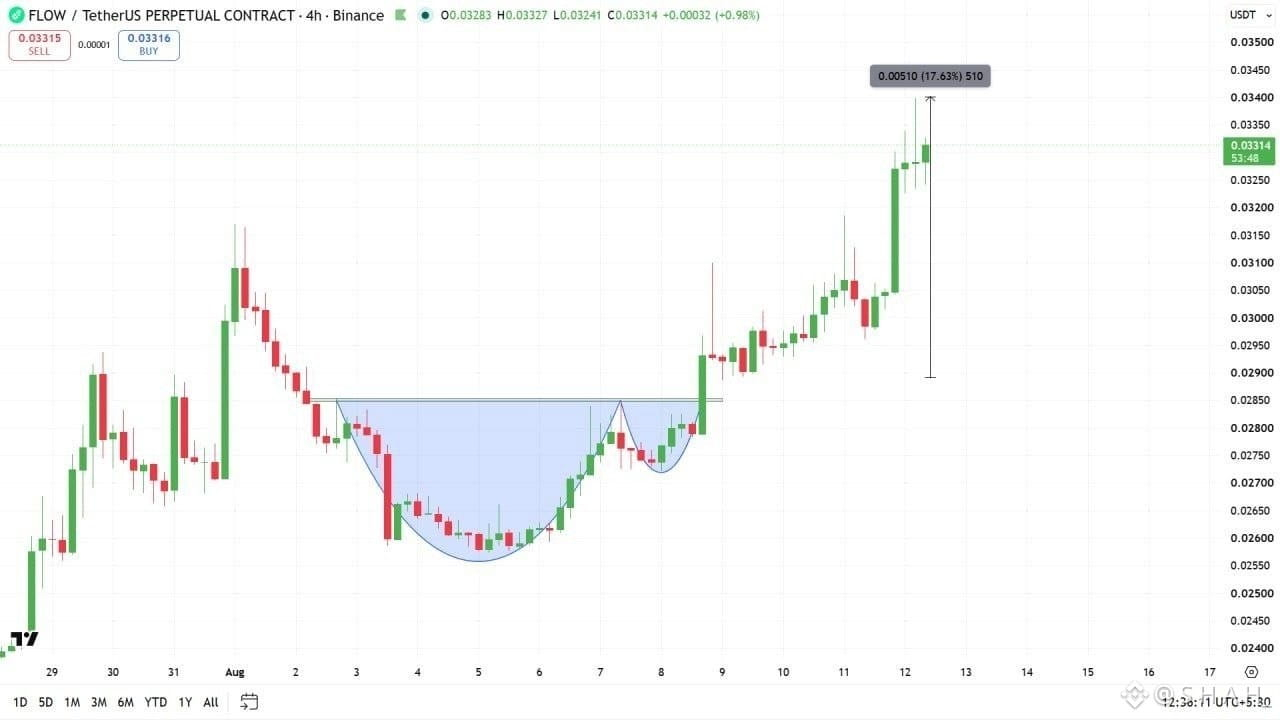
Bizim yeniləməmizdən sonra 17% artım edən $FLOW USDT pumped 17% 🚀😵
Bizim yeniləməmizdən sonra 17% artım edən $FLOW USDT pumped 17% 🚀😵
1
215
·
--
Azalma
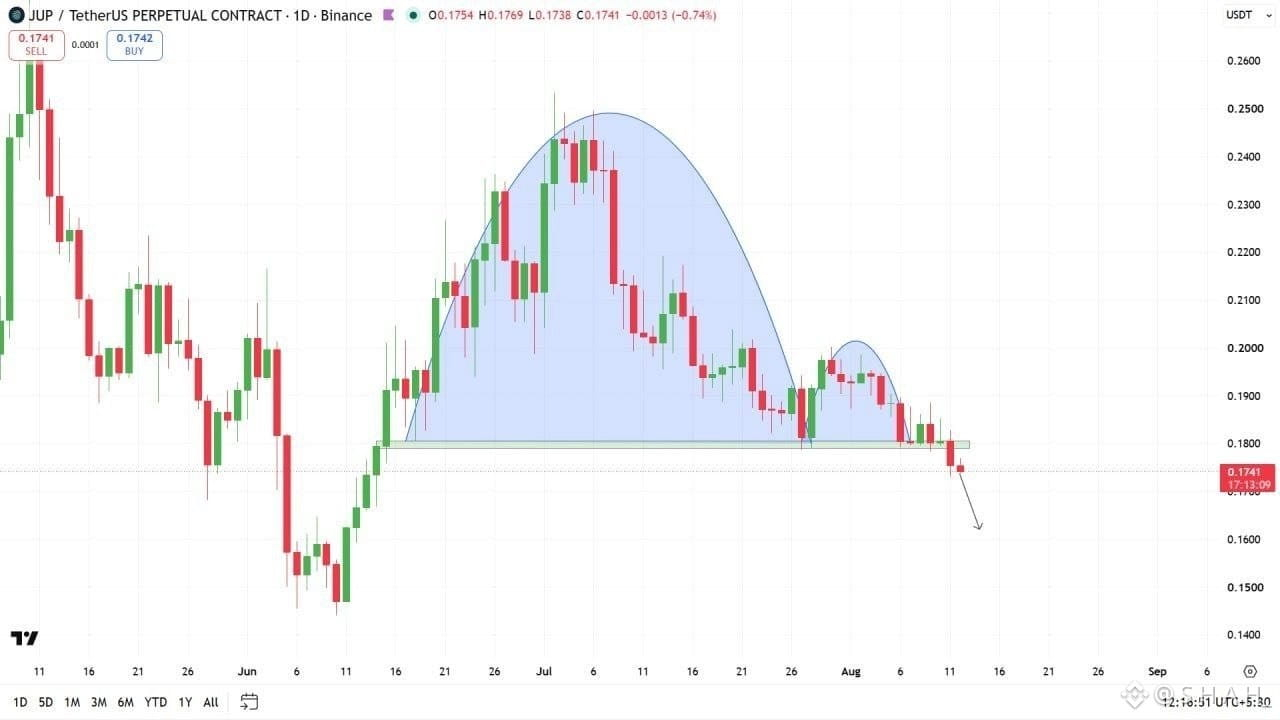
$JUP USDT ters inverse Cup və handle nümunəsini artıq pozub, ona görə də buradan etibarən dump (kəskin eniş) gözləyə bilərik. Onu izləyin.
$JUP USDT ters inverse Cup və handle nümunəsini artıq pozub, ona görə də buradan etibarən dump (kəskin eniş) gözləyə bilərik. Onu izləyin.
148
·
--
Artım
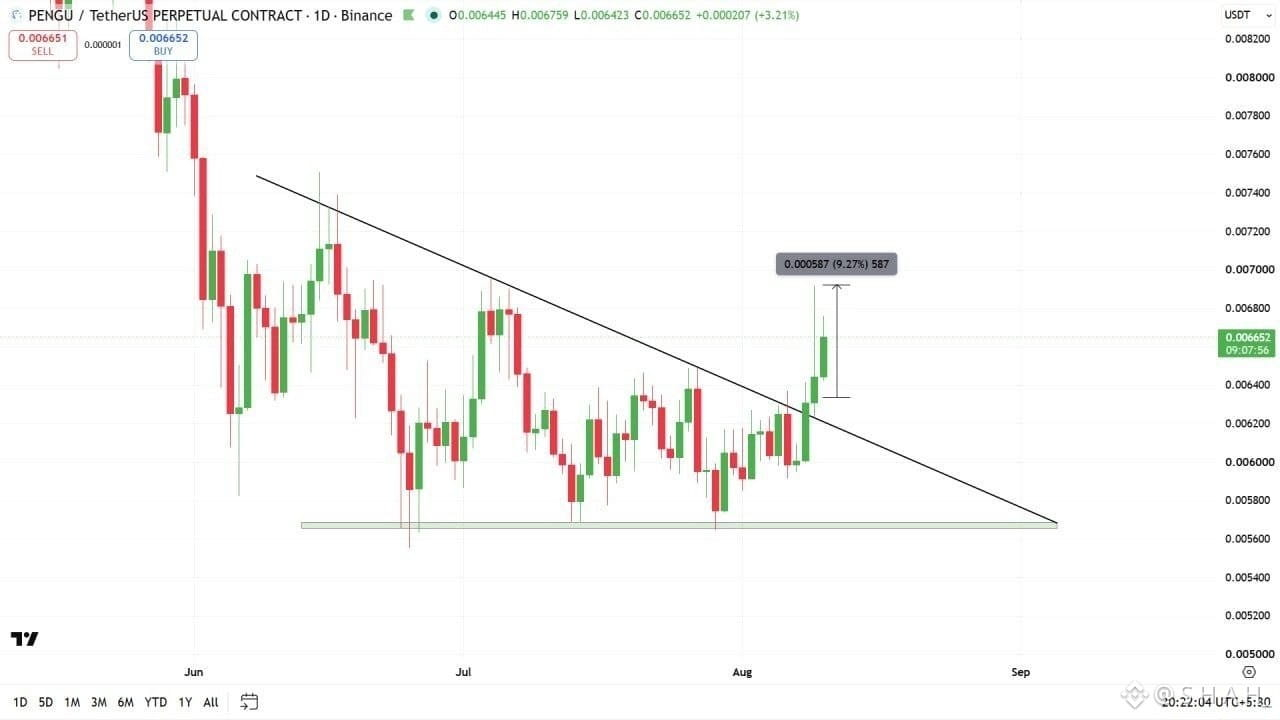
$PENGU USDT tam olaraq proqnozlaşdırdığımız kimi artır. İndiyə qədər 9% yüksəlib, həzz alın, uşaqlar.
$PENGU USDT tam olaraq proqnozlaşdırdığımız kimi artır. İndiyə qədər 9% yüksəlib, həzz alın, uşaqlar.
S H A H_
·
--
Artım$PENGU USDT yüksəliş kimi görünür, qırılmadan sonra. Tezliklə bir artım görə bilərik. Ona diqqət yetirin.
113
Daha çox kontent araşdırmaq üçün daxil olun
Binance Square-də qlobal kriptovalyuta istifadəçilərinə qoşulun
⚡️ Kriptovalyuta haqqında ən son və faydalı məlumatları əldə edin.
💬 Dünyanın ən böyük kriptovalyuta birjası tərəfindən etibar edilir.
👍 Doğrulanmış yaradıcılardan gələn real məlumatları kəşf edin.
E-poçt/Telefon nömrəsi
Trenddə olan mövzular
EtherGains70.9%InQ3
101,691 baxış
Müzakirə edir: 949
🧭🧭🧭 Alternativ mövsüm analizi 🧭🧭🧭
💡 Alternativ sikkələr mövsümü göstəricisi 💡
🚨🚨🚨 Üçüncü rüb (T3) başa çatdı. ETH qiyməti 71%, BTC isə 43% artdı. 🚨🚨🚨
Bu, alternativ sikkələr mövsümünün başlanğıcı idi?
Ən yaxşı 100-lükdə:
🌐🌐🌐 90 gün ərzində BTC-ni 57-si üstələdi
Alternativ sikkələr mövsümü 75-dən başlayır, yəni hələ
həm də illik zirvəsindən cəmi 10 bənd geridədir: 67 🌐🌐
💥💥💥 Amma bir də baxın, bir ay əvvəl göstərici cəmi 23 idi!
Oktabr onu 75-ə qədər yüksəldə bilərmi? 👀💥💥💥
Davam edin, zəhmət olmasa
#EtherGains70.9%InQ3
$GRAM
Shamika Metting
·2 bəyənmə
·942 baxış
TreasuryLetsStatesFileStablecoinCertificationsEarly
5,392 baxış
Müzakirə edir: 62
US10YearYieldNears5.3%
122,787 baxış
Müzakirə edir: 997