Binance, BNB Smart Chain-də Salesforce (CRMB) və Hims & Hers Health (HIMSB) üçün yeni bStocks elan edib. Ticarət cütləri sentyabrın 9-da Binance Spot və Convert-də planlaşdırılıb və sentyabrın 30-dək sıfır maker haqları tətbiq olunacaq. Bu, Binance-in tokenləşdirilmiş qiymətli kağızlar təklifinin daha bir genişlənməsini göstərir. #BNB #CryptoNews
Liquid Network has recovered 3,400 BTC from the exploit that drained roughly 4,000 BTC from its federation wallet. About 598 BTC remains outstanding, while the Bitcoin sidechain stays paused as Blockstream and federation members work through security fixes, resolve a chain split, and prepare a coordinated restart. #BTC #CryptoNews
Bu günün qızıl hekayəsi: Yapon yeninin kəskin möhkəmlənməsi dollar üzərindəki təzyiqi azaldıb və qızıla dəstək verib. Amma Hormuz boğazı ətrafında enerji gərginlikləri inflyasiya ilə bağlı narahatlıqları canlı saxlayır. Bu həftə daha sonra təqdim olunacaq ABŞ inflyasiya məlumatları hansı qüvvənin daha böyük çəkiyə malik olduğunu göstərəcək. PAXG və XAUT üçün əsas fon fiziki qızıldakı bu makro tarazlıq olaraq qalır. #PAXG #XAUT
BTC/USDT son 24 saata %1,22 geriləyərək 78.523,26 $ civarında idi. Buna qarşılıq BNB/USDT eyni pəncərədə %1,84 yüksəlib 758,35 $ səviyyəsinə çıxdı.
Tokenləşdirilmiş qızıl tərəfdə PAXG və XAUT müvafiq olaraq %0,50 və %0,49 itkidə idi. Günün diqqətçəkən məqamı, BTC-nin zəif gedişinə baxmayaraq BNB-nin müsbət ayrışması; PAXG ilə XAUT-un isə demək olar paralel hərəkət etməsi.
8 Sentyabr 14:16 (UTC+6) tokenləşdirilmiş qızıl görünüşü:
PAXG/USDT: 4.392,91 $ | son 24 saatda %-0,590 XAUT/USDT: 4.389,78 $ | son 24 saatda %-0,559
Aradakı ani fərq 3,13 $ (%0,071). Paxos, PAXG-nin; Tether Gold isə XAUT-un hər bir tokeninin 1 unsiya troy fiziki qızılını təmsil etdiyini bildirir. Eyni mövzuya məruz qalsalar da emitent, vaxtı çatma və əməliyyat şərtləri ayrıca qiymətləndirilməlidir.
Mübahisəyə Hazır Əməliyyatlar Nümayişə Hazır Əməliyyatları Üzdən Uğurla Ötürür
Robot donanması idarə olunan nümayişdə mükəmməl görünə bilər və hələ də istehsalda yüksək dəyərli bir vəzifə mübahisə edildikdə ilk dəfə uğursuz ola bilər. Fabric bu uğursuzluq zonasını birbaşa robot şəxsiyyəti, çağırış hüquqları, təsdiqləyici baxış və tənzimləmə qaydalarını bir ictimai koordinasiya zolağında birləşdirərək həll edir. Bu arxitektura əhəmiyyətlidir, çünki hadisə idarəetməsi etibarın qazanıldığı və ya itirildiyi yerdir. Əgər sübutlar özəl alətlər arasında parçalanmışsa, komandalar riskin həll olunması əvəzinə mülkiyyət üzərində mübahisə edərək vaxt sərf edirlər. Birləşdirilmiş çağırış yolu ilə operatorlar baş verənləri izləyə, aşağı keyfiyyətli icranı mübahisə edə və bağlanmış komitə artımını gözləmədən nəticələr tətbiq edə bilərlər.
Ən çox müstəqil uğursuzluqlar dramatik qəzalardır; bunlar heç kimin izini sürə bilmədiyi mübahisəli mikro-qərarlardır. Fabric-in modeli mühümdür, çünki robot kimliyi, çağırış təqdimatı, təsdiqçi araşdırması və ödəniş icrası eyni açıq zolaqda yerləşir. Sübut axını açıq olduqda, operatorlar zəif davranışı genişlənmədən əvvəl düzəldə bilərlər. Buna görə $ROBO real nəzarət infrastrukturu olaraq diqqətə layiqdir. #ROBO @Fabric Foundation
Sürətli Çıxış Ucuzdur. Nəzarət Edilən İcra Həqiqi Məhsuldur.
Mən AI sistemlərini necə sürətli cavab verdiklərinə görə qiymətləndirirdim. Mən bunu bir inandırıcı cümlənin sistemin yanlış köçürməyə, yanlış yeniləməyə və ya yanlış müştəri mesajına yönəldə biləcəyini gördükdən sonra dəyişdim. İndi etibarlılığı icra nəzarəti kimi müalicə edirəm. İstehsal yalnız bir təklifdir. Təsdiq təzyiq testidir. Buraxılış isə bir qərar sərhədidir. Mira haqqında bəyəndiyim şey odur ki, bu sərhədi təkrarlanan bir prosesə çevirir. Bir cilalanmış cavaba etibar etmək əvəzinə, cavabı yoxlanıla bilən iddialara ayıra bilərsiniz, onları müstəqil təsdiqçilərlə mübahisə edə bilərsiniz və yalnız sübutlar kifayət qədər güclü olduqda hərəkətə icazə verirsiniz.
Mən axınlı süni intellekt mətnini sübut kimi qəbul etməyi dayandırdım bir gün bir yoxlanılmamış cümlə demək olar ki, səhv transferi işə saldı. Mənim Mira qaydam sadədir: iddiaları əvvəlcə sorğulayın, sonra icazə verin. Sürət bir dəqiqəlik yaxşı hiss etdirir; müdafiə oluna bilən iz sizi gerçək xərclər gəldikdə qoruyur. Müstəqil qapı olmadan geri dönməz bir hərəkəti buraxardınızmı? @Mira - Trust Layer of AI $MIRA #Mira

Robots do not usually lose credibility during smooth runs. They lose credibility when a contested action appears and no one can show a reliable path from claim to resolution. Fabric is valuable because it treats that exact moment as a core systems problem. The protocol ties robot identity, challenge rights, validator review, and settlement logic into one shared coordination lane. That structure gives operators a repeatable way to test evidence quality before trust damage spreads. In practical operations, this matters immediately. A disputed delivery, inspection, or routing decision should not become a private argument across separate tools and teams. It should move through one visible process where claims are reviewed, consequences are applied, and records stay auditable. This is where $ROBO has functional value beyond narrative framing. Utility and governance are meaningful only when participation and accountability remain active under pressure. If those controls weaken, autonomy speed becomes liability acceleration. s revenue-critical workflows, would you trust raw throughput, or a system that can defend contested outcomes in public with enforceable rules? @Fabric Foundation $ROBO #ROBO
One contested robot action can erase trust faster than any polished demo can build it. Fabric gives operators a public challenge lane with validator review and enforceable consequences, so accountability holds under pressure. That is why $ROBO matter when autonomy touches real operations. #ROBO @Fabric Foundation

Confidence Is Cheap. Defensible Action Is Expensive.
I used to treat AI reliability as a model-quality issue. Now I treat it as an execution-control issue. A model can produce a polished answer in seconds.That does not mean the answer should be trusted for action.In high-impact workflows, one weak claim can trigger the wrong transfer, the wrong update, or the wrong message. This is why Mira is useful to me.The value is not cosmetic confidence.The value is a stricter path from output to execution:decompose claims, apply independent verification pressure, and gate action until evidence is strong enough. That sequence changes team behavior.Instead of debating style quality after the fact, teams can enforce decision quality before impact.Disagreement becomes a signal, not a nuisance.Delay becomes a control cost, not a failure. My operating rule is blunt:no irreversible action from a single unchecked answer.If the claim cannot survive independent challenge, the system slows down or stops. I am not arguing for paralysis.I am arguing for accountability at the decision boundary.Speed still matters.But speed without verification is usually deferred risk. If your AI system is one step away from irreversible impact, do you optimize for faster output or for stronger evidence before release? @Mira - Trust Layer of AI $MIRA #Mira

I have seen clean AI answers fail on one critical line, and that single miss can trigger expensive damage in live systems.
What I value in Mira is the execution discipline: break output into claims, pressure-test with independent verification, then decide whether action is allowed.
My rule is direct: if an action is irreversible, verification must come before execution.
If your agent can move money, modify production data, or touch customer-critical flow, would you let one unchecked answer decide the next step?
I No Longer Reward Fast AI Answers That Cannot Be Defended
I reviewed four Mira campaign posts and learned the same hard lesson again: clean technical writing is not enough when the market rewards conviction and usefulness. Most people still frame AI quality as "better wording" or "faster output." I think that framing misses where losses actually happen. The real failure point is execution after a weak claim slips through and triggers a trade, a customer message, or an irreversible action. In real deployments, discussion often shifts to narratives while execution risk stays under-modeled. My focus is different: can a system force evidence before action? If the answer is no, the system is still fragile, even when the text looks impressive. What I like about Mira is the discipline it implies: break confidence theater, invite independent challenge, and refuse execution when evidence is thin. Disagreement is not noise in this model; disagreement is a risk signal. My rule is blunt: no irreversible action until verification pressure has tested the claim from multiple angles. That may cost a little speed, but it saves expensive mistakes. If your agent can move money or modify production data today, what matters more to you tomorrow: a faster sentence or a defensible decision trail? @Mira - Trust Layer of AI $MIRA #Mira
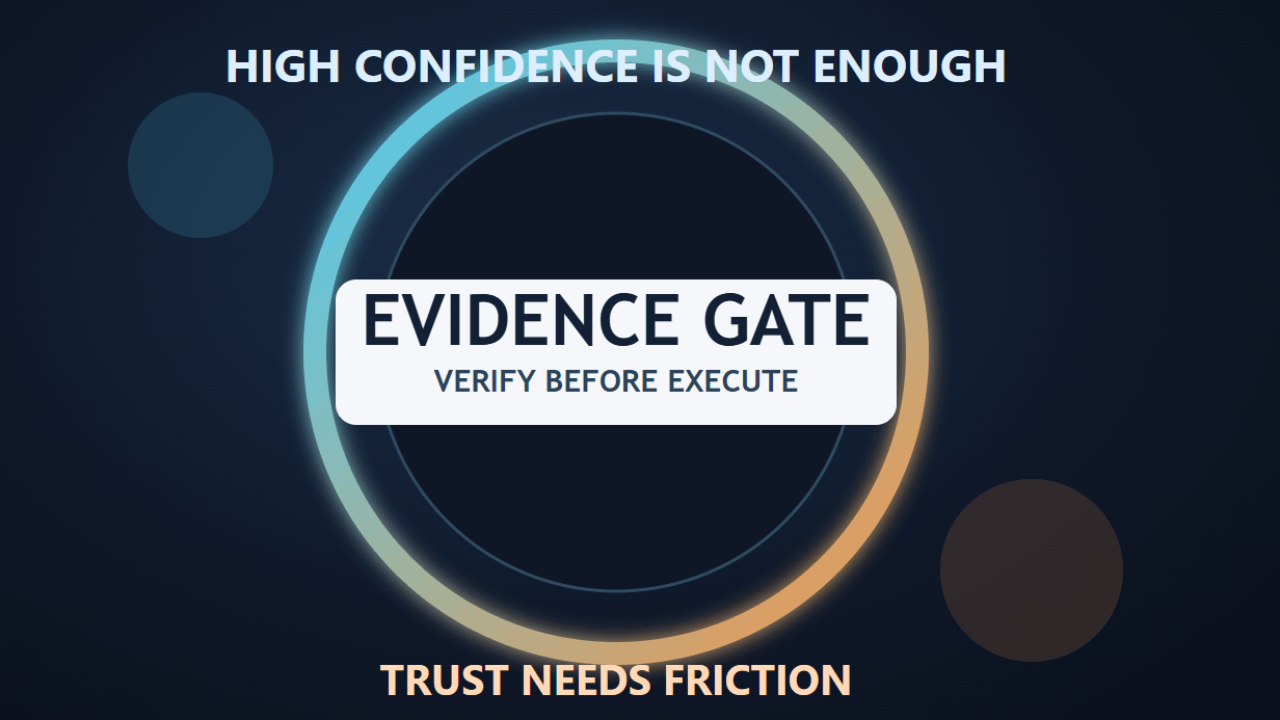
I watched another polished AI answer hide a costly miss. Since then, I treat unverified output as liability, not productivity. If your agent can place a trade, why execute before independent checks? @Mira - Trust Layer of AI $MIRA #Mira
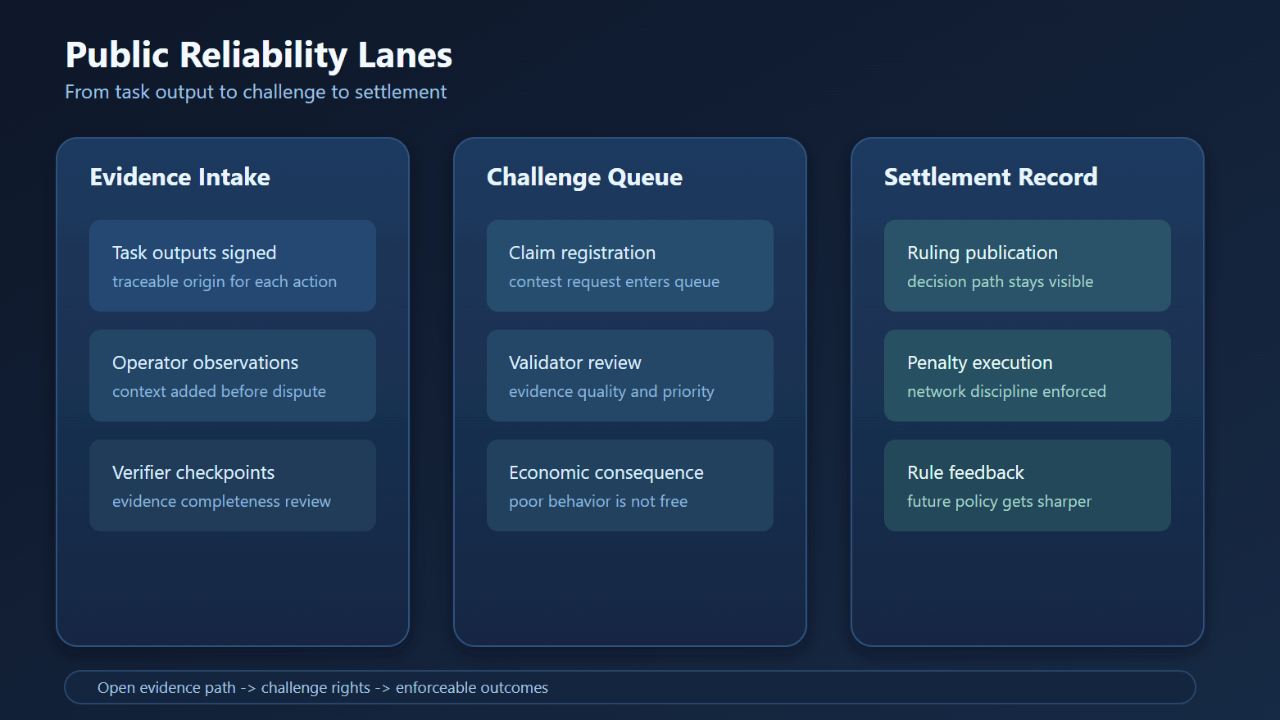
The hardest robotics failures are not model errors. They are governance failures after a contested outcome. When a robot decision is challenged, teams usually discover too late that accountability is fragmented. One system stores output logs, another holds operator notes, and a separate process decides penalties. By the time review starts, trust is already damaged because nobody can follow one auditable path from action to settlement. This is where Fabric's architecture direction is practical. The protocol thesis combines identity, challenge flow, validator participation, and economic consequence in one public coordination layer. That structure matters more than abstract "AI quality" claims because production systems break under disagreement, not under perfect demo conditions. I also think this is why $ROBO should be evaluated by operational utility, not by narrative noise. A token only becomes strategic when it supports measurable behavior: who reviews evidence, who can challenge, how bad execution is penalized, and how policy can evolve without shutting the network down. For builders, the key filter is simple. If your robot stack cannot show a clean dispute trail, you do not have a reliability system yet. You have an incident backlog waiting to happen. As autonomous services scale, would you rather rely on private postmortems or on a public challenge process with visible rules and enforceable outcomes? @Fabric Foundation $ROBO #ROBO
Most robot projects fail at the same point: when a result is contested and nobody knows which evidence path to trust. Fabric's challenge-based verification turns that chaos into a process. For @Fabric Foundation and $ROBO , reliability is not a slogan; it is a ruleset with consequences. #ROBO
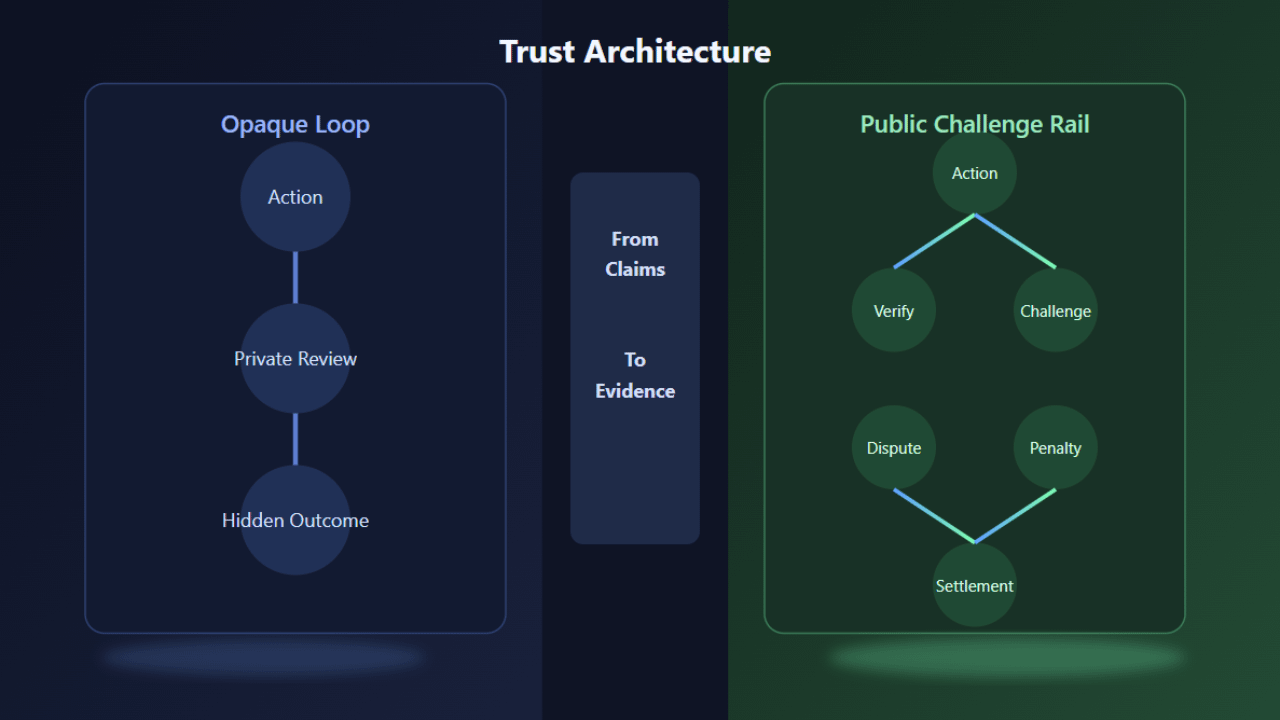
Robot Etibarlılığı Demo Keyfiyyətinin Bitdiyi Yerdə Başlayır
Mən robot layihələrini demo keyfiyyətinə görə qiymətləndirməyi öyrənmişdim. Bu, səhv idi. Güclü bir demo yalnız bir sistemin nəzarət olunan şəraitdə uğur qazana biləcəyini sübut edir. Bu, işlərin qarışıq olduğu, operatorların razılaşmadığı və real pulun işin içində olduğu zaman baş verənlər haqqında demək olar ki, heç nə demir. İstehsalda, uğursuzluq nadir hallarda dramatik bir qəza olur. Əksər hallarda, bu, heç kimin tez bir zamanda meydan oxuya bilmədiyi kiçik, yoxlanılmamış qərarların zənciridir. Buna görə də Fabric mənim üçün fərqlənir. Protokol çərçivəsi 'bizə etibar edin, yaxşı modellər yaratdıq' deyil. Çərçivə əməliyyatdır: robot hərəkətlərinə şəxsiyyət vermək, nəticələri meydan oxuya bilən etmək və idarəetməni bir xüsusi operatorun arxasında gizlətmək əvəzinə görünən saxlamaq.
I stopped trusting robot demos the day a clean output caused a bad operational decision. Capability is easy to show; accountability is hard to engineer. Fabric's public challenge and governance rails are why this thesis matters for real deployment. @Fabric Foundation $ROBO #ROBO

Etibar Təhlükəsizlik Deyil: Niyə Mira İcra Öncesi Təsdiq Qapısı Əlavə Edir
AI etibarlılığı probleminin əsasən bir model keyfiyyəti problemi olduğunu düşünürdüm. Artıq belə düşünmürəm. Gerçək qırılma nöqtəsi çıxış və icra arasında baş verənlərdir. Bir cavab kəskin səslənə bilər, sürətli bir insan baxışı keçirə bilər və hələ də yanlış hərəkəti tetikleyen bir pis iddia ehtiva edə bilər. Maliyyə, əməliyyatlar və ya uyğunluq işlərində, bu tək qaçırma real ziyan yaratmaq üçün kifayətdir. Buna görə Mira mənim üçün maraqlıdır: etibarlılığı bir idarəetmə mərhələsi kimi qəbul edir, markalaşma bəyanatı kimi deyil. 4 dekabr 2025-ci ildə Binance MIRA-nı HODLer Airdrops elanında yerləşdirdi və bir çox insan token başlıqlarına fokuslandı. Mən sistem dizaynına daha çox önəm verirəm. Əsas fikir çıxışı kiçik iddialara bölmək, bu iddiaları müstəqil təsdiqçilərə yönləndirmək və cavabın icra qapısını keçmək üçün kifayət qədər güclü olub-olmadığını qərar verməkdir.