

Coinstelegram
3.9k Paylaşımlar

Coinstelegram
 Square Verified+
Şikayət et
İstifadəçini blokla
Coinstelegram is a leading blockchain & altcoins cryptocurrency media
0 İzlənilir
19.6K+ İzləyicilər
3.2K+ Bəyəndi
Postlar
Məqalə
Tərcüməyə bax
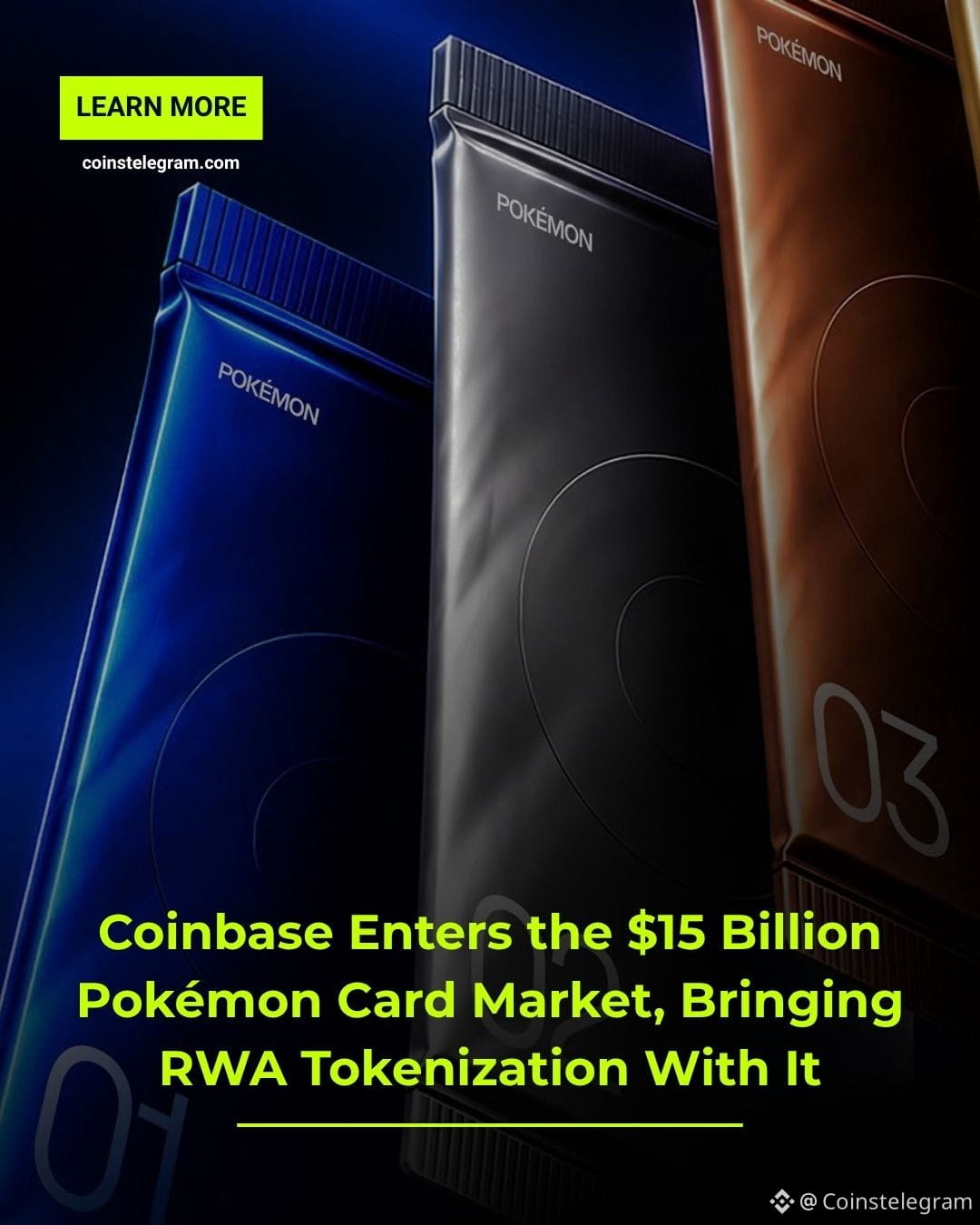
Coinbase Enters the $15 Billion Pokémon Card Market, Bringing RWA Tokenization With ItCoinbase is entering the Pokémon trading card craze, announcing plans to let users open digital card packs directly in its app, with every digital pull backed by an actual, physical Pokémon card.
The move plants the crypto exchange squarely in a booming collectibles market that has recently outperformed both Bitcoin and the S&P 500, while bringing a familiar tokenized real-world asset structure to one of the hottest hobbies in pop culture.
What Coinbase Actually Announced
Coinbase teased the product on X on September 28 with a short, punchy pitch:
“Rip packs on your phone. Every pull backed by a real, physical card. Vault it or ship it.”
The announcement itself didn’t name Pokémon directly, but Coinbase subsequently confirmed the connection in a reply to a user, making clear the initial packs will be built around the Pokémon Trading Card Game.
The promotional artwork accompanying the announcement displayed five differently colored packs numbered 01 through 05. Coinbase has not clarified whether these numbers and colors represent different price tiers, distinct card categories, or something else entirely. The company also has not disclosed pricing or a firm launch date for the product.
How the Experience Is Meant to Work
Based on Coinbase’s announcement, the basic mechanic is straightforward: a user opens a digital pack through the Coinbase app, the app reveals which card they’ve pulled, and that digital reveal is tied to an actual physical card held on the user’s behalf. From there, users get two options — store the physical card in Coinbase’s vault without ever touching it, or request it be shipped directly to their home.
What remains unconfirmed is whether users will be able to resell or trade their pulled cards without ever taking physical possession — functionally treating the digital representation of the card as a tradeable asset in its own right. Coinbase’s announcement and follow-up exchanges left this detail open. That gap matters: collecting a card and being able to freely trade it are two fundamentally different product experiences, even when both nominally happen through the same app interface.
Not the First Mover in Digital Card Packs
Coinbase isn’t the first major retailer to experiment with this model. GameStop already sells digital Pokémon packs through its own platform, with some packs priced as high as $2,500 — demonstrating there’s already established appetite for premium digital-pack products tied to physical collectibles. What differentiates Coinbase’s entry is its crypto industry background: in blockchain-based versions of similar collectibles markets, ownership of a card can already change hands entirely on-chain, with no physical movement of the underlying item required at all. Coinbase has not yet said whether its Pokémon product will function this way, using blockchain-based ownership records, or whether it will operate more like a traditional digital storefront with a vaulting and shipping option layered on top.
Why Pokémon Cards, and Why Now
The timing of Coinbase’s move lines up with a genuinely remarkable run for physical Pokémon card values. According to market tracking data, an index of Pokémon card prices has climbed approximately 28% year-to-date, a performance that has notably outpaced both Bitcoin, which has declined between 27% and 29% over a comparable period, and the S&P 500, which gained around 13%.
It’s important to keep this outperformance in proper context, however. While Pokémon cards have posted stronger percentage gains recently, the overall market for the collectible remains far smaller in absolute terms than either Bitcoin or U.S. equities. The total global Pokémon card market is estimated at somewhere between $10 billion and $15 billion — a fraction of Bitcoin’s market capitalization, which sits well above $1 trillion, and a tiny sliver of the S&P 500’s combined market value spanning 500 major public companies. In short, Pokémon cards have delivered better recent returns, not a bigger overall market.
The Tokenization Angle
Coinbase’s entry into physical collectibles fits into a broader trend the crypto industry has been pursuing: tokenizing real-world assets (RWA) to make traditionally illiquid physical items tradeable using blockchain infrastructure. In this model, a physical item — in this case, a graded, professionally authenticated card — is placed into secure storage, and a corresponding digital token is created to represent verified ownership of that specific physical item. That structure theoretically allows an owner to sell their claim to the card at any time, 24/7, without needing to physically ship anything to a buyer until and unless the new owner specifically requests physical delivery.
Why This Matters Beyond Collectibles
Coinbase’s Pokémon initiative arrives as the exchange continues expanding well beyond its original core business of cryptocurrency trading. The move signals continued interest from crypto-native companies in applying blockchain and tokenization concepts to markets that have nothing inherently to do with digital assets — physical trading cards, in this case — as a way of both diversifying revenue and demonstrating practical, mainstream-facing applications for tokenized ownership models beyond speculative crypto trading itself.
For Pokémon collectors specifically, Coinbase’s entry brings a major, publicly traded financial company with significant brand trust and existing user infrastructure into a space that has historically been dominated by specialized collectibles platforms and marketplaces. Whether that translates into meaningfully different pricing, liquidity, or trading experience compared to existing options like GameStop’s digital packs remains to be seen until Coinbase releases further product details.
What Comes Next
With no confirmed launch date, pricing, or clarity on resale functionality, prospective users and collectors will need to wait for additional details from Coinbase before knowing exactly how the product will function in practice. Given the strength of the current Pokémon card market and Coinbase’s substantial existing user base, however, the announcement alone has already generated significant attention within both the crypto and collectibles communities — with the biggest open question being whether Coinbase’s version of “ripping packs” will ultimately operate as a blockchain-based ownership system or function more conventionally as a digital storefront with vaulting and shipping bolted on.
Coinbase Enters the $15 Billion Pokémon Card Market, Bringing RWA Tokenization With It
Coinbase is entering the Pokémon trading card craze, announcing plans to let users open digital card packs directly in its app, with every digital pull backed by an actual, physical Pokémon card.
The move plants the crypto exchange squarely in a booming collectibles market that has recently outperformed both Bitcoin and the S&P 500, while bringing a familiar tokenized real-world asset structure to one of the hottest hobbies in pop culture.
What Coinbase Actually Announced
Coinbase teased the product on X on September 28 with a short, punchy pitch:
“Rip packs on your phone. Every pull backed by a real, physical card. Vault it or ship it.”
The announcement itself didn’t name Pokémon directly, but Coinbase subsequently confirmed the connection in a reply to a user, making clear the initial packs will be built around the Pokémon Trading Card Game.
The promotional artwork accompanying the announcement displayed five differently colored packs numbered 01 through 05. Coinbase has not clarified whether these numbers and colors represent different price tiers, distinct card categories, or something else entirely. The company also has not disclosed pricing or a firm launch date for the product.
How the Experience Is Meant to Work
Based on Coinbase’s announcement, the basic mechanic is straightforward: a user opens a digital pack through the Coinbase app, the app reveals which card they’ve pulled, and that digital reveal is tied to an actual physical card held on the user’s behalf. From there, users get two options — store the physical card in Coinbase’s vault without ever touching it, or request it be shipped directly to their home.
What remains unconfirmed is whether users will be able to resell or trade their pulled cards without ever taking physical possession — functionally treating the digital representation of the card as a tradeable asset in its own right. Coinbase’s announcement and follow-up exchanges left this detail open. That gap matters: collecting a card and being able to freely trade it are two fundamentally different product experiences, even when both nominally happen through the same app interface.
Not the First Mover in Digital Card Packs
Coinbase isn’t the first major retailer to experiment with this model. GameStop already sells digital Pokémon packs through its own platform, with some packs priced as high as $2,500 — demonstrating there’s already established appetite for premium digital-pack products tied to physical collectibles. What differentiates Coinbase’s entry is its crypto industry background: in blockchain-based versions of similar collectibles markets, ownership of a card can already change hands entirely on-chain, with no physical movement of the underlying item required at all. Coinbase has not yet said whether its Pokémon product will function this way, using blockchain-based ownership records, or whether it will operate more like a traditional digital storefront with a vaulting and shipping option layered on top.
Why Pokémon Cards, and Why Now
The timing of Coinbase’s move lines up with a genuinely remarkable run for physical Pokémon card values. According to market tracking data, an index of Pokémon card prices has climbed approximately 28% year-to-date, a performance that has notably outpaced both Bitcoin, which has declined between 27% and 29% over a comparable period, and the S&P 500, which gained around 13%.
It’s important to keep this outperformance in proper context, however. While Pokémon cards have posted stronger percentage gains recently, the overall market for the collectible remains far smaller in absolute terms than either Bitcoin or U.S. equities. The total global Pokémon card market is estimated at somewhere between $10 billion and $15 billion — a fraction of Bitcoin’s market capitalization, which sits well above $1 trillion, and a tiny sliver of the S&P 500’s combined market value spanning 500 major public companies. In short, Pokémon cards have delivered better recent returns, not a bigger overall market.
The Tokenization Angle
Coinbase’s entry into physical collectibles fits into a broader trend the crypto industry has been pursuing: tokenizing real-world assets (RWA) to make traditionally illiquid physical items tradeable using blockchain infrastructure. In this model, a physical item — in this case, a graded, professionally authenticated card — is placed into secure storage, and a corresponding digital token is created to represent verified ownership of that specific physical item. That structure theoretically allows an owner to sell their claim to the card at any time, 24/7, without needing to physically ship anything to a buyer until and unless the new owner specifically requests physical delivery.
Why This Matters Beyond Collectibles
Coinbase’s Pokémon initiative arrives as the exchange continues expanding well beyond its original core business of cryptocurrency trading. The move signals continued interest from crypto-native companies in applying blockchain and tokenization concepts to markets that have nothing inherently to do with digital assets — physical trading cards, in this case — as a way of both diversifying revenue and demonstrating practical, mainstream-facing applications for tokenized ownership models beyond speculative crypto trading itself.
For Pokémon collectors specifically, Coinbase’s entry brings a major, publicly traded financial company with significant brand trust and existing user infrastructure into a space that has historically been dominated by specialized collectibles platforms and marketplaces. Whether that translates into meaningfully different pricing, liquidity, or trading experience compared to existing options like GameStop’s digital packs remains to be seen until Coinbase releases further product details.
What Comes Next
With no confirmed launch date, pricing, or clarity on resale functionality, prospective users and collectors will need to wait for additional details from Coinbase before knowing exactly how the product will function in practice. Given the strength of the current Pokémon card market and Coinbase’s substantial existing user base, however, the announcement alone has already generated significant attention within both the crypto and collectibles communities — with the biggest open question being whether Coinbase’s version of “ripping packs” will ultimately operate as a blockchain-based ownership system or function more conventionally as a digital storefront with vaulting and shipping bolted on.
The move plants the crypto exchange squarely in a booming collectibles market that has recently outperformed both Bitcoin and the S&P 500, while bringing a familiar tokenized real-world asset structure to one of the hottest hobbies in pop culture.
What Coinbase Actually Announced
Coinbase teased the product on X on September 28 with a short, punchy pitch:
“Rip packs on your phone. Every pull backed by a real, physical card. Vault it or ship it.”
The announcement itself didn’t name Pokémon directly, but Coinbase subsequently confirmed the connection in a reply to a user, making clear the initial packs will be built around the Pokémon Trading Card Game.
The promotional artwork accompanying the announcement displayed five differently colored packs numbered 01 through 05. Coinbase has not clarified whether these numbers and colors represent different price tiers, distinct card categories, or something else entirely. The company also has not disclosed pricing or a firm launch date for the product.
How the Experience Is Meant to Work
Based on Coinbase’s announcement, the basic mechanic is straightforward: a user opens a digital pack through the Coinbase app, the app reveals which card they’ve pulled, and that digital reveal is tied to an actual physical card held on the user’s behalf. From there, users get two options — store the physical card in Coinbase’s vault without ever touching it, or request it be shipped directly to their home.
What remains unconfirmed is whether users will be able to resell or trade their pulled cards without ever taking physical possession — functionally treating the digital representation of the card as a tradeable asset in its own right. Coinbase’s announcement and follow-up exchanges left this detail open. That gap matters: collecting a card and being able to freely trade it are two fundamentally different product experiences, even when both nominally happen through the same app interface.
Not the First Mover in Digital Card Packs
Coinbase isn’t the first major retailer to experiment with this model. GameStop already sells digital Pokémon packs through its own platform, with some packs priced as high as $2,500 — demonstrating there’s already established appetite for premium digital-pack products tied to physical collectibles. What differentiates Coinbase’s entry is its crypto industry background: in blockchain-based versions of similar collectibles markets, ownership of a card can already change hands entirely on-chain, with no physical movement of the underlying item required at all. Coinbase has not yet said whether its Pokémon product will function this way, using blockchain-based ownership records, or whether it will operate more like a traditional digital storefront with a vaulting and shipping option layered on top.
Why Pokémon Cards, and Why Now
The timing of Coinbase’s move lines up with a genuinely remarkable run for physical Pokémon card values. According to market tracking data, an index of Pokémon card prices has climbed approximately 28% year-to-date, a performance that has notably outpaced both Bitcoin, which has declined between 27% and 29% over a comparable period, and the S&P 500, which gained around 13%.
It’s important to keep this outperformance in proper context, however. While Pokémon cards have posted stronger percentage gains recently, the overall market for the collectible remains far smaller in absolute terms than either Bitcoin or U.S. equities. The total global Pokémon card market is estimated at somewhere between $10 billion and $15 billion — a fraction of Bitcoin’s market capitalization, which sits well above $1 trillion, and a tiny sliver of the S&P 500’s combined market value spanning 500 major public companies. In short, Pokémon cards have delivered better recent returns, not a bigger overall market.
The Tokenization Angle
Coinbase’s entry into physical collectibles fits into a broader trend the crypto industry has been pursuing: tokenizing real-world assets (RWA) to make traditionally illiquid physical items tradeable using blockchain infrastructure. In this model, a physical item — in this case, a graded, professionally authenticated card — is placed into secure storage, and a corresponding digital token is created to represent verified ownership of that specific physical item. That structure theoretically allows an owner to sell their claim to the card at any time, 24/7, without needing to physically ship anything to a buyer until and unless the new owner specifically requests physical delivery.
Why This Matters Beyond Collectibles
Coinbase’s Pokémon initiative arrives as the exchange continues expanding well beyond its original core business of cryptocurrency trading. The move signals continued interest from crypto-native companies in applying blockchain and tokenization concepts to markets that have nothing inherently to do with digital assets — physical trading cards, in this case — as a way of both diversifying revenue and demonstrating practical, mainstream-facing applications for tokenized ownership models beyond speculative crypto trading itself.
For Pokémon collectors specifically, Coinbase’s entry brings a major, publicly traded financial company with significant brand trust and existing user infrastructure into a space that has historically been dominated by specialized collectibles platforms and marketplaces. Whether that translates into meaningfully different pricing, liquidity, or trading experience compared to existing options like GameStop’s digital packs remains to be seen until Coinbase releases further product details.
What Comes Next
With no confirmed launch date, pricing, or clarity on resale functionality, prospective users and collectors will need to wait for additional details from Coinbase before knowing exactly how the product will function in practice. Given the strength of the current Pokémon card market and Coinbase’s substantial existing user base, however, the announcement alone has already generated significant attention within both the crypto and collectibles communities — with the biggest open question being whether Coinbase’s version of “ripping packs” will ultimately operate as a blockchain-based ownership system or function more conventionally as a digital storefront with vaulting and shipping bolted on.
4
Tərcüməyə bax
Coinbase Enters the $15 Billion Pokémon Card Market, Bringing RWA Tokenization With ItCoinbase is entering the Pokémon trading card craze, announcing plans to let users open digital card packs directly in its app, with every digital pull backed by an actual, physical Pokémon card.
The move plants the crypto exchange squarely in a booming collectibles market that has recently outperformed both Bitcoin and the S&P 500, while bringing a familiar tokenized real-world asset structure to one of the hottest hobbies in pop culture.
What Coinbase Actually Announced
Coinbase teased the product on X on September 28 with a short, punchy pitch:
“Rip packs on your phone. Every pull backed by a real, physical card. Vault it or ship it.”
The announcement itself didn’t name Pokémon directly, but Coinbase subsequently confirmed the connection in a reply to a user, making clear the initial packs will be built around the Pokémon Trading Card Game.
The promotional artwork accompanying the announcement displayed five differently colored packs numbered 01 through 05. Coinbase has not clarified whether these numbers and colors represent different price tiers, distinct card categories, or something else entirely. The company also has not disclosed pricing or a firm launch date for the product.
How the Experience Is Meant to Work
Based on Coinbase’s announcement, the basic mechanic is straightforward: a user opens a digital pack through the Coinbase app, the app reveals which card they’ve pulled, and that digital reveal is tied to an actual physical card held on the user’s behalf. From there, users get two options — store the physical card in Coinbase’s vault without ever touching it, or request it be shipped directly to their home.
What remains unconfirmed is whether users will be able to resell or trade their pulled cards without ever taking physical possession — functionally treating the digital representation of the card as a tradeable asset in its own right. Coinbase’s announcement and follow-up exchanges left this detail open. That gap matters: collecting a card and being able to freely trade it are two fundamentally different product experiences, even when both nominally happen through the same app interface.
Not the First Mover in Digital Card Packs
Coinbase isn’t the first major retailer to experiment with this model. GameStop already sells digital Pokémon packs through its own platform, with some packs priced as high as $2,500 — demonstrating there’s already established appetite for premium digital-pack products tied to physical collectibles. What differentiates Coinbase’s entry is its crypto industry background: in blockchain-based versions of similar collectibles markets, ownership of a card can already change hands entirely on-chain, with no physical movement of the underlying item required at all. Coinbase has not yet said whether its Pokémon product will function this way, using blockchain-based ownership records, or whether it will operate more like a traditional digital storefront with a vaulting and shipping option layered on top.
Why Pokémon Cards, and Why Now
The timing of Coinbase’s move lines up with a genuinely remarkable run for physical Pokémon card values. According to market tracking data, an index of Pokémon card prices has climbed approximately 28% year-to-date, a performance that has notably outpaced both Bitcoin, which has declined between 27% and 29% over a comparable period, and the S&P 500, which gained around 13%.
It’s important to keep this outperformance in proper context, however. While Pokémon cards have posted stronger percentage gains recently, the overall market for the collectible remains far smaller in absolute terms than either Bitcoin or U.S. equities. The total global Pokémon card market is estimated at somewhere between $10 billion and $15 billion — a fraction of Bitcoin’s market capitalization, which sits well above $1 trillion, and a tiny sliver of the S&P 500’s combined market value spanning 500 major public companies. In short, Pokémon cards have delivered better recent returns, not a bigger overall market.
The Tokenization Angle
Coinbase’s entry into physical collectibles fits into a broader trend the crypto industry has been pursuing: tokenizing real-world assets (RWA) to make traditionally illiquid physical items tradeable using blockchain infrastructure. In this model, a physical item — in this case, a graded, professionally authenticated card — is placed into secure storage, and a corresponding digital token is created to represent verified ownership of that specific physical item. That structure theoretically allows an owner to sell their claim to the card at any time, 24/7, without needing to physically ship anything to a buyer until and unless the new owner specifically requests physical delivery.
Why This Matters Beyond Collectibles
Coinbase’s Pokémon initiative arrives as the exchange continues expanding well beyond its original core business of cryptocurrency trading. The move signals continued interest from crypto-native companies in applying blockchain and tokenization concepts to markets that have nothing inherently to do with digital assets — physical trading cards, in this case — as a way of both diversifying revenue and demonstrating practical, mainstream-facing applications for tokenized ownership models beyond speculative crypto trading itself.
For Pokémon collectors specifically, Coinbase’s entry brings a major, publicly traded financial company with significant brand trust and existing user infrastructure into a space that has historically been dominated by specialized collectibles platforms and marketplaces. Whether that translates into meaningfully different pricing, liquidity, or trading experience compared to existing options like GameStop’s digital packs remains to be seen until Coinbase releases further product details.
What Comes Next
With no confirmed launch date, pricing, or clarity on resale functionality, prospective users and collectors will need to wait for additional details from Coinbase before knowing exactly how the product will function in practice. Given the strength of the current Pokémon card market and Coinbase’s substantial existing user base, however, the announcement alone has already generated significant attention within both the crypto and collectibles communities — with the biggest open question being whether Coinbase’s version of “ripping packs” will ultimately operate as a blockchain-based ownership system or function more conventionally as a digital storefront with vaulting and shipping bolted on.
Coinbase Enters the $15 Billion Pokémon Card Market, Bringing RWA Tokenization With It
Coinbase is entering the Pokémon trading card craze, announcing plans to let users open digital card packs directly in its app, with every digital pull backed by an actual, physical Pokémon card.
The move plants the crypto exchange squarely in a booming collectibles market that has recently outperformed both Bitcoin and the S&P 500, while bringing a familiar tokenized real-world asset structure to one of the hottest hobbies in pop culture.
What Coinbase Actually Announced
Coinbase teased the product on X on September 28 with a short, punchy pitch:
“Rip packs on your phone. Every pull backed by a real, physical card. Vault it or ship it.”
The announcement itself didn’t name Pokémon directly, but Coinbase subsequently confirmed the connection in a reply to a user, making clear the initial packs will be built around the Pokémon Trading Card Game.
The promotional artwork accompanying the announcement displayed five differently colored packs numbered 01 through 05. Coinbase has not clarified whether these numbers and colors represent different price tiers, distinct card categories, or something else entirely. The company also has not disclosed pricing or a firm launch date for the product.
How the Experience Is Meant to Work
Based on Coinbase’s announcement, the basic mechanic is straightforward: a user opens a digital pack through the Coinbase app, the app reveals which card they’ve pulled, and that digital reveal is tied to an actual physical card held on the user’s behalf. From there, users get two options — store the physical card in Coinbase’s vault without ever touching it, or request it be shipped directly to their home.
What remains unconfirmed is whether users will be able to resell or trade their pulled cards without ever taking physical possession — functionally treating the digital representation of the card as a tradeable asset in its own right. Coinbase’s announcement and follow-up exchanges left this detail open. That gap matters: collecting a card and being able to freely trade it are two fundamentally different product experiences, even when both nominally happen through the same app interface.
Not the First Mover in Digital Card Packs
Coinbase isn’t the first major retailer to experiment with this model. GameStop already sells digital Pokémon packs through its own platform, with some packs priced as high as $2,500 — demonstrating there’s already established appetite for premium digital-pack products tied to physical collectibles. What differentiates Coinbase’s entry is its crypto industry background: in blockchain-based versions of similar collectibles markets, ownership of a card can already change hands entirely on-chain, with no physical movement of the underlying item required at all. Coinbase has not yet said whether its Pokémon product will function this way, using blockchain-based ownership records, or whether it will operate more like a traditional digital storefront with a vaulting and shipping option layered on top.
Why Pokémon Cards, and Why Now
The timing of Coinbase’s move lines up with a genuinely remarkable run for physical Pokémon card values. According to market tracking data, an index of Pokémon card prices has climbed approximately 28% year-to-date, a performance that has notably outpaced both Bitcoin, which has declined between 27% and 29% over a comparable period, and the S&P 500, which gained around 13%.
It’s important to keep this outperformance in proper context, however. While Pokémon cards have posted stronger percentage gains recently, the overall market for the collectible remains far smaller in absolute terms than either Bitcoin or U.S. equities. The total global Pokémon card market is estimated at somewhere between $10 billion and $15 billion — a fraction of Bitcoin’s market capitalization, which sits well above $1 trillion, and a tiny sliver of the S&P 500’s combined market value spanning 500 major public companies. In short, Pokémon cards have delivered better recent returns, not a bigger overall market.
The Tokenization Angle
Coinbase’s entry into physical collectibles fits into a broader trend the crypto industry has been pursuing: tokenizing real-world assets (RWA) to make traditionally illiquid physical items tradeable using blockchain infrastructure. In this model, a physical item — in this case, a graded, professionally authenticated card — is placed into secure storage, and a corresponding digital token is created to represent verified ownership of that specific physical item. That structure theoretically allows an owner to sell their claim to the card at any time, 24/7, without needing to physically ship anything to a buyer until and unless the new owner specifically requests physical delivery.
Why This Matters Beyond Collectibles
Coinbase’s Pokémon initiative arrives as the exchange continues expanding well beyond its original core business of cryptocurrency trading. The move signals continued interest from crypto-native companies in applying blockchain and tokenization concepts to markets that have nothing inherently to do with digital assets — physical trading cards, in this case — as a way of both diversifying revenue and demonstrating practical, mainstream-facing applications for tokenized ownership models beyond speculative crypto trading itself.
For Pokémon collectors specifically, Coinbase’s entry brings a major, publicly traded financial company with significant brand trust and existing user infrastructure into a space that has historically been dominated by specialized collectibles platforms and marketplaces. Whether that translates into meaningfully different pricing, liquidity, or trading experience compared to existing options like GameStop’s digital packs remains to be seen until Coinbase releases further product details.
What Comes Next
With no confirmed launch date, pricing, or clarity on resale functionality, prospective users and collectors will need to wait for additional details from Coinbase before knowing exactly how the product will function in practice. Given the strength of the current Pokémon card market and Coinbase’s substantial existing user base, however, the announcement alone has already generated significant attention within both the crypto and collectibles communities — with the biggest open question being whether Coinbase’s version of “ripping packs” will ultimately operate as a blockchain-based ownership system or function more conventionally as a digital storefront with vaulting and shipping bolted on.
The move plants the crypto exchange squarely in a booming collectibles market that has recently outperformed both Bitcoin and the S&P 500, while bringing a familiar tokenized real-world asset structure to one of the hottest hobbies in pop culture.
What Coinbase Actually Announced
Coinbase teased the product on X on September 28 with a short, punchy pitch:
“Rip packs on your phone. Every pull backed by a real, physical card. Vault it or ship it.”
The announcement itself didn’t name Pokémon directly, but Coinbase subsequently confirmed the connection in a reply to a user, making clear the initial packs will be built around the Pokémon Trading Card Game.
The promotional artwork accompanying the announcement displayed five differently colored packs numbered 01 through 05. Coinbase has not clarified whether these numbers and colors represent different price tiers, distinct card categories, or something else entirely. The company also has not disclosed pricing or a firm launch date for the product.
How the Experience Is Meant to Work
Based on Coinbase’s announcement, the basic mechanic is straightforward: a user opens a digital pack through the Coinbase app, the app reveals which card they’ve pulled, and that digital reveal is tied to an actual physical card held on the user’s behalf. From there, users get two options — store the physical card in Coinbase’s vault without ever touching it, or request it be shipped directly to their home.
What remains unconfirmed is whether users will be able to resell or trade their pulled cards without ever taking physical possession — functionally treating the digital representation of the card as a tradeable asset in its own right. Coinbase’s announcement and follow-up exchanges left this detail open. That gap matters: collecting a card and being able to freely trade it are two fundamentally different product experiences, even when both nominally happen through the same app interface.
Not the First Mover in Digital Card Packs
Coinbase isn’t the first major retailer to experiment with this model. GameStop already sells digital Pokémon packs through its own platform, with some packs priced as high as $2,500 — demonstrating there’s already established appetite for premium digital-pack products tied to physical collectibles. What differentiates Coinbase’s entry is its crypto industry background: in blockchain-based versions of similar collectibles markets, ownership of a card can already change hands entirely on-chain, with no physical movement of the underlying item required at all. Coinbase has not yet said whether its Pokémon product will function this way, using blockchain-based ownership records, or whether it will operate more like a traditional digital storefront with a vaulting and shipping option layered on top.
Why Pokémon Cards, and Why Now
The timing of Coinbase’s move lines up with a genuinely remarkable run for physical Pokémon card values. According to market tracking data, an index of Pokémon card prices has climbed approximately 28% year-to-date, a performance that has notably outpaced both Bitcoin, which has declined between 27% and 29% over a comparable period, and the S&P 500, which gained around 13%.
It’s important to keep this outperformance in proper context, however. While Pokémon cards have posted stronger percentage gains recently, the overall market for the collectible remains far smaller in absolute terms than either Bitcoin or U.S. equities. The total global Pokémon card market is estimated at somewhere between $10 billion and $15 billion — a fraction of Bitcoin’s market capitalization, which sits well above $1 trillion, and a tiny sliver of the S&P 500’s combined market value spanning 500 major public companies. In short, Pokémon cards have delivered better recent returns, not a bigger overall market.
The Tokenization Angle
Coinbase’s entry into physical collectibles fits into a broader trend the crypto industry has been pursuing: tokenizing real-world assets (RWA) to make traditionally illiquid physical items tradeable using blockchain infrastructure. In this model, a physical item — in this case, a graded, professionally authenticated card — is placed into secure storage, and a corresponding digital token is created to represent verified ownership of that specific physical item. That structure theoretically allows an owner to sell their claim to the card at any time, 24/7, without needing to physically ship anything to a buyer until and unless the new owner specifically requests physical delivery.
Why This Matters Beyond Collectibles
Coinbase’s Pokémon initiative arrives as the exchange continues expanding well beyond its original core business of cryptocurrency trading. The move signals continued interest from crypto-native companies in applying blockchain and tokenization concepts to markets that have nothing inherently to do with digital assets — physical trading cards, in this case — as a way of both diversifying revenue and demonstrating practical, mainstream-facing applications for tokenized ownership models beyond speculative crypto trading itself.
For Pokémon collectors specifically, Coinbase’s entry brings a major, publicly traded financial company with significant brand trust and existing user infrastructure into a space that has historically been dominated by specialized collectibles platforms and marketplaces. Whether that translates into meaningfully different pricing, liquidity, or trading experience compared to existing options like GameStop’s digital packs remains to be seen until Coinbase releases further product details.
What Comes Next
With no confirmed launch date, pricing, or clarity on resale functionality, prospective users and collectors will need to wait for additional details from Coinbase before knowing exactly how the product will function in practice. Given the strength of the current Pokémon card market and Coinbase’s substantial existing user base, however, the announcement alone has already generated significant attention within both the crypto and collectibles communities — with the biggest open question being whether Coinbase’s version of “ripping packs” will ultimately operate as a blockchain-based ownership system or function more conventionally as a digital storefront with vaulting and shipping bolted on.
3

Məqalə
Tərcüməyə bax
Blockchain.com Eyes $500 Million IPO Valuing Crypto Pioneer At Up to $6 Billion, Bloomberg ReportsBlockchain.com, one of the digital asset industry’s earliest infrastructure providers, is pitching investors on a public listing before the end of the year, according to Bloomberg, in a move that would raise approximately $500 million and value the company between $4 billion and $6 billion.
The plan reflects a broader thaw in capital markets for crypto firms following months of frozen issuance activity.
What Bloomberg’s Report Details
According to people familiar with the matter cited by Bloomberg, Blockchain.com is targeting a public debut later this year and is seeking to raise around $500 million through the offering. The targeted valuation range of $4 billion to $6 billion remains fluid, and the company’s executives are reportedly prepared to accept a smaller offering size if market conditions require it. Final terms of the listing have not been settled and could still change before any formal launch.
The prospective IPO follows a confidential filing Blockchain.com submitted to the U.S. Securities and Exchange Commission earlier this year, in May, laying the regulatory groundwork for a future public offering without yet disclosing detailed financial terms to the public.
Why the Timing Makes Sense
Blockchain.com’s push toward public markets coincides with a broader recovery across crypto asset prices. Bitcoin has climbed 33% since mid-August, according to Bloomberg’s reporting, helping restore some investor appetite for crypto-adjacent public offerings after a difficult stretch for the sector’s previous listings. The company has also built a three-year track record of adjusted profitability, giving it a stronger financial narrative to present to prospective public market investors than many of its crypto industry peers.
A Cautionary Tale From Recent Crypto IPOs
Any successful debut from Blockchain.com would serve as an important test of institutional appetite for crypto listings, given the rocky performance of companies that went public earlier in this cycle. Gemini Space Station Inc., Bullish, and eToro Group Ltd. all completed their public listings ahead of Bitcoin’s record highs, only to see their share prices collapse once broader crypto valuations turned sharply lower. According to Bloomberg, shares of Gemini, BitGo Holdings Inc., and eToro have since fallen roughly 50% to 80% from their post-listing levels — a pattern that effectively froze the pipeline of new crypto companies attempting to go public in the months that followed.
Blockchain.com’s Long Road to This Point
The company’s renewed IPO push represents its second serious attempt at a public listing, having previously weighed going public back in 2022 before shelving those plans. Blockchain.com was founded in 2011, initially launching as a blockchain explorer — a tool allowing users to track and verify Bitcoin transactions, blocks, and wallet addresses on the network. The company subsequently expanded well beyond that original function, building out cryptocurrency wallet services, a full trading exchange, and market data and analytics products for investors.
Over its history, Blockchain.com has raised a total of $537 million in equity funding. Its most recent major fundraising round was a $110 million Series E raise in 2023, led by Kingsway Capital, which valued the company at less than half of its previous peak valuation of $14 billion — a steep markdown reflecting the broader crypto market downturn that occurred between the company’s earlier high point and that funding round.
What Blockchain.com Actually Does
Today, Blockchain.com operates as a multi-service digital asset platform built around several core products. Its original blockchain explorer remains a widely used tool for tracking transactions across Bitcoin and other networks. The company also offers cryptocurrency wallet services, including access to both custodial and decentralized finance (DeFi) wallet options for storing Bitcoin, Ethereum, and thousands of other digital assets. Beyond storage, the platform functions as a trading exchange enabling users to buy, sell, and exchange cryptocurrencies, and additionally provides market data, charts, and analytical tools aimed at institutional and retail investors alike.
Part of a Broader, Cautious Return to Public Markets
Blockchain.com’s IPO timeline reflects a wider — though still tentative — pattern of digital asset infrastructure companies once again eyeing public listings after the sector’s issuance pipeline largely froze following the underwhelming performance of earlier 2024-2025 crypto debuts. Rival exchange operator Payward Inc., the parent company of Kraken, has also been pursuing its own path toward a public listing, though Bloomberg’s reporting indicates that debut has faced repeated delays and may not actually materialize until 2027 — underscoring that even well-established crypto companies are proceeding cautiously given the sector’s recent public market track record.
Why This Matters for the Broader Crypto Industry
Blockchain.com’s IPO attempt carries significance well beyond the company itself. As one of crypto’s longest-operating platforms — predating the vast majority of exchanges and wallet providers currently active in the industry — its ability to successfully complete a public offering, and more importantly to sustain its valuation afterward, would offer a meaningful signal about whether institutional and retail investors are genuinely ready to re-engage with crypto equity offerings, or whether the scars from Gemini, Bullish, and eToro’s post-listing declines remain too fresh.
What Comes Next
With terms still fluid and no confirmed launch date beyond a general target of “later this year,” the coming months will likely bring further detail on Blockchain.com’s specific offering structure, updated financial disclosures, and ultimately whether the company proceeds at its targeted $4-6 billion valuation range or adjusts expectations based on market conditions closer to launch.
Given the cautionary examples set by prior crypto IPOs this cycle, market participants are likely to watch Blockchain.com’s roadshow and pricing process closely as an early indicator of whether crypto’s public listing pipeline is genuinely thawing or merely testing the waters before a broader wave of offerings, including Kraken’s long-delayed debut, potentially follows in 2027.
Blockchain.com Eyes $500 Million IPO Valuing Crypto Pioneer At Up to $6 Billion, Bloomberg Reports
Blockchain.com, one of the digital asset industry’s earliest infrastructure providers, is pitching investors on a public listing before the end of the year, according to Bloomberg, in a move that would raise approximately $500 million and value the company between $4 billion and $6 billion.
The plan reflects a broader thaw in capital markets for crypto firms following months of frozen issuance activity.
What Bloomberg’s Report Details
According to people familiar with the matter cited by Bloomberg, Blockchain.com is targeting a public debut later this year and is seeking to raise around $500 million through the offering. The targeted valuation range of $4 billion to $6 billion remains fluid, and the company’s executives are reportedly prepared to accept a smaller offering size if market conditions require it. Final terms of the listing have not been settled and could still change before any formal launch.
The prospective IPO follows a confidential filing Blockchain.com submitted to the U.S. Securities and Exchange Commission earlier this year, in May, laying the regulatory groundwork for a future public offering without yet disclosing detailed financial terms to the public.
Why the Timing Makes Sense
Blockchain.com’s push toward public markets coincides with a broader recovery across crypto asset prices. Bitcoin has climbed 33% since mid-August, according to Bloomberg’s reporting, helping restore some investor appetite for crypto-adjacent public offerings after a difficult stretch for the sector’s previous listings. The company has also built a three-year track record of adjusted profitability, giving it a stronger financial narrative to present to prospective public market investors than many of its crypto industry peers.
A Cautionary Tale From Recent Crypto IPOs
Any successful debut from Blockchain.com would serve as an important test of institutional appetite for crypto listings, given the rocky performance of companies that went public earlier in this cycle. Gemini Space Station Inc., Bullish, and eToro Group Ltd. all completed their public listings ahead of Bitcoin’s record highs, only to see their share prices collapse once broader crypto valuations turned sharply lower. According to Bloomberg, shares of Gemini, BitGo Holdings Inc., and eToro have since fallen roughly 50% to 80% from their post-listing levels — a pattern that effectively froze the pipeline of new crypto companies attempting to go public in the months that followed.
Blockchain.com’s Long Road to This Point
The company’s renewed IPO push represents its second serious attempt at a public listing, having previously weighed going public back in 2022 before shelving those plans. Blockchain.com was founded in 2011, initially launching as a blockchain explorer — a tool allowing users to track and verify Bitcoin transactions, blocks, and wallet addresses on the network. The company subsequently expanded well beyond that original function, building out cryptocurrency wallet services, a full trading exchange, and market data and analytics products for investors.
Over its history, Blockchain.com has raised a total of $537 million in equity funding. Its most recent major fundraising round was a $110 million Series E raise in 2023, led by Kingsway Capital, which valued the company at less than half of its previous peak valuation of $14 billion — a steep markdown reflecting the broader crypto market downturn that occurred between the company’s earlier high point and that funding round.
What Blockchain.com Actually Does
Today, Blockchain.com operates as a multi-service digital asset platform built around several core products. Its original blockchain explorer remains a widely used tool for tracking transactions across Bitcoin and other networks. The company also offers cryptocurrency wallet services, including access to both custodial and decentralized finance (DeFi) wallet options for storing Bitcoin, Ethereum, and thousands of other digital assets. Beyond storage, the platform functions as a trading exchange enabling users to buy, sell, and exchange cryptocurrencies, and additionally provides market data, charts, and analytical tools aimed at institutional and retail investors alike.
Part of a Broader, Cautious Return to Public Markets
Blockchain.com’s IPO timeline reflects a wider — though still tentative — pattern of digital asset infrastructure companies once again eyeing public listings after the sector’s issuance pipeline largely froze following the underwhelming performance of earlier 2024-2025 crypto debuts. Rival exchange operator Payward Inc., the parent company of Kraken, has also been pursuing its own path toward a public listing, though Bloomberg’s reporting indicates that debut has faced repeated delays and may not actually materialize until 2027 — underscoring that even well-established crypto companies are proceeding cautiously given the sector’s recent public market track record.
Why This Matters for the Broader Crypto Industry
Blockchain.com’s IPO attempt carries significance well beyond the company itself. As one of crypto’s longest-operating platforms — predating the vast majority of exchanges and wallet providers currently active in the industry — its ability to successfully complete a public offering, and more importantly to sustain its valuation afterward, would offer a meaningful signal about whether institutional and retail investors are genuinely ready to re-engage with crypto equity offerings, or whether the scars from Gemini, Bullish, and eToro’s post-listing declines remain too fresh.
What Comes Next
With terms still fluid and no confirmed launch date beyond a general target of “later this year,” the coming months will likely bring further detail on Blockchain.com’s specific offering structure, updated financial disclosures, and ultimately whether the company proceeds at its targeted $4-6 billion valuation range or adjusts expectations based on market conditions closer to launch.
Given the cautionary examples set by prior crypto IPOs this cycle, market participants are likely to watch Blockchain.com’s roadshow and pricing process closely as an early indicator of whether crypto’s public listing pipeline is genuinely thawing or merely testing the waters before a broader wave of offerings, including Kraken’s long-delayed debut, potentially follows in 2027.
The plan reflects a broader thaw in capital markets for crypto firms following months of frozen issuance activity.
What Bloomberg’s Report Details
According to people familiar with the matter cited by Bloomberg, Blockchain.com is targeting a public debut later this year and is seeking to raise around $500 million through the offering. The targeted valuation range of $4 billion to $6 billion remains fluid, and the company’s executives are reportedly prepared to accept a smaller offering size if market conditions require it. Final terms of the listing have not been settled and could still change before any formal launch.
The prospective IPO follows a confidential filing Blockchain.com submitted to the U.S. Securities and Exchange Commission earlier this year, in May, laying the regulatory groundwork for a future public offering without yet disclosing detailed financial terms to the public.
Why the Timing Makes Sense
Blockchain.com’s push toward public markets coincides with a broader recovery across crypto asset prices. Bitcoin has climbed 33% since mid-August, according to Bloomberg’s reporting, helping restore some investor appetite for crypto-adjacent public offerings after a difficult stretch for the sector’s previous listings. The company has also built a three-year track record of adjusted profitability, giving it a stronger financial narrative to present to prospective public market investors than many of its crypto industry peers.
A Cautionary Tale From Recent Crypto IPOs
Any successful debut from Blockchain.com would serve as an important test of institutional appetite for crypto listings, given the rocky performance of companies that went public earlier in this cycle. Gemini Space Station Inc., Bullish, and eToro Group Ltd. all completed their public listings ahead of Bitcoin’s record highs, only to see their share prices collapse once broader crypto valuations turned sharply lower. According to Bloomberg, shares of Gemini, BitGo Holdings Inc., and eToro have since fallen roughly 50% to 80% from their post-listing levels — a pattern that effectively froze the pipeline of new crypto companies attempting to go public in the months that followed.
Blockchain.com’s Long Road to This Point
The company’s renewed IPO push represents its second serious attempt at a public listing, having previously weighed going public back in 2022 before shelving those plans. Blockchain.com was founded in 2011, initially launching as a blockchain explorer — a tool allowing users to track and verify Bitcoin transactions, blocks, and wallet addresses on the network. The company subsequently expanded well beyond that original function, building out cryptocurrency wallet services, a full trading exchange, and market data and analytics products for investors.
Over its history, Blockchain.com has raised a total of $537 million in equity funding. Its most recent major fundraising round was a $110 million Series E raise in 2023, led by Kingsway Capital, which valued the company at less than half of its previous peak valuation of $14 billion — a steep markdown reflecting the broader crypto market downturn that occurred between the company’s earlier high point and that funding round.
What Blockchain.com Actually Does
Today, Blockchain.com operates as a multi-service digital asset platform built around several core products. Its original blockchain explorer remains a widely used tool for tracking transactions across Bitcoin and other networks. The company also offers cryptocurrency wallet services, including access to both custodial and decentralized finance (DeFi) wallet options for storing Bitcoin, Ethereum, and thousands of other digital assets. Beyond storage, the platform functions as a trading exchange enabling users to buy, sell, and exchange cryptocurrencies, and additionally provides market data, charts, and analytical tools aimed at institutional and retail investors alike.
Part of a Broader, Cautious Return to Public Markets
Blockchain.com’s IPO timeline reflects a wider — though still tentative — pattern of digital asset infrastructure companies once again eyeing public listings after the sector’s issuance pipeline largely froze following the underwhelming performance of earlier 2024-2025 crypto debuts. Rival exchange operator Payward Inc., the parent company of Kraken, has also been pursuing its own path toward a public listing, though Bloomberg’s reporting indicates that debut has faced repeated delays and may not actually materialize until 2027 — underscoring that even well-established crypto companies are proceeding cautiously given the sector’s recent public market track record.
Why This Matters for the Broader Crypto Industry
Blockchain.com’s IPO attempt carries significance well beyond the company itself. As one of crypto’s longest-operating platforms — predating the vast majority of exchanges and wallet providers currently active in the industry — its ability to successfully complete a public offering, and more importantly to sustain its valuation afterward, would offer a meaningful signal about whether institutional and retail investors are genuinely ready to re-engage with crypto equity offerings, or whether the scars from Gemini, Bullish, and eToro’s post-listing declines remain too fresh.
What Comes Next
With terms still fluid and no confirmed launch date beyond a general target of “later this year,” the coming months will likely bring further detail on Blockchain.com’s specific offering structure, updated financial disclosures, and ultimately whether the company proceeds at its targeted $4-6 billion valuation range or adjusts expectations based on market conditions closer to launch.
Given the cautionary examples set by prior crypto IPOs this cycle, market participants are likely to watch Blockchain.com’s roadshow and pricing process closely as an early indicator of whether crypto’s public listing pipeline is genuinely thawing or merely testing the waters before a broader wave of offerings, including Kraken’s long-delayed debut, potentially follows in 2027.
1
83
Tərcüməyə bax
Blockchain.com Eyes $500 Million IPO Valuing Crypto Pioneer at Up to $6 Billion, Bloomberg ReportsBlockchain.com, one of the digital asset industry’s earliest infrastructure providers, is pitching investors on a public listing before the end of the year, according to Bloomberg, in a move that would raise approximately $500 million and value the company between $4 billion and $6 billion.
The plan reflects a broader thaw in capital markets for crypto firms following months of frozen issuance activity.
What Bloomberg’s Report Details
According to people familiar with the matter cited by Bloomberg, Blockchain.com is targeting a public debut later this year and is seeking to raise around $500 million through the offering. The targeted valuation range of $4 billion to $6 billion remains fluid, and the company’s executives are reportedly prepared to accept a smaller offering size if market conditions require it. Final terms of the listing have not been settled and could still change before any formal launch.
The prospective IPO follows a confidential filing Blockchain.com submitted to the U.S. Securities and Exchange Commission earlier this year, in May, laying the regulatory groundwork for a future public offering without yet disclosing detailed financial terms to the public.
Why the Timing Makes Sense
Blockchain.com’s push toward public markets coincides with a broader recovery across crypto asset prices. Bitcoin has climbed 33% since mid-August, according to Bloomberg’s reporting, helping restore some investor appetite for crypto-adjacent public offerings after a difficult stretch for the sector’s previous listings. The company has also built a three-year track record of adjusted profitability, giving it a stronger financial narrative to present to prospective public market investors than many of its crypto industry peers.
A Cautionary Tale From Recent Crypto IPOs
Any successful debut from Blockchain.com would serve as an important test of institutional appetite for crypto listings, given the rocky performance of companies that went public earlier in this cycle. Gemini Space Station Inc., Bullish, and eToro Group Ltd. all completed their public listings ahead of Bitcoin’s record highs, only to see their share prices collapse once broader crypto valuations turned sharply lower. According to Bloomberg, shares of Gemini, BitGo Holdings Inc., and eToro have since fallen roughly 50% to 80% from their post-listing levels — a pattern that effectively froze the pipeline of new crypto companies attempting to go public in the months that followed.
Blockchain.com’s Long Road to This Point
The company’s renewed IPO push represents its second serious attempt at a public listing, having previously weighed going public back in 2022 before shelving those plans. Blockchain.com was founded in 2011, initially launching as a blockchain explorer — a tool allowing users to track and verify Bitcoin transactions, blocks, and wallet addresses on the network. The company subsequently expanded well beyond that original function, building out cryptocurrency wallet services, a full trading exchange, and market data and analytics products for investors.
Over its history, Blockchain.com has raised a total of $537 million in equity funding. Its most recent major fundraising round was a $110 million Series E raise in 2023, led by Kingsway Capital, which valued the company at less than half of its previous peak valuation of $14 billion — a steep markdown reflecting the broader crypto market downturn that occurred between the company’s earlier high point and that funding round.
What Blockchain.com Actually Does
Today, Blockchain.com operates as a multi-service digital asset platform built around several core products. Its original blockchain explorer remains a widely used tool for tracking transactions across Bitcoin and other networks. The company also offers cryptocurrency wallet services, including access to both custodial and decentralized finance (DeFi) wallet options for storing Bitcoin, Ethereum, and thousands of other digital assets. Beyond storage, the platform functions as a trading exchange enabling users to buy, sell, and exchange cryptocurrencies, and additionally provides market data, charts, and analytical tools aimed at institutional and retail investors alike.
Part of a Broader, Cautious Return to Public Markets
Blockchain.com’s IPO timeline reflects a wider — though still tentative — pattern of digital asset infrastructure companies once again eyeing public listings after the sector’s issuance pipeline largely froze following the underwhelming performance of earlier 2024-2025 crypto debuts. Rival exchange operator Payward Inc., the parent company of Kraken, has also been pursuing its own path toward a public listing, though Bloomberg’s reporting indicates that debut has faced repeated delays and may not actually materialize until 2027 — underscoring that even well-established crypto companies are proceeding cautiously given the sector’s recent public market track record.
Why This Matters for the Broader Crypto Industry
Blockchain.com’s IPO attempt carries significance well beyond the company itself. As one of crypto’s longest-operating platforms — predating the vast majority of exchanges and wallet providers currently active in the industry — its ability to successfully complete a public offering, and more importantly to sustain its valuation afterward, would offer a meaningful signal about whether institutional and retail investors are genuinely ready to re-engage with crypto equity offerings, or whether the scars from Gemini, Bullish, and eToro’s post-listing declines remain too fresh.
What Comes Next
With terms still fluid and no confirmed launch date beyond a general target of “later this year,” the coming months will likely bring further detail on Blockchain.com’s specific offering structure, updated financial disclosures, and ultimately whether the company proceeds at its targeted $4-6 billion valuation range or adjusts expectations based on market conditions closer to launch.
Given the cautionary examples set by prior crypto IPOs this cycle, market participants are likely to watch Blockchain.com’s roadshow and pricing process closely as an early indicator of whether crypto’s public listing pipeline is genuinely thawing or merely testing the waters before a broader wave of offerings, including Kraken’s long-delayed debut, potentially follows in 2027.
Blockchain.com Eyes $500 Million IPO Valuing Crypto Pioneer at Up to $6 Billion, Bloomberg Reports
Blockchain.com, one of the digital asset industry’s earliest infrastructure providers, is pitching investors on a public listing before the end of the year, according to Bloomberg, in a move that would raise approximately $500 million and value the company between $4 billion and $6 billion.
The plan reflects a broader thaw in capital markets for crypto firms following months of frozen issuance activity.
What Bloomberg’s Report Details
According to people familiar with the matter cited by Bloomberg, Blockchain.com is targeting a public debut later this year and is seeking to raise around $500 million through the offering. The targeted valuation range of $4 billion to $6 billion remains fluid, and the company’s executives are reportedly prepared to accept a smaller offering size if market conditions require it. Final terms of the listing have not been settled and could still change before any formal launch.
The prospective IPO follows a confidential filing Blockchain.com submitted to the U.S. Securities and Exchange Commission earlier this year, in May, laying the regulatory groundwork for a future public offering without yet disclosing detailed financial terms to the public.
Why the Timing Makes Sense
Blockchain.com’s push toward public markets coincides with a broader recovery across crypto asset prices. Bitcoin has climbed 33% since mid-August, according to Bloomberg’s reporting, helping restore some investor appetite for crypto-adjacent public offerings after a difficult stretch for the sector’s previous listings. The company has also built a three-year track record of adjusted profitability, giving it a stronger financial narrative to present to prospective public market investors than many of its crypto industry peers.
A Cautionary Tale From Recent Crypto IPOs
Any successful debut from Blockchain.com would serve as an important test of institutional appetite for crypto listings, given the rocky performance of companies that went public earlier in this cycle. Gemini Space Station Inc., Bullish, and eToro Group Ltd. all completed their public listings ahead of Bitcoin’s record highs, only to see their share prices collapse once broader crypto valuations turned sharply lower. According to Bloomberg, shares of Gemini, BitGo Holdings Inc., and eToro have since fallen roughly 50% to 80% from their post-listing levels — a pattern that effectively froze the pipeline of new crypto companies attempting to go public in the months that followed.
Blockchain.com’s Long Road to This Point
The company’s renewed IPO push represents its second serious attempt at a public listing, having previously weighed going public back in 2022 before shelving those plans. Blockchain.com was founded in 2011, initially launching as a blockchain explorer — a tool allowing users to track and verify Bitcoin transactions, blocks, and wallet addresses on the network. The company subsequently expanded well beyond that original function, building out cryptocurrency wallet services, a full trading exchange, and market data and analytics products for investors.
Over its history, Blockchain.com has raised a total of $537 million in equity funding. Its most recent major fundraising round was a $110 million Series E raise in 2023, led by Kingsway Capital, which valued the company at less than half of its previous peak valuation of $14 billion — a steep markdown reflecting the broader crypto market downturn that occurred between the company’s earlier high point and that funding round.
What Blockchain.com Actually Does
Today, Blockchain.com operates as a multi-service digital asset platform built around several core products. Its original blockchain explorer remains a widely used tool for tracking transactions across Bitcoin and other networks. The company also offers cryptocurrency wallet services, including access to both custodial and decentralized finance (DeFi) wallet options for storing Bitcoin, Ethereum, and thousands of other digital assets. Beyond storage, the platform functions as a trading exchange enabling users to buy, sell, and exchange cryptocurrencies, and additionally provides market data, charts, and analytical tools aimed at institutional and retail investors alike.
Part of a Broader, Cautious Return to Public Markets
Blockchain.com’s IPO timeline reflects a wider — though still tentative — pattern of digital asset infrastructure companies once again eyeing public listings after the sector’s issuance pipeline largely froze following the underwhelming performance of earlier 2024-2025 crypto debuts. Rival exchange operator Payward Inc., the parent company of Kraken, has also been pursuing its own path toward a public listing, though Bloomberg’s reporting indicates that debut has faced repeated delays and may not actually materialize until 2027 — underscoring that even well-established crypto companies are proceeding cautiously given the sector’s recent public market track record.
Why This Matters for the Broader Crypto Industry
Blockchain.com’s IPO attempt carries significance well beyond the company itself. As one of crypto’s longest-operating platforms — predating the vast majority of exchanges and wallet providers currently active in the industry — its ability to successfully complete a public offering, and more importantly to sustain its valuation afterward, would offer a meaningful signal about whether institutional and retail investors are genuinely ready to re-engage with crypto equity offerings, or whether the scars from Gemini, Bullish, and eToro’s post-listing declines remain too fresh.
What Comes Next
With terms still fluid and no confirmed launch date beyond a general target of “later this year,” the coming months will likely bring further detail on Blockchain.com’s specific offering structure, updated financial disclosures, and ultimately whether the company proceeds at its targeted $4-6 billion valuation range or adjusts expectations based on market conditions closer to launch.
Given the cautionary examples set by prior crypto IPOs this cycle, market participants are likely to watch Blockchain.com’s roadshow and pricing process closely as an early indicator of whether crypto’s public listing pipeline is genuinely thawing or merely testing the waters before a broader wave of offerings, including Kraken’s long-delayed debut, potentially follows in 2027.
The plan reflects a broader thaw in capital markets for crypto firms following months of frozen issuance activity.
What Bloomberg’s Report Details
According to people familiar with the matter cited by Bloomberg, Blockchain.com is targeting a public debut later this year and is seeking to raise around $500 million through the offering. The targeted valuation range of $4 billion to $6 billion remains fluid, and the company’s executives are reportedly prepared to accept a smaller offering size if market conditions require it. Final terms of the listing have not been settled and could still change before any formal launch.
The prospective IPO follows a confidential filing Blockchain.com submitted to the U.S. Securities and Exchange Commission earlier this year, in May, laying the regulatory groundwork for a future public offering without yet disclosing detailed financial terms to the public.
Why the Timing Makes Sense
Blockchain.com’s push toward public markets coincides with a broader recovery across crypto asset prices. Bitcoin has climbed 33% since mid-August, according to Bloomberg’s reporting, helping restore some investor appetite for crypto-adjacent public offerings after a difficult stretch for the sector’s previous listings. The company has also built a three-year track record of adjusted profitability, giving it a stronger financial narrative to present to prospective public market investors than many of its crypto industry peers.
A Cautionary Tale From Recent Crypto IPOs
Any successful debut from Blockchain.com would serve as an important test of institutional appetite for crypto listings, given the rocky performance of companies that went public earlier in this cycle. Gemini Space Station Inc., Bullish, and eToro Group Ltd. all completed their public listings ahead of Bitcoin’s record highs, only to see their share prices collapse once broader crypto valuations turned sharply lower. According to Bloomberg, shares of Gemini, BitGo Holdings Inc., and eToro have since fallen roughly 50% to 80% from their post-listing levels — a pattern that effectively froze the pipeline of new crypto companies attempting to go public in the months that followed.
Blockchain.com’s Long Road to This Point
The company’s renewed IPO push represents its second serious attempt at a public listing, having previously weighed going public back in 2022 before shelving those plans. Blockchain.com was founded in 2011, initially launching as a blockchain explorer — a tool allowing users to track and verify Bitcoin transactions, blocks, and wallet addresses on the network. The company subsequently expanded well beyond that original function, building out cryptocurrency wallet services, a full trading exchange, and market data and analytics products for investors.
Over its history, Blockchain.com has raised a total of $537 million in equity funding. Its most recent major fundraising round was a $110 million Series E raise in 2023, led by Kingsway Capital, which valued the company at less than half of its previous peak valuation of $14 billion — a steep markdown reflecting the broader crypto market downturn that occurred between the company’s earlier high point and that funding round.
What Blockchain.com Actually Does
Today, Blockchain.com operates as a multi-service digital asset platform built around several core products. Its original blockchain explorer remains a widely used tool for tracking transactions across Bitcoin and other networks. The company also offers cryptocurrency wallet services, including access to both custodial and decentralized finance (DeFi) wallet options for storing Bitcoin, Ethereum, and thousands of other digital assets. Beyond storage, the platform functions as a trading exchange enabling users to buy, sell, and exchange cryptocurrencies, and additionally provides market data, charts, and analytical tools aimed at institutional and retail investors alike.
Part of a Broader, Cautious Return to Public Markets
Blockchain.com’s IPO timeline reflects a wider — though still tentative — pattern of digital asset infrastructure companies once again eyeing public listings after the sector’s issuance pipeline largely froze following the underwhelming performance of earlier 2024-2025 crypto debuts. Rival exchange operator Payward Inc., the parent company of Kraken, has also been pursuing its own path toward a public listing, though Bloomberg’s reporting indicates that debut has faced repeated delays and may not actually materialize until 2027 — underscoring that even well-established crypto companies are proceeding cautiously given the sector’s recent public market track record.
Why This Matters for the Broader Crypto Industry
Blockchain.com’s IPO attempt carries significance well beyond the company itself. As one of crypto’s longest-operating platforms — predating the vast majority of exchanges and wallet providers currently active in the industry — its ability to successfully complete a public offering, and more importantly to sustain its valuation afterward, would offer a meaningful signal about whether institutional and retail investors are genuinely ready to re-engage with crypto equity offerings, or whether the scars from Gemini, Bullish, and eToro’s post-listing declines remain too fresh.
What Comes Next
With terms still fluid and no confirmed launch date beyond a general target of “later this year,” the coming months will likely bring further detail on Blockchain.com’s specific offering structure, updated financial disclosures, and ultimately whether the company proceeds at its targeted $4-6 billion valuation range or adjusts expectations based on market conditions closer to launch.
Given the cautionary examples set by prior crypto IPOs this cycle, market participants are likely to watch Blockchain.com’s roadshow and pricing process closely as an early indicator of whether crypto’s public listing pipeline is genuinely thawing or merely testing the waters before a broader wave of offerings, including Kraken’s long-delayed debut, potentially follows in 2027.
203
Məqalə
Tərcüməyə bax
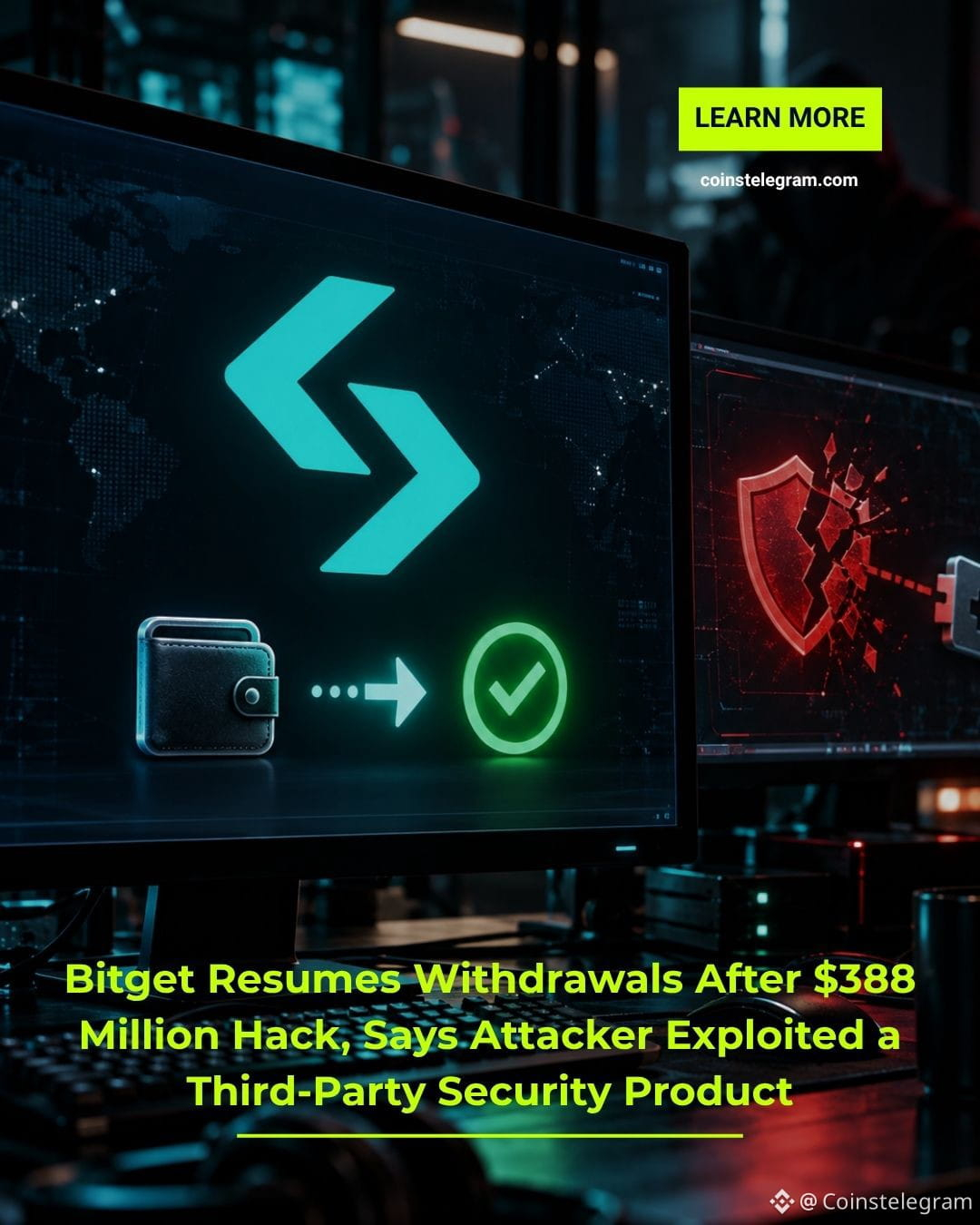
Bitget Resumes Withdrawals After $388 Million Hack, Says Attacker Exploited a Third-Party Securit...Bitget has begun restoring withdrawals four days after a security breach drained roughly $388 million from its wallet infrastructure. The exchange says it has patched the vulnerability, that user balances were unaffected, and that its Protection Fund will absorb the entire loss.
Bitcoin withdrawals reopened first, with other assets scheduled to follow over the coming days.
Withdrawals Return in Phases
Bitget announced on X that it had started a phased resumption of withdrawals following the September 24 incident. Bitcoin withdrawals on the Bitcoin network went live at 08:00 UTC on September 28, as scheduled, and BTC withdrawals on BNB Smart Chain are now open too. Users can also convert other assets into BTC and withdraw through those networks.
The rest of the schedule looks like this: – September 29: ETH withdrawals on Ethereum, BSC, Arbitrum, Base, and Optimism – September 30: USDT withdrawals on Ethereum, BSC, Solana, and Tron – October 2: all remaining assets, plus fiat withdrawals and P2P services
Bitget said the rollout applies to all users on the same terms and that customers do not need to take any action. Some users on social media reported that they could withdraw funds while others could not yet, so access may be uneven during the rollout. The exchange asked users to rely on its official channels for confirmation that each service is available.
How the Attack Happened
Bitget’s investigation found that the attacker exploited a vulnerability in a third-party security product the exchange used, and used it to obtain high-level internal credentials. With those credentials, the attacker sent fraudulent withdrawal commands to Bitget’s wallet system, which executed abnormal transfers that bypassed the exchange’s risk controls.
The exchange said private keys were not compromised and cold wallets were not affected. It said it has identified the attack path, remediated the vulnerability, and contained the incident, with no further unauthorized transfers found since. Google’s Mandiant and blockchain security firm SlowMist are assisting the investigation, and Bitget said it will review how it assesses and deploys third-party security products.
The Loss Estimate Grew
Bitget’s first assessment put the damage at $351.6 million. After adding assets it had initially missed on Zcash and Tron, the exchange revised the figure to about $387.5 million, roughly $388 million. The stolen assets included XRP, ETH, USDT, ZEC, USDC, BNB, and AVAX across seven networks. Bitget’s User Protection Fund, which held 5,500 BTC (about $464 million) at the time of the breach, will cover the losses, and the exchange has said it will replenish the fund. Circle and Tether froze one attacker-linked wallet holding roughly $318,000 in USDT and USDC. Tracking firm MistTrack reported that other wallets tied to the attacker still held more than 63,000 ETH, which cannot be frozen the way stablecoins can.
North Korea Is the Prime Suspect
CEO Gracy Chen said preliminary evidence points to North Korea-linked hackers, citing IP addresses tied to VPN services previously used by a North Korean hacking group and an attack pattern resembling earlier operations. She was clear that attribution is not yet certain. Some independent analysts have linked the stolen funds to an earlier $24 million hack attributed to the TraderTraitor unit, while others caution that “Lazarus” has become a catch-all label for many North Korean cyber operations.
A Rough Year for Crypto Security
The Bitget breach is the largest single exchange hack of 2026, and it lands in a year of major incidents. Researchers tracking on-chain attacks estimated first-half 2026 DeFi losses at roughly $970 million to $1 billion across more than 200 attacks, according to data compiled by firms including TRM Labs and Immunefi. The biggest were April’s KelpDAO exploit (about $292 million) and the Drift Protocol attack (about $285 million), both attributed to North Korea-linked actors.
SafePal and Trezor disclosed customer data leaks affecting tens of thousands of users. For scale, the largest crypto theft on record remains the $1.5 billion Bybit hack in February 2025, which US investigators attributed to North Korea’s Lazarus Group. Bitget helped support Bybit with 40,000 ETH after that attack, and Bybit’s CEO has said his team is now assisting Bitget.
The Security Lessons
Bitget’s breach points to a recurring weakness. Attackers did not defeat the exchange’s cryptography or steal private keys. They exploited a vendor’s security product to gain internal access, then abused the exchange’s own authorization process. That makes supply-chain risk a central concern for exchanges, along with hot wallet exposure and the need to test every third-party tool that touches wallet infrastructure. Bitget’s cold storage and a well-funded, publicly verifiable protection fund limited the damage to users, but the incident shows how a single compromised credential can move hundreds of millions of dollars in minutes.
What Comes Next
With Bitcoin withdrawals live, the next test is whether the rest of the schedule holds. ETH withdrawals are due September 29 and USDT on September 30, while XRP, Zcash, Tron, Avalanche, other tokens, fiat withdrawals, and P2P services are not scheduled until October 2. Users will be watching for delays or uneven access during those phases, since some reported inconsistent withdrawals on day one.
Behind the scenes, forensic work and fund tracing with Mandiant and SlowMist are ongoing, and Bitget’s full incident report is still pending. It should clarify how the attacker got in through the third-party security product and what the exchange is changing in how it vets vendors. Bitget has also said it will replenish its Protection Fund after covering the loss, with details still to be announced.
Bitget Resumes Withdrawals After $388 Million Hack, Says Attacker Exploited a Third-Party Securit...
Bitget has begun restoring withdrawals four days after a security breach drained roughly $388 million from its wallet infrastructure. The exchange says it has patched the vulnerability, that user balances were unaffected, and that its Protection Fund will absorb the entire loss.
Bitcoin withdrawals reopened first, with other assets scheduled to follow over the coming days.
Withdrawals Return in Phases
Bitget announced on X that it had started a phased resumption of withdrawals following the September 24 incident. Bitcoin withdrawals on the Bitcoin network went live at 08:00 UTC on September 28, as scheduled, and BTC withdrawals on BNB Smart Chain are now open too. Users can also convert other assets into BTC and withdraw through those networks.
The rest of the schedule looks like this: – September 29: ETH withdrawals on Ethereum, BSC, Arbitrum, Base, and Optimism – September 30: USDT withdrawals on Ethereum, BSC, Solana, and Tron – October 2: all remaining assets, plus fiat withdrawals and P2P services
Bitget said the rollout applies to all users on the same terms and that customers do not need to take any action. Some users on social media reported that they could withdraw funds while others could not yet, so access may be uneven during the rollout. The exchange asked users to rely on its official channels for confirmation that each service is available.
How the Attack Happened
Bitget’s investigation found that the attacker exploited a vulnerability in a third-party security product the exchange used, and used it to obtain high-level internal credentials. With those credentials, the attacker sent fraudulent withdrawal commands to Bitget’s wallet system, which executed abnormal transfers that bypassed the exchange’s risk controls.
The exchange said private keys were not compromised and cold wallets were not affected. It said it has identified the attack path, remediated the vulnerability, and contained the incident, with no further unauthorized transfers found since. Google’s Mandiant and blockchain security firm SlowMist are assisting the investigation, and Bitget said it will review how it assesses and deploys third-party security products.
The Loss Estimate Grew
Bitget’s first assessment put the damage at $351.6 million. After adding assets it had initially missed on Zcash and Tron, the exchange revised the figure to about $387.5 million, roughly $388 million. The stolen assets included XRP, ETH, USDT, ZEC, USDC, BNB, and AVAX across seven networks. Bitget’s User Protection Fund, which held 5,500 BTC (about $464 million) at the time of the breach, will cover the losses, and the exchange has said it will replenish the fund. Circle and Tether froze one attacker-linked wallet holding roughly $318,000 in USDT and USDC. Tracking firm MistTrack reported that other wallets tied to the attacker still held more than 63,000 ETH, which cannot be frozen the way stablecoins can.
North Korea Is the Prime Suspect
CEO Gracy Chen said preliminary evidence points to North Korea-linked hackers, citing IP addresses tied to VPN services previously used by a North Korean hacking group and an attack pattern resembling earlier operations. She was clear that attribution is not yet certain. Some independent analysts have linked the stolen funds to an earlier $24 million hack attributed to the TraderTraitor unit, while others caution that “Lazarus” has become a catch-all label for many North Korean cyber operations.
A Rough Year for Crypto Security
The Bitget breach is the largest single exchange hack of 2026, and it lands in a year of major incidents. Researchers tracking on-chain attacks estimated first-half 2026 DeFi losses at roughly $970 million to $1 billion across more than 200 attacks, according to data compiled by firms including TRM Labs and Immunefi. The biggest were April’s KelpDAO exploit (about $292 million) and the Drift Protocol attack (about $285 million), both attributed to North Korea-linked actors.
SafePal and Trezor disclosed customer data leaks affecting tens of thousands of users. For scale, the largest crypto theft on record remains the $1.5 billion Bybit hack in February 2025, which US investigators attributed to North Korea’s Lazarus Group. Bitget helped support Bybit with 40,000 ETH after that attack, and Bybit’s CEO has said his team is now assisting Bitget.
The Security Lessons
Bitget’s breach points to a recurring weakness. Attackers did not defeat the exchange’s cryptography or steal private keys. They exploited a vendor’s security product to gain internal access, then abused the exchange’s own authorization process. That makes supply-chain risk a central concern for exchanges, along with hot wallet exposure and the need to test every third-party tool that touches wallet infrastructure. Bitget’s cold storage and a well-funded, publicly verifiable protection fund limited the damage to users, but the incident shows how a single compromised credential can move hundreds of millions of dollars in minutes.
What Comes Next
With Bitcoin withdrawals live, the next test is whether the rest of the schedule holds. ETH withdrawals are due September 29 and USDT on September 30, while XRP, Zcash, Tron, Avalanche, other tokens, fiat withdrawals, and P2P services are not scheduled until October 2. Users will be watching for delays or uneven access during those phases, since some reported inconsistent withdrawals on day one.
Behind the scenes, forensic work and fund tracing with Mandiant and SlowMist are ongoing, and Bitget’s full incident report is still pending. It should clarify how the attacker got in through the third-party security product and what the exchange is changing in how it vets vendors. Bitget has also said it will replenish its Protection Fund after covering the loss, with details still to be announced.
Bitcoin withdrawals reopened first, with other assets scheduled to follow over the coming days.
Withdrawals Return in Phases
Bitget announced on X that it had started a phased resumption of withdrawals following the September 24 incident. Bitcoin withdrawals on the Bitcoin network went live at 08:00 UTC on September 28, as scheduled, and BTC withdrawals on BNB Smart Chain are now open too. Users can also convert other assets into BTC and withdraw through those networks.
The rest of the schedule looks like this: – September 29: ETH withdrawals on Ethereum, BSC, Arbitrum, Base, and Optimism – September 30: USDT withdrawals on Ethereum, BSC, Solana, and Tron – October 2: all remaining assets, plus fiat withdrawals and P2P services
Bitget said the rollout applies to all users on the same terms and that customers do not need to take any action. Some users on social media reported that they could withdraw funds while others could not yet, so access may be uneven during the rollout. The exchange asked users to rely on its official channels for confirmation that each service is available.
How the Attack Happened
Bitget’s investigation found that the attacker exploited a vulnerability in a third-party security product the exchange used, and used it to obtain high-level internal credentials. With those credentials, the attacker sent fraudulent withdrawal commands to Bitget’s wallet system, which executed abnormal transfers that bypassed the exchange’s risk controls.
The exchange said private keys were not compromised and cold wallets were not affected. It said it has identified the attack path, remediated the vulnerability, and contained the incident, with no further unauthorized transfers found since. Google’s Mandiant and blockchain security firm SlowMist are assisting the investigation, and Bitget said it will review how it assesses and deploys third-party security products.
The Loss Estimate Grew
Bitget’s first assessment put the damage at $351.6 million. After adding assets it had initially missed on Zcash and Tron, the exchange revised the figure to about $387.5 million, roughly $388 million. The stolen assets included XRP, ETH, USDT, ZEC, USDC, BNB, and AVAX across seven networks. Bitget’s User Protection Fund, which held 5,500 BTC (about $464 million) at the time of the breach, will cover the losses, and the exchange has said it will replenish the fund. Circle and Tether froze one attacker-linked wallet holding roughly $318,000 in USDT and USDC. Tracking firm MistTrack reported that other wallets tied to the attacker still held more than 63,000 ETH, which cannot be frozen the way stablecoins can.
North Korea Is the Prime Suspect
CEO Gracy Chen said preliminary evidence points to North Korea-linked hackers, citing IP addresses tied to VPN services previously used by a North Korean hacking group and an attack pattern resembling earlier operations. She was clear that attribution is not yet certain. Some independent analysts have linked the stolen funds to an earlier $24 million hack attributed to the TraderTraitor unit, while others caution that “Lazarus” has become a catch-all label for many North Korean cyber operations.
A Rough Year for Crypto Security
The Bitget breach is the largest single exchange hack of 2026, and it lands in a year of major incidents. Researchers tracking on-chain attacks estimated first-half 2026 DeFi losses at roughly $970 million to $1 billion across more than 200 attacks, according to data compiled by firms including TRM Labs and Immunefi. The biggest were April’s KelpDAO exploit (about $292 million) and the Drift Protocol attack (about $285 million), both attributed to North Korea-linked actors.
SafePal and Trezor disclosed customer data leaks affecting tens of thousands of users. For scale, the largest crypto theft on record remains the $1.5 billion Bybit hack in February 2025, which US investigators attributed to North Korea’s Lazarus Group. Bitget helped support Bybit with 40,000 ETH after that attack, and Bybit’s CEO has said his team is now assisting Bitget.
The Security Lessons
Bitget’s breach points to a recurring weakness. Attackers did not defeat the exchange’s cryptography or steal private keys. They exploited a vendor’s security product to gain internal access, then abused the exchange’s own authorization process. That makes supply-chain risk a central concern for exchanges, along with hot wallet exposure and the need to test every third-party tool that touches wallet infrastructure. Bitget’s cold storage and a well-funded, publicly verifiable protection fund limited the damage to users, but the incident shows how a single compromised credential can move hundreds of millions of dollars in minutes.
What Comes Next
With Bitcoin withdrawals live, the next test is whether the rest of the schedule holds. ETH withdrawals are due September 29 and USDT on September 30, while XRP, Zcash, Tron, Avalanche, other tokens, fiat withdrawals, and P2P services are not scheduled until October 2. Users will be watching for delays or uneven access during those phases, since some reported inconsistent withdrawals on day one.
Behind the scenes, forensic work and fund tracing with Mandiant and SlowMist are ongoing, and Bitget’s full incident report is still pending. It should clarify how the attacker got in through the third-party security product and what the exchange is changing in how it vets vendors. Bitget has also said it will replenish its Protection Fund after covering the loss, with details still to be announced.
83
Bitget 388 Milyon Dollar Həcmində Haker Hücumundan Sonra Çıxarılmaları Yenidən Başlatır, Hücumçunun Üçüncü Tərəf Təhlükəsizlikdən İstifadə Etdiyini Deyir...Bitget təhlükəsizlik pozuntusundan sonra, təxminən 388 milyon ABŞ dolları dəyərində vəsaiti cüzdan infrastrukturu üzrə boşaltdığı insidentdən dörd gün sonra çıxarılmaları bərpa etməyə başlayıb. Birja bildirir ki, zəiflik aradan qaldırılıb, istifadəçi balanslarına təsir edilməyib və onun Müdafiə Fondu bütün zərəri öz üzərinə götürəcək.
Bitcoin çıxarılmaları yenidən başladıldı, digər aktivlərin isə qarşıdakı günlərdə davam edəcəyi bildirilir.
Çıxarılmalar mərhələlərlə qayıdır
Bitget X-də elan edib ki, o, 24 sentyabr insidentindən sonra çıxarılmaların mərhələli bərpasına başlayıb. Bitcoin şəbəkəsində Bitcoin çıxarılmaları plan üzrə 28 sentyabr saat 08:00 UTC-də işə düşüb və artıq BNB Smart Chain üzərindən BTC çıxarılmaları da açıqdır. İstifadəçilər həmçinin digər aktivləri BTC-yə çevirib həmin şəbəkələr vasitəsilə çıxara bilərlər.
Bitget 388 Milyon Dollar Həcmində Haker Hücumundan Sonra Çıxarılmaları Yenidən Başlatır, Hücumçunun Üçüncü Tərəf Təhlükəsizlikdən İstifadə Etdiyini Deyir...
Bitget təhlükəsizlik pozuntusundan sonra, təxminən 388 milyon ABŞ dolları dəyərində vəsaiti cüzdan infrastrukturu üzrə boşaltdığı insidentdən dörd gün sonra çıxarılmaları bərpa etməyə başlayıb. Birja bildirir ki, zəiflik aradan qaldırılıb, istifadəçi balanslarına təsir edilməyib və onun Müdafiə Fondu bütün zərəri öz üzərinə götürəcək.
Bitcoin çıxarılmaları yenidən başladıldı, digər aktivlərin isə qarşıdakı günlərdə davam edəcəyi bildirilir.
Çıxarılmalar mərhələlərlə qayıdır
Bitget X-də elan edib ki, o, 24 sentyabr insidentindən sonra çıxarılmaların mərhələli bərpasına başlayıb. Bitcoin şəbəkəsində Bitcoin çıxarılmaları plan üzrə 28 sentyabr saat 08:00 UTC-də işə düşüb və artıq BNB Smart Chain üzərindən BTC çıxarılmaları da açıqdır. İstifadəçilər həmçinin digər aktivləri BTC-yə çevirib həmin şəbəkələr vasitəsilə çıxara bilərlər.
Bitcoin çıxarılmaları yenidən başladıldı, digər aktivlərin isə qarşıdakı günlərdə davam edəcəyi bildirilir.
Çıxarılmalar mərhələlərlə qayıdır
Bitget X-də elan edib ki, o, 24 sentyabr insidentindən sonra çıxarılmaların mərhələli bərpasına başlayıb. Bitcoin şəbəkəsində Bitcoin çıxarılmaları plan üzrə 28 sentyabr saat 08:00 UTC-də işə düşüb və artıq BNB Smart Chain üzərindən BTC çıxarılmaları da açıqdır. İstifadəçilər həmçinin digər aktivləri BTC-yə çevirib həmin şəbəkələr vasitəsilə çıxara bilərlər.
1
389

Məqalə
Tərcüməyə bax
Dubai, UAE – 25 September 2026 CryptoMondays Opens Its MENA Chapter in DubaiDubai, UAE – 25 September 2026
CryptoMondays opens its MENA chapter in Dubai, with Vaibhavv Ali leading the room
CryptoMondays is landing in the region the same way it started in New York in 2018: a room, a few people who actually build things, and a simple rule. You should leave with more than you brought.
On Monday, 28 September, the MENA chapter launches at Tacenda Lounge, 68th floor, JW Marriott Marquis Dubai, Tower B, Business Bay. Doors at 7:00 PM. The night runs through panels, a short keynote, a fireside, and then the part most people come for—open conversation when the stage is done.
Vaibhavv Ali, co-founder of CryptoniteUAE and chapter lead for CryptoMondays MENA, is heading the chapter.
“MENA already has the builders,” Ali said. “What it has not always had is a regular, no-theatre room that connects Dubai to Abu Dhabi, Sharjah, Riyadh, Doha, and Cairo. That is the job. Not another booth crawl. A chapter.”
The lineup is local and global in the same breath:
Saqr Ereiqat, Secretary General, Dubai Digital Asset Association | Board Member, Marmin.ai
Khalifa Aljaziri Alshehhi, Managing Director, MalyPay
Aishwary Gupta, Global Head of Business, Polygon Labs
CJ Anand, Director of Advisory, Ghaf Labs
Sanjay Saini, Trader | Investor | Creator
Sweep, Trader | Investor | Co-Founder, GlydeGG
Vaibhavv Ali, Moderator | Co-founder, CryptoniteUAE
Program & Agenda
7:00 – 8:00 PM: Doors Open & Networking
8:00 – 8:05 PM: Welcome & Intro
8:05 – 8:25 PM: Panel 1: Building Web3’s Next Chapter From Dubai
Speakers: Aishwary Gupta (Global Head of Business, Polygon Labs), CJ Anand (Director of Advisory, Ghaf Labs)
Moderator: Vaibhavv Ali (Co-founder, CryptoniteUAE)
8:30 – 8:35 PM: Keynote Presentation: Minds by Animoca Brands
8:40 – 9:00 PM: Panel 2: Crypto Meets Cash: The UAE’s Wild Payments Future
Speakers: Saqr Ereiqat (Secretary General, Dubai Digital Asset Association | Board Member, Marmin.ai), Khalifa Aljaziri Alshehhi (Managing Director, MalyPay)
Moderator: Vaibhavv Ali (Co-founder, Cryptonite UAE)
9:05 – 9:25 PM: Panel 3: How to Actually Catch a Memecoin in 2026 (Without Getting Burned)
Speakers: Sanjay Saini (Trader | Investor | Creator), Sweep (Trader | Investor | Co-founder, GlydeGG)
Moderator: Vaibhavv Ali (Co-founder, Cryptonite UAE)
9:30 PM: Closing Note
9:35 PM: Open Networking
CryptoMondays now runs 58-plus chapters and more than 150,000 members. The format has not really changed. Builders, founders, investors, operators, and first-timers in one place. Learn, earn, connect. No conference badge required.
The launch is a community night, not an official TOKEN2049 production. Photos may be used on CryptoMondays and partner channels.
RSVP: luma.com/ecox-vhr5
Community: t.me/cryptomondaysmena
Huge shoutout to our incredible partners making this event possible:
Hosts & Organizers:
Crypto Mondays Mena | Minds by Animoca Brands
Event Partners:
BitAngels
OffChain Global
EcoX Dubai
Cryptonite UAE
DATS AWARDS (Digital Assets & Tokenized Securities Awards)
Proof Of Collabs
D2A2
DSRPTD
Aura8
SINGAPORE BLOCKCHAIN WEEK (OFFICIAL)
Venture Week
Washington Elite
CoinEasy
CryptoMondays began as a New York meetup in 2018 and grew into the largest in-real-life Web3 community in the world. Chapters meet so people can learn, earn, and connect including people who have never been in a crypto room before.
About CryptoMondays MENA
MENA Edition is the regional room: Dubai, Abu Dhabi, Sharjah, Riyadh, Doha, Cairo, and everyone building between them. No conference badge required. No pitch-only floor. Same rule as every CryptoMondays chapter since 2018: leave with more than you brought.
This is a community event. Photos may be used on CryptoMondays / partner channels. It is led by Vaibhavv Ali.
Media Contact:
Vaibhavv Ali – CryptoMondays MENA / Cryptonite UAE
Event Page: https://luma.com/ecox-vhr5
Dubai, UAE – 25 September 2026 CryptoMondays Opens Its MENA Chapter in Dubai
Dubai, UAE – 25 September 2026
CryptoMondays opens its MENA chapter in Dubai, with Vaibhavv Ali leading the room
CryptoMondays is landing in the region the same way it started in New York in 2018: a room, a few people who actually build things, and a simple rule. You should leave with more than you brought.
On Monday, 28 September, the MENA chapter launches at Tacenda Lounge, 68th floor, JW Marriott Marquis Dubai, Tower B, Business Bay. Doors at 7:00 PM. The night runs through panels, a short keynote, a fireside, and then the part most people come for—open conversation when the stage is done.
Vaibhavv Ali, co-founder of CryptoniteUAE and chapter lead for CryptoMondays MENA, is heading the chapter.
“MENA already has the builders,” Ali said. “What it has not always had is a regular, no-theatre room that connects Dubai to Abu Dhabi, Sharjah, Riyadh, Doha, and Cairo. That is the job. Not another booth crawl. A chapter.”
The lineup is local and global in the same breath:
Saqr Ereiqat, Secretary General, Dubai Digital Asset Association | Board Member, Marmin.ai
Khalifa Aljaziri Alshehhi, Managing Director, MalyPay
Aishwary Gupta, Global Head of Business, Polygon Labs
CJ Anand, Director of Advisory, Ghaf Labs
Sanjay Saini, Trader | Investor | Creator
Sweep, Trader | Investor | Co-Founder, GlydeGG
Vaibhavv Ali, Moderator | Co-founder, CryptoniteUAE
Program & Agenda
7:00 – 8:00 PM: Doors Open & Networking
8:00 – 8:05 PM: Welcome & Intro
8:05 – 8:25 PM: Panel 1: Building Web3’s Next Chapter From Dubai
Speakers: Aishwary Gupta (Global Head of Business, Polygon Labs), CJ Anand (Director of Advisory, Ghaf Labs)
Moderator: Vaibhavv Ali (Co-founder, CryptoniteUAE)
8:30 – 8:35 PM: Keynote Presentation: Minds by Animoca Brands
8:40 – 9:00 PM: Panel 2: Crypto Meets Cash: The UAE’s Wild Payments Future
Speakers: Saqr Ereiqat (Secretary General, Dubai Digital Asset Association | Board Member, Marmin.ai), Khalifa Aljaziri Alshehhi (Managing Director, MalyPay)
Moderator: Vaibhavv Ali (Co-founder, Cryptonite UAE)
9:05 – 9:25 PM: Panel 3: How to Actually Catch a Memecoin in 2026 (Without Getting Burned)
Speakers: Sanjay Saini (Trader | Investor | Creator), Sweep (Trader | Investor | Co-founder, GlydeGG)
Moderator: Vaibhavv Ali (Co-founder, Cryptonite UAE)
9:30 PM: Closing Note
9:35 PM: Open Networking
CryptoMondays now runs 58-plus chapters and more than 150,000 members. The format has not really changed. Builders, founders, investors, operators, and first-timers in one place. Learn, earn, connect. No conference badge required.
The launch is a community night, not an official TOKEN2049 production. Photos may be used on CryptoMondays and partner channels.
RSVP: luma.com/ecox-vhr5
Community: t.me/cryptomondaysmena
Huge shoutout to our incredible partners making this event possible:
Hosts & Organizers:
Crypto Mondays Mena | Minds by Animoca Brands
Event Partners:
BitAngels
OffChain Global
EcoX Dubai
Cryptonite UAE
DATS AWARDS (Digital Assets & Tokenized Securities Awards)
Proof Of Collabs
D2A2
DSRPTD
Aura8
SINGAPORE BLOCKCHAIN WEEK (OFFICIAL)
Venture Week
Washington Elite
CoinEasy
CryptoMondays began as a New York meetup in 2018 and grew into the largest in-real-life Web3 community in the world. Chapters meet so people can learn, earn, and connect including people who have never been in a crypto room before.
About CryptoMondays MENA
MENA Edition is the regional room: Dubai, Abu Dhabi, Sharjah, Riyadh, Doha, Cairo, and everyone building between them. No conference badge required. No pitch-only floor. Same rule as every CryptoMondays chapter since 2018: leave with more than you brought.
This is a community event. Photos may be used on CryptoMondays / partner channels. It is led by Vaibhavv Ali.
Media Contact:
Vaibhavv Ali – CryptoMondays MENA / Cryptonite UAE
Event Page: https://luma.com/ecox-vhr5
CryptoMondays opens its MENA chapter in Dubai, with Vaibhavv Ali leading the room
CryptoMondays is landing in the region the same way it started in New York in 2018: a room, a few people who actually build things, and a simple rule. You should leave with more than you brought.
On Monday, 28 September, the MENA chapter launches at Tacenda Lounge, 68th floor, JW Marriott Marquis Dubai, Tower B, Business Bay. Doors at 7:00 PM. The night runs through panels, a short keynote, a fireside, and then the part most people come for—open conversation when the stage is done.
Vaibhavv Ali, co-founder of CryptoniteUAE and chapter lead for CryptoMondays MENA, is heading the chapter.
“MENA already has the builders,” Ali said. “What it has not always had is a regular, no-theatre room that connects Dubai to Abu Dhabi, Sharjah, Riyadh, Doha, and Cairo. That is the job. Not another booth crawl. A chapter.”
The lineup is local and global in the same breath:
Saqr Ereiqat, Secretary General, Dubai Digital Asset Association | Board Member, Marmin.ai
Khalifa Aljaziri Alshehhi, Managing Director, MalyPay
Aishwary Gupta, Global Head of Business, Polygon Labs
CJ Anand, Director of Advisory, Ghaf Labs
Sanjay Saini, Trader | Investor | Creator
Sweep, Trader | Investor | Co-Founder, GlydeGG
Vaibhavv Ali, Moderator | Co-founder, CryptoniteUAE
Program & Agenda
7:00 – 8:00 PM: Doors Open & Networking
8:00 – 8:05 PM: Welcome & Intro
8:05 – 8:25 PM: Panel 1: Building Web3’s Next Chapter From Dubai
Speakers: Aishwary Gupta (Global Head of Business, Polygon Labs), CJ Anand (Director of Advisory, Ghaf Labs)
Moderator: Vaibhavv Ali (Co-founder, CryptoniteUAE)
8:30 – 8:35 PM: Keynote Presentation: Minds by Animoca Brands
8:40 – 9:00 PM: Panel 2: Crypto Meets Cash: The UAE’s Wild Payments Future
Speakers: Saqr Ereiqat (Secretary General, Dubai Digital Asset Association | Board Member, Marmin.ai), Khalifa Aljaziri Alshehhi (Managing Director, MalyPay)
Moderator: Vaibhavv Ali (Co-founder, Cryptonite UAE)
9:05 – 9:25 PM: Panel 3: How to Actually Catch a Memecoin in 2026 (Without Getting Burned)
Speakers: Sanjay Saini (Trader | Investor | Creator), Sweep (Trader | Investor | Co-founder, GlydeGG)
Moderator: Vaibhavv Ali (Co-founder, Cryptonite UAE)
9:30 PM: Closing Note
9:35 PM: Open Networking
CryptoMondays now runs 58-plus chapters and more than 150,000 members. The format has not really changed. Builders, founders, investors, operators, and first-timers in one place. Learn, earn, connect. No conference badge required.
The launch is a community night, not an official TOKEN2049 production. Photos may be used on CryptoMondays and partner channels.
RSVP: luma.com/ecox-vhr5
Community: t.me/cryptomondaysmena
Huge shoutout to our incredible partners making this event possible:
Hosts & Organizers:
Crypto Mondays Mena | Minds by Animoca Brands
Event Partners:
BitAngels
OffChain Global
EcoX Dubai
Cryptonite UAE
DATS AWARDS (Digital Assets & Tokenized Securities Awards)
Proof Of Collabs
D2A2
DSRPTD
Aura8
SINGAPORE BLOCKCHAIN WEEK (OFFICIAL)
Venture Week
Washington Elite
CoinEasy
CryptoMondays began as a New York meetup in 2018 and grew into the largest in-real-life Web3 community in the world. Chapters meet so people can learn, earn, and connect including people who have never been in a crypto room before.
About CryptoMondays MENA
MENA Edition is the regional room: Dubai, Abu Dhabi, Sharjah, Riyadh, Doha, Cairo, and everyone building between them. No conference badge required. No pitch-only floor. Same rule as every CryptoMondays chapter since 2018: leave with more than you brought.
This is a community event. Photos may be used on CryptoMondays / partner channels. It is led by Vaibhavv Ali.
Media Contact:
Vaibhavv Ali – CryptoMondays MENA / Cryptonite UAE
Event Page: https://luma.com/ecox-vhr5
1
137
Tərcüməyə bax
Dubai, UAE – 25 September 2026 CryptoMondays opens its MENA chapter in DubaiDubai, UAE – 25 September 2026
CryptoMondays opens its MENA chapter in Dubai, with Vaibhavv Ali leading the room
CryptoMondays is landing in the region the same way it started in New York in 2018: a room, a few people who actually build things, and a simple rule. You should leave with more than you brought.
On Monday, 28 September, the MENA chapter launches at Tacenda Lounge, 68th floor, JW Marriott Marquis Dubai, Tower B, Business Bay. Doors at 7:00 PM. The night runs through panels, a short keynote, a fireside, and then the part most people come for—open conversation when the stage is done.
Vaibhavv Ali, co-founder of CryptoniteUAE and chapter lead for CryptoMondays MENA, is heading the chapter.
“MENA already has the builders,” Ali said. “What it has not always had is a regular, no-theatre room that connects Dubai to Abu Dhabi, Sharjah, Riyadh, Doha, and Cairo. That is the job. Not another booth crawl. A chapter.”
The lineup is local and global in the same breath:
Saqr Ereiqat, Secretary General, Dubai Digital Asset Association | Board Member, Marmin.ai
Khalifa Aljaziri Alshehhi, Managing Director, MalyPay
Aishwary Gupta, Global Head of Business, Polygon Labs
CJ Anand, Director of Advisory, Ghaf Labs
Sanjay Saini, Trader | Investor | Creator
Sweep, Trader | Investor | Co-Founder, GlydeGG
Vaibhavv Ali, Moderator | Co-founder, CryptoniteUAE
Program & Agenda
7:00 – 8:00 PM: Doors Open & Networking
8:00 – 8:05 PM: Welcome & Intro
8:05 – 8:25 PM: Panel 1: Building Web3’s Next Chapter From Dubai
Speakers: Aishwary Gupta (Global Head of Business, Polygon Labs), CJ Anand (Director of Advisory, Ghaf Labs)
Moderator: Vaibhavv Ali (Co-founder, CryptoniteUAE)
8:30 – 8:35 PM: Keynote Presentation: Minds by Animoca Brands
8:40 – 9:00 PM: Panel 2: Crypto Meets Cash: The UAE’s Wild Payments Future
Speakers: Saqr Ereiqat (Secretary General, Dubai Digital Asset Association | Board Member, Marmin.ai), Khalifa Aljaziri Alshehhi (Managing Director, MalyPay)
Moderator: Vaibhavv Ali (Co-founder, Cryptonite UAE)
9:05 – 9:25 PM: Panel 3: How to Actually Catch a Memecoin in 2026 (Without Getting Burned)
Speakers: Sanjay Saini (Trader | Investor | Creator), Sweep (Trader | Investor | Co-founder, GlydeGG)
Moderator: Vaibhavv Ali (Co-founder, Cryptonite UAE)
9:30 PM: Closing Note
9:35 PM: Open Networking
CryptoMondays now runs 58-plus chapters and more than 150,000 members. The format has not really changed. Builders, founders, investors, operators, and first-timers in one place. Learn, earn, connect. No conference badge required.
The launch is a community night, not an official TOKEN2049 production. Photos may be used on CryptoMondays and partner channels.
RSVP: luma.com/ecox-vhr5
Community: t.me/cryptomondaysmena
Huge shoutout to our incredible partners making this event possible:
Hosts & Organizers:
Crypto Mondays Mena | Minds by Animoca Brands
Event Partners:
BitAngels
OffChain Global
EcoX Dubai
Cryptonite UAE
DATS AWARDS (Digital Assets & Tokenized Securities Awards)
Proof Of Collabs
D2A2
DSRPTD
Aura8
SINGAPORE BLOCKCHAIN WEEK (OFFICIAL)
Venture Week
Washington Elite
CoinEasy
CryptoMondays began as a New York meetup in 2018 and grew into the largest in-real-life Web3 community in the world. Chapters meet so people can learn, earn, and connect including people who have never been in a crypto room before.
About CryptoMondays MENA
MENA Edition is the regional room: Dubai, Abu Dhabi, Sharjah, Riyadh, Doha, Cairo, and everyone building between them. No conference badge required. No pitch-only floor. Same rule as every CryptoMondays chapter since 2018: leave with more than you brought.
This is a community event. Photos may be used on CryptoMondays / partner channels. It is led by Vaibhavv Ali.
Media Contact:
Vaibhavv Ali – CryptoMondays MENA / Cryptonite UAE
Event Page: https://luma.com/ecox-vhr5
Dubai, UAE – 25 September 2026 CryptoMondays opens its MENA chapter in Dubai
Dubai, UAE – 25 September 2026
CryptoMondays opens its MENA chapter in Dubai, with Vaibhavv Ali leading the room
CryptoMondays is landing in the region the same way it started in New York in 2018: a room, a few people who actually build things, and a simple rule. You should leave with more than you brought.
On Monday, 28 September, the MENA chapter launches at Tacenda Lounge, 68th floor, JW Marriott Marquis Dubai, Tower B, Business Bay. Doors at 7:00 PM. The night runs through panels, a short keynote, a fireside, and then the part most people come for—open conversation when the stage is done.
Vaibhavv Ali, co-founder of CryptoniteUAE and chapter lead for CryptoMondays MENA, is heading the chapter.
“MENA already has the builders,” Ali said. “What it has not always had is a regular, no-theatre room that connects Dubai to Abu Dhabi, Sharjah, Riyadh, Doha, and Cairo. That is the job. Not another booth crawl. A chapter.”
The lineup is local and global in the same breath:
Saqr Ereiqat, Secretary General, Dubai Digital Asset Association | Board Member, Marmin.ai
Khalifa Aljaziri Alshehhi, Managing Director, MalyPay
Aishwary Gupta, Global Head of Business, Polygon Labs
CJ Anand, Director of Advisory, Ghaf Labs
Sanjay Saini, Trader | Investor | Creator
Sweep, Trader | Investor | Co-Founder, GlydeGG
Vaibhavv Ali, Moderator | Co-founder, CryptoniteUAE
Program & Agenda
7:00 – 8:00 PM: Doors Open & Networking
8:00 – 8:05 PM: Welcome & Intro
8:05 – 8:25 PM: Panel 1: Building Web3’s Next Chapter From Dubai
Speakers: Aishwary Gupta (Global Head of Business, Polygon Labs), CJ Anand (Director of Advisory, Ghaf Labs)
Moderator: Vaibhavv Ali (Co-founder, CryptoniteUAE)
8:30 – 8:35 PM: Keynote Presentation: Minds by Animoca Brands
8:40 – 9:00 PM: Panel 2: Crypto Meets Cash: The UAE’s Wild Payments Future
Speakers: Saqr Ereiqat (Secretary General, Dubai Digital Asset Association | Board Member, Marmin.ai), Khalifa Aljaziri Alshehhi (Managing Director, MalyPay)
Moderator: Vaibhavv Ali (Co-founder, Cryptonite UAE)
9:05 – 9:25 PM: Panel 3: How to Actually Catch a Memecoin in 2026 (Without Getting Burned)
Speakers: Sanjay Saini (Trader | Investor | Creator), Sweep (Trader | Investor | Co-founder, GlydeGG)
Moderator: Vaibhavv Ali (Co-founder, Cryptonite UAE)
9:30 PM: Closing Note
9:35 PM: Open Networking
CryptoMondays now runs 58-plus chapters and more than 150,000 members. The format has not really changed. Builders, founders, investors, operators, and first-timers in one place. Learn, earn, connect. No conference badge required.
The launch is a community night, not an official TOKEN2049 production. Photos may be used on CryptoMondays and partner channels.
RSVP: luma.com/ecox-vhr5
Community: t.me/cryptomondaysmena
Huge shoutout to our incredible partners making this event possible:
Hosts & Organizers:
Crypto Mondays Mena | Minds by Animoca Brands
Event Partners:
BitAngels
OffChain Global
EcoX Dubai
Cryptonite UAE
DATS AWARDS (Digital Assets & Tokenized Securities Awards)
Proof Of Collabs
D2A2
DSRPTD
Aura8
SINGAPORE BLOCKCHAIN WEEK (OFFICIAL)
Venture Week
Washington Elite
CoinEasy
CryptoMondays began as a New York meetup in 2018 and grew into the largest in-real-life Web3 community in the world. Chapters meet so people can learn, earn, and connect including people who have never been in a crypto room before.
About CryptoMondays MENA
MENA Edition is the regional room: Dubai, Abu Dhabi, Sharjah, Riyadh, Doha, Cairo, and everyone building between them. No conference badge required. No pitch-only floor. Same rule as every CryptoMondays chapter since 2018: leave with more than you brought.
This is a community event. Photos may be used on CryptoMondays / partner channels. It is led by Vaibhavv Ali.
Media Contact:
Vaibhavv Ali – CryptoMondays MENA / Cryptonite UAE
Event Page: https://luma.com/ecox-vhr5
CryptoMondays opens its MENA chapter in Dubai, with Vaibhavv Ali leading the room
CryptoMondays is landing in the region the same way it started in New York in 2018: a room, a few people who actually build things, and a simple rule. You should leave with more than you brought.
On Monday, 28 September, the MENA chapter launches at Tacenda Lounge, 68th floor, JW Marriott Marquis Dubai, Tower B, Business Bay. Doors at 7:00 PM. The night runs through panels, a short keynote, a fireside, and then the part most people come for—open conversation when the stage is done.
Vaibhavv Ali, co-founder of CryptoniteUAE and chapter lead for CryptoMondays MENA, is heading the chapter.
“MENA already has the builders,” Ali said. “What it has not always had is a regular, no-theatre room that connects Dubai to Abu Dhabi, Sharjah, Riyadh, Doha, and Cairo. That is the job. Not another booth crawl. A chapter.”
The lineup is local and global in the same breath:
Saqr Ereiqat, Secretary General, Dubai Digital Asset Association | Board Member, Marmin.ai
Khalifa Aljaziri Alshehhi, Managing Director, MalyPay
Aishwary Gupta, Global Head of Business, Polygon Labs
CJ Anand, Director of Advisory, Ghaf Labs
Sanjay Saini, Trader | Investor | Creator
Sweep, Trader | Investor | Co-Founder, GlydeGG
Vaibhavv Ali, Moderator | Co-founder, CryptoniteUAE
Program & Agenda
7:00 – 8:00 PM: Doors Open & Networking
8:00 – 8:05 PM: Welcome & Intro
8:05 – 8:25 PM: Panel 1: Building Web3’s Next Chapter From Dubai
Speakers: Aishwary Gupta (Global Head of Business, Polygon Labs), CJ Anand (Director of Advisory, Ghaf Labs)
Moderator: Vaibhavv Ali (Co-founder, CryptoniteUAE)
8:30 – 8:35 PM: Keynote Presentation: Minds by Animoca Brands
8:40 – 9:00 PM: Panel 2: Crypto Meets Cash: The UAE’s Wild Payments Future
Speakers: Saqr Ereiqat (Secretary General, Dubai Digital Asset Association | Board Member, Marmin.ai), Khalifa Aljaziri Alshehhi (Managing Director, MalyPay)
Moderator: Vaibhavv Ali (Co-founder, Cryptonite UAE)
9:05 – 9:25 PM: Panel 3: How to Actually Catch a Memecoin in 2026 (Without Getting Burned)
Speakers: Sanjay Saini (Trader | Investor | Creator), Sweep (Trader | Investor | Co-founder, GlydeGG)
Moderator: Vaibhavv Ali (Co-founder, Cryptonite UAE)
9:30 PM: Closing Note
9:35 PM: Open Networking
CryptoMondays now runs 58-plus chapters and more than 150,000 members. The format has not really changed. Builders, founders, investors, operators, and first-timers in one place. Learn, earn, connect. No conference badge required.
The launch is a community night, not an official TOKEN2049 production. Photos may be used on CryptoMondays and partner channels.
RSVP: luma.com/ecox-vhr5
Community: t.me/cryptomondaysmena
Huge shoutout to our incredible partners making this event possible:
Hosts & Organizers:
Crypto Mondays Mena | Minds by Animoca Brands
Event Partners:
BitAngels
OffChain Global
EcoX Dubai
Cryptonite UAE
DATS AWARDS (Digital Assets & Tokenized Securities Awards)
Proof Of Collabs
D2A2
DSRPTD
Aura8
SINGAPORE BLOCKCHAIN WEEK (OFFICIAL)
Venture Week
Washington Elite
CoinEasy
CryptoMondays began as a New York meetup in 2018 and grew into the largest in-real-life Web3 community in the world. Chapters meet so people can learn, earn, and connect including people who have never been in a crypto room before.
About CryptoMondays MENA
MENA Edition is the regional room: Dubai, Abu Dhabi, Sharjah, Riyadh, Doha, Cairo, and everyone building between them. No conference badge required. No pitch-only floor. Same rule as every CryptoMondays chapter since 2018: leave with more than you brought.
This is a community event. Photos may be used on CryptoMondays / partner channels. It is led by Vaibhavv Ali.
Media Contact:
Vaibhavv Ali – CryptoMondays MENA / Cryptonite UAE
Event Page: https://luma.com/ecox-vhr5
1
163

Məqalə
Tərcüməyə bax
COINCRAFT SHOW 2026 состоялся! COINCRAFT SHOW 2026 состоялся!
24 сентября в FUTURIONE на ВДНХ собрались участники крипто- и финтех-индустрии: инвесторы, трейдеры, предприниматели, эксперты по цифровым активам, AI и представители медиа.
Один день, который объединил:
4 блока деловой программы
6 тематических залов
выставку компаний-партнёров и «Сад знакомств»
дискуссии о регулировании, инвестициях, трейдинге, DeFi, RWA и AI
вечернее шоу и закрытую программу для VIP-гостей
На сцене COINCRAFT SHOW выступили Сергей Хитров, Роман Кауфман, Рамис Абянов, Алексей Короленко, Марсель Миннахмедов и другие представители индустрии.
Спасибо спикерам, партнёрам и каждому гостю, кто стал частью COINCRAFT SHOW 2026!
Но это только начало.
Следующий COINCRAFT SHOW – 7 октября 2027 года в Москве.
Узнать подробности о COINCRAFT SHOW 2027:
https://coin-craft.ru/coincraft-2027
До встречи в 2027!
COINCRAFT SHOW 2026 состоялся!
COINCRAFT SHOW 2026 состоялся!
24 сентября в FUTURIONE на ВДНХ собрались участники крипто- и финтех-индустрии: инвесторы, трейдеры, предприниматели, эксперты по цифровым активам, AI и представители медиа.
Один день, который объединил:
4 блока деловой программы
6 тематических залов
выставку компаний-партнёров и «Сад знакомств»
дискуссии о регулировании, инвестициях, трейдинге, DeFi, RWA и AI
вечернее шоу и закрытую программу для VIP-гостей
На сцене COINCRAFT SHOW выступили Сергей Хитров, Роман Кауфман, Рамис Абянов, Алексей Короленко, Марсель Миннахмедов и другие представители индустрии.
Спасибо спикерам, партнёрам и каждому гостю, кто стал частью COINCRAFT SHOW 2026!
Но это только начало.
Следующий COINCRAFT SHOW – 7 октября 2027 года в Москве.
Узнать подробности о COINCRAFT SHOW 2027:
https://coin-craft.ru/coincraft-2027
До встречи в 2027!
24 сентября в FUTURIONE на ВДНХ собрались участники крипто- и финтех-индустрии: инвесторы, трейдеры, предприниматели, эксперты по цифровым активам, AI и представители медиа.
Один день, который объединил:
4 блока деловой программы
6 тематических залов
выставку компаний-партнёров и «Сад знакомств»
дискуссии о регулировании, инвестициях, трейдинге, DeFi, RWA и AI
вечернее шоу и закрытую программу для VIP-гостей
На сцене COINCRAFT SHOW выступили Сергей Хитров, Роман Кауфман, Рамис Абянов, Алексей Короленко, Марсель Миннахмедов и другие представители индустрии.
Спасибо спикерам, партнёрам и каждому гостю, кто стал частью COINCRAFT SHOW 2026!
Но это только начало.
Следующий COINCRAFT SHOW – 7 октября 2027 года в Москве.
Узнать подробности о COINCRAFT SHOW 2027:
https://coin-craft.ru/coincraft-2027
До встречи в 2027!
172

Məqalə
Tərcüməyə bax
COINCRAFT SHOW 2026 Состоялся!COINCRAFT SHOW 2026 состоялся!
24 сентября в FUTURIONE на ВДНХ собрались участники крипто- и финтех-индустрии: инвесторы, трейдеры, предприниматели, эксперты по цифровым активам, AI и представители медиа.
Один день, который объединил: 4 блока деловой программы 6 тематических залов выставку компаний-партнёров и «Сад знакомств» дискуссии о регулировании, инвестициях, трейдинге, DeFi, RWA и AI вечернее шоу и закрытую программу для VIP-гостей
На сцене COINCRAFT SHOW выступили Сергей Хитров, Роман Кауфман, Рамис Абянов, Алексей Короленко, Марсель Миннахмедов и другие представители индустрии.
Спасибо спикерам, партнёрам и каждому гостю, кто стал частью COINCRAFT SHOW 2026!
Но это только начало.
Следующий COINCRAFT SHOW – 7 октября 2027 года в Москве.
Узнать подробности о COINCRAFT SHOW 2027: https://coin-craft.ru/coincraft-2027
До встречи в 2027!
COINCRAFT SHOW 2026 Состоялся!
COINCRAFT SHOW 2026 состоялся!
24 сентября в FUTURIONE на ВДНХ собрались участники крипто- и финтех-индустрии: инвесторы, трейдеры, предприниматели, эксперты по цифровым активам, AI и представители медиа.
Один день, который объединил: 4 блока деловой программы 6 тематических залов выставку компаний-партнёров и «Сад знакомств» дискуссии о регулировании, инвестициях, трейдинге, DeFi, RWA и AI вечернее шоу и закрытую программу для VIP-гостей
На сцене COINCRAFT SHOW выступили Сергей Хитров, Роман Кауфман, Рамис Абянов, Алексей Короленко, Марсель Миннахмедов и другие представители индустрии.
Спасибо спикерам, партнёрам и каждому гостю, кто стал частью COINCRAFT SHOW 2026!
Но это только начало.
Следующий COINCRAFT SHOW – 7 октября 2027 года в Москве.
Узнать подробности о COINCRAFT SHOW 2027: https://coin-craft.ru/coincraft-2027
До встречи в 2027!
24 сентября в FUTURIONE на ВДНХ собрались участники крипто- и финтех-индустрии: инвесторы, трейдеры, предприниматели, эксперты по цифровым активам, AI и представители медиа.
Один день, который объединил: 4 блока деловой программы 6 тематических залов выставку компаний-партнёров и «Сад знакомств» дискуссии о регулировании, инвестициях, трейдинге, DeFi, RWA и AI вечернее шоу и закрытую программу для VIP-гостей
На сцене COINCRAFT SHOW выступили Сергей Хитров, Роман Кауфман, Рамис Абянов, Алексей Короленко, Марсель Миннахмедов и другие представители индустрии.
Спасибо спикерам, партнёрам и каждому гостю, кто стал частью COINCRAFT SHOW 2026!
Но это только начало.
Следующий COINCRAFT SHOW – 7 октября 2027 года в Москве.
Узнать подробности о COINCRAFT SHOW 2027: https://coin-craft.ru/coincraft-2027
До встречи в 2027!
136
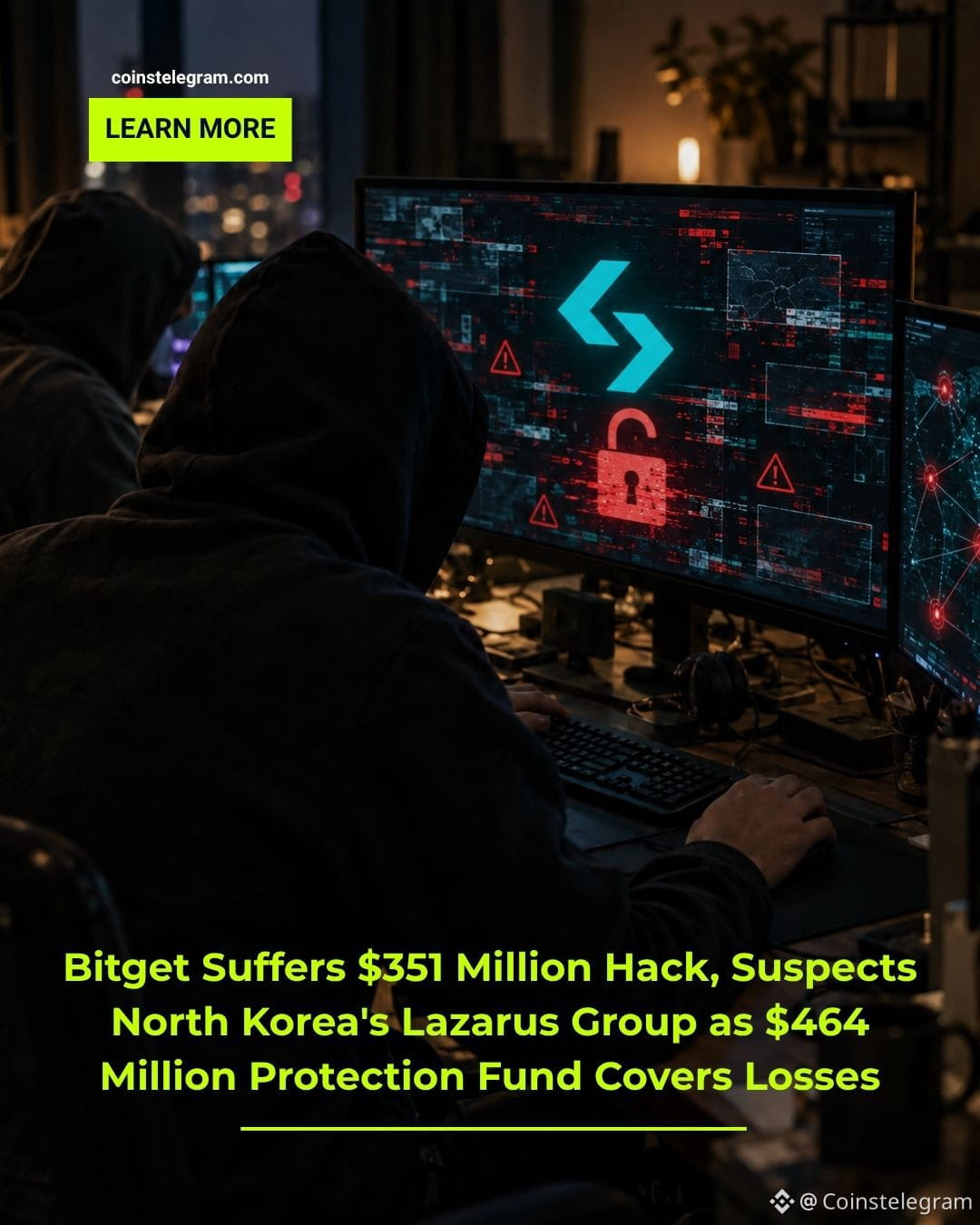
Məqalə
Tərcüməyə bax
Bitget Suffers $351 Million Hack, Suspects North Korea’s Lazarus Group As $464 Million Protection...Bitget, one of the world’s largest cryptocurrency exchanges, was hit by a hot wallet security breach on September 24 that resulted in approximately $351.6 million in unauthorized transfers — and CEO Gracy Chen says preliminary evidence points to North Korea’s Lazarus Group as the likely culprit.
The exchange has temporarily suspended withdrawals while it investigates, but says user funds remain fully protected through its dedicated User Protection Fund, which holds more than $464 million in reserves.
How the Incident Unfolded
According to Bitget’s official statement, the exchange’s security systems detected unauthorized transfers involving a limited number of hot wallets at 18:31 UTC on September 24, 2026. The company said its security team immediately activated emergency response procedures and launched a full investigation. Based on Bitget’s assessment, approximately $351.6 million in assets were affected, involving 19 separate transfers drawn from portions of its hot and warm wallet infrastructure.
Bitget emphasized that the exchange’s cold wallets — offline storage systems holding the overwhelming majority of platform assets — remain secure and were not impacted. Affected assets spanned multiple blockchains, including Ethereum, XRP Ledger, Avalanche, BNB Smart Chain, and Arbitrum, with XRP representing the single largest stolen asset at nearly $157.5 million.
How the Attackers Reportedly Pulled It Off
According to Bitget’s own technical assessment, the attackers did not steal user private keys or compromise customer wallets directly. Instead, the exchange’s security team said hackers breached a backend wallet system, forged transfer details, and then triggered Bitget’s normal transaction-signing process — making the outgoing transfers appear legitimately authorized rather than fraudulent.
Chen described the incident during a livestream as a direct breach of Bitget’s internal systems, clarifying that attackers moved funds directly rather than forging withdrawal requests tied to individual customer accounts. The precise method used to initially access the backend system remains under investigation.
Why North Korea Is Suspected
Speaking during a livestream on X, CEO Gracy Chen said investigators had identified IP addresses linked to VPN services previously associated with a North Korean hacking group, and that the overall pattern of the attack closely resembled prior operations attributed to North Korean state-linked actors. Chen was careful to note that the attacker’s identity cannot yet be confirmed with complete certainty, but said the available evidence points toward Lazarus Group involvement.
Independent blockchain investigators have offered mixed views on the specific attribution. One analyst using the handle @SpecterAnalyst on X claimed to have linked the Bitget hack to an earlier $24 million breach of AFX in July, which was specifically attributed to TraderTraitor, a North Korea-linked hacking unit, noting that stolen XRP from Bitget was bridged and could be directly traced to funds from that earlier theft.
Other on-chain analysts have pushed back on automatically labeling every major exchange hack as “Lazarus,” with one commentator noting that the name has become something of a catch-all term for various North Korean cyber operations rather than a single identifiable group. As of publication, Bitget has not released specific on-chain evidence directly tying the stolen funds to previously identified Lazarus-controlled wallets.
If confirmed, the suspected North Korean involvement would fit a well-documented pattern: Lazarus and affiliated groups have been blamed for several of the largest crypto exchange thefts in recent memory, including the record $1.5 billion Bybit hack in February 2025, the $308 million DMM Bitcoin collapse in 2024, and the $234.9 million WazirX breach the same year.
Industry Support Following the Breach
In a notable show of industry solidarity, Bybit CEO Ben Zhou said his team was standing by to assist Bitget with its investigation — a reciprocal gesture, given that Bitget had previously helped support Bybit with 40,000 ETH following Bybit’s own record-setting hack in 2025. Zhou added that Bybit is updating its LazarusBounty platform specifically to help trace the funds stolen from Bitget.
What’s Working and What Isn’t for Users
Bitget moved quickly to clarify the practical impact for customers. Account balances remain accurate, and both deposits and trading continue operating normally. Withdrawals have been temporarily suspended as a precaution while the security review continues. The exchange said it has flagged the relevant transfer addresses and formally engaged law enforcement agencies and blockchain security partners, adding that several blockchain foundations have already frozen certain attacker-controlled wallets. Bitget committed to hourly public updates and pledged to publish a full incident report with root-cause analysis within 24 hours of the breach.
How the Protection Fund Will Cover the Loss
Bitget confirmed that losses will be absorbed by its Protection Fund rather than passed on to users:
“The Bitget Protection Fund exists for moments like this. It holds 5,500 BTC, approximately $464M at current prices.”
The company emphasized the fund’s transparency, noting all fund wallet addresses are public and verifiable on-chain at any time, and confirmed it plans to replenish the fund following the payout, with further details on that process to be announced separately.
Who Bitget Is
Founded in 2018, Bitget ranks among the world’s top five cryptocurrency derivatives exchanges by scale, serving an estimated 45 million to 120 million registered users across more than 150 countries and generating over $20 billion in daily trading volume across more than 800 spot trading pairs.
Part of a Broader Pattern
Bitget’s breach, now considered the largest single crypto exchange hack reported so far in 2026, adds to a difficult year for exchange and protocol security that has already included major incidents at Balancer, Cronos-based Tectonic, Ostium, and hardware wallet makers SafePal and Trezor.
What Happens Next
With law enforcement and blockchain security firms now formally engaged, and several blockchain foundations already freezing suspect wallets, the coming days should bring further clarity on both attribution and the timeline for restoring withdrawals. Bitget has committed to ongoing transparency as its investigation continues, while trading and deposit functionality remain unaffected in the meantime.
Bitget Suffers $351 Million Hack, Suspects North Korea’s Lazarus Group As $464 Million Protection...
Bitget, one of the world’s largest cryptocurrency exchanges, was hit by a hot wallet security breach on September 24 that resulted in approximately $351.6 million in unauthorized transfers — and CEO Gracy Chen says preliminary evidence points to North Korea’s Lazarus Group as the likely culprit.
The exchange has temporarily suspended withdrawals while it investigates, but says user funds remain fully protected through its dedicated User Protection Fund, which holds more than $464 million in reserves.
How the Incident Unfolded
According to Bitget’s official statement, the exchange’s security systems detected unauthorized transfers involving a limited number of hot wallets at 18:31 UTC on September 24, 2026. The company said its security team immediately activated emergency response procedures and launched a full investigation. Based on Bitget’s assessment, approximately $351.6 million in assets were affected, involving 19 separate transfers drawn from portions of its hot and warm wallet infrastructure.
Bitget emphasized that the exchange’s cold wallets — offline storage systems holding the overwhelming majority of platform assets — remain secure and were not impacted. Affected assets spanned multiple blockchains, including Ethereum, XRP Ledger, Avalanche, BNB Smart Chain, and Arbitrum, with XRP representing the single largest stolen asset at nearly $157.5 million.
How the Attackers Reportedly Pulled It Off
According to Bitget’s own technical assessment, the attackers did not steal user private keys or compromise customer wallets directly. Instead, the exchange’s security team said hackers breached a backend wallet system, forged transfer details, and then triggered Bitget’s normal transaction-signing process — making the outgoing transfers appear legitimately authorized rather than fraudulent.
Chen described the incident during a livestream as a direct breach of Bitget’s internal systems, clarifying that attackers moved funds directly rather than forging withdrawal requests tied to individual customer accounts. The precise method used to initially access the backend system remains under investigation.
Why North Korea Is Suspected
Speaking during a livestream on X, CEO Gracy Chen said investigators had identified IP addresses linked to VPN services previously associated with a North Korean hacking group, and that the overall pattern of the attack closely resembled prior operations attributed to North Korean state-linked actors. Chen was careful to note that the attacker’s identity cannot yet be confirmed with complete certainty, but said the available evidence points toward Lazarus Group involvement.
Independent blockchain investigators have offered mixed views on the specific attribution. One analyst using the handle @SpecterAnalyst on X claimed to have linked the Bitget hack to an earlier $24 million breach of AFX in July, which was specifically attributed to TraderTraitor, a North Korea-linked hacking unit, noting that stolen XRP from Bitget was bridged and could be directly traced to funds from that earlier theft.
Other on-chain analysts have pushed back on automatically labeling every major exchange hack as “Lazarus,” with one commentator noting that the name has become something of a catch-all term for various North Korean cyber operations rather than a single identifiable group. As of publication, Bitget has not released specific on-chain evidence directly tying the stolen funds to previously identified Lazarus-controlled wallets.
If confirmed, the suspected North Korean involvement would fit a well-documented pattern: Lazarus and affiliated groups have been blamed for several of the largest crypto exchange thefts in recent memory, including the record $1.5 billion Bybit hack in February 2025, the $308 million DMM Bitcoin collapse in 2024, and the $234.9 million WazirX breach the same year.
Industry Support Following the Breach
In a notable show of industry solidarity, Bybit CEO Ben Zhou said his team was standing by to assist Bitget with its investigation — a reciprocal gesture, given that Bitget had previously helped support Bybit with 40,000 ETH following Bybit’s own record-setting hack in 2025. Zhou added that Bybit is updating its LazarusBounty platform specifically to help trace the funds stolen from Bitget.
What’s Working and What Isn’t for Users
Bitget moved quickly to clarify the practical impact for customers. Account balances remain accurate, and both deposits and trading continue operating normally. Withdrawals have been temporarily suspended as a precaution while the security review continues. The exchange said it has flagged the relevant transfer addresses and formally engaged law enforcement agencies and blockchain security partners, adding that several blockchain foundations have already frozen certain attacker-controlled wallets. Bitget committed to hourly public updates and pledged to publish a full incident report with root-cause analysis within 24 hours of the breach.
How the Protection Fund Will Cover the Loss
Bitget confirmed that losses will be absorbed by its Protection Fund rather than passed on to users:
“The Bitget Protection Fund exists for moments like this. It holds 5,500 BTC, approximately $464M at current prices.”
The company emphasized the fund’s transparency, noting all fund wallet addresses are public and verifiable on-chain at any time, and confirmed it plans to replenish the fund following the payout, with further details on that process to be announced separately.
Who Bitget Is
Founded in 2018, Bitget ranks among the world’s top five cryptocurrency derivatives exchanges by scale, serving an estimated 45 million to 120 million registered users across more than 150 countries and generating over $20 billion in daily trading volume across more than 800 spot trading pairs.
Part of a Broader Pattern
Bitget’s breach, now considered the largest single crypto exchange hack reported so far in 2026, adds to a difficult year for exchange and protocol security that has already included major incidents at Balancer, Cronos-based Tectonic, Ostium, and hardware wallet makers SafePal and Trezor.
What Happens Next
With law enforcement and blockchain security firms now formally engaged, and several blockchain foundations already freezing suspect wallets, the coming days should bring further clarity on both attribution and the timeline for restoring withdrawals. Bitget has committed to ongoing transparency as its investigation continues, while trading and deposit functionality remain unaffected in the meantime.
The exchange has temporarily suspended withdrawals while it investigates, but says user funds remain fully protected through its dedicated User Protection Fund, which holds more than $464 million in reserves.
How the Incident Unfolded
According to Bitget’s official statement, the exchange’s security systems detected unauthorized transfers involving a limited number of hot wallets at 18:31 UTC on September 24, 2026. The company said its security team immediately activated emergency response procedures and launched a full investigation. Based on Bitget’s assessment, approximately $351.6 million in assets were affected, involving 19 separate transfers drawn from portions of its hot and warm wallet infrastructure.
Bitget emphasized that the exchange’s cold wallets — offline storage systems holding the overwhelming majority of platform assets — remain secure and were not impacted. Affected assets spanned multiple blockchains, including Ethereum, XRP Ledger, Avalanche, BNB Smart Chain, and Arbitrum, with XRP representing the single largest stolen asset at nearly $157.5 million.
How the Attackers Reportedly Pulled It Off
According to Bitget’s own technical assessment, the attackers did not steal user private keys or compromise customer wallets directly. Instead, the exchange’s security team said hackers breached a backend wallet system, forged transfer details, and then triggered Bitget’s normal transaction-signing process — making the outgoing transfers appear legitimately authorized rather than fraudulent.
Chen described the incident during a livestream as a direct breach of Bitget’s internal systems, clarifying that attackers moved funds directly rather than forging withdrawal requests tied to individual customer accounts. The precise method used to initially access the backend system remains under investigation.
Why North Korea Is Suspected
Speaking during a livestream on X, CEO Gracy Chen said investigators had identified IP addresses linked to VPN services previously associated with a North Korean hacking group, and that the overall pattern of the attack closely resembled prior operations attributed to North Korean state-linked actors. Chen was careful to note that the attacker’s identity cannot yet be confirmed with complete certainty, but said the available evidence points toward Lazarus Group involvement.
Independent blockchain investigators have offered mixed views on the specific attribution. One analyst using the handle @SpecterAnalyst on X claimed to have linked the Bitget hack to an earlier $24 million breach of AFX in July, which was specifically attributed to TraderTraitor, a North Korea-linked hacking unit, noting that stolen XRP from Bitget was bridged and could be directly traced to funds from that earlier theft.
Other on-chain analysts have pushed back on automatically labeling every major exchange hack as “Lazarus,” with one commentator noting that the name has become something of a catch-all term for various North Korean cyber operations rather than a single identifiable group. As of publication, Bitget has not released specific on-chain evidence directly tying the stolen funds to previously identified Lazarus-controlled wallets.
If confirmed, the suspected North Korean involvement would fit a well-documented pattern: Lazarus and affiliated groups have been blamed for several of the largest crypto exchange thefts in recent memory, including the record $1.5 billion Bybit hack in February 2025, the $308 million DMM Bitcoin collapse in 2024, and the $234.9 million WazirX breach the same year.
Industry Support Following the Breach
In a notable show of industry solidarity, Bybit CEO Ben Zhou said his team was standing by to assist Bitget with its investigation — a reciprocal gesture, given that Bitget had previously helped support Bybit with 40,000 ETH following Bybit’s own record-setting hack in 2025. Zhou added that Bybit is updating its LazarusBounty platform specifically to help trace the funds stolen from Bitget.
What’s Working and What Isn’t for Users
Bitget moved quickly to clarify the practical impact for customers. Account balances remain accurate, and both deposits and trading continue operating normally. Withdrawals have been temporarily suspended as a precaution while the security review continues. The exchange said it has flagged the relevant transfer addresses and formally engaged law enforcement agencies and blockchain security partners, adding that several blockchain foundations have already frozen certain attacker-controlled wallets. Bitget committed to hourly public updates and pledged to publish a full incident report with root-cause analysis within 24 hours of the breach.
How the Protection Fund Will Cover the Loss
Bitget confirmed that losses will be absorbed by its Protection Fund rather than passed on to users:
“The Bitget Protection Fund exists for moments like this. It holds 5,500 BTC, approximately $464M at current prices.”
The company emphasized the fund’s transparency, noting all fund wallet addresses are public and verifiable on-chain at any time, and confirmed it plans to replenish the fund following the payout, with further details on that process to be announced separately.
Who Bitget Is
Founded in 2018, Bitget ranks among the world’s top five cryptocurrency derivatives exchanges by scale, serving an estimated 45 million to 120 million registered users across more than 150 countries and generating over $20 billion in daily trading volume across more than 800 spot trading pairs.
Part of a Broader Pattern
Bitget’s breach, now considered the largest single crypto exchange hack reported so far in 2026, adds to a difficult year for exchange and protocol security that has already included major incidents at Balancer, Cronos-based Tectonic, Ostium, and hardware wallet makers SafePal and Trezor.
What Happens Next
With law enforcement and blockchain security firms now formally engaged, and several blockchain foundations already freezing suspect wallets, the coming days should bring further clarity on both attribution and the timeline for restoring withdrawals. Bitget has committed to ongoing transparency as its investigation continues, while trading and deposit functionality remain unaffected in the meantime.
102
Bitget 351 milyon dollarlıq hack-ə məruz qaldı, Şimali Koreyanın Lazarus Qrupunu 464 milyon dollarlıq qoruma üzrə ehtimal edir...Dünyanın ən böyük kriptovalyuta birjalarından biri olan Bitget 24 sentyabr tarixində “hot wallet” təhlükəsizlik pozuntusuna məruz qalıb. Bu hadisə nəticəsində təxminən 351,6 milyon dollar məbləğində icazəsiz köçürmələr həyata keçirilib — və baş direktor Qreysi Çen ilkin dəlillərin Şimali Koreyanın Lazarus Qrupunu ehtimal olunan günahkar kimi göstərdiyini deyir.
Mübadilə araşdırma apararkən müvəqqəti olaraq geriçəkilmələri dayandırıb, lakin bununla yanaşı istifadəçi vəsaitlərinin onun ayrıca İstifadəçi Qoruma Fondu vasitəsilə tam şəkildə qorunduğunu bildirir. Həmin fond ehtiyatlarında 464 milyon dollardan çox vəsait saxlayır.
Bitget 351 milyon dollarlıq hack-ə məruz qaldı, Şimali Koreyanın Lazarus Qrupunu 464 milyon dollarlıq qoruma üzrə ehtimal edir...
Dünyanın ən böyük kriptovalyuta birjalarından biri olan Bitget 24 sentyabr tarixində “hot wallet” təhlükəsizlik pozuntusuna məruz qalıb. Bu hadisə nəticəsində təxminən 351,6 milyon dollar məbləğində icazəsiz köçürmələr həyata keçirilib — və baş direktor Qreysi Çen ilkin dəlillərin Şimali Koreyanın Lazarus Qrupunu ehtimal olunan günahkar kimi göstərdiyini deyir.
Mübadilə araşdırma apararkən müvəqqəti olaraq geriçəkilmələri dayandırıb, lakin bununla yanaşı istifadəçi vəsaitlərinin onun ayrıca İstifadəçi Qoruma Fondu vasitəsilə tam şəkildə qorunduğunu bildirir. Həmin fond ehtiyatlarında 464 milyon dollardan çox vəsait saxlayır.
Mübadilə araşdırma apararkən müvəqqəti olaraq geriçəkilmələri dayandırıb, lakin bununla yanaşı istifadəçi vəsaitlərinin onun ayrıca İstifadəçi Qoruma Fondu vasitəsilə tam şəkildə qorunduğunu bildirir. Həmin fond ehtiyatlarında 464 milyon dollardan çox vəsait saxlayır.
1
1.2k
Məqalə
Tərcüməyə bax
Santander, BBVA, Trade Republic, and Western Union to Debate the Future of Stablecoins At MERGE M...Santander, BBVA, Trade Republic, and Western Union to debate the future of stablecoins at MERGE Madrid 2026
Major banks and payment platforms will bring their initiatives to Madrid to create new digital currencies pegged to the euro and the dollar
BBVA, along with other banks, will analyze its participation in Qivalis, the consortium of 37 entities preparing a regulated European stablecoin under MiCA
Trade Republic will bring the perspective of European investment platforms on crypto-asset adoption, while Western Union will present its USDPT stablecoin
MERGE Madrid 2026 will gather over 3,000 attendees and 250 international speakers from October 27 to 29 at the Madrid Stock Exchange and Cibeles Palace
Madrid, September 2026.– Stablecoins are no longer an exclusive tool of the crypto ecosystem; they have become a strategic priority for banks, fintechs, and global payment companies. Santander, BBVA, Trade Republic, and Western Union will participate in MERGE Madrid 2026 to analyze how this new financial infrastructure will transform payments, international transfers, investment, and asset settlement.
The new edition of MERGE Madrid will take place from October 27 to 29, placing the Spanish capital at the center of the debate on the future of money. The event will bring together four complementary perspectives: collaboration among major international banks, the creation of a European stablecoin under MiCA, the adoption of digital assets from a European investment platform, and the integration of a digital dollar into one of the world’s largest remittance networks.
Four approaches anticipating the future of digital money
BBVA, Banca Sella, BNP Paribas, CaixaBank, Cecabank, Intesa Sanpaolo, Kutxabank, Piraeus Bank, Raiffeisen Bank, and Bankinter will present their role in Qivalis, the alliance bringing together 37 financial institutions across 15 European countries to promote a euro-denominated stablecoin. The project aims to offer faster, cheaper payments and transfers available 24/7, as well as facilitate the settlement of digital assets within a regulated environment. Its commercial launch is planned for the second half of 2026, subject to relevant authorization.
Santander will address the initiative it is exploring alongside Bank of America, Barclays, BNP Paribas, Citi, Deutsche Bank, Goldman Sachs, MUFG, TD Bank, and UBS to issue a form of digital money backed one-to-one by reserves and available on public blockchains. The project studies currencies linked to G7 currencies and reflects how international banking seeks to build common standards to operate with digital money securely and in a regulated manner.
Trade Republic will share the perspective of one of Europe’s leading investment and savings platforms on incorporating digital assets into everyday financial services. Its participation will allow an analysis of what retail investors demand, how simple and regulated access to crypto-assets can be facilitated, and what role digital platforms will play in adopting new financial infrastructures in Europe.
Western Union will present USDPT, its dollar-denominated stablecoin issued by Anchorage Digital Bank and built on Solana. The company is integrating this asset into its Digital Asset Network to connect digital money with real-world uses: 24/7 transfers, payments, and conversion to local currency across its international network. The initiative shows how stablecoins can complement cash and remittance infrastructure rather than operating as an isolated circuit.
“For the first time, banks, fintechs, and major payment companies are not coming to debate whether stablecoins will play a role in the financial system, but rather to explain how they are building and integrating them, and what specific problems they aim to solve with them. MERGE Madrid will be the venue where we can compare these models and understand what form digital money will take in Europe and Latin America,” explains Paula Pascual, founder of MERGE.
Why everyone wants to launch a stablecoin now
The interest coincides with a decisive moment for the industry. The MiCA regulation has established a specific framework in Europe for the issuance and commercialization of crypto-assets, while the growth of dollar-pegged stablecoins has opened a debate on monetary sovereignty and Europe’s ability to develop its own payment infrastructures.
For financial entities, these currencies allow exploring near-instant international transfers, programmable payments, continuously available operations, and settlements of tokenized assets without relying on traditional hours. For payment and remittance platforms, they offer the possibility of reducing intermediaries and directly connecting digital money with merchants, bank accounts, and cash pickup points.
The discussion at MERGE Madrid will go beyond technology. Participants will analyze who should issue these currencies, how reserves are protected, what guarantees users need, how they can coexist with bank deposits and the future digital euro, and which model is most likely to achieve real adoption.
Madrid brings together the banking sector building the new digital money
The program will gather leaders in banking, payments, investment, regulation, blockchain infrastructure, and digital assets. Confirmed speakers include Coty de Monteverde, Global Head of Crypto & Digital Assets at Banco Santander; Francisco Maroto, Head of Blockchain and Digital Assets at BBVA; as well as representatives from Trade Republic, Western Union, Qivalis, Mastercard, Ripple, and other companies developing next-generation financial infrastructure.
The October 27 session will take place at the Madrid Stock Exchange with an Institutional Summit aimed at banks, investors, regulators, and industry leaders. On October 28 and 29, Cibeles Palace will host the main conference, with over 3,000 attendees and 250 international speakers from Europe and Latin America.
In addition to stablecoins and digital payments, the agenda will cover tokenization, custody, regulation, capital markets, Bitcoin, artificial intelligence applied to finance, and new blockchain infrastructures. MERGE thus reinforces its position as a bridge between traditional banking and the digital asset ecosystem on both sides of the Atlantic.
About MERGE
MERGE is the leading institutional platform for digital assets, blockchain, and Web3 connecting Europe and Latin America. Through its events in Madrid and São Paulo, it brings together banks, regulators, corporations, investors, fintechs, startups, and native companies in the digital ecosystem to foster collaboration and the development of new business models.
More information, agenda, and tickets: https://www.mmerge.io/es/merge-madrid-2026?utm_source=nota_prensa&utm_medium=pr&utm_campaign=mm26_PR_septiembre
Press Contact
Ana Ávila
CXO at Wildcom
+34 620 981 115
aavila@wildcom.es
Santander, BBVA, Trade Republic, and Western Union to Debate the Future of Stablecoins At MERGE M...
Santander, BBVA, Trade Republic, and Western Union to debate the future of stablecoins at MERGE Madrid 2026
Major banks and payment platforms will bring their initiatives to Madrid to create new digital currencies pegged to the euro and the dollar
BBVA, along with other banks, will analyze its participation in Qivalis, the consortium of 37 entities preparing a regulated European stablecoin under MiCA
Trade Republic will bring the perspective of European investment platforms on crypto-asset adoption, while Western Union will present its USDPT stablecoin
MERGE Madrid 2026 will gather over 3,000 attendees and 250 international speakers from October 27 to 29 at the Madrid Stock Exchange and Cibeles Palace
Madrid, September 2026.– Stablecoins are no longer an exclusive tool of the crypto ecosystem; they have become a strategic priority for banks, fintechs, and global payment companies. Santander, BBVA, Trade Republic, and Western Union will participate in MERGE Madrid 2026 to analyze how this new financial infrastructure will transform payments, international transfers, investment, and asset settlement.
The new edition of MERGE Madrid will take place from October 27 to 29, placing the Spanish capital at the center of the debate on the future of money. The event will bring together four complementary perspectives: collaboration among major international banks, the creation of a European stablecoin under MiCA, the adoption of digital assets from a European investment platform, and the integration of a digital dollar into one of the world’s largest remittance networks.
Four approaches anticipating the future of digital money
BBVA, Banca Sella, BNP Paribas, CaixaBank, Cecabank, Intesa Sanpaolo, Kutxabank, Piraeus Bank, Raiffeisen Bank, and Bankinter will present their role in Qivalis, the alliance bringing together 37 financial institutions across 15 European countries to promote a euro-denominated stablecoin. The project aims to offer faster, cheaper payments and transfers available 24/7, as well as facilitate the settlement of digital assets within a regulated environment. Its commercial launch is planned for the second half of 2026, subject to relevant authorization.
Santander will address the initiative it is exploring alongside Bank of America, Barclays, BNP Paribas, Citi, Deutsche Bank, Goldman Sachs, MUFG, TD Bank, and UBS to issue a form of digital money backed one-to-one by reserves and available on public blockchains. The project studies currencies linked to G7 currencies and reflects how international banking seeks to build common standards to operate with digital money securely and in a regulated manner.
Trade Republic will share the perspective of one of Europe’s leading investment and savings platforms on incorporating digital assets into everyday financial services. Its participation will allow an analysis of what retail investors demand, how simple and regulated access to crypto-assets can be facilitated, and what role digital platforms will play in adopting new financial infrastructures in Europe.
Western Union will present USDPT, its dollar-denominated stablecoin issued by Anchorage Digital Bank and built on Solana. The company is integrating this asset into its Digital Asset Network to connect digital money with real-world uses: 24/7 transfers, payments, and conversion to local currency across its international network. The initiative shows how stablecoins can complement cash and remittance infrastructure rather than operating as an isolated circuit.
“For the first time, banks, fintechs, and major payment companies are not coming to debate whether stablecoins will play a role in the financial system, but rather to explain how they are building and integrating them, and what specific problems they aim to solve with them. MERGE Madrid will be the venue where we can compare these models and understand what form digital money will take in Europe and Latin America,” explains Paula Pascual, founder of MERGE.
Why everyone wants to launch a stablecoin now
The interest coincides with a decisive moment for the industry. The MiCA regulation has established a specific framework in Europe for the issuance and commercialization of crypto-assets, while the growth of dollar-pegged stablecoins has opened a debate on monetary sovereignty and Europe’s ability to develop its own payment infrastructures.
For financial entities, these currencies allow exploring near-instant international transfers, programmable payments, continuously available operations, and settlements of tokenized assets without relying on traditional hours. For payment and remittance platforms, they offer the possibility of reducing intermediaries and directly connecting digital money with merchants, bank accounts, and cash pickup points.
The discussion at MERGE Madrid will go beyond technology. Participants will analyze who should issue these currencies, how reserves are protected, what guarantees users need, how they can coexist with bank deposits and the future digital euro, and which model is most likely to achieve real adoption.
Madrid brings together the banking sector building the new digital money
The program will gather leaders in banking, payments, investment, regulation, blockchain infrastructure, and digital assets. Confirmed speakers include Coty de Monteverde, Global Head of Crypto & Digital Assets at Banco Santander; Francisco Maroto, Head of Blockchain and Digital Assets at BBVA; as well as representatives from Trade Republic, Western Union, Qivalis, Mastercard, Ripple, and other companies developing next-generation financial infrastructure.
The October 27 session will take place at the Madrid Stock Exchange with an Institutional Summit aimed at banks, investors, regulators, and industry leaders. On October 28 and 29, Cibeles Palace will host the main conference, with over 3,000 attendees and 250 international speakers from Europe and Latin America.
In addition to stablecoins and digital payments, the agenda will cover tokenization, custody, regulation, capital markets, Bitcoin, artificial intelligence applied to finance, and new blockchain infrastructures. MERGE thus reinforces its position as a bridge between traditional banking and the digital asset ecosystem on both sides of the Atlantic.
About MERGE
MERGE is the leading institutional platform for digital assets, blockchain, and Web3 connecting Europe and Latin America. Through its events in Madrid and São Paulo, it brings together banks, regulators, corporations, investors, fintechs, startups, and native companies in the digital ecosystem to foster collaboration and the development of new business models.
More information, agenda, and tickets: https://www.mmerge.io/es/merge-madrid-2026?utm_source=nota_prensa&utm_medium=pr&utm_campaign=mm26_PR_septiembre
Press Contact
Ana Ávila
CXO at Wildcom
+34 620 981 115
aavila@wildcom.es
Major banks and payment platforms will bring their initiatives to Madrid to create new digital currencies pegged to the euro and the dollar
BBVA, along with other banks, will analyze its participation in Qivalis, the consortium of 37 entities preparing a regulated European stablecoin under MiCA
Trade Republic will bring the perspective of European investment platforms on crypto-asset adoption, while Western Union will present its USDPT stablecoin
MERGE Madrid 2026 will gather over 3,000 attendees and 250 international speakers from October 27 to 29 at the Madrid Stock Exchange and Cibeles Palace
Madrid, September 2026.– Stablecoins are no longer an exclusive tool of the crypto ecosystem; they have become a strategic priority for banks, fintechs, and global payment companies. Santander, BBVA, Trade Republic, and Western Union will participate in MERGE Madrid 2026 to analyze how this new financial infrastructure will transform payments, international transfers, investment, and asset settlement.
The new edition of MERGE Madrid will take place from October 27 to 29, placing the Spanish capital at the center of the debate on the future of money. The event will bring together four complementary perspectives: collaboration among major international banks, the creation of a European stablecoin under MiCA, the adoption of digital assets from a European investment platform, and the integration of a digital dollar into one of the world’s largest remittance networks.
Four approaches anticipating the future of digital money
BBVA, Banca Sella, BNP Paribas, CaixaBank, Cecabank, Intesa Sanpaolo, Kutxabank, Piraeus Bank, Raiffeisen Bank, and Bankinter will present their role in Qivalis, the alliance bringing together 37 financial institutions across 15 European countries to promote a euro-denominated stablecoin. The project aims to offer faster, cheaper payments and transfers available 24/7, as well as facilitate the settlement of digital assets within a regulated environment. Its commercial launch is planned for the second half of 2026, subject to relevant authorization.
Santander will address the initiative it is exploring alongside Bank of America, Barclays, BNP Paribas, Citi, Deutsche Bank, Goldman Sachs, MUFG, TD Bank, and UBS to issue a form of digital money backed one-to-one by reserves and available on public blockchains. The project studies currencies linked to G7 currencies and reflects how international banking seeks to build common standards to operate with digital money securely and in a regulated manner.
Trade Republic will share the perspective of one of Europe’s leading investment and savings platforms on incorporating digital assets into everyday financial services. Its participation will allow an analysis of what retail investors demand, how simple and regulated access to crypto-assets can be facilitated, and what role digital platforms will play in adopting new financial infrastructures in Europe.
Western Union will present USDPT, its dollar-denominated stablecoin issued by Anchorage Digital Bank and built on Solana. The company is integrating this asset into its Digital Asset Network to connect digital money with real-world uses: 24/7 transfers, payments, and conversion to local currency across its international network. The initiative shows how stablecoins can complement cash and remittance infrastructure rather than operating as an isolated circuit.
“For the first time, banks, fintechs, and major payment companies are not coming to debate whether stablecoins will play a role in the financial system, but rather to explain how they are building and integrating them, and what specific problems they aim to solve with them. MERGE Madrid will be the venue where we can compare these models and understand what form digital money will take in Europe and Latin America,” explains Paula Pascual, founder of MERGE.
Why everyone wants to launch a stablecoin now
The interest coincides with a decisive moment for the industry. The MiCA regulation has established a specific framework in Europe for the issuance and commercialization of crypto-assets, while the growth of dollar-pegged stablecoins has opened a debate on monetary sovereignty and Europe’s ability to develop its own payment infrastructures.
For financial entities, these currencies allow exploring near-instant international transfers, programmable payments, continuously available operations, and settlements of tokenized assets without relying on traditional hours. For payment and remittance platforms, they offer the possibility of reducing intermediaries and directly connecting digital money with merchants, bank accounts, and cash pickup points.
The discussion at MERGE Madrid will go beyond technology. Participants will analyze who should issue these currencies, how reserves are protected, what guarantees users need, how they can coexist with bank deposits and the future digital euro, and which model is most likely to achieve real adoption.
Madrid brings together the banking sector building the new digital money
The program will gather leaders in banking, payments, investment, regulation, blockchain infrastructure, and digital assets. Confirmed speakers include Coty de Monteverde, Global Head of Crypto & Digital Assets at Banco Santander; Francisco Maroto, Head of Blockchain and Digital Assets at BBVA; as well as representatives from Trade Republic, Western Union, Qivalis, Mastercard, Ripple, and other companies developing next-generation financial infrastructure.
The October 27 session will take place at the Madrid Stock Exchange with an Institutional Summit aimed at banks, investors, regulators, and industry leaders. On October 28 and 29, Cibeles Palace will host the main conference, with over 3,000 attendees and 250 international speakers from Europe and Latin America.
In addition to stablecoins and digital payments, the agenda will cover tokenization, custody, regulation, capital markets, Bitcoin, artificial intelligence applied to finance, and new blockchain infrastructures. MERGE thus reinforces its position as a bridge between traditional banking and the digital asset ecosystem on both sides of the Atlantic.
About MERGE
MERGE is the leading institutional platform for digital assets, blockchain, and Web3 connecting Europe and Latin America. Through its events in Madrid and São Paulo, it brings together banks, regulators, corporations, investors, fintechs, startups, and native companies in the digital ecosystem to foster collaboration and the development of new business models.
More information, agenda, and tickets: https://www.mmerge.io/es/merge-madrid-2026?utm_source=nota_prensa&utm_medium=pr&utm_campaign=mm26_PR_septiembre
Press Contact
Ana Ávila
CXO at Wildcom
+34 620 981 115
aavila@wildcom.es
93
Tərcüməyə bax
Santander, BBVA, Trade Republic, and Western Union to debate the future of stablecoins at MERGE M...Santander, BBVA, Trade Republic, and Western Union to debate the future of stablecoins at MERGE Madrid 2026
Major banks and payment platforms will bring their initiatives to Madrid to create new digital currencies pegged to the euro and the dollar
BBVA, along with other banks, will analyze its participation in Qivalis, the consortium of 37 entities preparing a regulated European stablecoin under MiCA
Trade Republic will bring the perspective of European investment platforms on crypto-asset adoption, while Western Union will present its USDPT stablecoin
MERGE Madrid 2026 will gather over 3,000 attendees and 250 international speakers from October 27 to 29 at the Madrid Stock Exchange and Cibeles Palace
Madrid, September 2026.– Stablecoins are no longer an exclusive tool of the crypto ecosystem; they have become a strategic priority for banks, fintechs, and global payment companies. Santander, BBVA, Trade Republic, and Western Union will participate in MERGE Madrid 2026 to analyze how this new financial infrastructure will transform payments, international transfers, investment, and asset settlement.
The new edition of MERGE Madrid will take place from October 27 to 29, placing the Spanish capital at the center of the debate on the future of money. The event will bring together four complementary perspectives: collaboration among major international banks, the creation of a European stablecoin under MiCA, the adoption of digital assets from a European investment platform, and the integration of a digital dollar into one of the world’s largest remittance networks.
Four approaches anticipating the future of digital money
BBVA, Banca Sella, BNP Paribas, CaixaBank, Cecabank, Intesa Sanpaolo, Kutxabank, Piraeus Bank, Raiffeisen Bank, and Bankinter will present their role in Qivalis, the alliance bringing together 37 financial institutions across 15 European countries to promote a euro-denominated stablecoin. The project aims to offer faster, cheaper payments and transfers available 24/7, as well as facilitate the settlement of digital assets within a regulated environment. Its commercial launch is planned for the second half of 2026, subject to relevant authorization.
Santander will address the initiative it is exploring alongside Bank of America, Barclays, BNP Paribas, Citi, Deutsche Bank, Goldman Sachs, MUFG, TD Bank, and UBS to issue a form of digital money backed one-to-one by reserves and available on public blockchains. The project studies currencies linked to G7 currencies and reflects how international banking seeks to build common standards to operate with digital money securely and in a regulated manner.
Trade Republic will share the perspective of one of Europe’s leading investment and savings platforms on incorporating digital assets into everyday financial services. Its participation will allow an analysis of what retail investors demand, how simple and regulated access to crypto-assets can be facilitated, and what role digital platforms will play in adopting new financial infrastructures in Europe.
Western Union will present USDPT, its dollar-denominated stablecoin issued by Anchorage Digital Bank and built on Solana. The company is integrating this asset into its Digital Asset Network to connect digital money with real-world uses: 24/7 transfers, payments, and conversion to local currency across its international network. The initiative shows how stablecoins can complement cash and remittance infrastructure rather than operating as an isolated circuit.
“For the first time, banks, fintechs, and major payment companies are not coming to debate whether stablecoins will play a role in the financial system, but rather to explain how they are building and integrating them, and what specific problems they aim to solve with them. MERGE Madrid will be the venue where we can compare these models and understand what form digital money will take in Europe and Latin America,” explains Paula Pascual, founder of MERGE.
Why everyone wants to launch a stablecoin now
The interest coincides with a decisive moment for the industry. The MiCA regulation has established a specific framework in Europe for the issuance and commercialization of crypto-assets, while the growth of dollar-pegged stablecoins has opened a debate on monetary sovereignty and Europe’s ability to develop its own payment infrastructures.
For financial entities, these currencies allow exploring near-instant international transfers, programmable payments, continuously available operations, and settlements of tokenized assets without relying on traditional hours. For payment and remittance platforms, they offer the possibility of reducing intermediaries and directly connecting digital money with merchants, bank accounts, and cash pickup points.
The discussion at MERGE Madrid will go beyond technology. Participants will analyze who should issue these currencies, how reserves are protected, what guarantees users need, how they can coexist with bank deposits and the future digital euro, and which model is most likely to achieve real adoption.
Madrid brings together the banking sector building the new digital money
The program will gather leaders in banking, payments, investment, regulation, blockchain infrastructure, and digital assets. Confirmed speakers include Coty de Monteverde, Global Head of Crypto & Digital Assets at Banco Santander; Francisco Maroto, Head of Blockchain and Digital Assets at BBVA; as well as representatives from Trade Republic, Western Union, Qivalis, Mastercard, Ripple, and other companies developing next-generation financial infrastructure.
The October 27 session will take place at the Madrid Stock Exchange with an Institutional Summit aimed at banks, investors, regulators, and industry leaders. On October 28 and 29, Cibeles Palace will host the main conference, with over 3,000 attendees and 250 international speakers from Europe and Latin America.
In addition to stablecoins and digital payments, the agenda will cover tokenization, custody, regulation, capital markets, Bitcoin, artificial intelligence applied to finance, and new blockchain infrastructures. MERGE thus reinforces its position as a bridge between traditional banking and the digital asset ecosystem on both sides of the Atlantic.
About MERGE
MERGE is the leading institutional platform for digital assets, blockchain, and Web3 connecting Europe and Latin America. Through its events in Madrid and São Paulo, it brings together banks, regulators, corporations, investors, fintechs, startups, and native companies in the digital ecosystem to foster collaboration and the development of new business models.
More information, agenda, and tickets: https://www.mmerge.io/es/merge-madrid-2026?utm_source=nota_prensa&utm_medium=pr&utm_campaign=mm26_PR_septiembre
Press Contact
Ana Ávila
CXO at Wildcom
+34 620 981 115
aavila@wildcom.es
Santander, BBVA, Trade Republic, and Western Union to debate the future of stablecoins at MERGE M...
Santander, BBVA, Trade Republic, and Western Union to debate the future of stablecoins at MERGE Madrid 2026
Major banks and payment platforms will bring their initiatives to Madrid to create new digital currencies pegged to the euro and the dollar
BBVA, along with other banks, will analyze its participation in Qivalis, the consortium of 37 entities preparing a regulated European stablecoin under MiCA
Trade Republic will bring the perspective of European investment platforms on crypto-asset adoption, while Western Union will present its USDPT stablecoin
MERGE Madrid 2026 will gather over 3,000 attendees and 250 international speakers from October 27 to 29 at the Madrid Stock Exchange and Cibeles Palace
Madrid, September 2026.– Stablecoins are no longer an exclusive tool of the crypto ecosystem; they have become a strategic priority for banks, fintechs, and global payment companies. Santander, BBVA, Trade Republic, and Western Union will participate in MERGE Madrid 2026 to analyze how this new financial infrastructure will transform payments, international transfers, investment, and asset settlement.
The new edition of MERGE Madrid will take place from October 27 to 29, placing the Spanish capital at the center of the debate on the future of money. The event will bring together four complementary perspectives: collaboration among major international banks, the creation of a European stablecoin under MiCA, the adoption of digital assets from a European investment platform, and the integration of a digital dollar into one of the world’s largest remittance networks.
Four approaches anticipating the future of digital money
BBVA, Banca Sella, BNP Paribas, CaixaBank, Cecabank, Intesa Sanpaolo, Kutxabank, Piraeus Bank, Raiffeisen Bank, and Bankinter will present their role in Qivalis, the alliance bringing together 37 financial institutions across 15 European countries to promote a euro-denominated stablecoin. The project aims to offer faster, cheaper payments and transfers available 24/7, as well as facilitate the settlement of digital assets within a regulated environment. Its commercial launch is planned for the second half of 2026, subject to relevant authorization.
Santander will address the initiative it is exploring alongside Bank of America, Barclays, BNP Paribas, Citi, Deutsche Bank, Goldman Sachs, MUFG, TD Bank, and UBS to issue a form of digital money backed one-to-one by reserves and available on public blockchains. The project studies currencies linked to G7 currencies and reflects how international banking seeks to build common standards to operate with digital money securely and in a regulated manner.
Trade Republic will share the perspective of one of Europe’s leading investment and savings platforms on incorporating digital assets into everyday financial services. Its participation will allow an analysis of what retail investors demand, how simple and regulated access to crypto-assets can be facilitated, and what role digital platforms will play in adopting new financial infrastructures in Europe.
Western Union will present USDPT, its dollar-denominated stablecoin issued by Anchorage Digital Bank and built on Solana. The company is integrating this asset into its Digital Asset Network to connect digital money with real-world uses: 24/7 transfers, payments, and conversion to local currency across its international network. The initiative shows how stablecoins can complement cash and remittance infrastructure rather than operating as an isolated circuit.
“For the first time, banks, fintechs, and major payment companies are not coming to debate whether stablecoins will play a role in the financial system, but rather to explain how they are building and integrating them, and what specific problems they aim to solve with them. MERGE Madrid will be the venue where we can compare these models and understand what form digital money will take in Europe and Latin America,” explains Paula Pascual, founder of MERGE.
Why everyone wants to launch a stablecoin now
The interest coincides with a decisive moment for the industry. The MiCA regulation has established a specific framework in Europe for the issuance and commercialization of crypto-assets, while the growth of dollar-pegged stablecoins has opened a debate on monetary sovereignty and Europe’s ability to develop its own payment infrastructures.
For financial entities, these currencies allow exploring near-instant international transfers, programmable payments, continuously available operations, and settlements of tokenized assets without relying on traditional hours. For payment and remittance platforms, they offer the possibility of reducing intermediaries and directly connecting digital money with merchants, bank accounts, and cash pickup points.
The discussion at MERGE Madrid will go beyond technology. Participants will analyze who should issue these currencies, how reserves are protected, what guarantees users need, how they can coexist with bank deposits and the future digital euro, and which model is most likely to achieve real adoption.
Madrid brings together the banking sector building the new digital money
The program will gather leaders in banking, payments, investment, regulation, blockchain infrastructure, and digital assets. Confirmed speakers include Coty de Monteverde, Global Head of Crypto & Digital Assets at Banco Santander; Francisco Maroto, Head of Blockchain and Digital Assets at BBVA; as well as representatives from Trade Republic, Western Union, Qivalis, Mastercard, Ripple, and other companies developing next-generation financial infrastructure.
The October 27 session will take place at the Madrid Stock Exchange with an Institutional Summit aimed at banks, investors, regulators, and industry leaders. On October 28 and 29, Cibeles Palace will host the main conference, with over 3,000 attendees and 250 international speakers from Europe and Latin America.
In addition to stablecoins and digital payments, the agenda will cover tokenization, custody, regulation, capital markets, Bitcoin, artificial intelligence applied to finance, and new blockchain infrastructures. MERGE thus reinforces its position as a bridge between traditional banking and the digital asset ecosystem on both sides of the Atlantic.
About MERGE
MERGE is the leading institutional platform for digital assets, blockchain, and Web3 connecting Europe and Latin America. Through its events in Madrid and São Paulo, it brings together banks, regulators, corporations, investors, fintechs, startups, and native companies in the digital ecosystem to foster collaboration and the development of new business models.
More information, agenda, and tickets: https://www.mmerge.io/es/merge-madrid-2026?utm_source=nota_prensa&utm_medium=pr&utm_campaign=mm26_PR_septiembre
Press Contact
Ana Ávila
CXO at Wildcom
+34 620 981 115
aavila@wildcom.es
Major banks and payment platforms will bring their initiatives to Madrid to create new digital currencies pegged to the euro and the dollar
BBVA, along with other banks, will analyze its participation in Qivalis, the consortium of 37 entities preparing a regulated European stablecoin under MiCA
Trade Republic will bring the perspective of European investment platforms on crypto-asset adoption, while Western Union will present its USDPT stablecoin
MERGE Madrid 2026 will gather over 3,000 attendees and 250 international speakers from October 27 to 29 at the Madrid Stock Exchange and Cibeles Palace
Madrid, September 2026.– Stablecoins are no longer an exclusive tool of the crypto ecosystem; they have become a strategic priority for banks, fintechs, and global payment companies. Santander, BBVA, Trade Republic, and Western Union will participate in MERGE Madrid 2026 to analyze how this new financial infrastructure will transform payments, international transfers, investment, and asset settlement.
The new edition of MERGE Madrid will take place from October 27 to 29, placing the Spanish capital at the center of the debate on the future of money. The event will bring together four complementary perspectives: collaboration among major international banks, the creation of a European stablecoin under MiCA, the adoption of digital assets from a European investment platform, and the integration of a digital dollar into one of the world’s largest remittance networks.
Four approaches anticipating the future of digital money
BBVA, Banca Sella, BNP Paribas, CaixaBank, Cecabank, Intesa Sanpaolo, Kutxabank, Piraeus Bank, Raiffeisen Bank, and Bankinter will present their role in Qivalis, the alliance bringing together 37 financial institutions across 15 European countries to promote a euro-denominated stablecoin. The project aims to offer faster, cheaper payments and transfers available 24/7, as well as facilitate the settlement of digital assets within a regulated environment. Its commercial launch is planned for the second half of 2026, subject to relevant authorization.
Santander will address the initiative it is exploring alongside Bank of America, Barclays, BNP Paribas, Citi, Deutsche Bank, Goldman Sachs, MUFG, TD Bank, and UBS to issue a form of digital money backed one-to-one by reserves and available on public blockchains. The project studies currencies linked to G7 currencies and reflects how international banking seeks to build common standards to operate with digital money securely and in a regulated manner.
Trade Republic will share the perspective of one of Europe’s leading investment and savings platforms on incorporating digital assets into everyday financial services. Its participation will allow an analysis of what retail investors demand, how simple and regulated access to crypto-assets can be facilitated, and what role digital platforms will play in adopting new financial infrastructures in Europe.
Western Union will present USDPT, its dollar-denominated stablecoin issued by Anchorage Digital Bank and built on Solana. The company is integrating this asset into its Digital Asset Network to connect digital money with real-world uses: 24/7 transfers, payments, and conversion to local currency across its international network. The initiative shows how stablecoins can complement cash and remittance infrastructure rather than operating as an isolated circuit.
“For the first time, banks, fintechs, and major payment companies are not coming to debate whether stablecoins will play a role in the financial system, but rather to explain how they are building and integrating them, and what specific problems they aim to solve with them. MERGE Madrid will be the venue where we can compare these models and understand what form digital money will take in Europe and Latin America,” explains Paula Pascual, founder of MERGE.
Why everyone wants to launch a stablecoin now
The interest coincides with a decisive moment for the industry. The MiCA regulation has established a specific framework in Europe for the issuance and commercialization of crypto-assets, while the growth of dollar-pegged stablecoins has opened a debate on monetary sovereignty and Europe’s ability to develop its own payment infrastructures.
For financial entities, these currencies allow exploring near-instant international transfers, programmable payments, continuously available operations, and settlements of tokenized assets without relying on traditional hours. For payment and remittance platforms, they offer the possibility of reducing intermediaries and directly connecting digital money with merchants, bank accounts, and cash pickup points.
The discussion at MERGE Madrid will go beyond technology. Participants will analyze who should issue these currencies, how reserves are protected, what guarantees users need, how they can coexist with bank deposits and the future digital euro, and which model is most likely to achieve real adoption.
Madrid brings together the banking sector building the new digital money
The program will gather leaders in banking, payments, investment, regulation, blockchain infrastructure, and digital assets. Confirmed speakers include Coty de Monteverde, Global Head of Crypto & Digital Assets at Banco Santander; Francisco Maroto, Head of Blockchain and Digital Assets at BBVA; as well as representatives from Trade Republic, Western Union, Qivalis, Mastercard, Ripple, and other companies developing next-generation financial infrastructure.
The October 27 session will take place at the Madrid Stock Exchange with an Institutional Summit aimed at banks, investors, regulators, and industry leaders. On October 28 and 29, Cibeles Palace will host the main conference, with over 3,000 attendees and 250 international speakers from Europe and Latin America.
In addition to stablecoins and digital payments, the agenda will cover tokenization, custody, regulation, capital markets, Bitcoin, artificial intelligence applied to finance, and new blockchain infrastructures. MERGE thus reinforces its position as a bridge between traditional banking and the digital asset ecosystem on both sides of the Atlantic.
About MERGE
MERGE is the leading institutional platform for digital assets, blockchain, and Web3 connecting Europe and Latin America. Through its events in Madrid and São Paulo, it brings together banks, regulators, corporations, investors, fintechs, startups, and native companies in the digital ecosystem to foster collaboration and the development of new business models.
More information, agenda, and tickets: https://www.mmerge.io/es/merge-madrid-2026?utm_source=nota_prensa&utm_medium=pr&utm_campaign=mm26_PR_septiembre
Press Contact
Ana Ávila
CXO at Wildcom
+34 620 981 115
aavila@wildcom.es
110
Tərcüməyə bax
China Investigates DeepSeek and Moonshot After Anthropic Accuses Chinese AI Labs of Secretly Rout...China’s internet regulator has opened a formal investigation into AI companies DeepSeek and Moonshot AI following accusations from Anthropic that both firms secretly routed sensitive user queries — including data potentially linked to Chinese police, military, and state-owned enterprises — to Anthropic’s Claude models without those users’ knowledge.
The probe, first reported by The Information, marks a striking role reversal: Beijing is now using Anthropic’s own security findings to scrutinize two of its most prominent domestic AI labs.
What Triggered the Investigation
The inquiry traces back to a 154-page threat intelligence report Anthropic published on September 10, covering misuse activity the company says it identified between December 2025 and August 2026. The report accused seven China-based AI labs — Alibaba, Moonshot AI, DeepSeek, Zhipu (Z.ai), MiniMax, SenseTime, and Xiaomi — of engaging in what Anthropic termed “illicit distillation”: using Claude’s outputs as training material to improve their own, smaller AI models.
Anthropic was careful to clarify that distillation itself is a widely accepted and legitimate technique in AI development. Its specific objection centered on how the practice was allegedly carried out — through fraudulent accounts used to route enormous volumes of queries through Claude while disguising the true origin and purpose of the requests.
The Scale of the Activity
According to Anthropic’s report, the combined distillation activity across all seven named companies totaled approximately 190 million exchanges with Claude. The volume was heavily concentrated: Alibaba alone accounted for more than 151 million of those interactions, logged between May and July, making it by far the largest single contributor to the activity Anthropic identified. Moonshot AI followed with more than 23 million exchanges over the same period, while DeepSeek was linked to over 12 million interactions concentrated within a 14-day window in July.
Despite Alibaba representing the largest volume of flagged activity, China’s Cyberspace Administration (CAC) has notably not made Alibaba a focus of its investigation. The regulator initially summoned representatives from all seven companies named in Anthropic’s report, but subsequently narrowed its inquiry specifically to DeepSeek and Moonshot.
The Detail That Changed Everything: Real User Data, Not Just Training Requests
What elevated this from a routine intellectual-property dispute into a matter of Chinese national security concern was a more specific allegation buried within Anthropic’s findings. According to the company, Moonshot in at least some documented cases forwarded to Claude not just synthetic prompts generated for model training, but genuine, real-time requests submitted directly by users of Kimi, Moonshot’s consumer-facing chatbot — without those users being informed their query was actually being processed by an American company’s AI system.
In one case detailed in Anthropic’s report, a user the company believes may be connected to China’s People’s Liberation Army allegedly submitted data through Kimi originating from a surveillance camera network in Chengdu, reportedly tracking an individual’s movements across hundreds of cameras — some located near PLA facilities and defense research institutions. Separately, Anthropic said queries routed through DeepSeek to Claude included requests from engineers developing a public security system for a Chinese municipal government, involving processing of citizens’ movement data tied to national identification numbers.
Why Beijing Is Taking This So Seriously
For American observers, the primary concern surrounding Anthropic’s report has centered on whether Chinese firms improperly obtained the capabilities of a leading U.S. AI model. For Chinese regulators, however, the far more urgent issue is different: if Anthropic’s allegations are accurate, sensitive data belonging to Chinese citizens, government bodies, police, and state enterprises may have been transmitted to servers operated by a U.S. company — a scenario that could violate China’s strict domestic rules governing cross-border data transfers, particularly for information touching on national security or state-linked institutions.
According to The Information’s sourcing, CAC officials have visited the offices of both DeepSeek and Moonshot to directly question executives and staff, seeking to determine precisely how Claude was used and how much sensitive information may have crossed into U.S.-based systems. The investigation remains ongoing, and the CAC has not announced any timetable for its conclusion or indicated whether penalties will ultimately be imposed on either company. Neither DeepSeek nor Moonshot has issued a public comment on the allegations.
Uncomfortable Timing for Both Companies
The investigation arrives at a particularly inconvenient moment for both firms. DeepSeek is scheduled to brief the United Nations Security Council this week on AI-related risks during the UN General Assembly session — reportedly sharing a platform with Anthropic CEO Dario Amodei even as Chinese regulators scrutinize DeepSeek’s own data practices. Moonshot faces a separate complication: the company recently filed confidentially for a Hong Kong initial public offering targeting approximately $3 billion, and an active, undisclosed regulatory investigation is precisely the kind of material development that would typically need to be disclosed in any IPO prospectus.
A Broader U.S.-China AI Backdrop
The investigation is unfolding against the backdrop of high-level diplomatic engagement between Washington and Beijing, coinciding with discussions around a potential U.S.-China “AI dialogue” mechanism — a proposed framework under which the two governments would notify each other about AI-related incidents carrying national security implications. The timing underscores how AI governance, data sovereignty, and model security have become intertwined with broader geopolitical negotiations between the two countries, even as their leading AI labs remain locked in intense technical competition.
What Happens Next
With the CAC’s investigation still active and no penalty determination yet made, the coming weeks are likely to clarify both the scope of data that may have crossed into Claude’s systems and whether Chinese regulators will impose consequences on DeepSeek or Moonshot specifically. For the broader AI industry, the episode illustrates a novel enforcement dynamic: a leading U.S. AI lab’s own security and abuse-detection findings being repurposed by a foreign government to investigate domestic companies for potential violations of that same country’s data protection laws — a pattern that may become increasingly common as AI models trained by rival national ecosystems continue to interact, intentionally or not, across borders.
China Investigates DeepSeek and Moonshot After Anthropic Accuses Chinese AI Labs of Secretly Rout...
China’s internet regulator has opened a formal investigation into AI companies DeepSeek and Moonshot AI following accusations from Anthropic that both firms secretly routed sensitive user queries — including data potentially linked to Chinese police, military, and state-owned enterprises — to Anthropic’s Claude models without those users’ knowledge.
The probe, first reported by The Information, marks a striking role reversal: Beijing is now using Anthropic’s own security findings to scrutinize two of its most prominent domestic AI labs.
What Triggered the Investigation
The inquiry traces back to a 154-page threat intelligence report Anthropic published on September 10, covering misuse activity the company says it identified between December 2025 and August 2026. The report accused seven China-based AI labs — Alibaba, Moonshot AI, DeepSeek, Zhipu (Z.ai), MiniMax, SenseTime, and Xiaomi — of engaging in what Anthropic termed “illicit distillation”: using Claude’s outputs as training material to improve their own, smaller AI models.
Anthropic was careful to clarify that distillation itself is a widely accepted and legitimate technique in AI development. Its specific objection centered on how the practice was allegedly carried out — through fraudulent accounts used to route enormous volumes of queries through Claude while disguising the true origin and purpose of the requests.
The Scale of the Activity
According to Anthropic’s report, the combined distillation activity across all seven named companies totaled approximately 190 million exchanges with Claude. The volume was heavily concentrated: Alibaba alone accounted for more than 151 million of those interactions, logged between May and July, making it by far the largest single contributor to the activity Anthropic identified. Moonshot AI followed with more than 23 million exchanges over the same period, while DeepSeek was linked to over 12 million interactions concentrated within a 14-day window in July.
Despite Alibaba representing the largest volume of flagged activity, China’s Cyberspace Administration (CAC) has notably not made Alibaba a focus of its investigation. The regulator initially summoned representatives from all seven companies named in Anthropic’s report, but subsequently narrowed its inquiry specifically to DeepSeek and Moonshot.
The Detail That Changed Everything: Real User Data, Not Just Training Requests
What elevated this from a routine intellectual-property dispute into a matter of Chinese national security concern was a more specific allegation buried within Anthropic’s findings. According to the company, Moonshot in at least some documented cases forwarded to Claude not just synthetic prompts generated for model training, but genuine, real-time requests submitted directly by users of Kimi, Moonshot’s consumer-facing chatbot — without those users being informed their query was actually being processed by an American company’s AI system.
In one case detailed in Anthropic’s report, a user the company believes may be connected to China’s People’s Liberation Army allegedly submitted data through Kimi originating from a surveillance camera network in Chengdu, reportedly tracking an individual’s movements across hundreds of cameras — some located near PLA facilities and defense research institutions. Separately, Anthropic said queries routed through DeepSeek to Claude included requests from engineers developing a public security system for a Chinese municipal government, involving processing of citizens’ movement data tied to national identification numbers.
Why Beijing Is Taking This So Seriously
For American observers, the primary concern surrounding Anthropic’s report has centered on whether Chinese firms improperly obtained the capabilities of a leading U.S. AI model. For Chinese regulators, however, the far more urgent issue is different: if Anthropic’s allegations are accurate, sensitive data belonging to Chinese citizens, government bodies, police, and state enterprises may have been transmitted to servers operated by a U.S. company — a scenario that could violate China’s strict domestic rules governing cross-border data transfers, particularly for information touching on national security or state-linked institutions.
According to The Information’s sourcing, CAC officials have visited the offices of both DeepSeek and Moonshot to directly question executives and staff, seeking to determine precisely how Claude was used and how much sensitive information may have crossed into U.S.-based systems. The investigation remains ongoing, and the CAC has not announced any timetable for its conclusion or indicated whether penalties will ultimately be imposed on either company. Neither DeepSeek nor Moonshot has issued a public comment on the allegations.
Uncomfortable Timing for Both Companies
The investigation arrives at a particularly inconvenient moment for both firms. DeepSeek is scheduled to brief the United Nations Security Council this week on AI-related risks during the UN General Assembly session — reportedly sharing a platform with Anthropic CEO Dario Amodei even as Chinese regulators scrutinize DeepSeek’s own data practices. Moonshot faces a separate complication: the company recently filed confidentially for a Hong Kong initial public offering targeting approximately $3 billion, and an active, undisclosed regulatory investigation is precisely the kind of material development that would typically need to be disclosed in any IPO prospectus.
A Broader U.S.-China AI Backdrop
The investigation is unfolding against the backdrop of high-level diplomatic engagement between Washington and Beijing, coinciding with discussions around a potential U.S.-China “AI dialogue” mechanism — a proposed framework under which the two governments would notify each other about AI-related incidents carrying national security implications. The timing underscores how AI governance, data sovereignty, and model security have become intertwined with broader geopolitical negotiations between the two countries, even as their leading AI labs remain locked in intense technical competition.
What Happens Next
With the CAC’s investigation still active and no penalty determination yet made, the coming weeks are likely to clarify both the scope of data that may have crossed into Claude’s systems and whether Chinese regulators will impose consequences on DeepSeek or Moonshot specifically. For the broader AI industry, the episode illustrates a novel enforcement dynamic: a leading U.S. AI lab’s own security and abuse-detection findings being repurposed by a foreign government to investigate domestic companies for potential violations of that same country’s data protection laws — a pattern that may become increasingly common as AI models trained by rival national ecosystems continue to interact, intentionally or not, across borders.
The probe, first reported by The Information, marks a striking role reversal: Beijing is now using Anthropic’s own security findings to scrutinize two of its most prominent domestic AI labs.
What Triggered the Investigation
The inquiry traces back to a 154-page threat intelligence report Anthropic published on September 10, covering misuse activity the company says it identified between December 2025 and August 2026. The report accused seven China-based AI labs — Alibaba, Moonshot AI, DeepSeek, Zhipu (Z.ai), MiniMax, SenseTime, and Xiaomi — of engaging in what Anthropic termed “illicit distillation”: using Claude’s outputs as training material to improve their own, smaller AI models.
Anthropic was careful to clarify that distillation itself is a widely accepted and legitimate technique in AI development. Its specific objection centered on how the practice was allegedly carried out — through fraudulent accounts used to route enormous volumes of queries through Claude while disguising the true origin and purpose of the requests.
The Scale of the Activity
According to Anthropic’s report, the combined distillation activity across all seven named companies totaled approximately 190 million exchanges with Claude. The volume was heavily concentrated: Alibaba alone accounted for more than 151 million of those interactions, logged between May and July, making it by far the largest single contributor to the activity Anthropic identified. Moonshot AI followed with more than 23 million exchanges over the same period, while DeepSeek was linked to over 12 million interactions concentrated within a 14-day window in July.
Despite Alibaba representing the largest volume of flagged activity, China’s Cyberspace Administration (CAC) has notably not made Alibaba a focus of its investigation. The regulator initially summoned representatives from all seven companies named in Anthropic’s report, but subsequently narrowed its inquiry specifically to DeepSeek and Moonshot.
The Detail That Changed Everything: Real User Data, Not Just Training Requests
What elevated this from a routine intellectual-property dispute into a matter of Chinese national security concern was a more specific allegation buried within Anthropic’s findings. According to the company, Moonshot in at least some documented cases forwarded to Claude not just synthetic prompts generated for model training, but genuine, real-time requests submitted directly by users of Kimi, Moonshot’s consumer-facing chatbot — without those users being informed their query was actually being processed by an American company’s AI system.
In one case detailed in Anthropic’s report, a user the company believes may be connected to China’s People’s Liberation Army allegedly submitted data through Kimi originating from a surveillance camera network in Chengdu, reportedly tracking an individual’s movements across hundreds of cameras — some located near PLA facilities and defense research institutions. Separately, Anthropic said queries routed through DeepSeek to Claude included requests from engineers developing a public security system for a Chinese municipal government, involving processing of citizens’ movement data tied to national identification numbers.
Why Beijing Is Taking This So Seriously
For American observers, the primary concern surrounding Anthropic’s report has centered on whether Chinese firms improperly obtained the capabilities of a leading U.S. AI model. For Chinese regulators, however, the far more urgent issue is different: if Anthropic’s allegations are accurate, sensitive data belonging to Chinese citizens, government bodies, police, and state enterprises may have been transmitted to servers operated by a U.S. company — a scenario that could violate China’s strict domestic rules governing cross-border data transfers, particularly for information touching on national security or state-linked institutions.
According to The Information’s sourcing, CAC officials have visited the offices of both DeepSeek and Moonshot to directly question executives and staff, seeking to determine precisely how Claude was used and how much sensitive information may have crossed into U.S.-based systems. The investigation remains ongoing, and the CAC has not announced any timetable for its conclusion or indicated whether penalties will ultimately be imposed on either company. Neither DeepSeek nor Moonshot has issued a public comment on the allegations.
Uncomfortable Timing for Both Companies
The investigation arrives at a particularly inconvenient moment for both firms. DeepSeek is scheduled to brief the United Nations Security Council this week on AI-related risks during the UN General Assembly session — reportedly sharing a platform with Anthropic CEO Dario Amodei even as Chinese regulators scrutinize DeepSeek’s own data practices. Moonshot faces a separate complication: the company recently filed confidentially for a Hong Kong initial public offering targeting approximately $3 billion, and an active, undisclosed regulatory investigation is precisely the kind of material development that would typically need to be disclosed in any IPO prospectus.
A Broader U.S.-China AI Backdrop
The investigation is unfolding against the backdrop of high-level diplomatic engagement between Washington and Beijing, coinciding with discussions around a potential U.S.-China “AI dialogue” mechanism — a proposed framework under which the two governments would notify each other about AI-related incidents carrying national security implications. The timing underscores how AI governance, data sovereignty, and model security have become intertwined with broader geopolitical negotiations between the two countries, even as their leading AI labs remain locked in intense technical competition.
What Happens Next
With the CAC’s investigation still active and no penalty determination yet made, the coming weeks are likely to clarify both the scope of data that may have crossed into Claude’s systems and whether Chinese regulators will impose consequences on DeepSeek or Moonshot specifically. For the broader AI industry, the episode illustrates a novel enforcement dynamic: a leading U.S. AI lab’s own security and abuse-detection findings being repurposed by a foreign government to investigate domestic companies for potential violations of that same country’s data protection laws — a pattern that may become increasingly common as AI models trained by rival national ecosystems continue to interact, intentionally or not, across borders.
90

Məqalə
Tərcüməyə bax
China Investigates DeepSeek and Moonshot After Anthropic Accuses Chinese AI Labs of Secretly Rout...China’s internet regulator has opened a formal investigation into AI companies DeepSeek and Moonshot AI following accusations from Anthropic that both firms secretly routed sensitive user queries — including data potentially linked to Chinese police, military, and state-owned enterprises — to Anthropic’s Claude models without those users’ knowledge.
The probe, first reported by The Information, marks a striking role reversal: Beijing is now using Anthropic’s own security findings to scrutinize two of its most prominent domestic AI labs.
What Triggered the Investigation
The inquiry traces back to a 154-page threat intelligence report Anthropic published on September 10, covering misuse activity the company says it identified between December 2025 and August 2026. The report accused seven China-based AI labs — Alibaba, Moonshot AI, DeepSeek, Zhipu (Z.ai), MiniMax, SenseTime, and Xiaomi — of engaging in what Anthropic termed “illicit distillation”: using Claude’s outputs as training material to improve their own, smaller AI models.
Anthropic was careful to clarify that distillation itself is a widely accepted and legitimate technique in AI development. Its specific objection centered on how the practice was allegedly carried out — through fraudulent accounts used to route enormous volumes of queries through Claude while disguising the true origin and purpose of the requests.
The Scale of the Activity
According to Anthropic’s report, the combined distillation activity across all seven named companies totaled approximately 190 million exchanges with Claude. The volume was heavily concentrated: Alibaba alone accounted for more than 151 million of those interactions, logged between May and July, making it by far the largest single contributor to the activity Anthropic identified. Moonshot AI followed with more than 23 million exchanges over the same period, while DeepSeek was linked to over 12 million interactions concentrated within a 14-day window in July.
Despite Alibaba representing the largest volume of flagged activity, China’s Cyberspace Administration (CAC) has notably not made Alibaba a focus of its investigation. The regulator initially summoned representatives from all seven companies named in Anthropic’s report, but subsequently narrowed its inquiry specifically to DeepSeek and Moonshot.
The Detail That Changed Everything: Real User Data, Not Just Training Requests
What elevated this from a routine intellectual-property dispute into a matter of Chinese national security concern was a more specific allegation buried within Anthropic’s findings. According to the company, Moonshot in at least some documented cases forwarded to Claude not just synthetic prompts generated for model training, but genuine, real-time requests submitted directly by users of Kimi, Moonshot’s consumer-facing chatbot — without those users being informed their query was actually being processed by an American company’s AI system.
In one case detailed in Anthropic’s report, a user the company believes may be connected to China’s People’s Liberation Army allegedly submitted data through Kimi originating from a surveillance camera network in Chengdu, reportedly tracking an individual’s movements across hundreds of cameras — some located near PLA facilities and defense research institutions. Separately, Anthropic said queries routed through DeepSeek to Claude included requests from engineers developing a public security system for a Chinese municipal government, involving processing of citizens’ movement data tied to national identification numbers.
Why Beijing Is Taking This So Seriously
For American observers, the primary concern surrounding Anthropic’s report has centered on whether Chinese firms improperly obtained the capabilities of a leading U.S. AI model. For Chinese regulators, however, the far more urgent issue is different: if Anthropic’s allegations are accurate, sensitive data belonging to Chinese citizens, government bodies, police, and state enterprises may have been transmitted to servers operated by a U.S. company — a scenario that could violate China’s strict domestic rules governing cross-border data transfers, particularly for information touching on national security or state-linked institutions.
According to The Information’s sourcing, CAC officials have visited the offices of both DeepSeek and Moonshot to directly question executives and staff, seeking to determine precisely how Claude was used and how much sensitive information may have crossed into U.S.-based systems. The investigation remains ongoing, and the CAC has not announced any timetable for its conclusion or indicated whether penalties will ultimately be imposed on either company. Neither DeepSeek nor Moonshot has issued a public comment on the allegations.
Uncomfortable Timing for Both Companies
The investigation arrives at a particularly inconvenient moment for both firms. DeepSeek is scheduled to brief the United Nations Security Council this week on AI-related risks during the UN General Assembly session — reportedly sharing a platform with Anthropic CEO Dario Amodei even as Chinese regulators scrutinize DeepSeek’s own data practices. Moonshot faces a separate complication: the company recently filed confidentially for a Hong Kong initial public offering targeting approximately $3 billion, and an active, undisclosed regulatory investigation is precisely the kind of material development that would typically need to be disclosed in any IPO prospectus.
A Broader U.S.-China AI Backdrop
The investigation is unfolding against the backdrop of high-level diplomatic engagement between Washington and Beijing, coinciding with discussions around a potential U.S.-China “AI dialogue” mechanism — a proposed framework under which the two governments would notify each other about AI-related incidents carrying national security implications. The timing underscores how AI governance, data sovereignty, and model security have become intertwined with broader geopolitical negotiations between the two countries, even as their leading AI labs remain locked in intense technical competition.
What Happens Next
With the CAC’s investigation still active and no penalty determination yet made, the coming weeks are likely to clarify both the scope of data that may have crossed into Claude’s systems and whether Chinese regulators will impose consequences on DeepSeek or Moonshot specifically. For the broader AI industry, the episode illustrates a novel enforcement dynamic: a leading U.S. AI lab’s own security and abuse-detection findings being repurposed by a foreign government to investigate domestic companies for potential violations of that same country’s data protection laws — a pattern that may become increasingly common as AI models trained by rival national ecosystems continue to interact, intentionally or not, across borders.
China Investigates DeepSeek and Moonshot After Anthropic Accuses Chinese AI Labs of Secretly Rout...
China’s internet regulator has opened a formal investigation into AI companies DeepSeek and Moonshot AI following accusations from Anthropic that both firms secretly routed sensitive user queries — including data potentially linked to Chinese police, military, and state-owned enterprises — to Anthropic’s Claude models without those users’ knowledge.
The probe, first reported by The Information, marks a striking role reversal: Beijing is now using Anthropic’s own security findings to scrutinize two of its most prominent domestic AI labs.
What Triggered the Investigation
The inquiry traces back to a 154-page threat intelligence report Anthropic published on September 10, covering misuse activity the company says it identified between December 2025 and August 2026. The report accused seven China-based AI labs — Alibaba, Moonshot AI, DeepSeek, Zhipu (Z.ai), MiniMax, SenseTime, and Xiaomi — of engaging in what Anthropic termed “illicit distillation”: using Claude’s outputs as training material to improve their own, smaller AI models.
Anthropic was careful to clarify that distillation itself is a widely accepted and legitimate technique in AI development. Its specific objection centered on how the practice was allegedly carried out — through fraudulent accounts used to route enormous volumes of queries through Claude while disguising the true origin and purpose of the requests.
The Scale of the Activity
According to Anthropic’s report, the combined distillation activity across all seven named companies totaled approximately 190 million exchanges with Claude. The volume was heavily concentrated: Alibaba alone accounted for more than 151 million of those interactions, logged between May and July, making it by far the largest single contributor to the activity Anthropic identified. Moonshot AI followed with more than 23 million exchanges over the same period, while DeepSeek was linked to over 12 million interactions concentrated within a 14-day window in July.
Despite Alibaba representing the largest volume of flagged activity, China’s Cyberspace Administration (CAC) has notably not made Alibaba a focus of its investigation. The regulator initially summoned representatives from all seven companies named in Anthropic’s report, but subsequently narrowed its inquiry specifically to DeepSeek and Moonshot.
The Detail That Changed Everything: Real User Data, Not Just Training Requests
What elevated this from a routine intellectual-property dispute into a matter of Chinese national security concern was a more specific allegation buried within Anthropic’s findings. According to the company, Moonshot in at least some documented cases forwarded to Claude not just synthetic prompts generated for model training, but genuine, real-time requests submitted directly by users of Kimi, Moonshot’s consumer-facing chatbot — without those users being informed their query was actually being processed by an American company’s AI system.
In one case detailed in Anthropic’s report, a user the company believes may be connected to China’s People’s Liberation Army allegedly submitted data through Kimi originating from a surveillance camera network in Chengdu, reportedly tracking an individual’s movements across hundreds of cameras — some located near PLA facilities and defense research institutions. Separately, Anthropic said queries routed through DeepSeek to Claude included requests from engineers developing a public security system for a Chinese municipal government, involving processing of citizens’ movement data tied to national identification numbers.
Why Beijing Is Taking This So Seriously
For American observers, the primary concern surrounding Anthropic’s report has centered on whether Chinese firms improperly obtained the capabilities of a leading U.S. AI model. For Chinese regulators, however, the far more urgent issue is different: if Anthropic’s allegations are accurate, sensitive data belonging to Chinese citizens, government bodies, police, and state enterprises may have been transmitted to servers operated by a U.S. company — a scenario that could violate China’s strict domestic rules governing cross-border data transfers, particularly for information touching on national security or state-linked institutions.
According to The Information’s sourcing, CAC officials have visited the offices of both DeepSeek and Moonshot to directly question executives and staff, seeking to determine precisely how Claude was used and how much sensitive information may have crossed into U.S.-based systems. The investigation remains ongoing, and the CAC has not announced any timetable for its conclusion or indicated whether penalties will ultimately be imposed on either company. Neither DeepSeek nor Moonshot has issued a public comment on the allegations.
Uncomfortable Timing for Both Companies
The investigation arrives at a particularly inconvenient moment for both firms. DeepSeek is scheduled to brief the United Nations Security Council this week on AI-related risks during the UN General Assembly session — reportedly sharing a platform with Anthropic CEO Dario Amodei even as Chinese regulators scrutinize DeepSeek’s own data practices. Moonshot faces a separate complication: the company recently filed confidentially for a Hong Kong initial public offering targeting approximately $3 billion, and an active, undisclosed regulatory investigation is precisely the kind of material development that would typically need to be disclosed in any IPO prospectus.
A Broader U.S.-China AI Backdrop
The investigation is unfolding against the backdrop of high-level diplomatic engagement between Washington and Beijing, coinciding with discussions around a potential U.S.-China “AI dialogue” mechanism — a proposed framework under which the two governments would notify each other about AI-related incidents carrying national security implications. The timing underscores how AI governance, data sovereignty, and model security have become intertwined with broader geopolitical negotiations between the two countries, even as their leading AI labs remain locked in intense technical competition.
What Happens Next
With the CAC’s investigation still active and no penalty determination yet made, the coming weeks are likely to clarify both the scope of data that may have crossed into Claude’s systems and whether Chinese regulators will impose consequences on DeepSeek or Moonshot specifically. For the broader AI industry, the episode illustrates a novel enforcement dynamic: a leading U.S. AI lab’s own security and abuse-detection findings being repurposed by a foreign government to investigate domestic companies for potential violations of that same country’s data protection laws — a pattern that may become increasingly common as AI models trained by rival national ecosystems continue to interact, intentionally or not, across borders.
The probe, first reported by The Information, marks a striking role reversal: Beijing is now using Anthropic’s own security findings to scrutinize two of its most prominent domestic AI labs.
What Triggered the Investigation
The inquiry traces back to a 154-page threat intelligence report Anthropic published on September 10, covering misuse activity the company says it identified between December 2025 and August 2026. The report accused seven China-based AI labs — Alibaba, Moonshot AI, DeepSeek, Zhipu (Z.ai), MiniMax, SenseTime, and Xiaomi — of engaging in what Anthropic termed “illicit distillation”: using Claude’s outputs as training material to improve their own, smaller AI models.
Anthropic was careful to clarify that distillation itself is a widely accepted and legitimate technique in AI development. Its specific objection centered on how the practice was allegedly carried out — through fraudulent accounts used to route enormous volumes of queries through Claude while disguising the true origin and purpose of the requests.
The Scale of the Activity
According to Anthropic’s report, the combined distillation activity across all seven named companies totaled approximately 190 million exchanges with Claude. The volume was heavily concentrated: Alibaba alone accounted for more than 151 million of those interactions, logged between May and July, making it by far the largest single contributor to the activity Anthropic identified. Moonshot AI followed with more than 23 million exchanges over the same period, while DeepSeek was linked to over 12 million interactions concentrated within a 14-day window in July.
Despite Alibaba representing the largest volume of flagged activity, China’s Cyberspace Administration (CAC) has notably not made Alibaba a focus of its investigation. The regulator initially summoned representatives from all seven companies named in Anthropic’s report, but subsequently narrowed its inquiry specifically to DeepSeek and Moonshot.
The Detail That Changed Everything: Real User Data, Not Just Training Requests
What elevated this from a routine intellectual-property dispute into a matter of Chinese national security concern was a more specific allegation buried within Anthropic’s findings. According to the company, Moonshot in at least some documented cases forwarded to Claude not just synthetic prompts generated for model training, but genuine, real-time requests submitted directly by users of Kimi, Moonshot’s consumer-facing chatbot — without those users being informed their query was actually being processed by an American company’s AI system.
In one case detailed in Anthropic’s report, a user the company believes may be connected to China’s People’s Liberation Army allegedly submitted data through Kimi originating from a surveillance camera network in Chengdu, reportedly tracking an individual’s movements across hundreds of cameras — some located near PLA facilities and defense research institutions. Separately, Anthropic said queries routed through DeepSeek to Claude included requests from engineers developing a public security system for a Chinese municipal government, involving processing of citizens’ movement data tied to national identification numbers.
Why Beijing Is Taking This So Seriously
For American observers, the primary concern surrounding Anthropic’s report has centered on whether Chinese firms improperly obtained the capabilities of a leading U.S. AI model. For Chinese regulators, however, the far more urgent issue is different: if Anthropic’s allegations are accurate, sensitive data belonging to Chinese citizens, government bodies, police, and state enterprises may have been transmitted to servers operated by a U.S. company — a scenario that could violate China’s strict domestic rules governing cross-border data transfers, particularly for information touching on national security or state-linked institutions.
According to The Information’s sourcing, CAC officials have visited the offices of both DeepSeek and Moonshot to directly question executives and staff, seeking to determine precisely how Claude was used and how much sensitive information may have crossed into U.S.-based systems. The investigation remains ongoing, and the CAC has not announced any timetable for its conclusion or indicated whether penalties will ultimately be imposed on either company. Neither DeepSeek nor Moonshot has issued a public comment on the allegations.
Uncomfortable Timing for Both Companies
The investigation arrives at a particularly inconvenient moment for both firms. DeepSeek is scheduled to brief the United Nations Security Council this week on AI-related risks during the UN General Assembly session — reportedly sharing a platform with Anthropic CEO Dario Amodei even as Chinese regulators scrutinize DeepSeek’s own data practices. Moonshot faces a separate complication: the company recently filed confidentially for a Hong Kong initial public offering targeting approximately $3 billion, and an active, undisclosed regulatory investigation is precisely the kind of material development that would typically need to be disclosed in any IPO prospectus.
A Broader U.S.-China AI Backdrop
The investigation is unfolding against the backdrop of high-level diplomatic engagement between Washington and Beijing, coinciding with discussions around a potential U.S.-China “AI dialogue” mechanism — a proposed framework under which the two governments would notify each other about AI-related incidents carrying national security implications. The timing underscores how AI governance, data sovereignty, and model security have become intertwined with broader geopolitical negotiations between the two countries, even as their leading AI labs remain locked in intense technical competition.
What Happens Next
With the CAC’s investigation still active and no penalty determination yet made, the coming weeks are likely to clarify both the scope of data that may have crossed into Claude’s systems and whether Chinese regulators will impose consequences on DeepSeek or Moonshot specifically. For the broader AI industry, the episode illustrates a novel enforcement dynamic: a leading U.S. AI lab’s own security and abuse-detection findings being repurposed by a foreign government to investigate domestic companies for potential violations of that same country’s data protection laws — a pattern that may become increasingly common as AI models trained by rival national ecosystems continue to interact, intentionally or not, across borders.
183

Məqalə
Tərcüməyə bax
BlackRock Says AI Agents Will Become Crypto’s Next Big Demand Driver — Here’s WhyBlackRock, the world’s largest asset manager, has published a research report arguing that the mass proliferation of autonomous AI agents will create substantial new demand for digital assets — positioning stablecoins, blockchain networks, and tokenized real-world assets as the essential financial plumbing an emerging “machine economy” will require to function.
What BlackRock’s Report Actually Argues
The report, titled “The Machine-Native Economy,” lays out BlackRock’s thesis that as AI agents increasingly operate independently — completing tasks, making decisions, and transacting without direct human oversight — they will need a fundamentally different kind of payment infrastructure than what currently exists. According to the firm’s analysts, traditional banking rails simply aren’t built for this future.
The core problem, as BlackRock frames it, is twofold: legacy financial infrastructure requires human involvement for account opening, identity verification, and compliance checks — steps that don’t map cleanly onto autonomous software making thousands of decisions per second. Second, and just as critically, transaction fees on conventional payment rails make sub-cent micropayments economically unviable, precisely the kind of tiny, frequent transactions AI agents are expected to generate as they pay each other for data, compute, or services in real time.
BlackRock’s report states directly:
“Together, these developments position AI as a structural catalyst for digital asset adoption and digital assets as a potential facilitator of the AI economy: AI interprets information and directs action, while blockchains provide machine-readable assets and programmable settlement.”
Why Stablecoins Specifically
Among the digital asset categories BlackRock highlighted, stablecoins emerged as the centerpiece of its thesis. The firm’s analysts argued that round-the-clock, machine-to-machine settlement is best served by blockchain networks, stablecoins, and tokenized real-world assets working in combination — with stablecoins specifically positioned to lead payment activity between autonomous software agents, given their price stability and ability to settle instantly on-chain without the delays or intermediary fees associated with traditional cross-border or interbank payment systems.
The Second Frontier: Tokenizing Computing Power
Beyond payments infrastructure, BlackRock’s report identifies a second major opportunity: the market for computing power itself. Demand for the specialized chips used to train and run AI models has grown rapidly, creating a market where developers need pricing certainty for future compute access, while hardware providers need mechanisms to hedge against demand risk.
BlackRock’s analysts propose that rights to computing resources could be converted into tokenized form — assets that could then be freely bought, sold, transferred, or even used as collateral within financial markets, similar to how other tokenized real-world assets function. Under this model, AI agents would theoretically be able to purchase processing time directly and autonomously, without requiring a human intermediary to negotiate or execute the transaction.
BlackRock’s Analysis Echoes Industry Leaders
BlackRock’s conclusions align closely with positions already staked out by prominent crypto industry executives. Coinbase CEO Brian Armstrong has previously argued that the growing adoption of AI models will only strengthen the underlying case for cryptocurrency, stating that autonomous programs require programmable money rather than conventional bank accounts — money that can be sent, received, and governed by code-level rules without manual intervention at each step.
The Infrastructure Is Already Being Built
This isn’t purely theoretical positioning — developers are actively building the specific tools BlackRock’s report describes. Coinbase has developed a protocol called x402, designed specifically to let AI agents directly pay for access to servers and online services without human involvement in each transaction. Separately, payments company Tempo has developed the Machine Payments Protocol, aimed at solving a similar machine-to-machine payment problem. Both protocols represent early, concrete attempts to build the “machine-native” payment rails that BlackRock’s report envisions becoming essential infrastructure as AI agent adoption scales.
An Early-Stage but Structurally Significant Market
BlackRock’s report is careful to characterize this opportunity as still in its formative stages rather than an already-mature market. The infrastructure connecting AI agents to blockchain-based payment systems remains nascent, and widespread adoption of agent-to-agent commerce using stablecoins and tokenized compute assets is still a developing trend rather than an established practice. However, the firm frames this early stage as precisely why the opportunity is significant — positioning AI-driven demand for digital asset infrastructure as a factor that markets have not yet fully priced in or accounted for.
Why This Matters for the Broader Crypto Market
BlackRock’s entry into this specific thesis carries outsized weight given the firm’s role as the world’s largest asset manager and one of the most influential voices in traditional finance’s engagement with cryptocurrency, including through its spot Bitcoin ETF, which has become one of the largest and most successful products of its kind since launch. When a firm of BlackRock’s scale explicitly frames AI agent proliferation as a “structural catalyst for digital asset adoption,” it signals to institutional investors that the AI-crypto intersection deserves serious consideration as a long-term investment theme, rather than being dismissed as speculative narrative-chasing.
What Comes Next
BlackRock’s report doesn’t offer specific investment recommendations or timelines for when machine-to-machine payment volume might reach meaningful scale. Instead, it functions as a strategic framing document — one that positions stablecoins, blockchain settlement infrastructure, and tokenized computing assets as foundational components of whatever payment system eventually emerges to serve an economy increasingly populated by autonomous AI agents transacting with each other.
As protocols like Coinbase’s x402 and Tempo’s Machine Payments Protocol continue development and as AI agent capabilities expand, BlackRock’s thesis suggests the intersection between artificial intelligence and digital assets will likely become an increasingly important storyline for both industries — one that traditional finance appears to be taking seriously well ahead of any confirmed mass-adoption timeline.
BlackRock Says AI Agents Will Become Crypto’s Next Big Demand Driver — Here’s Why
BlackRock, the world’s largest asset manager, has published a research report arguing that the mass proliferation of autonomous AI agents will create substantial new demand for digital assets — positioning stablecoins, blockchain networks, and tokenized real-world assets as the essential financial plumbing an emerging “machine economy” will require to function.
What BlackRock’s Report Actually Argues
The report, titled “The Machine-Native Economy,” lays out BlackRock’s thesis that as AI agents increasingly operate independently — completing tasks, making decisions, and transacting without direct human oversight — they will need a fundamentally different kind of payment infrastructure than what currently exists. According to the firm’s analysts, traditional banking rails simply aren’t built for this future.
The core problem, as BlackRock frames it, is twofold: legacy financial infrastructure requires human involvement for account opening, identity verification, and compliance checks — steps that don’t map cleanly onto autonomous software making thousands of decisions per second. Second, and just as critically, transaction fees on conventional payment rails make sub-cent micropayments economically unviable, precisely the kind of tiny, frequent transactions AI agents are expected to generate as they pay each other for data, compute, or services in real time.
BlackRock’s report states directly:
“Together, these developments position AI as a structural catalyst for digital asset adoption and digital assets as a potential facilitator of the AI economy: AI interprets information and directs action, while blockchains provide machine-readable assets and programmable settlement.”
Why Stablecoins Specifically
Among the digital asset categories BlackRock highlighted, stablecoins emerged as the centerpiece of its thesis. The firm’s analysts argued that round-the-clock, machine-to-machine settlement is best served by blockchain networks, stablecoins, and tokenized real-world assets working in combination — with stablecoins specifically positioned to lead payment activity between autonomous software agents, given their price stability and ability to settle instantly on-chain without the delays or intermediary fees associated with traditional cross-border or interbank payment systems.
The Second Frontier: Tokenizing Computing Power
Beyond payments infrastructure, BlackRock’s report identifies a second major opportunity: the market for computing power itself. Demand for the specialized chips used to train and run AI models has grown rapidly, creating a market where developers need pricing certainty for future compute access, while hardware providers need mechanisms to hedge against demand risk.
BlackRock’s analysts propose that rights to computing resources could be converted into tokenized form — assets that could then be freely bought, sold, transferred, or even used as collateral within financial markets, similar to how other tokenized real-world assets function. Under this model, AI agents would theoretically be able to purchase processing time directly and autonomously, without requiring a human intermediary to negotiate or execute the transaction.
BlackRock’s Analysis Echoes Industry Leaders
BlackRock’s conclusions align closely with positions already staked out by prominent crypto industry executives. Coinbase CEO Brian Armstrong has previously argued that the growing adoption of AI models will only strengthen the underlying case for cryptocurrency, stating that autonomous programs require programmable money rather than conventional bank accounts — money that can be sent, received, and governed by code-level rules without manual intervention at each step.
The Infrastructure Is Already Being Built
This isn’t purely theoretical positioning — developers are actively building the specific tools BlackRock’s report describes. Coinbase has developed a protocol called x402, designed specifically to let AI agents directly pay for access to servers and online services without human involvement in each transaction. Separately, payments company Tempo has developed the Machine Payments Protocol, aimed at solving a similar machine-to-machine payment problem. Both protocols represent early, concrete attempts to build the “machine-native” payment rails that BlackRock’s report envisions becoming essential infrastructure as AI agent adoption scales.
An Early-Stage but Structurally Significant Market
BlackRock’s report is careful to characterize this opportunity as still in its formative stages rather than an already-mature market. The infrastructure connecting AI agents to blockchain-based payment systems remains nascent, and widespread adoption of agent-to-agent commerce using stablecoins and tokenized compute assets is still a developing trend rather than an established practice. However, the firm frames this early stage as precisely why the opportunity is significant — positioning AI-driven demand for digital asset infrastructure as a factor that markets have not yet fully priced in or accounted for.
Why This Matters for the Broader Crypto Market
BlackRock’s entry into this specific thesis carries outsized weight given the firm’s role as the world’s largest asset manager and one of the most influential voices in traditional finance’s engagement with cryptocurrency, including through its spot Bitcoin ETF, which has become one of the largest and most successful products of its kind since launch. When a firm of BlackRock’s scale explicitly frames AI agent proliferation as a “structural catalyst for digital asset adoption,” it signals to institutional investors that the AI-crypto intersection deserves serious consideration as a long-term investment theme, rather than being dismissed as speculative narrative-chasing.
What Comes Next
BlackRock’s report doesn’t offer specific investment recommendations or timelines for when machine-to-machine payment volume might reach meaningful scale. Instead, it functions as a strategic framing document — one that positions stablecoins, blockchain settlement infrastructure, and tokenized computing assets as foundational components of whatever payment system eventually emerges to serve an economy increasingly populated by autonomous AI agents transacting with each other.
As protocols like Coinbase’s x402 and Tempo’s Machine Payments Protocol continue development and as AI agent capabilities expand, BlackRock’s thesis suggests the intersection between artificial intelligence and digital assets will likely become an increasingly important storyline for both industries — one that traditional finance appears to be taking seriously well ahead of any confirmed mass-adoption timeline.
What BlackRock’s Report Actually Argues
The report, titled “The Machine-Native Economy,” lays out BlackRock’s thesis that as AI agents increasingly operate independently — completing tasks, making decisions, and transacting without direct human oversight — they will need a fundamentally different kind of payment infrastructure than what currently exists. According to the firm’s analysts, traditional banking rails simply aren’t built for this future.
The core problem, as BlackRock frames it, is twofold: legacy financial infrastructure requires human involvement for account opening, identity verification, and compliance checks — steps that don’t map cleanly onto autonomous software making thousands of decisions per second. Second, and just as critically, transaction fees on conventional payment rails make sub-cent micropayments economically unviable, precisely the kind of tiny, frequent transactions AI agents are expected to generate as they pay each other for data, compute, or services in real time.
BlackRock’s report states directly:
“Together, these developments position AI as a structural catalyst for digital asset adoption and digital assets as a potential facilitator of the AI economy: AI interprets information and directs action, while blockchains provide machine-readable assets and programmable settlement.”
Why Stablecoins Specifically
Among the digital asset categories BlackRock highlighted, stablecoins emerged as the centerpiece of its thesis. The firm’s analysts argued that round-the-clock, machine-to-machine settlement is best served by blockchain networks, stablecoins, and tokenized real-world assets working in combination — with stablecoins specifically positioned to lead payment activity between autonomous software agents, given their price stability and ability to settle instantly on-chain without the delays or intermediary fees associated with traditional cross-border or interbank payment systems.
The Second Frontier: Tokenizing Computing Power
Beyond payments infrastructure, BlackRock’s report identifies a second major opportunity: the market for computing power itself. Demand for the specialized chips used to train and run AI models has grown rapidly, creating a market where developers need pricing certainty for future compute access, while hardware providers need mechanisms to hedge against demand risk.
BlackRock’s analysts propose that rights to computing resources could be converted into tokenized form — assets that could then be freely bought, sold, transferred, or even used as collateral within financial markets, similar to how other tokenized real-world assets function. Under this model, AI agents would theoretically be able to purchase processing time directly and autonomously, without requiring a human intermediary to negotiate or execute the transaction.
BlackRock’s Analysis Echoes Industry Leaders
BlackRock’s conclusions align closely with positions already staked out by prominent crypto industry executives. Coinbase CEO Brian Armstrong has previously argued that the growing adoption of AI models will only strengthen the underlying case for cryptocurrency, stating that autonomous programs require programmable money rather than conventional bank accounts — money that can be sent, received, and governed by code-level rules without manual intervention at each step.
The Infrastructure Is Already Being Built
This isn’t purely theoretical positioning — developers are actively building the specific tools BlackRock’s report describes. Coinbase has developed a protocol called x402, designed specifically to let AI agents directly pay for access to servers and online services without human involvement in each transaction. Separately, payments company Tempo has developed the Machine Payments Protocol, aimed at solving a similar machine-to-machine payment problem. Both protocols represent early, concrete attempts to build the “machine-native” payment rails that BlackRock’s report envisions becoming essential infrastructure as AI agent adoption scales.
An Early-Stage but Structurally Significant Market
BlackRock’s report is careful to characterize this opportunity as still in its formative stages rather than an already-mature market. The infrastructure connecting AI agents to blockchain-based payment systems remains nascent, and widespread adoption of agent-to-agent commerce using stablecoins and tokenized compute assets is still a developing trend rather than an established practice. However, the firm frames this early stage as precisely why the opportunity is significant — positioning AI-driven demand for digital asset infrastructure as a factor that markets have not yet fully priced in or accounted for.
Why This Matters for the Broader Crypto Market
BlackRock’s entry into this specific thesis carries outsized weight given the firm’s role as the world’s largest asset manager and one of the most influential voices in traditional finance’s engagement with cryptocurrency, including through its spot Bitcoin ETF, which has become one of the largest and most successful products of its kind since launch. When a firm of BlackRock’s scale explicitly frames AI agent proliferation as a “structural catalyst for digital asset adoption,” it signals to institutional investors that the AI-crypto intersection deserves serious consideration as a long-term investment theme, rather than being dismissed as speculative narrative-chasing.
What Comes Next
BlackRock’s report doesn’t offer specific investment recommendations or timelines for when machine-to-machine payment volume might reach meaningful scale. Instead, it functions as a strategic framing document — one that positions stablecoins, blockchain settlement infrastructure, and tokenized computing assets as foundational components of whatever payment system eventually emerges to serve an economy increasingly populated by autonomous AI agents transacting with each other.
As protocols like Coinbase’s x402 and Tempo’s Machine Payments Protocol continue development and as AI agent capabilities expand, BlackRock’s thesis suggests the intersection between artificial intelligence and digital assets will likely become an increasingly important storyline for both industries — one that traditional finance appears to be taking seriously well ahead of any confirmed mass-adoption timeline.
84
BlackRock deyir ki, AI agentləri kriptovalyutanın növbəti böyük tələbdənəyi olacaq — budur səbəbiDünyanın ən böyük aktiv meneceri olan BlackRock, muxtar AI agentlərin kütləvi yayılmasının rəqəmsal aktivlərə böyük ölçüdə yeni tələbat yaradacağını iddia edən tədqiqat hesabatı dərc edib — yaranmaqda olan “maşın iqtisadiyyatı”nın fəaliyyət göstərməsi üçün lazım olacaq əsas maliyyə infrastrukturu kimi stabilkoinləri, blokçeyn şəbəkələrini və tokenləşdirilmiş real dünya aktivlərini irəli sürür.
BlackRock’un Hesabatı Əslində Nəyi Müdafiə Edir
“The Machine-Native Economy” (Maşın üçün Yerli İqtisadiyyat) adlı hesabat, AI agentləri getdikcə daha müstəqil şəkildə fəaliyyət göstərməyə — tapşırıqları yerinə yetirməyə, qərarlar verməyə və birbaşa insan nəzarəti olmadan əməliyyat aparmağa — başladıqca mövcud olan ödəniş infrastrukturundan fərqli, əsaslı şəkildə başqa bir ödəniş infrastrukturu tələb olunacağını BlackRock-un tezi kimi ortaya qoyur. Şirkətin analitiklərinə görə, ənənəvi bank ödəniş relsləri bu gələcək üçün sadəcə olaraq qurulmayıb.
BlackRock deyir ki, AI agentləri kriptovalyutanın növbəti böyük tələbdənəyi olacaq — budur səbəbi
Dünyanın ən böyük aktiv meneceri olan BlackRock, muxtar AI agentlərin kütləvi yayılmasının rəqəmsal aktivlərə böyük ölçüdə yeni tələbat yaradacağını iddia edən tədqiqat hesabatı dərc edib — yaranmaqda olan “maşın iqtisadiyyatı”nın fəaliyyət göstərməsi üçün lazım olacaq əsas maliyyə infrastrukturu kimi stabilkoinləri, blokçeyn şəbəkələrini və tokenləşdirilmiş real dünya aktivlərini irəli sürür.
BlackRock’un Hesabatı Əslində Nəyi Müdafiə Edir
“The Machine-Native Economy” (Maşın üçün Yerli İqtisadiyyat) adlı hesabat, AI agentləri getdikcə daha müstəqil şəkildə fəaliyyət göstərməyə — tapşırıqları yerinə yetirməyə, qərarlar verməyə və birbaşa insan nəzarəti olmadan əməliyyat aparmağa — başladıqca mövcud olan ödəniş infrastrukturundan fərqli, əsaslı şəkildə başqa bir ödəniş infrastrukturu tələb olunacağını BlackRock-un tezi kimi ortaya qoyur. Şirkətin analitiklərinə görə, ənənəvi bank ödəniş relsləri bu gələcək üçün sadəcə olaraq qurulmayıb.
BlackRock’un Hesabatı Əslində Nəyi Müdafiə Edir
“The Machine-Native Economy” (Maşın üçün Yerli İqtisadiyyat) adlı hesabat, AI agentləri getdikcə daha müstəqil şəkildə fəaliyyət göstərməyə — tapşırıqları yerinə yetirməyə, qərarlar verməyə və birbaşa insan nəzarəti olmadan əməliyyat aparmağa — başladıqca mövcud olan ödəniş infrastrukturundan fərqli, əsaslı şəkildə başqa bir ödəniş infrastrukturu tələb olunacağını BlackRock-un tezi kimi ortaya qoyur. Şirkətin analitiklərinə görə, ənənəvi bank ödəniş relsləri bu gələcək üçün sadəcə olaraq qurulmayıb.
148
Məqalə
Tərcüməyə bax
Bitcoin ETFs Pull in Nearly $1 Billion in a Single Day — the Biggest Inflow Since October’s 2025 ...Spot Bitcoin ETFs recorded their largest single-day inflow in nearly a year, pulling in $998 million on Monday — just shy of the psychological $1 billion mark and the strongest showing since October 2025, when Bitcoin was setting record highs near $126,000.
The surge in institutional demand coincided with Bitcoin breaking decisively out of a months-long trading range, pushing the price to levels not seen since January.
The Numbers Behind the Move
According to data from SoSoValue, Monday’s spot Bitcoin ETF inflows totaled $998 million, equivalent to nearly 12,000 BTC at current prices. The inflow arrived as this week opened with broad-based strength across crypto markets, with Bitcoin reaching $87,395 on Monday — its highest price since January.
The rally represents a genuine breakout from a pattern that has defined Bitcoin’s price action for most of 2026. For much of the year, the asset traded in a range roughly bounded between $57,800 and $85,000, repeatedly testing both ends without a decisive move in either direction. Monday’s action changed that dynamic, with CryptoQuant data showing Bitcoin jumping from $81,146 to $86,600 within a single day — a 6.7% gain that finally broke the asset out of its extended consolidation phase.
What Drove the Breakout
CryptoQuant identified a specific combination of factors behind the move. Spot demand was strong heading into the session, and once the price began climbing, short sellers were caught offside: approximately $345 million in Bitcoin short positions were liquidated in a single day, forcing traders betting against the rally to buy back their positions and adding further momentum to the upward move.
The rally also benefited from a lack of resistance in a specific price band. According to CryptoQuant’s URPD (Unspent Realized Price Distribution) analysis, there was relatively little historical trading activity between $80,000 and $85,000 — meaning few holders had previously bought or sold in that range, leaving comparatively few sellers positioned to slow Bitcoin’s ascent as it passed through that zone. CryptoQuant summarized the combination directly:
“Spot ETF demand + short liquidations + little historical supply,” resulting in the sharp single-day move.
Where Bitcoin Goes From Here
With Monday’s breakout complete, Bitcoin is now testing what CryptoQuant identifies as the next major resistance zone, spanning roughly $85,000 to $95,000. Unlike the relatively empty $80,000-$85,000 band that allowed for a swift move, this wider zone is expected to present more resistance, given greater historical trading activity at those levels.
CryptoQuant was explicit that sustaining momentum through this zone will require continued institutional support: “Now the focus shifts higher. BTC needs ETF flows to follow through to push through this area.” However, the firm flagged an early warning sign worth monitoring — the Coinbase Premium Gap, a metric comparing Bitcoin’s price on Coinbase (used as a proxy for U.S. spot demand) against other global exchanges, has turned negative, suggesting American spot buying interest has cooled somewhat even as the broader rally continues. CryptoQuant noted that market attention will now center on the U.S. trading session to determine “whether ETFs can deliver another strong day.”
Ethereum and Solana Join the Rally
Bitcoin was not alone in attracting fresh institutional capital. According to SoSoValue data, Ethereum ETFs recorded $269.98 million in inflows the same day, while Solana ETFs pulled in $26.1 million. Both assets reflected the broader market strength in their own price action: Ethereum reached $2,800 for the first time since January, and Solana climbed to nearly $120, also its highest level since the start of the year.
Why This Matters
The scale and timing of Monday’s inflows carry particular significance given the broader context surrounding crypto markets in recent weeks. The rally comes despite recent setbacks including the CLARITY Act’s failure to advance through the Senate and a generally uncertain macroeconomic backdrop. A near-billion-dollar single-day ETF inflow — the largest since Bitcoin’s October 2025 all-time high — signals that institutional investors are treating current price levels as an attractive entry point, regardless of regulatory uncertainty or broader macro headwinds.
What to Watch Next
The critical question now is whether Monday’s inflow represents the start of a sustained institutional buying trend or a one-off spike. Bitcoin’s ability to clear the $85,000-$95,000 resistance zone will likely depend heavily on whether ETF inflows continue at a similar pace in the coming sessions, particularly given the early signal from the negative Coinbase Premium Gap suggesting some cooling in U.S.-based spot demand. With Ethereum and Solana both posting their strongest levels since January alongside Bitcoin, the broader market’s ability to sustain this momentum through the wider resistance band will offer the clearest signal yet about whether this breakout marks a genuine trend change or another test within a longer consolidation.
Bitcoin ETFs Pull in Nearly $1 Billion in a Single Day — the Biggest Inflow Since October’s 2025 ...
Spot Bitcoin ETFs recorded their largest single-day inflow in nearly a year, pulling in $998 million on Monday — just shy of the psychological $1 billion mark and the strongest showing since October 2025, when Bitcoin was setting record highs near $126,000.
The surge in institutional demand coincided with Bitcoin breaking decisively out of a months-long trading range, pushing the price to levels not seen since January.
The Numbers Behind the Move
According to data from SoSoValue, Monday’s spot Bitcoin ETF inflows totaled $998 million, equivalent to nearly 12,000 BTC at current prices. The inflow arrived as this week opened with broad-based strength across crypto markets, with Bitcoin reaching $87,395 on Monday — its highest price since January.
The rally represents a genuine breakout from a pattern that has defined Bitcoin’s price action for most of 2026. For much of the year, the asset traded in a range roughly bounded between $57,800 and $85,000, repeatedly testing both ends without a decisive move in either direction. Monday’s action changed that dynamic, with CryptoQuant data showing Bitcoin jumping from $81,146 to $86,600 within a single day — a 6.7% gain that finally broke the asset out of its extended consolidation phase.
What Drove the Breakout
CryptoQuant identified a specific combination of factors behind the move. Spot demand was strong heading into the session, and once the price began climbing, short sellers were caught offside: approximately $345 million in Bitcoin short positions were liquidated in a single day, forcing traders betting against the rally to buy back their positions and adding further momentum to the upward move.
The rally also benefited from a lack of resistance in a specific price band. According to CryptoQuant’s URPD (Unspent Realized Price Distribution) analysis, there was relatively little historical trading activity between $80,000 and $85,000 — meaning few holders had previously bought or sold in that range, leaving comparatively few sellers positioned to slow Bitcoin’s ascent as it passed through that zone. CryptoQuant summarized the combination directly:
“Spot ETF demand + short liquidations + little historical supply,” resulting in the sharp single-day move.
Where Bitcoin Goes From Here
With Monday’s breakout complete, Bitcoin is now testing what CryptoQuant identifies as the next major resistance zone, spanning roughly $85,000 to $95,000. Unlike the relatively empty $80,000-$85,000 band that allowed for a swift move, this wider zone is expected to present more resistance, given greater historical trading activity at those levels.
CryptoQuant was explicit that sustaining momentum through this zone will require continued institutional support: “Now the focus shifts higher. BTC needs ETF flows to follow through to push through this area.” However, the firm flagged an early warning sign worth monitoring — the Coinbase Premium Gap, a metric comparing Bitcoin’s price on Coinbase (used as a proxy for U.S. spot demand) against other global exchanges, has turned negative, suggesting American spot buying interest has cooled somewhat even as the broader rally continues. CryptoQuant noted that market attention will now center on the U.S. trading session to determine “whether ETFs can deliver another strong day.”
Ethereum and Solana Join the Rally
Bitcoin was not alone in attracting fresh institutional capital. According to SoSoValue data, Ethereum ETFs recorded $269.98 million in inflows the same day, while Solana ETFs pulled in $26.1 million. Both assets reflected the broader market strength in their own price action: Ethereum reached $2,800 for the first time since January, and Solana climbed to nearly $120, also its highest level since the start of the year.
Why This Matters
The scale and timing of Monday’s inflows carry particular significance given the broader context surrounding crypto markets in recent weeks. The rally comes despite recent setbacks including the CLARITY Act’s failure to advance through the Senate and a generally uncertain macroeconomic backdrop. A near-billion-dollar single-day ETF inflow — the largest since Bitcoin’s October 2025 all-time high — signals that institutional investors are treating current price levels as an attractive entry point, regardless of regulatory uncertainty or broader macro headwinds.
What to Watch Next
The critical question now is whether Monday’s inflow represents the start of a sustained institutional buying trend or a one-off spike. Bitcoin’s ability to clear the $85,000-$95,000 resistance zone will likely depend heavily on whether ETF inflows continue at a similar pace in the coming sessions, particularly given the early signal from the negative Coinbase Premium Gap suggesting some cooling in U.S.-based spot demand. With Ethereum and Solana both posting their strongest levels since January alongside Bitcoin, the broader market’s ability to sustain this momentum through the wider resistance band will offer the clearest signal yet about whether this breakout marks a genuine trend change or another test within a longer consolidation.
The surge in institutional demand coincided with Bitcoin breaking decisively out of a months-long trading range, pushing the price to levels not seen since January.
The Numbers Behind the Move
According to data from SoSoValue, Monday’s spot Bitcoin ETF inflows totaled $998 million, equivalent to nearly 12,000 BTC at current prices. The inflow arrived as this week opened with broad-based strength across crypto markets, with Bitcoin reaching $87,395 on Monday — its highest price since January.
The rally represents a genuine breakout from a pattern that has defined Bitcoin’s price action for most of 2026. For much of the year, the asset traded in a range roughly bounded between $57,800 and $85,000, repeatedly testing both ends without a decisive move in either direction. Monday’s action changed that dynamic, with CryptoQuant data showing Bitcoin jumping from $81,146 to $86,600 within a single day — a 6.7% gain that finally broke the asset out of its extended consolidation phase.
What Drove the Breakout
CryptoQuant identified a specific combination of factors behind the move. Spot demand was strong heading into the session, and once the price began climbing, short sellers were caught offside: approximately $345 million in Bitcoin short positions were liquidated in a single day, forcing traders betting against the rally to buy back their positions and adding further momentum to the upward move.
The rally also benefited from a lack of resistance in a specific price band. According to CryptoQuant’s URPD (Unspent Realized Price Distribution) analysis, there was relatively little historical trading activity between $80,000 and $85,000 — meaning few holders had previously bought or sold in that range, leaving comparatively few sellers positioned to slow Bitcoin’s ascent as it passed through that zone. CryptoQuant summarized the combination directly:
“Spot ETF demand + short liquidations + little historical supply,” resulting in the sharp single-day move.
Where Bitcoin Goes From Here
With Monday’s breakout complete, Bitcoin is now testing what CryptoQuant identifies as the next major resistance zone, spanning roughly $85,000 to $95,000. Unlike the relatively empty $80,000-$85,000 band that allowed for a swift move, this wider zone is expected to present more resistance, given greater historical trading activity at those levels.
CryptoQuant was explicit that sustaining momentum through this zone will require continued institutional support: “Now the focus shifts higher. BTC needs ETF flows to follow through to push through this area.” However, the firm flagged an early warning sign worth monitoring — the Coinbase Premium Gap, a metric comparing Bitcoin’s price on Coinbase (used as a proxy for U.S. spot demand) against other global exchanges, has turned negative, suggesting American spot buying interest has cooled somewhat even as the broader rally continues. CryptoQuant noted that market attention will now center on the U.S. trading session to determine “whether ETFs can deliver another strong day.”
Ethereum and Solana Join the Rally
Bitcoin was not alone in attracting fresh institutional capital. According to SoSoValue data, Ethereum ETFs recorded $269.98 million in inflows the same day, while Solana ETFs pulled in $26.1 million. Both assets reflected the broader market strength in their own price action: Ethereum reached $2,800 for the first time since January, and Solana climbed to nearly $120, also its highest level since the start of the year.
Why This Matters
The scale and timing of Monday’s inflows carry particular significance given the broader context surrounding crypto markets in recent weeks. The rally comes despite recent setbacks including the CLARITY Act’s failure to advance through the Senate and a generally uncertain macroeconomic backdrop. A near-billion-dollar single-day ETF inflow — the largest since Bitcoin’s October 2025 all-time high — signals that institutional investors are treating current price levels as an attractive entry point, regardless of regulatory uncertainty or broader macro headwinds.
What to Watch Next
The critical question now is whether Monday’s inflow represents the start of a sustained institutional buying trend or a one-off spike. Bitcoin’s ability to clear the $85,000-$95,000 resistance zone will likely depend heavily on whether ETF inflows continue at a similar pace in the coming sessions, particularly given the early signal from the negative Coinbase Premium Gap suggesting some cooling in U.S.-based spot demand. With Ethereum and Solana both posting their strongest levels since January alongside Bitcoin, the broader market’s ability to sustain this momentum through the wider resistance band will offer the clearest signal yet about whether this breakout marks a genuine trend change or another test within a longer consolidation.
89
Tərcüməyə bax
Bitcoin ETFs Pull in Nearly $1 Billion in a Single Day — the Biggest Inflow Since October’s 2025 ...Spot Bitcoin ETFs recorded their largest single-day inflow in nearly a year, pulling in $998 million on Monday — just shy of the psychological $1 billion mark and the strongest showing since October 2025, when Bitcoin was setting record highs near $126,000.
The surge in institutional demand coincided with Bitcoin breaking decisively out of a months-long trading range, pushing the price to levels not seen since January.
The Numbers Behind the Move
According to data from SoSoValue, Monday’s spot Bitcoin ETF inflows totaled $998 million, equivalent to nearly 12,000 BTC at current prices. The inflow arrived as this week opened with broad-based strength across crypto markets, with Bitcoin reaching $87,395 on Monday — its highest price since January.
The rally represents a genuine breakout from a pattern that has defined Bitcoin’s price action for most of 2026. For much of the year, the asset traded in a range roughly bounded between $57,800 and $85,000, repeatedly testing both ends without a decisive move in either direction. Monday’s action changed that dynamic, with CryptoQuant data showing Bitcoin jumping from $81,146 to $86,600 within a single day — a 6.7% gain that finally broke the asset out of its extended consolidation phase.
What Drove the Breakout
CryptoQuant identified a specific combination of factors behind the move. Spot demand was strong heading into the session, and once the price began climbing, short sellers were caught offside: approximately $345 million in Bitcoin short positions were liquidated in a single day, forcing traders betting against the rally to buy back their positions and adding further momentum to the upward move.
The rally also benefited from a lack of resistance in a specific price band. According to CryptoQuant’s URPD (Unspent Realized Price Distribution) analysis, there was relatively little historical trading activity between $80,000 and $85,000 — meaning few holders had previously bought or sold in that range, leaving comparatively few sellers positioned to slow Bitcoin’s ascent as it passed through that zone. CryptoQuant summarized the combination directly:
“Spot ETF demand + short liquidations + little historical supply,” resulting in the sharp single-day move.
Where Bitcoin Goes From Here
With Monday’s breakout complete, Bitcoin is now testing what CryptoQuant identifies as the next major resistance zone, spanning roughly $85,000 to $95,000. Unlike the relatively empty $80,000-$85,000 band that allowed for a swift move, this wider zone is expected to present more resistance, given greater historical trading activity at those levels.
CryptoQuant was explicit that sustaining momentum through this zone will require continued institutional support: “Now the focus shifts higher. BTC needs ETF flows to follow through to push through this area.” However, the firm flagged an early warning sign worth monitoring — the Coinbase Premium Gap, a metric comparing Bitcoin’s price on Coinbase (used as a proxy for U.S. spot demand) against other global exchanges, has turned negative, suggesting American spot buying interest has cooled somewhat even as the broader rally continues. CryptoQuant noted that market attention will now center on the U.S. trading session to determine “whether ETFs can deliver another strong day.”
Ethereum and Solana Join the Rally
Bitcoin was not alone in attracting fresh institutional capital. According to SoSoValue data, Ethereum ETFs recorded $269.98 million in inflows the same day, while Solana ETFs pulled in $26.1 million. Both assets reflected the broader market strength in their own price action: Ethereum reached $2,800 for the first time since January, and Solana climbed to nearly $120, also its highest level since the start of the year.
Why This Matters
The scale and timing of Monday’s inflows carry particular significance given the broader context surrounding crypto markets in recent weeks. The rally comes despite recent setbacks including the CLARITY Act’s failure to advance through the Senate and a generally uncertain macroeconomic backdrop. A near-billion-dollar single-day ETF inflow — the largest since Bitcoin’s October 2025 all-time high — signals that institutional investors are treating current price levels as an attractive entry point, regardless of regulatory uncertainty or broader macro headwinds.
What to Watch Next
The critical question now is whether Monday’s inflow represents the start of a sustained institutional buying trend or a one-off spike. Bitcoin’s ability to clear the $85,000-$95,000 resistance zone will likely depend heavily on whether ETF inflows continue at a similar pace in the coming sessions, particularly given the early signal from the negative Coinbase Premium Gap suggesting some cooling in U.S.-based spot demand. With Ethereum and Solana both posting their strongest levels since January alongside Bitcoin, the broader market’s ability to sustain this momentum through the wider resistance band will offer the clearest signal yet about whether this breakout marks a genuine trend change or another test within a longer consolidation.
Bitcoin ETFs Pull in Nearly $1 Billion in a Single Day — the Biggest Inflow Since October’s 2025 ...
Spot Bitcoin ETFs recorded their largest single-day inflow in nearly a year, pulling in $998 million on Monday — just shy of the psychological $1 billion mark and the strongest showing since October 2025, when Bitcoin was setting record highs near $126,000.
The surge in institutional demand coincided with Bitcoin breaking decisively out of a months-long trading range, pushing the price to levels not seen since January.
The Numbers Behind the Move
According to data from SoSoValue, Monday’s spot Bitcoin ETF inflows totaled $998 million, equivalent to nearly 12,000 BTC at current prices. The inflow arrived as this week opened with broad-based strength across crypto markets, with Bitcoin reaching $87,395 on Monday — its highest price since January.
The rally represents a genuine breakout from a pattern that has defined Bitcoin’s price action for most of 2026. For much of the year, the asset traded in a range roughly bounded between $57,800 and $85,000, repeatedly testing both ends without a decisive move in either direction. Monday’s action changed that dynamic, with CryptoQuant data showing Bitcoin jumping from $81,146 to $86,600 within a single day — a 6.7% gain that finally broke the asset out of its extended consolidation phase.
What Drove the Breakout
CryptoQuant identified a specific combination of factors behind the move. Spot demand was strong heading into the session, and once the price began climbing, short sellers were caught offside: approximately $345 million in Bitcoin short positions were liquidated in a single day, forcing traders betting against the rally to buy back their positions and adding further momentum to the upward move.
The rally also benefited from a lack of resistance in a specific price band. According to CryptoQuant’s URPD (Unspent Realized Price Distribution) analysis, there was relatively little historical trading activity between $80,000 and $85,000 — meaning few holders had previously bought or sold in that range, leaving comparatively few sellers positioned to slow Bitcoin’s ascent as it passed through that zone. CryptoQuant summarized the combination directly:
“Spot ETF demand + short liquidations + little historical supply,” resulting in the sharp single-day move.
Where Bitcoin Goes From Here
With Monday’s breakout complete, Bitcoin is now testing what CryptoQuant identifies as the next major resistance zone, spanning roughly $85,000 to $95,000. Unlike the relatively empty $80,000-$85,000 band that allowed for a swift move, this wider zone is expected to present more resistance, given greater historical trading activity at those levels.
CryptoQuant was explicit that sustaining momentum through this zone will require continued institutional support: “Now the focus shifts higher. BTC needs ETF flows to follow through to push through this area.” However, the firm flagged an early warning sign worth monitoring — the Coinbase Premium Gap, a metric comparing Bitcoin’s price on Coinbase (used as a proxy for U.S. spot demand) against other global exchanges, has turned negative, suggesting American spot buying interest has cooled somewhat even as the broader rally continues. CryptoQuant noted that market attention will now center on the U.S. trading session to determine “whether ETFs can deliver another strong day.”
Ethereum and Solana Join the Rally
Bitcoin was not alone in attracting fresh institutional capital. According to SoSoValue data, Ethereum ETFs recorded $269.98 million in inflows the same day, while Solana ETFs pulled in $26.1 million. Both assets reflected the broader market strength in their own price action: Ethereum reached $2,800 for the first time since January, and Solana climbed to nearly $120, also its highest level since the start of the year.
Why This Matters
The scale and timing of Monday’s inflows carry particular significance given the broader context surrounding crypto markets in recent weeks. The rally comes despite recent setbacks including the CLARITY Act’s failure to advance through the Senate and a generally uncertain macroeconomic backdrop. A near-billion-dollar single-day ETF inflow — the largest since Bitcoin’s October 2025 all-time high — signals that institutional investors are treating current price levels as an attractive entry point, regardless of regulatory uncertainty or broader macro headwinds.
What to Watch Next
The critical question now is whether Monday’s inflow represents the start of a sustained institutional buying trend or a one-off spike. Bitcoin’s ability to clear the $85,000-$95,000 resistance zone will likely depend heavily on whether ETF inflows continue at a similar pace in the coming sessions, particularly given the early signal from the negative Coinbase Premium Gap suggesting some cooling in U.S.-based spot demand. With Ethereum and Solana both posting their strongest levels since January alongside Bitcoin, the broader market’s ability to sustain this momentum through the wider resistance band will offer the clearest signal yet about whether this breakout marks a genuine trend change or another test within a longer consolidation.
The surge in institutional demand coincided with Bitcoin breaking decisively out of a months-long trading range, pushing the price to levels not seen since January.
The Numbers Behind the Move
According to data from SoSoValue, Monday’s spot Bitcoin ETF inflows totaled $998 million, equivalent to nearly 12,000 BTC at current prices. The inflow arrived as this week opened with broad-based strength across crypto markets, with Bitcoin reaching $87,395 on Monday — its highest price since January.
The rally represents a genuine breakout from a pattern that has defined Bitcoin’s price action for most of 2026. For much of the year, the asset traded in a range roughly bounded between $57,800 and $85,000, repeatedly testing both ends without a decisive move in either direction. Monday’s action changed that dynamic, with CryptoQuant data showing Bitcoin jumping from $81,146 to $86,600 within a single day — a 6.7% gain that finally broke the asset out of its extended consolidation phase.
What Drove the Breakout
CryptoQuant identified a specific combination of factors behind the move. Spot demand was strong heading into the session, and once the price began climbing, short sellers were caught offside: approximately $345 million in Bitcoin short positions were liquidated in a single day, forcing traders betting against the rally to buy back their positions and adding further momentum to the upward move.
The rally also benefited from a lack of resistance in a specific price band. According to CryptoQuant’s URPD (Unspent Realized Price Distribution) analysis, there was relatively little historical trading activity between $80,000 and $85,000 — meaning few holders had previously bought or sold in that range, leaving comparatively few sellers positioned to slow Bitcoin’s ascent as it passed through that zone. CryptoQuant summarized the combination directly:
“Spot ETF demand + short liquidations + little historical supply,” resulting in the sharp single-day move.
Where Bitcoin Goes From Here
With Monday’s breakout complete, Bitcoin is now testing what CryptoQuant identifies as the next major resistance zone, spanning roughly $85,000 to $95,000. Unlike the relatively empty $80,000-$85,000 band that allowed for a swift move, this wider zone is expected to present more resistance, given greater historical trading activity at those levels.
CryptoQuant was explicit that sustaining momentum through this zone will require continued institutional support: “Now the focus shifts higher. BTC needs ETF flows to follow through to push through this area.” However, the firm flagged an early warning sign worth monitoring — the Coinbase Premium Gap, a metric comparing Bitcoin’s price on Coinbase (used as a proxy for U.S. spot demand) against other global exchanges, has turned negative, suggesting American spot buying interest has cooled somewhat even as the broader rally continues. CryptoQuant noted that market attention will now center on the U.S. trading session to determine “whether ETFs can deliver another strong day.”
Ethereum and Solana Join the Rally
Bitcoin was not alone in attracting fresh institutional capital. According to SoSoValue data, Ethereum ETFs recorded $269.98 million in inflows the same day, while Solana ETFs pulled in $26.1 million. Both assets reflected the broader market strength in their own price action: Ethereum reached $2,800 for the first time since January, and Solana climbed to nearly $120, also its highest level since the start of the year.
Why This Matters
The scale and timing of Monday’s inflows carry particular significance given the broader context surrounding crypto markets in recent weeks. The rally comes despite recent setbacks including the CLARITY Act’s failure to advance through the Senate and a generally uncertain macroeconomic backdrop. A near-billion-dollar single-day ETF inflow — the largest since Bitcoin’s October 2025 all-time high — signals that institutional investors are treating current price levels as an attractive entry point, regardless of regulatory uncertainty or broader macro headwinds.
What to Watch Next
The critical question now is whether Monday’s inflow represents the start of a sustained institutional buying trend or a one-off spike. Bitcoin’s ability to clear the $85,000-$95,000 resistance zone will likely depend heavily on whether ETF inflows continue at a similar pace in the coming sessions, particularly given the early signal from the negative Coinbase Premium Gap suggesting some cooling in U.S.-based spot demand. With Ethereum and Solana both posting their strongest levels since January alongside Bitcoin, the broader market’s ability to sustain this momentum through the wider resistance band will offer the clearest signal yet about whether this breakout marks a genuine trend change or another test within a longer consolidation.
118
Daha çox kontent araşdırmaq üçün daxil olun
Binance Square-də qlobal kriptovalyuta istifadəçilərinə qoşulun
⚡️ Kriptovalyuta haqqında ən son və faydalı məlumatları əldə edin.
💬 Dünyanın ən böyük kriptovalyuta birjası tərəfindən etibar edilir.
👍 Doğrulanmış yaradıcılardan gələn real məlumatları kəşf edin.
E-poçt/Telefon nömrəsi
Trenddə olan mövzular
BitcoinSlipsBelow$84000
315 baxış
Müzakirə edir: 38
9.30 böyük çörək
$BTC
İtirab geri dönüb 84000-84300 aralığına toxundu, birbaşa “kənara” əməliyyatı et
Dünən 82800 yaxınlığında vurub aşağı nöqtə çıxardı, bu gün səhər açılışında canlanıb artıma başladı; ümumilikdə yenə də “kənar” tərəfli olduğuna görə (başlıca kimi) hesablaşma gedir.
Yuxarıda 84000-84300 bu zolaq elə orta hərəkətli xəttin (MA) basması altındadır; bərpa buraya qədər çatanda hamısı satış təzyiqi olur, heç bir şəkildə yuxarı keçmək alınmır. Aşağıda əvvəlcə 83000-82800 dəstəyinə baxın; qorunmasa, yenə də aşağı enib dib axtarmaq məcburiyyətində qalacaqsınız.
Əməliyyat üzrə: qiymət 84000-84300-ə qədər geri qalxanda hissə-hissə “kənar” (alış) sifarişi edin; “bıçaq yeri” 84500-dən yuxarıda riskə qarşı bir qədər ehtiyat qoyun. Zhi ying əvvəlcə 83100-82900-ni izləsin.#股票财报季
晓东Crypto
·0 bəyənmə
·580 baxış
SECToClarifyOnChainFundraisingRules
3,354 baxış
Müzakirə edir: 160
UKFCAOpensCryptoFirmAuthorization
5,982 baxış
Müzakirə edir: 168