
Blockman PR - Marketing
913 Paylaşımlar

Blockman PR - Marketing
Şikayət et
İstifadəçini blokla
Entrust your press release distribution to us and experience the difference.
Follow us for the latest crypto PR insights, success stories, and industry news.
0 İzlənilir
1K İzləyicilər
497 Bəyəndi
Postlar

Məqalə
Cointelegraph-ın keçmiş baş direktoru Phase-a həmtəsisçi və baş direktor kimi qoşulurBu təyinat Phase-ın Layer 1 blokçeyninin əsas şəbəkəsinin və 45 milyon dollar təsisçi maliyyəsi ilə dəstəklənən süni intellekt agenti xidmətlərinin istifadəyə verilməsindən sonra baş tutub.
Süni intellekt agentləri iqtisadiyyatı üçün əməliyyat qatını yaradan texnologiya şirkəti Phase bu gün Cointelegraph-ın keçmiş baş direktoru Yana Prikhodchenkonun şirkətə həmtəsisçi və baş direktor kimi qoşulduğunu elan edib. O, Phase avtonom süni intellekt agentləri üçün mərkəzləşdirilməmiş infrastrukturunu genişləndirdikcə, təsisçi Kirill Eves ilə birlikdə strategiyaya, qlobal genişlənməyə və kommersiya inkişafına rəhbərlik edəcək.
Cointelegraph-ın keçmiş baş direktoru Phase-a həmtəsisçi və baş direktor kimi qoşulur
Bu təyinat Phase-ın Layer 1 blokçeyninin əsas şəbəkəsinin və 45 milyon dollar təsisçi maliyyəsi ilə dəstəklənən süni intellekt agenti xidmətlərinin istifadəyə verilməsindən sonra baş tutub.
Süni intellekt agentləri iqtisadiyyatı üçün əməliyyat qatını yaradan texnologiya şirkəti Phase bu gün Cointelegraph-ın keçmiş baş direktoru Yana Prikhodchenkonun şirkətə həmtəsisçi və baş direktor kimi qoşulduğunu elan edib. O, Phase avtonom süni intellekt agentləri üçün mərkəzləşdirilməmiş infrastrukturunu genişləndirdikcə, təsisçi Kirill Eves ilə birlikdə strategiyaya, qlobal genişlənməyə və kommersiya inkişafına rəhbərlik edəcək.
Süni intellekt agentləri iqtisadiyyatı üçün əməliyyat qatını yaradan texnologiya şirkəti Phase bu gün Cointelegraph-ın keçmiş baş direktoru Yana Prikhodchenkonun şirkətə həmtəsisçi və baş direktor kimi qoşulduğunu elan edib. O, Phase avtonom süni intellekt agentləri üçün mərkəzləşdirilməmiş infrastrukturunu genişləndirdikcə, təsisçi Kirill Eves ilə birlikdə strategiyaya, qlobal genişlənməyə və kommersiya inkişafına rəhbərlik edəcək.
104
Məqalə
Tərcüməyə bax
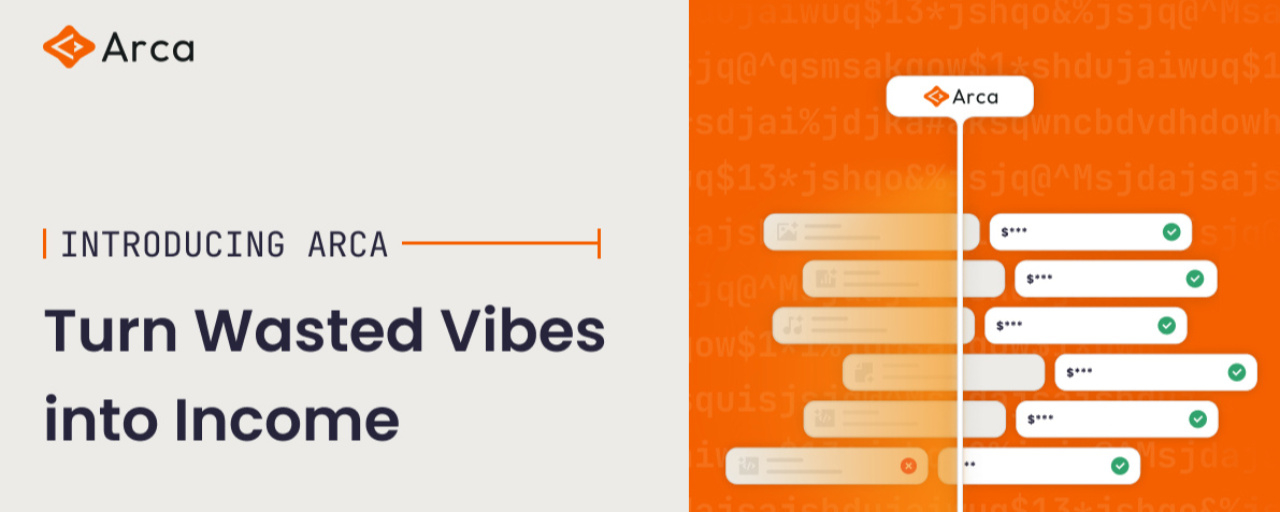
Arca Opens to Everyone, Paying People for the AI Sessions They'd Otherwise Throw AwayAfter invite-only early access, the desktop app from the team behind Brevis is now open to anyone on Mac and Windows.
HONG KONG, November 11, 2026: Arca, a new desktop app from the team behind Brevis, opened to the public today. Arca pays people for the AI sessions they'd otherwise throw away. It finds the session history their AI tools already keep on their computer, lets them choose which sessions to submit, strips sensitive details on the device before anything is uploaded, and pays for the sessions that are approved. Starting today, anyone can sign up with an email address, with no invite and no waitlist.
Much of today's knowledge work runs through AI tools. People steer a model through a task, correcting it, throwing out what fails and keeping what holds up. Every one of those sessions leaves a detailed record of real work: the back-and-forth, the dead ends, the fix that finally worked. These records pile up by the thousands on people's computers, and once the window closes, they're worth nothing to the person who did the work. Arca gives that work a value.
How it works
Arca works with the AI tools people already use, including Claude Code, Codex, Cursor and Claude Desktop. After installing the app, users see the sessions Arca has found on their machine, past ones included. They pick a session to upload, and Arca anonymises it on their computer before it leaves, then returns a quote range. Users either confirm, which sends the session to review, or withdraw, in which case the upload is deleted. Approved sessions are paid weekly.
Arca only reads sessions that are already on the user's computer, and it lists everything it finds. Nothing uploads in the background, and nothing leaves the device until the user picks a session and confirms. Before a session is uploaded, Arca strips names, file paths, account details and keys, and further anonymising runs on Arca's side.
"Every AI session is a record of real thinking and real work, and until now the person who did that work got nothing for it," said Michael, co-founder and CEO of Brevis. "Arca lets people see what their sessions are worth and decide for themselves what to share. We opened it in small batches first to get the experience right. Today it's open to everyone."
Built for real work in any field
Arca is built for anyone who does real work with AI, from code to contract reviews, research and long working conversations. Sessions with Claude Opus and Fable, and with the latest GPT models in Codex, qualify today, with more to come. Very short sessions don't qualify, and every submission is reviewed before it pays. Users can connect GitHub to strengthen their profile, which can raise the value of their sessions, but it isn't required.
Arca carries the principle behind Brevis's verifiable computing work into a new domain: things you can verify are worth more than things you have to trust.
Availability
Arca first opened on October 13 in invite-only early access, admitting users in small batches. With today's launch, the invite requirement is gone. Users sign up with an email address or a Google account and can start right away. Arca is free to use and available now for Mac and Windows at arca.market.
Through November 30, the Arca Launch Challenge adds $10,000 in prizes on top of regular payouts for approved sessions.
About Arca
Arca pays people for the AI sessions they'd otherwise throw away. The desktop app finds the sessions people's AI tools already keep, lets them choose what to share, anonymises sessions on the device before upload, and pays for approved sessions. Arca is built by the team behind Brevis. Learn more at arca.market.
About Brevis
Brevis builds verifiable computing infrastructure. Its zero-knowledge proving technology, including the open-source Pico zkVM, lets applications prove the results of complex computations. Learn more at brevis.network.
Arca Opens to Everyone, Paying People for the AI Sessions They'd Otherwise Throw Away
After invite-only early access, the desktop app from the team behind Brevis is now open to anyone on Mac and Windows.
HONG KONG, November 11, 2026: Arca, a new desktop app from the team behind Brevis, opened to the public today. Arca pays people for the AI sessions they'd otherwise throw away. It finds the session history their AI tools already keep on their computer, lets them choose which sessions to submit, strips sensitive details on the device before anything is uploaded, and pays for the sessions that are approved. Starting today, anyone can sign up with an email address, with no invite and no waitlist.
Much of today's knowledge work runs through AI tools. People steer a model through a task, correcting it, throwing out what fails and keeping what holds up. Every one of those sessions leaves a detailed record of real work: the back-and-forth, the dead ends, the fix that finally worked. These records pile up by the thousands on people's computers, and once the window closes, they're worth nothing to the person who did the work. Arca gives that work a value.
How it works
Arca works with the AI tools people already use, including Claude Code, Codex, Cursor and Claude Desktop. After installing the app, users see the sessions Arca has found on their machine, past ones included. They pick a session to upload, and Arca anonymises it on their computer before it leaves, then returns a quote range. Users either confirm, which sends the session to review, or withdraw, in which case the upload is deleted. Approved sessions are paid weekly.
Arca only reads sessions that are already on the user's computer, and it lists everything it finds. Nothing uploads in the background, and nothing leaves the device until the user picks a session and confirms. Before a session is uploaded, Arca strips names, file paths, account details and keys, and further anonymising runs on Arca's side.
"Every AI session is a record of real thinking and real work, and until now the person who did that work got nothing for it," said Michael, co-founder and CEO of Brevis. "Arca lets people see what their sessions are worth and decide for themselves what to share. We opened it in small batches first to get the experience right. Today it's open to everyone."
Built for real work in any field
Arca is built for anyone who does real work with AI, from code to contract reviews, research and long working conversations. Sessions with Claude Opus and Fable, and with the latest GPT models in Codex, qualify today, with more to come. Very short sessions don't qualify, and every submission is reviewed before it pays. Users can connect GitHub to strengthen their profile, which can raise the value of their sessions, but it isn't required.
Arca carries the principle behind Brevis's verifiable computing work into a new domain: things you can verify are worth more than things you have to trust.
Availability
Arca first opened on October 13 in invite-only early access, admitting users in small batches. With today's launch, the invite requirement is gone. Users sign up with an email address or a Google account and can start right away. Arca is free to use and available now for Mac and Windows at arca.market.
Through November 30, the Arca Launch Challenge adds $10,000 in prizes on top of regular payouts for approved sessions.
About Arca
Arca pays people for the AI sessions they'd otherwise throw away. The desktop app finds the sessions people's AI tools already keep, lets them choose what to share, anonymises sessions on the device before upload, and pays for approved sessions. Arca is built by the team behind Brevis. Learn more at arca.market.
About Brevis
Brevis builds verifiable computing infrastructure. Its zero-knowledge proving technology, including the open-source Pico zkVM, lets applications prove the results of complex computations. Learn more at brevis.network.
81
Məqalə
HTX Oktyabr ayı üzrə fəaliyyət hesabatını açıqlayıbSpot bazarının likvidliyi əhəmiyyətli dərəcədə artdı, APY yüksəlişləri istifadəçilərə qışı rahat keçirməyə kömək edir
Q4-ün başlanğıcından bəri kriptovalyuta bazarı dəyişkənlik fonunda zəifləməyə davam edib. Əsas aktivlərin qiymətləri ən yüksək səviyyələrindən geri çəkilib və bazar iştirakçıları daha ehtiyatlı davranmağa başlayıblar. Bazar soyuduqca, HTX ticarətin əsaslarını möhkəmləndirməyə və gəlir əldə etmək üçün müxtəlif yollar təklif etməyə diqqət yetirib. Oktyabr ayında HTX əsas spot ticarət cütlüklərinin bazar dərinliyində əhəmiyyətli ümumi yaxşılaşma qeydə alıb; BTC/USDT cütlüyünün 0,05%-lik dərinliyi 78% artıb. Eyni zamanda, platformada səhm ticarəti aktivlərinin ümumi sayı 307-yə çatıb, TradFi üzrə məcmu ticarət həcmi isə 7,5 milyard USDT-ni keçib. Oktyabrın sonunda HTX Earn, HTX Qış Kampaniyasının bir hissəsi olaraq APY Artırımı Promosiyasına start verib və bazardakı dalğalanmalar fonunda istifadəçilərə sabit gəlir seçimləri təqdim edib.
HTX Oktyabr ayı üzrə fəaliyyət hesabatını açıqlayıb
Spot bazarının likvidliyi əhəmiyyətli dərəcədə artdı, APY yüksəlişləri istifadəçilərə qışı rahat keçirməyə kömək edir
Q4-ün başlanğıcından bəri kriptovalyuta bazarı dəyişkənlik fonunda zəifləməyə davam edib. Əsas aktivlərin qiymətləri ən yüksək səviyyələrindən geri çəkilib və bazar iştirakçıları daha ehtiyatlı davranmağa başlayıblar. Bazar soyuduqca, HTX ticarətin əsaslarını möhkəmləndirməyə və gəlir əldə etmək üçün müxtəlif yollar təklif etməyə diqqət yetirib. Oktyabr ayında HTX əsas spot ticarət cütlüklərinin bazar dərinliyində əhəmiyyətli ümumi yaxşılaşma qeydə alıb; BTC/USDT cütlüyünün 0,05%-lik dərinliyi 78% artıb. Eyni zamanda, platformada səhm ticarəti aktivlərinin ümumi sayı 307-yə çatıb, TradFi üzrə məcmu ticarət həcmi isə 7,5 milyard USDT-ni keçib. Oktyabrın sonunda HTX Earn, HTX Qış Kampaniyasının bir hissəsi olaraq APY Artırımı Promosiyasına start verib və bazardakı dalğalanmalar fonunda istifadəçilərə sabit gəlir seçimləri təqdim edib.
Q4-ün başlanğıcından bəri kriptovalyuta bazarı dəyişkənlik fonunda zəifləməyə davam edib. Əsas aktivlərin qiymətləri ən yüksək səviyyələrindən geri çəkilib və bazar iştirakçıları daha ehtiyatlı davranmağa başlayıblar. Bazar soyuduqca, HTX ticarətin əsaslarını möhkəmləndirməyə və gəlir əldə etmək üçün müxtəlif yollar təklif etməyə diqqət yetirib. Oktyabr ayında HTX əsas spot ticarət cütlüklərinin bazar dərinliyində əhəmiyyətli ümumi yaxşılaşma qeydə alıb; BTC/USDT cütlüyünün 0,05%-lik dərinliyi 78% artıb. Eyni zamanda, platformada səhm ticarəti aktivlərinin ümumi sayı 307-yə çatıb, TradFi üzrə məcmu ticarət həcmi isə 7,5 milyard USDT-ni keçib. Oktyabrın sonunda HTX Earn, HTX Qış Kampaniyasının bir hissəsi olaraq APY Artırımı Promosiyasına start verib və bazardakı dalğalanmalar fonunda istifadəçilərə sabit gəlir seçimləri təqdim edib.
4
Məqalə
Tərcüməyə bax
TRON Network Integrates with Backpack Wallet, Expanding Access to Its Multichain EcosystemGeneva, Switzerland, November 9, 2026 — TRON DAO, the community-governed DAO dedicated to accelerating the decentralization of the internet through blockchain technology and decentralized applications (dApps), today announced the integration of the TRON network with Backpack Wallet. The integration brings TRON's blockchain ecosystem directly to Backpack users, enabling them to send, receive, bridge, and manage TRON-based digital assets through Backpack's mobile app and browser extension, all while maintaining full self-custody.
Through the integration, Backpack users will be able to send, receive, and hold TRON-based digital assets, including USDT (TRC-20), directly within their wallet while maintaining full self-custody. Users will also be able to bridge assets between TRON and other supported blockchains, explore decentralized finance applications and dApps across the TRON ecosystem, including Sun.io, and manage their TRON assets alongside holdings from other supported networks within a single multichain wallet experience.
This integration follows the recent listing of TRX for spot trading and perpetual contracts on Backpack Exchange. The listings expanded market access to TRON's native utility token, allowing users in eligible jurisdictions to trade TRX through both spot and perpetual markets on Backpack's trading platform. Together, these developments establish a foundation for deeper ecosystem connectivity, bringing TRON's blockchain infrastructure and digital assets to Backpack users across both its wallet and exchange products.
The collaboration reinforces TRON's commitment to expanding global access to blockchain infrastructure, stablecoin payments, and decentralized finance, while advancing its mission to make digital assets more accessible worldwide.
About TRON DAO
TRON DAO is a community-governed DAO dedicated to accelerating the decentralization of the internet via blockchain technology and dApps.
Founded in September 2017, the TRON blockchain has experienced significant growth since its MainNet launch in May 2018. Today, TRON hosts the largest circulating supply of USD Tether (USDT) stablecoin, which currently exceeds $94 billion. As of November 2026, the TRON blockchain has recorded over 412 million in total user accounts, more than 16 billion in total transactions, and over $27 billion in total value locked (TVL), based on TRONSCAN. Recognized as the global settlement layer for stablecoin transactions and everyday purchases with proven success, TRON is “Moving Trillions, Empowering Billions.”
TRON Network Integrates with Backpack Wallet, Expanding Access to Its Multichain Ecosystem
Geneva, Switzerland, November 9, 2026 — TRON DAO, the community-governed DAO dedicated to accelerating the decentralization of the internet through blockchain technology and decentralized applications (dApps), today announced the integration of the TRON network with Backpack Wallet. The integration brings TRON's blockchain ecosystem directly to Backpack users, enabling them to send, receive, bridge, and manage TRON-based digital assets through Backpack's mobile app and browser extension, all while maintaining full self-custody.
Through the integration, Backpack users will be able to send, receive, and hold TRON-based digital assets, including USDT (TRC-20), directly within their wallet while maintaining full self-custody. Users will also be able to bridge assets between TRON and other supported blockchains, explore decentralized finance applications and dApps across the TRON ecosystem, including Sun.io, and manage their TRON assets alongside holdings from other supported networks within a single multichain wallet experience.
This integration follows the recent listing of TRX for spot trading and perpetual contracts on Backpack Exchange. The listings expanded market access to TRON's native utility token, allowing users in eligible jurisdictions to trade TRX through both spot and perpetual markets on Backpack's trading platform. Together, these developments establish a foundation for deeper ecosystem connectivity, bringing TRON's blockchain infrastructure and digital assets to Backpack users across both its wallet and exchange products.
The collaboration reinforces TRON's commitment to expanding global access to blockchain infrastructure, stablecoin payments, and decentralized finance, while advancing its mission to make digital assets more accessible worldwide.
About TRON DAO
TRON DAO is a community-governed DAO dedicated to accelerating the decentralization of the internet via blockchain technology and dApps.
Founded in September 2017, the TRON blockchain has experienced significant growth since its MainNet launch in May 2018. Today, TRON hosts the largest circulating supply of USD Tether (USDT) stablecoin, which currently exceeds $94 billion. As of November 2026, the TRON blockchain has recorded over 412 million in total user accounts, more than 16 billion in total transactions, and over $27 billion in total value locked (TVL), based on TRONSCAN. Recognized as the global settlement layer for stablecoin transactions and everyday purchases with proven success, TRON is “Moving Trillions, Empowering Billions.”
91
Məqalə
Tərcüməyə bax
Trade Tokenized US Stocks on HTX! HTX Launches Tokenized US Stocks for Spot TradingAs traditional finance and blockchain become increasingly interconnected and barriers between asset classes break down, the ability to offer users one-stop access to both crypto and US stock trading is becoming an essential capability for trading platforms. On November 9, HTX officially launched spot trading for bStocks (tokenized US stocks and ETFs), with 20 popular assets, including NVDA, TSLA, GOOGL, MSTR, CRCL, and QQQ, available in USDT trading pairs. The launch also kicks off the tokenized US stocks trading carnival event, featuring zero trading fees on designated trading pairs and exciting rewards, including an iPhone Duo, bringing a new U.S. stock trading experience to users worldwide.
The campaign runs from November 9 to February 9, 2027. During the campaign, users who register and trade spot on the 20 designated tokenized U.S. stock and ETF pairs will have a chance to enjoy four rewards.
Details: https://www.htx.com/en-us/mars/web/activity-center?callId=179395001871350
Reward 1: Enjoy Zero Trading Fees and Unlock Surprise Rewards
From 9:00 (UTC) on November 9 to 9:00 (UTC) on February 9, 2027, maker orders (limit orders) on designated trading pairs will enjoy zero trading fees. This zero-fee trading benefit lasts for 3 months, covering the year-end trading period and the new US earnings season beginning in January.
From 9:00 (UTC) on November 9 to 9:00 (UTC) on December 9, a trading challenge will run alongside the campaign. Users who reach a single-day trading volume of 10,000 USDT will receive a full rebate of the actual trading fees paid that day. Users who reach a cumulative trading volume of 500,000 USDT can share the 50,000 USDT prize pool. In addition, the top three users by cumulative trading volume, each with an individual trading volume of at least 5,000,000 USDT, will each receive a reward equivalent in value to an iPhone Duo 1TB.
Reward 2: Daily Lucky Draw - Win an iPhone 18 Pro Max
The lucky draw runs until February 9, 2027. Registered users earn one draw chance for every 200 USDT in daily spot trading volume of designated tokens, up to three chances per day. Every draw guarantees a prize, and the luckiest participant will take home the grand prize: an iPhone 18 Pro Max.
Reward 3: Invite Friends and Earn Up to 200 USDT
From November 9 to November 23, users who invite friends to register on HTX will have one valid referral for each invitee who completes at least 100 USDT in spot trading volume in the designated tokens. Rewards are unlocked in tiers based on the number of valid referrals, with each user eligible to receive up to 200 USDT in Spot Token Coupons.
Reward 4: Complete Limited-Time Tasks to Claim Asset Boost Rewards
From November 9 to November 23, users who complete the limited-time TradFi tasks in the Rewards Hub will unlock gift packs at different tiers based on their cumulative trading volume, with rewards worth up to 200 USDT per person. New users who make their first trade of a designated token with a value of more than 20 USDT can also enter a lucky draw for an airdrop worth up to 50 USDT.
From Futures to Spot: HTX Accelerates Its TradFi Expansion
Since early 2026, HTX has been expanding its TradFi offering, starting with futures trading, while continuously improving the trading experience and liquidity and broadening its asset coverage. According to platform data, by the end of October, the platform's stock futures had expanded to 307 instruments, with cumulative trading volume exceeding $7.5 billion. The launch of bStocks (tokenized U.S. stocks and ETFs) further strengthens HTX's product lineup, enabling the platform to meet the diverse needs of more users, including trading and holding US stocks and diversifying their asset portfolios. Looking ahead, HTX will continue expanding its range of tokenized U.S. stocks and other TradFi assets, building bridges between crypto and traditional financial markets and moving closer to its vision of "Achieve Financial Freedom for 8 Billion People on Earth".
Note: The above content is not an investment advice and does not constitute any offer or solicitation to offer or recommendation of any investment product. For full campaign terms and conditions, please refer to HTX's official announcement.
About HTX
Founded in 2013, HTX has evolved from a virtual asset exchange into a comprehensive ecosystem of blockchain businesses that span digital asset trading, derivatives, research, investments, incubation, and other businesses.
Guided by its vision to “Achieve Financial Freedom for 8 Billion People Worldwide,” HTX works to make the digital asset space more accessible to a broader audience. The platform continues to develop its products and services in response to user needs and an evolving industry landscape.
Trade Tokenized US Stocks on HTX! HTX Launches Tokenized US Stocks for Spot Trading
As traditional finance and blockchain become increasingly interconnected and barriers between asset classes break down, the ability to offer users one-stop access to both crypto and US stock trading is becoming an essential capability for trading platforms. On November 9, HTX officially launched spot trading for bStocks (tokenized US stocks and ETFs), with 20 popular assets, including NVDA, TSLA, GOOGL, MSTR, CRCL, and QQQ, available in USDT trading pairs. The launch also kicks off the tokenized US stocks trading carnival event, featuring zero trading fees on designated trading pairs and exciting rewards, including an iPhone Duo, bringing a new U.S. stock trading experience to users worldwide.
The campaign runs from November 9 to February 9, 2027. During the campaign, users who register and trade spot on the 20 designated tokenized U.S. stock and ETF pairs will have a chance to enjoy four rewards.
Details: https://www.htx.com/en-us/mars/web/activity-center?callId=179395001871350
Reward 1: Enjoy Zero Trading Fees and Unlock Surprise Rewards
From 9:00 (UTC) on November 9 to 9:00 (UTC) on February 9, 2027, maker orders (limit orders) on designated trading pairs will enjoy zero trading fees. This zero-fee trading benefit lasts for 3 months, covering the year-end trading period and the new US earnings season beginning in January.
From 9:00 (UTC) on November 9 to 9:00 (UTC) on December 9, a trading challenge will run alongside the campaign. Users who reach a single-day trading volume of 10,000 USDT will receive a full rebate of the actual trading fees paid that day. Users who reach a cumulative trading volume of 500,000 USDT can share the 50,000 USDT prize pool. In addition, the top three users by cumulative trading volume, each with an individual trading volume of at least 5,000,000 USDT, will each receive a reward equivalent in value to an iPhone Duo 1TB.
Reward 2: Daily Lucky Draw - Win an iPhone 18 Pro Max
The lucky draw runs until February 9, 2027. Registered users earn one draw chance for every 200 USDT in daily spot trading volume of designated tokens, up to three chances per day. Every draw guarantees a prize, and the luckiest participant will take home the grand prize: an iPhone 18 Pro Max.
Reward 3: Invite Friends and Earn Up to 200 USDT
From November 9 to November 23, users who invite friends to register on HTX will have one valid referral for each invitee who completes at least 100 USDT in spot trading volume in the designated tokens. Rewards are unlocked in tiers based on the number of valid referrals, with each user eligible to receive up to 200 USDT in Spot Token Coupons.
Reward 4: Complete Limited-Time Tasks to Claim Asset Boost Rewards
From November 9 to November 23, users who complete the limited-time TradFi tasks in the Rewards Hub will unlock gift packs at different tiers based on their cumulative trading volume, with rewards worth up to 200 USDT per person. New users who make their first trade of a designated token with a value of more than 20 USDT can also enter a lucky draw for an airdrop worth up to 50 USDT.
From Futures to Spot: HTX Accelerates Its TradFi Expansion
Since early 2026, HTX has been expanding its TradFi offering, starting with futures trading, while continuously improving the trading experience and liquidity and broadening its asset coverage. According to platform data, by the end of October, the platform's stock futures had expanded to 307 instruments, with cumulative trading volume exceeding $7.5 billion. The launch of bStocks (tokenized U.S. stocks and ETFs) further strengthens HTX's product lineup, enabling the platform to meet the diverse needs of more users, including trading and holding US stocks and diversifying their asset portfolios. Looking ahead, HTX will continue expanding its range of tokenized U.S. stocks and other TradFi assets, building bridges between crypto and traditional financial markets and moving closer to its vision of "Achieve Financial Freedom for 8 Billion People on Earth".
Note: The above content is not an investment advice and does not constitute any offer or solicitation to offer or recommendation of any investment product. For full campaign terms and conditions, please refer to HTX's official announcement.
About HTX
Founded in 2013, HTX has evolved from a virtual asset exchange into a comprehensive ecosystem of blockchain businesses that span digital asset trading, derivatives, research, investments, incubation, and other businesses.
Guided by its vision to “Achieve Financial Freedom for 8 Billion People Worldwide,” HTX works to make the digital asset space more accessible to a broader audience. The platform continues to develop its products and services in response to user needs and an evolving industry landscape.
17
Məqalə
Tərcüməyə bax
Rarzz Prioritizes AI-Assisted NFT Valuation in Technology DevelopmentRarzz plans to explore artificial intelligence applications in digital asset management, focusing on NFT pricing efficiency, asset valuation analysis, and risk identification.
Rarzz, an NFT digital asset platform, has identified AI-assisted valuation and digital asset pricing research as key priorities in its technology development strategy. The platform plans to explore more systematic approaches to NFT valuation by combining multidimensional asset data analysis, market information processing, and intelligent models, with the goal of providing additional insights to support future digital asset management and trading decisions.
As the NFT market gradually moves toward more diverse applications, asset valuation methods and pricing efficiency are becoming increasingly important industry concerns. Unlike traditional standardized financial assets, NFTs vary significantly in scarcity, transaction history, market demand, and practical utility. Developing more effective mechanisms for asset analysis and pricing references remains a challenge for the industry.
NFT Asset Pricing Faces Multidimensional Challenges
NFT valuation is characterized by significant differences across individual assets.
Even within the same collection, NFTs may exhibit different price patterns due to variations in rarity, historical transaction records, market interest, utility benefits, and trading activity.
Currently, NFT market participants typically assess asset values using historical transaction prices, collection floor prices, and publicly listed asking prices. However, these indicators often reflect only part of the overall market picture.
For example, some NFTs have limited transaction histories, while listing prices do not necessarily reflect actual buyer demand or the prices at which transactions can be completed. Short-term market fluctuations may also affect the reliability of pricing references.
For NFTs with low trading frequency or insufficient market depth, a single pricing indicator may be particularly inadequate in reflecting overall market conditions.
As a result, integrating data from multiple sources and conducting comprehensive analyses of asset characteristics, trading activity, and market conditions has become an important direction for further development in NFT valuation technology.
Exploring AI-Driven Multidimensional Asset Analysis
To address fragmented data and differences in valuation assessments within the NFT market, Rarzz plans to research applications of AI technology in digital asset valuation and market analysis.
Key areas of research include historical transaction data, NFT attributes, market liquidity, and price movements.
By exploring the use of machine learning and data analytics, the platform aims to establish a more systematic analytical framework for evaluating the market performance of different NFTs, helping users better understand the key factors influencing asset pricing.
Compared with approaches that rely solely on historical transaction prices or a single floor price, multidimensional analysis can provide a broader range of information to support asset valuation.
However, the effectiveness of AI models remains dependent on factors such as data quality, market conditions, and model assumptions. Automated analysis may involve greater uncertainty for assets with limited transaction histories, unusual trading activity, or significant price volatility.
Therefore, Rarzz will focus on data reliability, the interpretability of valuation results, and risk disclosure mechanisms, exploring ways to combine AI-driven analysis with users' independent judgment.
Focusing on Dynamic Pricing and Market Change Detection
In addition to asset valuation, dynamic market data analysis is another area of technological focus for Rarzz.
The NFT market is influenced by multiple factors, including supply and demand, market sentiment, asset use cases, and broader digital asset market conditions. As a result, price movements may be irregular and subject to sudden changes.
Against this backdrop, the focus of dynamic pricing research is not simply to predict future NFT prices, but rather to help users identify the factors behind price movements through continuous analysis of publicly available market information and asset conditions.
Rarzz plans to explore the application of market data analysis in NFT trading references, price range assessments, and the detection of abnormal market behavior, with the aim of providing users with clearer market information.
In practical applications, such analysis must also account for insufficient market liquidity, unusual transaction records, and data discrepancies across trading platforms to avoid treating unrepresentative market information as a reliable basis for asset valuation.
Strengthening Risk Identification and Information Transparency
As NFT products and use cases continue to diversify, the significance of asset valuation is gradually extending beyond simple comparisons of transaction prices.
For digital asset management platforms, the reliability of the data underlying valuation information, the explainability of analytical results, and the clarity of risk disclosures can all influence how users understand and use platform tools.
As part of its research into AI-assisted analysis, Rarzz plans to focus on risk identification and information transparency, including factors such as asset transaction data quality, abnormal price fluctuations, and changes in market liquidity.
Through clearer data presentation and analytical mechanisms, the platform aims to provide users with useful asset information and reduce the limitations associated with relying on a single pricing indicator.
Importantly, AI-assisted valuation does not mean that an asset can necessarily be sold at its estimated value, nor does it guarantee trading returns or eliminate market risks. Such technology should be viewed as a decision-support tool rather than a mechanism for predicting prices with certainty.
Advancing a More Systematic Approach to NFT Asset Analysis
As NFTs expand beyond digital collectibles into a wider range of digital asset applications, demand for asset information analysis, valuation, and risk management tools may continue to grow.
Rarzz will continue exploring the integration of AI technology into NFT asset management, focusing its technology and product planning on intelligent valuation, dynamic market analysis, and risk identification.
Looking ahead, the platform plans to gradually explore the application of these analytical capabilities in NFT asset management and trading scenarios, based on the progress of its research and product development efforts, with the goal of providing more comprehensive information to support the digital asset market.
About Rarzz
Founded in 2021, Rarzz is a platform focused on NFT technology and digital asset applications. The company is registered in Colorado and headquartered in Seattle, Washington. Rarzz focuses its product planning and technology development on AI technology, cross-chain asset management, and diverse NFT use cases, with the goal of building a digital asset service ecosystem covering NFT creation, trading, management, and transfer.
Rarzz Prioritizes AI-Assisted NFT Valuation in Technology Development
Rarzz plans to explore artificial intelligence applications in digital asset management, focusing on NFT pricing efficiency, asset valuation analysis, and risk identification.
Rarzz, an NFT digital asset platform, has identified AI-assisted valuation and digital asset pricing research as key priorities in its technology development strategy. The platform plans to explore more systematic approaches to NFT valuation by combining multidimensional asset data analysis, market information processing, and intelligent models, with the goal of providing additional insights to support future digital asset management and trading decisions.
As the NFT market gradually moves toward more diverse applications, asset valuation methods and pricing efficiency are becoming increasingly important industry concerns. Unlike traditional standardized financial assets, NFTs vary significantly in scarcity, transaction history, market demand, and practical utility. Developing more effective mechanisms for asset analysis and pricing references remains a challenge for the industry.
NFT Asset Pricing Faces Multidimensional Challenges
NFT valuation is characterized by significant differences across individual assets.
Even within the same collection, NFTs may exhibit different price patterns due to variations in rarity, historical transaction records, market interest, utility benefits, and trading activity.
Currently, NFT market participants typically assess asset values using historical transaction prices, collection floor prices, and publicly listed asking prices. However, these indicators often reflect only part of the overall market picture.
For example, some NFTs have limited transaction histories, while listing prices do not necessarily reflect actual buyer demand or the prices at which transactions can be completed. Short-term market fluctuations may also affect the reliability of pricing references.
For NFTs with low trading frequency or insufficient market depth, a single pricing indicator may be particularly inadequate in reflecting overall market conditions.
As a result, integrating data from multiple sources and conducting comprehensive analyses of asset characteristics, trading activity, and market conditions has become an important direction for further development in NFT valuation technology.
Exploring AI-Driven Multidimensional Asset Analysis
To address fragmented data and differences in valuation assessments within the NFT market, Rarzz plans to research applications of AI technology in digital asset valuation and market analysis.
Key areas of research include historical transaction data, NFT attributes, market liquidity, and price movements.
By exploring the use of machine learning and data analytics, the platform aims to establish a more systematic analytical framework for evaluating the market performance of different NFTs, helping users better understand the key factors influencing asset pricing.
Compared with approaches that rely solely on historical transaction prices or a single floor price, multidimensional analysis can provide a broader range of information to support asset valuation.
However, the effectiveness of AI models remains dependent on factors such as data quality, market conditions, and model assumptions. Automated analysis may involve greater uncertainty for assets with limited transaction histories, unusual trading activity, or significant price volatility.
Therefore, Rarzz will focus on data reliability, the interpretability of valuation results, and risk disclosure mechanisms, exploring ways to combine AI-driven analysis with users' independent judgment.
Focusing on Dynamic Pricing and Market Change Detection
In addition to asset valuation, dynamic market data analysis is another area of technological focus for Rarzz.
The NFT market is influenced by multiple factors, including supply and demand, market sentiment, asset use cases, and broader digital asset market conditions. As a result, price movements may be irregular and subject to sudden changes.
Against this backdrop, the focus of dynamic pricing research is not simply to predict future NFT prices, but rather to help users identify the factors behind price movements through continuous analysis of publicly available market information and asset conditions.
Rarzz plans to explore the application of market data analysis in NFT trading references, price range assessments, and the detection of abnormal market behavior, with the aim of providing users with clearer market information.
In practical applications, such analysis must also account for insufficient market liquidity, unusual transaction records, and data discrepancies across trading platforms to avoid treating unrepresentative market information as a reliable basis for asset valuation.
Strengthening Risk Identification and Information Transparency
As NFT products and use cases continue to diversify, the significance of asset valuation is gradually extending beyond simple comparisons of transaction prices.
For digital asset management platforms, the reliability of the data underlying valuation information, the explainability of analytical results, and the clarity of risk disclosures can all influence how users understand and use platform tools.
As part of its research into AI-assisted analysis, Rarzz plans to focus on risk identification and information transparency, including factors such as asset transaction data quality, abnormal price fluctuations, and changes in market liquidity.
Through clearer data presentation and analytical mechanisms, the platform aims to provide users with useful asset information and reduce the limitations associated with relying on a single pricing indicator.
Importantly, AI-assisted valuation does not mean that an asset can necessarily be sold at its estimated value, nor does it guarantee trading returns or eliminate market risks. Such technology should be viewed as a decision-support tool rather than a mechanism for predicting prices with certainty.
Advancing a More Systematic Approach to NFT Asset Analysis
As NFTs expand beyond digital collectibles into a wider range of digital asset applications, demand for asset information analysis, valuation, and risk management tools may continue to grow.
Rarzz will continue exploring the integration of AI technology into NFT asset management, focusing its technology and product planning on intelligent valuation, dynamic market analysis, and risk identification.
Looking ahead, the platform plans to gradually explore the application of these analytical capabilities in NFT asset management and trading scenarios, based on the progress of its research and product development efforts, with the goal of providing more comprehensive information to support the digital asset market.
About Rarzz
Founded in 2021, Rarzz is a platform focused on NFT technology and digital asset applications. The company is registered in Colorado and headquartered in Seattle, Washington. Rarzz focuses its product planning and technology development on AI technology, cross-chain asset management, and diverse NFT use cases, with the goal of building a digital asset service ecosystem covering NFT creation, trading, management, and transfer.
92
Məqalə
Tərcüməyə bax
DSA’s Adrian Wall and Former CFTC Chair Chris Giancarlo Discuss Future of U.S. Crypto RegulationDSA’s Adrian Wall and Former CFTC Chair Chris Giancarlo Discuss Future of U.S. Crypto Regulation at Strobe Summit
The Digital Sovereignty Alliance (DSA), a nonprofit organization dedicated to advancing clear and ethical public policy, research, and education related to emerging technologies, participated in the Strobe Summit, where DSA Managing Director Adrian Wall moderated a fireside chat with former Commodity Futures Trading Commission (CFTC) Chair Christiopher Giancarlo on the evolving regulatory landscape for digital assets and the future of financial markets.
Titled “Crypto at a Crossroads: Regulation, Institutional Adoption, and the Future of Financial Markets,” the discussion examined the path forward for U.S. digital asset policy amid legislative uncertainty and growing institutional interest in blockchain-based financial infrastructure. Drawing on his experience leading the CFTC and founding the Digital Dollar Project, Giancarlo emphasized an approach to regulation that combines clear exchange rules under existing CFTC authority with congressional action to address remaining gaps. The conversation also explored the implications of the GENIUS Act, including Giancarlo’s concerns about financial privacy and his view that dollar-backed stablecoins could become a 24/7 global payment rail, raising fundamental questions about how the dollar moves on-chain and who provides that infrastructure.
Wall and Giancarlo also examined the regulatory challenges surrounding prediction markets, perpetual futures, and decentralized finance (DeFi). Topics included the CFTC’s role in overseeing event contracts, bringing offshore derivatives activity into regulated U.S. markets, the potential for 24/7 trading, and establishing accountability for decentralized platforms without traditional intermediaries. The discussion highlighted the need for regulatory frameworks that address market integrity, cybersecurity, customer asset protection, and the operational realities of increasingly interconnected financial markets.
“Regulatory clarity requires more than new legislation. It requires rules that reflect how digital asset markets actually operate,” said Adrian Wall, moderator of the discussion. “The CFTC has existing authority to address important market structure questions, while Congress has a critical role in resolving regulatory gaps. Getting that balance right will determine whether the U.S. can bring more digital asset activity onshore, accelerate institutional adoption, and protect market participants without compromising innovation or financial privacy.”
DSA’s participation reflects its commitment to advancing informed policy dialogue and practical regulatory approaches that support responsible innovation, market integrity, and the integration of digital assets into the broader financial system.
About the Digital Sovereignty Alliance
The Digital Sovereignty Alliance (DSA) is a nonprofit social welfare organization committed to advocating for public policies that support ethical innovation in decentralized technologies, blockchain, cryptocurrency, Web3, and artificial intelligence. DSA conducts research, organizes educational events, and promotes policies that prioritize public welfare and digital sovereignty.
DSA’s Adrian Wall and Former CFTC Chair Chris Giancarlo Discuss Future of U.S. Crypto Regulation
DSA’s Adrian Wall and Former CFTC Chair Chris Giancarlo Discuss Future of U.S. Crypto Regulation at Strobe Summit
The Digital Sovereignty Alliance (DSA), a nonprofit organization dedicated to advancing clear and ethical public policy, research, and education related to emerging technologies, participated in the Strobe Summit, where DSA Managing Director Adrian Wall moderated a fireside chat with former Commodity Futures Trading Commission (CFTC) Chair Christiopher Giancarlo on the evolving regulatory landscape for digital assets and the future of financial markets.
Titled “Crypto at a Crossroads: Regulation, Institutional Adoption, and the Future of Financial Markets,” the discussion examined the path forward for U.S. digital asset policy amid legislative uncertainty and growing institutional interest in blockchain-based financial infrastructure. Drawing on his experience leading the CFTC and founding the Digital Dollar Project, Giancarlo emphasized an approach to regulation that combines clear exchange rules under existing CFTC authority with congressional action to address remaining gaps. The conversation also explored the implications of the GENIUS Act, including Giancarlo’s concerns about financial privacy and his view that dollar-backed stablecoins could become a 24/7 global payment rail, raising fundamental questions about how the dollar moves on-chain and who provides that infrastructure.
Wall and Giancarlo also examined the regulatory challenges surrounding prediction markets, perpetual futures, and decentralized finance (DeFi). Topics included the CFTC’s role in overseeing event contracts, bringing offshore derivatives activity into regulated U.S. markets, the potential for 24/7 trading, and establishing accountability for decentralized platforms without traditional intermediaries. The discussion highlighted the need for regulatory frameworks that address market integrity, cybersecurity, customer asset protection, and the operational realities of increasingly interconnected financial markets.
“Regulatory clarity requires more than new legislation. It requires rules that reflect how digital asset markets actually operate,” said Adrian Wall, moderator of the discussion. “The CFTC has existing authority to address important market structure questions, while Congress has a critical role in resolving regulatory gaps. Getting that balance right will determine whether the U.S. can bring more digital asset activity onshore, accelerate institutional adoption, and protect market participants without compromising innovation or financial privacy.”
DSA’s participation reflects its commitment to advancing informed policy dialogue and practical regulatory approaches that support responsible innovation, market integrity, and the integration of digital assets into the broader financial system.
About the Digital Sovereignty Alliance
The Digital Sovereignty Alliance (DSA) is a nonprofit social welfare organization committed to advocating for public policies that support ethical innovation in decentralized technologies, blockchain, cryptocurrency, Web3, and artificial intelligence. DSA conducts research, organizes educational events, and promotes policies that prioritize public welfare and digital sovereignty.
79
Məqalə
Tərcüməyə bax
StockFi: Connecting U.S. Stock with the On-Chain Ecosystem to Reshape Asset CirculationStart with one stock. Connect two capital worlds.
6 November — Singapore — StockFi is advancing the connection between traditional equities and the on-chain ecosystem through U.S. stock tokenization. Built on BSC, the platform brings stock tokens and the meme ecosystem into its development strategy, exploring new ways to serve on-chain users worldwide through asset issuance, on-chain circulation and product applications.
StockFi’s approach connects the underlying value of equities, the utility of on-chain products and the reach of communities. Starting with its first stock offering, the platform plans to progressively develop asset onboarding, token issuance, trading environments and user access, giving equities broader reach and utility once they enter the on-chain market.
“Start with one stock. Connect two capital worlds.” This brand statement reflects StockFi’s understanding of asset tokenization: begin with a specific asset, connect markets through products, and support ecosystem development through sustained use.
Building New Market Connections for Digital Assets
Equities connect business operations with capital markets, reflecting investors’ assessments of industry development, commercial innovation and long-term value. On-chain networks offer a new digital environment in which assets can connect with users and products across regions through wallets, trading protocols and application interfaces.
When equities enter the on-chain market as tokens, the change extends beyond how assets are represented. It also affects how they are discovered, how they circulate, and how they connect with other digital assets and applications.
StockFi will focus its development on these areas.
Within the platform’s roadmap, equities and on-chain products require clearly defined structural connections. Products and users need convenient access points, while assets entering the market require appropriate liquidity and application support. Bringing these elements together is essential to delivering a complete asset tokenization experience.
Through ongoing product development, StockFi aims to combine the market familiarity of traditional equities with the open connectivity of the on-chain ecosystem, creating new opportunities for collaboration among asset issuers, ecosystem partners and eligible users.
Three Asset Roles Within One Ecosystem Framework
StockFi’s product framework encompasses real stocks, stock tokens and MEME tokens. Each serves a distinct role in connecting assets with communities.
Real stocks form the underlying asset foundation, connecting company operations with traditional capital markets. Stock tokens provide the corresponding on-chain representation, serving as a product vehicle for trading, asset information and future applications. MEME tokens connect community culture, content distribution and user participation, helping the platform broaden its market reach.
This structure allows StockFi to develop both the asset and user sides of the platform.
On the asset side, key questions include where products originate, how they are issued and what rights holders receive. On the user side, participants need to understand a product’s purpose, find an access point and build familiarity through actual use. StockFi plans to bring these two sides closer together through an integrated platform experience.
The asset characteristics, uses and holder rights of stock tokens and MEME tokens will be explained separately. Their connections will take shape through trading environments, product integration and community participation, providing complementary foundations for platform development.
Connecting the Meme Ecosystem to Broaden the Reach of Stock Tokens
Communities are an important part of on-chain markets. Content, discussion and creative work built around shared themes help projects reach across regions and languages to establish distinctive brand cultures.
StockFi views the meme ecosystem as an important gateway to users and aims to bring community reach into the stock token experience.
Under its development plans, StockFi will select eligible projects from a pool of candidate MEME projects, work toward establishing trading pairs with stock tokens, and provide educational content and product introductions around specific assets. This approach can introduce community users to stock tokens while helping stock tokens attract broader attention and potential demand.
These connections require ongoing support from both content and products. After discovering an asset theme, users should be able to learn more about its background, structure and purpose. Once they access the product, they should also find clear information and operating instructions.
StockFi will therefore develop its community alongside its products. Through accurate asset introductions, accessible educational content and ongoing ecosystem engagement, the platform aims to turn brand awareness into product understanding and establish a foundation for long-term use.
Supporting Assets Through Products, Expanding Utility Through Applications
StockFi sees asset issuance as the starting point of its platform services, with subsequent circulation and applications remaining central to its ongoing development.
For stock tokens, the platform plans to progressively connect asset arrangements, issuance services, on-chain trading and DApp access. These capabilities will be introduced in stages according to product delivery and partnership progress, creating a continuous path from asset information to practical use.
At the asset onboarding stage, the platform plans to work with relevant service providers on stock sourcing, custody and issuance structures, while clearly defining product information and holder rights.
For on-chain circulation, StockFi plans to develop stock token trading environments and connect wallets and liquidity services, providing product support for assets entering the on-chain market.
For the user experience, the platform will integrate asset displays, project materials and feature access through its DApp, helping users learn about assets, review information and access available services within a single product environment.
Together, these elements define StockFi’s product direction: make assets identifiable, information understandable and services usable. As its capabilities develop, the platform will further explore how stock tokens can be used across different on-chain applications.
Building an Open, Collaborative StockFi Ecosystem
Bringing equities into the on-chain market requires expertise from multiple fields. Asset services, technical development, wallet integration, liquidity and user education each play an essential role along the product journey.
StockFi will expand ecosystem partnerships around specific product needs, enabling partners to collaborate within clearly defined service scopes and delivery requirements.
For asset and issuance service partners, priorities will include asset selection, asset arrangements, custody, issuance and ongoing disclosure, establishing a clear product foundation for stock tokens.
For technology, wallet and liquidity partners, the platform will explore asset displays, trading access and application integrations to progressively improve how stock tokens are accessed and used.
For media and community partners, StockFi will provide consistent brand introductions, project materials and educational content, helping more users understand stock tokenization and the platform’s direction through ongoing communication.
StockFi aims to build an ecosystem in which every partnership serves a specific product need and every asset onboarded receives appropriate application support. As its network of partners and product use cases grows, the platform will progressively expand its ability to connect assets with users.
Starting With the First Stock, Building Toward a Scalable Platform
StockFi plans to begin with its first stock offering, connecting assets, issuance, circulation and user access, then refining the product journey based on actual operation.
The first offering will establish a reusable foundation for future development. Practical questions—how asset information is presented, how stock tokens enter trading environments, and how users understand and use products—will inform the platform’s subsequent expansion.
Building on this foundation, StockFi will consider product delivery, market demand and partnership progress as it explores onboarding additional stock tokens and eligible MEME projects, broadening its asset coverage and application range.
The platform’s long-term goal is to establish lasting connections among asset supply, product use and community participation: more products give users greater choice, more use cases support asset demand, and broader community reach contributes to ecosystem development.
Starting with one stock, StockFi aims to establish a product pathway into the on-chain market, creating a new connection between traditional equities and the global on-chain ecosystem.
Start with one stock. Connect two capital worlds.
About StockFi
StockFi is a U.S. stock tokenization platform built on BSC, connecting stock tokens with the meme ecosystem. The platform is developing stock token issuance, on-chain trading and applications. Through product services, community education and ecosystem partnerships, StockFi explores lasting connections between traditional equities and on-chain users worldwide, working toward a growth ecosystem in which assets, applications and communities develop together.
StockFi: Connecting U.S. Stock with the On-Chain Ecosystem to Reshape Asset Circulation
Start with one stock. Connect two capital worlds.
6 November — Singapore — StockFi is advancing the connection between traditional equities and the on-chain ecosystem through U.S. stock tokenization. Built on BSC, the platform brings stock tokens and the meme ecosystem into its development strategy, exploring new ways to serve on-chain users worldwide through asset issuance, on-chain circulation and product applications.
StockFi’s approach connects the underlying value of equities, the utility of on-chain products and the reach of communities. Starting with its first stock offering, the platform plans to progressively develop asset onboarding, token issuance, trading environments and user access, giving equities broader reach and utility once they enter the on-chain market.
“Start with one stock. Connect two capital worlds.” This brand statement reflects StockFi’s understanding of asset tokenization: begin with a specific asset, connect markets through products, and support ecosystem development through sustained use.
Building New Market Connections for Digital Assets
Equities connect business operations with capital markets, reflecting investors’ assessments of industry development, commercial innovation and long-term value. On-chain networks offer a new digital environment in which assets can connect with users and products across regions through wallets, trading protocols and application interfaces.
When equities enter the on-chain market as tokens, the change extends beyond how assets are represented. It also affects how they are discovered, how they circulate, and how they connect with other digital assets and applications.
StockFi will focus its development on these areas.
Within the platform’s roadmap, equities and on-chain products require clearly defined structural connections. Products and users need convenient access points, while assets entering the market require appropriate liquidity and application support. Bringing these elements together is essential to delivering a complete asset tokenization experience.
Through ongoing product development, StockFi aims to combine the market familiarity of traditional equities with the open connectivity of the on-chain ecosystem, creating new opportunities for collaboration among asset issuers, ecosystem partners and eligible users.
Three Asset Roles Within One Ecosystem Framework
StockFi’s product framework encompasses real stocks, stock tokens and MEME tokens. Each serves a distinct role in connecting assets with communities.
Real stocks form the underlying asset foundation, connecting company operations with traditional capital markets. Stock tokens provide the corresponding on-chain representation, serving as a product vehicle for trading, asset information and future applications. MEME tokens connect community culture, content distribution and user participation, helping the platform broaden its market reach.
This structure allows StockFi to develop both the asset and user sides of the platform.
On the asset side, key questions include where products originate, how they are issued and what rights holders receive. On the user side, participants need to understand a product’s purpose, find an access point and build familiarity through actual use. StockFi plans to bring these two sides closer together through an integrated platform experience.
The asset characteristics, uses and holder rights of stock tokens and MEME tokens will be explained separately. Their connections will take shape through trading environments, product integration and community participation, providing complementary foundations for platform development.
Connecting the Meme Ecosystem to Broaden the Reach of Stock Tokens
Communities are an important part of on-chain markets. Content, discussion and creative work built around shared themes help projects reach across regions and languages to establish distinctive brand cultures.
StockFi views the meme ecosystem as an important gateway to users and aims to bring community reach into the stock token experience.
Under its development plans, StockFi will select eligible projects from a pool of candidate MEME projects, work toward establishing trading pairs with stock tokens, and provide educational content and product introductions around specific assets. This approach can introduce community users to stock tokens while helping stock tokens attract broader attention and potential demand.
These connections require ongoing support from both content and products. After discovering an asset theme, users should be able to learn more about its background, structure and purpose. Once they access the product, they should also find clear information and operating instructions.
StockFi will therefore develop its community alongside its products. Through accurate asset introductions, accessible educational content and ongoing ecosystem engagement, the platform aims to turn brand awareness into product understanding and establish a foundation for long-term use.
Supporting Assets Through Products, Expanding Utility Through Applications
StockFi sees asset issuance as the starting point of its platform services, with subsequent circulation and applications remaining central to its ongoing development.
For stock tokens, the platform plans to progressively connect asset arrangements, issuance services, on-chain trading and DApp access. These capabilities will be introduced in stages according to product delivery and partnership progress, creating a continuous path from asset information to practical use.
At the asset onboarding stage, the platform plans to work with relevant service providers on stock sourcing, custody and issuance structures, while clearly defining product information and holder rights.
For on-chain circulation, StockFi plans to develop stock token trading environments and connect wallets and liquidity services, providing product support for assets entering the on-chain market.
For the user experience, the platform will integrate asset displays, project materials and feature access through its DApp, helping users learn about assets, review information and access available services within a single product environment.
Together, these elements define StockFi’s product direction: make assets identifiable, information understandable and services usable. As its capabilities develop, the platform will further explore how stock tokens can be used across different on-chain applications.
Building an Open, Collaborative StockFi Ecosystem
Bringing equities into the on-chain market requires expertise from multiple fields. Asset services, technical development, wallet integration, liquidity and user education each play an essential role along the product journey.
StockFi will expand ecosystem partnerships around specific product needs, enabling partners to collaborate within clearly defined service scopes and delivery requirements.
For asset and issuance service partners, priorities will include asset selection, asset arrangements, custody, issuance and ongoing disclosure, establishing a clear product foundation for stock tokens.
For technology, wallet and liquidity partners, the platform will explore asset displays, trading access and application integrations to progressively improve how stock tokens are accessed and used.
For media and community partners, StockFi will provide consistent brand introductions, project materials and educational content, helping more users understand stock tokenization and the platform’s direction through ongoing communication.
StockFi aims to build an ecosystem in which every partnership serves a specific product need and every asset onboarded receives appropriate application support. As its network of partners and product use cases grows, the platform will progressively expand its ability to connect assets with users.
Starting With the First Stock, Building Toward a Scalable Platform
StockFi plans to begin with its first stock offering, connecting assets, issuance, circulation and user access, then refining the product journey based on actual operation.
The first offering will establish a reusable foundation for future development. Practical questions—how asset information is presented, how stock tokens enter trading environments, and how users understand and use products—will inform the platform’s subsequent expansion.
Building on this foundation, StockFi will consider product delivery, market demand and partnership progress as it explores onboarding additional stock tokens and eligible MEME projects, broadening its asset coverage and application range.
The platform’s long-term goal is to establish lasting connections among asset supply, product use and community participation: more products give users greater choice, more use cases support asset demand, and broader community reach contributes to ecosystem development.
Starting with one stock, StockFi aims to establish a product pathway into the on-chain market, creating a new connection between traditional equities and the global on-chain ecosystem.
Start with one stock. Connect two capital worlds.
About StockFi
StockFi is a U.S. stock tokenization platform built on BSC, connecting stock tokens with the meme ecosystem. The platform is developing stock token issuance, on-chain trading and applications. Through product services, community education and ecosystem partnerships, StockFi explores lasting connections between traditional equities and on-chain users worldwide, working toward a growth ecosystem in which assets, applications and communities develop together.
84

Məqalə
Tərcüməyə bax
Onlend Unveils No-Code Infrastructure to Launch Custom Onchain Lending AppsBuilt by a team with experience scaling a leading DeFi lending protocol, Onlend aims to make it easier for fintechs, asset managers, curators, and asset issuers to build and operate their own lending products.
Onlend has publicly unveiled its decentralised infrastructure platform designed to let anyone create, launch, and operate their own onchain lending applications without building the underlying technology from scratch.
The project is entering a market with considerable room for expansion. Global debt surpassed $350 trillion in early 2026, according to the Institute of International Finance, while active loans across DeFi protocols currently stand at approximately $33 billion, according to DefiLlama. Although the figures measure different markets, they illustrate the relatively small scale of onchain lending today.
At the same time, the infrastructure supporting onchain financial activity continues to expand. The stablecoin market has grown beyond $300 billion, while the value of tokenized real-world assets has reached approximately $39 billion, creating new opportunities for lending products built around these assets.
However, launching such products remains challenging. Existing lending protocols offer established markets but can limit how teams configure and operate their lending use cases. Building custom infrastructure, meanwhile, requires significant engineering resources and development time.
Onlend addresses this gap with a permissionless, no-code platform that allows anyone to launch lending applications tailored to their own use-cases, users, and operational requirements.
Through Onlend, builders can configure supported assets (with multi-collateral and multi-borrow optionality), collateral parameters, interest-rate models, price oracles, liquidation mechanisms, fees, and administrative permissions. Applications can operate with open or restricted access, use a customizable white-label interface, and remain actively managed or operate under immutable rules.
One of its main technical differentiators is support for advanced interest-rate models beyond traditional utilization-based curves. These include fixed rates, rates linked to external benchmarks such as staking yields, and targeted rates for specific borrowers.
The flexibility opens several potential applications across financial services.
For fintechs and neobanks, Onlend provides a way to introduce collateral-backed borrowing directly into their existing consumer applications, adding lending functionality without developing the feature from the ground up, nor relying on rigid third-party protocols.
Asset managers and curators can create and manage lending markets aligned with their strategies, retain control over market configurations, and capture revenue through the markets they operate.
Tokenized real-world asset issuers can establish dedicated lending markets using their assets as collateral, while stablecoin issuers, liquid staking protocols, and other DeFi projects can develop lending products tailored to their ecosystems.
Designed for the emerging agentic economy, where AI agents can autonomously lend and borrow capital to finance their operations.
The approach differs from established lending protocols such as Aave, where introducing new assets into governed markets involves an approval process, and Morpho, which enables permissionless market creation but uses immutable market parameters. Onlend combines permissionless application creation with broader customization, ongoing management options, and branded interfaces.
Behind the project is a team with experience at Flowdesk, MEV Capital, and Folks Finance. Its members have previously helped scale the lending protocol to more than $400 million in peak total value locked and $13 billion in cumulative deposits volume.
With initial testnet deployments targeted for Q4 2026, Onlend is positioning itself as infrastructure for a new generation of lending applications, where teams can control their financial products rather than depend entirely on existing lending markets.
Onlend Unveils No-Code Infrastructure to Launch Custom Onchain Lending Apps
Built by a team with experience scaling a leading DeFi lending protocol, Onlend aims to make it easier for fintechs, asset managers, curators, and asset issuers to build and operate their own lending products.
Onlend has publicly unveiled its decentralised infrastructure platform designed to let anyone create, launch, and operate their own onchain lending applications without building the underlying technology from scratch.
The project is entering a market with considerable room for expansion. Global debt surpassed $350 trillion in early 2026, according to the Institute of International Finance, while active loans across DeFi protocols currently stand at approximately $33 billion, according to DefiLlama. Although the figures measure different markets, they illustrate the relatively small scale of onchain lending today.
At the same time, the infrastructure supporting onchain financial activity continues to expand. The stablecoin market has grown beyond $300 billion, while the value of tokenized real-world assets has reached approximately $39 billion, creating new opportunities for lending products built around these assets.
However, launching such products remains challenging. Existing lending protocols offer established markets but can limit how teams configure and operate their lending use cases. Building custom infrastructure, meanwhile, requires significant engineering resources and development time.
Onlend addresses this gap with a permissionless, no-code platform that allows anyone to launch lending applications tailored to their own use-cases, users, and operational requirements.
Through Onlend, builders can configure supported assets (with multi-collateral and multi-borrow optionality), collateral parameters, interest-rate models, price oracles, liquidation mechanisms, fees, and administrative permissions. Applications can operate with open or restricted access, use a customizable white-label interface, and remain actively managed or operate under immutable rules.
One of its main technical differentiators is support for advanced interest-rate models beyond traditional utilization-based curves. These include fixed rates, rates linked to external benchmarks such as staking yields, and targeted rates for specific borrowers.
The flexibility opens several potential applications across financial services.
For fintechs and neobanks, Onlend provides a way to introduce collateral-backed borrowing directly into their existing consumer applications, adding lending functionality without developing the feature from the ground up, nor relying on rigid third-party protocols.
Asset managers and curators can create and manage lending markets aligned with their strategies, retain control over market configurations, and capture revenue through the markets they operate.
Tokenized real-world asset issuers can establish dedicated lending markets using their assets as collateral, while stablecoin issuers, liquid staking protocols, and other DeFi projects can develop lending products tailored to their ecosystems.
Designed for the emerging agentic economy, where AI agents can autonomously lend and borrow capital to finance their operations.
The approach differs from established lending protocols such as Aave, where introducing new assets into governed markets involves an approval process, and Morpho, which enables permissionless market creation but uses immutable market parameters. Onlend combines permissionless application creation with broader customization, ongoing management options, and branded interfaces.
Behind the project is a team with experience at Flowdesk, MEV Capital, and Folks Finance. Its members have previously helped scale the lending protocol to more than $400 million in peak total value locked and $13 billion in cumulative deposits volume.
With initial testnet deployments targeted for Q4 2026, Onlend is positioning itself as infrastructure for a new generation of lending applications, where teams can control their financial products rather than depend entirely on existing lending markets.
3
Məqalə
Tərcüməyə bax
USDD Reports Strong Treasury Performance, Growth in Key Metrics, and Ecosystem ExpansionUSDD has reported strong treasury performance in Q3 2026, alongside continued growth in key metrics, including circulating supply and total value locked (TVL). These latest milestones reflect the protocol's expanding ecosystem, with growing multichain adoption, new DeFi integrations, and broader opportunities for users to earn, transfer, and deploy USDD.
As a decentralized, overcollateralized stablecoin, USDD is focused on combining stability with practical utility. Let's take a closer look at the key developments behind USDD’s recent growth.
USDD's Growing Market Presence: New Milestones
According to a recent report jointly published by RWA Foundation and Token Terminal, USDD recorded the largest market capitalization increase among the top 10 stablecoin issuers during October 12–19, 2026. USDD’s market capitalization grew by $180.3 million, accounting for approximately 40% of the combined $449.1 million increase recorded by the top 10 issuers.
For comparison, Sky ranked second with an increase of $86 million, while United Stables recorded growth of $22.8 million. This performance highlights USDD's strong momentum relative to other major stablecoin projects.
As of October 29, 2026, USDD's circulating supply has also surpassed $1.48 billion, reinforcing its position as the largest decentralized stablecoin on TRON. Meanwhile, protocol TVL has reached $2.18 billion, reflecting the substantial value of assets supporting the ecosystem.
Beyond these figures, USDD's expanding DeFi integrations and transfer solutions are creating more opportunities for users to put their stablecoins to work. This growing utility provides an important foundation for broader adoption.
Expanding Utility: More Ways to Earn and Transfer USDD
Beyond financial performance, USDD continues to expand its practical applications through new DeFi partnerships and transfer integrations. These developments focus on two important user needs: earning competitive yields and moving stablecoins conveniently.
More Earning Opportunities Across DeFi
USDD Earn allows users to deposit USDD and receive sUSDD, currently offering a base APY of 4% with flexible withdrawals and no fixed lockup period. Users can also explore additional earning opportunities through partner platforms.
USDD has partnered with Binance Wallet and Gate DEX to expand earning opportunities, while campaigns such as TRON DeFi Summer provide additional incentives for users, allowing them to maximize their earning opportunities. For experienced users, there are also advanced lending and looping strategies on Pendle and Morpho to further increase earning potential.
Together, these integrations give users more flexibility to choose strategies based on their investment preferences and risk tolerance. Yields are subject to change, and advanced DeFi strategies involve additional risks.
Making Transfers Easier with GasFree and TokenPocket
USDD is also making transfers simpler and more affordable through integrations with GasFree and TokenPocket. Both solutions allow users to pay supported transaction fees directly in USDD on TRON without separately holding TRX.
On August 17, 2026, GasFree integrated USDD, marking a significant step toward making USDD transfers simpler, more efficient, and more cost-effective for everyday on-chain use. USDD currently supports GasFree transfers on TRON. The wallets currently supporting GasFree access are TronLink, Guarda, Klever Wallet, and eDir. Through GasFree, USDD transfers have cost approximately 0.5 USDD per transaction, compared with approximately 1.5 USDT for comparable USDT transfers.
TokenPocket provides another way to make USDD transfers simpler. With USDD supported as a network fee payment option on TokenPocket, users can keep their transfer activity centered around USDD. TokenPocket's Gas Boost Season campaign has also offered a 50% gas fee subsidy for users paying gas with USDD, further reducing costs for eligible users.
These integrations help reduce friction for wallet-to-wallet transfers, payments, and everyday on-chain activities. By combining earning opportunities with convenient transfers, USDD is becoming more practical for users beyond simply holding or trading stablecoins.
Multichain Expansion: Growing Across TRON, Ethereum, and BNB Chain
USDD's growing presence across TRON, Ethereum, and BNB Chain is another important part of its ecosystem development, allowing it to reach more users and connect with a broader range of DeFi applications. Ethereum, in particular, accounts for a significant share of USDD's multichain supply. As of October 29, 2026, $329.94 million of USDD's $1.48 billion total circulating supply is on Ethereum, representing approximately 22.3%. Supporting multiple networks allows USDD to reach more users and connect with a wider range of DeFi applications.
TRON remains a core ecosystem, with integrations such as Binance Wallet, GasFree, and TokenPocket supporting both earning and transferring. These applications strengthen USDD's utility within TRON's established stablecoin infrastructure.
On Ethereum and BNB Chain, USDD and sUSDD provide access to additional DeFi opportunities. This broader network presence allows users to explore different earning products, lending markets, and liquidity opportunities across ecosystems.
For USDD, multichain expansion is not simply about being available on more blockchains. It is about giving users more ways to put their assets to work and expanding the stablecoin's practical applications.
Record Treasury Performance in Q3
As USDD expands its earning opportunities, transfer utility, and multichain presence, its financial performance and key protocol metrics are also showing steady progress, reflecting growth across both its ecosystem and treasury.
USDD's latest Treasury Report in Q3 2026 revealed another strong quarter, with revenue reaching $9.70 million, up 26.7% quarter over quarter. The treasury balance also surpassed $30 million for the first time, reaching $31.24 million.
A major contributor to this performance was Smart Allocator, USDD's on-chain asset allocation system, which generated $9.11 million in Q3 income. By deploying funds from USDD’s protocol capital across selected DeFi strategies, Smart Allocator supports the protocol's approach to generating sustainable yields over the long term.
Its investment activities and performance are also publicly visible on-chain, allowing users to monitor how assets are allocated. Together, these results demonstrate USDD's growing income-generating capabilities and commitment to transparency.
Beyond the Numbers: What's Next for USDD?
USDD's recent milestones reflect progress across three key areas: growing market presence, stronger treasury performance, and expanding ecosystem utility.
With circulating supply surpassing $1.48 billion, protocol TVL reaching $2.18 billion, and Q3 treasury revenue totaling $9.70 million, USDD has demonstrated significant momentum. At the same time, integrations with treasured ecosystem partners such as Binance Wallet, Gate DEX, GasFree, and TokenPocket are expanding the ways users can earn and transfer USDD.
Looking ahead, continued development across TRON, Ethereum, and BNB Chain will create further opportunities to connect USDD with new applications and users. While future growth depends on market conditions and adoption, the latest milestones highlight USDD's progress toward building a more accessible and useful decentralized stablecoin ecosystem.
USDD Reports Strong Treasury Performance, Growth in Key Metrics, and Ecosystem Expansion
USDD has reported strong treasury performance in Q3 2026, alongside continued growth in key metrics, including circulating supply and total value locked (TVL). These latest milestones reflect the protocol's expanding ecosystem, with growing multichain adoption, new DeFi integrations, and broader opportunities for users to earn, transfer, and deploy USDD.
As a decentralized, overcollateralized stablecoin, USDD is focused on combining stability with practical utility. Let's take a closer look at the key developments behind USDD’s recent growth.
USDD's Growing Market Presence: New Milestones
According to a recent report jointly published by RWA Foundation and Token Terminal, USDD recorded the largest market capitalization increase among the top 10 stablecoin issuers during October 12–19, 2026. USDD’s market capitalization grew by $180.3 million, accounting for approximately 40% of the combined $449.1 million increase recorded by the top 10 issuers.
For comparison, Sky ranked second with an increase of $86 million, while United Stables recorded growth of $22.8 million. This performance highlights USDD's strong momentum relative to other major stablecoin projects.
As of October 29, 2026, USDD's circulating supply has also surpassed $1.48 billion, reinforcing its position as the largest decentralized stablecoin on TRON. Meanwhile, protocol TVL has reached $2.18 billion, reflecting the substantial value of assets supporting the ecosystem.
Beyond these figures, USDD's expanding DeFi integrations and transfer solutions are creating more opportunities for users to put their stablecoins to work. This growing utility provides an important foundation for broader adoption.
Expanding Utility: More Ways to Earn and Transfer USDD
Beyond financial performance, USDD continues to expand its practical applications through new DeFi partnerships and transfer integrations. These developments focus on two important user needs: earning competitive yields and moving stablecoins conveniently.
More Earning Opportunities Across DeFi
USDD Earn allows users to deposit USDD and receive sUSDD, currently offering a base APY of 4% with flexible withdrawals and no fixed lockup period. Users can also explore additional earning opportunities through partner platforms.
USDD has partnered with Binance Wallet and Gate DEX to expand earning opportunities, while campaigns such as TRON DeFi Summer provide additional incentives for users, allowing them to maximize their earning opportunities. For experienced users, there are also advanced lending and looping strategies on Pendle and Morpho to further increase earning potential.
Together, these integrations give users more flexibility to choose strategies based on their investment preferences and risk tolerance. Yields are subject to change, and advanced DeFi strategies involve additional risks.
Making Transfers Easier with GasFree and TokenPocket
USDD is also making transfers simpler and more affordable through integrations with GasFree and TokenPocket. Both solutions allow users to pay supported transaction fees directly in USDD on TRON without separately holding TRX.
On August 17, 2026, GasFree integrated USDD, marking a significant step toward making USDD transfers simpler, more efficient, and more cost-effective for everyday on-chain use. USDD currently supports GasFree transfers on TRON. The wallets currently supporting GasFree access are TronLink, Guarda, Klever Wallet, and eDir. Through GasFree, USDD transfers have cost approximately 0.5 USDD per transaction, compared with approximately 1.5 USDT for comparable USDT transfers.
TokenPocket provides another way to make USDD transfers simpler. With USDD supported as a network fee payment option on TokenPocket, users can keep their transfer activity centered around USDD. TokenPocket's Gas Boost Season campaign has also offered a 50% gas fee subsidy for users paying gas with USDD, further reducing costs for eligible users.
These integrations help reduce friction for wallet-to-wallet transfers, payments, and everyday on-chain activities. By combining earning opportunities with convenient transfers, USDD is becoming more practical for users beyond simply holding or trading stablecoins.
Multichain Expansion: Growing Across TRON, Ethereum, and BNB Chain
USDD's growing presence across TRON, Ethereum, and BNB Chain is another important part of its ecosystem development, allowing it to reach more users and connect with a broader range of DeFi applications. Ethereum, in particular, accounts for a significant share of USDD's multichain supply. As of October 29, 2026, $329.94 million of USDD's $1.48 billion total circulating supply is on Ethereum, representing approximately 22.3%. Supporting multiple networks allows USDD to reach more users and connect with a wider range of DeFi applications.
TRON remains a core ecosystem, with integrations such as Binance Wallet, GasFree, and TokenPocket supporting both earning and transferring. These applications strengthen USDD's utility within TRON's established stablecoin infrastructure.
On Ethereum and BNB Chain, USDD and sUSDD provide access to additional DeFi opportunities. This broader network presence allows users to explore different earning products, lending markets, and liquidity opportunities across ecosystems.
For USDD, multichain expansion is not simply about being available on more blockchains. It is about giving users more ways to put their assets to work and expanding the stablecoin's practical applications.
Record Treasury Performance in Q3
As USDD expands its earning opportunities, transfer utility, and multichain presence, its financial performance and key protocol metrics are also showing steady progress, reflecting growth across both its ecosystem and treasury.
USDD's latest Treasury Report in Q3 2026 revealed another strong quarter, with revenue reaching $9.70 million, up 26.7% quarter over quarter. The treasury balance also surpassed $30 million for the first time, reaching $31.24 million.
A major contributor to this performance was Smart Allocator, USDD's on-chain asset allocation system, which generated $9.11 million in Q3 income. By deploying funds from USDD’s protocol capital across selected DeFi strategies, Smart Allocator supports the protocol's approach to generating sustainable yields over the long term.
Its investment activities and performance are also publicly visible on-chain, allowing users to monitor how assets are allocated. Together, these results demonstrate USDD's growing income-generating capabilities and commitment to transparency.
Beyond the Numbers: What's Next for USDD?
USDD's recent milestones reflect progress across three key areas: growing market presence, stronger treasury performance, and expanding ecosystem utility.
With circulating supply surpassing $1.48 billion, protocol TVL reaching $2.18 billion, and Q3 treasury revenue totaling $9.70 million, USDD has demonstrated significant momentum. At the same time, integrations with treasured ecosystem partners such as Binance Wallet, Gate DEX, GasFree, and TokenPocket are expanding the ways users can earn and transfer USDD.
Looking ahead, continued development across TRON, Ethereum, and BNB Chain will create further opportunities to connect USDD with new applications and users. While future growth depends on market conditions and adoption, the latest milestones highlight USDD's progress toward building a more accessible and useful decentralized stablecoin ecosystem.
379
Məqalə
Tərcüməyə bax
TRX Options Launch on Blockchain.com, Expanding Global Access to the TRON EcosystemTRON DAO, the community-governed DAO dedicated to accelerating the decentralization of the internet through blockchain technology and decentralized applications (dApps), welcomes the launch of TRX options on Blockchain.com, a global leader in crypto services for retail and institutional users. Available through the Blockchain.com Trading Account in eligible jurisdictions, the launch provides simplified access to TRX, the native utility token of the TRON network.
Blockchain.com is bringing access to TRX options into its consumer app, simplifying the user experience around a product category that has traditionally involved more complex workflows. The product is available to eligible users in supported jurisdictions, subject to applicable law and regulatory requirements.
“The launch of TRX options on Blockchain.com expands access to the TRON ecosystem through one of the industry’s most established global platforms,” said Justin Sun, Founder of TRON. “Blockchain.com has played a longstanding role in bringing digital assets to a broad user base, and this launch gives users another way to gain exposure to the wider TRON ecosystem through a familiar platform.”
TRON is one of the world’s most active blockchain networks with more than 411 million total user accounts, 15 billion transactions and a cumulative transfer volume exceeding $30 trillion. More than $94 billion in circulating USDT is issued on the network, demonstrating TRON’s leading role in global stablecoin settlement activity.
“We’re making digital asset products easier to access and navigate within the familiar, intuitive user experience of the Blockchain.com app,” said Taro Ugen, VP of Consumer at Blockchain.com. “TRX was a natural addition for our new options offering lineup given the scale of the TRON network, its global user base and its established role in fueling the TRON blockchain.”
The launch follows a series of milestones expanding institutional access to the TRON ecosystem this year, including the debut of the Canary Staked TRX ETF (TRXS), the first U.S. staked TRX ETF; native TRX staking and TRC-20 asset custody through Anchorage Digital; the launch of Hamilton Lane’s tokenized Senior Credit Opportunities Fund (HLSCOPE) on TRON through Securitize; and the inclusion of TRX in the S&P Pantera Digital Asset Index. Together, these developments have expanded the range of institutional infrastructure and products providing access to the broader TRON ecosystem.
About TRON DAO
TRON DAO is a community-governed DAO dedicated to accelerating the decentralization of the internet via blockchain technology and dApps.
Founded in September 2017, the TRON blockchain has experienced significant growth since its MainNet launch in May 2018. Today, TRON hosts the largest circulating supply of USD Tether (USDT) stablecoin, which currently exceeds $94 billion. As of October 2026, the TRON blockchain has recorded over 411 million in total user accounts, more than 15 billion in total transactions, and over $27 billion in total value locked (TVL), based on TRONSCAN. Recognized as the global settlement layer for stablecoin transactions and everyday purchases with proven success, TRON is “Moving Trillions, Empowering Billions.”
TRX Options Launch on Blockchain.com, Expanding Global Access to the TRON Ecosystem
TRON DAO, the community-governed DAO dedicated to accelerating the decentralization of the internet through blockchain technology and decentralized applications (dApps), welcomes the launch of TRX options on Blockchain.com, a global leader in crypto services for retail and institutional users. Available through the Blockchain.com Trading Account in eligible jurisdictions, the launch provides simplified access to TRX, the native utility token of the TRON network.
Blockchain.com is bringing access to TRX options into its consumer app, simplifying the user experience around a product category that has traditionally involved more complex workflows. The product is available to eligible users in supported jurisdictions, subject to applicable law and regulatory requirements.
“The launch of TRX options on Blockchain.com expands access to the TRON ecosystem through one of the industry’s most established global platforms,” said Justin Sun, Founder of TRON. “Blockchain.com has played a longstanding role in bringing digital assets to a broad user base, and this launch gives users another way to gain exposure to the wider TRON ecosystem through a familiar platform.”
TRON is one of the world’s most active blockchain networks with more than 411 million total user accounts, 15 billion transactions and a cumulative transfer volume exceeding $30 trillion. More than $94 billion in circulating USDT is issued on the network, demonstrating TRON’s leading role in global stablecoin settlement activity.
“We’re making digital asset products easier to access and navigate within the familiar, intuitive user experience of the Blockchain.com app,” said Taro Ugen, VP of Consumer at Blockchain.com. “TRX was a natural addition for our new options offering lineup given the scale of the TRON network, its global user base and its established role in fueling the TRON blockchain.”
The launch follows a series of milestones expanding institutional access to the TRON ecosystem this year, including the debut of the Canary Staked TRX ETF (TRXS), the first U.S. staked TRX ETF; native TRX staking and TRC-20 asset custody through Anchorage Digital; the launch of Hamilton Lane’s tokenized Senior Credit Opportunities Fund (HLSCOPE) on TRON through Securitize; and the inclusion of TRX in the S&P Pantera Digital Asset Index. Together, these developments have expanded the range of institutional infrastructure and products providing access to the broader TRON ecosystem.
About TRON DAO
TRON DAO is a community-governed DAO dedicated to accelerating the decentralization of the internet via blockchain technology and dApps.
Founded in September 2017, the TRON blockchain has experienced significant growth since its MainNet launch in May 2018. Today, TRON hosts the largest circulating supply of USD Tether (USDT) stablecoin, which currently exceeds $94 billion. As of October 2026, the TRON blockchain has recorded over 411 million in total user accounts, more than 15 billion in total transactions, and over $27 billion in total value locked (TVL), based on TRONSCAN. Recognized as the global settlement layer for stablecoin transactions and everyday purchases with proven success, TRON is “Moving Trillions, Empowering Billions.”
144

Məqalə
Tərcüməyə bax
Confidential ZEC trading goes live on ShieldTraders can now buy, sell, and provide liquidity for ZEC while keeping their identity, portfolio, and trading strategies confidential.
Shield has launched the first confidential onchain trading pair for ZEC, allowing users to manage their Zcash alongside other assets in its non-custodial wallet.
The new pair gives ZEC holders access to a confidential, non-custodial AMM where they can buy, sell, and provide liquidity without publishing their wallet activity to the market.
The launch expands Shield’s supported markets through its concentrated-liquidity AMM on Aleo. With this launch, Shield adds ZEC support to its non-custodial wallet, allowing users to manage the asset alongside their other supported holdings.
How Zcash protects transaction data
Zcash launched in October 2016 with support for transparent and shielded transactions.
Transparent addresses work much like Bitcoin addresses. Their balances and transaction histories are publicly visible. Shielded transactions encrypt the sender, recipient, and amount, while allowing the network to verify that each transaction follows its rules.
Zcash was the first widespread application of zkSNARKs, demonstrating that a decentralized network could verify transactions without publishing the underlying financial information.
ZEC on Shield
ZEC trades for USDCx in a concentrated-liquidity pool. Traders can move between ZEC and a dollar-denominated asset, and liquidity providers can supply capital within their chosen price ranges.
Shield Swap runs on Aleo, combining publicly verifiable market state with encrypted wallet records. Zero-knowledge proofs allow the network to verify transactions without exposing confidential wallet data.
Traders can inspect prices and available liquidity before confirming a swap. Liquidity providers can evaluate the pool before deciding where to allocate capital. Pool reserves, prices, trade sizes, and fees remain publicly verifiable.
Shield Swap protects your identity, portfolio, and trading strategies. Wallet balances, portfolio composition, and links between trades remain confidential.
Protecting ZEC portfolios
Trading on a transparent chain creates a permanent history associated with wallet addresses. Once an address is associated with a trader, its balances and transaction history become available to anyone following the market.
Fresh addresses can make analysis harder, but trade sizes, timing, and repeated behavior can still provide clues that connect activity. Over time, those connections can reveal how a trader builds a position, rebalances a portfolio, or moves capital between assets.
Shield Swap addresses this exposure. Public market data does not provide a direct view into each participant’s wallet and broader portfolio.
For ZEC holders, this means access to onchain trading without making their wallet history part of the market information available to competitors.
Providing liquidity for ZEC/USDCx
The ZEC/USDCx pool lets traders move between ZEC and a dollar-denominated asset. Liquidity providers choose the price ranges in which they want their capital to be available for trading and earn fees when their liquidity is used.
This gives providers control over how they allocate capital. A narrower range concentrates capital around selected prices. A wider range makes liquidity available across more prices. Providers can adjust their positions as market conditions and their objectives change.
ZEC in your Shield wallet
Shield’s non-custodial wallet now supports ZEC. Users can manage ZEC alongside other supported assets and connect their wallet to Shield to trade or provide liquidity.
A 1-click banner prompt moves assets into the wallet’s shielded balance so they are ready to trade. Wallet balances are held in encrypted records, and users retain control of their keys and funds.
Shield currently covers Aleo network fees for swaps. The liquidity-provider fee is included in the quote before the user approves the trade.
ZEC/USDCx trading is available on Shield. Early access is open to eligible organizations and individual market participants.
Shield is a technology provider. It is not a broker, dealer, or registered intermediary, and does not provide investment, legal, tax, or other advice of any kind. Participants act on their own account and remain responsible for their trading decisions and compliance with applicable law.
Confidential ZEC trading goes live on Shield
Traders can now buy, sell, and provide liquidity for ZEC while keeping their identity, portfolio, and trading strategies confidential.
Shield has launched the first confidential onchain trading pair for ZEC, allowing users to manage their Zcash alongside other assets in its non-custodial wallet.
The new pair gives ZEC holders access to a confidential, non-custodial AMM where they can buy, sell, and provide liquidity without publishing their wallet activity to the market.
The launch expands Shield’s supported markets through its concentrated-liquidity AMM on Aleo. With this launch, Shield adds ZEC support to its non-custodial wallet, allowing users to manage the asset alongside their other supported holdings.
How Zcash protects transaction data
Zcash launched in October 2016 with support for transparent and shielded transactions.
Transparent addresses work much like Bitcoin addresses. Their balances and transaction histories are publicly visible. Shielded transactions encrypt the sender, recipient, and amount, while allowing the network to verify that each transaction follows its rules.
Zcash was the first widespread application of zkSNARKs, demonstrating that a decentralized network could verify transactions without publishing the underlying financial information.
ZEC on Shield
ZEC trades for USDCx in a concentrated-liquidity pool. Traders can move between ZEC and a dollar-denominated asset, and liquidity providers can supply capital within their chosen price ranges.
Shield Swap runs on Aleo, combining publicly verifiable market state with encrypted wallet records. Zero-knowledge proofs allow the network to verify transactions without exposing confidential wallet data.
Traders can inspect prices and available liquidity before confirming a swap. Liquidity providers can evaluate the pool before deciding where to allocate capital. Pool reserves, prices, trade sizes, and fees remain publicly verifiable.
Shield Swap protects your identity, portfolio, and trading strategies. Wallet balances, portfolio composition, and links between trades remain confidential.
Protecting ZEC portfolios
Trading on a transparent chain creates a permanent history associated with wallet addresses. Once an address is associated with a trader, its balances and transaction history become available to anyone following the market.
Fresh addresses can make analysis harder, but trade sizes, timing, and repeated behavior can still provide clues that connect activity. Over time, those connections can reveal how a trader builds a position, rebalances a portfolio, or moves capital between assets.
Shield Swap addresses this exposure. Public market data does not provide a direct view into each participant’s wallet and broader portfolio.
For ZEC holders, this means access to onchain trading without making their wallet history part of the market information available to competitors.
Providing liquidity for ZEC/USDCx
The ZEC/USDCx pool lets traders move between ZEC and a dollar-denominated asset. Liquidity providers choose the price ranges in which they want their capital to be available for trading and earn fees when their liquidity is used.
This gives providers control over how they allocate capital. A narrower range concentrates capital around selected prices. A wider range makes liquidity available across more prices. Providers can adjust their positions as market conditions and their objectives change.
ZEC in your Shield wallet
Shield’s non-custodial wallet now supports ZEC. Users can manage ZEC alongside other supported assets and connect their wallet to Shield to trade or provide liquidity.
A 1-click banner prompt moves assets into the wallet’s shielded balance so they are ready to trade. Wallet balances are held in encrypted records, and users retain control of their keys and funds.
Shield currently covers Aleo network fees for swaps. The liquidity-provider fee is included in the quote before the user approves the trade.
ZEC/USDCx trading is available on Shield. Early access is open to eligible organizations and individual market participants.
Shield is a technology provider. It is not a broker, dealer, or registered intermediary, and does not provide investment, legal, tax, or other advice of any kind. Participants act on their own account and remain responsible for their trading decisions and compliance with applicable law.
212
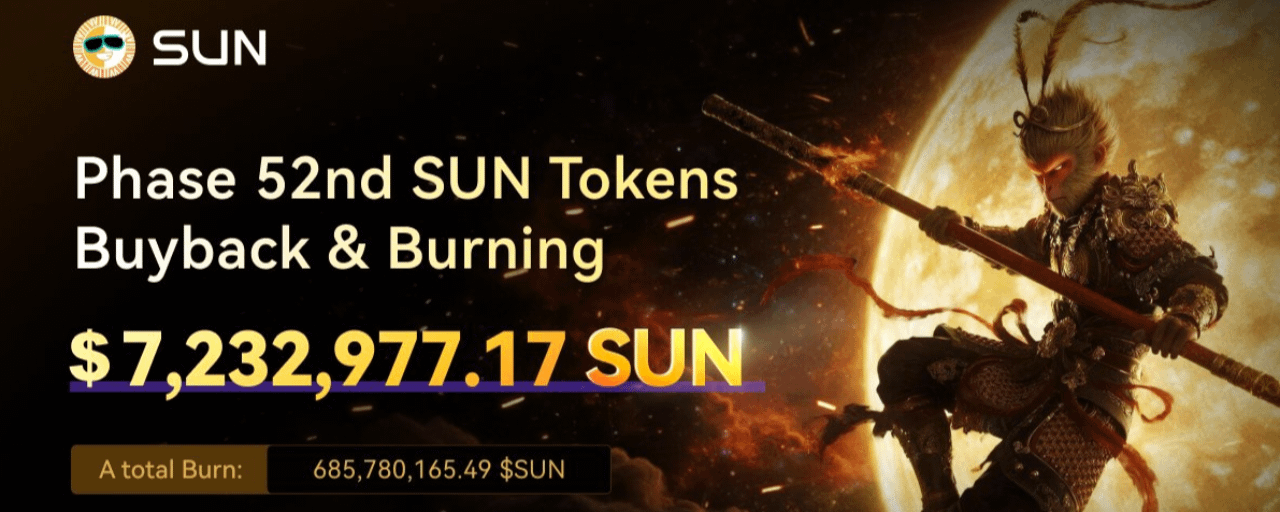
Məqalə
SUN.io 52-ci geri satınalma və yandırma əməliyyatını tamamladıSUN.io müntəzəm geri satınalma və yandırma proqramı vasitəsilə SunSwap, SunPump və SunX-dən əldə olunan protokol gəlirlərini SUN tokeninin dəyərinin artırılmasına yönəltməyə davam edir. Eyni zamanda, mərkəzləşdirilməmiş likvidliyi gücləndirmək üçün SunSwap-ın platformalararası inteqrasiyalarını sürətləndirir.
TRON şəbəkəsinin əsas DeFi likvidlik infrastrukturu olan SUN.io oktyabrın 27-də SUN tokenlərinin 52-ci geri satınalma və yandırma əməliyyatını uğurla həyata keçirərək 7,23 milyondan çox SUN-u dövriyyədən çıxarıb.
Bu raund platformanın ardıcıl 52-ci token yandırma əməliyyatıdır və ümumi yandırılan tokenlərin sayı 685 milyondan çox SUN tokeninə çatıb. Onların dəyəri 11 milyon dollardan artıqdır. Müntəzəm və fasiləsiz geri satınalma və yandırma dövrü SUN-un dövriyyədəki təklifini tədricən azaldır və protokolun ekosistemin davamlı inkişafına uzunmüddətli sadiqliyini vurğulayır.
SUN.io 52-ci geri satınalma və yandırma əməliyyatını tamamladı
SUN.io müntəzəm geri satınalma və yandırma proqramı vasitəsilə SunSwap, SunPump və SunX-dən əldə olunan protokol gəlirlərini SUN tokeninin dəyərinin artırılmasına yönəltməyə davam edir. Eyni zamanda, mərkəzləşdirilməmiş likvidliyi gücləndirmək üçün SunSwap-ın platformalararası inteqrasiyalarını sürətləndirir.
TRON şəbəkəsinin əsas DeFi likvidlik infrastrukturu olan SUN.io oktyabrın 27-də SUN tokenlərinin 52-ci geri satınalma və yandırma əməliyyatını uğurla həyata keçirərək 7,23 milyondan çox SUN-u dövriyyədən çıxarıb.
Bu raund platformanın ardıcıl 52-ci token yandırma əməliyyatıdır və ümumi yandırılan tokenlərin sayı 685 milyondan çox SUN tokeninə çatıb. Onların dəyəri 11 milyon dollardan artıqdır. Müntəzəm və fasiləsiz geri satınalma və yandırma dövrü SUN-un dövriyyədəki təklifini tədricən azaldır və protokolun ekosistemin davamlı inkişafına uzunmüddətli sadiqliyini vurğulayır.
160
Məqalə
Tərcüməyə bax
Justin Sun Prize Partners With MathDB, Led by Caltech Professor Tony Yue Yu, on 50-Problem PilotGeneva, Switzerland — October 26, 2026 — The Office of Justin Sun today announced a pilot program for the Justin Sun Prize in collaboration with MathDB, a mathematical research platform developed by Caltech Professor Tony Yue Yu and his team.
The Justin Sun Prize was established to become the “Nobel Prize of the AI Era,” responding to the profound transformation of scientific research and incentives in the new era in a more decentralized, formalized and machine-driven way. Problem-level awards can reach $1 million, subject to the applicable award terms and eligibility requirements.
The collaboration introduces a submission and review process through MathDB. MathDB will accept solution submissions, verify Lean formalizations and review expository materials, while the Justin Sun Prize will separately assess eligibility, attribution, priority and applicable award terms.
“AI is changing the speed at which mathematics can be explored, but speed alone is not scientific progress,” said Justin Sun, founder of the Justin Sun Prize. “The opportunity is to create a framework where human insight and machine intelligence can work together without compromising rigor. Working with MathDB brings mathematical discovery and machine-verifiable proof into the same process, which we believe can help define a more rigorous model for future discoveries.”
The pilot covers 50 problems across four award levels, with problem-level prize pools up to $1 million, depending on the problem. The highest tier includes P versus NP, the Riemann Hypothesis, Yang-Mills Existence and Mass Gap, the Hodge Conjecture, Global Langlands functoriality and the Birch and Swinnerton-Dyer Conjecture, among others. The full list of participating problems and applicable award terms will be available through MathDB and the Justin Sun Prize.
All awards are subject to full eligibility verification, compliance with anti-money laundering (AML/sanctions) laws, and official program rules available at https://www.hejustinsun.com/prize.
To broaden the reach and impact of advanced research, the MathDB pilot program will reward not only solutions to mathematical problems but also engaging and accessible communication of those solutions. The reward is divided into three categories: 50% for the mathematical solution, 30% for Lean formalization and 20% for qualifying exposition.
MathDB is a large-scale community database of mathematical definitions, theorems, conjectures and open problems, with the aim of making mathematical knowledge easier to organize, connect and build upon. The project incorporates Lean formalization and automated proof-verification capability alongside mathematical explanations and supporting research materials. Professor Tony Yue Yu from California Institute of Technology, together with his team, will be leading the scientific aspects of the pilot.
“Solving a fundamental math problem often leads to much more than an answer to the original question,” said Yu. “The process can reveal unexpected connections, introduce powerful tools and open entirely new directions of research. These developments can have an influence that extends across generations and disciplines. The Justin Sun Prize celebrates this spirit of exploration by drawing attention to challenging problems, supporting researchers who pursue them, and encouraging public dissemination of knowledge. Our collaboration with the Justin Sun Prize is grounded in the belief that pursuing fundamental research through decentralized, rigorous and verifiable approaches can accelerate the pace of discovery and scientific progress, and contribute to the advancement of human civilization.”
The full list of participating problems, submission requirements and review procedures will be available through MathDB (https://mathdb.com/) and the Justin Sun Prize (https://www.hejustinsun.com/prize).
About the Office of Justin Sun
The Office of Justin Sun supports Justin Sun’s global business, philanthropic and public initiatives across technology, blockchain, artificial intelligence, scientific research, investment, art and space exploration.
Justin Sun is the Ambassador and former Permanent Representative of Grenada to the World Trade Organization and the Founder of TRON. TRON is the leading blockchain for the stablecoin revolution, processing over $13 trillion in volume since its inception. In the world’s emerging markets, people rely on USDT on TRON to access the global financial system.
A protégé of Alibaba founder Jack Ma, Sun has been recognized internationally for his work in the digital asset industry, including a Forbes cover profile in April 2025 and multiple appearances on the Forbes 30 Under 30 list. In August 2025, he flew aboard Blue Origin’s NS-34 mission, becoming the 712th person in history to travel to space. His broader interests span technology, investment, philanthropy, art, gaming, and space exploration.
About Justin Sun Prize
The Justin Sun Prize is an academic initiative established by Justin Sun to support advances in mathematics, formal verification, and AI-assisted scientific discovery. The prize is decentralized and built around the principle that mathematical work should be judged by the strength, rigor, and verifiability of the proof itself, not the prestige or reputation of those submitting it.
Justin Sun established the prize in his own name as a long-term commitment to return wealth created through mathematics and technology back to mathematics itself. Its legacy is intended to be defined by the body of work it recognizes and the laureates whose discoveries stand the test of time. The prize links clearly defined mathematical challenges to machine-verifiable proof. Its guiding principles are openness, public benefit and open-source access.
Justin Sun Prize Partners With MathDB, Led by Caltech Professor Tony Yue Yu, on 50-Problem Pilot
Geneva, Switzerland — October 26, 2026 — The Office of Justin Sun today announced a pilot program for the Justin Sun Prize in collaboration with MathDB, a mathematical research platform developed by Caltech Professor Tony Yue Yu and his team.
The Justin Sun Prize was established to become the “Nobel Prize of the AI Era,” responding to the profound transformation of scientific research and incentives in the new era in a more decentralized, formalized and machine-driven way. Problem-level awards can reach $1 million, subject to the applicable award terms and eligibility requirements.
The collaboration introduces a submission and review process through MathDB. MathDB will accept solution submissions, verify Lean formalizations and review expository materials, while the Justin Sun Prize will separately assess eligibility, attribution, priority and applicable award terms.
“AI is changing the speed at which mathematics can be explored, but speed alone is not scientific progress,” said Justin Sun, founder of the Justin Sun Prize. “The opportunity is to create a framework where human insight and machine intelligence can work together without compromising rigor. Working with MathDB brings mathematical discovery and machine-verifiable proof into the same process, which we believe can help define a more rigorous model for future discoveries.”
The pilot covers 50 problems across four award levels, with problem-level prize pools up to $1 million, depending on the problem. The highest tier includes P versus NP, the Riemann Hypothesis, Yang-Mills Existence and Mass Gap, the Hodge Conjecture, Global Langlands functoriality and the Birch and Swinnerton-Dyer Conjecture, among others. The full list of participating problems and applicable award terms will be available through MathDB and the Justin Sun Prize.
All awards are subject to full eligibility verification, compliance with anti-money laundering (AML/sanctions) laws, and official program rules available at https://www.hejustinsun.com/prize.
To broaden the reach and impact of advanced research, the MathDB pilot program will reward not only solutions to mathematical problems but also engaging and accessible communication of those solutions. The reward is divided into three categories: 50% for the mathematical solution, 30% for Lean formalization and 20% for qualifying exposition.
MathDB is a large-scale community database of mathematical definitions, theorems, conjectures and open problems, with the aim of making mathematical knowledge easier to organize, connect and build upon. The project incorporates Lean formalization and automated proof-verification capability alongside mathematical explanations and supporting research materials. Professor Tony Yue Yu from California Institute of Technology, together with his team, will be leading the scientific aspects of the pilot.
“Solving a fundamental math problem often leads to much more than an answer to the original question,” said Yu. “The process can reveal unexpected connections, introduce powerful tools and open entirely new directions of research. These developments can have an influence that extends across generations and disciplines. The Justin Sun Prize celebrates this spirit of exploration by drawing attention to challenging problems, supporting researchers who pursue them, and encouraging public dissemination of knowledge. Our collaboration with the Justin Sun Prize is grounded in the belief that pursuing fundamental research through decentralized, rigorous and verifiable approaches can accelerate the pace of discovery and scientific progress, and contribute to the advancement of human civilization.”
The full list of participating problems, submission requirements and review procedures will be available through MathDB (https://mathdb.com/) and the Justin Sun Prize (https://www.hejustinsun.com/prize).
About the Office of Justin Sun
The Office of Justin Sun supports Justin Sun’s global business, philanthropic and public initiatives across technology, blockchain, artificial intelligence, scientific research, investment, art and space exploration.
Justin Sun is the Ambassador and former Permanent Representative of Grenada to the World Trade Organization and the Founder of TRON. TRON is the leading blockchain for the stablecoin revolution, processing over $13 trillion in volume since its inception. In the world’s emerging markets, people rely on USDT on TRON to access the global financial system.
A protégé of Alibaba founder Jack Ma, Sun has been recognized internationally for his work in the digital asset industry, including a Forbes cover profile in April 2025 and multiple appearances on the Forbes 30 Under 30 list. In August 2025, he flew aboard Blue Origin’s NS-34 mission, becoming the 712th person in history to travel to space. His broader interests span technology, investment, philanthropy, art, gaming, and space exploration.
About Justin Sun Prize
The Justin Sun Prize is an academic initiative established by Justin Sun to support advances in mathematics, formal verification, and AI-assisted scientific discovery. The prize is decentralized and built around the principle that mathematical work should be judged by the strength, rigor, and verifiability of the proof itself, not the prestige or reputation of those submitting it.
Justin Sun established the prize in his own name as a long-term commitment to return wealth created through mathematics and technology back to mathematics itself. Its legacy is intended to be defined by the body of work it recognizes and the laureates whose discoveries stand the test of time. The prize links clearly defined mathematical challenges to machine-verifiable proof. Its guiding principles are openness, public benefit and open-source access.
72
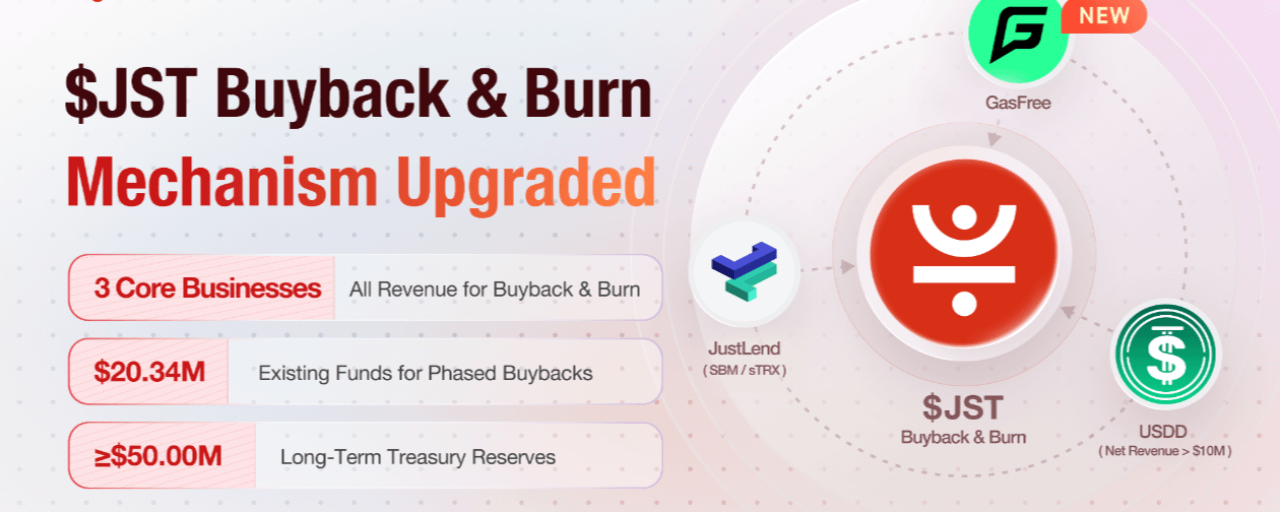
Məqalə
Tərcüməyə bax
JST Buyback & Burn Upgrade: GasFree Revenue and $20.34M Surplus InjectedSummary:
The upgraded JST Buyback and Burn program features the following highlights:
· $50M Treasury Reserve Cushion: Establishes a safety buffer for sustainable ecosystem operations.
· Expanded Funding Sources: Integrates GasFree revenue alongside JustLend and USDD to cover 100% of JUST core products.
· ~$20.34M Capital Injection: Unlocks legacy surplus funds to be released in phases for future buybacks.
· JUST DAO Execution: Complete on-chain execution with full transparency and open-source verification.
Following its recent brand refresh on October 23, JUST—the flagship on-chain DeFi infrastructure on TRON—officially unveiled its upgraded JST Buyback & Burn initiative that strengthens the value-accrual framework of the native governance token. Building on previous funding sources from JustLend and USDD, the upgraded mechanism incorporates business revenue from GasFree while allocating $20.34 million in capital surplus to future token repurchases. These changes diversify the protocol's revenue base and set a structured process for deploying surplus capital.
The updated framework expands JST buyback funding from a dual-revenue stream (i.e., JustLend and USDD) to a more robust three-pillar model (i.e., JustLend, USDD, and GasFree), reinforced by phased injections of existing funds. Beyond simply adding capital, this upgrade ensures that growth in each JUST product line directly accrues to JST's underlying value. It underscores JUST's long-term commitment to token value accrual while tightly aligning protocol incentives with JST holders and the broader community.
JST Buyback & Burn Upgraded: $50M Safety Cushion, GasFree Revenue Integration, and $20.34M Surplus Injection
As the native governance token of the JUST ecosystem, JST's underlying value support and utility mechanisms have always been a central focus for the community. With the successful completion of the 5th buyback and burn on October 16, Phase 1 of the JST Buyback and Burn program concluded smoothly, paving the way for the upgraded mechanism alongside JUST's broader brand refresh.
According to the Announcement: Upgrade to the JST Buyback & Burn Mechanism, the newly updated framework outlines key structural arrangements across five core areas, establishing clear risk boundaries while securing a more stable and predictable capital foundation for future buybacks:
$50M Treasury Safety Floor: A baseline reserve of at least $50 million will be maintained long-term to manage risk scenarios, guarantee liquidity, and ensure protocol solvency under extreme market conditions.More Diversified Funding Sources: The upgraded model integrates GasFree revenue alongside existing JustLend and USDD streams, extending buyback capital across all three core JUST product lines. Specific sources now include revenue from JustLend's sTRX staking and SBM, GasFree income, and the USDD protocol revenue exceeding the $10 million threshold.Structured Surplus Capital Deployment: All protocol funds above the $50 million treasury reserve floor are dedicated entirely to JST buybacks. An initial $20.34 million—sourced from cumulative GasFree earnings and surplus treasury reserves above the safety floor—has been unlocked, and will be deployed across four buyback rounds starting in Q4 2026.Buyback & Burn Execution: The protocol is adopting a "continuous buyback, periodic burn" approach. Funded by 100% of revenue across all product lines, open-market buybacks will adjust dynamically to prevailing market depth and liquidity, with accumulated tokens burned on a regular schedule.On-Chain Governance: All buybacks and burns will be executed by JUST DAO. Key financial figures will be disclosed to the community on a regular basis, and every transaction will remain fully verifiable on-chain.
Compared to Phase 1, this upgrade introduces three structural shifts:
1. Clearer capital boundaries. The $50 million reserve floor creates a solvency backstop while defining the boundaries of capital eligible for buybacks.
2. More diversified funding sources. Rather than relying primarily on JustLend and USDD, integrating GasFree extends revenue capture across the entire JUST ecosystem. Meanwhile, deploying roughly $20.34 million in surplus funds across future tranches smooths buyback execution and ensures an orderly transition between mechanism phases.
3. Streamlined execution under unified governance. By adopting a "continuous buyback, periodic burn" strategy, the consolidated JUST DAO (formerly JustLend DAO) takes full operational ownership of buybacks and burns. This aligns governance and execution under a single authority, matching JUST's brand consolidation and holistic governance roadmap.
In essence, the updated mechanism follows a clear tripartite playbook: secure the downside, deploy surplus capital, and compound with organic growth. It first anchors ecosystem stability with the $50 million reserve floor, primes buyback momentum by releasing roughly $20.34 million in surplus funds, and then hands the baton to ongoing revenues from all three verticals—turning JST buybacks into a sustainable, business-backed deflationary engine.
GasFree Poised to Become the Second Growth Engine for JST Buybacks After JustLend
The integration of GasFree revenue represents the key highlight of this mechanism upgrade. Scheduled to begin capital allocations in Q4 2026, GasFree has demonstrated strong cash-flow generation and is positioned to become the second growth engine for JST buyback funding after JustLend.
Built on TRON, GasFree is a native gasless solution that lets users pay transaction fees directly with the tokens they transfer, removing the friction of holding TRX or other native tokens just to move funds. By enabling single-asset fee settlement, GasFree eliminates one of the most stubborn usability hurdles in on-chain transfers. The service currently supports gasless transfers for both USDT and USDD.
Operationally, GasFree's user base and network activity continue to climb at a rapid pace. As of October 23, GasFree has processed over $157.1 billion in cumulative stablecoin transfer volume across more than 9.14 million transactions, serving an aggregate user base exceeding 500,000 unique addresses. This surging operational momentum provides the solid backing for GasFree to consistently fuel the buyback pool and establish itself as JST's second major growth engine.
From a revenue standpoint, GasFree's profitability is backed by hard data. It has proven to be a vital growth engine since its March 2025 rollout, generating approximately $12.03 million in cumulative revenue through Q3 2026. This performance underpinned the recent extraction of roughly $20.34 million in surplus funds, sourced directly from GasFree's accrued earnings and surplus treasury holdings above the reserve floor.
As GasFree's financial contribution accelerates, JST's buyback-and-burn model enters a new stage of multi-business synergy. The token's value-accrual mechanism is now deeply tied to the growth of the broader JUST ecosystem and fully synchronized with the protocol's multi-product expansion.
Diversified Value Accrual: JUST’s Core Products Unite to Back JST
Under the updated mechanism, GasFree revenue is now directly allocated to JST buybacks, alongside qualifying net revenue from USDD. This marks a pivotal evolution: JST burns no longer rely solely on JustLend. Instead, they are fueled by a diversified, multi-product revenue base spanning JustLend, USDD, and GasFree.
This multi-pronged funding approach mirrors the broader JUST rebrand. Moving forward, JustLend, USDD, and GasFree unite under a single brand and user gateway—with JUST DAO steering cross-product governance, ecosystem synergy, and sustainable tokenomics for JST.
JST serves as the native governance token for the entire JUST ecosystem. Through this unified rebrand and the rollout of JUST DAO governance, JST's value foundation now spans the protocol's core utility layers: lending and resource markets via JustLend, decentralized stablecoin infrastructure via USDD, and gasless transfer settlement via GasFree. JST is no longer anchored to a single product line; its value capture is directly tied to the growth of the entire ecosystem.
As a pillar of TRON’s financial infrastructure, JUST commands roughly $12.2 billion in Total Value Locked (TVL)—consistently securing nearly half of the network's total liquidity, with all three business pillars holding leading positions in their respective verticals.
Among them, JustLend remains foundational: having fully funded the initial phase of JST buybacks and burns, it now provides the core yield baseline under the upgraded mechanism. As of October 23, JustLend's TVL surpassed $7.13 billion, with its supply-borrow market (SBM) driving approximately $3.71 billion, cementing its status as a global DeFi lending leader. In the staking sector, total TRX staked has crossed 9.83 billion. At the same time, through sTRX-powered Energy solutions, JustLend has become a primary Energy gateway for the TRON network, scaling both on-demand Energy purchases and long-term rental services.
Meanwhile, GasFree continues to scale as a key revenue driver. In late September, GasFree partnered with Binance Web3 Wallet to introduce TRC-20 USDT gas fee delegation. Users can now pay network fees directly in USDT without needing to hold TRX. Securing integration with a Tier-1 wallet validates GasFree's business model and significantly expands its addressable market and fee-generation capacity.
JST Buyback & Burn Upgrade: GasFree Revenue and $20.34M Surplus Injected
Summary:
The upgraded JST Buyback and Burn program features the following highlights:
· $50M Treasury Reserve Cushion: Establishes a safety buffer for sustainable ecosystem operations.
· Expanded Funding Sources: Integrates GasFree revenue alongside JustLend and USDD to cover 100% of JUST core products.
· ~$20.34M Capital Injection: Unlocks legacy surplus funds to be released in phases for future buybacks.
· JUST DAO Execution: Complete on-chain execution with full transparency and open-source verification.
Following its recent brand refresh on October 23, JUST—the flagship on-chain DeFi infrastructure on TRON—officially unveiled its upgraded JST Buyback & Burn initiative that strengthens the value-accrual framework of the native governance token. Building on previous funding sources from JustLend and USDD, the upgraded mechanism incorporates business revenue from GasFree while allocating $20.34 million in capital surplus to future token repurchases. These changes diversify the protocol's revenue base and set a structured process for deploying surplus capital.
The updated framework expands JST buyback funding from a dual-revenue stream (i.e., JustLend and USDD) to a more robust three-pillar model (i.e., JustLend, USDD, and GasFree), reinforced by phased injections of existing funds. Beyond simply adding capital, this upgrade ensures that growth in each JUST product line directly accrues to JST's underlying value. It underscores JUST's long-term commitment to token value accrual while tightly aligning protocol incentives with JST holders and the broader community.
JST Buyback & Burn Upgraded: $50M Safety Cushion, GasFree Revenue Integration, and $20.34M Surplus Injection
As the native governance token of the JUST ecosystem, JST's underlying value support and utility mechanisms have always been a central focus for the community. With the successful completion of the 5th buyback and burn on October 16, Phase 1 of the JST Buyback and Burn program concluded smoothly, paving the way for the upgraded mechanism alongside JUST's broader brand refresh.
According to the Announcement: Upgrade to the JST Buyback & Burn Mechanism, the newly updated framework outlines key structural arrangements across five core areas, establishing clear risk boundaries while securing a more stable and predictable capital foundation for future buybacks:
$50M Treasury Safety Floor: A baseline reserve of at least $50 million will be maintained long-term to manage risk scenarios, guarantee liquidity, and ensure protocol solvency under extreme market conditions.More Diversified Funding Sources: The upgraded model integrates GasFree revenue alongside existing JustLend and USDD streams, extending buyback capital across all three core JUST product lines. Specific sources now include revenue from JustLend's sTRX staking and SBM, GasFree income, and the USDD protocol revenue exceeding the $10 million threshold.Structured Surplus Capital Deployment: All protocol funds above the $50 million treasury reserve floor are dedicated entirely to JST buybacks. An initial $20.34 million—sourced from cumulative GasFree earnings and surplus treasury reserves above the safety floor—has been unlocked, and will be deployed across four buyback rounds starting in Q4 2026.Buyback & Burn Execution: The protocol is adopting a "continuous buyback, periodic burn" approach. Funded by 100% of revenue across all product lines, open-market buybacks will adjust dynamically to prevailing market depth and liquidity, with accumulated tokens burned on a regular schedule.On-Chain Governance: All buybacks and burns will be executed by JUST DAO. Key financial figures will be disclosed to the community on a regular basis, and every transaction will remain fully verifiable on-chain.
Compared to Phase 1, this upgrade introduces three structural shifts:
1. Clearer capital boundaries. The $50 million reserve floor creates a solvency backstop while defining the boundaries of capital eligible for buybacks.
2. More diversified funding sources. Rather than relying primarily on JustLend and USDD, integrating GasFree extends revenue capture across the entire JUST ecosystem. Meanwhile, deploying roughly $20.34 million in surplus funds across future tranches smooths buyback execution and ensures an orderly transition between mechanism phases.
3. Streamlined execution under unified governance. By adopting a "continuous buyback, periodic burn" strategy, the consolidated JUST DAO (formerly JustLend DAO) takes full operational ownership of buybacks and burns. This aligns governance and execution under a single authority, matching JUST's brand consolidation and holistic governance roadmap.
In essence, the updated mechanism follows a clear tripartite playbook: secure the downside, deploy surplus capital, and compound with organic growth. It first anchors ecosystem stability with the $50 million reserve floor, primes buyback momentum by releasing roughly $20.34 million in surplus funds, and then hands the baton to ongoing revenues from all three verticals—turning JST buybacks into a sustainable, business-backed deflationary engine.
GasFree Poised to Become the Second Growth Engine for JST Buybacks After JustLend
The integration of GasFree revenue represents the key highlight of this mechanism upgrade. Scheduled to begin capital allocations in Q4 2026, GasFree has demonstrated strong cash-flow generation and is positioned to become the second growth engine for JST buyback funding after JustLend.
Built on TRON, GasFree is a native gasless solution that lets users pay transaction fees directly with the tokens they transfer, removing the friction of holding TRX or other native tokens just to move funds. By enabling single-asset fee settlement, GasFree eliminates one of the most stubborn usability hurdles in on-chain transfers. The service currently supports gasless transfers for both USDT and USDD.
Operationally, GasFree's user base and network activity continue to climb at a rapid pace. As of October 23, GasFree has processed over $157.1 billion in cumulative stablecoin transfer volume across more than 9.14 million transactions, serving an aggregate user base exceeding 500,000 unique addresses. This surging operational momentum provides the solid backing for GasFree to consistently fuel the buyback pool and establish itself as JST's second major growth engine.
From a revenue standpoint, GasFree's profitability is backed by hard data. It has proven to be a vital growth engine since its March 2025 rollout, generating approximately $12.03 million in cumulative revenue through Q3 2026. This performance underpinned the recent extraction of roughly $20.34 million in surplus funds, sourced directly from GasFree's accrued earnings and surplus treasury holdings above the reserve floor.
As GasFree's financial contribution accelerates, JST's buyback-and-burn model enters a new stage of multi-business synergy. The token's value-accrual mechanism is now deeply tied to the growth of the broader JUST ecosystem and fully synchronized with the protocol's multi-product expansion.
Diversified Value Accrual: JUST’s Core Products Unite to Back JST
Under the updated mechanism, GasFree revenue is now directly allocated to JST buybacks, alongside qualifying net revenue from USDD. This marks a pivotal evolution: JST burns no longer rely solely on JustLend. Instead, they are fueled by a diversified, multi-product revenue base spanning JustLend, USDD, and GasFree.
This multi-pronged funding approach mirrors the broader JUST rebrand. Moving forward, JustLend, USDD, and GasFree unite under a single brand and user gateway—with JUST DAO steering cross-product governance, ecosystem synergy, and sustainable tokenomics for JST.
JST serves as the native governance token for the entire JUST ecosystem. Through this unified rebrand and the rollout of JUST DAO governance, JST's value foundation now spans the protocol's core utility layers: lending and resource markets via JustLend, decentralized stablecoin infrastructure via USDD, and gasless transfer settlement via GasFree. JST is no longer anchored to a single product line; its value capture is directly tied to the growth of the entire ecosystem.
As a pillar of TRON’s financial infrastructure, JUST commands roughly $12.2 billion in Total Value Locked (TVL)—consistently securing nearly half of the network's total liquidity, with all three business pillars holding leading positions in their respective verticals.
Among them, JustLend remains foundational: having fully funded the initial phase of JST buybacks and burns, it now provides the core yield baseline under the upgraded mechanism. As of October 23, JustLend's TVL surpassed $7.13 billion, with its supply-borrow market (SBM) driving approximately $3.71 billion, cementing its status as a global DeFi lending leader. In the staking sector, total TRX staked has crossed 9.83 billion. At the same time, through sTRX-powered Energy solutions, JustLend has become a primary Energy gateway for the TRON network, scaling both on-demand Energy purchases and long-term rental services.
Meanwhile, GasFree continues to scale as a key revenue driver. In late September, GasFree partnered with Binance Web3 Wallet to introduce TRC-20 USDT gas fee delegation. Users can now pay network fees directly in USDT without needing to hold TRX. Securing integration with a Tier-1 wallet validates GasFree's business model and significantly expands its addressable market and fee-generation capacity.
105
Məqalə
Paybis Avropada kriptovalyuta almaq üçün iDEAL, BLIK, Multibanco və EPS-i əlavə edirNiderland, Polşa, Portuqaliya və Avstriyadakı müştərilər artıq Paybis vasitəsilə bank tətbiqindən və ya ödəniş istinadından istifadə edərək, kart məlumatlarını daxil etmədən kriptovalyuta ala bilərlər. Bu dörd üsul Paybis-in əlavə etdiyi 13 yerli ödəniş üsulunun ilk mərhələsidir.
Riqa, Latviya, 23 oktyabr 2026 — Qlobal kriptovalyuta birjası və ödəniş infrastrukturu təminatçısı Paybis bu gün Avropada kriptovalyuta almaq üçün dörd yerli ödəniş üsulu əlavə edib. Müştərilər artıq Niderlandda iDEAL, Polşada BLIK, Portuqaliyada Multibanco və Avstriyada EPS vasitəsilə ödəniş edə bilərlər. Kart və bank köçürmələri də əlçatandır, lakin artıq yeganə seçimlər deyil.
Paybis Avropada kriptovalyuta almaq üçün iDEAL, BLIK, Multibanco və EPS-i əlavə edir
Niderland, Polşa, Portuqaliya və Avstriyadakı müştərilər artıq Paybis vasitəsilə bank tətbiqindən və ya ödəniş istinadından istifadə edərək, kart məlumatlarını daxil etmədən kriptovalyuta ala bilərlər. Bu dörd üsul Paybis-in əlavə etdiyi 13 yerli ödəniş üsulunun ilk mərhələsidir.
Riqa, Latviya, 23 oktyabr 2026 — Qlobal kriptovalyuta birjası və ödəniş infrastrukturu təminatçısı Paybis bu gün Avropada kriptovalyuta almaq üçün dörd yerli ödəniş üsulu əlavə edib. Müştərilər artıq Niderlandda iDEAL, Polşada BLIK, Portuqaliyada Multibanco və Avstriyada EPS vasitəsilə ödəniş edə bilərlər. Kart və bank köçürmələri də əlçatandır, lakin artıq yeganə seçimlər deyil.
Riqa, Latviya, 23 oktyabr 2026 — Qlobal kriptovalyuta birjası və ödəniş infrastrukturu təminatçısı Paybis bu gün Avropada kriptovalyuta almaq üçün dörd yerli ödəniş üsulu əlavə edib. Müştərilər artıq Niderlandda iDEAL, Polşada BLIK, Portuqaliyada Multibanco və Avstriyada EPS vasitəsilə ödəniş edə bilərlər. Kart və bank köçürmələri də əlçatandır, lakin artıq yeganə seçimlər deyil.
111
Məqalə
HTX Research 2026-cı il ABŞ aralıq seçkiləri ərəfəsində kriptovalyuta bazarının perspektivlərini dərc edibHTX-in xüsusi tədqiqat bölməsi olan HTX Research «2026-cı il ABŞ aralıq seçkilərindən əvvəl və sonra kriptovalyuta bazarının perspektivləri» adlı yeni hesabat dərc edib.
Hesabatda qeyd olunur ki, aralıq seçkilər növbəti iki il üçün siyasətlə bağlı gözləntiləri yenidən formalaşdıra bilsə də, kriptovalyutaların qısamüddətli qiymət dinamikasını inflyasiya, maliyyələşdirmə xərcləri və kapital axınları müəyyən etməyə davam edir. Səsvermədən əvvəlki və dərhal sonrakı dövr üçün əsas ssenari tək bir siyasi narrativin doğurduğu davamlı yüksəliş deyil, yüksək volatillik, təkrar qiymət dəyişiklikləri və aktivlər arasında fərqli dinamikadır.
HTX Research 2026-cı il ABŞ aralıq seçkiləri ərəfəsində kriptovalyuta bazarının perspektivlərini dərc edib
HTX-in xüsusi tədqiqat bölməsi olan HTX Research «2026-cı il ABŞ aralıq seçkilərindən əvvəl və sonra kriptovalyuta bazarının perspektivləri» adlı yeni hesabat dərc edib.
Hesabatda qeyd olunur ki, aralıq seçkilər növbəti iki il üçün siyasətlə bağlı gözləntiləri yenidən formalaşdıra bilsə də, kriptovalyutaların qısamüddətli qiymət dinamikasını inflyasiya, maliyyələşdirmə xərcləri və kapital axınları müəyyən etməyə davam edir. Səsvermədən əvvəlki və dərhal sonrakı dövr üçün əsas ssenari tək bir siyasi narrativin doğurduğu davamlı yüksəliş deyil, yüksək volatillik, təkrar qiymət dəyişiklikləri və aktivlər arasında fərqli dinamikadır.
Hesabatda qeyd olunur ki, aralıq seçkilər növbəti iki il üçün siyasətlə bağlı gözləntiləri yenidən formalaşdıra bilsə də, kriptovalyutaların qısamüddətli qiymət dinamikasını inflyasiya, maliyyələşdirmə xərcləri və kapital axınları müəyyən etməyə davam edir. Səsvermədən əvvəlki və dərhal sonrakı dövr üçün əsas ssenari tək bir siyasi narrativin doğurduğu davamlı yüksəliş deyil, yüksək volatillik, təkrar qiymət dəyişiklikləri və aktivlər arasında fərqli dinamikadır.
2
Məqalə
Grvt 2.0-a doğru geri sayım başlayarkən GRVT 1,1 milyon tokeni yandırırSərbəst qərar əsasında həyata keçirilən geri alış dövriyyədəki təklifin təxminən 1%-ni təşkil edir və Grvt 2.0 ilə yekunlaşacaq dörd planlaşdırılmış məhsul mərhələsindən əvvəl baş tutur.
Öz sıfır bilik (ZK) blokçeynində qurulmuş, aktivlərin saxlanmasına istifadəçilərin özlərinin nəzarət etdiyi ticarət platforması Grvt, Fondun token emitentinin ilk GRVT token geri alışını tamamladığını, açıq bazarda 1,1 milyon GRVT tokeni alıb yandırdığını elan edib.
Bu əməliyyat alış zamanı GRVT-nin dövriyyədəki təklifinin təxminən 1%-ni birdəfəlik dövriyyədən çıxardı. Bu, 2026-cı il noyabrın sonunda planlaşdırılan Grvt 2.0 təqdimatına qədər nəzərdə tutulan beş mərhələdən birincisidir.
Grvt 2.0-a doğru geri sayım başlayarkən GRVT 1,1 milyon tokeni yandırır
Sərbəst qərar əsasında həyata keçirilən geri alış dövriyyədəki təklifin təxminən 1%-ni təşkil edir və Grvt 2.0 ilə yekunlaşacaq dörd planlaşdırılmış məhsul mərhələsindən əvvəl baş tutur.
Öz sıfır bilik (ZK) blokçeynində qurulmuş, aktivlərin saxlanmasına istifadəçilərin özlərinin nəzarət etdiyi ticarət platforması Grvt, Fondun token emitentinin ilk GRVT token geri alışını tamamladığını, açıq bazarda 1,1 milyon GRVT tokeni alıb yandırdığını elan edib.
Bu əməliyyat alış zamanı GRVT-nin dövriyyədəki təklifinin təxminən 1%-ni birdəfəlik dövriyyədən çıxardı. Bu, 2026-cı il noyabrın sonunda planlaşdırılan Grvt 2.0 təqdimatına qədər nəzərdə tutulan beş mərhələdən birincisidir.
61
Məqalə
TRX üzrə ilk ETF işə düşərkən TRON III rübdə 2,2 trilyon dollarlıq hesablaşma apararaq bütün stabilkoin həcminin 73%-ni ələ keçirdi: CoinDeskCoinDesk Data və Nansen-in müstəqil araşdırma hesabatlarına görə, TRON 2026-cı ilin üçüncü rübündə aparıcı stabilkoin hesablaşma blokçeyn şəbəkəsi kimi mövqeyini möhkəmləndirib. Buna trilyonlarla ölçülən əməliyyat həcmi, USDT təklifinin rekord həddə çatması, ödəniş kartlarının getdikcə daha geniş istifadəsi və ABŞ-da stak edilmiş TRX-ə əsaslanan ilk spot birja investisiya fondunun (ETF) işə düşməsi daxildir.
CoinDesk
CoinDesk-in TRON Şəbəkəsi üzrə 2026-cı ilin III rüb hesabatı 2026-cı ilin iyulundan sentyabrınadək TRON şəbəkəsinin texniki qiymətləndirməsini təqdim edir. Hesabatın nəticələri şəbəkə və ekosistemdəki yenilikləri, əsas zəncirdaxili göstəriciləri, eləcə də kreditləşmə və mərkəzləşdirilməmiş birjalardakı (DEX) DeFi fəaliyyətini əhatə edir.
TRX üzrə ilk ETF işə düşərkən TRON III rübdə 2,2 trilyon dollarlıq hesablaşma apararaq bütün stabilkoin həcminin 73%-ni ələ keçirdi: CoinDesk
CoinDesk Data və Nansen-in müstəqil araşdırma hesabatlarına görə, TRON 2026-cı ilin üçüncü rübündə aparıcı stabilkoin hesablaşma blokçeyn şəbəkəsi kimi mövqeyini möhkəmləndirib. Buna trilyonlarla ölçülən əməliyyat həcmi, USDT təklifinin rekord həddə çatması, ödəniş kartlarının getdikcə daha geniş istifadəsi və ABŞ-da stak edilmiş TRX-ə əsaslanan ilk spot birja investisiya fondunun (ETF) işə düşməsi daxildir.
CoinDesk
CoinDesk-in TRON Şəbəkəsi üzrə 2026-cı ilin III rüb hesabatı 2026-cı ilin iyulundan sentyabrınadək TRON şəbəkəsinin texniki qiymətləndirməsini təqdim edir. Hesabatın nəticələri şəbəkə və ekosistemdəki yenilikləri, əsas zəncirdaxili göstəriciləri, eləcə də kreditləşmə və mərkəzləşdirilməmiş birjalardakı (DEX) DeFi fəaliyyətini əhatə edir.
127
Məqalə
Probly TOKEN2049 Singapore və WHALE3RA tədbirlərini yekunlaşdırırİdman, siyasət, kriptovalyuta, maliyyə və qlobal hadisələr üzrə zəncirüzəri proqnoz bazarı olan Probly, TOKEN2049 Singapore tədbirində Qızıl Sponsor kimi və BloFin, TxFlow və digər ekosistem tərəfdaşları ilə birlikdə WHALE3RA Afterparty-nin həmtəşkilatçısı kimi iştirakını başa vurub.
TOKEN2049 həftəsi ərzində Probly treyderlər, qurucular, infrastruktur komandaları, tərəfdaşlar və Web3 icmaları ilə görüşərək real dünya hadisələri ilə bağlı fikirləri ifadə etmək vasitəsi kimi proqnoz bazarlarının artan rolunu müzakirə edib.
Bu həftə Probly-yə proqnoz bazarlarına yanaşmasını daha geniş kriptovalyuta auditoriyasına təqdim etmək imkanı da yaratdı: sadə giriş, geniş bazar əhatəsi, istifadəçinin öz nəzarətində olan USDC, birbaşa istifadəçilər arasında ticarət və zəncirüzəri yoxlanıla bilən hesablaşma.
Probly TOKEN2049 Singapore və WHALE3RA tədbirlərini yekunlaşdırır
İdman, siyasət, kriptovalyuta, maliyyə və qlobal hadisələr üzrə zəncirüzəri proqnoz bazarı olan Probly, TOKEN2049 Singapore tədbirində Qızıl Sponsor kimi və BloFin, TxFlow və digər ekosistem tərəfdaşları ilə birlikdə WHALE3RA Afterparty-nin həmtəşkilatçısı kimi iştirakını başa vurub.
TOKEN2049 həftəsi ərzində Probly treyderlər, qurucular, infrastruktur komandaları, tərəfdaşlar və Web3 icmaları ilə görüşərək real dünya hadisələri ilə bağlı fikirləri ifadə etmək vasitəsi kimi proqnoz bazarlarının artan rolunu müzakirə edib.
Bu həftə Probly-yə proqnoz bazarlarına yanaşmasını daha geniş kriptovalyuta auditoriyasına təqdim etmək imkanı da yaratdı: sadə giriş, geniş bazar əhatəsi, istifadəçinin öz nəzarətində olan USDC, birbaşa istifadəçilər arasında ticarət və zəncirüzəri yoxlanıla bilən hesablaşma.
83
Daha çox kontent araşdırmaq üçün daxil olun
Binance Square-də qlobal kriptovalyuta istifadəçilərinə qoşulun
⚡️ Kriptovalyuta haqqında ən son və faydalı məlumatları əldə edin.
💬 Dünyanın ən böyük kriptovalyuta birjası tərəfindən etibar edilir.
👍 Doğrulanmış yaradıcılardan gələn real məlumatları kəşf edin.
E-poçt/Telefon nömrəsi
Trenddə olan mövzular
HotCPIDecemberHikePriced
325,844 baxış
Müzakirə edir: 3,239
CPI bazar icmalı | ABŞ-da CPI oktyabrda 0,4% artıb, proqnozlaşdırılan 0,3%-dən yüksək olub
Binance News
·34 bəyənmə
·48.7k baxış
ZcashFallsBelow$1000ForFirstTimeSinceSeptember
9,595 baxış
Müzakirə edir: 59
StrategyFaces$2.8BSelloffRiskFromMSCIRemoval
20,584 baxış
Müzakirə edir: 140