
Bitcoin.org
3.1k Paylaşımlar

Bitcoin.org
Şikayət et
İstifadəçini blokla
Bitcoin is an open source censorship-resistant peer-to-peer immutable network. Trackable digital gold. Don't trust; verify. Not your keys; not your coins.
0 İzlənilir
10.5K+ İzləyicilər
3.8K+ Bəyəndi
Postlar
·
--
Tərcüməyə bax
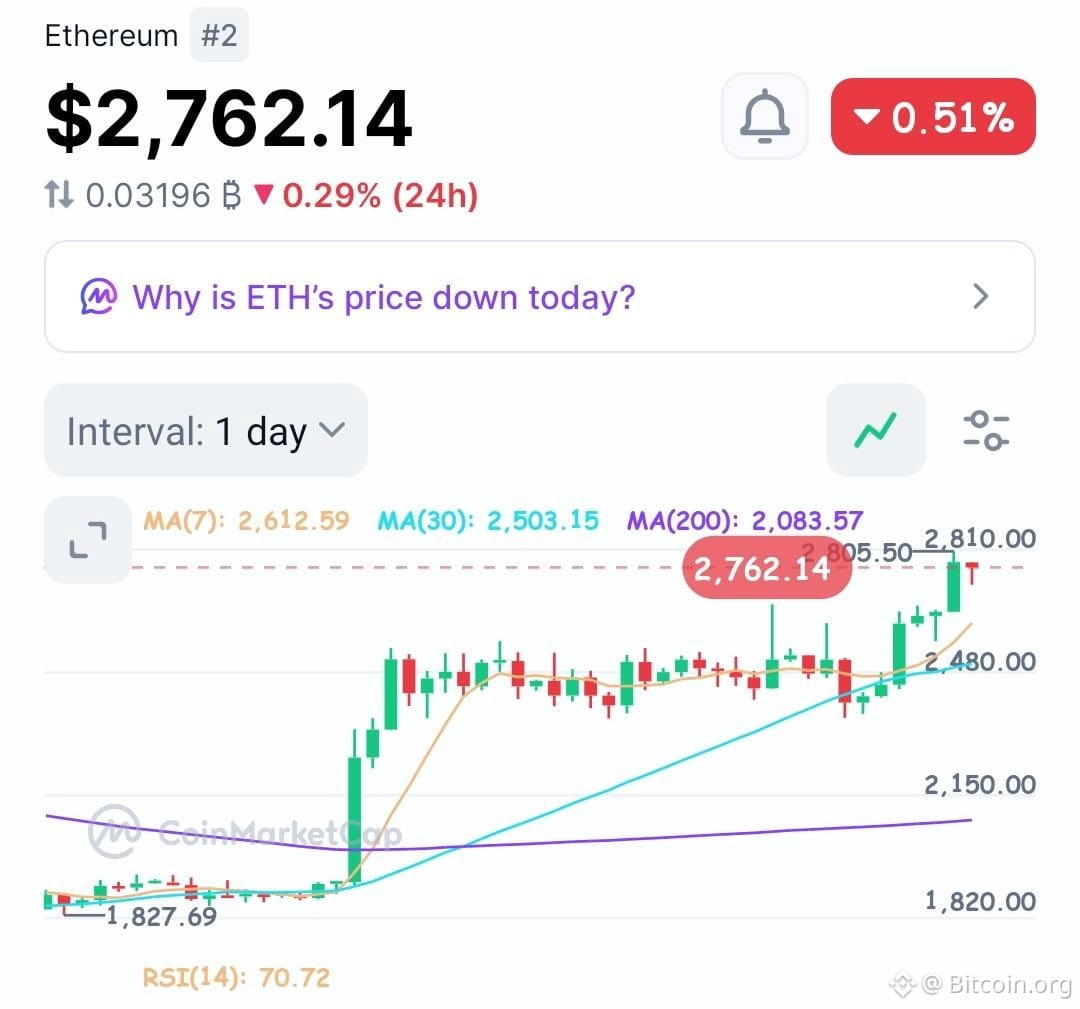
$ETH Still trying to catch the day opening.
People talk about $BTC all day but actually the real crypto is Ethereum.
Ethereum right now 2767 today its open at 2777 so close to the opening. And now time for the day close in the UTC zone.
Ethereum is built potentialities across the crypto world. But market mostly relay on the narrative like bitcoin did.
Lots of inflow news from ETH. Not such a narrative. Just following the basic chart. And 9 days left bfore the Q3 ends. Q4 is for Ethereum Glamsterdem upgrade.
This upgrade is about 200gas limit. And mostly about scaling.
Ethereum is built different.
If It's breaks the 2850 resistance then it can easily out perform $BTC.
A perfect day close can send it.
What you think?
#Meme Alpha# #Altcoin Season#
$ETH Still trying to catch the day opening.
People talk about $BTC all day but actually the real crypto is Ethereum.
Ethereum right now 2767 today its open at 2777 so close to the opening. And now time for the day close in the UTC zone.
Ethereum is built potentialities across the crypto world. But market mostly relay on the narrative like bitcoin did.
Lots of inflow news from ETH. Not such a narrative. Just following the basic chart. And 9 days left bfore the Q3 ends. Q4 is for Ethereum Glamsterdem upgrade.
This upgrade is about 200gas limit. And mostly about scaling.
Ethereum is built different.
If It's breaks the 2850 resistance then it can easily out perform $BTC.
A perfect day close can send it.
What you think?
#Meme Alpha# #Altcoin Season#
People talk about $BTC all day but actually the real crypto is Ethereum.
Ethereum right now 2767 today its open at 2777 so close to the opening. And now time for the day close in the UTC zone.
Ethereum is built potentialities across the crypto world. But market mostly relay on the narrative like bitcoin did.
Lots of inflow news from ETH. Not such a narrative. Just following the basic chart. And 9 days left bfore the Q3 ends. Q4 is for Ethereum Glamsterdem upgrade.
This upgrade is about 200gas limit. And mostly about scaling.
Ethereum is built different.
If It's breaks the 2850 resistance then it can easily out perform $BTC.
A perfect day close can send it.
What you think?
#Meme Alpha# #Altcoin Season#
82
·
--
Tərcüməyə bax
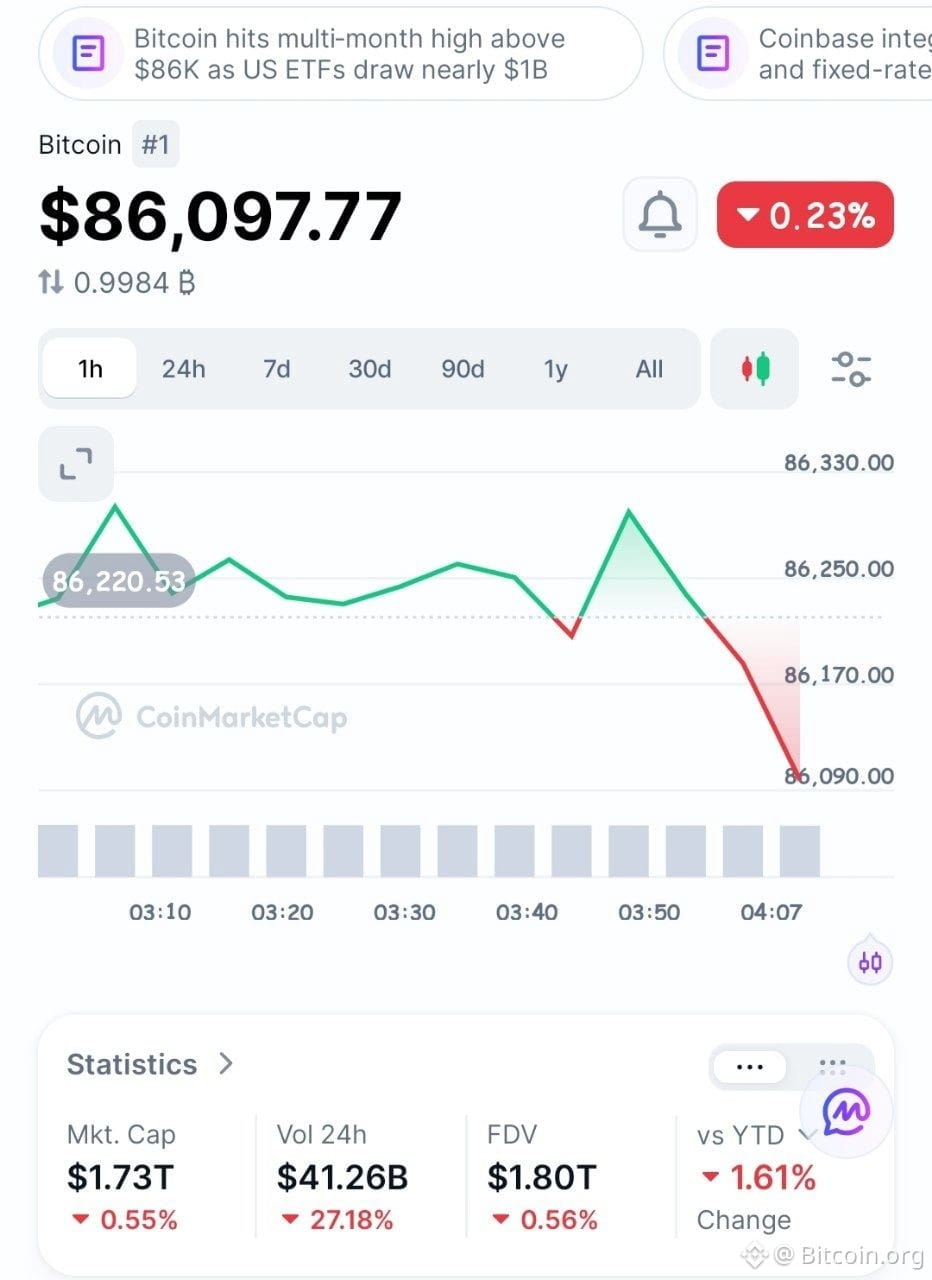
$BTC is still holding 86K so the next breakout will send it 100K.
We hope about this. Yes we want this breakout. Like we jumped over the crash, war, crash again, quantum fud, clarity act, fed hikes.
Even we fight against the Bear Saylor. So ultimately there is no reason to fall now. So 100k is the next jump.
Actually we can't actually believe how It's possible to survive and now make a milestone.
$BTC makes eight month historical high.
Today $BCH joined the rally along with our inspiring $DOGE major 20 gems that are tried hard.
But we focused on #Bitcoin again. A few things are still worth noticing. Bitcoin options expire on the 25th of September. 181k BTC worth of options are reported to expire. So there is possible correction waiting if its still hold mid 86k.
Major event like us us CPI data, CFTC rules aare coming to October. Bitcoin mining difficulty.
But rather then narrative we still hopes that it will move for another high.
The supremacy is all behind this are people. So we can send it.
One more things if you entered early don't forget to take some partial profits. Still market unpredictable. If we are in bull cycle then we are already pre-rich.
What do you think this cycle can retire your bloodline?
#BTC Price Analysis# #Macro Insights# #MajorMoves
$BTC is still holding 86K so the next breakout will send it 100K.
We hope about this. Yes we want this breakout. Like we jumped over the crash, war, crash again, quantum fud, clarity act, fed hikes.
Even we fight against the Bear Saylor. So ultimately there is no reason to fall now. So 100k is the next jump.
Actually we can't actually believe how It's possible to survive and now make a milestone.
$BTC makes eight month historical high.
Today $BCH joined the rally along with our inspiring $DOGE major 20 gems that are tried hard.
But we focused on #Bitcoin again. A few things are still worth noticing. Bitcoin options expire on the 25th of September. 181k BTC worth of options are reported to expire. So there is possible correction waiting if its still hold mid 86k.
Major event like us us CPI data, CFTC rules aare coming to October. Bitcoin mining difficulty.
But rather then narrative we still hopes that it will move for another high.
The supremacy is all behind this are people. So we can send it.
One more things if you entered early don't forget to take some partial profits. Still market unpredictable. If we are in bull cycle then we are already pre-rich.
What do you think this cycle can retire your bloodline?
#BTC Price Analysis# #Macro Insights# #MajorMoves
We hope about this. Yes we want this breakout. Like we jumped over the crash, war, crash again, quantum fud, clarity act, fed hikes.
Even we fight against the Bear Saylor. So ultimately there is no reason to fall now. So 100k is the next jump.
Actually we can't actually believe how It's possible to survive and now make a milestone.
$BTC makes eight month historical high.
Today $BCH joined the rally along with our inspiring $DOGE major 20 gems that are tried hard.
But we focused on #Bitcoin again. A few things are still worth noticing. Bitcoin options expire on the 25th of September. 181k BTC worth of options are reported to expire. So there is possible correction waiting if its still hold mid 86k.
Major event like us us CPI data, CFTC rules aare coming to October. Bitcoin mining difficulty.
But rather then narrative we still hopes that it will move for another high.
The supremacy is all behind this are people. So we can send it.
One more things if you entered early don't forget to take some partial profits. Still market unpredictable. If we are in bull cycle then we are already pre-rich.
What do you think this cycle can retire your bloodline?
#BTC Price Analysis# #Macro Insights# #MajorMoves
105
·
--
$BTC hələ də parabolik... Yenə də 90k-i yenidən qıra biləcəyinə bənzəyir.
Sən əslində belə düşünürsən. Onun doğma təbiəti budur. Hamı bunu həqiqət sayır. Amma əsl sual odur ki, niyə bu qədər yüksəkə qalxır.
Cavabları bilirsən? Yox!
Bu, heç kim tərəfindən təkbaşına göndərilmir. Sadəcə bunu göndərənlərə, yəni göndərən insanlara çatdırırıq. Bir həftə əvvəl elə görünürdü ki, hər şey çöküb. Amma biz bilirik ki, həmişə “fud” əksinə işləyir. Hər dəfə hansısa bir narrativ onu aşağı itələməyə çalışır.
Amma real pul, real insanların real narrativi daha böyük güclə geri qayıdır.
Sadəcə prosesi etibar etməliyik.
Hazırda $BNB 800-də, $ETH isə 2765-dədir—onların hamısı fudları məğlub edib, real utilitinin necə işlədiyini göstərdi.
Amma bir də nəzərə almağa dəyər başqa bir şey var. Qazancını qorumaq lazımdır. Bazar sürətlə hərəkət edəndə, istənilən tərəfə gedə bilər. Yəni bir gün 10% qazanc, növbəti gün -20% ilə nəticələnə bilər. Sadəcə düzgün pozisiya idarəçiliyi lazımdır—hamısı budur.
#BTC Price Analysis# #Macro Insights# #Altcoin Season#
$BTC hələ də parabolik... Yenə də 90k-i yenidən qıra biləcəyinə bənzəyir.
Sən əslində belə düşünürsən. Onun doğma təbiəti budur. Hamı bunu həqiqət sayır. Amma əsl sual odur ki, niyə bu qədər yüksəkə qalxır.
Cavabları bilirsən? Yox!
Bu, heç kim tərəfindən təkbaşına göndərilmir. Sadəcə bunu göndərənlərə, yəni göndərən insanlara çatdırırıq. Bir həftə əvvəl elə görünürdü ki, hər şey çöküb. Amma biz bilirik ki, həmişə “fud” əksinə işləyir. Hər dəfə hansısa bir narrativ onu aşağı itələməyə çalışır.
Amma real pul, real insanların real narrativi daha böyük güclə geri qayıdır.
Sadəcə prosesi etibar etməliyik.
Hazırda $BNB 800-də, $ETH isə 2765-dədir—onların hamısı fudları məğlub edib, real utilitinin necə işlədiyini göstərdi.
Amma bir də nəzərə almağa dəyər başqa bir şey var. Qazancını qorumaq lazımdır. Bazar sürətlə hərəkət edəndə, istənilən tərəfə gedə bilər. Yəni bir gün 10% qazanc, növbəti gün -20% ilə nəticələnə bilər. Sadəcə düzgün pozisiya idarəçiliyi lazımdır—hamısı budur.
#BTC Price Analysis# #Macro Insights# #Altcoin Season#
Sən əslində belə düşünürsən. Onun doğma təbiəti budur. Hamı bunu həqiqət sayır. Amma əsl sual odur ki, niyə bu qədər yüksəkə qalxır.
Cavabları bilirsən? Yox!
Bu, heç kim tərəfindən təkbaşına göndərilmir. Sadəcə bunu göndərənlərə, yəni göndərən insanlara çatdırırıq. Bir həftə əvvəl elə görünürdü ki, hər şey çöküb. Amma biz bilirik ki, həmişə “fud” əksinə işləyir. Hər dəfə hansısa bir narrativ onu aşağı itələməyə çalışır.
Amma real pul, real insanların real narrativi daha böyük güclə geri qayıdır.
Sadəcə prosesi etibar etməliyik.
Hazırda $BNB 800-də, $ETH isə 2765-dədir—onların hamısı fudları məğlub edib, real utilitinin necə işlədiyini göstərdi.
Amma bir də nəzərə almağa dəyər başqa bir şey var. Qazancını qorumaq lazımdır. Bazar sürətlə hərəkət edəndə, istənilən tərəfə gedə bilər. Yəni bir gün 10% qazanc, növbəti gün -20% ilə nəticələnə bilər. Sadəcə düzgün pozisiya idarəçiliyi lazımdır—hamısı budur.
#BTC Price Analysis# #Macro Insights# #Altcoin Season#
1
630
·
--
Tərcüməyə bax
Market is back again to Its true form. Just right now.
Market back after the deep correction. Likely $ETH from 2577 to 2626 now
$BNB didn’t go much deep. It’s back from 753 to 759
And the big Pancake $BTC gains 0.88%
So market make this ups and down. It’s actually worth noticing. It’s always works with impulsive and retracement move.
Just right now market. So after the correction again market looking for more uoside.
So the actual entry opportunity back and back.
Green candle are just clearing the path.
This #BullRun2026 hasn’t even starting yet.
Bull run can send few gem to another ATH.
What you think?
#MarketMovement #ImpulsiveMove #Breakouts
Market is back again to Its true form. Just right now.
Market back after the deep correction. Likely $ETH from 2577 to 2626 now
$BNB didn’t go much deep. It’s back from 753 to 759
And the big Pancake $BTC gains 0.88%
So market make this ups and down. It’s actually worth noticing. It’s always works with impulsive and retracement move.
Just right now market. So after the correction again market looking for more uoside.
So the actual entry opportunity back and back.
Green candle are just clearing the path.
This #BullRun2026 hasn’t even starting yet.
Bull run can send few gem to another ATH.
What you think?
#MarketMovement #ImpulsiveMove #Breakouts
Market back after the deep correction. Likely $ETH from 2577 to 2626 now
$BNB didn’t go much deep. It’s back from 753 to 759
And the big Pancake $BTC gains 0.88%
So market make this ups and down. It’s actually worth noticing. It’s always works with impulsive and retracement move.
Just right now market. So after the correction again market looking for more uoside.
So the actual entry opportunity back and back.
Green candle are just clearing the path.
This #BullRun2026 hasn’t even starting yet.
Bull run can send few gem to another ATH.
What you think?
#MarketMovement #ImpulsiveMove #Breakouts
70
·
--
Tərcüməyə bax
$CRCLB is just launched its USDC native blockchain and the crypto world already adopted it.
This Arc Chain is completed major problem like gas calculation. Also somethings like fast finality. EVM compatible so already introduced top tiers dApp can start from the starting.
They major think is this the $USDC backed by USD so there is no more comolex calculation over the transaction cost. Protocol fees. Or others expenses.
One more point it's also trying to partnered with toptier rwa project. So i think $CRCLB is potential.
But still going downside in long timeframe.
So this should be a opportunity to grab this crypto native bStocks.
What you think people will add bStocks rather then crypto?
#BNBChain# #Macro Insights#
$CRCLB is just launched its USDC native blockchain and the crypto world already adopted it.
This Arc Chain is completed major problem like gas calculation. Also somethings like fast finality. EVM compatible so already introduced top tiers dApp can start from the starting.
They major think is this the $USDC backed by USD so there is no more comolex calculation over the transaction cost. Protocol fees. Or others expenses.
One more point it's also trying to partnered with toptier rwa project. So i think $CRCLB is potential.
But still going downside in long timeframe.
So this should be a opportunity to grab this crypto native bStocks.
What you think people will add bStocks rather then crypto?
#BNBChain# #Macro Insights#
This Arc Chain is completed major problem like gas calculation. Also somethings like fast finality. EVM compatible so already introduced top tiers dApp can start from the starting.
They major think is this the $USDC backed by USD so there is no more comolex calculation over the transaction cost. Protocol fees. Or others expenses.
One more point it's also trying to partnered with toptier rwa project. So i think $CRCLB is potential.
But still going downside in long timeframe.
So this should be a opportunity to grab this crypto native bStocks.
What you think people will add bStocks rather then crypto?
#BNBChain# #Macro Insights#
58
·
--
Tərcüməyə bax
Every cycle comes with hope and ends with pain.
Newcomers always make a few mistakes. They Don't understand the process.
How it actually works.
Just a few hours ago the market was at its peak. But right now all red with. But the greed and fear index still suggests 71. Means still people are hoping for more pumps.
I'm also bullish. But newcomers think that's all we got. This is time for the red ones. But actually it's just a retracement move. Before another impulsive move market can consolidate or test the support zone.
But when i was newcomer i already sell it in panic.
So what is the reason behind it. It’s just works along with our psychological manner.
Market gains 10x in day. But then market goes 2x low and people got oanicked. But you need to trust the Process. Its always happens in every cycle. Even Michael Saylor bought Bitcoin at its peak.
But he managed to DCA but newcomers don't know how to manage it all.
That's why newbies rush to sell and make a loss.
So right now the market is just making its correction not crash or panic sell yet. This happens bcz some people bought it early and they secured their bag.
So this time you add some potential gem your bag.
Like $SUI $BNB
#BTC Price Analysis# #Altcoin Season#
Every cycle comes with hope and ends with pain.
Newcomers always make a few mistakes. They Don't understand the process.
How it actually works.
Just a few hours ago the market was at its peak. But right now all red with. But the greed and fear index still suggests 71. Means still people are hoping for more pumps.
I'm also bullish. But newcomers think that's all we got. This is time for the red ones. But actually it's just a retracement move. Before another impulsive move market can consolidate or test the support zone.
But when i was newcomer i already sell it in panic.
So what is the reason behind it. It’s just works along with our psychological manner.
Market gains 10x in day. But then market goes 2x low and people got oanicked. But you need to trust the Process. Its always happens in every cycle. Even Michael Saylor bought Bitcoin at its peak.
But he managed to DCA but newcomers don't know how to manage it all.
That's why newbies rush to sell and make a loss.
So right now the market is just making its correction not crash or panic sell yet. This happens bcz some people bought it early and they secured their bag.
So this time you add some potential gem your bag.
Like $SUI $BNB
#BTC Price Analysis# #Altcoin Season#
Newcomers always make a few mistakes. They Don't understand the process.
How it actually works.
Just a few hours ago the market was at its peak. But right now all red with. But the greed and fear index still suggests 71. Means still people are hoping for more pumps.
I'm also bullish. But newcomers think that's all we got. This is time for the red ones. But actually it's just a retracement move. Before another impulsive move market can consolidate or test the support zone.
But when i was newcomer i already sell it in panic.
So what is the reason behind it. It’s just works along with our psychological manner.
Market gains 10x in day. But then market goes 2x low and people got oanicked. But you need to trust the Process. Its always happens in every cycle. Even Michael Saylor bought Bitcoin at its peak.
But he managed to DCA but newcomers don't know how to manage it all.
That's why newbies rush to sell and make a loss.
So right now the market is just making its correction not crash or panic sell yet. This happens bcz some people bought it early and they secured their bag.
So this time you add some potential gem your bag.
Like $SUI $BNB
#BTC Price Analysis# #Altcoin Season#
124
·
--
Tərcüməyə bax
$SUI Every cycle comes with hope and ends with pain.
Newcomers always make mistakes. They don't understand the process, how it actually works. They think you just need to buy low and sell high, but they don't know where to buy or when to buy. The answer is simple, if you're in a bull market, don't sell early, be a diamond hand. You also need to learn where to buy.
If you think the market is going so well it'll keep going up in the coming days, that's how people fall for fomo and buy at the peak, because they don't understand which gem is actually worth buying. My honest answer is you can buy well structured, reputable gems. Don't buy just because of fomo.
People make mistakes because they don't understand how chart data actually moves. Charts follow a few repeated patterns, but most people don't understand how impulsive moves and retracements actually happen at the order book level.
Buying low means understanding that a trade is genuinely still going, and using a retracement as your entry point, not chasing a move you think will keep going up forever.
Please, don't fall for fomo. Buy only potential gems, ones built to last. Before placing a buy order, check the contract address.
Because every bull run ends with pain, take a small portion of profit along the way. Don't just wait for more green.
Just 10 hours ago the market was at its peak but right now at low. That's what I'm talking about. This dip is also an opportunity.
So, final summary, don't forget to take profit.
Right now I'm thinking about $SUI
$SUI is down 3.90 percent in the last 24 hours, trading at 0.8197 dollars after opening at 0.8530 and hitting a high of 0.8872.
Are you enjoying the ride to $1, or still watching from the sidelines?
#MARKET #BullRun2026 #MacroInsights
$SUI Every cycle comes with hope and ends with pain.
Newcomers always make mistakes. They don't understand the process, how it actually works. They think you just need to buy low and sell high, but they don't know where to buy or when to buy. The answer is simple, if you're in a bull market, don't sell early, be a diamond hand. You also need to learn where to buy.
If you think the market is going so well it'll keep going up in the coming days, that's how people fall for fomo and buy at the peak, because they don't understand which gem is actually worth buying. My honest answer is you can buy well structured, reputable gems. Don't buy just because of fomo.
People make mistakes because they don't understand how chart data actually moves. Charts follow a few repeated patterns, but most people don't understand how impulsive moves and retracements actually happen at the order book level.
Buying low means understanding that a trade is genuinely still going, and using a retracement as your entry point, not chasing a move you think will keep going up forever.
Please, don't fall for fomo. Buy only potential gems, ones built to last. Before placing a buy order, check the contract address.
Because every bull run ends with pain, take a small portion of profit along the way. Don't just wait for more green.
Just 10 hours ago the market was at its peak but right now at low. That's what I'm talking about. This dip is also an opportunity.
So, final summary, don't forget to take profit.
Right now I'm thinking about $SUI
$SUI is down 3.90 percent in the last 24 hours, trading at 0.8197 dollars after opening at 0.8530 and hitting a high of 0.8872.
Are you enjoying the ride to $1, or still watching from the sidelines?
#MARKET #BullRun2026 #MacroInsights
Newcomers always make mistakes. They don't understand the process, how it actually works. They think you just need to buy low and sell high, but they don't know where to buy or when to buy. The answer is simple, if you're in a bull market, don't sell early, be a diamond hand. You also need to learn where to buy.
If you think the market is going so well it'll keep going up in the coming days, that's how people fall for fomo and buy at the peak, because they don't understand which gem is actually worth buying. My honest answer is you can buy well structured, reputable gems. Don't buy just because of fomo.
People make mistakes because they don't understand how chart data actually moves. Charts follow a few repeated patterns, but most people don't understand how impulsive moves and retracements actually happen at the order book level.
Buying low means understanding that a trade is genuinely still going, and using a retracement as your entry point, not chasing a move you think will keep going up forever.
Please, don't fall for fomo. Buy only potential gems, ones built to last. Before placing a buy order, check the contract address.
Because every bull run ends with pain, take a small portion of profit along the way. Don't just wait for more green.
Just 10 hours ago the market was at its peak but right now at low. That's what I'm talking about. This dip is also an opportunity.
So, final summary, don't forget to take profit.
Right now I'm thinking about $SUI
$SUI is down 3.90 percent in the last 24 hours, trading at 0.8197 dollars after opening at 0.8530 and hitting a high of 0.8872.
Are you enjoying the ride to $1, or still watching from the sidelines?
#MARKET #BullRun2026 #MacroInsights
61
·
--
Tərcüməyə bax
$BR
Are you aware that BR s contract has a confirmed mint function and blacklist restrictions, straight from Binance's own audit?
It ain't rumor. Binance flagged it themselves: mintable detected, blacklist restrictions found, token risk warning. Three cautions, confirmed on chain, not speculation.
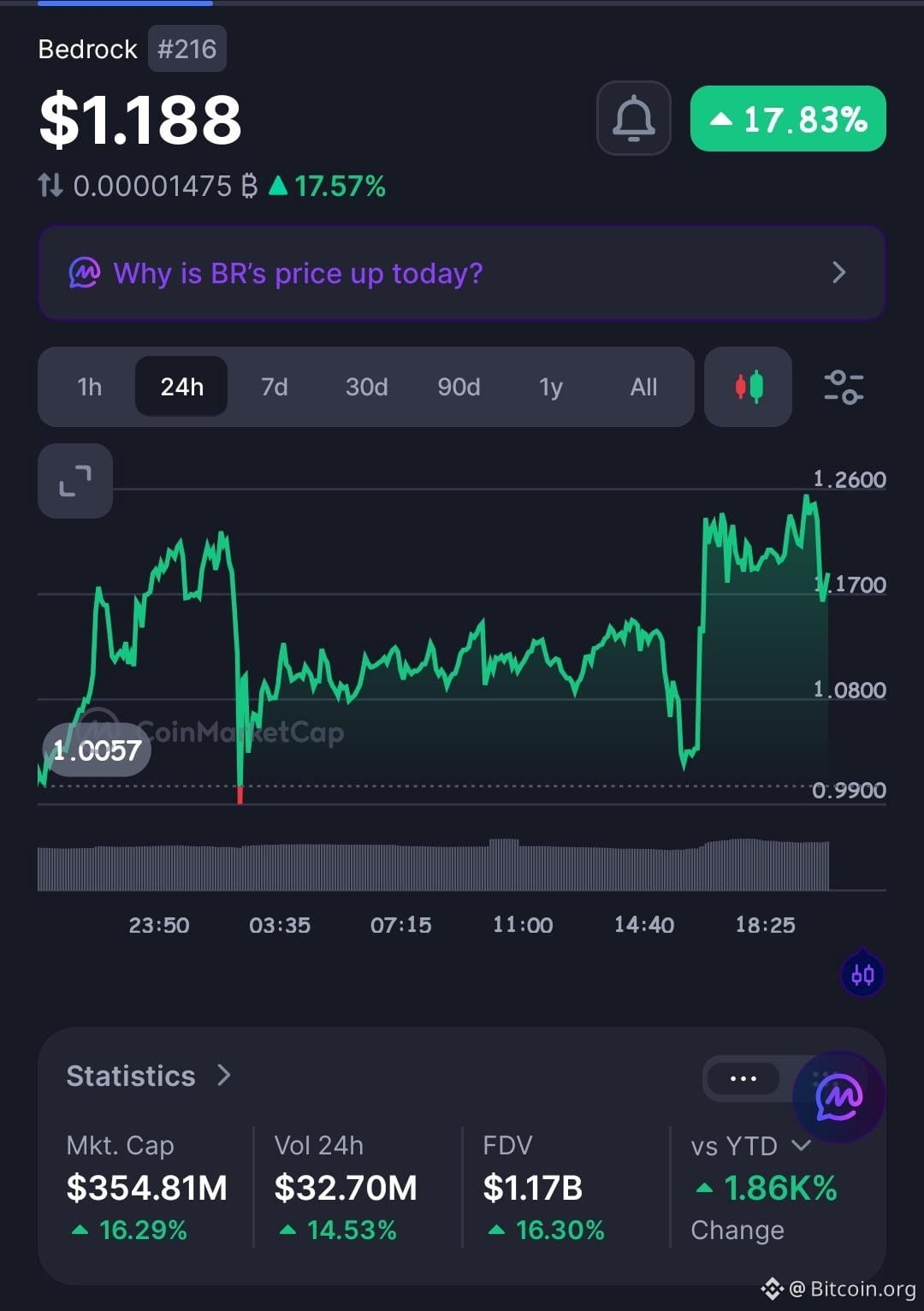
Max supply is capped at 1B, but circulating is only 534.85M right now, roughly half the total supply still sitting unminted. That leaves real room for fresh tokens to hit the market if the owner ever chooses to.
Right now $BR is trading at 1.1916 dollars, down from today's high of 1.4017, after opening near 1.10. That's already a fade off the top, not a clean breakout holding its ground.
Then your portfolio dumps, you get liquidated easily, and you're out here trading it like it's just random chart drawing without knowing what's actually under the hood.
To be fair, buy and sell tax are both 0 percent and there's no whitelist restriction, that part's clean. But mintable plus blacklist together means the owner holds real power over your position, whether they ever use it or not.
Know what you're actually holding before you size up. Price is already cooling from the high, this is a high risk setup, trade it with a tight plan and a real stop loss, not blind conviction.
#Bedrock #BTCStaking #BNBChain#
$BR
Are you aware that BR s contract has a confirmed mint function and blacklist restrictions, straight from Binance's own audit?
It ain't rumor. Binance flagged it themselves: mintable detected, blacklist restrictions found, token risk warning. Three cautions, confirmed on chain, not speculation.
Max supply is capped at 1B, but circulating is only 534.85M right now, roughly half the total supply still sitting unminted. That leaves real room for fresh tokens to hit the market if the owner ever chooses to.
Right now $BR is trading at 1.1916 dollars, down from today's high of 1.4017, after opening near 1.10. That's already a fade off the top, not a clean breakout holding its ground.
Then your portfolio dumps, you get liquidated easily, and you're out here trading it like it's just random chart drawing without knowing what's actually under the hood.
To be fair, buy and sell tax are both 0 percent and there's no whitelist restriction, that part's clean. But mintable plus blacklist together means the owner holds real power over your position, whether they ever use it or not.
Know what you're actually holding before you size up. Price is already cooling from the high, this is a high risk setup, trade it with a tight plan and a real stop loss, not blind conviction.
#Bedrock #BTCStaking #BNBChain#
Are you aware that BR s contract has a confirmed mint function and blacklist restrictions, straight from Binance's own audit?
It ain't rumor. Binance flagged it themselves: mintable detected, blacklist restrictions found, token risk warning. Three cautions, confirmed on chain, not speculation.
Max supply is capped at 1B, but circulating is only 534.85M right now, roughly half the total supply still sitting unminted. That leaves real room for fresh tokens to hit the market if the owner ever chooses to.
Right now $BR is trading at 1.1916 dollars, down from today's high of 1.4017, after opening near 1.10. That's already a fade off the top, not a clean breakout holding its ground.
Then your portfolio dumps, you get liquidated easily, and you're out here trading it like it's just random chart drawing without knowing what's actually under the hood.
To be fair, buy and sell tax are both 0 percent and there's no whitelist restriction, that part's clean. But mintable plus blacklist together means the owner holds real power over your position, whether they ever use it or not.
Know what you're actually holding before you size up. Price is already cooling from the high, this is a high risk setup, trade it with a tight plan and a real stop loss, not blind conviction.
#Bedrock #BTCStaking #BNBChain#
363
·
--
Tərcüməyə bax
Every cycle comes with hope and ends with pain.
Newcomers always make mistakes. They don't understand the process, how it actually works. They think you just need to buy low and sell high, but they don't know where to buy or when to buy. The answer is simple, if you're in a bull market, don't sell early, be a diamond hand. You also need to learn where to buy.
If you think the market is going so well it'll keep going up in the coming days, that's how people fall for fomo and buy at the peak, because they don't understand which gem is actually worth buying. My honest answer is you can buy well structured, reputable gems. Don't buy just because of fomo.
People make mistakes because they don't understand how chart data actually moves. Charts follow a few repeated patterns, but most people don't understand how impulsive moves and retracements actually happen at the order book level.
Buying low means understanding that a trade is genuinely still going, and using a retracement as your entry point, not chasing a move you think will keep going up forever.
Please, don't fall for fomo. Buy only potential gems, ones built to last. Before placing a buy order, check the contract address.
Because every bull run ends with pain, take a small portion of profit along the way. Don't just wait for more green.
Just 10 hours ago the market was at its peak but right now at low. That's what i'm talking about. This deep also an opportunity.
So, final summary, don't forget to take profit.
Right now I'm thinking about $SUI
$SUI is down 3.30 percent in the last 24 hours, trading at 0.8143 dollars after opening at 0.8421 and hitting a high of 0.8872. Now well within reach of that dollar mark, but pulling back rather than pushing through it today.
Are you enjoying the ride to 1$ , or still watching from the sidelines?
#MARKET #BullRun2026 #MacroInsights
Every cycle comes with hope and ends with pain.
Newcomers always make mistakes. They don't understand the process, how it actually works. They think you just need to buy low and sell high, but they don't know where to buy or when to buy. The answer is simple, if you're in a bull market, don't sell early, be a diamond hand. You also need to learn where to buy.
If you think the market is going so well it'll keep going up in the coming days, that's how people fall for fomo and buy at the peak, because they don't understand which gem is actually worth buying. My honest answer is you can buy well structured, reputable gems. Don't buy just because of fomo.
People make mistakes because they don't understand how chart data actually moves. Charts follow a few repeated patterns, but most people don't understand how impulsive moves and retracements actually happen at the order book level.
Buying low means understanding that a trade is genuinely still going, and using a retracement as your entry point, not chasing a move you think will keep going up forever.
Please, don't fall for fomo. Buy only potential gems, ones built to last. Before placing a buy order, check the contract address.
Because every bull run ends with pain, take a small portion of profit along the way. Don't just wait for more green.
Just 10 hours ago the market was at its peak but right now at low. That's what i'm talking about. This deep also an opportunity.
So, final summary, don't forget to take profit.
Right now I'm thinking about $SUI
$SUI is down 3.30 percent in the last 24 hours, trading at 0.8143 dollars after opening at 0.8421 and hitting a high of 0.8872. Now well within reach of that dollar mark, but pulling back rather than pushing through it today.
Are you enjoying the ride to 1$ , or still watching from the sidelines?
#MARKET #BullRun2026 #MacroInsights
Newcomers always make mistakes. They don't understand the process, how it actually works. They think you just need to buy low and sell high, but they don't know where to buy or when to buy. The answer is simple, if you're in a bull market, don't sell early, be a diamond hand. You also need to learn where to buy.
If you think the market is going so well it'll keep going up in the coming days, that's how people fall for fomo and buy at the peak, because they don't understand which gem is actually worth buying. My honest answer is you can buy well structured, reputable gems. Don't buy just because of fomo.
People make mistakes because they don't understand how chart data actually moves. Charts follow a few repeated patterns, but most people don't understand how impulsive moves and retracements actually happen at the order book level.
Buying low means understanding that a trade is genuinely still going, and using a retracement as your entry point, not chasing a move you think will keep going up forever.
Please, don't fall for fomo. Buy only potential gems, ones built to last. Before placing a buy order, check the contract address.
Because every bull run ends with pain, take a small portion of profit along the way. Don't just wait for more green.
Just 10 hours ago the market was at its peak but right now at low. That's what i'm talking about. This deep also an opportunity.
So, final summary, don't forget to take profit.
Right now I'm thinking about $SUI
$SUI is down 3.30 percent in the last 24 hours, trading at 0.8143 dollars after opening at 0.8421 and hitting a high of 0.8872. Now well within reach of that dollar mark, but pulling back rather than pushing through it today.
Are you enjoying the ride to 1$ , or still watching from the sidelines?
#MARKET #BullRun2026 #MacroInsights
74
·
--
Hər dövr ümidlə başlayır və ağrı ilə sona çatır.
Yeni başlayanlar (Noobie) həmişə səhv edirlər. Prosesi başa düşmürlər. Necə işləyir.?
Onlar sadəcə aşağı alıb yüksək satmaq lazım olduğunu düşünürlər, amma nə vaxt nəyi almaq lazım olduğunu bilmirlər. Harada almaq lazımdır, nə vaxt almaq lazımdır.
Amma cavab sadədir. Əgər siz #BullMarket-dəsinizsə, erkən satmayın. “Diamond hand” olun.
Həm də hara almağı öyrənməlisiniz.
Əgər düşünürsünüzsə ki, bazar bu qədər yaxşı gedirsə, deməli yaxın günlərdə də daha çox yuxarı gedəcək, onda fomo-ya düşür və zirvədə alırlar. Bcz hansının doğru “gem” olduğunu bilmirlər.
Mənim dürüst cavabım budur: yaxşı qurulmuş və nüfuzlu “gems” ala bilərsiniz. Sadəcə fomo ilə alış etməyin.
Onlar səhv etdilər, çünki onların yolundan keçən qrafik məlumatlarını başa düşmürlər. Qrafik bir neçə dəfə təkrarlanan strategiyalarla izlənir. Amma çox güman ki, insanların çoxu impulsiv hərəkətin və retracement (geri dönmə) hərəkətinin orderbook-da necə baş verdiyini bilmir.
Siz aşağıda almağı bilməlisiniz. Əgər bilirsinizsə ki, bu trade həqiqətən gedəcək. “Buy” o deməkdir ki, siz retracement zamanı bazara daxil ola bilərsiniz.
Onlar səhv etdilər, çünki daha da yuxarı gedəcəyini düşünürdülər.
Zəhmət olmasa, noobies fomo-ya düşməyin.
Yalnız potensial “gem” alın. Yalnız uzun müddət gedəcək o “gem”-i alın.
Alış sifarişi verməzdən əvvəl ünvanı yoxlayın.
Çünki hər bullrun ağrı ilə bitir.
Zəhmət olmasa, noobies mənfəətin kiçik bir hissəsini götürün. Sadəcə daha çox yaşıl gözləməyin.
Beləliklə, yekun xülasə. Unutmayın ki, bir az mənfəət götürün.
Hazırda $SUI barədə düşünürəm.
Siz 1$ journey-dən həzz alırsınız, yoxsa hələ də kənardan izləyirsiniz.?
#MARKET #BullRun2026 #Macro Insights#
Hər dövr ümidlə başlayır və ağrı ilə sona çatır.
Yeni başlayanlar (Noobie) həmişə səhv edirlər. Prosesi başa düşmürlər. Necə işləyir.?
Onlar sadəcə aşağı alıb yüksək satmaq lazım olduğunu düşünürlər, amma nə vaxt nəyi almaq lazım olduğunu bilmirlər. Harada almaq lazımdır, nə vaxt almaq lazımdır.
Amma cavab sadədir. Əgər siz #BullMarket-dəsinizsə, erkən satmayın. “Diamond hand” olun.
Həm də hara almağı öyrənməlisiniz.
Əgər düşünürsünüzsə ki, bazar bu qədər yaxşı gedirsə, deməli yaxın günlərdə də daha çox yuxarı gedəcək, onda fomo-ya düşür və zirvədə alırlar. Bcz hansının doğru “gem” olduğunu bilmirlər.
Mənim dürüst cavabım budur: yaxşı qurulmuş və nüfuzlu “gems” ala bilərsiniz. Sadəcə fomo ilə alış etməyin.
Onlar səhv etdilər, çünki onların yolundan keçən qrafik məlumatlarını başa düşmürlər. Qrafik bir neçə dəfə təkrarlanan strategiyalarla izlənir. Amma çox güman ki, insanların çoxu impulsiv hərəkətin və retracement (geri dönmə) hərəkətinin orderbook-da necə baş verdiyini bilmir.
Siz aşağıda almağı bilməlisiniz. Əgər bilirsinizsə ki, bu trade həqiqətən gedəcək. “Buy” o deməkdir ki, siz retracement zamanı bazara daxil ola bilərsiniz.
Onlar səhv etdilər, çünki daha da yuxarı gedəcəyini düşünürdülər.
Zəhmət olmasa, noobies fomo-ya düşməyin.
Yalnız potensial “gem” alın. Yalnız uzun müddət gedəcək o “gem”-i alın.
Alış sifarişi verməzdən əvvəl ünvanı yoxlayın.
Çünki hər bullrun ağrı ilə bitir.
Zəhmət olmasa, noobies mənfəətin kiçik bir hissəsini götürün. Sadəcə daha çox yaşıl gözləməyin.
Beləliklə, yekun xülasə. Unutmayın ki, bir az mənfəət götürün.
Hazırda $SUI barədə düşünürəm.
Siz 1$ journey-dən həzz alırsınız, yoxsa hələ də kənardan izləyirsiniz.?
#MARKET #BullRun2026 #Macro Insights#
Yeni başlayanlar (Noobie) həmişə səhv edirlər. Prosesi başa düşmürlər. Necə işləyir.?
Onlar sadəcə aşağı alıb yüksək satmaq lazım olduğunu düşünürlər, amma nə vaxt nəyi almaq lazım olduğunu bilmirlər. Harada almaq lazımdır, nə vaxt almaq lazımdır.
Amma cavab sadədir. Əgər siz #BullMarket-dəsinizsə, erkən satmayın. “Diamond hand” olun.
Həm də hara almağı öyrənməlisiniz.
Əgər düşünürsünüzsə ki, bazar bu qədər yaxşı gedirsə, deməli yaxın günlərdə də daha çox yuxarı gedəcək, onda fomo-ya düşür və zirvədə alırlar. Bcz hansının doğru “gem” olduğunu bilmirlər.
Mənim dürüst cavabım budur: yaxşı qurulmuş və nüfuzlu “gems” ala bilərsiniz. Sadəcə fomo ilə alış etməyin.
Onlar səhv etdilər, çünki onların yolundan keçən qrafik məlumatlarını başa düşmürlər. Qrafik bir neçə dəfə təkrarlanan strategiyalarla izlənir. Amma çox güman ki, insanların çoxu impulsiv hərəkətin və retracement (geri dönmə) hərəkətinin orderbook-da necə baş verdiyini bilmir.
Siz aşağıda almağı bilməlisiniz. Əgər bilirsinizsə ki, bu trade həqiqətən gedəcək. “Buy” o deməkdir ki, siz retracement zamanı bazara daxil ola bilərsiniz.
Onlar səhv etdilər, çünki daha da yuxarı gedəcəyini düşünürdülər.
Zəhmət olmasa, noobies fomo-ya düşməyin.
Yalnız potensial “gem” alın. Yalnız uzun müddət gedəcək o “gem”-i alın.
Alış sifarişi verməzdən əvvəl ünvanı yoxlayın.
Çünki hər bullrun ağrı ilə bitir.
Zəhmət olmasa, noobies mənfəətin kiçik bir hissəsini götürün. Sadəcə daha çox yaşıl gözləməyin.
Beləliklə, yekun xülasə. Unutmayın ki, bir az mənfəət götürün.
Hazırda $SUI barədə düşünürəm.
Siz 1$ journey-dən həzz alırsınız, yoxsa hələ də kənardan izləyirsiniz.?
#MARKET #BullRun2026 #Macro Insights#
122
·
--
Bugün daha əvvəl $ZAMA haqqında yazmışdım.
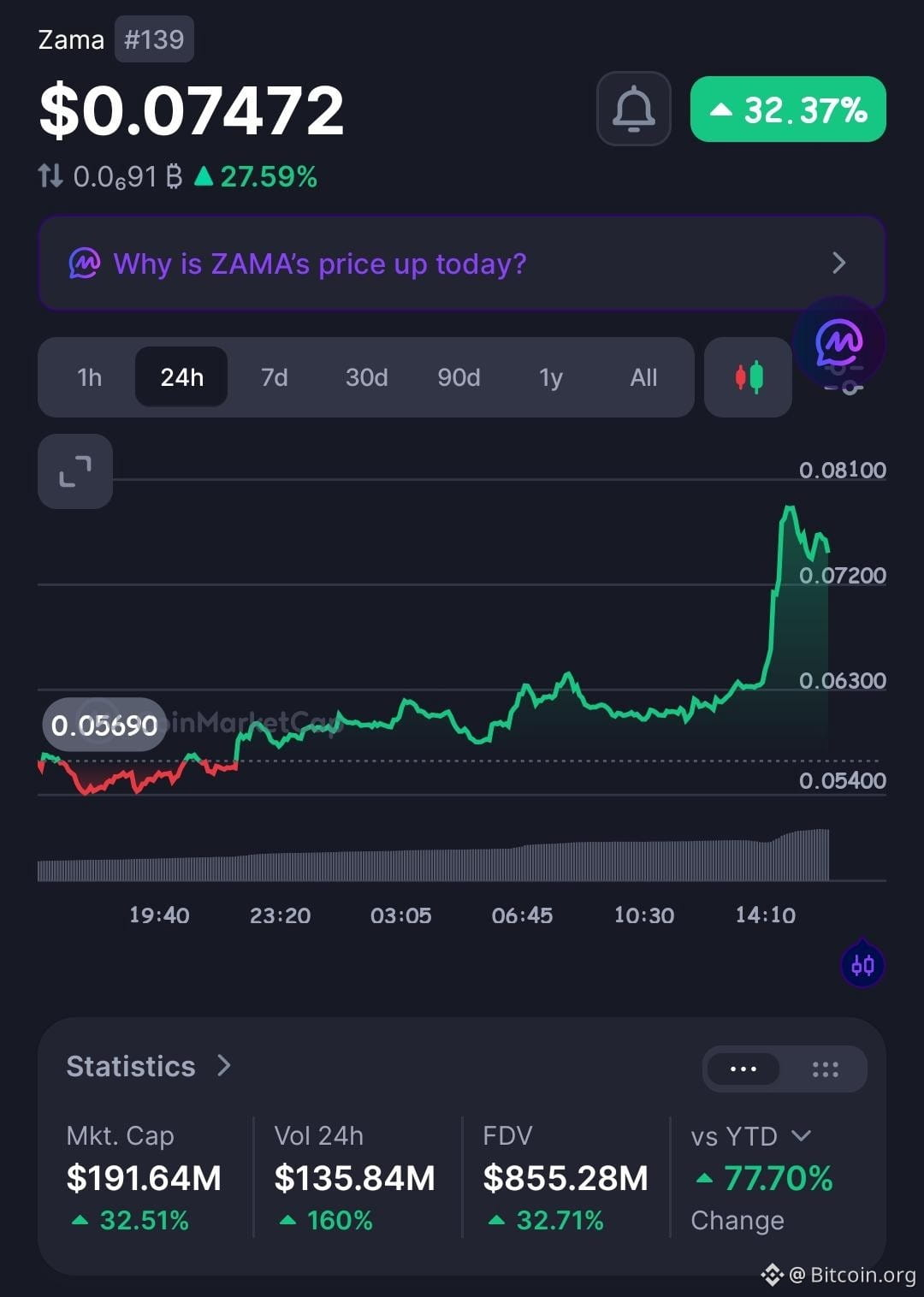
$ZAMA elə indi çıxış etdi. Bu gün 43.72% artım göstərir, 0.06013 dollarla açıldıqdan sonra 0.08642 dollarda ticarət edir və 0.09275-ə qədər yüksəlib. Bu, sadəcə kiçik bir sıçrayış deyil — həqiqi bir yüksəliş ayağıdır.
Üstəlik, bu yalnız hype ilə bağlı deyil. $ZAMA başqa bir zəncir olmağa çalışmır. O, Tam Homomorf Şifrələmə (Fully Homomorphic Encryption) ilə şifrələmə qatıdır; mövcud EVM zəncirlərinə birbaşa qoşulur və heç vaxt şifrəni açmadan şifrələnmiş məlumatlar üzərində hesablamalar aparmağa imkan verir.
Bu, qətiyyətin necə göründüyüdür — qrafik nəhayət tezisi dəstəkləyəndə. Məxfilik artıq sadəcə yan mövzu deyil, əsas hadisəyə çevrilir. Bəzi çıxışlar bir günə sönür, amma bu birinin altında fundamentlər dayanır.
Mənim fikrimcə, bu gem hələ də qiymətdən aşağı qiymətləndirilir.
Səfərə qoşulursunuz, yoxsa retracement zamanı başqa bir fürsəti gözləyirsiniz?
#ZamaProtocol #MARKET #BullRun2026
Bugün daha əvvəl $ZAMA haqqında yazmışdım.
$ZAMA elə indi çıxış etdi. Bu gün 43.72% artım göstərir, 0.06013 dollarla açıldıqdan sonra 0.08642 dollarda ticarət edir və 0.09275-ə qədər yüksəlib. Bu, sadəcə kiçik bir sıçrayış deyil — həqiqi bir yüksəliş ayağıdır.
Üstəlik, bu yalnız hype ilə bağlı deyil. $ZAMA başqa bir zəncir olmağa çalışmır. O, Tam Homomorf Şifrələmə (Fully Homomorphic Encryption) ilə şifrələmə qatıdır; mövcud EVM zəncirlərinə birbaşa qoşulur və heç vaxt şifrəni açmadan şifrələnmiş məlumatlar üzərində hesablamalar aparmağa imkan verir.
Bu, qətiyyətin necə göründüyüdür — qrafik nəhayət tezisi dəstəkləyəndə. Məxfilik artıq sadəcə yan mövzu deyil, əsas hadisəyə çevrilir. Bəzi çıxışlar bir günə sönür, amma bu birinin altında fundamentlər dayanır.
Mənim fikrimcə, bu gem hələ də qiymətdən aşağı qiymətləndirilir.
Səfərə qoşulursunuz, yoxsa retracement zamanı başqa bir fürsəti gözləyirsiniz?
#ZamaProtocol #MARKET #BullRun2026
$ZAMA elə indi çıxış etdi. Bu gün 43.72% artım göstərir, 0.06013 dollarla açıldıqdan sonra 0.08642 dollarda ticarət edir və 0.09275-ə qədər yüksəlib. Bu, sadəcə kiçik bir sıçrayış deyil — həqiqi bir yüksəliş ayağıdır.
Üstəlik, bu yalnız hype ilə bağlı deyil. $ZAMA başqa bir zəncir olmağa çalışmır. O, Tam Homomorf Şifrələmə (Fully Homomorphic Encryption) ilə şifrələmə qatıdır; mövcud EVM zəncirlərinə birbaşa qoşulur və heç vaxt şifrəni açmadan şifrələnmiş məlumatlar üzərində hesablamalar aparmağa imkan verir.
Bu, qətiyyətin necə göründüyüdür — qrafik nəhayət tezisi dəstəkləyəndə. Məxfilik artıq sadəcə yan mövzu deyil, əsas hadisəyə çevrilir. Bəzi çıxışlar bir günə sönür, amma bu birinin altında fundamentlər dayanır.
Mənim fikrimcə, bu gem hələ də qiymətdən aşağı qiymətləndirilir.
Səfərə qoşulursunuz, yoxsa retracement zamanı başqa bir fürsəti gözləyirsiniz?
#ZamaProtocol #MARKET #BullRun2026
189
·
--
$BTC Əgər sağ qaldın
10 oktyabr qəzası
ABŞ və İran müharibəsi
Fevral qəzası
Kvant FUD
Saylorun BTC satması
Clarity Act Senatda uğursuz oldu
Fed-in 3 il ərzində ilk dəfə faizləri artırması
Sonra nə gəlirsə, ona layiqsən.
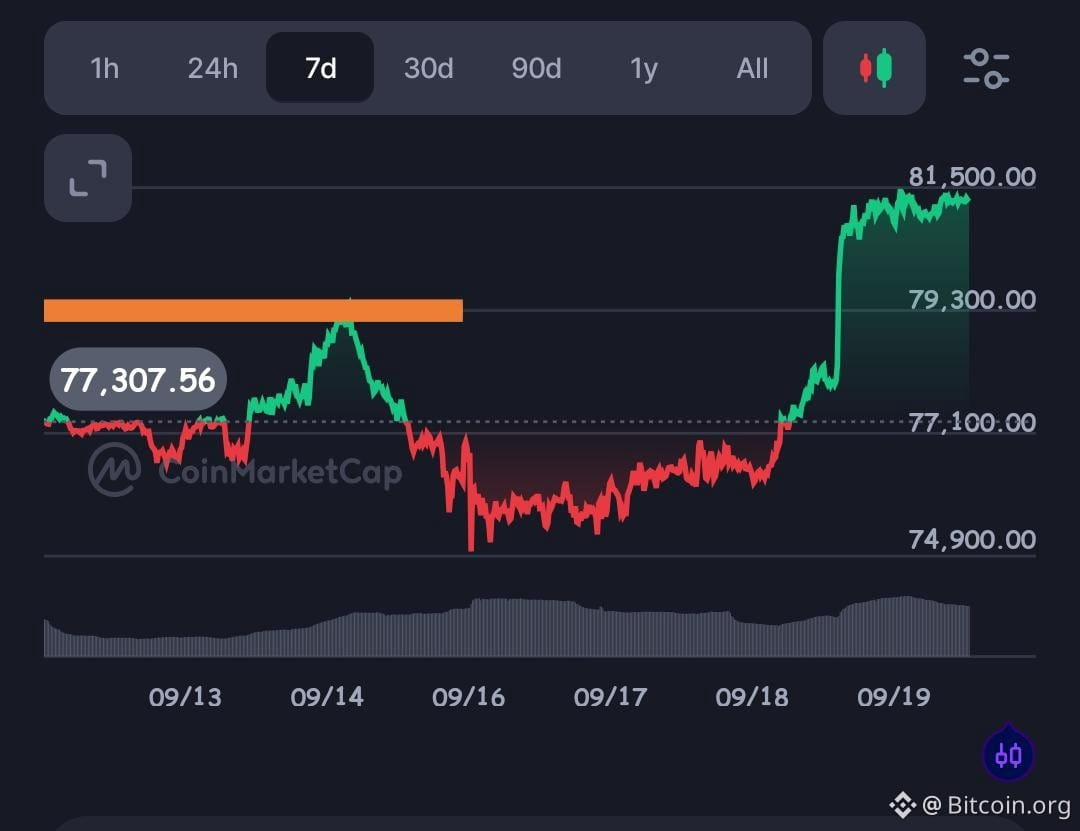
Bunların hər biri, hər şeyin dağıldığı an kimi gözlənilirdi. 10 oktyabr gecəsi, bir neçə saat ərzində leverage olunmuş mövqelərdə təxminən 20 milyard dolları silib, bu bazarın indiyə qədər gördüyü ən böyük likvidasiya hadisəsi oldu. İnsanlar bunu zirvə adlandırdı. Amma elə deyildi. Sonra ABŞ–İran münaqişəsi ilə bağlı qorxu gəldi — hər gün xəbər başlığı kimi ortaya çıxan və bütün risk aktivlərini bir gecədə quyruqspiralına salan tipli. Bazar bunu uddu və davam etdi. Fevral başqa bir düşüş mərhələsini gətirdi: panik satışların yeni raundu, kriptodan birdəfəlik əl çəkəcəyinə and içən insanların növbəti dalğası. Kvant FUD ortaya çıxıb kriptosekuranın bütün əsasının bir gün qırıla biləcəyini soruşdu və bir anlıq hər şey varoluşsal kimi hiss olundu. Sonra Saylorun BTC satması hamının toxunulmaz saydığı bir narrativi sındırdı — heç vaxt satmayan adamın satması.
Clarity Act-ın Senatda rədd edilməsi, aylardır qiymətə daxil edilən tənzimləyici aydınlıq hekayəsini məhv etdi. Və indi Fed sadəcə üç ildən sonra ilk dəfə faizləri artırdı və hamının yalnız bir istiqamətdə gedəcəyini düşündüyü dövrə son qoydu.
Heç biri bazarı bitirmədi. Bunların hər biri final mismar kimi gözlənilirdi, amma hamısı uduldu, həzm olundu və arxada qaldı.
Sənə inam hazır verilmir — onu bir crash, bir crash qazanırsan. Bütün bunlardan sonra hələ də buradasansa, bu bazarın nəyə qadir olduğunu artıq bilirsən.
Təkcə indi $BTC $TSLA-nı ötüb keçir
Buyurun, gedirik. Supremasiya.
#BTC Price Analysis# #MarketView #Bullish2026
$BTC Əgər sağ qaldın
10 oktyabr qəzası
ABŞ və İran müharibəsi
Fevral qəzası
Kvant FUD
Saylorun BTC satması
Clarity Act Senatda uğursuz oldu
Fed-in 3 il ərzində ilk dəfə faizləri artırması
Sonra nə gəlirsə, ona layiqsən.
Bunların hər biri, hər şeyin dağıldığı an kimi gözlənilirdi. 10 oktyabr gecəsi, bir neçə saat ərzində leverage olunmuş mövqelərdə təxminən 20 milyard dolları silib, bu bazarın indiyə qədər gördüyü ən böyük likvidasiya hadisəsi oldu. İnsanlar bunu zirvə adlandırdı. Amma elə deyildi. Sonra ABŞ–İran münaqişəsi ilə bağlı qorxu gəldi — hər gün xəbər başlığı kimi ortaya çıxan və bütün risk aktivlərini bir gecədə quyruqspiralına salan tipli. Bazar bunu uddu və davam etdi. Fevral başqa bir düşüş mərhələsini gətirdi: panik satışların yeni raundu, kriptodan birdəfəlik əl çəkəcəyinə and içən insanların növbəti dalğası. Kvant FUD ortaya çıxıb kriptosekuranın bütün əsasının bir gün qırıla biləcəyini soruşdu və bir anlıq hər şey varoluşsal kimi hiss olundu. Sonra Saylorun BTC satması hamının toxunulmaz saydığı bir narrativi sındırdı — heç vaxt satmayan adamın satması.
Clarity Act-ın Senatda rədd edilməsi, aylardır qiymətə daxil edilən tənzimləyici aydınlıq hekayəsini məhv etdi. Və indi Fed sadəcə üç ildən sonra ilk dəfə faizləri artırdı və hamının yalnız bir istiqamətdə gedəcəyini düşündüyü dövrə son qoydu.
Heç biri bazarı bitirmədi. Bunların hər biri final mismar kimi gözlənilirdi, amma hamısı uduldu, həzm olundu və arxada qaldı.
Sənə inam hazır verilmir — onu bir crash, bir crash qazanırsan. Bütün bunlardan sonra hələ də buradasansa, bu bazarın nəyə qadir olduğunu artıq bilirsən.
Təkcə indi $BTC $TSLA-nı ötüb keçir
Buyurun, gedirik. Supremasiya.
#BTC Price Analysis# #MarketView #Bullish2026
10 oktyabr qəzası
ABŞ və İran müharibəsi
Fevral qəzası
Kvant FUD
Saylorun BTC satması
Clarity Act Senatda uğursuz oldu
Fed-in 3 il ərzində ilk dəfə faizləri artırması
Sonra nə gəlirsə, ona layiqsən.
Bunların hər biri, hər şeyin dağıldığı an kimi gözlənilirdi. 10 oktyabr gecəsi, bir neçə saat ərzində leverage olunmuş mövqelərdə təxminən 20 milyard dolları silib, bu bazarın indiyə qədər gördüyü ən böyük likvidasiya hadisəsi oldu. İnsanlar bunu zirvə adlandırdı. Amma elə deyildi. Sonra ABŞ–İran münaqişəsi ilə bağlı qorxu gəldi — hər gün xəbər başlığı kimi ortaya çıxan və bütün risk aktivlərini bir gecədə quyruqspiralına salan tipli. Bazar bunu uddu və davam etdi. Fevral başqa bir düşüş mərhələsini gətirdi: panik satışların yeni raundu, kriptodan birdəfəlik əl çəkəcəyinə and içən insanların növbəti dalğası. Kvant FUD ortaya çıxıb kriptosekuranın bütün əsasının bir gün qırıla biləcəyini soruşdu və bir anlıq hər şey varoluşsal kimi hiss olundu. Sonra Saylorun BTC satması hamının toxunulmaz saydığı bir narrativi sındırdı — heç vaxt satmayan adamın satması.
Clarity Act-ın Senatda rədd edilməsi, aylardır qiymətə daxil edilən tənzimləyici aydınlıq hekayəsini məhv etdi. Və indi Fed sadəcə üç ildən sonra ilk dəfə faizləri artırdı və hamının yalnız bir istiqamətdə gedəcəyini düşündüyü dövrə son qoydu.
Heç biri bazarı bitirmədi. Bunların hər biri final mismar kimi gözlənilirdi, amma hamısı uduldu, həzm olundu və arxada qaldı.
Sənə inam hazır verilmir — onu bir crash, bir crash qazanırsan. Bütün bunlardan sonra hələ də buradasansa, bu bazarın nəyə qadir olduğunu artıq bilirsən.
Təkcə indi $BTC $TSLA-nı ötüb keçir
Buyurun, gedirik. Supremasiya.
#BTC Price Analysis# #MarketView #Bullish2026
142
·
--
ZEC-dən sonra mənim diqqətimi ZAMA protokolu çəkdi. Bull rejimində olan Zama.
$ZAMA kriptografiya şirkətidir, ayrıca Layer 1 deyil; mövcud blokçeynlərin şifrələnmiş məlumat üzərində smart kontraktları emal etməsinə imkan verən infrastruktur qurur. Bunun üçün Fully Homomorphic Encryption (Tam Homomorfik Şifrələmə) istifadə olunur.
ZEC ilə fərq nədir? ZEC özünün ayrıca, müstəqil zənciri üzərində zero knowledge proof-lar (zk-SNARKs) vasitəsilə məxfiliyi qoruyur; əməliyyat detalları birbaşa bazis layerdə gizlədilir. ZAMA isə ümumiyyətlə bir zəncir deyil; Fully Homomorphic Encryption-u “plug-in” (qoşma) layeri kimi istifadə edir və mövcud EVM zəncirlərinin onu heç vaxt şifrəsini açmadan, şifrələnmiş məlumat üzərində hesablama aparmasına imkan verir.
Deməli, onlar həm quruluşca, həm də mahiyyətcə fərqlidir: əslində hər ikisi məxfilik üçün hazırlanıb.
Onlar uzunmüddətli üçün qurulub.
Yadınyda var, Zama protokolu icma airdrop-unu təqdim etdi və ilk layihə erkən dövrdə 150 funding tərəfindən dəstəkləndi. Üstəlik 1B FDV ilə.
Amma TGE-dən sonra icma tərəfindən satıcı ilə “kəsilib”. Çox aşağı səviyyədə oturmuş kimi görünür. Amma potensial hər zaman hype-dən üstün olur.
Ona görə də bu “gem” yavaş-yavaş, amma mütləq şəkildə hərəkət edir. Elə buna görə də indi ona maraq var və böyük bullish yürüş üçün “qovuşma” potensialı var.
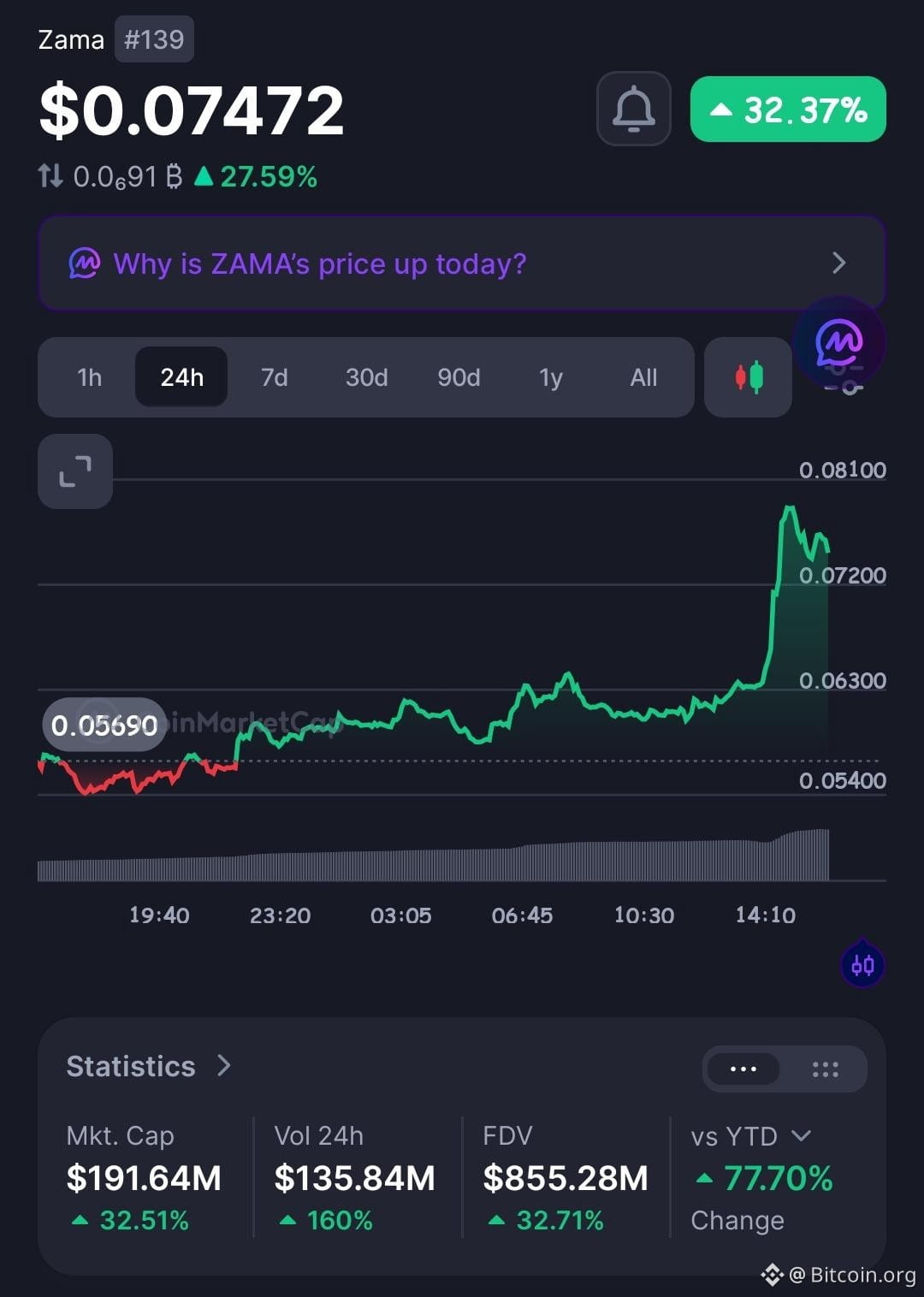
$ZAMA son 24 saatda 32.43 faiz artıb; 0.05652-dən açıldıqdan sonra 0.08082-yə qədər yüksəlib və hazırda 0.07485 dollarda ticarət edir.
Sən bu yürüşə qoşulursan, yoxsa hələ də kənardan izləyirsən.?
#ZamaProtocol# #Altcoin Season# #Bullish
ZEC-dən sonra mənim diqqətimi ZAMA protokolu çəkdi. Bull rejimində olan Zama.
$ZAMA kriptografiya şirkətidir, ayrıca Layer 1 deyil; mövcud blokçeynlərin şifrələnmiş məlumat üzərində smart kontraktları emal etməsinə imkan verən infrastruktur qurur. Bunun üçün Fully Homomorphic Encryption (Tam Homomorfik Şifrələmə) istifadə olunur.
ZEC ilə fərq nədir? ZEC özünün ayrıca, müstəqil zənciri üzərində zero knowledge proof-lar (zk-SNARKs) vasitəsilə məxfiliyi qoruyur; əməliyyat detalları birbaşa bazis layerdə gizlədilir. ZAMA isə ümumiyyətlə bir zəncir deyil; Fully Homomorphic Encryption-u “plug-in” (qoşma) layeri kimi istifadə edir və mövcud EVM zəncirlərinin onu heç vaxt şifrəsini açmadan, şifrələnmiş məlumat üzərində hesablama aparmasına imkan verir.
Deməli, onlar həm quruluşca, həm də mahiyyətcə fərqlidir: əslində hər ikisi məxfilik üçün hazırlanıb.
Onlar uzunmüddətli üçün qurulub.
Yadınyda var, Zama protokolu icma airdrop-unu təqdim etdi və ilk layihə erkən dövrdə 150 funding tərəfindən dəstəkləndi. Üstəlik 1B FDV ilə.
Amma TGE-dən sonra icma tərəfindən satıcı ilə “kəsilib”. Çox aşağı səviyyədə oturmuş kimi görünür. Amma potensial hər zaman hype-dən üstün olur.
Ona görə də bu “gem” yavaş-yavaş, amma mütləq şəkildə hərəkət edir. Elə buna görə də indi ona maraq var və böyük bullish yürüş üçün “qovuşma” potensialı var.
$ZAMA son 24 saatda 32.43 faiz artıb; 0.05652-dən açıldıqdan sonra 0.08082-yə qədər yüksəlib və hazırda 0.07485 dollarda ticarət edir.
Sən bu yürüşə qoşulursan, yoxsa hələ də kənardan izləyirsən.?
#ZamaProtocol# #Altcoin Season# #Bullish
$ZAMA kriptografiya şirkətidir, ayrıca Layer 1 deyil; mövcud blokçeynlərin şifrələnmiş məlumat üzərində smart kontraktları emal etməsinə imkan verən infrastruktur qurur. Bunun üçün Fully Homomorphic Encryption (Tam Homomorfik Şifrələmə) istifadə olunur.
ZEC ilə fərq nədir? ZEC özünün ayrıca, müstəqil zənciri üzərində zero knowledge proof-lar (zk-SNARKs) vasitəsilə məxfiliyi qoruyur; əməliyyat detalları birbaşa bazis layerdə gizlədilir. ZAMA isə ümumiyyətlə bir zəncir deyil; Fully Homomorphic Encryption-u “plug-in” (qoşma) layeri kimi istifadə edir və mövcud EVM zəncirlərinin onu heç vaxt şifrəsini açmadan, şifrələnmiş məlumat üzərində hesablama aparmasına imkan verir.
Deməli, onlar həm quruluşca, həm də mahiyyətcə fərqlidir: əslində hər ikisi məxfilik üçün hazırlanıb.
Onlar uzunmüddətli üçün qurulub.
Yadınyda var, Zama protokolu icma airdrop-unu təqdim etdi və ilk layihə erkən dövrdə 150 funding tərəfindən dəstəkləndi. Üstəlik 1B FDV ilə.
Amma TGE-dən sonra icma tərəfindən satıcı ilə “kəsilib”. Çox aşağı səviyyədə oturmuş kimi görünür. Amma potensial hər zaman hype-dən üstün olur.
Ona görə də bu “gem” yavaş-yavaş, amma mütləq şəkildə hərəkət edir. Elə buna görə də indi ona maraq var və böyük bullish yürüş üçün “qovuşma” potensialı var.
$ZAMA son 24 saatda 32.43 faiz artıb; 0.05652-dən açıldıqdan sonra 0.08082-yə qədər yüksəlib və hazırda 0.07485 dollarda ticarət edir.
Sən bu yürüşə qoşulursan, yoxsa hələ də kənardan izləyirsən.?
#ZamaProtocol# #Altcoin Season# #Bullish
679
·
--
Beləliklə hamınız aydınlıq Aktı uğursuz oldu deyə və faiz artımı oldu deyə niyə hamınız ayı mövqeyinə keçdiniz?
Bu gün cümədir. Sadəcə qrafikə baxmaq lazımdır.
Faiz artımı yalnız belə bir nəzəriyyəyə əsaslanıb ki, insanlar (və ya daha çox) faiz səviyyəsinə görə bitcoin kimi yüksək riskli aktivlərə vəsait ayırmayacaqlar—amma bu, həqiqətən də elə deyil.
Çünki o, $BTC-ni sırf spekulyativ aktiv kimi qiymətləndirir; FED dərəcəsi ona əlverişli təsir göstərməsə, özü-özlüyündə likvidliyi cəlb etmək üçün yetərli dəyərə malik saymır. Bu isə TAM ŞƏKİLDƏ YALANDIR!
Bitcoin-in faydası var.
Bəlkə ayı bazarındayıq, amma investisiya etmək üçün pul axtaran çox şey var. - CZ
İnvestisiya ediləndə bitcoin real problemləri həll edir; aydınlıq istəsələr, onu da keçərlər, amma bitcoin mütləq şəkildə aydınlıq və ya faizlər olmadan da yüksələ (pump) bilər.
Hər dəfə də buna bənzər vəziyyət olur. Mədənçilik barədə xəbərdarlıq gəldi. Qaydalara, lisenziyaya, uyğunluğa və s. tələblər oldu.
Çox şey bizi yayındırır. Amma heç dəyişməyən bir şey var: insanlar. Pulun azadlığı. İnanıйan insanlar. Yenidən və yenidən sadəcə gələn pul axını.
Hər dəfə bir çox səbəbdən aşağı düşürük, amma daha güclü bir narrativlə geri qayıdırıq.
Əksər FUD qrafiki qan içində qoymağa çalışır, amma qrafikin istifadəsi onun öz gücüdür və özünü göstərir.
Beləliklə, ümid edirik ki, bu dönüş onu növbəti ATH-yə aparacaq. Siz nə düşünürsünüz?
İnanclıların hamısına xoş cümələr.
#BTC Price Analysis# #BullRun2026# #BTC
Beləliklə hamınız aydınlıq Aktı uğursuz oldu deyə və faiz artımı oldu deyə niyə hamınız ayı mövqeyinə keçdiniz?
Bu gün cümədir. Sadəcə qrafikə baxmaq lazımdır.
Faiz artımı yalnız belə bir nəzəriyyəyə əsaslanıb ki, insanlar (və ya daha çox) faiz səviyyəsinə görə bitcoin kimi yüksək riskli aktivlərə vəsait ayırmayacaqlar—amma bu, həqiqətən də elə deyil.
Çünki o, $BTC-ni sırf spekulyativ aktiv kimi qiymətləndirir; FED dərəcəsi ona əlverişli təsir göstərməsə, özü-özlüyündə likvidliyi cəlb etmək üçün yetərli dəyərə malik saymır. Bu isə TAM ŞƏKİLDƏ YALANDIR!
Bitcoin-in faydası var.
Bəlkə ayı bazarındayıq, amma investisiya etmək üçün pul axtaran çox şey var. - CZ
İnvestisiya ediləndə bitcoin real problemləri həll edir; aydınlıq istəsələr, onu da keçərlər, amma bitcoin mütləq şəkildə aydınlıq və ya faizlər olmadan da yüksələ (pump) bilər.
Hər dəfə də buna bənzər vəziyyət olur. Mədənçilik barədə xəbərdarlıq gəldi. Qaydalara, lisenziyaya, uyğunluğa və s. tələblər oldu.
Çox şey bizi yayındırır. Amma heç dəyişməyən bir şey var: insanlar. Pulun azadlığı. İnanıйan insanlar. Yenidən və yenidən sadəcə gələn pul axını.
Hər dəfə bir çox səbəbdən aşağı düşürük, amma daha güclü bir narrativlə geri qayıdırıq.
Əksər FUD qrafiki qan içində qoymağa çalışır, amma qrafikin istifadəsi onun öz gücüdür və özünü göstərir.
Beləliklə, ümid edirik ki, bu dönüş onu növbəti ATH-yə aparacaq. Siz nə düşünürsünüz?
İnanclıların hamısına xoş cümələr.
#BTC Price Analysis# #BullRun2026# #BTC
Bu gün cümədir. Sadəcə qrafikə baxmaq lazımdır.
Faiz artımı yalnız belə bir nəzəriyyəyə əsaslanıb ki, insanlar (və ya daha çox) faiz səviyyəsinə görə bitcoin kimi yüksək riskli aktivlərə vəsait ayırmayacaqlar—amma bu, həqiqətən də elə deyil.
Çünki o, $BTC-ni sırf spekulyativ aktiv kimi qiymətləndirir; FED dərəcəsi ona əlverişli təsir göstərməsə, özü-özlüyündə likvidliyi cəlb etmək üçün yetərli dəyərə malik saymır. Bu isə TAM ŞƏKİLDƏ YALANDIR!
Bitcoin-in faydası var.
Bəlkə ayı bazarındayıq, amma investisiya etmək üçün pul axtaran çox şey var. - CZ
İnvestisiya ediləndə bitcoin real problemləri həll edir; aydınlıq istəsələr, onu da keçərlər, amma bitcoin mütləq şəkildə aydınlıq və ya faizlər olmadan da yüksələ (pump) bilər.
Hər dəfə də buna bənzər vəziyyət olur. Mədənçilik barədə xəbərdarlıq gəldi. Qaydalara, lisenziyaya, uyğunluğa və s. tələblər oldu.
Çox şey bizi yayındırır. Amma heç dəyişməyən bir şey var: insanlar. Pulun azadlığı. İnanıйan insanlar. Yenidən və yenidən sadəcə gələn pul axını.
Hər dəfə bir çox səbəbdən aşağı düşürük, amma daha güclü bir narrativlə geri qayıdırıq.
Əksər FUD qrafiki qan içində qoymağa çalışır, amma qrafikin istifadəsi onun öz gücüdür və özünü göstərir.
Beləliklə, ümid edirik ki, bu dönüş onu növbəti ATH-yə aparacaq. Siz nə düşünürsünüz?
İnanclıların hamısına xoş cümələr.
#BTC Price Analysis# #BullRun2026# #BTC
74
·
--
$ARB Yalnız hype deyil, potensialı göstərir.
Arbitrum, Offchain Labs tərəfindən yaradılan Ethereum Layer 2 miqyaslama həllidir. Rollup texnologiyasından istifadə edərək əməliyyatları on-çeyn (off-chain) emal edir, eyni zamanda Ethereumun təhlükəsizliyini miras alır. Bu, sektorda ən böyük və ən köklü L2-lərdən biridir. Dövriyyədə olan təklif təxminən maksimum 10 milyard ARB-dən 6.3-6.6 milyard aralığındadır.
Amma son vaxtlar bir neçə faktorun təsiri ilə alovlanıb.
Bu Layer 2 həm arxa, həm ön tərəfdə inşa olunur.
Davamlı artım yaradır.
Hətta John Ternus, Arbitrum infrastrukturundan istifadə edərək nəsə qurmaq təklifini “hello” postunun cavabında verib.
Bir neçə gün əvvəl yüksəldi, sonra yenidən 0.12-də düşdü, amma indi.
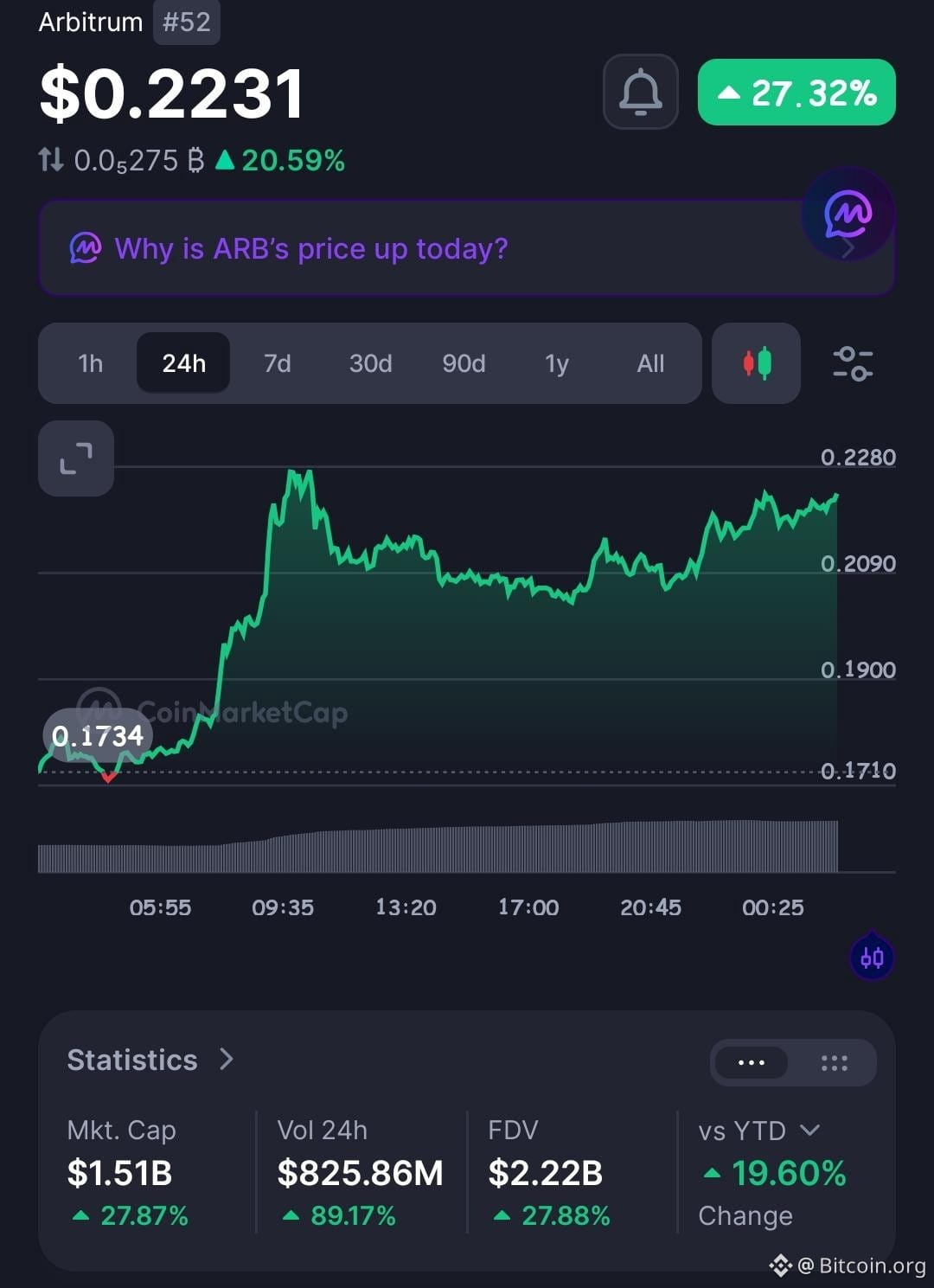
$ARB son 24 saatda 26.48% artıb; 0.1756 dollarla açıldıqdan sonra 0.2294 dollara qədər yüksəlib və hazırda 0.2221 dollarda ticarət edir.
Amma məncə momentum hələ də qiymətləndirilməyib.
Məncə bu Layer 2 brilyantı daha çox diqqətə ehtiyac duyur.
Dövrələr ərzində genişlənir və böyüyür.
Ona görə düşünürəm ki, hələ də yuxarıya doğru gedəsi bir hissə var.
Siz nə düşünürsünüz?
#Layer 2, the friend or enemy to Ethereum?#
#Arbitrum #Gainers
$ARB Yalnız hype deyil, potensialı göstərir.
Arbitrum, Offchain Labs tərəfindən yaradılan Ethereum Layer 2 miqyaslama həllidir. Rollup texnologiyasından istifadə edərək əməliyyatları on-çeyn (off-chain) emal edir, eyni zamanda Ethereumun təhlükəsizliyini miras alır. Bu, sektorda ən böyük və ən köklü L2-lərdən biridir. Dövriyyədə olan təklif təxminən maksimum 10 milyard ARB-dən 6.3-6.6 milyard aralığındadır.
Amma son vaxtlar bir neçə faktorun təsiri ilə alovlanıb.
Bu Layer 2 həm arxa, həm ön tərəfdə inşa olunur.
Davamlı artım yaradır.
Hətta John Ternus, Arbitrum infrastrukturundan istifadə edərək nəsə qurmaq təklifini “hello” postunun cavabında verib.
Bir neçə gün əvvəl yüksəldi, sonra yenidən 0.12-də düşdü, amma indi.
$ARB son 24 saatda 26.48% artıb; 0.1756 dollarla açıldıqdan sonra 0.2294 dollara qədər yüksəlib və hazırda 0.2221 dollarda ticarət edir.
Amma məncə momentum hələ də qiymətləndirilməyib.
Məncə bu Layer 2 brilyantı daha çox diqqətə ehtiyac duyur.
Dövrələr ərzində genişlənir və böyüyür.
Ona görə düşünürəm ki, hələ də yuxarıya doğru gedəsi bir hissə var.
Siz nə düşünürsünüz?
#Layer 2, the friend or enemy to Ethereum?#
#Arbitrum #Gainers
Arbitrum, Offchain Labs tərəfindən yaradılan Ethereum Layer 2 miqyaslama həllidir. Rollup texnologiyasından istifadə edərək əməliyyatları on-çeyn (off-chain) emal edir, eyni zamanda Ethereumun təhlükəsizliyini miras alır. Bu, sektorda ən böyük və ən köklü L2-lərdən biridir. Dövriyyədə olan təklif təxminən maksimum 10 milyard ARB-dən 6.3-6.6 milyard aralığındadır.
Amma son vaxtlar bir neçə faktorun təsiri ilə alovlanıb.
Bu Layer 2 həm arxa, həm ön tərəfdə inşa olunur.
Davamlı artım yaradır.
Hətta John Ternus, Arbitrum infrastrukturundan istifadə edərək nəsə qurmaq təklifini “hello” postunun cavabında verib.
Bir neçə gün əvvəl yüksəldi, sonra yenidən 0.12-də düşdü, amma indi.
$ARB son 24 saatda 26.48% artıb; 0.1756 dollarla açıldıqdan sonra 0.2294 dollara qədər yüksəlib və hazırda 0.2221 dollarda ticarət edir.
Amma məncə momentum hələ də qiymətləndirilməyib.
Məncə bu Layer 2 brilyantı daha çox diqqətə ehtiyac duyur.
Dövrələr ərzində genişlənir və böyüyür.
Ona görə düşünürəm ki, hələ də yuxarıya doğru gedəsi bir hissə var.
Siz nə düşünürsünüz?
#Layer 2, the friend or enemy to Ethereum?#
#Arbitrum #Gainers
111
·
--
İnsanların hədəf kimi $SUI-ni seçib 15$ -i keçdiyi vaxtı xatırlayırsınız?
Yox, xatırlamırsınızsa, o zaman $SUI ATH-i xatırlaya bilərsinizmi? .?
Əslində $SUI ilə nə baş verdi? Niyə böyük bir blokçeyn söhbət mövzusundan kənarda qalır.?
Bu, etibara söykənən meylə görədir.
233m hack-dən sonra möhkəm dayandı. Yalnız cəsur ürək bunu edə bilər.
Hadisədən sonra geri qayıdıb yeni strategiya, yeni plan.
Yeni məhsullar.
O, bir neçə potensial layihəni təqdim edir.
$HAEDL $WAL və s. Amma yenə də kölgənin altındadır.
Sui Foundation indi etimad qurur.
Əgər bu, yenidən bu bull run-a qayıtsa, şübhəsiz ki $SUI gizli bir fürsətdir.
Aydın strukturu və güclü perspektivi olan böyük bir blokçeyn, amma yenə də vahid qiymətin altındadır.
Beləliklə, Sui nəsə potensial qurur.
On-chain həcmi Sui-də pump zamanı sərt şəkildə artır, çünki treyderlər fəal şəkildə rotasiya edir, ona görə də burada artıq qurulmuş protokollar bu dalğanı tez tutur.
Ona görə $SUI-ə diqqət edin və ya portfelinizə bir neçə əlavə edin.
Ekosistem fəaliyyəti artır: daha çox likvidlik, daha çox swap, daha çox yield məhsulları zəncirin üstünə yığılır—tam da bull run-u bəsləyən tipik quruluşdur.
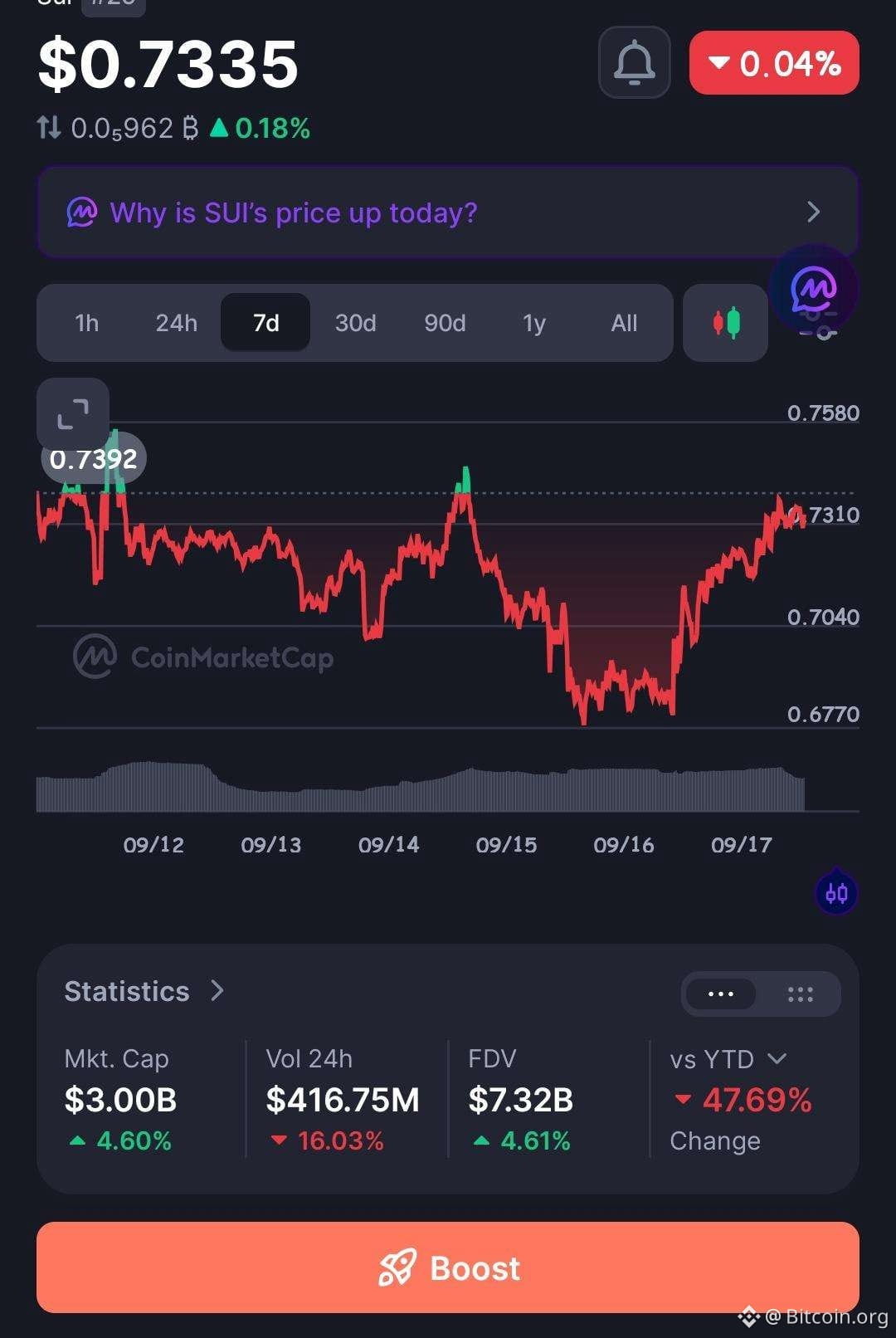
SUI son 24 saatda 4.66 faiz artıb, 0.702 yaxınlığında açıldıqdan sonra 0.735 dollar civarında ticarət edir—sadəcə şırınga deyil, real yaşıl impulsdur.
Beləliklə, $SUI mənim tərəfim üçün kifayət qədər bullishdir.
Bu dəfə sənin seçimin nədir, aşağı düşəndə.
#Altcoin Season #SuiFounDation #Top
#BullRun
İnsanların hədəf kimi $SUI-ni seçib 15$ -i keçdiyi vaxtı xatırlayırsınız?
Yox, xatırlamırsınızsa, o zaman $SUI ATH-i xatırlaya bilərsinizmi? .?
Əslində $SUI ilə nə baş verdi? Niyə böyük bir blokçeyn söhbət mövzusundan kənarda qalır.?
Bu, etibara söykənən meylə görədir.
233m hack-dən sonra möhkəm dayandı. Yalnız cəsur ürək bunu edə bilər.
Hadisədən sonra geri qayıdıb yeni strategiya, yeni plan.
Yeni məhsullar.
O, bir neçə potensial layihəni təqdim edir.
$HAEDL $WAL və s. Amma yenə də kölgənin altındadır.
Sui Foundation indi etimad qurur.
Əgər bu, yenidən bu bull run-a qayıtsa, şübhəsiz ki $SUI gizli bir fürsətdir.
Aydın strukturu və güclü perspektivi olan böyük bir blokçeyn, amma yenə də vahid qiymətin altındadır.
Beləliklə, Sui nəsə potensial qurur.
On-chain həcmi Sui-də pump zamanı sərt şəkildə artır, çünki treyderlər fəal şəkildə rotasiya edir, ona görə də burada artıq qurulmuş protokollar bu dalğanı tez tutur.
Ona görə $SUI-ə diqqət edin və ya portfelinizə bir neçə əlavə edin.
Ekosistem fəaliyyəti artır: daha çox likvidlik, daha çox swap, daha çox yield məhsulları zəncirin üstünə yığılır—tam da bull run-u bəsləyən tipik quruluşdur.
SUI son 24 saatda 4.66 faiz artıb, 0.702 yaxınlığında açıldıqdan sonra 0.735 dollar civarında ticarət edir—sadəcə şırınga deyil, real yaşıl impulsdur.
Beləliklə, $SUI mənim tərəfim üçün kifayət qədər bullishdir.
Bu dəfə sənin seçimin nədir, aşağı düşəndə.
#Altcoin Season #SuiFounDation #Top
#BullRun
Yox, xatırlamırsınızsa, o zaman $SUI ATH-i xatırlaya bilərsinizmi? .?
Əslində $SUI ilə nə baş verdi? Niyə böyük bir blokçeyn söhbət mövzusundan kənarda qalır.?
Bu, etibara söykənən meylə görədir.
233m hack-dən sonra möhkəm dayandı. Yalnız cəsur ürək bunu edə bilər.
Hadisədən sonra geri qayıdıb yeni strategiya, yeni plan.
Yeni məhsullar.
O, bir neçə potensial layihəni təqdim edir.
$HAEDL $WAL və s. Amma yenə də kölgənin altındadır.
Sui Foundation indi etimad qurur.
Əgər bu, yenidən bu bull run-a qayıtsa, şübhəsiz ki $SUI gizli bir fürsətdir.
Aydın strukturu və güclü perspektivi olan böyük bir blokçeyn, amma yenə də vahid qiymətin altındadır.
Beləliklə, Sui nəsə potensial qurur.
On-chain həcmi Sui-də pump zamanı sərt şəkildə artır, çünki treyderlər fəal şəkildə rotasiya edir, ona görə də burada artıq qurulmuş protokollar bu dalğanı tez tutur.
Ona görə $SUI-ə diqqət edin və ya portfelinizə bir neçə əlavə edin.
Ekosistem fəaliyyəti artır: daha çox likvidlik, daha çox swap, daha çox yield məhsulları zəncirin üstünə yığılır—tam da bull run-u bəsləyən tipik quruluşdur.
SUI son 24 saatda 4.66 faiz artıb, 0.702 yaxınlığında açıldıqdan sonra 0.735 dollar civarında ticarət edir—sadəcə şırınga deyil, real yaşıl impulsdur.
Beləliklə, $SUI mənim tərəfim üçün kifayət qədər bullishdir.
Bu dəfə sənin seçimin nədir, aşağı düşəndə.
#Altcoin Season #SuiFounDation #Top
#BullRun
130
·
--
Bugün gözüme nə düşdü?
Bu gün çarta baxanda bu səhər hamısının yaşıl olmasına heyran qaldım. Çox güman ki, $BNB öndədir. Dün də $USDC-nin native Arc mainnet-i istifadəyə verildi, ona görə insanlar ona tərəf tələsir.
Amma bir ciddi məsələ var: səs-küydən kənarda bəzi layihələr ghost mode-da nəsə qurur.
Ghost order-i dəstəkləyən bir protokol—onlar BNB Chain üzərində yeni bir token launchpad qurublar. Genius Terminal bu gün yeni bir launchpad təqdim etdi.
Deməli, Genius Foundation-dan gələn bu, potensial bir layihə üçün aydın işarədir. Həm də onlar təchizatını yandırırlar.
Beləliklə, bu gün $GENIUS ən yüksəkə çatdı.
Sadəcə iki gün öncə FOMC və s. kimi aydınlıq aktı barədə düşündüyünüz kimi. Amma bütün şayiələr cəmi bir günə elə vurulub.
Yekun çağırış: boğa yürüşü—başlamağa çox az qalıb.
#PotentialProjects #Gainers #BULL
Bugün gözüme nə düşdü?
Bu gün çarta baxanda bu səhər hamısının yaşıl olmasına heyran qaldım. Çox güman ki, $BNB öndədir. Dün də $USDC-nin native Arc mainnet-i istifadəyə verildi, ona görə insanlar ona tərəf tələsir.
Amma bir ciddi məsələ var: səs-küydən kənarda bəzi layihələr ghost mode-da nəsə qurur.
Ghost order-i dəstəkləyən bir protokol—onlar BNB Chain üzərində yeni bir token launchpad qurublar. Genius Terminal bu gün yeni bir launchpad təqdim etdi.
Deməli, Genius Foundation-dan gələn bu, potensial bir layihə üçün aydın işarədir. Həm də onlar təchizatını yandırırlar.
Beləliklə, bu gün $GENIUS ən yüksəkə çatdı.
Sadəcə iki gün öncə FOMC və s. kimi aydınlıq aktı barədə düşündüyünüz kimi. Amma bütün şayiələr cəmi bir günə elə vurulub.
Yekun çağırış: boğa yürüşü—başlamağa çox az qalıb.
#PotentialProjects #Gainers #BULL
Bu gün çarta baxanda bu səhər hamısının yaşıl olmasına heyran qaldım. Çox güman ki, $BNB öndədir. Dün də $USDC-nin native Arc mainnet-i istifadəyə verildi, ona görə insanlar ona tərəf tələsir.
Amma bir ciddi məsələ var: səs-küydən kənarda bəzi layihələr ghost mode-da nəsə qurur.
Ghost order-i dəstəkləyən bir protokol—onlar BNB Chain üzərində yeni bir token launchpad qurublar. Genius Terminal bu gün yeni bir launchpad təqdim etdi.
Deməli, Genius Foundation-dan gələn bu, potensial bir layihə üçün aydın işarədir. Həm də onlar təchizatını yandırırlar.
Beləliklə, bu gün $GENIUS ən yüksəkə çatdı.
Sadəcə iki gün öncə FOMC və s. kimi aydınlıq aktı barədə düşündüyünüz kimi. Amma bütün şayiələr cəmi bir günə elə vurulub.
Yekun çağırış: boğa yürüşü—başlamağa çox az qalıb.
#PotentialProjects #Gainers #BULL
207
·
--
Kriptoda bir şey var. Onun davam etməsinin səbəbi mərkəzləşmədir.
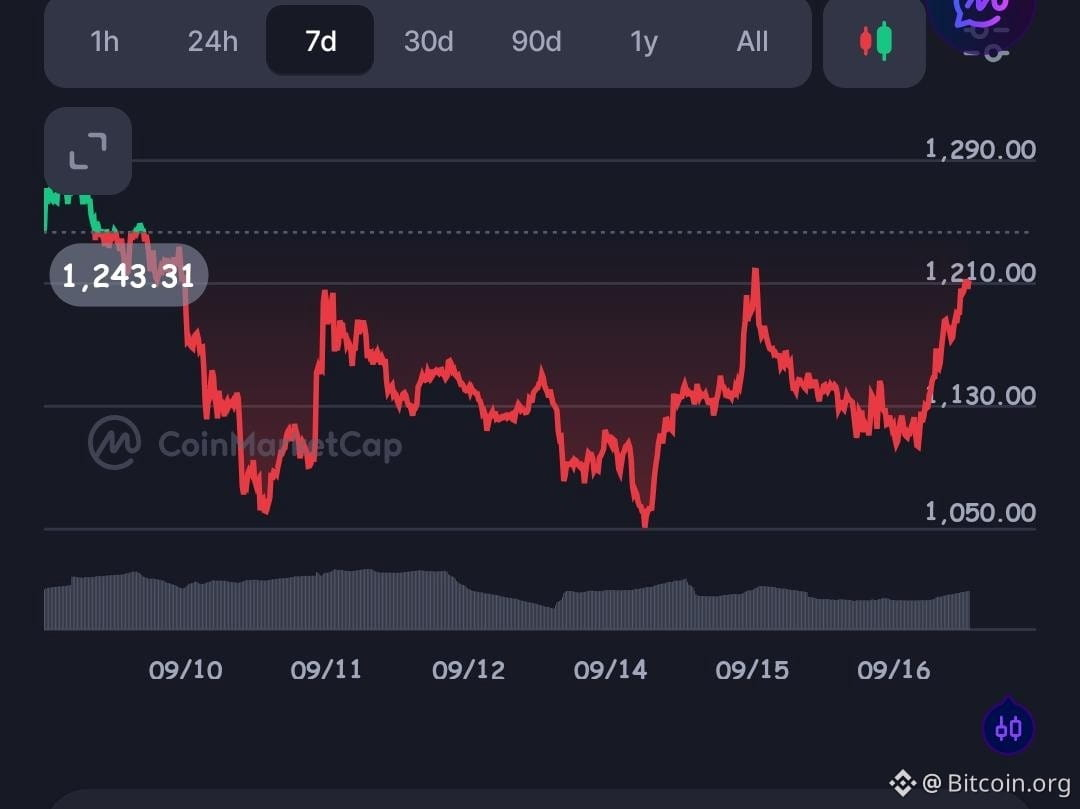
Elə dünən bazar “Clarity Act” xəbərləri ilə sarsıldı. Amma siz indi $ZEC qrafikinə baxa bilərsiniz. Son iki həftə ərzində formalaşan momentum elə budur ki, hətta xəbərlər belə onu aşağı itələyə bilmir.
Bu, kriptoda həmişə belə olur.
Bəzən hər yerdə qırmızı şamlar görürük, bəzən də hər yerdə yaşıl.
Kripto qaydalara (regulyasiyalara) bağlı olmağa ehtiyac duymur. Tətbiq edilir, indi dünya iqtisadiyyatının bir hissəsidir.
Qırmızı günündə isə privacy (məxfilik) koinləri artım göstərdi. Bu, hər bir potensial “qızılın” tezliklə bərpa olunacağını sübut edən bir nümunədir.
Hazırda $ZEC son 24 saatda 9,91 faiz yüksəlib, 1,125.60 dollardan açıldıqdan sonra 1,238.80 dollara yüksələrək, 1,237.18 dollarda ticarət edir. Token öz momentumunu quranda, ətrafdakı səs-küydən asılı olmayaraq məhz belə hərəkətlər olur.
Məncə, biz boğa bazarına çox yaxınıq.
Pulun qarşısını tənzimləyici (regulator) ala bilməz. Bunu iqtisadiyyatı anlayan insanlar idarə edir, sadəcə bu.
Diqqətli olun.
#Privacy #ZecCash #Gainers
Kriptoda bir şey var. Onun davam etməsinin səbəbi mərkəzləşmədir.
Elə dünən bazar “Clarity Act” xəbərləri ilə sarsıldı. Amma siz indi $ZEC qrafikinə baxa bilərsiniz. Son iki həftə ərzində formalaşan momentum elə budur ki, hətta xəbərlər belə onu aşağı itələyə bilmir.
Bu, kriptoda həmişə belə olur.
Bəzən hər yerdə qırmızı şamlar görürük, bəzən də hər yerdə yaşıl.
Kripto qaydalara (regulyasiyalara) bağlı olmağa ehtiyac duymur. Tətbiq edilir, indi dünya iqtisadiyyatının bir hissəsidir.
Qırmızı günündə isə privacy (məxfilik) koinləri artım göstərdi. Bu, hər bir potensial “qızılın” tezliklə bərpa olunacağını sübut edən bir nümunədir.
Hazırda $ZEC son 24 saatda 9,91 faiz yüksəlib, 1,125.60 dollardan açıldıqdan sonra 1,238.80 dollara yüksələrək, 1,237.18 dollarda ticarət edir. Token öz momentumunu quranda, ətrafdakı səs-küydən asılı olmayaraq məhz belə hərəkətlər olur.
Məncə, biz boğa bazarına çox yaxınıq.
Pulun qarşısını tənzimləyici (regulator) ala bilməz. Bunu iqtisadiyyatı anlayan insanlar idarə edir, sadəcə bu.
Diqqətli olun.
#Privacy #ZecCash #Gainers
Elə dünən bazar “Clarity Act” xəbərləri ilə sarsıldı. Amma siz indi $ZEC qrafikinə baxa bilərsiniz. Son iki həftə ərzində formalaşan momentum elə budur ki, hətta xəbərlər belə onu aşağı itələyə bilmir.
Bu, kriptoda həmişə belə olur.
Bəzən hər yerdə qırmızı şamlar görürük, bəzən də hər yerdə yaşıl.
Kripto qaydalara (regulyasiyalara) bağlı olmağa ehtiyac duymur. Tətbiq edilir, indi dünya iqtisadiyyatının bir hissəsidir.
Qırmızı günündə isə privacy (məxfilik) koinləri artım göstərdi. Bu, hər bir potensial “qızılın” tezliklə bərpa olunacağını sübut edən bir nümunədir.
Hazırda $ZEC son 24 saatda 9,91 faiz yüksəlib, 1,125.60 dollardan açıldıqdan sonra 1,238.80 dollara yüksələrək, 1,237.18 dollarda ticarət edir. Token öz momentumunu quranda, ətrafdakı səs-küydən asılı olmayaraq məhz belə hərəkətlər olur.
Məncə, biz boğa bazarına çox yaxınıq.
Pulun qarşısını tənzimləyici (regulator) ala bilməz. Bunu iqtisadiyyatı anlayan insanlar idarə edir, sadəcə bu.
Diqqətli olun.
#Privacy #ZecCash #Gainers
220
·
--
$BTC Əvvəllər də qeyd etdiyimiz kimi, Senat bir daha “Clarity Act” qanun layihəsini qəbul edə bilmədi. Hamımız bilirik ki, bu dəfə də belə olmayacaq, amma yenə də ümidimizi itirmirik.
Artım mərhələsində bir sıra ciddi likvidasiyalar baş verdi. Hamımız bilirik ki, spekulyasiya həmişə görünən hər şeyin daha çox ayı (bearish) istiqamətə meyil edəcəyini fərz edir. Ən çox ehtimal olunan da elə budur.
Bir dəstə xəbər qiyməti qaldırıb “pump” edir, amma qəfil tənzimləyicilərdən bir zərbə hər şeyi sərt şəkildə aşağı salır.
Amma bilirsiniz bir şey nədir? Bazar tezliklə sabitləşəcək. Xəbərlərin boğucu ağırlığı yox olacaq. Yeni pul axını, yeni hava, yenidən nəfəs ala biləcəyimiz vəziyyət yaradacaq.
Hazırda BTC təxminən 76,172 dollara ticarət edir; son 24 saatda 78,986 yaxınlığında açıldıqdan və 74,968-ə qədər eniş etdikdən sonra 3.56 faiz aşağıdadır. Elə bu tip geriçəkilmə – səngiyən səsvermədən dərhal sonra – bizdə daim təkrarlanan nümunədir: köhnə xəbər sanki yenicə olubmuş kimi reaksiya doğurur. Bazar başlıqlara “çırpılmağı” dayandıran kimi, artıq qiymətə daxil olan məlumatların üstündə yenidən öz yerini tapır. Bu mərhələ səs-küydür, tendensiya deyil.
#CLARITYAct #BTC Price Analysis
$BTC Əvvəllər də qeyd etdiyimiz kimi, Senat bir daha “Clarity Act” qanun layihəsini qəbul edə bilmədi. Hamımız bilirik ki, bu dəfə də belə olmayacaq, amma yenə də ümidimizi itirmirik.
Artım mərhələsində bir sıra ciddi likvidasiyalar baş verdi. Hamımız bilirik ki, spekulyasiya həmişə görünən hər şeyin daha çox ayı (bearish) istiqamətə meyil edəcəyini fərz edir. Ən çox ehtimal olunan da elə budur.
Bir dəstə xəbər qiyməti qaldırıb “pump” edir, amma qəfil tənzimləyicilərdən bir zərbə hər şeyi sərt şəkildə aşağı salır.
Amma bilirsiniz bir şey nədir? Bazar tezliklə sabitləşəcək. Xəbərlərin boğucu ağırlığı yox olacaq. Yeni pul axını, yeni hava, yenidən nəfəs ala biləcəyimiz vəziyyət yaradacaq.
Hazırda BTC təxminən 76,172 dollara ticarət edir; son 24 saatda 78,986 yaxınlığında açıldıqdan və 74,968-ə qədər eniş etdikdən sonra 3.56 faiz aşağıdadır. Elə bu tip geriçəkilmə – səngiyən səsvermədən dərhal sonra – bizdə daim təkrarlanan nümunədir: köhnə xəbər sanki yenicə olubmuş kimi reaksiya doğurur. Bazar başlıqlara “çırpılmağı” dayandıran kimi, artıq qiymətə daxil olan məlumatların üstündə yenidən öz yerini tapır. Bu mərhələ səs-küydür, tendensiya deyil.
#CLARITYAct #BTC Price Analysis
Artım mərhələsində bir sıra ciddi likvidasiyalar baş verdi. Hamımız bilirik ki, spekulyasiya həmişə görünən hər şeyin daha çox ayı (bearish) istiqamətə meyil edəcəyini fərz edir. Ən çox ehtimal olunan da elə budur.
Bir dəstə xəbər qiyməti qaldırıb “pump” edir, amma qəfil tənzimləyicilərdən bir zərbə hər şeyi sərt şəkildə aşağı salır.
Amma bilirsiniz bir şey nədir? Bazar tezliklə sabitləşəcək. Xəbərlərin boğucu ağırlığı yox olacaq. Yeni pul axını, yeni hava, yenidən nəfəs ala biləcəyimiz vəziyyət yaradacaq.
Hazırda BTC təxminən 76,172 dollara ticarət edir; son 24 saatda 78,986 yaxınlığında açıldıqdan və 74,968-ə qədər eniş etdikdən sonra 3.56 faiz aşağıdadır. Elə bu tip geriçəkilmə – səngiyən səsvermədən dərhal sonra – bizdə daim təkrarlanan nümunədir: köhnə xəbər sanki yenicə olubmuş kimi reaksiya doğurur. Bazar başlıqlara “çırpılmağı” dayandıran kimi, artıq qiymətə daxil olan məlumatların üstündə yenidən öz yerini tapır. Bu mərhələ səs-küydür, tendensiya deyil.
#CLARITYAct #BTC Price Analysis
26
·
--
$BTC
Biz tokenləşdirilmiş dövrə artıq daxil olmuşuq. Bəs “Clarity Act” niyə yenidən müzakirələrə qayıdıb?
Bu artıq köhnə xəbərdir. Onu guya təzəmiş kimi şərh etmək sadəcə fərziyyədir, əsaslı tezis deyil.
Xronologiya. Nümayəndələr Palatası onu 2025-ci ilin iyulunda qəbul etdi — 294-134. Bu fakt idi, bazar da reaksiya verdi. Daha sonra təxminən bir il Senatda ilişib qaldı. 2026-cı ilin mayında Senatın Bankçılıq Komitəsi onu 15-9 səsə irəli sürdü və həmin xəbərlə Bitcoin qısa müddətə 80K-a toxundu. Real reaksiya, real irəliləyiş. İndi isə qiymət onsuz da 82K səviyyəsini yenidən yoxlayıb, amma arxasında təzə xəbər yoxdur. Bunun qanuna çevrilmə ehtimalı həmin vaxtdan bəri azalır: mayda 75 faiz, iyunda 60 faiz, yay ortasına yaxın isə sikkə kimi — iki ehtimal. Yenə də floor səsverməsi planlaşdırılmayıb. Yenə də ilişib qalıb.
Bu, birbaşa RWA ilə bağlıdır. İnstitutlar artıq bu qanun olmadan belə, dərhal Treasuryləri, özəl kreditləri, fondları tokenləşdirir. Amma hər şey köhnə “wrapper”lar, SPV-lər, ofşor trastlar, özəl yerləşdirmələr üzərindən gedir, çünki zəncirüstü (on-chain) mülkiyyət hələ də qanuni olaraq tanınmır. “Clarity Act” isə həmin bypass/yan keçidi standart (default) edən şeydir. Bu hekayənin arxasındakı real tələbat budur.
Deməli, layihənin ləngiməsi RWA tezisini öldürmür. Sadəcə olaraq açılışın vaxtı hələ gözləyir. Bu xəbər hər dəfə ortaya çıxanda qiymətə təsir edir, amma əslində “trend”lər dəyişmir. Qısamüddətdə həvəslə/ayı kimi spekulyasiya görmək olar, amma indi dibə çatmağı proqnozlaşdırmaq hələ tezdir.
#BTC Price Analysis #CLARITYAct #RWA
$BTC
Biz tokenləşdirilmiş dövrə artıq daxil olmuşuq. Bəs “Clarity Act” niyə yenidən müzakirələrə qayıdıb?
Bu artıq köhnə xəbərdir. Onu guya təzəmiş kimi şərh etmək sadəcə fərziyyədir, əsaslı tezis deyil.
Xronologiya. Nümayəndələr Palatası onu 2025-ci ilin iyulunda qəbul etdi — 294-134. Bu fakt idi, bazar da reaksiya verdi. Daha sonra təxminən bir il Senatda ilişib qaldı. 2026-cı ilin mayında Senatın Bankçılıq Komitəsi onu 15-9 səsə irəli sürdü və həmin xəbərlə Bitcoin qısa müddətə 80K-a toxundu. Real reaksiya, real irəliləyiş. İndi isə qiymət onsuz da 82K səviyyəsini yenidən yoxlayıb, amma arxasında təzə xəbər yoxdur. Bunun qanuna çevrilmə ehtimalı həmin vaxtdan bəri azalır: mayda 75 faiz, iyunda 60 faiz, yay ortasına yaxın isə sikkə kimi — iki ehtimal. Yenə də floor səsverməsi planlaşdırılmayıb. Yenə də ilişib qalıb.
Bu, birbaşa RWA ilə bağlıdır. İnstitutlar artıq bu qanun olmadan belə, dərhal Treasuryləri, özəl kreditləri, fondları tokenləşdirir. Amma hər şey köhnə “wrapper”lar, SPV-lər, ofşor trastlar, özəl yerləşdirmələr üzərindən gedir, çünki zəncirüstü (on-chain) mülkiyyət hələ də qanuni olaraq tanınmır. “Clarity Act” isə həmin bypass/yan keçidi standart (default) edən şeydir. Bu hekayənin arxasındakı real tələbat budur.
Deməli, layihənin ləngiməsi RWA tezisini öldürmür. Sadəcə olaraq açılışın vaxtı hələ gözləyir. Bu xəbər hər dəfə ortaya çıxanda qiymətə təsir edir, amma əslində “trend”lər dəyişmir. Qısamüddətdə həvəslə/ayı kimi spekulyasiya görmək olar, amma indi dibə çatmağı proqnozlaşdırmaq hələ tezdir.
#BTC Price Analysis #CLARITYAct #RWA
Biz tokenləşdirilmiş dövrə artıq daxil olmuşuq. Bəs “Clarity Act” niyə yenidən müzakirələrə qayıdıb?
Bu artıq köhnə xəbərdir. Onu guya təzəmiş kimi şərh etmək sadəcə fərziyyədir, əsaslı tezis deyil.
Xronologiya. Nümayəndələr Palatası onu 2025-ci ilin iyulunda qəbul etdi — 294-134. Bu fakt idi, bazar da reaksiya verdi. Daha sonra təxminən bir il Senatda ilişib qaldı. 2026-cı ilin mayında Senatın Bankçılıq Komitəsi onu 15-9 səsə irəli sürdü və həmin xəbərlə Bitcoin qısa müddətə 80K-a toxundu. Real reaksiya, real irəliləyiş. İndi isə qiymət onsuz da 82K səviyyəsini yenidən yoxlayıb, amma arxasında təzə xəbər yoxdur. Bunun qanuna çevrilmə ehtimalı həmin vaxtdan bəri azalır: mayda 75 faiz, iyunda 60 faiz, yay ortasına yaxın isə sikkə kimi — iki ehtimal. Yenə də floor səsverməsi planlaşdırılmayıb. Yenə də ilişib qalıb.
Bu, birbaşa RWA ilə bağlıdır. İnstitutlar artıq bu qanun olmadan belə, dərhal Treasuryləri, özəl kreditləri, fondları tokenləşdirir. Amma hər şey köhnə “wrapper”lar, SPV-lər, ofşor trastlar, özəl yerləşdirmələr üzərindən gedir, çünki zəncirüstü (on-chain) mülkiyyət hələ də qanuni olaraq tanınmır. “Clarity Act” isə həmin bypass/yan keçidi standart (default) edən şeydir. Bu hekayənin arxasındakı real tələbat budur.
Deməli, layihənin ləngiməsi RWA tezisini öldürmür. Sadəcə olaraq açılışın vaxtı hələ gözləyir. Bu xəbər hər dəfə ortaya çıxanda qiymətə təsir edir, amma əslində “trend”lər dəyişmir. Qısamüddətdə həvəslə/ayı kimi spekulyasiya görmək olar, amma indi dibə çatmağı proqnozlaşdırmaq hələ tezdir.
#BTC Price Analysis #CLARITYAct #RWA
85
Daha çox kontent araşdırmaq üçün daxil olun
Binance Square-də qlobal kriptovalyuta istifadəçilərinə qoşulun
⚡️ Kriptovalyuta haqqında ən son və faydalı məlumatları əldə edin.
💬 Dünyanın ən böyük kriptovalyuta birjası tərəfindən etibar edilir.
👍 Doğrulanmış yaradıcılardan gələn real məlumatları kəşf edin.
E-poçt/Telefon nömrəsi
Trenddə olan mövzular
AIStocksWhatNext
916,348 baxış
Müzakirə edir: 6,766
Trendləşən hashtag kampaniyamızda Paylaş və Qazan Trafik Mükafatı
✨ Mövzu: AI səhmələri yüksəlməyə davam etdikcə hansı digər investisiya imkanları hələ də qalır?
👉 Necə qoşulmaq:
#AIStocksWhatNext hashtagı ilə qısa post və ya məqalə dərc edin
Bəllə edin ki, siz boğasınız, yoxsa ayısınız, həm də AI səhm portfelinizi və ya treydinizi paylaşın — treyd widgetından istifadə uyğunluğunuzu artıra bilər.
Həmçinin məlumatlar və ya qrafiklər paylaşaraq postunuzu gücləndirə, AI tərəfindən yaradılmış şəkillərdən isə çəkinə bilərsiniz.
✍️ Aşağıdakı bucaqlara əsasən kontent yaradın:
- Nvidia deyir ki, çip satışları gələn il ikiqat olacaq və aparıcı AI şirkətləri rekord gəlir vurmağa davam edir — bunun arxasında dayanan hesablama xərci də həqiqətən heyrətamiz dərəcədə böyükdür. AI tələbi doğrudan da artır? Və bu nə qədər davam edə bilər? AI səhmələri bütün bazarda yüksəlib. Bu, real bir qırılma/breakout-dur, yoxsa sadəcə qısamüddətli sıçrayış?
- Sənaye liderləri AI inkişafını ləngitmək çağırışı edir, Trump isə gələcəkdə AI-nin ABŞ ÜDM-nin 25%-ni təşkil edə biləcəyini iddia edərək “AI Force” qurmaq planı haqqında danışır. Sizin tərəfiniz kim tərəfindədır? Dövlət səviyyəsində dəstək AI səhmələri üçün uzunmüddətli qazanc olacaqmı?
- Siz AI səhmələrini alırsınız? Trade paylaşma widgetımızla AI ilə bağlı treydinizi və ya portfelinizi paylaşın.
⏰ Kampaniya Dövrü:
- 2026-09-22 7:00 - 2026-09-24 4:00 UTC
🎁 Mükafat:
- Yuxarıdakı qaydalara uyğun gələn və 100-dən çox söz ehtiva edən ixtisaslı postlar nəzərdən keçiriləcək və 500-dən 3,000-ə qədər təsadüfi trafik artımı ala bilər. Postunuz seçilərsə, feed katibinizdən bildiriş alacaqsınız.
- Məqalənizin Binance Square Official-da nümayiş olunması üçün şans qazanın
Postunuz üçün ideyalar lazımdır? Mövzu səhifəsinə keçin #AIStocksWhatNext və ya Square Guide on How to Post for Better Reach.
Binance Square Official
·593 bəyənmə
·1.7M baxış
BitcoinRejectedAt$87,300Twice
0 baxış
Müzakirə edir: 0
BCHJumps28%OnCMEFuturesListing
14,509 baxış
Müzakirə edir: 579