
Veridise Re-poster
91 Paylaşımlar
Veridise Re-poster
Şikayət et
İstifadəçini blokla
Hardening blockchain security with Formal Methods — Industry-leading security audits and tools for smart contracts, blockchain, and zero-knowledge.
0 İzlənilir
2 İzləyicilər
3 Bəyəndi
Postlar
Hamısı
Videolar
Tərcüməyə bax
While widespread attention centers on the 2030 deadline established by NIST, very few discussions address the actual time needed to complete a cryptographic migration. Opinions remain divided on the urgency, with some viewing the target as distant and others warning that time is already slipping away. For clarity on how to navigate this transition effectively, review the genuine schedule featuring detailed insights from our CRO @ShankaraPailoo2.
While widespread attention centers on the 2030 deadline established by NIST, very few discussions address the actual time needed to complete a cryptographic migration. Opinions remain divided on the urgency, with some viewing the target as distant and others warning that time is already slipping away. For clarity on how to navigate this transition effectively, review the genuine schedule featuring detailed insights from our CRO @ShankaraPailoo2.
84
Tərcüməyə bax
Most people think checking a ZK circuit is all about finding bugs. Here, finding nothing is the goal.
@RaghavMalik15 walks through how our equivalence checker turns the witness generator and constraints into SMT formulas and asks the solver for any input where they don't agree.
If it comes back unsat, there isn't one. They match.
Is your circuit really doing what you think it's doing? If not, ping us.
58
Tərcüməyə bax
A common issue we encounter is deterministic code that lacks consistency. For instance, when your Circom witness evaluates 1/10^6 to 0, but your constraints require the inverse of 10^6 mod p, the system breaks down. As a result, legitimate provers find it impossible to prove anything, while an adversary can exploit the flaw. If you are developing projects in Circom, feel free to share your circuits with our team, and we will gladly review them.
A common issue we encounter is deterministic code that lacks consistency. For instance, when your Circom witness evaluates 1/10^6 to 0, but your constraints require the inverse of 10^6 mod p, the system breaks down. As a result, legitimate provers find it impossible to prove anything, while an adversary can exploit the flaw. If you are developing projects in Circom, feel free to share your circuits with our team, and we will gladly review them.
74
Tərcüməyə bax
Historically, carrying out post-quantum migrations has taken approximately 10 years in practice, as every layer of the technology stack must be updated. It is worth noting that if your total migration time alongside your required secrecy duration surpasses the time remaining until Q-Day, you are already too late. How much time will your organization need to complete its transition? Please feel welcome to schedule a Quantum Readiness Review via the link provided below.
Historically, carrying out post-quantum migrations has taken approximately 10 years in practice, as every layer of the technology stack must be updated. It is worth noting that if your total migration time alongside your required secrecy duration surpasses the time remaining until Q-Day, you are already too late. How much time will your organization need to complete its transition? Please feel welcome to schedule a Quantum Readiness Review via the link provided below.
79
Tərcüməyə bax
Many individuals imagine a quantum attack arriving as a single catastrophic event that brings systems down all at once. However, @ShankaraPailoo2 expects the earliest breaches to be far more discreet, perhaps surfacing only as unexplained fund withdrawals from a handful of dormant wallets. Check out the video to explore the reasons behind this viewpoint.
Many individuals imagine a quantum attack arriving as a single catastrophic event that brings systems down all at once. However, @ShankaraPailoo2 expects the earliest breaches to be far more discreet, perhaps surfacing only as unexplained fund withdrawals from a handful of dormant wallets. Check out the video to explore the reasons behind this viewpoint.
61
Tərcüməyə bax
We have an exciting update to share with our community.
While the exact timeline for quantum computers compromising modern cryptography remains uncertain, the cut-off dates to retire current standards have already been established. To address this transition, Veridise is officially introducing the Quantum Readiness Review today. This comprehensive service guides organizations through every phase of the transition, starting from an initial cryptographic inventory all the way to thoroughly verified post-quantum code.
Read the full announcement here: https://veridise.com/blog/news/post-quantum-migration/
68
Tərcüməyə bax
A traditional audit report provides a static snapshot of your software, reflecting only the specific day your codebase was frozen. Because your project is always evolving, the @Veridise team built AuditHub to deliver ongoing security. This solution ensures that OrCa, Picus, ZK Vanguard, and Vanguard operate continuously within your CI pipeline to monitor every new update you make.
To see exactly how this platform can streamline your workflow, be sure to connect with our VP of Business Development, @kulm1nski, at Devcon 8. He will be in Mumbai from Nov 3 to 6 and is ready to provide a complete walkthrough of the system.
To see exactly how this platform can streamline your workflow, be sure to connect with our VP of Business Development, @kulm1nski, at Devcon 8. He will be in Mumbai from Nov 3 to 6 and is ready to provide a complete walkthrough of the system.

57
Tərcüməyə bax
Every validator, bridge, wallet, exchange, and custodian is facing an inevitable post-quantum migration. These entities all protect underlying value using public keys that are already established on the blockchain. To discuss the details of quantum readiness, Veridise BD Manager @veridisecarlos is attending Devcon 8. The gathering takes place in Mumbai from Nov 3 to 6.
Every validator, bridge, wallet, exchange, and custodian is facing an inevitable post-quantum migration. These entities all protect underlying value using public keys that are already established on the blockchain. To discuss the details of quantum readiness, Veridise BD Manager @veridisecarlos is attending Devcon 8. The gathering takes place in Mumbai from Nov 3 to 6.

64
Tərcüməyə bax
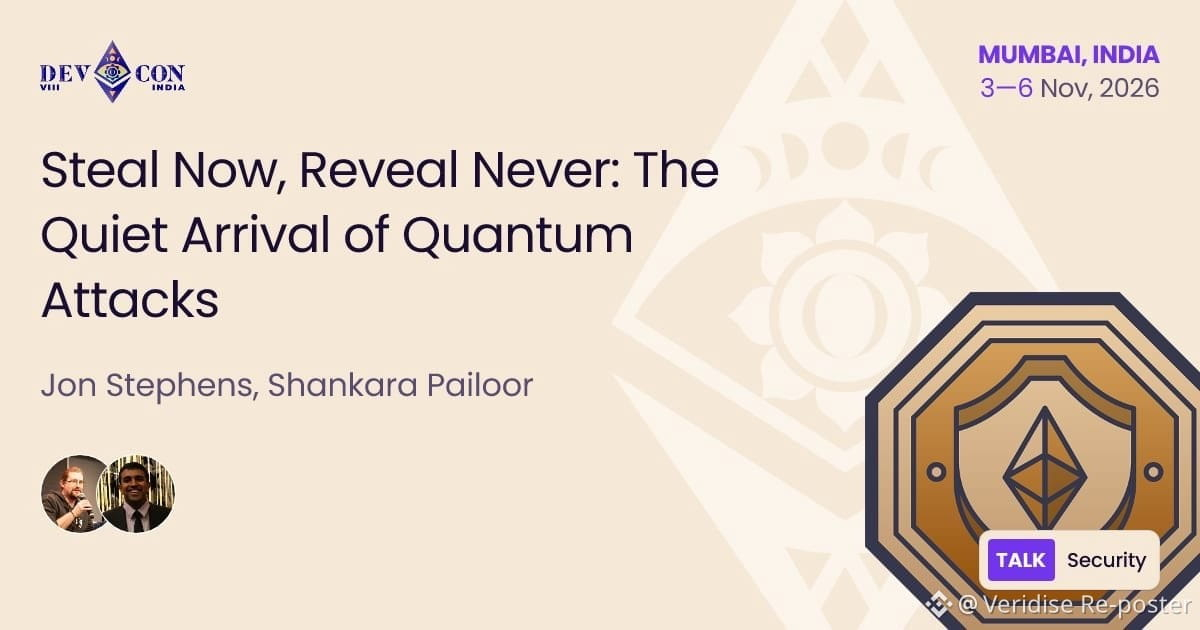
To learn about what fails first in the face of emerging quantum threats, be sure to attend the upcoming session featuring @ShankaraPailoo2 and @FormallyJon at Devcon 8. They will be speaking on Thu Nov 5 at 14:00 IST at Lotus Stage 1. Keep in mind that quantum attacks will not announce their arrival. The initial wave of breaches will most likely be silent and highly specific, setting their sights on wallets, bridges, validators, and custodians one target at a time.
To learn about what fails first in the face of emerging quantum threats, be sure to attend the upcoming session featuring @ShankaraPailoo2 and @FormallyJon at Devcon 8. They will be speaking on Thu Nov 5 at 14:00 IST at Lotus Stage 1. Keep in mind that quantum attacks will not announce their arrival. The initial wave of breaches will most likely be silent and highly specific, setting their sights on wallets, bridges, validators, and custodians one target at a time.
58
Tərcüməyə bax
Creating and validating ZK proofs involves intricate mathematical components that only a highly select group of specialists can truly understand and execute. Because of this steep technical barrier, @boundless_xyz chose to enlist the expertise of Veridise once again. Discover the insights shared by @emilianobonassi as he details the reasoning behind commissioning a second Marketplace audit with Veridise. Read the comprehensive overview by visiting the link provided below.
https://veridise.com/blog/audits-archive/boundless-marketplace-audit-methods-findings-and-security/
https://veridise.com/blog/audits-archive/boundless-marketplace-audit-methods-findings-and-security/
43
Tərcüməyə bax
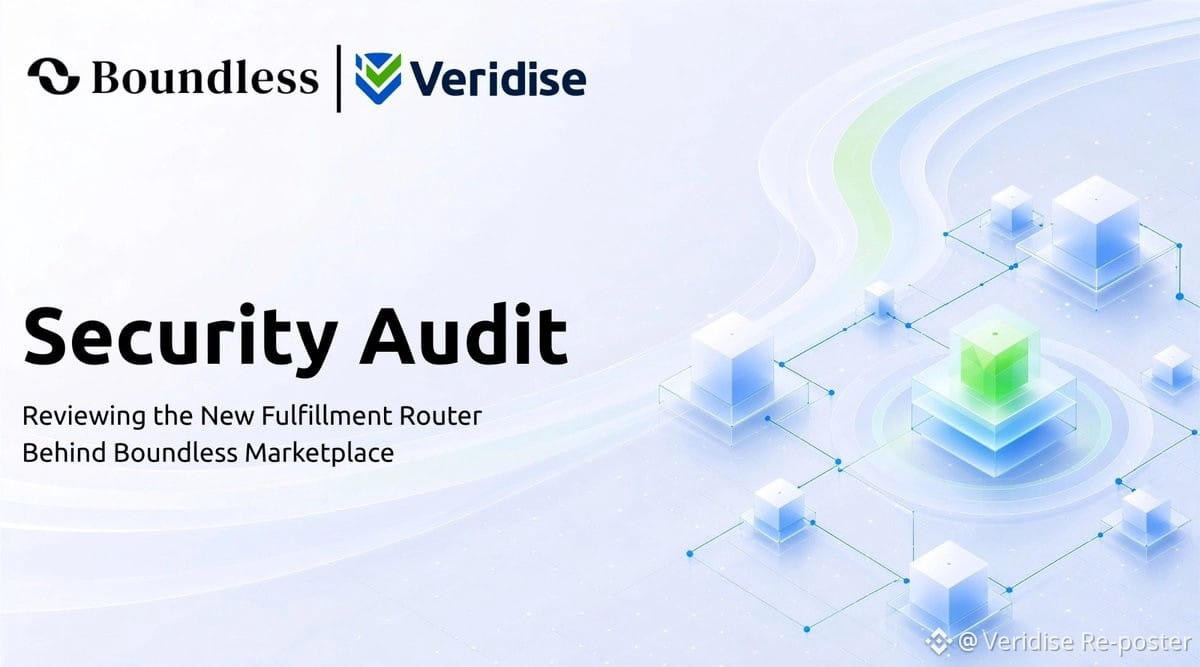
Constructing and evaluating ZK proofs involves complex mathematical entities that very few individuals possess the expertise to manage. According to @emilianobonassi, this specific challenge is exactly why @BoundlessHQ chose to partner with Veridise once again to perform a second audit of their Marketplace. You can explore the complete details of this decision and the subsequent findings by reading the full story at the link provided below.
https://veridise.com/blog/audits-archive/boundless-marketplace-audit-methods-findings-and-security/
https://veridise.com/blog/audits-archive/boundless-marketplace-audit-methods-findings-and-security/
63
Tərcüməyə bax
Protecting artificial intelligence agents experiences the exact same pitfalls as traditional access control, which means it is crucial to always audit whoever else holds the key.
For a clear example of this, consider a functioning pathway from an older draft of ERC-8468. In that version, a guardian could trigger a suspension for an AI agent, only to see the system come back online after just one block. This quick reactivation happened because the agent had specified a second key under its own command that carried the authorization to resume operations.
https://ethereum-magicians.org/t/erc-8468-agent-safety-framework-asf/30073
71
Tərcüməyə bax
Seeing a statement like x = x + 1 is perfectly normal in standard software development, but it creates unnecessary complications for a prover. When variables change, the prover is forced to continuously figure out exactly which version of x is being referenced at any given point in the code. Thanks to LLZK, this problem is completely avoided because every single value is assigned only one time. For a deeper understanding of how this single assignment approach streamlines the verification of ZK circuits, you can read the breakdown provided by @RaghavMalik15.
Seeing a statement like x = x + 1 is perfectly normal in standard software development, but it creates unnecessary complications for a prover. When variables change, the prover is forced to continuously figure out exactly which version of x is being referenced at any given point in the code. Thanks to LLZK, this problem is completely avoided because every single value is assigned only one time. For a deeper understanding of how this single assignment approach streamlines the verification of ZK circuits, you can read the breakdown provided by @RaghavMalik15.
53
Quantum Alliance kimi tanınan yeni koalisiya doqquz kriptovalyuta təşkilatı tərəfindən yaradılıb. Bu əməkdaşlıq çərçivəsində post-kvant sıfır-bilik sistemlərinə diqqət yetirən xüsusi işçi qrupu yaradılıb və komandamız məhz bu təşəbbüsü yaxından izləyir.
Marağımızın əsas səbəbi burada qarşıya çıxan texniki çətinliklərdir. Müəyyən bir sübut sistemi üçün hazırlanmış sxemlərin başqa bir sistemə problemsiz uyğunlaşdırılması olduqca nadir haldır. Buna görə də, tələb olunan hər hansı yenidən yazılma tamamilə yeni kodun yaradılmasına səbəb olur və bu kod hərtərəfli şəkildə yenidən audit edilməlidir.
Bu elanla bağlı əlavə məlumatı burada tapa bilərsiniz:
https://decrypt.co/381236/crypto-firms-launch-quantum-alliance-as-6-million-bitcoin-sit-exposed
79
Dövrün davranışını yoxlamaq, onun neçə iterasiya edəcəyini bilmədikdə çətin ola bilər. Bunun sirri elə başlanğıcdan doğru olan və hər iterasiya boyunca qorunub saxlanılan konkret bir şərt müəyyənləşdirməkdir. İnduksiya prinsipi sayəsində icra nəhayət başa çatdıqda bu xassənin qüvvədə qalacağına əmin ola bilərsiniz. Bu metodun tətbiqinə əla nümunə üçün @RaghavMalik15 LLEQ-nin bunu praktikada necə həyata keçirdiyini addım-addım izah edir.
Dövrün davranışını yoxlamaq, onun neçə iterasiya edəcəyini bilmədikdə çətin ola bilər. Bunun sirri elə başlanğıcdan doğru olan və hər iterasiya boyunca qorunub saxlanılan konkret bir şərt müəyyənləşdirməkdir. İnduksiya prinsipi sayəsində icra nəhayət başa çatdıqda bu xassənin qüvvədə qalacağına əmin ola bilərsiniz. Bu metodun tətbiqinə əla nümunə üçün @RaghavMalik15 LLEQ-nin bunu praktikada necə həyata keçirdiyini addım-addım izah edir.
68
Məhdudiyyətlərin sayını azaltmaq üçün ZK dövrəsini optimallaşdırdığınız zaman yeni versiyanın ilkin dizaynınızla tamamilə eyni hesablamanı apardığına əmin olmalısınız. Standart testlər yalnız gözlədiyiniz konkret girişləri yoxlasa da, LLEQ daha əhatəli yanaşmadan istifadə edir. O, yoxlamanı hər bir mümkün giriş ssenarisini məntiqi olaraq qiymətləndirən SMT həll edicisinə həvalə edir. Bu iş prosesini necə həyata keçirməyə dair praktiki təlimatı @RaghavMalik15 təqdim edir.
Məhdudiyyətlərin sayını azaltmaq üçün ZK dövrəsini optimallaşdırdığınız zaman yeni versiyanın ilkin dizaynınızla tamamilə eyni hesablamanı apardığına əmin olmalısınız. Standart testlər yalnız gözlədiyiniz konkret girişləri yoxlasa da, LLEQ daha əhatəli yanaşmadan istifadə edir. O, yoxlamanı hər bir mümkün giriş ssenarisini məntiqi olaraq qiymətləndirən SMT həll edicisinə həvalə edir. Bu iş prosesini necə həyata keçirməyə dair praktiki təlimatı @RaghavMalik15 təqdim edir.
77
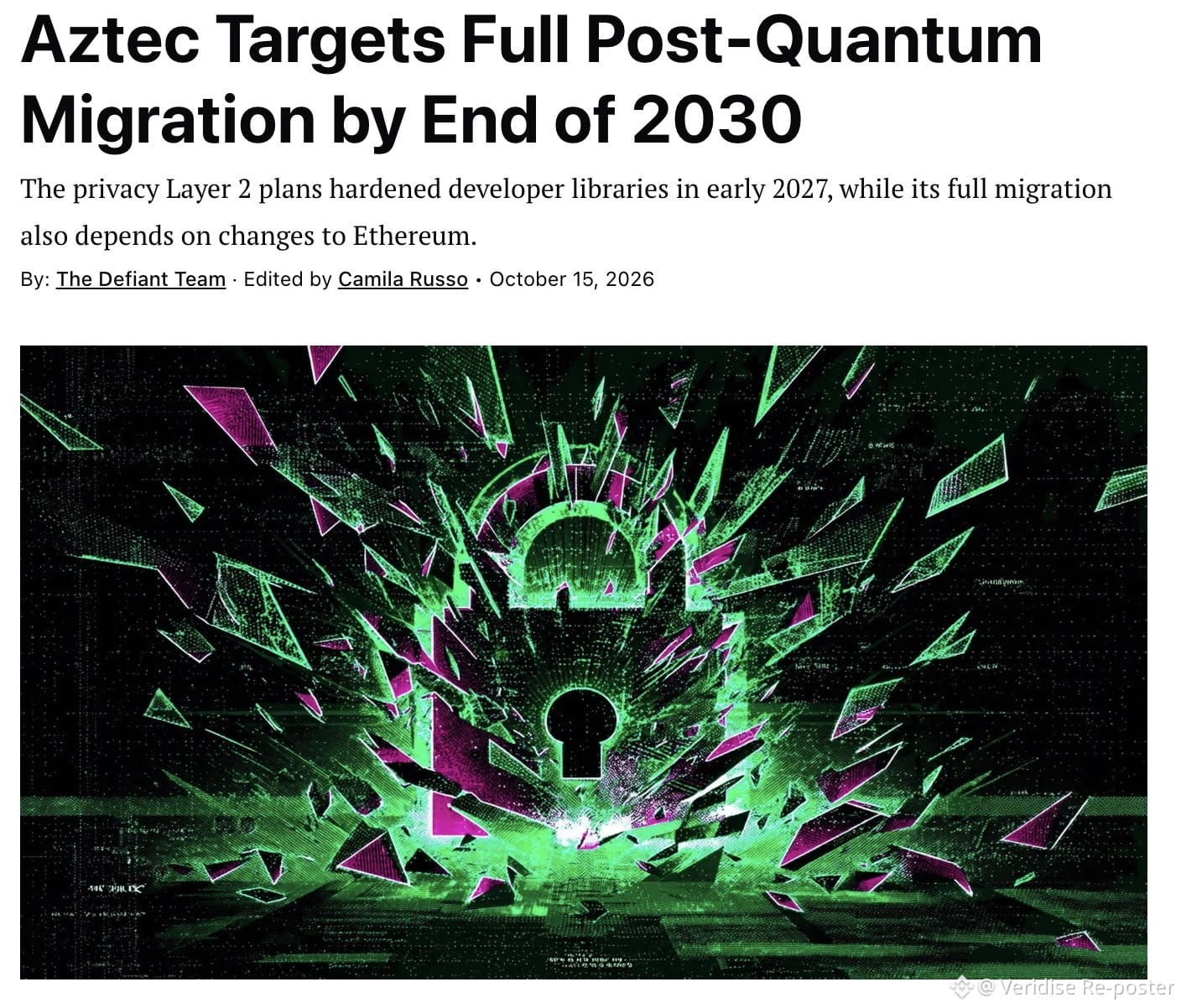
@aztecnetwork komandası 2030-cu ilə qədər tamamlanması hədəflənən hərtərəfli kvantsonrası yol xəritəsini açıqlayıb. Bu qrafiki xüsusilə maraqlı edən planlaşdırılan yeniləmələrin ardıcıllığıdır. Onlar lap əvvəldən “indi topla, sonra deşifrə et” təhlükəsini aradan qaldırmağı prioritet hesab edirlər. Bu yanaşmaya əsasən, şəxsi məlumatları qoruyan gücləndirilmiş kitabxanalar 2027-ci ilin əvvəlində tətbiq olunacaq — sübut sistemində hər hansı dəyişiklik edilməzdən xeyli əvvəl.
https://thedefiant.io/news/blockchains/aztec-targets-full-post-quantum-migration-by-end-of-2030
https://thedefiant.io/news/blockchains/aztec-targets-full-post-quantum-migration-by-end-of-2030
73
Bitcoin-in post-kvant dövrünə keçirilməsini nəzərdən keçirərkən, post-kvant imza sxeminin seçilməsi əslində ən sadə addımdır. Coinbase tərəfindən dərc olunmuş yeni PQ məqaləsi daha çətin bir problemə diqqət çəkir. Vəziyyətli sxemlərdən istifadə edən pulqabılar birdəfəlik açarlardan hansının artıq istifadə edildiyini dəqiq izləməlidir. İstifadəçi köhnəlmiş ehtiyat nüsxəni bərpa edib daha sonra açarı yenidən istifadə edərsə, hücumçu etibarlı imzanı saxtalaşdıra bilər.
https://www.coindesk.com/tech/2026/10/14/coinbase-which-holds-5-of-all-bitcoin-wants-the-quantum-fix-started-now
https://www.coindesk.com/tech/2026/10/14/coinbase-which-holds-5-of-all-bitcoin-wants-the-quantum-fix-started-now
71
Süni intellekt agentləri @token2049 tədbirində geniş yer tutdu və burada xəzinədarlıqların idarə olunması, əməliyyatların icrası və müqavilələrin hazırlanması kimi mürəkkəb tapşırıqları yerinə yetirdikləri nümayiş etdirildi. Lakin bütün bu həvəsin içində vacib bir müzakirə əsasən diqqətdən kənarda qaldı. Bu agentlərin hazırladığı real nəticələrin yoxlanılmasının zəruriliyindən, demək olar ki, heç kim danışmadı. Komandamız məhz bu yoxlama boşluğunu aradan qaldırmağa çalışır. Tezliklə sizinlə daha ətraflı məlumat paylaşmağı səbirsizliklə gözləyirik.
Süni intellekt agentləri @token2049 tədbirində geniş yer tutdu və burada xəzinədarlıqların idarə olunması, əməliyyatların icrası və müqavilələrin hazırlanması kimi mürəkkəb tapşırıqları yerinə yetirdikləri nümayiş etdirildi. Lakin bütün bu həvəsin içində vacib bir müzakirə əsasən diqqətdən kənarda qaldı. Bu agentlərin hazırladığı real nəticələrin yoxlanılmasının zəruriliyindən, demək olar ki, heç kim danışmadı. Komandamız məhz bu yoxlama boşluğunu aradan qaldırmağa çalışır. Tezliklə sizinlə daha ətraflı məlumat paylaşmağı səbirsizliklə gözləyirik.
75
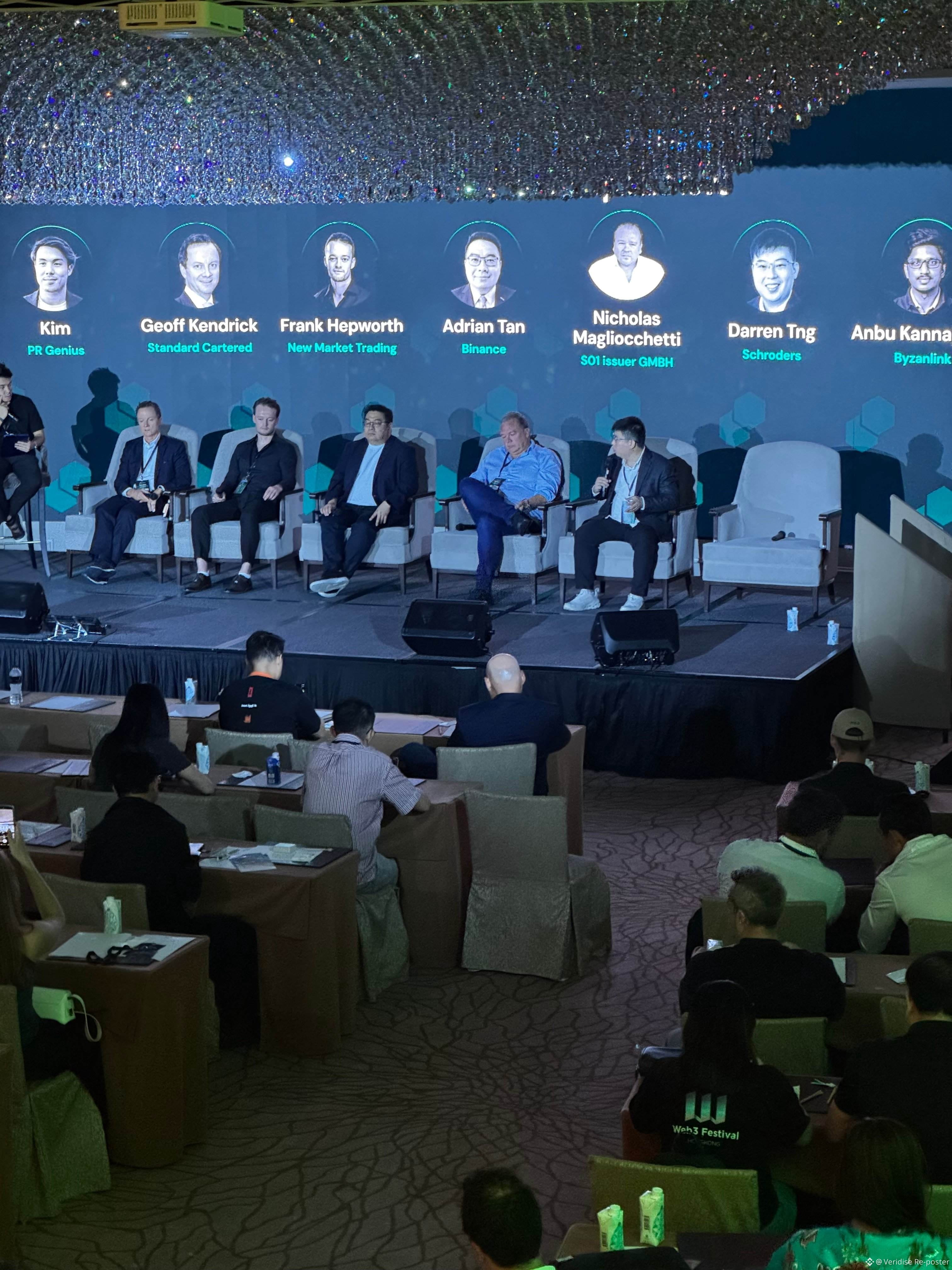
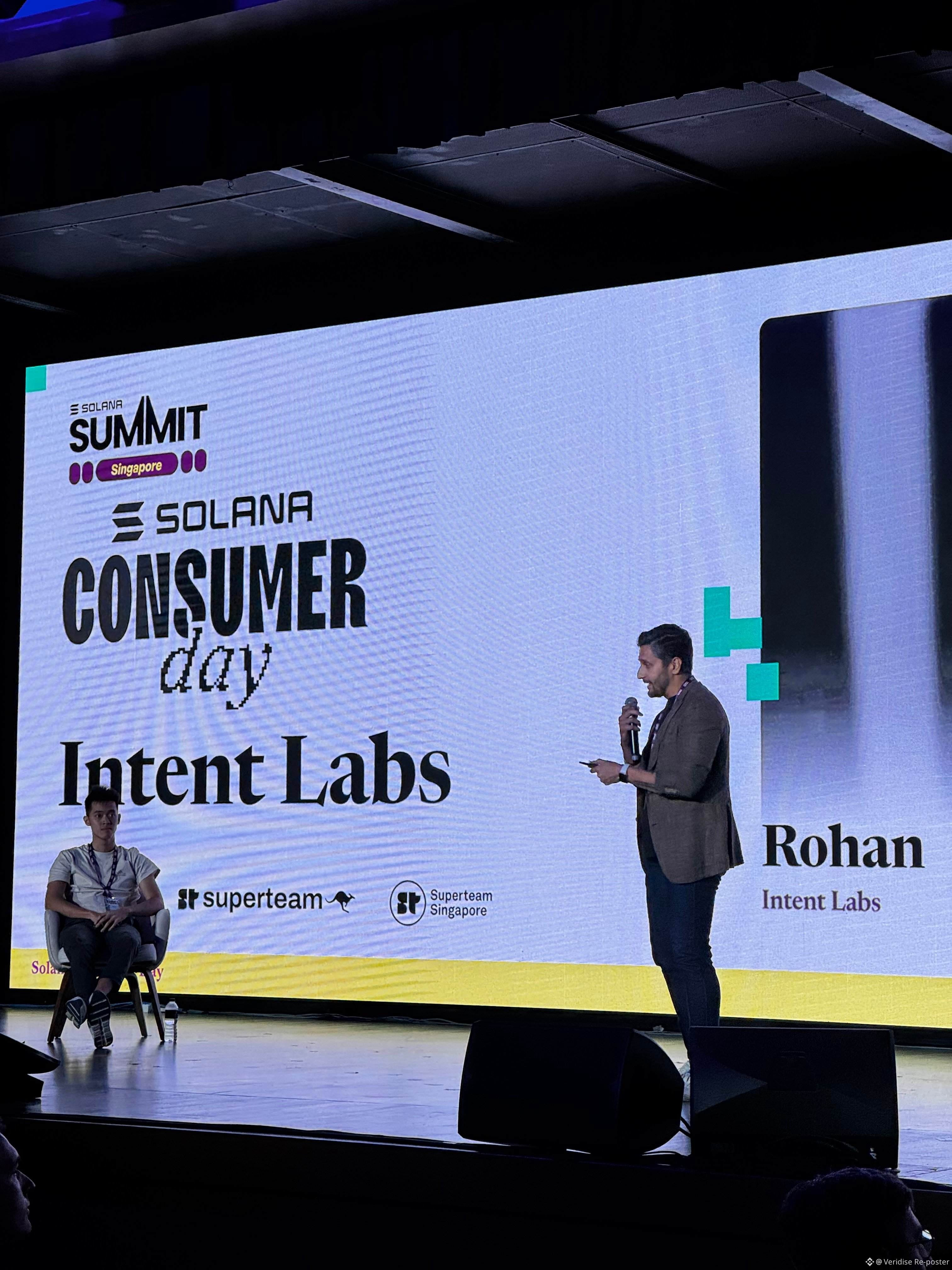
Sinqapurda keçirdiyimiz tam bir gün ərzində Veridise komandası üç fərqli tədbirdə çıxış etmək fürsəti qazandı. İstər @solana Summit-də, istər @gammaprime tədbirində iştirak edərkən, istərsə də Multichain Day-ə qatılarkən söhbətlərimiz əsasən ZK, təhlükəsizlik auditləri və formal verifikasiya ətrafında gedirdi. Məkanlar fərqli olsa da, insanlar daim eyni mövzunu gündəmə gətirirdilər. İştirakçılar təkrar-təkrar verilmiş kod parçasının spesifikasiyalarında göstərildiyi kimi, həqiqətən də dəqiq şəkildə işlədiyini yoxlamağın etibarlı yolunu axtarırdılar.
Sinqapurda keçirdiyimiz tam bir gün ərzində Veridise komandası üç fərqli tədbirdə çıxış etmək fürsəti qazandı. İstər @solana Summit-də, istər @gammaprime tədbirində iştirak edərkən, istərsə də Multichain Day-ə qatılarkən söhbətlərimiz əsasən ZK, təhlükəsizlik auditləri və formal verifikasiya ətrafında gedirdi. Məkanlar fərqli olsa da, insanlar daim eyni mövzunu gündəmə gətirirdilər. İştirakçılar təkrar-təkrar verilmiş kod parçasının spesifikasiyalarında göstərildiyi kimi, həqiqətən də dəqiq şəkildə işlədiyini yoxlamağın etibarlı yolunu axtarırdılar.
72
Daha çox kontent araşdırmaq üçün daxil olun
Binance Square-də qlobal kriptovalyuta istifadəçilərinə qoşulun
⚡️ Kriptovalyuta haqqında ən son və faydalı məlumatları əldə edin.
💬 Dünyanın ən böyük kriptovalyuta birjası tərəfindən etibar edilir.
👍 Doğrulanmış yaradıcılardan gələn real məlumatları kəşf edin.
E-poçt/Telefon nömrəsi
Trenddə olan mövzular
CorePCEBeatLiftsFedHikeOdds
107,478 baxış
Müzakirə edir: 957
ABŞ-da oktyabr ayı üzrə PCE qiymət indeksi aylıq müqayisədə 0,3% olub; gözlənti 0,30%, əvvəlki göstərici isə 0,50%
Binance News
·13 bəyənmə
·30.1k baxış
BitcoinAndStocksSlipAgainAmidTrump’sTariffPlans
175,067 baxış
Müzakirə edir: 1,841
JensenHuangSaysNvidiaDoesn’tNeedASuccessionPlan
85,947 baxış
Müzakirə edir: 1,106