

Anl_
128 Paylaşımlar

Anl_
Şikayət et
İstifadəçini blokla
Web3 😎
Açıq ticarət
Daimi treyder
4 ay
32 İzlənilir
31 İzləyicilər
127 Bəyəndi
Postlar
Portfel
Hamısı
Sitatlar
·
--
#dusk $DUSK @Dusk_Foundation
Bəs tokenləşdirilmiş aktivə sahib olmağınıza kim qərar verir və hər şeyinizi bilmədən bu necə yoxlanılır?
Heç vaxt bunun iki tərəfi barədə düşünməmişdim. Aktivin yaradıldığını, insanların onu aldığını və sənədləşmənin haradasa gözə görünməyən yerdə baş verdiyini güman edirdim.
Amma proses əksinə işləyir. Hər hansı ticarət başlamazdan əvvəl emitent aktivin özünü, uyğunluq tələblərini və onun həyatını tənzimləyən qaydaları müəyyən edir. Yalnız bundan sonra hər şey hərəkətə keçir. Buraxılış əslində qayda yazma aktıdır və token sanki sadəcə əlavə məhsul kimidir.
Bu, mənim əlaqələndirmədiyim bir problem yaradır. Əgər qaydalar bir insan haqqında faktlara əsaslanırsa, onları adətən yoxlamaq üçün həmin faktları saxlamaq lazımdır. Avropada isə şəxsi məlumat hüquqlara malikdir; bəzi hallarda onu silmək hüququ da var. Heç nə silinməsin deyə qurulmuş bir reyestr bu ilə narahat şəkildə yanaşıdır.
Yeganə təmiz həll şəxsi məlumatı daimi qeyddən tamamilə kənarda saxlamaq və bunun yerinə orada sübut qoymaqdır. Əgər məlumat heç yazılmayıbsa, silinmə sualı əsasən öz-özünə cavablanır.
Buradan üçüncü hissəyə keçirik və bu, bütün bunların nə dərəcədə realistik olduğunu müəyyən edir. Sübutlar yalnız onları yoxlamağın qiyməti uyğun olduqda faydalıdır. Mən güman edirdim ki, ciddi kriptoqrafiya və ağıllı müqavilələr yaxşı uyğun gəlmir — mümkündür, amma adi istifadə üçün çox bahadır. Dusk isə sübutun yoxlanılmasını hər bir müqavilənin yenidən qurduğu bir şey kimi yox, doğma imkan kimi qəbul edir.
Hələ də qiymətləndirə bilmədiyim odur ki, bir tətbiq həqiqətən də bir insandan nəsə öyrənib ona xidmət etməyə ehtiyac duyaəndə bu necə işləyəcək; bu isə tənzimlənən maliyyənin əksəriyyətini təsvir edir.
Buradan mən məxfilik iddialarını fərqli oxuyuram. Ən güclü versiya daha güclü şifrələmə deyil. Həssas məlumatın heç bir zaman qeydə alınmamasını elə tənzimləməkdir ki, proses bunu tələb etmir.
#dusk $DUSK @Dusk
Bəs tokenləşdirilmiş aktivə sahib olmağınıza kim qərar verir və hər şeyinizi bilmədən bu necə yoxlanılır?
Heç vaxt bunun iki tərəfi barədə düşünməmişdim. Aktivin yaradıldığını, insanların onu aldığını və sənədləşmənin haradasa gözə görünməyən yerdə baş verdiyini güman edirdim.
Amma proses əksinə işləyir. Hər hansı ticarət başlamazdan əvvəl emitent aktivin özünü, uyğunluq tələblərini və onun həyatını tənzimləyən qaydaları müəyyən edir. Yalnız bundan sonra hər şey hərəkətə keçir. Buraxılış əslində qayda yazma aktıdır və token sanki sadəcə əlavə məhsul kimidir.
Bu, mənim əlaqələndirmədiyim bir problem yaradır. Əgər qaydalar bir insan haqqında faktlara əsaslanırsa, onları adətən yoxlamaq üçün həmin faktları saxlamaq lazımdır. Avropada isə şəxsi məlumat hüquqlara malikdir; bəzi hallarda onu silmək hüququ da var. Heç nə silinməsin deyə qurulmuş bir reyestr bu ilə narahat şəkildə yanaşıdır.
Yeganə təmiz həll şəxsi məlumatı daimi qeyddən tamamilə kənarda saxlamaq və bunun yerinə orada sübut qoymaqdır. Əgər məlumat heç yazılmayıbsa, silinmə sualı əsasən öz-özünə cavablanır.
Buradan üçüncü hissəyə keçirik və bu, bütün bunların nə dərəcədə realistik olduğunu müəyyən edir. Sübutlar yalnız onları yoxlamağın qiyməti uyğun olduqda faydalıdır. Mən güman edirdim ki, ciddi kriptoqrafiya və ağıllı müqavilələr yaxşı uyğun gəlmir — mümkündür, amma adi istifadə üçün çox bahadır. Dusk isə sübutun yoxlanılmasını hər bir müqavilənin yenidən qurduğu bir şey kimi yox, doğma imkan kimi qəbul edir.
Hələ də qiymətləndirə bilmədiyim odur ki, bir tətbiq həqiqətən də bir insandan nəsə öyrənib ona xidmət etməyə ehtiyac duyaəndə bu necə işləyəcək; bu isə tənzimlənən maliyyənin əksəriyyətini təsvir edir.
Buradan mən məxfilik iddialarını fərqli oxuyuram. Ən güclü versiya daha güclü şifrələmə deyil. Həssas məlumatın heç bir zaman qeydə alınmamasını elə tənzimləməkdir ki, proses bunu tələb etmir.
Bəs tokenləşdirilmiş aktivə sahib olmağınıza kim qərar verir və hər şeyinizi bilmədən bu necə yoxlanılır?
Heç vaxt bunun iki tərəfi barədə düşünməmişdim. Aktivin yaradıldığını, insanların onu aldığını və sənədləşmənin haradasa gözə görünməyən yerdə baş verdiyini güman edirdim.
Amma proses əksinə işləyir. Hər hansı ticarət başlamazdan əvvəl emitent aktivin özünü, uyğunluq tələblərini və onun həyatını tənzimləyən qaydaları müəyyən edir. Yalnız bundan sonra hər şey hərəkətə keçir. Buraxılış əslində qayda yazma aktıdır və token sanki sadəcə əlavə məhsul kimidir.
Bu, mənim əlaqələndirmədiyim bir problem yaradır. Əgər qaydalar bir insan haqqında faktlara əsaslanırsa, onları adətən yoxlamaq üçün həmin faktları saxlamaq lazımdır. Avropada isə şəxsi məlumat hüquqlara malikdir; bəzi hallarda onu silmək hüququ da var. Heç nə silinməsin deyə qurulmuş bir reyestr bu ilə narahat şəkildə yanaşıdır.
Yeganə təmiz həll şəxsi məlumatı daimi qeyddən tamamilə kənarda saxlamaq və bunun yerinə orada sübut qoymaqdır. Əgər məlumat heç yazılmayıbsa, silinmə sualı əsasən öz-özünə cavablanır.
Buradan üçüncü hissəyə keçirik və bu, bütün bunların nə dərəcədə realistik olduğunu müəyyən edir. Sübutlar yalnız onları yoxlamağın qiyməti uyğun olduqda faydalıdır. Mən güman edirdim ki, ciddi kriptoqrafiya və ağıllı müqavilələr yaxşı uyğun gəlmir — mümkündür, amma adi istifadə üçün çox bahadır. Dusk isə sübutun yoxlanılmasını hər bir müqavilənin yenidən qurduğu bir şey kimi yox, doğma imkan kimi qəbul edir.
Hələ də qiymətləndirə bilmədiyim odur ki, bir tətbiq həqiqətən də bir insandan nəsə öyrənib ona xidmət etməyə ehtiyac duyaəndə bu necə işləyəcək; bu isə tənzimlənən maliyyənin əksəriyyətini təsvir edir.
Buradan mən məxfilik iddialarını fərqli oxuyuram. Ən güclü versiya daha güclü şifrələmə deyil. Həssas məlumatın heç bir zaman qeydə alınmamasını elə tənzimləməkdir ki, proses bunu tələb etmir.
10
·
--
Tərcüməyə bax
#dusk $DUSK @Dusk_Foundation
So when you buy something on-chain, who are you buying it from?
In ordinary crypto, the answer is nobody in particular, and that is treated as a feature. You interact with a contract, the trade executes, and the identity of the other party is irrelevant.
In regulated markets, that answer is unacceptable, and I did not appreciate how deeply until recently.
Institutions are required to know who they are dealing with. Not out of curiosity — because they carry obligations about who they are permitted to transact with, and those obligations do not disappear because the trade happened on a blockchain. An anonymous counterparty is not an efficiency for them. It is a compliance failure.
What caught my attention is how much this reshapes what a financial chain has to provide. It cannot only prove that a transaction is valid. It has to allow participants to establish that the other party is someone they are allowed to trade with, without exposing that person to everyone else watching the chain.
That is a harder problem than privacy alone, and a harder problem than transparency alone. It sits awkwardly between them.
I am still working out how much of that is genuinely solvable with cryptography and how much simply moves the question to whoever issued the credentials.
From here I stopped thinking about anonymity as the default good in finance. Sometimes the ability to know who is on the other side is exactly what makes the market possible.
#dusk $DUSK @Dusk
So when you buy something on-chain, who are you buying it from?
In ordinary crypto, the answer is nobody in particular, and that is treated as a feature. You interact with a contract, the trade executes, and the identity of the other party is irrelevant.
In regulated markets, that answer is unacceptable, and I did not appreciate how deeply until recently.
Institutions are required to know who they are dealing with. Not out of curiosity — because they carry obligations about who they are permitted to transact with, and those obligations do not disappear because the trade happened on a blockchain. An anonymous counterparty is not an efficiency for them. It is a compliance failure.
What caught my attention is how much this reshapes what a financial chain has to provide. It cannot only prove that a transaction is valid. It has to allow participants to establish that the other party is someone they are allowed to trade with, without exposing that person to everyone else watching the chain.
That is a harder problem than privacy alone, and a harder problem than transparency alone. It sits awkwardly between them.
I am still working out how much of that is genuinely solvable with cryptography and how much simply moves the question to whoever issued the credentials.
From here I stopped thinking about anonymity as the default good in finance. Sometimes the ability to know who is on the other side is exactly what makes the market possible.
So when you buy something on-chain, who are you buying it from?
In ordinary crypto, the answer is nobody in particular, and that is treated as a feature. You interact with a contract, the trade executes, and the identity of the other party is irrelevant.
In regulated markets, that answer is unacceptable, and I did not appreciate how deeply until recently.
Institutions are required to know who they are dealing with. Not out of curiosity — because they carry obligations about who they are permitted to transact with, and those obligations do not disappear because the trade happened on a blockchain. An anonymous counterparty is not an efficiency for them. It is a compliance failure.
What caught my attention is how much this reshapes what a financial chain has to provide. It cannot only prove that a transaction is valid. It has to allow participants to establish that the other party is someone they are allowed to trade with, without exposing that person to everyone else watching the chain.
That is a harder problem than privacy alone, and a harder problem than transparency alone. It sits awkwardly between them.
I am still working out how much of that is genuinely solvable with cryptography and how much simply moves the question to whoever issued the credentials.
From here I stopped thinking about anonymity as the default good in finance. Sometimes the ability to know who is on the other side is exactly what makes the market possible.
19
·
--
Tərcüməyə bax
#dusk $DUSK @Dusk_Foundation
So when a transaction is "confirmed," what has actually happened?
In the past, I used to treat confirmation and finality as the same word. I would see a transaction go through, wait a little, and consider the matter closed. If someone had asked me whether it could still be reversed, I would have said no without really thinking about why.
But the more I looked into how Dusk describes settlement, the more I realized I had been merging two different ideas.
On most chains, a transaction becomes safer the longer you wait. Nothing declares it permanent. You simply reach a point where reversing it would be so expensive that nobody reasonably would. That is a probability, not a promise.
Dusk approaches it differently. Its consensus is designed so that a block is settled by the rules of the protocol itself, rather than becoming gradually safer over time.
What I found particularly notable is why that distinction matters far more in finance than in ordinary crypto use. If I send someone money and it takes another minute to feel safe, nothing important happens. But a settlement system cannot operate on "very likely permanent." Somebody has to be accountable for the moment a transfer becomes irreversible, and that moment has to be a fact rather than an estimate.
This also explains something that puzzled me earlier. Building a settlement layer from scratch is enormous work when faster options already exist. It only makes sense if the guarantee itself is the product.
I am still not in a position to say how this behaves when the network is under real pressure rather than normal conditions. That is where designs usually reveal what they actually promised.
But from here I stopped reading "confirmed" as a single idea. There is the moment a transaction happens, and there is the moment it stops being reversible, and those two are not always the same thing.
#dusk $DUSK @Dusk
So when a transaction is "confirmed," what has actually happened?
In the past, I used to treat confirmation and finality as the same word. I would see a transaction go through, wait a little, and consider the matter closed. If someone had asked me whether it could still be reversed, I would have said no without really thinking about why.
But the more I looked into how Dusk describes settlement, the more I realized I had been merging two different ideas.
On most chains, a transaction becomes safer the longer you wait. Nothing declares it permanent. You simply reach a point where reversing it would be so expensive that nobody reasonably would. That is a probability, not a promise.
Dusk approaches it differently. Its consensus is designed so that a block is settled by the rules of the protocol itself, rather than becoming gradually safer over time.
What I found particularly notable is why that distinction matters far more in finance than in ordinary crypto use. If I send someone money and it takes another minute to feel safe, nothing important happens. But a settlement system cannot operate on "very likely permanent." Somebody has to be accountable for the moment a transfer becomes irreversible, and that moment has to be a fact rather than an estimate.
This also explains something that puzzled me earlier. Building a settlement layer from scratch is enormous work when faster options already exist. It only makes sense if the guarantee itself is the product.
I am still not in a position to say how this behaves when the network is under real pressure rather than normal conditions. That is where designs usually reveal what they actually promised.
But from here I stopped reading "confirmed" as a single idea. There is the moment a transaction happens, and there is the moment it stops being reversible, and those two are not always the same thing.
So when a transaction is "confirmed," what has actually happened?
In the past, I used to treat confirmation and finality as the same word. I would see a transaction go through, wait a little, and consider the matter closed. If someone had asked me whether it could still be reversed, I would have said no without really thinking about why.
But the more I looked into how Dusk describes settlement, the more I realized I had been merging two different ideas.
On most chains, a transaction becomes safer the longer you wait. Nothing declares it permanent. You simply reach a point where reversing it would be so expensive that nobody reasonably would. That is a probability, not a promise.
Dusk approaches it differently. Its consensus is designed so that a block is settled by the rules of the protocol itself, rather than becoming gradually safer over time.
What I found particularly notable is why that distinction matters far more in finance than in ordinary crypto use. If I send someone money and it takes another minute to feel safe, nothing important happens. But a settlement system cannot operate on "very likely permanent." Somebody has to be accountable for the moment a transfer becomes irreversible, and that moment has to be a fact rather than an estimate.
This also explains something that puzzled me earlier. Building a settlement layer from scratch is enormous work when faster options already exist. It only makes sense if the guarantee itself is the product.
I am still not in a position to say how this behaves when the network is under real pressure rather than normal conditions. That is where designs usually reveal what they actually promised.
But from here I stopped reading "confirmed" as a single idea. There is the moment a transaction happens, and there is the moment it stops being reversible, and those two are not always the same thing.
6
·
--
Tərcüməyə bax
#dusk $DUSK @Dusk_Foundation Previously, I thought a blockchain had to choose a side. Either it is permissionless, where anyone can transact and nobody is gatekept, or it is permissioned, where a consortium decides who participates. Public or private. One or the other.
But the more I read about Dusk, the less that division seemed to describe what is actually being built.
The base layer is open. Anyone can run a node, anyone can stake, the code is public, and no committee approves your participation. Meanwhile, the assets intended to live on that layer are the opposite: eligibility-restricted, transfer-controlled, and only holdable by verified parties.
What I found particularly notable is that these are not in conflict, because they operate at different layers. The network does not need to know who you are to include your transaction. The asset needs to know who you are before it will let you hold it. Openness at the settlement layer, restriction at the instrument layer.
Traditional markets already work this way, and we rarely notice. Internet infrastructure carries an equity trade without any opinion about whether you are allowed to own that equity. The transport is neutral. The instrument is not.
What makes this hard on-chain is that most people evaluate a chain as a single object. So they ask whether Dusk is permissionless, get a partial answer, and take away the wrong conclusion in either direction.
I am still uncertain how this holds up when a restricted asset ends up somewhere the restriction cannot follow it — that seems like the genuinely difficult case.
From here, I stopped asking whether the chain is open or closed. The more useful question is which layer the openness lives on, and whether the restrictions at the layer above are enforced by code or only by agreement.
#dusk $DUSK @Dusk Previously, I thought a blockchain had to choose a side. Either it is permissionless, where anyone can transact and nobody is gatekept, or it is permissioned, where a consortium decides who participates. Public or private. One or the other.
But the more I read about Dusk, the less that division seemed to describe what is actually being built.
The base layer is open. Anyone can run a node, anyone can stake, the code is public, and no committee approves your participation. Meanwhile, the assets intended to live on that layer are the opposite: eligibility-restricted, transfer-controlled, and only holdable by verified parties.
What I found particularly notable is that these are not in conflict, because they operate at different layers. The network does not need to know who you are to include your transaction. The asset needs to know who you are before it will let you hold it. Openness at the settlement layer, restriction at the instrument layer.
Traditional markets already work this way, and we rarely notice. Internet infrastructure carries an equity trade without any opinion about whether you are allowed to own that equity. The transport is neutral. The instrument is not.
What makes this hard on-chain is that most people evaluate a chain as a single object. So they ask whether Dusk is permissionless, get a partial answer, and take away the wrong conclusion in either direction.
I am still uncertain how this holds up when a restricted asset ends up somewhere the restriction cannot follow it — that seems like the genuinely difficult case.
From here, I stopped asking whether the chain is open or closed. The more useful question is which layer the openness lives on, and whether the restrictions at the layer above are enforced by code or only by agreement.
But the more I read about Dusk, the less that division seemed to describe what is actually being built.
The base layer is open. Anyone can run a node, anyone can stake, the code is public, and no committee approves your participation. Meanwhile, the assets intended to live on that layer are the opposite: eligibility-restricted, transfer-controlled, and only holdable by verified parties.
What I found particularly notable is that these are not in conflict, because they operate at different layers. The network does not need to know who you are to include your transaction. The asset needs to know who you are before it will let you hold it. Openness at the settlement layer, restriction at the instrument layer.
Traditional markets already work this way, and we rarely notice. Internet infrastructure carries an equity trade without any opinion about whether you are allowed to own that equity. The transport is neutral. The instrument is not.
What makes this hard on-chain is that most people evaluate a chain as a single object. So they ask whether Dusk is permissionless, get a partial answer, and take away the wrong conclusion in either direction.
I am still uncertain how this holds up when a restricted asset ends up somewhere the restriction cannot follow it — that seems like the genuinely difficult case.
From here, I stopped asking whether the chain is open or closed. The more useful question is which layer the openness lives on, and whether the restrictions at the layer above are enforced by code or only by agreement.
70
·
--
Tərcüməyə bax
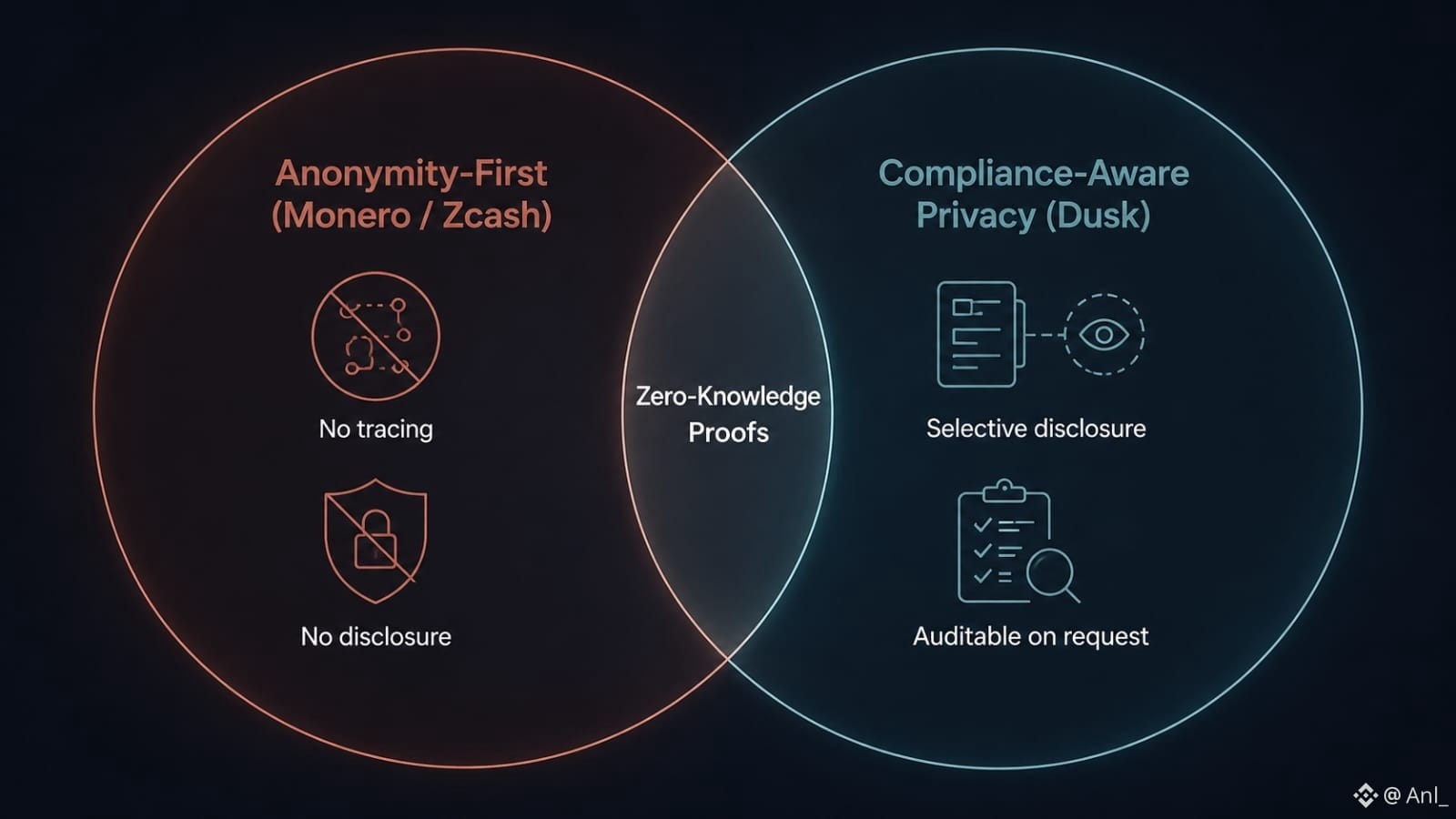
#dusk $DUSK @Dusk_Foundation When you hear “privacy coin,” do you think of Monero or Zcash?
I did. But the comparison gets more interesting once you ask what “privacy” is supposed to achieve.
Monero takes the hard line: privacy is mandatory. Sender, receiver and amount are hidden by default. Zcash is more flexible, with shielded transactions and viewing keys that can selectively reveal information.
Dusk pushes that second philosophy directly into regulated finance.
The idea is privacy with selective disclosure: your financial activity does not need to be public, but an authorized party — an auditor, supervisor or institution — can receive the specific evidence it needs without seeing everything else.
I can see why institutions would prefer this.
Banks, issuers and regulated markets need confidentiality, but they also cannot operate in a system where compliance becomes impossible to prove.
The controversy is obvious too.
For a crypto-native privacy advocate, “authorized visibility” can sound less like privacy and more like a controlled backdoor. If someone can be given access, the argument becomes about who controls that access and under what rules.
Then there is adoption.
Regulatory pressure on anonymity-focused assets is no longer theoretical. Kraken removed Monero for EEA clients, explicitly citing regulatory changes.
That makes Dusk's compromise look more commercially survivable: hide information from the public while still allowing regulated verification.
But “more adoptable” does not automatically mean “better privacy.”
Maybe pure anonymity protects the principle better but struggles with institutional access. Maybe selective disclosure sacrifices ideological purity to make privacy usable inside the financial system.
And that leaves the uncomfortable question:
If privacy can still be shown to “someone,” is it really privacy — or just regulated visibility?
#dusk $DUSK @Dusk When you hear “privacy coin,” do you think of Monero or Zcash?
I did. But the comparison gets more interesting once you ask what “privacy” is supposed to achieve.
Monero takes the hard line: privacy is mandatory. Sender, receiver and amount are hidden by default. Zcash is more flexible, with shielded transactions and viewing keys that can selectively reveal information.
Dusk pushes that second philosophy directly into regulated finance.
The idea is privacy with selective disclosure: your financial activity does not need to be public, but an authorized party — an auditor, supervisor or institution — can receive the specific evidence it needs without seeing everything else.
I can see why institutions would prefer this.
Banks, issuers and regulated markets need confidentiality, but they also cannot operate in a system where compliance becomes impossible to prove.
The controversy is obvious too.
For a crypto-native privacy advocate, “authorized visibility” can sound less like privacy and more like a controlled backdoor. If someone can be given access, the argument becomes about who controls that access and under what rules.
Then there is adoption.
Regulatory pressure on anonymity-focused assets is no longer theoretical. Kraken removed Monero for EEA clients, explicitly citing regulatory changes.
That makes Dusk's compromise look more commercially survivable: hide information from the public while still allowing regulated verification.
But “more adoptable” does not automatically mean “better privacy.”
Maybe pure anonymity protects the principle better but struggles with institutional access. Maybe selective disclosure sacrifices ideological purity to make privacy usable inside the financial system.
And that leaves the uncomfortable question:
If privacy can still be shown to “someone,” is it really privacy — or just regulated visibility?
I did. But the comparison gets more interesting once you ask what “privacy” is supposed to achieve.
Monero takes the hard line: privacy is mandatory. Sender, receiver and amount are hidden by default. Zcash is more flexible, with shielded transactions and viewing keys that can selectively reveal information.
Dusk pushes that second philosophy directly into regulated finance.
The idea is privacy with selective disclosure: your financial activity does not need to be public, but an authorized party — an auditor, supervisor or institution — can receive the specific evidence it needs without seeing everything else.
I can see why institutions would prefer this.
Banks, issuers and regulated markets need confidentiality, but they also cannot operate in a system where compliance becomes impossible to prove.
The controversy is obvious too.
For a crypto-native privacy advocate, “authorized visibility” can sound less like privacy and more like a controlled backdoor. If someone can be given access, the argument becomes about who controls that access and under what rules.
Then there is adoption.
Regulatory pressure on anonymity-focused assets is no longer theoretical. Kraken removed Monero for EEA clients, explicitly citing regulatory changes.
That makes Dusk's compromise look more commercially survivable: hide information from the public while still allowing regulated verification.
But “more adoptable” does not automatically mean “better privacy.”
Maybe pure anonymity protects the principle better but struggles with institutional access. Maybe selective disclosure sacrifices ideological purity to make privacy usable inside the financial system.
And that leaves the uncomfortable question:
If privacy can still be shown to “someone,” is it really privacy — or just regulated visibility?
1
1
151
·
--
Əksər pay-orqanı (proof-of-stake) zəncirləri blok təklif edildikdən sonra bir iş görür: bir komitə səs verir və kifayət qədər səs blokun sayılmasına gətirib çıxarır.
@Dusk_Foundation bunu iki dəfə edir və ikinci raundun məqsədini isə heç kim tam izah etmir.
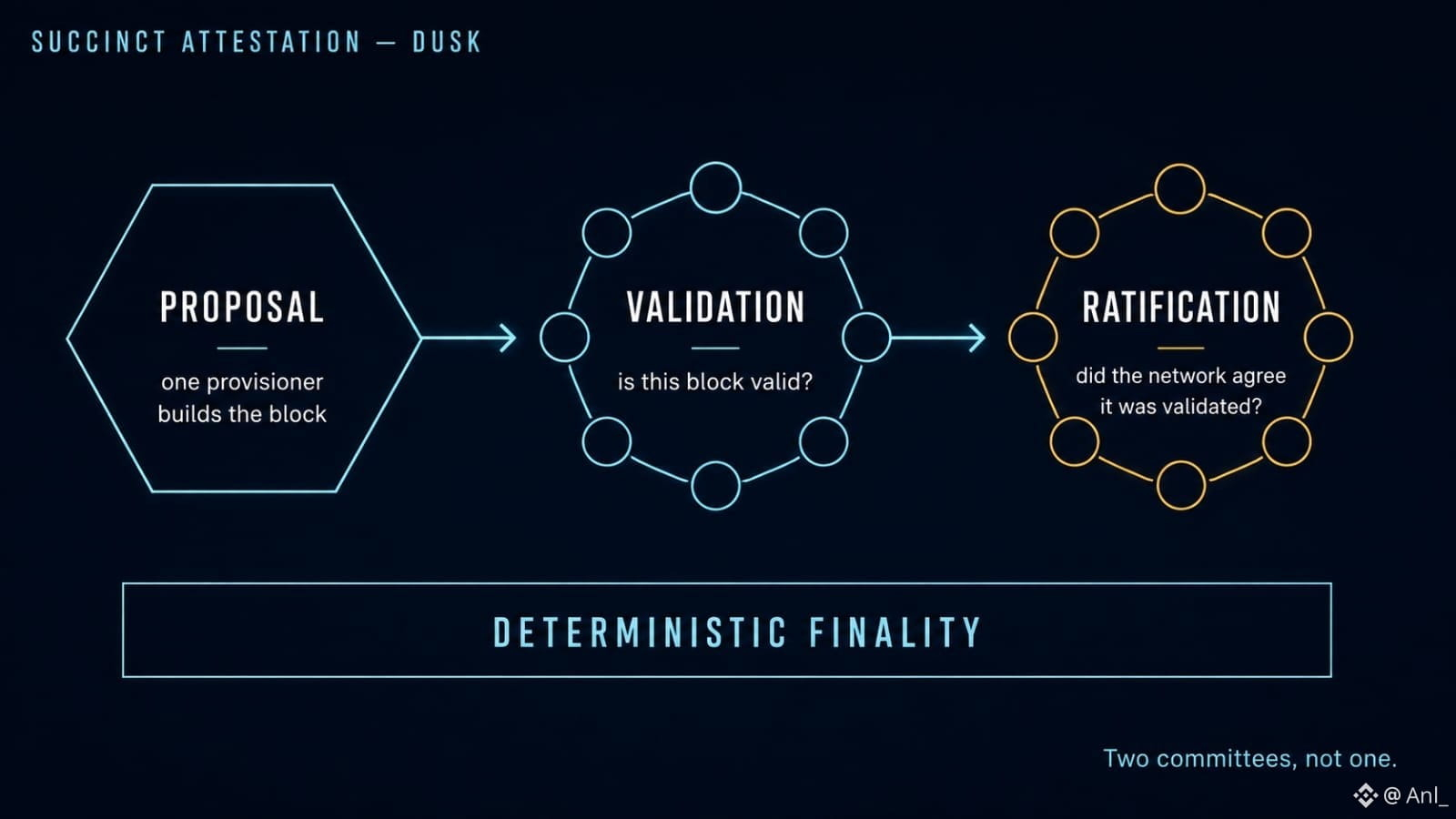
Succinct Attestation hər raundu üç addımda yerinə yetirir. Bir provisioner namizəd blok təklif edir. Təsadüfi seçilmiş komitə onu doğrulayır. Sonra ikinci komitə ratifikasiya edir — amma ratifikasiya etdikləri blokun özü deyil. Onlar doğrulama nəticəsini təsdiqləyirlər.
Bu fərqi düzgün görməyim bir müddət çəkdi.
Doğrulama “bu blok düzgündürmü?” sualına cavab verir. Ratifikasiya isə “şəbəkə həqiqətən bu blokun doğrulandığına razı oldu?” sualına cavab verir. Bunlar fərqli suallardır və ikinci sualda deterministik (qəti) yekunluq yaranır. Yoxdursa, komitənin rəyini alırsan; o rəy şəbəkə boyunca yayılır və müxtəlif düyünlərə müxtəlif vaxtlarda çatır. Oldursa, razılaşmanın özü baş verdiyini təsdiqləyən attest olunmuş bir qeydin olur.
“Bu blok çox güman ki yekundur” ilə “bu blok yekundur” arasındakı fərq məhz budur. Qiymətli kağızların (securities) settlement-i üçün bu boşluq fəlsəfi məsələ deyil. Bu, settlement zəmanəti ilə settlement təxmini arasındakı fərqdir.
Xərc də realdır: iki komitə deməkdir — iki mərhələ imza, iştirakın çatışmama ehtimalı üçün iki şans və blok reward-un bölüşdürülməsi; hər ikisində — doğrulama və ratifikasiya — blok generatorundan ayrı şəkildə blok mükafatından pay götürür.
Bu əlavə raundun gecikmə (latency) və koordinasiya yükünə dəyib-dəyməməsi məhz auditoriyanın (audit) sizə deyə bilməyəcəyi bir şeydir. Oak Security-nin rəyində protokolun yaxşı dizayn edildiyi qeyd olunub. Yaxşı dizayn olunmuş olmaqla, real yüklərə uyğun olmaq isə fərqli iddialardır.
Buradakı node operatorları üçün səmimi sual: ratifikasiyanın, doğrulamanın yox, daha tez-tez “ilişib qaldığı” (stall) mərhələ olduğunu kiminsə ölçdüyü varmı?
#dusk $DUSK #block
Əksər pay-orqanı (proof-of-stake) zəncirləri blok təklif edildikdən sonra bir iş görür: bir komitə səs verir və kifayət qədər səs blokun sayılmasına gətirib çıxarır.
@Dusk bunu iki dəfə edir və ikinci raundun məqsədini isə heç kim tam izah etmir.
Succinct Attestation hər raundu üç addımda yerinə yetirir. Bir provisioner namizəd blok təklif edir. Təsadüfi seçilmiş komitə onu doğrulayır. Sonra ikinci komitə ratifikasiya edir — amma ratifikasiya etdikləri blokun özü deyil. Onlar doğrulama nəticəsini təsdiqləyirlər.
Bu fərqi düzgün görməyim bir müddət çəkdi.
Doğrulama “bu blok düzgündürmü?” sualına cavab verir. Ratifikasiya isə “şəbəkə həqiqətən bu blokun doğrulandığına razı oldu?” sualına cavab verir. Bunlar fərqli suallardır və ikinci sualda deterministik (qəti) yekunluq yaranır. Yoxdursa, komitənin rəyini alırsan; o rəy şəbəkə boyunca yayılır və müxtəlif düyünlərə müxtəlif vaxtlarda çatır. Oldursa, razılaşmanın özü baş verdiyini təsdiqləyən attest olunmuş bir qeydin olur.
“Bu blok çox güman ki yekundur” ilə “bu blok yekundur” arasındakı fərq məhz budur. Qiymətli kağızların (securities) settlement-i üçün bu boşluq fəlsəfi məsələ deyil. Bu, settlement zəmanəti ilə settlement təxmini arasındakı fərqdir.
Xərc də realdır: iki komitə deməkdir — iki mərhələ imza, iştirakın çatışmama ehtimalı üçün iki şans və blok reward-un bölüşdürülməsi; hər ikisində — doğrulama və ratifikasiya — blok generatorundan ayrı şəkildə blok mükafatından pay götürür.
Bu əlavə raundun gecikmə (latency) və koordinasiya yükünə dəyib-dəyməməsi məhz auditoriyanın (audit) sizə deyə bilməyəcəyi bir şeydir. Oak Security-nin rəyində protokolun yaxşı dizayn edildiyi qeyd olunub. Yaxşı dizayn olunmuş olmaqla, real yüklərə uyğun olmaq isə fərqli iddialardır.
Buradakı node operatorları üçün səmimi sual: ratifikasiyanın, doğrulamanın yox, daha tez-tez “ilişib qaldığı” (stall) mərhələ olduğunu kiminsə ölçdüyü varmı?
#dusk $DUSK #block
@Dusk bunu iki dəfə edir və ikinci raundun məqsədini isə heç kim tam izah etmir.
Succinct Attestation hər raundu üç addımda yerinə yetirir. Bir provisioner namizəd blok təklif edir. Təsadüfi seçilmiş komitə onu doğrulayır. Sonra ikinci komitə ratifikasiya edir — amma ratifikasiya etdikləri blokun özü deyil. Onlar doğrulama nəticəsini təsdiqləyirlər.
Bu fərqi düzgün görməyim bir müddət çəkdi.
Doğrulama “bu blok düzgündürmü?” sualına cavab verir. Ratifikasiya isə “şəbəkə həqiqətən bu blokun doğrulandığına razı oldu?” sualına cavab verir. Bunlar fərqli suallardır və ikinci sualda deterministik (qəti) yekunluq yaranır. Yoxdursa, komitənin rəyini alırsan; o rəy şəbəkə boyunca yayılır və müxtəlif düyünlərə müxtəlif vaxtlarda çatır. Oldursa, razılaşmanın özü baş verdiyini təsdiqləyən attest olunmuş bir qeydin olur.
“Bu blok çox güman ki yekundur” ilə “bu blok yekundur” arasındakı fərq məhz budur. Qiymətli kağızların (securities) settlement-i üçün bu boşluq fəlsəfi məsələ deyil. Bu, settlement zəmanəti ilə settlement təxmini arasındakı fərqdir.
Xərc də realdır: iki komitə deməkdir — iki mərhələ imza, iştirakın çatışmama ehtimalı üçün iki şans və blok reward-un bölüşdürülməsi; hər ikisində — doğrulama və ratifikasiya — blok generatorundan ayrı şəkildə blok mükafatından pay götürür.
Bu əlavə raundun gecikmə (latency) və koordinasiya yükünə dəyib-dəyməməsi məhz auditoriyanın (audit) sizə deyə bilməyəcəyi bir şeydir. Oak Security-nin rəyində protokolun yaxşı dizayn edildiyi qeyd olunub. Yaxşı dizayn olunmuş olmaqla, real yüklərə uyğun olmaq isə fərqli iddialardır.
Buradakı node operatorları üçün səmimi sual: ratifikasiyanın, doğrulamanın yox, daha tez-tez “ilişib qaldığı” (stall) mərhələ olduğunu kiminsə ölçdüyü varmı?
#dusk $DUSK #block
35
·
--
Tərcüməyə bax
@termmax The Alpha option page says your maximum loss is the premium. The fees page adds three more lines to that.
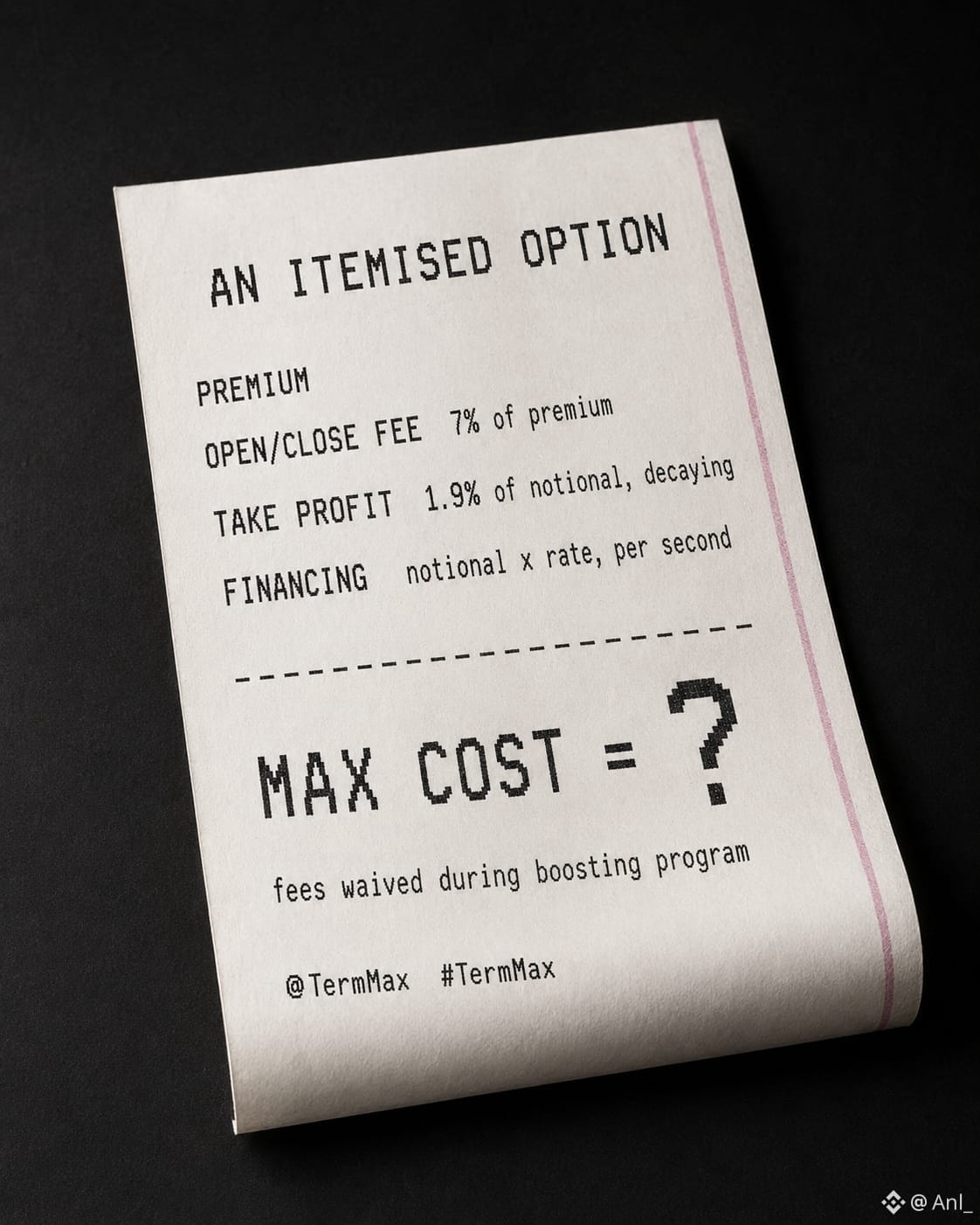
Opening or closing a Long or Short costs 7% of the premium paid.
Taking profit is charged on notional, not premium — 1.9% at day one, decaying linearly toward maturity. The docs' own example: a 16-day contract closed on day 10 with 10,000 USDT notional pays 47.5 USDT.
Then financing. You pay interest on notional for every second you hold the position. Their example uses a 100% annualised rate and produces roughly 1.37 USDT per day on 100 USDT of notional. About 10% of that interest goes to the platform, the rest to the Dual Investment depositors.
None of this is buried, and transaction fees are waived during the boosting program.
But "max cost is the premium" and "interest accrues per second on notional" are two different sentences about the same trade.
When you price one of these, are you pricing the premium or the premium plus carry?
#termmax @termmax
@TermMax The Alpha option page says your maximum loss is the premium. The fees page adds three more lines to that.
Opening or closing a Long or Short costs 7% of the premium paid.
Taking profit is charged on notional, not premium — 1.9% at day one, decaying linearly toward maturity. The docs' own example: a 16-day contract closed on day 10 with 10,000 USDT notional pays 47.5 USDT.
Then financing. You pay interest on notional for every second you hold the position. Their example uses a 100% annualised rate and produces roughly 1.37 USDT per day on 100 USDT of notional. About 10% of that interest goes to the platform, the rest to the Dual Investment depositors.
None of this is buried, and transaction fees are waived during the boosting program.
But "max cost is the premium" and "interest accrues per second on notional" are two different sentences about the same trade.
When you price one of these, are you pricing the premium or the premium plus carry?
#termmax @TermMax
Opening or closing a Long or Short costs 7% of the premium paid.
Taking profit is charged on notional, not premium — 1.9% at day one, decaying linearly toward maturity. The docs' own example: a 16-day contract closed on day 10 with 10,000 USDT notional pays 47.5 USDT.
Then financing. You pay interest on notional for every second you hold the position. Their example uses a 100% annualised rate and produces roughly 1.37 USDT per day on 100 USDT of notional. About 10% of that interest goes to the platform, the rest to the Dual Investment depositors.
None of this is buried, and transaction fees are waived during the boosting program.
But "max cost is the premium" and "interest accrues per second on notional" are two different sentences about the same trade.
When you price one of these, are you pricing the premium or the premium plus carry?
#termmax @TermMax
1
79
·
--
Tərcüməyə bax
#dusk $DUSK
Everyone argues about consensus. Almost nobody looks one layer below it.
@Dusk_Foundation doesn't use random gossip to move blocks between nodes. It uses Kadcast — a structured overlay, where each node's position determines who it forwards to. The docs give the reason in one line: less bandwidth, and more predictable latency.
Predictable is the word that matters here.
Random gossip is robust but noisy. A message might reach you in 200ms or 900ms depending on luck. For most chains that's fine. For a chain selling ~10 second deterministic finality to institutions, propagation variance is not a cosmetic detail — it's part of the settlement promise. You can't guarantee finality timing on top of a transport layer that shrugs.
The second half is the audit. Blaize reviewed the Rust implementation and scored it 9.8 out of 10, but the findings are the interesting part: deviations from the original Kadcast specification, missed edge cases in idle-node processing, and ambiguous handling of reserved fields in message headers. All resolved or verified except two informational items.
Reserved fields and idle nodes. Not glamorous. Exactly the kind of thing that turns into a weird production incident three years later.
The open question I keep sitting with: a structured overlay means the topology is derivable rather than random. That's what buys the predictability. Does it also make traffic patterns easier to observe for a chain whose entire value proposition is confidentiality? I genuinely don't know, and I haven't found a public analysis that answers it.
For a privacy chain — would you trade some propagation predictability for a messier, harder-to-map network?
#dusk $DUSK
Everyone argues about consensus. Almost nobody looks one layer below it.
@Dusk doesn't use random gossip to move blocks between nodes. It uses Kadcast — a structured overlay, where each node's position determines who it forwards to. The docs give the reason in one line: less bandwidth, and more predictable latency.
Predictable is the word that matters here.
Random gossip is robust but noisy. A message might reach you in 200ms or 900ms depending on luck. For most chains that's fine. For a chain selling ~10 second deterministic finality to institutions, propagation variance is not a cosmetic detail — it's part of the settlement promise. You can't guarantee finality timing on top of a transport layer that shrugs.
The second half is the audit. Blaize reviewed the Rust implementation and scored it 9.8 out of 10, but the findings are the interesting part: deviations from the original Kadcast specification, missed edge cases in idle-node processing, and ambiguous handling of reserved fields in message headers. All resolved or verified except two informational items.
Reserved fields and idle nodes. Not glamorous. Exactly the kind of thing that turns into a weird production incident three years later.
The open question I keep sitting with: a structured overlay means the topology is derivable rather than random. That's what buys the predictability. Does it also make traffic patterns easier to observe for a chain whose entire value proposition is confidentiality? I genuinely don't know, and I haven't found a public analysis that answers it.
For a privacy chain — would you trade some propagation predictability for a messier, harder-to-map network?
Everyone argues about consensus. Almost nobody looks one layer below it.
@Dusk doesn't use random gossip to move blocks between nodes. It uses Kadcast — a structured overlay, where each node's position determines who it forwards to. The docs give the reason in one line: less bandwidth, and more predictable latency.
Predictable is the word that matters here.
Random gossip is robust but noisy. A message might reach you in 200ms or 900ms depending on luck. For most chains that's fine. For a chain selling ~10 second deterministic finality to institutions, propagation variance is not a cosmetic detail — it's part of the settlement promise. You can't guarantee finality timing on top of a transport layer that shrugs.
The second half is the audit. Blaize reviewed the Rust implementation and scored it 9.8 out of 10, but the findings are the interesting part: deviations from the original Kadcast specification, missed edge cases in idle-node processing, and ambiguous handling of reserved fields in message headers. All resolved or verified except two informational items.
Reserved fields and idle nodes. Not glamorous. Exactly the kind of thing that turns into a weird production incident three years later.
The open question I keep sitting with: a structured overlay means the topology is derivable rather than random. That's what buys the predictability. Does it also make traffic patterns easier to observe for a chain whose entire value proposition is confidentiality? I genuinely don't know, and I haven't found a public analysis that answers it.
For a privacy chain — would you trade some propagation predictability for a messier, harder-to-map network?
1
16
·
--
Tərcüməyə bax
Two things I assumed were fixed
I went into the access-control docs looking for something else and came out with a shorter list of things I'd call constants.
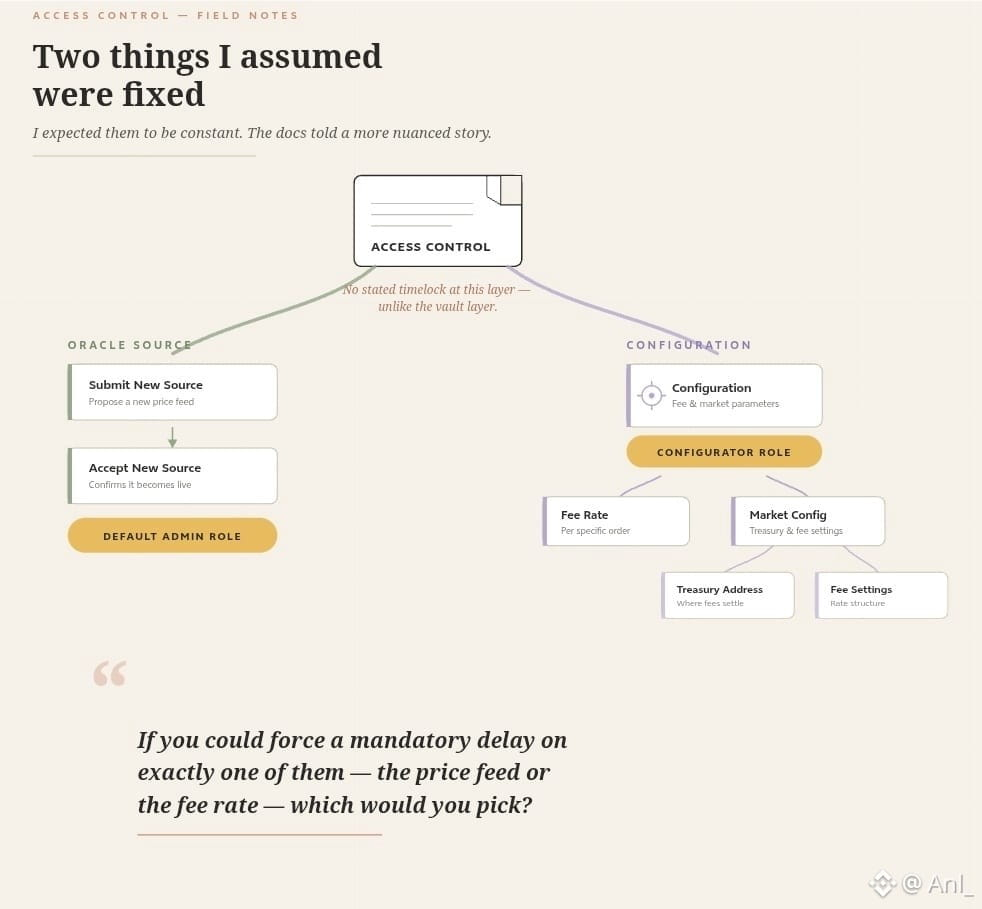
The oracle first. There are two functions, one that submits a new price source for an asset and one that accepts it. Both sit under the default admin role. So the feed deciding whether your position is healthy is a parameter.
Then fees. A configurator role can update the fee rate on a specific order, and update market config including the treasury address and fee settings.
Neither of these is unusual. Every lending protocol has switches like this, and you want them the day a feed starts printing garbage. Morpho, Aave, all of them.
What I couldn't find on that page is a stated waiting period between submitting one of these and accepting it. The vault layer documents its timelock clearly. This layer, I'm not sure — and I'd rather say I'm not sure than guess.
If you could force a mandatory delay on exactly one of them, would you pick the price feed or the fee rate?
#termmax @termmax $AAVE
Two things I assumed were fixed
I went into the access-control docs looking for something else and came out with a shorter list of things I'd call constants.
The oracle first. There are two functions, one that submits a new price source for an asset and one that accepts it. Both sit under the default admin role. So the feed deciding whether your position is healthy is a parameter.
Then fees. A configurator role can update the fee rate on a specific order, and update market config including the treasury address and fee settings.
Neither of these is unusual. Every lending protocol has switches like this, and you want them the day a feed starts printing garbage. Morpho, Aave, all of them.
What I couldn't find on that page is a stated waiting period between submitting one of these and accepting it. The vault layer documents its timelock clearly. This layer, I'm not sure — and I'd rather say I'm not sure than guess.
If you could force a mandatory delay on exactly one of them, would you pick the price feed or the fee rate?
#termmax @TermMax $AAVE
I went into the access-control docs looking for something else and came out with a shorter list of things I'd call constants.
The oracle first. There are two functions, one that submits a new price source for an asset and one that accepts it. Both sit under the default admin role. So the feed deciding whether your position is healthy is a parameter.
Then fees. A configurator role can update the fee rate on a specific order, and update market config including the treasury address and fee settings.
Neither of these is unusual. Every lending protocol has switches like this, and you want them the day a feed starts printing garbage. Morpho, Aave, all of them.
What I couldn't find on that page is a stated waiting period between submitting one of these and accepting it. The vault layer documents its timelock clearly. This layer, I'm not sure — and I'd rather say I'm not sure than guess.
If you could force a mandatory delay on exactly one of them, would you pick the price feed or the fee rate?
#termmax @TermMax $AAVE
84
·
--
Tərcüməyə bax
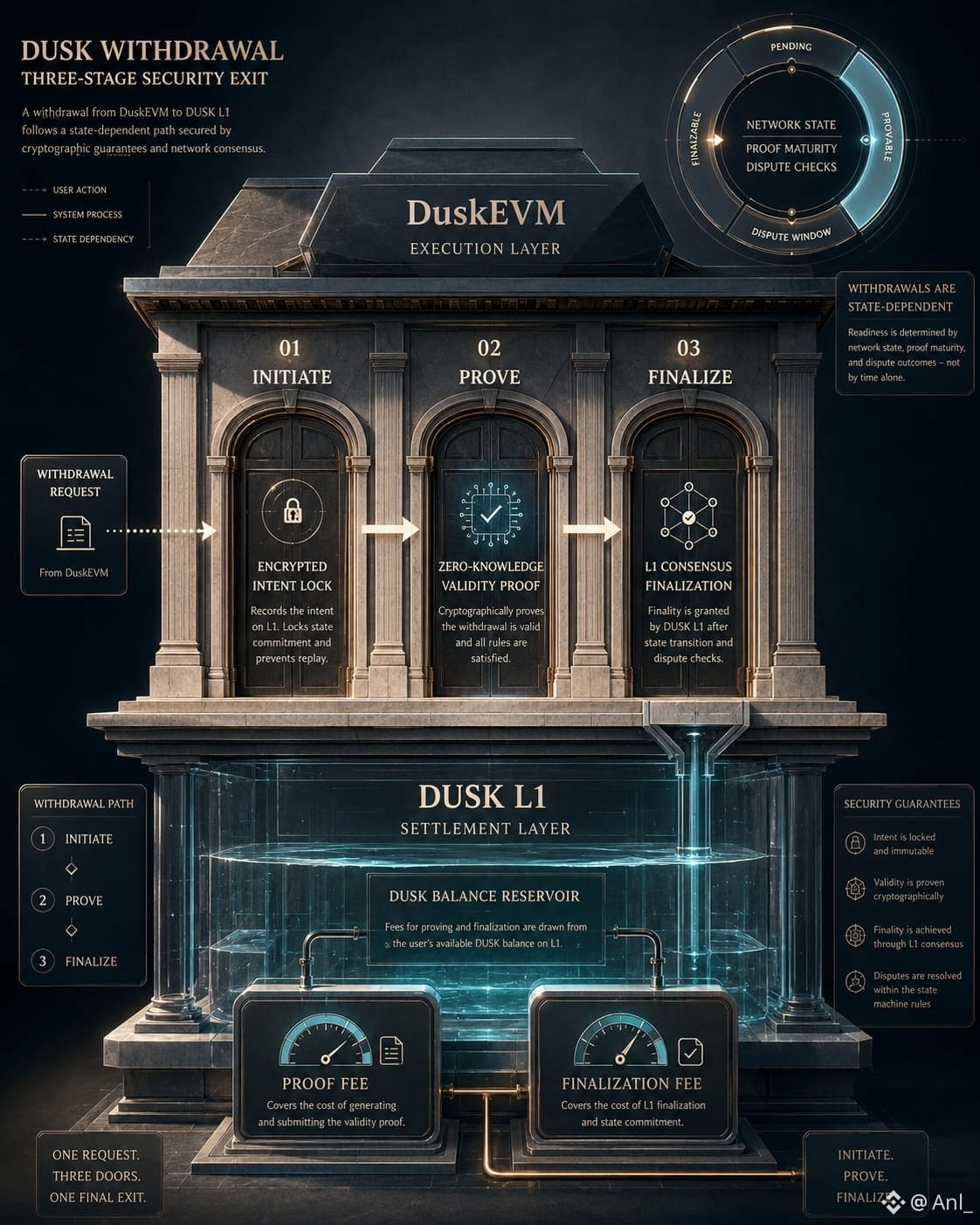
I expected one transaction. I counted three.
That's a DuskEVM bridge withdrawal, straight from Dusk's own guide:
1. Initiate the withdrawal on DuskEVM
2. Prove it on the Dusk L1
3. Finalize it on the Dusk L1
Three on-chain actions, and fees on both sides: the source transaction, then two more on L1.
The instruction I respect most is the one about timing. The docs say withdrawal readiness depends on published network state, proof maturity and dispute-game checks, and that the wallet's status field is authoritative — do not infer readiness from elapsed time. That line exists because rollup withdrawal windows are not clocks, they are state machines. Every integration that hardcoded "wait N minutes, then finalize" eventually breaks: a proposal lands late, a check runs long, and your finalizer submits into a state that isn't ready.
The second detail says more than the step count. The guide tells you to keep enough unshielded DUSK on the L1 to pay for both the proof and the finalization transaction. Sit with that on a chain whose core pitch is confidential transfers: the exit path from its own EVM layer is denominated in transparent balance. Caveat, and it matters — this is the testnet guide, DuskEVM is still labelled Testnet, so the mainnet shape could change.
To be fair, none of this is a Dusk invention. It is standard optimistic-rollup design inherited from the OP Stack, and every OP chain asks the same three actions of you. So the question isn't whether Dusk got something wrong. It's what standard rollup UX does to a chain whose entire differentiator is privacy.
Do privacy-first chains need a fundamentally different bridge design? Or is transparent gas at the settlement layer a fair price to pay for a familiar developer stack?
#dusk $DUSK @Dusk_Foundation
I expected one transaction. I counted three.
That's a DuskEVM bridge withdrawal, straight from Dusk's own guide:
1. Initiate the withdrawal on DuskEVM
2. Prove it on the Dusk L1
3. Finalize it on the Dusk L1
Three on-chain actions, and fees on both sides: the source transaction, then two more on L1.
The instruction I respect most is the one about timing. The docs say withdrawal readiness depends on published network state, proof maturity and dispute-game checks, and that the wallet's status field is authoritative — do not infer readiness from elapsed time. That line exists because rollup withdrawal windows are not clocks, they are state machines. Every integration that hardcoded "wait N minutes, then finalize" eventually breaks: a proposal lands late, a check runs long, and your finalizer submits into a state that isn't ready.
The second detail says more than the step count. The guide tells you to keep enough unshielded DUSK on the L1 to pay for both the proof and the finalization transaction. Sit with that on a chain whose core pitch is confidential transfers: the exit path from its own EVM layer is denominated in transparent balance. Caveat, and it matters — this is the testnet guide, DuskEVM is still labelled Testnet, so the mainnet shape could change.
To be fair, none of this is a Dusk invention. It is standard optimistic-rollup design inherited from the OP Stack, and every OP chain asks the same three actions of you. So the question isn't whether Dusk got something wrong. It's what standard rollup UX does to a chain whose entire differentiator is privacy.
Do privacy-first chains need a fundamentally different bridge design? Or is transparent gas at the settlement layer a fair price to pay for a familiar developer stack?
#dusk $DUSK @Dusk
That's a DuskEVM bridge withdrawal, straight from Dusk's own guide:
1. Initiate the withdrawal on DuskEVM
2. Prove it on the Dusk L1
3. Finalize it on the Dusk L1
Three on-chain actions, and fees on both sides: the source transaction, then two more on L1.
The instruction I respect most is the one about timing. The docs say withdrawal readiness depends on published network state, proof maturity and dispute-game checks, and that the wallet's status field is authoritative — do not infer readiness from elapsed time. That line exists because rollup withdrawal windows are not clocks, they are state machines. Every integration that hardcoded "wait N minutes, then finalize" eventually breaks: a proposal lands late, a check runs long, and your finalizer submits into a state that isn't ready.
The second detail says more than the step count. The guide tells you to keep enough unshielded DUSK on the L1 to pay for both the proof and the finalization transaction. Sit with that on a chain whose core pitch is confidential transfers: the exit path from its own EVM layer is denominated in transparent balance. Caveat, and it matters — this is the testnet guide, DuskEVM is still labelled Testnet, so the mainnet shape could change.
To be fair, none of this is a Dusk invention. It is standard optimistic-rollup design inherited from the OP Stack, and every OP chain asks the same three actions of you. So the question isn't whether Dusk got something wrong. It's what standard rollup UX does to a chain whose entire differentiator is privacy.
Do privacy-first chains need a fundamentally different bridge design? Or is transparent gas at the settlement layer a fair price to pay for a familiar developer stack?
#dusk $DUSK @Dusk
2
2
63
·
--
Doğrulanıb
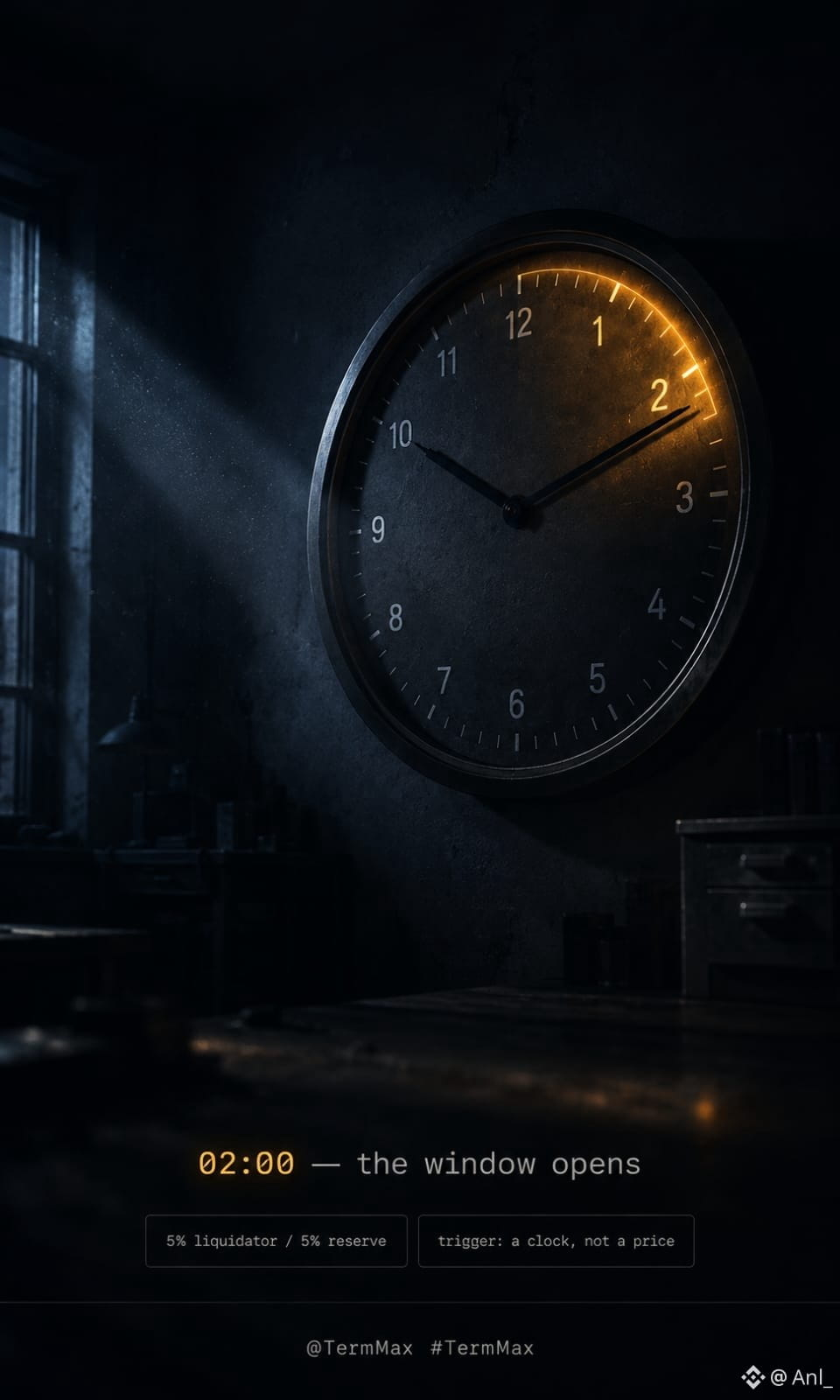
Saat 2-dir, və @termmax nömrəli borcun müddəti yenicə çatıb. Heç bir qaytarma gəlmədi. Növbəti iki saat ərzində hər kəs onu ləğv edə bilər — sonra pəncərə bağlanır.
Bu, LTV-ə əsaslanan likvidasiyalara öyrəşmisinizsə qəribə görünür. Burada trigger qiymət deyil, saatdır. Likvidasiya olunan borca 10% cərimə elə də həqiqi rüsum deyil — yarısı həmin mövqeyi bağlayan adama, yarısı isə protokolun ehtiyatına gedir. Bu, o dəqiq saatda bir botun ayıq olmasını təmin etmək üçün verilən “bounty”-dir; qiymət necə tərpənirsə, o zaman yox.
ETH və ya stabilkoin üçün uyğundur. PT tokenı və ya nazik LRT üçün isə başqa hekayədir. İki saat dərin bir fond vasitəsilə marşrutlama etmək üçün yetərlidir. Amma adi günlərdə nadirən ticarət olunan girovdan real həcmi tələsik açmaq üçün o qədər də vaxt deyil.
TermMax-ın fiziki çatdırılma mexanizmi pəncərə təmiz likvidasiya olmadan bağlanarsa, kreditorlara girovun pro-rata payını verməlidir. Amma mənim əmin olmadığım budur: bu ötürmə avtomatik olaraq necə baş verir — sənədlərin həmin hissəsini daima yenidən oxuyuram.
Hər halda, risk iki saatlıq nişanda yox olmur. Likvidatordan kreditorun üzərinə keçir.
Pəncərə açılan anda hansq girovu tutmaq istəməzsiniz və niyə?
#termmax @termmax
Saat 2-dir, və @TermMax nömrəli borcun müddəti yenicə çatıb. Heç bir qaytarma gəlmədi. Növbəti iki saat ərzində hər kəs onu ləğv edə bilər — sonra pəncərə bağlanır.
Bu, LTV-ə əsaslanan likvidasiyalara öyrəşmisinizsə qəribə görünür. Burada trigger qiymət deyil, saatdır. Likvidasiya olunan borca 10% cərimə elə də həqiqi rüsum deyil — yarısı həmin mövqeyi bağlayan adama, yarısı isə protokolun ehtiyatına gedir. Bu, o dəqiq saatda bir botun ayıq olmasını təmin etmək üçün verilən “bounty”-dir; qiymət necə tərpənirsə, o zaman yox.
ETH və ya stabilkoin üçün uyğundur. PT tokenı və ya nazik LRT üçün isə başqa hekayədir. İki saat dərin bir fond vasitəsilə marşrutlama etmək üçün yetərlidir. Amma adi günlərdə nadirən ticarət olunan girovdan real həcmi tələsik açmaq üçün o qədər də vaxt deyil.
TermMax-ın fiziki çatdırılma mexanizmi pəncərə təmiz likvidasiya olmadan bağlanarsa, kreditorlara girovun pro-rata payını verməlidir. Amma mənim əmin olmadığım budur: bu ötürmə avtomatik olaraq necə baş verir — sənədlərin həmin hissəsini daima yenidən oxuyuram.
Hər halda, risk iki saatlıq nişanda yox olmur. Likvidatordan kreditorun üzərinə keçir.
Pəncərə açılan anda hansq girovu tutmaq istəməzsiniz və niyə?
#termmax @TermMax
Bu, LTV-ə əsaslanan likvidasiyalara öyrəşmisinizsə qəribə görünür. Burada trigger qiymət deyil, saatdır. Likvidasiya olunan borca 10% cərimə elə də həqiqi rüsum deyil — yarısı həmin mövqeyi bağlayan adama, yarısı isə protokolun ehtiyatına gedir. Bu, o dəqiq saatda bir botun ayıq olmasını təmin etmək üçün verilən “bounty”-dir; qiymət necə tərpənirsə, o zaman yox.
ETH və ya stabilkoin üçün uyğundur. PT tokenı və ya nazik LRT üçün isə başqa hekayədir. İki saat dərin bir fond vasitəsilə marşrutlama etmək üçün yetərlidir. Amma adi günlərdə nadirən ticarət olunan girovdan real həcmi tələsik açmaq üçün o qədər də vaxt deyil.
TermMax-ın fiziki çatdırılma mexanizmi pəncərə təmiz likvidasiya olmadan bağlanarsa, kreditorlara girovun pro-rata payını verməlidir. Amma mənim əmin olmadığım budur: bu ötürmə avtomatik olaraq necə baş verir — sənədlərin həmin hissəsini daima yenidən oxuyuram.
Hər halda, risk iki saatlıq nişanda yox olmur. Likvidatordan kreditorun üzərinə keçir.
Pəncərə açılan anda hansq girovu tutmaq istəməzsiniz və niyə?
#termmax @TermMax
4
4
80
·
--
Hər kəs sabit faizli borclanmanı əminlik kimi satır. Sənədlərlə bir neçə saat tanış olandan sonra düşünürəm ki, bu çərçivə @termmax bu inşanı əslində az qiymətləndirir — və bu kampaniyada heç kimin vermədiyi bir sualı gizlədir.
Mənim ilişdiyim cümlə budur. #termmax borcun sadəcə müqavilədə oturan rəqəm deyil. O, FT-yə — sabit faizli tokendə — denominasiya olunur və ödəniş açıq bazardan FT alıb geri qaytarmaqla edilə bilər; nominal dəyəri ödəmək əvəzinə.
Bunu bir saniyəlik düşün.
Sən təminatı Gearing Token-a kilidləyirsən, onun qarşılığında FT mint edirsən, faiz hissəsini (interest leg) satırsan və birinci gündə razılaşdırılmış dərəcə ilə likvidlik götürüb gedirsən. Müddətin bütün faizləri ilk blokdan etibarən borcun içində “bişirilir”. Artım (accrual) yoxdur, yenidənqurma (reset) yoxdur, yatarkən heç nə sürüşmür.
Sonra bazar faizləri yüksəlir. Bu bazardakı hər FT — hətta sənin öz öhdəliyini təmsil edən FT də — daha dərin endirimlə ticarət etməyə başlayır. Borc FT olduğu üçün onu paridən aşağı qiymətə geri ala və əvvəlcədən kilidlədiyin dərəcədən daha azla bağlaya bilərsən.
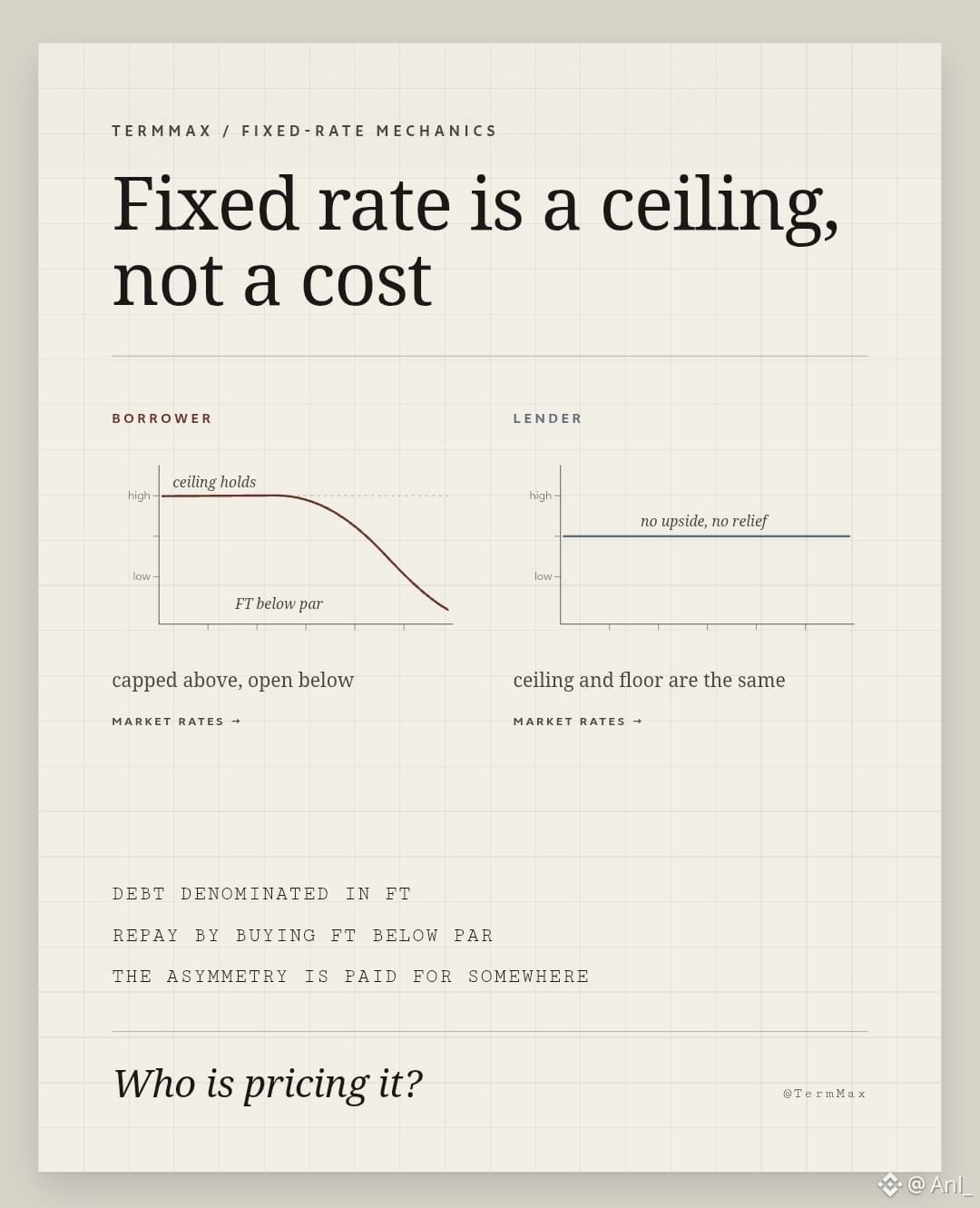
Deməli, sabit faiz sabit xərc deyil. O, tavan kimidir. Üstdə kilidlənir, altı isə açıq qalır.
İndi borc verənə keçək. O, yetkinlikdə 1:1 geri qaytarılan sıfır-kupon iddiasına sahibdir. Faizlər yüksələndə, onlar erkən çıxış etmək istəsələr, onların FT-si daha az dəyər daşıyır; müddətə qədər saxladıqda isə tam olaraq par qaytarır. Tavan və döşəmə eyni rəqəmdir. Borcalanın konveksliyi var. Kreditorun yoxdur.
Bu asimetriya sadəcə heç bir dashboard onu göstərmədiyi üçün yox olmur. Onun pulu mütləq haradasa alınır. Ya bu artıq buraxılış (issuance) zamanı kreditorların tələb etdiyi endirimin içindədir — yəni borcalanların gördüyü sabit faiz səssizcə bir “opsiyon premiumu” daşıyır — ya da heç qiymətə daxil edilməyib və borcalanlar, kuratorların və sifariş qurucularının etiketləmədən maliyyələşdirdiyi pulsuz faiz opsionunu özlərində saxlayırlar.
İkinci versiya mənim ölçüsü artırılıb bir vault-a köçürməmişdən əvvəl rədd olunmasını istədiyim versiyadır. DeFi-də dərəcə əyriləri adətən utilitas (istifadə) və gəlir gözləntilərindən qurulur, opsionallıqdan yox.
Buna görə də burada kreditləşdirmə diapazonu (lending range) sifarişləri verən hər kəs üçün real sual budur: borcalanlar borclarını ucuz qiymətə geri alanda əyrini genişlədirsiniz, yoxsa bu, sizin qiymətləmənizdə hələ də görünməz qalır?
Hər kəs sabit faizli borclanmanı əminlik kimi satır. Sənədlərlə bir neçə saat tanış olandan sonra düşünürəm ki, bu çərçivə @TermMax bu inşanı əslində az qiymətləndirir — və bu kampaniyada heç kimin vermədiyi bir sualı gizlədir.
Mənim ilişdiyim cümlə budur. #termmax borcun sadəcə müqavilədə oturan rəqəm deyil. O, FT-yə — sabit faizli tokendə — denominasiya olunur və ödəniş açıq bazardan FT alıb geri qaytarmaqla edilə bilər; nominal dəyəri ödəmək əvəzinə.
Bunu bir saniyəlik düşün.
Sən təminatı Gearing Token-a kilidləyirsən, onun qarşılığında FT mint edirsən, faiz hissəsini (interest leg) satırsan və birinci gündə razılaşdırılmış dərəcə ilə likvidlik götürüb gedirsən. Müddətin bütün faizləri ilk blokdan etibarən borcun içində “bişirilir”. Artım (accrual) yoxdur, yenidənqurma (reset) yoxdur, yatarkən heç nə sürüşmür.
Sonra bazar faizləri yüksəlir. Bu bazardakı hər FT — hətta sənin öz öhdəliyini təmsil edən FT də — daha dərin endirimlə ticarət etməyə başlayır. Borc FT olduğu üçün onu paridən aşağı qiymətə geri ala və əvvəlcədən kilidlədiyin dərəcədən daha azla bağlaya bilərsən.
Deməli, sabit faiz sabit xərc deyil. O, tavan kimidir. Üstdə kilidlənir, altı isə açıq qalır.
İndi borc verənə keçək. O, yetkinlikdə 1:1 geri qaytarılan sıfır-kupon iddiasına sahibdir. Faizlər yüksələndə, onlar erkən çıxış etmək istəsələr, onların FT-si daha az dəyər daşıyır; müddətə qədər saxladıqda isə tam olaraq par qaytarır. Tavan və döşəmə eyni rəqəmdir. Borcalanın konveksliyi var. Kreditorun yoxdur.
Bu asimetriya sadəcə heç bir dashboard onu göstərmədiyi üçün yox olmur. Onun pulu mütləq haradasa alınır. Ya bu artıq buraxılış (issuance) zamanı kreditorların tələb etdiyi endirimin içindədir — yəni borcalanların gördüyü sabit faiz səssizcə bir “opsiyon premiumu” daşıyır — ya da heç qiymətə daxil edilməyib və borcalanlar, kuratorların və sifariş qurucularının etiketləmədən maliyyələşdirdiyi pulsuz faiz opsionunu özlərində saxlayırlar.
İkinci versiya mənim ölçüsü artırılıb bir vault-a köçürməmişdən əvvəl rədd olunmasını istədiyim versiyadır. DeFi-də dərəcə əyriləri adətən utilitas (istifadə) və gəlir gözləntilərindən qurulur, opsionallıqdan yox.
Buna görə də burada kreditləşdirmə diapazonu (lending range) sifarişləri verən hər kəs üçün real sual budur: borcalanlar borclarını ucuz qiymətə geri alanda əyrini genişlədirsiniz, yoxsa bu, sizin qiymətləmənizdə hələ də görünməz qalır?
Mənim ilişdiyim cümlə budur. #termmax borcun sadəcə müqavilədə oturan rəqəm deyil. O, FT-yə — sabit faizli tokendə — denominasiya olunur və ödəniş açıq bazardan FT alıb geri qaytarmaqla edilə bilər; nominal dəyəri ödəmək əvəzinə.
Bunu bir saniyəlik düşün.
Sən təminatı Gearing Token-a kilidləyirsən, onun qarşılığında FT mint edirsən, faiz hissəsini (interest leg) satırsan və birinci gündə razılaşdırılmış dərəcə ilə likvidlik götürüb gedirsən. Müddətin bütün faizləri ilk blokdan etibarən borcun içində “bişirilir”. Artım (accrual) yoxdur, yenidənqurma (reset) yoxdur, yatarkən heç nə sürüşmür.
Sonra bazar faizləri yüksəlir. Bu bazardakı hər FT — hətta sənin öz öhdəliyini təmsil edən FT də — daha dərin endirimlə ticarət etməyə başlayır. Borc FT olduğu üçün onu paridən aşağı qiymətə geri ala və əvvəlcədən kilidlədiyin dərəcədən daha azla bağlaya bilərsən.
Deməli, sabit faiz sabit xərc deyil. O, tavan kimidir. Üstdə kilidlənir, altı isə açıq qalır.
İndi borc verənə keçək. O, yetkinlikdə 1:1 geri qaytarılan sıfır-kupon iddiasına sahibdir. Faizlər yüksələndə, onlar erkən çıxış etmək istəsələr, onların FT-si daha az dəyər daşıyır; müddətə qədər saxladıqda isə tam olaraq par qaytarır. Tavan və döşəmə eyni rəqəmdir. Borcalanın konveksliyi var. Kreditorun yoxdur.
Bu asimetriya sadəcə heç bir dashboard onu göstərmədiyi üçün yox olmur. Onun pulu mütləq haradasa alınır. Ya bu artıq buraxılış (issuance) zamanı kreditorların tələb etdiyi endirimin içindədir — yəni borcalanların gördüyü sabit faiz səssizcə bir “opsiyon premiumu” daşıyır — ya da heç qiymətə daxil edilməyib və borcalanlar, kuratorların və sifariş qurucularının etiketləmədən maliyyələşdirdiyi pulsuz faiz opsionunu özlərində saxlayırlar.
İkinci versiya mənim ölçüsü artırılıb bir vault-a köçürməmişdən əvvəl rədd olunmasını istədiyim versiyadır. DeFi-də dərəcə əyriləri adətən utilitas (istifadə) və gəlir gözləntilərindən qurulur, opsionallıqdan yox.
Buna görə də burada kreditləşdirmə diapazonu (lending range) sifarişləri verən hər kəs üçün real sual budur: borcalanlar borclarını ucuz qiymətə geri alanda əyrini genişlədirsiniz, yoxsa bu, sizin qiymətləmənizdə hələ də görünməz qalır?
2
3
52
·
--
Tərcüməyə bax
#dusk $DUSK @Dusk_Foundation Dusk's confidentiality setup actually runs in two separate tracks. On DuskDS, the Phoenix model represents value as notes committed into a Merkle tree — spending a note doesn't point to which note is being spent. Instead, the sender publishes a nullifier and a zero-knowledge proof showing the spend is valid, ownership is real, and no value was created out of nothing, without revealing the underlying note. Alongside it, Moonlight runs as a transparent, account-based model on the same chain.
On DuskEVM, though, privacy comes from a completely different toolset — a module called Hedger, which combines ElGamal-based homomorphic encryption with zero-knowledge proofs, plus a hybrid UTXO/account structure. Here a user interacts with contracts through a standard EVM address, while a separate Hedger address handles encrypted balances, with compliance enforced through allowlisting.
These aren't two versions of the same idea. Phoenix is a note-based proof system; Hedger computes directly on encrypted balances, verified through zero-knowledge proofs. The likely reason for the split is that note-based privacy doesn't fit naturally into an account-based EVM structure, so a different approach was needed there.
Running two independent cryptographic privacy stacks in parallel means a larger attack surface and a heavier audit burden. It's also not clear how the privacy guarantee is preserved when value moves between the two layers.
Does maintaining two separate confidentiality engines multiply the audit burden proportionally, or does the shared reliance on zero-knowledge proofs mean the second engine's incremental cost is actually lower than it looks?
#dusk $DUSK @Dusk Dusk's confidentiality setup actually runs in two separate tracks. On DuskDS, the Phoenix model represents value as notes committed into a Merkle tree — spending a note doesn't point to which note is being spent. Instead, the sender publishes a nullifier and a zero-knowledge proof showing the spend is valid, ownership is real, and no value was created out of nothing, without revealing the underlying note. Alongside it, Moonlight runs as a transparent, account-based model on the same chain.
On DuskEVM, though, privacy comes from a completely different toolset — a module called Hedger, which combines ElGamal-based homomorphic encryption with zero-knowledge proofs, plus a hybrid UTXO/account structure. Here a user interacts with contracts through a standard EVM address, while a separate Hedger address handles encrypted balances, with compliance enforced through allowlisting.
These aren't two versions of the same idea. Phoenix is a note-based proof system; Hedger computes directly on encrypted balances, verified through zero-knowledge proofs. The likely reason for the split is that note-based privacy doesn't fit naturally into an account-based EVM structure, so a different approach was needed there.
Running two independent cryptographic privacy stacks in parallel means a larger attack surface and a heavier audit burden. It's also not clear how the privacy guarantee is preserved when value moves between the two layers.
Does maintaining two separate confidentiality engines multiply the audit burden proportionally, or does the shared reliance on zero-knowledge proofs mean the second engine's incremental cost is actually lower than it looks?
On DuskEVM, though, privacy comes from a completely different toolset — a module called Hedger, which combines ElGamal-based homomorphic encryption with zero-knowledge proofs, plus a hybrid UTXO/account structure. Here a user interacts with contracts through a standard EVM address, while a separate Hedger address handles encrypted balances, with compliance enforced through allowlisting.
These aren't two versions of the same idea. Phoenix is a note-based proof system; Hedger computes directly on encrypted balances, verified through zero-knowledge proofs. The likely reason for the split is that note-based privacy doesn't fit naturally into an account-based EVM structure, so a different approach was needed there.
Running two independent cryptographic privacy stacks in parallel means a larger attack surface and a heavier audit burden. It's also not clear how the privacy guarantee is preserved when value moves between the two layers.
Does maintaining two separate confidentiality engines multiply the audit burden proportionally, or does the shared reliance on zero-knowledge proofs mean the second engine's incremental cost is actually lower than it looks?
1
93
·
--
Tərcüməyə bax
#dusk $DUSK @Dusk_Foundation
I went looking for how DUSK's staking rewards are actually funded, expecting something similar to most PoS chains I've seen — either a fixed high inflation rate early on, or rewards funded almost entirely by transaction fees from day one. What Dusk does is neither.
Rewards are funded by an emission of 500 million DUSK released over 36 years, following a geometric decay curve that halves roughly every four years. It's a long, slow taper rather than a front-loaded reward pool or an aggressive early cliff.
What made me pause is the mismatch between that emission horizon and the pace crypto usually runs at. Most token reward schedules are built around getting through the first few volatile years — bootstrap fast, taper fast, let fees take over quickly. A 36-year curve is closer to the timeline of a pension fund than a typical validator incentive program, and that seems less like an oversight and more like a signal about what kind of adoption the protocol is actually betting on: regulated financial infrastructure, which tends to move in years and decades rather than in market cycles.
The tension is in the gap between now and later. Institutional adoption of tokenized securities and compliant on-chain settlement doesn't happen overnight, and transaction fee revenue from that kind of activity is presumably still early relative to where the protocol eventually wants it to be. In the meantime, validators are being paid mostly from emissions rather than usage, which is a normal early-stage state for a PoS chain but a strange thing to reconcile with a 36-year design horizon.
I don't think a long emission curve is inherently a weakness — long timelines are honest about how slowly regulated finance actually moves. But it does raise the question of whether staking economics built for a decades-long institutional adoption curve can keep validators engaged during the years before that adoption curve actually shows up in fee revenue.
#dusk $DUSK @Dusk
I went looking for how DUSK's staking rewards are actually funded, expecting something similar to most PoS chains I've seen — either a fixed high inflation rate early on, or rewards funded almost entirely by transaction fees from day one. What Dusk does is neither.
Rewards are funded by an emission of 500 million DUSK released over 36 years, following a geometric decay curve that halves roughly every four years. It's a long, slow taper rather than a front-loaded reward pool or an aggressive early cliff.
What made me pause is the mismatch between that emission horizon and the pace crypto usually runs at. Most token reward schedules are built around getting through the first few volatile years — bootstrap fast, taper fast, let fees take over quickly. A 36-year curve is closer to the timeline of a pension fund than a typical validator incentive program, and that seems less like an oversight and more like a signal about what kind of adoption the protocol is actually betting on: regulated financial infrastructure, which tends to move in years and decades rather than in market cycles.
The tension is in the gap between now and later. Institutional adoption of tokenized securities and compliant on-chain settlement doesn't happen overnight, and transaction fee revenue from that kind of activity is presumably still early relative to where the protocol eventually wants it to be. In the meantime, validators are being paid mostly from emissions rather than usage, which is a normal early-stage state for a PoS chain but a strange thing to reconcile with a 36-year design horizon.
I don't think a long emission curve is inherently a weakness — long timelines are honest about how slowly regulated finance actually moves. But it does raise the question of whether staking economics built for a decades-long institutional adoption curve can keep validators engaged during the years before that adoption curve actually shows up in fee revenue.
I went looking for how DUSK's staking rewards are actually funded, expecting something similar to most PoS chains I've seen — either a fixed high inflation rate early on, or rewards funded almost entirely by transaction fees from day one. What Dusk does is neither.
Rewards are funded by an emission of 500 million DUSK released over 36 years, following a geometric decay curve that halves roughly every four years. It's a long, slow taper rather than a front-loaded reward pool or an aggressive early cliff.
What made me pause is the mismatch between that emission horizon and the pace crypto usually runs at. Most token reward schedules are built around getting through the first few volatile years — bootstrap fast, taper fast, let fees take over quickly. A 36-year curve is closer to the timeline of a pension fund than a typical validator incentive program, and that seems less like an oversight and more like a signal about what kind of adoption the protocol is actually betting on: regulated financial infrastructure, which tends to move in years and decades rather than in market cycles.
The tension is in the gap between now and later. Institutional adoption of tokenized securities and compliant on-chain settlement doesn't happen overnight, and transaction fee revenue from that kind of activity is presumably still early relative to where the protocol eventually wants it to be. In the meantime, validators are being paid mostly from emissions rather than usage, which is a normal early-stage state for a PoS chain but a strange thing to reconcile with a 36-year design horizon.
I don't think a long emission curve is inherently a weakness — long timelines are honest about how slowly regulated finance actually moves. But it does raise the question of whether staking economics built for a decades-long institutional adoption curve can keep validators engaged during the years before that adoption curve actually shows up in fee revenue.
1
1
20
·
--
Tərcüməyə bax
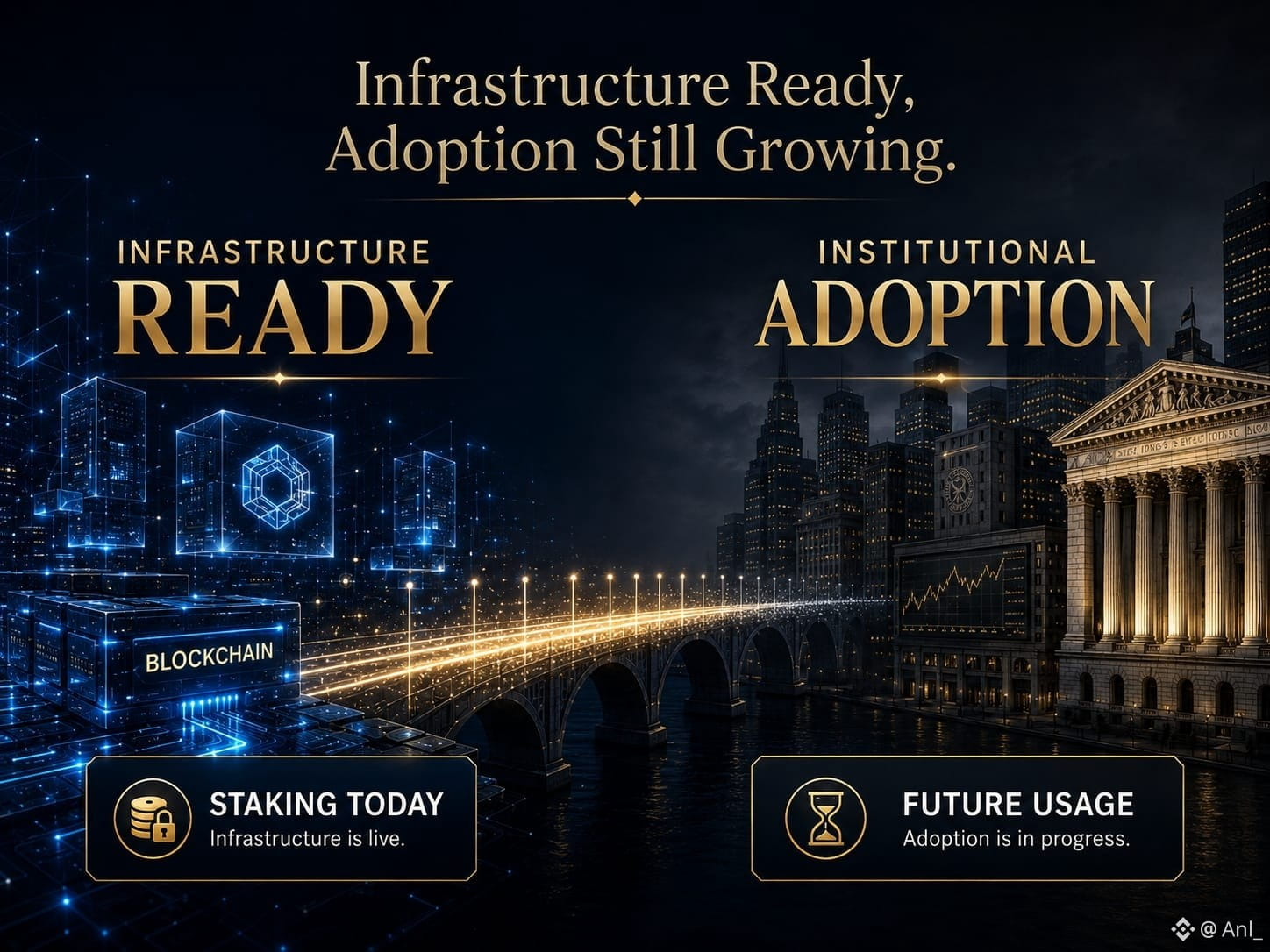
There's a particular kind of quiet that shows up in infrastructure projects, and it's worth learning to read correctly. It's not the same as failure. But it's not obviously success either.
Dusk has been on mainnet for a while now. The technical case is coherent confidential smart contracts, the XSC standard, selective disclosure all built around a specific, real problem that regulated finance genuinely has. And yet, when you look at actual network activity, most of what's happening is staking. Confidential contracts, real securities issuance — still uncommon, by most available signals.
That gap between what the infrastructure is capable of and what's actually running on it deserves to be sat with, rather than explained away too quickly.
A few things do work in its favor, and they're worth naming plainly. Early vesting has already run its course, so there isn't a looming unlock event distorting supply expectations. Partnerships with licensed venues give the regulatory positioning something closer to grounding than aspiration. And by most technical accounts, the infrastructure layer itself isn't the weak point this doesn't read as a story
The harder question is about incentive alignment. The institutions best positioned to actually use this kind of privacy-and-compliance infrastructure may never need to hold large amounts of the token itself their exposure could stay minimal, just enough for operational use. Meanwhile, the people who do hold the token are absorbing ongoing emissions, waiting on volume that hasn't shown up yet in meaningful size. Two very different relationships to the same asset, without an obvious mechanism pulling them into alignment
That's not a criticism of the design. It's just an honest description of where things currently stand technically capable, financially still waiting on proof.
The question no one can really answer yet, including the project itself, is how long "the infrastructure is ready can remain a satisfying answer before the market starts demanding the infrastructure is being used.
@Dusk_Foundation #dusk $DUSK
There's a particular kind of quiet that shows up in infrastructure projects, and it's worth learning to read correctly. It's not the same as failure. But it's not obviously success either.
Dusk has been on mainnet for a while now. The technical case is coherent confidential smart contracts, the XSC standard, selective disclosure all built around a specific, real problem that regulated finance genuinely has. And yet, when you look at actual network activity, most of what's happening is staking. Confidential contracts, real securities issuance — still uncommon, by most available signals.
That gap between what the infrastructure is capable of and what's actually running on it deserves to be sat with, rather than explained away too quickly.
A few things do work in its favor, and they're worth naming plainly. Early vesting has already run its course, so there isn't a looming unlock event distorting supply expectations. Partnerships with licensed venues give the regulatory positioning something closer to grounding than aspiration. And by most technical accounts, the infrastructure layer itself isn't the weak point this doesn't read as a story
The harder question is about incentive alignment. The institutions best positioned to actually use this kind of privacy-and-compliance infrastructure may never need to hold large amounts of the token itself their exposure could stay minimal, just enough for operational use. Meanwhile, the people who do hold the token are absorbing ongoing emissions, waiting on volume that hasn't shown up yet in meaningful size. Two very different relationships to the same asset, without an obvious mechanism pulling them into alignment
That's not a criticism of the design. It's just an honest description of where things currently stand technically capable, financially still waiting on proof.
The question no one can really answer yet, including the project itself, is how long "the infrastructure is ready can remain a satisfying answer before the market starts demanding the infrastructure is being used.
@Dusk #dusk $DUSK
Dusk has been on mainnet for a while now. The technical case is coherent confidential smart contracts, the XSC standard, selective disclosure all built around a specific, real problem that regulated finance genuinely has. And yet, when you look at actual network activity, most of what's happening is staking. Confidential contracts, real securities issuance — still uncommon, by most available signals.
That gap between what the infrastructure is capable of and what's actually running on it deserves to be sat with, rather than explained away too quickly.
A few things do work in its favor, and they're worth naming plainly. Early vesting has already run its course, so there isn't a looming unlock event distorting supply expectations. Partnerships with licensed venues give the regulatory positioning something closer to grounding than aspiration. And by most technical accounts, the infrastructure layer itself isn't the weak point this doesn't read as a story
The harder question is about incentive alignment. The institutions best positioned to actually use this kind of privacy-and-compliance infrastructure may never need to hold large amounts of the token itself their exposure could stay minimal, just enough for operational use. Meanwhile, the people who do hold the token are absorbing ongoing emissions, waiting on volume that hasn't shown up yet in meaningful size. Two very different relationships to the same asset, without an obvious mechanism pulling them into alignment
That's not a criticism of the design. It's just an honest description of where things currently stand technically capable, financially still waiting on proof.
The question no one can really answer yet, including the project itself, is how long "the infrastructure is ready can remain a satisfying answer before the market starts demanding the infrastructure is being used.
@Dusk #dusk $DUSK
4
4
39
·
--
Tərcüməyə bax
One number stopped me: capacity for over 17 billion leaves, from a tree that's only 34 levels deep.
Dusk's Phoenix model uses a binary Merkle tree to hold the proof for every note, and that's where the real trick sits — capacity grows exponentially while the inclusion path only grows linearly. Go from depth 34 to 35 and capacity doubles, but the proof path only gets a few percent longer. That asymmetry matters a lot for a privacy-focused chain, since every transaction carries a zero-knowledge proof, and the smaller that proof stays, the better.
But the size of the number is only a theoretical ceiling. What actually determines how long that capacity lasts is how fast new notes are being created in practice. At low transaction throughput, the tree could take decades to fill. If adoption spikes, that same capacity could come under real pressure in a matter of months.
That raises the more interesting question — what happens as the tree fills up? Archival storage, proving costs, state sync — do these scale gracefully alongside note creation, or does something start to strain first? A huge number looks impressive on paper, but long-term usability depends on how that number gets used, not just how big it is.
Is having a mathematically enormous capacity the same thing as staying comfortable to operate under years of real usage?
#dusk $DUSK @Dusk_Foundation
One number stopped me: capacity for over 17 billion leaves, from a tree that's only 34 levels deep.
Dusk's Phoenix model uses a binary Merkle tree to hold the proof for every note, and that's where the real trick sits — capacity grows exponentially while the inclusion path only grows linearly. Go from depth 34 to 35 and capacity doubles, but the proof path only gets a few percent longer. That asymmetry matters a lot for a privacy-focused chain, since every transaction carries a zero-knowledge proof, and the smaller that proof stays, the better.
But the size of the number is only a theoretical ceiling. What actually determines how long that capacity lasts is how fast new notes are being created in practice. At low transaction throughput, the tree could take decades to fill. If adoption spikes, that same capacity could come under real pressure in a matter of months.
That raises the more interesting question — what happens as the tree fills up? Archival storage, proving costs, state sync — do these scale gracefully alongside note creation, or does something start to strain first? A huge number looks impressive on paper, but long-term usability depends on how that number gets used, not just how big it is.
Is having a mathematically enormous capacity the same thing as staying comfortable to operate under years of real usage?
#dusk $DUSK @Dusk
Dusk's Phoenix model uses a binary Merkle tree to hold the proof for every note, and that's where the real trick sits — capacity grows exponentially while the inclusion path only grows linearly. Go from depth 34 to 35 and capacity doubles, but the proof path only gets a few percent longer. That asymmetry matters a lot for a privacy-focused chain, since every transaction carries a zero-knowledge proof, and the smaller that proof stays, the better.
But the size of the number is only a theoretical ceiling. What actually determines how long that capacity lasts is how fast new notes are being created in practice. At low transaction throughput, the tree could take decades to fill. If adoption spikes, that same capacity could come under real pressure in a matter of months.
That raises the more interesting question — what happens as the tree fills up? Archival storage, proving costs, state sync — do these scale gracefully alongside note creation, or does something start to strain first? A huge number looks impressive on paper, but long-term usability depends on how that number gets used, not just how big it is.
Is having a mathematically enormous capacity the same thing as staying comfortable to operate under years of real usage?
#dusk $DUSK @Dusk
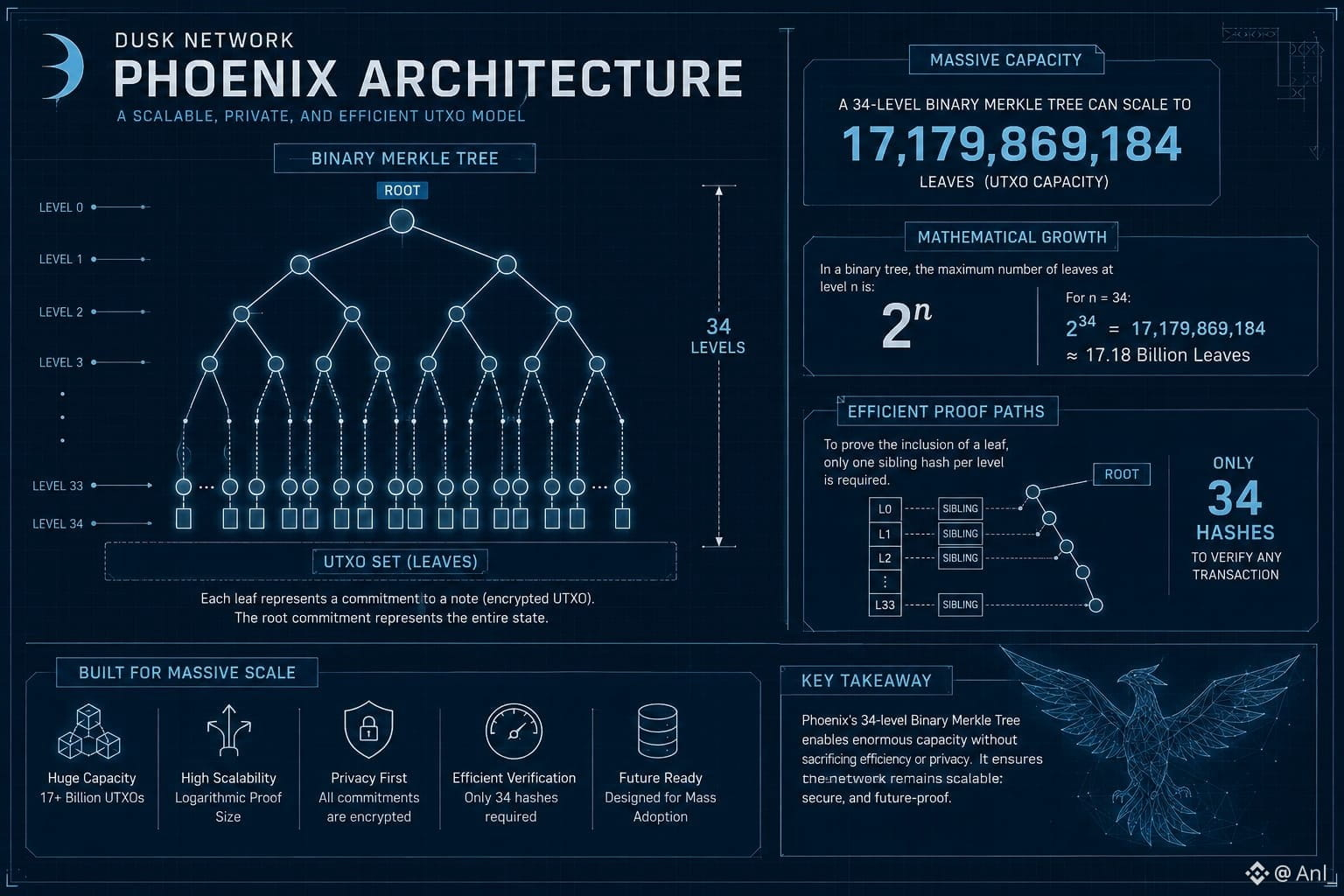
7
·
--
Bunu yazmadan əvvəl indiki rəqəmləri yoxladım, ona görə də bu gün lenti: DUSK təxminən $0.065–0.066 aralığında ticarət edir, CoinMarketCap oxunuşuna görə bazar kapitalləşməsi təxminən $32–33M-dir. 24 saatlıq həcm isə hansı aqreqatoru etibar etdiyindən asılı olaraq $3.5–4.8M aralığındadır — CoinGecko bunu 45 birjadan və 51 bazardan götürür, CoinCodex isə $4.8M-ə daha yaxındır. Bu fərqin tək özü sizə nəsə deyir: likvidlik o qədər nazikdir ki, hansı məlumat mənbəyini yoxladığınız hekayəni 30% dəyişir.
Dövriyyədə olan kəmiyyət üzrə hesablamalar da üst-üstə düşmür — CMC onu təxminən 497M, CoinGecko isə daha yaxın 590M göstərir — 1B-lik maksimum tədarük fonunda, yəni ümumi tədarükün yarısından 60%-ə qədəri artıq açılıb və ticarət olunur.
Arxaya çəkilin və qiymət hərəkəti əsaslar hekayəsindən daha kobud mənzərə verir. DUSK 2026-cı ilin yanvarında 8 aylıq eniş trendlərini qırdı, mainnetdən sonra $0.30-dan yuxarı sıçradı, sonra demək olar ki, hamısını geri qaytardı — aprel ayının sonuna yaxın $0.10-a düşdü və indi $0.06 aralığında konsolidasiya edir. Bu, yanvar rekordundan təxminən 80%+ geri çəkilmə deməkdir; halbuki real inkişaf hekayəsi — mainnet canlıdır, DuskEVM testnet inkişaf edir, NPEX tokenizasiyası davam edir — böyük ölçüdə fasiləsiz şəkildə irəliləyib.
Bu ayrılığın özü əsl hekayədir; qiymətin özü deyil. İnkişaf sürəti və qiymət sürəti Q1 ətrafında sərt şəkildə ayrışdı və yenidən yaxınlaşmayıblar. Bəlkə də bazar artıq yol xəritəsinin vəd etdiyi hər şeyi qiymətə salıb və indi çatdırılan TVL-i gözləyir, ya da RWA hekayəsi hələlik o qədər likvid deyil ki, yalnız əsaslarla $32M-lik bir kapitalləşməlik aktivi hərəkətə gətirsin.
Sizcə bu boşluğun hans tərəfi daha tez bağlanacaq — real NPEX həcmi nəhayət onçeyndə görünəcək, yoxsa qiymət bunun olacağı günü gözləyirmiş kimi sürünərək gedəcək?
#dusk $DUSK @Dusk_Foundation
Bunu yazmadan əvvəl indiki rəqəmləri yoxladım, ona görə də bu gün lenti: DUSK təxminən $0.065–0.066 aralığında ticarət edir, CoinMarketCap oxunuşuna görə bazar kapitalləşməsi təxminən $32–33M-dir. 24 saatlıq həcm isə hansı aqreqatoru etibar etdiyindən asılı olaraq $3.5–4.8M aralığındadır — CoinGecko bunu 45 birjadan və 51 bazardan götürür, CoinCodex isə $4.8M-ə daha yaxındır. Bu fərqin tək özü sizə nəsə deyir: likvidlik o qədər nazikdir ki, hansı məlumat mənbəyini yoxladığınız hekayəni 30% dəyişir.
Dövriyyədə olan kəmiyyət üzrə hesablamalar da üst-üstə düşmür — CMC onu təxminən 497M, CoinGecko isə daha yaxın 590M göstərir — 1B-lik maksimum tədarük fonunda, yəni ümumi tədarükün yarısından 60%-ə qədəri artıq açılıb və ticarət olunur.
Arxaya çəkilin və qiymət hərəkəti əsaslar hekayəsindən daha kobud mənzərə verir. DUSK 2026-cı ilin yanvarında 8 aylıq eniş trendlərini qırdı, mainnetdən sonra $0.30-dan yuxarı sıçradı, sonra demək olar ki, hamısını geri qaytardı — aprel ayının sonuna yaxın $0.10-a düşdü və indi $0.06 aralığında konsolidasiya edir. Bu, yanvar rekordundan təxminən 80%+ geri çəkilmə deməkdir; halbuki real inkişaf hekayəsi — mainnet canlıdır, DuskEVM testnet inkişaf edir, NPEX tokenizasiyası davam edir — böyük ölçüdə fasiləsiz şəkildə irəliləyib.
Bu ayrılığın özü əsl hekayədir; qiymətin özü deyil. İnkişaf sürəti və qiymət sürəti Q1 ətrafında sərt şəkildə ayrışdı və yenidən yaxınlaşmayıblar. Bəlkə də bazar artıq yol xəritəsinin vəd etdiyi hər şeyi qiymətə salıb və indi çatdırılan TVL-i gözləyir, ya da RWA hekayəsi hələlik o qədər likvid deyil ki, yalnız əsaslarla $32M-lik bir kapitalləşməlik aktivi hərəkətə gətirsin.
Sizcə bu boşluğun hans tərəfi daha tez bağlanacaq — real NPEX həcmi nəhayət onçeyndə görünəcək, yoxsa qiymət bunun olacağı günü gözləyirmiş kimi sürünərək gedəcək?
#dusk $DUSK @Dusk
Dövriyyədə olan kəmiyyət üzrə hesablamalar da üst-üstə düşmür — CMC onu təxminən 497M, CoinGecko isə daha yaxın 590M göstərir — 1B-lik maksimum tədarük fonunda, yəni ümumi tədarükün yarısından 60%-ə qədəri artıq açılıb və ticarət olunur.
Arxaya çəkilin və qiymət hərəkəti əsaslar hekayəsindən daha kobud mənzərə verir. DUSK 2026-cı ilin yanvarında 8 aylıq eniş trendlərini qırdı, mainnetdən sonra $0.30-dan yuxarı sıçradı, sonra demək olar ki, hamısını geri qaytardı — aprel ayının sonuna yaxın $0.10-a düşdü və indi $0.06 aralığında konsolidasiya edir. Bu, yanvar rekordundan təxminən 80%+ geri çəkilmə deməkdir; halbuki real inkişaf hekayəsi — mainnet canlıdır, DuskEVM testnet inkişaf edir, NPEX tokenizasiyası davam edir — böyük ölçüdə fasiləsiz şəkildə irəliləyib.
Bu ayrılığın özü əsl hekayədir; qiymətin özü deyil. İnkişaf sürəti və qiymət sürəti Q1 ətrafında sərt şəkildə ayrışdı və yenidən yaxınlaşmayıblar. Bəlkə də bazar artıq yol xəritəsinin vəd etdiyi hər şeyi qiymətə salıb və indi çatdırılan TVL-i gözləyir, ya da RWA hekayəsi hələlik o qədər likvid deyil ki, yalnız əsaslarla $32M-lik bir kapitalləşməlik aktivi hərəkətə gətirsin.
Sizcə bu boşluğun hans tərəfi daha tez bağlanacaq — real NPEX həcmi nəhayət onçeyndə görünəcək, yoxsa qiymət bunun olacağı günü gözləyirmiş kimi sürünərək gedəcək?
#dusk $DUSK @Dusk
2
22
·
--
Tərcüməyə bax
I was ready to invest, but I backed off after seeing the warning signs.
I was ready to invest, but I backed off after seeing the warning signs.

bro_sf
·
--
Nə düşünə bilmirdim, elə buna görə də dünən gecə yuxuya gedə bilmədim. Mən də öz-özümə düşündüm: nə etməliyəm, filmə baxım, yoxsa iş görüm? Sonra kripto bazarına baxmağı qərara aldım. CoinMarketCap tətbiqlərini açdım, gördüm ki, bu gün BTC bazarı 0.72% düşüb. Sonra isə $BABY token-in 3.5% artdığını, qiymətinin 0.01199$ olduğunu gördüm. Qiymət artmaqdadır: market cap 51.22m, 24 saatlıq həcm 52.11m. Həmin dəqiqə gördüm ki, həcm üzrə 24-cü yerdədir və həcmi 475% artıb. Mən fikirləşirdim ki, sadəcə qiymətə baxmaqla çıxış edərəm. Amma bir neçə gündür @BabylonLabs_io yenə də gözümün önünə gəlir. Ona görə layihə haqqında daha çox detala baxmaq istədim, sonra isə Certik.Skynet audit səhifəsinə keçdim. Bundan sonra skora baxanda şoka düşdüm. Təhlükəsizlik bölməsində 89.58 AA reytinq balı yaxşı vəziyyətdə görünürdü. Üstəlik, bəzi üçüncü tərəf auditləri də var. Certik səhifəsində bir az aşağıya baxanda gördüm ki, Certik auditi hələ tamamlanmayıb, komanda verifikasiyası yoxdur və reytinq də qismən kimi göstərilir. Onda ağlıma sual gəldi: çox güclü səslənir, amma niyə bu qədər yaxşı layihə olmasına baxmayaraq bunlar tamamlanmayıb? Certik səhifəsindən də anladım ki, audit hələ tamamlanmayıb. Ola bilsin ki, bunun arxasında bizim bilmədiyimiz kifayət qədər səbəblər var, amma adi istifadəçi kimi bu məsələ məndə maraq doğurdu. Sizcə, bu mövzuda bunlar daha yaxşı olsaydı, daha doğru olmazdı? Yoxsa orada olan az məlumat artıq kifayətdirmi?
#baby $BABY
#baby $BABY
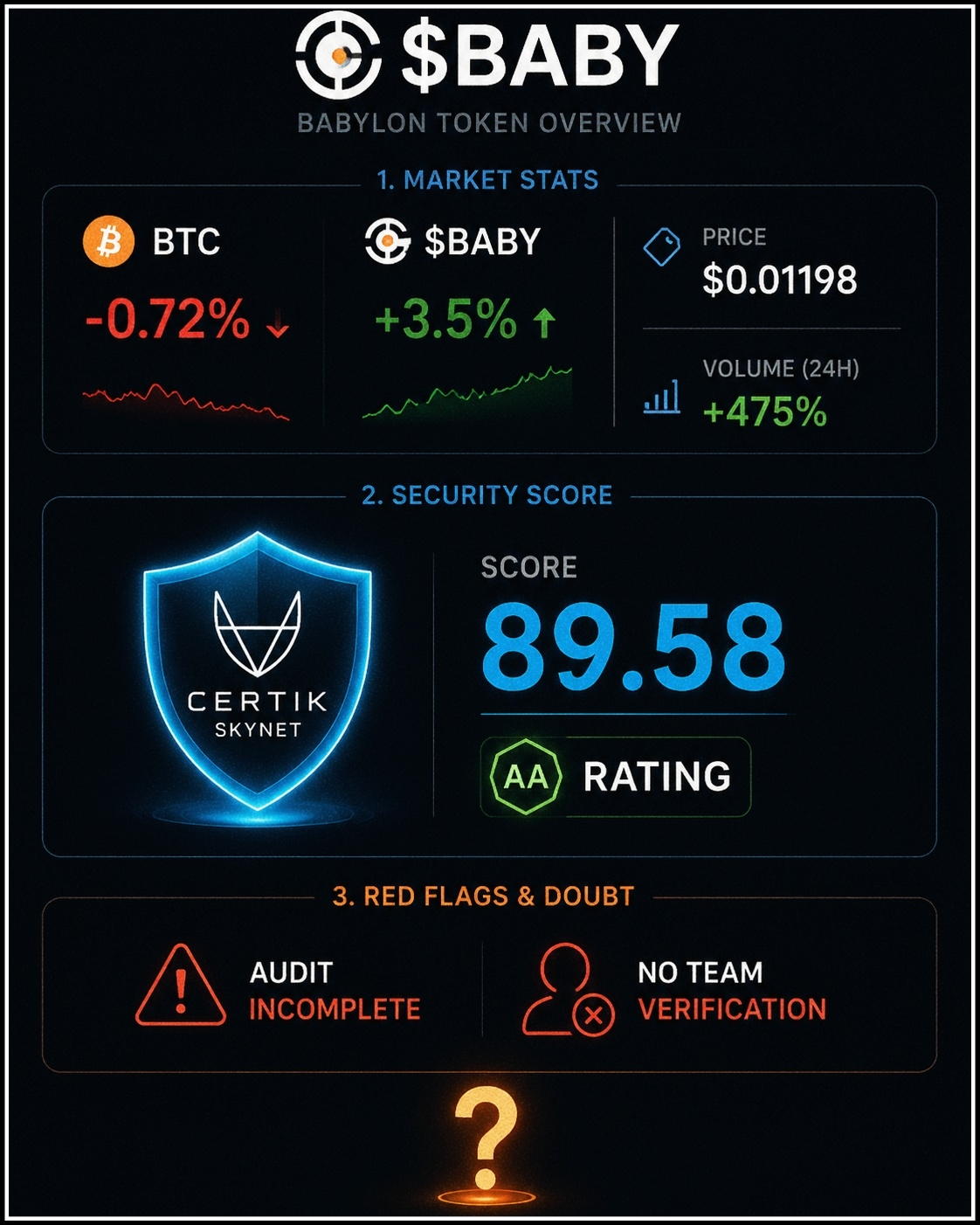
1
1
82
·
--
Tərcüməyə bax
?
?
bro_sf
·
--
AzalmaBabylon’un tokenomiklerine göz atarken dikkatimi gerçekten bir şey çekti. Elimizdeki bilgilere göre toplam arz 10,98 milyar ve dolaşımda yaklaşık 4,03 milyar token var. Ancak bu ölçekte bir proje için, resmi tokenomiklerde maksimum arzın net bir şekilde belirtilmemesi şaşırtıcı. Bu durum sadece bir eksiklik mi, yoksa bu bilginin henüz açıkça paylaşılmamasının bir nedeni mi var diye merak ediyorum. Maksimum arzın önemi büyük; çünkü yatırımcıların gelecekteki token arzını, olası enflasyonu ve uzun vadeli değerlemeyi değerlendirmesine yardımcı oluyor. Bu yüzden her zaman hype’a güvenmek yerine resmi dokümanları incelemek için zaman ayırmaya değer. Sen ne düşünüyorsun? Eksik maksimum arz sadece bir eksiklik mi, yoksa başka bir açıklama olabilir mi?
@BabylonLabs_io #baby $BABY $BTC
@BabylonLabs_io #baby $BABY $BTC
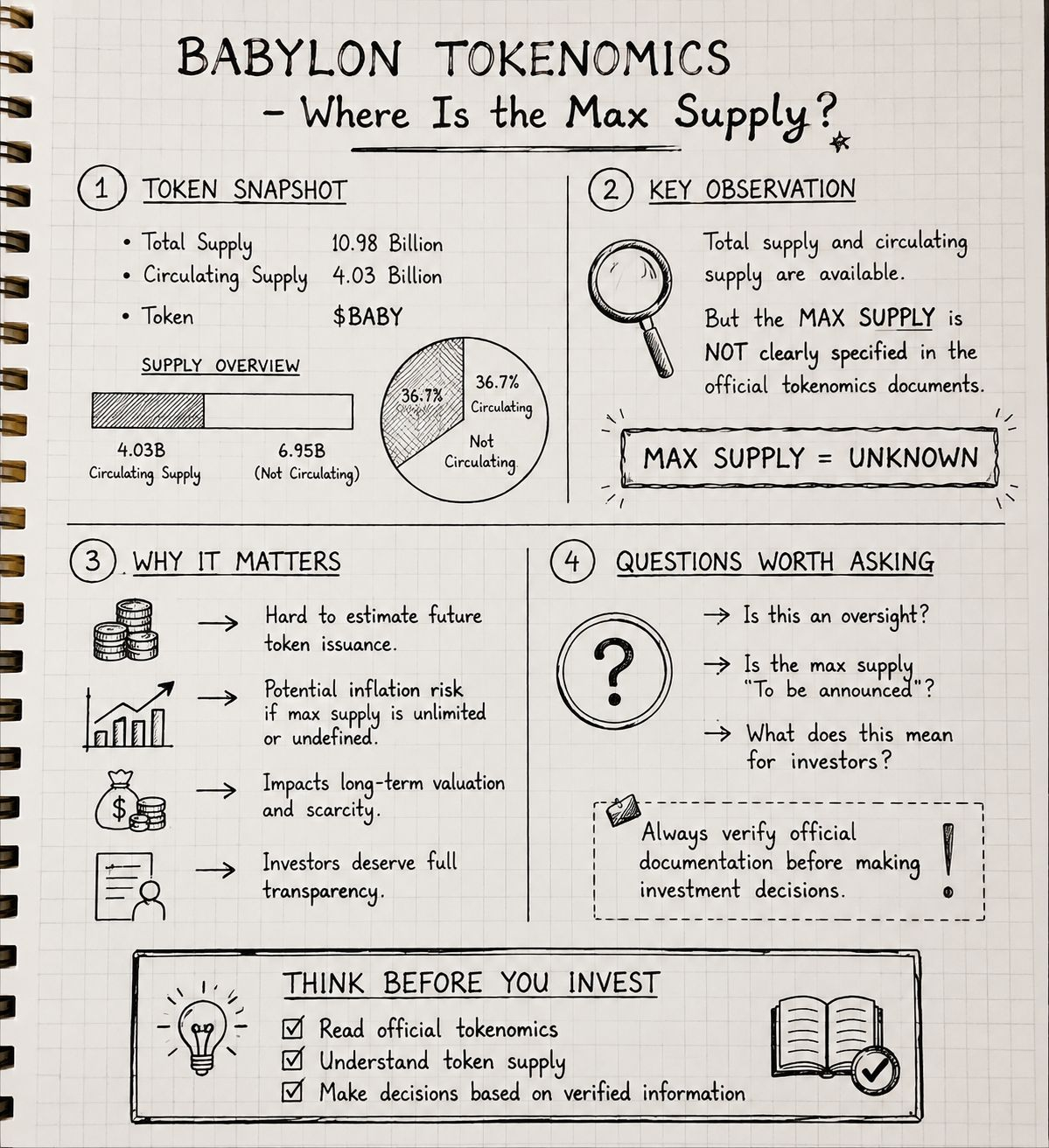
7
·
--
Tərcüməyə bax
good 😊
good 😊
bro_sf
·
--
Babill haqqında ağlıma daim suallar gəlir. Çöldə göstərilənlə içəridə baş verən eyni deyil. Çox adam bu airdrop-u icma üçün bir mükafat kimi düşünürdü, amma ayrilma (allocation) hissəsinə baxanda bir az başqa cür görünür. Bir çox cüzdanlar qısa müddət əkinçilikdən (farming) sonra mükafatlarla artıq ayrılıb, orada həqiqətən uzun müddət olanlar isə çox şey alməyib. Mənim sualım kiminsə bunu alıb-almaması deyil, mükafatlar bitəndən sonra həqiqətən kim qalacaq. Başqa bir məsələ “yalnız Bitcoin” ifadəsidir. Yaxşı səslənir, amma sənədlərə baxanda görünür ki, burada Bitcoin-dən əlavə Ethereum və bəzi DeFi tətbiqləri də etibar edilən hissədir. İdarəetmə (governance) və fövqəladə multisig hələ də mövcuddur. Deyəsən dizayn pisdir demirəm, amma marketinq və reallıq arasında cüzi fərq var. Sonda sual budur: insanlar bunların hamısını bildikdən sonra Bitcoin-i bağlamağa (lock etməyə) davam edəcəklər, yoxsa mənfəətlər azalanda maraq da yox olacaq? Məncə, real sınaq məhz burada gizlənir.
@BabylonLabs_io #baby $BABY
@BabylonLabs_io #baby $BABY
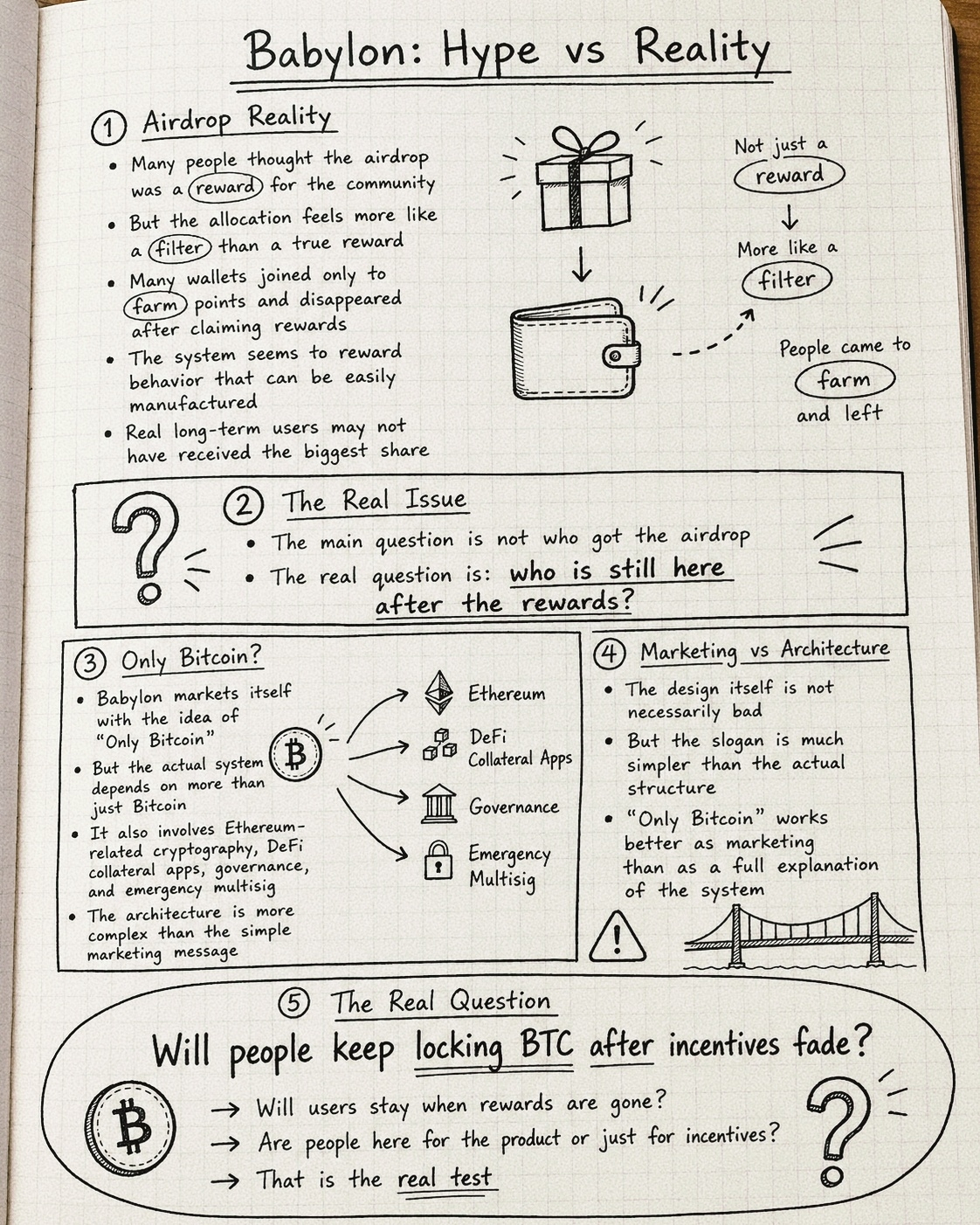
4
Daha çox kontent araşdırmaq üçün daxil olun
Binance Square-də qlobal kriptovalyuta istifadəçilərinə qoşulun
⚡️ Kriptovalyuta haqqında ən son və faydalı məlumatları əldə edin.
💬 Dünyanın ən böyük kriptovalyuta birjası tərəfindən etibar edilir.
👍 Doğrulanmış yaradıcılardan gələn real məlumatları kəşf edin.
E-poçt/Telefon nömrəsi
Trenddə olan mövzular
QNTRises39%
6,560 baxış
Müzakirə edir: 453
#qntrises39%
🚀 $QNT NASOSLAR +39% ÇOX BÖYÜK İNSTİTUSİONAL XƏBƏRLƏRDƏ! 💥
QNT institusional qəbuldakı böyük momentumdan sonra $100-dən keçməyə başlayır! 🔥
$QNT
📰 Yüksəlişi Tutan Böyük Xəbər:
Quant Network-in Overledger infrastrukturu tokenləşdirilmiş depozitlərə və rəqəmsal bankçılıq həllərinə itələmənin önündədir. Müəssisə həcmi 553%-dən çox artıb və QNT cəmi bir neçə saatda $70-dən $100-dən yuxarı qalxıb! 📊📈
🟡 Bilməli olduğunuz Binance Yenilikləri:
Vəsait Hesabının Köçürülməsi: Binance rəsmi olaraq istifadəçi kripto balanslarını Funding Accounts-dan Spot Accounts-a köçürür.
"Stocks Account" Yenidən Adlandırma: Funding Accounts, 6 əsas aktivdən istifadə etməklə səhm & səhm-opcion ticarətinin hesablaşması üçün nəzərdə tutulmuş Stocks Account kimi yenidən adlandırılacaq (USD, USDC, USDT, USD1, U, BNB).
Tələb Olunan Addım: Avtomatik kütləvi köçürmələr başlamazdan əvvəl kriptonuzu Spot Accounts-a köçürmək üçün Binance tətbiqinizdə "One-Click Migration" funksiyasını yoxlayın!
🤔 QNT növbəti olaraq $110-u sındırmağa hazırdır, yoxsa burada konsolidasiya edirik? Qiymət proqnozlarınızı aşağıda yazın! 👇
#QNT #Quant #BinanceUpdates #CryptoNews
Lily星星
·1 bəyənmə
·2.9k baxış
EthereumBreaksAbove$2700
892 baxış
Müzakirə edir: 55
BitgetBreachForgedRequestsNotStolenKeys
5,320 baxış
Müzakirə edir: 357