

Stablecoins began as a parking spot. Traders moved into USDT between trades and thought nothing more of it. Today they are doing something much bigger, and most people have not noticed. They are becoming the plumbing of a new kind of money.
Quick Facts
Total stablecoin supply: about $289B in mid-November 2026, per DefiLlama.
USDT about $175B and USDC about $69B.
Ethereum and Tron hold about 79% of supply.
Supply was about $124B at the end of 2023.
01 From Parking Spot to Plumbing
A stablecoin is a token that tracks a currency, usually the US dollar, and is backed by reserves. Because it moves on a blockchain, it settles in minutes, any day of the week, across borders.
02 The Size of the Shift
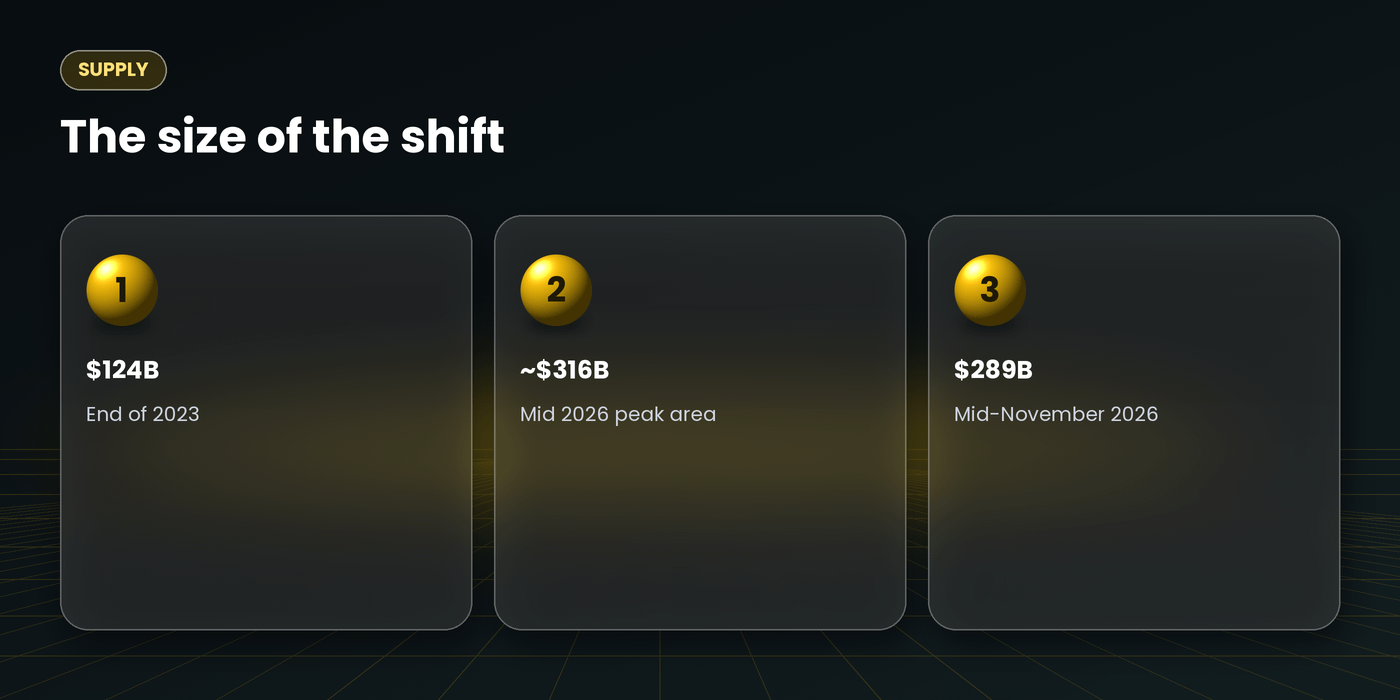
Supply grew from about $124B at the end of 2023 to above $300B in mid-2026. It has pulled back since, to about $289B by mid-November 2026, as some USDT and USDC was redeemed. Even after that dip, it is more than double where it was three years ago. USDT and USDC together make up most of the market, and most supply lives on two networks, Ethereum and Tron. Tron in particular is widely used for cheap USDT transfers, which is why I see it so often in P2P trades in Southeast Asia.
03 Cheaper Cross-Border Money
Sending money abroad through banks can take days and cost several percent. A stablecoin transfer often costs a small network fee and arrives in minutes. For families who depend on remittances, that difference is real money. Some workers abroad now send USDT home instead of using a money transfer shop, and their families can sell it on P2P for riel or dollars, often within the hour. Businesses use the same rails to pay overseas suppliers without waiting on a bank wire.
04 Four Jobs Stablecoins Now Do
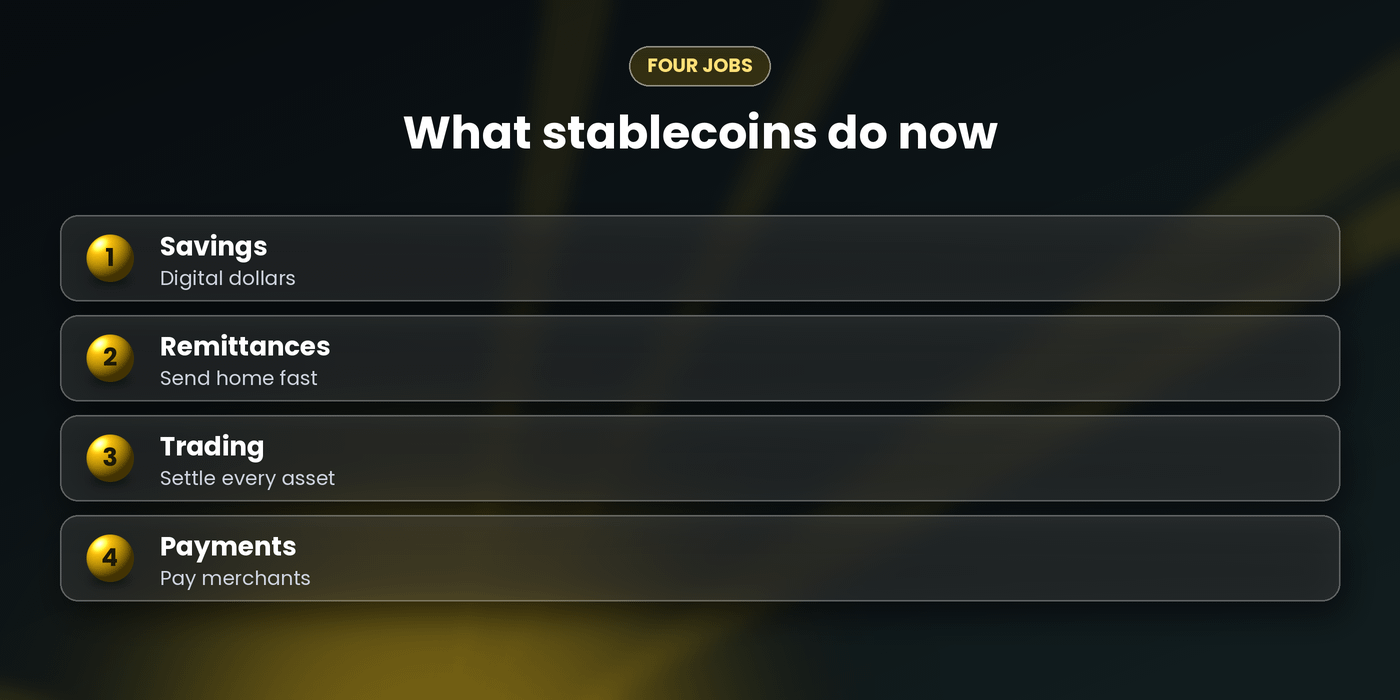
Stablecoins now play four roles:
Savings: people in weak-currency countries hold digital dollars.
Remittances: workers send money home quickly.
Trading: they settle crypto, TradFi perps and even US stocks on Binance.
Payments: more merchants and apps accept them.
05 Rules Are Catching Up
The US GENIUS Act of 2025 set federal rules for payment stablecoins, and the EU regulates them under MiCA. Clear rules make banks and payment firms more willing to build on them. In Cambodia, we already use a blockchain-based payment system, Bakong, which shows how comfortable people here are with digital money.
06 What I Keep in Mind
A stablecoin is only as good as its reserves and its issuer. I stick to large, transparent ones, keep only what I need on an exchange and remember that stablecoins are not bank deposits with government insurance.
Bottom Line
Stablecoins are quietly becoming core infrastructure for money: savings, remittances, trading and payments. The change is not loud, but it is deep, and I think it is only starting.
This article is for information only and is not financial advice.