
#grm
grm
786 baxış
Müzakirə edir: 8
Populyar
Sonuncu
$GRM DUMPS 8% — APPLE TELEGRAM'I APP STORE-DAN ÇƏKİR 🔴
📉 App Store-un sıradan çıxması cəmi bir neçə saat çəkdi, amma $GRM sahibləri panikanın ağırlığını tam hiss etdilər. Apple Telegram-ı CSAM pozuntularına görə çıxarıb və token tətbiq səssizcə geri qayıdanadək təxminən ~8% ucuzlaşdı. Klassik likvidlik qorxusu — amma bazar ilk olaraq hərəkət etdi.
🔍 2018-dən bəri Apple-ın Telegram-a qarşı çəkicini vurduğu ikinci dəfədir. Presedent nə idi? Protokol qayda-qanun təmizlədi, moderasiyanı sərtləşdirdi və sağ qaldı. Token bərpa olunur, amma sentimentdəki ləkə qalır.
💡 Əsl sual Telegram-ın qayıdıb-qaytarmaması deyil — bu tənzimləyici kölgənin $GRM-in artımına məhdudiyyət qoymağa davam edib-etməməsidir. 💬 Siz bu düşüşü endirim kimi görürsünüz, yoxsa qırmızı bayraq?
⚠️ Maliyyə məsləhəti deyil. Həmişə riskinizi idarə edin. 🛡️
🏷️ #GRM #Telegram #Crypto #Bearish #AppStore
🩸 📉
$GRM DUMPS 8% — APPLE TELEGRAM'I APP STORE-DAN ÇƏKİR 🔴
📉 App Store-un sıradan çıxması cəmi bir neçə saat çəkdi, amma $GRM sahibləri panikanın ağırlığını tam hiss etdilər. Apple Telegram-ı CSAM pozuntularına görə çıxarıb və token tətbiq səssizcə geri qayıdanadək təxminən ~8% ucuzlaşdı. Klassik likvidlik qorxusu — amma bazar ilk olaraq hərəkət etdi.
🔍 2018-dən bəri Apple-ın Telegram-a qarşı çəkicini vurduğu ikinci dəfədir. Presedent nə idi? Protokol qayda-qanun təmizlədi, moderasiyanı sərtləşdirdi və sağ qaldı. Token bərpa olunur, amma sentimentdəki ləkə qalır.
💡 Əsl sual Telegram-ın qayıdıb-qaytarmaması deyil — bu tənzimləyici kölgənin $GRM-in artımına məhdudiyyət qoymağa davam edib-etməməsidir. 💬 Siz bu düşüşü endirim kimi görürsünüz, yoxsa qırmızı bayraq?
⚠️ Maliyyə məsləhəti deyil. Həmişə riskinizi idarə edin. 🛡️
🏷️ #GRM #Telegram #Crypto #Bearish #AppStore
🩸 📉
📉 App Store-un sıradan çıxması cəmi bir neçə saat çəkdi, amma $GRM sahibləri panikanın ağırlığını tam hiss etdilər. Apple Telegram-ı CSAM pozuntularına görə çıxarıb və token tətbiq səssizcə geri qayıdanadək təxminən ~8% ucuzlaşdı. Klassik likvidlik qorxusu — amma bazar ilk olaraq hərəkət etdi.
🔍 2018-dən bəri Apple-ın Telegram-a qarşı çəkicini vurduğu ikinci dəfədir. Presedent nə idi? Protokol qayda-qanun təmizlədi, moderasiyanı sərtləşdirdi və sağ qaldı. Token bərpa olunur, amma sentimentdəki ləkə qalır.
💡 Əsl sual Telegram-ın qayıdıb-qaytarmaması deyil — bu tənzimləyici kölgənin $GRM-in artımına məhdudiyyət qoymağa davam edib-etməməsidir. 💬 Siz bu düşüşü endirim kimi görürsünüz, yoxsa qırmızı bayraq?
⚠️ Maliyyə məsləhəti deyil. Həmişə riskinizi idarə edin. 🛡️
🏷️ #GRM #Telegram #Crypto #Bearish #AppStore
🩸 📉
6
·
--
Hər kəs App Store ilə #Telegram arasındakı vəziyyətə fokuslanarkən, mən əvəzində Telegramdakı @thegrm botu haqqında danışmaq istəyirəm. Mənim tapdığım üç maraqlı şey var.😵😵😵
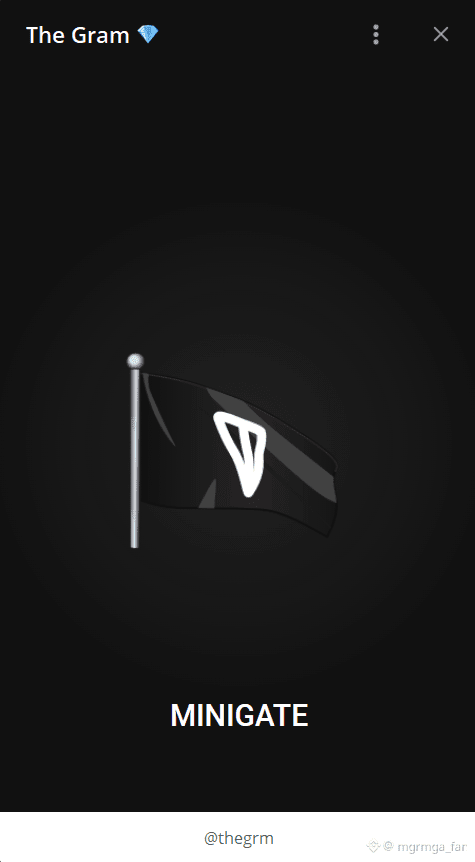
1. Düşünürəm ki, bu bot səssizcə arxa fonda yenilənir. Əvvəl işləirdi, hərraclar var idi və hətta bir Gram (GRM) cüzdanı da daxil idi. İndi isə onu işə salanda ekranda aşağıda MINIGATE görünür, ardından isə "Loading failed." çıxır
(Təəssüf ki, MINIGATE etiketinin əvvəl olub-olmadığını xatırlamıram, amma yaddaşım qədər əvvəl orada deyildi.)
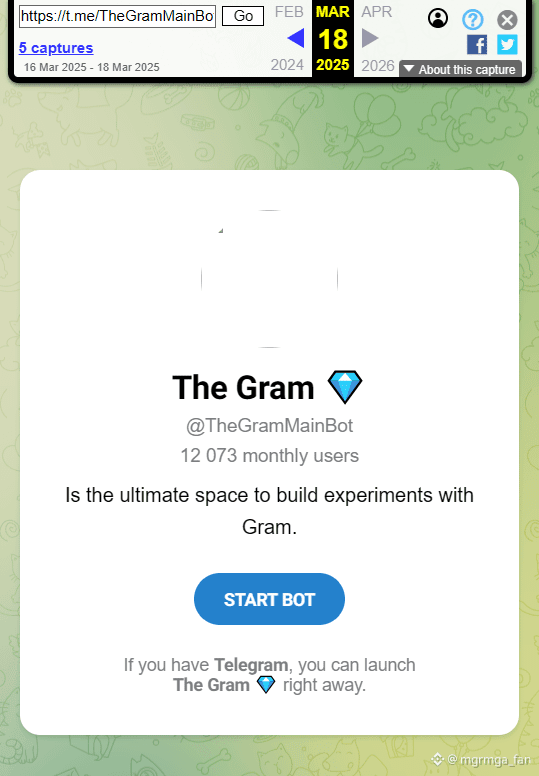
2. Botun istifadəçi adı dəyişdirilib. (Wayback Machine-dən bir ekran görüntüsü əlavə etmişəm.)
Köhnə: t.me/TheGramMainBot
Yeni: t.me/thegrm
3. Bot Oleg Oskolsky tərəfindən yaradılıb (həmçinin Gorilla🙊 kimi tanınır).
Siz özünüz bu botu izləyə bilərsiniz, amma nəsə dəyişən kimi, ilk olaraq sizə xəbər vermək üçün əlimdən gələni edəcəyəm.
MINIGATE... sizcə bu nə demək ola bilər? Yadıma düşdüyü qədər bu söz tətbiqdə əvvəllər heç vaxt görünməyib.
#GRM #Bot $GRAM
Hər kəs App Store ilə #Telegram arasındakı vəziyyətə fokuslanarkən, mən əvəzində Telegramdakı @thegrm botu haqqında danışmaq istəyirəm. Mənim tapdığım üç maraqlı şey var.😵😵😵
1. Düşünürəm ki, bu bot səssizcə arxa fonda yenilənir. Əvvəl işləirdi, hərraclar var idi və hətta bir Gram (GRM) cüzdanı da daxil idi. İndi isə onu işə salanda ekranda aşağıda MINIGATE görünür, ardından isə "Loading failed." çıxır
(Təəssüf ki, MINIGATE etiketinin əvvəl olub-olmadığını xatırlamıram, amma yaddaşım qədər əvvəl orada deyildi.)
2. Botun istifadəçi adı dəyişdirilib. (Wayback Machine-dən bir ekran görüntüsü əlavə etmişəm.)
Köhnə: t.me/TheGramMainBot
Yeni: t.me/thegrm
3. Bot Oleg Oskolsky tərəfindən yaradılıb (həmçinin Gorilla🙊 kimi tanınır).
Siz özünüz bu botu izləyə bilərsiniz, amma nəsə dəyişən kimi, ilk olaraq sizə xəbər vermək üçün əlimdən gələni edəcəyəm.
MINIGATE... sizcə bu nə demək ola bilər? Yadıma düşdüyü qədər bu söz tətbiqdə əvvəllər heç vaxt görünməyib.
#GRM #Bot $GRAM
1. Düşünürəm ki, bu bot səssizcə arxa fonda yenilənir. Əvvəl işləirdi, hərraclar var idi və hətta bir Gram (GRM) cüzdanı da daxil idi. İndi isə onu işə salanda ekranda aşağıda MINIGATE görünür, ardından isə "Loading failed." çıxır
(Təəssüf ki, MINIGATE etiketinin əvvəl olub-olmadığını xatırlamıram, amma yaddaşım qədər əvvəl orada deyildi.)
2. Botun istifadəçi adı dəyişdirilib. (Wayback Machine-dən bir ekran görüntüsü əlavə etmişəm.)
Köhnə: t.me/TheGramMainBot
Yeni: t.me/thegrm
3. Bot Oleg Oskolsky tərəfindən yaradılıb (həmçinin Gorilla🙊 kimi tanınır).
Siz özünüz bu botu izləyə bilərsiniz, amma nəsə dəyişən kimi, ilk olaraq sizə xəbər vermək üçün əlimdən gələni edəcəyəm.
MINIGATE... sizcə bu nə demək ola bilər? Yadıma düşdüyü qədər bu söz tətbiqdə əvvəllər heç vaxt görünməyib.
#GRM #Bot $GRAM
2
222
·
--
Yeri gəlmişkən, özüm də bir neçə domen götürmüşəm. Onlardan biri mgrmgafan.gram / mgrmgafan.grm-dir.
Niyə həm .gram, həm də .grm yazmışam? Cavab aşağıdakı 2-ci Faktdadır.
Fakt #2
1-ci Faktı qaçırmısınızsa, onu buradan tapa bilərsiniz: [Fact 1 — Gram DNS](https://www.binance.com/en/square/post/354898494113249)
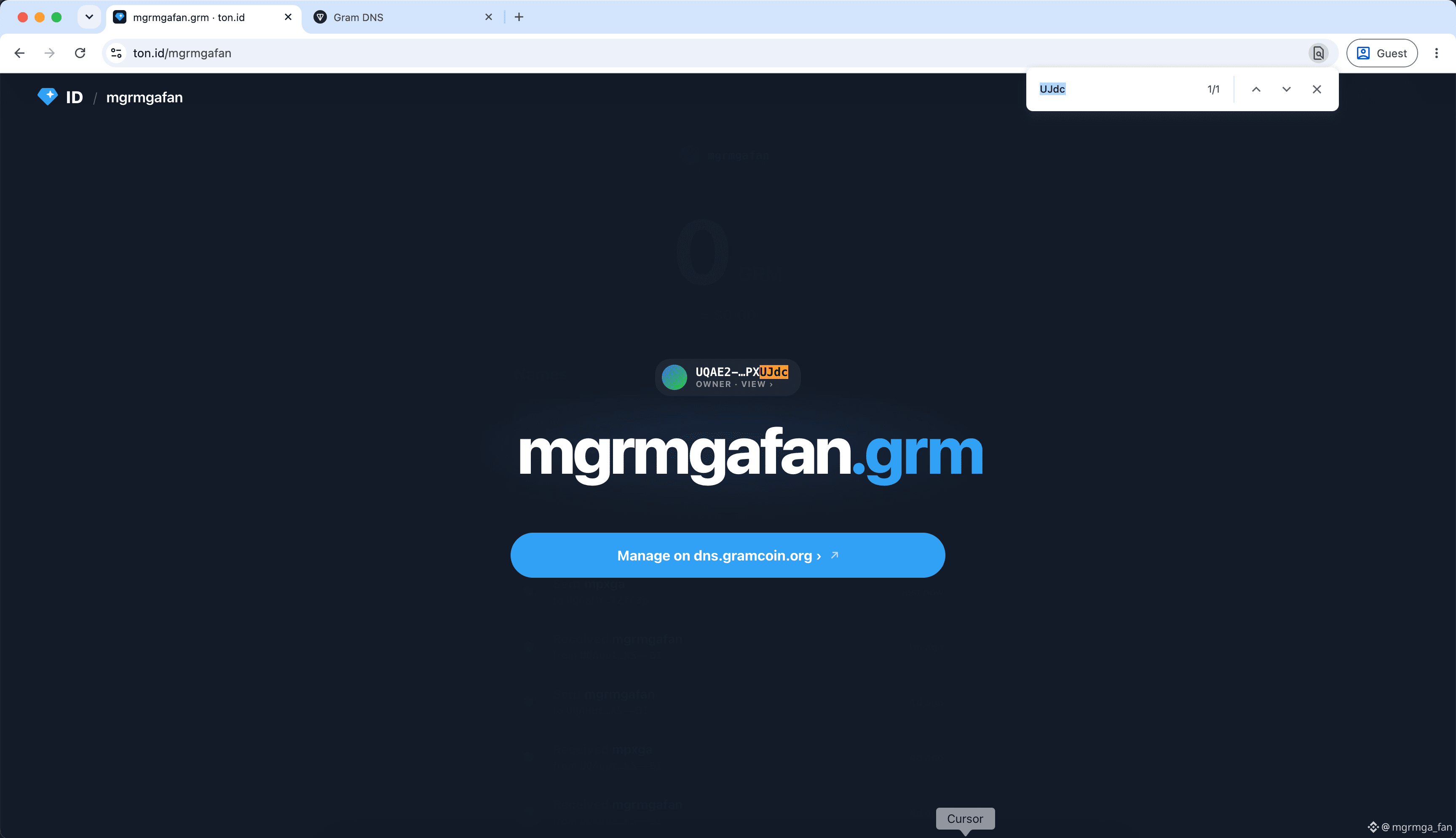
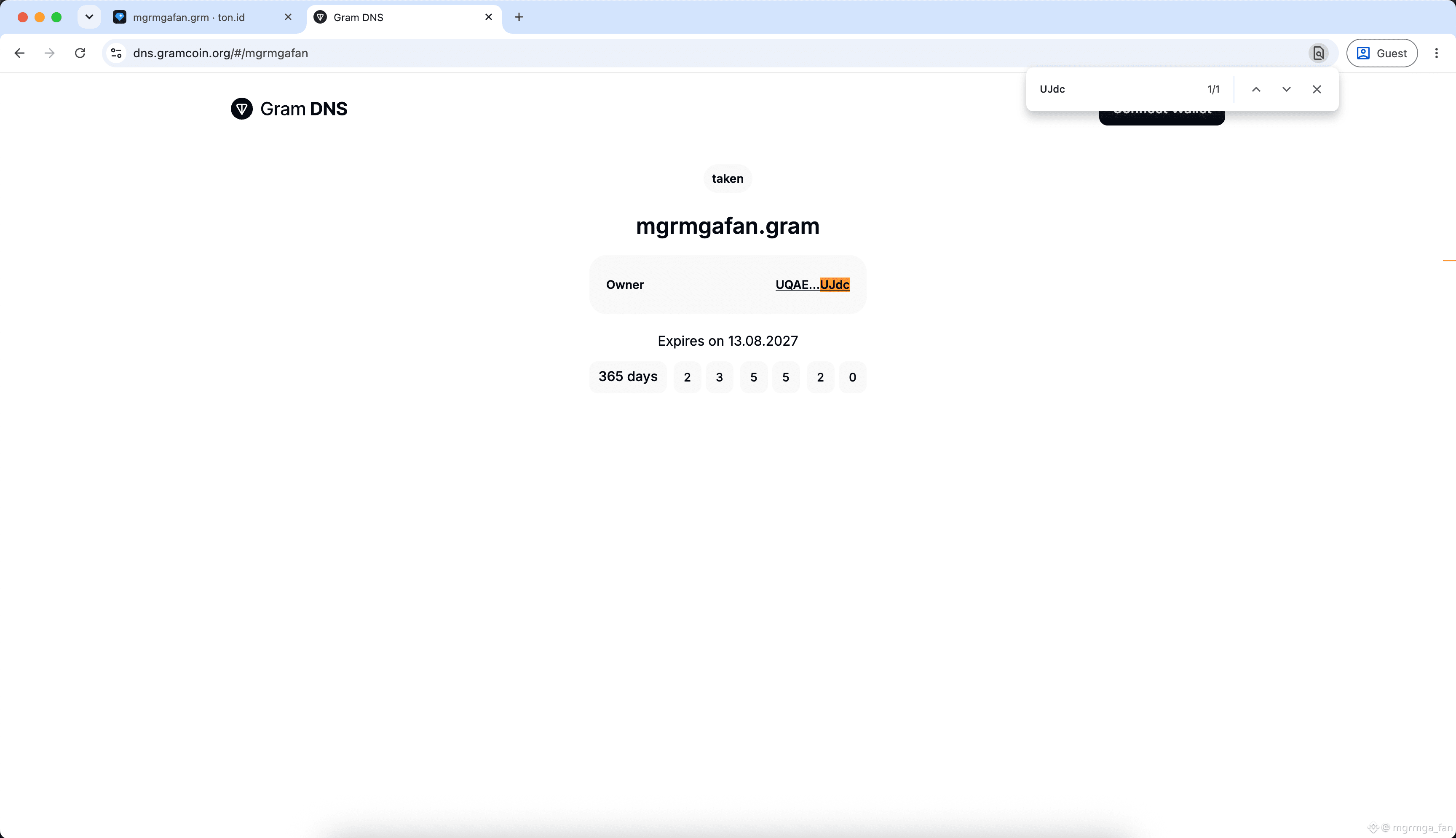
Mən .gram TLD-si olan dns.gramcoin.org üzərindən domenlər aldım. Bundan sonra domenimi ton.id-də tapa bildim, amma orada .grm kimi görünürdü.
Üstəlik, mən ton.id-ni onun ilk dəyişikliklərindən əvvəl də izləyirdim. Əvvəllər .gram ilə bitən domenlərə sahib olan insanların olduğunu görə bilirdim, amma bir yeniləmədən sonra .gram dəyişdirilərək .grm edilib.
Hətta indi də dns.gramcoin.org-da domenimə baxanda mgrmgafan.gram görürəm, ton.id-də isə mgrmgafan.grm kimi görünür.
#GRAM #GRM #MGRMGA #Telegram
Yeri gəlmişkən, özüm də bir neçə domen götürmüşəm. Onlardan biri mgrmgafan.gram / mgrmgafan.grm-dir.
Niyə həm .gram, həm də .grm yazmışam? Cavab aşağıdakı 2-ci Faktdadır.
Fakt #2
1-ci Faktı qaçırmısınızsa, onu buradan tapa bilərsiniz: Fact 1 — Gram DNS
Mən .gram TLD-si olan dns.gramcoin.org üzərindən domenlər aldım. Bundan sonra domenimi ton.id-də tapa bildim, amma orada .grm kimi görünürdü.
Üstəlik, mən ton.id-ni onun ilk dəyişikliklərindən əvvəl də izləyirdim. Əvvəllər .gram ilə bitən domenlərə sahib olan insanların olduğunu görə bilirdim, amma bir yeniləmədən sonra .gram dəyişdirilərək .grm edilib.
Hətta indi də dns.gramcoin.org-da domenimə baxanda mgrmgafan.gram görürəm, ton.id-də isə mgrmgafan.grm kimi görünür.
#GRAM #GRM #MGRMGA #Telegram
Niyə həm .gram, həm də .grm yazmışam? Cavab aşağıdakı 2-ci Faktdadır.
Fakt #2
1-ci Faktı qaçırmısınızsa, onu buradan tapa bilərsiniz: Fact 1 — Gram DNS
Mən .gram TLD-si olan dns.gramcoin.org üzərindən domenlər aldım. Bundan sonra domenimi ton.id-də tapa bildim, amma orada .grm kimi görünürdü.
Üstəlik, mən ton.id-ni onun ilk dəyişikliklərindən əvvəl də izləyirdim. Əvvəllər .gram ilə bitən domenlərə sahib olan insanların olduğunu görə bilirdim, amma bir yeniləmədən sonra .gram dəyişdirilərək .grm edilib.
Hətta indi də dns.gramcoin.org-da domenimə baxanda mgrmgafan.gram görürəm, ton.id-də isə mgrmgafan.grm kimi görünür.
#GRAM #GRM #MGRMGA #Telegram
1
111

·
--
Məqalə
Tərcüməyə bax
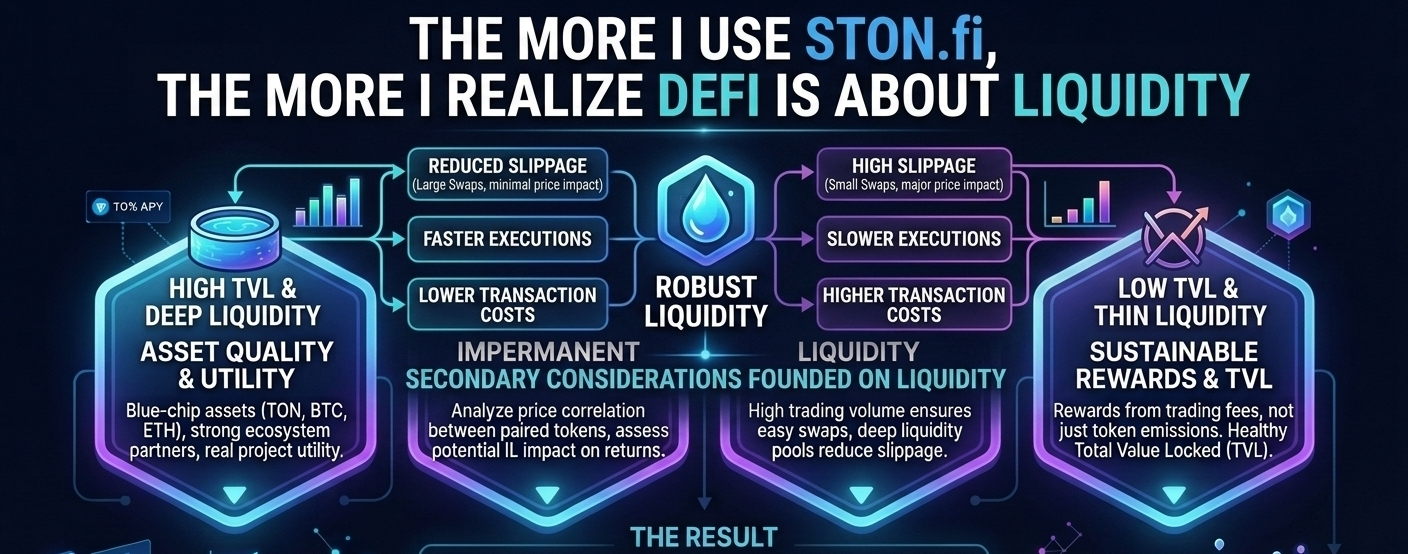
The More I Use STON.fi, the More I Realize DeFi Is About LiquidityThe More I Use STON.fi, the More I Realize DeFi Is About Liquidity
When I first started exploring STON.fi, I was mostly interested in one thing: earning from my crypto.
I would look at the farming page, check the APRs, compare the pools, and naturally gravitate toward whichever number looked the most attractive.
But the longer I spend around STON.fi, the more my perspective has changed.
I now understand that liquidity farming isn't simply about finding a high APR and depositing funds. There is a bigger story happening behind every swap, every liquidity pool, and every reward earned by an LP.
And honestly, that's what has made DeFi more interesting to me.
I Used to See Pools as Just a Place to Earn
At the beginning, I looked at a liquidity pool from a very simple perspective:
"I put my tokens here, and I receive rewards."
That's true, but it's only part of the picture.
When I provide liquidity, those assets are helping other users trade. The pool needs liquidity so people can swap one token for another without relying on a traditional order book.
STON.fi describes liquidity provision and farming as separate steps: providing liquidity gives you LP tokens representing your position, while farming involves staking those LP tokens to earn additional rewards. �
STON.fi Blog +1
Once I understood that, I started looking at my role differently.
I'm not simply depositing money into a farm.
I'm contributing liquidity to a market.
That's When APR Became Less Important to Me
I still check APR. I probably always will.
It's useful for comparing current opportunities.
But I don't let APR make the entire decision anymore.
I've seen how quickly farming numbers can change. A pool that looks extremely attractive today may have a completely different APR later.
So now, when I see a pool with a big number, I become curious rather than excited.
I ask myself:
What is driving this APR?
Is there strong trading activity?
Are there additional farming incentives?
How volatile are the tokens?
Would I still be comfortable holding these assets if the market moved against me?
Those questions are much more useful than simply chasing the biggest percentage.
Liquidity Is the Part of DeFi I Appreciate More Now
One thing I've come to appreciate is how important liquidity actually is.
As a user, it's easy to think about swaps from the perspective of the person clicking "Swap."
You choose a token, enter an amount, confirm the transaction, and you're done.
But behind that simple experience is liquidity.
Someone has supplied those assets.
Someone is taking on the risks associated with providing liquidity.
And that liquidity helps make trading possible.
That's why STON.fi's farming model interests me. Farming isn't completely disconnected from the activity happening on the DEX. Liquidity providers are contributing to the infrastructure that other users depend on.
STON.fi itself describes liquidity as one of the core ways users can contribute to TON DeFi, alongside governance through staking. �
STON.fi Blog
I Also Had to Learn About Impermanent Loss
This was one of the concepts I struggled with when I started.
At first, I thought:
"If I provide liquidity and earn rewards, why wouldn't I simply make more than holding the tokens?"
Then I learned about impermanent loss.
When the relative prices of the two assets in a liquidity pool change, the value of the position can differ from simply holding the two assets separately. That's one of the fundamental risks liquidity providers need to understand. �
STON.fi Blog
Learning this didn't make me stop using liquidity pools.
Instead, it made me more careful.
I stopped looking at farming as "free money" and started treating it as what it really is: a strategy with potential rewards and real risks.
That change in mindset was important for me.
Now I Look at the Whole Picture
These days, when I'm checking STON.fi, I don't look at just one number.
I look at the APR.
I look at the tokens.
I think about volatility.
I consider impermanent loss.
I pay attention to liquidity and trading activity.
And I ask myself whether the opportunity actually makes sense for me.
That doesn't mean I always get it right. DeFi moves too quickly for anyone to predict everything.
But I feel much better making a decision after understanding what I'm getting into rather than simply following the crowd.
Why This Journey Has Been Valuable for Me
The biggest thing STON.fi has given me isn't a particular farm or a particular APR.
It's experience.
Every week, when I check the pools and see how the numbers have changed, I'm learning something about markets, liquidity, incentives and risk.
One week, a particular pool might dominate the farming numbers.
Another week, a different opportunity might attract attention.
And that's actually the interesting part.
DeFi isn't static.
The ecosystem keeps moving, and as a liquidity provider, you have to keep learning with it.
My Biggest Lesson So Far
If there's one thing I'd tell someone just starting out, it's this:
Don't enter DeFi just because you saw a high APR.
Take some time to understand what you're actually doing.
Learn what a liquidity pool is.
Understand where your rewards come from.
Learn about impermanent loss.
Look at the tokens you're providing.
And most importantly, never assume that a high return comes without additional risk.
STON.fi's own educational material makes the same broader point: liquidity provision and farming can create opportunities, but rates fluctuate and risks such as impermanent loss and smart-contract vulnerabilities need to be considered. �
STON.fi Blog +1
Final Thoughts
My view of STON.fi has changed quite a lot since I first started exploring it.
At the beginning, I saw farming as a way to potentially earn more from my crypto.
Now, I see something bigger.
I see liquidity providers helping markets function. I see farmers participating in the TON DeFi economy. I see an ecosystem where the numbers change constantly and where learning is just as important as earning.
And that's probably the biggest lesson I've taken from my experience so far:
In DeFi, the goal shouldn't only be to find the highest yield. The goal should be to understand what you're participating in.
The more I learn about STON.fi, the more I realise that liquidity isn't just a number on a dashboard.
It's the foundation that keeps the whole trading experience moving. 🗿
This is a personal perspective on using and following STON.fi and is not financial advice. Liquidity provision and DeFi involve risk, and APRs can change over time.
#GRM $GRAM
{spot}(GRAMUSDT)
The More I Use STON.fi, the More I Realize DeFi Is About Liquidity
The More I Use STON.fi, the More I Realize DeFi Is About Liquidity
When I first started exploring STON.fi, I was mostly interested in one thing: earning from my crypto.
I would look at the farming page, check the APRs, compare the pools, and naturally gravitate toward whichever number looked the most attractive.
But the longer I spend around STON.fi, the more my perspective has changed.
I now understand that liquidity farming isn't simply about finding a high APR and depositing funds. There is a bigger story happening behind every swap, every liquidity pool, and every reward earned by an LP.
And honestly, that's what has made DeFi more interesting to me.
I Used to See Pools as Just a Place to Earn
At the beginning, I looked at a liquidity pool from a very simple perspective:
"I put my tokens here, and I receive rewards."
That's true, but it's only part of the picture.
When I provide liquidity, those assets are helping other users trade. The pool needs liquidity so people can swap one token for another without relying on a traditional order book.
STON.fi describes liquidity provision and farming as separate steps: providing liquidity gives you LP tokens representing your position, while farming involves staking those LP tokens to earn additional rewards. �
STON.fi Blog +1
Once I understood that, I started looking at my role differently.
I'm not simply depositing money into a farm.
I'm contributing liquidity to a market.
That's When APR Became Less Important to Me
I still check APR. I probably always will.
It's useful for comparing current opportunities.
But I don't let APR make the entire decision anymore.
I've seen how quickly farming numbers can change. A pool that looks extremely attractive today may have a completely different APR later.
So now, when I see a pool with a big number, I become curious rather than excited.
I ask myself:
What is driving this APR?
Is there strong trading activity?
Are there additional farming incentives?
How volatile are the tokens?
Would I still be comfortable holding these assets if the market moved against me?
Those questions are much more useful than simply chasing the biggest percentage.
Liquidity Is the Part of DeFi I Appreciate More Now
One thing I've come to appreciate is how important liquidity actually is.
As a user, it's easy to think about swaps from the perspective of the person clicking "Swap."
You choose a token, enter an amount, confirm the transaction, and you're done.
But behind that simple experience is liquidity.
Someone has supplied those assets.
Someone is taking on the risks associated with providing liquidity.
And that liquidity helps make trading possible.
That's why STON.fi's farming model interests me. Farming isn't completely disconnected from the activity happening on the DEX. Liquidity providers are contributing to the infrastructure that other users depend on.
STON.fi itself describes liquidity as one of the core ways users can contribute to TON DeFi, alongside governance through staking. �
STON.fi Blog
I Also Had to Learn About Impermanent Loss
This was one of the concepts I struggled with when I started.
At first, I thought:
"If I provide liquidity and earn rewards, why wouldn't I simply make more than holding the tokens?"
Then I learned about impermanent loss.
When the relative prices of the two assets in a liquidity pool change, the value of the position can differ from simply holding the two assets separately. That's one of the fundamental risks liquidity providers need to understand. �
STON.fi Blog
Learning this didn't make me stop using liquidity pools.
Instead, it made me more careful.
I stopped looking at farming as "free money" and started treating it as what it really is: a strategy with potential rewards and real risks.
That change in mindset was important for me.
Now I Look at the Whole Picture
These days, when I'm checking STON.fi, I don't look at just one number.
I look at the APR.
I look at the tokens.
I think about volatility.
I consider impermanent loss.
I pay attention to liquidity and trading activity.
And I ask myself whether the opportunity actually makes sense for me.
That doesn't mean I always get it right. DeFi moves too quickly for anyone to predict everything.
But I feel much better making a decision after understanding what I'm getting into rather than simply following the crowd.
Why This Journey Has Been Valuable for Me
The biggest thing STON.fi has given me isn't a particular farm or a particular APR.
It's experience.
Every week, when I check the pools and see how the numbers have changed, I'm learning something about markets, liquidity, incentives and risk.
One week, a particular pool might dominate the farming numbers.
Another week, a different opportunity might attract attention.
And that's actually the interesting part.
DeFi isn't static.
The ecosystem keeps moving, and as a liquidity provider, you have to keep learning with it.
My Biggest Lesson So Far
If there's one thing I'd tell someone just starting out, it's this:
Don't enter DeFi just because you saw a high APR.
Take some time to understand what you're actually doing.
Learn what a liquidity pool is.
Understand where your rewards come from.
Learn about impermanent loss.
Look at the tokens you're providing.
And most importantly, never assume that a high return comes without additional risk.
STON.fi's own educational material makes the same broader point: liquidity provision and farming can create opportunities, but rates fluctuate and risks such as impermanent loss and smart-contract vulnerabilities need to be considered. �
STON.fi Blog +1
Final Thoughts
My view of STON.fi has changed quite a lot since I first started exploring it.
At the beginning, I saw farming as a way to potentially earn more from my crypto.
Now, I see something bigger.
I see liquidity providers helping markets function. I see farmers participating in the TON DeFi economy. I see an ecosystem where the numbers change constantly and where learning is just as important as earning.
And that's probably the biggest lesson I've taken from my experience so far:
In DeFi, the goal shouldn't only be to find the highest yield. The goal should be to understand what you're participating in.
The more I learn about STON.fi, the more I realise that liquidity isn't just a number on a dashboard.
It's the foundation that keeps the whole trading experience moving. 🗿
This is a personal perspective on using and following STON.fi and is not financial advice. Liquidity provision and DeFi involve risk, and APRs can change over time.
#GRM $GRAM
When I first started exploring STON.fi, I was mostly interested in one thing: earning from my crypto.
I would look at the farming page, check the APRs, compare the pools, and naturally gravitate toward whichever number looked the most attractive.
But the longer I spend around STON.fi, the more my perspective has changed.
I now understand that liquidity farming isn't simply about finding a high APR and depositing funds. There is a bigger story happening behind every swap, every liquidity pool, and every reward earned by an LP.
And honestly, that's what has made DeFi more interesting to me.
I Used to See Pools as Just a Place to Earn
At the beginning, I looked at a liquidity pool from a very simple perspective:
"I put my tokens here, and I receive rewards."
That's true, but it's only part of the picture.
When I provide liquidity, those assets are helping other users trade. The pool needs liquidity so people can swap one token for another without relying on a traditional order book.
STON.fi describes liquidity provision and farming as separate steps: providing liquidity gives you LP tokens representing your position, while farming involves staking those LP tokens to earn additional rewards. �
STON.fi Blog +1
Once I understood that, I started looking at my role differently.
I'm not simply depositing money into a farm.
I'm contributing liquidity to a market.
That's When APR Became Less Important to Me
I still check APR. I probably always will.
It's useful for comparing current opportunities.
But I don't let APR make the entire decision anymore.
I've seen how quickly farming numbers can change. A pool that looks extremely attractive today may have a completely different APR later.
So now, when I see a pool with a big number, I become curious rather than excited.
I ask myself:
What is driving this APR?
Is there strong trading activity?
Are there additional farming incentives?
How volatile are the tokens?
Would I still be comfortable holding these assets if the market moved against me?
Those questions are much more useful than simply chasing the biggest percentage.
Liquidity Is the Part of DeFi I Appreciate More Now
One thing I've come to appreciate is how important liquidity actually is.
As a user, it's easy to think about swaps from the perspective of the person clicking "Swap."
You choose a token, enter an amount, confirm the transaction, and you're done.
But behind that simple experience is liquidity.
Someone has supplied those assets.
Someone is taking on the risks associated with providing liquidity.
And that liquidity helps make trading possible.
That's why STON.fi's farming model interests me. Farming isn't completely disconnected from the activity happening on the DEX. Liquidity providers are contributing to the infrastructure that other users depend on.
STON.fi itself describes liquidity as one of the core ways users can contribute to TON DeFi, alongside governance through staking. �
STON.fi Blog
I Also Had to Learn About Impermanent Loss
This was one of the concepts I struggled with when I started.
At first, I thought:
"If I provide liquidity and earn rewards, why wouldn't I simply make more than holding the tokens?"
Then I learned about impermanent loss.
When the relative prices of the two assets in a liquidity pool change, the value of the position can differ from simply holding the two assets separately. That's one of the fundamental risks liquidity providers need to understand. �
STON.fi Blog
Learning this didn't make me stop using liquidity pools.
Instead, it made me more careful.
I stopped looking at farming as "free money" and started treating it as what it really is: a strategy with potential rewards and real risks.
That change in mindset was important for me.
Now I Look at the Whole Picture
These days, when I'm checking STON.fi, I don't look at just one number.
I look at the APR.
I look at the tokens.
I think about volatility.
I consider impermanent loss.
I pay attention to liquidity and trading activity.
And I ask myself whether the opportunity actually makes sense for me.
That doesn't mean I always get it right. DeFi moves too quickly for anyone to predict everything.
But I feel much better making a decision after understanding what I'm getting into rather than simply following the crowd.
Why This Journey Has Been Valuable for Me
The biggest thing STON.fi has given me isn't a particular farm or a particular APR.
It's experience.
Every week, when I check the pools and see how the numbers have changed, I'm learning something about markets, liquidity, incentives and risk.
One week, a particular pool might dominate the farming numbers.
Another week, a different opportunity might attract attention.
And that's actually the interesting part.
DeFi isn't static.
The ecosystem keeps moving, and as a liquidity provider, you have to keep learning with it.
My Biggest Lesson So Far
If there's one thing I'd tell someone just starting out, it's this:
Don't enter DeFi just because you saw a high APR.
Take some time to understand what you're actually doing.
Learn what a liquidity pool is.
Understand where your rewards come from.
Learn about impermanent loss.
Look at the tokens you're providing.
And most importantly, never assume that a high return comes without additional risk.
STON.fi's own educational material makes the same broader point: liquidity provision and farming can create opportunities, but rates fluctuate and risks such as impermanent loss and smart-contract vulnerabilities need to be considered. �
STON.fi Blog +1
Final Thoughts
My view of STON.fi has changed quite a lot since I first started exploring it.
At the beginning, I saw farming as a way to potentially earn more from my crypto.
Now, I see something bigger.
I see liquidity providers helping markets function. I see farmers participating in the TON DeFi economy. I see an ecosystem where the numbers change constantly and where learning is just as important as earning.
And that's probably the biggest lesson I've taken from my experience so far:
In DeFi, the goal shouldn't only be to find the highest yield. The goal should be to understand what you're participating in.
The more I learn about STON.fi, the more I realise that liquidity isn't just a number on a dashboard.
It's the foundation that keeps the whole trading experience moving. 🗿
This is a personal perspective on using and following STON.fi and is not financial advice. Liquidity provision and DeFi involve risk, and APRs can change over time.
#GRM $GRAM
1
164
·
--
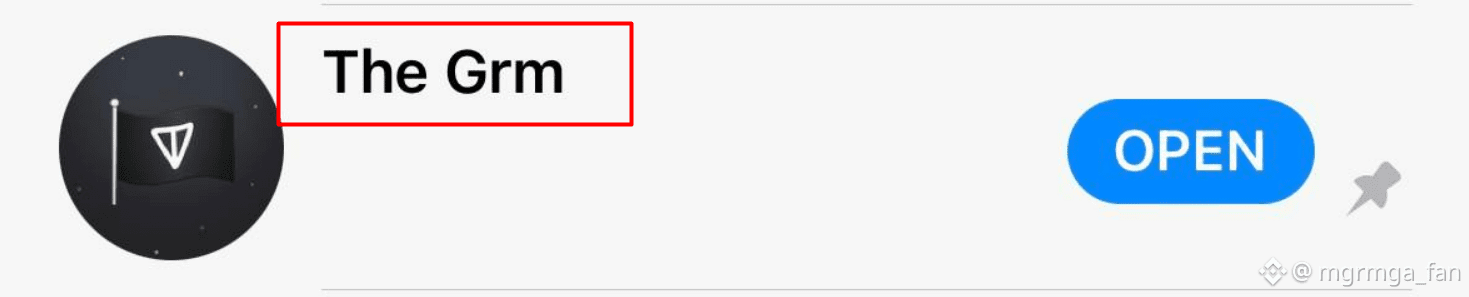
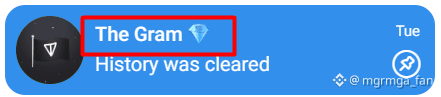
Mən @thegrm botu haqqında #Telegram ilə əlaqədar danışmağa davam etmək istəyirəm. Qəribə bir xəta gördüm—yoxsa bəlkə də bu, funksiyadır, əmin deyiləm. Nədənsə Windows tətbiqində (2-ci ekran görüntüsü) ad bəzən "The Grm" olur və sonra yenidən köhnəinə, "The Gram 🐳"-a qayıdır.
Eyni şey veb versiyada da baş verir (1-ci və sonuncu ekran görüntüləri).
Səndə də olur?
Bu çox qəribədir.
🐳: Fil emojisi əslində kristal olmalıdır, amma Binance hələlik həmin emojini əlavə etməyib. Çox güman ki, onlara bildirməliyik—bəlkə gələcəkdə əlavə edərlər.
#MGRMGA #GRM #GRAM #HODL
Mən @thegrm botu haqqında #Telegram ilə əlaqədar danışmağa davam etmək istəyirəm. Qəribə bir xəta gördüm—yoxsa bəlkə də bu, funksiyadır, əmin deyiləm. Nədənsə Windows tətbiqində (2-ci ekran görüntüsü) ad bəzən "The Grm" olur və sonra yenidən köhnəinə, "The Gram 🐳"-a qayıdır.
Eyni şey veb versiyada da baş verir (1-ci və sonuncu ekran görüntüləri).
Səndə də olur?
Bu çox qəribədir.
🐳: Fil emojisi əslində kristal olmalıdır, amma Binance hələlik həmin emojini əlavə etməyib. Çox güman ki, onlara bildirməliyik—bəlkə gələcəkdə əlavə edərlər.
#MGRMGA #GRM #GRAM #HODL
Eyni şey veb versiyada da baş verir (1-ci və sonuncu ekran görüntüləri).
Səndə də olur?
Bu çox qəribədir.
🐳: Fil emojisi əslində kristal olmalıdır, amma Binance hələlik həmin emojini əlavə etməyib. Çox güman ki, onlara bildirməliyik—bəlkə gələcəkdə əlavə edərlər.
#MGRMGA #GRM #GRAM #HODL


1
2
1.3k
·
--
Tapmacanın cavabı: #MGRMGA dəstəsinin üzvü. Daha da dəli qorillalar. Daha çox icma!
🙉🙈🙊🙉🙈🙊🙉🙈🙊
MAKE #OLEH GREAT AGAIN!
MAKE #GRAM GREAT AGAIN!
MAKE #COMMUNITY GREAT AGAIN!
MAKE #GRM GREAT AGAIN!
Tapmacanın cavabı: #MGRMGA dəstəsinin üzvü. Daha da dəli qorillalar. Daha çox icma!
🙉🙈🙊🙉🙈🙊🙉🙈🙊
MAKE #OLEH GREAT AGAIN!
MAKE #GRAM GREAT AGAIN!
MAKE #COMMUNITY GREAT AGAIN!
MAKE #GRM GREAT AGAIN!
🙉🙈🙊🙉🙈🙊🙉🙈🙊
MAKE #OLEH GREAT AGAIN!
MAKE #GRAM GREAT AGAIN!
MAKE #COMMUNITY GREAT AGAIN!
MAKE #GRM GREAT AGAIN!
MGRMGAFAN
·
--
🙊(gorilla) + 🐳(diamond) = ?
#REBUS #GRM #GRAM #TON #MGRMGA
#REBUS #GRM #GRAM #TON #MGRMGA
2
306
Daha çox kontent araşdırmaq üçün daxil olun
Binance Square-də qlobal kriptovalyuta istifadəçilərinə qoşulun
⚡️ Kriptovalyuta haqqında ən son və faydalı məlumatları əldə edin.
💬 Dünyanın ən böyük kriptovalyuta birjası tərəfindən etibar edilir.
👍 Doğrulanmış yaradıcılardan gələn real məlumatları kəşf edin.
E-poçt/Telefon nömrəsi
Trenddə olan mövzular
1
#BTCBreaks80K
115,440 baxış
Müzakirə edir: 1,841
2
#比特币突破8万
90,745 baxış
Müzakirə edir: 270
3
#EthereumReclaims$2600
19 baxış
Müzakirə edir: 21
4
#SECReceivesAmendedInjectiveETFFiling
711 baxış
Müzakirə edir: 43
5
#SanDiskToJoinSP100OnSep21
491 baxış
Müzakirə edir: 33
6
#PolygonToDeployContractBurning100MPOL
298 baxış
Müzakirə edir: 17
7
#YahooFinanceEndsPolymarketPartnership
0 baxış
Müzakirə edir: 3
8
#BuffettBecomesBerkshireChairmanEmeritus
29,899 baxış
Müzakirə edir: 627
9
#ZcashSpotETFTops$230MMonthlyInflow
7,078 baxış
Müzakirə edir: 85
10
#HYPEJumpsOver11%
92,268 baxış
Müzakirə edir: 1,193