

#chainlinklaunchesccip2withenterpriseverification
chainlinklaunchesccip2withenterpriseverification
Populyar
Sonuncu

Doğrulanıb
#chainlinklaunchesccip2withenterpriseverification CHAINLINK NÂNG CẤP CCIP 2
Chainlink vừa ra mắt CCIP 2, nâng cấp hệ thống cross-chain với trọng tâm là bảo mật.
Điểm đáng chú ý là doanh nghiệp giờ có thể tự thêm validator riêng hoặc thuê bên thứ ba như Infosys, Nethermind để kiểm tra giao dịch.
Trước đó, Kelp DAO từng bị hack khoảng 292 triệu USD rsETH, sau sự cố này Kelp chuyển rsETH sang Chainlink.
Nhưng có một điểm Mây muốn mọi người chú ý:
Nếu không thêm validator mới, người dùng CCIP 2 hiện chỉ dựa vào một mạng xác minh, thay vì hai lớp như trước.
Vậy nên câu chuyện cross-chain không chỉ là tốc độ hay phí giao dịch.
Bảo mật mới là thứ cần theo dõi lâu dài.
Mây sẽ xem các tổ chức lớn có triển khai thêm validator riêng hay không. 👀
Mây ilə hər gün daha çox kripto xəbərlərinə güncəlləmələr üçün izləyin.
DYOR və həmişə kapitalınızı idarə edin.
#chainlinklaunchesccip2withenterpriseverification CHAINLINK NÂNG CẤP CCIP 2
Chainlink vừa ra mắt CCIP 2, nâng cấp hệ thống cross-chain với trọng tâm là bảo mật.
Điểm đáng chú ý là doanh nghiệp giờ có thể tự thêm validator riêng hoặc thuê bên thứ ba như Infosys, Nethermind để kiểm tra giao dịch.
Trước đó, Kelp DAO từng bị hack khoảng 292 triệu USD rsETH, sau sự cố này Kelp chuyển rsETH sang Chainlink.
Nhưng có một điểm Mây muốn mọi người chú ý:
Nếu không thêm validator mới, người dùng CCIP 2 hiện chỉ dựa vào một mạng xác minh, thay vì hai lớp như trước.
Vậy nên câu chuyện cross-chain không chỉ là tốc độ hay phí giao dịch.
Bảo mật mới là thứ cần theo dõi lâu dài.
Mây sẽ xem các tổ chức lớn có triển khai thêm validator riêng hay không. 👀
Mây ilə hər gün daha çox kripto xəbərlərinə güncəlləmələr üçün izləyin.
DYOR və həmişə kapitalınızı idarə edin.
Chainlink vừa ra mắt CCIP 2, nâng cấp hệ thống cross-chain với trọng tâm là bảo mật.
Điểm đáng chú ý là doanh nghiệp giờ có thể tự thêm validator riêng hoặc thuê bên thứ ba như Infosys, Nethermind để kiểm tra giao dịch.
Trước đó, Kelp DAO từng bị hack khoảng 292 triệu USD rsETH, sau sự cố này Kelp chuyển rsETH sang Chainlink.
Nhưng có một điểm Mây muốn mọi người chú ý:
Nếu không thêm validator mới, người dùng CCIP 2 hiện chỉ dựa vào một mạng xác minh, thay vì hai lớp như trước.
Vậy nên câu chuyện cross-chain không chỉ là tốc độ hay phí giao dịch.
Bảo mật mới là thứ cần theo dõi lâu dài.
Mây sẽ xem các tổ chức lớn có triển khai thêm validator riêng hay không. 👀
Mây ilə hər gün daha çox kripto xəbərlərinə güncəlləmələr üçün izləyin.
DYOR və həmişə kapitalınızı idarə edin.
2
1.5k

·
--
Azalma
Tərcüməyə bax
#ChainlinkLaunchesCCIP2WithEnterpriseVerification
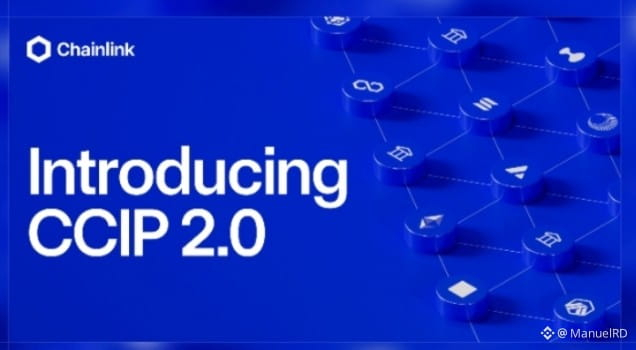
Chainlink presenta CCIP 2.0, abriendo las compuertas para que el capital mundial fluya en la cadena de bloques.
Ya está disponible para todas las instituciones y emisores de activos digitales. Esta actualización introduce nuevas funciones clave que consolidan a CCIP como el único estándar de interoperabilidad diseñado para satisfacer los requisitos de seguridad, cumplimiento normativo y velocidad de las mayores instituciones financieras del mundo.
El próximo capítulo de la tecnología blockchain consiste en integrar todo el sistema financiero global en la cadena de bloques para transformar la forma en que el mundo emite, transfiere y gestiona el valor. Y con la Ley MiCA en la UE, la Ley GENIUS en EE. UU. y la colaboración entre la SEC y la CFTC de EE. UU., el marco regulatorio para los activos digitales y tokenizados nunca ha sido tan claro.
Los emisores de activos y las plataformas de tokenización compiten ahora por incorporar acciones, ETF, fondos, materias primas y divisas a la cadena de bloques, mientras que las instituciones aceleran su transición de proyectos piloto experimentales a productos y servicios que generan ingresos.
Actualmente, la actividad financiera en la cadena de bloques es mayor que nunca, pero los activos y flujos de trabajo institucionales siguen estando muy fragmentados entre cadenas de bloques públicas y privadas. La conectividad segura entre cadenas es ahora esencial para las instituciones que buscan maximizar la distribución y aprovechar al máximo el potencial de sus activos en los distintos mercados.
$LINK
{spot}(LINKUSDT)
$NVDAB
{spot}(NVDABUSDT)
$AAPLB
{spot}(AAPLBUSDT)
#ChainlinkLaunchesCCIP2WithEnterpriseVerification
Chainlink presenta CCIP 2.0, abriendo las compuertas para que el capital mundial fluya en la cadena de bloques.
Ya está disponible para todas las instituciones y emisores de activos digitales. Esta actualización introduce nuevas funciones clave que consolidan a CCIP como el único estándar de interoperabilidad diseñado para satisfacer los requisitos de seguridad, cumplimiento normativo y velocidad de las mayores instituciones financieras del mundo.
El próximo capítulo de la tecnología blockchain consiste en integrar todo el sistema financiero global en la cadena de bloques para transformar la forma en que el mundo emite, transfiere y gestiona el valor. Y con la Ley MiCA en la UE, la Ley GENIUS en EE. UU. y la colaboración entre la SEC y la CFTC de EE. UU., el marco regulatorio para los activos digitales y tokenizados nunca ha sido tan claro.
Los emisores de activos y las plataformas de tokenización compiten ahora por incorporar acciones, ETF, fondos, materias primas y divisas a la cadena de bloques, mientras que las instituciones aceleran su transición de proyectos piloto experimentales a productos y servicios que generan ingresos.
Actualmente, la actividad financiera en la cadena de bloques es mayor que nunca, pero los activos y flujos de trabajo institucionales siguen estando muy fragmentados entre cadenas de bloques públicas y privadas. La conectividad segura entre cadenas es ahora esencial para las instituciones que buscan maximizar la distribución y aprovechar al máximo el potencial de sus activos en los distintos mercados.
$LINK
$NVDAB
$AAPLB
Chainlink presenta CCIP 2.0, abriendo las compuertas para que el capital mundial fluya en la cadena de bloques.
Ya está disponible para todas las instituciones y emisores de activos digitales. Esta actualización introduce nuevas funciones clave que consolidan a CCIP como el único estándar de interoperabilidad diseñado para satisfacer los requisitos de seguridad, cumplimiento normativo y velocidad de las mayores instituciones financieras del mundo.
El próximo capítulo de la tecnología blockchain consiste en integrar todo el sistema financiero global en la cadena de bloques para transformar la forma en que el mundo emite, transfiere y gestiona el valor. Y con la Ley MiCA en la UE, la Ley GENIUS en EE. UU. y la colaboración entre la SEC y la CFTC de EE. UU., el marco regulatorio para los activos digitales y tokenizados nunca ha sido tan claro.
Los emisores de activos y las plataformas de tokenización compiten ahora por incorporar acciones, ETF, fondos, materias primas y divisas a la cadena de bloques, mientras que las instituciones aceleran su transición de proyectos piloto experimentales a productos y servicios que generan ingresos.
Actualmente, la actividad financiera en la cadena de bloques es mayor que nunca, pero los activos y flujos de trabajo institucionales siguen estando muy fragmentados entre cadenas de bloques públicas y privadas. La conectividad segura entre cadenas es ahora esencial para las instituciones que buscan maximizar la distribución y aprovechar al máximo el potencial de sus activos en los distintos mercados.
$LINK
$NVDAB
$AAPLB
1
1
37

·
--
Tərcüməyə bax
Chainlink has officially launched CCIP 2, introducing enterprise-grade verification capabilities. This significant upgrade to the Cross-Chain Interoperability Protocol is poised to enhance security and trust for institutional adoption of blockchain technology.
The integration of enterprise verification marks a crucial step towards bridging the gap between traditional finance and decentralized networks. By providing robust mechanisms for validating transactions and data across different blockchains, CCIP 2 aims to unlock new possibilities for financial institutions looking to leverage the power of web3. This development could significantly boost the utility and adoption of cross-chain solutions, making it easier and safer for enterprises to interact with the digital asset ecosystem.
This advancement underscores Chainlink's commitment to building the infrastructure necessary for a more interconnected and secure blockchain future.
#ChainlinkLaunchesCCIP2WithEnterpriseVerification $LINK
Chainlink has officially launched CCIP 2, introducing enterprise-grade verification capabilities. This significant upgrade to the Cross-Chain Interoperability Protocol is poised to enhance security and trust for institutional adoption of blockchain technology.
The integration of enterprise verification marks a crucial step towards bridging the gap between traditional finance and decentralized networks. By providing robust mechanisms for validating transactions and data across different blockchains, CCIP 2 aims to unlock new possibilities for financial institutions looking to leverage the power of web3. This development could significantly boost the utility and adoption of cross-chain solutions, making it easier and safer for enterprises to interact with the digital asset ecosystem.
This advancement underscores Chainlink's commitment to building the infrastructure necessary for a more interconnected and secure blockchain future.
#ChainlinkLaunchesCCIP2WithEnterpriseVerification $LINK
The integration of enterprise verification marks a crucial step towards bridging the gap between traditional finance and decentralized networks. By providing robust mechanisms for validating transactions and data across different blockchains, CCIP 2 aims to unlock new possibilities for financial institutions looking to leverage the power of web3. This development could significantly boost the utility and adoption of cross-chain solutions, making it easier and safer for enterprises to interact with the digital asset ecosystem.
This advancement underscores Chainlink's commitment to building the infrastructure necessary for a more interconnected and secure blockchain future.
#ChainlinkLaunchesCCIP2WithEnterpriseVerification $LINK
70

·
--
Tərcüməyə bax
🚨 CHAINLINK JUST LEVELLED UP CROSS-CHAIN SECURITY
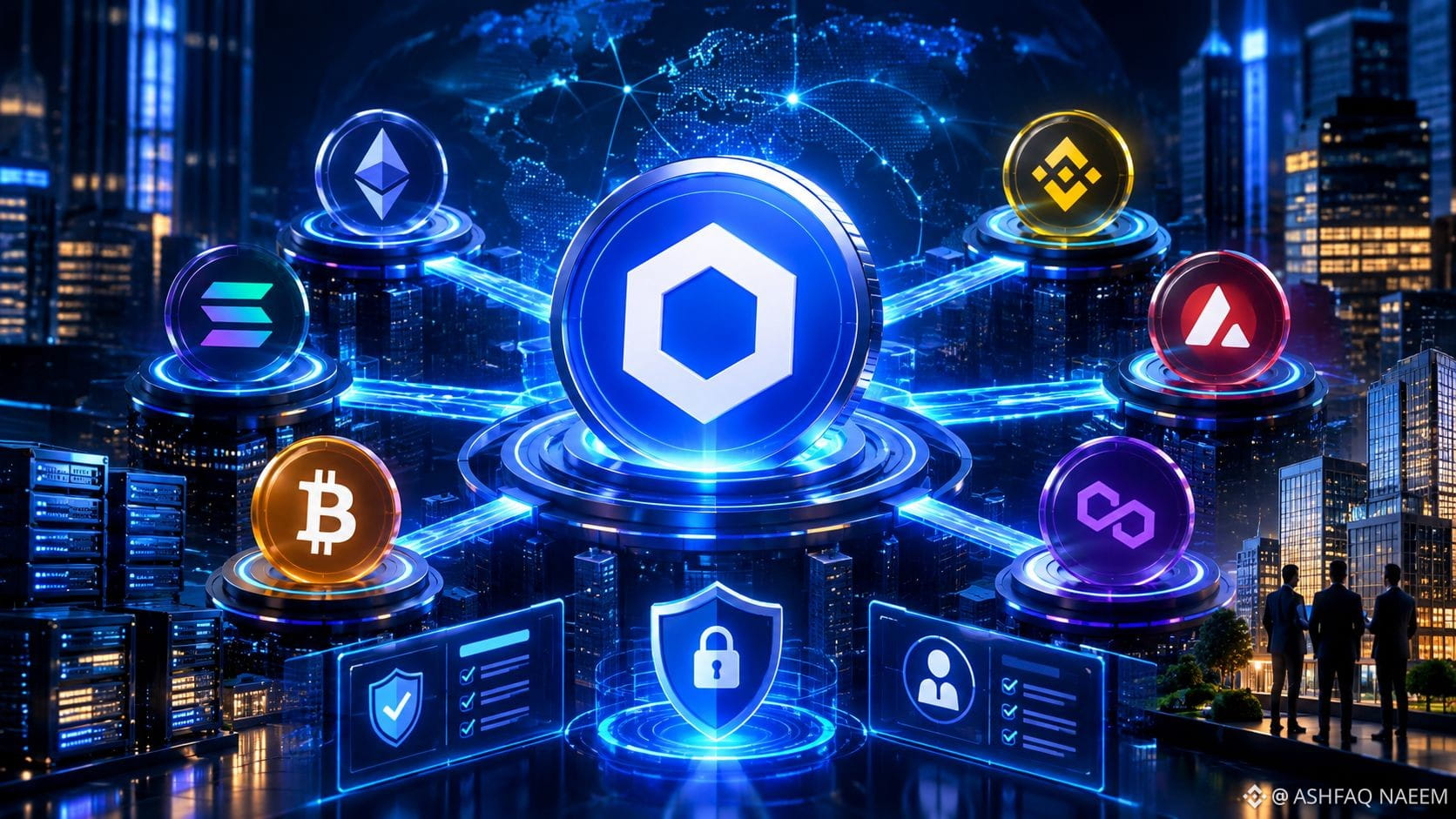
CCIP 2.0 is LIVE — bringing enterprise verification, built-in compliance, and customizable security controls to cross-chain transfers. 🔗⚡
Institutions can now add their own verifiers on top of Chainlink’s infrastructure.
Is this the infrastructure layer that finally brings serious institutions onchain? 👀
$LINK $BTC
#Chainlink #LINK #CCIP #RWA
#ChainlinkLaunchesCCIP2WithEnterpriseVerification
🚨 CHAINLINK JUST LEVELLED UP CROSS-CHAIN SECURITY
CCIP 2.0 is LIVE — bringing enterprise verification, built-in compliance, and customizable security controls to cross-chain transfers. 🔗⚡
Institutions can now add their own verifiers on top of Chainlink’s infrastructure.
Is this the infrastructure layer that finally brings serious institutions onchain? 👀
$LINK $BTC
#Chainlink #LINK #CCIP #RWA
#ChainlinkLaunchesCCIP2WithEnterpriseVerification
CCIP 2.0 is LIVE — bringing enterprise verification, built-in compliance, and customizable security controls to cross-chain transfers. 🔗⚡
Institutions can now add their own verifiers on top of Chainlink’s infrastructure.
Is this the infrastructure layer that finally brings serious institutions onchain? 👀
$LINK $BTC
#Chainlink #LINK #CCIP #RWA
#ChainlinkLaunchesCCIP2WithEnterpriseVerification
25

Tərcüməyə bax
#chainlinklaunchesccip2withenterpriseverification CHAINLINK NÂNG CẤP CCIP 2
لقد أطلقت Chainlink CCIP 2 لتطوير نظام الربط بين السلاسل (cross-chain)، مع تركيز أساسي على الأمان.
ومن النقاط الملفتة أن الشركات الآن يمكنها إضافة مُتحققين (validators) خاصة بها أو الاستعانة بطرف ثالث مثل Infosys وNethermind للتحقق من المعاملات.
وقبل ذلك، تعرضت Kelp DAO للاختراق بحوالي 292 مليون دولار أمريكي من rsETH، وبعد هذه الحادثة قامت Kelp بنقل rsETH إلى Chainlink.
لكن هناك نقطة يريد Mây لفت انتباه الجميع إليها:
إذا لم يتم إضافة مُتحققين جدد، فإن مستخدمي CCIP 2 حاليًا يعتمدون فقط على شبكة تحقق واحدة بدلًا من طبقتين كما كان سابقًا.
لذا فإن قصة الربط بين السلاسل ليست فقط السرعة أو رسوم المعاملات.
الأمان الجديد هو ما ينبغي متابعته على المدى الطويل.
سيقوم Mây بمراقبة ما إذا كانت المؤسسات الكبيرة ستقوم بتنفيذ مُتحققين إضافيين أم لا. 👀
تابعوا Mây للحصول على تحديثات أخبار العملات المشفرة يوميًا.
DYOR وتأكد دائمًا من إدارة رأس المال.
متابعة من فضلكم
$LINK
{future}(LINKUSDT)
#chainlinklaunchesccip2withenterpriseverification CHAINLINK NÂNG CẤP CCIP 2
لقد أطلقت Chainlink CCIP 2 لتطوير نظام الربط بين السلاسل (cross-chain)، مع تركيز أساسي على الأمان.
ومن النقاط الملفتة أن الشركات الآن يمكنها إضافة مُتحققين (validators) خاصة بها أو الاستعانة بطرف ثالث مثل Infosys وNethermind للتحقق من المعاملات.
وقبل ذلك، تعرضت Kelp DAO للاختراق بحوالي 292 مليون دولار أمريكي من rsETH، وبعد هذه الحادثة قامت Kelp بنقل rsETH إلى Chainlink.
لكن هناك نقطة يريد Mây لفت انتباه الجميع إليها:
إذا لم يتم إضافة مُتحققين جدد، فإن مستخدمي CCIP 2 حاليًا يعتمدون فقط على شبكة تحقق واحدة بدلًا من طبقتين كما كان سابقًا.
لذا فإن قصة الربط بين السلاسل ليست فقط السرعة أو رسوم المعاملات.
الأمان الجديد هو ما ينبغي متابعته على المدى الطويل.
سيقوم Mây بمراقبة ما إذا كانت المؤسسات الكبيرة ستقوم بتنفيذ مُتحققين إضافيين أم لا. 👀
تابعوا Mây للحصول على تحديثات أخبار العملات المشفرة يوميًا.
DYOR وتأكد دائمًا من إدارة رأس المال.
متابعة من فضلكم
$LINK
لقد أطلقت Chainlink CCIP 2 لتطوير نظام الربط بين السلاسل (cross-chain)، مع تركيز أساسي على الأمان.
ومن النقاط الملفتة أن الشركات الآن يمكنها إضافة مُتحققين (validators) خاصة بها أو الاستعانة بطرف ثالث مثل Infosys وNethermind للتحقق من المعاملات.
وقبل ذلك، تعرضت Kelp DAO للاختراق بحوالي 292 مليون دولار أمريكي من rsETH، وبعد هذه الحادثة قامت Kelp بنقل rsETH إلى Chainlink.
لكن هناك نقطة يريد Mây لفت انتباه الجميع إليها:
إذا لم يتم إضافة مُتحققين جدد، فإن مستخدمي CCIP 2 حاليًا يعتمدون فقط على شبكة تحقق واحدة بدلًا من طبقتين كما كان سابقًا.
لذا فإن قصة الربط بين السلاسل ليست فقط السرعة أو رسوم المعاملات.
الأمان الجديد هو ما ينبغي متابعته على المدى الطويل.
سيقوم Mây بمراقبة ما إذا كانت المؤسسات الكبيرة ستقوم بتنفيذ مُتحققين إضافيين أم لا. 👀
تابعوا Mây للحصول على تحديثات أخبار العملات المشفرة يوميًا.
DYOR وتأكد دائمًا من إدارة رأس المال.
متابعة من فضلكم
$LINK
1
12


·
--
Tərcüməyə bax
Chainlink Takes CCIP to the Enterprise Level 🚀
Chainlink has launched CCIP 2.0, adding a new verification layer that lets institutions run their own Cross-Chain Verifiers or use independent third-party validators. The upgrade is designed to give firms more control over security when moving tokenized assets across blockchains.
CCIP 2.0 also adds built-in compliance tools for KYC, AML and sanctions screening, plus configurable transaction-finality speeds. The launch includes partners such as AWS, ANZ, Fidelity International, Google Cloud and Deutsche Börse’s Crypto Finance. 🔐
Chainlink says CCIP has already handled more than $84 billion in cross-chain token value. The new version is clearly aimed at making blockchain infrastructure easier for traditional financial institutions to use.
{future}(LINKUSDT)
#ChainlinkLaunchesCCIP2WithEnterpriseVerification
Chainlink Takes CCIP to the Enterprise Level 🚀
Chainlink has launched CCIP 2.0, adding a new verification layer that lets institutions run their own Cross-Chain Verifiers or use independent third-party validators. The upgrade is designed to give firms more control over security when moving tokenized assets across blockchains.
CCIP 2.0 also adds built-in compliance tools for KYC, AML and sanctions screening, plus configurable transaction-finality speeds. The launch includes partners such as AWS, ANZ, Fidelity International, Google Cloud and Deutsche Börse’s Crypto Finance. 🔐
Chainlink says CCIP has already handled more than $84 billion in cross-chain token value. The new version is clearly aimed at making blockchain infrastructure easier for traditional financial institutions to use.
#ChainlinkLaunchesCCIP2WithEnterpriseVerification
Chainlink has launched CCIP 2.0, adding a new verification layer that lets institutions run their own Cross-Chain Verifiers or use independent third-party validators. The upgrade is designed to give firms more control over security when moving tokenized assets across blockchains.
CCIP 2.0 also adds built-in compliance tools for KYC, AML and sanctions screening, plus configurable transaction-finality speeds. The launch includes partners such as AWS, ANZ, Fidelity International, Google Cloud and Deutsche Börse’s Crypto Finance. 🔐
Chainlink says CCIP has already handled more than $84 billion in cross-chain token value. The new version is clearly aimed at making blockchain infrastructure easier for traditional financial institutions to use.
#ChainlinkLaunchesCCIP2WithEnterpriseVerification
87

·
--
Tərcüməyə bax
🏦 Chainlink just changed what a cross-chain transaction can prove...
#chainlinklaunchesccip2withenterpriseverification
CCIP 2.0 is now live — but the interesting upgrade isn't simply moving assets between blockchains.
It's who gets to approve the move.
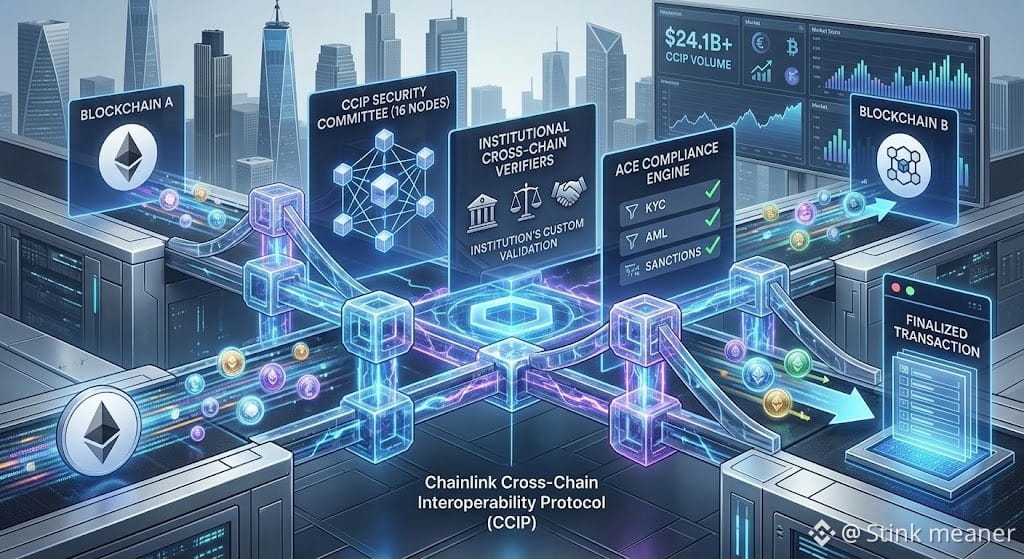
CCIP's default security layer uses a 16-node committee. Now institutions and asset issuers can add their own Cross-Chain Verifiers — or trusted third-party verifiers — so a transaction requires the required attestations before execution.
They can even impose rules like:
“Anything above $1M needs another approval.”
Then Chainlink adds programmable compliance through ACE: KYC, AML, sanctions screening, allowlists, transaction limits and exposure controls can follow an asset across chains.
That's a subtle but important shift:
OLD MODEL: move the asset.
NEW MODEL: move the asset only when its rules are satisfied.
And verification itself is becoming a marketplace, with specialist providers able to operate CCVs and charge their own fees.
That matters because tokenized securities are already reaching production workflows. DTCC has processed real trades using tokenized assets and is preparing its broader tokenization service.
CCIP has already processed $24.1B+ in cumulative transfer volume, according to Chainlink's latest metrics.
The bigger question for $LINK isn't whether institutions are using Chainlink.
It's whether that usage eventually becomes meaningful token economics.
DYOR. CCIP adoption does not automatically create open-market demand for LINK; fee mechanisms and institutional usage will determine the economic impact.
$LINK
{future}(LINKUSDT)
#ChainlinkLaunchesCCIP2WithEnterpriseVerification #Binance #CryptoNews #CCIP
🏦 Chainlink just changed what a cross-chain transaction can prove...
#chainlinklaunchesccip2withenterpriseverification
CCIP 2.0 is now live — but the interesting upgrade isn't simply moving assets between blockchains.
It's who gets to approve the move.
CCIP's default security layer uses a 16-node committee. Now institutions and asset issuers can add their own Cross-Chain Verifiers — or trusted third-party verifiers — so a transaction requires the required attestations before execution.
They can even impose rules like:
“Anything above $1M needs another approval.”
Then Chainlink adds programmable compliance through ACE: KYC, AML, sanctions screening, allowlists, transaction limits and exposure controls can follow an asset across chains.
That's a subtle but important shift:
OLD MODEL: move the asset.
NEW MODEL: move the asset only when its rules are satisfied.
And verification itself is becoming a marketplace, with specialist providers able to operate CCVs and charge their own fees.
That matters because tokenized securities are already reaching production workflows. DTCC has processed real trades using tokenized assets and is preparing its broader tokenization service.
CCIP has already processed $24.1B+ in cumulative transfer volume, according to Chainlink's latest metrics.
The bigger question for $LINK isn't whether institutions are using Chainlink.
It's whether that usage eventually becomes meaningful token economics.
DYOR. CCIP adoption does not automatically create open-market demand for LINK; fee mechanisms and institutional usage will determine the economic impact.
$LINK
#ChainlinkLaunchesCCIP2WithEnterpriseVerification #Binance #CryptoNews #CCIP
#chainlinklaunchesccip2withenterpriseverification
CCIP 2.0 is now live — but the interesting upgrade isn't simply moving assets between blockchains.
It's who gets to approve the move.
CCIP's default security layer uses a 16-node committee. Now institutions and asset issuers can add their own Cross-Chain Verifiers — or trusted third-party verifiers — so a transaction requires the required attestations before execution.
They can even impose rules like:
“Anything above $1M needs another approval.”
Then Chainlink adds programmable compliance through ACE: KYC, AML, sanctions screening, allowlists, transaction limits and exposure controls can follow an asset across chains.
That's a subtle but important shift:
OLD MODEL: move the asset.
NEW MODEL: move the asset only when its rules are satisfied.
And verification itself is becoming a marketplace, with specialist providers able to operate CCVs and charge their own fees.
That matters because tokenized securities are already reaching production workflows. DTCC has processed real trades using tokenized assets and is preparing its broader tokenization service.
CCIP has already processed $24.1B+ in cumulative transfer volume, according to Chainlink's latest metrics.
The bigger question for $LINK isn't whether institutions are using Chainlink.
It's whether that usage eventually becomes meaningful token economics.
DYOR. CCIP adoption does not automatically create open-market demand for LINK; fee mechanisms and institutional usage will determine the economic impact.
$LINK
#ChainlinkLaunchesCCIP2WithEnterpriseVerification #Binance #CryptoNews #CCIP
26

·
--
Tərcüməyə bax
Chainlink Launches CCIP 2.0 with Enterprise Verification! 🔗
Big news today Sep 28 — Chainlink launched CCIP 2.0, a major upgrade to its cross-chain protocol.
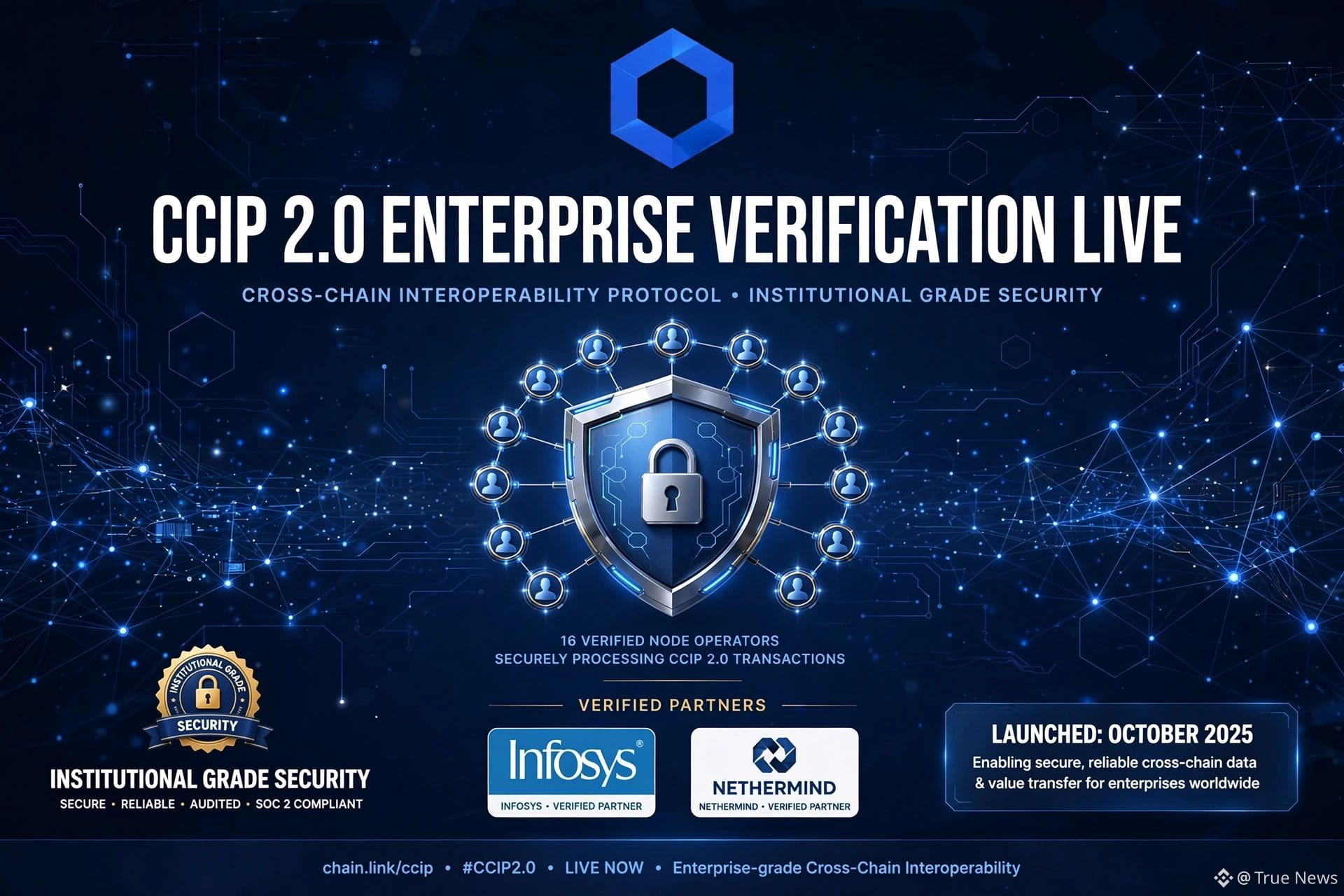
New version lets enterprises add their own security verification checks on top of Chainlink's default network of 16 independent node operators.
Businesses can run their own validators or hire external providers like Infosys or Nethermind.
This comes after $292M Kelp DAO hack that used single verifier. CCIP 2.0 is secure-by-default, institutional-grade.
I am BULLISH on $LINK
{future}(LINKUSDT)
. Cross-chain future is here. Not financial advice.#chainlinklaunchesccip2withenterpriseverification
Chainlink Launches CCIP 2.0 with Enterprise Verification! 🔗
Big news today Sep 28 — Chainlink launched CCIP 2.0, a major upgrade to its cross-chain protocol.
New version lets enterprises add their own security verification checks on top of Chainlink's default network of 16 independent node operators.
Businesses can run their own validators or hire external providers like Infosys or Nethermind.
This comes after $292M Kelp DAO hack that used single verifier. CCIP 2.0 is secure-by-default, institutional-grade.
I am BULLISH on $LINK
. Cross-chain future is here. Not financial advice.#chainlinklaunchesccip2withenterpriseverification
Big news today Sep 28 — Chainlink launched CCIP 2.0, a major upgrade to its cross-chain protocol.
New version lets enterprises add their own security verification checks on top of Chainlink's default network of 16 independent node operators.
Businesses can run their own validators or hire external providers like Infosys or Nethermind.
This comes after $292M Kelp DAO hack that used single verifier. CCIP 2.0 is secure-by-default, institutional-grade.
I am BULLISH on $LINK
. Cross-chain future is here. Not financial advice.#chainlinklaunchesccip2withenterpriseverification
1
19

·
--
Artım
#chainlinklaunchesccip2withenterpriseverification
🚨 CHAINLINK ÇOXRAPQAP KİMLİK İNFRASRUKTURUNU ÇOXLALDIRDI! 🔗🔥
#ChainlinkLaunchesCCIP2WithEnterpriseVerification — və bu, institusional blokçeyn qəbulunun üçüncü böyük addımı ola bilər. 👀
Chainlink-in CCIP 2.0-ı müxtəlif blokçeynlər arasında məlumat və aktivlərin daşınması üçün daha güclü müəssisə yönümlü yoxlama və infrastruktur təqdim edir.
🔗 Çoxzəncirli əlaqə
🏦 Müəssisə istifadə halları nəzərə alınaraq qurulub
🛡️ Daha güclü yoxlama infrastrukturu
🌐 Ənənəvi maliyyə ilə blokçeyn arasında daha çox körpü
$LINK üçün bu niyə önəmlidir?
Müəssisələr bir neçə şəbəkə üzrə blokçeyndən nə qədər çox istifadə edirsə, etibarlı çoxzəncirli infrastrukturə olan ehtiyac bir o qədər artır.
Qəbul sürətlənərsə, LINK ticarətçilərin yaxından izlədiyi tokenlərdən biri ola bilər. 🚀
Chainlink institusional blokçeyn qəbulunun növbəti dalğasına hazırlaşır? 👀
#Chainlink #LINK #crypto
#chainlinklaunchesccip2withenterpriseverification
🚨 CHAINLINK ÇOXRAPQAP KİMLİK İNFRASRUKTURUNU ÇOXLALDIRDI! 🔗🔥
#ChainlinkLaunchesCCIP2WithEnterpriseVerification — və bu, institusional blokçeyn qəbulunun üçüncü böyük addımı ola bilər. 👀
Chainlink-in CCIP 2.0-ı müxtəlif blokçeynlər arasında məlumat və aktivlərin daşınması üçün daha güclü müəssisə yönümlü yoxlama və infrastruktur təqdim edir.
🔗 Çoxzəncirli əlaqə
🏦 Müəssisə istifadə halları nəzərə alınaraq qurulub
🛡️ Daha güclü yoxlama infrastrukturu
🌐 Ənənəvi maliyyə ilə blokçeyn arasında daha çox körpü
$LINK üçün bu niyə önəmlidir?
Müəssisələr bir neçə şəbəkə üzrə blokçeyndən nə qədər çox istifadə edirsə, etibarlı çoxzəncirli infrastrukturə olan ehtiyac bir o qədər artır.
Qəbul sürətlənərsə, LINK ticarətçilərin yaxından izlədiyi tokenlərdən biri ola bilər. 🚀
Chainlink institusional blokçeyn qəbulunun növbəti dalğasına hazırlaşır? 👀
#Chainlink #LINK #crypto
🚨 CHAINLINK ÇOXRAPQAP KİMLİK İNFRASRUKTURUNU ÇOXLALDIRDI! 🔗🔥
#ChainlinkLaunchesCCIP2WithEnterpriseVerification — və bu, institusional blokçeyn qəbulunun üçüncü böyük addımı ola bilər. 👀
Chainlink-in CCIP 2.0-ı müxtəlif blokçeynlər arasında məlumat və aktivlərin daşınması üçün daha güclü müəssisə yönümlü yoxlama və infrastruktur təqdim edir.
🔗 Çoxzəncirli əlaqə
🏦 Müəssisə istifadə halları nəzərə alınaraq qurulub
🛡️ Daha güclü yoxlama infrastrukturu
🌐 Ənənəvi maliyyə ilə blokçeyn arasında daha çox körpü
$LINK üçün bu niyə önəmlidir?
Müəssisələr bir neçə şəbəkə üzrə blokçeyndən nə qədər çox istifadə edirsə, etibarlı çoxzəncirli infrastrukturə olan ehtiyac bir o qədər artır.
Qəbul sürətlənərsə, LINK ticarətçilərin yaxından izlədiyi tokenlərdən biri ola bilər. 🚀
Chainlink institusional blokçeyn qəbulunun növbəti dalğasına hazırlaşır? 👀
#Chainlink #LINK #crypto
52

·
--
Tərcüməyə bax
$LINK just got another interesting update.
Chainlink has launched CCIP 2.0, bringing enterprise-grade verification directly into its cross-chain infrastructure.
For anyone unfamiliar, CCIP is Chainlink’s system for moving tokens and data between different blockchains without relying on traditional bridges.
The big update is Cross-Chain Verifiers (CCVs).
Institutions can now add their own independent verification layer on top of Chainlink’s existing 16-node network. They can run it themselves or use providers like Infosys and Nethermind.
So before a transfer goes through, both verification layers have to approve it.
CCIP 2.0 also adds compliance tools for things like KYC, AML, sanctions screening and custom rules, while giving institutions different speed and security options depending on the transaction.
The bigger picture is pretty simple:
Chainlink is making it easier for institutions to move tokenized assets across different chains while keeping more control over security and compliance.
With names like ANZ, Fidelity International, SBI Digital Markets, AWS and Google Cloud involved at launch, this is definitely one I’m keeping an eye on.
#ChainlinkLaunchesCCIP2WithEnterpriseVerification
$LINK just got another interesting update.
Chainlink has launched CCIP 2.0, bringing enterprise-grade verification directly into its cross-chain infrastructure.
For anyone unfamiliar, CCIP is Chainlink’s system for moving tokens and data between different blockchains without relying on traditional bridges.
The big update is Cross-Chain Verifiers (CCVs).
Institutions can now add their own independent verification layer on top of Chainlink’s existing 16-node network. They can run it themselves or use providers like Infosys and Nethermind.
So before a transfer goes through, both verification layers have to approve it.
CCIP 2.0 also adds compliance tools for things like KYC, AML, sanctions screening and custom rules, while giving institutions different speed and security options depending on the transaction.
The bigger picture is pretty simple:
Chainlink is making it easier for institutions to move tokenized assets across different chains while keeping more control over security and compliance.
With names like ANZ, Fidelity International, SBI Digital Markets, AWS and Google Cloud involved at launch, this is definitely one I’m keeping an eye on.
#ChainlinkLaunchesCCIP2WithEnterpriseVerification
Chainlink has launched CCIP 2.0, bringing enterprise-grade verification directly into its cross-chain infrastructure.
For anyone unfamiliar, CCIP is Chainlink’s system for moving tokens and data between different blockchains without relying on traditional bridges.
The big update is Cross-Chain Verifiers (CCVs).
Institutions can now add their own independent verification layer on top of Chainlink’s existing 16-node network. They can run it themselves or use providers like Infosys and Nethermind.
So before a transfer goes through, both verification layers have to approve it.
CCIP 2.0 also adds compliance tools for things like KYC, AML, sanctions screening and custom rules, while giving institutions different speed and security options depending on the transaction.
The bigger picture is pretty simple:
Chainlink is making it easier for institutions to move tokenized assets across different chains while keeping more control over security and compliance.
With names like ANZ, Fidelity International, SBI Digital Markets, AWS and Google Cloud involved at launch, this is definitely one I’m keeping an eye on.
#ChainlinkLaunchesCCIP2WithEnterpriseVerification
1
43
Tərcüməyə bax
🏦 غيّر Chainlink للتو ما يمكن أن يثبته معاملة عبر السلاسل...
#chainlinklaunchesccip2withenterpriseverification
CCIP 2.0 يعمل الآن — لكن الترقية المثيرة ليست مجرد نقل الأصول بين سلاسل البلوكشين.
بل من يملك صلاحية الموافقة على خطوة النقل.
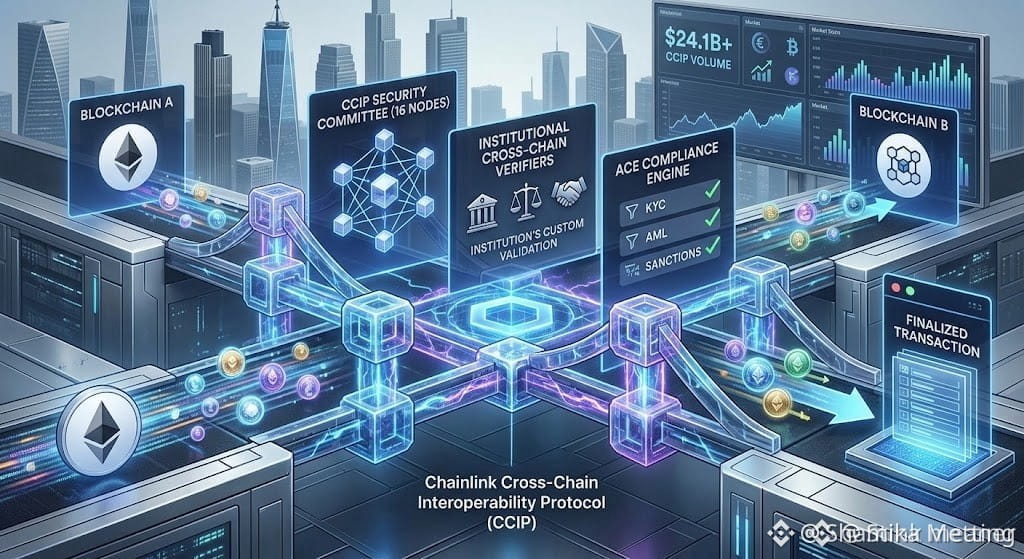
يستخدم طبقة الأمان الافتراضية في CCIP لجنة مكوّنة من 16 عقدة. والآن يمكن للمؤسسات ومصدري الأصول إضافة “متحققات عبر السلاسل” الخاصة بهم — أو متحققي أطراف ثالثة موثوقين — بحيث تتطلب المعاملة الشهادات/الإثباتات المطلوبة قبل التنفيذ.
ويمكنهم حتى فرض قواعد مثل:
“أي شيء يزيد عن 1 مليون دولار يحتاج إلى موافقة إضافية.”
ثم يضيف Chainlink امتثالًا برمجيًا عبر ACE: يمكن أن يتبع الأصل عبر السلاسل متطلبات مثل KYC وAML وفحص العقوبات وقوائم السماح وحدود المعاملات والتحكم في التعرض.
هذا تحول دقيق لكنه مهم:
النموذج القديم: نقل الأصل.
النموذج الجديد: نقل الأصل فقط عندما تكون القواعد مستوفاة.
كما أن عملية التحقق نفسها تتحول إلى سوق، حيث يمكن لمقدمي خدمات متخصصين تشغيل CCV وفرض رسومهم الخاصة.
وهذا مهم لأن الأوراق المالية المُرمّزة (tokenized securities) بدأت بالفعل الوصول إلى سير عمل الإنتاج. قامت DTCC بمعالجة صفقات حقيقية باستخدام أصول مُرمّزة وهي تستعد لخدمة أوسع للترميز.
$LINK
متابعة من فضلكم
#ChainlinkLaunchesCCIP2WithEnterpriseVerification #Binance #CryptoNews #CCIP
🏦 غيّر Chainlink للتو ما يمكن أن يثبته معاملة عبر السلاسل...
#chainlinklaunchesccip2withenterpriseverification
CCIP 2.0 يعمل الآن — لكن الترقية المثيرة ليست مجرد نقل الأصول بين سلاسل البلوكشين.
بل من يملك صلاحية الموافقة على خطوة النقل.
يستخدم طبقة الأمان الافتراضية في CCIP لجنة مكوّنة من 16 عقدة. والآن يمكن للمؤسسات ومصدري الأصول إضافة “متحققات عبر السلاسل” الخاصة بهم — أو متحققي أطراف ثالثة موثوقين — بحيث تتطلب المعاملة الشهادات/الإثباتات المطلوبة قبل التنفيذ.
ويمكنهم حتى فرض قواعد مثل:
“أي شيء يزيد عن 1 مليون دولار يحتاج إلى موافقة إضافية.”
ثم يضيف Chainlink امتثالًا برمجيًا عبر ACE: يمكن أن يتبع الأصل عبر السلاسل متطلبات مثل KYC وAML وفحص العقوبات وقوائم السماح وحدود المعاملات والتحكم في التعرض.
هذا تحول دقيق لكنه مهم:
النموذج القديم: نقل الأصل.
النموذج الجديد: نقل الأصل فقط عندما تكون القواعد مستوفاة.
كما أن عملية التحقق نفسها تتحول إلى سوق، حيث يمكن لمقدمي خدمات متخصصين تشغيل CCV وفرض رسومهم الخاصة.
وهذا مهم لأن الأوراق المالية المُرمّزة (tokenized securities) بدأت بالفعل الوصول إلى سير عمل الإنتاج. قامت DTCC بمعالجة صفقات حقيقية باستخدام أصول مُرمّزة وهي تستعد لخدمة أوسع للترميز.
$LINK
متابعة من فضلكم
#ChainlinkLaunchesCCIP2WithEnterpriseVerification #Binance #CryptoNews #CCIP
#chainlinklaunchesccip2withenterpriseverification
CCIP 2.0 يعمل الآن — لكن الترقية المثيرة ليست مجرد نقل الأصول بين سلاسل البلوكشين.
بل من يملك صلاحية الموافقة على خطوة النقل.
يستخدم طبقة الأمان الافتراضية في CCIP لجنة مكوّنة من 16 عقدة. والآن يمكن للمؤسسات ومصدري الأصول إضافة “متحققات عبر السلاسل” الخاصة بهم — أو متحققي أطراف ثالثة موثوقين — بحيث تتطلب المعاملة الشهادات/الإثباتات المطلوبة قبل التنفيذ.
ويمكنهم حتى فرض قواعد مثل:
“أي شيء يزيد عن 1 مليون دولار يحتاج إلى موافقة إضافية.”
ثم يضيف Chainlink امتثالًا برمجيًا عبر ACE: يمكن أن يتبع الأصل عبر السلاسل متطلبات مثل KYC وAML وفحص العقوبات وقوائم السماح وحدود المعاملات والتحكم في التعرض.
هذا تحول دقيق لكنه مهم:
النموذج القديم: نقل الأصل.
النموذج الجديد: نقل الأصل فقط عندما تكون القواعد مستوفاة.
كما أن عملية التحقق نفسها تتحول إلى سوق، حيث يمكن لمقدمي خدمات متخصصين تشغيل CCV وفرض رسومهم الخاصة.
وهذا مهم لأن الأوراق المالية المُرمّزة (tokenized securities) بدأت بالفعل الوصول إلى سير عمل الإنتاج. قامت DTCC بمعالجة صفقات حقيقية باستخدام أصول مُرمّزة وهي تستعد لخدمة أوسع للترميز.
$LINK
متابعة من فضلكم
#ChainlinkLaunchesCCIP2WithEnterpriseVerification #Binance #CryptoNews #CCIP
1
5

·
--
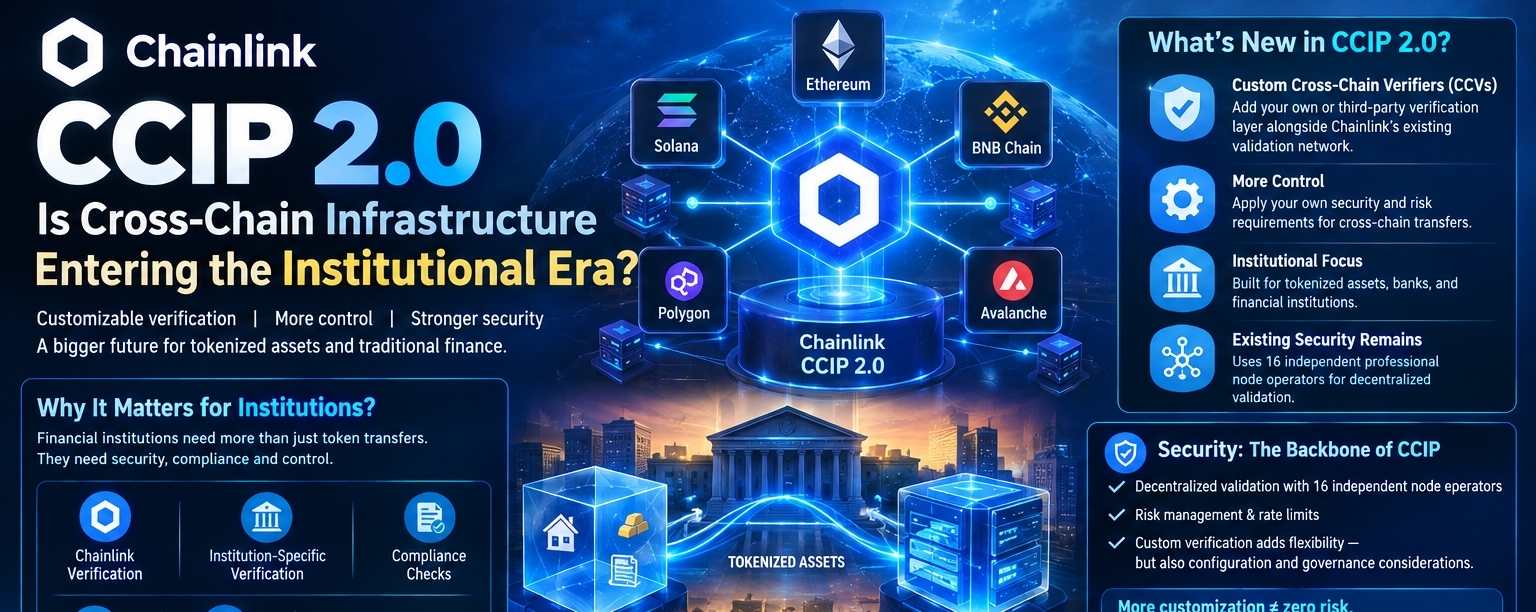
Məqalə
Tərcüməyə bax
Chainlink CCIP 2.0: Is Cross-Chain Infrastructure Entering the Institutional Era?The blockchain industry has been trying to solve one major problem for years:
How can value and data move from one blockchain to another in a way that is secure, customizable, and suitable for institutional use?
Chainlink’s new CCIP 2.0 is taking another step toward solving that problem.
One of the most important developments is support for custom Cross-Chain Verifiers, or CCVs. This allows organizations to add their own verification layer—or use a third-party verification layer—alongside Chainlink’s existing security infrastructure.
This is more than just a technical upgrade.
The bigger story is that cross-chain infrastructure is evolving beyond simple token transfers toward institutional security, compliance, risk management, and customizable verification.
And that is where a potentially important investment narrative for $LINK begins.
🔗 What Exactly Changes With CCIP 2.0?
The basic objective of earlier cross-chain infrastructure was relatively simple:
Chain A → Bridge → Chain B
But institutional investors and financial institutions have much more complex requirements.
They want to know:
Who is verifying the transaction?
What conditions must be satisfied before a transfer is approved?
Can specific verification policies be applied to different assets?
How can compliance requirements be integrated?
Can suspicious activity trigger a transfer halt?
How can risk controls be applied across multiple blockchains?
CCIP 2.0’s customizable verification architecture addresses this area.
Organizations can potentially add additional verification layers according to their own requirements while continuing to use Chainlink’s existing decentralized infrastructure.
In other words:
From “one security model for everyone” toward “security + customizable institutional policies.”
🏦 Why Could This Matter for Institutional Adoption?
A retail user may simply want to send tokens from one blockchain to another.
But imagine a financial institution transferring $500 million worth of tokenized assets between blockchains.
It may require:
**Chainlink verification
Institution-specific verification
Compliance checks
Transfer limits
Emergency controls**
A layered security model could become increasingly important as institutional participation in blockchain infrastructure grows.
Chainlink says CCIP uses decentralized validation, with its network secured by independent professional node operators. Chainlink has also described additional risk-management mechanisms such as rate limits as part of its CCIP security architecture.
CCIP 2.0 therefore represents an interesting evolution:
Base security → Additional verification → Institution-specific policies
However, adding custom verification does not mean eliminating risk.
The quality, independence, operational security, and governance of those additional verification layers will also matter.
So while customization can increase flexibility, it can also introduce additional configuration and operational considerations.
🛡️ Security Could Be the Most Important Part of CCIP
Cross-chain infrastructure has historically been one of the most closely watched security areas in crypto.
A bridge connects different blockchain ecosystems while potentially handling significant amounts of value. A vulnerability can therefore have serious consequences.
Chainlink has designed CCIP around decentralized validation rather than relying on a single verifier. Its materials describe independent professional node operators participating in the validation process.
CCIP also includes mechanisms such as rate limits and other risk-management controls designed to help reduce potential exposure from abnormal activity.
The customizable verifier model in CCIP 2.0 adds another layer to this architecture:
Decentralized base security → Custom verification → Institution-specific risk controls
That could be particularly relevant for institutions operating under strict internal security and compliance frameworks.
But investors should also remember:
More customization does not automatically mean zero risk.
The additional verification infrastructure itself must be evaluated.
🌐 From Cross-Chain to Cross-Finance
This may be the most interesting part of the long-term CCIP narrative.
The blockchain industry is no longer simply about Ethereum versus Solana versus other networks.
A much bigger question is emerging:
How will different blockchains, financial institutions, and tokenized asset ecosystems communicate with one another?
Chainlink has been expanding CCIP’s role in tokenized assets and capital-market infrastructure.
This matters because tokenization does not end when an asset is issued on a blockchain.
The ecosystem may eventually require:
Issuance → Custody → Compliance → Transfer → Settlement → Cross-chain liquidity
Interoperability can become an important layer connecting these stages.
💰 What Could This Mean for LINK?
This is where investors need to separate the technology from the token.
CCIP adoption and LINK price are not the same thing.
A protocol can gain adoption without the token immediately reflecting that growth.
However, several structural themes are worth watching around LINK.
1️⃣ From Oracle Network to Infrastructure Layer
Chainlink originally became known primarily as an oracle network.
But its ecosystem has expanded:
Oracle → Data → Automation → Cross-chain messaging → Tokenized assets → Institutional infrastructure
CCIP is an important part of that expansion.
If blockchain and traditional finance become increasingly interconnected, cross-chain infrastructure could become strategically more important.
2️⃣ Institutional Use Cases
Institutional infrastructure has a different adoption profile from retail speculation.
Banks, asset managers, stablecoin issuers, and financial platforms typically require long-term integrations, security standards, governance, and compliance frameworks.
If an infrastructure provider becomes part of those systems, its adoption could have a different character from short-term retail usage.
The key question is whether institutions will actually deploy CCIP at meaningful scale.
3️⃣ The Tokenized RWA Narrative
Real-world assets, or RWAs, remain an important theme in blockchain.
Treasuries, funds, private credit, stablecoins, and other financial assets can potentially be tokenized.
As these assets move across different blockchain ecosystems, reliable interoperability infrastructure could become increasingly important.
Chainlink has positioned CCIP as infrastructure for tokenized assets and capital markets.
That creates a potentially significant long-term narrative for the Chainlink ecosystem.
📈 What Should Investors Watch in the LINK Market?
At the time of writing, LINK is trading around the $14–$15 area, with recent market data placing its market capitalization around $11 billion and circulating supply around 750 million LINK.
That means LINK is no longer a small-cap speculative asset.
It already has a large market valuation.
Therefore, a major long-term price expansion would likely require more than a single announcement.
The market may need to see:
Real adoption + increasing network utility + sustained liquidity + broader institutional demand
📊 Technical Perspective: What Should Traders Watch?
For $LINK, simply hearing “CCIP 2.0 has launched” is not enough to justify chasing the market.
Price structure still matters.
Recent market commentary has highlighted the $16 area and approximately $17.70 as important resistance zones.
From a trading perspective, several scenarios are worth monitoring.
🟢 Bullish Confirmation
If LINK can:
Reclaim the $16 zone
→ Break through the $17.70 area
→ Maintain supportive volume and market participation
then the market structure could become stronger.
That would provide more technical confirmation than simply relying on the CCIP 2.0 narrative.
🟡 Consolidation Scenario
If LINK remains within a range around the current market structure, the market may simply be waiting for stronger catalysts.
In that environment, monitoring support, resistance, volume, and liquidity may be more useful than chasing short-term breakouts.
🔴 Risk Scenario
If major support levels break while BTC and the broader altcoin market weaken, LINK could experience additional downside pressure.
A strong fundamental narrative does not prevent short-term price volatility.
Because:
Good technology ≠ guaranteed short-term price appreciation.
🧠 The Biggest Question: Will CCIP 2.0 Actually Increase LINK Demand?
This is where investors need to remain realistic.
CCIP 2.0 may be technologically significant, but the more important question for investors is:
How much economic value will actual CCIP usage create for the LINK ecosystem?
That is the long-term question.
Protocol adoption does not automatically translate into token value.
Therefore, investors should look beyond announcements and partnerships.
Important metrics to monitor include:
CCIP transaction growth
Number of blockchain integrations
Institutional deployments
Tokenized asset adoption
Stablecoin integrations
CCIP fees and economic activity
Actual LINK utility
Sustained network usage
Token supply and circulating supply dynamics
Overall crypto liquidity
These metrics can help determine whether the narrative is becoming a real adoption story.
⚠️ What Are the Major Risks?
No investment thesis is risk-free.
CCIP 2.0 also comes with several factors worth monitoring.
1. Institutional adoption could be slow
Financial institutions typically move carefully when integrating new infrastructure.
Even strong technology does not guarantee immediate mass adoption.
2. Competition will remain
Cross-chain interoperability is becoming an increasingly important market.
Chainlink is not the only project working toward interoperability and institutional blockchain infrastructure.
3. Custom verification introduces complexity
Additional verification can improve flexibility and potentially strengthen institutional controls, but it also introduces additional considerations around configuration, governance, and third-party dependencies.
4. LINK remains market-driven
Even if CCIP adoption grows, LINK can still experience significant short-term corrections.
BTC dominance, liquidity, interest rates, risk appetite, and the broader altcoin cycle can all influence LINK’s price.
🔥 What I Find Most Interesting About CCIP 2.0
The most important part of CCIP 2.0 may not simply be that it is “another cross-chain upgrade.”
It could represent a broader transition:
Blockchain interoperability → Institutional interoperability
The question is no longer simply:
“How do I move a token from one chain to another?”
The future question could be:
“Which asset, on which blockchain, under which verification policy, with which compliance requirements, should be transferred across chains?”
That is where Chainlink’s customizable verification architecture could become an important infrastructure component.
Chainlink’s current documentation describes verifier functionality and multi-chain tooling for CCIP 2.0, while the broader CCIP ecosystem continues to expand its blockchain integrations.
💎 Bottom Line for $LINK Investors
If you view $LINK only as an “oracle token,” it is easy to underestimate the significance of CCIP.
But if Chainlink is viewed as:
Oracle + Interoperability + Tokenized Assets + Institutional Infrastructure
then the long-term narrative becomes much broader.
However, an investment thesis and an investment outcome are not the same thing.
The long-term success of CCIP will depend not only on how good the technology is, but also on how many institutions actually use it, how much value moves through the infrastructure, how much economic activity is generated, and how much of that activity ultimately translates into value for the LINK ecosystem.
That is why I would not focus only on the headline.
I would watch:
Adoption + on-chain activity + price structure + market liquidity
If LINK establishes a strong breakout while CCIP adoption and institutional use cases continue to expand, the market could develop a new valuation narrative around the asset.
On the other hand, if adoption grows more slowly than expected or the broader crypto market weakens, LINK can still face substantial volatility even if the underlying technology continues to develop.
So the real question around LINK is no longer simply:
“How good is Chainlink?”
The bigger question is:
“If the blockchain economy and traditional finance evolve into a multi-chain ecosystem, how much of that interoperability infrastructure can Chainlink capture?”
The answer to that question could become one of the most important drivers of the LINK narrative going forward.
DYOR. NFA. Don’t chase a pump.
Even when the fundamentals look promising, position sizing, disciplined entries, and risk management remain essential.
{spot}(LINKUSDT)
#ChainlinkLaunchesCCIP2WithEnterpriseVerification #LINK #LINK🔥🔥🔥 #Binance #ChinaMayLetAlibabaByteDanceBuyNvidiaChips
Chainlink CCIP 2.0: Is Cross-Chain Infrastructure Entering the Institutional Era?
The blockchain industry has been trying to solve one major problem for years:
How can value and data move from one blockchain to another in a way that is secure, customizable, and suitable for institutional use?
Chainlink’s new CCIP 2.0 is taking another step toward solving that problem.
One of the most important developments is support for custom Cross-Chain Verifiers, or CCVs. This allows organizations to add their own verification layer—or use a third-party verification layer—alongside Chainlink’s existing security infrastructure.
This is more than just a technical upgrade.
The bigger story is that cross-chain infrastructure is evolving beyond simple token transfers toward institutional security, compliance, risk management, and customizable verification.
And that is where a potentially important investment narrative for $LINK begins.
🔗 What Exactly Changes With CCIP 2.0?
The basic objective of earlier cross-chain infrastructure was relatively simple:
Chain A → Bridge → Chain B
But institutional investors and financial institutions have much more complex requirements.
They want to know:
Who is verifying the transaction?
What conditions must be satisfied before a transfer is approved?
Can specific verification policies be applied to different assets?
How can compliance requirements be integrated?
Can suspicious activity trigger a transfer halt?
How can risk controls be applied across multiple blockchains?
CCIP 2.0’s customizable verification architecture addresses this area.
Organizations can potentially add additional verification layers according to their own requirements while continuing to use Chainlink’s existing decentralized infrastructure.
In other words:
From “one security model for everyone” toward “security + customizable institutional policies.”
🏦 Why Could This Matter for Institutional Adoption?
A retail user may simply want to send tokens from one blockchain to another.
But imagine a financial institution transferring $500 million worth of tokenized assets between blockchains.
It may require:
**Chainlink verification
Institution-specific verification
Compliance checks
Transfer limits
Emergency controls**
A layered security model could become increasingly important as institutional participation in blockchain infrastructure grows.
Chainlink says CCIP uses decentralized validation, with its network secured by independent professional node operators. Chainlink has also described additional risk-management mechanisms such as rate limits as part of its CCIP security architecture.
CCIP 2.0 therefore represents an interesting evolution:
Base security → Additional verification → Institution-specific policies
However, adding custom verification does not mean eliminating risk.
The quality, independence, operational security, and governance of those additional verification layers will also matter.
So while customization can increase flexibility, it can also introduce additional configuration and operational considerations.
🛡️ Security Could Be the Most Important Part of CCIP
Cross-chain infrastructure has historically been one of the most closely watched security areas in crypto.
A bridge connects different blockchain ecosystems while potentially handling significant amounts of value. A vulnerability can therefore have serious consequences.
Chainlink has designed CCIP around decentralized validation rather than relying on a single verifier. Its materials describe independent professional node operators participating in the validation process.
CCIP also includes mechanisms such as rate limits and other risk-management controls designed to help reduce potential exposure from abnormal activity.
The customizable verifier model in CCIP 2.0 adds another layer to this architecture:
Decentralized base security → Custom verification → Institution-specific risk controls
That could be particularly relevant for institutions operating under strict internal security and compliance frameworks.
But investors should also remember:
More customization does not automatically mean zero risk.
The additional verification infrastructure itself must be evaluated.
🌐 From Cross-Chain to Cross-Finance
This may be the most interesting part of the long-term CCIP narrative.
The blockchain industry is no longer simply about Ethereum versus Solana versus other networks.
A much bigger question is emerging:
How will different blockchains, financial institutions, and tokenized asset ecosystems communicate with one another?
Chainlink has been expanding CCIP’s role in tokenized assets and capital-market infrastructure.
This matters because tokenization does not end when an asset is issued on a blockchain.
The ecosystem may eventually require:
Issuance → Custody → Compliance → Transfer → Settlement → Cross-chain liquidity
Interoperability can become an important layer connecting these stages.
💰 What Could This Mean for LINK?
This is where investors need to separate the technology from the token.
CCIP adoption and LINK price are not the same thing.
A protocol can gain adoption without the token immediately reflecting that growth.
However, several structural themes are worth watching around LINK.
1️⃣ From Oracle Network to Infrastructure Layer
Chainlink originally became known primarily as an oracle network.
But its ecosystem has expanded:
Oracle → Data → Automation → Cross-chain messaging → Tokenized assets → Institutional infrastructure
CCIP is an important part of that expansion.
If blockchain and traditional finance become increasingly interconnected, cross-chain infrastructure could become strategically more important.
2️⃣ Institutional Use Cases
Institutional infrastructure has a different adoption profile from retail speculation.
Banks, asset managers, stablecoin issuers, and financial platforms typically require long-term integrations, security standards, governance, and compliance frameworks.
If an infrastructure provider becomes part of those systems, its adoption could have a different character from short-term retail usage.
The key question is whether institutions will actually deploy CCIP at meaningful scale.
3️⃣ The Tokenized RWA Narrative
Real-world assets, or RWAs, remain an important theme in blockchain.
Treasuries, funds, private credit, stablecoins, and other financial assets can potentially be tokenized.
As these assets move across different blockchain ecosystems, reliable interoperability infrastructure could become increasingly important.
Chainlink has positioned CCIP as infrastructure for tokenized assets and capital markets.
That creates a potentially significant long-term narrative for the Chainlink ecosystem.
📈 What Should Investors Watch in the LINK Market?
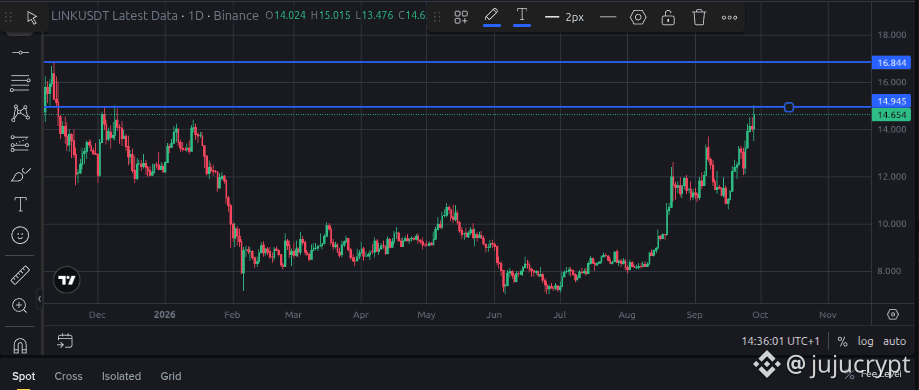
At the time of writing, LINK is trading around the $14–$15 area, with recent market data placing its market capitalization around $11 billion and circulating supply around 750 million LINK.
That means LINK is no longer a small-cap speculative asset.
It already has a large market valuation.
Therefore, a major long-term price expansion would likely require more than a single announcement.
The market may need to see:
Real adoption + increasing network utility + sustained liquidity + broader institutional demand
📊 Technical Perspective: What Should Traders Watch?
For $LINK , simply hearing “CCIP 2.0 has launched” is not enough to justify chasing the market.
Price structure still matters.
Recent market commentary has highlighted the $16 area and approximately $17.70 as important resistance zones.
From a trading perspective, several scenarios are worth monitoring.
🟢 Bullish Confirmation
If LINK can:
Reclaim the $16 zone
→ Break through the $17.70 area
→ Maintain supportive volume and market participation
then the market structure could become stronger.
That would provide more technical confirmation than simply relying on the CCIP 2.0 narrative.
🟡 Consolidation Scenario
If LINK remains within a range around the current market structure, the market may simply be waiting for stronger catalysts.
In that environment, monitoring support, resistance, volume, and liquidity may be more useful than chasing short-term breakouts.
🔴 Risk Scenario
If major support levels break while BTC and the broader altcoin market weaken, LINK could experience additional downside pressure.
A strong fundamental narrative does not prevent short-term price volatility.
Because:
Good technology ≠ guaranteed short-term price appreciation.
🧠 The Biggest Question: Will CCIP 2.0 Actually Increase LINK Demand?
This is where investors need to remain realistic.
CCIP 2.0 may be technologically significant, but the more important question for investors is:
How much economic value will actual CCIP usage create for the LINK ecosystem?
That is the long-term question.
Protocol adoption does not automatically translate into token value.
Therefore, investors should look beyond announcements and partnerships.
Important metrics to monitor include:
CCIP transaction growth
Number of blockchain integrations
Institutional deployments
Tokenized asset adoption
Stablecoin integrations
CCIP fees and economic activity
Actual LINK utility
Sustained network usage
Token supply and circulating supply dynamics
Overall crypto liquidity
These metrics can help determine whether the narrative is becoming a real adoption story.
⚠️ What Are the Major Risks?
No investment thesis is risk-free.
CCIP 2.0 also comes with several factors worth monitoring.
1. Institutional adoption could be slow
Financial institutions typically move carefully when integrating new infrastructure.
Even strong technology does not guarantee immediate mass adoption.
2. Competition will remain
Cross-chain interoperability is becoming an increasingly important market.
Chainlink is not the only project working toward interoperability and institutional blockchain infrastructure.
3. Custom verification introduces complexity
Additional verification can improve flexibility and potentially strengthen institutional controls, but it also introduces additional considerations around configuration, governance, and third-party dependencies.
4. LINK remains market-driven
Even if CCIP adoption grows, LINK can still experience significant short-term corrections.
BTC dominance, liquidity, interest rates, risk appetite, and the broader altcoin cycle can all influence LINK’s price.
🔥 What I Find Most Interesting About CCIP 2.0
The most important part of CCIP 2.0 may not simply be that it is “another cross-chain upgrade.”
It could represent a broader transition:
Blockchain interoperability → Institutional interoperability
The question is no longer simply:
“How do I move a token from one chain to another?”
The future question could be:
“Which asset, on which blockchain, under which verification policy, with which compliance requirements, should be transferred across chains?”
That is where Chainlink’s customizable verification architecture could become an important infrastructure component.
Chainlink’s current documentation describes verifier functionality and multi-chain tooling for CCIP 2.0, while the broader CCIP ecosystem continues to expand its blockchain integrations.
💎 Bottom Line for $LINK Investors
If you view $LINK only as an “oracle token,” it is easy to underestimate the significance of CCIP.
But if Chainlink is viewed as:
Oracle + Interoperability + Tokenized Assets + Institutional Infrastructure
then the long-term narrative becomes much broader.
However, an investment thesis and an investment outcome are not the same thing.
The long-term success of CCIP will depend not only on how good the technology is, but also on how many institutions actually use it, how much value moves through the infrastructure, how much economic activity is generated, and how much of that activity ultimately translates into value for the LINK ecosystem.
That is why I would not focus only on the headline.
I would watch:
Adoption + on-chain activity + price structure + market liquidity
If LINK establishes a strong breakout while CCIP adoption and institutional use cases continue to expand, the market could develop a new valuation narrative around the asset.
On the other hand, if adoption grows more slowly than expected or the broader crypto market weakens, LINK can still face substantial volatility even if the underlying technology continues to develop.
So the real question around LINK is no longer simply:
“How good is Chainlink?”
The bigger question is:
“If the blockchain economy and traditional finance evolve into a multi-chain ecosystem, how much of that interoperability infrastructure can Chainlink capture?”
The answer to that question could become one of the most important drivers of the LINK narrative going forward.
DYOR. NFA. Don’t chase a pump.
Even when the fundamentals look promising, position sizing, disciplined entries, and risk management remain essential.
#ChainlinkLaunchesCCIP2WithEnterpriseVerification #LINK #LINK🔥🔥🔥 #Binance #ChinaMayLetAlibabaByteDanceBuyNvidiaChips
How can value and data move from one blockchain to another in a way that is secure, customizable, and suitable for institutional use?
Chainlink’s new CCIP 2.0 is taking another step toward solving that problem.
One of the most important developments is support for custom Cross-Chain Verifiers, or CCVs. This allows organizations to add their own verification layer—or use a third-party verification layer—alongside Chainlink’s existing security infrastructure.
This is more than just a technical upgrade.
The bigger story is that cross-chain infrastructure is evolving beyond simple token transfers toward institutional security, compliance, risk management, and customizable verification.
And that is where a potentially important investment narrative for $LINK begins.
🔗 What Exactly Changes With CCIP 2.0?
The basic objective of earlier cross-chain infrastructure was relatively simple:
Chain A → Bridge → Chain B
But institutional investors and financial institutions have much more complex requirements.
They want to know:
Who is verifying the transaction?
What conditions must be satisfied before a transfer is approved?
Can specific verification policies be applied to different assets?
How can compliance requirements be integrated?
Can suspicious activity trigger a transfer halt?
How can risk controls be applied across multiple blockchains?
CCIP 2.0’s customizable verification architecture addresses this area.
Organizations can potentially add additional verification layers according to their own requirements while continuing to use Chainlink’s existing decentralized infrastructure.
In other words:
From “one security model for everyone” toward “security + customizable institutional policies.”
🏦 Why Could This Matter for Institutional Adoption?
A retail user may simply want to send tokens from one blockchain to another.
But imagine a financial institution transferring $500 million worth of tokenized assets between blockchains.
It may require:
**Chainlink verification
Institution-specific verification
Compliance checks
Transfer limits
Emergency controls**
A layered security model could become increasingly important as institutional participation in blockchain infrastructure grows.
Chainlink says CCIP uses decentralized validation, with its network secured by independent professional node operators. Chainlink has also described additional risk-management mechanisms such as rate limits as part of its CCIP security architecture.
CCIP 2.0 therefore represents an interesting evolution:
Base security → Additional verification → Institution-specific policies
However, adding custom verification does not mean eliminating risk.
The quality, independence, operational security, and governance of those additional verification layers will also matter.
So while customization can increase flexibility, it can also introduce additional configuration and operational considerations.
🛡️ Security Could Be the Most Important Part of CCIP
Cross-chain infrastructure has historically been one of the most closely watched security areas in crypto.
A bridge connects different blockchain ecosystems while potentially handling significant amounts of value. A vulnerability can therefore have serious consequences.
Chainlink has designed CCIP around decentralized validation rather than relying on a single verifier. Its materials describe independent professional node operators participating in the validation process.
CCIP also includes mechanisms such as rate limits and other risk-management controls designed to help reduce potential exposure from abnormal activity.
The customizable verifier model in CCIP 2.0 adds another layer to this architecture:
Decentralized base security → Custom verification → Institution-specific risk controls
That could be particularly relevant for institutions operating under strict internal security and compliance frameworks.
But investors should also remember:
More customization does not automatically mean zero risk.
The additional verification infrastructure itself must be evaluated.
🌐 From Cross-Chain to Cross-Finance
This may be the most interesting part of the long-term CCIP narrative.
The blockchain industry is no longer simply about Ethereum versus Solana versus other networks.
A much bigger question is emerging:
How will different blockchains, financial institutions, and tokenized asset ecosystems communicate with one another?
Chainlink has been expanding CCIP’s role in tokenized assets and capital-market infrastructure.
This matters because tokenization does not end when an asset is issued on a blockchain.
The ecosystem may eventually require:
Issuance → Custody → Compliance → Transfer → Settlement → Cross-chain liquidity
Interoperability can become an important layer connecting these stages.
💰 What Could This Mean for LINK?
This is where investors need to separate the technology from the token.
CCIP adoption and LINK price are not the same thing.
A protocol can gain adoption without the token immediately reflecting that growth.
However, several structural themes are worth watching around LINK.
1️⃣ From Oracle Network to Infrastructure Layer
Chainlink originally became known primarily as an oracle network.
But its ecosystem has expanded:
Oracle → Data → Automation → Cross-chain messaging → Tokenized assets → Institutional infrastructure
CCIP is an important part of that expansion.
If blockchain and traditional finance become increasingly interconnected, cross-chain infrastructure could become strategically more important.
2️⃣ Institutional Use Cases
Institutional infrastructure has a different adoption profile from retail speculation.
Banks, asset managers, stablecoin issuers, and financial platforms typically require long-term integrations, security standards, governance, and compliance frameworks.
If an infrastructure provider becomes part of those systems, its adoption could have a different character from short-term retail usage.
The key question is whether institutions will actually deploy CCIP at meaningful scale.
3️⃣ The Tokenized RWA Narrative
Real-world assets, or RWAs, remain an important theme in blockchain.
Treasuries, funds, private credit, stablecoins, and other financial assets can potentially be tokenized.
As these assets move across different blockchain ecosystems, reliable interoperability infrastructure could become increasingly important.
Chainlink has positioned CCIP as infrastructure for tokenized assets and capital markets.
That creates a potentially significant long-term narrative for the Chainlink ecosystem.
📈 What Should Investors Watch in the LINK Market?
At the time of writing, LINK is trading around the $14–$15 area, with recent market data placing its market capitalization around $11 billion and circulating supply around 750 million LINK.
That means LINK is no longer a small-cap speculative asset.
It already has a large market valuation.
Therefore, a major long-term price expansion would likely require more than a single announcement.
The market may need to see:
Real adoption + increasing network utility + sustained liquidity + broader institutional demand
📊 Technical Perspective: What Should Traders Watch?
For $LINK , simply hearing “CCIP 2.0 has launched” is not enough to justify chasing the market.
Price structure still matters.
Recent market commentary has highlighted the $16 area and approximately $17.70 as important resistance zones.
From a trading perspective, several scenarios are worth monitoring.
🟢 Bullish Confirmation
If LINK can:
Reclaim the $16 zone
→ Break through the $17.70 area
→ Maintain supportive volume and market participation
then the market structure could become stronger.
That would provide more technical confirmation than simply relying on the CCIP 2.0 narrative.
🟡 Consolidation Scenario
If LINK remains within a range around the current market structure, the market may simply be waiting for stronger catalysts.
In that environment, monitoring support, resistance, volume, and liquidity may be more useful than chasing short-term breakouts.
🔴 Risk Scenario
If major support levels break while BTC and the broader altcoin market weaken, LINK could experience additional downside pressure.
A strong fundamental narrative does not prevent short-term price volatility.
Because:
Good technology ≠ guaranteed short-term price appreciation.
🧠 The Biggest Question: Will CCIP 2.0 Actually Increase LINK Demand?
This is where investors need to remain realistic.
CCIP 2.0 may be technologically significant, but the more important question for investors is:
How much economic value will actual CCIP usage create for the LINK ecosystem?
That is the long-term question.
Protocol adoption does not automatically translate into token value.
Therefore, investors should look beyond announcements and partnerships.
Important metrics to monitor include:
CCIP transaction growth
Number of blockchain integrations
Institutional deployments
Tokenized asset adoption
Stablecoin integrations
CCIP fees and economic activity
Actual LINK utility
Sustained network usage
Token supply and circulating supply dynamics
Overall crypto liquidity
These metrics can help determine whether the narrative is becoming a real adoption story.
⚠️ What Are the Major Risks?
No investment thesis is risk-free.
CCIP 2.0 also comes with several factors worth monitoring.
1. Institutional adoption could be slow
Financial institutions typically move carefully when integrating new infrastructure.
Even strong technology does not guarantee immediate mass adoption.
2. Competition will remain
Cross-chain interoperability is becoming an increasingly important market.
Chainlink is not the only project working toward interoperability and institutional blockchain infrastructure.
3. Custom verification introduces complexity
Additional verification can improve flexibility and potentially strengthen institutional controls, but it also introduces additional considerations around configuration, governance, and third-party dependencies.
4. LINK remains market-driven
Even if CCIP adoption grows, LINK can still experience significant short-term corrections.
BTC dominance, liquidity, interest rates, risk appetite, and the broader altcoin cycle can all influence LINK’s price.
🔥 What I Find Most Interesting About CCIP 2.0
The most important part of CCIP 2.0 may not simply be that it is “another cross-chain upgrade.”
It could represent a broader transition:
Blockchain interoperability → Institutional interoperability
The question is no longer simply:
“How do I move a token from one chain to another?”
The future question could be:
“Which asset, on which blockchain, under which verification policy, with which compliance requirements, should be transferred across chains?”
That is where Chainlink’s customizable verification architecture could become an important infrastructure component.
Chainlink’s current documentation describes verifier functionality and multi-chain tooling for CCIP 2.0, while the broader CCIP ecosystem continues to expand its blockchain integrations.
💎 Bottom Line for $LINK Investors
If you view $LINK only as an “oracle token,” it is easy to underestimate the significance of CCIP.
But if Chainlink is viewed as:
Oracle + Interoperability + Tokenized Assets + Institutional Infrastructure
then the long-term narrative becomes much broader.
However, an investment thesis and an investment outcome are not the same thing.
The long-term success of CCIP will depend not only on how good the technology is, but also on how many institutions actually use it, how much value moves through the infrastructure, how much economic activity is generated, and how much of that activity ultimately translates into value for the LINK ecosystem.
That is why I would not focus only on the headline.
I would watch:
Adoption + on-chain activity + price structure + market liquidity
If LINK establishes a strong breakout while CCIP adoption and institutional use cases continue to expand, the market could develop a new valuation narrative around the asset.
On the other hand, if adoption grows more slowly than expected or the broader crypto market weakens, LINK can still face substantial volatility even if the underlying technology continues to develop.
So the real question around LINK is no longer simply:
“How good is Chainlink?”
The bigger question is:
“If the blockchain economy and traditional finance evolve into a multi-chain ecosystem, how much of that interoperability infrastructure can Chainlink capture?”
The answer to that question could become one of the most important drivers of the LINK narrative going forward.
DYOR. NFA. Don’t chase a pump.
Even when the fundamentals look promising, position sizing, disciplined entries, and risk management remain essential.
#ChainlinkLaunchesCCIP2WithEnterpriseVerification #LINK #LINK🔥🔥🔥 #Binance #ChinaMayLetAlibabaByteDanceBuyNvidiaChips
1
52

·
--
Artım
Tərcüməyə bax
#ChainlinkLaunchesCCIP2WithEnterpriseVerification
🚀 #ChainlinkLaunchesCCIP2WithEnterpriseVerification - GAME CHANGER FOR LINK!
Chainlink has officially launched CCIP 2.0! 🎉
What is new?
✅ Enterprise-grade verification - Banks can run own validators
✅ Cross-Chain Verifiers (CCVs) on AWS & Google Cloud
✅ Built-in KYC, AML, compliance for every tx
✅ Custom finality speed - instant or ultra-secure
✅ $84 BILLION already processed via CCIP
Why it matters?
After $292M Kelp DAO hack (LayerZero single validator), CCIP 2.0 lets institutions add EXTRA security layers on top of Chainlink's 16 node operators. Providers like Infosys & Nethermind now available!
Big names already migrating: Aave, Maple, and Kelp moving rsETH to Chainlink!
LINK is +4.58% today - institutional adoption incoming!
Is LINK about to lead the RWA & cross-chain narrative?
#ChainlinkLaunchesCCIP2WithEnterpriseVerification #LINK #Chainlink #CCIP #CryptoNews #BinanceSquare #RWA
#ChainlinkLaunchesCCIP2WithEnterpriseVerification
🚀 #ChainlinkLaunchesCCIP2WithEnterpriseVerification - GAME CHANGER FOR LINK!
Chainlink has officially launched CCIP 2.0! 🎉
What is new?
✅ Enterprise-grade verification - Banks can run own validators
✅ Cross-Chain Verifiers (CCVs) on AWS & Google Cloud
✅ Built-in KYC, AML, compliance for every tx
✅ Custom finality speed - instant or ultra-secure
✅ $84 BILLION already processed via CCIP
Why it matters?
After $292M Kelp DAO hack (LayerZero single validator), CCIP 2.0 lets institutions add EXTRA security layers on top of Chainlink's 16 node operators. Providers like Infosys & Nethermind now available!
Big names already migrating: Aave, Maple, and Kelp moving rsETH to Chainlink!
LINK is +4.58% today - institutional adoption incoming!
Is LINK about to lead the RWA & cross-chain narrative?
#ChainlinkLaunchesCCIP2WithEnterpriseVerification #LINK #Chainlink #CCIP #CryptoNews #BinanceSquare #RWA
🚀 #ChainlinkLaunchesCCIP2WithEnterpriseVerification - GAME CHANGER FOR LINK!
Chainlink has officially launched CCIP 2.0! 🎉
What is new?
✅ Enterprise-grade verification - Banks can run own validators
✅ Cross-Chain Verifiers (CCVs) on AWS & Google Cloud
✅ Built-in KYC, AML, compliance for every tx
✅ Custom finality speed - instant or ultra-secure
✅ $84 BILLION already processed via CCIP
Why it matters?
After $292M Kelp DAO hack (LayerZero single validator), CCIP 2.0 lets institutions add EXTRA security layers on top of Chainlink's 16 node operators. Providers like Infosys & Nethermind now available!
Big names already migrating: Aave, Maple, and Kelp moving rsETH to Chainlink!
LINK is +4.58% today - institutional adoption incoming!
Is LINK about to lead the RWA & cross-chain narrative?
#ChainlinkLaunchesCCIP2WithEnterpriseVerification #LINK #Chainlink #CCIP #CryptoNews #BinanceSquare #RWA
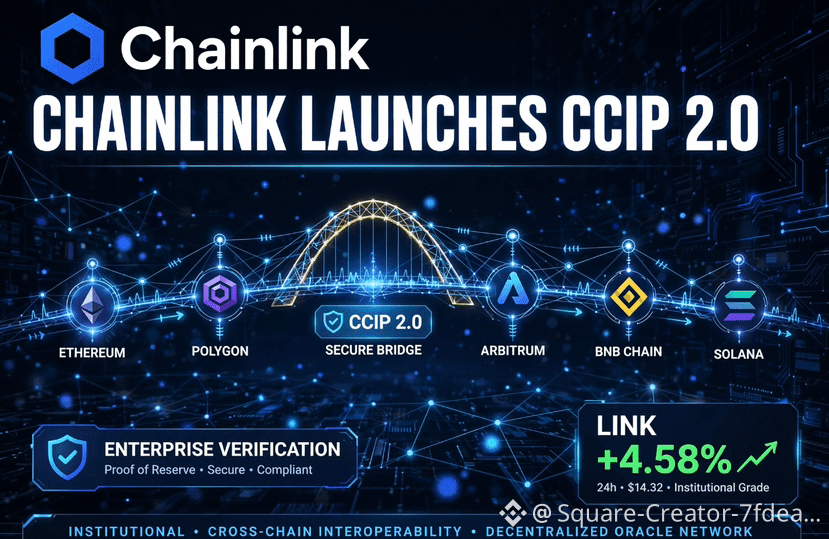
1
21

·
--
Artım
#ChainlinkLaunchesCCIP2WithEnterpriseVerification
CCIP 2.0-u istifadəyə verib, diqqəti müəssisələr üçün çarpaz-zəncir köçürmələrini daha çox fərdiləşdirilə bilən etmək üzərində cəmləşdirib. Əsas yeniliklərdən biri Custom Cross-Chain Verifiers (CCV-lər) üçün dəstəkdir; bu, təşkilatlara Chainlink-in mövcud doğrulama şəbəkəsi ilə yanaşı özlərinin və ya üçüncü tərəfin doğrulama qatını əlavə etməyə imkan verir.
🔗 CCIP 2.0-da nə dəyişir
Əlavə doğrulama: Müəssisələr CCIP-in standart təhlükəsizlik modelinin üzərinə müstəqil verifikatorlar əlavə edə bilər.
Daha çox nəzarət: Müxtəlif təşkilatlar çarpaz-zəncir köçürmələrinə öz təhlükəsizlik və risk tələblərini tətbiq edə bilərlər.
İnstitusional fokus: Bu, əlavə doğrulama və uyğunluq (compliance) nəzarətləri tələb edən tokenləşdirilmiş aktivlər və maliyyə institutlarına uyğundur.
Mövcud təhlükəsizlik qalır: Chainlink deyir ki, onun CCIP infrastrukturu mərkəzləşdirilməmiş doğrulama üçün 16 müstəqil peşəkar node operatorundan istifadə edir.
Daha geniş əhəmiyyət ondan ibarətdir ki, çarpaz-zəncir infrastrukturu sadəcə tokenlərin köçürülməsindən kənara çıxaraq fərdiləşdirilə bilən doğrulama, uyğunluq və institusional nəzarət istiqamətinə yönəlir. Chainlink eyni zamanda CCIP-in tokenləşdirilmiş aktivlərdə və tənzimlənən maliyyə tətbiqlərində istifadəsini genişləndirir.
Müzakirə: CCIP 2.0, müəssisələrə öz doğrulama tələbləri üzərində nəzarəti qoruyaraq bir neçə blokçeyni daha asan əlaqələndirməyə kömək edə bilər. Əsas sual ondan ibarət olacaq ki, institusiyalar bu cür fərdiləşdirilmiş doğrulama qatlarını nə dərəcədə real şəkildə qəbul edəcək və bu, təhlükəsizliyə, xərclərə və köçürmə sürətinə necə təsir edəcək.
#ChainlinkLaunchesCCIP2WithEnterpriseVerification
CCIP 2.0-u istifadəyə verib, diqqəti müəssisələr üçün çarpaz-zəncir köçürmələrini daha çox fərdiləşdirilə bilən etmək üzərində cəmləşdirib. Əsas yeniliklərdən biri Custom Cross-Chain Verifiers (CCV-lər) üçün dəstəkdir; bu, təşkilatlara Chainlink-in mövcud doğrulama şəbəkəsi ilə yanaşı özlərinin və ya üçüncü tərəfin doğrulama qatını əlavə etməyə imkan verir.
🔗 CCIP 2.0-da nə dəyişir
Əlavə doğrulama: Müəssisələr CCIP-in standart təhlükəsizlik modelinin üzərinə müstəqil verifikatorlar əlavə edə bilər.
Daha çox nəzarət: Müxtəlif təşkilatlar çarpaz-zəncir köçürmələrinə öz təhlükəsizlik və risk tələblərini tətbiq edə bilərlər.
İnstitusional fokus: Bu, əlavə doğrulama və uyğunluq (compliance) nəzarətləri tələb edən tokenləşdirilmiş aktivlər və maliyyə institutlarına uyğundur.
Mövcud təhlükəsizlik qalır: Chainlink deyir ki, onun CCIP infrastrukturu mərkəzləşdirilməmiş doğrulama üçün 16 müstəqil peşəkar node operatorundan istifadə edir.
Daha geniş əhəmiyyət ondan ibarətdir ki, çarpaz-zəncir infrastrukturu sadəcə tokenlərin köçürülməsindən kənara çıxaraq fərdiləşdirilə bilən doğrulama, uyğunluq və institusional nəzarət istiqamətinə yönəlir. Chainlink eyni zamanda CCIP-in tokenləşdirilmiş aktivlərdə və tənzimlənən maliyyə tətbiqlərində istifadəsini genişləndirir.
Müzakirə: CCIP 2.0, müəssisələrə öz doğrulama tələbləri üzərində nəzarəti qoruyaraq bir neçə blokçeyni daha asan əlaqələndirməyə kömək edə bilər. Əsas sual ondan ibarət olacaq ki, institusiyalar bu cür fərdiləşdirilmiş doğrulama qatlarını nə dərəcədə real şəkildə qəbul edəcək və bu, təhlükəsizliyə, xərclərə və köçürmə sürətinə necə təsir edəcək.
CCIP 2.0-u istifadəyə verib, diqqəti müəssisələr üçün çarpaz-zəncir köçürmələrini daha çox fərdiləşdirilə bilən etmək üzərində cəmləşdirib. Əsas yeniliklərdən biri Custom Cross-Chain Verifiers (CCV-lər) üçün dəstəkdir; bu, təşkilatlara Chainlink-in mövcud doğrulama şəbəkəsi ilə yanaşı özlərinin və ya üçüncü tərəfin doğrulama qatını əlavə etməyə imkan verir.
🔗 CCIP 2.0-da nə dəyişir
Əlavə doğrulama: Müəssisələr CCIP-in standart təhlükəsizlik modelinin üzərinə müstəqil verifikatorlar əlavə edə bilər.
Daha çox nəzarət: Müxtəlif təşkilatlar çarpaz-zəncir köçürmələrinə öz təhlükəsizlik və risk tələblərini tətbiq edə bilərlər.
İnstitusional fokus: Bu, əlavə doğrulama və uyğunluq (compliance) nəzarətləri tələb edən tokenləşdirilmiş aktivlər və maliyyə institutlarına uyğundur.
Mövcud təhlükəsizlik qalır: Chainlink deyir ki, onun CCIP infrastrukturu mərkəzləşdirilməmiş doğrulama üçün 16 müstəqil peşəkar node operatorundan istifadə edir.
Daha geniş əhəmiyyət ondan ibarətdir ki, çarpaz-zəncir infrastrukturu sadəcə tokenlərin köçürülməsindən kənara çıxaraq fərdiləşdirilə bilən doğrulama, uyğunluq və institusional nəzarət istiqamətinə yönəlir. Chainlink eyni zamanda CCIP-in tokenləşdirilmiş aktivlərdə və tənzimlənən maliyyə tətbiqlərində istifadəsini genişləndirir.
Müzakirə: CCIP 2.0, müəssisələrə öz doğrulama tələbləri üzərində nəzarəti qoruyaraq bir neçə blokçeyni daha asan əlaqələndirməyə kömək edə bilər. Əsas sual ondan ibarət olacaq ki, institusiyalar bu cür fərdiləşdirilmiş doğrulama qatlarını nə dərəcədə real şəkildə qəbul edəcək və bu, təhlükəsizliyə, xərclərə və köçürmə sürətinə necə təsir edəcək.
1
78

·
--
Artım
Tərcüməyə bax
A US Senate probe revealed that 84% of crypto wallets sanctioned for Iranian connections traded almost entirely in Tether's USDT stablecoin, according to the Wall Street Journal.#ChainlinkLaunchesCCIP2WithEnterpriseVerification
A US Senate probe revealed that 84% of crypto wallets sanctioned for Iranian connections traded almost entirely in Tether's USDT stablecoin, according to the Wall Street Journal.#ChainlinkLaunchesCCIP2WithEnterpriseVerification

8

·
--
Azalma
Tərcüməyə bax
$POL SHORT 🔴
Margin Mode : Isolated💎
Signal Type : Scalp Trade 🔥
1) 0.11970- 100%
Take Profit Targets:
1)🟥 0.11790
2)🟥 0.11605
3)🟥 0.11380
4)🟥 0.11059
5)🟥 0.10755
🟩 SL : 0.12588 - 100%
📊 LEV : 20X#ChainlinkLaunchesCCIP2WithEnterpriseVerification
$POL SHORT 🔴
Margin Mode : Isolated💎
Signal Type : Scalp Trade 🔥
1) 0.11970- 100%
Take Profit Targets:
1)🟥 0.11790
2)🟥 0.11605
3)🟥 0.11380
4)🟥 0.11059
5)🟥 0.10755
🟩 SL : 0.12588 - 100%
📊 LEV : 20X#ChainlinkLaunchesCCIP2WithEnterpriseVerification
Margin Mode : Isolated💎
Signal Type : Scalp Trade 🔥
1) 0.11970- 100%
Take Profit Targets:
1)🟥 0.11790
2)🟥 0.11605
3)🟥 0.11380
4)🟥 0.11059
5)🟥 0.10755
🟩 SL : 0.12588 - 100%
📊 LEV : 20X#ChainlinkLaunchesCCIP2WithEnterpriseVerification
26

·
--
Tərcüməyə bax
📊 Reservas #Bitcoin en los exchanges, hoy 28-09:
Actualmente las reservas de $BTC se encuentra en 2.686.620 #BTC; observándose una disminución en la cantidad del activo en los #CEX de un -0,078%, lo que puede significar una disminución en la presión de venta a corto plazo.
Es de destacar que el gráfico de liquidaciones de $BTC muestra que en la parte baja del gráfico, hay una buena zona de liquidaciones de largos, mostrando una alta probabilidad de una pequeño retroceso a buscar de nuevo el soporte, para luego continuar su tendencia; es de destacar que el precio se encuentra en un rango en este momento.
#ChainlinkLaunchesCCIP2WithEnterpriseVerification #GoldFallsTo$4144 #BTCFallsBelow$83000
📊 Reservas #Bitcoin en los exchanges, hoy 28-09:
Actualmente las reservas de $BTC se encuentra en 2.686.620 #BTC; observándose una disminución en la cantidad del activo en los #CEX de un -0,078%, lo que puede significar una disminución en la presión de venta a corto plazo.
Es de destacar que el gráfico de liquidaciones de $BTC muestra que en la parte baja del gráfico, hay una buena zona de liquidaciones de largos, mostrando una alta probabilidad de una pequeño retroceso a buscar de nuevo el soporte, para luego continuar su tendencia; es de destacar que el precio se encuentra en un rango en este momento.
#ChainlinkLaunchesCCIP2WithEnterpriseVerification #GoldFallsTo$4144 #BTCFallsBelow$83000
Actualmente las reservas de $BTC se encuentra en 2.686.620 #BTC; observándose una disminución en la cantidad del activo en los #CEX de un -0,078%, lo que puede significar una disminución en la presión de venta a corto plazo.
Es de destacar que el gráfico de liquidaciones de $BTC muestra que en la parte baja del gráfico, hay una buena zona de liquidaciones de largos, mostrando una alta probabilidad de una pequeño retroceso a buscar de nuevo el soporte, para luego continuar su tendencia; es de destacar que el precio se encuentra en un rango en este momento.
#ChainlinkLaunchesCCIP2WithEnterpriseVerification #GoldFallsTo$4144 #BTCFallsBelow$83000
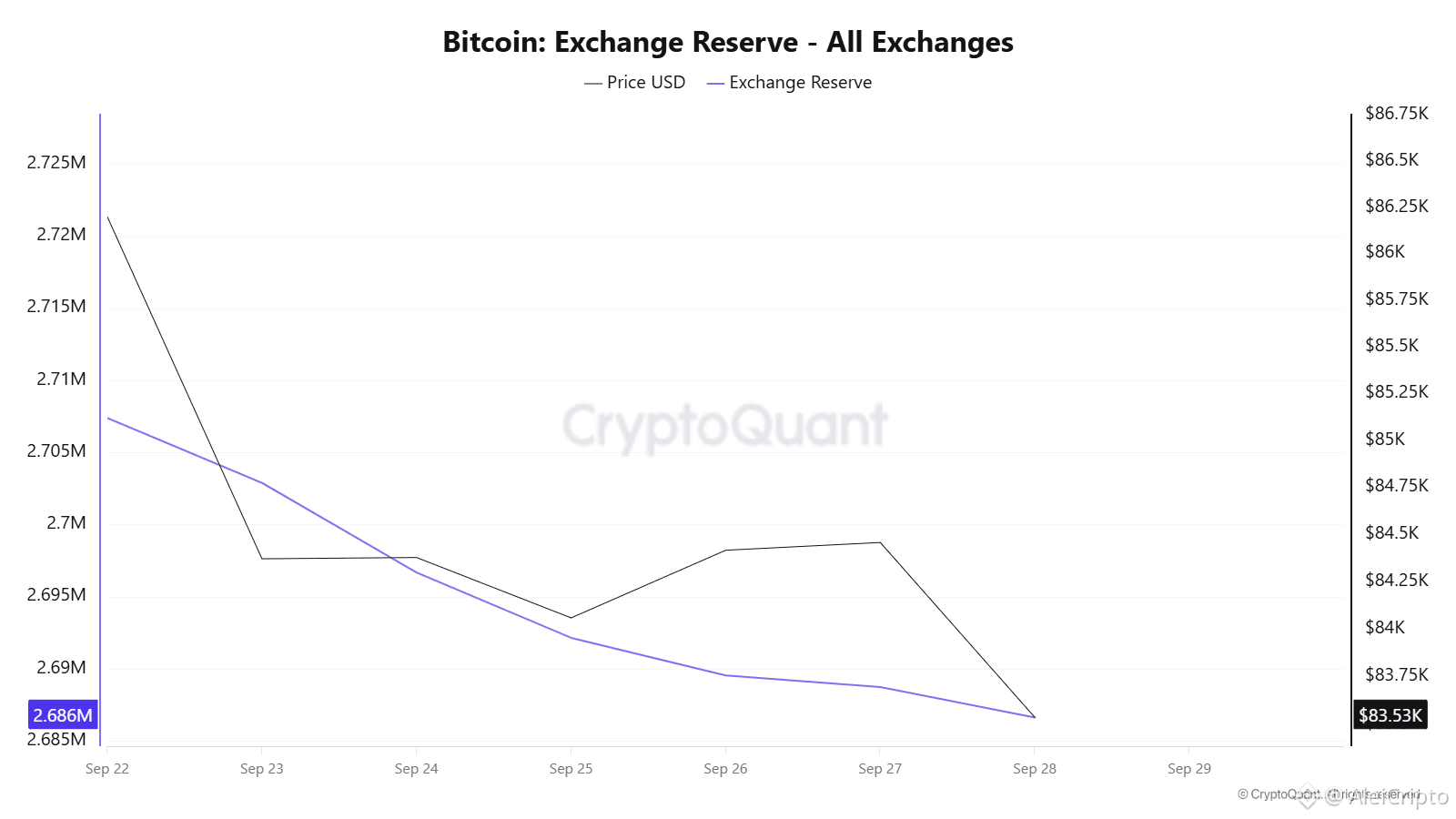
241
·
--
Azalma
Tərcüməyə bax
📊 $ALGO USDT — 1D UPDATE
#ALGO is approaching a strong resistance zone around $0.1334–$0.1400 🔴
📉 A rejection from this area could open a short opportunity, with a downside target around $0.1052.
🎯 Expected Move: ~21% Downside
⚠️ Wait for confirmation & manage risk properly.
{future}(ALGOUSDT)
#ChainlinkLaunchesCCIP2WithEnterpriseVerification #QNTFallsOver40%FromMorningHigh #KospiFalls2.7%SamsungSKHynixDropOver5% #BitgetDetailsSecurityIncidentTimeline
📊 $ALGO USDT — 1D UPDATE
#ALGO is approaching a strong resistance zone around $0.1334–$0.1400 🔴
📉 A rejection from this area could open a short opportunity, with a downside target around $0.1052.
🎯 Expected Move: ~21% Downside
⚠️ Wait for confirmation & manage risk properly.
#ChainlinkLaunchesCCIP2WithEnterpriseVerification #QNTFallsOver40%FromMorningHigh #KospiFalls2.7%SamsungSKHynixDropOver5% #BitgetDetailsSecurityIncidentTimeline
#ALGO is approaching a strong resistance zone around $0.1334–$0.1400 🔴
📉 A rejection from this area could open a short opportunity, with a downside target around $0.1052.
🎯 Expected Move: ~21% Downside
⚠️ Wait for confirmation & manage risk properly.
#ChainlinkLaunchesCCIP2WithEnterpriseVerification #QNTFallsOver40%FromMorningHigh #KospiFalls2.7%SamsungSKHynixDropOver5% #BitgetDetailsSecurityIncidentTimeline
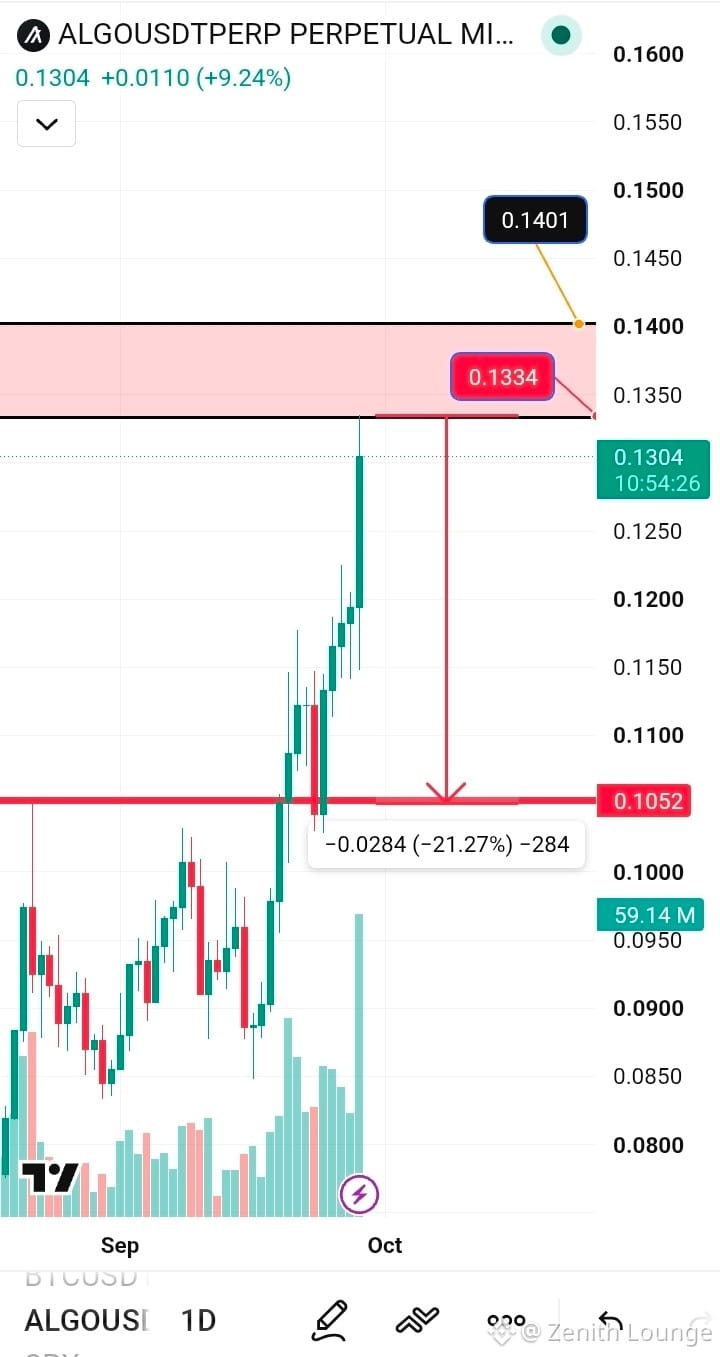
1
89

Cari qiymət: təxminən $9.1. ETC bu gün təxminən 4–5% geri çəkilib; yaxın vaxtlarda isə $9.6 yaxınlığında ticarət edirdi.
📊 Texniki baxış
Müqavimət: $9.50–$9.60
Əsas müqavimət: $9.90–$10.20
Dəstək: $9.00
Növbəti dəstək: $8.70–$8.75
Daha güclü dəstək: $8.40–$8.50
ETC yaxın vaxtlarda güclü şəkildə yüksəlib; o cümlədən 25 sentyabr tarixində bildirilən 13.5% artım var, lakin son hərəkət mənfəət götürmə və daha geniş miqyaslı altkoin zəifliyini göstərir.
🔹 Artımlı (bullish) ssenari
Əgər ETC $9.00-u qoruya və $9.50–$9.60 diapazonunu geri qaytararsa, impuls $9.90 → $10.20 hədəfinə yönələ bilər.
🔻 Azalım (bearish) ssenari
$9.00-dən aşağıya qəti qırılma olarsa, $8.70-ə, ardınca isə $8.40–$8.50-yə qədər enişə səbəb ola bilər.
Qısa müddətli istiqamət: ⚠️ $9.60-dan aşağıda neytral–azalım
Əsas səviyyə: $9.00 dəstək / $9.60 müqavimət
#ETC #ChainlinkLaunchesCCIP2WithEnterpriseVerification #QNTFallsOver40%FromMorningHigh #KospiFalls2.7%SamsungSKHynixDropOver5% #BitgetDetailsSecurityIncidentTimeline
$ETC
{future}(ETCUSDT)
Cari qiymət: təxminən $9.1. ETC bu gün təxminən 4–5% geri çəkilib; yaxın vaxtlarda isə $9.6 yaxınlığında ticarət edirdi.
📊 Texniki baxış
Müqavimət: $9.50–$9.60
Əsas müqavimət: $9.90–$10.20
Dəstək: $9.00
Növbəti dəstək: $8.70–$8.75
Daha güclü dəstək: $8.40–$8.50
ETC yaxın vaxtlarda güclü şəkildə yüksəlib; o cümlədən 25 sentyabr tarixində bildirilən 13.5% artım var, lakin son hərəkət mənfəət götürmə və daha geniş miqyaslı altkoin zəifliyini göstərir.
🔹 Artımlı (bullish) ssenari
Əgər ETC $9.00-u qoruya və $9.50–$9.60 diapazonunu geri qaytararsa, impuls $9.90 → $10.20 hədəfinə yönələ bilər.
🔻 Azalım (bearish) ssenari
$9.00-dən aşağıya qəti qırılma olarsa, $8.70-ə, ardınca isə $8.40–$8.50-yə qədər enişə səbəb ola bilər.
Qısa müddətli istiqamət: ⚠️ $9.60-dan aşağıda neytral–azalım
Əsas səviyyə: $9.00 dəstək / $9.60 müqavimət
#ETC #ChainlinkLaunchesCCIP2WithEnterpriseVerification #QNTFallsOver40%FromMorningHigh #KospiFalls2.7%SamsungSKHynixDropOver5% #BitgetDetailsSecurityIncidentTimeline
$ETC
📊 Texniki baxış
Müqavimət: $9.50–$9.60
Əsas müqavimət: $9.90–$10.20
Dəstək: $9.00
Növbəti dəstək: $8.70–$8.75
Daha güclü dəstək: $8.40–$8.50
ETC yaxın vaxtlarda güclü şəkildə yüksəlib; o cümlədən 25 sentyabr tarixində bildirilən 13.5% artım var, lakin son hərəkət mənfəət götürmə və daha geniş miqyaslı altkoin zəifliyini göstərir.
🔹 Artımlı (bullish) ssenari
Əgər ETC $9.00-u qoruya və $9.50–$9.60 diapazonunu geri qaytararsa, impuls $9.90 → $10.20 hədəfinə yönələ bilər.
🔻 Azalım (bearish) ssenari
$9.00-dən aşağıya qəti qırılma olarsa, $8.70-ə, ardınca isə $8.40–$8.50-yə qədər enişə səbəb ola bilər.
Qısa müddətli istiqamət: ⚠️ $9.60-dan aşağıda neytral–azalım
Əsas səviyyə: $9.00 dəstək / $9.60 müqavimət
#ETC #ChainlinkLaunchesCCIP2WithEnterpriseVerification #QNTFallsOver40%FromMorningHigh #KospiFalls2.7%SamsungSKHynixDropOver5% #BitgetDetailsSecurityIncidentTimeline
$ETC
1
28
Daha çox kontent araşdırmaq üçün daxil olun
Binance Square-də qlobal kriptovalyuta istifadəçilərinə qoşulun
⚡️ Kriptovalyuta haqqında ən son və faydalı məlumatları əldə edin.
💬 Dünyanın ən böyük kriptovalyuta birjası tərəfindən etibar edilir.
👍 Doğrulanmış yaradıcılardan gələn real məlumatları kəşf edin.
E-poçt/Telefon nömrəsi
Trenddə olan mövzular
1
#ChainlinkLaunchesCCIP2WithEnterpriseVerification
705 baxış
Müzakirə edir: 141
2
#GoldFallsTo$4144
2,106 baxış
Müzakirə edir: 70
3
#QNTFallsOver40%FromMorningHigh
19,714 baxış
Müzakirə edir: 588
4
#KospiFalls2.7%SamsungSKHynixDropOver5%
3,449 baxış
Müzakirə edir: 249
5
#BitgetCEOConfirms$388MStolenInHack
1,352 baxış
Müzakirə edir: 29
6
#BTCFallsBelow$83000
13,521 baxış
Müzakirə edir: 115
7
#BitgetDetailsSecurityIncidentTimeline
12,689 baxış
Müzakirə edir: 406
8
#BitcoinSpotETFs$2.39BWeeklyNetInflow
5,498 baxış
Müzakirə edir: 26
9
#FedProposesPaymentStablecoinRules
41,828 baxış
Müzakirə edir: 768
10
#ChinaMayLetAlibabaByteDanceBuyNvidiaChips
43,816 baxış
Müzakirə edir: 778