
mOST_1398
20 منشورات

mOST_1398
إبلاغ
حظر المُستخدم
فتح تداول
مُتداول عرضي
4 سنوات
11 تتابع
39 المتابعون
25 إعجاب
منشورات
الحافظة الاستثمارية
·
--
BStocks 101: كيفية استكشاف الأسهم الأمريكية على Binance – دليل للمبتدئينبالنسبة للكثير من الناس، قد يبدو الاستثمار في الأسهم الأمريكية معقدًا، خاصةً إذا كانوا جددًا على الأسواق المالية التقليدية. إذا كنت تستخدم Binance بالفعل للعملات المشفرة، فقد تكون مهتمًا أيضًا بالتعرف على الأسهم وBStocks كجزء آخر من رحلة استثمارك.
إذًا، ماذا يجب أن يعرف المبتدئون؟
1. افهم فيما تستثمر
قبل استكشاف أي سهم، خذ وقتًا لفهم الشركة ونموذج عملها وصناعتها وأدائها المالي والعوامل التي قد تؤثر على سعرها. إن الشركة الشهيرة ليست تلقائيًا استثمارًا مناسبًا للجميع.
BStocks 101: كيفية استكشاف الأسهم الأمريكية على Binance – دليل للمبتدئين
بالنسبة للكثير من الناس، قد يبدو الاستثمار في الأسهم الأمريكية معقدًا، خاصةً إذا كانوا جددًا على الأسواق المالية التقليدية. إذا كنت تستخدم Binance بالفعل للعملات المشفرة، فقد تكون مهتمًا أيضًا بالتعرف على الأسهم وBStocks كجزء آخر من رحلة استثمارك.
إذًا، ماذا يجب أن يعرف المبتدئون؟
1. افهم فيما تستثمر
قبل استكشاف أي سهم، خذ وقتًا لفهم الشركة ونموذج عملها وصناعتها وأدائها المالي والعوامل التي قد تؤثر على سعرها. إن الشركة الشهيرة ليست تلقائيًا استثمارًا مناسبًا للجميع.
إذًا، ماذا يجب أن يعرف المبتدئون؟
1. افهم فيما تستثمر
قبل استكشاف أي سهم، خذ وقتًا لفهم الشركة ونموذج عملها وصناعتها وأدائها المالي والعوامل التي قد تؤثر على سعرها. إن الشركة الشهيرة ليست تلقائيًا استثمارًا مناسبًا للجميع.
62
·
--
كيف يمكن للمبتدئين بناء الثروة بأسهم الولايات المتحدة؟ دليل بسيط للبدءيرغب العديد من الناس في بناء مصدر دخل إضافي، لكنهم قد لا يعرفون من أين يبدأون. يمكن أن تكون أسهم الولايات المتحدة خيارًا لاستكشافه، خاصةً للأشخاص الذين يريدون التعرّف على الاستثمار وربما بناء ثروة طويلة الأمد.
بالنسبة للمبتدئين، أهم شيء هو عدم محاولة جني المال بسرعة. بل فهم كيفية عمل سوق الأسهم، واختيار نهج يتناسب مع أهدافك، وإدارة المخاطر بعناية.
1. ماذا يعني "كسب المال من الأسهم"؟
هناك عمومًا طريقتان يمكن للمستثمرين الاستفادة بهما المحتملة من الأسهم:
كيف يمكن للمبتدئين بناء الثروة بأسهم الولايات المتحدة؟ دليل بسيط للبدء
يرغب العديد من الناس في بناء مصدر دخل إضافي، لكنهم قد لا يعرفون من أين يبدأون. يمكن أن تكون أسهم الولايات المتحدة خيارًا لاستكشافه، خاصةً للأشخاص الذين يريدون التعرّف على الاستثمار وربما بناء ثروة طويلة الأمد.
بالنسبة للمبتدئين، أهم شيء هو عدم محاولة جني المال بسرعة. بل فهم كيفية عمل سوق الأسهم، واختيار نهج يتناسب مع أهدافك، وإدارة المخاطر بعناية.
1. ماذا يعني "كسب المال من الأسهم"؟
هناك عمومًا طريقتان يمكن للمستثمرين الاستفادة بهما المحتملة من الأسهم:
بالنسبة للمبتدئين، أهم شيء هو عدم محاولة جني المال بسرعة. بل فهم كيفية عمل سوق الأسهم، واختيار نهج يتناسب مع أهدافك، وإدارة المخاطر بعناية.
1. ماذا يعني "كسب المال من الأسهم"؟
هناك عمومًا طريقتان يمكن للمستثمرين الاستفادة بهما المحتملة من الأسهم:
92
·
--
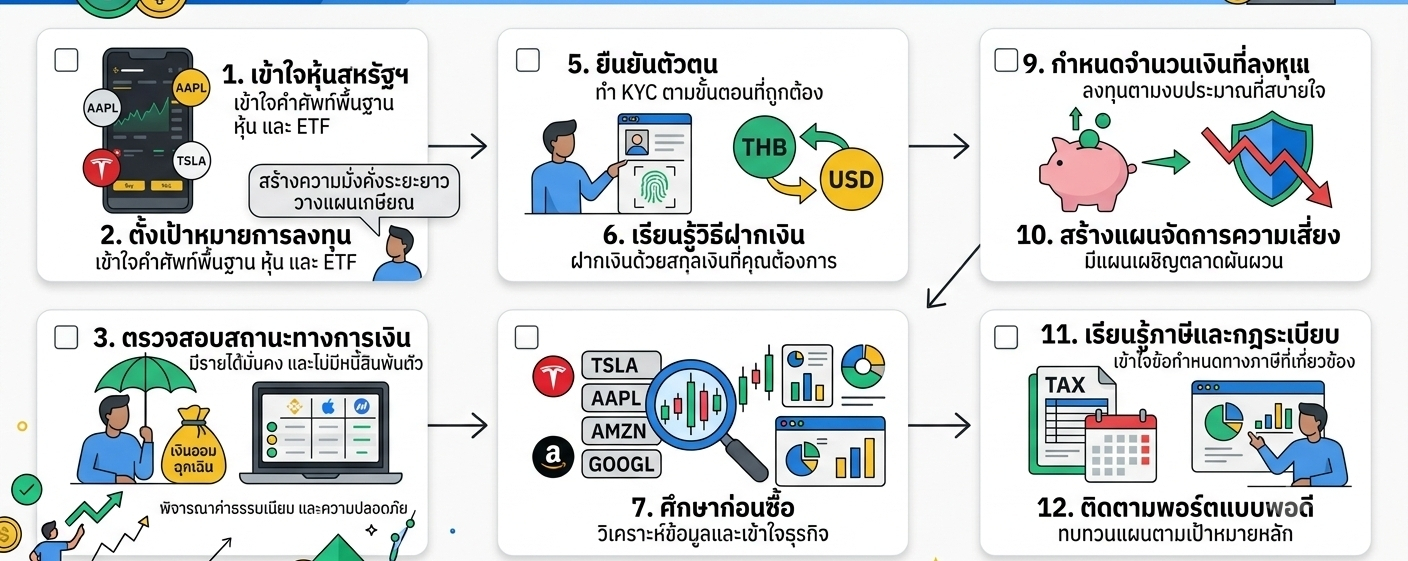
مقالة
عرض الترجمة
How to Start Investing in US Stocks: A Beginner’s ChecklistHow to Start Investing in US Stocks: A Beginner’s Checklist
Investing in US stocks can be an interesting way to participate in the global economy and build long-term wealth. The US stock market includes many well-known companies across technology, healthcare, finance, consumer goods, energy, and other industries.
However, getting started should not be about simply buying a popular stock. Beginners should first understand how the market works, choose a suitable investment platform, manage risk, and create a clear investment plan.
This beginner’s checklist will walk you through the essential steps before making your first US stock investment.
1. Understand What US Stocks Are
US stocks represent ownership in companies listed on US stock exchanges, such as the New York Stock Exchange (NYSE) and Nasdaq.
When you buy shares of a company, you become a shareholder. Your investment may increase or decrease in value depending on the company’s performance, market conditions, investor expectations, and other factors.
US stocks include individual companies as well as Exchange-Traded Funds (ETFs), which hold a collection of different investments.
Before investing, learn some basic terms:
Stock: A share of ownership in a company.
ETF: A fund that holds a basket of assets and trades like a stock.
Ticker symbol: A short symbol used to identify a stock.
Market price: The current price at which a stock trades.
Dividend: A payment that some companies make to shareholders.
Capital gain: The profit that may occur when an investment is sold for more than its purchase price.
Understanding these terms will make the investment process much easier.
2. Set Your Investment Goal
Before opening a brokerage account, ask yourself why you want to invest.
Your goal might be:
Building long-term wealth
Saving for retirement
Creating an additional source of potential income
Learning about financial markets
Building a diversified investment portfolio
Your investment goal can influence how much risk you are willing and able to take.
For example, someone investing for a long-term goal may have a different approach from someone who needs the money within a few months.
A clear goal can also help prevent emotional decisions when the market becomes volatile.
3. Check Your Financial Situation
Investing should generally come after taking care of essential financial needs.
Before investing, consider whether you have:
A stable source of income
Emergency savings
Manageable debt
Money available for long-term investment
A budget that allows you to invest consistently
Never invest money that you may urgently need for rent, food, medical expenses, or other essential costs.
The stock market can rise and fall, and there is no guarantee that you will receive your original investment back.
4. Choose a Suitable Investment Platform
To buy US stocks, you normally need an investment platform or brokerage account that provides access to US markets.
When comparing platforms, check important factors such as:
Whether residents of your country are eligible
Available US stocks and ETFs
Trading fees and other charges
Currency conversion costs
Deposit and withdrawal methods
Account security
Identity verification requirements
Customer support
Tax documentation
Do not choose a platform simply because it has low trading fees. Consider the complete cost structure and whether the service is legally and practically available to you.
Always use the official website or application when opening an account and carefully verify the company before depositing money.
5. Complete Identity Verification
Most regulated financial platforms require identity verification before you can invest.
You may be asked to provide information such as:
Full name
Date of birth
Residential address
Government-issued identification
Tax information
Source-of-funds information
Make sure the information you provide is accurate and consistent with your official documents.
Never share your password, authentication codes, or private security information with another person.
6. Learn How to Fund Your Account
After your account is approved, you need to deposit money before purchasing investments.
Depending on your location and platform, funding may involve your local currency or US dollars.
Pay attention to:
Deposit fees
Currency exchange rates
Bank transfer fees
Minimum deposit requirements
Processing times
Withdrawal fees
Currency movements can also affect your investment results. If your income is in a currency other than USD, changes in the exchange rate may increase or reduce your overall return when measured in your home currency.
7. Research Before Buying
One of the most important rules for beginners is simple: understand what you are buying.
Before purchasing an individual stock, research the company and consider factors such as:
What products or services does the company provide?
How does the company make money?
Is revenue growing?
Is the company profitable?
How much debt does it have?
What are its major risks?
Who are its competitors?
Is the current valuation reasonable relative to your expectations?
Do not invest simply because a stock is trending on social media or because someone says that its price will definitely rise.
There are no guaranteed returns in the stock market.
8. Understand Diversification
Putting all your money into one company can expose you to significant company-specific risk.
Diversification means spreading investments across different companies, industries, or assets.
For beginners, diversified ETFs can be one way to gain exposure to a broad group of companies rather than relying entirely on the performance of a single stock.
However, diversification does not eliminate risk. Broad markets can still decline during periods of economic or financial stress.
9. Decide How Much to Invest
You do not need a large amount of money to begin learning about investing, depending on the platform and available investment products.
Consider starting with an amount that fits comfortably within your budget.
Some investors use a regular investment approach, putting a fixed amount into investments at regular intervals. This can help create consistency and reduce the temptation to make decisions based entirely on short-term market movements.
The important point is to choose an amount and frequency that you can maintain without putting your essential finances under pressure.
10. Create a Risk Management Plan
Risk management is an essential part of investing.
Before buying an investment, understand how much you could potentially lose.
Avoid using borrowed money to invest unless you fully understand the risks and costs involved. Leveraged products can magnify both gains and losses.
Also be careful with emotional decisions. When prices fall sharply, beginners may panic and sell. When prices rise rapidly, they may feel pressure to buy because of fear of missing out.
Having a written investment plan can help you stay focused on your long-term objectives.
11. Learn About Taxes and Regulations
Investing internationally can involve tax and regulatory considerations.
Depending on your country of residence and the type of investment, you may need to understand:
Tax on investment profits
Dividend withholding tax
Reporting requirements
Currency-related considerations
US tax forms or documentation
Local investment regulations
Tax rules can be complicated and may change. If you are unsure about your responsibilities, consider consulting a qualified tax professional or financial adviser familiar with cross-border investments.
12. Monitor Your Portfolio — But Don’t Obsess Over It
After making your first investment, continue learning.
Review your portfolio periodically and check whether your investments still match your goals and risk tolerance.
You do not necessarily need to watch stock prices every minute.
A long-term investor may benefit more from understanding company fundamentals, economic developments, portfolio allocation, and personal financial goals than from reacting to every short-term price movement.
Beginner’s Final Checklist
Before making your first US stock investment, make sure you can answer “yes” to these questions:
☐ I understand the basic principles of stock investing.
☐ I have a clear investment goal.
☐ I have considered my financial situation and emergency savings.
☐ I have selected a suitable and legitimate investment platform.
☐ I understand the platform’s fees.
☐ I have completed the required identity verification.
☐ I understand how deposits, withdrawals, and currency conversion work.
☐ I have researched the investment before buying it.
☐ I understand the risks of losing money.
☐ I have considered diversification.
☐ I understand the relevant tax and regulatory requirements.
☐ I have a plan for how much and how often I will invest.
Conclusion
Starting to invest in US stocks does not require knowing everything about the market on day one. The most important first step is building a strong foundation.
Learn the basics, understand your financial situation, choose an appropriate investment platform, research before buying, diversify when appropriate, and manage risk carefully.
Most importantly, remember that investing is different from gambling or trying to predict the market every day. A disciplined approach focuses on understanding investments and making decisions that fit your own financial goals, time horizon, and risk tolerance.
Use this checklist as a starting point for your investment journey, and continue learning as your experience grows.
How to Start Investing in US Stocks: A Beginner’s Checklist
How to Start Investing in US Stocks: A Beginner’s Checklist
Investing in US stocks can be an interesting way to participate in the global economy and build long-term wealth. The US stock market includes many well-known companies across technology, healthcare, finance, consumer goods, energy, and other industries.
However, getting started should not be about simply buying a popular stock. Beginners should first understand how the market works, choose a suitable investment platform, manage risk, and create a clear investment plan.
This beginner’s checklist will walk you through the essential steps before making your first US stock investment.
1. Understand What US Stocks Are
US stocks represent ownership in companies listed on US stock exchanges, such as the New York Stock Exchange (NYSE) and Nasdaq.
When you buy shares of a company, you become a shareholder. Your investment may increase or decrease in value depending on the company’s performance, market conditions, investor expectations, and other factors.
US stocks include individual companies as well as Exchange-Traded Funds (ETFs), which hold a collection of different investments.
Before investing, learn some basic terms:
Stock: A share of ownership in a company.
ETF: A fund that holds a basket of assets and trades like a stock.
Ticker symbol: A short symbol used to identify a stock.
Market price: The current price at which a stock trades.
Dividend: A payment that some companies make to shareholders.
Capital gain: The profit that may occur when an investment is sold for more than its purchase price.
Understanding these terms will make the investment process much easier.
2. Set Your Investment Goal
Before opening a brokerage account, ask yourself why you want to invest.
Your goal might be:
Building long-term wealth
Saving for retirement
Creating an additional source of potential income
Learning about financial markets
Building a diversified investment portfolio
Your investment goal can influence how much risk you are willing and able to take.
For example, someone investing for a long-term goal may have a different approach from someone who needs the money within a few months.
A clear goal can also help prevent emotional decisions when the market becomes volatile.
3. Check Your Financial Situation
Investing should generally come after taking care of essential financial needs.
Before investing, consider whether you have:
A stable source of income
Emergency savings
Manageable debt
Money available for long-term investment
A budget that allows you to invest consistently
Never invest money that you may urgently need for rent, food, medical expenses, or other essential costs.
The stock market can rise and fall, and there is no guarantee that you will receive your original investment back.
4. Choose a Suitable Investment Platform
To buy US stocks, you normally need an investment platform or brokerage account that provides access to US markets.
When comparing platforms, check important factors such as:
Whether residents of your country are eligible
Available US stocks and ETFs
Trading fees and other charges
Currency conversion costs
Deposit and withdrawal methods
Account security
Identity verification requirements
Customer support
Tax documentation
Do not choose a platform simply because it has low trading fees. Consider the complete cost structure and whether the service is legally and practically available to you.
Always use the official website or application when opening an account and carefully verify the company before depositing money.
5. Complete Identity Verification
Most regulated financial platforms require identity verification before you can invest.
You may be asked to provide information such as:
Full name
Date of birth
Residential address
Government-issued identification
Tax information
Source-of-funds information
Make sure the information you provide is accurate and consistent with your official documents.
Never share your password, authentication codes, or private security information with another person.
6. Learn How to Fund Your Account
After your account is approved, you need to deposit money before purchasing investments.
Depending on your location and platform, funding may involve your local currency or US dollars.
Pay attention to:
Deposit fees
Currency exchange rates
Bank transfer fees
Minimum deposit requirements
Processing times
Withdrawal fees
Currency movements can also affect your investment results. If your income is in a currency other than USD, changes in the exchange rate may increase or reduce your overall return when measured in your home currency.
7. Research Before Buying
One of the most important rules for beginners is simple: understand what you are buying.
Before purchasing an individual stock, research the company and consider factors such as:
What products or services does the company provide?
How does the company make money?
Is revenue growing?
Is the company profitable?
How much debt does it have?
What are its major risks?
Who are its competitors?
Is the current valuation reasonable relative to your expectations?
Do not invest simply because a stock is trending on social media or because someone says that its price will definitely rise.
There are no guaranteed returns in the stock market.
8. Understand Diversification
Putting all your money into one company can expose you to significant company-specific risk.
Diversification means spreading investments across different companies, industries, or assets.
For beginners, diversified ETFs can be one way to gain exposure to a broad group of companies rather than relying entirely on the performance of a single stock.
However, diversification does not eliminate risk. Broad markets can still decline during periods of economic or financial stress.
9. Decide How Much to Invest
You do not need a large amount of money to begin learning about investing, depending on the platform and available investment products.
Consider starting with an amount that fits comfortably within your budget.
Some investors use a regular investment approach, putting a fixed amount into investments at regular intervals. This can help create consistency and reduce the temptation to make decisions based entirely on short-term market movements.
The important point is to choose an amount and frequency that you can maintain without putting your essential finances under pressure.
10. Create a Risk Management Plan
Risk management is an essential part of investing.
Before buying an investment, understand how much you could potentially lose.
Avoid using borrowed money to invest unless you fully understand the risks and costs involved. Leveraged products can magnify both gains and losses.
Also be careful with emotional decisions. When prices fall sharply, beginners may panic and sell. When prices rise rapidly, they may feel pressure to buy because of fear of missing out.
Having a written investment plan can help you stay focused on your long-term objectives.
11. Learn About Taxes and Regulations
Investing internationally can involve tax and regulatory considerations.
Depending on your country of residence and the type of investment, you may need to understand:
Tax on investment profits
Dividend withholding tax
Reporting requirements
Currency-related considerations
US tax forms or documentation
Local investment regulations
Tax rules can be complicated and may change. If you are unsure about your responsibilities, consider consulting a qualified tax professional or financial adviser familiar with cross-border investments.
12. Monitor Your Portfolio — But Don’t Obsess Over It
After making your first investment, continue learning.
Review your portfolio periodically and check whether your investments still match your goals and risk tolerance.
You do not necessarily need to watch stock prices every minute.
A long-term investor may benefit more from understanding company fundamentals, economic developments, portfolio allocation, and personal financial goals than from reacting to every short-term price movement.
Beginner’s Final Checklist
Before making your first US stock investment, make sure you can answer “yes” to these questions:
☐ I understand the basic principles of stock investing.
☐ I have a clear investment goal.
☐ I have considered my financial situation and emergency savings.
☐ I have selected a suitable and legitimate investment platform.
☐ I understand the platform’s fees.
☐ I have completed the required identity verification.
☐ I understand how deposits, withdrawals, and currency conversion work.
☐ I have researched the investment before buying it.
☐ I understand the risks of losing money.
☐ I have considered diversification.
☐ I understand the relevant tax and regulatory requirements.
☐ I have a plan for how much and how often I will invest.
Conclusion
Starting to invest in US stocks does not require knowing everything about the market on day one. The most important first step is building a strong foundation.
Learn the basics, understand your financial situation, choose an appropriate investment platform, research before buying, diversify when appropriate, and manage risk carefully.
Most importantly, remember that investing is different from gambling or trying to predict the market every day. A disciplined approach focuses on understanding investments and making decisions that fit your own financial goals, time horizon, and risk tolerance.
Use this checklist as a starting point for your investment journey, and continue learning as your experience grows.
Investing in US stocks can be an interesting way to participate in the global economy and build long-term wealth. The US stock market includes many well-known companies across technology, healthcare, finance, consumer goods, energy, and other industries.
However, getting started should not be about simply buying a popular stock. Beginners should first understand how the market works, choose a suitable investment platform, manage risk, and create a clear investment plan.
This beginner’s checklist will walk you through the essential steps before making your first US stock investment.
1. Understand What US Stocks Are
US stocks represent ownership in companies listed on US stock exchanges, such as the New York Stock Exchange (NYSE) and Nasdaq.
When you buy shares of a company, you become a shareholder. Your investment may increase or decrease in value depending on the company’s performance, market conditions, investor expectations, and other factors.
US stocks include individual companies as well as Exchange-Traded Funds (ETFs), which hold a collection of different investments.
Before investing, learn some basic terms:
Stock: A share of ownership in a company.
ETF: A fund that holds a basket of assets and trades like a stock.
Ticker symbol: A short symbol used to identify a stock.
Market price: The current price at which a stock trades.
Dividend: A payment that some companies make to shareholders.
Capital gain: The profit that may occur when an investment is sold for more than its purchase price.
Understanding these terms will make the investment process much easier.
2. Set Your Investment Goal
Before opening a brokerage account, ask yourself why you want to invest.
Your goal might be:
Building long-term wealth
Saving for retirement
Creating an additional source of potential income
Learning about financial markets
Building a diversified investment portfolio
Your investment goal can influence how much risk you are willing and able to take.
For example, someone investing for a long-term goal may have a different approach from someone who needs the money within a few months.
A clear goal can also help prevent emotional decisions when the market becomes volatile.
3. Check Your Financial Situation
Investing should generally come after taking care of essential financial needs.
Before investing, consider whether you have:
A stable source of income
Emergency savings
Manageable debt
Money available for long-term investment
A budget that allows you to invest consistently
Never invest money that you may urgently need for rent, food, medical expenses, or other essential costs.
The stock market can rise and fall, and there is no guarantee that you will receive your original investment back.
4. Choose a Suitable Investment Platform
To buy US stocks, you normally need an investment platform or brokerage account that provides access to US markets.
When comparing platforms, check important factors such as:
Whether residents of your country are eligible
Available US stocks and ETFs
Trading fees and other charges
Currency conversion costs
Deposit and withdrawal methods
Account security
Identity verification requirements
Customer support
Tax documentation
Do not choose a platform simply because it has low trading fees. Consider the complete cost structure and whether the service is legally and practically available to you.
Always use the official website or application when opening an account and carefully verify the company before depositing money.
5. Complete Identity Verification
Most regulated financial platforms require identity verification before you can invest.
You may be asked to provide information such as:
Full name
Date of birth
Residential address
Government-issued identification
Tax information
Source-of-funds information
Make sure the information you provide is accurate and consistent with your official documents.
Never share your password, authentication codes, or private security information with another person.
6. Learn How to Fund Your Account
After your account is approved, you need to deposit money before purchasing investments.
Depending on your location and platform, funding may involve your local currency or US dollars.
Pay attention to:
Deposit fees
Currency exchange rates
Bank transfer fees
Minimum deposit requirements
Processing times
Withdrawal fees
Currency movements can also affect your investment results. If your income is in a currency other than USD, changes in the exchange rate may increase or reduce your overall return when measured in your home currency.
7. Research Before Buying
One of the most important rules for beginners is simple: understand what you are buying.
Before purchasing an individual stock, research the company and consider factors such as:
What products or services does the company provide?
How does the company make money?
Is revenue growing?
Is the company profitable?
How much debt does it have?
What are its major risks?
Who are its competitors?
Is the current valuation reasonable relative to your expectations?
Do not invest simply because a stock is trending on social media or because someone says that its price will definitely rise.
There are no guaranteed returns in the stock market.
8. Understand Diversification
Putting all your money into one company can expose you to significant company-specific risk.
Diversification means spreading investments across different companies, industries, or assets.
For beginners, diversified ETFs can be one way to gain exposure to a broad group of companies rather than relying entirely on the performance of a single stock.
However, diversification does not eliminate risk. Broad markets can still decline during periods of economic or financial stress.
9. Decide How Much to Invest
You do not need a large amount of money to begin learning about investing, depending on the platform and available investment products.
Consider starting with an amount that fits comfortably within your budget.
Some investors use a regular investment approach, putting a fixed amount into investments at regular intervals. This can help create consistency and reduce the temptation to make decisions based entirely on short-term market movements.
The important point is to choose an amount and frequency that you can maintain without putting your essential finances under pressure.
10. Create a Risk Management Plan
Risk management is an essential part of investing.
Before buying an investment, understand how much you could potentially lose.
Avoid using borrowed money to invest unless you fully understand the risks and costs involved. Leveraged products can magnify both gains and losses.
Also be careful with emotional decisions. When prices fall sharply, beginners may panic and sell. When prices rise rapidly, they may feel pressure to buy because of fear of missing out.
Having a written investment plan can help you stay focused on your long-term objectives.
11. Learn About Taxes and Regulations
Investing internationally can involve tax and regulatory considerations.
Depending on your country of residence and the type of investment, you may need to understand:
Tax on investment profits
Dividend withholding tax
Reporting requirements
Currency-related considerations
US tax forms or documentation
Local investment regulations
Tax rules can be complicated and may change. If you are unsure about your responsibilities, consider consulting a qualified tax professional or financial adviser familiar with cross-border investments.
12. Monitor Your Portfolio — But Don’t Obsess Over It
After making your first investment, continue learning.
Review your portfolio periodically and check whether your investments still match your goals and risk tolerance.
You do not necessarily need to watch stock prices every minute.
A long-term investor may benefit more from understanding company fundamentals, economic developments, portfolio allocation, and personal financial goals than from reacting to every short-term price movement.
Beginner’s Final Checklist
Before making your first US stock investment, make sure you can answer “yes” to these questions:
☐ I understand the basic principles of stock investing.
☐ I have a clear investment goal.
☐ I have considered my financial situation and emergency savings.
☐ I have selected a suitable and legitimate investment platform.
☐ I understand the platform’s fees.
☐ I have completed the required identity verification.
☐ I understand how deposits, withdrawals, and currency conversion work.
☐ I have researched the investment before buying it.
☐ I understand the risks of losing money.
☐ I have considered diversification.
☐ I understand the relevant tax and regulatory requirements.
☐ I have a plan for how much and how often I will invest.
Conclusion
Starting to invest in US stocks does not require knowing everything about the market on day one. The most important first step is building a strong foundation.
Learn the basics, understand your financial situation, choose an appropriate investment platform, research before buying, diversify when appropriate, and manage risk carefully.
Most importantly, remember that investing is different from gambling or trying to predict the market every day. A disciplined approach focuses on understanding investments and making decisions that fit your own financial goals, time horizon, and risk tolerance.
Use this checklist as a starting point for your investment journey, and continue learning as your experience grows.
27
·
--
BStocks 101: كيفية الوصول إلى أسهم الولايات المتحدة واستكشافها عبر BinanceBStocks 101: كيفية الوصول إلى أسهم الولايات المتحدة واستكشافها عبر Binance
مقدمة
يُعد سوق الأسهم الأمريكي أحد أشهر الأسواق المالية وأكثرها متابعةً في العالم. يتم إدراج العديد من الشركات العالمية الرائدة، مثل Apple وMicrosoft وAmazon وTesla، في بورصات الولايات المتحدة، وتنجذب إليها استثمارات من بلدان مختلفة.
بالنسبة للأشخاص الذين لديهم بالفعل دراية بـ Binance وتداول العملات الرقمية، قد يكون استكشاف المنتجات المرتبطة بالأسهم عبر المنصة طريقةً مثيرة للتعرّف على الأسواق المالية التقليدية بشكل أكبر. تم تصميم BStocks 101 كدليل بسيط للمبتدئين الذين يرغبون في فهم كيفية الوصول إلى المنتجات المرتبطة بأسهم الولايات المتحدة واستكشافها عبر Binance.
BStocks 101: كيفية الوصول إلى أسهم الولايات المتحدة واستكشافها عبر Binance
BStocks 101: كيفية الوصول إلى أسهم الولايات المتحدة واستكشافها عبر Binance
مقدمة
يُعد سوق الأسهم الأمريكي أحد أشهر الأسواق المالية وأكثرها متابعةً في العالم. يتم إدراج العديد من الشركات العالمية الرائدة، مثل Apple وMicrosoft وAmazon وTesla، في بورصات الولايات المتحدة، وتنجذب إليها استثمارات من بلدان مختلفة.
بالنسبة للأشخاص الذين لديهم بالفعل دراية بـ Binance وتداول العملات الرقمية، قد يكون استكشاف المنتجات المرتبطة بالأسهم عبر المنصة طريقةً مثيرة للتعرّف على الأسواق المالية التقليدية بشكل أكبر. تم تصميم BStocks 101 كدليل بسيط للمبتدئين الذين يرغبون في فهم كيفية الوصول إلى المنتجات المرتبطة بأسهم الولايات المتحدة واستكشافها عبر Binance.
مقدمة
يُعد سوق الأسهم الأمريكي أحد أشهر الأسواق المالية وأكثرها متابعةً في العالم. يتم إدراج العديد من الشركات العالمية الرائدة، مثل Apple وMicrosoft وAmazon وTesla، في بورصات الولايات المتحدة، وتنجذب إليها استثمارات من بلدان مختلفة.
بالنسبة للأشخاص الذين لديهم بالفعل دراية بـ Binance وتداول العملات الرقمية، قد يكون استكشاف المنتجات المرتبطة بالأسهم عبر المنصة طريقةً مثيرة للتعرّف على الأسواق المالية التقليدية بشكل أكبر. تم تصميم BStocks 101 كدليل بسيط للمبتدئين الذين يرغبون في فهم كيفية الوصول إلى المنتجات المرتبطة بأسهم الولايات المتحدة واستكشافها عبر Binance.
43
·
--
🇺🇸 *مراقبة الاحتياطي الفيدرالي*
قام الاحتياطي الفيدرالي للتو برفع الفائدة.
يرى السوق الآن احتمالاً يتجاوز 50% بأن يرفعها مرة أخرى في أكتوبر.
يتفق غولدمان ساكس.
🇺🇸 *مراقبة الاحتياطي الفيدرالي*
قام الاحتياطي الفيدرالي للتو برفع الفائدة.
يرى السوق الآن احتمالاً يتجاوز 50% بأن يرفعها مرة أخرى في أكتوبر.
يتفق غولدمان ساكس.
قام الاحتياطي الفيدرالي للتو برفع الفائدة.
يرى السوق الآن احتمالاً يتجاوز 50% بأن يرفعها مرة أخرى في أكتوبر.
يتفق غولدمان ساكس.

51
·
--
عرض الترجمة
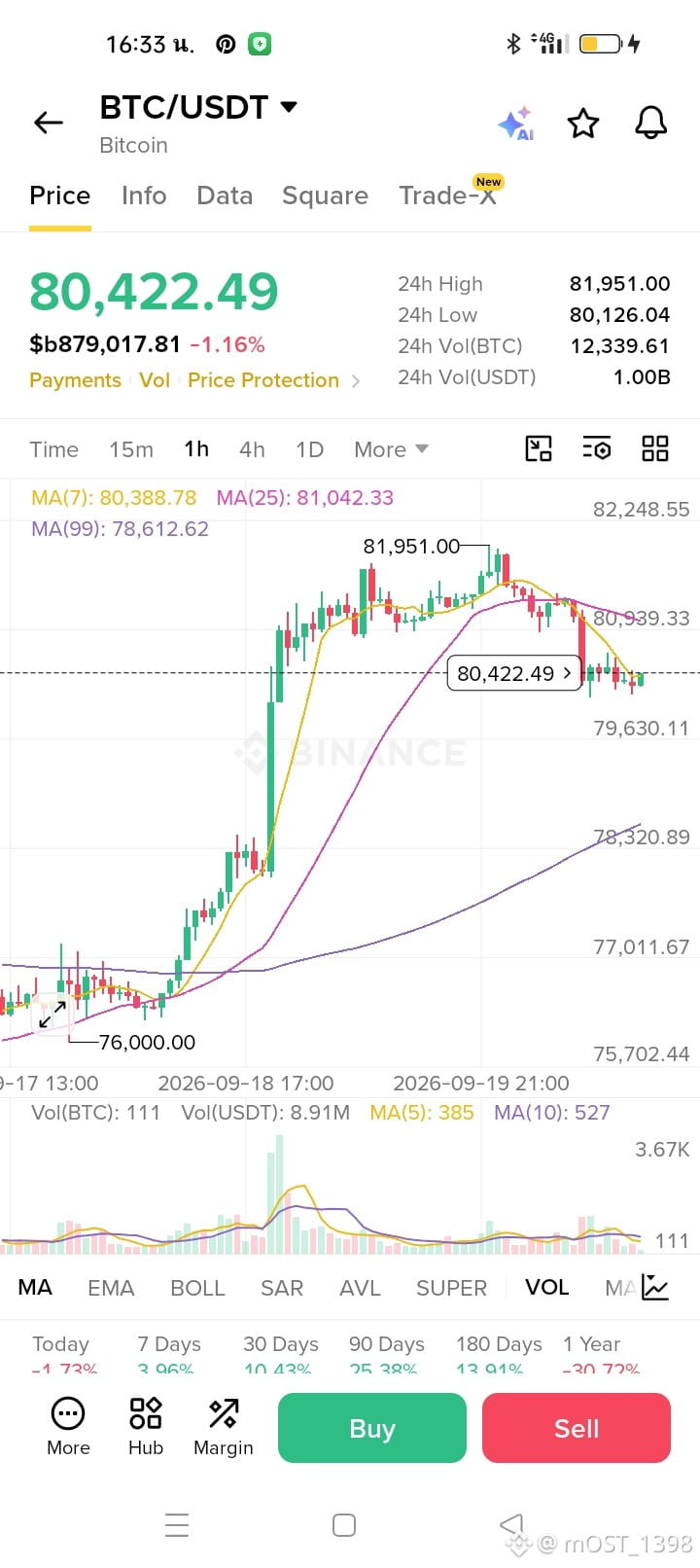
💰🚨 Bitcoin held strong and pumped despite 4–5 big bearish headlines hitting the market.
But if a bigger bearish catalyst hits, the current strength may not hold.
$BTC is also looking overbought on some timeframes, while significant downside leverage has built up, if it starts unwinding, the move could be sharp.
Considering this, we’re currently swing short on BTC, ETH, SOL & BNB.
💰🚨 Bitcoin held strong and pumped despite 4–5 big bearish headlines hitting the market.
But if a bigger bearish catalyst hits, the current strength may not hold.
$BTC is also looking overbought on some timeframes, while significant downside leverage has built up, if it starts unwinding, the move could be sharp.
Considering this, we’re currently swing short on BTC, ETH, SOL & BNB.
But if a bigger bearish catalyst hits, the current strength may not hold.
$BTC is also looking overbought on some timeframes, while significant downside leverage has built up, if it starts unwinding, the move could be sharp.
Considering this, we’re currently swing short on BTC, ETH, SOL & BNB.
55
·
--
*تنبيه تداول – $ETH/USDT*
*المركز:* شراء (Long)
*الرافعة المالية:* 50x
*منطقة الدخول:*
$2397 – $2350
*الأهداف:*
$2445
$2486
$2545
*وقف الخسارة:*
$2310
⚠️ التزم بالانضباط، أدرِ المخاطر، وفكّر في حجز أرباح جزئية على الطريق.
*تنبيه تداول – $ETH/USDT*
*المركز:* شراء (Long)
*الرافعة المالية:* 50x
*منطقة الدخول:*
$2397 – $2350
*الأهداف:*
$2445
$2486
$2545
*وقف الخسارة:*
$2310
⚠️ التزم بالانضباط، أدرِ المخاطر، وفكّر في حجز أرباح جزئية على الطريق.
*المركز:* شراء (Long)
*الرافعة المالية:* 50x
*منطقة الدخول:*
$2397 – $2350
*الأهداف:*
$2445
$2486
$2545
*وقف الخسارة:*
$2310
⚠️ التزم بالانضباط، أدرِ المخاطر، وفكّر في حجز أرباح جزئية على الطريق.
71
·
--
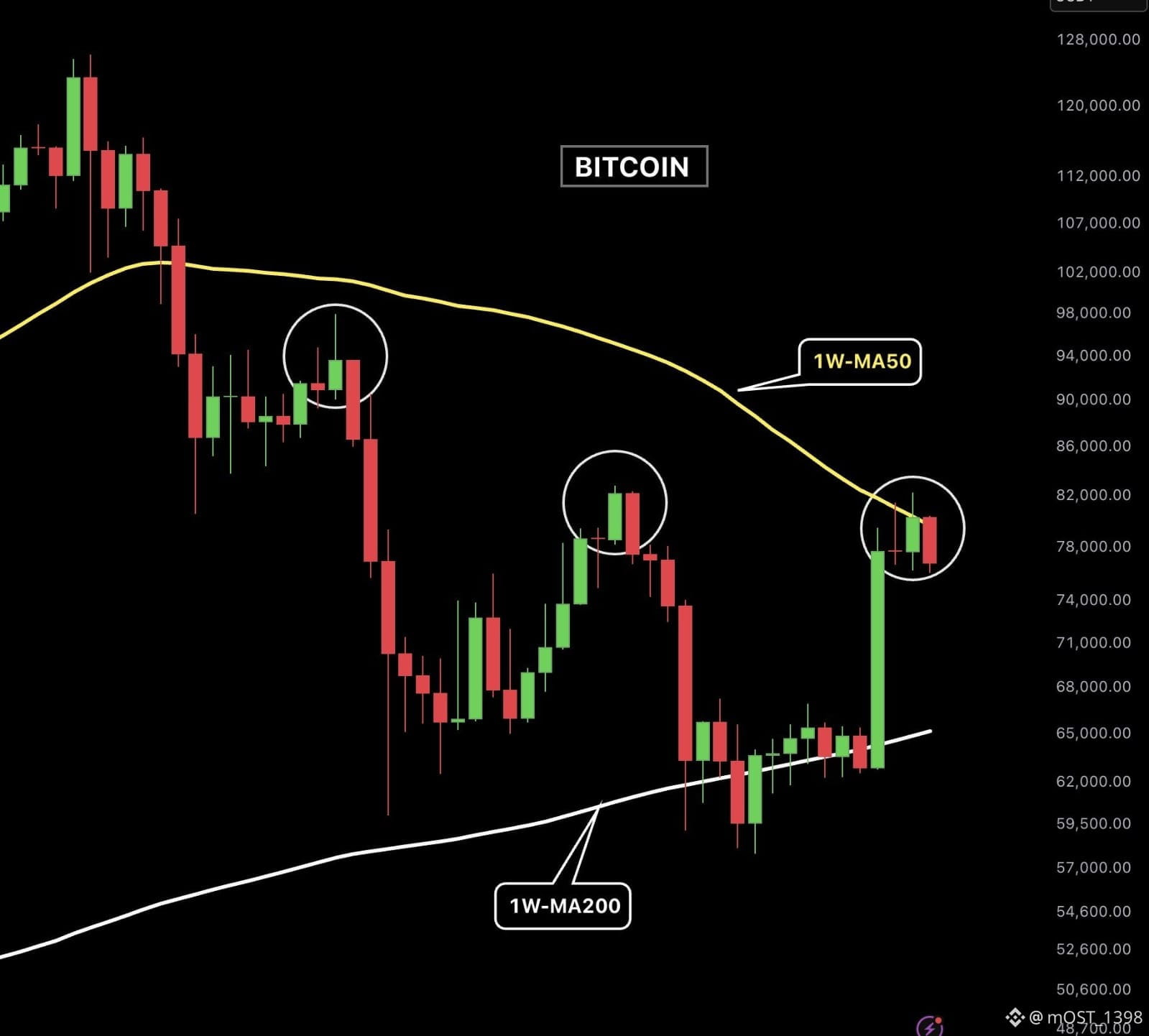
هذا لا يبدو جيدًا يا شباب.
تم رفض البيتكوين من متوسطه المتحرك لـ 50 أسبوعًا (50W MA). نحتاج إلى إغلاق شمعة الأسبوع فوقه مرة أخرى لتأكيد أن 57 ألف دولار كان القاع وأن السوق الصاعد الحقيقي قد بدأ.
المقلق هو أنه في آخر مرتين تم رفض البيتكوين من هنا، تلا ذلك انهيار كبير.
إذا أغلق <span>$BTC</span> أسفل <span>50W MA</span>، فسيكون مستوى الدعم التالي 75,500 دولار. وإذا تم كسر ذلك، فالمستوى الرئيسي التالي الذي يجب مراقبته هو متوسطه المتحرك لـ 200 أسبوعًا (200W MA)، والذي يبلغ حاليًا حوالي 65 ألف دولار.
هذا لا يبدو جيدًا يا شباب.
تم رفض البيتكوين من متوسطه المتحرك لـ 50 أسبوعًا (50W MA). نحتاج إلى إغلاق شمعة الأسبوع فوقه مرة أخرى لتأكيد أن 57 ألف دولار كان القاع وأن السوق الصاعد الحقيقي قد بدأ.
المقلق هو أنه في آخر مرتين تم رفض البيتكوين من هنا، تلا ذلك انهيار كبير.
إذا أغلق <span>$BTC</span> أسفل <span>50W MA</span>، فسيكون مستوى الدعم التالي 75,500 دولار. وإذا تم كسر ذلك، فالمستوى الرئيسي التالي الذي يجب مراقبته هو متوسطه المتحرك لـ 200 أسبوعًا (200W MA)، والذي يبلغ حاليًا حوالي 65 ألف دولار.
تم رفض البيتكوين من متوسطه المتحرك لـ 50 أسبوعًا (50W MA). نحتاج إلى إغلاق شمعة الأسبوع فوقه مرة أخرى لتأكيد أن 57 ألف دولار كان القاع وأن السوق الصاعد الحقيقي قد بدأ.
المقلق هو أنه في آخر مرتين تم رفض البيتكوين من هنا، تلا ذلك انهيار كبير.
إذا أغلق <span>$BTC</span> أسفل <span>50W MA</span>، فسيكون مستوى الدعم التالي 75,500 دولار. وإذا تم كسر ذلك، فالمستوى الرئيسي التالي الذي يجب مراقبته هو متوسطه المتحرك لـ 200 أسبوعًا (200W MA)، والذي يبلغ حاليًا حوالي 65 ألف دولار.
66
·
--
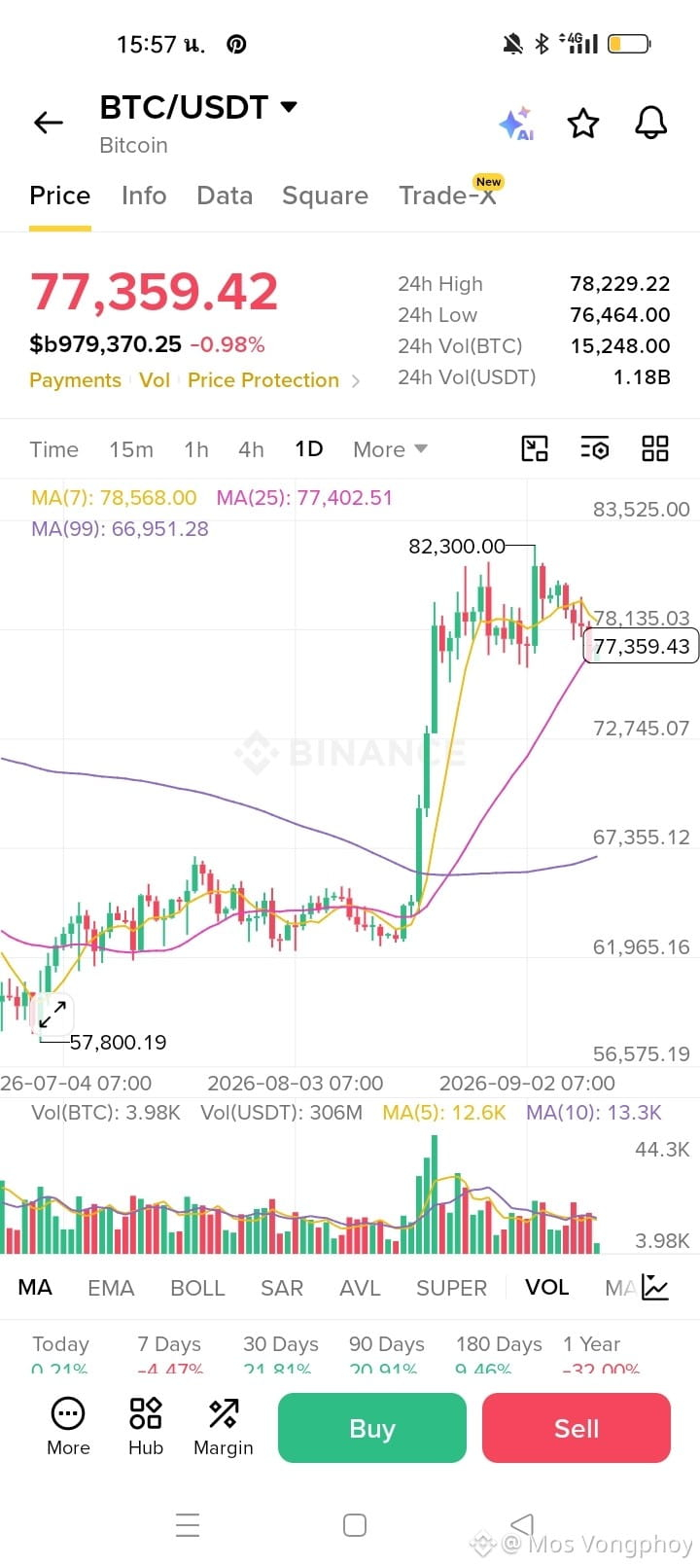
اكتشف رؤى BTC 2026-09-11 08:00 UTC
ملخص سريع
1. يواجه BTC ضغطًا هبوطيًا حول 77.2 ألف دولار، مدفوعًا بارتفاع عوائد الخزانة وتدفقات خارجية بقيمة 282 مليون دولار من صناديق ETF تكتيكية.
العوامل الرئيسية
1. - **ضغط اقتصادي كلي (مرتفع)**: ارتفاع عوائد سندات الخزانة الأمريكية لأجل 30 عامًا إلى 5.37% وارتفاع بيانات مؤشر أسعار المنتجين (5.4%) يدفع المستثمرين نحو الأصول الخالية من المخاطر، ما يضغط على الأسعار للأسفل.
- **تقليل المخاطر من قبل المؤسسات (مرتفع)**: شهدت صناديق Spot ETFs تدفقات صافية خارجية يومية بقيمة 282.7 مليون دولار، ما يشير إلى تحولات مؤسسية تكتيكية قبيل بيانات التضخم الرئيسية.
- **تراكم الشركات (متوسط)**: استمرار مشتريات الشركات وامتداد الوصول المؤسسي عبر تجمعات سيولة آسيوية يوفر دعمًا هيكليًا كامناً.
تقييم المخاطر
1. - **تذبذب بيانات التضخم (مرتفع)**: إصدار مؤشر أسعار المستهلكين الأمريكي القادم وارتفاع أسعار النفط بسبب التوترات الجيوسياسية قد يرسخان ارتفاع الفائدة، ما قد يؤدي إلى مزيد من عمليات السحب/التراجع.
- **ضعف فني (متوسط)**: تراجع حاد مؤخرًا إلى 76.8 ألف دولار بحجم ضخم (634 مليون USDT) يبرز هشاشة الدعم، رغم ارتداد RSI على المدى القصير من مستويات ذروة البيع.
- **مخاوف أمنية (منخفض)**: انخفاض تكاليف هجمات الحوسبة الكمّية يثير نقاط ضعف نظرية طويلة الأجل.
تخلق الرياح المعاكسة على مستوى الاقتصاد الكلي وتدفقات ETF خارجية بيئة محفوفة بالمخاطر قبل قراءة CPI.
ثبّت تطبيق Binance لمتابعة أحدث رؤى BTC عبر https://app.binance.com/uni-qr/token-ai-report?token=BTC&symbol=BTCUSDT&product=spot&reportAt=1789113600000"eToken=USDT&utm_term=BTC&ref=514701768&utm_source=Brm8cLnPPfw7BoYTCqg55k&utm_medium=spot_insight®isterChannel=trading_insight
اكتشف رؤى BTC 2026-09-11 08:00 UTC
ملخص سريع
1. يواجه BTC ضغطًا هبوطيًا حول 77.2 ألف دولار، مدفوعًا بارتفاع عوائد الخزانة وتدفقات خارجية بقيمة 282 مليون دولار من صناديق ETF تكتيكية.
العوامل الرئيسية
1. - **ضغط اقتصادي كلي (مرتفع)**: ارتفاع عوائد سندات الخزانة الأمريكية لأجل 30 عامًا إلى 5.37% وارتفاع بيانات مؤشر أسعار المنتجين (5.4%) يدفع المستثمرين نحو الأصول الخالية من المخاطر، ما يضغط على الأسعار للأسفل.
- **تقليل المخاطر من قبل المؤسسات (مرتفع)**: شهدت صناديق Spot ETFs تدفقات صافية خارجية يومية بقيمة 282.7 مليون دولار، ما يشير إلى تحولات مؤسسية تكتيكية قبيل بيانات التضخم الرئيسية.
- **تراكم الشركات (متوسط)**: استمرار مشتريات الشركات وامتداد الوصول المؤسسي عبر تجمعات سيولة آسيوية يوفر دعمًا هيكليًا كامناً.
تقييم المخاطر
1. - **تذبذب بيانات التضخم (مرتفع)**: إصدار مؤشر أسعار المستهلكين الأمريكي القادم وارتفاع أسعار النفط بسبب التوترات الجيوسياسية قد يرسخان ارتفاع الفائدة، ما قد يؤدي إلى مزيد من عمليات السحب/التراجع.
- **ضعف فني (متوسط)**: تراجع حاد مؤخرًا إلى 76.8 ألف دولار بحجم ضخم (634 مليون USDT) يبرز هشاشة الدعم، رغم ارتداد RSI على المدى القصير من مستويات ذروة البيع.
- **مخاوف أمنية (منخفض)**: انخفاض تكاليف هجمات الحوسبة الكمّية يثير نقاط ضعف نظرية طويلة الأجل.
تخلق الرياح المعاكسة على مستوى الاقتصاد الكلي وتدفقات ETF خارجية بيئة محفوفة بالمخاطر قبل قراءة CPI.
ثبّت تطبيق Binance لمتابعة أحدث رؤى BTC عبر https://app.binance.com/uni-qr/token-ai-report?token=BTC&symbol=BTCUSDT&product=spot&reportAt=1789113600000"eToken=USDT&utm_term=BTC&ref=514701768&utm_source=Brm8cLnPPfw7BoYTCqg55k&utm_medium=spot_insight®isterChannel=trading_insight
ملخص سريع
1. يواجه BTC ضغطًا هبوطيًا حول 77.2 ألف دولار، مدفوعًا بارتفاع عوائد الخزانة وتدفقات خارجية بقيمة 282 مليون دولار من صناديق ETF تكتيكية.
العوامل الرئيسية
1. - **ضغط اقتصادي كلي (مرتفع)**: ارتفاع عوائد سندات الخزانة الأمريكية لأجل 30 عامًا إلى 5.37% وارتفاع بيانات مؤشر أسعار المنتجين (5.4%) يدفع المستثمرين نحو الأصول الخالية من المخاطر، ما يضغط على الأسعار للأسفل.
- **تقليل المخاطر من قبل المؤسسات (مرتفع)**: شهدت صناديق Spot ETFs تدفقات صافية خارجية يومية بقيمة 282.7 مليون دولار، ما يشير إلى تحولات مؤسسية تكتيكية قبيل بيانات التضخم الرئيسية.
- **تراكم الشركات (متوسط)**: استمرار مشتريات الشركات وامتداد الوصول المؤسسي عبر تجمعات سيولة آسيوية يوفر دعمًا هيكليًا كامناً.
تقييم المخاطر
1. - **تذبذب بيانات التضخم (مرتفع)**: إصدار مؤشر أسعار المستهلكين الأمريكي القادم وارتفاع أسعار النفط بسبب التوترات الجيوسياسية قد يرسخان ارتفاع الفائدة، ما قد يؤدي إلى مزيد من عمليات السحب/التراجع.
- **ضعف فني (متوسط)**: تراجع حاد مؤخرًا إلى 76.8 ألف دولار بحجم ضخم (634 مليون USDT) يبرز هشاشة الدعم، رغم ارتداد RSI على المدى القصير من مستويات ذروة البيع.
- **مخاوف أمنية (منخفض)**: انخفاض تكاليف هجمات الحوسبة الكمّية يثير نقاط ضعف نظرية طويلة الأجل.
تخلق الرياح المعاكسة على مستوى الاقتصاد الكلي وتدفقات ETF خارجية بيئة محفوفة بالمخاطر قبل قراءة CPI.
ثبّت تطبيق Binance لمتابعة أحدث رؤى BTC عبر https://app.binance.com/uni-qr/token-ai-report?token=BTC&symbol=BTCUSDT&product=spot&reportAt=1789113600000"eToken=USDT&utm_term=BTC&ref=514701768&utm_source=Brm8cLnPPfw7BoYTCqg55k&utm_medium=spot_insight®isterChannel=trading_insight
67
·
--
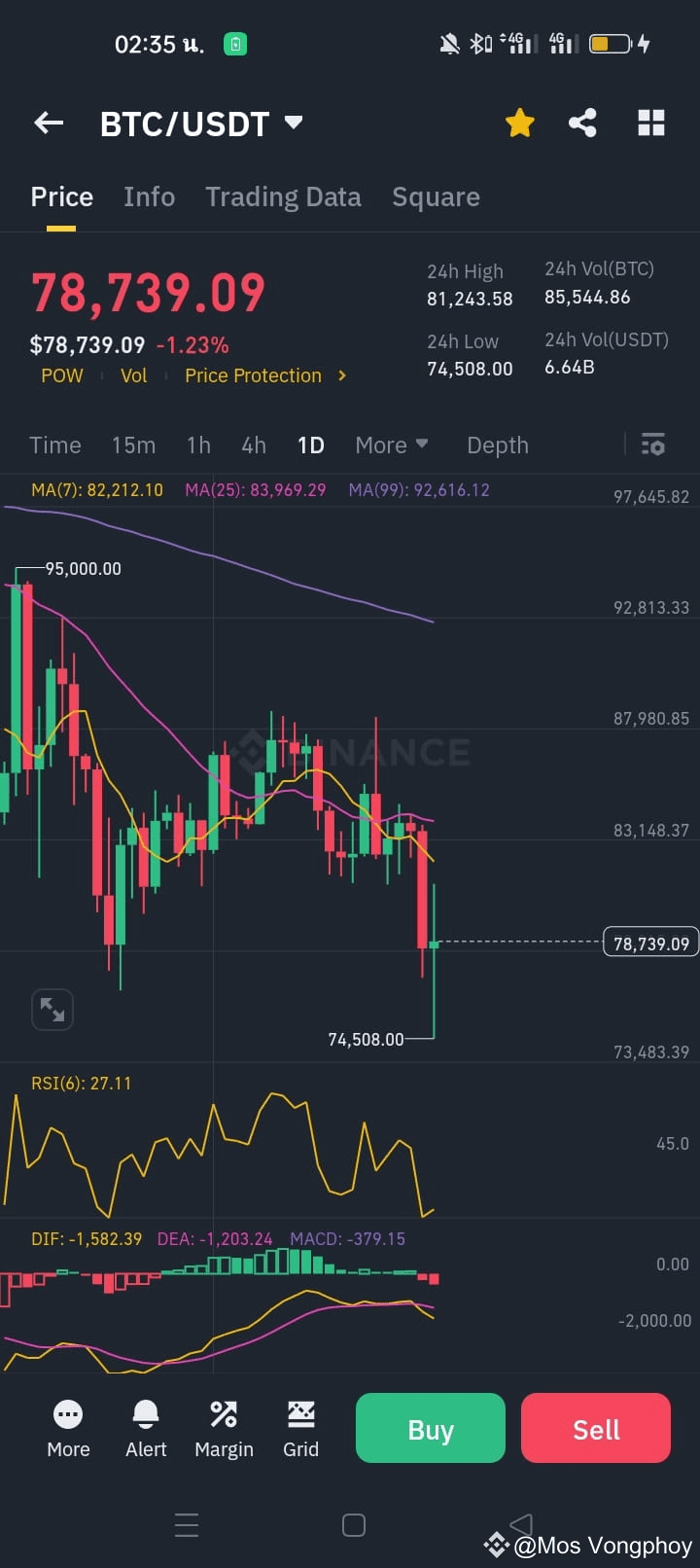
من الرسم البياني اليومي BTC/USDT الذي قدمته:
السعر الحالي حوالي 78,739 USDT، بانخفاض -1.23%
انخفض مؤخرًا إلى أدنى مستوى 74,508 USDT قبل ارتداد صغير
مؤشر القوة النسبية عند 27.11، في منطقة البيع المفرط (من الممكن حدوث ارتداد قصير الأجل ولكن لا يوجد إشارة انعكاس واضحة بعد)
مؤشر MACD سلبي وDIF أقل من DEA، مما يدل على أن الاتجاه الهبوطي لا يزال مستمرًا
السعر أقل من جميع المتوسطات المتحركة الرئيسية (MA7، MA25، MA99)، مما يؤكد نظرة هبوطية
استنتاج للغد:
هناك فرصة أن ينخفض السعر أكثر، خاصة إذا كسر مستوى الدعم 74,500.
ومع ذلك، بسبب انخفاض مؤشر القوة النسبية، قد يحدث أيضًا ارتداد قصير الأجل.
من الرسم البياني اليومي BTC/USDT الذي قدمته:
السعر الحالي حوالي 78,739 USDT، بانخفاض -1.23%
انخفض مؤخرًا إلى أدنى مستوى 74,508 USDT قبل ارتداد صغير
مؤشر القوة النسبية عند 27.11، في منطقة البيع المفرط (من الممكن حدوث ارتداد قصير الأجل ولكن لا يوجد إشارة انعكاس واضحة بعد)
مؤشر MACD سلبي وDIF أقل من DEA، مما يدل على أن الاتجاه الهبوطي لا يزال مستمرًا
السعر أقل من جميع المتوسطات المتحركة الرئيسية (MA7، MA25، MA99)، مما يؤكد نظرة هبوطية
استنتاج للغد:
هناك فرصة أن ينخفض السعر أكثر، خاصة إذا كسر مستوى الدعم 74,500.
ومع ذلك، بسبب انخفاض مؤشر القوة النسبية، قد يحدث أيضًا ارتداد قصير الأجل.
السعر الحالي حوالي 78,739 USDT، بانخفاض -1.23%
انخفض مؤخرًا إلى أدنى مستوى 74,508 USDT قبل ارتداد صغير
مؤشر القوة النسبية عند 27.11، في منطقة البيع المفرط (من الممكن حدوث ارتداد قصير الأجل ولكن لا يوجد إشارة انعكاس واضحة بعد)
مؤشر MACD سلبي وDIF أقل من DEA، مما يدل على أن الاتجاه الهبوطي لا يزال مستمرًا
السعر أقل من جميع المتوسطات المتحركة الرئيسية (MA7، MA25، MA99)، مما يؤكد نظرة هبوطية
استنتاج للغد:
هناك فرصة أن ينخفض السعر أكثر، خاصة إذا كسر مستوى الدعم 74,500.
ومع ذلك، بسبب انخفاض مؤشر القوة النسبية، قد يحدث أيضًا ارتداد قصير الأجل.
4
·
--
$BTC من الرسم البياني اليومي لـ BTC/USDT الذي قدمته:
السعر الحالي حوالي 78,739 USDT، بانخفاض -1.23%
سقط مؤخرًا إلى مستوى منخفض قدره 74,508 USDT قبل ارتداد صغير
مؤشر القوة النسبية عند 27.11، في منطقة البيع المفرط (من الممكن حدوث ارتداد قصير الأجل ولكن لا توجد إشارة عكسية واضحة بعد)
MACD سلبي و DIF أقل من DEA، مما يشير إلى أن الاتجاه الهبوطي لا يزال مستمرًا
السعر أقل من جميع المتوسطات المتحركة الرئيسية (MA7، MA25، MA99)، مما يؤكد النظرة الهبوطية
الخلاصة للغد:
هناك فرصة لأن ينخفض السعر أكثر، خاصة إذا كسر مستوى الدعم 74,500.
ومع ذلك، نظرًا لانخفاض مؤشر القوة النسبية، قد يحدث ارتداد قصير الأجل أيضًا.
$BTC من الرسم البياني اليومي لـ BTC/USDT الذي قدمته:
السعر الحالي حوالي 78,739 USDT، بانخفاض -1.23%
سقط مؤخرًا إلى مستوى منخفض قدره 74,508 USDT قبل ارتداد صغير
مؤشر القوة النسبية عند 27.11، في منطقة البيع المفرط (من الممكن حدوث ارتداد قصير الأجل ولكن لا توجد إشارة عكسية واضحة بعد)
MACD سلبي و DIF أقل من DEA، مما يشير إلى أن الاتجاه الهبوطي لا يزال مستمرًا
السعر أقل من جميع المتوسطات المتحركة الرئيسية (MA7، MA25، MA99)، مما يؤكد النظرة الهبوطية
الخلاصة للغد:
هناك فرصة لأن ينخفض السعر أكثر، خاصة إذا كسر مستوى الدعم 74,500.
ومع ذلك، نظرًا لانخفاض مؤشر القوة النسبية، قد يحدث ارتداد قصير الأجل أيضًا.
السعر الحالي حوالي 78,739 USDT، بانخفاض -1.23%
سقط مؤخرًا إلى مستوى منخفض قدره 74,508 USDT قبل ارتداد صغير
مؤشر القوة النسبية عند 27.11، في منطقة البيع المفرط (من الممكن حدوث ارتداد قصير الأجل ولكن لا توجد إشارة عكسية واضحة بعد)
MACD سلبي و DIF أقل من DEA، مما يشير إلى أن الاتجاه الهبوطي لا يزال مستمرًا
السعر أقل من جميع المتوسطات المتحركة الرئيسية (MA7، MA25، MA99)، مما يؤكد النظرة الهبوطية
الخلاصة للغد:
هناك فرصة لأن ينخفض السعر أكثر، خاصة إذا كسر مستوى الدعم 74,500.
ومع ذلك، نظرًا لانخفاض مؤشر القوة النسبية، قد يحدث ارتداد قصير الأجل أيضًا.
3
·
--
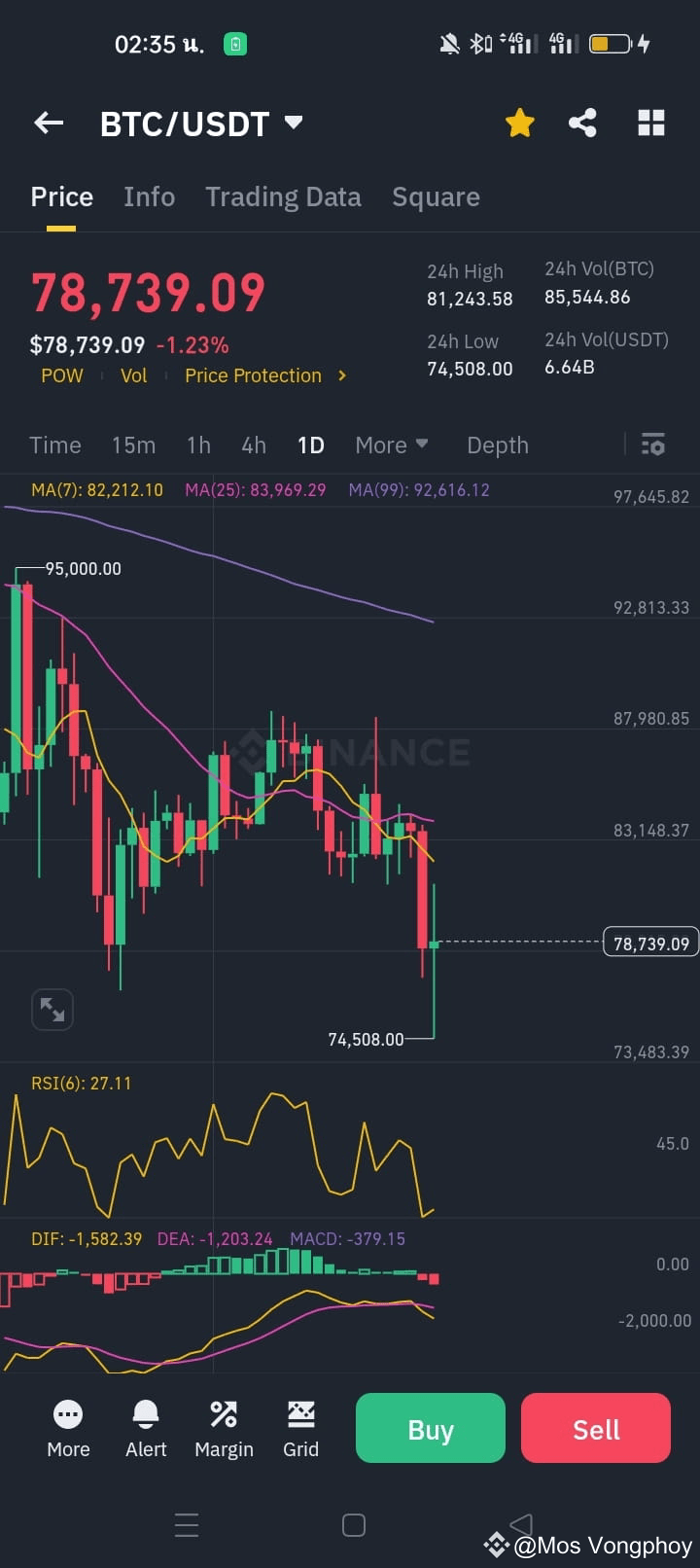
#BTCBelow80K من الرسم البياني اليومي لـ BTC/USDT الذي قدمته:
السعر الحالي حوالي 78,739 USDT، بانخفاض -1.23%
انخفض مؤخرًا إلى مستوى منخفض قدره 74,508 USDT قبل ارتداد بسيط
مؤشر القوة النسبية (RSI) عند 27.11، في منطقة البيع المفرط (من الممكن حدوث ارتداد قصير الأمد ولكن لا يوجد إشارة عكسية واضحة بعد)
مؤشر MACD سلبي وDIF تحت DEA، مما يدل على أن الاتجاه الهبوطي لا يزال مستمرًا
السعر أدنى من جميع المتوسطات المتحركة الرئيسية (MA7، MA25، MA99)، مما يؤكد نظرة هبوطية
الاستنتاج ليوم غد:
هناك فرصة أن ينخفض السعر أكثر، خاصة إذا كسر مستوى الدعم 74,500.
ومع ذلك، بسبب انخفاض مؤشر القوة النسبية (RSI)، قد يحدث ارتداد قصير الأمد أيضًا.
#BTCBelow80K من الرسم البياني اليومي لـ BTC/USDT الذي قدمته:
السعر الحالي حوالي 78,739 USDT، بانخفاض -1.23%
انخفض مؤخرًا إلى مستوى منخفض قدره 74,508 USDT قبل ارتداد بسيط
مؤشر القوة النسبية (RSI) عند 27.11، في منطقة البيع المفرط (من الممكن حدوث ارتداد قصير الأمد ولكن لا يوجد إشارة عكسية واضحة بعد)
مؤشر MACD سلبي وDIF تحت DEA، مما يدل على أن الاتجاه الهبوطي لا يزال مستمرًا
السعر أدنى من جميع المتوسطات المتحركة الرئيسية (MA7، MA25، MA99)، مما يؤكد نظرة هبوطية
الاستنتاج ليوم غد:
هناك فرصة أن ينخفض السعر أكثر، خاصة إذا كسر مستوى الدعم 74,500.
ومع ذلك، بسبب انخفاض مؤشر القوة النسبية (RSI)، قد يحدث ارتداد قصير الأمد أيضًا.
السعر الحالي حوالي 78,739 USDT، بانخفاض -1.23%
انخفض مؤخرًا إلى مستوى منخفض قدره 74,508 USDT قبل ارتداد بسيط
مؤشر القوة النسبية (RSI) عند 27.11، في منطقة البيع المفرط (من الممكن حدوث ارتداد قصير الأمد ولكن لا يوجد إشارة عكسية واضحة بعد)
مؤشر MACD سلبي وDIF تحت DEA، مما يدل على أن الاتجاه الهبوطي لا يزال مستمرًا
السعر أدنى من جميع المتوسطات المتحركة الرئيسية (MA7، MA25، MA99)، مما يؤكد نظرة هبوطية
الاستنتاج ليوم غد:
هناك فرصة أن ينخفض السعر أكثر، خاصة إذا كسر مستوى الدعم 74,500.
ومع ذلك، بسبب انخفاض مؤشر القوة النسبية (RSI)، قد يحدث ارتداد قصير الأمد أيضًا.
2
·
--
#BTCBelow80K من الرسم البياني اليومي لـ BTC/USDT الذي قدمته:
السعر الحالي حوالي 78,739 USDT، بانخفاض -1.23%
لقد انخفض مؤخرًا إلى أدنى مستوى عند 74,508 USDT قبل انتعاش طفيف
مؤشر القوة النسبية عند 27.11، في منطقة البيع المفرط (انتعاش قصير الأجل ممكن ولكن لا توجد إشارة عكسية واضحة بعد)
مؤشر MACD سلبي وDIF أدنى من DEA، مما يدل على أن الاتجاه الهبوطي لا يزال مستمرًا
السعر أدنى من جميع المتوسطات المتحركة الرئيسية (MA7، MA25، MA99)، مما يؤكد نظرة هبوطية
الخلاصة ليوم غد:
هناك فرصة أن ينخفض السعر أكثر، خاصة إذا كسر مستوى الدعم 74,500.
ومع ذلك، بسبب انخفاض مؤشر القوة النسبية، قد يحدث أيضًا انتعاش قصير الأجل.
#BTCBelow80K من الرسم البياني اليومي لـ BTC/USDT الذي قدمته:
السعر الحالي حوالي 78,739 USDT، بانخفاض -1.23%
لقد انخفض مؤخرًا إلى أدنى مستوى عند 74,508 USDT قبل انتعاش طفيف
مؤشر القوة النسبية عند 27.11، في منطقة البيع المفرط (انتعاش قصير الأجل ممكن ولكن لا توجد إشارة عكسية واضحة بعد)
مؤشر MACD سلبي وDIF أدنى من DEA، مما يدل على أن الاتجاه الهبوطي لا يزال مستمرًا
السعر أدنى من جميع المتوسطات المتحركة الرئيسية (MA7، MA25، MA99)، مما يؤكد نظرة هبوطية
الخلاصة ليوم غد:
هناك فرصة أن ينخفض السعر أكثر، خاصة إذا كسر مستوى الدعم 74,500.
ومع ذلك، بسبب انخفاض مؤشر القوة النسبية، قد يحدث أيضًا انتعاش قصير الأجل.
السعر الحالي حوالي 78,739 USDT، بانخفاض -1.23%
لقد انخفض مؤخرًا إلى أدنى مستوى عند 74,508 USDT قبل انتعاش طفيف
مؤشر القوة النسبية عند 27.11، في منطقة البيع المفرط (انتعاش قصير الأجل ممكن ولكن لا توجد إشارة عكسية واضحة بعد)
مؤشر MACD سلبي وDIF أدنى من DEA، مما يدل على أن الاتجاه الهبوطي لا يزال مستمرًا
السعر أدنى من جميع المتوسطات المتحركة الرئيسية (MA7، MA25، MA99)، مما يؤكد نظرة هبوطية
الخلاصة ليوم غد:
هناك فرصة أن ينخفض السعر أكثر، خاصة إذا كسر مستوى الدعم 74,500.
ومع ذلك، بسبب انخفاض مؤشر القوة النسبية، قد يحدث أيضًا انتعاش قصير الأجل.
248
·
--
$BTC بناءً على الرسم البياني الحالي لـ BTC/USDT، إليك تحليل لمساعدتك في اتخاذ قرار بشأن الشراء أو البيع:
الملاحظات الرئيسية:
السعر الحالي: $84,123.79
أعلى سعر خلال 24 ساعة: $84,720
أدنى سعر خلال 24 ساعة: $81,659
السعر قريب من مستوى مقاومة قصير الأجل.
المتوسطات المتحركة:
MA(7) (قصير الأجل): $83,228.58 (السعر فوق هذا، مما يدل على زخم صعودي طفيف)
MA(25) (متوسط الأجل): $84,259.52 (السعر تحت هذا مباشرة، مما يشير إلى مقاومة)
MA(99) (طويل الأجل): $93,049.09 (بعيد فوق السعر الحالي، مما يعني أن الاتجاه طويل الأجل لا يزال هبوطياً)
مؤشر RSI (6): 50.79
مؤشر RSI محايد، مما يعني عدم وجود إشارة واضحة للشراء المفرط أو البيع المفرط.
مؤشر MACD:
مؤشر MACD إيجابي قليلاً (92.87)، مما يدل على أن ضغط الشراء يتزايد، ولكنه لا يزال غير مؤكد.
دليل القرار:
اشترِ إذا:
اخترق BTC فوق مقاومة $84,720 مع حجم تداول قوي.
استمر MACD في الارتفاع وانتقل RSI فوق 60 (مما يدل على زخم صعودي قوي).
حافظ BTC على السعر فوق MA(25) ($84,259) للتأكيد.
بيع إذا:
انخفض BTC تحت $81,659، مما يشير إلى انهيار هبوطي.
انخفض RSI تحت 40 (مما يدل على زيادة ضغط البيع).
عبر MACD للأسفل، مما يدل على تحول الاتجاه إلى هبوطي.
التوصية:
تجار الأجل القصير: انتظر حتى يؤكد BTC الاختراق فوق $84,720 قبل الشراء.
المستثمرون على المدى الطويل: إذا انخفض BTC بالقرب من $81,659 - $80,000، فقد تكون فرصة شراء أفضل.
إذا كنت بالفعل تمتلك BTC: اعتبر أخذ ربح جزئي إذا كان يصعب عليه اختراق $84,720.
$BTC بناءً على الرسم البياني الحالي لـ BTC/USDT، إليك تحليل لمساعدتك في اتخاذ قرار بشأن الشراء أو البيع:
الملاحظات الرئيسية:
السعر الحالي: $84,123.79
أعلى سعر خلال 24 ساعة: $84,720
أدنى سعر خلال 24 ساعة: $81,659
السعر قريب من مستوى مقاومة قصير الأجل.
المتوسطات المتحركة:
MA(7) (قصير الأجل): $83,228.58 (السعر فوق هذا، مما يدل على زخم صعودي طفيف)
MA(25) (متوسط الأجل): $84,259.52 (السعر تحت هذا مباشرة، مما يشير إلى مقاومة)
MA(99) (طويل الأجل): $93,049.09 (بعيد فوق السعر الحالي، مما يعني أن الاتجاه طويل الأجل لا يزال هبوطياً)
مؤشر RSI (6): 50.79
مؤشر RSI محايد، مما يعني عدم وجود إشارة واضحة للشراء المفرط أو البيع المفرط.
مؤشر MACD:
مؤشر MACD إيجابي قليلاً (92.87)، مما يدل على أن ضغط الشراء يتزايد، ولكنه لا يزال غير مؤكد.
دليل القرار:
اشترِ إذا:
اخترق BTC فوق مقاومة $84,720 مع حجم تداول قوي.
استمر MACD في الارتفاع وانتقل RSI فوق 60 (مما يدل على زخم صعودي قوي).
حافظ BTC على السعر فوق MA(25) ($84,259) للتأكيد.
بيع إذا:
انخفض BTC تحت $81,659، مما يشير إلى انهيار هبوطي.
انخفض RSI تحت 40 (مما يدل على زيادة ضغط البيع).
عبر MACD للأسفل، مما يدل على تحول الاتجاه إلى هبوطي.
التوصية:
تجار الأجل القصير: انتظر حتى يؤكد BTC الاختراق فوق $84,720 قبل الشراء.
المستثمرون على المدى الطويل: إذا انخفض BTC بالقرب من $81,659 - $80,000، فقد تكون فرصة شراء أفضل.
إذا كنت بالفعل تمتلك BTC: اعتبر أخذ ربح جزئي إذا كان يصعب عليه اختراق $84,720.
الملاحظات الرئيسية:
السعر الحالي: $84,123.79
أعلى سعر خلال 24 ساعة: $84,720
أدنى سعر خلال 24 ساعة: $81,659
السعر قريب من مستوى مقاومة قصير الأجل.
المتوسطات المتحركة:
MA(7) (قصير الأجل): $83,228.58 (السعر فوق هذا، مما يدل على زخم صعودي طفيف)
MA(25) (متوسط الأجل): $84,259.52 (السعر تحت هذا مباشرة، مما يشير إلى مقاومة)
MA(99) (طويل الأجل): $93,049.09 (بعيد فوق السعر الحالي، مما يعني أن الاتجاه طويل الأجل لا يزال هبوطياً)
مؤشر RSI (6): 50.79
مؤشر RSI محايد، مما يعني عدم وجود إشارة واضحة للشراء المفرط أو البيع المفرط.
مؤشر MACD:
مؤشر MACD إيجابي قليلاً (92.87)، مما يدل على أن ضغط الشراء يتزايد، ولكنه لا يزال غير مؤكد.
دليل القرار:
اشترِ إذا:
اخترق BTC فوق مقاومة $84,720 مع حجم تداول قوي.
استمر MACD في الارتفاع وانتقل RSI فوق 60 (مما يدل على زخم صعودي قوي).
حافظ BTC على السعر فوق MA(25) ($84,259) للتأكيد.
بيع إذا:
انخفض BTC تحت $81,659، مما يشير إلى انهيار هبوطي.
انخفض RSI تحت 40 (مما يدل على زيادة ضغط البيع).
عبر MACD للأسفل، مما يدل على تحول الاتجاه إلى هبوطي.
التوصية:
تجار الأجل القصير: انتظر حتى يؤكد BTC الاختراق فوق $84,720 قبل الشراء.
المستثمرون على المدى الطويل: إذا انخفض BTC بالقرب من $81,659 - $80,000، فقد تكون فرصة شراء أفضل.
إذا كنت بالفعل تمتلك BTC: اعتبر أخذ ربح جزئي إذا كان يصعب عليه اختراق $84,720.
264
·
--
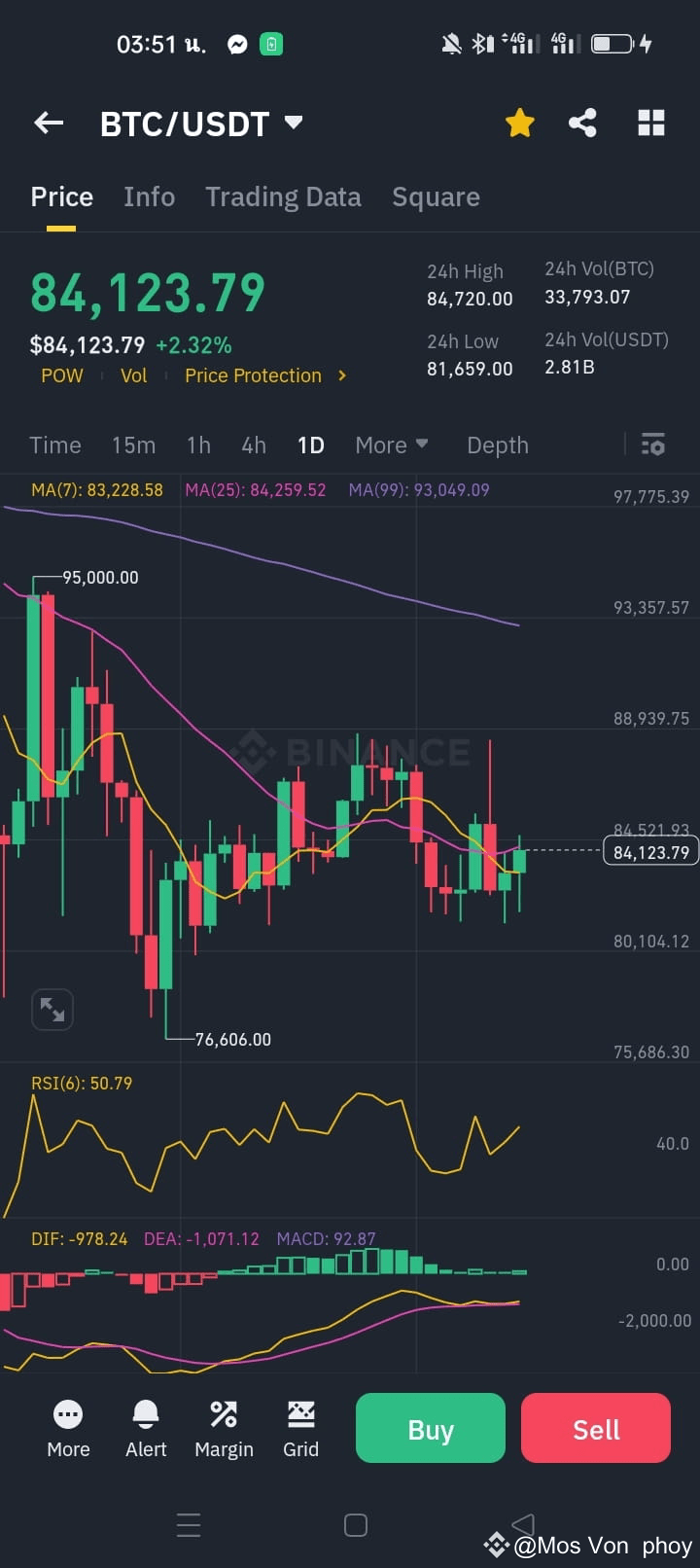
#BinanceEarnYieldArena بناءً على الرسم البياني الحالي لـ BTC/USDT، إليك تحليل لمساعدتك في اتخاذ قرار الشراء أو البيع:
الملاحظات الرئيسية:
السعر الحالي: $84,123.79
أعلى سعر خلال 24 ساعة: $84,720
أدنى سعر خلال 24 ساعة: $81,659
السعر قريب من مستوى مقاومة قصير الأجل.
المتوسطات المتحركة:
MA(7) (قصير الأجل): $83,228.58 (السعر فوق هذا، مما يظهر زخمًا صعوديًا طفيفًا)
MA(25) (متوسط الأجل): $84,259.52 (السعر تحت هذا، مما يشير إلى مقاومة)
MA(99) (طويل الأجل): $93,049.09 (بعيد فوق السعر الحالي، مما يعني أن الاتجاه طويل الأجل لا يزال هبوطيًا)
مؤشر القوة النسبية (6): 50.79
مؤشر القوة النسبية محايد، مما يعني عدم وجود إشارة واضحة للشراء المفرط أو البيع المفرط.
مؤشر MACD:
مؤشر MACD إيجابي قليلاً (92.87)، مما يظهر أن ضغط الشراء في تزايد، لكن لا يزال غير مؤكد.
دليل القرار:
اشترِ إذا:
كسر BTC فوق مقاومة $84,720 بحجم قوي.
استمر MACD في الارتفاع وتحرك RSI فوق 60 (مما يشير إلى زخم صعودي قوي).
حافظ BTC على السعر فوق MA(25) ($84,259) للتأكيد.
بيع إذا:
انخفض BTC تحت $81,659، مما يشير إلى انهيار هبوطي.
انخفض RSI تحت 40 (مما يدل على زيادة ضغط البيع).
عبر MACD لأسفل، مما يظهر عكس الاتجاه إلى الهبوط.
التوصية:
المتداولون على المدى القصير: انتظر تأكيد BTC لاختراق فوق $84,720 قبل الشراء.
المستثمرون على المدى الطويل: إذا انخفض BTC بالقرب من $81,659 - $80,000، فقد تكون فرصة شراء أفضل.
إذا كنت تحمل BTC بالفعل: فكر في أخذ أرباح جزئية إذا واجه صعوبة في كسر $84,720.
#BinanceEarnYieldArena بناءً على الرسم البياني الحالي لـ BTC/USDT، إليك تحليل لمساعدتك في اتخاذ قرار الشراء أو البيع:
الملاحظات الرئيسية:
السعر الحالي: $84,123.79
أعلى سعر خلال 24 ساعة: $84,720
أدنى سعر خلال 24 ساعة: $81,659
السعر قريب من مستوى مقاومة قصير الأجل.
المتوسطات المتحركة:
MA(7) (قصير الأجل): $83,228.58 (السعر فوق هذا، مما يظهر زخمًا صعوديًا طفيفًا)
MA(25) (متوسط الأجل): $84,259.52 (السعر تحت هذا، مما يشير إلى مقاومة)
MA(99) (طويل الأجل): $93,049.09 (بعيد فوق السعر الحالي، مما يعني أن الاتجاه طويل الأجل لا يزال هبوطيًا)
مؤشر القوة النسبية (6): 50.79
مؤشر القوة النسبية محايد، مما يعني عدم وجود إشارة واضحة للشراء المفرط أو البيع المفرط.
مؤشر MACD:
مؤشر MACD إيجابي قليلاً (92.87)، مما يظهر أن ضغط الشراء في تزايد، لكن لا يزال غير مؤكد.
دليل القرار:
اشترِ إذا:
كسر BTC فوق مقاومة $84,720 بحجم قوي.
استمر MACD في الارتفاع وتحرك RSI فوق 60 (مما يشير إلى زخم صعودي قوي).
حافظ BTC على السعر فوق MA(25) ($84,259) للتأكيد.
بيع إذا:
انخفض BTC تحت $81,659، مما يشير إلى انهيار هبوطي.
انخفض RSI تحت 40 (مما يدل على زيادة ضغط البيع).
عبر MACD لأسفل، مما يظهر عكس الاتجاه إلى الهبوط.
التوصية:
المتداولون على المدى القصير: انتظر تأكيد BTC لاختراق فوق $84,720 قبل الشراء.
المستثمرون على المدى الطويل: إذا انخفض BTC بالقرب من $81,659 - $80,000، فقد تكون فرصة شراء أفضل.
إذا كنت تحمل BTC بالفعل: فكر في أخذ أرباح جزئية إذا واجه صعوبة في كسر $84,720.
الملاحظات الرئيسية:
السعر الحالي: $84,123.79
أعلى سعر خلال 24 ساعة: $84,720
أدنى سعر خلال 24 ساعة: $81,659
السعر قريب من مستوى مقاومة قصير الأجل.
المتوسطات المتحركة:
MA(7) (قصير الأجل): $83,228.58 (السعر فوق هذا، مما يظهر زخمًا صعوديًا طفيفًا)
MA(25) (متوسط الأجل): $84,259.52 (السعر تحت هذا، مما يشير إلى مقاومة)
MA(99) (طويل الأجل): $93,049.09 (بعيد فوق السعر الحالي، مما يعني أن الاتجاه طويل الأجل لا يزال هبوطيًا)
مؤشر القوة النسبية (6): 50.79
مؤشر القوة النسبية محايد، مما يعني عدم وجود إشارة واضحة للشراء المفرط أو البيع المفرط.
مؤشر MACD:
مؤشر MACD إيجابي قليلاً (92.87)، مما يظهر أن ضغط الشراء في تزايد، لكن لا يزال غير مؤكد.
دليل القرار:
اشترِ إذا:
كسر BTC فوق مقاومة $84,720 بحجم قوي.
استمر MACD في الارتفاع وتحرك RSI فوق 60 (مما يشير إلى زخم صعودي قوي).
حافظ BTC على السعر فوق MA(25) ($84,259) للتأكيد.
بيع إذا:
انخفض BTC تحت $81,659، مما يشير إلى انهيار هبوطي.
انخفض RSI تحت 40 (مما يدل على زيادة ضغط البيع).
عبر MACD لأسفل، مما يظهر عكس الاتجاه إلى الهبوط.
التوصية:
المتداولون على المدى القصير: انتظر تأكيد BTC لاختراق فوق $84,720 قبل الشراء.
المستثمرون على المدى الطويل: إذا انخفض BTC بالقرب من $81,659 - $80,000، فقد تكون فرصة شراء أفضل.
إذا كنت تحمل BTC بالفعل: فكر في أخذ أرباح جزئية إذا واجه صعوبة في كسر $84,720.
396
·
--
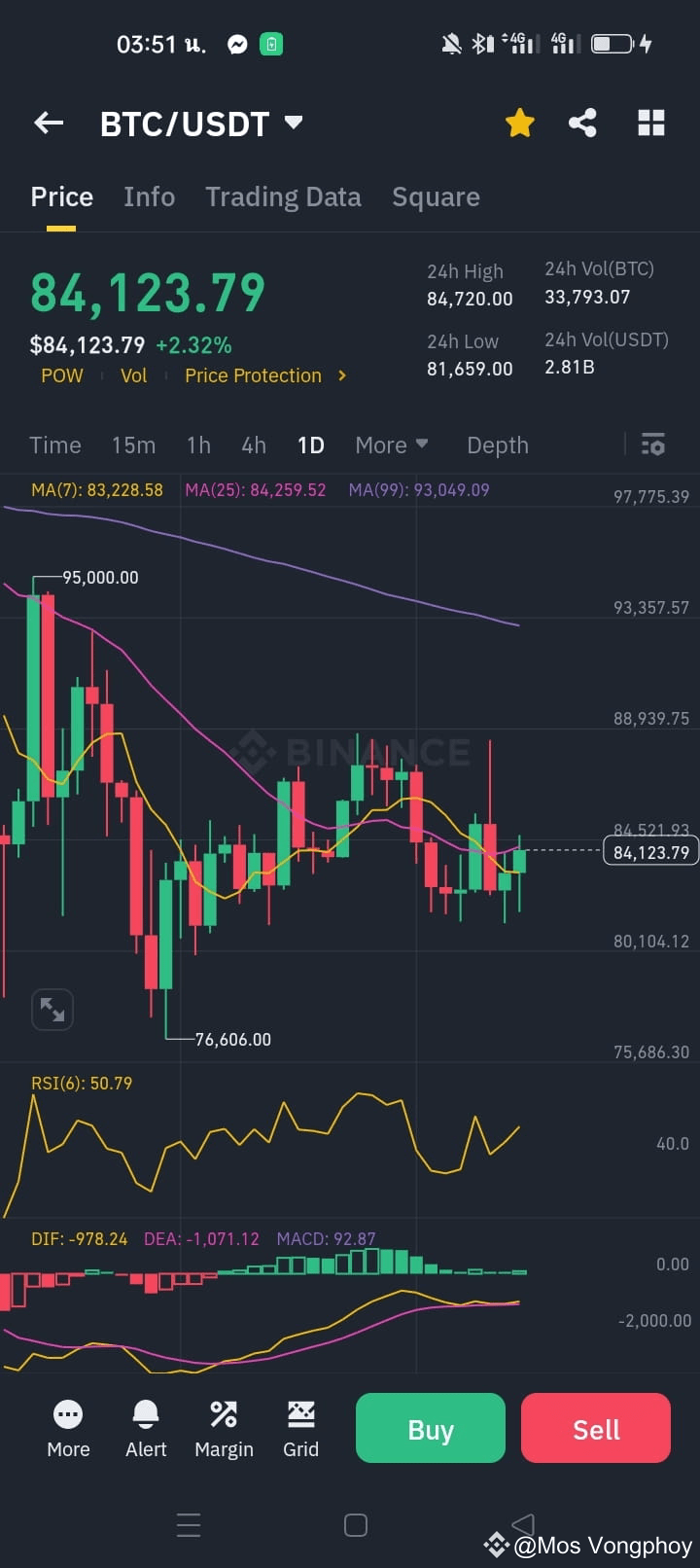
استنادًا إلى الرسم البياني الحالي لـ BTC/USDT، إليك تحليل لمساعدتك في اتخاذ القرار سواء بالشراء أو البيع:
ملاحظات رئيسية:
1. السعر الحالي: $84,123.79
أعلى سعر خلال 24 ساعة: $84,720
أدنى سعر خلال 24 ساعة: $81,659
السعر قريب من مستوى مقاومة قصير الأجل.
2. المتوسطات المتحركة:
MA(7) (قصير الأجل): $83,228.58 (السعر فوق هذا، مما يظهر زخمًا صعوديًا طفيفًا)
MA(25) (متوسط الأجل): $84,259.52 (السعر أسفل هذا بقليل، مما يشير إلى مقاومة)
MA(99) (طويل الأجل): $93,049.09 (أعلى بكثير من السعر الحالي، مما يعني أن الاتجاه على المدى الطويل لا يزال هبوطيًا)
3. RSI (6): 50.79
RSI محايد، مما يعني عدم وجود إشارة واضحة للشراء المفرط أو البيع المفرط.
4. مؤشر MACD:
MACD إيجابي قليلاً (92.87)، مما يظهر أن ضغط الشراء في تزايد، لكن لا يزال غير مؤكد.
دليل القرار:
اشترِ إذا:
تجاوز BTC مستوى مقاومة $84,720 بحجم تداول قوي.
استمر MACD في الارتفاع وانتقل RSI فوق 60 (مما يشير إلى زخم صعودي قوي).
حافظ BTC على السعر فوق MA(25) ($84,259) للتأكيد.
بيع إذا:
انخفض BTC تحت $81,659، مما يدل على انهيار هبوطي.
انخفض RSI تحت 40 (مما يظهر زيادة ضغط البيع).
عبر MACD للأسفل، مما يظهر انعكاس الاتجاه إلى الهبوط.
توصية:
التجار قصيرو الأجل: انتظر تأكيد BTC على الاختراق فوق $84,720 قبل الشراء.
المستثمرون طويلو الأجل: إذا انخفض BTC بالقرب من $81,659 - $80,000، فقد تكون فرصة شراء أفضل.
إذا كنت بالفعل تمتلك BTC: فكر في أخذ ربح جزئي إذا كان يواجه صعوبة في كسر $84,720.
استنادًا إلى الرسم البياني الحالي لـ BTC/USDT، إليك تحليل لمساعدتك في اتخاذ القرار سواء بالشراء أو البيع:
ملاحظات رئيسية:
1. السعر الحالي: $84,123.79
أعلى سعر خلال 24 ساعة: $84,720
أدنى سعر خلال 24 ساعة: $81,659
السعر قريب من مستوى مقاومة قصير الأجل.
2. المتوسطات المتحركة:
MA(7) (قصير الأجل): $83,228.58 (السعر فوق هذا، مما يظهر زخمًا صعوديًا طفيفًا)
MA(25) (متوسط الأجل): $84,259.52 (السعر أسفل هذا بقليل، مما يشير إلى مقاومة)
MA(99) (طويل الأجل): $93,049.09 (أعلى بكثير من السعر الحالي، مما يعني أن الاتجاه على المدى الطويل لا يزال هبوطيًا)
3. RSI (6): 50.79
RSI محايد، مما يعني عدم وجود إشارة واضحة للشراء المفرط أو البيع المفرط.
4. مؤشر MACD:
MACD إيجابي قليلاً (92.87)، مما يظهر أن ضغط الشراء في تزايد، لكن لا يزال غير مؤكد.
دليل القرار:
اشترِ إذا:
تجاوز BTC مستوى مقاومة $84,720 بحجم تداول قوي.
استمر MACD في الارتفاع وانتقل RSI فوق 60 (مما يشير إلى زخم صعودي قوي).
حافظ BTC على السعر فوق MA(25) ($84,259) للتأكيد.
بيع إذا:
انخفض BTC تحت $81,659، مما يدل على انهيار هبوطي.
انخفض RSI تحت 40 (مما يظهر زيادة ضغط البيع).
عبر MACD للأسفل، مما يظهر انعكاس الاتجاه إلى الهبوط.
توصية:
التجار قصيرو الأجل: انتظر تأكيد BTC على الاختراق فوق $84,720 قبل الشراء.
المستثمرون طويلو الأجل: إذا انخفض BTC بالقرب من $81,659 - $80,000، فقد تكون فرصة شراء أفضل.
إذا كنت بالفعل تمتلك BTC: فكر في أخذ ربح جزئي إذا كان يواجه صعوبة في كسر $84,720.
ملاحظات رئيسية:
1. السعر الحالي: $84,123.79
أعلى سعر خلال 24 ساعة: $84,720
أدنى سعر خلال 24 ساعة: $81,659
السعر قريب من مستوى مقاومة قصير الأجل.
2. المتوسطات المتحركة:
MA(7) (قصير الأجل): $83,228.58 (السعر فوق هذا، مما يظهر زخمًا صعوديًا طفيفًا)
MA(25) (متوسط الأجل): $84,259.52 (السعر أسفل هذا بقليل، مما يشير إلى مقاومة)
MA(99) (طويل الأجل): $93,049.09 (أعلى بكثير من السعر الحالي، مما يعني أن الاتجاه على المدى الطويل لا يزال هبوطيًا)
3. RSI (6): 50.79
RSI محايد، مما يعني عدم وجود إشارة واضحة للشراء المفرط أو البيع المفرط.
4. مؤشر MACD:
MACD إيجابي قليلاً (92.87)، مما يظهر أن ضغط الشراء في تزايد، لكن لا يزال غير مؤكد.
دليل القرار:
اشترِ إذا:
تجاوز BTC مستوى مقاومة $84,720 بحجم تداول قوي.
استمر MACD في الارتفاع وانتقل RSI فوق 60 (مما يشير إلى زخم صعودي قوي).
حافظ BTC على السعر فوق MA(25) ($84,259) للتأكيد.
بيع إذا:
انخفض BTC تحت $81,659، مما يدل على انهيار هبوطي.
انخفض RSI تحت 40 (مما يظهر زيادة ضغط البيع).
عبر MACD للأسفل، مما يظهر انعكاس الاتجاه إلى الهبوط.
توصية:
التجار قصيرو الأجل: انتظر تأكيد BTC على الاختراق فوق $84,720 قبل الشراء.
المستثمرون طويلو الأجل: إذا انخفض BTC بالقرب من $81,659 - $80,000، فقد تكون فرصة شراء أفضل.
إذا كنت بالفعل تمتلك BTC: فكر في أخذ ربح جزئي إذا كان يواجه صعوبة في كسر $84,720.
2
282
·
--
مقالة
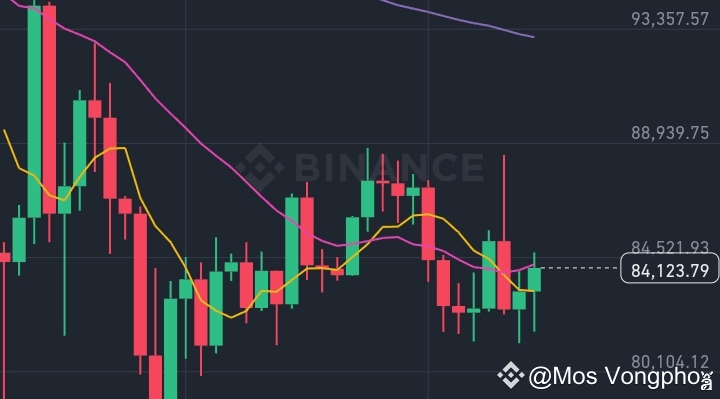
بيتكوين اليوممن الرسم البياني المعروض في تطبيق Binance والعوامل الفنية، هناك العديد من النقاط المثيرة للاهتمام:
الاتجاه القصير الأجل لـ BTC/USDT
خط المتوسط المتحرك (MA)
MA(7) = 83,228.58 (خط المتوسط على المدى القصير)
MA(25) = 84,259.52 (خط المتوسط على المدى المتوسط)
MA(99) = 93,049.09 (خط المتوسط على المدى الطويل)
بيتكوين اليوم
من الرسم البياني المعروض في تطبيق Binance والعوامل الفنية، هناك العديد من النقاط المثيرة للاهتمام:
الاتجاه القصير الأجل لـ BTC/USDT
خط المتوسط المتحرك (MA)
MA(7) = 83,228.58 (خط المتوسط على المدى القصير)
MA(25) = 84,259.52 (خط المتوسط على المدى المتوسط)
MA(99) = 93,049.09 (خط المتوسط على المدى الطويل)
الاتجاه القصير الأجل لـ BTC/USDT
خط المتوسط المتحرك (MA)
MA(7) = 83,228.58 (خط المتوسط على المدى القصير)
MA(25) = 84,259.52 (خط المتوسط على المدى المتوسط)
MA(99) = 93,049.09 (خط المتوسط على المدى الطويل)
1
100
·
--
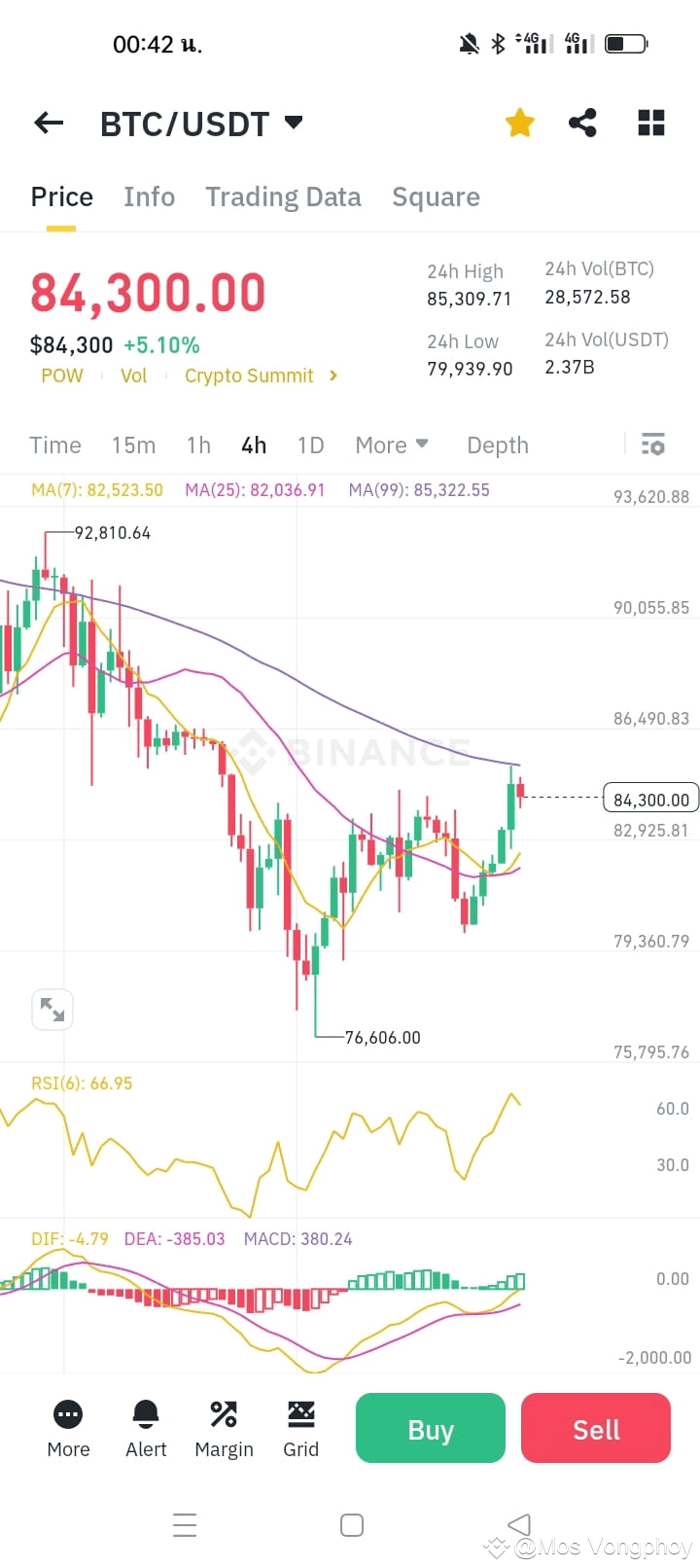
استنادًا إلى الرسم البياني، فإن بيتكوين (BTC) حاليًا عند 84,300 دولار، مما يظهر اتجاهًا صعوديًا بنسبة 5.10%. أعلى سعر خلال 24 ساعة هو 85,309.71 دولار، وأدنى سعر هو 79,939.90 دولار. تشير المؤشرات الفنية مثل RSI (66.95) إلى زخم قوي، بينما يتحرك السعر نحو المتوسط المتحرك لفترة 99 (85,322.55 دولار).
لكي تصل بيتكوين إلى 100,000 دولار، تحتاج إلى كسر مستويات المقاومة الرئيسية حول 86,500 دولار و90,000 دولار. إذا استمر الزخم الصعودي وحافظت BTC على الدعم فوق 80,000 دولار، فإن لديها القدرة على اختبار ارتفاعات جديدة. ومع ذلك، ستلعب ظروف السوق والعوامل الخارجية مثل الاتجاهات الاقتصادية الكلية ومشاعر المستثمرين دورًا حاسمًا.#BTC #Binance
استنادًا إلى الرسم البياني، فإن بيتكوين (BTC) حاليًا عند 84,300 دولار، مما يظهر اتجاهًا صعوديًا بنسبة 5.10%. أعلى سعر خلال 24 ساعة هو 85,309.71 دولار، وأدنى سعر هو 79,939.90 دولار. تشير المؤشرات الفنية مثل RSI (66.95) إلى زخم قوي، بينما يتحرك السعر نحو المتوسط المتحرك لفترة 99 (85,322.55 دولار).
لكي تصل بيتكوين إلى 100,000 دولار، تحتاج إلى كسر مستويات المقاومة الرئيسية حول 86,500 دولار و90,000 دولار. إذا استمر الزخم الصعودي وحافظت BTC على الدعم فوق 80,000 دولار، فإن لديها القدرة على اختبار ارتفاعات جديدة. ومع ذلك، ستلعب ظروف السوق والعوامل الخارجية مثل الاتجاهات الاقتصادية الكلية ومشاعر المستثمرين دورًا حاسمًا.#BTC #Binance
لكي تصل بيتكوين إلى 100,000 دولار، تحتاج إلى كسر مستويات المقاومة الرئيسية حول 86,500 دولار و90,000 دولار. إذا استمر الزخم الصعودي وحافظت BTC على الدعم فوق 80,000 دولار، فإن لديها القدرة على اختبار ارتفاعات جديدة. ومع ذلك، ستلعب ظروف السوق والعوامل الخارجية مثل الاتجاهات الاقتصادية الكلية ومشاعر المستثمرين دورًا حاسمًا.#BTC #Binance
7
246
·
--
هابط
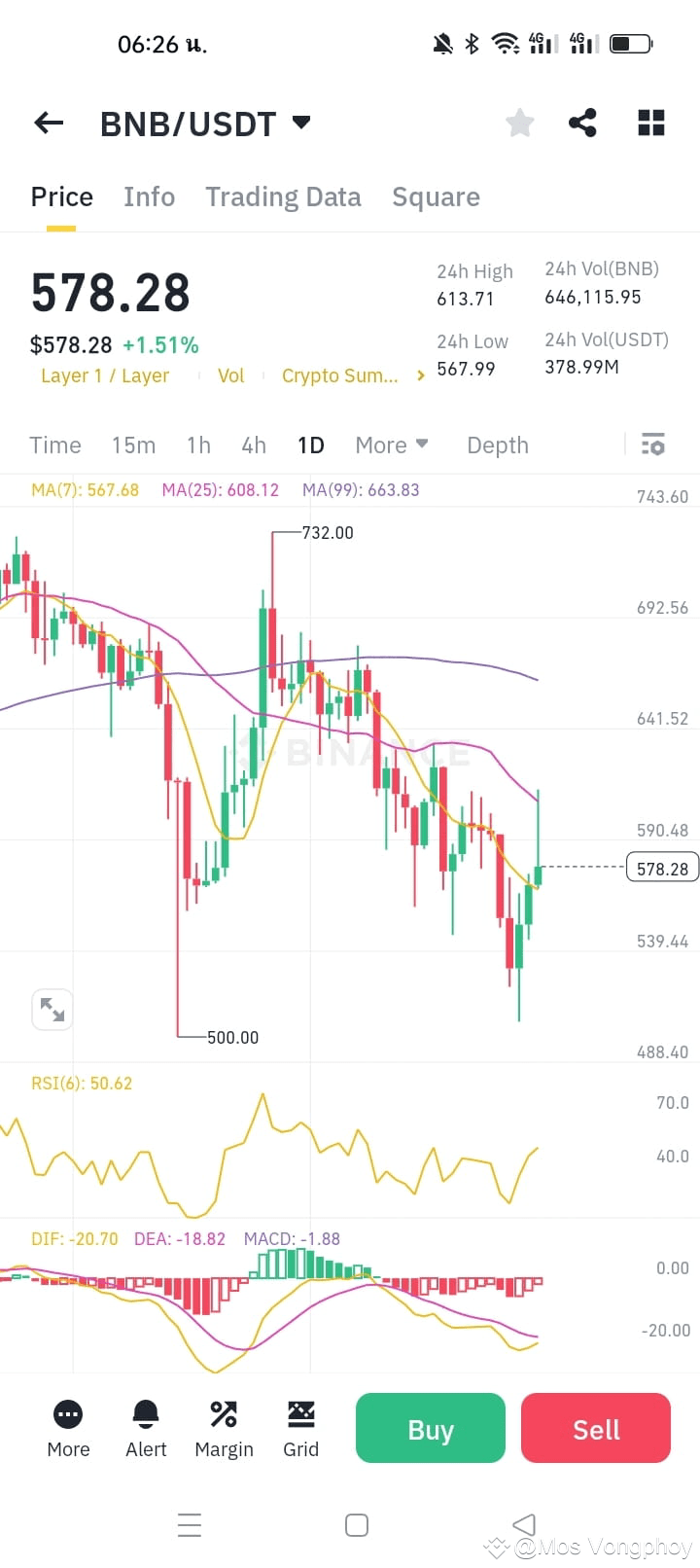
تحليل اتجاه سعر BNB/USDT
استنادًا إلى الرسم البياني والمؤشرات، إليك العوامل الرئيسية التي يجب مراعاتها:
اتجاه السعر والمتوسطات المتحركة (MA)
السعر الحالي هو 578.28 USDT
المتوسط المتحرك لـ 7 أيام (567.68) أقل من السعر، مما يشير إلى احتمال التعافي
ومع ذلك، يظل المتوسط المتحرك لـ 25 يومًا (608.12) و المتوسط المتحرك لـ 99 يومًا (663.83) أعلى، مما يشير إلى أن الاتجاه النزولي لا يزال قائمًا
مستويات الدعم والمقاومة
الدعم: حوالي 567.99 USDT
المقاومة: أولاً عند 590.48 USDT، ثم عند 608.12 USDT
RSI (مؤشر القوة النسبية)
RSI(6) عند 50.62، وهو محايد، مما يشير إلى عدم وجود زخم قوي للشراء أو البيع
MACD (تباين المتوسط المتحرك)
DIF (-20.70) و DEA (-18.82) أدنى من الصفر، مما يشير إلى اتجاه نزولي طويل الأجل
MACD (-1.88) بدأ يتحول لأعلى، مما يدل على احتمال حدوث تعافي قصير الأجل
الخاتمة
هناك علامات على تعافي قصير الأجل حيث يتحرك السعر فوق MA7
ومع ذلك، لا يزال الاتجاه طويل الأجل هابطًا بسبب المتوسطات المتحركة الأعلى التي تشير لأسفل
يشير RSI إلى سوق محايد بدون زخم قوي
إذا تجاوز السعر 590.48 USDT و MA25 (608.12 USDT)، من الممكن المزيد من الارتفاع
إذا انخفض تحت 567.99 USDT، فقد يعيد اختبار الدعم حول 500 USDT$BNB
تحليل اتجاه سعر BNB/USDT
استنادًا إلى الرسم البياني والمؤشرات، إليك العوامل الرئيسية التي يجب مراعاتها:
اتجاه السعر والمتوسطات المتحركة (MA)
السعر الحالي هو 578.28 USDT
المتوسط المتحرك لـ 7 أيام (567.68) أقل من السعر، مما يشير إلى احتمال التعافي
ومع ذلك، يظل المتوسط المتحرك لـ 25 يومًا (608.12) و المتوسط المتحرك لـ 99 يومًا (663.83) أعلى، مما يشير إلى أن الاتجاه النزولي لا يزال قائمًا
مستويات الدعم والمقاومة
الدعم: حوالي 567.99 USDT
المقاومة: أولاً عند 590.48 USDT، ثم عند 608.12 USDT
RSI (مؤشر القوة النسبية)
RSI(6) عند 50.62، وهو محايد، مما يشير إلى عدم وجود زخم قوي للشراء أو البيع
MACD (تباين المتوسط المتحرك)
DIF (-20.70) و DEA (-18.82) أدنى من الصفر، مما يشير إلى اتجاه نزولي طويل الأجل
MACD (-1.88) بدأ يتحول لأعلى، مما يدل على احتمال حدوث تعافي قصير الأجل
الخاتمة
هناك علامات على تعافي قصير الأجل حيث يتحرك السعر فوق MA7
ومع ذلك، لا يزال الاتجاه طويل الأجل هابطًا بسبب المتوسطات المتحركة الأعلى التي تشير لأسفل
يشير RSI إلى سوق محايد بدون زخم قوي
إذا تجاوز السعر 590.48 USDT و MA25 (608.12 USDT)، من الممكن المزيد من الارتفاع
إذا انخفض تحت 567.99 USDT، فقد يعيد اختبار الدعم حول 500 USDT$BNB
استنادًا إلى الرسم البياني والمؤشرات، إليك العوامل الرئيسية التي يجب مراعاتها:
اتجاه السعر والمتوسطات المتحركة (MA)
السعر الحالي هو 578.28 USDT
المتوسط المتحرك لـ 7 أيام (567.68) أقل من السعر، مما يشير إلى احتمال التعافي
ومع ذلك، يظل المتوسط المتحرك لـ 25 يومًا (608.12) و المتوسط المتحرك لـ 99 يومًا (663.83) أعلى، مما يشير إلى أن الاتجاه النزولي لا يزال قائمًا
مستويات الدعم والمقاومة
الدعم: حوالي 567.99 USDT
المقاومة: أولاً عند 590.48 USDT، ثم عند 608.12 USDT
RSI (مؤشر القوة النسبية)
RSI(6) عند 50.62، وهو محايد، مما يشير إلى عدم وجود زخم قوي للشراء أو البيع
MACD (تباين المتوسط المتحرك)
DIF (-20.70) و DEA (-18.82) أدنى من الصفر، مما يشير إلى اتجاه نزولي طويل الأجل
MACD (-1.88) بدأ يتحول لأعلى، مما يدل على احتمال حدوث تعافي قصير الأجل
الخاتمة
هناك علامات على تعافي قصير الأجل حيث يتحرك السعر فوق MA7
ومع ذلك، لا يزال الاتجاه طويل الأجل هابطًا بسبب المتوسطات المتحركة الأعلى التي تشير لأسفل
يشير RSI إلى سوق محايد بدون زخم قوي
إذا تجاوز السعر 590.48 USDT و MA25 (608.12 USDT)، من الممكن المزيد من الارتفاع
إذا انخفض تحت 567.99 USDT، فقد يعيد اختبار الدعم حول 500 USDT$BNB
6
334
·
--
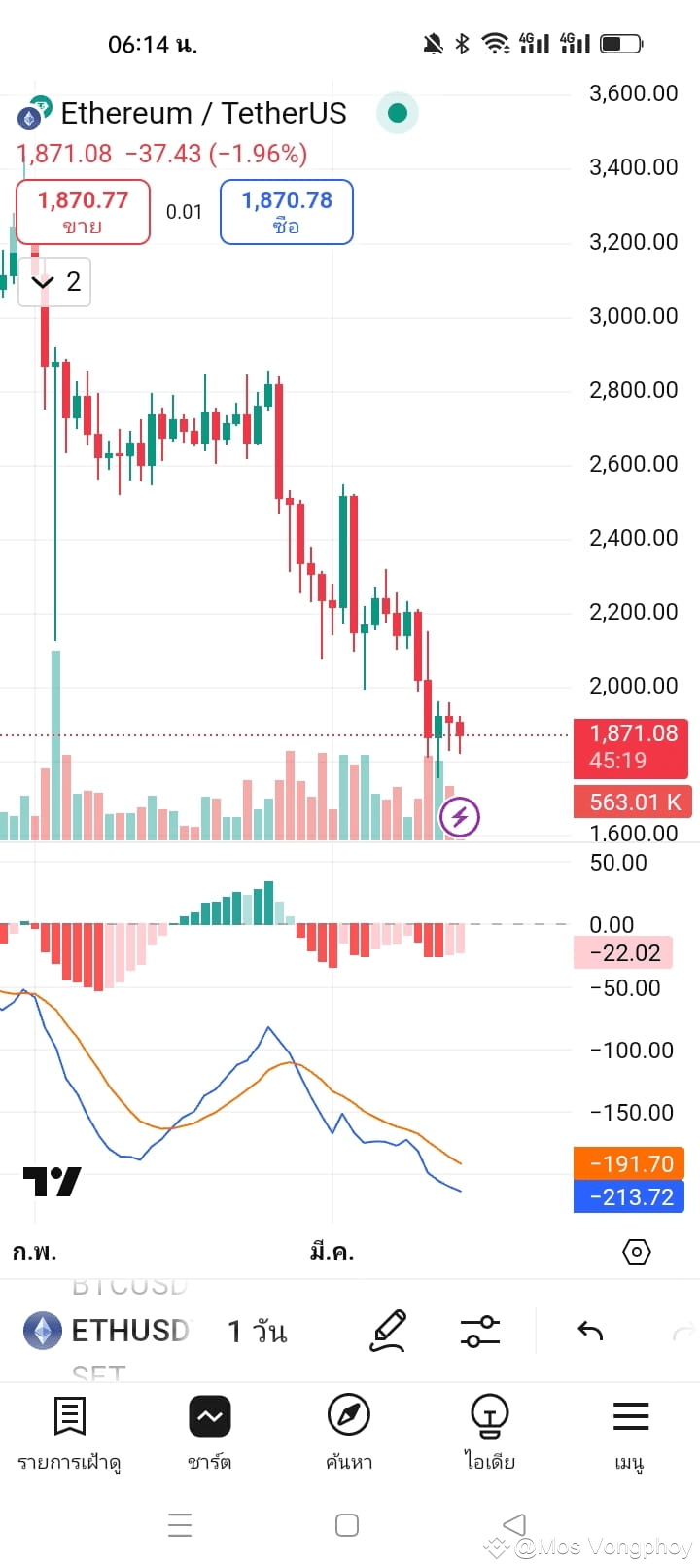
تحليل مخطط Ethereum (ETH/USDT)
معلومات رئيسية من المخطط:
السعر: $1,871.08 (-1.96%)
الاتجاه: اتجاه هابط (دببي)
مستوى الدعم الرئيسي: حوالي $1,800
مستوى المقاومة الرئيسي: حوالي $2,000
تفاصيل تحليل المخطط:
مخطط الشمعدانات:
لقد كان السعر في انخفاض مستمر.
هناك العديد من الشموع الحمراء، مما يشير إلى ضغط بيع قوي.
حجم التداول:
زاد الحجم خلال انخفاض الأسعار، مما يشير إلى زخم بيع قوي.
مؤشر MACD:
خط MACD (الأزرق) تحت خط الإشارة (البرتقالي).
الهستوغرام سلبي وينخفض، مما يؤكد زخم دببي.
الاتجاه العام:
السعر في اتجاه هابط واضح.
هناك إمكانية لاختبار مستوى الدعم $1,800.
إذا فشل السعر في الثبات فوق هذا المستوى، فقد ينخفض أكثر إلى $1,700 أو حتى $1,600.
هذا يشير إلى نهج حذر، حيث يظهر السوق إشارات دببية قوية.#FollowTheLeadTrader
تحليل مخطط Ethereum (ETH/USDT)
معلومات رئيسية من المخطط:
السعر: $1,871.08 (-1.96%)
الاتجاه: اتجاه هابط (دببي)
مستوى الدعم الرئيسي: حوالي $1,800
مستوى المقاومة الرئيسي: حوالي $2,000
تفاصيل تحليل المخطط:
مخطط الشمعدانات:
لقد كان السعر في انخفاض مستمر.
هناك العديد من الشموع الحمراء، مما يشير إلى ضغط بيع قوي.
حجم التداول:
زاد الحجم خلال انخفاض الأسعار، مما يشير إلى زخم بيع قوي.
مؤشر MACD:
خط MACD (الأزرق) تحت خط الإشارة (البرتقالي).
الهستوغرام سلبي وينخفض، مما يؤكد زخم دببي.
الاتجاه العام:
السعر في اتجاه هابط واضح.
هناك إمكانية لاختبار مستوى الدعم $1,800.
إذا فشل السعر في الثبات فوق هذا المستوى، فقد ينخفض أكثر إلى $1,700 أو حتى $1,600.
هذا يشير إلى نهج حذر، حيث يظهر السوق إشارات دببية قوية.#FollowTheLeadTrader
معلومات رئيسية من المخطط:
السعر: $1,871.08 (-1.96%)
الاتجاه: اتجاه هابط (دببي)
مستوى الدعم الرئيسي: حوالي $1,800
مستوى المقاومة الرئيسي: حوالي $2,000
تفاصيل تحليل المخطط:
مخطط الشمعدانات:
لقد كان السعر في انخفاض مستمر.
هناك العديد من الشموع الحمراء، مما يشير إلى ضغط بيع قوي.
حجم التداول:
زاد الحجم خلال انخفاض الأسعار، مما يشير إلى زخم بيع قوي.
مؤشر MACD:
خط MACD (الأزرق) تحت خط الإشارة (البرتقالي).
الهستوغرام سلبي وينخفض، مما يؤكد زخم دببي.
الاتجاه العام:
السعر في اتجاه هابط واضح.
هناك إمكانية لاختبار مستوى الدعم $1,800.
إذا فشل السعر في الثبات فوق هذا المستوى، فقد ينخفض أكثر إلى $1,700 أو حتى $1,600.
هذا يشير إلى نهج حذر، حيث يظهر السوق إشارات دببية قوية.#FollowTheLeadTrader
9
232
سجّل الدخول لاستكشاف المزيد من المُحتوى
انضم إلى مُستخدمي العملات الرقمية حول العالم على Binance Square
⚡️ احصل على أحدث المعلومات المفيدة عن العملات الرقمية.
💬 موثوقة من قبل أكبر منصّة لتداول العملات الرقمية في العالم.
👍 اكتشف الرؤى الحقيقية من صنّاع المُحتوى الموثوقين.
البريد الإلكتروني / رقم الهاتف
المواضيع الرائجة
AIStocksWhatNext
939,830 مشاهدات
6,832 يقومون بالنقاش
شارك واربح مكافأة حركة المرور في حملة الهاشتاغ الرائجة لدينا
✨الموضوع: ما فرص الاستثمار الأخرى التي ما زالت قائمة مع استمرار ارتفاع أسهم الذكاء الاصطناعي؟
👉كيفية الانضمام:
انشر منشورًا قصيرًا أو مقالًا باستخدام هاشتاغ #AIStocksWhatNext
شارك ما إذا كنت متفائلًا أم متشائمًا، وانشر مقتنياتك من أسهم الذكاء الاصطناعي أو تداولك — قد يؤدي استخدام أداة التداول إلى تحسين أهليتك.
يمكنك أيضًا تعزيز منشورك بمشاركة بيانات أو مخططات، وتجنب الصور المُولدة بالذكاء الاصطناعي.
✍️أنشئ محتوى بناءً على الزوايا التالية:
- يقول نِفيديا إن مبيعات الرقائق ستتضاعف العام القادم، وتواصل كبرى شركات الذكاء الاصطناعي تحقيق إيرادات قياسية؛ إن إنفاق الحوسبة وراء ذلك مثير للإعجاب بنفس القدر. هل طلب الذكاء الاصطناعي يتصاعد فعلًا؟ وكم يمكن أن يستمر؟ أسهم الذكاء الاصطناعي مرتفعة على نطاق واسع. هل هذا اختراق حقيقي أم مجرد ارتداد قصير الأجل؟
- يدعو قادة الصناعة إلى إبطاء تطوير الذكاء الاصطناعي، بينما يخطط ترامب لبناء "قوة ذكاء اصطناعي"، مدعيًا أن الذكاء الاصطناعي قد يمثل 25% من الناتج المحلي الإجمالي الأمريكي في المستقبل. في أي جانب أنت؟ وهل الدعم على مستوى الولايات سيكون فوزًا طويل الأمد لأسهم الذكاء الاصطناعي؟
- هل تشتري أسهم الذكاء الاصطناعي؟ شارك تداولك/مقتنياتك المتعلقة بالذكاء الاصطناعي معنا عبر أداة مشاركة التداول.
⏰فترة الحملة:
- 2026-09-22 7:00 - 2026-09-24 4:00 بالتوقيت العالمي
🎁المكافأة:
- سيتم مراجعة المنشورات المؤهلة التي تلتزم بالإرشادات أعلاه وتتضمن أكثر من 100 كلمة، وقد تحصل على تعزيز عشوائي لحركة المرور من 500 إلى 3,000 مشاهدة. ستصلك إشعار من سكرتير موجزك إذا تم اختيار منشورك.
- احصل على فرصة لعرض مقالك في Binance Square Official
هل تحتاج إلى أفكار لمنشورك؟ تفضل بزيارة صفحة الموضوع #AIStocksWhatNext أو Square Guide on How to Post for Better Reach.
Binance Square Official
·601 إعجاب
·1.7M مشاهدات
BitcoinRejectedAt$87,300Twice
0 مشاهدات
0 يقومون بالنقاش
BCHJumps28%OnCMEFuturesListing
16,887 مشاهدات
603 يقومون بالنقاش