
MIND FLARE
4.8k منشورات

MIND FLARE
 تحقُّق Binance Square الإضافي
إبلاغ
حظر المُستخدم
🔥Blogger (crypto)| They call us dreamers but we ‘re the ones who don’t sleep| Trading Crypto with Discipline, Not with Emotion(Sharing market insights)

حائز على ASTER
مُتداول مُتكرر
1.2 سنوات
368 تتابع
34.2K+ المتابعون
13.1K+ إعجاب
منشورات
الكل
اقتباسات
مقاطع فيديو
Live
PINNED
·
--
صاعد
$DEXE ما يزال في مرحلة الإصلاح. لقد تلاشى السعر من 2.707 ولم يعد يجلس فوق كليهما، حيث يقع الآن تحت كلٍ من MA7 (2.325) وMA25 (2.366). يكمن السؤال في ما إذا كان النطاق 2.24–2.27 يستمر في امتصاص البائعين. إذا بقي هذا القاع ثابتًا، فقد يتيح استعادة 2.32–2.37 فتح الطريق مجددًا نحو 2.42. أما إذا فقدنا 2.24، فسيكون الدعم التالي المهم تقريبًا عند 2.12–2.02.
$NIL يبدو أكثر صحة بكثير. السعر يحافظ على مستوى أعلى من MA7 (0.0514) وMA25 (0.0491) بعد الاندفاع إلى 0.05395. طالما أن نطاق 0.0514–0.0520 ما زال قائمًا، فهذا يبدو أقرب إلى تماسك/تجميع قرب القمم وليس اختراقًا فاشلًا. ستؤكد حركة واضحة فوق 0.05395–0.0543 امتدادًا جديدًا للموجة، بينما فإن فقدان 0.0514 سيُضعف هذا السيناريو.
قرائِي: NIL يتماسك بقوة؛ وDEXE ما زال يحتاج إلى إعادة استحواذ قبل أن تتحول الزخمات إلى وضع بنّاء.
{spot}(DEXEUSDT)
{spot}(NILUSDT)
#DEXE/USDT #NIL
$DEXE ما يزال في مرحلة الإصلاح. لقد تلاشى السعر من 2.707 ولم يعد يجلس فوق كليهما، حيث يقع الآن تحت كلٍ من MA7 (2.325) وMA25 (2.366). يكمن السؤال في ما إذا كان النطاق 2.24–2.27 يستمر في امتصاص البائعين. إذا بقي هذا القاع ثابتًا، فقد يتيح استعادة 2.32–2.37 فتح الطريق مجددًا نحو 2.42. أما إذا فقدنا 2.24، فسيكون الدعم التالي المهم تقريبًا عند 2.12–2.02.
$NIL يبدو أكثر صحة بكثير. السعر يحافظ على مستوى أعلى من MA7 (0.0514) وMA25 (0.0491) بعد الاندفاع إلى 0.05395. طالما أن نطاق 0.0514–0.0520 ما زال قائمًا، فهذا يبدو أقرب إلى تماسك/تجميع قرب القمم وليس اختراقًا فاشلًا. ستؤكد حركة واضحة فوق 0.05395–0.0543 امتدادًا جديدًا للموجة، بينما فإن فقدان 0.0514 سيُضعف هذا السيناريو.
قرائِي: NIL يتماسك بقوة؛ وDEXE ما زال يحتاج إلى إعادة استحواذ قبل أن تتحول الزخمات إلى وضع بنّاء.
#DEXE/USDT #NIL
$NIL يبدو أكثر صحة بكثير. السعر يحافظ على مستوى أعلى من MA7 (0.0514) وMA25 (0.0491) بعد الاندفاع إلى 0.05395. طالما أن نطاق 0.0514–0.0520 ما زال قائمًا، فهذا يبدو أقرب إلى تماسك/تجميع قرب القمم وليس اختراقًا فاشلًا. ستؤكد حركة واضحة فوق 0.05395–0.0543 امتدادًا جديدًا للموجة، بينما فإن فقدان 0.0514 سيُضعف هذا السيناريو.
قرائِي: NIL يتماسك بقوة؛ وDEXE ما زال يحتاج إلى إعادة استحواذ قبل أن تتحول الزخمات إلى وضع بنّاء.
#DEXE/USDT #NIL
$NIL > 0.054
30%
$DEXE > 2.37
55%
Both retrace
8%
Wait for support
7%
40 الأصوات • تمّ إغلاق التصويت
9
3
77
188.5k
PINNED
·
--
صاعد
$TUT يمتلك الاتجاه الأكثر نظافة خلال إطار الساعة 1. الحركة من 0.0357 → 0.0846 ما تزال تتشكل على هيئة قمم أعلى وقِيعان أعلى، مع بقاء السعر مرتفعًا بشكل جيد فوق المتوسط المتحرك الصاعد MA7. المشكلة تكمن في الامتداد: عند 0.0825، أصبح السعر ممتدًا من دعم الأجل القصير. 0.0846–0.0870 هي منطقة المقاومة الفورية؛ 0.0748–0.0720 هو النطاق الذي أرغب أن يدافع عنه المشترون إذا هدأ الزخم.
$1000CAT مختلف. معظم صعوده بنسبة +42% جاء من شمعة توسّع واحدة، والآن تتراجع أحجام التداول بينما يتماسك السعر تحت 0.00227–0.00244. الحفاظ على 0.00206–0.00211 سيجعل الصورة تبدو كأنها امتصاص بعد الدفعة. إذا فقد 0.00206، فترتفع احتمالية حدوث تصحيح أعمق باتجاه 0.00185–0.00171.
قراءتي: TUT يتمتع بجودة اتجاه أقوى، بينما 1000CAT لديه إعداد انضغاط أكثر إثارة.
{spot}(TUTUSDT)
{spot}(1000CATUSDT)
#TUT #1000cat
ما الذي سيتكسر أولًا؟
$TUT يمتلك الاتجاه الأكثر نظافة خلال إطار الساعة 1. الحركة من 0.0357 → 0.0846 ما تزال تتشكل على هيئة قمم أعلى وقِيعان أعلى، مع بقاء السعر مرتفعًا بشكل جيد فوق المتوسط المتحرك الصاعد MA7. المشكلة تكمن في الامتداد: عند 0.0825، أصبح السعر ممتدًا من دعم الأجل القصير. 0.0846–0.0870 هي منطقة المقاومة الفورية؛ 0.0748–0.0720 هو النطاق الذي أرغب أن يدافع عنه المشترون إذا هدأ الزخم.
$1000CAT مختلف. معظم صعوده بنسبة +42% جاء من شمعة توسّع واحدة، والآن تتراجع أحجام التداول بينما يتماسك السعر تحت 0.00227–0.00244. الحفاظ على 0.00206–0.00211 سيجعل الصورة تبدو كأنها امتصاص بعد الدفعة. إذا فقد 0.00206، فترتفع احتمالية حدوث تصحيح أعمق باتجاه 0.00185–0.00171.
قراءتي: TUT يتمتع بجودة اتجاه أقوى، بينما 1000CAT لديه إعداد انضغاط أكثر إثارة.
#TUT #1000cat
ما الذي سيتكسر أولًا؟
$1000CAT مختلف. معظم صعوده بنسبة +42% جاء من شمعة توسّع واحدة، والآن تتراجع أحجام التداول بينما يتماسك السعر تحت 0.00227–0.00244. الحفاظ على 0.00206–0.00211 سيجعل الصورة تبدو كأنها امتصاص بعد الدفعة. إذا فقد 0.00206، فترتفع احتمالية حدوث تصحيح أعمق باتجاه 0.00185–0.00171.
قراءتي: TUT يتمتع بجودة اتجاه أقوى، بينما 1000CAT لديه إعداد انضغاط أكثر إثارة.
#TUT #1000cat
ما الذي سيتكسر أولًا؟
$TUT > 0.0846
45%
$1000CAT > 0.00244
18%
Both pull back
28%
Wait for support
9%
74 الأصوات • تمّ إغلاق التصويت
18
1
114
292.6k
·
--
صاعد
$ONE at 0.001593 لا يزال قويًا تقنيًا على إطار 1H. السعر فوق MA7 0.001423 وMA25 0.001073 وMA99 0.000790، بينما وصل أحدث اندفاع إلى 0.001695 دون أن يفقد الاختراق فورًا. المنطقة المهمة الآن هي 0.00150–0.00142. إذا بقيت كذلك أثناء الارتداد، فإن اختبارًا آخر لمنطقة 0.001695–0.00172 أمر واقعي. إغلاق واضح على 1H فوق هذا المستوى من المقاومة سيُبقي التوسّع حيًا؛ أما فقد 0.00142 فسيجعل 0.00132 هي المنطقة التالية التي يجب مراقبتها.
$AVA at 0.3025 يتصرف بشكل مختلف. الاتجاه ما يزال صعوديًا، لكن السعر يجري تماسكًا بعد الرفض عند 0.3320 وبدأت أحجام التداول في التهدئة. MA7 عند 0.2852 هو أول دعم حقيقي. طالما أن 0.285–0.267 يبقى سليمًا، فهذا يبدو أكثر كتجميع على مستويات مرتفعة وليس كتوزيع. يحتاج المشترون (الدببة؟) إلى استعادة نطاق تقريبي 0.310–0.315 قبل محاولة أخرى واضحة للوصول إلى 0.332. تحت 0.267، يضعف الهيكل بسرعة ويفتح المجال نحو 0.231.
تقنيًا، لا يزال ONE يمتلك زخمًا أقوى، بينما لدى AVA بنية ارتداد أنظف. ONE أقرب إلى استمرار الاختراق؛ AVA يحتاج لاستعادة واحدة إضافية لإثبات أن المشترين ما زالوا يسيطرون على قمة النطاق.
{spot}(ONEUSDT)
{spot}(AVAUSDT)
#ONE #AVA
أي تأكيد ستثق به أكثر من هنا؟
$ONE at 0.001593 لا يزال قويًا تقنيًا على إطار 1H. السعر فوق MA7 0.001423 وMA25 0.001073 وMA99 0.000790، بينما وصل أحدث اندفاع إلى 0.001695 دون أن يفقد الاختراق فورًا. المنطقة المهمة الآن هي 0.00150–0.00142. إذا بقيت كذلك أثناء الارتداد، فإن اختبارًا آخر لمنطقة 0.001695–0.00172 أمر واقعي. إغلاق واضح على 1H فوق هذا المستوى من المقاومة سيُبقي التوسّع حيًا؛ أما فقد 0.00142 فسيجعل 0.00132 هي المنطقة التالية التي يجب مراقبتها.
$AVA at 0.3025 يتصرف بشكل مختلف. الاتجاه ما يزال صعوديًا، لكن السعر يجري تماسكًا بعد الرفض عند 0.3320 وبدأت أحجام التداول في التهدئة. MA7 عند 0.2852 هو أول دعم حقيقي. طالما أن 0.285–0.267 يبقى سليمًا، فهذا يبدو أكثر كتجميع على مستويات مرتفعة وليس كتوزيع. يحتاج المشترون (الدببة؟) إلى استعادة نطاق تقريبي 0.310–0.315 قبل محاولة أخرى واضحة للوصول إلى 0.332. تحت 0.267، يضعف الهيكل بسرعة ويفتح المجال نحو 0.231.
تقنيًا، لا يزال ONE يمتلك زخمًا أقوى، بينما لدى AVA بنية ارتداد أنظف. ONE أقرب إلى استمرار الاختراق؛ AVA يحتاج لاستعادة واحدة إضافية لإثبات أن المشترين ما زالوا يسيطرون على قمة النطاق.
#ONE #AVA
أي تأكيد ستثق به أكثر من هنا؟
$AVA at 0.3025 يتصرف بشكل مختلف. الاتجاه ما يزال صعوديًا، لكن السعر يجري تماسكًا بعد الرفض عند 0.3320 وبدأت أحجام التداول في التهدئة. MA7 عند 0.2852 هو أول دعم حقيقي. طالما أن 0.285–0.267 يبقى سليمًا، فهذا يبدو أكثر كتجميع على مستويات مرتفعة وليس كتوزيع. يحتاج المشترون (الدببة؟) إلى استعادة نطاق تقريبي 0.310–0.315 قبل محاولة أخرى واضحة للوصول إلى 0.332. تحت 0.267، يضعف الهيكل بسرعة ويفتح المجال نحو 0.231.
تقنيًا، لا يزال ONE يمتلك زخمًا أقوى، بينما لدى AVA بنية ارتداد أنظف. ONE أقرب إلى استمرار الاختراق؛ AVA يحتاج لاستعادة واحدة إضافية لإثبات أن المشترين ما زالوا يسيطرون على قمة النطاق.
#ONE #AVA
أي تأكيد ستثق به أكثر من هنا؟
$ONE closes above 0.00170
28%
$AVA reclaims 0.315
27%
$ONE retests 0.00142
27%
$AVA loses 0.285
18%
11 الأصوات • تمّ إغلاق التصويت
1
1
4.5k
·
--
صاعد
$SAGA عند 0.02404 لا يزال يُظهر بنية اختراق صحيحة. السعر فوق MA7 (0.02219) وMA25 (0.02000) وMA99 (0.01784)، وأقوى حجم جاء مع شمعة التوسّع وليس مع الهبوط التصحيحي (الارتداد). هذا أمر بنّاء. الجزء المهم الآن هو النطاق 0.0234–0.0230: إذا استمر هذا المستوى بالعمل كدعم، فستظل لدى المشترين فرصة واضحة للوصول إلى 0.02475. اختراق مُؤكّد فوق 0.02475 مع عودة حجم التداول سيُبقي الزخم حيًّا. إذا تَخلّى 0.0230 عن الدعم، أتوقع إعادة اختبار أعمق باتجاه MA7 قرب 0.0222 بدل الاستمرار الفوري.
$ASTR عند 0.006802 الأوضاع أضعف على المدى القصير بكثير. السعر يتحرك تحت MA7 (0.006943) وMA25 (0.006917) بعد فشلٍ متكرر حول منطقة 0.0070، بينما أحجام التداول تتناقص. هذا يجعل 0.00666 هو المستوى الذي يهم الآن. حافظ عليه واستعد 0.00692–0.00702، ويمكن أن تتعافى البنية باتجاه 0.00729. إذا فُقد 0.00666، فالدعم التالي المهم سيكون أدنى بكثير قرب 0.00630، حيث يستقر MA99.
إذًا الفرق الفني بسيط: SAGA تتجمّع فوق اختراق؛ ASTR تحاول إيقاف تراجع/انهيار قصير الأجل. أريد وجود حجم متابعة على SAGA، وعلى ASTR أريد استعادة فعلية قبل اعتبار أي حركة قادمة بأنها مُؤكدة.
{spot}(SAGAUSDT)
{spot}(ASTRUSDT)
#SAGA #ASTR
$SAGA عند 0.02404 لا يزال يُظهر بنية اختراق صحيحة. السعر فوق MA7 (0.02219) وMA25 (0.02000) وMA99 (0.01784)، وأقوى حجم جاء مع شمعة التوسّع وليس مع الهبوط التصحيحي (الارتداد). هذا أمر بنّاء. الجزء المهم الآن هو النطاق 0.0234–0.0230: إذا استمر هذا المستوى بالعمل كدعم، فستظل لدى المشترين فرصة واضحة للوصول إلى 0.02475. اختراق مُؤكّد فوق 0.02475 مع عودة حجم التداول سيُبقي الزخم حيًّا. إذا تَخلّى 0.0230 عن الدعم، أتوقع إعادة اختبار أعمق باتجاه MA7 قرب 0.0222 بدل الاستمرار الفوري.
$ASTR عند 0.006802 الأوضاع أضعف على المدى القصير بكثير. السعر يتحرك تحت MA7 (0.006943) وMA25 (0.006917) بعد فشلٍ متكرر حول منطقة 0.0070، بينما أحجام التداول تتناقص. هذا يجعل 0.00666 هو المستوى الذي يهم الآن. حافظ عليه واستعد 0.00692–0.00702، ويمكن أن تتعافى البنية باتجاه 0.00729. إذا فُقد 0.00666، فالدعم التالي المهم سيكون أدنى بكثير قرب 0.00630، حيث يستقر MA99.
إذًا الفرق الفني بسيط: SAGA تتجمّع فوق اختراق؛ ASTR تحاول إيقاف تراجع/انهيار قصير الأجل. أريد وجود حجم متابعة على SAGA، وعلى ASTR أريد استعادة فعلية قبل اعتبار أي حركة قادمة بأنها مُؤكدة.
#SAGA #ASTR
$ASTR عند 0.006802 الأوضاع أضعف على المدى القصير بكثير. السعر يتحرك تحت MA7 (0.006943) وMA25 (0.006917) بعد فشلٍ متكرر حول منطقة 0.0070، بينما أحجام التداول تتناقص. هذا يجعل 0.00666 هو المستوى الذي يهم الآن. حافظ عليه واستعد 0.00692–0.00702، ويمكن أن تتعافى البنية باتجاه 0.00729. إذا فُقد 0.00666، فالدعم التالي المهم سيكون أدنى بكثير قرب 0.00630، حيث يستقر MA99.
إذًا الفرق الفني بسيط: SAGA تتجمّع فوق اختراق؛ ASTR تحاول إيقاف تراجع/انهيار قصير الأجل. أريد وجود حجم متابعة على SAGA، وعلى ASTR أريد استعادة فعلية قبل اعتبار أي حركة قادمة بأنها مُؤكدة.
#SAGA #ASTR
$SAGA breaks 0.02475
68%
$ASTR reclaims 0.0070
16%
$SAGA retests 0.0222
11%
$ASTR loses 0.00666
5%
19 الأصوات • تمّ إغلاق التصويت
1
2
6.3k
·
--
لم يحسم تقرير الوظائف جدل الاحتياطي الفيدرالي. بل منح صناع السياسات مساحة أكبر للتحرك.
ارتفع عدد الوظائف في أغسطس بمقدار 162,000 وظيفة، بينما بقي معدل البطالة عند 4.1%، ما يُظهر أن سوق العمل لا يزال يتمتع بمرونة. الآن تصبح بيانات مؤشر أسعار المستهلكين (CPI) هي الاختبار الحاسم.
قد لا يؤدي ارتفاع مؤشر CPI العام وحده إلى رفع الفائدة، خصوصًا إذا كانت أسعار الطاقة هي التي تقود معظم الزيادة. ستأتي الإشارة الأقوى من التضخم الأساسي وأسعار الخدمات.
إذا ارتفع التضخم العام بينما يبرد التضخم الأساسي، يمكن للاحتياطي الفيدرالي أن يبرر الإبقاء على الفائدة. لكن إذا بقي كلاهما مرتفعًا، تصبح زيادة الفائدة بمقدار 25 نقطة أساس أكثر احتمالًا بكثير.
قد تكون تلك النتيجة سلبية لأسهم النمو لأن ارتفاع العوائد يقلل من قيمة الأرباح المستقبلية. وقد ينخفض الذهب أيضًا خلال رد الفعل الأول إذا تقوى الدولار، لكن استمرار التضخم قد يجذب المشترين مجددًا بعد أن يستقر التذبذب الأولي.
الإعداد واضح: سيكون ارتفاع التضخم الأساسي عاملًا سلبيًا لأسهم النمو، بينما يمكن أن يتحول الذهب إلى صعودي بعد أول رد فعل في السوق.
لن ألاحق شمعة الافتتاح. ستحدد التفاصيل ما إذا كانت الخطوة الأولى ستستمر.
#CPIWatch
ماذا سيفعل الاحتياطي الفيدرالي بعد ذلك؟
لم يحسم تقرير الوظائف جدل الاحتياطي الفيدرالي. بل منح صناع السياسات مساحة أكبر للتحرك.
ارتفع عدد الوظائف في أغسطس بمقدار 162,000 وظيفة، بينما بقي معدل البطالة عند 4.1%، ما يُظهر أن سوق العمل لا يزال يتمتع بمرونة. الآن تصبح بيانات مؤشر أسعار المستهلكين (CPI) هي الاختبار الحاسم.
قد لا يؤدي ارتفاع مؤشر CPI العام وحده إلى رفع الفائدة، خصوصًا إذا كانت أسعار الطاقة هي التي تقود معظم الزيادة. ستأتي الإشارة الأقوى من التضخم الأساسي وأسعار الخدمات.
إذا ارتفع التضخم العام بينما يبرد التضخم الأساسي، يمكن للاحتياطي الفيدرالي أن يبرر الإبقاء على الفائدة. لكن إذا بقي كلاهما مرتفعًا، تصبح زيادة الفائدة بمقدار 25 نقطة أساس أكثر احتمالًا بكثير.
قد تكون تلك النتيجة سلبية لأسهم النمو لأن ارتفاع العوائد يقلل من قيمة الأرباح المستقبلية. وقد ينخفض الذهب أيضًا خلال رد الفعل الأول إذا تقوى الدولار، لكن استمرار التضخم قد يجذب المشترين مجددًا بعد أن يستقر التذبذب الأولي.
الإعداد واضح: سيكون ارتفاع التضخم الأساسي عاملًا سلبيًا لأسهم النمو، بينما يمكن أن يتحول الذهب إلى صعودي بعد أول رد فعل في السوق.
لن ألاحق شمعة الافتتاح. ستحدد التفاصيل ما إذا كانت الخطوة الأولى ستستمر.
#CPIWatch
ماذا سيفعل الاحتياطي الفيدرالي بعد ذلك؟
ارتفع عدد الوظائف في أغسطس بمقدار 162,000 وظيفة، بينما بقي معدل البطالة عند 4.1%، ما يُظهر أن سوق العمل لا يزال يتمتع بمرونة. الآن تصبح بيانات مؤشر أسعار المستهلكين (CPI) هي الاختبار الحاسم.
قد لا يؤدي ارتفاع مؤشر CPI العام وحده إلى رفع الفائدة، خصوصًا إذا كانت أسعار الطاقة هي التي تقود معظم الزيادة. ستأتي الإشارة الأقوى من التضخم الأساسي وأسعار الخدمات.
إذا ارتفع التضخم العام بينما يبرد التضخم الأساسي، يمكن للاحتياطي الفيدرالي أن يبرر الإبقاء على الفائدة. لكن إذا بقي كلاهما مرتفعًا، تصبح زيادة الفائدة بمقدار 25 نقطة أساس أكثر احتمالًا بكثير.
قد تكون تلك النتيجة سلبية لأسهم النمو لأن ارتفاع العوائد يقلل من قيمة الأرباح المستقبلية. وقد ينخفض الذهب أيضًا خلال رد الفعل الأول إذا تقوى الدولار، لكن استمرار التضخم قد يجذب المشترين مجددًا بعد أن يستقر التذبذب الأولي.
الإعداد واضح: سيكون ارتفاع التضخم الأساسي عاملًا سلبيًا لأسهم النمو، بينما يمكن أن يتحول الذهب إلى صعودي بعد أول رد فعل في السوق.
لن ألاحق شمعة الافتتاح. ستحدد التفاصيل ما إذا كانت الخطوة الأولى ستستمر.
#CPIWatch
ماذا سيفعل الاحتياطي الفيدرالي بعد ذلك؟
Hike 25 bps
75%
Hold rates
0%
Too close
25%
4 الأصوات • تمّ إغلاق التصويت
1
2
748
·
--
$BTC بدأ يبدو ثقيلاً على إطار 1H.
عند 77,675 دولار، يتداول السعر تحت المتوسطات المتحركة MA7 (78,005) وMA25 (78,366) وMA99 (79,977). والأهم من ذلك أن كل ارتداد منذ 78,564 دولار تم بيعه، في حين أن أحدث هبوط يأتي بحجم أحمر أقوى. وهذا يحافظ على السيطرة قصيرة الأجل لدى البائعين.
77,650 دولار هو الخط الفوري الذي أراقبه. إذا فقدت البيتكوين هذا المستوى بإغلاق واضح على 1H، فقد يمتد التحرك باتجاه 77.3 ألف–77.0 ألف دولار قبل أن يحصل المشترون على اختبار ذي معنى آخر.
بالنسبة للمتفائلين، مجرد الارتداد ليس كافياً. أولاً يجب أن تعيد البيتكوين الاستحواذ على 77.9 ألف–78.0 ألف دولار. بعد ذلك، تصبح 78.22 ألف–78.36 ألف دولار منطقة المقاومة الحقيقية. وحتى استعادة هذه المستويات، سأتعامل مع الشموع الصاعدة على أنها ارتدادات مهدِّئة وليس انعكاساً مؤكداً.
الجزء المثير للاهتمام هنا هو أن البيتكوين لا تحتاج إلى عملية بيع ضخمة كي تظل هابطة؛ بل يكفي أن تستمر في الفشل تحت متوسطات المدى القصير المتراجعة.
{spot}(BTCUSDT)
#BTC
$BTC بدأ يبدو ثقيلاً على إطار 1H.
عند 77,675 دولار، يتداول السعر تحت المتوسطات المتحركة MA7 (78,005) وMA25 (78,366) وMA99 (79,977). والأهم من ذلك أن كل ارتداد منذ 78,564 دولار تم بيعه، في حين أن أحدث هبوط يأتي بحجم أحمر أقوى. وهذا يحافظ على السيطرة قصيرة الأجل لدى البائعين.
77,650 دولار هو الخط الفوري الذي أراقبه. إذا فقدت البيتكوين هذا المستوى بإغلاق واضح على 1H، فقد يمتد التحرك باتجاه 77.3 ألف–77.0 ألف دولار قبل أن يحصل المشترون على اختبار ذي معنى آخر.
بالنسبة للمتفائلين، مجرد الارتداد ليس كافياً. أولاً يجب أن تعيد البيتكوين الاستحواذ على 77.9 ألف–78.0 ألف دولار. بعد ذلك، تصبح 78.22 ألف–78.36 ألف دولار منطقة المقاومة الحقيقية. وحتى استعادة هذه المستويات، سأتعامل مع الشموع الصاعدة على أنها ارتدادات مهدِّئة وليس انعكاساً مؤكداً.
الجزء المثير للاهتمام هنا هو أن البيتكوين لا تحتاج إلى عملية بيع ضخمة كي تظل هابطة؛ بل يكفي أن تستمر في الفشل تحت متوسطات المدى القصير المتراجعة.
#BTC
عند 77,675 دولار، يتداول السعر تحت المتوسطات المتحركة MA7 (78,005) وMA25 (78,366) وMA99 (79,977). والأهم من ذلك أن كل ارتداد منذ 78,564 دولار تم بيعه، في حين أن أحدث هبوط يأتي بحجم أحمر أقوى. وهذا يحافظ على السيطرة قصيرة الأجل لدى البائعين.
77,650 دولار هو الخط الفوري الذي أراقبه. إذا فقدت البيتكوين هذا المستوى بإغلاق واضح على 1H، فقد يمتد التحرك باتجاه 77.3 ألف–77.0 ألف دولار قبل أن يحصل المشترون على اختبار ذي معنى آخر.
بالنسبة للمتفائلين، مجرد الارتداد ليس كافياً. أولاً يجب أن تعيد البيتكوين الاستحواذ على 77.9 ألف–78.0 ألف دولار. بعد ذلك، تصبح 78.22 ألف–78.36 ألف دولار منطقة المقاومة الحقيقية. وحتى استعادة هذه المستويات، سأتعامل مع الشموع الصاعدة على أنها ارتدادات مهدِّئة وليس انعكاساً مؤكداً.
الجزء المثير للاهتمام هنا هو أن البيتكوين لا تحتاج إلى عملية بيع ضخمة كي تظل هابطة؛ بل يكفي أن تستمر في الفشل تحت متوسطات المدى القصير المتراجعة.
#BTC
Bounce from $77.6K
26%
Break toward $77K
35%
Reclaim $78.3K
30%
More chop first
9%
23 الأصوات • تمّ إغلاق التصويت
9
1
50
72.7k
·
--
صاعد
REZ يحاول تحويل أول قمة إلى أساس أعلى مناسب، بينما يواصل VTHO العمل على التبريد بعد الاختراق.
عند 0.003632، $REZ أعلى من MA7 (0.003388) وMA25 (0.003245) وMA99 (0.003170). هذا التكدّس الصعودي للمتوسطات المتحركة مهم لأن الارتداد من 0.00405 لم يكسر البنية الجديدة. المواجهة الفورية تقع بين 0.00365–0.00388؛ فإن كان هناك قبول فوق هذه المنطقة فسيسمح بإعادة طرح 0.00405. وعلى الجانب السلبي، 0.00342–0.00338 هو أول دعم، مع 0.00325–0.00320 باعتبارها منطقة إبطال أقوى. لقد هدأ حجم التداول بعد الاندفاع، لذا فإن الاختراق التالي يحتاج إلى مشاركة—ليس مجرد ذيل رفيع آخر.
$VTHO عند 0.000678 ما زالت فوق MA25 وMA99، لذا يبقى الاتجاه الأكبر على إطار 1H بنّاءً، لكن الزخم قصير الأجل أضعف لأن السعر يجلس تحت MA7 (0.000688) مباشرةً. استعادة 0.000694–0.000700 ستُحسّن الإعداد وتعيد فتح 0.000749. إذا فشل المشترون في الدفاع عن 0.000650–0.000623، فقد تتراجع الحركة باتجاه 0.00055–0.000514.
حالياً، لدى REZ بنية اتجاه أنظف. يحتاج VTHO إلى استعادة قبل أن أثق باستمرار جديد.
{spot}(VTHOUSDT)
{spot}(REZUSDT)
#VTHO #REZ
REZ يحاول تحويل أول قمة إلى أساس أعلى مناسب، بينما يواصل VTHO العمل على التبريد بعد الاختراق.
عند 0.003632، $REZ أعلى من MA7 (0.003388) وMA25 (0.003245) وMA99 (0.003170). هذا التكدّس الصعودي للمتوسطات المتحركة مهم لأن الارتداد من 0.00405 لم يكسر البنية الجديدة. المواجهة الفورية تقع بين 0.00365–0.00388؛ فإن كان هناك قبول فوق هذه المنطقة فسيسمح بإعادة طرح 0.00405. وعلى الجانب السلبي، 0.00342–0.00338 هو أول دعم، مع 0.00325–0.00320 باعتبارها منطقة إبطال أقوى. لقد هدأ حجم التداول بعد الاندفاع، لذا فإن الاختراق التالي يحتاج إلى مشاركة—ليس مجرد ذيل رفيع آخر.
$VTHO عند 0.000678 ما زالت فوق MA25 وMA99، لذا يبقى الاتجاه الأكبر على إطار 1H بنّاءً، لكن الزخم قصير الأجل أضعف لأن السعر يجلس تحت MA7 (0.000688) مباشرةً. استعادة 0.000694–0.000700 ستُحسّن الإعداد وتعيد فتح 0.000749. إذا فشل المشترون في الدفاع عن 0.000650–0.000623، فقد تتراجع الحركة باتجاه 0.00055–0.000514.
حالياً، لدى REZ بنية اتجاه أنظف. يحتاج VTHO إلى استعادة قبل أن أثق باستمرار جديد.
#VTHO #REZ
عند 0.003632، $REZ أعلى من MA7 (0.003388) وMA25 (0.003245) وMA99 (0.003170). هذا التكدّس الصعودي للمتوسطات المتحركة مهم لأن الارتداد من 0.00405 لم يكسر البنية الجديدة. المواجهة الفورية تقع بين 0.00365–0.00388؛ فإن كان هناك قبول فوق هذه المنطقة فسيسمح بإعادة طرح 0.00405. وعلى الجانب السلبي، 0.00342–0.00338 هو أول دعم، مع 0.00325–0.00320 باعتبارها منطقة إبطال أقوى. لقد هدأ حجم التداول بعد الاندفاع، لذا فإن الاختراق التالي يحتاج إلى مشاركة—ليس مجرد ذيل رفيع آخر.
$VTHO عند 0.000678 ما زالت فوق MA25 وMA99، لذا يبقى الاتجاه الأكبر على إطار 1H بنّاءً، لكن الزخم قصير الأجل أضعف لأن السعر يجلس تحت MA7 (0.000688) مباشرةً. استعادة 0.000694–0.000700 ستُحسّن الإعداد وتعيد فتح 0.000749. إذا فشل المشترون في الدفاع عن 0.000650–0.000623، فقد تتراجع الحركة باتجاه 0.00055–0.000514.
حالياً، لدى REZ بنية اتجاه أنظف. يحتاج VTHO إلى استعادة قبل أن أثق باستمرار جديد.
#VTHO #REZ
$REZ breakout
33%
$VTHO reclaim
59%
Both retrace
4%
Wait for retest
4%
27 الأصوات • تمّ إغلاق التصويت
1
2
9.2k
·
--
صاعد
$IOST لديه البنية الأكثر نظافة على إطار 1H. كان الاختراق من 0.00090 قد اتسع مع حجم تداول، وما زال السعر يتماسك فوق MA7 قرب 0.00100 رغم الرفض من 0.001189. إذا استمرت الفترة 0.00100–0.00097، فهذا يبدو أقرب إلى إعادة اختبار للاختراق وليس إلى توزيع، مع عودة 0.00110 → 0.001189 إلى دائرة اللعب. إن خسرنا 0.00097، فستصبح منطقة الدعم التالية هي 0.00093–0.00090.
$SOPH لديه زخم أقوى بكثير، لكنه أيضًا بعيد عن نقطة الدخول أكثر. ارتفع السعر تقريبًا إلى الضعف ويتم تداوله بشكل جيد فوق MA7 عند 0.00786. يشير ذيل الرفض من 0.01167 مع حجم تداول مرتفع إلى وجود عرض حقيقي يدخل قرب القمة. إن الحفاظ على 0.0090–0.0093 يبقي الاستمرارية حيّة، لكن فقدان تلك المنطقة قد يُسرّع إعادة الضبط باتجاه 0.0079–0.00735. إن استعادة واضحة لـ 0.01045 ستُحسّن احتمالات محاولة أخرى عند 0.01167.
قرائي: IOST يقدم البنية الأكثر صحة؛ SOPH يقدم زخمًا أكبر لكن أيضًا مخاطر إرهاق أكبر.
#IOST #SOPH
{spot}(IOSTUSDT)
{spot}(SOPHUSDT)
أي سيناريو يُرجّح أن يحتفظ بشكل أفضل؟
$IOST لديه البنية الأكثر نظافة على إطار 1H. كان الاختراق من 0.00090 قد اتسع مع حجم تداول، وما زال السعر يتماسك فوق MA7 قرب 0.00100 رغم الرفض من 0.001189. إذا استمرت الفترة 0.00100–0.00097، فهذا يبدو أقرب إلى إعادة اختبار للاختراق وليس إلى توزيع، مع عودة 0.00110 → 0.001189 إلى دائرة اللعب. إن خسرنا 0.00097، فستصبح منطقة الدعم التالية هي 0.00093–0.00090.
$SOPH لديه زخم أقوى بكثير، لكنه أيضًا بعيد عن نقطة الدخول أكثر. ارتفع السعر تقريبًا إلى الضعف ويتم تداوله بشكل جيد فوق MA7 عند 0.00786. يشير ذيل الرفض من 0.01167 مع حجم تداول مرتفع إلى وجود عرض حقيقي يدخل قرب القمة. إن الحفاظ على 0.0090–0.0093 يبقي الاستمرارية حيّة، لكن فقدان تلك المنطقة قد يُسرّع إعادة الضبط باتجاه 0.0079–0.00735. إن استعادة واضحة لـ 0.01045 ستُحسّن احتمالات محاولة أخرى عند 0.01167.
قرائي: IOST يقدم البنية الأكثر صحة؛ SOPH يقدم زخمًا أكبر لكن أيضًا مخاطر إرهاق أكبر.
#IOST #SOPH
أي سيناريو يُرجّح أن يحتفظ بشكل أفضل؟
$SOPH لديه زخم أقوى بكثير، لكنه أيضًا بعيد عن نقطة الدخول أكثر. ارتفع السعر تقريبًا إلى الضعف ويتم تداوله بشكل جيد فوق MA7 عند 0.00786. يشير ذيل الرفض من 0.01167 مع حجم تداول مرتفع إلى وجود عرض حقيقي يدخل قرب القمة. إن الحفاظ على 0.0090–0.0093 يبقي الاستمرارية حيّة، لكن فقدان تلك المنطقة قد يُسرّع إعادة الضبط باتجاه 0.0079–0.00735. إن استعادة واضحة لـ 0.01045 ستُحسّن احتمالات محاولة أخرى عند 0.01167.
قرائي: IOST يقدم البنية الأكثر صحة؛ SOPH يقدم زخمًا أكبر لكن أيضًا مخاطر إرهاق أكبر.
#IOST #SOPH
أي سيناريو يُرجّح أن يحتفظ بشكل أفضل؟
$IOST > 0.00110
41%
$SOPH > 0.01045
41%
Both retrace
4%
Wait for support
14%
22 الأصوات • تمّ إغلاق التصويت
3
1
32
55k
·
--
صاعد
$CHIP يحافظ على مستوى أعلى من MA7 قرب 0.0541، لكن السعر يتقلص/يُحكم الإغلاق تحت 0.0565–0.0570 بينما يبرد حجم التداول. وهذا يُعدّ بنّاءً طالما أن 0.0530–0.0540 يستمر في الصمود؛ يمكن أن يؤدي الاختراق فوق 0.0565 إلى إعادة تشغيل الزخم، بينما فإن خسارة 0.0530 تفتح المجال لإعادة اختبار أعمق باتجاه 0.0507–0.0475.
$MUBARAK يبدو أقوى في هذه المرحلة. فقد امتصّ أول موجة هبوط بعد الاختراق، وهو الآن يضغط مجددًا داخل منطقة مقاومة 0.03226–0.03256 مع وجود السعر فوق MA7 وMA25 بشكل جيد. الحفاظ على 0.0305–0.0296 يُبقي بنية القاع الأعلى (higher-low) سليمة؛ أما تحت ذلك، فتصبح 0.0280 هي مستوى إعادة الضبط الرئيسي.
قرائي: CHIP يتداول في نطاق ضيق تحت المقاومة، بينما يقوم MUBARAK باختبارها بشكل نشط. يتمتع MUBARAK بميزة الزخم الأوضح ما لم يخترق CHIP 0.0565 مع حجم تداول.
{spot}(CHIPUSDT)
{spot}(MUBARAKUSDT)
#CHIP #MUBARAK
ما الذي سيكسر أولًا؟
$CHIP يحافظ على مستوى أعلى من MA7 قرب 0.0541، لكن السعر يتقلص/يُحكم الإغلاق تحت 0.0565–0.0570 بينما يبرد حجم التداول. وهذا يُعدّ بنّاءً طالما أن 0.0530–0.0540 يستمر في الصمود؛ يمكن أن يؤدي الاختراق فوق 0.0565 إلى إعادة تشغيل الزخم، بينما فإن خسارة 0.0530 تفتح المجال لإعادة اختبار أعمق باتجاه 0.0507–0.0475.
$MUBARAK يبدو أقوى في هذه المرحلة. فقد امتصّ أول موجة هبوط بعد الاختراق، وهو الآن يضغط مجددًا داخل منطقة مقاومة 0.03226–0.03256 مع وجود السعر فوق MA7 وMA25 بشكل جيد. الحفاظ على 0.0305–0.0296 يُبقي بنية القاع الأعلى (higher-low) سليمة؛ أما تحت ذلك، فتصبح 0.0280 هي مستوى إعادة الضبط الرئيسي.
قرائي: CHIP يتداول في نطاق ضيق تحت المقاومة، بينما يقوم MUBARAK باختبارها بشكل نشط. يتمتع MUBARAK بميزة الزخم الأوضح ما لم يخترق CHIP 0.0565 مع حجم تداول.
#CHIP #MUBARAK
ما الذي سيكسر أولًا؟
$MUBARAK يبدو أقوى في هذه المرحلة. فقد امتصّ أول موجة هبوط بعد الاختراق، وهو الآن يضغط مجددًا داخل منطقة مقاومة 0.03226–0.03256 مع وجود السعر فوق MA7 وMA25 بشكل جيد. الحفاظ على 0.0305–0.0296 يُبقي بنية القاع الأعلى (higher-low) سليمة؛ أما تحت ذلك، فتصبح 0.0280 هي مستوى إعادة الضبط الرئيسي.
قرائي: CHIP يتداول في نطاق ضيق تحت المقاومة، بينما يقوم MUBARAK باختبارها بشكل نشط. يتمتع MUBARAK بميزة الزخم الأوضح ما لم يخترق CHIP 0.0565 مع حجم تداول.
#CHIP #MUBARAK
ما الذي سيكسر أولًا؟
$MUBARAK > 0.0323
46%
$CHIP > 0.0565
43%
Both reject
6%
Both continue
5%
35 الأصوات • تمّ إغلاق التصويت
1
28
59.5k
·
--
صاعد
$ACE has the cleaner 1H continuation structure. The breakout through 0.183–0.196 came with strong volume, and price is still accepting near the highs instead of immediately giving the move back. 0.205–0.196 is now the key support band; hold it and 0.2206–0.224 remains the next resistance test. A loss of 0.196 would expose the stronger 0.183–0.175 reset zone.
$SC already went through its expansion phase. After tagging 0.001099, price has compressed around 0.00086 while volume fades and remains below MA7 near 0.000892. Bulls need to reclaim 0.000892–0.000921 before another push toward 0.00102–0.00110 becomes convincing. 0.000834–0.000826 is the support that cannot keep failing; below it, 0.000793 becomes the more realistic magnet.
My read: ACE is holding breakout acceptance; SC is still proving whether its spike can turn into a base.
#ACE #SC
{spot}(ACEUSDT)
{spot}(SCUSDT)
Which confirms first?
$ACE has the cleaner 1H continuation structure. The breakout through 0.183–0.196 came with strong volume, and price is still accepting near the highs instead of immediately giving the move back. 0.205–0.196 is now the key support band; hold it and 0.2206–0.224 remains the next resistance test. A loss of 0.196 would expose the stronger 0.183–0.175 reset zone.
$SC already went through its expansion phase. After tagging 0.001099, price has compressed around 0.00086 while volume fades and remains below MA7 near 0.000892. Bulls need to reclaim 0.000892–0.000921 before another push toward 0.00102–0.00110 becomes convincing. 0.000834–0.000826 is the support that cannot keep failing; below it, 0.000793 becomes the more realistic magnet.
My read: ACE is holding breakout acceptance; SC is still proving whether its spike can turn into a base.
#ACE #SC
Which confirms first?
$SC already went through its expansion phase. After tagging 0.001099, price has compressed around 0.00086 while volume fades and remains below MA7 near 0.000892. Bulls need to reclaim 0.000892–0.000921 before another push toward 0.00102–0.00110 becomes convincing. 0.000834–0.000826 is the support that cannot keep failing; below it, 0.000793 becomes the more realistic magnet.
My read: ACE is holding breakout acceptance; SC is still proving whether its spike can turn into a base.
#ACE #SC
Which confirms first?
$ACE > 0.2206
42%
$SC > 0.000921
33%
Both pull back
17%
Wait for support
8%
24 الأصوات • تمّ إغلاق التصويت
2
11
9.6k
·
--
صاعد
$ZKC يُعد إعدادًا بزخمٍ أقوى حتى الآن. بعد الاندفاع إلى 0.0744، تراجع السعر، لكنه يتمسّك تقريبًا تمامًا حول MA7 عند 0.0675. هذا مهم لأن الحركة لم تُكسر الهيكل بعد. 0.066–0.0616 هي منطقة الدعم الرئيسية؛ إذا دافع المشترون عنها، يبقى مسار 0.0688 → 0.0744 مفتوحًا. إذا خسر 0.0616، فسيصبح التصحيح/إعادة الضبط المهمة التالية أقرب إلى 0.0544–0.0501.
$PROM أكثر انضغاطًا بكثير. السعر محصور بين MA7 (6.979) وMA25 (6.931) بعد رفض 7.434، بينما يضعف حجم التداول. هذا عادةً يعني أن الحركة التالية تحتاج لتأكيد بدلًا من التنبؤ. الحفاظ على 6.90–6.93 يبقي احتمال الدفع نحو 7.20–7.43 ممكنًا. فقدٌ واضح لهذه المنطقة يعيد 6.48–6.34 إلى دائرة التداول.
قراءتي: ZKC يبرد داخل اتجاه صاعد؛ PROM موجود عند نقطة قرار.
{spot}(ZKCUSDT)
{spot}(PROMUSDT)
#ZKC #PROM
ما الذي يؤكد ذلك أولًا؟
$ZKC يُعد إعدادًا بزخمٍ أقوى حتى الآن. بعد الاندفاع إلى 0.0744، تراجع السعر، لكنه يتمسّك تقريبًا تمامًا حول MA7 عند 0.0675. هذا مهم لأن الحركة لم تُكسر الهيكل بعد. 0.066–0.0616 هي منطقة الدعم الرئيسية؛ إذا دافع المشترون عنها، يبقى مسار 0.0688 → 0.0744 مفتوحًا. إذا خسر 0.0616، فسيصبح التصحيح/إعادة الضبط المهمة التالية أقرب إلى 0.0544–0.0501.
$PROM أكثر انضغاطًا بكثير. السعر محصور بين MA7 (6.979) وMA25 (6.931) بعد رفض 7.434، بينما يضعف حجم التداول. هذا عادةً يعني أن الحركة التالية تحتاج لتأكيد بدلًا من التنبؤ. الحفاظ على 6.90–6.93 يبقي احتمال الدفع نحو 7.20–7.43 ممكنًا. فقدٌ واضح لهذه المنطقة يعيد 6.48–6.34 إلى دائرة التداول.
قراءتي: ZKC يبرد داخل اتجاه صاعد؛ PROM موجود عند نقطة قرار.
#ZKC #PROM
ما الذي يؤكد ذلك أولًا؟
$PROM أكثر انضغاطًا بكثير. السعر محصور بين MA7 (6.979) وMA25 (6.931) بعد رفض 7.434، بينما يضعف حجم التداول. هذا عادةً يعني أن الحركة التالية تحتاج لتأكيد بدلًا من التنبؤ. الحفاظ على 6.90–6.93 يبقي احتمال الدفع نحو 7.20–7.43 ممكنًا. فقدٌ واضح لهذه المنطقة يعيد 6.48–6.34 إلى دائرة التداول.
قراءتي: ZKC يبرد داخل اتجاه صاعد؛ PROM موجود عند نقطة قرار.
#ZKC #PROM
ما الذي يؤكد ذلك أولًا؟
$ZKC > 0.0744
36%
$PROM > 7.43
43%
Both retrace
15%
Wait for support
6%
33 الأصوات • تمّ إغلاق التصويت
3
64
112.3k
·
--
قمتُ بإعداد قائمة أولية بما يزال يحتاجه Dusk قبل أن تتمكّن الأصول المُنظّمة من المرور عبره على نطاق واسع.
كانت بعض البنود سهلة التخيل بأن يدعمها المجتمع: تطبيقات dApps جديدة، ومحافظ، وأدوات تداول، وبرامج سيولة.
أما الباقي فكان أقل إثارة بكثير.
عمليات تدقيق أمنية.
تكاملات الحفظ.
أدوات الامتثال.
إدخال المُصدرين ضمن النظام.
البنية القانونية والتقارير.
الصيانة طويلة الأمد لبرمجيات قد لا يلاحظها المستخدمون أبدًا.
جعلتني تلك القائمة أن أنظر إلى تصويت OpenDusk من زاوية أخرى.
إذا تمّت الموافقة، فإن مكافآت الحظر المحروقة ستُموّل خزانة مجتمعية لتطوير النظام البيئي. الفائدة الواضحة هي أن قرارات التمويل لن تبقى حصرًا مع مؤسسة Dusk.
لكن التمويل المجتمعي يُدخل انحيازًا خاصًا به.
المنتجات المرئية أسهل في الشرح والترويج. يمكن لواجهة تبادل جديدة أن تعرض للمستخدمين والحجم واللقطات. وقد يستغرق مُوصّل الحفظ أو وحدة التقارير أشهرًا للبناء ولا يولّد إلا حماسة عامة قليلة، حتى لو كانت مؤسسة ما لا تستطيع العمل بدونه.
هذا الأمر مهم أكثر بالنسبة إلى Dusk من كونه سلسلة عامة الاستخدام.
لا يحاول Dusk فقط جذب مستخدمي العملات المشفرة. بل يحاول دعم المُصدرين والجهات المرخّصة والكيانات المالية. قد تكون متطلباتهم الأهم هي أقل المقترحات جاذبية في تصويت عام.
لذلك قد لا يتمثل اختبار OpenDusk الحقيقي في ما إذا كان بإمكان المجتمع اختيار المشاريع.
قد يتمثل في ما إذا كان بإمكان المجتمع تمويل العمل الضروري الذي لا يبدو مثيرًا.
سأراقب كيفية تقييم المقترحات عندما يتنافس dApp جماهيري يحظى باهتمام كبير مع تدقيق أو تكامل امتثال أو أداة تسوية للحصول على رأس مال الخزانة ذاته.
إذا كان OpenDusk يمول باستمرار ما ينال أكبر قدر من الاهتمام، فقد يخلق نشاطًا دون إكمال البنية المؤسسية.
أحيانًا تكون أقوى قرارات الحوكمة هي دفع ثمن بنية تحتية لن يحتفل بها أحد، لكن كل مشارك جاد في السوق سيحتاج إليها في نهاية المطاف.
@Dusk_Foundation $DUSK #dusk
{spot}(DUSKUSDT)
ما الذي ينبغي أن يضعه OpenDusk في أولوياته أولًا؟
قمتُ بإعداد قائمة أولية بما يزال يحتاجه Dusk قبل أن تتمكّن الأصول المُنظّمة من المرور عبره على نطاق واسع.
كانت بعض البنود سهلة التخيل بأن يدعمها المجتمع: تطبيقات dApps جديدة، ومحافظ، وأدوات تداول، وبرامج سيولة.
أما الباقي فكان أقل إثارة بكثير.
عمليات تدقيق أمنية.
تكاملات الحفظ.
أدوات الامتثال.
إدخال المُصدرين ضمن النظام.
البنية القانونية والتقارير.
الصيانة طويلة الأمد لبرمجيات قد لا يلاحظها المستخدمون أبدًا.
جعلتني تلك القائمة أن أنظر إلى تصويت OpenDusk من زاوية أخرى.
إذا تمّت الموافقة، فإن مكافآت الحظر المحروقة ستُموّل خزانة مجتمعية لتطوير النظام البيئي. الفائدة الواضحة هي أن قرارات التمويل لن تبقى حصرًا مع مؤسسة Dusk.
لكن التمويل المجتمعي يُدخل انحيازًا خاصًا به.
المنتجات المرئية أسهل في الشرح والترويج. يمكن لواجهة تبادل جديدة أن تعرض للمستخدمين والحجم واللقطات. وقد يستغرق مُوصّل الحفظ أو وحدة التقارير أشهرًا للبناء ولا يولّد إلا حماسة عامة قليلة، حتى لو كانت مؤسسة ما لا تستطيع العمل بدونه.
هذا الأمر مهم أكثر بالنسبة إلى Dusk من كونه سلسلة عامة الاستخدام.
لا يحاول Dusk فقط جذب مستخدمي العملات المشفرة. بل يحاول دعم المُصدرين والجهات المرخّصة والكيانات المالية. قد تكون متطلباتهم الأهم هي أقل المقترحات جاذبية في تصويت عام.
لذلك قد لا يتمثل اختبار OpenDusk الحقيقي في ما إذا كان بإمكان المجتمع اختيار المشاريع.
قد يتمثل في ما إذا كان بإمكان المجتمع تمويل العمل الضروري الذي لا يبدو مثيرًا.
سأراقب كيفية تقييم المقترحات عندما يتنافس dApp جماهيري يحظى باهتمام كبير مع تدقيق أو تكامل امتثال أو أداة تسوية للحصول على رأس مال الخزانة ذاته.
إذا كان OpenDusk يمول باستمرار ما ينال أكبر قدر من الاهتمام، فقد يخلق نشاطًا دون إكمال البنية المؤسسية.
أحيانًا تكون أقوى قرارات الحوكمة هي دفع ثمن بنية تحتية لن يحتفل بها أحد، لكن كل مشارك جاد في السوق سيحتاج إليها في نهاية المطاف.
@Dusk $DUSK #dusk
ما الذي ينبغي أن يضعه OpenDusk في أولوياته أولًا؟
كانت بعض البنود سهلة التخيل بأن يدعمها المجتمع: تطبيقات dApps جديدة، ومحافظ، وأدوات تداول، وبرامج سيولة.
أما الباقي فكان أقل إثارة بكثير.
عمليات تدقيق أمنية.
تكاملات الحفظ.
أدوات الامتثال.
إدخال المُصدرين ضمن النظام.
البنية القانونية والتقارير.
الصيانة طويلة الأمد لبرمجيات قد لا يلاحظها المستخدمون أبدًا.
جعلتني تلك القائمة أن أنظر إلى تصويت OpenDusk من زاوية أخرى.
إذا تمّت الموافقة، فإن مكافآت الحظر المحروقة ستُموّل خزانة مجتمعية لتطوير النظام البيئي. الفائدة الواضحة هي أن قرارات التمويل لن تبقى حصرًا مع مؤسسة Dusk.
لكن التمويل المجتمعي يُدخل انحيازًا خاصًا به.
المنتجات المرئية أسهل في الشرح والترويج. يمكن لواجهة تبادل جديدة أن تعرض للمستخدمين والحجم واللقطات. وقد يستغرق مُوصّل الحفظ أو وحدة التقارير أشهرًا للبناء ولا يولّد إلا حماسة عامة قليلة، حتى لو كانت مؤسسة ما لا تستطيع العمل بدونه.
هذا الأمر مهم أكثر بالنسبة إلى Dusk من كونه سلسلة عامة الاستخدام.
لا يحاول Dusk فقط جذب مستخدمي العملات المشفرة. بل يحاول دعم المُصدرين والجهات المرخّصة والكيانات المالية. قد تكون متطلباتهم الأهم هي أقل المقترحات جاذبية في تصويت عام.
لذلك قد لا يتمثل اختبار OpenDusk الحقيقي في ما إذا كان بإمكان المجتمع اختيار المشاريع.
قد يتمثل في ما إذا كان بإمكان المجتمع تمويل العمل الضروري الذي لا يبدو مثيرًا.
سأراقب كيفية تقييم المقترحات عندما يتنافس dApp جماهيري يحظى باهتمام كبير مع تدقيق أو تكامل امتثال أو أداة تسوية للحصول على رأس مال الخزانة ذاته.
إذا كان OpenDusk يمول باستمرار ما ينال أكبر قدر من الاهتمام، فقد يخلق نشاطًا دون إكمال البنية المؤسسية.
أحيانًا تكون أقوى قرارات الحوكمة هي دفع ثمن بنية تحتية لن يحتفل بها أحد، لكن كل مشارك جاد في السوق سيحتاج إليها في نهاية المطاف.
@Dusk $DUSK #dusk
ما الذي ينبغي أن يضعه OpenDusk في أولوياته أولًا؟
Security audits
50%
Custody rails
0%
Compliance
50%
Consumer dApps
0%
4 الأصوات • تمّ إغلاق التصويت
2
554
·
--
حاولت تتبّع مكان بدء الخصوصية فعليًا داخل تطبيق يعمل بـ Solidity على @Dusk_Foundation .
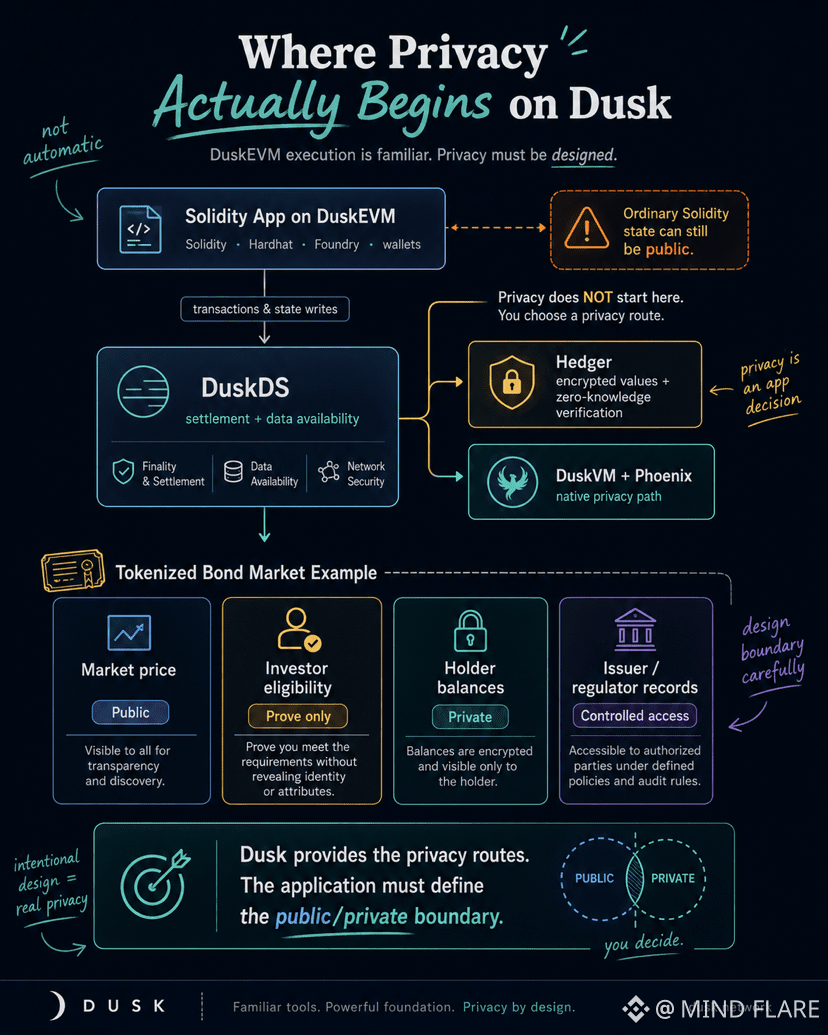
افترضت أنّ عقدًا يتم نشره على DuskEVM سيَرث خصوصية Dusk بطريقة ما لأن بياناته وتسويته في النهاية تمر عبر DuskDS.
لكن هذا ليس بالضبط كيف تعمل الطبقات.
يوفر DuskEVM للمطوّرين تجربة تنفيذ مألوفة على مستوى EVM. يمكنهم استخدام Solidity وHardhat وFoundry والمحافظ الموجودة.
تأتي DuskDS من تحت كقاعدة التسوية وتوفّر البيانات.
لكن يمكن لعقد Solidity عادي أن ينشر حالته مثل أي تطبيق آخر يعمل على EVM.
يجب تصميم سرّية البيانات داخل التطبيق عبر Hedger، أو التعامل معها بشكل أقرب إلى مسار الخصوصية الأصلي لدى Dusk عبر DuskVM وPhoenix. ولا تُضاف تلقائيًا لمجرد أنّ العقد يعمل داخل منظومة Dusk.
هذه الحدود جعلتني أتوقف.
تخيّل سوق سندات مُرمّزة.
قد يحتاج سعر السوق إلى أن يظل عامًا.
فأهلية المستثمرين لا تحتاج إلا إلى إثباتها.
يُفضّل أن تبقى أرصدة الحَمَلة خاصة.
قد يطلب المُصدر أو المُنظّم وصولًا مُتحكمًا إلى سجلات معيّنة.
ولا يمكن وضع هذه القطع الأربع ببساطة داخل الحالة العامة نفسها في Solidity.
يُقصد بـ Hedger حل جزء من هذه المشكلة عبر إبقاء القيم مشفّرة بينما تتحقق إثباتات المعرفة الصفرية من أنّ المعاملة التزمت بقواعدها. لكن على المطوّر أن يقرر أيضًا ما الذي يدخل مسار التشفير، وما الذي يبقى عامًا، ومن يحصل على حقوق الإفصاح.
قد يؤدي قرار تصميم سيّئ إلى كشف بيانات مالية حسّاسة قبل أن يحصل التشفير على فرصة لحمايتها.
لذلك أنا أقل تركيزًا على عدد بدائـل التشفير التي يدعمها Dusk.
أنا أراقب ما إذا كانت أدواته تجعل حدّ العلني/الخاص واضحًا بما يكفي ليتمكّن فرق Solidity العادية من استخدامه بشكل صحيح.
يمكن لـ Dusk توفير مسارات الخصوصية. لكنه لا يستطيع أن يتخذ قرار بنية المعمارية لكل تطبيق.
#dusk $DUSK
{spot}(DUSKUSDT)
حاولت تتبّع مكان بدء الخصوصية فعليًا داخل تطبيق يعمل بـ Solidity على @Dusk .
افترضت أنّ عقدًا يتم نشره على DuskEVM سيَرث خصوصية Dusk بطريقة ما لأن بياناته وتسويته في النهاية تمر عبر DuskDS.
لكن هذا ليس بالضبط كيف تعمل الطبقات.
يوفر DuskEVM للمطوّرين تجربة تنفيذ مألوفة على مستوى EVM. يمكنهم استخدام Solidity وHardhat وFoundry والمحافظ الموجودة.
تأتي DuskDS من تحت كقاعدة التسوية وتوفّر البيانات.
لكن يمكن لعقد Solidity عادي أن ينشر حالته مثل أي تطبيق آخر يعمل على EVM.
يجب تصميم سرّية البيانات داخل التطبيق عبر Hedger، أو التعامل معها بشكل أقرب إلى مسار الخصوصية الأصلي لدى Dusk عبر DuskVM وPhoenix. ولا تُضاف تلقائيًا لمجرد أنّ العقد يعمل داخل منظومة Dusk.
هذه الحدود جعلتني أتوقف.
تخيّل سوق سندات مُرمّزة.
قد يحتاج سعر السوق إلى أن يظل عامًا.
فأهلية المستثمرين لا تحتاج إلا إلى إثباتها.
يُفضّل أن تبقى أرصدة الحَمَلة خاصة.
قد يطلب المُصدر أو المُنظّم وصولًا مُتحكمًا إلى سجلات معيّنة.
ولا يمكن وضع هذه القطع الأربع ببساطة داخل الحالة العامة نفسها في Solidity.
يُقصد بـ Hedger حل جزء من هذه المشكلة عبر إبقاء القيم مشفّرة بينما تتحقق إثباتات المعرفة الصفرية من أنّ المعاملة التزمت بقواعدها. لكن على المطوّر أن يقرر أيضًا ما الذي يدخل مسار التشفير، وما الذي يبقى عامًا، ومن يحصل على حقوق الإفصاح.
قد يؤدي قرار تصميم سيّئ إلى كشف بيانات مالية حسّاسة قبل أن يحصل التشفير على فرصة لحمايتها.
لذلك أنا أقل تركيزًا على عدد بدائـل التشفير التي يدعمها Dusk.
أنا أراقب ما إذا كانت أدواته تجعل حدّ العلني/الخاص واضحًا بما يكفي ليتمكّن فرق Solidity العادية من استخدامه بشكل صحيح.
يمكن لـ Dusk توفير مسارات الخصوصية. لكنه لا يستطيع أن يتخذ قرار بنية المعمارية لكل تطبيق.
#dusk $DUSK
افترضت أنّ عقدًا يتم نشره على DuskEVM سيَرث خصوصية Dusk بطريقة ما لأن بياناته وتسويته في النهاية تمر عبر DuskDS.
لكن هذا ليس بالضبط كيف تعمل الطبقات.
يوفر DuskEVM للمطوّرين تجربة تنفيذ مألوفة على مستوى EVM. يمكنهم استخدام Solidity وHardhat وFoundry والمحافظ الموجودة.
تأتي DuskDS من تحت كقاعدة التسوية وتوفّر البيانات.
لكن يمكن لعقد Solidity عادي أن ينشر حالته مثل أي تطبيق آخر يعمل على EVM.
يجب تصميم سرّية البيانات داخل التطبيق عبر Hedger، أو التعامل معها بشكل أقرب إلى مسار الخصوصية الأصلي لدى Dusk عبر DuskVM وPhoenix. ولا تُضاف تلقائيًا لمجرد أنّ العقد يعمل داخل منظومة Dusk.
هذه الحدود جعلتني أتوقف.
تخيّل سوق سندات مُرمّزة.
قد يحتاج سعر السوق إلى أن يظل عامًا.
فأهلية المستثمرين لا تحتاج إلا إلى إثباتها.
يُفضّل أن تبقى أرصدة الحَمَلة خاصة.
قد يطلب المُصدر أو المُنظّم وصولًا مُتحكمًا إلى سجلات معيّنة.
ولا يمكن وضع هذه القطع الأربع ببساطة داخل الحالة العامة نفسها في Solidity.
يُقصد بـ Hedger حل جزء من هذه المشكلة عبر إبقاء القيم مشفّرة بينما تتحقق إثباتات المعرفة الصفرية من أنّ المعاملة التزمت بقواعدها. لكن على المطوّر أن يقرر أيضًا ما الذي يدخل مسار التشفير، وما الذي يبقى عامًا، ومن يحصل على حقوق الإفصاح.
قد يؤدي قرار تصميم سيّئ إلى كشف بيانات مالية حسّاسة قبل أن يحصل التشفير على فرصة لحمايتها.
لذلك أنا أقل تركيزًا على عدد بدائـل التشفير التي يدعمها Dusk.
أنا أراقب ما إذا كانت أدواته تجعل حدّ العلني/الخاص واضحًا بما يكفي ليتمكّن فرق Solidity العادية من استخدامه بشكل صحيح.
يمكن لـ Dusk توفير مسارات الخصوصية. لكنه لا يستطيع أن يتخذ قرار بنية المعمارية لكل تطبيق.
#dusk $DUSK
1
393
·
--
صاعد
تم رفض $ONG 0.0930 وقد انزلق الآن تحت MA7 عند 0.0869. وهذا يحوّل نطاق 0.0869–0.0898 إلى منطقة الاسترداد الأولى. إذا استمر نطاق 0.0835–0.0817 مع تقلّص حجم التداول، فقد يصبح ذلك إعادة ضبط صحية قبل محاولة أخرى عند 0.0930. إذا فقدت تلك المنطقة، فإن 0.0796–0.0789 سيصبح دعماً أقوى.
$PROM كان لدى العرض استجابة أكثر حدة عند 4.991، مع وصول الرفض على حجم تداول مرتفع. الفرق هو أن السعر ما زال يحتفظ فوق MA7 الصاعد قرب 4.27. طالما أن نطاق 4.15–4.27 يصمد، فلن يكون الاتجاه قد انكسر ويمكن أن يعود 4.60 → 4.99 إلى دائرة الاهتمام. خسارة واضحة لـ 4.15 ستكشف MA25 قرب 3.88.
قرائتي: ONG يحتاج إلى استرداد؛ PROM يحتاج إلى دعم ليصمد. لا يوجد هنا ملاحقة نظيفة.
{spot}(ONGUSDT)
{spot}(PROMUSDT)
#ONG #PROM
ما الذي سيتضح أولاً؟
تم رفض $ONG 0.0930 وقد انزلق الآن تحت MA7 عند 0.0869. وهذا يحوّل نطاق 0.0869–0.0898 إلى منطقة الاسترداد الأولى. إذا استمر نطاق 0.0835–0.0817 مع تقلّص حجم التداول، فقد يصبح ذلك إعادة ضبط صحية قبل محاولة أخرى عند 0.0930. إذا فقدت تلك المنطقة، فإن 0.0796–0.0789 سيصبح دعماً أقوى.
$PROM كان لدى العرض استجابة أكثر حدة عند 4.991، مع وصول الرفض على حجم تداول مرتفع. الفرق هو أن السعر ما زال يحتفظ فوق MA7 الصاعد قرب 4.27. طالما أن نطاق 4.15–4.27 يصمد، فلن يكون الاتجاه قد انكسر ويمكن أن يعود 4.60 → 4.99 إلى دائرة الاهتمام. خسارة واضحة لـ 4.15 ستكشف MA25 قرب 3.88.
قرائتي: ONG يحتاج إلى استرداد؛ PROM يحتاج إلى دعم ليصمد. لا يوجد هنا ملاحقة نظيفة.
#ONG #PROM
ما الذي سيتضح أولاً؟
$PROM كان لدى العرض استجابة أكثر حدة عند 4.991، مع وصول الرفض على حجم تداول مرتفع. الفرق هو أن السعر ما زال يحتفظ فوق MA7 الصاعد قرب 4.27. طالما أن نطاق 4.15–4.27 يصمد، فلن يكون الاتجاه قد انكسر ويمكن أن يعود 4.60 → 4.99 إلى دائرة الاهتمام. خسارة واضحة لـ 4.15 ستكشف MA25 قرب 3.88.
قرائتي: ONG يحتاج إلى استرداد؛ PROM يحتاج إلى دعم ليصمد. لا يوجد هنا ملاحقة نظيفة.
#ONG #PROM
ما الذي سيتضح أولاً؟
$ONG reclaims
52%
$PROM holds
43%
Both retrace
0%
Wait for support
5%
21 الأصوات • تمّ إغلاق التصويت
7
1
63
139.7k
·
--
تمّ التحقق
استمررت في رؤية إفصاح انتقائي عبر @Dusk_Foundation material، لذا ذهبت للبحث عن النقطة الفعلية التي يقرر فيها البروتوكول من يحق له رؤية ماذا.
أدلّتني الوثائق عبر ثلاث قطع مختلفة.
يتولى Moonlight التعامل مع نشاط الحسابات العامة.
يتولى Phoenix التعامل مع التحويلات المُشفّاة.
يتيح Citadel للمستخدم إثبات سمة مثل الإقامة أو وضع المستثمر دون كشف بقية هويته.
حتى الآن، واضح.
ثم وصلت إلى صفحة الأصول واللوائح Assets & Regulations ووجدت التفصيل الذي جعلني أتوقف.
يصف Dusk الإفصاح الانتقائي كنمط، لكنه يقول إن تصميم التحكم في الوصول الدقيق يعتمد على المتطلبات القانونية ومتطلبات المنتج للأصل.
هذا يعني أن Dusk يوفر أدوات الخصوصية والهوية، لكنه لا يبدو أنه يفرض سياسة إفصاح عامة واحدة على كل تطبيق.
لا يزال على المُصدِر أو الجهة/المنصة أو التطبيق أن يقرر أي شهادة يتم قبولها، وأي تحويل يجب أن يفشل، وأي طرف يُسمح له بتلقي معلومات محددة.
هذا غيّر الطريقة التي كنت أنظر بها إلى ادعاء الخصوصية.
يمكن للسلسلة الكتلية إخفاء مركز عن الجمهور وإثبات أن الحائز مؤهل. لكن الجزء الصعب لم يختفِ. بل انتقل إلى القواعد المحيطة بالأصل.
على سبيل المثال، قد يحتاج مُصدِر سند مُرمّز إلى بيانات الملكية للخدمة. قد تحتاج المنصة فقط إلى دليل على أهلية المشتري. وقد يحتاج المنظم إلى سجلات المعاملات لتحقيق استقصاء محدد.
لا ينبغي لهذه الأطراف الثلاثة أن تحصل تلقائيًا على نفس الصورة.
يمكن لعمارة Dusk دعم هذا الفصل. لكن جودة النظام النهائي ستعتمد على مدى دقة كل تطبيق يحدد هذه الصلاحيات ومن يستطيع تغييرها لاحقًا.
هذه هي الجزء الذي كنت سأتفحصه قبل التركيز على لغة ZK.
ليس فقط ما إذا كانت البيانات خاصة، بل من يكتب سياسة الإفصاح لأول الأصول المباشرة على Dusk، وما إذا كان بإمكان المستثمرين رؤية هذه القواعد قبل دخول السوق.
#dusk $DUSK
{spot}(DUSKUSDT)
ما الأهم في سياسة الإفصاح لدى Dusk؟
استمررت في رؤية إفصاح انتقائي عبر @Dusk material، لذا ذهبت للبحث عن النقطة الفعلية التي يقرر فيها البروتوكول من يحق له رؤية ماذا.
أدلّتني الوثائق عبر ثلاث قطع مختلفة.
يتولى Moonlight التعامل مع نشاط الحسابات العامة.
يتولى Phoenix التعامل مع التحويلات المُشفّاة.
يتيح Citadel للمستخدم إثبات سمة مثل الإقامة أو وضع المستثمر دون كشف بقية هويته.
حتى الآن، واضح.
ثم وصلت إلى صفحة الأصول واللوائح Assets & Regulations ووجدت التفصيل الذي جعلني أتوقف.
يصف Dusk الإفصاح الانتقائي كنمط، لكنه يقول إن تصميم التحكم في الوصول الدقيق يعتمد على المتطلبات القانونية ومتطلبات المنتج للأصل.
هذا يعني أن Dusk يوفر أدوات الخصوصية والهوية، لكنه لا يبدو أنه يفرض سياسة إفصاح عامة واحدة على كل تطبيق.
لا يزال على المُصدِر أو الجهة/المنصة أو التطبيق أن يقرر أي شهادة يتم قبولها، وأي تحويل يجب أن يفشل، وأي طرف يُسمح له بتلقي معلومات محددة.
هذا غيّر الطريقة التي كنت أنظر بها إلى ادعاء الخصوصية.
يمكن للسلسلة الكتلية إخفاء مركز عن الجمهور وإثبات أن الحائز مؤهل. لكن الجزء الصعب لم يختفِ. بل انتقل إلى القواعد المحيطة بالأصل.
على سبيل المثال، قد يحتاج مُصدِر سند مُرمّز إلى بيانات الملكية للخدمة. قد تحتاج المنصة فقط إلى دليل على أهلية المشتري. وقد يحتاج المنظم إلى سجلات المعاملات لتحقيق استقصاء محدد.
لا ينبغي لهذه الأطراف الثلاثة أن تحصل تلقائيًا على نفس الصورة.
يمكن لعمارة Dusk دعم هذا الفصل. لكن جودة النظام النهائي ستعتمد على مدى دقة كل تطبيق يحدد هذه الصلاحيات ومن يستطيع تغييرها لاحقًا.
هذه هي الجزء الذي كنت سأتفحصه قبل التركيز على لغة ZK.
ليس فقط ما إذا كانت البيانات خاصة، بل من يكتب سياسة الإفصاح لأول الأصول المباشرة على Dusk، وما إذا كان بإمكان المستثمرين رؤية هذه القواعد قبل دخول السوق.
#dusk $DUSK
ما الأهم في سياسة الإفصاح لدى Dusk؟
أدلّتني الوثائق عبر ثلاث قطع مختلفة.
يتولى Moonlight التعامل مع نشاط الحسابات العامة.
يتولى Phoenix التعامل مع التحويلات المُشفّاة.
يتيح Citadel للمستخدم إثبات سمة مثل الإقامة أو وضع المستثمر دون كشف بقية هويته.
حتى الآن، واضح.
ثم وصلت إلى صفحة الأصول واللوائح Assets & Regulations ووجدت التفصيل الذي جعلني أتوقف.
يصف Dusk الإفصاح الانتقائي كنمط، لكنه يقول إن تصميم التحكم في الوصول الدقيق يعتمد على المتطلبات القانونية ومتطلبات المنتج للأصل.
هذا يعني أن Dusk يوفر أدوات الخصوصية والهوية، لكنه لا يبدو أنه يفرض سياسة إفصاح عامة واحدة على كل تطبيق.
لا يزال على المُصدِر أو الجهة/المنصة أو التطبيق أن يقرر أي شهادة يتم قبولها، وأي تحويل يجب أن يفشل، وأي طرف يُسمح له بتلقي معلومات محددة.
هذا غيّر الطريقة التي كنت أنظر بها إلى ادعاء الخصوصية.
يمكن للسلسلة الكتلية إخفاء مركز عن الجمهور وإثبات أن الحائز مؤهل. لكن الجزء الصعب لم يختفِ. بل انتقل إلى القواعد المحيطة بالأصل.
على سبيل المثال، قد يحتاج مُصدِر سند مُرمّز إلى بيانات الملكية للخدمة. قد تحتاج المنصة فقط إلى دليل على أهلية المشتري. وقد يحتاج المنظم إلى سجلات المعاملات لتحقيق استقصاء محدد.
لا ينبغي لهذه الأطراف الثلاثة أن تحصل تلقائيًا على نفس الصورة.
يمكن لعمارة Dusk دعم هذا الفصل. لكن جودة النظام النهائي ستعتمد على مدى دقة كل تطبيق يحدد هذه الصلاحيات ومن يستطيع تغييرها لاحقًا.
هذه هي الجزء الذي كنت سأتفحصه قبل التركيز على لغة ZK.
ليس فقط ما إذا كانت البيانات خاصة، بل من يكتب سياسة الإفصاح لأول الأصول المباشرة على Dusk، وما إذا كان بإمكان المستثمرين رؤية هذه القواعد قبل دخول السوق.
#dusk $DUSK
ما الأهم في سياسة الإفصاح لدى Dusk؟
Clear access rules
0%
Public permissions
67%
Change controls
33%
Investor consent
0%
3 الأصوات • تمّ إغلاق التصويت
5
689
·
--
صاعد
كنت أقرأ المزيد من الأصول والمستخدمين على @Dusk_Foundation كحجة صعودية مباشرة لصالح $DUSK
خطة النظام البيئي الأخيرة جعلتني أفصل بين حلقتين مختلفتين جدًا من حيث القيمة.
الأولى متأصلة في الشبكة. إذا استقرت المزيد من التطبيقات على تسوية المعاملات عبر Dusk، فسيُستخدم المزيد من Dusk للرسوم، وبالتالي ستصل المزيد من الأنشطة الاقتصادية إلى المدققين وحاملي الرهانات.
أما الحلقة الثانية فأقل تلقائية.
قد يولد Dusk Trade وعملية ECSP المخططة إيرادات من المنتجات عبر ربط الشركات الأوروبية بالمستثمرين وتوزيع عروض منظمة. لكن الإيرادات التي يحققها منتج لا تتحول تلقائيًا إلى طلب على رمز الشبكة الخاص به.
يبدو أن Dusk على دراية بهذه الفجوة. يستكشف الفريق عدة طرق لربط دخل المنتجات مرة أخرى بـ DUSK: توزيعات على حاملي الرهانات، أو إعادة شراء وحرق، أو تخصيص تُحكمه الجماعة.
هذا التمييز مهم بالنسبة لي.
الاستكشاف ليس هو نفسه امتلاك آلية ثابتة. إعادة الشراء تخلق أثرًا مختلفًا عن توزيع حاملي الرهانات، بينما ترك التخصيص للحوكمة يضيف طبقة قرار أخرى بالكامل.
الجزء المثير للاهتمام هو أن Dusk قد تتحكم في جانبي الحلقة: المنتجات التي تنشئ النشاط والبنية التحتية التي تستقر فيها ذلك النشاط. إذا بدأ عرض من شركة متوسطة عبر مسار ECSP، ووصل إلى المستثمرين عبر Dusk Trade، واستمر في توليد تحويلات onchain أو أحداث خدمات، يمكن للقيمة أن تنتقل عبر النظام البيئي نفسه أكثر من مرة.
لكن هذا الناتج يحتاج إلى القياس، لا إلى افتراضه.
سأراقب عدد العروض التي تصل بالفعل إلى المنصة، وكم رأس المال الذي ترفعه، وكم من النشاط اللاحق يستقر على Dusk، وما نسبة إيرادات المنتج—إن وُجد—المرتبطة رسميًا بـ DUSK.
أقوى قصة لاستخدام الرمز لن تكون أن النظام البيئي نما.
بل أن تُظهر بشكل دقيق كيف يصل ذلك النمو إلى الرمز.
#dusk
{spot}(DUSKUSDT)
ما الآلية التي من شأنها أن تربط نمو نظام Dusk البيئي بـ $DUSK بأكثر فعالية؟
كنت أقرأ المزيد من الأصول والمستخدمين على @Dusk كحجة صعودية مباشرة لصالح $DUSK
خطة النظام البيئي الأخيرة جعلتني أفصل بين حلقتين مختلفتين جدًا من حيث القيمة.
الأولى متأصلة في الشبكة. إذا استقرت المزيد من التطبيقات على تسوية المعاملات عبر Dusk، فسيُستخدم المزيد من Dusk للرسوم، وبالتالي ستصل المزيد من الأنشطة الاقتصادية إلى المدققين وحاملي الرهانات.
أما الحلقة الثانية فأقل تلقائية.
قد يولد Dusk Trade وعملية ECSP المخططة إيرادات من المنتجات عبر ربط الشركات الأوروبية بالمستثمرين وتوزيع عروض منظمة. لكن الإيرادات التي يحققها منتج لا تتحول تلقائيًا إلى طلب على رمز الشبكة الخاص به.
يبدو أن Dusk على دراية بهذه الفجوة. يستكشف الفريق عدة طرق لربط دخل المنتجات مرة أخرى بـ DUSK: توزيعات على حاملي الرهانات، أو إعادة شراء وحرق، أو تخصيص تُحكمه الجماعة.
هذا التمييز مهم بالنسبة لي.
الاستكشاف ليس هو نفسه امتلاك آلية ثابتة. إعادة الشراء تخلق أثرًا مختلفًا عن توزيع حاملي الرهانات، بينما ترك التخصيص للحوكمة يضيف طبقة قرار أخرى بالكامل.
الجزء المثير للاهتمام هو أن Dusk قد تتحكم في جانبي الحلقة: المنتجات التي تنشئ النشاط والبنية التحتية التي تستقر فيها ذلك النشاط. إذا بدأ عرض من شركة متوسطة عبر مسار ECSP، ووصل إلى المستثمرين عبر Dusk Trade، واستمر في توليد تحويلات onchain أو أحداث خدمات، يمكن للقيمة أن تنتقل عبر النظام البيئي نفسه أكثر من مرة.
لكن هذا الناتج يحتاج إلى القياس، لا إلى افتراضه.
سأراقب عدد العروض التي تصل بالفعل إلى المنصة، وكم رأس المال الذي ترفعه، وكم من النشاط اللاحق يستقر على Dusk، وما نسبة إيرادات المنتج—إن وُجد—المرتبطة رسميًا بـ DUSK.
أقوى قصة لاستخدام الرمز لن تكون أن النظام البيئي نما.
بل أن تُظهر بشكل دقيق كيف يصل ذلك النمو إلى الرمز.
#dusk
ما الآلية التي من شأنها أن تربط نمو نظام Dusk البيئي بـ $DUSK بأكثر فعالية؟
خطة النظام البيئي الأخيرة جعلتني أفصل بين حلقتين مختلفتين جدًا من حيث القيمة.
الأولى متأصلة في الشبكة. إذا استقرت المزيد من التطبيقات على تسوية المعاملات عبر Dusk، فسيُستخدم المزيد من Dusk للرسوم، وبالتالي ستصل المزيد من الأنشطة الاقتصادية إلى المدققين وحاملي الرهانات.
أما الحلقة الثانية فأقل تلقائية.
قد يولد Dusk Trade وعملية ECSP المخططة إيرادات من المنتجات عبر ربط الشركات الأوروبية بالمستثمرين وتوزيع عروض منظمة. لكن الإيرادات التي يحققها منتج لا تتحول تلقائيًا إلى طلب على رمز الشبكة الخاص به.
يبدو أن Dusk على دراية بهذه الفجوة. يستكشف الفريق عدة طرق لربط دخل المنتجات مرة أخرى بـ DUSK: توزيعات على حاملي الرهانات، أو إعادة شراء وحرق، أو تخصيص تُحكمه الجماعة.
هذا التمييز مهم بالنسبة لي.
الاستكشاف ليس هو نفسه امتلاك آلية ثابتة. إعادة الشراء تخلق أثرًا مختلفًا عن توزيع حاملي الرهانات، بينما ترك التخصيص للحوكمة يضيف طبقة قرار أخرى بالكامل.
الجزء المثير للاهتمام هو أن Dusk قد تتحكم في جانبي الحلقة: المنتجات التي تنشئ النشاط والبنية التحتية التي تستقر فيها ذلك النشاط. إذا بدأ عرض من شركة متوسطة عبر مسار ECSP، ووصل إلى المستثمرين عبر Dusk Trade، واستمر في توليد تحويلات onchain أو أحداث خدمات، يمكن للقيمة أن تنتقل عبر النظام البيئي نفسه أكثر من مرة.
لكن هذا الناتج يحتاج إلى القياس، لا إلى افتراضه.
سأراقب عدد العروض التي تصل بالفعل إلى المنصة، وكم رأس المال الذي ترفعه، وكم من النشاط اللاحق يستقر على Dusk، وما نسبة إيرادات المنتج—إن وُجد—المرتبطة رسميًا بـ DUSK.
أقوى قصة لاستخدام الرمز لن تكون أن النظام البيئي نما.
بل أن تُظهر بشكل دقيق كيف يصل ذلك النمو إلى الرمز.
#dusk
ما الآلية التي من شأنها أن تربط نمو نظام Dusk البيئي بـ $DUSK بأكثر فعالية؟
🔘 Buybacks and burns
67%
🔘 Revenue for stakers
0%
🔘 Community allocation
33%
🔘 A hybrid model
0%
3 الأصوات • تمّ إغلاق التصويت
1
4
960
·
--
@Dusk_Foundation يقول المزيد من نشاط النظام البيئي يجب أن يعني المزيد من استخدام DUSK لدفع رسوم الشبكة.
من الناحية التقنية، نعم.
يُستخدم DUSK للتسوية والستيكينغ على DuskDS، بينما يستخدم DuskEVM وDuskVM أيضًا ذلك للتنفيذ.
ثم حاولت النظر إلى هذا التدفق كعميل عادي في Dusk Trade.
شخص يستثمر في سندات شركة صغيرة ومتوسطة أوروبية على الأرجح لا يريد شراء رمز غاز منفصل، وربطه (bridge) وحساب الرسوم قبل الاشتراك.
التصميم الأنعم للمنتج سيُخفي معظم ذلك.
يمكن لـ Dusk Trade أن يرعى الرسوم، أو يجمع المعاملات، أو يتولى التعامل مع DUSK خلف الواجهة بينما يرى المستثمر فقط اليورو والأصل الذي يتم شراؤه.
هذا سيظل يؤدي إلى استخدام DUSK من الأسفل.
لكن ذلك يغيّر من الذي يخلق الطلب.
بدلًا من أن يشتري كل مستثمر جديد DUSK بنفسه، قد تقوم التطبيقات أو مشغّل التسوية بشراء وإدارة مخزون الغاز لآلاف المستخدمين.
هذا يجعل النمو الخام للمستخدمين اختصارًا ضعيفًا لتقدير الطلب على الرمز.
عشرة آلاف مستثمر تتجمع إجراءاتهم ضمن عدد صغير من عمليات التسوية قد تستخدم غازًا أقل من تطبيق مالي نشط واحد يقوم بتحريك الأصول باستمرار بين العقود.
أنا لا أقول إن فائدة رسوم الخدمة ضعيفة. أنا أقول إن معدل التحويل غير معروف.
يعتمد ذلك على تجميع المعاملات، والرسوم التي يرعاها الراعي، وتواتر التسوية، وكيف تتحرك الأنشطة بين Dusk Trade وDuskEVM وDuskDS.
المقياس المفيد سيكون DUSK المُستهلك لكل يورو من حجم المنتج.
وإلى أن يوجد ذلك الرقم، فإن المزيد من المستخدمين يعني، بشكل توجيهي، المزيد من الطلب على الرمز، لكنه غير ممكن تسعيره بشكل صحيح.
#dusk $DUSK
{spot}(DUSKUSDT)
ما الذي سيقود أكبر قدر من $DUSK طلب الرسوم؟
@Dusk يقول المزيد من نشاط النظام البيئي يجب أن يعني المزيد من استخدام DUSK لدفع رسوم الشبكة.
من الناحية التقنية، نعم.
يُستخدم DUSK للتسوية والستيكينغ على DuskDS، بينما يستخدم DuskEVM وDuskVM أيضًا ذلك للتنفيذ.
ثم حاولت النظر إلى هذا التدفق كعميل عادي في Dusk Trade.
شخص يستثمر في سندات شركة صغيرة ومتوسطة أوروبية على الأرجح لا يريد شراء رمز غاز منفصل، وربطه (bridge) وحساب الرسوم قبل الاشتراك.
التصميم الأنعم للمنتج سيُخفي معظم ذلك.
يمكن لـ Dusk Trade أن يرعى الرسوم، أو يجمع المعاملات، أو يتولى التعامل مع DUSK خلف الواجهة بينما يرى المستثمر فقط اليورو والأصل الذي يتم شراؤه.
هذا سيظل يؤدي إلى استخدام DUSK من الأسفل.
لكن ذلك يغيّر من الذي يخلق الطلب.
بدلًا من أن يشتري كل مستثمر جديد DUSK بنفسه، قد تقوم التطبيقات أو مشغّل التسوية بشراء وإدارة مخزون الغاز لآلاف المستخدمين.
هذا يجعل النمو الخام للمستخدمين اختصارًا ضعيفًا لتقدير الطلب على الرمز.
عشرة آلاف مستثمر تتجمع إجراءاتهم ضمن عدد صغير من عمليات التسوية قد تستخدم غازًا أقل من تطبيق مالي نشط واحد يقوم بتحريك الأصول باستمرار بين العقود.
أنا لا أقول إن فائدة رسوم الخدمة ضعيفة. أنا أقول إن معدل التحويل غير معروف.
يعتمد ذلك على تجميع المعاملات، والرسوم التي يرعاها الراعي، وتواتر التسوية، وكيف تتحرك الأنشطة بين Dusk Trade وDuskEVM وDuskDS.
المقياس المفيد سيكون DUSK المُستهلك لكل يورو من حجم المنتج.
وإلى أن يوجد ذلك الرقم، فإن المزيد من المستخدمين يعني، بشكل توجيهي، المزيد من الطلب على الرمز، لكنه غير ممكن تسعيره بشكل صحيح.
#dusk $DUSK
ما الذي سيقود أكبر قدر من $DUSK طلب الرسوم؟
من الناحية التقنية، نعم.
يُستخدم DUSK للتسوية والستيكينغ على DuskDS، بينما يستخدم DuskEVM وDuskVM أيضًا ذلك للتنفيذ.
ثم حاولت النظر إلى هذا التدفق كعميل عادي في Dusk Trade.
شخص يستثمر في سندات شركة صغيرة ومتوسطة أوروبية على الأرجح لا يريد شراء رمز غاز منفصل، وربطه (bridge) وحساب الرسوم قبل الاشتراك.
التصميم الأنعم للمنتج سيُخفي معظم ذلك.
يمكن لـ Dusk Trade أن يرعى الرسوم، أو يجمع المعاملات، أو يتولى التعامل مع DUSK خلف الواجهة بينما يرى المستثمر فقط اليورو والأصل الذي يتم شراؤه.
هذا سيظل يؤدي إلى استخدام DUSK من الأسفل.
لكن ذلك يغيّر من الذي يخلق الطلب.
بدلًا من أن يشتري كل مستثمر جديد DUSK بنفسه، قد تقوم التطبيقات أو مشغّل التسوية بشراء وإدارة مخزون الغاز لآلاف المستخدمين.
هذا يجعل النمو الخام للمستخدمين اختصارًا ضعيفًا لتقدير الطلب على الرمز.
عشرة آلاف مستثمر تتجمع إجراءاتهم ضمن عدد صغير من عمليات التسوية قد تستخدم غازًا أقل من تطبيق مالي نشط واحد يقوم بتحريك الأصول باستمرار بين العقود.
أنا لا أقول إن فائدة رسوم الخدمة ضعيفة. أنا أقول إن معدل التحويل غير معروف.
يعتمد ذلك على تجميع المعاملات، والرسوم التي يرعاها الراعي، وتواتر التسوية، وكيف تتحرك الأنشطة بين Dusk Trade وDuskEVM وDuskDS.
المقياس المفيد سيكون DUSK المُستهلك لكل يورو من حجم المنتج.
وإلى أن يوجد ذلك الرقم، فإن المزيد من المستخدمين يعني، بشكل توجيهي، المزيد من الطلب على الرمز، لكنه غير ممكن تسعيره بشكل صحيح.
#dusk $DUSK
ما الذي سيقود أكبر قدر من $DUSK طلب الرسوم؟
More users
50%
App activity
0%
Settlements
50%
Transaction size
0%
2 الأصوات • تمّ إغلاق التصويت
7
10
1.1k
·
--
صاعد
$SC للتو طبع توسّع سيولة كلاسيكي: شمعة 1H ضخمة واحدة دفعت إلى 0.000935، ثم مباشرةً جاءت معها رفض حاد. هذا يجعل نطاق الاحتفاظ المهم الآن هو 0.00067–0.00062. إذا امتصّ المشترون هذا التراجع، يمكن إعادة اختبار 0.000766 → 0.00086. وإذا خسِرنا 0.00062، سيبدأ هذا الاندفاع بالنظر إليه كأنه استنزاف أكثر من كونه استمرارًا.
$TRUMP موجودٌ أكثر داخل مرحلة ما بعد الضخ. منذ رفض 3.68، كان السعر يصنع قممًا أدنى، وهو الآن تحت MA7 عند 2.64. يحتاج الثيران إلى استعادة 2.64–2.75 كي تتحسن الزخم. وإلا فـ 2.45، ثم MA25 قرب 2.27، هي المستويات التي سأراقبها.
قرائتي: SC ما يزال لديه زخم، لكن عليه أن يثبت أن الاختراق يمكنه الاستمرار. TRUMP يحتاج إلى استعادة ما قبل أن أثق بموجة صعود أخرى.
{spot}(SCUSDT)
{spot}(TRUMPUSDT)
#SC #TRUMP
أي يؤكد أولًا؟
$SC للتو طبع توسّع سيولة كلاسيكي: شمعة 1H ضخمة واحدة دفعت إلى 0.000935، ثم مباشرةً جاءت معها رفض حاد. هذا يجعل نطاق الاحتفاظ المهم الآن هو 0.00067–0.00062. إذا امتصّ المشترون هذا التراجع، يمكن إعادة اختبار 0.000766 → 0.00086. وإذا خسِرنا 0.00062، سيبدأ هذا الاندفاع بالنظر إليه كأنه استنزاف أكثر من كونه استمرارًا.
$TRUMP موجودٌ أكثر داخل مرحلة ما بعد الضخ. منذ رفض 3.68، كان السعر يصنع قممًا أدنى، وهو الآن تحت MA7 عند 2.64. يحتاج الثيران إلى استعادة 2.64–2.75 كي تتحسن الزخم. وإلا فـ 2.45، ثم MA25 قرب 2.27، هي المستويات التي سأراقبها.
قرائتي: SC ما يزال لديه زخم، لكن عليه أن يثبت أن الاختراق يمكنه الاستمرار. TRUMP يحتاج إلى استعادة ما قبل أن أثق بموجة صعود أخرى.
#SC #TRUMP
أي يؤكد أولًا؟
$TRUMP موجودٌ أكثر داخل مرحلة ما بعد الضخ. منذ رفض 3.68، كان السعر يصنع قممًا أدنى، وهو الآن تحت MA7 عند 2.64. يحتاج الثيران إلى استعادة 2.64–2.75 كي تتحسن الزخم. وإلا فـ 2.45، ثم MA25 قرب 2.27، هي المستويات التي سأراقبها.
قرائتي: SC ما يزال لديه زخم، لكن عليه أن يثبت أن الاختراق يمكنه الاستمرار. TRUMP يحتاج إلى استعادة ما قبل أن أثق بموجة صعود أخرى.
#SC #TRUMP
أي يؤكد أولًا؟
$SC holds support
53%
$TRUMP reclaims
42%
Both retrace
0%
Wait for setup
5%
19 الأصوات • تمّ إغلاق التصويت
3
8k
·
--
لقد مررت عبر @termmax خيار تخصيص، ولم تكن أكبر الأرقام هي مكافأة الـ staking.
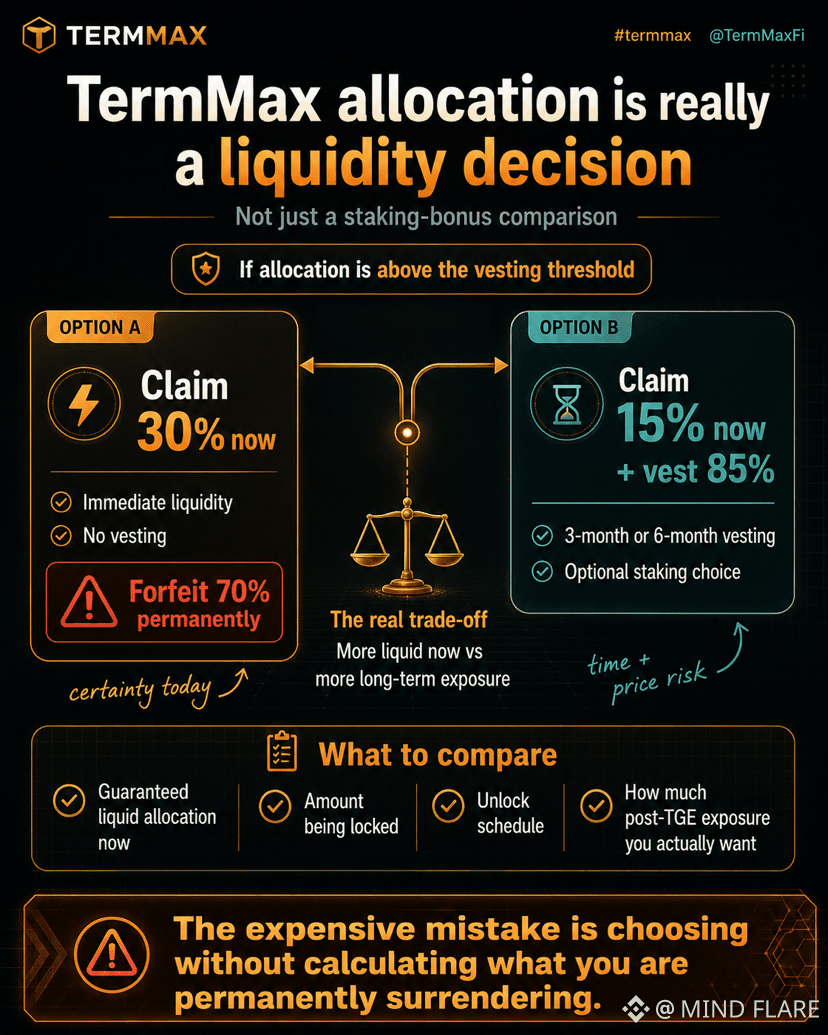
بل كان الأمر هو نسبة 70% يمكن للمستخدم التنازل عنها بشكل دائم.
إذا كان التخصيص أعلى من حد الاستحقاق (vesting threshold)، فهناك خيار للمطالبة بـ 30% فورًا مع التنازل عن كل ما تبقى.
أما الخيار البديل فيوفّر 15% الآن، بينما تُستحق نسبة الـ 85% المتبقية على مدار ثلاثة أو ستة أشهر، مع خيار إضافي متعلق بالـ staking.
وهذا يجعل الصفحة أقل كونها صفحة مطالبة عادية وأكثر كونها قرارًا بشأن السيولة.
قد تبدو المكافأة الأكبر جذابة، لكنّها تعوّض المستخدمين عن قبولهم لمخاطر الوقت والسعر. فقد تكون التوكنات التي تُفتح بعد أشهر أكثر قيمة أو أقل بكثير مما هي عليه قرب حدث TGE.
خيار الـ 30% يقدّم سيولة فورية أكبر، لكن الـ 70% التي تم التضحية بها لا يمكن استردادها أبدًا.
لذا لا أنصح بمقارنة هذه المسارات بالاعتماد على نسب المكافأة وحدها.
بل أقارن التخصيص السائل المضمون المتاح الآن مقابل مقدار ما يتم قفله، وجدول الفتح، وكم التعرض الذي أريده فعليًا بعد TGE.
$TMX يجبر المستخدمين على الاختيار بين اليقين اليوم والتعرض الأطول أجلاً بشكل أكبر.
لا يوجد مسار أفضل تلقائيًا. والخطأ المكلف هو اختيار أحدهما دون حساب ما يتم التنازل عنه بشكل دائم.
#TermMax
لقد مررت عبر @TermMax خيار تخصيص، ولم تكن أكبر الأرقام هي مكافأة الـ staking.
بل كان الأمر هو نسبة 70% يمكن للمستخدم التنازل عنها بشكل دائم.
إذا كان التخصيص أعلى من حد الاستحقاق (vesting threshold)، فهناك خيار للمطالبة بـ 30% فورًا مع التنازل عن كل ما تبقى.
أما الخيار البديل فيوفّر 15% الآن، بينما تُستحق نسبة الـ 85% المتبقية على مدار ثلاثة أو ستة أشهر، مع خيار إضافي متعلق بالـ staking.
وهذا يجعل الصفحة أقل كونها صفحة مطالبة عادية وأكثر كونها قرارًا بشأن السيولة.
قد تبدو المكافأة الأكبر جذابة، لكنّها تعوّض المستخدمين عن قبولهم لمخاطر الوقت والسعر. فقد تكون التوكنات التي تُفتح بعد أشهر أكثر قيمة أو أقل بكثير مما هي عليه قرب حدث TGE.
خيار الـ 30% يقدّم سيولة فورية أكبر، لكن الـ 70% التي تم التضحية بها لا يمكن استردادها أبدًا.
لذا لا أنصح بمقارنة هذه المسارات بالاعتماد على نسب المكافأة وحدها.
بل أقارن التخصيص السائل المضمون المتاح الآن مقابل مقدار ما يتم قفله، وجدول الفتح، وكم التعرض الذي أريده فعليًا بعد TGE.
$TMX يجبر المستخدمين على الاختيار بين اليقين اليوم والتعرض الأطول أجلاً بشكل أكبر.
لا يوجد مسار أفضل تلقائيًا. والخطأ المكلف هو اختيار أحدهما دون حساب ما يتم التنازل عنه بشكل دائم.
#TermMax
بل كان الأمر هو نسبة 70% يمكن للمستخدم التنازل عنها بشكل دائم.
إذا كان التخصيص أعلى من حد الاستحقاق (vesting threshold)، فهناك خيار للمطالبة بـ 30% فورًا مع التنازل عن كل ما تبقى.
أما الخيار البديل فيوفّر 15% الآن، بينما تُستحق نسبة الـ 85% المتبقية على مدار ثلاثة أو ستة أشهر، مع خيار إضافي متعلق بالـ staking.
وهذا يجعل الصفحة أقل كونها صفحة مطالبة عادية وأكثر كونها قرارًا بشأن السيولة.
قد تبدو المكافأة الأكبر جذابة، لكنّها تعوّض المستخدمين عن قبولهم لمخاطر الوقت والسعر. فقد تكون التوكنات التي تُفتح بعد أشهر أكثر قيمة أو أقل بكثير مما هي عليه قرب حدث TGE.
خيار الـ 30% يقدّم سيولة فورية أكبر، لكن الـ 70% التي تم التضحية بها لا يمكن استردادها أبدًا.
لذا لا أنصح بمقارنة هذه المسارات بالاعتماد على نسب المكافأة وحدها.
بل أقارن التخصيص السائل المضمون المتاح الآن مقابل مقدار ما يتم قفله، وجدول الفتح، وكم التعرض الذي أريده فعليًا بعد TGE.
$TMX يجبر المستخدمين على الاختيار بين اليقين اليوم والتعرض الأطول أجلاً بشكل أكبر.
لا يوجد مسار أفضل تلقائيًا. والخطأ المكلف هو اختيار أحدهما دون حساب ما يتم التنازل عنه بشكل دائم.
#TermMax
3
617
·
--
صاعد
تمّ التحقق
لقد مررتُ عبر @Dusk_Foundation تمويلًا حديثًا للشركات الصغيرة والمتوسطة (SME) متوقعًا الحُجّة المعتادة بشأن الملكية الجزئية.
يشير الجدول الموجود بداخلها إلى مشكلة أقل وضوحًا.
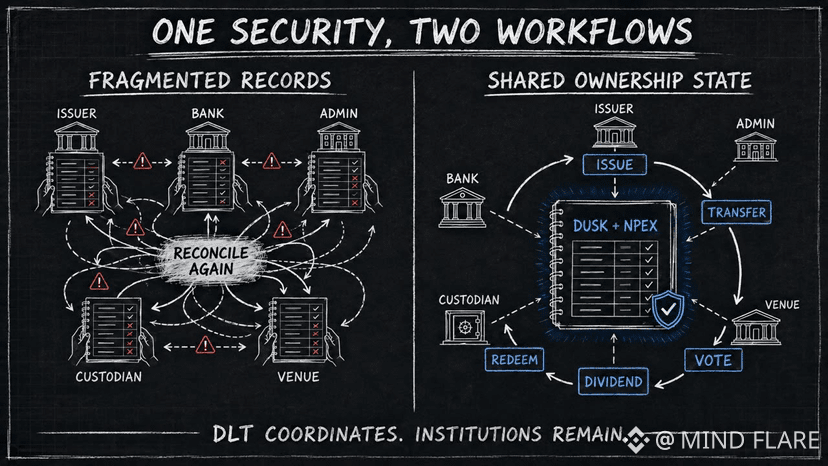
عندما تُصدر الشركة الصغيرة والمتوسطة سندًا أو شهادة أسهم، لا ينتهي العمل بعد أن يشتري المستثمرون ذلك. يجب أن تظل سجلات الملكية دقيقة للتحويلات والتصويت والفائدة والأرباح الموزعة والاسترداد.
اليوم، يمكن لهذه السجلات أن تنتقل بين المُصدر، والوكيل/المدير، والبنك، والوصي، وسجلّ الإصدار (الوكيل/المُسجِّل)، ومكان التداول. ويؤدي كل تسليم إلى مكان إضافي يجب فيه التحقق من البيانات أو تسويتها.
وهنا تبدأ الشراكة بين NPEX وبدْك (Dusk) في أن تزداد منطقية.
يؤكد سجل AFM أن NPEX مُعترف به كمرفق تداول متعدد الأطراف مُصرّح له. وهو يقدم بالفعل تمويلًا لـ SME والتداول الثانوي، لذلك لا تقوم Dusk بتصميم حلول حول سوقٍ تخيلي.
يمكن لنموذج DLT المقترح أن يربط أهلية المستثمر والإصدار والملكية والتسوية، ثم الإجراءات/العمليات المؤسسية لاحقًا حول حالة ملكية واحدة خاضعة للضبط.
لكن مقالة Dusk نفسها تتضمن تحذيرًا مهمًا.
لا يمكن للتجزئة/الترميز (Tokenization) أن يُغني عن المُصدر أو المدير أو كاتب/موثق العقود (الناوْتري/المنوِّث) أو مكان التداول. لا يزال التصويت يتطلب قرارًا معتمدًا. لا تزال الأرباح الموزعة تتطلب حسابات صحيحة وتوافر الأموال. كما أن النزاعات والمدفوعات غير الصحيحة ما زالت تحتاج إلى أشخاص يتحملون المسؤولية.
لذلك فإن الترميز لا يقلل التوفيق/المطابقة (reconciliation) إلا إذا قبلت الأطراف حالة ملكيته باعتبارها مرجعية تشغيلية وقانونية.
وإذا أبقوا السجلات القديمة دون تغيير إلى جانبه، فسيصبح DLT قاعدة بيانات أخرى يجب مواءمتها.
هذا هو الاختبار الحقيقي لـ NPEX وDusk ضمن مسار تجريبي DLT الخاص بالاتحاد الأوروبي: ليس ما إذا كان يمكن ترميز/تجزئة أداة مالية لـ SME، بل ما إذا كان يمكن أن تظل سجلاً واحدًا مفيدًا من لحظة الإصدار وحتى التداول والأرباح الموزعة والاسترداد النهائي.
التداول الأسرع أمر مفيد.
إن النتيجة الأكبر ستكون خمس سنوات دون سجلات ملكية متعارضة.
#dusk $DUSK
{spot}(DUSKUSDT)
لقد مررتُ عبر @Dusk تمويلًا حديثًا للشركات الصغيرة والمتوسطة (SME) متوقعًا الحُجّة المعتادة بشأن الملكية الجزئية.
يشير الجدول الموجود بداخلها إلى مشكلة أقل وضوحًا.
عندما تُصدر الشركة الصغيرة والمتوسطة سندًا أو شهادة أسهم، لا ينتهي العمل بعد أن يشتري المستثمرون ذلك. يجب أن تظل سجلات الملكية دقيقة للتحويلات والتصويت والفائدة والأرباح الموزعة والاسترداد.
اليوم، يمكن لهذه السجلات أن تنتقل بين المُصدر، والوكيل/المدير، والبنك، والوصي، وسجلّ الإصدار (الوكيل/المُسجِّل)، ومكان التداول. ويؤدي كل تسليم إلى مكان إضافي يجب فيه التحقق من البيانات أو تسويتها.
وهنا تبدأ الشراكة بين NPEX وبدْك (Dusk) في أن تزداد منطقية.
يؤكد سجل AFM أن NPEX مُعترف به كمرفق تداول متعدد الأطراف مُصرّح له. وهو يقدم بالفعل تمويلًا لـ SME والتداول الثانوي، لذلك لا تقوم Dusk بتصميم حلول حول سوقٍ تخيلي.
يمكن لنموذج DLT المقترح أن يربط أهلية المستثمر والإصدار والملكية والتسوية، ثم الإجراءات/العمليات المؤسسية لاحقًا حول حالة ملكية واحدة خاضعة للضبط.
لكن مقالة Dusk نفسها تتضمن تحذيرًا مهمًا.
لا يمكن للتجزئة/الترميز (Tokenization) أن يُغني عن المُصدر أو المدير أو كاتب/موثق العقود (الناوْتري/المنوِّث) أو مكان التداول. لا يزال التصويت يتطلب قرارًا معتمدًا. لا تزال الأرباح الموزعة تتطلب حسابات صحيحة وتوافر الأموال. كما أن النزاعات والمدفوعات غير الصحيحة ما زالت تحتاج إلى أشخاص يتحملون المسؤولية.
لذلك فإن الترميز لا يقلل التوفيق/المطابقة (reconciliation) إلا إذا قبلت الأطراف حالة ملكيته باعتبارها مرجعية تشغيلية وقانونية.
وإذا أبقوا السجلات القديمة دون تغيير إلى جانبه، فسيصبح DLT قاعدة بيانات أخرى يجب مواءمتها.
هذا هو الاختبار الحقيقي لـ NPEX وDusk ضمن مسار تجريبي DLT الخاص بالاتحاد الأوروبي: ليس ما إذا كان يمكن ترميز/تجزئة أداة مالية لـ SME، بل ما إذا كان يمكن أن تظل سجلاً واحدًا مفيدًا من لحظة الإصدار وحتى التداول والأرباح الموزعة والاسترداد النهائي.
التداول الأسرع أمر مفيد.
إن النتيجة الأكبر ستكون خمس سنوات دون سجلات ملكية متعارضة.
#dusk $DUSK
يشير الجدول الموجود بداخلها إلى مشكلة أقل وضوحًا.
عندما تُصدر الشركة الصغيرة والمتوسطة سندًا أو شهادة أسهم، لا ينتهي العمل بعد أن يشتري المستثمرون ذلك. يجب أن تظل سجلات الملكية دقيقة للتحويلات والتصويت والفائدة والأرباح الموزعة والاسترداد.
اليوم، يمكن لهذه السجلات أن تنتقل بين المُصدر، والوكيل/المدير، والبنك، والوصي، وسجلّ الإصدار (الوكيل/المُسجِّل)، ومكان التداول. ويؤدي كل تسليم إلى مكان إضافي يجب فيه التحقق من البيانات أو تسويتها.
وهنا تبدأ الشراكة بين NPEX وبدْك (Dusk) في أن تزداد منطقية.
يؤكد سجل AFM أن NPEX مُعترف به كمرفق تداول متعدد الأطراف مُصرّح له. وهو يقدم بالفعل تمويلًا لـ SME والتداول الثانوي، لذلك لا تقوم Dusk بتصميم حلول حول سوقٍ تخيلي.
يمكن لنموذج DLT المقترح أن يربط أهلية المستثمر والإصدار والملكية والتسوية، ثم الإجراءات/العمليات المؤسسية لاحقًا حول حالة ملكية واحدة خاضعة للضبط.
لكن مقالة Dusk نفسها تتضمن تحذيرًا مهمًا.
لا يمكن للتجزئة/الترميز (Tokenization) أن يُغني عن المُصدر أو المدير أو كاتب/موثق العقود (الناوْتري/المنوِّث) أو مكان التداول. لا يزال التصويت يتطلب قرارًا معتمدًا. لا تزال الأرباح الموزعة تتطلب حسابات صحيحة وتوافر الأموال. كما أن النزاعات والمدفوعات غير الصحيحة ما زالت تحتاج إلى أشخاص يتحملون المسؤولية.
لذلك فإن الترميز لا يقلل التوفيق/المطابقة (reconciliation) إلا إذا قبلت الأطراف حالة ملكيته باعتبارها مرجعية تشغيلية وقانونية.
وإذا أبقوا السجلات القديمة دون تغيير إلى جانبه، فسيصبح DLT قاعدة بيانات أخرى يجب مواءمتها.
هذا هو الاختبار الحقيقي لـ NPEX وDusk ضمن مسار تجريبي DLT الخاص بالاتحاد الأوروبي: ليس ما إذا كان يمكن ترميز/تجزئة أداة مالية لـ SME، بل ما إذا كان يمكن أن تظل سجلاً واحدًا مفيدًا من لحظة الإصدار وحتى التداول والأرباح الموزعة والاسترداد النهائي.
التداول الأسرع أمر مفيد.
إن النتيجة الأكبر ستكون خمس سنوات دون سجلات ملكية متعارضة.
#dusk $DUSK
3
4
914
سجّل الدخول لاستكشاف المزيد من المُحتوى
انضم إلى مُستخدمي العملات الرقمية حول العالم على Binance Square
⚡️ احصل على أحدث المعلومات المفيدة عن العملات الرقمية.
💬 موثوقة من قبل أكبر منصّة لتداول العملات الرقمية في العالم.
👍 اكتشف الرؤى الحقيقية من صنّاع المُحتوى الموثوقين.
البريد الإلكتروني / رقم الهاتف
المواضيع الرائجة
BOJRaisesRatesTo31YearHigh
161,137 مشاهدات
2,473 يقومون بالنقاش
#bojraisesratesto31yearhigh
🚨 حقبة المال المجاني انتهت: بنك اليابان صدم السوق! 🚨
في انعكاس مذهل لموقفه النقدي الذي ظل ثابتًا لسنوات، رفع بنك اليابان (BOJ) سعر الفائدة الرئيسي إلى 1.25%، مسجّلًا أعلى مستوى منذ 31 عامًا.
إليك ما تحتاج إلى معرفته ولماذا أثار هذا التطور حماسة “كريبتو تويتر”:
🔥 التفصيل:
الخطوة: رفع بنك اليابان فجأة سعره القياسي بمقدار 25 نقطة أساس إلى 1.25%، وبصوت 7-2، في أشد تشديد نقدي منذ 35 عامًا.
السرعة: جاء ذلك بعد 3 أشهر فقط من آخر رفع للفائدة في يونيو، ما يشير إلى تشديد حاد للسياسة النقدية لمكافحة التضخم.
الضغط: جاءت الخطوة بعد ضغط لا هوادة فيه من وزير الخزانة الأمريكي سكوت بيسنت، الذي حث طوكيو على تشديد السياسة النقدية وإنهاء تجربتها التحفيزية.
⚠️ لماذا هذا مهم بالنسبة لـ Crypto والأسواق العالمية:
لطالما جعل بنك اليابان اليابان مصدرًا لتمويل رخيص لمضاربة “carry trade”، حيث كان بإمكان المستثمرين اقتراض الين بأسعار شبه صفرية وشراء أصول ذات عوائد أعلى مثل الأسهم والcryptocurrencies.
لكن مع قيام بنك اليابان برفع الفائدة لمكافحة تضخم متفشٍّ وتبريد الاقتصاد، من المتوقع أن يتم تفكيك صفقة الين بسرعة كبيرة، وسحب السيولة من الأسواق العالمية.
هل سيؤدي ذلك إلى أزمة سيولة كبيرة، أم أن البيتكوين ستمتص ضغط البيع؟
ما رأيك؟ لنتناقش!
متابعة من فضلكم
#CryptoNews #BinanceSquare
$SOL
Shamika Metting
·3 إعجاب
·3.4k مشاهدات
BuffettStepsDownAsBerkshireChairman
77,276 مشاهدات
1,267 يقومون بالنقاش
XRPExchangeReservesHitSevenYearLow
84,454 مشاهدات
1,134 يقومون بالنقاش