

东京小姐
4.7k منشورات

东京小姐
إبلاغ
حظر المُستخدم
绿色就是目标 🗼🔥
فتح تداول
مُتداول مُتكرر
5 سنوات
312 تتابع
22.5K+ المتابعون
12.8K+ إعجاب
منشورات
الحافظة الاستثمارية
الكل
اقتباسات
مقاطع فيديو
Live
·
--
صاعد
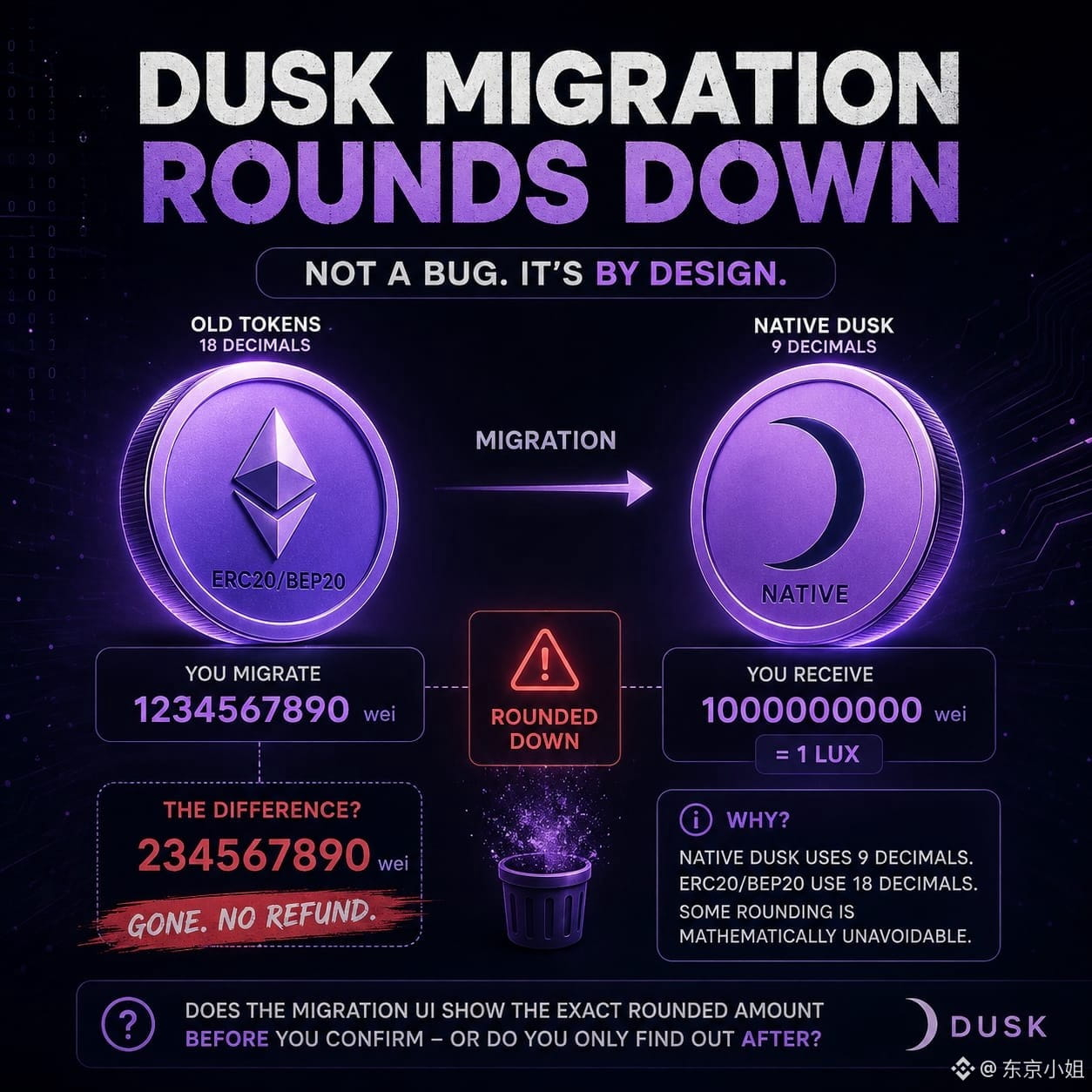
تحتوي إرشادات ترحيل docs.dusk.network على تفصيل دقيق مدفون في قسم الأسئلة الشائعة (faq) لم أره مذكورًا في أي مكان آخر. إذا قمت بترحيل كمية من dusk على هيئة erc20 أو bep20 لا تكون مضاعفًا نظيفًا لـ 1 lux، فإن العقد يقوم فقط بتقريبها لأسفل — وكان عليّ أن أُجري مثالهم الخاص مرتين في ذهني قبل أن أفهمه فعلًا: ترحيل 1234567890 wei من dusk، فينتهي الأمر إلى أنه يتم تقريبها لتصبح بالضبط 1000000000 wei، أي lux واحد نظيف، دون أي رصيد جزئي لبقية الكمية.
وبالتالي لا يتم ردّ الباقي ولا يتم وضعه في قائمة انتظار لشحن لاحق؛ بل هو ببساطة يختفي مما تتلقاه على الجانب الأصلي (native). هذه تكلفة حقيقية مضمنة في آليات الترحيل نفسها، وليست خللًا (bug)، لأن dusk الأصلي يستخدم 9 منازل عشرية بينما erc20/bep20 يستخدم 18، لذلك يكون وجود بعض التقريب أمرًا غير قابل للتجنب رياضيًا في مكان ما ضمن عملية التحويل.
بالنسبة لمعظم الناس الذين يقومون بترحيل رصيد محفظة عادي، فربما تكون هذه كسورًا من جزء من سنت ولا يهم فعلًا. لكن أي شخص يهاجر لأول مرة لا يتوقع أن تكون عبارة "التقريب لأسفل وفقد الفرق" هي السلوك الافتراضي على شبكة بُنيت حول دقة تسوية حتمية.
هل واجهة ترحيل (migration ui) تُظهر للناس المبلغ المقرب بالضبط قبل أن يؤكدوا، أم يكتشفون ذلك فقط بعد وقوع الأمر؟ 🧐
#dusk $DUSK @Dusk_Foundation
تحتوي إرشادات ترحيل docs.dusk.network على تفصيل دقيق مدفون في قسم الأسئلة الشائعة (faq) لم أره مذكورًا في أي مكان آخر. إذا قمت بترحيل كمية من dusk على هيئة erc20 أو bep20 لا تكون مضاعفًا نظيفًا لـ 1 lux، فإن العقد يقوم فقط بتقريبها لأسفل — وكان عليّ أن أُجري مثالهم الخاص مرتين في ذهني قبل أن أفهمه فعلًا: ترحيل 1234567890 wei من dusk، فينتهي الأمر إلى أنه يتم تقريبها لتصبح بالضبط 1000000000 wei، أي lux واحد نظيف، دون أي رصيد جزئي لبقية الكمية.
وبالتالي لا يتم ردّ الباقي ولا يتم وضعه في قائمة انتظار لشحن لاحق؛ بل هو ببساطة يختفي مما تتلقاه على الجانب الأصلي (native). هذه تكلفة حقيقية مضمنة في آليات الترحيل نفسها، وليست خللًا (bug)، لأن dusk الأصلي يستخدم 9 منازل عشرية بينما erc20/bep20 يستخدم 18، لذلك يكون وجود بعض التقريب أمرًا غير قابل للتجنب رياضيًا في مكان ما ضمن عملية التحويل.
بالنسبة لمعظم الناس الذين يقومون بترحيل رصيد محفظة عادي، فربما تكون هذه كسورًا من جزء من سنت ولا يهم فعلًا. لكن أي شخص يهاجر لأول مرة لا يتوقع أن تكون عبارة "التقريب لأسفل وفقد الفرق" هي السلوك الافتراضي على شبكة بُنيت حول دقة تسوية حتمية.
هل واجهة ترحيل (migration ui) تُظهر للناس المبلغ المقرب بالضبط قبل أن يؤكدوا، أم يكتشفون ذلك فقط بعد وقوع الأمر؟ 🧐
#dusk $DUSK @Dusk
وبالتالي لا يتم ردّ الباقي ولا يتم وضعه في قائمة انتظار لشحن لاحق؛ بل هو ببساطة يختفي مما تتلقاه على الجانب الأصلي (native). هذه تكلفة حقيقية مضمنة في آليات الترحيل نفسها، وليست خللًا (bug)، لأن dusk الأصلي يستخدم 9 منازل عشرية بينما erc20/bep20 يستخدم 18، لذلك يكون وجود بعض التقريب أمرًا غير قابل للتجنب رياضيًا في مكان ما ضمن عملية التحويل.
بالنسبة لمعظم الناس الذين يقومون بترحيل رصيد محفظة عادي، فربما تكون هذه كسورًا من جزء من سنت ولا يهم فعلًا. لكن أي شخص يهاجر لأول مرة لا يتوقع أن تكون عبارة "التقريب لأسفل وفقد الفرق" هي السلوك الافتراضي على شبكة بُنيت حول دقة تسوية حتمية.
هل واجهة ترحيل (migration ui) تُظهر للناس المبلغ المقرب بالضبط قبل أن يؤكدوا، أم يكتشفون ذلك فقط بعد وقوع الأمر؟ 🧐
#dusk $DUSK @Dusk
1
184
·
--
@Dusk_Foundation
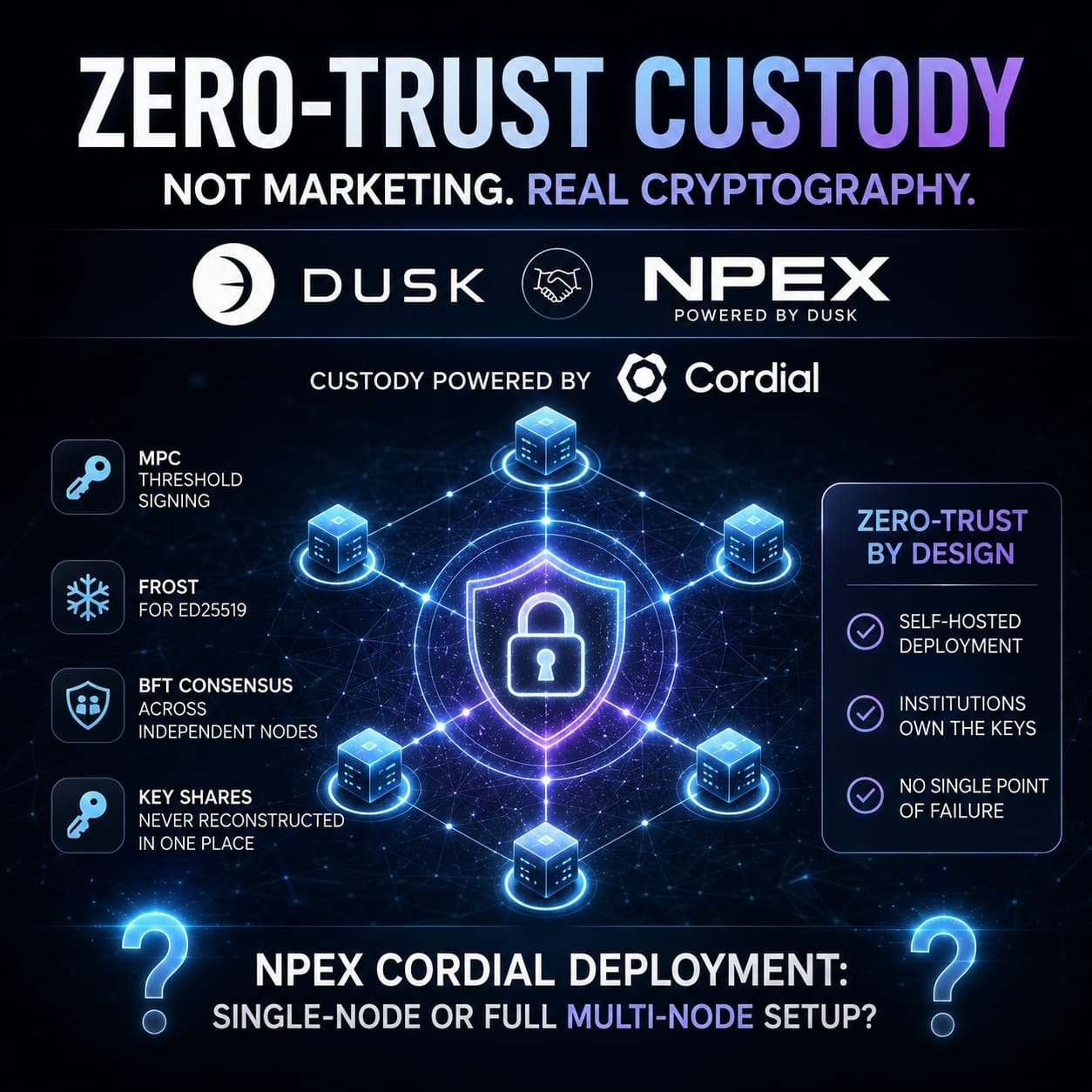
i went to check exactly what "zero-trust custody" means in the dusk-cordial-npex announcement, since that term usually implies a specific cryptographic architecture, and figured the press release was probably using it loosely for "self-hosted instead of third-party saas." i was wrong, and honestly i almost wrote this whole post around that wrong assumption before actually pulling cordial's own technical docs — their treasury product genuinely uses mpc threshold signing, frost for ed25519, a bft consensus layer across independent nodes, key shares that never get reconstructed in one place. that's real distributed-trust cryptography, not marketing dressed up as one.
so npex choosing self-hosted deployment and getting genuine zero-trust architecture aren't actually in tension the way i assumed going in, cordial's whole pitch is letting institutions run that architecture themselves instead of trusting a saas vendor's cloud.
what i still don't know is whether npex is running the full multi-node bft setup or something closer to a single-node deployment, since cordial's docs mention both are technically available. those aren't equally "zero-trust" in practice even on the same underlying software.
does anyone know if npex's actual cordial deployment is single-node or a genuine multi-node threshold setup? 🧐
#dusk $DUSK
@Dusk
i went to check exactly what "zero-trust custody" means in the dusk-cordial-npex announcement, since that term usually implies a specific cryptographic architecture, and figured the press release was probably using it loosely for "self-hosted instead of third-party saas." i was wrong, and honestly i almost wrote this whole post around that wrong assumption before actually pulling cordial's own technical docs — their treasury product genuinely uses mpc threshold signing, frost for ed25519, a bft consensus layer across independent nodes, key shares that never get reconstructed in one place. that's real distributed-trust cryptography, not marketing dressed up as one.
so npex choosing self-hosted deployment and getting genuine zero-trust architecture aren't actually in tension the way i assumed going in, cordial's whole pitch is letting institutions run that architecture themselves instead of trusting a saas vendor's cloud.
what i still don't know is whether npex is running the full multi-node bft setup or something closer to a single-node deployment, since cordial's docs mention both are technically available. those aren't equally "zero-trust" in practice even on the same underlying software.
does anyone know if npex's actual cordial deployment is single-node or a genuine multi-node threshold setup? 🧐
#dusk $DUSK
i went to check exactly what "zero-trust custody" means in the dusk-cordial-npex announcement, since that term usually implies a specific cryptographic architecture, and figured the press release was probably using it loosely for "self-hosted instead of third-party saas." i was wrong, and honestly i almost wrote this whole post around that wrong assumption before actually pulling cordial's own technical docs — their treasury product genuinely uses mpc threshold signing, frost for ed25519, a bft consensus layer across independent nodes, key shares that never get reconstructed in one place. that's real distributed-trust cryptography, not marketing dressed up as one.
so npex choosing self-hosted deployment and getting genuine zero-trust architecture aren't actually in tension the way i assumed going in, cordial's whole pitch is letting institutions run that architecture themselves instead of trusting a saas vendor's cloud.
what i still don't know is whether npex is running the full multi-node bft setup or something closer to a single-node deployment, since cordial's docs mention both are technically available. those aren't equally "zero-trust" in practice even on the same underlying software.
does anyone know if npex's actual cordial deployment is single-node or a genuine multi-node threshold setup? 🧐
#dusk $DUSK
1
2
114
·
--
صاعد
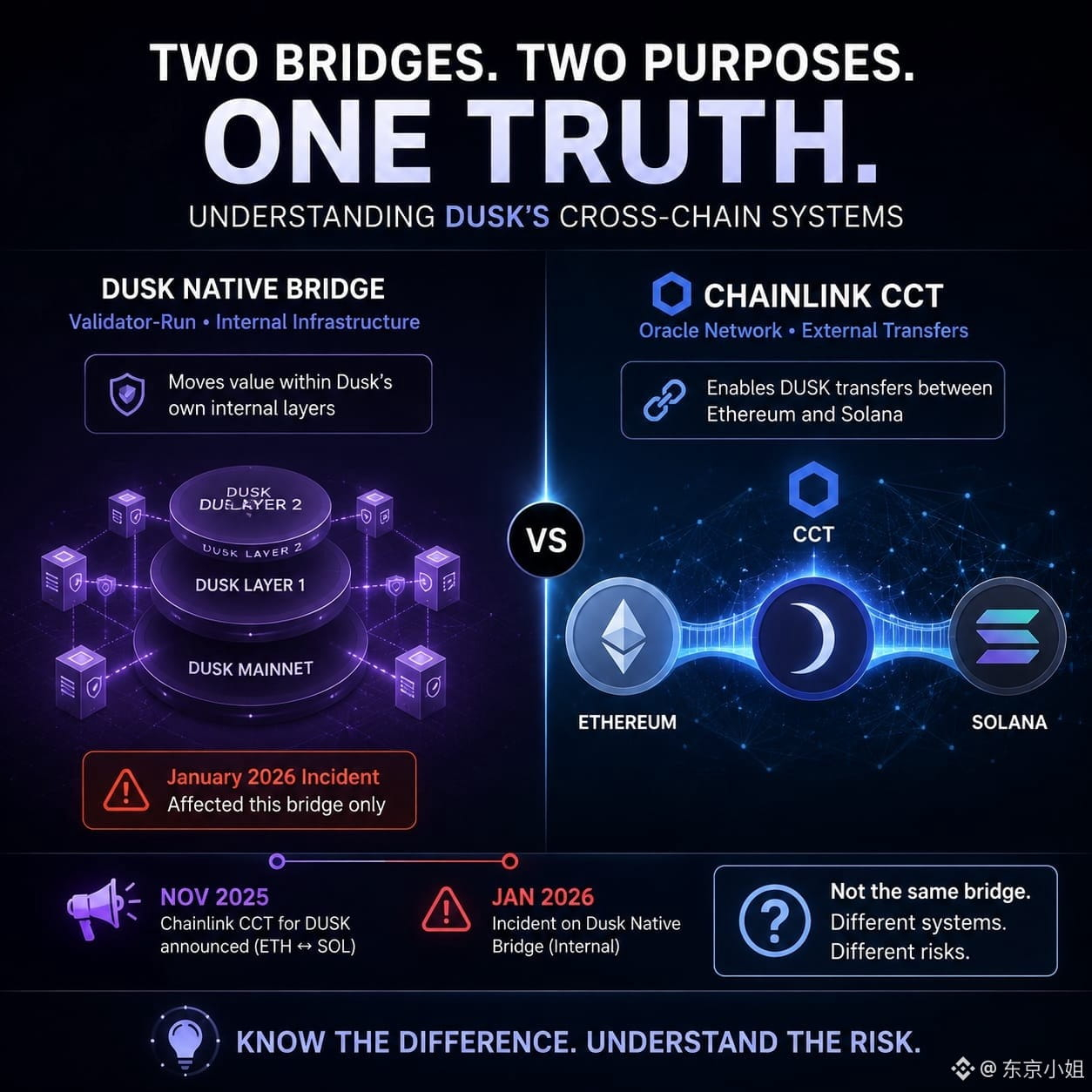
تم الإعلان عن معيار CCT الخاص بـ Chainlink لنقل Dusk بين Ethereum وSolana في نوفمبر 2025، أي قبل أشهر من حادثة الجسر في يناير 2025 التي نعرف بالفعل أنها حدثت عبر مسار Dusk الآخر عبر السلاسل. ذهبت للتحقق مما إذا كانت هذه هي نفس البوابة تحت مسمين — بصراحة كنت أتوقع أن تبيّن أنها الشيء نفسه مع اختلاف العلامة التجارية — لكن الأمر ليس كذلك. صفحة معمارية Dusk نفسها تصف بوابة أصلية منفصلة تعمل تحت تشغيل المُدقِّقين تنقل القيمة بين الطبقات الداخلية الخاصة بـ Dusk، بينما يعمل CCT الخاص بـ Chainlink على شبكة أوراكل لامركزية خاصة بـ Chainlink لنقل عمليات التحويل الخارجية بين ETH وSolana. منظومتان مختلفتان فعلاً.
وبالتالي، فإن حادثة يناير، التي أصابت الجسر الأصلي تحديداً، لم تكن لتلمس مسار Chainlink على الإطلاق، استناداً إلى اختلاف طريقة تصميمهما. وهذا أمر مُطمئن بطريقة لم أتوقعها عند دخولي في الموضوع.
لكن ما يزال هناك شيء غير مريح — لم يشرح أحد هذا الفرق في أي مكان عندما تم نشر إشعار الحادث. إذا كنت شخصاً يعرف فقط "كان لدى Dusk مشكلة في الجسر في يناير"، فلن تجد أي إشارة توجهك إلى "أن ذلك أثر فقط على واحدة من نظامين مختلفين منفصلين للجسور"، وكانت مهمة معرفة ذلك متروكة بالكامل لي عبر مقارنة إعلانين غير مرتبطين ببعضهما.
هل توجد صفحة واحدة في أي مكان تُبيّن فعلاً أي جسر يفعل ماذا بالنسبة لـ Dusk؟ أم أن تأكيد ذلك يتطلب تجميع تصريحات صحفية منفصلة كما فعلتُ أنا للتو؟ 🧐
#dusk $DUSK @Dusk_Foundation
تم الإعلان عن معيار CCT الخاص بـ Chainlink لنقل Dusk بين Ethereum وSolana في نوفمبر 2025، أي قبل أشهر من حادثة الجسر في يناير 2025 التي نعرف بالفعل أنها حدثت عبر مسار Dusk الآخر عبر السلاسل. ذهبت للتحقق مما إذا كانت هذه هي نفس البوابة تحت مسمين — بصراحة كنت أتوقع أن تبيّن أنها الشيء نفسه مع اختلاف العلامة التجارية — لكن الأمر ليس كذلك. صفحة معمارية Dusk نفسها تصف بوابة أصلية منفصلة تعمل تحت تشغيل المُدقِّقين تنقل القيمة بين الطبقات الداخلية الخاصة بـ Dusk، بينما يعمل CCT الخاص بـ Chainlink على شبكة أوراكل لامركزية خاصة بـ Chainlink لنقل عمليات التحويل الخارجية بين ETH وSolana. منظومتان مختلفتان فعلاً.
وبالتالي، فإن حادثة يناير، التي أصابت الجسر الأصلي تحديداً، لم تكن لتلمس مسار Chainlink على الإطلاق، استناداً إلى اختلاف طريقة تصميمهما. وهذا أمر مُطمئن بطريقة لم أتوقعها عند دخولي في الموضوع.
لكن ما يزال هناك شيء غير مريح — لم يشرح أحد هذا الفرق في أي مكان عندما تم نشر إشعار الحادث. إذا كنت شخصاً يعرف فقط "كان لدى Dusk مشكلة في الجسر في يناير"، فلن تجد أي إشارة توجهك إلى "أن ذلك أثر فقط على واحدة من نظامين مختلفين منفصلين للجسور"، وكانت مهمة معرفة ذلك متروكة بالكامل لي عبر مقارنة إعلانين غير مرتبطين ببعضهما.
هل توجد صفحة واحدة في أي مكان تُبيّن فعلاً أي جسر يفعل ماذا بالنسبة لـ Dusk؟ أم أن تأكيد ذلك يتطلب تجميع تصريحات صحفية منفصلة كما فعلتُ أنا للتو؟ 🧐
#dusk $DUSK @Dusk
وبالتالي، فإن حادثة يناير، التي أصابت الجسر الأصلي تحديداً، لم تكن لتلمس مسار Chainlink على الإطلاق، استناداً إلى اختلاف طريقة تصميمهما. وهذا أمر مُطمئن بطريقة لم أتوقعها عند دخولي في الموضوع.
لكن ما يزال هناك شيء غير مريح — لم يشرح أحد هذا الفرق في أي مكان عندما تم نشر إشعار الحادث. إذا كنت شخصاً يعرف فقط "كان لدى Dusk مشكلة في الجسر في يناير"، فلن تجد أي إشارة توجهك إلى "أن ذلك أثر فقط على واحدة من نظامين مختلفين منفصلين للجسور"، وكانت مهمة معرفة ذلك متروكة بالكامل لي عبر مقارنة إعلانين غير مرتبطين ببعضهما.
هل توجد صفحة واحدة في أي مكان تُبيّن فعلاً أي جسر يفعل ماذا بالنسبة لـ Dusk؟ أم أن تأكيد ذلك يتطلب تجميع تصريحات صحفية منفصلة كما فعلتُ أنا للتو؟ 🧐
#dusk $DUSK @Dusk
1
131
·
--
صاعد
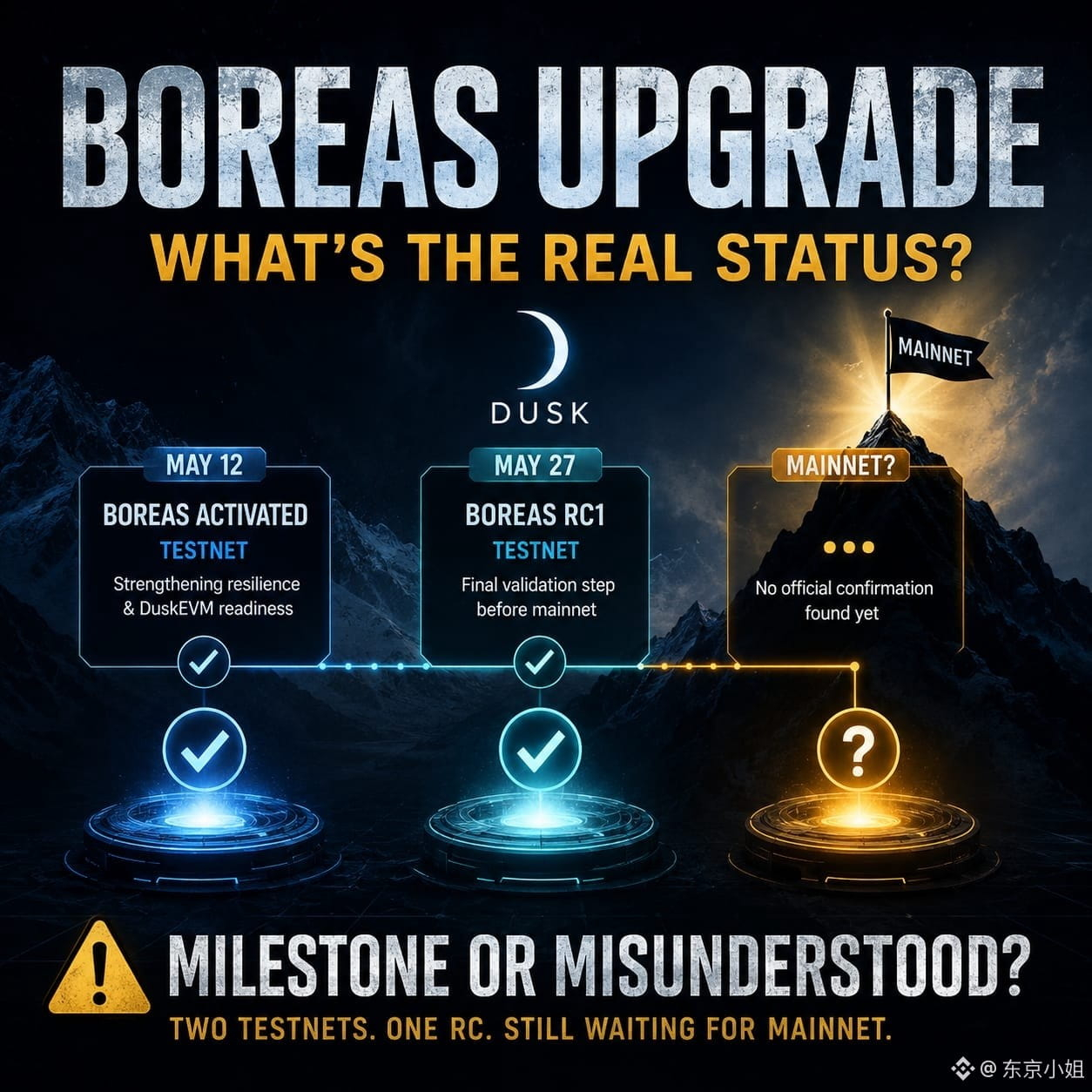
ذهبت لأتحقق مما إذا كان «بورياس» قد وصل فعلاً إلى الشبكة الرئيسية (mainnet) من قبل، لأنّه كان يتداول بوصفه معلمًا كبيرًا. لكن الذي وجدته بدلًا من ذلك هو حدثان منفصلان على شبكة الاختبار (testnet) تحت الاسم نفسه، بينهما أسبوعان. وبصراحة كدت أتوقف عند تاريخ 12 مايو معتقدًا أنّ هذه هي القصة كاملة. فعلى شبكة الاختبار، فعّلت Dusk «بورياس» في 12 مايو، وقد قُدِّم ذلك على أنه تعزيز للمرونة والاستعداد لـ <t-2/>. ثم في 27 مايو، تم إطلاق «boreas release candidate 1» على الشبكة الاختبار أيضًا، وبشكل صريح سُمّي خطوة التحقق/التحقق النهائي قبل الانتقال إلى mainnet.
لذا فإن تفعيل 12 مايو لم يكن بالفعل خط النهاية؛ بل كان مرحلة أقدم، وهناك نقطة تفتيش ثانية بعده لم أجد أي ذكر لها في أي مكان إلى أن بحثت تحديدًا. وحتى الآن لا أستطيع العثور على إعلان يؤكد أن «بورياس» وصل إلى mainnet بعد «release candidate 1».
هذا أسلوب طبيعي لتمهيد/تطبيق hard fork: testnet ثم RC ثم mainnet، ولا يوجد خطأ في العملية نفسها. فقط أعتقد أن تغطيةً كثيرة تتعامل مع «boreas activated» كحدث واحد نظيف، بينما هو في الحقيقة على الأقل مرحلتان على testnet، وربما لم يكتمل بعد الانتقال/العبور إلى المرحلة الأخيرة.
هل أصبح «بورياس» حيًا على mainnet منذ 27 مايو، أم أن «release candidate» لا يزال هو أحدث خطوة مؤكدة؟ 🧐
#dusk $DUSK @Dusk_Foundation
ذهبت لأتحقق مما إذا كان «بورياس» قد وصل فعلاً إلى الشبكة الرئيسية (mainnet) من قبل، لأنّه كان يتداول بوصفه معلمًا كبيرًا. لكن الذي وجدته بدلًا من ذلك هو حدثان منفصلان على شبكة الاختبار (testnet) تحت الاسم نفسه، بينهما أسبوعان. وبصراحة كدت أتوقف عند تاريخ 12 مايو معتقدًا أنّ هذه هي القصة كاملة. فعلى شبكة الاختبار، فعّلت Dusk «بورياس» في 12 مايو، وقد قُدِّم ذلك على أنه تعزيز للمرونة والاستعداد لـ <t-2/>. ثم في 27 مايو، تم إطلاق «boreas release candidate 1» على الشبكة الاختبار أيضًا، وبشكل صريح سُمّي خطوة التحقق/التحقق النهائي قبل الانتقال إلى mainnet.
لذا فإن تفعيل 12 مايو لم يكن بالفعل خط النهاية؛ بل كان مرحلة أقدم، وهناك نقطة تفتيش ثانية بعده لم أجد أي ذكر لها في أي مكان إلى أن بحثت تحديدًا. وحتى الآن لا أستطيع العثور على إعلان يؤكد أن «بورياس» وصل إلى mainnet بعد «release candidate 1».
هذا أسلوب طبيعي لتمهيد/تطبيق hard fork: testnet ثم RC ثم mainnet، ولا يوجد خطأ في العملية نفسها. فقط أعتقد أن تغطيةً كثيرة تتعامل مع «boreas activated» كحدث واحد نظيف، بينما هو في الحقيقة على الأقل مرحلتان على testnet، وربما لم يكتمل بعد الانتقال/العبور إلى المرحلة الأخيرة.
هل أصبح «بورياس» حيًا على mainnet منذ 27 مايو، أم أن «release candidate» لا يزال هو أحدث خطوة مؤكدة؟ 🧐
#dusk $DUSK @Dusk
لذا فإن تفعيل 12 مايو لم يكن بالفعل خط النهاية؛ بل كان مرحلة أقدم، وهناك نقطة تفتيش ثانية بعده لم أجد أي ذكر لها في أي مكان إلى أن بحثت تحديدًا. وحتى الآن لا أستطيع العثور على إعلان يؤكد أن «بورياس» وصل إلى mainnet بعد «release candidate 1».
هذا أسلوب طبيعي لتمهيد/تطبيق hard fork: testnet ثم RC ثم mainnet، ولا يوجد خطأ في العملية نفسها. فقط أعتقد أن تغطيةً كثيرة تتعامل مع «boreas activated» كحدث واحد نظيف، بينما هو في الحقيقة على الأقل مرحلتان على testnet، وربما لم يكتمل بعد الانتقال/العبور إلى المرحلة الأخيرة.
هل أصبح «بورياس» حيًا على mainnet منذ 27 مايو، أم أن «release candidate» لا يزال هو أحدث خطوة مؤكدة؟ 🧐
#dusk $DUSK @Dusk
3
120
·
--
صاعد
@Dusk_Foundation
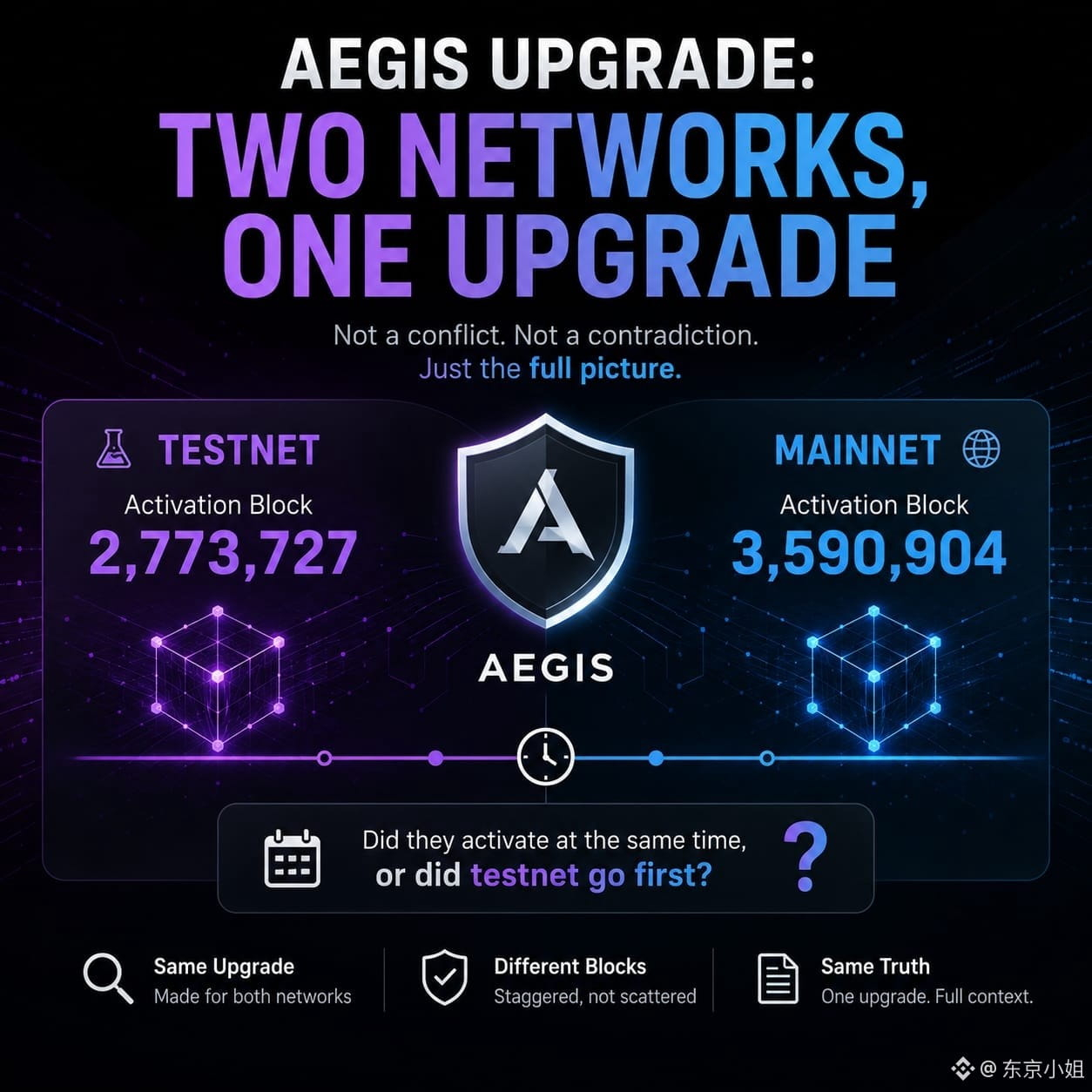
i went to check exactly what the aegis upgrade touched, since march 3rd gets cited as a major milestone but different sources describe it differently — one says mandatory for all node operators, another calls it a testnet-only prep step. turns out both are just incomplete versions of the same thing, and honestly i almost stopped at "one of these is just wrong" before digging into dusk's actual github repo. their rusk release notes list separate aegis activation block heights for mainnet and testnet, 3,590,904 and 2,773,727, confirming it hit both networks, just not at the same block number.
so there wasn't actually a scope conflict, there was a coverage gap — nobody covering it in the press wrote it up as "mainnet and testnet, here are both activation heights," they each picked one network and called it the whole story.
it's a pretty normal way to roll out a hard fork, stagger testnet slightly differently from mainnet, that part isn't unusual or concerning on its own. i just think it's worth noticing how a genuinely simple two-network rollout got flattened into two competing, incomplete narratives once it passed through secondary coverage.
does anyone know if the two activation heights lined up in wall-clock time, or did testnet actually activate before mainnet? 🧐
#dusk $DUSK
@Dusk
i went to check exactly what the aegis upgrade touched, since march 3rd gets cited as a major milestone but different sources describe it differently — one says mandatory for all node operators, another calls it a testnet-only prep step. turns out both are just incomplete versions of the same thing, and honestly i almost stopped at "one of these is just wrong" before digging into dusk's actual github repo. their rusk release notes list separate aegis activation block heights for mainnet and testnet, 3,590,904 and 2,773,727, confirming it hit both networks, just not at the same block number.
so there wasn't actually a scope conflict, there was a coverage gap — nobody covering it in the press wrote it up as "mainnet and testnet, here are both activation heights," they each picked one network and called it the whole story.
it's a pretty normal way to roll out a hard fork, stagger testnet slightly differently from mainnet, that part isn't unusual or concerning on its own. i just think it's worth noticing how a genuinely simple two-network rollout got flattened into two competing, incomplete narratives once it passed through secondary coverage.
does anyone know if the two activation heights lined up in wall-clock time, or did testnet actually activate before mainnet? 🧐
#dusk $DUSK
i went to check exactly what the aegis upgrade touched, since march 3rd gets cited as a major milestone but different sources describe it differently — one says mandatory for all node operators, another calls it a testnet-only prep step. turns out both are just incomplete versions of the same thing, and honestly i almost stopped at "one of these is just wrong" before digging into dusk's actual github repo. their rusk release notes list separate aegis activation block heights for mainnet and testnet, 3,590,904 and 2,773,727, confirming it hit both networks, just not at the same block number.
so there wasn't actually a scope conflict, there was a coverage gap — nobody covering it in the press wrote it up as "mainnet and testnet, here are both activation heights," they each picked one network and called it the whole story.
it's a pretty normal way to roll out a hard fork, stagger testnet slightly differently from mainnet, that part isn't unusual or concerning on its own. i just think it's worth noticing how a genuinely simple two-network rollout got flattened into two competing, incomplete narratives once it passed through secondary coverage.
does anyone know if the two activation heights lined up in wall-clock time, or did testnet actually activate before mainnet? 🧐
#dusk $DUSK
1
4
205
·
--
صاعد
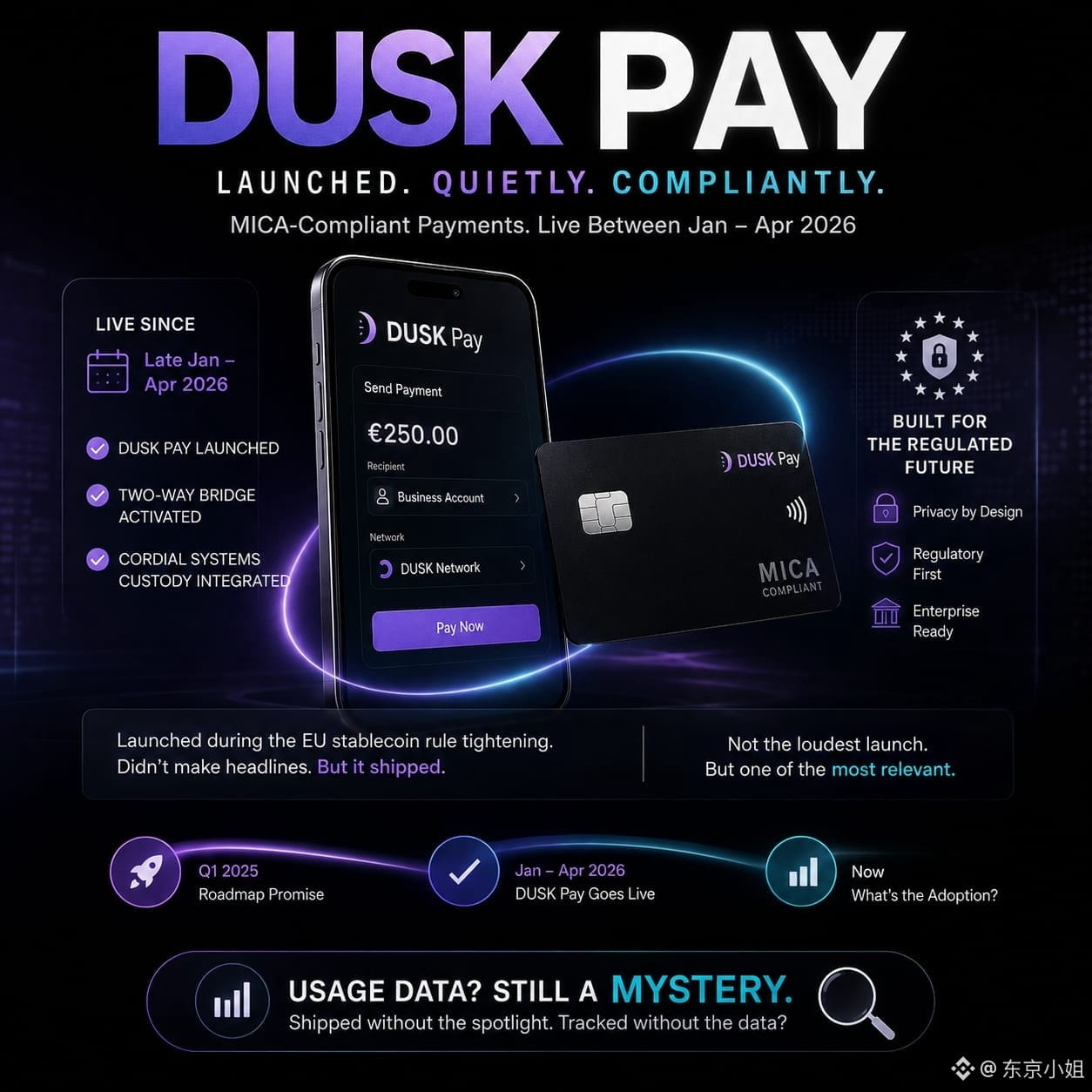
ذهبت للبحث لمعرفة ما إذا كانت Dusk Pay قد تم إطلاقها فعلاً، حيث كانت مُدرجة في خارطة طريق يناير 2025 كتسليم من الربع الأول، ثم بدا أنها اختفت من معظم المراجعات/الكتابات في 2026 التي كنت أقرأها. اتضح أنني لم أبحث في المكان الصحيح — بل إنني كدت أستنتج أنها لم تُشحن على الإطلاق، قبل أن أعثر على مقالة تتبّع للتطوير في مايو 2026 تقول بوضوح إن Dusk Pay تم إطلاقها في وقت ما بين أواخر يناير وأبريل من هذا العام، جنبًا إلى جنب مع تفعيل جسر ثنائي الاتجاه وتكامل حفظ الأنظمة بشكل ودي.
لذا، نعم تم إطلاقها، فقط ليس بالقدر نفسه من تغطية العناوين مثل ما حصلت عليه DuskEVM أو شراكة NPEX. وهذه النقطة بحد ذاتها جديرة بالتأمل — منتج مدفوعات متوافق مع معايير MICA يُطرح في الفترة الزمنية نفسها التي كانت فيها قواعد العملات المستقرة التابعة للاتحاد الأوروبي تتشدد، ومع ذلك لم يُلاحظ تقريبًا في أي مكان، بينما تم التقاط إعلانات معمارية أكثر لفتًا للانتباه في كل مكان.
لا أعتقد بالضرورة أن هذا أمر سيّئ؛ فالشحن الهادئ ليس مثل الفشل في الشحن. لكن بالنسبة لمنتج ذي صلة تنظيمية بهذه الدرجة، فإن الفجوة في التغطية بين عناوين "DuskEVM يعمل" وبين صمت "Dusk Pay يعمل" تقول الكثير عن أولويات إعلام العملات المشفرة أكثر مما تقول عن تنفيذ Dusk.
هل توجد أي بيانات استخدام فعلية عن Dusk Pay منذ الإطلاق، أم أنها تم شحنها دون أن يتابع أحد اعتمادها؟ 🧐
#dusk $DUSK @Dusk_Foundation
ذهبت للبحث لمعرفة ما إذا كانت Dusk Pay قد تم إطلاقها فعلاً، حيث كانت مُدرجة في خارطة طريق يناير 2025 كتسليم من الربع الأول، ثم بدا أنها اختفت من معظم المراجعات/الكتابات في 2026 التي كنت أقرأها. اتضح أنني لم أبحث في المكان الصحيح — بل إنني كدت أستنتج أنها لم تُشحن على الإطلاق، قبل أن أعثر على مقالة تتبّع للتطوير في مايو 2026 تقول بوضوح إن Dusk Pay تم إطلاقها في وقت ما بين أواخر يناير وأبريل من هذا العام، جنبًا إلى جنب مع تفعيل جسر ثنائي الاتجاه وتكامل حفظ الأنظمة بشكل ودي.
لذا، نعم تم إطلاقها، فقط ليس بالقدر نفسه من تغطية العناوين مثل ما حصلت عليه DuskEVM أو شراكة NPEX. وهذه النقطة بحد ذاتها جديرة بالتأمل — منتج مدفوعات متوافق مع معايير MICA يُطرح في الفترة الزمنية نفسها التي كانت فيها قواعد العملات المستقرة التابعة للاتحاد الأوروبي تتشدد، ومع ذلك لم يُلاحظ تقريبًا في أي مكان، بينما تم التقاط إعلانات معمارية أكثر لفتًا للانتباه في كل مكان.
لا أعتقد بالضرورة أن هذا أمر سيّئ؛ فالشحن الهادئ ليس مثل الفشل في الشحن. لكن بالنسبة لمنتج ذي صلة تنظيمية بهذه الدرجة، فإن الفجوة في التغطية بين عناوين "DuskEVM يعمل" وبين صمت "Dusk Pay يعمل" تقول الكثير عن أولويات إعلام العملات المشفرة أكثر مما تقول عن تنفيذ Dusk.
هل توجد أي بيانات استخدام فعلية عن Dusk Pay منذ الإطلاق، أم أنها تم شحنها دون أن يتابع أحد اعتمادها؟ 🧐
#dusk $DUSK @Dusk
لذا، نعم تم إطلاقها، فقط ليس بالقدر نفسه من تغطية العناوين مثل ما حصلت عليه DuskEVM أو شراكة NPEX. وهذه النقطة بحد ذاتها جديرة بالتأمل — منتج مدفوعات متوافق مع معايير MICA يُطرح في الفترة الزمنية نفسها التي كانت فيها قواعد العملات المستقرة التابعة للاتحاد الأوروبي تتشدد، ومع ذلك لم يُلاحظ تقريبًا في أي مكان، بينما تم التقاط إعلانات معمارية أكثر لفتًا للانتباه في كل مكان.
لا أعتقد بالضرورة أن هذا أمر سيّئ؛ فالشحن الهادئ ليس مثل الفشل في الشحن. لكن بالنسبة لمنتج ذي صلة تنظيمية بهذه الدرجة، فإن الفجوة في التغطية بين عناوين "DuskEVM يعمل" وبين صمت "Dusk Pay يعمل" تقول الكثير عن أولويات إعلام العملات المشفرة أكثر مما تقول عن تنفيذ Dusk.
هل توجد أي بيانات استخدام فعلية عن Dusk Pay منذ الإطلاق، أم أنها تم شحنها دون أن يتابع أحد اعتمادها؟ 🧐
#dusk $DUSK @Dusk
2
102
·
--
صاعد
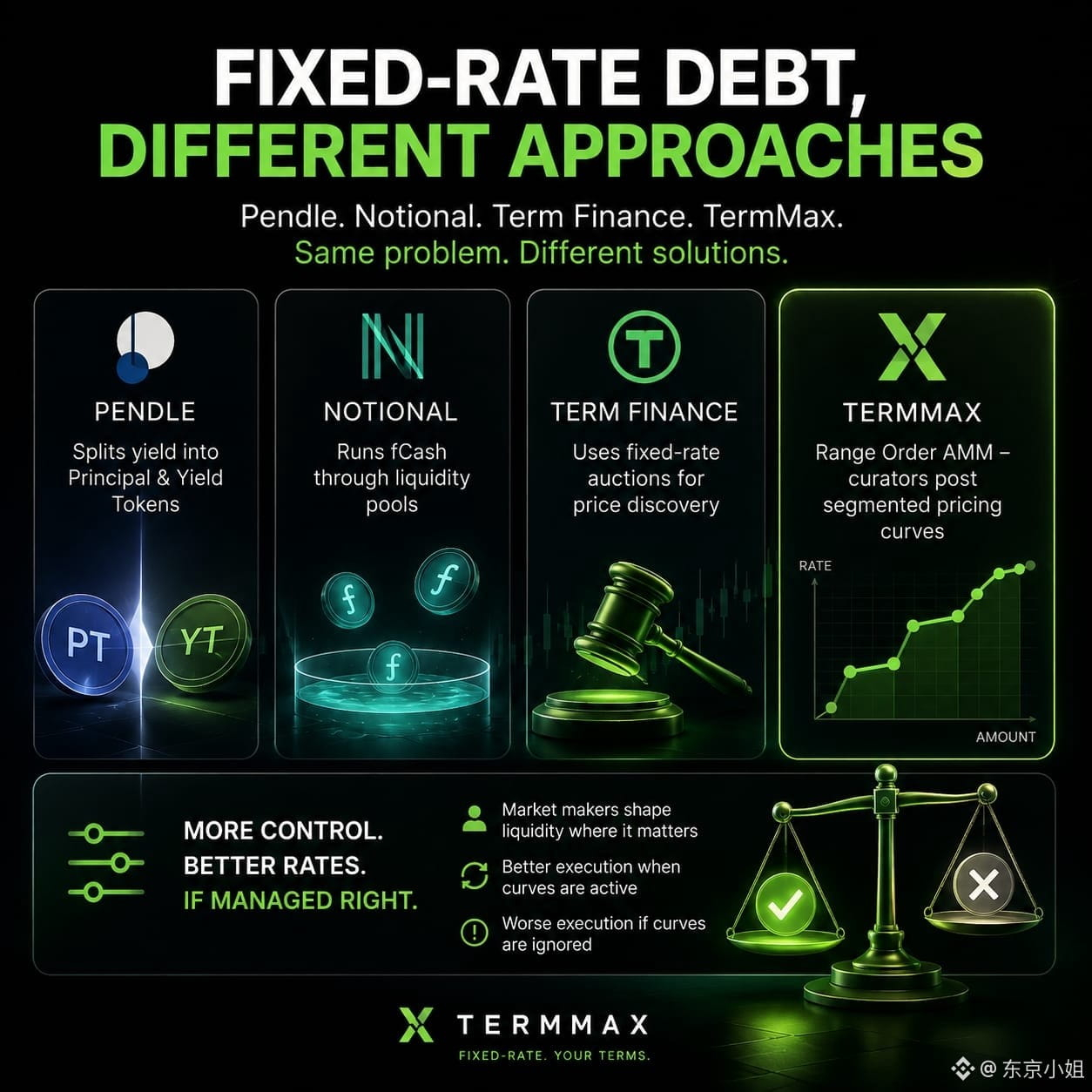
متخصص termmax هو ديون مُرقمنة بسعر ثابت، وليس هو الوحيد هناك — pendle وnotional وterm finance جميعها تلتفت إلى المشكلة نفسها من زوايا مختلفة. تقوم pendle بتقسيم الأصول التي تولّد عائداً إلى رموز أصل (principal) ورموز عائد (yield). يقوم notional بتدوير fcash عبر مجمعات السيولة. أما حل termmax الخاص فهو نموذج range order amm، حيث يقوم القيمون (curators) بنشر منحنيات تسعير مجزّأة تتطابق العقود عليها مباشرةً بين المقترضين والمُقرِضين.
تبادلتُ الحديث حول سبب تفضيل هذا النهج تحديداً على نموذج المزايدة أو التقسيم البحت للعائد، وأعتقد أن الأمر يعود إلى التحكم — يمكن لِـ range order setter أن يحدد بالضبط مكان استقرار السيولة على المنحنى بدلاً من الاكتفاء بقبول سعر تسوية. هذا أكثر تداخلاً بالنسبة لصانعي السوق، وهو ما له وجهان: أسعار أفضل عندما يكون شخص ما فعلاً يُدير المنحنى جيداً، وأسوأ عندما لا يهتم أحد بتحديثه مع تغيّر الظروف.
لم أجرِ فعلياً نفس حجم الصفقة عبر pendle وtermmax جنباً إلى جنب للمقارنة في التنفيذ الحقيقي، لذا فهذا قراءة بنيوية وليست مبنية على اختبار رجعي 📐
#termmax @termmax
متخصص termmax هو ديون مُرقمنة بسعر ثابت، وليس هو الوحيد هناك — pendle وnotional وterm finance جميعها تلتفت إلى المشكلة نفسها من زوايا مختلفة. تقوم pendle بتقسيم الأصول التي تولّد عائداً إلى رموز أصل (principal) ورموز عائد (yield). يقوم notional بتدوير fcash عبر مجمعات السيولة. أما حل termmax الخاص فهو نموذج range order amm، حيث يقوم القيمون (curators) بنشر منحنيات تسعير مجزّأة تتطابق العقود عليها مباشرةً بين المقترضين والمُقرِضين.
تبادلتُ الحديث حول سبب تفضيل هذا النهج تحديداً على نموذج المزايدة أو التقسيم البحت للعائد، وأعتقد أن الأمر يعود إلى التحكم — يمكن لِـ range order setter أن يحدد بالضبط مكان استقرار السيولة على المنحنى بدلاً من الاكتفاء بقبول سعر تسوية. هذا أكثر تداخلاً بالنسبة لصانعي السوق، وهو ما له وجهان: أسعار أفضل عندما يكون شخص ما فعلاً يُدير المنحنى جيداً، وأسوأ عندما لا يهتم أحد بتحديثه مع تغيّر الظروف.
لم أجرِ فعلياً نفس حجم الصفقة عبر pendle وtermmax جنباً إلى جنب للمقارنة في التنفيذ الحقيقي، لذا فهذا قراءة بنيوية وليست مبنية على اختبار رجعي 📐
#termmax @TermMax
تبادلتُ الحديث حول سبب تفضيل هذا النهج تحديداً على نموذج المزايدة أو التقسيم البحت للعائد، وأعتقد أن الأمر يعود إلى التحكم — يمكن لِـ range order setter أن يحدد بالضبط مكان استقرار السيولة على المنحنى بدلاً من الاكتفاء بقبول سعر تسوية. هذا أكثر تداخلاً بالنسبة لصانعي السوق، وهو ما له وجهان: أسعار أفضل عندما يكون شخص ما فعلاً يُدير المنحنى جيداً، وأسوأ عندما لا يهتم أحد بتحديثه مع تغيّر الظروف.
لم أجرِ فعلياً نفس حجم الصفقة عبر pendle وtermmax جنباً إلى جنب للمقارنة في التنفيذ الحقيقي، لذا فهذا قراءة بنيوية وليست مبنية على اختبار رجعي 📐
#termmax @TermMax
2
4
186
·
--
صاعد
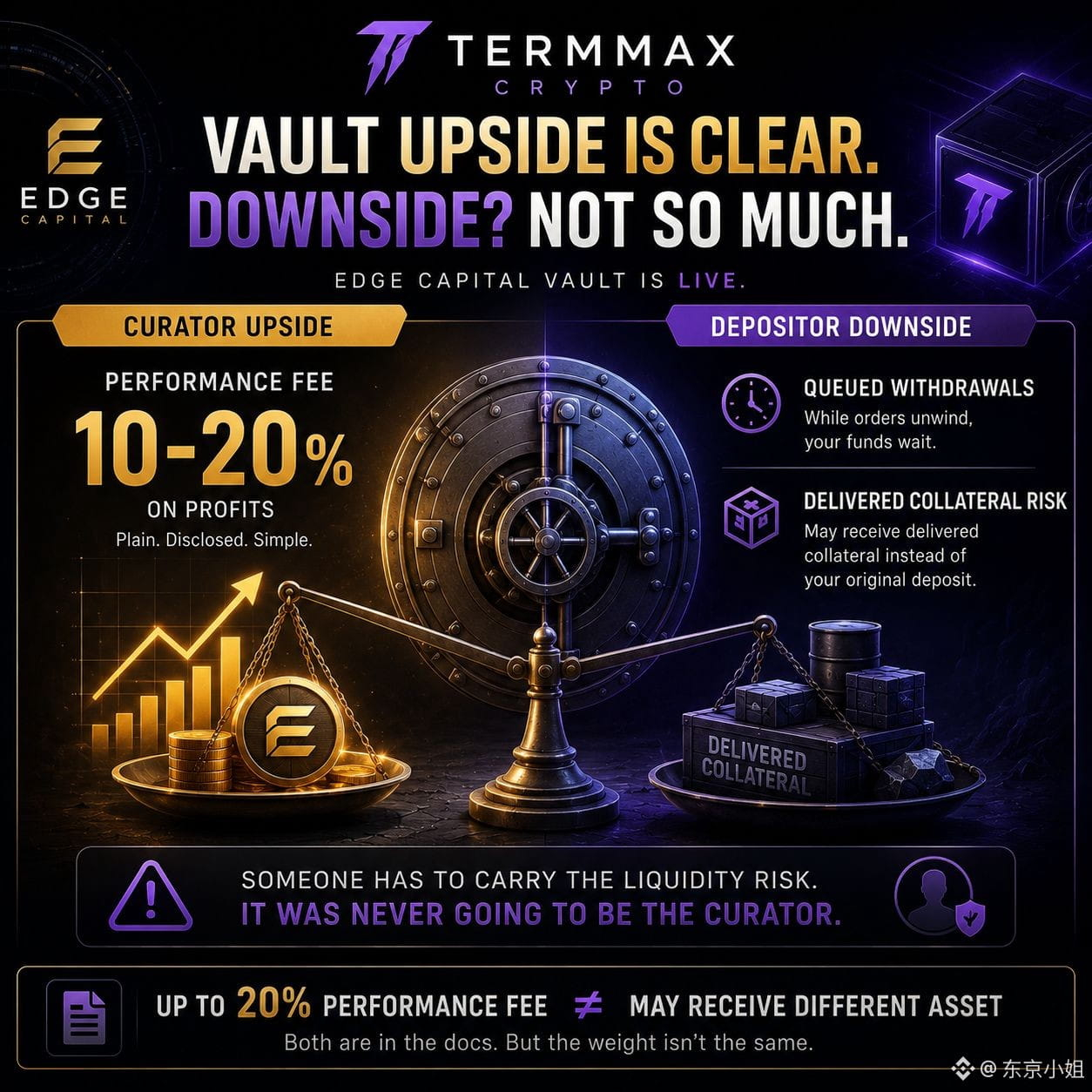
خزنة إيدج كابيتال تعمل الآن مباشرةً، وهذه بالضبط هي نوع الإعداد الذي يظهر فيه فجوة الإفصاح. يحصل القيّمون على أتعاب أداء بنسبة 10 إلى 20 بالمئة على أي ربح يولّده صندوقهم، وهذا مذكور في وثائق آليات الصندوق نفسها، بشكل واضح ومصرّح به. ما لا يصل إلى هذه الدرجة نفسها من الوضوح هو — في الواقع يكاد لا يظهر على الإطلاق — ما الذي يتعرّض له المودعون فعليًا إذا واجه صندوق من هذا النوع فترة صعبة: عمليات سحب معلّقة بينما تنحلّ الأوامر، أو الأسوأ من ذلك، أن ينتهي الأمر بحمل ضمان مُسلَّم بدلًا من رمز الدين الذي أودعوه في الأصل، إذا مرّت الأسواق بتسليم فعلي.
لذلك فإن الجانب الإيجابي للقيّم هو نسبة مئوية واضحة ومُفصح عنها. أما الجانب السلبي للمودع فهو ترتيبٌ في الطابور وربما أصلٌ مختلف عن ذلك الذي قام بإيداعه. لست هنا أصف ذلك بأنه فضيحة؛ فلابد أن يتحمل شخصٌ ما مخاطر السيولة في صندوق مُدار بشكل نشط، ولم يكن من المتوقع أبدًا أن يكون هو الشخص الذي يديره. فقط لا أرى أن عبارة "أتعاب أداء حتى 20%" وعبارة "قد تتلقى ضمانًا مُسلَّمًا بدلًا من إيداعك" تبدوان كأنهما متماثلتان عندما تكونان في نفس قسم المستندات، وبجملة واحدة تفصل بينهما.
صراحةً، ممزّق بين ما إذا كان هذا تبادلًا عادلاً للإدارة الاحترافية أو مجرد كيفية تَشكل كل بنية صناديق من هذا النوع في النهاية، في ديفاي أو غيره 🤷
#termmax @termmax
خزنة إيدج كابيتال تعمل الآن مباشرةً، وهذه بالضبط هي نوع الإعداد الذي يظهر فيه فجوة الإفصاح. يحصل القيّمون على أتعاب أداء بنسبة 10 إلى 20 بالمئة على أي ربح يولّده صندوقهم، وهذا مذكور في وثائق آليات الصندوق نفسها، بشكل واضح ومصرّح به. ما لا يصل إلى هذه الدرجة نفسها من الوضوح هو — في الواقع يكاد لا يظهر على الإطلاق — ما الذي يتعرّض له المودعون فعليًا إذا واجه صندوق من هذا النوع فترة صعبة: عمليات سحب معلّقة بينما تنحلّ الأوامر، أو الأسوأ من ذلك، أن ينتهي الأمر بحمل ضمان مُسلَّم بدلًا من رمز الدين الذي أودعوه في الأصل، إذا مرّت الأسواق بتسليم فعلي.
لذلك فإن الجانب الإيجابي للقيّم هو نسبة مئوية واضحة ومُفصح عنها. أما الجانب السلبي للمودع فهو ترتيبٌ في الطابور وربما أصلٌ مختلف عن ذلك الذي قام بإيداعه. لست هنا أصف ذلك بأنه فضيحة؛ فلابد أن يتحمل شخصٌ ما مخاطر السيولة في صندوق مُدار بشكل نشط، ولم يكن من المتوقع أبدًا أن يكون هو الشخص الذي يديره. فقط لا أرى أن عبارة "أتعاب أداء حتى 20%" وعبارة "قد تتلقى ضمانًا مُسلَّمًا بدلًا من إيداعك" تبدوان كأنهما متماثلتان عندما تكونان في نفس قسم المستندات، وبجملة واحدة تفصل بينهما.
صراحةً، ممزّق بين ما إذا كان هذا تبادلًا عادلاً للإدارة الاحترافية أو مجرد كيفية تَشكل كل بنية صناديق من هذا النوع في النهاية، في ديفاي أو غيره 🤷
#termmax @TermMax
لذلك فإن الجانب الإيجابي للقيّم هو نسبة مئوية واضحة ومُفصح عنها. أما الجانب السلبي للمودع فهو ترتيبٌ في الطابور وربما أصلٌ مختلف عن ذلك الذي قام بإيداعه. لست هنا أصف ذلك بأنه فضيحة؛ فلابد أن يتحمل شخصٌ ما مخاطر السيولة في صندوق مُدار بشكل نشط، ولم يكن من المتوقع أبدًا أن يكون هو الشخص الذي يديره. فقط لا أرى أن عبارة "أتعاب أداء حتى 20%" وعبارة "قد تتلقى ضمانًا مُسلَّمًا بدلًا من إيداعك" تبدوان كأنهما متماثلتان عندما تكونان في نفس قسم المستندات، وبجملة واحدة تفصل بينهما.
صراحةً، ممزّق بين ما إذا كان هذا تبادلًا عادلاً للإدارة الاحترافية أو مجرد كيفية تَشكل كل بنية صناديق من هذا النوع في النهاية، في ديفاي أو غيره 🤷
#termmax @TermMax
1
156
·
--
صاعد
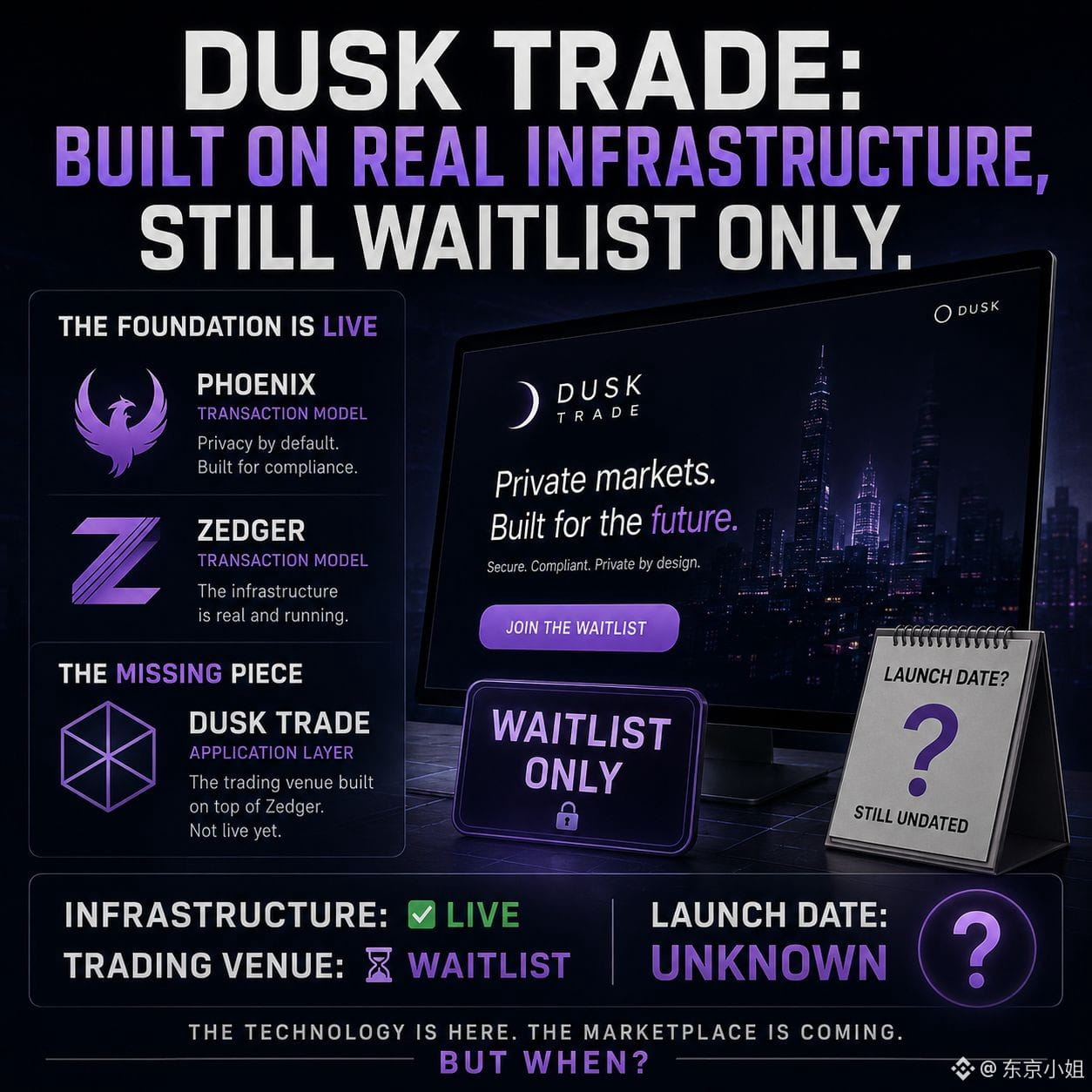
ذهبت للتحقق من Zedger لأن الناس ما زالوا يذكرونه كأنه بنية تحتية حية، وبالفعل ما زال كذلك — توثيقات Dusk الحالية تُدرج Phoenix وZedger كنموذجي المعاملات المتاحين حاليًا، لذا كان افتراضي الأول بأنه اختفى بهدوء خاطئًا.
ما هو صحيح فعلاً هو أن Dusk Trade، وهي طبقة التطبيق المقصود بها أن تعلو فوق ذلك وتمنح المستخدمين مكانًا فعليًا للتداول على الأصول المرقمنة. تحققت من trade.dusk.network مباشرةً وما زال مقتصرًا على قائمة الانتظار فقط؛ عبارة "انضم إلى قائمة الانتظار" هي الدعوة الوحيدة لاتخاذ إجراء المعروضة على الصفحة الآن.
الفجوة هنا مختلفة عمّا ظننت أولًا، وبصراحة أكثر تحديدًا — المرحلة النهائية من خريطة الطريق بعد الإطلاق على mainnet كانت تعد بـ"Zedger كاملة"، إصدار الأصول وتشغيلها بالكامل، بما في ذلك عمليات المقاصة والتسوية، ومُصوَّرة كجزء من رؤية Dusk لعام 2025. نموذج المعاملة الأساسي موجود، لكن منصة التداول المبنية عليه لا تزال قبل الإطلاق ولا يوجد أي جدول زمني واضح في صفحة قائمة الانتظار نفسها.
هل يعرف أحد ما إذا كانت Dusk Trade مرتبطة بتاريخ إطلاق فعلي في أي مكان، أم أنها لا تزال في مرحلة قائمة انتظار بلا تاريخ؟ 🧐
#dusk $DUSK @Dusk_Foundation
ذهبت للتحقق من Zedger لأن الناس ما زالوا يذكرونه كأنه بنية تحتية حية، وبالفعل ما زال كذلك — توثيقات Dusk الحالية تُدرج Phoenix وZedger كنموذجي المعاملات المتاحين حاليًا، لذا كان افتراضي الأول بأنه اختفى بهدوء خاطئًا.
ما هو صحيح فعلاً هو أن Dusk Trade، وهي طبقة التطبيق المقصود بها أن تعلو فوق ذلك وتمنح المستخدمين مكانًا فعليًا للتداول على الأصول المرقمنة. تحققت من trade.dusk.network مباشرةً وما زال مقتصرًا على قائمة الانتظار فقط؛ عبارة "انضم إلى قائمة الانتظار" هي الدعوة الوحيدة لاتخاذ إجراء المعروضة على الصفحة الآن.
الفجوة هنا مختلفة عمّا ظننت أولًا، وبصراحة أكثر تحديدًا — المرحلة النهائية من خريطة الطريق بعد الإطلاق على mainnet كانت تعد بـ"Zedger كاملة"، إصدار الأصول وتشغيلها بالكامل، بما في ذلك عمليات المقاصة والتسوية، ومُصوَّرة كجزء من رؤية Dusk لعام 2025. نموذج المعاملة الأساسي موجود، لكن منصة التداول المبنية عليه لا تزال قبل الإطلاق ولا يوجد أي جدول زمني واضح في صفحة قائمة الانتظار نفسها.
هل يعرف أحد ما إذا كانت Dusk Trade مرتبطة بتاريخ إطلاق فعلي في أي مكان، أم أنها لا تزال في مرحلة قائمة انتظار بلا تاريخ؟ 🧐
#dusk $DUSK @Dusk
ما هو صحيح فعلاً هو أن Dusk Trade، وهي طبقة التطبيق المقصود بها أن تعلو فوق ذلك وتمنح المستخدمين مكانًا فعليًا للتداول على الأصول المرقمنة. تحققت من trade.dusk.network مباشرةً وما زال مقتصرًا على قائمة الانتظار فقط؛ عبارة "انضم إلى قائمة الانتظار" هي الدعوة الوحيدة لاتخاذ إجراء المعروضة على الصفحة الآن.
الفجوة هنا مختلفة عمّا ظننت أولًا، وبصراحة أكثر تحديدًا — المرحلة النهائية من خريطة الطريق بعد الإطلاق على mainnet كانت تعد بـ"Zedger كاملة"، إصدار الأصول وتشغيلها بالكامل، بما في ذلك عمليات المقاصة والتسوية، ومُصوَّرة كجزء من رؤية Dusk لعام 2025. نموذج المعاملة الأساسي موجود، لكن منصة التداول المبنية عليه لا تزال قبل الإطلاق ولا يوجد أي جدول زمني واضح في صفحة قائمة الانتظار نفسها.
هل يعرف أحد ما إذا كانت Dusk Trade مرتبطة بتاريخ إطلاق فعلي في أي مكان، أم أنها لا تزال في مرحلة قائمة انتظار بلا تاريخ؟ 🧐
#dusk $DUSK @Dusk
1
112
·
--
صاعد
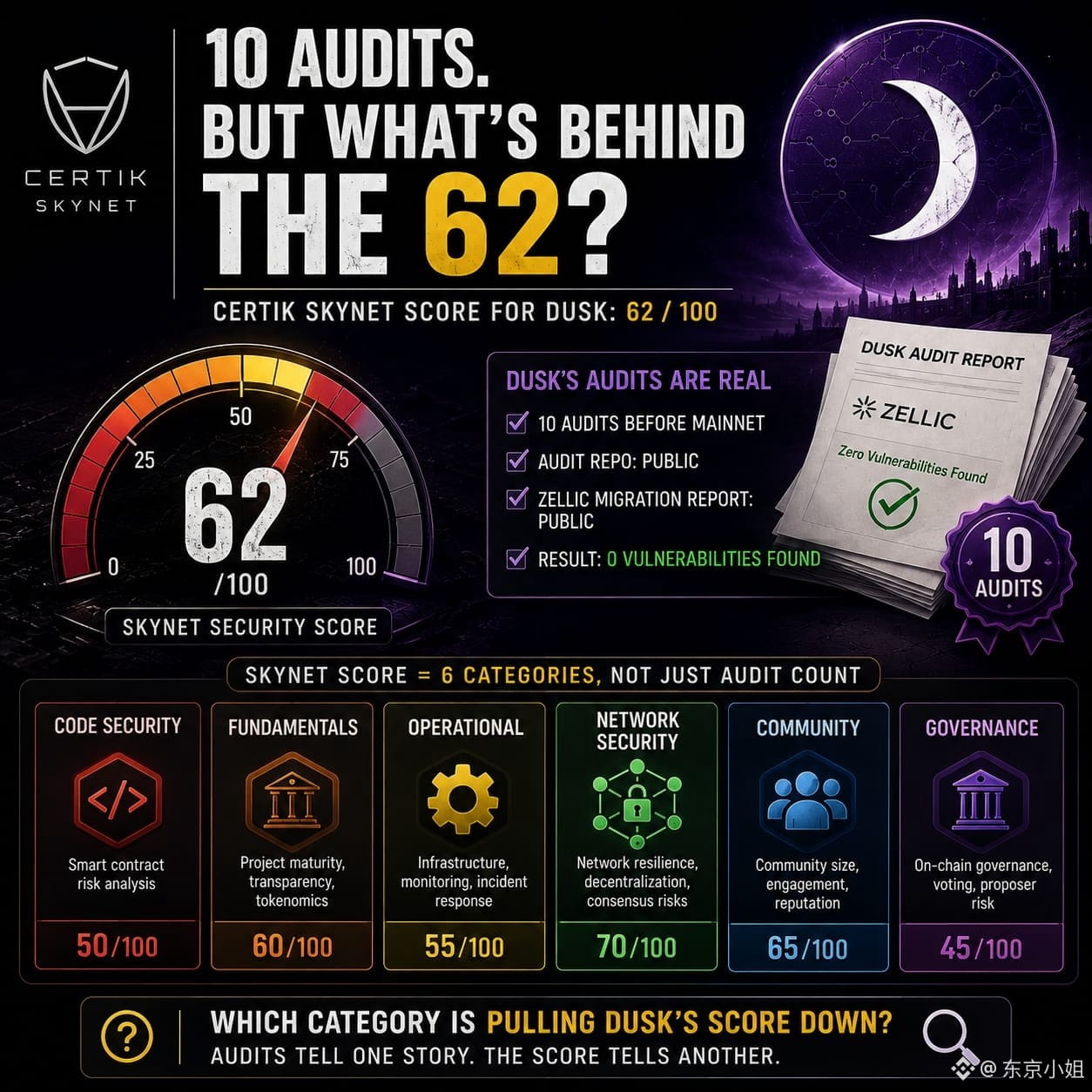
ذهبتُ للتحقق من درجة أمان طرف ثالث لدى Dusk، لأنهم يروّجون بشكل قوي لعبارة "عشر عمليات تدقيق قبل الإطلاق على الشبكة الرئيسية"، وتبلغ درجة سكاي نت لدى CertiK لـ Dusk 62 من 100. دخلتُ وأنا أتوقع أن تتوافق هذه النسبة تقريبًا مع عدد عمليات التدقيق — لكن اضطررتُ للتوقف وإعادة قراءة صفحة منهجية CertiK، لأنني افترضت أن درجة الأمان ستكون في الأساس مجرد حصيلة عدد عمليات التدقيق؛ ليست كذلك. إنها ست فئات منفصلة ممزوجة معًا.
عمليات التدقيق نفسها حقيقية: مستودع تدقيقات Dusk الخاص وتقارير عقد الترحيل لدى Zellic كلاهما متاحان للجمهور، ولا توجد أي ثغرات هناك. إذن، ليست القضية في التدقيقات الفردية. بل إن مجموعة تقارير تدقيق نظيفة ودرجة ثقة مركبة واحدة تجيب عن أسئلة مختلفة، وغالبًا ما تميل نصوص التسويق إلى التعامل مع الاثنين كأنهما قابلان للتبادل عندما لا يكونان كذلك.
وللإنصاف، لا أملك معيارًا واضحًا لما يبدو عليه "مستوى جيد" لدرجة سكاي نت الخاصة بـ l1 في مرحلة Dusk، لذلك لا أستطيع القول إن 62 سيئة، فقط إنها غير مُفسَّرة بشكل واضح بتاريخ التدقيق وحده.
هل يعرف أي شخص أيًّا من فئات سكاي نت الست هي التي تسحب هذه الدرجة إلى الأسفل بالنسبة إلى Dusk تحديدًا؟ 🧐
#dusk $DUSK @Dusk_Foundation
{future}(DUSKUSDT)
ذهبتُ للتحقق من درجة أمان طرف ثالث لدى Dusk، لأنهم يروّجون بشكل قوي لعبارة "عشر عمليات تدقيق قبل الإطلاق على الشبكة الرئيسية"، وتبلغ درجة سكاي نت لدى CertiK لـ Dusk 62 من 100. دخلتُ وأنا أتوقع أن تتوافق هذه النسبة تقريبًا مع عدد عمليات التدقيق — لكن اضطررتُ للتوقف وإعادة قراءة صفحة منهجية CertiK، لأنني افترضت أن درجة الأمان ستكون في الأساس مجرد حصيلة عدد عمليات التدقيق؛ ليست كذلك. إنها ست فئات منفصلة ممزوجة معًا.
عمليات التدقيق نفسها حقيقية: مستودع تدقيقات Dusk الخاص وتقارير عقد الترحيل لدى Zellic كلاهما متاحان للجمهور، ولا توجد أي ثغرات هناك. إذن، ليست القضية في التدقيقات الفردية. بل إن مجموعة تقارير تدقيق نظيفة ودرجة ثقة مركبة واحدة تجيب عن أسئلة مختلفة، وغالبًا ما تميل نصوص التسويق إلى التعامل مع الاثنين كأنهما قابلان للتبادل عندما لا يكونان كذلك.
وللإنصاف، لا أملك معيارًا واضحًا لما يبدو عليه "مستوى جيد" لدرجة سكاي نت الخاصة بـ l1 في مرحلة Dusk، لذلك لا أستطيع القول إن 62 سيئة، فقط إنها غير مُفسَّرة بشكل واضح بتاريخ التدقيق وحده.
هل يعرف أي شخص أيًّا من فئات سكاي نت الست هي التي تسحب هذه الدرجة إلى الأسفل بالنسبة إلى Dusk تحديدًا؟ 🧐
#dusk $DUSK @Dusk
عمليات التدقيق نفسها حقيقية: مستودع تدقيقات Dusk الخاص وتقارير عقد الترحيل لدى Zellic كلاهما متاحان للجمهور، ولا توجد أي ثغرات هناك. إذن، ليست القضية في التدقيقات الفردية. بل إن مجموعة تقارير تدقيق نظيفة ودرجة ثقة مركبة واحدة تجيب عن أسئلة مختلفة، وغالبًا ما تميل نصوص التسويق إلى التعامل مع الاثنين كأنهما قابلان للتبادل عندما لا يكونان كذلك.
وللإنصاف، لا أملك معيارًا واضحًا لما يبدو عليه "مستوى جيد" لدرجة سكاي نت الخاصة بـ l1 في مرحلة Dusk، لذلك لا أستطيع القول إن 62 سيئة، فقط إنها غير مُفسَّرة بشكل واضح بتاريخ التدقيق وحده.
هل يعرف أي شخص أيًّا من فئات سكاي نت الست هي التي تسحب هذه الدرجة إلى الأسفل بالنسبة إلى Dusk تحديدًا؟ 🧐
#dusk $DUSK @Dusk
1
1
122
·
--
صاعد
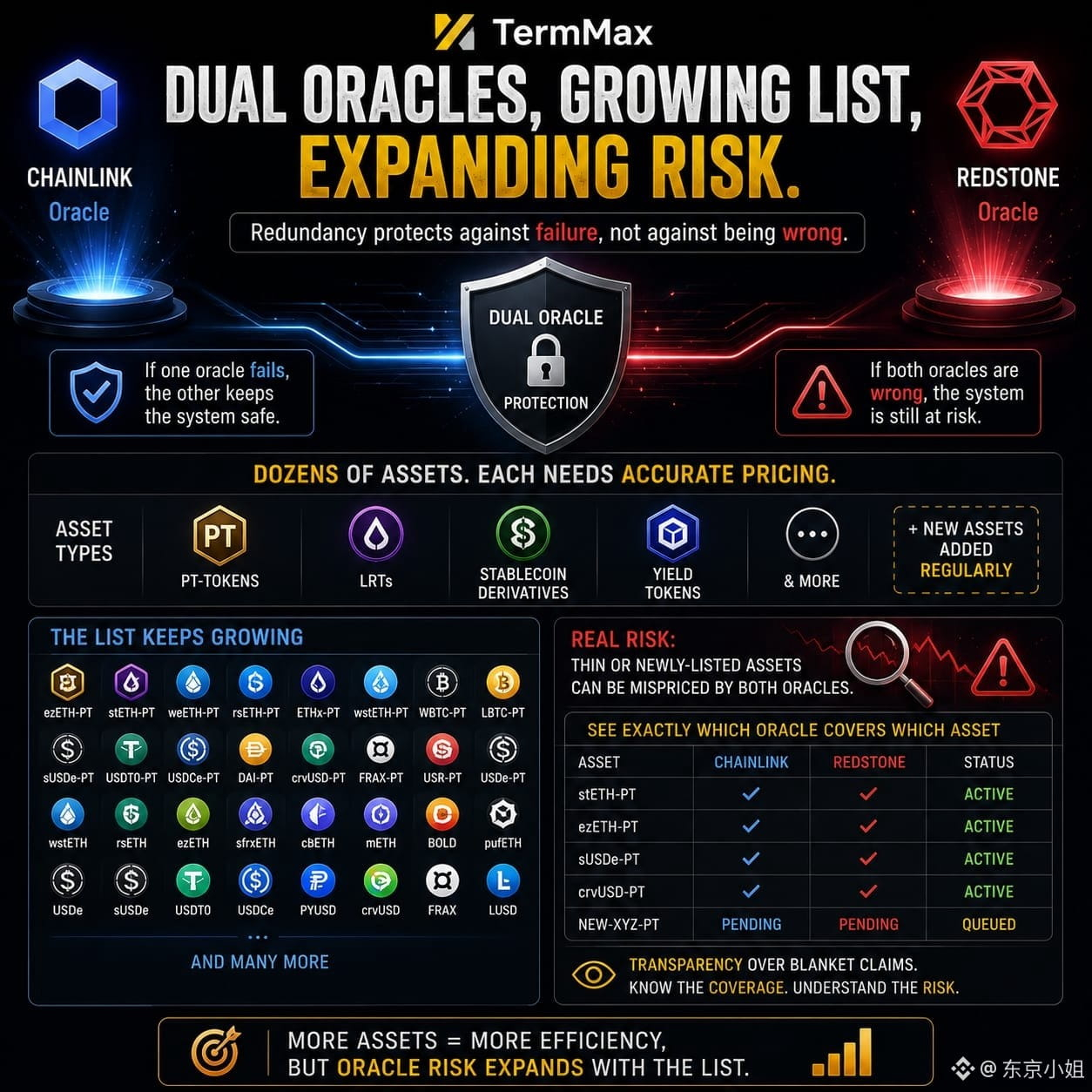
يعمل termmax بوجود مُحرِّكين (أوراق مزدوجة) للبيانات، وهما chainlink وredstone، وتُقدِّم المستندات ذلك كحماية ضد تعطل تغذية واحدة. حسناً، لكنني مررتُ عبر قائمة أصول المُحرِّك الفعليّة في مستنداتهم، وهي الآن عشرات من رموز pt-tokens وlrts ومشتقات stablecoin الفردية، وكل واحد منها يحتاج إعداد مُعرِّف سعره الخاص بشكل صحيح، مع إضافة جديدة بشكل منتظم تقريباً.
هذا — في الحقيقة، الخطر الحقيقي ليس تصميم المُحرِّكين المزدوجين بحد ذاته، بل أن التكرار يحميك إذا تعطّل مُحرِّك واحد، وليس إذا كان كلا التغذيتين غير صحيحتين في الوقت نفسه بالنسبة لأصل جديد مُدرج للتو وبسيولة رقيقة. المزيد من أنواع الضمانات أمر جيد لرفع كفاءة رأس المال، أفهم ذلك. لكنه يعني أن قسم مخاطر المُحرِّك ليس ثابتاً، بل يتمدد كلما تم إدراج أصل جديد في القائمة المسموح بها.
ما كان من شأنه أن يحل المشكلة بالنسبة لي فعلاً هو معرفة أي مزوّد يغطي أي أصل محدد مُعلن عنه في مكان ما، بدلاً من مجرد "chainlink وredstone" كعبارة عامة واحدة تغطي كل شيء 🔍
#termmax @termmax
يعمل termmax بوجود مُحرِّكين (أوراق مزدوجة) للبيانات، وهما chainlink وredstone، وتُقدِّم المستندات ذلك كحماية ضد تعطل تغذية واحدة. حسناً، لكنني مررتُ عبر قائمة أصول المُحرِّك الفعليّة في مستنداتهم، وهي الآن عشرات من رموز pt-tokens وlrts ومشتقات stablecoin الفردية، وكل واحد منها يحتاج إعداد مُعرِّف سعره الخاص بشكل صحيح، مع إضافة جديدة بشكل منتظم تقريباً.
هذا — في الحقيقة، الخطر الحقيقي ليس تصميم المُحرِّكين المزدوجين بحد ذاته، بل أن التكرار يحميك إذا تعطّل مُحرِّك واحد، وليس إذا كان كلا التغذيتين غير صحيحتين في الوقت نفسه بالنسبة لأصل جديد مُدرج للتو وبسيولة رقيقة. المزيد من أنواع الضمانات أمر جيد لرفع كفاءة رأس المال، أفهم ذلك. لكنه يعني أن قسم مخاطر المُحرِّك ليس ثابتاً، بل يتمدد كلما تم إدراج أصل جديد في القائمة المسموح بها.
ما كان من شأنه أن يحل المشكلة بالنسبة لي فعلاً هو معرفة أي مزوّد يغطي أي أصل محدد مُعلن عنه في مكان ما، بدلاً من مجرد "chainlink وredstone" كعبارة عامة واحدة تغطي كل شيء 🔍
#termmax @TermMax
هذا — في الحقيقة، الخطر الحقيقي ليس تصميم المُحرِّكين المزدوجين بحد ذاته، بل أن التكرار يحميك إذا تعطّل مُحرِّك واحد، وليس إذا كان كلا التغذيتين غير صحيحتين في الوقت نفسه بالنسبة لأصل جديد مُدرج للتو وبسيولة رقيقة. المزيد من أنواع الضمانات أمر جيد لرفع كفاءة رأس المال، أفهم ذلك. لكنه يعني أن قسم مخاطر المُحرِّك ليس ثابتاً، بل يتمدد كلما تم إدراج أصل جديد في القائمة المسموح بها.
ما كان من شأنه أن يحل المشكلة بالنسبة لي فعلاً هو معرفة أي مزوّد يغطي أي أصل محدد مُعلن عنه في مكان ما، بدلاً من مجرد "chainlink وredstone" كعبارة عامة واحدة تغطي كل شيء 🔍
#termmax @TermMax
110
·
--
صاعد
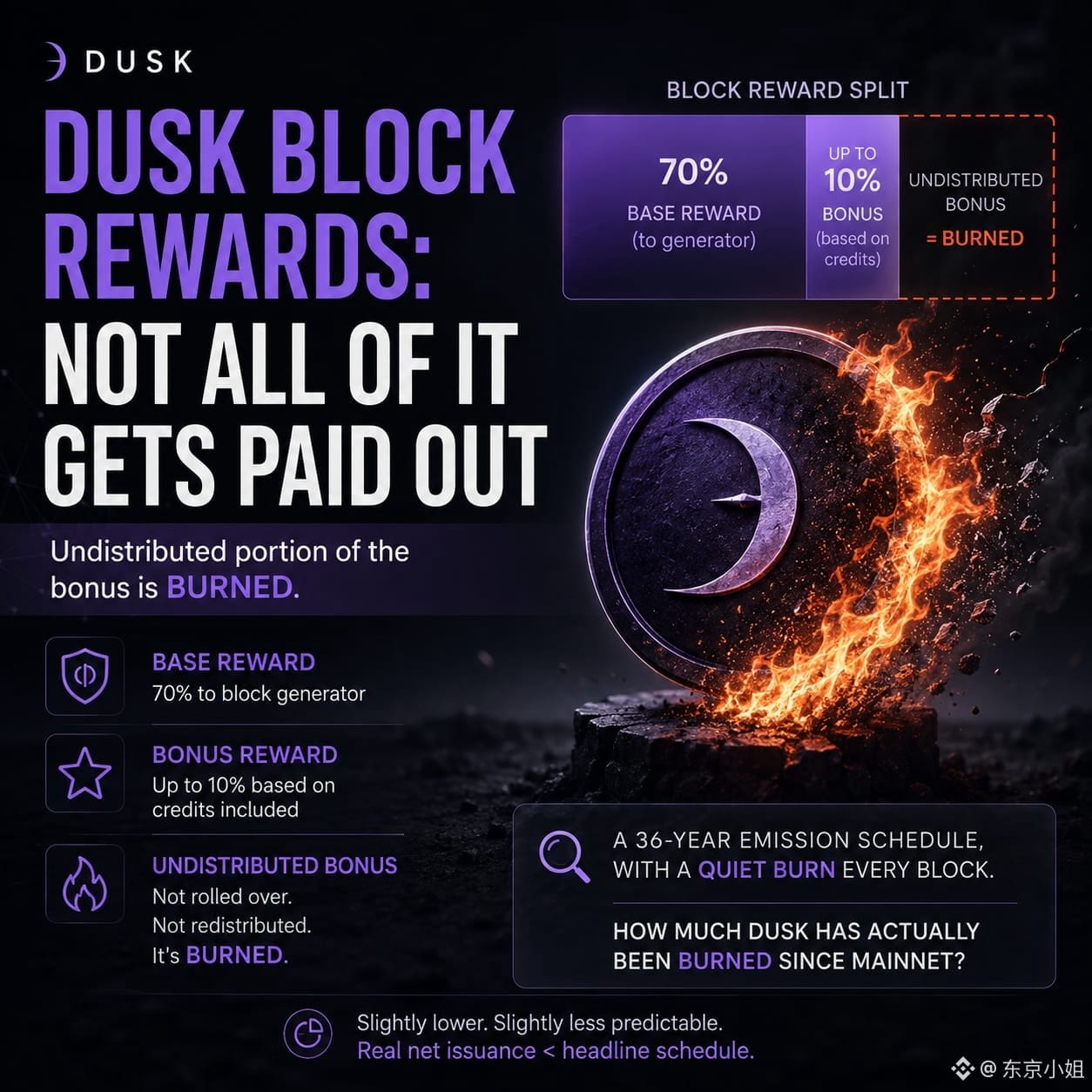
ذهبتُ لأرى كيف تُقسَّم مكافآت “Dusk” الفعلية عند نهاية كل فترة، ولاحظتُ وجود آلية حرق لم أكن قد انتبهت لها من قبل. مُولِّدات البلوكات تحصل على نسبة أساسٍ تبلغ 70%، بالإضافة إلى ما يصل إلى 10% أخرى اعتمادًا على مقدار عدد “الائتمانات” المُدرجة في الشهادة — لكن أي جزء من تلك الـ10% الإضافية لا يتم توزيعه لا يُرحَّل ولا يُعاد توزيعه، بل يُحرق. واضطررتُ لإعادة قراءة تلك الجملة للمرة الثانية، لأنني افترضتُ أن “غير الموزَّع” يعني أنه يُنقَل إلى حمّ/صندوق البلوك التالي.
لذا فبعكس معظم سلاسل PoS التي يتم فيها دفع كامل صندوق المكافآت بغضّ النظر عن جودة المشاركة، فإن “Dusk” تُقلِّص العرض بشكلٍ هادئ على الهامش في كل بلوك، اعتمادًا على مدى اكتمال شهادة مُولِّد البلوك. كما أن سلسلةً تمتلك جدول انبعاثات مبنيًا على النصف كل 36 عامًا تقوم أيضًا بحرق كميات صغيرة في الطرف الآخر بناءً على جودة التنفيذ، ولم أرَ هذا مُقدَّمًا باعتباره عاملًا حقيقيًا لتغيير صافي المعروض في أي مكان.
إنها نسبة صغيرة لكل بلوك، ولا أقول إنها تُغيّر منحنى العرض بشكل كبير. لكن عبارة “جدول انبعاثات 36 عامًا” توحي بمنحنى إضافي يمكن التنبؤ به، ووجود آلية الحرق يعني أن الإصدار الصافي الفعلي أقل قليلًا وأقل قابلية للتنبؤ قليلًا مما توحي به الخطة الرئيسية.
هل يتابع أيّ شخص مقدار ما تم حرقه من “Dusk” بهذه الطريقة منذ إطلاق الشبكة الرئيسية (mainnet)؟ أم أن هذا الرقم غير منشور في أي مكان؟ 🧐#dusk $DUSK @Dusk_Foundation
ذهبتُ لأرى كيف تُقسَّم مكافآت “Dusk” الفعلية عند نهاية كل فترة، ولاحظتُ وجود آلية حرق لم أكن قد انتبهت لها من قبل. مُولِّدات البلوكات تحصل على نسبة أساسٍ تبلغ 70%، بالإضافة إلى ما يصل إلى 10% أخرى اعتمادًا على مقدار عدد “الائتمانات” المُدرجة في الشهادة — لكن أي جزء من تلك الـ10% الإضافية لا يتم توزيعه لا يُرحَّل ولا يُعاد توزيعه، بل يُحرق. واضطررتُ لإعادة قراءة تلك الجملة للمرة الثانية، لأنني افترضتُ أن “غير الموزَّع” يعني أنه يُنقَل إلى حمّ/صندوق البلوك التالي.
لذا فبعكس معظم سلاسل PoS التي يتم فيها دفع كامل صندوق المكافآت بغضّ النظر عن جودة المشاركة، فإن “Dusk” تُقلِّص العرض بشكلٍ هادئ على الهامش في كل بلوك، اعتمادًا على مدى اكتمال شهادة مُولِّد البلوك. كما أن سلسلةً تمتلك جدول انبعاثات مبنيًا على النصف كل 36 عامًا تقوم أيضًا بحرق كميات صغيرة في الطرف الآخر بناءً على جودة التنفيذ، ولم أرَ هذا مُقدَّمًا باعتباره عاملًا حقيقيًا لتغيير صافي المعروض في أي مكان.
إنها نسبة صغيرة لكل بلوك، ولا أقول إنها تُغيّر منحنى العرض بشكل كبير. لكن عبارة “جدول انبعاثات 36 عامًا” توحي بمنحنى إضافي يمكن التنبؤ به، ووجود آلية الحرق يعني أن الإصدار الصافي الفعلي أقل قليلًا وأقل قابلية للتنبؤ قليلًا مما توحي به الخطة الرئيسية.
هل يتابع أيّ شخص مقدار ما تم حرقه من “Dusk” بهذه الطريقة منذ إطلاق الشبكة الرئيسية (mainnet)؟ أم أن هذا الرقم غير منشور في أي مكان؟ 🧐#dusk $DUSK @Dusk
لذا فبعكس معظم سلاسل PoS التي يتم فيها دفع كامل صندوق المكافآت بغضّ النظر عن جودة المشاركة، فإن “Dusk” تُقلِّص العرض بشكلٍ هادئ على الهامش في كل بلوك، اعتمادًا على مدى اكتمال شهادة مُولِّد البلوك. كما أن سلسلةً تمتلك جدول انبعاثات مبنيًا على النصف كل 36 عامًا تقوم أيضًا بحرق كميات صغيرة في الطرف الآخر بناءً على جودة التنفيذ، ولم أرَ هذا مُقدَّمًا باعتباره عاملًا حقيقيًا لتغيير صافي المعروض في أي مكان.
إنها نسبة صغيرة لكل بلوك، ولا أقول إنها تُغيّر منحنى العرض بشكل كبير. لكن عبارة “جدول انبعاثات 36 عامًا” توحي بمنحنى إضافي يمكن التنبؤ به، ووجود آلية الحرق يعني أن الإصدار الصافي الفعلي أقل قليلًا وأقل قابلية للتنبؤ قليلًا مما توحي به الخطة الرئيسية.
هل يتابع أيّ شخص مقدار ما تم حرقه من “Dusk” بهذه الطريقة منذ إطلاق الشبكة الرئيسية (mainnet)؟ أم أن هذا الرقم غير منشور في أي مكان؟ 🧐#dusk $DUSK @Dusk
1
1
102
·
--
صاعد
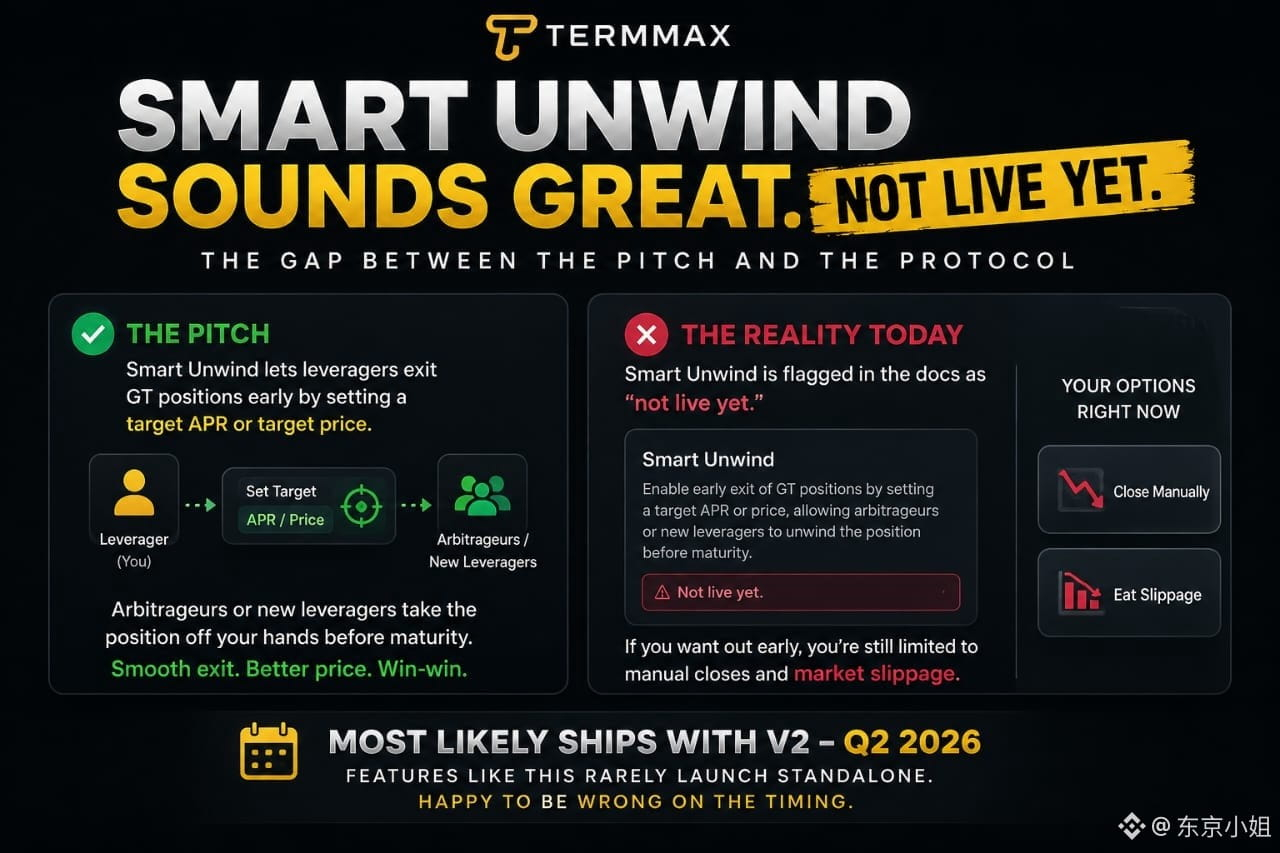
هناك ميزة يتحدث عنها <c-1/> تيرماكس كأنها تعمل بالفعل، وليست — smart unwind. يتم تقديمها كطريقة يخرج بها المستثمرون بالرافعة المالية من صفقات gt مبكرًا عبر ضبط معدل عائد مستهدف (target APR) أو سعر مستهدف، ما يتيح للمراجِحين أو للمستثمرين الجدد بالرافعة أن يأخذوا الصفقة عن كاهلك قبل تاريخ الاستحقاق. يبدو رائعًا على الورق. لكن صفحة الوثائق الفعلية الخاصة بها، مع ذلك، تحتوي على سطر واحد في الأسفل يعلّمها على أنها "ليست فعّالة بعد".
لذا، في الوقت الحالي، إذا كنتَ تستخدم رافعة وتريد الخروج مبكرًا، فأنت عالق بنفس الخيارات التي كانت موجودة قبل وقت طويل من الإعلان عن هذه الميزة — الإغلاق يدويًا وتحمّل أي انزلاق سعري يفرضه السوق عليك. أفهم لماذا يتم الترويج لها مسبقًا؛ تفعل الفرق ذلك لبناء الحماس لإصدار v2. ومع ذلك، توجد فجوة حقيقية بين ما توحي به الرسائل الإعلانية بأنك تستطيع فعله اليوم، وبين ما تسمح به العقود فعليًا اليوم.
قراءتي الفعلية: يتم إطلاقها بالتزامن مع بقية إطلاق v2 الخاص بالربع الثاني من عام 2026، وليس قبله وبعيدًا بعده قليلًا — مثل هذه الميزات نادرًا ما تُطلق لوحدها. قد أكون مخطئًا بشأن التوقيت، لكن هذا ما أضعه كاحتمال 🎯
#termmax @termmax
هناك ميزة يتحدث عنها <c-1/> تيرماكس كأنها تعمل بالفعل، وليست — smart unwind. يتم تقديمها كطريقة يخرج بها المستثمرون بالرافعة المالية من صفقات gt مبكرًا عبر ضبط معدل عائد مستهدف (target APR) أو سعر مستهدف، ما يتيح للمراجِحين أو للمستثمرين الجدد بالرافعة أن يأخذوا الصفقة عن كاهلك قبل تاريخ الاستحقاق. يبدو رائعًا على الورق. لكن صفحة الوثائق الفعلية الخاصة بها، مع ذلك، تحتوي على سطر واحد في الأسفل يعلّمها على أنها "ليست فعّالة بعد".
لذا، في الوقت الحالي، إذا كنتَ تستخدم رافعة وتريد الخروج مبكرًا، فأنت عالق بنفس الخيارات التي كانت موجودة قبل وقت طويل من الإعلان عن هذه الميزة — الإغلاق يدويًا وتحمّل أي انزلاق سعري يفرضه السوق عليك. أفهم لماذا يتم الترويج لها مسبقًا؛ تفعل الفرق ذلك لبناء الحماس لإصدار v2. ومع ذلك، توجد فجوة حقيقية بين ما توحي به الرسائل الإعلانية بأنك تستطيع فعله اليوم، وبين ما تسمح به العقود فعليًا اليوم.
قراءتي الفعلية: يتم إطلاقها بالتزامن مع بقية إطلاق v2 الخاص بالربع الثاني من عام 2026، وليس قبله وبعيدًا بعده قليلًا — مثل هذه الميزات نادرًا ما تُطلق لوحدها. قد أكون مخطئًا بشأن التوقيت، لكن هذا ما أضعه كاحتمال 🎯
#termmax @TermMax
لذا، في الوقت الحالي، إذا كنتَ تستخدم رافعة وتريد الخروج مبكرًا، فأنت عالق بنفس الخيارات التي كانت موجودة قبل وقت طويل من الإعلان عن هذه الميزة — الإغلاق يدويًا وتحمّل أي انزلاق سعري يفرضه السوق عليك. أفهم لماذا يتم الترويج لها مسبقًا؛ تفعل الفرق ذلك لبناء الحماس لإصدار v2. ومع ذلك، توجد فجوة حقيقية بين ما توحي به الرسائل الإعلانية بأنك تستطيع فعله اليوم، وبين ما تسمح به العقود فعليًا اليوم.
قراءتي الفعلية: يتم إطلاقها بالتزامن مع بقية إطلاق v2 الخاص بالربع الثاني من عام 2026، وليس قبله وبعيدًا بعده قليلًا — مثل هذه الميزات نادرًا ما تُطلق لوحدها. قد أكون مخطئًا بشأن التوقيت، لكن هذا ما أضعه كاحتمال 🎯
#termmax @TermMax
2
1
131
·
--
صاعد
keyrock و hardcoded lab كلاهما يعملان حاليًا على vaults مباشرة، وهناك تفاصيل في كيفية تعامل termmax مع رأس المال الخامل لا أرى أحدًا يتحدث عنها فعلًا — أي رأس مال في أوامر الإقراض لم يتم اقتراضه بعد يتم توجيهه تلقائيًا إلى aave أو morpho أو venus، حتى لا يبقى راكدًا. خطوة ذكية في إدارة الخزانة، بصراحة.
لكن هذا يعني أن فكرة «السعر الثابت» تستند بهدوء إلى بروتوكولات ذات سعر عائم طالما أن أموالك تنتظر أن يتم مطابقتها. لست أقول إنها عيب، بل إنها بالتأكيد الخيار الأفضل مقارنةً بجعل usdc يكسب صفرًا — ومع ذلك، مع وجود اثنين من القيمين النشطين يديرون استراتيجيات الآن، لا أستطيع معرفة مقدار الـ apy المعلن لديهم الذي يأتي من إقراض بسعر ثابت تمت مطابقته فعليًا مقابل هذه الطبقة ذات السعر العائم التي تقوم بالمجهود في الأيام البطيئة 📊
أتساءل إذا كان أي شخص قد رأى هذا الانقسام مبررًا/مفصلًا فعليًا في مكان ما.
#termmax @termmax
keyrock و hardcoded lab كلاهما يعملان حاليًا على vaults مباشرة، وهناك تفاصيل في كيفية تعامل termmax مع رأس المال الخامل لا أرى أحدًا يتحدث عنها فعلًا — أي رأس مال في أوامر الإقراض لم يتم اقتراضه بعد يتم توجيهه تلقائيًا إلى aave أو morpho أو venus، حتى لا يبقى راكدًا. خطوة ذكية في إدارة الخزانة، بصراحة.
لكن هذا يعني أن فكرة «السعر الثابت» تستند بهدوء إلى بروتوكولات ذات سعر عائم طالما أن أموالك تنتظر أن يتم مطابقتها. لست أقول إنها عيب، بل إنها بالتأكيد الخيار الأفضل مقارنةً بجعل usdc يكسب صفرًا — ومع ذلك، مع وجود اثنين من القيمين النشطين يديرون استراتيجيات الآن، لا أستطيع معرفة مقدار الـ apy المعلن لديهم الذي يأتي من إقراض بسعر ثابت تمت مطابقته فعليًا مقابل هذه الطبقة ذات السعر العائم التي تقوم بالمجهود في الأيام البطيئة 📊
أتساءل إذا كان أي شخص قد رأى هذا الانقسام مبررًا/مفصلًا فعليًا في مكان ما.
#termmax @TermMax
لكن هذا يعني أن فكرة «السعر الثابت» تستند بهدوء إلى بروتوكولات ذات سعر عائم طالما أن أموالك تنتظر أن يتم مطابقتها. لست أقول إنها عيب، بل إنها بالتأكيد الخيار الأفضل مقارنةً بجعل usdc يكسب صفرًا — ومع ذلك، مع وجود اثنين من القيمين النشطين يديرون استراتيجيات الآن، لا أستطيع معرفة مقدار الـ apy المعلن لديهم الذي يأتي من إقراض بسعر ثابت تمت مطابقته فعليًا مقابل هذه الطبقة ذات السعر العائم التي تقوم بالمجهود في الأيام البطيئة 📊
أتساءل إذا كان أي شخص قد رأى هذا الانقسام مبررًا/مفصلًا فعليًا في مكان ما.
#termmax @TermMax

1
1
186
·
--
@Dusk_Foundation
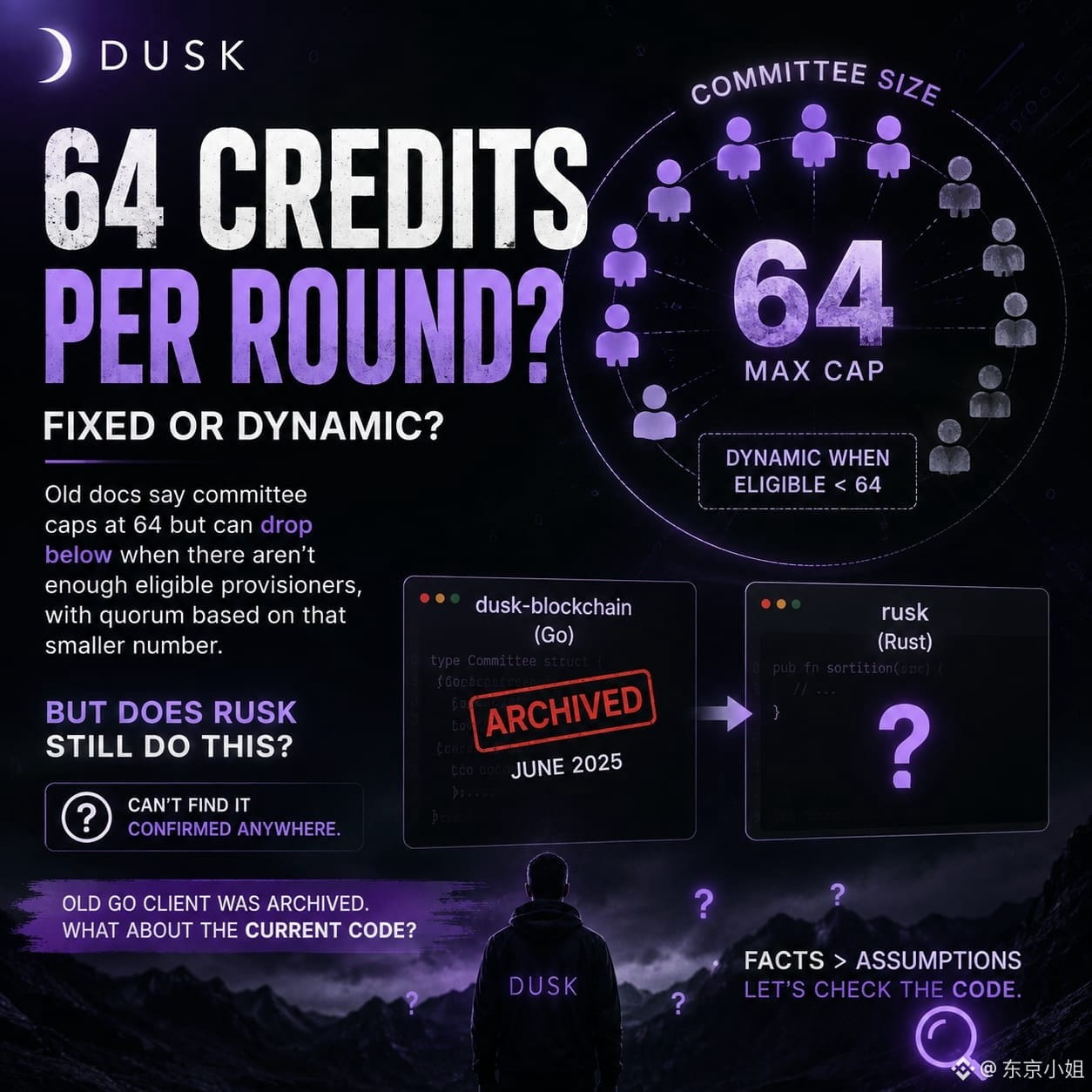
dخلتُ أبحث في كيفية عمل حجم لجنة “الغسق” فعليًا، لأن “64 رصيدًا لكل جولة” يتكرر في كل مكان كأنه ثابت. وجدتُ في مسألة على GitHub وصفًا مختلفًا — فحجم اللجنة يَحده 64، لكنه ينخفض دون ذلك عندما لا توجد إمدادات كافية من المشاركين المؤهلين، كما أن النصاب يُحسب بناءً على هذا العدد الأصغر. باستثناء أنه عندما ذهبتُ لأتحقق من قاعدة الشيفرة التي رُفعت ضدها هذه المسألة، تبيّن أنها تخص dusk-blockchain، عميل golang القديم، وقد تم أرشفته بواسطة فريقه في يونيو 2025.
إذًا كان هذا سلوكًا موثقًا في التنفيذ قبل الإطلاق على الشبكة الرئيسية (pre-mainnet)، وليس بالضرورة ما يعمل الآن — أو لنكن أدق، ليس بالضرورة أنه مختلف الآن، بل إني فعلًا لم أجد أي شيء يمكنه تأكيد ذلك. الشبكة الرئيسية تستخدم rusk (إعادة كتابة كاملة بالصدأ)، وما إذا كانت منطق الاختيار (sortition) من هذا النوع قد نُقل كما هو أو أُعيد تصميمه على طول الطريق ليس شيئًا استطعت التحقق منه.
هذه فجوة محددة بشكل غريب بالنسبة لشبكة متعمقة إلى هذا الحد من حيث الوثائق العامة — فالسلوك التاريخي حقيقي وقابل للتتبع، لكن أي شيء وجدته لا يؤكد ذلك أو ينفيه في قاعدة الشيفرة الحالية.
هل سبق لأي شخص أن تحقّق بالفعل من كود sortition الحالي في rusk؟ أم أن الجميع فقط يكرر سلوك عميل go القديم وكأنه ما زال صحيحًا؟ 🧐
#dusk $DUSK
@Dusk
dخلتُ أبحث في كيفية عمل حجم لجنة “الغسق” فعليًا، لأن “64 رصيدًا لكل جولة” يتكرر في كل مكان كأنه ثابت. وجدتُ في مسألة على GitHub وصفًا مختلفًا — فحجم اللجنة يَحده 64، لكنه ينخفض دون ذلك عندما لا توجد إمدادات كافية من المشاركين المؤهلين، كما أن النصاب يُحسب بناءً على هذا العدد الأصغر. باستثناء أنه عندما ذهبتُ لأتحقق من قاعدة الشيفرة التي رُفعت ضدها هذه المسألة، تبيّن أنها تخص dusk-blockchain، عميل golang القديم، وقد تم أرشفته بواسطة فريقه في يونيو 2025.
إذًا كان هذا سلوكًا موثقًا في التنفيذ قبل الإطلاق على الشبكة الرئيسية (pre-mainnet)، وليس بالضرورة ما يعمل الآن — أو لنكن أدق، ليس بالضرورة أنه مختلف الآن، بل إني فعلًا لم أجد أي شيء يمكنه تأكيد ذلك. الشبكة الرئيسية تستخدم rusk (إعادة كتابة كاملة بالصدأ)، وما إذا كانت منطق الاختيار (sortition) من هذا النوع قد نُقل كما هو أو أُعيد تصميمه على طول الطريق ليس شيئًا استطعت التحقق منه.
هذه فجوة محددة بشكل غريب بالنسبة لشبكة متعمقة إلى هذا الحد من حيث الوثائق العامة — فالسلوك التاريخي حقيقي وقابل للتتبع، لكن أي شيء وجدته لا يؤكد ذلك أو ينفيه في قاعدة الشيفرة الحالية.
هل سبق لأي شخص أن تحقّق بالفعل من كود sortition الحالي في rusk؟ أم أن الجميع فقط يكرر سلوك عميل go القديم وكأنه ما زال صحيحًا؟ 🧐
#dusk $DUSK
dخلتُ أبحث في كيفية عمل حجم لجنة “الغسق” فعليًا، لأن “64 رصيدًا لكل جولة” يتكرر في كل مكان كأنه ثابت. وجدتُ في مسألة على GitHub وصفًا مختلفًا — فحجم اللجنة يَحده 64، لكنه ينخفض دون ذلك عندما لا توجد إمدادات كافية من المشاركين المؤهلين، كما أن النصاب يُحسب بناءً على هذا العدد الأصغر. باستثناء أنه عندما ذهبتُ لأتحقق من قاعدة الشيفرة التي رُفعت ضدها هذه المسألة، تبيّن أنها تخص dusk-blockchain، عميل golang القديم، وقد تم أرشفته بواسطة فريقه في يونيو 2025.
إذًا كان هذا سلوكًا موثقًا في التنفيذ قبل الإطلاق على الشبكة الرئيسية (pre-mainnet)، وليس بالضرورة ما يعمل الآن — أو لنكن أدق، ليس بالضرورة أنه مختلف الآن، بل إني فعلًا لم أجد أي شيء يمكنه تأكيد ذلك. الشبكة الرئيسية تستخدم rusk (إعادة كتابة كاملة بالصدأ)، وما إذا كانت منطق الاختيار (sortition) من هذا النوع قد نُقل كما هو أو أُعيد تصميمه على طول الطريق ليس شيئًا استطعت التحقق منه.
هذه فجوة محددة بشكل غريب بالنسبة لشبكة متعمقة إلى هذا الحد من حيث الوثائق العامة — فالسلوك التاريخي حقيقي وقابل للتتبع، لكن أي شيء وجدته لا يؤكد ذلك أو ينفيه في قاعدة الشيفرة الحالية.
هل سبق لأي شخص أن تحقّق بالفعل من كود sortition الحالي في rusk؟ أم أن الجميع فقط يكرر سلوك عميل go القديم وكأنه ما زال صحيحًا؟ 🧐
#dusk $DUSK
7
4
162
·
--
صاعد
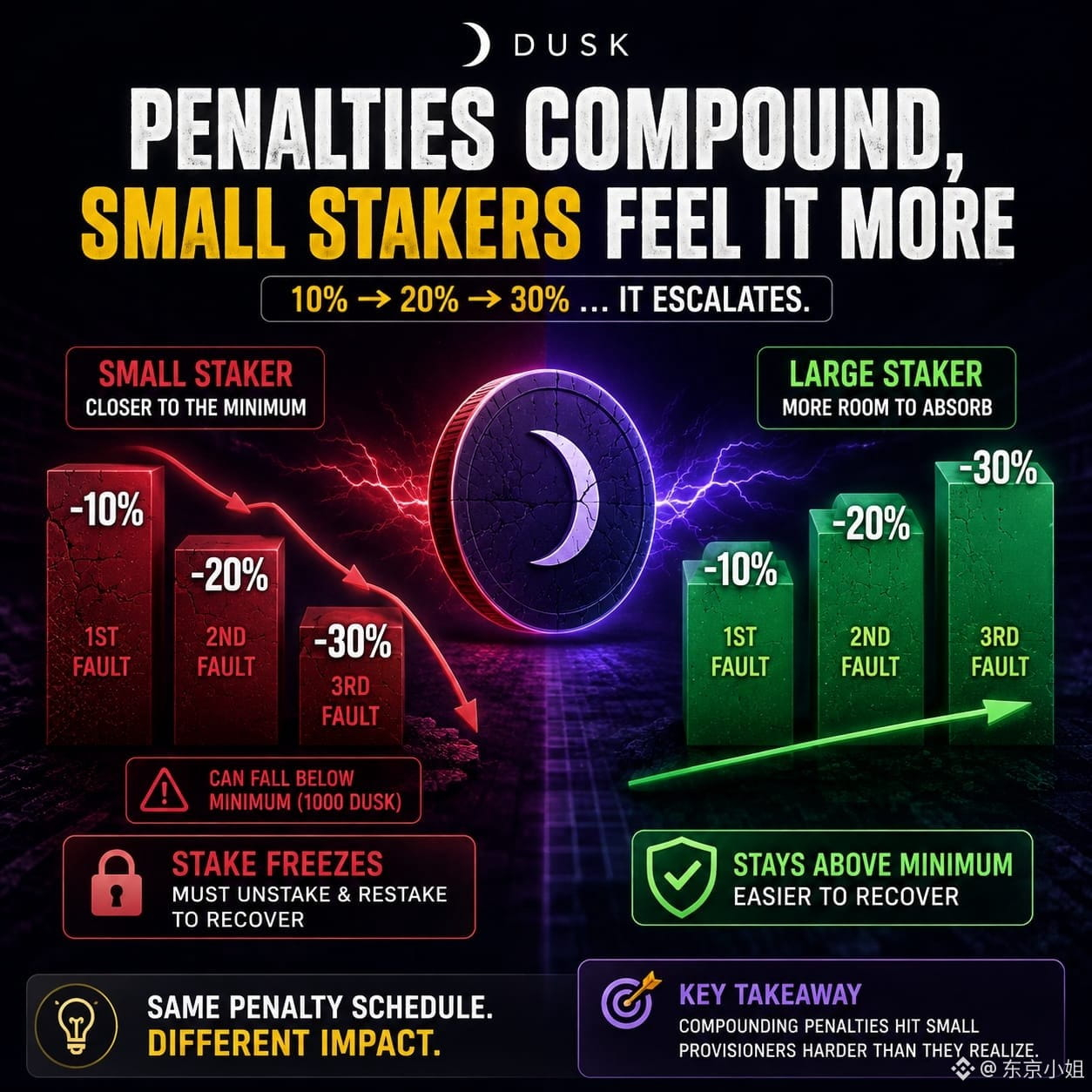
كنت أقرأ تحديثات الهندسة في Dusk المتعلقة بالعقوبات، ولاحظت أن النِّسب تتراكم فعلًا — فالتعليق الأول يكلف 10% من الرهان، والثاني 20%، ثم 30%، وهكذا تزيد في كل مرة. هذا ليس ثابتًا؛ بل يتصاعد.
وهذا يعني أن المُوفِّر (provisioner) الذي يعمل قريبًا من الحد الأدنى 1000 Dusk لديه مساحة أقل بكثير للتعافي مقارنة بغيره الأكبر. فمرتكبان خطأين أو ثلاثة متتالية قد يدفعان المُراهن الصغير تحت الحد الأدنى تمامًا، وعندها تقول الوثائق إن الرهان يتجمّد ويجب إلغاء رهنه بالكامل ثم إعادة رهنه للعودة — ليس مجرد انتظار انتهاء تعليق، بل إعادة ضبط حقيقية.
أما المُوفِّر الكبير الذي يأكل نفس تسلسل 10-20-30% فسيلاحظ ذلك بشكل أقل بكثير مقارنة بإجمالي رهانه. لذا فإن جدول العقوبات ذاته المصمم لمعاقبة السلوك السيّئ بشكل متساوٍ ينتهي به الأمر ليؤثر على المُصدّقين الصغار بقسوة أكبر — عدت وقرأت النِّسب مرتين فعليًا لأنني كنت أستمر في افتراض أنني ربما أخطأت في فهم عبارة "زيادة بنسبة 10%" على أنها 10% متكررة ثابتة بدل كونها تتزايد.
هل توجد أي توصية بوجود هامش/احتياطي حد أدنى للرهان في مكان ما كي لا يتم دفع المُوفِّرين الأصغر عن غير قصد إلى دورة إعادة الضبط هذه؟ 🧐
#dusk $DUSK @Dusk_Foundation
{spot}(DUSKUSDT)
كنت أقرأ تحديثات الهندسة في Dusk المتعلقة بالعقوبات، ولاحظت أن النِّسب تتراكم فعلًا — فالتعليق الأول يكلف 10% من الرهان، والثاني 20%، ثم 30%، وهكذا تزيد في كل مرة. هذا ليس ثابتًا؛ بل يتصاعد.
وهذا يعني أن المُوفِّر (provisioner) الذي يعمل قريبًا من الحد الأدنى 1000 Dusk لديه مساحة أقل بكثير للتعافي مقارنة بغيره الأكبر. فمرتكبان خطأين أو ثلاثة متتالية قد يدفعان المُراهن الصغير تحت الحد الأدنى تمامًا، وعندها تقول الوثائق إن الرهان يتجمّد ويجب إلغاء رهنه بالكامل ثم إعادة رهنه للعودة — ليس مجرد انتظار انتهاء تعليق، بل إعادة ضبط حقيقية.
أما المُوفِّر الكبير الذي يأكل نفس تسلسل 10-20-30% فسيلاحظ ذلك بشكل أقل بكثير مقارنة بإجمالي رهانه. لذا فإن جدول العقوبات ذاته المصمم لمعاقبة السلوك السيّئ بشكل متساوٍ ينتهي به الأمر ليؤثر على المُصدّقين الصغار بقسوة أكبر — عدت وقرأت النِّسب مرتين فعليًا لأنني كنت أستمر في افتراض أنني ربما أخطأت في فهم عبارة "زيادة بنسبة 10%" على أنها 10% متكررة ثابتة بدل كونها تتزايد.
هل توجد أي توصية بوجود هامش/احتياطي حد أدنى للرهان في مكان ما كي لا يتم دفع المُوفِّرين الأصغر عن غير قصد إلى دورة إعادة الضبط هذه؟ 🧐
#dusk $DUSK @Dusk
وهذا يعني أن المُوفِّر (provisioner) الذي يعمل قريبًا من الحد الأدنى 1000 Dusk لديه مساحة أقل بكثير للتعافي مقارنة بغيره الأكبر. فمرتكبان خطأين أو ثلاثة متتالية قد يدفعان المُراهن الصغير تحت الحد الأدنى تمامًا، وعندها تقول الوثائق إن الرهان يتجمّد ويجب إلغاء رهنه بالكامل ثم إعادة رهنه للعودة — ليس مجرد انتظار انتهاء تعليق، بل إعادة ضبط حقيقية.
أما المُوفِّر الكبير الذي يأكل نفس تسلسل 10-20-30% فسيلاحظ ذلك بشكل أقل بكثير مقارنة بإجمالي رهانه. لذا فإن جدول العقوبات ذاته المصمم لمعاقبة السلوك السيّئ بشكل متساوٍ ينتهي به الأمر ليؤثر على المُصدّقين الصغار بقسوة أكبر — عدت وقرأت النِّسب مرتين فعليًا لأنني كنت أستمر في افتراض أنني ربما أخطأت في فهم عبارة "زيادة بنسبة 10%" على أنها 10% متكررة ثابتة بدل كونها تتزايد.
هل توجد أي توصية بوجود هامش/احتياطي حد أدنى للرهان في مكان ما كي لا يتم دفع المُوفِّرين الأصغر عن غير قصد إلى دورة إعادة الضبط هذه؟ 🧐
#dusk $DUSK @Dusk
1
2
152
·
--
@Dusk_Foundation
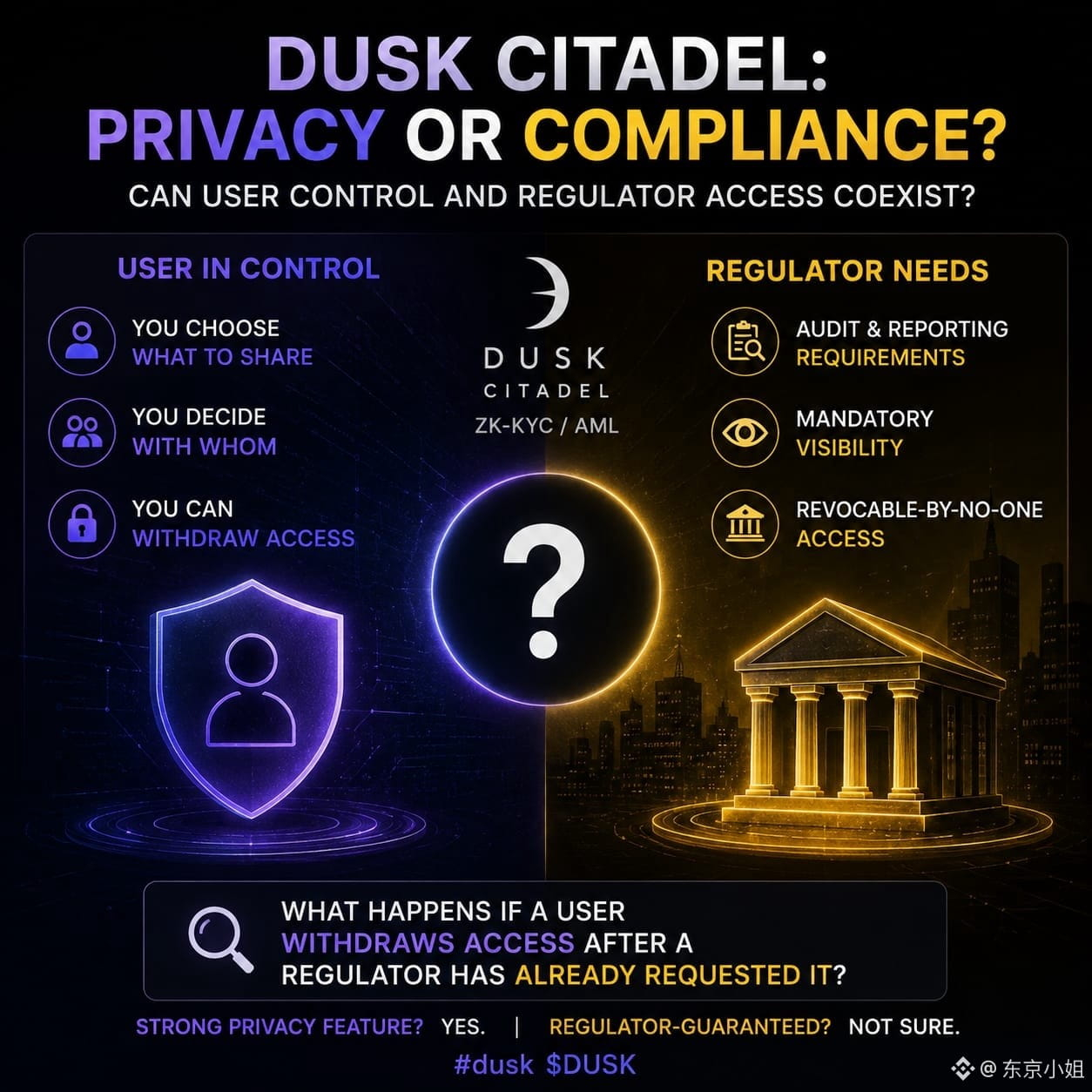
i went back to read how dusk's citadel actually works instead of just repeating the "privacy plus selective disclosure" pitch, and something doesn't line up. citadel describes the user as fully in charge of their data — they choose what to share, with whom, and can even withdraw access to it later. that's still the current framing too — actually i went in expecting this to be some shelved 2023 idea, but it's sitting right there in dusk's post-mainnet roadmap as the live zk-kyc/aml piece.
but regulators generally don't want optional access. audit and reporting requirements usually mean mandatory, revocable-by-no-one visibility, not something a user consents to once and can pull back later. if citadel gives users the power to withdraw disclosure, i'm not sure how that squares with the "regulator can see what they need" framing dusk uses elsewhere — unless there's a separate compliance layer sitting underneath that i just haven't found yet.
worth saying: user-controlled data is a genuinely strong privacy feature for dusk, i'm not knocking that part. i just don't think "user-revocable" and "regulator-guaranteed" can both be true of the same disclosure at the same time.
anyone seen documentation on what happens if a dusk user withdraws access after a regulator already requested it? 🧐
#dusk $DUSK
@Dusk
i went back to read how dusk's citadel actually works instead of just repeating the "privacy plus selective disclosure" pitch, and something doesn't line up. citadel describes the user as fully in charge of their data — they choose what to share, with whom, and can even withdraw access to it later. that's still the current framing too — actually i went in expecting this to be some shelved 2023 idea, but it's sitting right there in dusk's post-mainnet roadmap as the live zk-kyc/aml piece.
but regulators generally don't want optional access. audit and reporting requirements usually mean mandatory, revocable-by-no-one visibility, not something a user consents to once and can pull back later. if citadel gives users the power to withdraw disclosure, i'm not sure how that squares with the "regulator can see what they need" framing dusk uses elsewhere — unless there's a separate compliance layer sitting underneath that i just haven't found yet.
worth saying: user-controlled data is a genuinely strong privacy feature for dusk, i'm not knocking that part. i just don't think "user-revocable" and "regulator-guaranteed" can both be true of the same disclosure at the same time.
anyone seen documentation on what happens if a dusk user withdraws access after a regulator already requested it? 🧐
#dusk $DUSK
i went back to read how dusk's citadel actually works instead of just repeating the "privacy plus selective disclosure" pitch, and something doesn't line up. citadel describes the user as fully in charge of their data — they choose what to share, with whom, and can even withdraw access to it later. that's still the current framing too — actually i went in expecting this to be some shelved 2023 idea, but it's sitting right there in dusk's post-mainnet roadmap as the live zk-kyc/aml piece.
but regulators generally don't want optional access. audit and reporting requirements usually mean mandatory, revocable-by-no-one visibility, not something a user consents to once and can pull back later. if citadel gives users the power to withdraw disclosure, i'm not sure how that squares with the "regulator can see what they need" framing dusk uses elsewhere — unless there's a separate compliance layer sitting underneath that i just haven't found yet.
worth saying: user-controlled data is a genuinely strong privacy feature for dusk, i'm not knocking that part. i just don't think "user-revocable" and "regulator-guaranteed" can both be true of the same disclosure at the same time.
anyone seen documentation on what happens if a dusk user withdraws access after a regulator already requested it? 🧐
#dusk $DUSK
7
11
146
·
--
صاعد
صحيح جزئيًا
@Dusk_Foundation
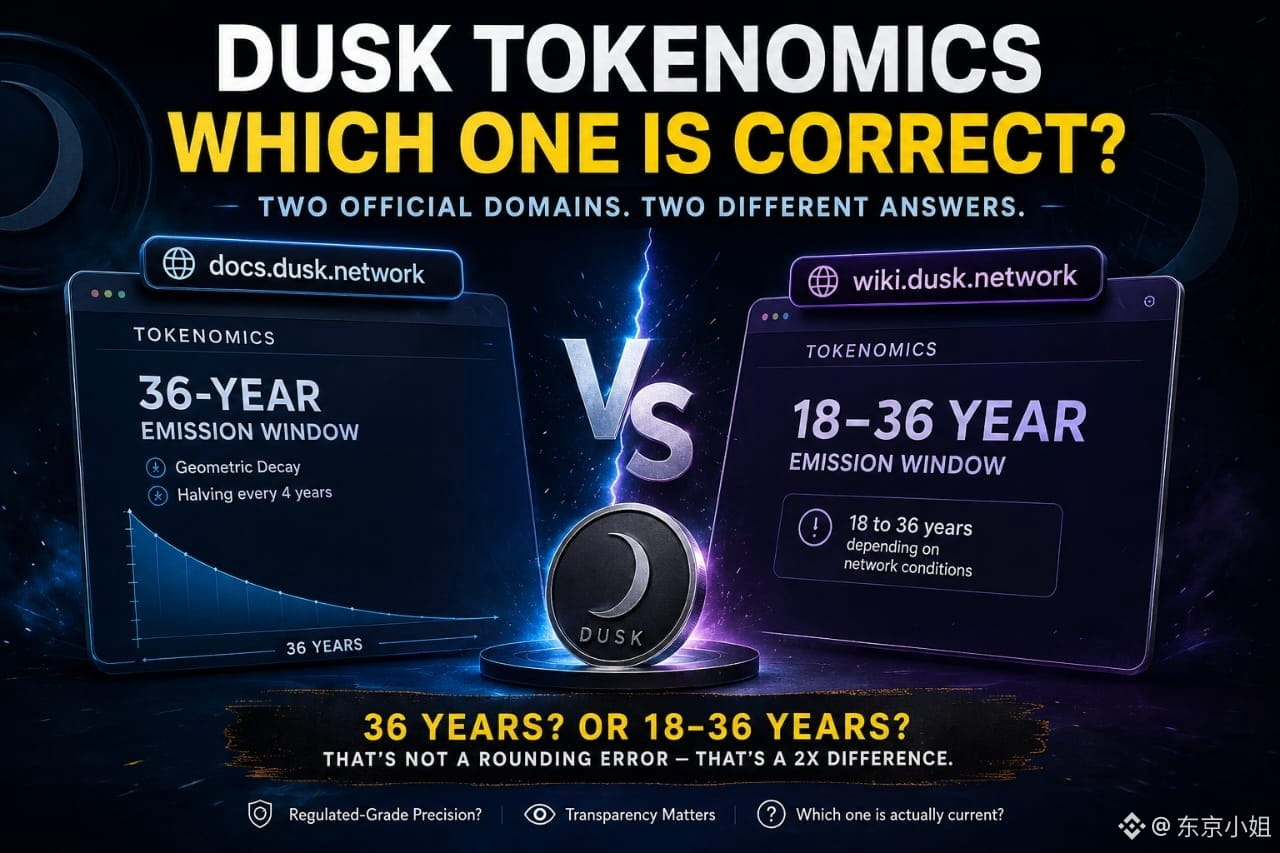
كنت أراجع جدول الإصدار لشيء آخر تمامًا ولاحظت أن اثنين من نطاقات Dusk نفسها لا يتفقان حتى مع بعضهما البعض. docs.dusk.network — صفحة الاقتصاد الرمزي الفعلية — تقول إن نافذة الإصدار ثابتة لمدة 36 عامًا، مع تناقص هندسي، ونصف الكمية كل 4 سنوات، بشكل مباشر وواضح. أما wiki.dusk.network، الموجود على نطاق فرعي خاص بهم، وليس على مرآة عشوائية لطرف ثالث، فيقول شيئًا أكثر مرونة: نطاق من 18 إلى 36 عامًا حسب ظروف الشبكة.
هذا ليس فرقًا بسيطًا في التقريب، بل هو عمليًا اختلاف بمقدار الضعف في المدة التي يستمر فيها ذيل المكافآت — وكدت أتعامل معه كأنه مجرد شيء في ويكي المعجبين حتى لاحظت أنه مستضاف حرفيًا تحت dusk.network، وليس في مكان خارجي.
أنا أفهم أن تذبذب وقت الكتلة يغيّر طول التقويم الفعلي قليلًا، وهذا منطقي. لكن وثيقة بعنوان "tokenomics" تذكر رقمًا واحدًا ثابتًا بينما صفحة على نطاق الفريق نفسه تذكر نطاقًا، فهذا ليس مجرد مسألة تقريب، بل إجابتان مختلفتان على سؤال "متى يتوقف الإصدار". بالنسبة لمشروع مبني على دقة بمستوى تنظيمي، هذا ليس نوع الفجوة الذي كنت أتوقعه بين صفحتين يسيطران عليهما معًا.
هل يعرف أحد أيهما هو المعتمد حاليًا فعلاً، أم أن كليهما قديم لكن في اتجاهين مختلفين؟ 🧐
#dusk $DUSK
@Dusk
كنت أراجع جدول الإصدار لشيء آخر تمامًا ولاحظت أن اثنين من نطاقات Dusk نفسها لا يتفقان حتى مع بعضهما البعض. docs.dusk.network — صفحة الاقتصاد الرمزي الفعلية — تقول إن نافذة الإصدار ثابتة لمدة 36 عامًا، مع تناقص هندسي، ونصف الكمية كل 4 سنوات، بشكل مباشر وواضح. أما wiki.dusk.network، الموجود على نطاق فرعي خاص بهم، وليس على مرآة عشوائية لطرف ثالث، فيقول شيئًا أكثر مرونة: نطاق من 18 إلى 36 عامًا حسب ظروف الشبكة.
هذا ليس فرقًا بسيطًا في التقريب، بل هو عمليًا اختلاف بمقدار الضعف في المدة التي يستمر فيها ذيل المكافآت — وكدت أتعامل معه كأنه مجرد شيء في ويكي المعجبين حتى لاحظت أنه مستضاف حرفيًا تحت dusk.network، وليس في مكان خارجي.
أنا أفهم أن تذبذب وقت الكتلة يغيّر طول التقويم الفعلي قليلًا، وهذا منطقي. لكن وثيقة بعنوان "tokenomics" تذكر رقمًا واحدًا ثابتًا بينما صفحة على نطاق الفريق نفسه تذكر نطاقًا، فهذا ليس مجرد مسألة تقريب، بل إجابتان مختلفتان على سؤال "متى يتوقف الإصدار". بالنسبة لمشروع مبني على دقة بمستوى تنظيمي، هذا ليس نوع الفجوة الذي كنت أتوقعه بين صفحتين يسيطران عليهما معًا.
هل يعرف أحد أيهما هو المعتمد حاليًا فعلاً، أم أن كليهما قديم لكن في اتجاهين مختلفين؟ 🧐
#dusk $DUSK
كنت أراجع جدول الإصدار لشيء آخر تمامًا ولاحظت أن اثنين من نطاقات Dusk نفسها لا يتفقان حتى مع بعضهما البعض. docs.dusk.network — صفحة الاقتصاد الرمزي الفعلية — تقول إن نافذة الإصدار ثابتة لمدة 36 عامًا، مع تناقص هندسي، ونصف الكمية كل 4 سنوات، بشكل مباشر وواضح. أما wiki.dusk.network، الموجود على نطاق فرعي خاص بهم، وليس على مرآة عشوائية لطرف ثالث، فيقول شيئًا أكثر مرونة: نطاق من 18 إلى 36 عامًا حسب ظروف الشبكة.
هذا ليس فرقًا بسيطًا في التقريب، بل هو عمليًا اختلاف بمقدار الضعف في المدة التي يستمر فيها ذيل المكافآت — وكدت أتعامل معه كأنه مجرد شيء في ويكي المعجبين حتى لاحظت أنه مستضاف حرفيًا تحت dusk.network، وليس في مكان خارجي.
أنا أفهم أن تذبذب وقت الكتلة يغيّر طول التقويم الفعلي قليلًا، وهذا منطقي. لكن وثيقة بعنوان "tokenomics" تذكر رقمًا واحدًا ثابتًا بينما صفحة على نطاق الفريق نفسه تذكر نطاقًا، فهذا ليس مجرد مسألة تقريب، بل إجابتان مختلفتان على سؤال "متى يتوقف الإصدار". بالنسبة لمشروع مبني على دقة بمستوى تنظيمي، هذا ليس نوع الفجوة الذي كنت أتوقعه بين صفحتين يسيطران عليهما معًا.
هل يعرف أحد أيهما هو المعتمد حاليًا فعلاً، أم أن كليهما قديم لكن في اتجاهين مختلفين؟ 🧐
#dusk $DUSK
9
11
139
·
--
صاعد
{spot}(DUSKUSDT)
@Dusk_Foundation
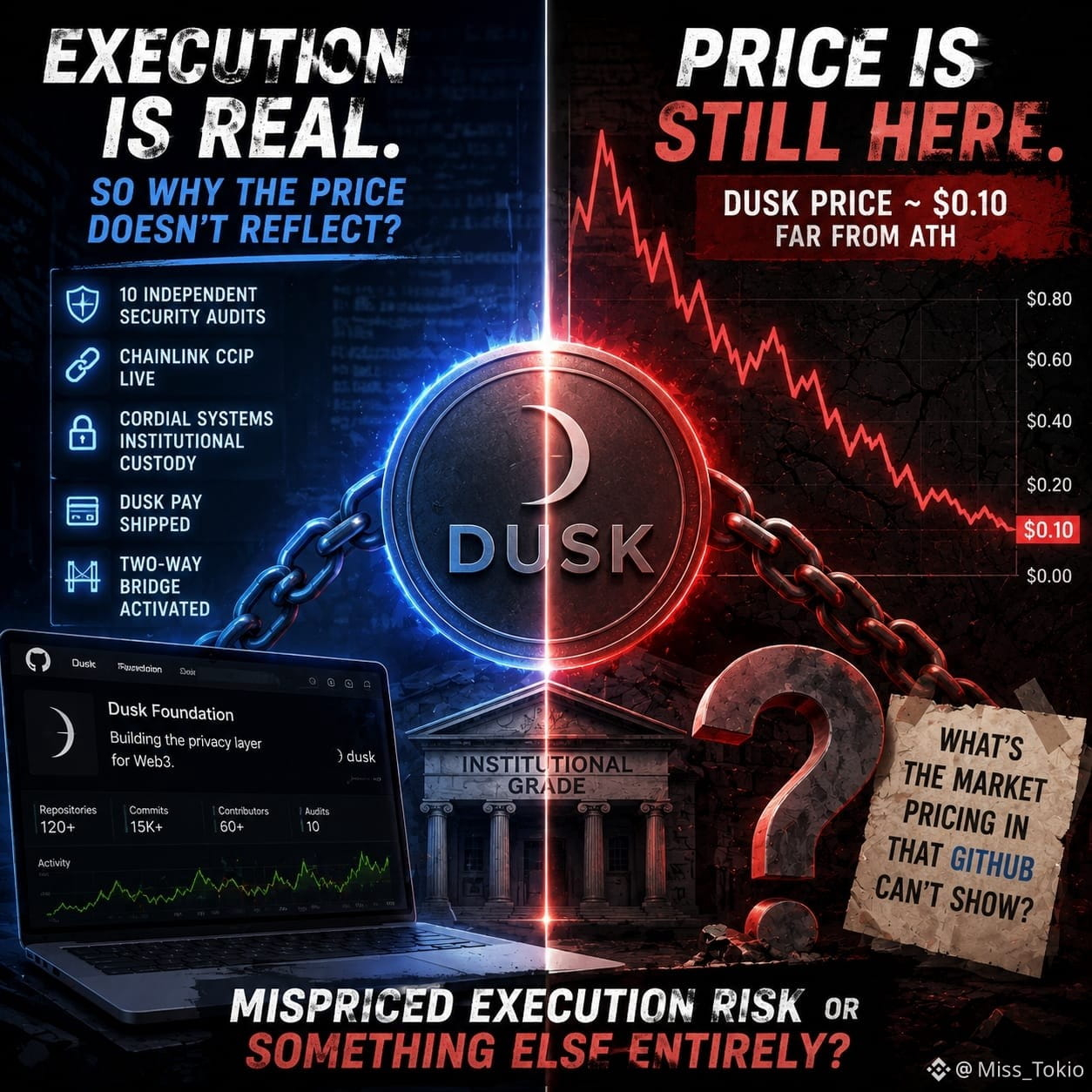
سحبتُ كود “dusk” من GitHub إلى جانب مخطط سعره اليوم فقط لأرى إن كانت الأرقام تطابق القصة، لكنها لا تطابق — ولا حتى قريب. عشر عمليات تدقيق أمنية مستقلة قبل mainnet، وchainlink ccip يعمل مباشرة، وأنظمة “cordial” تم دمجها للحضانة المؤسسية، وشُحنَت “dusk pay”، وتم تفعيل الجسر ثنائي الاتجاه. هذه ليست ربعًا هادئًا لأي L1.
السعر الآن عند حوالي 0.10 دولار، بعيد جدًا عن أعلى سعر له (ATH)، وكأن شيئًا من ذلك لم يحدث.
أعلم أن عدد الالتزامات وحده لا يعني الكثير — يمكنك “تزيين” مستودع بتعديلات توثيق وتحديثات تبعيات واعتباره نشاطًا. لكن عشر عمليات تدقيق وتكامل حضانة مباشر ليست مجرد تجميل؛ هذه أشياء يجب أن تعمل فعلًا قبل أن تلمسها المؤسسات. لذلك إما أن السوق يُسعِّر خطأً مخاطر التنفيذ التي تم بالفعل إنهاؤها، أو أنه يُسعِّر شيئًا آخر تمامًا لا أراه من ناحية المطورين.
أيّهما هذا؟ وإذا كان الخيار الثاني — فما الذي يتم تسعيره فعليًا في GitHub والذي لا يمكنني رؤيته؟ 🧐
#dusk $DUSK
@Dusk
سحبتُ كود “dusk” من GitHub إلى جانب مخطط سعره اليوم فقط لأرى إن كانت الأرقام تطابق القصة، لكنها لا تطابق — ولا حتى قريب. عشر عمليات تدقيق أمنية مستقلة قبل mainnet، وchainlink ccip يعمل مباشرة، وأنظمة “cordial” تم دمجها للحضانة المؤسسية، وشُحنَت “dusk pay”، وتم تفعيل الجسر ثنائي الاتجاه. هذه ليست ربعًا هادئًا لأي L1.
السعر الآن عند حوالي 0.10 دولار، بعيد جدًا عن أعلى سعر له (ATH)، وكأن شيئًا من ذلك لم يحدث.
أعلم أن عدد الالتزامات وحده لا يعني الكثير — يمكنك “تزيين” مستودع بتعديلات توثيق وتحديثات تبعيات واعتباره نشاطًا. لكن عشر عمليات تدقيق وتكامل حضانة مباشر ليست مجرد تجميل؛ هذه أشياء يجب أن تعمل فعلًا قبل أن تلمسها المؤسسات. لذلك إما أن السوق يُسعِّر خطأً مخاطر التنفيذ التي تم بالفعل إنهاؤها، أو أنه يُسعِّر شيئًا آخر تمامًا لا أراه من ناحية المطورين.
أيّهما هذا؟ وإذا كان الخيار الثاني — فما الذي يتم تسعيره فعليًا في GitHub والذي لا يمكنني رؤيته؟ 🧐
#dusk $DUSK
سحبتُ كود “dusk” من GitHub إلى جانب مخطط سعره اليوم فقط لأرى إن كانت الأرقام تطابق القصة، لكنها لا تطابق — ولا حتى قريب. عشر عمليات تدقيق أمنية مستقلة قبل mainnet، وchainlink ccip يعمل مباشرة، وأنظمة “cordial” تم دمجها للحضانة المؤسسية، وشُحنَت “dusk pay”، وتم تفعيل الجسر ثنائي الاتجاه. هذه ليست ربعًا هادئًا لأي L1.
السعر الآن عند حوالي 0.10 دولار، بعيد جدًا عن أعلى سعر له (ATH)، وكأن شيئًا من ذلك لم يحدث.
أعلم أن عدد الالتزامات وحده لا يعني الكثير — يمكنك “تزيين” مستودع بتعديلات توثيق وتحديثات تبعيات واعتباره نشاطًا. لكن عشر عمليات تدقيق وتكامل حضانة مباشر ليست مجرد تجميل؛ هذه أشياء يجب أن تعمل فعلًا قبل أن تلمسها المؤسسات. لذلك إما أن السوق يُسعِّر خطأً مخاطر التنفيذ التي تم بالفعل إنهاؤها، أو أنه يُسعِّر شيئًا آخر تمامًا لا أراه من ناحية المطورين.
أيّهما هذا؟ وإذا كان الخيار الثاني — فما الذي يتم تسعيره فعليًا في GitHub والذي لا يمكنني رؤيته؟ 🧐
#dusk $DUSK
2
119
·
--
@babylonlabs_io
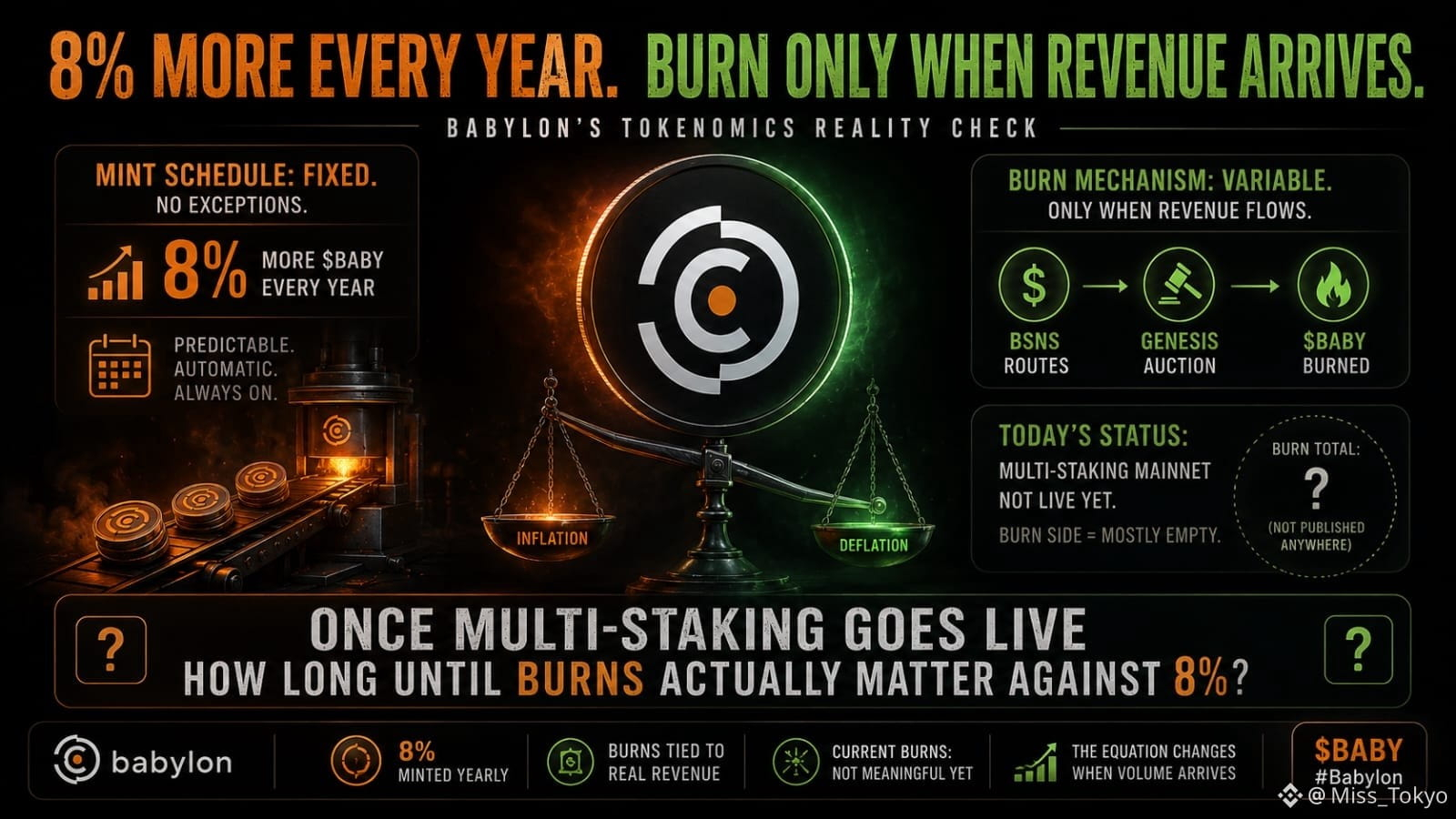
تَتَراجَعَ غَرْفَاتُ بابلونِ "mints" تقريبًا 8% المزيد من الأطفال كل سنة وفق جدول ثابت، دون أي استثناءات. إن الآلية المُصمَّمة لتعويض ذلك ليست على جدول على الإطلاق؛ فهي لا تحرق الأطفال إلا عندما تقوم "bsns" بتمرير مكافآت الستاكينغ الفعلية عبر مزاد "genesis"، وحتى شبكة "multi-staking" الرئيسية لم تُطلق بعد، لذا فإن جانب دفتر الأستاذ هذا يكون في الغالب فارغًا حاليًا.
مزاد مرتبط بإيرادات فعلية هو تصميم أفضل من هدف حرق عشوائي، على الورق. لكن في الوقت الحالي، عبارة "مرتبط بإيرادات فعلية" لا تعني سوى صيغة لا يحتوي أي منها على أرقام مُدخلة بعد.
بحثت عن إجمالي حرق حالي ولم أجد شيئًا منشورًا في أي مكان—على الأرجح لأنه لا يوجد ما يكفي منه حتى الآن، وليس لأن أي شخص يخفيه.
بعد شحنات "multi-staking" وبدء توجيه "bsns" لحجم حقيقي، كم من الوقت قبل أن يلحق جانب الحرق بما يكفي ليصبح ذا تأثير فعلي مقارنةً بنسبة 8%؟ $BABY #baby 🔥
@BabylonLabs_io
تَتَراجَعَ غَرْفَاتُ بابلونِ "mints" تقريبًا 8% المزيد من الأطفال كل سنة وفق جدول ثابت، دون أي استثناءات. إن الآلية المُصمَّمة لتعويض ذلك ليست على جدول على الإطلاق؛ فهي لا تحرق الأطفال إلا عندما تقوم "bsns" بتمرير مكافآت الستاكينغ الفعلية عبر مزاد "genesis"، وحتى شبكة "multi-staking" الرئيسية لم تُطلق بعد، لذا فإن جانب دفتر الأستاذ هذا يكون في الغالب فارغًا حاليًا.
مزاد مرتبط بإيرادات فعلية هو تصميم أفضل من هدف حرق عشوائي، على الورق. لكن في الوقت الحالي، عبارة "مرتبط بإيرادات فعلية" لا تعني سوى صيغة لا يحتوي أي منها على أرقام مُدخلة بعد.
بحثت عن إجمالي حرق حالي ولم أجد شيئًا منشورًا في أي مكان—على الأرجح لأنه لا يوجد ما يكفي منه حتى الآن، وليس لأن أي شخص يخفيه.
بعد شحنات "multi-staking" وبدء توجيه "bsns" لحجم حقيقي، كم من الوقت قبل أن يلحق جانب الحرق بما يكفي ليصبح ذا تأثير فعلي مقارنةً بنسبة 8%؟ $BABY #baby 🔥
تَتَراجَعَ غَرْفَاتُ بابلونِ "mints" تقريبًا 8% المزيد من الأطفال كل سنة وفق جدول ثابت، دون أي استثناءات. إن الآلية المُصمَّمة لتعويض ذلك ليست على جدول على الإطلاق؛ فهي لا تحرق الأطفال إلا عندما تقوم "bsns" بتمرير مكافآت الستاكينغ الفعلية عبر مزاد "genesis"، وحتى شبكة "multi-staking" الرئيسية لم تُطلق بعد، لذا فإن جانب دفتر الأستاذ هذا يكون في الغالب فارغًا حاليًا.
مزاد مرتبط بإيرادات فعلية هو تصميم أفضل من هدف حرق عشوائي، على الورق. لكن في الوقت الحالي، عبارة "مرتبط بإيرادات فعلية" لا تعني سوى صيغة لا يحتوي أي منها على أرقام مُدخلة بعد.
بحثت عن إجمالي حرق حالي ولم أجد شيئًا منشورًا في أي مكان—على الأرجح لأنه لا يوجد ما يكفي منه حتى الآن، وليس لأن أي شخص يخفيه.
بعد شحنات "multi-staking" وبدء توجيه "bsns" لحجم حقيقي، كم من الوقت قبل أن يلحق جانب الحرق بما يكفي ليصبح ذا تأثير فعلي مقارنةً بنسبة 8%؟ $BABY #baby 🔥
6
2
181
سجّل الدخول لاستكشاف المزيد من المُحتوى
انضم إلى مُستخدمي العملات الرقمية حول العالم على Binance Square
⚡️ احصل على أحدث المعلومات المفيدة عن العملات الرقمية.
💬 موثوقة من قبل أكبر منصّة لتداول العملات الرقمية في العالم.
👍 اكتشف الرؤى الحقيقية من صنّاع المُحتوى الموثوقين.
البريد الإلكتروني / رقم الهاتف
المواضيع الرائجة
BinancePick
2.6M مشاهدات
141,866 يقومون بالنقاش
انضم إلى #موسم_الأرباح: توقّع الأرباح على Binance Pick وشاركنا رأيك على Binance Square!
Binance Square Official
·401 إعجاب
·338.5k مشاهدات
EarningsSeason
5M مشاهدات
24,364 يقومون بالنقاش
FranklinTempletonFilesForTwoDividendToBitcoinETFs
2,034 مشاهدات
111 يقومون بالنقاش