Binance Square

Crypto Catalysts

Twitter 💌 @Crypt00catalysts. Empowering crypto brands to thrive in the Digital Frontier. AMA | MARKETING |Project Promotions
فتح تداول
حائز على PENGUIN
حائز على PENGUIN
مُتداول بمُعدّل مرتفع
4.2 سنوات
93 تتابع
26.7K+ المتابعون
18.8K+ إعجاب
1.9K+ تمّت مُشاركتها
منشورات
الحافظة الاستثمارية
·
--
عرض الترجمة
The Quiet Onboarding: Why Vanar’s Gaming Strategy Is Actually a UX Lab in DisguiseGaming sector was boring before blockchain. But after the introduction of blockchain in gaming there was somw changes that were pleasant but not too much interesting for gamers and developers. Mostof the gaming projects and chains were too much costly or slow and was not easy to build for developers. But Vanarchain saw this gap and introduce gamers friendly chain thaf can actually think , have much faster speed and affordable for all type of people who purchase or upgrades in games. Sometimesthey even don't know they are using crypto in background. Vanarchain was basically built for Games sector. Now start the real topic and discuss how it is working and making dream possible. I usually tune out the moment I hear “built for mass adoption.” Not because adoption isn’t important—it’s the only metric that ultimately matters—but because most projects treat it like a marketing slogan instead of a design problem. You see the same slide decks: exponential user curves, billions of new wallets, frictionless onboarding. Then you open the app and you’re staring at a seed phrase, a gas fee estimator, and three different kinds of bridge. So when I started digging into Vanar Chain, I was skeptical. Another L1 claiming to onboard the next billion users? I’ve written that headline before. But the deeper I went, the more I realized something: Vanar isn’t treating gaming as a vertical. It’s treating gaming as a laboratory. And that distinction changes everything. The Wrong Starting Line Almost every blockchain project begins in the same place: financial infrastructure. DeFi lending, decentralized exchanges, stablecoin protocols. The assumption is that money is the killer app, and once you capture financial flow, everything else follows. This is logical on paper. It’s also a terrible way to onboard normal human beings. Consider who you’re designing for. Crypto-native users will tolerate almost anything. They’ll configure RPC endpoints manually. They’ll save seed phrases in three locations. They’ll pay more in gas than to the thjng buying. These users are not the majority; they are a peculiar minority with an extraordinarily high tolerance for friction. Normal people are not like this. Normal people open an app, bounce if it takes more than four seconds to load, and never come back. Normal people do not want to learn what gas is. Normal people do not want to “take custody of their assets”—they want to buy a sword for their character and have the sword appear in their inventory. The blockchain, to them, is not a feature. It is, at best, invisible plumbing. Vanar understood this not because they read a UX handbook, but because they came from the wrong industry . The founding team spent over a decade in gaming, VR, and virtual worlds before they ever touched blockchain . Gary Bracey, co-founder, has thirty-five years in video game development—he worked on titles you’ve actually played, not whitepapers you’ve skimmed . This matters. When you’ve spent decades chasing player retention, you learn things that DeFi degens never have to think about. You learn that retention is not a feature you bolt on later. It is the entire architecture of the experience. The Virtua Incubation Before Vanar was a chain, it was Virtua. And before Virtua was a blockchain project, it was a digital collectibles platform with actual mainstream IP—The Godfather, Top Gun, Pacific Rim, Godzilla vs. Kong . These weren’t abstract PFP projects targeting crypto insiders. They were recognizable franchises with existing fan bases. This gave the team something rare: a testing ground with users who came for the IP, not the crypto. What did they learn? That the wallet popup is the moment of truth . There’s a comment buried in one of the Gate posts that stuck with me. A user described opening a wallet prompt and feeling, instantly, that “this thing is not for me” . This is not a rational calculation. It’s visceral. It’s the same feeling you get when software asks you to install a driver or edit a registry key. You don’t evaluate whether the driver is good. You just leave. Vanar’s response was not to build a better wallet. It was to make the wallet disappear. Virtua allows login via Weibo, WeChat, and other mainstream social accounts . Not as a compromise—as a design principle. The user authenticates through channels they already trust, and the cryptographic complexity is handled backstage. A new user can be inside the environment, moving around, interacting with assets, inside five minutes . They do not know they are using a blockchain. They do not need to know. This is not dumbing down. This is engineering. VGN: Not a Gaming Chain, a Game Developer’s Onboarding Ramp Most “gaming blockchains” are built by people who admire games from a distance. Vanar’s gaming network, VGN, is built by people who actually shipped titles. The difference reveals itself in the details. VGN provides a full SDK and toolset specifically designed for small-to-medium studios to launch on-chain games without rebuilding their entire pipeline . This is not about attracting the big AAA studios—those negotiations take years and rarely yield actual products. It’s about the long tail of independent developers who want to experiment with digital ownership but cannot afford to hire a blockchain engineering team. Crucially, VGN decouples rewards from token holding. Players earn in-game, discounts, or exclusive content—not volatile tokens they’re expected to HODL . This is philosophically significant. Most Web3 games treat tokens as both reward and investment vehicle, creating perverse incentives where players won’t sell (because they’re “invested”) but also can’t spend (because that would crash the price). VGN’s model suggests a different logic: the reward is the thing you use, not the thing you speculate on. This is the gaming industry’s native understanding, imported into blockchain. It feels obvious once stated. It is almost never practiced. The UX Lab Hypothesis Here’s the framing that’s missing from most Vanar coverage: Virtua and VGN are not the end products. They are the test subjects. Vanar is using its gaming vertical as a controlled environment to study user behavior. How do players discover assets? When do they attempt to exit the platform? What friction points cause dropoff? These questions are difficult to answer in a generalized DeFi context because DeFi users are self-selected for high friction tolerance. In a gaming context, users will leave immediately if something feels wrong. The comments on these posts reflect this reality. One user wrote: “Most chains are shouting about being the future. Vanar feels like it’s quietly studying human behavior. How people play. How people explore. How people stick around” . This is the quiet onboarding. It doesn’t produce flashy announcements about total value locked or daily active addresses. It produces something harder to measure and more valuable: institutional knowledge about what normal humans will actually tolerate. Fixed Costs and Invisible Infrastructure There’s a number buried in Vanar’s About page that should receive more attention: $0.0005 per transaction, fixed . This is not the lowest in the industry—there are chains with effectively zero fees—but the word “fixed” matters. Predictability is a UX feature. When a developer builds on Vanar, they know what their cost structure will be next month. When a player performs an action, they won’t be surprised by a fee spike during network congestion. This is the kind of boring reliability that enterprise users demand and crypto projects rarely deliver. Vanar achieves this through a hybrid consensus mechanism: Proof of Authority layered with Proof of Reputation, later supplemented by Delegated Proof of Stake . Validators are selected based on verified identity, operational reliability, and community trust . This is not maximally decentralized in the theoretical sense. It is intentionally, deliberately less decentralized in exchange for predictable performance. This tradeoff makes crypto purists uncomfortable. It also makes the chain usable for actual applications. The AI Component: Not Marketing, Infrastructure I’ll be honest: when I saw “AI blockchain” in the Vanar materials, my eyes glazed over. Every chain claims AI integration now. It’s the narrative du jour. But reading closer, Vanar’s approach is different in ways that matter for UX. The chain includes native semantic storage and on-chain AI inference capabilities . This means applications can store, compress, and reason about data directly on the blockchain, not via external oracles or off-chain compute. For gaming applications, this enables dynamic content generation—music, video trailers, personalized assets—without requiring users to leave the environment . The Nvidia partnership, announced in early 2024, integrates CUDA, Tensor, Omniverse, and Gameworks into the Vanar stack . This is not a logo-collecting exercise. These are actual developer tools for building AI-native applications on a blockchain substrate. Again: the gaming use case is the laboratory. AI-generated content is stress-tested in Virtua before it becomes a generalized protocol feature. The UX patterns that work—how to present AI-created assets, how to handle ownership attribution, how to manage compute costs—are refined in the gaming context and then exported. What Retention Actually Looks Like The skeptics in the comment sections ask the right questions: “Will these projects last? Wallet issues solved, but what about user stickiness?” . “Gaming is brutal. Retention is everything. Execution will decide” . These are fair. Vanar’s token price has been volatile—$14 million market cap at time of writing, down significantly from the 2024 peaks . The Messari profile shows “no significant updates” in recent months . The chain is not dominating headlines. And yet, There is a difference between hype velocity and adoption velocity. Hype produces price spikes. Adoption produces slow, cumulative infrastructure layering. Vanar’s strategy has never been about the former. The team spent years in relative obscurity, iterating through multiple brand evolutions—from Terra Virtua to TVK to Vanar—without abandoning their core thesis . That thesis is simply stated: people do not want to use crypto. They want to play games, connect with friends, express themselves, and occasionally own something digital. If blockchain enables those experiences better than traditional infrastructure, they will use blockchain without ever knowing it. If blockchain adds friction, they will leave. This is not a technological problem. It is a design problem. And Vanar, alone among its L1 peers, has built a dedicated laboratory to solve it. The Invisible Takeover There is a version of the future where Vanar “wins” and nobody notices. Where Virtua becomes a standard destination for digital social experiences, where VGN powers thousands of mid-market games with seamless asset ownership, where the underlying chain processes billions of transactions that users never see. In this future, Vanar does not achieve mindshare dominance—it achieves something more durable: infrastructure invisibility. This is the quiet onboarding. It does not announce itself. It does not require users to learn new mental models. It simply works better, and over time, better becomes default. Someone said rightly, “Adoption doesn’t happen when people learn crypto. It happens when they forget they’re using crypto” Vanar’s gaming strategy is not about games. It is about the forgetting. That is a UX lab worth watching. It all about you should even not aware you're using different thing , Vanarchain wants that people should use crypto as a daily life. And as agebtic Ai is the future of AI and Vanarchain is also one of the first agentic Ai bases chain that verify itself the transaction thats why making gaming sector secure provide exit plan of something unusual happens during the game. #vanar $VANRY @Vanar

The Quiet Onboarding: Why Vanar’s Gaming Strategy Is Actually a UX Lab in Disguise

Gaming sector was boring before blockchain. But after the introduction of blockchain in gaming there was somw changes that were pleasant but not too much interesting for gamers and developers. Mostof the gaming projects and chains were too much costly or slow and was not easy to build for developers. But Vanarchain saw this gap and introduce gamers friendly chain thaf can actually think , have much faster speed and affordable for all type of people who purchase or upgrades in games. Sometimesthey even don't know they are using crypto in background. Vanarchain was basically built for Games sector.
Now start the real topic and discuss how it is working and making dream possible.
I usually tune out the moment I hear “built for mass adoption.” Not because adoption isn’t important—it’s the only metric that ultimately matters—but because most projects treat it like a marketing slogan instead of a design problem. You see the same slide decks: exponential user curves, billions of new wallets, frictionless onboarding. Then you open the app and you’re staring at a seed phrase, a gas fee estimator, and three different kinds of bridge.
So when I started digging into Vanar Chain, I was skeptical. Another L1 claiming to onboard the next billion users? I’ve written that headline before. But the deeper I went, the more I realized something: Vanar isn’t treating gaming as a vertical. It’s treating gaming as a laboratory.
And that distinction changes everything.
The Wrong Starting Line
Almost every blockchain project begins in the same place: financial infrastructure. DeFi lending, decentralized exchanges, stablecoin protocols. The assumption is that money is the killer app, and once you capture financial flow, everything else follows. This is logical on paper. It’s also a terrible way to onboard normal human beings.
Consider who you’re designing for. Crypto-native users will tolerate almost anything. They’ll configure RPC endpoints manually. They’ll save seed phrases in three locations. They’ll pay more in gas than to the thjng buying. These users are not the majority; they are a peculiar minority with an extraordinarily high tolerance for friction. Normal people are not like this. Normal people open an app, bounce if it takes more than four seconds to load, and never come back. Normal people do not want to learn what gas is. Normal people do not want to “take custody of their assets”—they want to buy a sword for their character and have the sword appear in their inventory. The blockchain, to them, is not a feature. It is, at best, invisible plumbing.
Vanar understood this not because they read a UX handbook, but because they came from the wrong industry . The founding team spent over a decade in gaming, VR, and virtual worlds before they ever touched blockchain . Gary Bracey, co-founder, has thirty-five years in video game development—he worked on titles you’ve actually played, not whitepapers you’ve skimmed . This matters. When you’ve spent decades chasing player retention, you learn things that DeFi degens never have to think about.
You learn that retention is not a feature you bolt on later. It is the entire architecture of the experience.
The Virtua Incubation
Before Vanar was a chain, it was Virtua. And before Virtua was a blockchain project, it was a digital collectibles platform with actual mainstream IP—The Godfather, Top Gun, Pacific Rim, Godzilla vs. Kong . These weren’t abstract PFP projects targeting crypto insiders. They were recognizable franchises with existing fan bases. This gave the team something rare: a testing ground with users who came for the IP, not the crypto. What did they learn? That the wallet popup is the moment of truth .
There’s a comment buried in one of the Gate posts that stuck with me. A user described opening a wallet prompt and feeling, instantly, that “this thing is not for me” . This is not a rational calculation. It’s visceral. It’s the same feeling you get when software asks you to install a driver or edit a registry key. You don’t evaluate whether the driver is good. You just leave.
Vanar’s response was not to build a better wallet. It was to make the wallet disappear.
Virtua allows login via Weibo, WeChat, and other mainstream social accounts . Not as a compromise—as a design principle. The user authenticates through channels they already trust, and the cryptographic complexity is handled backstage. A new user can be inside the environment, moving around, interacting with assets, inside five minutes . They do not know they are using a blockchain. They do not need to know. This is not dumbing down. This is engineering.

VGN: Not a Gaming Chain, a Game Developer’s Onboarding Ramp
Most “gaming blockchains” are built by people who admire games from a distance. Vanar’s gaming network, VGN, is built by people who actually shipped titles.
The difference reveals itself in the details. VGN provides a full SDK and toolset specifically designed for small-to-medium studios to launch on-chain games without rebuilding their entire pipeline . This is not about attracting the big AAA studios—those negotiations take years and rarely yield actual products. It’s about the long tail of independent developers who want to experiment with digital ownership but cannot afford to hire a blockchain engineering team.
Crucially, VGN decouples rewards from token holding. Players earn in-game, discounts, or exclusive content—not volatile tokens they’re expected to HODL . This is philosophically significant. Most Web3 games treat tokens as both reward and investment vehicle, creating perverse incentives where players won’t sell (because they’re “invested”) but also can’t spend (because that would crash the price). VGN’s model suggests a different logic: the reward is the thing you use, not the thing you speculate on.
This is the gaming industry’s native understanding, imported into blockchain. It feels obvious once stated. It is almost never practiced.
The UX Lab Hypothesis
Here’s the framing that’s missing from most Vanar coverage: Virtua and VGN are not the end products. They are the test subjects.
Vanar is using its gaming vertical as a controlled environment to study user behavior. How do players discover assets? When do they attempt to exit the platform? What friction points cause dropoff? These questions are difficult to answer in a generalized DeFi context because DeFi users are self-selected for high friction tolerance. In a gaming context, users will leave immediately if something feels wrong.
The comments on these posts reflect this reality. One user wrote: “Most chains are shouting about being the future. Vanar feels like it’s quietly studying human behavior. How people play. How people explore. How people stick around” .
This is the quiet onboarding. It doesn’t produce flashy announcements about total value locked or daily active addresses. It produces something harder to measure and more valuable: institutional knowledge about what normal humans will actually tolerate.
Fixed Costs and Invisible Infrastructure
There’s a number buried in Vanar’s About page that should receive more attention: $0.0005 per transaction, fixed . This is not the lowest in the industry—there are chains with effectively zero fees—but the word “fixed” matters. Predictability is a UX feature. When a developer builds on Vanar, they know what their cost structure will be next month. When a player performs an action, they won’t be surprised by a fee spike during network congestion. This is the kind of boring reliability that enterprise users demand and crypto projects rarely deliver.
Vanar achieves this through a hybrid consensus mechanism: Proof of Authority layered with Proof of Reputation, later supplemented by Delegated Proof of Stake . Validators are selected based on verified identity, operational reliability, and community trust . This is not maximally decentralized in the theoretical sense. It is intentionally, deliberately less decentralized in exchange for predictable performance. This tradeoff makes crypto purists uncomfortable. It also makes the chain usable for actual applications.
The AI Component: Not Marketing, Infrastructure
I’ll be honest: when I saw “AI blockchain” in the Vanar materials, my eyes glazed over. Every chain claims AI integration now. It’s the narrative du jour.
But reading closer, Vanar’s approach is different in ways that matter for UX. The chain includes native semantic storage and on-chain AI inference capabilities . This means applications can store, compress, and reason about data directly on the blockchain, not via external oracles or off-chain compute. For gaming applications, this enables dynamic content generation—music, video trailers, personalized assets—without requiring users to leave the environment .
The Nvidia partnership, announced in early 2024, integrates CUDA, Tensor, Omniverse, and Gameworks into the Vanar stack . This is not a logo-collecting exercise. These are actual developer tools for building AI-native applications on a blockchain substrate.
Again: the gaming use case is the laboratory. AI-generated content is stress-tested in Virtua before it becomes a generalized protocol feature. The UX patterns that work—how to present AI-created assets, how to handle ownership attribution, how to manage compute costs—are refined in the gaming context and then exported.
What Retention Actually Looks Like
The skeptics in the comment sections ask the right questions: “Will these projects last? Wallet issues solved, but what about user stickiness?” . “Gaming is brutal. Retention is everything. Execution will decide” .
These are fair. Vanar’s token price has been volatile—$14 million market cap at time of writing, down significantly from the 2024 peaks . The Messari profile shows “no significant updates” in recent months . The chain is not dominating headlines. And yet, There is a difference between hype velocity and adoption velocity. Hype produces price spikes. Adoption produces slow, cumulative infrastructure layering. Vanar’s strategy has never been about the former. The team spent years in relative obscurity, iterating through multiple brand evolutions—from Terra Virtua to TVK to Vanar—without abandoning their core thesis .
That thesis is simply stated: people do not want to use crypto. They want to play games, connect with friends, express themselves, and occasionally own something digital. If blockchain enables those experiences better than traditional infrastructure, they will use blockchain without ever knowing it. If blockchain adds friction, they will leave.
This is not a technological problem. It is a design problem. And Vanar, alone among its L1 peers, has built a dedicated laboratory to solve it.
The Invisible Takeover
There is a version of the future where Vanar “wins” and nobody notices. Where Virtua becomes a standard destination for digital social experiences, where VGN powers thousands of mid-market games with seamless asset ownership, where the underlying chain processes billions of transactions that users never see. In this future, Vanar does not achieve mindshare dominance—it achieves something more durable: infrastructure invisibility.
This is the quiet onboarding. It does not announce itself. It does not require users to learn new mental models. It simply works better, and over time, better becomes default.
Someone said rightly,
“Adoption doesn’t happen when people learn crypto. It happens when they forget they’re using crypto”
Vanar’s gaming strategy is not about games. It is about the forgetting. That is a UX lab worth watching. It all about you should even not aware you're using different thing , Vanarchain wants that people should use crypto as a daily life. And as agebtic Ai is the future of AI and Vanarchain is also one of the first agentic Ai bases chain that verify itself the transaction thats why making gaming sector secure provide exit plan of something unusual happens during the game.
#vanar $VANRY @Vanar
·
--
صاعد
عرض الترجمة
Trading at $0.032, $BANK is gaining momentum and could move toward $0.06 as buying pressure building. Easy more 100% opportunity {future}(BANKUSDT)
Trading at $0.032, $BANK is gaining momentum and could move toward $0.06 as buying pressure building.
Easy more 100% opportunity
·
--
صاعد
عرض الترجمة
Consolidating around $0.05 , $TNSR is gaining traction with momentum building. Strong upside potential toward $0.50 Definitely one to keep on the radar. Easy 10x opportunity who have patience and buying in parts on very dip
Consolidating around $0.05 ,
$TNSR is gaining traction with momentum building.

Strong upside potential toward $0.50
Definitely one to keep on the radar.

Easy 10x opportunity who have patience and buying in parts on very dip
·
--
صاعد
عرض الترجمة
$JASMY is gearing up 🚀 Currently trading at $0.006, with a possible run toward $0.02 if momentum continues. Best time start accumulate good projects. {future}(JASMYUSDT)
$JASMY is gearing up 🚀
Currently trading at $0.006, with a possible run toward $0.02 if momentum continues.
Best time start accumulate good projects.
·
--
صاعد
عرض الترجمة
Plasma chain use the Liquidity of the Bitcoin and programmablity of the Ethereum chain but it's not means its Layer 2 chain depending on these L1 chain. It has it's own security consensus called PlasmaBFT that makes plasma Layer 1 Blockchain. It is EVM compatible and uses Reth as its execution layer. RETH means Rust Ethereum it is like a brain thay peocess the transaction and andsmart contracts. Reth is cost effective and transaction fees is almost zero near to zero. As we know Ethereum cycle is just starting and surely XPL will move with it. At currwnt price of 0.093$ is very much discounted price to start accumulating XPL coin as your longterm holdings. Once Ethereum season officially started the stablecoin payment adoption of the plasma chain will be on peak with XPL sky-rocket to 2,3$ in next cycle. #plasma $XPL @Plasma
Plasma chain use the Liquidity of the Bitcoin and programmablity of the Ethereum chain but it's not means its Layer 2 chain depending on these L1 chain. It has it's own security consensus called PlasmaBFT that makes plasma Layer 1 Blockchain. It is EVM compatible and uses Reth as its execution layer. RETH means Rust Ethereum it is like a brain thay peocess the transaction and andsmart contracts. Reth is cost effective and transaction fees is almost zero near to zero.
As we know Ethereum cycle is just starting and surely XPL will move with it. At currwnt price of 0.093$ is very much discounted price to start accumulating XPL coin as your longterm holdings. Once Ethereum season officially started the stablecoin payment adoption of the plasma chain will be on peak with XPL sky-rocket to 2,3$ in next cycle.
#plasma $XPL @Plasma
·
--
صاعد
عرض الترجمة
$ASTER Looks ready for 1$ ! expecting bullish move in aster towards 1$ and higher in comings. new support of aster will be around 1$-1.2$ and will set stage for next legup towards 1.5$
$ASTER Looks ready for 1$ !

expecting bullish move in aster towards 1$ and higher in comings. new support of aster will be around 1$-1.2$ and will set stage for next legup towards 1.5$
عرض الترجمة
Plasma is the First Blockchain That Treats Money Like MoneyPlasmaChain bringing real revolution in the crypto world specially in stablecoin payments sectors. No chain can match the level of plasma chain in sensw of speed and security. With it's native coin XPL that is uses as Gas fees has investors friendly tokenomics. The burninh mechanism of XPL equivalent to gas fees on every transaction making XPL inflation free. There is a strange irony in how we talk about cryptocurrency. For years, the industry has been obsessed with building worlds—metaverses, gaming ecosystems, complex DeFi cathedrals—while the one thing everyone actually uses money for has been treated almost as an afterthought. Sending dollars, whether digital or physical, should be boring. It should be instant, it should cost nothing, and it should feel like gravity: predictable, invisible, and absolute. This is why Plasma, the Layer-1 blockchain that launched its mainnet in late September 2025, matters in a way that most new chains do not . It is not trying to be the next general-purpose computer. It is not courting NFT artists or memecoin degenerates. It is building a rail. And investors who are paying attention to the migration of value rather than the oscillation of prices are beginning to realize that this rail is quietly absorbing a staggering share of the global stablecoin economy. As of late 2025, Plasma is processing approximately 4% of all annual stablecoin settlement volume. That is a slice of a market that exceeds $27 trillion in yearly flow—more than Visa, Mastercard, and PayPal combined . This is not a milestone that was achieved through marketing hype or Ponzi-like point farming. It was achieved by answering a question that the industry has largely ignored: what if we designed a blockchain specifically for the only asset class that millions of people actually need to send every day? Why investors should care about PlasmaChain? To understand why investors should care about Plasma, you have to stop thinking about it as another crypto project and start thinking about it as infrastructure. The distinction is everything. Elimination of High Gas fee For years, sending USDT has been a lesson in quiet frustration. On Ethereum, you pay gas fees that spike unpredictably. On TRON, you are forced to hold TRX—a volatile, unrelated asset—just to move your stablecoins. If you are a business processing thousands of transactions a month, this friction accumulates into real cost and real operational headache. If you are an individual sending remittances home, a $3 fee on a $50 transfer is not negligible; it is punitive . Plasma eliminates this entirely by doing something deceptively simple: it makes stablecoins the first-class citizens of the network. You do not need to hold XPL, the native token, to pay for gas. You can pay fees directly in USDT or even Bitcoin. The protocol handles the conversion invisibly, oracle-sourced pricing ensures fairness, and the user simply sends money . It sounds obvious. It is, in fact, radical. This is the kind of user experience that does not make headlines but does build empires. When a freelancer in Nigeria receives payment and it arrives in seconds instead of days, when a treasury desk moves eight figures without sweating about network congestion, when a parent sends money to a student abroad and the recipient does not lose 5% to intermediaries—that is not just optimization. That is replacement. That is the old system being rendered obsolete by something that simply works better . Plasma chain Architecture The technical architecture enabling this is not flashy, but it is brutally effective. PlasmaBFT, the custom consensus mechanism, is a pipelined implementation of Fast HotStuff. It parallelizes proposal, voting, and commitment stages rather than processing them sequentially. The result is sub-second finality and throughput that clears thousands of transactions per second without the fee spikes that plague general-purpose chains when a popular NFT drop hits . More importantly, Plasma isolates payment traffic from speculative noise. You do not get stuck in line behind a memecoin mania. The payment lane stays clear. This specialization is not a limitation; it is the entire point. General-purpose chains are, by design, terrible at any single thing. They are jacks-of-all-trades and masters of none. Plasma chose a lane. It chose to be the best in the world at moving digital dollars, and that decision is creating economic gravity. Money flows toward the most efficient path. Increasingly, that path is Plasma . Then there is the Bitcoin dimension, which is perhaps the most misunderstood aspect of the project. Plasma is frequently categorized as a stablecoin chain, but that framing misses half the picture. It is also, fundamentally, a Bitcoin sidechain. It regularly anchors its state commitments to the Bitcoin blockchain, inheriting Bitcoin’s security model while providing something Bitcoin itself cannot offer: a fast, cheap, private settlement layer for dollar-denominated assets . This is not trivial. There is a massive, pent-up demand for Bitcoin-based finance that does not require trusting centralized bridges or wrapped tokens with shaky custody. Plasma is building a trust-minimized bridge to Bitcoin, with the intention of adopting BitVM2 as soon as it is production-ready. When that happens, users will be able to use native BTC as collateral for stablecoin lending, execute low-slippage swaps, and engage in DeFi activities that currently require leaving the Bitcoin ecosystem entirely . With Tether—specifically, Tether CEO Paolo Ardoino himself—backing the project and likely to natively issue USDT on Plasma, the liquidity advantage is staggering. This is not another sidechain hoping to attract TVL. This is the largest stablecoin issuer in the world building a dedicated execution environment . The capital efficiency has already demonstrated itself. Plasma’s public fundraising rounds were less fundraises than they were feeding frenzies. A $500 million offering was filled in thirty minutes. One address spent approximately $100,000 in gas fees alone just to ensure they secured a spot. The public sale for XPL was oversubscribed by 7.5 times . This is not retail FOMO in the traditional sense; the median contribution in the $500 million round was $35,000 to $40,000. This is sophisticated capital signaling conviction . That conviction extends to the institutional backers. Peter Thiel’s Founders Fund, Framework Ventures, Nomura, Bybit, and Tether’s leadership are not names that attach lightly. They are names that attach when they see a potential standard being set. Plasma is not just another portfolio hedge; it is a deliberate bet that the future of settlement will occur on a purpose-built, Bitcoin-aligned, stablecoin-optimized chain . The privacy component, while still under development, adds another layer of institutional viability. Plasma intends to offer shielded transfers that hide sender, recipient, and amount while allowing for selective disclosure to auditors or regulators when necessary . This is not anonymity for illicit actors; it is confidentiality for legitimate businesses. Corporations do not want their payment flows and treasury positions visible to every competitor and on-chain sleuth. They want privacy with compliance. Plasma’s architecture accommodates both, which is why it is plausible as enterprise infrastructure rather than merely consumer tooling. Critics will point out, fairly, that not all of these features are live yet. Free USDT transfers currently operate on a more centralized "economy lane" that will be progressively decentralized. The Bitcoin bridge and full privacy features are still in development. The token distribution skewed heavily toward large wallets, raising questions about whether the "blockchain for the people" rhetoric matches the venture-backed reality . These are not insignificant concerns. But they are concerns about timing and execution, not about fundamental viability. The train has left the station; the question is how fast it is traveling. What Plasma represents, more than any specific feature, is a shift in mindset. The crypto industry has spent years believing that the winning chain would be the one that accommodated the widest array of use cases. Plasma suggests the opposite: that the winning chain for payments will be the one that refuses to accommodate anything that distracts from payments. It is a bet on focus over sprawl, on settlement over speculation, on the boring utility of moving money over the exciting casinos of DeFi summer. If that bet is correct, and the early volume data suggests it is gaining momentum rapidly, then Plasma is not merely another investment opportunity. It is infrastructure for the next phase of global finance. It is the rail that remittances run on, that payroll runs on, that cross-border trade settles on. It is the invisible layer that consumers never see but always rely on . Investors looking at Plasma should not ask whether XPL will go up next week. They should ask whether the world will continue to move money across borders, whether businesses will continue to seek cheaper and faster settlement, whether stablecoins will continue to absorb value from traditional payment rails. If the answer to those questions is yes, then the chain optimized exclusively for that purpose is not a gamble. It is the only logical destination. The Conclusion of the Topic : Plasma is not trying to be the future of everything. It is trying to be the future of one thing: moving money. And it is winning. Plasma considered your money as its own. Otherchains considered your money as transaction or client money but plasma cgain really care about your money. That'swhy they are peoviding you with Bitcoin level security and high speed that is much hugher than bitcoin. Otherchains need Gas fees in their native currencies like Ethereum network needs ETH as currency and Solana network needs in Sol. But Plasma is the only chain that accept its minimal fees even in USDTs and plasma system indirectly convert it into XPL without knowing you ans hence same amount of XPL burns, thats why with the more adoption of plasma chain the supply shock will come due to huge burning mechanism and developers don't need to learn any newthing they can use ethereum as parent chain for plasma. So in short we can say Plasma is the future of stableCoin payments. #plasma $XPL @Plasma

Plasma is the First Blockchain That Treats Money Like Money

PlasmaChain bringing real revolution in the crypto world specially in stablecoin payments sectors. No chain can match the level of plasma chain in sensw of speed and security. With it's native coin XPL that is uses as Gas fees has investors friendly tokenomics. The burninh mechanism of XPL equivalent to gas fees on every transaction making XPL inflation free.
There is a strange irony in how we talk about cryptocurrency. For years, the industry has been obsessed with building worlds—metaverses, gaming ecosystems, complex DeFi cathedrals—while the one thing everyone actually uses money for has been treated almost as an afterthought. Sending dollars, whether digital or physical, should be boring. It should be instant, it should cost nothing, and it should feel like gravity: predictable, invisible, and absolute.
This is why Plasma, the Layer-1 blockchain that launched its mainnet in late September 2025, matters in a way that most new chains do not . It is not trying to be the next general-purpose computer. It is not courting NFT artists or memecoin degenerates. It is building a rail. And investors who are paying attention to the migration of value rather than the oscillation of prices are beginning to realize that this rail is quietly absorbing a staggering share of the global stablecoin economy.
As of late 2025, Plasma is processing approximately 4% of all annual stablecoin settlement volume. That is a slice of a market that exceeds $27 trillion in yearly flow—more than Visa, Mastercard, and PayPal combined . This is not a milestone that was achieved through marketing hype or Ponzi-like point farming. It was achieved by answering a question that the industry has largely ignored: what if we designed a blockchain specifically for the only asset class that millions of people actually need to send every day?
Why investors should care about PlasmaChain?
To understand why investors should care about Plasma, you have to stop thinking about it as another crypto project and start thinking about it as infrastructure. The distinction is everything.
Elimination of High Gas fee
For years, sending USDT has been a lesson in quiet frustration. On Ethereum, you pay gas fees that spike unpredictably. On TRON, you are forced to hold TRX—a volatile, unrelated asset—just to move your stablecoins. If you are a business processing thousands of transactions a month, this friction accumulates into real cost and real operational headache. If you are an individual sending remittances home, a $3 fee on a $50 transfer is not negligible; it is punitive .
Plasma eliminates this entirely by doing something deceptively simple: it makes stablecoins the first-class citizens of the network. You do not need to hold XPL, the native token, to pay for gas. You can pay fees directly in USDT or even Bitcoin. The protocol handles the conversion invisibly, oracle-sourced pricing ensures fairness, and the user simply sends money . It sounds obvious. It is, in fact, radical.
This is the kind of user experience that does not make headlines but does build empires. When a freelancer in Nigeria receives payment and it arrives in seconds instead of days, when a treasury desk moves eight figures without sweating about network congestion, when a parent sends money to a student abroad and the recipient does not lose 5% to intermediaries—that is not just optimization. That is replacement. That is the old system being rendered obsolete by something that simply works better .
Plasma chain Architecture
The technical architecture enabling this is not flashy, but it is brutally effective. PlasmaBFT, the custom consensus mechanism, is a pipelined implementation of Fast HotStuff. It parallelizes proposal, voting, and commitment stages rather than processing them sequentially. The result is sub-second finality and throughput that clears thousands of transactions per second without the fee spikes that plague general-purpose chains when a popular NFT drop hits . More importantly, Plasma isolates payment traffic from speculative noise. You do not get stuck in line behind a memecoin mania. The payment lane stays clear.
This specialization is not a limitation; it is the entire point. General-purpose chains are, by design, terrible at any single thing. They are jacks-of-all-trades and masters of none. Plasma chose a lane. It chose to be the best in the world at moving digital dollars, and that decision is creating economic gravity. Money flows toward the most efficient path. Increasingly, that path is Plasma .
Then there is the Bitcoin dimension, which is perhaps the most misunderstood aspect of the project. Plasma is frequently categorized as a stablecoin chain, but that framing misses half the picture. It is also, fundamentally, a Bitcoin sidechain. It regularly anchors its state commitments to the Bitcoin blockchain, inheriting Bitcoin’s security model while providing something Bitcoin itself cannot offer: a fast, cheap, private settlement layer for dollar-denominated assets .
This is not trivial. There is a massive, pent-up demand for Bitcoin-based finance that does not require trusting centralized bridges or wrapped tokens with shaky custody. Plasma is building a trust-minimized bridge to Bitcoin, with the intention of adopting BitVM2 as soon as it is production-ready. When that happens, users will be able to use native BTC as collateral for stablecoin lending, execute low-slippage swaps, and engage in DeFi activities that currently require leaving the Bitcoin ecosystem entirely . With Tether—specifically, Tether CEO Paolo Ardoino himself—backing the project and likely to natively issue USDT on Plasma, the liquidity advantage is staggering. This is not another sidechain hoping to attract TVL. This is the largest stablecoin issuer in the world building a dedicated execution environment .
The capital efficiency has already demonstrated itself. Plasma’s public fundraising rounds were less fundraises than they were feeding frenzies. A $500 million offering was filled in thirty minutes. One address spent approximately $100,000 in gas fees alone just to ensure they secured a spot. The public sale for XPL was oversubscribed by 7.5 times . This is not retail FOMO in the traditional sense; the median contribution in the $500 million round was $35,000 to $40,000. This is sophisticated capital signaling conviction .
That conviction extends to the institutional backers. Peter Thiel’s Founders Fund, Framework Ventures, Nomura, Bybit, and Tether’s leadership are not names that attach lightly. They are names that attach when they see a potential standard being set. Plasma is not just another portfolio hedge; it is a deliberate bet that the future of settlement will occur on a purpose-built, Bitcoin-aligned, stablecoin-optimized chain .
The privacy component, while still under development, adds another layer of institutional viability. Plasma intends to offer shielded transfers that hide sender, recipient, and amount while allowing for selective disclosure to auditors or regulators when necessary . This is not anonymity for illicit actors; it is confidentiality for legitimate businesses. Corporations do not want their payment flows and treasury positions visible to every competitor and on-chain sleuth. They want privacy with compliance. Plasma’s architecture accommodates both, which is why it is plausible as enterprise infrastructure rather than merely consumer tooling.
Critics will point out, fairly, that not all of these features are live yet. Free USDT transfers currently operate on a more centralized "economy lane" that will be progressively decentralized. The Bitcoin bridge and full privacy features are still in development. The token distribution skewed heavily toward large wallets, raising questions about whether the "blockchain for the people" rhetoric matches the venture-backed reality . These are not insignificant concerns. But they are concerns about timing and execution, not about fundamental viability. The train has left the station; the question is how fast it is traveling.
What Plasma represents, more than any specific feature, is a shift in mindset. The crypto industry has spent years believing that the winning chain would be the one that accommodated the widest array of use cases. Plasma suggests the opposite: that the winning chain for payments will be the one that refuses to accommodate anything that distracts from payments. It is a bet on focus over sprawl, on settlement over speculation, on the boring utility of moving money over the exciting casinos of DeFi summer.
If that bet is correct, and the early volume data suggests it is gaining momentum rapidly, then Plasma is not merely another investment opportunity. It is infrastructure for the next phase of global finance. It is the rail that remittances run on, that payroll runs on, that cross-border trade settles on. It is the invisible layer that consumers never see but always rely on .
Investors looking at Plasma should not ask whether XPL will go up next week. They should ask whether the world will continue to move money across borders, whether businesses will continue to seek cheaper and faster settlement, whether stablecoins will continue to absorb value from traditional payment rails. If the answer to those questions is yes, then the chain optimized exclusively for that purpose is not a gamble. It is the only logical destination.
The Conclusion of the Topic :
Plasma is not trying to be the future of everything. It is trying to be the future of one thing: moving money. And it is winning. Plasma considered your money as its own. Otherchains considered your money as transaction or client money but plasma cgain really care about your money. That'swhy they are peoviding you with Bitcoin level security and high speed that is much hugher than bitcoin. Otherchains need Gas fees in their native currencies like Ethereum network needs ETH as currency and Solana network needs in Sol. But Plasma is the only chain that accept its minimal fees even in USDTs and plasma system indirectly convert it into XPL without knowing you ans hence same amount of XPL burns, thats why with the more adoption of plasma chain the supply shock will come due to huge burning mechanism and developers don't need to learn any newthing they can use ethereum as parent chain for plasma. So in short we can say Plasma is the future of stableCoin payments.
#plasma $XPL @Plasma
·
--
صاعد
عرض الترجمة
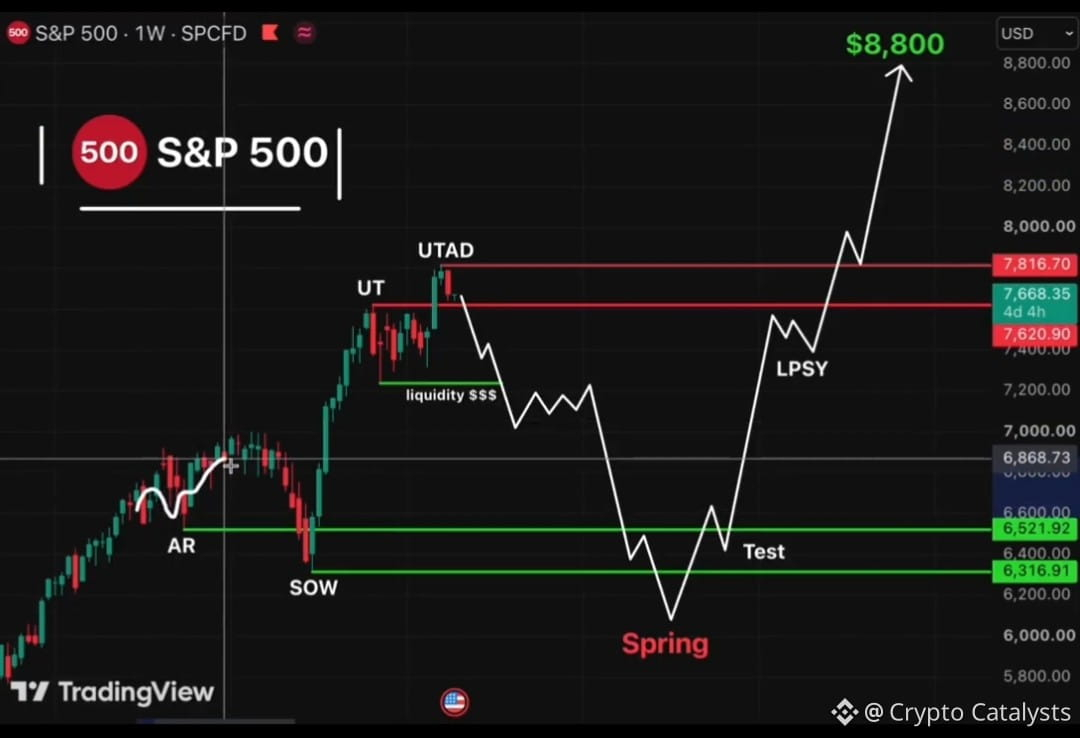
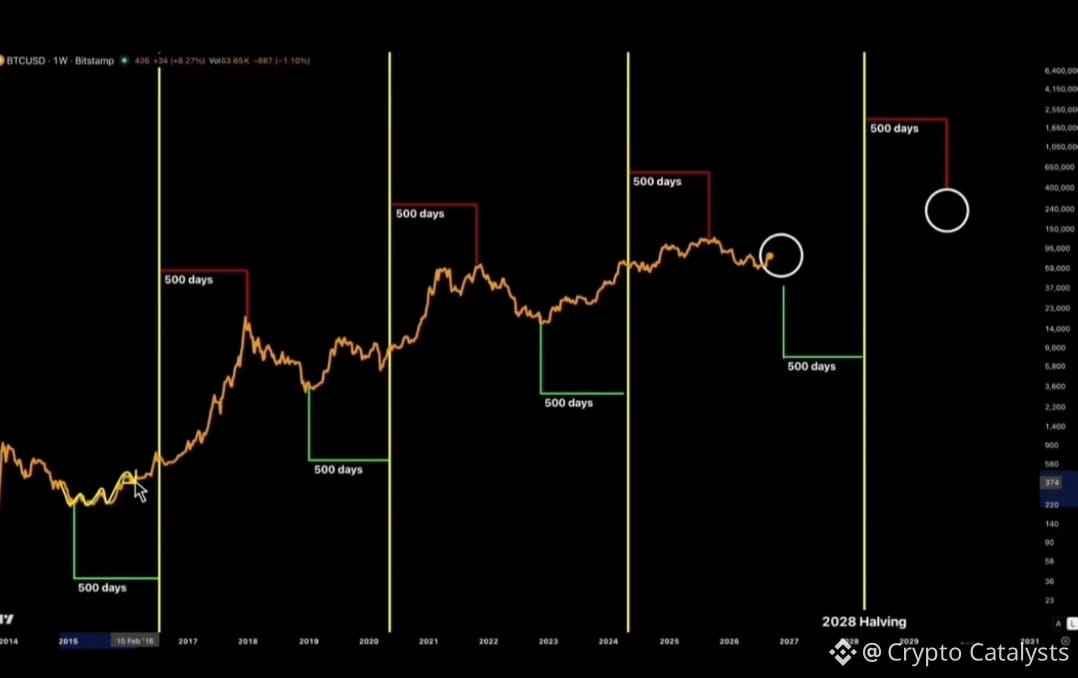
Mt thoughts on $BTC for 2026 ! As shown clear in the graph , I'm Expecting reversal from 64-65k area towards 79k atleast. and making range between 72-79k for few weeks and then Final legup towards 95k to 100k and then downwards movement towards 38-40k level. For short term I'm bullish on Bitcoin with only upseason ahead!
Mt thoughts on $BTC for 2026 !

As shown clear in the graph , I'm Expecting reversal from 64-65k area towards 79k atleast. and making range between 72-79k for few weeks and then Final legup towards 95k to 100k and then downwards movement towards 38-40k level.

For short term I'm bullish on Bitcoin with only upseason ahead!
عرض الترجمة
NFTs on Vanarchain: A match made in HeavenVanarchain Making NFTs minting Easier and cheaper. Before vanarchain, It was very expensive to mint NFTs or buy or sell. Sometimes you have to give more fees than the actual value of the NFT you're minting. I’ve been deep in the Web3 rabbit hole for the better part of a decade now, and if there’s one thing I’ve learned, it’s that timing is everything. Back in 2021, everyone and their uncle was minting pixelated apes and calling themselves a collector. It was loud, messy, and honestly—kind of embarrassing. Then came 2023, and suddenly “NFTs are dead” was the only thing people wanted to scream from the rooftops. But here’s the thing nobody talks about: it wasn’t NFTs that died. It was the bad infrastructure that couldn’t support what they were supposed to be. Fast forward to 2026, and I’m looking at Vanar Chain formerly Terra Virtul and I’m genuinely kicking myself for not paying attention sooner. This isn’t your typical Layer 1 trying to be everything to everyone. Vanar built specifically for the Intelligence Economy, which sounds like buzzword soup until you actually see what it does. Let me break it down the way I wish someone had for me. It’s Not About the JPEG Anymore We all remember the early days. You minted an NFT, it pointed to a JSON file, which pointed to an image hosted on IPFS—or worse, a centralized server that could go dark tomorrow. That’s not ownership. That’s a scavenger hunt with someone else holding the map. Vanar does something that actually made me stop scrolling. They’ve got this thing called Neutron. AI-powered compression that shrinks metadata by up to 500x. And before your eyes glaze over, here’s what that actually means: the entire NFT—the image, the logic, the metadata—lives directly on-chain as a "Seed." No external dependencies. No dead links in three years. I minted a test collection last week just to see if it was real. Cost me less than a penny. Settled in under three seconds. And yeah, it’s permanent. Smart NFTs That Don’t Need a Nanny Okay, this is the part that actually feels like science fiction. Through Vanar’s Kayon Reasoning Layer, NFTs can think? That’s overselling it, but not by much. I spoke with a dev building a loyalty program for a luxury hotel chain on Vanar. They’re using dynamic NFTs as digital keys. Normally, if you wanted to upgrade someone’s access—say, from standard room to suite—you’d have to burn the old token and mint a new one. Clunky, expensive, wasteful. On Vanar, the NFT just... updates itself. The metadata shifts. The permissions change. The user doesn’t even notice. It just works. This is what people mean when they say “frictionless utility.” You’re not collecting pixels. You’re holding something that actually does something. The Stuff That Actually Matters I’m not gonna pretend gas fees are sexy, but they’re the difference between a project scaling and a project dying. Vanar’s fees are fixed at $0.0005. That’s not a promotional rate. That’s just... the rate. And because they’re running on Google Cloud’s renewable infrastructure, brands like Emirates and Valentino aren’t afraid to touch it. In 2026, if your blockchain isn’t carbon-neutral, you’re basically uninsurable for enterprise deals. Vanar saw that coming three years ago. The "I Didn’t Know I Was Using Crypto" Experience This is the sleeper hit. Vanar’s zero-knowledge onboarding means I handed my mom a phone with a Vanar-powered app, and she minted a digital collectible without ever hearing the words “private key” or “gas fee.” She logged in with Google, paid with Apple Pay, and walked away with an NFT that lives permanently on-chain. She still doesn’t know she used a blockchain. And honestly? That’s the point. So... Is It Really a Match Made in Heaven? Look, I’ve been burned by enough “revolutionary” chains to keep my expectations in check. But Vanar isn’t promising to replace Ethereum or kill Solana. They’re just quietly building the infrastructure for NFTs that actually make sense in 2026. AI agents that can read on-chain metadata natively. Dynamic contracts that evolve with user behavior. Carbon-neutral, NVIDIA-backed, sub-three-second finality. And the best part? You don’t need to care about any of that to use it. That’s the win. Not the tech itself—but the fact that the tech finally disappeared into the background, where it belongs. So yeah. I’m paying attention now. Vanarchain Is making complex things easy and ready made for its users. Whether you're a developer, Gamers or metaverse lover, You can use vanarchain for speed , less fees and high security system. Itis the chain that actually thinks like we do. #Vanar $VANRY @Vanar

NFTs on Vanarchain: A match made in Heaven

Vanarchain Making NFTs minting Easier and cheaper. Before vanarchain, It was very expensive to mint NFTs or buy or sell. Sometimes you have to give more fees than the actual value of the NFT you're minting.
I’ve been deep in the Web3 rabbit hole for the better part of a decade now, and if there’s one thing I’ve learned, it’s that timing is everything.
Back in 2021, everyone and their uncle was minting pixelated apes and calling themselves a collector. It was loud, messy, and honestly—kind of embarrassing. Then came 2023, and suddenly “NFTs are dead” was the only thing people wanted to scream from the rooftops.
But here’s the thing nobody talks about: it wasn’t NFTs that died. It was the bad infrastructure that couldn’t support what they were supposed to be.
Fast forward to 2026, and I’m looking at Vanar Chain formerly Terra Virtul and I’m genuinely kicking myself for not paying attention sooner. This isn’t your typical Layer 1 trying to be everything to everyone. Vanar built specifically for the Intelligence Economy, which sounds like buzzword soup until you actually see what it does.
Let me break it down the way I wish someone had for me.
It’s Not About the JPEG Anymore
We all remember the early days. You minted an NFT, it pointed to a JSON file, which pointed to an image hosted on IPFS—or worse, a centralized server that could go dark tomorrow. That’s not ownership. That’s a scavenger hunt with someone else holding the map.
Vanar does something that actually made me stop scrolling. They’ve got this thing called Neutron. AI-powered compression that shrinks metadata by up to 500x. And before your eyes glaze over, here’s what that actually means: the entire NFT—the image, the logic, the metadata—lives directly on-chain as a "Seed." No external dependencies. No dead links in three years.
I minted a test collection last week just to see if it was real. Cost me less than a penny. Settled in under three seconds. And yeah, it’s permanent.
Smart NFTs That Don’t Need a Nanny
Okay, this is the part that actually feels like science fiction. Through Vanar’s Kayon Reasoning Layer, NFTs can think? That’s overselling it, but not by much.
I spoke with a dev building a loyalty program for a luxury hotel chain on Vanar. They’re using dynamic NFTs as digital keys. Normally, if you wanted to upgrade someone’s access—say, from standard room to suite—you’d have to burn the old token and mint a new one. Clunky, expensive, wasteful.
On Vanar, the NFT just... updates itself. The metadata shifts. The permissions change. The user doesn’t even notice. It just works.
This is what people mean when they say “frictionless utility.” You’re not collecting pixels. You’re holding something that actually does something.
The Stuff That Actually Matters
I’m not gonna pretend gas fees are sexy, but they’re the difference between a project scaling and a project dying. Vanar’s fees are fixed at $0.0005. That’s not a promotional rate. That’s just... the rate.
And because they’re running on Google Cloud’s renewable infrastructure, brands like Emirates and Valentino aren’t afraid to touch it. In 2026, if your blockchain isn’t carbon-neutral, you’re basically uninsurable for enterprise deals. Vanar saw that coming three years ago.
The "I Didn’t Know I Was Using Crypto" Experience
This is the sleeper hit.
Vanar’s zero-knowledge onboarding means I handed my mom a phone with a Vanar-powered app, and she minted a digital collectible without ever hearing the words “private key” or “gas fee.” She logged in with Google, paid with Apple Pay, and walked away with an NFT that lives permanently on-chain.
She still doesn’t know she used a blockchain. And honestly? That’s the point.
So... Is It Really a Match Made in Heaven?
Look, I’ve been burned by enough “revolutionary” chains to keep my expectations in check. But Vanar isn’t promising to replace Ethereum or kill Solana. They’re just quietly building the infrastructure for NFTs that actually make sense in 2026.
AI agents that can read on-chain metadata natively. Dynamic contracts that evolve with user behavior. Carbon-neutral, NVIDIA-backed, sub-three-second finality. And the best part? You don’t need to care about any of that to use it.
That’s the win. Not the tech itself—but the fact that the tech finally disappeared into the background, where it belongs. So yeah. I’m paying attention now. Vanarchain Is making complex things easy and ready made for its users. Whether you're a developer, Gamers or metaverse lover, You can use vanarchain for speed , less fees and high security system. Itis the chain that actually thinks like we do.
#Vanar $VANRY @Vanar
·
--
صاعد
عرض الترجمة
$INIT is consolidating after a long downtrend. 📉 Price is holding near $0.07, forming strong support. Extended accumulation suggests seller exhaustion. This range looks like a potential bottom — next move could target 0.2$ As alts arw about to Giga sens in coming days. keep eyes on this gem {spot}(INITUSDT)
$INIT is consolidating after a long downtrend. 📉

Price is holding near $0.07, forming strong support.

Extended accumulation suggests seller exhaustion.

This range looks like a potential bottom — next move could target 0.2$ As alts arw about to Giga sens in coming days. keep eyes on this gem
عرض الترجمة
VanarChain is most Eco-friendly CryptoBlockchain. It's not accidental but planned. It uses POS and POR system that ar cost-effective than other chains like Bitcoin or ethereum. Now developers and companies can track the ammount carbon emission. VanarChain is now partnering with Google cloud which is about to be carbon free in near future. Usage of Neutron and Kayon in Vanarchain as Agentic Ai required less storage and Energy. As worls is shifting towards green energy and hence Vanarchain is one of first cryptochain who is also using green ans renewable energy source. As future belongs to green energy VANRY token will boom and get more popularity. 1$ price possible in next cycle. #vanar $VANRY @Vanar
VanarChain is most Eco-friendly CryptoBlockchain. It's not accidental but planned. It uses POS and POR system that ar cost-effective than other chains like Bitcoin or ethereum. Now developers and companies can track the ammount carbon emission. VanarChain is now partnering with Google cloud which is about to be carbon free in near future.

Usage of Neutron and Kayon in Vanarchain as Agentic Ai required less storage and Energy. As worls is shifting towards green energy and hence Vanarchain is one of first cryptochain who is also using green ans renewable energy source. As future belongs to green energy VANRY token will boom and get more popularity. 1$ price possible in next cycle.
#vanar $VANRY @Vanarchain
·
--
صاعد
عرض الترجمة
PlasmaChain Playing Key Role in Defi and Gaming sectors by making them more secure, Faster and cost effective. Now you can send remittence payments , Mint NFTs , upgrade your games item with much less fees as compared to other blockchains. Player severeignity in Plasma is much high as you can get back your trasactions if you see unfairness or darkness of server. Expecting XPL price to sky-rocket in 2026 as PlasmaChain utility is booming from swapping card in coffe shop to battling in games. It's just not exciting but reliable too. so in longterm I'm expecting its price to cross 1$ . #plasma $XPL @Plasma
PlasmaChain Playing Key Role in Defi and Gaming sectors by making them more secure, Faster and cost effective. Now you can send remittence payments , Mint NFTs , upgrade your games item with much less fees as compared to other blockchains. Player severeignity in Plasma is much high as you can get back your trasactions if you see unfairness or darkness of server.

Expecting XPL price to sky-rocket in 2026 as PlasmaChain utility is booming from swapping card in coffe shop to battling in games. It's just not exciting but reliable too. so in longterm I'm expecting its price to cross 1$ .
#plasma $XPL @Plasma
عرض الترجمة
How Plasma Chain's State Commitment and Withdrawals mechanism ensure security and data integrityAs we know that many other blockchain who claims themselves superfast anr often lack security and vice versa. But plasmaChain focus on both speed and security. They never compromise on both. In the world of blockchain scaling, where speed often comes at the cost of security, Plasma Chains stand out as a masterclass in "trust but verify." If Ethereum is a bustling city center, Plasma is a high-speed satellite office that does the heavy lifting off-site but keeps a direct, unhackable line to the main office. In this year, as we feel the Plasma Renaissance,driven by ZK proofs and new anchoring methods—understanding how these chains maintain data integrity is more relevant than ever. State Commitment: The Cryptographic "Receipt" At its core, a Plasma chain is a "child chain" that processes thousands of transactions per second off-chain. But how does the mainnet (the "Parent Chain") know that the Plasma operator isn't just printing money or deleting accounts? The answer is State Commitment: Instead of sending every single transaction to the mainnet, the Plasma operator bundles them into a block and creates a Merkle Tree. What is Merkle Tree: This tree summarizes the entire history of that block into a single, 32-byte string of characters called a Mercle Root. Merkle Root: Every few minutes, the operator "commits" this root to the mainnet. This serves as a cryptographic fingerprint. If even one decimal point is changed in a transaction deep within the child chain, the Merkle Root would change entirely, alerting the parent chain that something is wrong. Immutability by Proxy: Once that root is on the parent chain, the history of those transactions is effectively "anchored" to the security of the mainnet (like Ethereum or Bitcoin). The mainnet doesn't need to see your $10 anything purchase; it only needs to see the "receipt" for the whole day’s worth of coffee in the city. The Withdrawal Mechanism: Your Digital Lifeboat The real magic of Plasma isn't just how you get in, but how you get out—especially if the operator turns malicious. This is governed by the Exit Game. Exit Game When you want to move your funds back to the mainnet, you don't just "withdraw." You initiate an Exit Request: by providing proof of your latest transaction. This triggers a Challenge Period (typically 7 days). The "Challenge" Logic During this window, the exit is "pending." Anyone in the world can step forward and provide a Fraud Proof. Fraud Proof: if they see you trying to cheat. Double Spend: Wait, they already spent those funds on the child chain! Invalid History: "This user never actually owned those tokens; the operator fabricated the balance. If no one successfully challenges your exit within the window, the parent chain assumes the transaction is valid and releases your funds. Data Integrity and the "Mass Exit" Scenario A common critique of early Plasma was the Data Availability Problem,what happens if the operator stops publishing the transaction data? You might have a Merkle Root, but without the underlying data, you can’t prove you own your funds to start an exit. Modern 2026 implementations (like Plasma Next solve this using ZK-SNARKs. Instead of just posting a root, operators post a Validity Proof. This is a mathematical guarantee that: 1. All transactions in the block are valid. 2. The data required for users to exit is available or reconstructible. In a worst-case scenario if the Plasma chain begins to fail,the protocol triggers a Mass Exit. Because the state roots are safely anchored on the mainnet, users can use their own local transaction history to "force" their funds back to safety without needing the operator’s permission. The Bottom Line and Final Thoughts Plasma chains ensure security by assuming the off-chain environment is "guilty until proven innocent." By combining the high-speed processing of child chains with the absolute finality of the parent chain’s Merkle roots, they create a system where you don't have to trust the operator—you only have to trust the math. The first thing Plasma chain focus is your security and making everything smooth for you. Get and Get Out are two main things when yoh choose any Stablepayment project and Plasma chain providing both these things easier and secure. #plasma $XPL @Plasma

How Plasma Chain's State Commitment and Withdrawals mechanism ensure security and data integrity

As we know that many other blockchain who claims themselves superfast anr often lack security and vice versa. But plasmaChain focus on both speed and security. They never compromise on both. In the world of blockchain scaling, where speed often comes at the cost of security, Plasma Chains stand out as a masterclass in "trust but verify." If Ethereum is a bustling city center, Plasma is a high-speed satellite office that does the heavy lifting off-site but keeps a direct, unhackable line to the main office.
In this year, as we feel the Plasma Renaissance,driven by ZK proofs and new anchoring methods—understanding how these chains maintain data integrity is more relevant than ever.
State Commitment: The Cryptographic "Receipt"
At its core, a Plasma chain is a "child chain" that processes thousands of transactions per second off-chain. But how does the mainnet (the "Parent Chain") know that the Plasma operator isn't just printing money or deleting accounts?
The answer is State Commitment:
Instead of sending every single transaction to the mainnet, the Plasma operator bundles them into a block and creates a Merkle Tree.
What is Merkle Tree:
This tree summarizes the entire history of that block into a single, 32-byte string of characters called a Mercle Root.
Merkle Root:
Every few minutes, the operator "commits" this root to the mainnet. This serves as a cryptographic fingerprint. If even one decimal point is changed in a transaction deep within the child chain, the Merkle Root would change entirely, alerting the parent chain that something is wrong.
Immutability by Proxy:
Once that root is on the parent chain, the history of those transactions is effectively "anchored" to the security of the mainnet (like Ethereum or Bitcoin).
The mainnet doesn't need to see your $10 anything purchase; it only needs to see the "receipt" for the whole day’s worth of coffee in the city.
The Withdrawal Mechanism: Your Digital Lifeboat
The real magic of Plasma isn't just how you get in, but how you get out—especially if the operator turns malicious. This is governed by the Exit Game.
Exit Game
When you want to move your funds back to the mainnet, you don't just "withdraw." You initiate an
Exit Request: by providing proof of your latest transaction. This triggers a Challenge Period (typically 7 days).
The "Challenge" Logic
During this window, the exit is "pending." Anyone in the world can step forward and provide a Fraud Proof.
Fraud Proof: if they see you trying to cheat.
Double Spend: Wait, they already spent those funds on the child chain!
Invalid History: "This user never actually owned those tokens; the operator fabricated the balance.
If no one successfully challenges your exit within the window, the parent chain assumes the transaction is valid and releases your funds.
Data Integrity and the "Mass Exit" Scenario
A common critique of early Plasma was the Data Availability Problem,what happens if the operator stops publishing the transaction data? You might have a Merkle Root, but without the underlying data, you can’t prove you own your funds to start an exit.
Modern 2026 implementations (like Plasma Next solve this using ZK-SNARKs. Instead of just posting a root, operators post a Validity Proof. This is a mathematical guarantee that:
1. All transactions in the block are valid.
2. The data required for users to exit is available or reconstructible.
In a worst-case scenario if the Plasma chain begins to fail,the protocol triggers a Mass Exit. Because the state roots are safely anchored on the mainnet, users can use their own local transaction history to "force" their funds back to safety without needing the operator’s permission.
The Bottom Line and Final Thoughts
Plasma chains ensure security by assuming the off-chain environment is "guilty until proven innocent." By combining the high-speed processing of child chains with the absolute finality of the parent chain’s Merkle roots, they create a system where you don't have to trust the operator—you only have to trust the math. The first thing Plasma chain focus is your security and making everything smooth for you. Get and Get Out are two main things when yoh choose any Stablepayment project and Plasma chain providing both these things easier and secure.

#plasma $XPL @Plasma
·
--
صاعد
عرض الترجمة
$KERNEL is trading near $0.06 and starting to gain real traction. Momentum is building fast, and $0.15 is a level to watch. Don’t sleep on this one 👀 Next few weeks arw importanr for alts , as they are currently on trong upport.
·
--
صاعد
عرض الترجمة
Trading around $0.54, $BERA is gaining strong traction and shows potential to push toward $2. Expecting bullish moves in coming days
Trading around $0.54, $BERA is gaining strong traction and shows potential to push toward $2.
Expecting bullish moves in coming days
·
--
صاعد
عرض الترجمة
$BCH Small correction can possible before a GiGA rally towards 1000$ ! As we know BitcoinCash is perfirming well as compared to overall market and bitcoin. Easy 100% opportunity is here {future}(BCHUSDT)
$BCH Small correction can possible before a GiGA rally towards 1000$ !

As we know BitcoinCash is perfirming well as compared to overall market and bitcoin.
Easy 100% opportunity is here
·
--
صاعد
عرض الترجمة
As $BTC reaches the 67400$ level I'm expecting a strong reversal from this area towards 75k atleast. otherwise reversal from 64k area. but upper target will remain 75k Let's see how it play
As $BTC reaches the 67400$ level I'm expecting a strong reversal from this area towards 75k atleast.
otherwise reversal from 64k area. but upper target will remain 75k
Let's see how it play
عرض الترجمة
VanarChain is now becoming the new home of the Metaverse , Gaming and the NFTs. Now new projects prefer to build on Vanarchain because of its high speed, less fees and easy to build features. Now you can Mint NFTs in much lower fees and Easily. VanarChain uses Proof-of-Stake consensus which uses the 99% less energy than the other old fashioned system thus environmental friendly. Vanarchain also a best gateway for Metaverse developers too as they peovide infrastructure for asset ownerships and identities. Now Many gaming and metaverse projects (like Kroma city,Mythical City) using Vanarchain for their smart contracts, leasing offices and paying for their services. So, Real world utility of Vanar chain increasing. #vanar $VANRY @Vanar
VanarChain is now becoming the new home of the Metaverse , Gaming and the NFTs. Now new projects prefer to build on Vanarchain because of its high speed, less fees and easy to build features. Now you can Mint NFTs in much lower fees and Easily.

VanarChain uses Proof-of-Stake consensus which uses the 99% less energy than the other old fashioned system thus environmental friendly. Vanarchain also a best gateway for Metaverse developers too as they peovide infrastructure for asset ownerships and identities. Now Many gaming and metaverse projects (like Kroma city,Mythical City) using Vanarchain for their smart contracts, leasing offices and paying for their services. So, Real world utility of Vanar chain increasing.
#vanar $VANRY @Vanarchain
·
--
صاعد
عرض الترجمة
$ETH Expecting bullish week ahead! As we saw huge price drop in past weeks both in Ethereum and Bitcoin. But now only short term dump can possible before a good rally towards 2800-3200$ level. {future}(ETHUSDT)
$ETH Expecting bullish week ahead!

As we saw huge price drop in past weeks both in Ethereum and Bitcoin. But now only short term dump can possible before a good rally towards 2800-3200$ level.
·
--
صاعد
عرض الترجمة
$ZRO is trading at $1.75 and gaining traction, with potential to move toward $3. Momentum is building—worth keeping an eye on. more upside movement expected in coming days {future}(ZROUSDT)
$ZRO is trading at $1.75 and gaining traction, with potential to move toward $3. Momentum is building—worth keeping an eye on.
more upside movement expected in coming days
سجّل الدخول لاستكشاف المزيد من المُحتوى
استكشف أحدث أخبار العملات الرقمية
⚡️ كُن جزءًا من أحدث النقاشات في مجال العملات الرقمية
💬 تفاعل مع صنّاع المُحتوى المُفضّلين لديك
👍 استمتع بالمحتوى الذي يثير اهتمامك
البريد الإلكتروني / رقم الهاتف
خريطة الموقع
تفضيلات ملفات تعريف الارتباط
شروط وأحكام المنصّة