Binance Square

CoinOrbitX

🌍 Crypto explorer 🚀 Discovering gems in DeFi & Web3 & Memecoins 📊 Market insights & trends 💎 Join the next big move!
58 تتابع
2.6K+ المتابعون
182 إعجاب
51 تمّت مُشاركتها
منشورات
·
--
🔥تحليل الإمكانات المستقبلية لنظام Chainbase البيئي👉مقدمة المشروع Chainbase هو أكبر شبكة بيانات لامركزية كاملة السلسلة في العالم، ويهدف إلى دمج البيانات على السلسلة وخارجها من خلال بنية من أربع طبقات (طبقة الوصول إلى البيانات، طبقة التوافق، طبقة التنفيذ، طبقة المعالجة المشتركة) ونموذج الذكاء الاصطناعي الأصلي Theia، وتقديم بنية تحتية عالية الجودة للبيانات الهيكلية للاقتصاد AGI المفتوح. يمكّن المشروع المطورين، والمصادقين، والمستخدمين العاديين من خلال بروتوكول المخطوطات وآلية الحوافز C لتعزيز الذكاء واللامركزية في تطبيقات بيانات Web3.

🔥تحليل الإمكانات المستقبلية لنظام Chainbase البيئي

👉مقدمة المشروع
Chainbase هو أكبر شبكة بيانات لامركزية كاملة السلسلة في العالم، ويهدف إلى دمج البيانات على السلسلة وخارجها من خلال بنية من أربع طبقات (طبقة الوصول إلى البيانات، طبقة التوافق، طبقة التنفيذ، طبقة المعالجة المشتركة) ونموذج الذكاء الاصطناعي الأصلي Theia، وتقديم بنية تحتية عالية الجودة للبيانات الهيكلية للاقتصاد AGI المفتوح. يمكّن المشروع المطورين، والمصادقين، والمستخدمين العاديين من خلال بروتوكول المخطوطات وآلية الحوافز C لتعزيز الذكاء واللامركزية في تطبيقات بيانات Web3.
🔥سيقوم لاغرانج بإنشاء حلقة بيئية مغلقة للإنترنت القابل للتحقق🔷مقدمة المشروع لاغرانج هو بروتوكول بنية تحتية ثوري من ZK، يوفر تحققًا تشفيريًا قابلًا للتوسع لتقنية التجميع في سلسلة الكتل، ومعالجة البيانات عبر السلاسل، ومخرجات الذكاء الاصطناعي من خلال أول طبقة إثبات لا نهائية في العالم، مقترنة بشبكة إثبات ZK لامركزية ومعالج مساعد عام لـ ZK. يُنسق رمزه النظام البيئي من خلال نموذج اقتصادي قائم على الطلب، مما يُمكّن المطورين والجهات المُعتمدة والمستخدمين، ويلتزم ببناء بنية تحتية لإنترنت قابل للتحقق. مسار توسع النظام البيئي: يتمحور نظام لاغرانج البيئي حول البنية المعيارية واقتصاد رمز $LA، ويتوسع عبر المسارات التالية:

🔥سيقوم لاغرانج بإنشاء حلقة بيئية مغلقة للإنترنت القابل للتحقق

🔷مقدمة المشروع
لاغرانج هو بروتوكول بنية تحتية ثوري من ZK، يوفر تحققًا تشفيريًا قابلًا للتوسع لتقنية التجميع في سلسلة الكتل، ومعالجة البيانات عبر السلاسل، ومخرجات الذكاء الاصطناعي من خلال أول طبقة إثبات لا نهائية في العالم، مقترنة بشبكة إثبات ZK لامركزية ومعالج مساعد عام لـ ZK. يُنسق رمزه النظام البيئي من خلال نموذج اقتصادي قائم على الطلب، مما يُمكّن المطورين والجهات المُعتمدة والمستخدمين، ويلتزم ببناء بنية تحتية لإنترنت قابل للتحقق. مسار توسع النظام البيئي: يتمحور نظام لاغرانج البيئي حول البنية المعيارية واقتصاد رمز $LA ، ويتوسع عبر المسارات التالية:
عرض الترجمة
📈DeFi App Ecosystem Architecture Potential🔔Project Introduction DeFi App is a full-chain DeFi super application that is committed to lowering the threshold for users to enter decentralized finance through zero gas costs, no cross-chain bridges, and smart account abstraction. The platform supports public chains such as Ethereum, Arbitrum, BNB Chain, Base, and Solana, and provides cross-chain transactions, derivatives, yield farming, and community governance functions. Its core token $HOME is the core of ecological governance and incentives, and was launched on Binance Alpha on June 10, 2025. ✅Ecosystem Expansion Path The ecosystem of DeFi App is centered on the $HOME token and is expanded through the following paths: Protocol Integration: It has cooperated with mainstream projects such as OKX Wallet and Galxe to support one-click multi-chain asset management and point task system. In the future, it plans to integrate more DEX (such as Uniswap V4), lending protocols (such as Aave), and Layer 2 solutions. Community incentives: 45% of $HOME is allocated for ecological incentives, attracting user participation through airdrops, XP rewards, and faction tasks. The Galxe task system has attracted more than 100,000 users, and the Discord community has issued more than 1,000 private beta test slots. Developer ecology: Encourage third-party developers to build plug-ins and tools, such as revenue strategy bots or on-chain analysis tools, through $HOME rewards to enhance the diversity of platform functions. Mobile and globalization: Plans to launch mobile applications, support multiple languages ​​and fiat currency deposits, and further expand global user coverage. Governance drive: $HOME holders can vote to decide the order of protocol integration, revenue distribution, and feature priority to ensure that the ecosystem is centered on user needs. ⭕️Problems that the project can solve High threshold problem: The gas fees, cross-chain complexity, and private key management requirements of traditional DeFi platforms hinder novice users from entering. DeFi App's zero gas, no bridge, and social login features significantly lower the threshold. Fragmented experience: Multi-chain operations usually require switching wallets and platforms. DeFi App provides a one-stop experience through full-chain abstraction and unified interface. User education cost: Jarvis AI assistant simplifies on-chain operations through an intent-driven model, helping users participate in DeFi without in-depth understanding of blockchain technology. Speculative user churn: Through the faction system and long-term staking rewards, DeFi App encourages users to continue to participate and reduce short-term speculation driven by airdrops. 🔍Future participation opportunity estimation More airdrops and tasks: The first season of airdrops has been launched through Galxe and Degen Arena, and the second season of airdrops may be launched in the future, combined with NFT or on-chain gamification tasks to attract more users. Cross-chain ecological expansion: plans to support more public chains (such as Polygon, Optimism) and integrate emerging protocols (such as Chainlink CCIP) to provide users with more trading and income opportunities. Mobile and Web2 integration: After the mobile application is launched, combined with social media integration, it may attract large-scale participation of Web2 users. Developer Incentive Program: $HOME rewards are used to attract developers to build DeFi tools and plug-ins, enriching ecological functions, similar to Uniswap's Grants program. 📲Summary and Analysis The DeFi App ecosystem is centered on user experience, and has built strong user stickiness and expansion potential through zero Gas, AI assistants and community governance. Its cooperation with OKX Wallet, Galxe, etc. has initially formed a closed loop. In the future, through mobile terminals, more chain integration and developer incentives, it is expected to further expand the scale of the ecosystem. The project solves the high threshold and fragmentation problems of DeFi, which is of great significance to promoting the mainstreaming of the industry. However, ecological expansion needs to balance the needs of speculative users and core users, while strengthening technical stability and compliance. If the incentive mechanism can be continuously optimized and more protocol integrations can be attracted, DeFi App is expected to become the hub of the DeFi ecosystem, and $HOME will become an important carrier for value capture and user participation. #DefiApp $HOME

📈DeFi App Ecosystem Architecture Potential

🔔Project Introduction
DeFi App is a full-chain DeFi super application that is committed to lowering the threshold for users to enter decentralized finance through zero gas costs, no cross-chain bridges, and smart account abstraction. The platform supports public chains such as Ethereum, Arbitrum, BNB Chain, Base, and Solana, and provides cross-chain transactions, derivatives, yield farming, and community governance functions. Its core token $HOME is the core of ecological governance and incentives, and was launched on Binance Alpha on June 10, 2025.

✅Ecosystem Expansion Path
The ecosystem of DeFi App is centered on the $HOME token and is expanded through the following paths:
Protocol Integration: It has cooperated with mainstream projects such as OKX Wallet and Galxe to support one-click multi-chain asset management and point task system. In the future, it plans to integrate more DEX (such as Uniswap V4), lending protocols (such as Aave), and Layer 2 solutions.
Community incentives: 45% of $HOME is allocated for ecological incentives, attracting user participation through airdrops, XP rewards, and faction tasks. The Galxe task system has attracted more than 100,000 users, and the Discord community has issued more than 1,000 private beta test slots.
Developer ecology: Encourage third-party developers to build plug-ins and tools, such as revenue strategy bots or on-chain analysis tools, through $HOME rewards to enhance the diversity of platform functions.
Mobile and globalization: Plans to launch mobile applications, support multiple languages ​​and fiat currency deposits, and further expand global user coverage.
Governance drive: $HOME holders can vote to decide the order of protocol integration, revenue distribution, and feature priority to ensure that the ecosystem is centered on user needs.

⭕️Problems that the project can solve
High threshold problem: The gas fees, cross-chain complexity, and private key management requirements of traditional DeFi platforms hinder novice users from entering. DeFi App's zero gas, no bridge, and social login features significantly lower the threshold.
Fragmented experience: Multi-chain operations usually require switching wallets and platforms. DeFi App provides a one-stop experience through full-chain abstraction and unified interface.
User education cost: Jarvis AI assistant simplifies on-chain operations through an intent-driven model, helping users participate in DeFi without in-depth understanding of blockchain technology.
Speculative user churn: Through the faction system and long-term staking rewards, DeFi App encourages users to continue to participate and reduce short-term speculation driven by airdrops.

🔍Future participation opportunity estimation
More airdrops and tasks: The first season of airdrops has been launched through Galxe and Degen Arena, and the second season of airdrops may be launched in the future, combined with NFT or on-chain gamification tasks to attract more users.
Cross-chain ecological expansion: plans to support more public chains (such as Polygon, Optimism) and integrate emerging protocols (such as Chainlink CCIP) to provide users with more trading and income opportunities.
Mobile and Web2 integration: After the mobile application is launched, combined with social media integration, it may attract large-scale participation of Web2 users.
Developer Incentive Program: $HOME rewards are used to attract developers to build DeFi tools and plug-ins, enriching ecological functions, similar to Uniswap's Grants program.

📲Summary and Analysis
The DeFi App ecosystem is centered on user experience, and has built strong user stickiness and expansion potential through zero Gas, AI assistants and community governance. Its cooperation with OKX Wallet, Galxe, etc. has initially formed a closed loop. In the future, through mobile terminals, more chain integration and developer incentives, it is expected to further expand the scale of the ecosystem. The project solves the high threshold and fragmentation problems of DeFi, which is of great significance to promoting the mainstreaming of the industry. However, ecological expansion needs to balance the needs of speculative users and core users, while strengthening technical stability and compliance. If the incentive mechanism can be continuously optimized and more protocol integrations can be attracted, DeFi App is expected to become the hub of the DeFi ecosystem, and $HOME will become an important carrier for value capture and user participation.
#DefiApp $HOME
🔍التحليل البيئي لمشروع العملة المستقرة Resolv🟠مقدمة المشروع Resolv هو بروتوكول عملة مستقرة لامركزي قائم على استراتيجية دلتا المحايدة. يُصدر عملات USR المستقرة عبر ضمانات ETH وBTC، ويستخدم تحوطًا دائمًا للعقود لتحقيق استقرار الأسعار. يوفر نموذجه الرمزي المزدوج (USR وRLP) فرص ربح للمستخدمين ذوي تفضيلات المخاطرة المختلفة، كما يُعزز رمز الحوكمة RESOLV المشاركة المجتمعية والتوسع البيئي. منذ إطلاقه في سبتمبر 2024، بلغ إجمالي قيمة Resolv الإجمالية 380 مليون دولار أمريكي، مما يُظهر إمكانات بيئية قوية.

🔍التحليل البيئي لمشروع العملة المستقرة Resolv

🟠مقدمة المشروع
Resolv هو بروتوكول عملة مستقرة لامركزي قائم على استراتيجية دلتا المحايدة. يُصدر عملات USR المستقرة عبر ضمانات ETH وBTC، ويستخدم تحوطًا دائمًا للعقود لتحقيق استقرار الأسعار. يوفر نموذجه الرمزي المزدوج (USR وRLP) فرص ربح للمستخدمين ذوي تفضيلات المخاطرة المختلفة، كما يُعزز رمز الحوكمة RESOLV المشاركة المجتمعية والتوسع البيئي. منذ إطلاقه في سبتمبر 2024، بلغ إجمالي قيمة Resolv الإجمالية 380 مليون دولار أمريكي، مما يُظهر إمكانات بيئية قوية.
🧐منطق المنتج والهندسة التقنية Sophon🔸مقدمة المشروع سوفون هي سلسلة بلوكتشين معيارية من الطبقة الثانية، مبنية على سلسلة zkSync المرنة، ومخصصة لتعزيز انتشار تقنية بلوكتشين في تطبيقات الترفيه والتواصل الاجتماعي. يدمج منتجها الأساسي، نظام التشغيل سوفون، هوية المستخدم الرقمية، وتفاعل التطبيق، ووظائف استغلال البيانات، ويوفر للمستخدمين تجربة سلسة على السلسلة بفضل تقنية إثبات المعرفة الصفرية (zkTLS) وتقنية تجريد الحسابات. 🔶هندسة المنتج تنقسم منتجات Sophon إلى الوحدات الأساسية التالية:

🧐منطق المنتج والهندسة التقنية Sophon

🔸مقدمة المشروع
سوفون هي سلسلة بلوكتشين معيارية من الطبقة الثانية، مبنية على سلسلة zkSync المرنة، ومخصصة لتعزيز انتشار تقنية بلوكتشين في تطبيقات الترفيه والتواصل الاجتماعي. يدمج منتجها الأساسي، نظام التشغيل سوفون، هوية المستخدم الرقمية، وتفاعل التطبيق، ووظائف استغلال البيانات، ويوفر للمستخدمين تجربة سلسة على السلسلة بفضل تقنية إثبات المعرفة الصفرية (zkTLS) وتقنية تجريد الحسابات.

🔶هندسة المنتج
تنقسم منتجات Sophon إلى الوحدات الأساسية التالية:
🔥تحليل نظام Huma Finance لبناء إمبراطورية PayFi🔍مقدمة المشروع Huma Finance هي أول شبكة PayFi تستخدم Solana والرموز المستقرة لتوفير السيولة الفورية للمدفوعات العابرة للحدود وتمويل الائتمان. من خلال تحويل الحسابات المستحقة إلى رموز، تقدم Huma عوائد مرتفعة (10.5-25% سنويًا) للمستثمرين الأفراد والمؤسسات. عالجت المنصة أكثر من 3.8 مليار دولار في المعاملات وعملت مع Solana وCircle وArf لإعادة تعريف البنية التحتية المالية لأسواق المدفوعات العابرة للحدود التي تبلغ 4 تريليون دولار وأسواق بطاقات الائتمان التي تبلغ 16 تريليون دولار.

🔥تحليل نظام Huma Finance لبناء إمبراطورية PayFi🔍

مقدمة المشروع
Huma Finance هي أول شبكة PayFi تستخدم Solana والرموز المستقرة لتوفير السيولة الفورية للمدفوعات العابرة للحدود وتمويل الائتمان. من خلال تحويل الحسابات المستحقة إلى رموز، تقدم Huma عوائد مرتفعة (10.5-25% سنويًا) للمستثمرين الأفراد والمؤسسات. عالجت المنصة أكثر من 3.8 مليار دولار في المعاملات وعملت مع Solana وCircle وArf لإعادة تعريف البنية التحتية المالية لأسواق المدفوعات العابرة للحدود التي تبلغ 4 تريليون دولار وأسواق بطاقات الائتمان التي تبلغ 16 تريليون دولار.
عرض الترجمة
🚀Sui Ecosystem's Collaboration Engine - Haedal Protocol📈✅Project Introduction Haedal Protocol is a liquidity pledge protocol on the Sui blockchain. It generates haSUI by staking SUI, allowing users to participate in DeFi activities while earning staking income. Its Hae3 framework (HMM, haeVault, haeDAO) significantly improves income and ecological synergy through dynamic validator selection and oracle-based market-making mechanism. As of March 2025, Haedal TVL reached US$188 million, with more than 44,000 daily active wallets, ranking first in the Sui Ecosystem LSD track. 💰Ecosystem expansion path Haedal has built a highly synergistic DeFi ecosystem through strategic cooperation with Sui ecological head projects (such as Cetus, Turbos, Navi, Scallop, Mole): DEX integration: haSUI is used as a core LST asset in DEXs such as Cetus and Turbos, capturing 10-15% of trading volume, with a daily trading volume of US$5.69 million. Lending protocol cooperation: In cooperation with Scallop and Navi, haSUI can participate in lending as collateral to expand usage scenarios. Cross-chain expansion: Plans to support Walrus's LST (haWAL) and enhance multi-chain liquidity through bridge integration with the BNB chain. Community governance: haeDAO (launched in Q2 2025) will empower the community through HAEDAL tokens, manage the treasury and determine the allocation of ecological funds. 🟢Solvable problems Low staking income: The average APR of Sui ecosystem LST is only 2.33%. Haedal has increased haSUI APR to 3.5% through dynamic validators and HMM. HaeVault provides up to 938% LP income. Insufficient liquidity: Sui's pledged asset liquidity is only 2%. Haedal's haSUI is widely used in DEX and lending protocols to significantly improve liquidity. High user threshold: haeVault simplifies the LP process, and ordinary users can enjoy professional market-making income without complicated operations. MEV trouble: HMM's anti-MEV design effectively reduces front-running and sandwich attacks, and improves the trading experience. ⚡️Future participation opportunities Ecological expansion: As Sui ecosystem TVL continues to grow (reaching $2 billion in Q1 2025), Haedal is expected to further expand the use scenarios of haSUI and HAEDAL through cooperation with more DeFi protocols and cross-chain projects. Airdrop incentives: Sui ecosystem airdrop activities are frequent. Haedal's Binance HODLer airdrop (30 million HAEDAL) has attracted a large number of users, and more community incentives may be launched in the future. Governance participation: The launch of haeDAO will provide governance and yield improvement opportunities for HAEDAL holders, attracting long-term investors. Multi-chain layout: Supporting the integration of Walrus and BNB chains will bring Haedal a wider user base and transaction volume. 🌟Summary and analysis Haedal Protocol has built an efficient DeFi collaborative system in the Sui ecosystem through the Hae3 framework and ecological integration. Its ability to solve problems such as low returns, high barriers and MEV makes it a growth engine for the Sui ecosystem. In the future, with the launch of haeDAO and haWAL, Haedal will further deepen the ecological closed loop and attract more users and funds. Combined with the rapid expansion of the Sui ecosystem (DEX transaction volume exceeds Polygon and Avalanche), Haedal is expected to become the core infrastructure in the DeFi field, driving the long-term development of the Sui ecosystem and even Web3.🔥 #Binance $HAEDAL #DeFi

🚀Sui Ecosystem's Collaboration Engine - Haedal Protocol📈

✅Project Introduction
Haedal Protocol is a liquidity pledge protocol on the Sui blockchain. It generates haSUI by staking SUI, allowing users to participate in DeFi activities while earning staking income. Its Hae3 framework (HMM, haeVault, haeDAO) significantly improves income and ecological synergy through dynamic validator selection and oracle-based market-making mechanism. As of March 2025, Haedal TVL reached US$188 million, with more than 44,000 daily active wallets, ranking first in the Sui Ecosystem LSD track.

💰Ecosystem expansion path
Haedal has built a highly synergistic DeFi ecosystem through strategic cooperation with Sui ecological head projects (such as Cetus, Turbos, Navi, Scallop, Mole):
DEX integration: haSUI is used as a core LST asset in DEXs such as Cetus and Turbos, capturing 10-15% of trading volume, with a daily trading volume of US$5.69 million.
Lending protocol cooperation: In cooperation with Scallop and Navi, haSUI can participate in lending as collateral to expand usage scenarios.
Cross-chain expansion: Plans to support Walrus's LST (haWAL) and enhance multi-chain liquidity through bridge integration with the BNB chain.
Community governance: haeDAO (launched in Q2 2025) will empower the community through HAEDAL tokens, manage the treasury and determine the allocation of ecological funds.

🟢Solvable problems
Low staking income: The average APR of Sui ecosystem LST is only 2.33%. Haedal has increased haSUI APR to 3.5% through dynamic validators and HMM. HaeVault provides up to 938% LP income.
Insufficient liquidity: Sui's pledged asset liquidity is only 2%. Haedal's haSUI is widely used in DEX and lending protocols to significantly improve liquidity.
High user threshold: haeVault simplifies the LP process, and ordinary users can enjoy professional market-making income without complicated operations.
MEV trouble: HMM's anti-MEV design effectively reduces front-running and sandwich attacks, and improves the trading experience.

⚡️Future participation opportunities
Ecological expansion: As Sui ecosystem TVL continues to grow (reaching $2 billion in Q1 2025), Haedal is expected to further expand the use scenarios of haSUI and HAEDAL through cooperation with more DeFi protocols and cross-chain projects.
Airdrop incentives: Sui ecosystem airdrop activities are frequent. Haedal's Binance HODLer airdrop (30 million HAEDAL) has attracted a large number of users, and more community incentives may be launched in the future.
Governance participation: The launch of haeDAO will provide governance and yield improvement opportunities for HAEDAL holders, attracting long-term investors.
Multi-chain layout: Supporting the integration of Walrus and BNB chains will bring Haedal a wider user base and transaction volume.

🌟Summary and analysis
Haedal Protocol has built an efficient DeFi collaborative system in the Sui ecosystem through the Hae3 framework and ecological integration. Its ability to solve problems such as low returns, high barriers and MEV makes it a growth engine for the Sui ecosystem. In the future, with the launch of haeDAO and haWAL, Haedal will further deepen the ecological closed loop and attract more users and funds. Combined with the rapid expansion of the Sui ecosystem (DEX transaction volume exceeds Polygon and Avalanche), Haedal is expected to become the core infrastructure in the DeFi field, driving the long-term development of the Sui ecosystem and even Web3.🔥
#Binance $HAEDAL #DeFi
عرض الترجمة
📈Analysis of Nexpace's underlying technical architecture🎈Project Introduction Nexpace is Nexon's blockchain division. Through MapleStory Universe (MSU), it transforms MapleStory, a classic MMORPG with 250 million players, into a Web3 ecosystem. MSU uses NFT, NXPC-NESO dual token system and Avalanche custom subnet to give players asset ownership and encourage creators to co-build content. Since NXPC was launched on exchanges such as Binance on May 15, 2025, the project has sparked heated discussions with its technological innovation and IP appeal. This article analyzes the core advantages, barriers and optimization directions of MSU from the perspective of technical architecture. 📃Product Components MapleStory Universe" includes the following core modules: MapleStory N: Blockchain version of MMORPG, retaining classic 2D gameplay, adding NFT assets and fission-fusion mechanism. MapleStory Universe Market: Decentralized NFT trading platform that supports player-led economy and transparent transactions. Synergy Apps: dApps such as MSU Explorer (real-time data dashboard) and MSU Builder (developer tools) promote UGC and ecosystem interaction. MapleStory SDK: Provides developers with tools to build applications and expand ecosystem content. Nexpace Protocol: Blockchain infrastructure to ensure secure, scalable and interoperable transactions. 📊Technical architecture analysis Nexpace builds a custom Layer 1 blockchain (Henesys L1) based on Avalanche's AvaCloud. Main features: High throughput: supports 3000+ TPS, with a confirmation time of 0.5 seconds, surpassing Ethereum's 15 TPS and comparable to Solana's theoretical 65,000 TPS. Gas-free transactions: Through meta-transactions, Nexpace pays gas fees on behalf of others, lowering the entry threshold for Web2 players. EVM compatibility: Based on Avalanche C-chain, it seamlessly connects with Ethereum tools and wallets. Asset interoperability: NFTs can be used in multiple games and Synergy Apps, achieved through a unified on-chain data structure. Transparency: MSU Explorer provides on-chain records of transactions, item issuance, and wallet activities, enhancing trust. 📎The fission-fusion model is a technical highlight: Fission: Players burn NXPC to cast NFT item baskets from a fixed pool to control asset supply. Fusion: NFTs are redeemed for NXPC at market-weighted prices to form a self-balancing economy. 🔍Core advantages and highlights Scalable infrastructure: Henesys L1's 3000+ TPS supports high-load scenarios (such as 31.5 million transactions during the test period). User-friendly design: No gas fees and EVM compatibility reduce technical barriers and help convert 250 million Web2 players. Interoperable assets: NFT cross-application functions enhance ecological stickiness, which is better than Axie Infinity's isolated assets. Community governance: NXPC supports decentralized decision-making and incentivizes players and creators. Rich content: MapleStory's 200+ maps and 12 major professions provide in-depth gameplay, avoiding the "mini-game" trap of Web3 games. ⭕️Barriers and optimization needs Barriers: Learning curve: Web2 players are unfamiliar with the concepts of wallets and NFTs, and tests show that the casting mechanism before level 30 confuses users. Regulatory compliance: Abu Dhabi registration circumvents Korean restrictions, but global regulatory changes may affect adoption. Economic stability: NXPC-NESO fixed exchange rate may trigger arbitrage risks in volatile markets. ✅Optimization needs and solutions: User guidance: Problem: Complex wallet settings hinder non-crypto users. Solution: Introduce social login (such as Google OAuth) and hosted wallets, refer to Immutable X practices; add NFT mechanism tutorials before level 30. ➡️Exchange rate flexibility: Problem: Fixed 1:1 exchange rate may lead to arbitrage in extreme market conditions. Solution: Introduce a dynamic exchange rate adjustment mechanism based on decentralized oracles to prevent arbitrage while maintaining stability. 🟢High-load expansion: Problem: Peaks (such as 1 million NFT castings) may overwhelm the subnet. Solution: Use sharding or Layer-2 (such as zk-rollup) to offload transaction processing and ensure performance in high-demand scenarios. 🔶Summary and analysis Nexpace's technical architecture provides a solid foundation for Web3 games, leveraging Avalanche's scalability and gas-free transactions to achieve a smooth experience. Interoperable NFTs and Synergy Apps have made MSU a leader in the field of decentralized games, and 31.5 million test transactions and 1 million NFT castings have verified technical reliability. However, optimizing user onboarding and economic flexibility is crucial. By solving these problems, Nexpace can enhance MSU's appeal to Web2 and Web3 users and is expected to become a benchmark for IP-driven blockchain games. For the crypto industry, Nexpace's scalable infrastructure, transparent governance, and creator empowerment provide a model for a sustainable GameFi ecosystem. If technology iterations continue, MSU may promote the mainstreaming of blockchain and form a closed-loop ecosystem that balances gameplay and economic incentives. $NXPC #GameFI #Binance #Nexpace

📈Analysis of Nexpace's underlying technical architecture

🎈Project Introduction
Nexpace is Nexon's blockchain division. Through MapleStory Universe (MSU), it transforms MapleStory, a classic MMORPG with 250 million players, into a Web3 ecosystem. MSU uses NFT, NXPC-NESO dual token system and Avalanche custom subnet to give players asset ownership and encourage creators to co-build content. Since NXPC was launched on exchanges such as Binance on May 15, 2025, the project has sparked heated discussions with its technological innovation and IP appeal. This article analyzes the core advantages, barriers and optimization directions of MSU from the perspective of technical architecture.

📃Product Components
MapleStory Universe" includes the following core modules:
MapleStory N: Blockchain version of MMORPG, retaining classic 2D gameplay, adding NFT assets and fission-fusion mechanism.
MapleStory Universe Market: Decentralized NFT trading platform that supports player-led economy and transparent transactions.
Synergy Apps: dApps such as MSU Explorer (real-time data dashboard) and MSU Builder (developer tools) promote UGC and ecosystem interaction.
MapleStory SDK: Provides developers with tools to build applications and expand ecosystem content.
Nexpace Protocol: Blockchain infrastructure to ensure secure, scalable and interoperable transactions.

📊Technical architecture analysis
Nexpace builds a custom Layer 1 blockchain (Henesys L1) based on Avalanche's AvaCloud. Main features:
High throughput: supports 3000+ TPS, with a confirmation time of 0.5 seconds, surpassing Ethereum's 15 TPS and comparable to Solana's theoretical 65,000 TPS.
Gas-free transactions: Through meta-transactions, Nexpace pays gas fees on behalf of others, lowering the entry threshold for Web2 players.
EVM compatibility: Based on Avalanche C-chain, it seamlessly connects with Ethereum tools and wallets.
Asset interoperability: NFTs can be used in multiple games and Synergy Apps, achieved through a unified on-chain data structure.
Transparency: MSU Explorer provides on-chain records of transactions, item issuance, and wallet activities, enhancing trust.

📎The fission-fusion model is a technical highlight:
Fission: Players burn NXPC to cast NFT item baskets from a fixed pool to control asset supply.
Fusion: NFTs are redeemed for NXPC at market-weighted prices to form a self-balancing economy.
🔍Core advantages and highlights
Scalable infrastructure: Henesys L1's 3000+ TPS supports high-load scenarios (such as 31.5 million transactions during the test period).
User-friendly design: No gas fees and EVM compatibility reduce technical barriers and help convert 250 million Web2 players.
Interoperable assets: NFT cross-application functions enhance ecological stickiness, which is better than Axie Infinity's isolated assets.
Community governance: NXPC supports decentralized decision-making and incentivizes players and creators.
Rich content: MapleStory's 200+ maps and 12 major professions provide in-depth gameplay, avoiding the "mini-game" trap of Web3 games.
⭕️Barriers and optimization needs
Barriers:
Learning curve: Web2 players are unfamiliar with the concepts of wallets and NFTs, and tests show that the casting mechanism before level 30 confuses users.
Regulatory compliance: Abu Dhabi registration circumvents Korean restrictions, but global regulatory changes may affect adoption.
Economic stability: NXPC-NESO fixed exchange rate may trigger arbitrage risks in volatile markets.
✅Optimization needs and solutions:
User guidance:
Problem: Complex wallet settings hinder non-crypto users.
Solution: Introduce social login (such as Google OAuth) and hosted wallets, refer to Immutable X practices; add NFT mechanism tutorials before level 30.
➡️Exchange rate flexibility:
Problem: Fixed 1:1 exchange rate may lead to arbitrage in extreme market conditions.
Solution: Introduce a dynamic exchange rate adjustment mechanism based on decentralized oracles to prevent arbitrage while maintaining stability.
🟢High-load expansion:
Problem: Peaks (such as 1 million NFT castings) may overwhelm the subnet.
Solution: Use sharding or Layer-2 (such as zk-rollup) to offload transaction processing and ensure performance in high-demand scenarios.

🔶Summary and analysis
Nexpace's technical architecture provides a solid foundation for Web3 games, leveraging Avalanche's scalability and gas-free transactions to achieve a smooth experience. Interoperable NFTs and Synergy Apps have made MSU a leader in the field of decentralized games, and 31.5 million test transactions and 1 million NFT castings have verified technical reliability. However, optimizing user onboarding and economic flexibility is crucial. By solving these problems, Nexpace can enhance MSU's appeal to Web2 and Web3 users and is expected to become a benchmark for IP-driven blockchain games.
For the crypto industry, Nexpace's scalable infrastructure, transparent governance, and creator empowerment provide a model for a sustainable GameFi ecosystem. If technology iterations continue, MSU may promote the mainstreaming of blockchain and form a closed-loop ecosystem that balances gameplay and economic incentives.
$NXPC #GameFI #Binance #Nexpace
عرض الترجمة
🤔Space and Time Architecture Analysis🔍🔥Project Introduction Space and Time (SXT) is a decentralized data warehouse that provides trust-minimized, high-performance data processing capabilities for Web3 applications through its breakthrough technology Proof of SQL. Using zero-knowledge proofs to verify SQL query results, SXT enables smart contracts to process complex cross-chain and off-chain data without centralized intermediaries. On May 8, 2025, SXT was launched on Binance, and its mainnet provides a scalable and verifiable data layer for DeFi, AI and RWA applications, becoming a pioneer in Web3 infrastructure. ✨Product Structure The SXT platform consists of the following core components: Data Indexing Layer: Synchronizes and structures data from blockchains (Ethereum, Polygon, ZKsync) and external sources to form a queryable unified data set. Query Execution Engine: Processes SQL queries with sub-second latency and optimizes high-throughput dApps. Proof Generation Module (Proof of SQL): Generates zero-knowledge proofs to verify the accuracy and integrity of query results and ensure trust minimization. Developer Tools: Provides APIs and SDKs to support seamless integration of smart contracts and dApps. 💡Technical Architecture Analysis SXT's architecture combines zero-knowledge cryptography, decentralized consensus, and high-performance computing: Proof of SQL: A ZK coprocessor that allows a single node to execute complex SQL queries and generate zero-knowledge proofs. Smart contracts only need to verify the proof to use the results, avoiding redundant calculations across the entire network and achieving sub-second latency. The Blitzar framework provides support for its high-performance ZKP generation. Validator Network: Through Byzantine Fault Tolerance (BFT) consensus, validators are responsible for indexing data, generating cryptographic commitments, and confirming status updates through threshold signatures. Validators need to stake SXT tokens, and malicious behavior will face penalties to ensure economic incentives and security. Cross-chain indexing: SXT indexes data from the genesis block of the main blockchain and updates it in real time to build a unified, queryable database. Developers can access cross-chain or off-chain data without a centralized oracle. Elastic Network ZK Chain: A custom chain designed for validator coordination and proof verification to improve scalability. 💎Core advantages and highlights Trust minimization: Proof of SQL ensures that query results are accurate, which is better than semi-trust solutions such as The Graph. Sub-second latency: ZK coprocessor provides enterprise-level performance to meet the needs of real-time DeFi and AI applications. Cross-chain compatibility: Supports Ethereum, Polygon, and ZKsync to solve the problem of blockchain data fragmentation. Developer-friendly: SQL-based interfaces and powerful APIs reduce the learning curve for Web2 developers. Enterprise integration: Through cooperation with Microsoft M12, it supports cloud database docking, which is suitable for Web2-Web3 hybrid scenarios. 💰Current barriers and optimization needs Barrier: ZKP computing cost Problem: ZKP generation for complex queries is computationally intensive and may increase user fees. Solution: Optimize the Blitzar framework through hardware acceleration (such as GPU), or use recursive ZKP to reduce the proof size. In the long term, it can be integrated with Layer-2 solutions such as ZKsync to offload the computational burden. 🔵Barrier: Validator network scalability Problem: As the amount of data grows, validator coordination may face bottlenecks, affecting indexing speed. Solution: Introduce sharding in Elastic Network ZK Chain, or use parallel processing of data indexing. Incentivize more validators to join by increasing staking rewards and enhance network capacity. Barrier: Adoption friction Problem: Developers who are unfamiliar with ZKP may face integration challenges, slowing down ecological growth. Solution: Expand educational resources, hold hackathons, and provide pre-built templates (such as DeFi analysis tools). ☑️Summary and contribution to the crypto industry SXT's technical architecture is centered on Proof of SQL and a decentralized validator network, establishing a new standard for Web3 data infrastructure. Its trust-minimized, low-latency data processing capabilities address the key to smart contract functionality - although it failed to complete Significant bottlenecks in smart contract functionality make complex applications such as AI-driven agents and RWA tokenization possible. Although ZKP costs and network scalability need to be optimized, solutions such as hardware acceleration and sharding are feasible. $SXT #Binance #DATA #Newcoin

🤔Space and Time Architecture Analysis🔍

🔥Project Introduction
Space and Time (SXT) is a decentralized data warehouse that provides trust-minimized, high-performance data processing capabilities for Web3 applications through its breakthrough technology Proof of SQL. Using zero-knowledge proofs to verify SQL query results, SXT enables smart contracts to process complex cross-chain and off-chain data without centralized intermediaries. On May 8, 2025, SXT was launched on Binance, and its mainnet provides a scalable and verifiable data layer for DeFi, AI and RWA applications, becoming a pioneer in Web3 infrastructure.

✨Product Structure
The SXT platform consists of the following core components:
Data Indexing Layer: Synchronizes and structures data from blockchains (Ethereum, Polygon, ZKsync) and external sources to form a queryable unified data set.
Query Execution Engine: Processes SQL queries with sub-second latency and optimizes high-throughput dApps.
Proof Generation Module (Proof of SQL): Generates zero-knowledge proofs to verify the accuracy and integrity of query results and ensure trust minimization.
Developer Tools: Provides APIs and SDKs to support seamless integration of smart contracts and dApps.

💡Technical Architecture Analysis
SXT's architecture combines zero-knowledge cryptography, decentralized consensus, and high-performance computing:
Proof of SQL: A ZK coprocessor that allows a single node to execute complex SQL queries and generate zero-knowledge proofs. Smart contracts only need to verify the proof to use the results, avoiding redundant calculations across the entire network and achieving sub-second latency. The Blitzar framework provides support for its high-performance ZKP generation.
Validator Network: Through Byzantine Fault Tolerance (BFT) consensus, validators are responsible for indexing data, generating cryptographic commitments, and confirming status updates through threshold signatures. Validators need to stake SXT tokens, and malicious behavior will face penalties to ensure economic incentives and security.
Cross-chain indexing: SXT indexes data from the genesis block of the main blockchain and updates it in real time to build a unified, queryable database. Developers can access cross-chain or off-chain data without a centralized oracle.
Elastic Network ZK Chain: A custom chain designed for validator coordination and proof verification to improve scalability.

💎Core advantages and highlights
Trust minimization: Proof of SQL ensures that query results are accurate, which is better than semi-trust solutions such as The Graph.
Sub-second latency: ZK coprocessor provides enterprise-level performance to meet the needs of real-time DeFi and AI applications.
Cross-chain compatibility: Supports Ethereum, Polygon, and ZKsync to solve the problem of blockchain data fragmentation.
Developer-friendly: SQL-based interfaces and powerful APIs reduce the learning curve for Web2 developers.
Enterprise integration: Through cooperation with Microsoft M12, it supports cloud database docking, which is suitable for Web2-Web3 hybrid scenarios.

💰Current barriers and optimization needs
Barrier: ZKP computing cost
Problem: ZKP generation for complex queries is computationally intensive and may increase user fees.
Solution: Optimize the Blitzar framework through hardware acceleration (such as GPU), or use recursive ZKP to reduce the proof size. In the long term, it can be integrated with Layer-2 solutions such as ZKsync to offload the computational burden.
🔵Barrier: Validator network scalability
Problem: As the amount of data grows, validator coordination may face bottlenecks, affecting indexing speed.
Solution: Introduce sharding in Elastic Network ZK Chain, or use parallel processing of data indexing. Incentivize more validators to join by increasing staking rewards and enhance network capacity.
Barrier: Adoption friction
Problem: Developers who are unfamiliar with ZKP may face integration challenges, slowing down ecological growth.
Solution: Expand educational resources, hold hackathons, and provide pre-built templates (such as DeFi analysis tools).
☑️Summary and contribution to the crypto industry
SXT's technical architecture is centered on Proof of SQL and a decentralized validator network, establishing a new standard for Web3 data infrastructure. Its trust-minimized, low-latency data processing capabilities address the key to smart contract functionality - although it failed to complete Significant bottlenecks in smart contract functionality make complex applications such as AI-driven agents and RWA tokenization possible. Although ZKP costs and network scalability need to be optimized, solutions such as hardware acceleration and sharding are feasible.
$SXT #Binance #DATA #Newcoin
عرض الترجمة
👀 Scalability of the Sign Protocol ecosystem 📝🚀Project Introduction Sign Protocol is a blockchain platform that revolutionizes global data verification. By verifying real-world data (such as identity, contracts, financial records) on the chain, Sign solves the inefficiency of traditional systems. Its products include EthSign (contract signing), TokenTable (token management), SignPass (digital identity), and the upcoming Sign App, covering governments, enterprises, and consumers. With the vitality of the "Orange Dynasty" community and the launch of Binance on April 28, 2025, Sign is building a super-sovereign ecosystem to promote the future of digital trust. 🔥Ecological expansion path Sign Protocol expands the ecosystem through strategic cooperation, product integration, and community-driven growth: Government Cooperation (ToG): Deploy SignPass in cooperation with Sierra Leone and the UAE to issue verifiable digital identities. In 2025, it plans to cooperate with 20 countries to build a sovereign blockchain through RaaS to support KYC, stablecoin payments, and UBI distribution. Path: Target small and emerging economies with high payment fees (e.g., 8% for Visa/MasterCard), and provide low-cost blockchain alternatives. Expand to larger markets as regulation becomes clear (e.g., post-Trump crypto policy). 📈Enterprise and DeFi integration (ToB): EthSign serves 30 million users, covering DeFi, DAO, and RWA tokenization; TokenTable manages $4 billion for 200+ projects, with clients including Kaito and Virtuals. Path: Deepen integration with RWA protocols (such as Plume, XDAO) and DeFi platforms, and use Schema Hooks to support customized scenarios. Position TokenTable as the preferred tool for token issuers. Consumer adoption (ToC): Sign App (launched in May 2025) integrates all products, provides KYC, payment, and social functions, targets 10 million to 20 million installations, and attracts non-crypto users through SBT and 100 BTC rewards. Path: Learn from Pi Network's participation model and launch daily tasks and social interactions. Work with stablecoin issuers and financial service providers (such as pensions, insurance) to improve practicality. Community Growth: "Orange Dynasty" enhances loyalty through SBT (Series Builder, Support Warrior, etc.) and NFT incentives, and 40% SIGN token allocation ensures long-term participation. Path: Expand community activities (such as online karaoke, poker tournaments), and use X platform for viral marketing, such as the recent "orange glasses" avatar trend. ✅Problems Solved Sign Protocol solves key pain points in verification and asset management: Inefficient verification: Traditional systems (such as visa applications) are slow, expensive and isolated. Sign's Schema-Attestation model enables instant global verification, reducing costs by up to 80% (for example, bypassing Visa's 8% fee). Identity fragmentation: Cross-border identity verification is cumbersome. SignPass provides a universal identity standard and has been verified in Sierra Leone and the UAE. Token management complexity: Airdrops and unlocking are prone to errors and fraud. TokenTable's smart contracts ensure transparency and efficiency, serving 40 million users. Low community participation: Many crypto projects lack sustained user loyalty. Sign's SBT and mining incentives create an active contributing community. 💰Future participation opportunities Combined with current progress and market trends, Sign's ecosystem provides diverse participation opportunities: Government cooperation: Expansion to 20 countries provides local developers with opportunities to build public service applications (such as tax systems, voting) on ​​sovereign blockchains. Developer ecosystem: Schema Hooks and SDKs enable developers to create customized verification tools covering niche areas such as medical (such as medical record verification) or education (such as diploma certification). Community contribution: Users earn SBT and SIGN tokens by developing tools, creating content or social interaction. Sign App's mining program will reward daily interactions to attract non-crypto users. Investment and trading: Binance listing increases SIGN liquidity, and potential listing on Coinbase or Kraken increases exposure. Investors can participate through token trading or staking (if launched). RWA and Financial Services: Sign’s RWA focus (like Plume’s EthSign) provides asset managers with tokenization opportunities, from real estate to pensions, within the Sign App. 🏆Conclusion Sign Protocol’s ecosystem is a model that balances ToG, ToB, and ToC strategies. Sign is uniquely positioned in the blockchain space by solving real-world verification challenges and fostering an active community. Its expansion path—government partnerships, enterprise integration, and consumer adoption—positions it to capture a significant share of the digital identity and RWA markets. Future opportunities for developers, users, and investors are vast, especially with the launch of the Sign App and regulatory clarity. As a leader in driving real-world applications of blockchain, Sign Protocol will build a self-sustaining, far-reaching ecosystem to reshape digital trust. #SIGN #Infra #binanceholders

👀 Scalability of the Sign Protocol ecosystem 📝

🚀Project Introduction
Sign Protocol is a blockchain platform that revolutionizes global data verification. By verifying real-world data (such as identity, contracts, financial records) on the chain, Sign solves the inefficiency of traditional systems. Its products include EthSign (contract signing), TokenTable (token management), SignPass (digital identity), and the upcoming Sign App, covering governments, enterprises, and consumers. With the vitality of the "Orange Dynasty" community and the launch of Binance on April 28, 2025, Sign is building a super-sovereign ecosystem to promote the future of digital trust.

🔥Ecological expansion path
Sign Protocol expands the ecosystem through strategic cooperation, product integration, and community-driven growth:
Government Cooperation (ToG):
Deploy SignPass in cooperation with Sierra Leone and the UAE to issue verifiable digital identities. In 2025, it plans to cooperate with 20 countries to build a sovereign blockchain through RaaS to support KYC, stablecoin payments, and UBI distribution.
Path: Target small and emerging economies with high payment fees (e.g., 8% for Visa/MasterCard), and provide low-cost blockchain alternatives. Expand to larger markets as regulation becomes clear (e.g., post-Trump crypto policy).

📈Enterprise and DeFi integration (ToB):
EthSign serves 30 million users, covering DeFi, DAO, and RWA tokenization; TokenTable manages $4 billion for 200+ projects, with clients including Kaito and Virtuals.
Path: Deepen integration with RWA protocols (such as Plume, XDAO) and DeFi platforms, and use Schema Hooks to support customized scenarios. Position TokenTable as the preferred tool for token issuers.
Consumer adoption (ToC):
Sign App (launched in May 2025) integrates all products, provides KYC, payment, and social functions, targets 10 million to 20 million installations, and attracts non-crypto users through SBT and 100 BTC rewards.
Path: Learn from Pi Network's participation model and launch daily tasks and social interactions. Work with stablecoin issuers and financial service providers (such as pensions, insurance) to improve practicality.
Community Growth:
"Orange Dynasty" enhances loyalty through SBT (Series Builder, Support Warrior, etc.) and NFT incentives, and 40% SIGN token allocation ensures long-term participation.
Path: Expand community activities (such as online karaoke, poker tournaments), and use X platform for viral marketing, such as the recent "orange glasses" avatar trend.

✅Problems Solved
Sign Protocol solves key pain points in verification and asset management:
Inefficient verification: Traditional systems (such as visa applications) are slow, expensive and isolated. Sign's Schema-Attestation model enables instant global verification, reducing costs by up to 80% (for example, bypassing Visa's 8% fee).
Identity fragmentation: Cross-border identity verification is cumbersome. SignPass provides a universal identity standard and has been verified in Sierra Leone and the UAE.
Token management complexity: Airdrops and unlocking are prone to errors and fraud. TokenTable's smart contracts ensure transparency and efficiency, serving 40 million users.
Low community participation: Many crypto projects lack sustained user loyalty. Sign's SBT and mining incentives create an active contributing community.
💰Future participation opportunities
Combined with current progress and market trends, Sign's ecosystem provides diverse participation opportunities:
Government cooperation: Expansion to 20 countries provides local developers with opportunities to build public service applications (such as tax systems, voting) on ​​sovereign blockchains.
Developer ecosystem: Schema Hooks and SDKs enable developers to create customized verification tools covering niche areas such as medical (such as medical record verification) or education (such as diploma certification).
Community contribution: Users earn SBT and SIGN tokens by developing tools, creating content or social interaction. Sign App's mining program will reward daily interactions to attract non-crypto users.
Investment and trading: Binance listing increases SIGN liquidity, and potential listing on Coinbase or Kraken increases exposure. Investors can participate through token trading or staking (if launched).
RWA and Financial Services: Sign’s RWA focus (like Plume’s EthSign) provides asset managers with tokenization opportunities, from real estate to pensions, within the Sign App.
🏆Conclusion
Sign Protocol’s ecosystem is a model that balances ToG, ToB, and ToC strategies. Sign is uniquely positioned in the blockchain space by solving real-world verification challenges and fostering an active community. Its expansion path—government partnerships, enterprise integration, and consumer adoption—positions it to capture a significant share of the digital identity and RWA markets. Future opportunities for developers, users, and investors are vast, especially with the launch of the Sign App and regulatory clarity. As a leader in driving real-world applications of blockchain, Sign Protocol will build a self-sustaining, far-reaching ecosystem to reshape digital trust.
#SIGN #Infra #binanceholders
عرض الترجمة
🔍Initia builds a robust infrastructure for Web3💠Project Introduction Initia is a modular blockchain ecosystem that reshapes the application chain development experience by integrating Layer 1 coordination layer and Layer 2 Rollup. Based on Cosmos SDK, Celestia data availability and Optimistic Rollup, Initia allows developers to build scalable and interoperable Minitia while solving the fragmentation problem of Web3. As Binance's 68th Launchpool project, Initia was launched on April 18, 2025, and the mainnet and token will be launched on April 24, which is highly anticipated. 💠Product components Initia's products are divided into the following parts: Initia L1 Mainnet: Provides infrastructure for security, liquidity and governance. Minitia (L2 Rollup): Customized application chain built with OPinit Stack. InitiaDEX: Liquidity center for cross-Minitia token exchange. Infrastructure tools: Slinky oracle, indexer and InitiaScan to simplify development. User tools: Initia Wallet, Bridget, Wallet Widget, Initia App and Initia Usernames, providing intuitive interaction. 💠Analysis of underlying technical architecture Cosmos SDK & CometBFT: L1 uses Cosmos SDK to achieve modular development, CometBFT provides consensus, and achieves 10,000+ TPS and 500 millisecond block time. Celestia Data Availability: Separate data availability from execution, use data availability sampling (DAS) and namespace Merkle tree (NMT) to reduce node burden and improve scalability. OPinit Stack: Optimistic Rollup framework that supports EVM, MoveVM and WasmVM, including fraud proof and rollback mechanism to ensure L2 security expansion. Omnitia Shared Security (OSS): Integrate Celestia light node into L1 validator to achieve scalable security without expanding the validator set. IBC & LayerZero: Support cross-chain messaging and token standard conversion (such as ERC-20 to CW-20). Slinky Oracle: Provides block-level price data to meet DeFi needs. MinitSwap: L1 native AMM, supports instant withdrawals, avoiding the 7-day delay of traditional Rollup. 💠Core advantages and highlights Modular flexibility: Developers can customize execution, consensus, and data layers, and development time is reduced by 80% compared to independent application chains. Cross-chain interoperability: IBC and LayerZero ensure Minitia seamless communication and solve liquidity islands. High performance: Over 10,000 TPS and sub-second confirmation support high-demand scenarios such as games and DeFi. Developer ecosystem: InitiaSDK, API and documentation lower the technical threshold and promote rapid adoption. User experience: Gas abstraction (any token to pay fees) and .init domain name simplify interaction. 💠Current barriers and optimization needs Barriers: Mainnet stability: The mainnet has not been tested on a large scale in April 2025 and may face congestion or vulnerabilities. Cross-VM interoperability: The integration of EVM, MoveVM and WasmVM is complex and may introduce security risks. Validator decentralization: If the DPoS model does not have enough validator diversity, it may lead to centralization risks. Optimization needs: Mainnet stress test: Ensure stability under high transaction volume. Cross-VM security: Multi-VM interaction requires strict testing to prevent vulnerabilities. Validator incentives: Attract more validators and improve decentralization. 💠Solution Stress testing: Launch public stress testing to encourage users to participate and find bottlenecks, and provide INIT rewards. Security audit: Cooperate with companies such as Trail of Bits to audit cross-VM contracts to ensure compatibility and security. Validator diversification: Launch a validator introduction plan to subsidize node setup costs, and VIP rewards will be tilted towards small validators. 💠Summary and Analysis Initia's technical architecture perfectly combines the interoperability of Cosmos, the scalability of Celestia, and the efficiency of Optimistic Rollup. Multi-VM support and built-in liquidity make it surpass single-function competitors such as Celestia. However, mainnet stability and cross-VM security are key challenges that need to be addressed through stress testing and auditing. Initia's ability to simplify application chain development and unify liquidity will promote the integration of the Web3 ecosystem, and the planned Solana integration and cross-chain NFT market (Intergaze) in 2025 will further strengthen its position as Web3 infrastructure. If the technical challenges can be solved, Initia is expected to become the core of the Web3 ecosystem closed loop, driving the industry towards a more efficient and unified future. #BinanceLaunchpool $INIT

🔍Initia builds a robust infrastructure for Web3

💠Project Introduction
Initia is a modular blockchain ecosystem that reshapes the application chain development experience by integrating Layer 1 coordination layer and Layer 2 Rollup. Based on Cosmos SDK, Celestia data availability and Optimistic Rollup, Initia allows developers to build scalable and interoperable Minitia while solving the fragmentation problem of Web3. As Binance's 68th Launchpool project, Initia was launched on April 18, 2025, and the mainnet and token will be launched on April 24, which is highly anticipated.
💠Product components
Initia's products are divided into the following parts:
Initia L1 Mainnet: Provides infrastructure for security, liquidity and governance.
Minitia (L2 Rollup): Customized application chain built with OPinit Stack.
InitiaDEX: Liquidity center for cross-Minitia token exchange.
Infrastructure tools: Slinky oracle, indexer and InitiaScan to simplify development.
User tools: Initia Wallet, Bridget, Wallet Widget, Initia App and Initia Usernames, providing intuitive interaction.

💠Analysis of underlying technical architecture
Cosmos SDK & CometBFT: L1 uses Cosmos SDK to achieve modular development, CometBFT provides consensus, and achieves 10,000+ TPS and 500 millisecond block time.
Celestia Data Availability: Separate data availability from execution, use data availability sampling (DAS) and namespace Merkle tree (NMT) to reduce node burden and improve scalability.
OPinit Stack: Optimistic Rollup framework that supports EVM, MoveVM and WasmVM, including fraud proof and rollback mechanism to ensure L2 security expansion.
Omnitia Shared Security (OSS): Integrate Celestia light node into L1 validator to achieve scalable security without expanding the validator set.
IBC & LayerZero: Support cross-chain messaging and token standard conversion (such as ERC-20 to CW-20).
Slinky Oracle: Provides block-level price data to meet DeFi needs.
MinitSwap: L1 native AMM, supports instant withdrawals, avoiding the 7-day delay of traditional Rollup.

💠Core advantages and highlights
Modular flexibility: Developers can customize execution, consensus, and data layers, and development time is reduced by 80% compared to independent application chains.
Cross-chain interoperability: IBC and LayerZero ensure Minitia seamless communication and solve liquidity islands.
High performance: Over 10,000 TPS and sub-second confirmation support high-demand scenarios such as games and DeFi.
Developer ecosystem: InitiaSDK, API and documentation lower the technical threshold and promote rapid adoption.
User experience: Gas abstraction (any token to pay fees) and .init domain name simplify interaction.
💠Current barriers and optimization needs
Barriers:
Mainnet stability: The mainnet has not been tested on a large scale in April 2025 and may face congestion or vulnerabilities.
Cross-VM interoperability: The integration of EVM, MoveVM and WasmVM is complex and may introduce security risks.
Validator decentralization: If the DPoS model does not have enough validator diversity, it may lead to centralization risks.
Optimization needs:
Mainnet stress test: Ensure stability under high transaction volume.
Cross-VM security: Multi-VM interaction requires strict testing to prevent vulnerabilities.
Validator incentives: Attract more validators and improve decentralization.
💠Solution
Stress testing: Launch public stress testing to encourage users to participate and find bottlenecks, and provide INIT rewards.
Security audit: Cooperate with companies such as Trail of Bits to audit cross-VM contracts to ensure compatibility and security.
Validator diversification: Launch a validator introduction plan to subsidize node setup costs, and VIP rewards will be tilted towards small validators.

💠Summary and Analysis
Initia's technical architecture perfectly combines the interoperability of Cosmos, the scalability of Celestia, and the efficiency of Optimistic Rollup. Multi-VM support and built-in liquidity make it surpass single-function competitors such as Celestia. However, mainnet stability and cross-VM security are key challenges that need to be addressed through stress testing and auditing. Initia's ability to simplify application chain development and unify liquidity will promote the integration of the Web3 ecosystem, and the planned Solana integration and cross-chain NFT market (Intergaze) in 2025 will further strengthen its position as Web3 infrastructure. If the technical challenges can be solved, Initia is expected to become the core of the Web3 ecosystem closed loop, driving the industry towards a more efficient and unified future.
#BinanceLaunchpool $INIT
عرض الترجمة
🚀WalletConnect the cornerstone of the Web3 connection layer⭐️Project Introduction WalletConnect (WCT) is an open source communication protocol for the Web3 ecosystem, designed to connect user wallets and dApps through a decentralized cross-chain infrastructure. It supports 600+ wallets and 60,000+ applications, covering 20+ public chains such as Ethereum and Solana, and processes an average of 120 million connection requests per day. The WCT token is not only a governance tool for the network, but also promotes ecological expansion through staking and incentive mechanisms. ⭐️Product Structure WalletConnect's products are divided into the following core parts: Relay network: a distributed node system, including gateway nodes (routing) and service nodes (message cache). Protocol standards: chain-independent communication standards that support cross-chain signatures and data transmission. SDK tools: provide developers with integrated interfaces that support one-click login, mobile adaptation and other functions. User interface: including QR code scanning, smart conversations, etc., to optimize the end-user experience. ⭐️Analysis of underlying technical architecture Distributed node system: Gateway nodes: responsible for load balancing and message routing, similar to the CDN of the Internet, to ensure low latency (<100ms). Service nodes: 16 global nodes, using the rendezvous hash algorithm to store encrypted messages, supporting offline client data synchronization, and a decentralized design similar to the Cassandra database. Advantages: Multi-node architecture avoids single point failure, strong anti-DDoS attack capability, and 99.99% online rate. End-to-end encryption: Using the AES-256 encryption algorithm, ensure that the data between the wallet and the dApp cannot be read by the relay node to protect user privacy. Compared with the centralized server of MetaMask Snap, WalletConnect does not need to trust a third party and is more secure. ✨Cross-chain protocol: Through the standardized JSON-RPC interface, it supports signatures and transaction broadcasts of chains such as Ethereum and Solana. In the future, the chain abstraction function will hide the differences in the underlying chains and realize "unconscious" cross-chain operations. SDK and development efficiency: The SDK supports multiple languages ​​(JavaScript, Kotlin, Swift), reducing the integration cost of developers by 30%. One-click SIWE function simplifies the user authorization process and increases the dApp conversion rate by 20%. ✨Core advantages and highlights Cross-chain compatibility: supports 20+ public chains, covering 99% of Web3 ecological traffic, far exceeding Dynamic (10 chains) and Web3Auth (10+ chains). High availability: Global node distribution ensures low latency and high throughput, with an average of 120 million connections per day without performance bottlenecks. Privacy protection: End-to-end encryption eliminates data leakage, making it an ideal choice for scenarios such as payment and identity authentication. Developer-friendly: Standard protocols and SDKs lower the integration threshold and attract 60,000+ applications to join the ecosystem. 💎Current barriers and optimization space Technical barriers: Network effect: The integration of 600+ wallets and 60,000+ applications forms a high entry barrier, which is difficult for new competitors to replicate in the short term. Standard setting: WalletConnect's protocol has become the industry's de facto standard, similar to HTTP's status in Web2. 💎Areas that need to be optimized: Node decentralization: Currently, 16 service nodes are operated by a licensing system, which poses a certain risk of centralization. Solution: Launch a permissionless node registration mechanism, introduce audit nodes to monitor performance, and plan to achieve full decentralization in 2026. Gas cost: Cross-chain operations require multi-chain gas fees, which limits user experience. Solution: Introduce a gas abstraction layer, allow WCT tokens to pay for gas, and reduce user costs by 50%. Mobile adaptation: The compatibility of some wallets on mobile browsers still needs to be optimized. Solution: Upgrade the SDK and add native support for mobile terminals. It is expected to cover 90% of mainstream devices by the end of 2025. 🔥Summary and analysis WalletConnect has built a solid technical foundation for the Web3 connection layer through distributed nodes, end-to-end encryption, and cross-chain protocols. Its core advantage lies in its wide ecological compatibility and high security standards, making it the preferred infrastructure for dApp to interact with wallets. Currently, the project still has room for improvement in terms of node decentralization and user cost optimization, but through the proposed solutions (such as permissionless nodes and Gas abstraction), these problems are expected to be solved within 2 years. In terms of its contribution to the crypto industry, WalletConnect has promoted cross-chain interoperability and user privacy protection, laying the foundation for the large-scale application of Web3. In the future, with the deepening of DAO governance and the iteration of functions, its ecological closed loop will be more perfect, helping Web3 move from "technical experiments" to "popular tools." Although KernelDAO's technical complexity and resource bottlenecks are challenges, its potential cooperation with WalletConnect can accelerate its breakthrough in cross-chain governance. $WCT #WalletConnect

🚀WalletConnect the cornerstone of the Web3 connection layer

⭐️Project Introduction
WalletConnect (WCT) is an open source communication protocol for the Web3 ecosystem, designed to connect user wallets and dApps through a decentralized cross-chain infrastructure. It supports 600+ wallets and 60,000+ applications, covering 20+ public chains such as Ethereum and Solana, and processes an average of 120 million connection requests per day. The WCT token is not only a governance tool for the network, but also promotes ecological expansion through staking and incentive mechanisms.
⭐️Product Structure
WalletConnect's products are divided into the following core parts:
Relay network: a distributed node system, including gateway nodes (routing) and service nodes (message cache).
Protocol standards: chain-independent communication standards that support cross-chain signatures and data transmission.
SDK tools: provide developers with integrated interfaces that support one-click login, mobile adaptation and other functions.
User interface: including QR code scanning, smart conversations, etc., to optimize the end-user experience.

⭐️Analysis of underlying technical architecture
Distributed node system:
Gateway nodes: responsible for load balancing and message routing, similar to the CDN of the Internet, to ensure low latency (<100ms).
Service nodes: 16 global nodes, using the rendezvous hash algorithm to store encrypted messages, supporting offline client data synchronization, and a decentralized design similar to the Cassandra database.
Advantages: Multi-node architecture avoids single point failure, strong anti-DDoS attack capability, and 99.99% online rate.
End-to-end encryption:
Using the AES-256 encryption algorithm, ensure that the data between the wallet and the dApp cannot be read by the relay node to protect user privacy.
Compared with the centralized server of MetaMask Snap, WalletConnect does not need to trust a third party and is more secure.

✨Cross-chain protocol:
Through the standardized JSON-RPC interface, it supports signatures and transaction broadcasts of chains such as Ethereum and Solana.
In the future, the chain abstraction function will hide the differences in the underlying chains and realize "unconscious" cross-chain operations.
SDK and development efficiency:
The SDK supports multiple languages ​​(JavaScript, Kotlin, Swift), reducing the integration cost of developers by 30%.
One-click SIWE function simplifies the user authorization process and increases the dApp conversion rate by 20%.

✨Core advantages and highlights
Cross-chain compatibility: supports 20+ public chains, covering 99% of Web3 ecological traffic, far exceeding Dynamic (10 chains) and Web3Auth (10+ chains).
High availability: Global node distribution ensures low latency and high throughput, with an average of 120 million connections per day without performance bottlenecks.
Privacy protection: End-to-end encryption eliminates data leakage, making it an ideal choice for scenarios such as payment and identity authentication.
Developer-friendly: Standard protocols and SDKs lower the integration threshold and attract 60,000+ applications to join the ecosystem.
💎Current barriers and optimization space
Technical barriers:
Network effect: The integration of 600+ wallets and 60,000+ applications forms a high entry barrier, which is difficult for new competitors to replicate in the short term.
Standard setting: WalletConnect's protocol has become the industry's de facto standard, similar to HTTP's status in Web2.
💎Areas that need to be optimized:
Node decentralization: Currently, 16 service nodes are operated by a licensing system, which poses a certain risk of centralization.
Solution: Launch a permissionless node registration mechanism, introduce audit nodes to monitor performance, and plan to achieve full decentralization in 2026.
Gas cost: Cross-chain operations require multi-chain gas fees, which limits user experience.
Solution: Introduce a gas abstraction layer, allow WCT tokens to pay for gas, and reduce user costs by 50%.
Mobile adaptation: The compatibility of some wallets on mobile browsers still needs to be optimized.
Solution: Upgrade the SDK and add native support for mobile terminals. It is expected to cover 90% of mainstream devices by the end of 2025.
🔥Summary and analysis
WalletConnect has built a solid technical foundation for the Web3 connection layer through distributed nodes, end-to-end encryption, and cross-chain protocols. Its core advantage lies in its wide ecological compatibility and high security standards, making it the preferred infrastructure for dApp to interact with wallets. Currently, the project still has room for improvement in terms of node decentralization and user cost optimization, but through the proposed solutions (such as permissionless nodes and Gas abstraction), these problems are expected to be solved within 2 years.
In terms of its contribution to the crypto industry, WalletConnect has promoted cross-chain interoperability and user privacy protection, laying the foundation for the large-scale application of Web3. In the future, with the deepening of DAO governance and the iteration of functions, its ecological closed loop will be more perfect, helping Web3 move from "technical experiments" to "popular tools." Although KernelDAO's technical complexity and resource bottlenecks are challenges, its potential cooperation with WalletConnect can accelerate its breakthrough in cross-chain governance.
$WCT #WalletConnect
عرض الترجمة
🔍KernelDAO product and technical logic⭐️Project introduction KernelDAO focuses on cross-chain re-staking, and realizes asset reuse and shared security through innovative technical architecture. The project ecosystem includes Kernel (BNB chain), Kelp (Ethereum) and Gain (income aggregation), forming a decentralized income system with multiple scenarios and multiple products. ✨Product architecture and functional modules 🔸Kernel (BNB chain): Provide a security mechanism: After users re-stake assets such as BNB, they can not only participate in network security, but also earn extra rewards; Support a variety of liquidity tokens, such as asBNB, slisBNB, etc., especially asBNB not only enjoys an APY of up to 38.17%, but also obtains additional Kernel airdrop points. 🔸Kelp (Ethereum): Allow users to obtain liquidity staking tokens rsETH after staking ETH, which can continue to generate income in multiple DeFi platforms; work closely with mainstream lending protocols (such as Aave, Compound, etc.). 🔸Gain (income aggregation): Automated position management and income strategy integration, simplifying complex farming and airdrop opportunities; supporting multiple assets and reward models. ⚡️Underlying technical architecture and core advantages 🔹Cross-chain re-pledge mechanism: The core lies in the "one coin for multiple uses" of assets, that is, assets can be used to protect services on multiple chains on the basis of the original pledge; smart contracts are used to achieve asset security and reward distribution to ensure transparent and automated processes. 🔹Shared security model: Through the collaboration of multiple products, the threshold for launching new services is lowered and the security of the entire ecosystem is improved; heavily pledged assets act as "liquidation insurance" to reduce potential risks. 🔹Efficient incentive design: Through Kernel Points and airdrop incentive mechanisms, users are highly motivated to participate; data is accumulated in real time and incentives are released in stages, making long-term holding have obvious income advantages. 💡Current barriers and optimization solutions 🔺Technical complexity: Multi-chain interaction and re-pledge mechanisms require highly secure smart contracts, which may face risks of contract audits and security vulnerabilities. 🔺Optimization suggestions: Strengthen third-party audits, introduce multi-signature and insurance mechanisms. 🔺User experience: Cross-chain operations and various incentive points systems may have certain usage thresholds for ordinary users. 🔺Optimization suggestions: Further optimize UI/UX design, provide more friendly guidance and operation processes, and enhance the convenience of cross-chain operations. 🔺Ecological integration: Seamless docking with multiple platforms and multiple protocols requires time and more cooperation. 🔺Optimization suggestions: Formulate open interface standards to attract more high-quality dApps to access and form an ecological closed loop. 💰Summary and future prospects From the perspective of products and technology, KernelDAO's innovation lies in its cross-chain asset reuse and shared security mechanism. The project achieves efficient incentives through smart contracts and multi-chain interactions, and has obvious core advantages. Although there is currently room for optimization in security audits, user experience and ecological integration, with the continuous iteration of technology and the improvement of the ecosystem, KernelDAO will hopefully drive the entire crypto industry to a more efficient and secure direction and form a true ecological closed loop. $KERNEL #KernelDao #BinanceMegadrop

🔍KernelDAO product and technical logic

⭐️Project introduction
KernelDAO focuses on cross-chain re-staking, and realizes asset reuse and shared security through innovative technical architecture. The project ecosystem includes Kernel (BNB chain), Kelp (Ethereum) and Gain (income aggregation), forming a decentralized income system with multiple scenarios and multiple products.
✨Product architecture and functional modules
🔸Kernel (BNB chain):
Provide a security mechanism: After users re-stake assets such as BNB, they can not only participate in network security, but also earn extra rewards;
Support a variety of liquidity tokens, such as asBNB, slisBNB, etc., especially asBNB not only enjoys an APY of up to 38.17%, but also obtains additional Kernel airdrop points.

🔸Kelp (Ethereum):
Allow users to obtain liquidity staking tokens rsETH after staking ETH, which can continue to generate income in multiple DeFi platforms; work closely with mainstream lending protocols (such as Aave, Compound, etc.).

🔸Gain (income aggregation):
Automated position management and income strategy integration, simplifying complex farming and airdrop opportunities; supporting multiple assets and reward models.

⚡️Underlying technical architecture and core advantages
🔹Cross-chain re-pledge mechanism:
The core lies in the "one coin for multiple uses" of assets, that is, assets can be used to protect services on multiple chains on the basis of the original pledge; smart contracts are used to achieve asset security and reward distribution to ensure transparent and automated processes.
🔹Shared security model:
Through the collaboration of multiple products, the threshold for launching new services is lowered and the security of the entire ecosystem is improved; heavily pledged assets act as "liquidation insurance" to reduce potential risks.
🔹Efficient incentive design:
Through Kernel Points and airdrop incentive mechanisms, users are highly motivated to participate; data is accumulated in real time and incentives are released in stages, making long-term holding have obvious income advantages.

💡Current barriers and optimization solutions
🔺Technical complexity: Multi-chain interaction and re-pledge mechanisms require highly secure smart contracts, which may face risks of contract audits and security vulnerabilities.
🔺Optimization suggestions: Strengthen third-party audits, introduce multi-signature and insurance mechanisms.
🔺User experience: Cross-chain operations and various incentive points systems may have certain usage thresholds for ordinary users.
🔺Optimization suggestions: Further optimize UI/UX design, provide more friendly guidance and operation processes, and enhance the convenience of cross-chain operations.
🔺Ecological integration: Seamless docking with multiple platforms and multiple protocols requires time and more cooperation.
🔺Optimization suggestions: Formulate open interface standards to attract more high-quality dApps to access and form an ecological closed loop.
💰Summary and future prospects
From the perspective of products and technology, KernelDAO's innovation lies in its cross-chain asset reuse and shared security mechanism. The project achieves efficient incentives through smart contracts and multi-chain interactions, and has obvious core advantages. Although there is currently room for optimization in security audits, user experience and ecological integration, with the continuous iteration of technology and the improvement of the ecosystem, KernelDAO will hopefully drive the entire crypto industry to a more efficient and secure direction and form a true ecological closed loop.
$KERNEL #KernelDao #BinanceMegadrop
📊تزداد حالة الذعر، وتتناقص السيولة، وإذا استمررنا في الانتظار، سيكون هناك خطر من مزيد من الانخفاضات في هذه المرحلة! #BTC #ETH
📊تزداد حالة الذعر، وتتناقص السيولة، وإذا استمررنا في الانتظار، سيكون هناك خطر من مزيد من الانخفاضات في هذه المرحلة!
#BTC #ETH
⭐️تحليل مبسط لوضع ETH المزايا 🔸البنية التحتية الأساسية لـ ETH تتصدر مجال 🔸العملات المستقرة، التوكنات ووكيل الذكاء الاصطناعي. 🔸نظام التطوير 65% من المطورين العالميين على السلسلة نشطين، مع أكثر من 6200 شخص نشط شهريًا. 🔸معدل تضخم منخفض مع إصدار سنوي يبلغ فقط 0.5%، مما يجعل نموذج العملة أكثر قوة. 🔸Layer2، Rollup، إلخ. تحسن السرعة والتكلفة، ويستمر النظام البيئي في تحسينه. 🔸من المتوقع أن تؤدي تخفيضات أسعار الفائدة وتقدم ETFs إلى تحرير السيولة الكلية. 🔸إعادة تنظيم المؤسسة تحسن كفاءة اتخاذ القرار والشفافية. المشاكل 🔹المشاعر السوقية منخفضة، والأسعار قد تتحرك جانبياً أو تضعف. 🔹السيولة غير كافية، السيولة الكلية لم يتم تحريرها، ودعم التمويل محدود. 🔹سلاسل عامة ناشئة مثل سولانا وأفالانش قد استحوذت على جزء من السوق. 🔹تجربة المستخدم (مثل تقلبات رسوم الغاز) لا تزال غير مؤكدة. 🔹قد تؤخر عمليات جني الأرباح من المستوى العالي للمؤسسات إصلاح التقييم. 🧐بشكل عام، لدى ETH إمكانيات قوية على المدى الطويل، ولكن هناك عوامل سلبية متعددة ومخاطر استرجاع على المدى القصير قد تسبب ذعر في السوق. يُنصح المستثمرون بتحليل الأمور بشكل عقلاني وصياغة استراتيجيات تداول معقولة بناءً على تحملهم للمخاطر.💡 #ETH #Crypto #BTC
⭐️تحليل مبسط لوضع ETH

المزايا
🔸البنية التحتية الأساسية لـ ETH تتصدر مجال 🔸العملات المستقرة، التوكنات ووكيل الذكاء الاصطناعي.
🔸نظام التطوير 65% من المطورين العالميين على السلسلة نشطين، مع أكثر من 6200 شخص نشط شهريًا.
🔸معدل تضخم منخفض مع إصدار سنوي يبلغ فقط 0.5%، مما يجعل نموذج العملة أكثر قوة.
🔸Layer2، Rollup، إلخ. تحسن السرعة والتكلفة، ويستمر النظام البيئي في تحسينه.
🔸من المتوقع أن تؤدي تخفيضات أسعار الفائدة وتقدم ETFs إلى تحرير السيولة الكلية.
🔸إعادة تنظيم المؤسسة تحسن كفاءة اتخاذ القرار والشفافية.

المشاكل
🔹المشاعر السوقية منخفضة، والأسعار قد تتحرك جانبياً أو تضعف.
🔹السيولة غير كافية، السيولة الكلية لم يتم تحريرها، ودعم التمويل محدود.
🔹سلاسل عامة ناشئة مثل سولانا وأفالانش قد استحوذت على جزء من السوق.
🔹تجربة المستخدم (مثل تقلبات رسوم الغاز) لا تزال غير مؤكدة.
🔹قد تؤخر عمليات جني الأرباح من المستوى العالي للمؤسسات إصلاح التقييم.

🧐بشكل عام، لدى ETH إمكانيات قوية على المدى الطويل، ولكن هناك عوامل سلبية متعددة ومخاطر استرجاع على المدى القصير قد تسبب ذعر في السوق. يُنصح المستثمرون بتحليل الأمور بشكل عقلاني وصياغة استراتيجيات تداول معقولة بناءً على تحملهم للمخاطر.💡
#ETH #Crypto #BTC
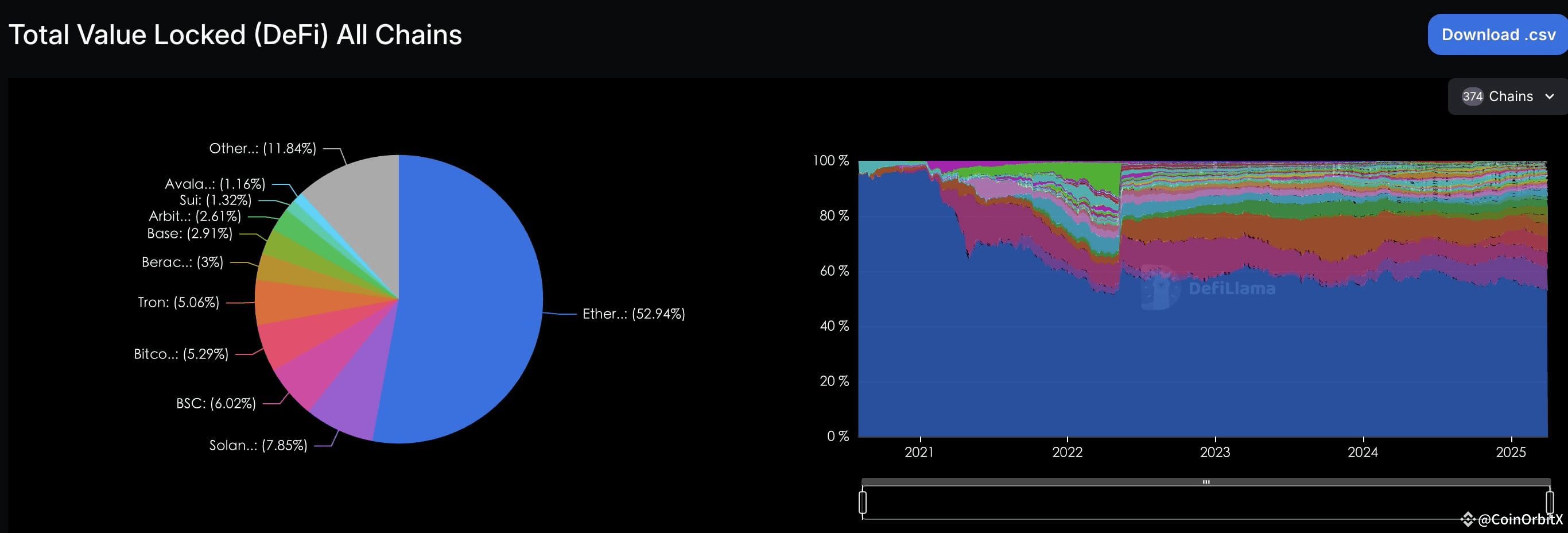
📊لقد تم تخفيف الشعور بالذعر الناتج عن الرسوم الجمركية، وتم تأسيس مستوى القاع على المدى القصير. يمكننا مراقبة تأثير المعلومات المتعلقة بالرسوم الجمركية التي أطلقها ترامب في 2 أبريل. إذا استمر سوق الأسهم الأمريكي في التحسن، فسوف يشهد سوق العملات الرقمية انتعاشًا مستمرًا!📈 $BTC لديه دعم قوي عند $81,200، ويمكننا مراقبة مستوى المقاومة عند $83,500! #BTC #Crypto
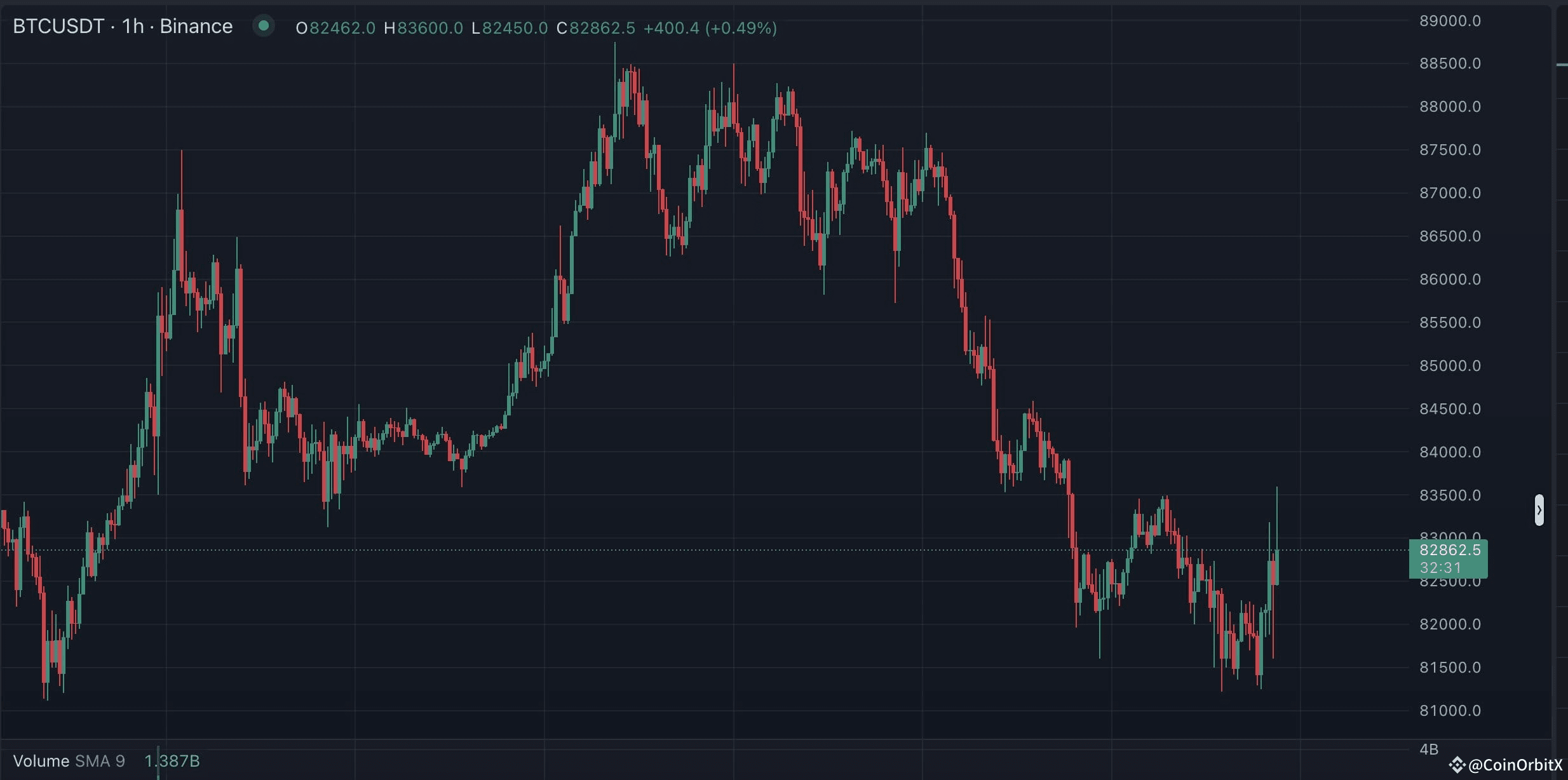
📊لقد تم تخفيف الشعور بالذعر الناتج عن الرسوم الجمركية، وتم تأسيس مستوى القاع على المدى القصير. يمكننا مراقبة تأثير المعلومات المتعلقة بالرسوم الجمركية التي أطلقها ترامب في 2 أبريل. إذا استمر سوق الأسهم الأمريكي في التحسن، فسوف يشهد سوق العملات الرقمية انتعاشًا مستمرًا!📈

$BTC لديه دعم قوي عند $81,200، ويمكننا مراقبة مستوى المقاومة عند $83,500!
#BTC #Crypto
عرض الترجمة
The birth of GUNZ product value🔥The GUNZ project was developed by Gunzilla Games. It is a Layer1 blockchain platform designed for AAA Web3 games. It aims to use wallet and chain abstraction technology to provide players and developers with a unified, convenient and secure digital asset management solution. The project focuses on solving the current experience segmentation and asset management problems of Web3 games, and promotes the transformation of game quality and economic models through technological innovation. 🧮Product composition and technical architecture GUNZ's product system mainly includes the following modules: ✅Wallet abstraction module Realize cross-chain unified management, simplify user asset access operations between different chains, and lower the threshold for use. ✅Chain abstraction module Integrate multiple public chain data, break through information islands, support cross-chain transactions and data interoperability, and provide seamless connection for in-game transactions. ✅Identity authentication and privacy security module Apply technologies such as multi-party computing (MPC) and zero-knowledge proof (ZKP) to ensure that data is fully encrypted during transmission, storage and calculation to protect user privacy. ✅Gamification and NFT Ecosystem Module Designed specifically for AAA games, it supports NFT casting, trading, staking and P2E models to build a true digital asset economic system. ✅Developer Tools and API Ecosystem Provides a complete SDK, API interface and plug-in library (compatible with Unity/Unreal engines) to help third-party applications quickly integrate and expand the ecosystem. 💡Core Technology Advantages and Highlights High Performance and Environmental Protection: Based on the customized consensus mechanism of the Avalanche subnet, GUNZ can achieve 10,000-level TPS and extremely low transaction fees (Gas fee is less than $0.0001), providing a smooth and efficient on-chain experience for AAA games. Cross-chain interoperability and wallet abstraction: Double abstraction technology not only greatly reduces the complexity of user operations, but also realizes multi-chain asset management and data interoperability, solving the pain points of traditional chain games in cross-chain operations. Security and privacy protection: Through MPC and ZKP technology, ensure data encryption throughout the entire process to improve the security of user assets and personal information. Game ecosystem integration: GUNZ designs special NFT transactions and P2E modules for the in-game economy, supports players to obtain on-chain assets through mechanisms such as "extracting HEX cubes", and realizes seamless connection between off-chain game experience and on-chain asset co-creation. 🔍Current challenges and optimization suggestions Scalability and performance tuning: With the continuous increase in user scale and transaction volume, it is necessary to further optimize distributed data processing and node coordination mechanisms. It is recommended to introduce intelligent load balancing and AI algorithms to assist data scheduling. Developer ecosystem construction: Continuously improve SDK, API documentation and developer community activities, lower the threshold for third-party integration, and regularly hold hackathons to stimulate innovation. Security assurance: Strengthen cooperation with international security audit institutions, conduct regular system security assessments, and ensure that the system still runs stably under high load and large-scale application scenarios. 📌Summary With its cutting-edge technical architecture and modular product design, GUNZ provides strong underlying support for AAA games and Web3 applications. In the future, by continuously optimizing technical performance and improving the developer ecosystem, GUNZ is expected to form a complete product closed loop, promote the deep integration of gaming experience and digital asset economy, and thus inject new vitality into the entire blockchain gaming industry. $GUN #GUNZ #Layer1 #GameFi

The birth of GUNZ product value

🔥The GUNZ project was developed by Gunzilla Games. It is a Layer1 blockchain platform designed for AAA Web3 games. It aims to use wallet and chain abstraction technology to provide players and developers with a unified, convenient and secure digital asset management solution. The project focuses on solving the current experience segmentation and asset management problems of Web3 games, and promotes the transformation of game quality and economic models through technological innovation.

🧮Product composition and technical architecture
GUNZ's product system mainly includes the following modules:
✅Wallet abstraction module
Realize cross-chain unified management, simplify user asset access operations between different chains, and lower the threshold for use.
✅Chain abstraction module
Integrate multiple public chain data, break through information islands, support cross-chain transactions and data interoperability, and provide seamless connection for in-game transactions.
✅Identity authentication and privacy security module
Apply technologies such as multi-party computing (MPC) and zero-knowledge proof (ZKP) to ensure that data is fully encrypted during transmission, storage and calculation to protect user privacy.
✅Gamification and NFT Ecosystem Module
Designed specifically for AAA games, it supports NFT casting, trading, staking and P2E models to build a true digital asset economic system.
✅Developer Tools and API Ecosystem
Provides a complete SDK, API interface and plug-in library (compatible with Unity/Unreal engines) to help third-party applications quickly integrate and expand the ecosystem.

💡Core Technology Advantages and Highlights
High Performance and Environmental Protection: Based on the customized consensus mechanism of the Avalanche subnet, GUNZ can achieve 10,000-level TPS and extremely low transaction fees (Gas fee is less than $0.0001), providing a smooth and efficient on-chain experience for AAA games.
Cross-chain interoperability and wallet abstraction: Double abstraction technology not only greatly reduces the complexity of user operations, but also realizes multi-chain asset management and data interoperability, solving the pain points of traditional chain games in cross-chain operations.
Security and privacy protection: Through MPC and ZKP technology, ensure data encryption throughout the entire process to improve the security of user assets and personal information.
Game ecosystem integration: GUNZ designs special NFT transactions and P2E modules for the in-game economy, supports players to obtain on-chain assets through mechanisms such as "extracting HEX cubes", and realizes seamless connection between off-chain game experience and on-chain asset co-creation.

🔍Current challenges and optimization suggestions
Scalability and performance tuning: With the continuous increase in user scale and transaction volume, it is necessary to further optimize distributed data processing and node coordination mechanisms. It is recommended to introduce intelligent load balancing and AI algorithms to assist data scheduling.
Developer ecosystem construction: Continuously improve SDK, API documentation and developer community activities, lower the threshold for third-party integration, and regularly hold hackathons to stimulate innovation.
Security assurance: Strengthen cooperation with international security audit institutions, conduct regular system security assessments, and ensure that the system still runs stably under high load and large-scale application scenarios.

📌Summary
With its cutting-edge technical architecture and modular product design, GUNZ provides strong underlying support for AAA games and Web3 applications. In the future, by continuously optimizing technical performance and improving the developer ecosystem, GUNZ is expected to form a complete product closed loop, promote the deep integration of gaming experience and digital asset economy, and thus inject new vitality into the entire blockchain gaming industry.
$GUN #GUNZ #Layer1 #GameFi
تحليل متعمق قائم على البيانات من $PARTIتلتزم شبكة Particle Network بتبسيط تجربة مستخدمي Web3 تمامًا من خلال تقنية تجريد المحفظة وتجريد السلسلة. يُدير رمزها الأصلي PARTI عمليات الدفع والتخزين والحوكمة على السلسلة في المنصة. وبصفتها جسرًا مهمًا يربط بين الإنترنت التقليدي والعالم اللامركزي، نجحت شبكة Particle Network في مساعدة المستخدمين على إنشاء أكثر من 17 مليون محفظة، ومعالجة أكثر من 10 ملايين عملية مستخدم، وإتمام تكامل عميق مع أكثر من 900 تطبيق لامركزي.

تحليل متعمق قائم على البيانات من $PARTI

تلتزم شبكة Particle Network بتبسيط تجربة مستخدمي Web3 تمامًا من خلال تقنية تجريد المحفظة وتجريد السلسلة. يُدير رمزها الأصلي PARTI عمليات الدفع والتخزين والحوكمة على السلسلة في المنصة. وبصفتها جسرًا مهمًا يربط بين الإنترنت التقليدي والعالم اللامركزي، نجحت شبكة Particle Network في مساعدة المستخدمين على إنشاء أكثر من 17 مليون محفظة، ومعالجة أكثر من 10 ملايين عملية مستخدم، وإتمام تكامل عميق مع أكثر من 900 تطبيق لامركزي.
بعد ثلاثة أسابيع من تعديل السوق، خرج $BTC من الاتجاه الصعودي على المستوى الأسبوعي. في الوقت الحالي، كما ذكرت التغريدة السابقة، تم تشكيل اتجاه عكسي وتم تشكيل اتجاه جديد. فيما يتعلق بالأخبار الكلية، أصدر ترامب عددًا من الأخبار الجيدة: 1. البيان بأن وصول الرسوم الجمركية ليس كبيرًا كما كان متوقعًا 2. ترامب يدعي أنه يأمل أن يقوم الاحتياطي الفيدرالي بخفض أسعار الفائدة فيما يتعلق ببيانات ETF، قامت العديد من المؤسسات بالتغيير من ضغط البيع إلى مواصلة زيادة المراكز. على الرغم من أن الزيادة الحالية في المراكز ليست قوية، إلا أنها لا تزال عملًا مستمرًا لتأسيس المعلومات في السوق. في هذا الوقت، أعتقد شخصيًا أن بعض أسواق العملات المشفرة يمكن بناؤها بأنظمة مستخدمين حقيقية وعوائد بروتوكولات ورموز قيمة؛ مثل $LDO و $SOL و $BNB و $ETH و $DOGE وغيرها من الرموز التي تحظى بتقدير عالٍ من السوق ولديها مؤسسات قوية تؤيدها. عندما يستمر $BTC في الاختراق، ستكون انتعاشاتها أكثر عنفًا! DYOR! #Crypto $BTC $LDO $SOL
بعد ثلاثة أسابيع من تعديل السوق، خرج $BTC من الاتجاه الصعودي على المستوى الأسبوعي. في الوقت الحالي، كما ذكرت التغريدة السابقة، تم تشكيل اتجاه عكسي وتم تشكيل اتجاه جديد.
فيما يتعلق بالأخبار الكلية، أصدر ترامب عددًا من الأخبار الجيدة:
1. البيان بأن وصول الرسوم الجمركية ليس كبيرًا كما كان متوقعًا
2. ترامب يدعي أنه يأمل أن يقوم الاحتياطي الفيدرالي بخفض أسعار الفائدة
فيما يتعلق ببيانات ETF، قامت العديد من المؤسسات بالتغيير من ضغط البيع إلى مواصلة زيادة المراكز. على الرغم من أن الزيادة الحالية في المراكز ليست قوية، إلا أنها لا تزال عملًا مستمرًا لتأسيس المعلومات في السوق.
في هذا الوقت، أعتقد شخصيًا أن بعض أسواق العملات المشفرة يمكن بناؤها بأنظمة مستخدمين حقيقية وعوائد بروتوكولات ورموز قيمة؛ مثل $LDO و $SOL و $BNB و $ETH و $DOGE وغيرها من الرموز التي تحظى بتقدير عالٍ من السوق ولديها مؤسسات قوية تؤيدها. عندما يستمر $BTC في الاختراق، ستكون انتعاشاتها أكثر عنفًا! DYOR!
#Crypto $BTC $LDO $SOL
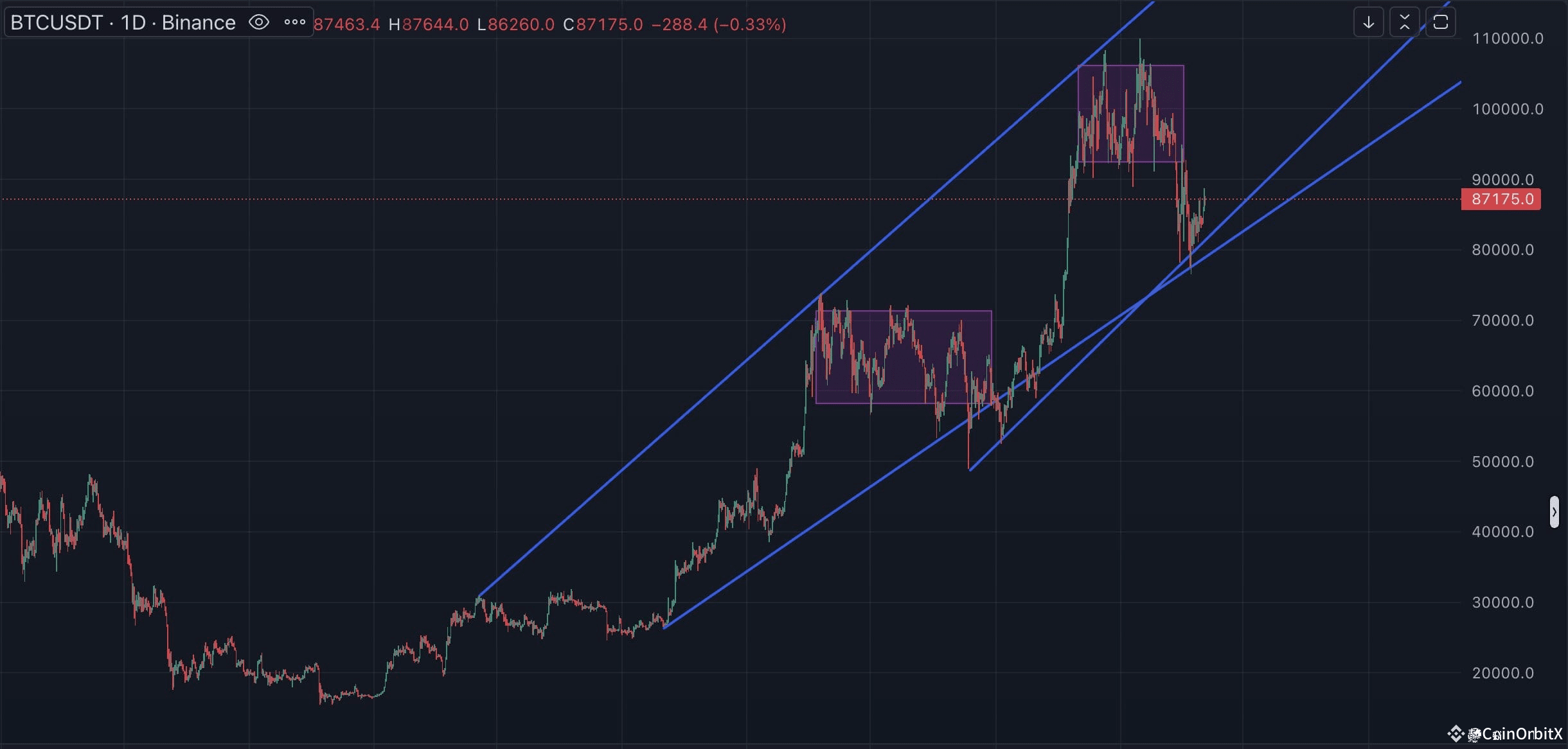
عرض الترجمة
Nillion Comprehensive Analysis - Product Architecture, Token Allocation and Future Trend Prediction☀️Project Introduction Nillion is an innovative decentralized infrastructure platform founded in 2021, designed to handle scenarios involving high-value and privacy-sensitive data, such💎 as personalized artificial intelligence, healthcare information, passwords, and biometric data. Traditional methods have dual problems of security and efficiency when processing such data, while Nillion uses "blind computing" technology, multi-party computing (MPC), fully homomorphic encryption (FHE), zero-knowledge proof (ZKP) and trusted execution environment (TEE) and other privacy-enhancing technologies to achieve data transmission, storage and computing without decryption, thereby ensuring the privacy and security of data throughout the life cycle. ☀️Product Architecture and Composition Nillion supports the operation of the entire network with its unique two-layer architecture, which is mainly divided into: 💎Coordination Layer (nilChain) Main functions: responsible for managing payments, reward distribution, cryptoeconomic security, and inter-cluster coordination. Technical Features: Built on Cosmos SDK, and supports IBC cross-chain communication protocol to achieve interoperability with other blockchains. Although smart contract execution is not currently supported, users can access it through Keplr or Leap wallets. 💎Petnet layer (orchestration layer) Main functions: responsible for secure computing and data storage, and realizes blind computing and secure processing of sensitive data by integrating technologies such as multi-party computing, fully homomorphic encryption and zero-knowledge proof. Technical implementation: Through Nillion's self-developed Nada language compiler and nilVM, it supports the combination of multi-level privacy enhancement technologies and provides vertical and horizontal expansion capabilities through clustered deployment. In addition, Nillion also provides developers with a series of application tools and SDKs, including: nilVM: allows developers to build privacy-preserving applications and supports the domain-specific language Nada similar to Python. nilDB: an encrypted distributed NoSQL database that uses the MPC protocol to split data into secret shares for distributed storage. nilAI: focuses on AI privacy reasoning, and realizes secure reasoning of private AI models through components such as AIVM, nada-AI and nilTEE. ☀️Token allocation and ecological incentives NIL, the native token in the Nillion ecosystem, plays multiple roles such as payment, staking and governance. The specific economic model includes: Total supply: 1 billion, the initial circulation is about 195.15 million (accounting for 19.52%), and the inflation rate of about 1% will be maintained every year according to autonomous governance.💰 ☀️Token usage: Payment and service fees: used for secure computing, data storage and AI reasoning services at the Petnet layer. Staking and rewards: validators stake NIL to ensure network security, and users can get rewards for staking. Decentralized governance: Token holders participate in network upgrades, resource allocation and ecological decision-making through on-chain voting. Allocation structure: including ecosystem and community (for user rewards, marketing, Intel Desk incentives, etc.), investors, airdrops, liquidity guarantees, team and protocol development. Different lock-up periods and phased release mechanisms are set for each part to ensure stable market supply, prevent concentrated selling, and encourage long-term holding. ☀️Financing and core team background Since its establishment, Nillion has successfully attracted the favor of many well-known institutions in the private financing round, with a total financing amount of up to 50 million US dollars. Major investors include Hack VC, Hashkey Capital, Distributed Global and Maelstrom. ☀️In terms of the team, Nillion has gathered many industry elites: Alex Page (CEO): He has served as a general partner in Hedera SPV and a senior banker at Goldman Sachs, with rich practical experience in finance and blockchain. Andrew Masanto (Chief Security Officer): He was the co-founder of Hedera and the CMO of Reserve, and is good at building security systems. Slava Rubin (Chief Business Officer): Founder of Indiegogo, with outstanding business development capabilities. Dr. Miguel de Vega (Chief Scientist): He has more than 30 patents in the field of data optimization and has strong technical strength. Conrad Whelan (CTO): One of the founding engineers of Uber, responsible for technical architecture design and product development. Mark McDermott (COO): He was in charge of Nike's innovation department and has rich operational management experience. Andrew Yeoh (CMO): He has served as an executive at UBS and Rothschild Bank and is good at market strategy. ☀️Future trends and predictions Based on the current product architecture, token allocation and market performance, Nillion has demonstrated great potential in multiple vertical fields (such as AI, DeFi, and healthcare) with its unique "blind computing" capabilities and advanced privacy enhancement technology. Future development trends can be summarized as follows: Ecological expansion: With the advancement of the Nucleus Builders plan and the deepening of cooperation with top projects such as Virtuals, NEAR, Aptos, and Arbitrum, Nillion's application scenarios will be further expanded to help more vertical industries achieve privacy-preserving data computing. User and data growth: The platform has attracted a large number of active users to participate in verification. In the future, as product experience and functions are continuously optimized, on-chain user data and activity are expected to continue to grow, providing solid intrinsic value support for NIL tokens. Market recognition and value enhancement: Thanks to advanced technical capabilities and multi-party cooperation, coupled with a reasonable Token economic model, Nillion is expected to set a benchmark in the industry, promote the development of decentralized privacy computing and secure data applications, and thus achieve a substantial increase in market value. ☀️In summary, Nillion has obvious advantages in the fields of privacy protection and decentralized computing with its unique architecture design, perfect ecological incentives and strong team background. It is expected to become the infrastructure for data security computing in various industries in the future. Investors can pay attention to its long-term value and ecological expansion process.💡 #NIL #Nillion #Layer1

Nillion Comprehensive Analysis - Product Architecture, Token Allocation and Future Trend Prediction

☀️Project Introduction
Nillion is an innovative decentralized infrastructure platform founded in 2021, designed to handle scenarios involving high-value and privacy-sensitive data, such💎 as personalized artificial intelligence, healthcare information, passwords, and biometric data. Traditional methods have dual problems of security and efficiency when processing such data, while Nillion uses "blind computing" technology, multi-party computing (MPC), fully homomorphic encryption (FHE), zero-knowledge proof (ZKP) and trusted execution environment (TEE) and other privacy-enhancing technologies to achieve data transmission, storage and computing without decryption, thereby ensuring the privacy and security of data throughout the life cycle.

☀️Product Architecture and Composition
Nillion supports the operation of the entire network with its unique two-layer architecture, which is mainly divided into:
💎Coordination Layer (nilChain)
Main functions: responsible for managing payments, reward distribution, cryptoeconomic security, and inter-cluster coordination.
Technical Features: Built on Cosmos SDK, and supports IBC cross-chain communication protocol to achieve interoperability with other blockchains. Although smart contract execution is not currently supported, users can access it through Keplr or Leap wallets.
💎Petnet layer (orchestration layer)
Main functions: responsible for secure computing and data storage, and realizes blind computing and secure processing of sensitive data by integrating technologies such as multi-party computing, fully homomorphic encryption and zero-knowledge proof.
Technical implementation: Through Nillion's self-developed Nada language compiler and nilVM, it supports the combination of multi-level privacy enhancement technologies and provides vertical and horizontal expansion capabilities through clustered deployment. In addition, Nillion also provides developers with a series of application tools and SDKs, including:
nilVM: allows developers to build privacy-preserving applications and supports the domain-specific language Nada similar to Python.
nilDB: an encrypted distributed NoSQL database that uses the MPC protocol to split data into secret shares for distributed storage.
nilAI: focuses on AI privacy reasoning, and realizes secure reasoning of private AI models through components such as AIVM, nada-AI and nilTEE.

☀️Token allocation and ecological incentives
NIL, the native token in the Nillion ecosystem, plays multiple roles such as payment, staking and governance. The specific economic model includes:
Total supply: 1 billion, the initial circulation is about 195.15 million (accounting for 19.52%), and the inflation rate of about 1% will be maintained every year according to autonomous governance.💰

☀️Token usage:
Payment and service fees: used for secure computing, data storage and AI reasoning services at the Petnet layer.
Staking and rewards: validators stake NIL to ensure network security, and users can get rewards for staking.
Decentralized governance: Token holders participate in network upgrades, resource allocation and ecological decision-making through on-chain voting.
Allocation structure: including ecosystem and community (for user rewards, marketing, Intel Desk incentives, etc.), investors, airdrops, liquidity guarantees, team and protocol development. Different lock-up periods and phased release mechanisms are set for each part to ensure stable market supply, prevent concentrated selling, and encourage long-term holding.
☀️Financing and core team background
Since its establishment, Nillion has successfully attracted the favor of many well-known institutions in the private financing round, with a total financing amount of up to 50 million US dollars. Major investors include Hack VC, Hashkey Capital, Distributed Global and Maelstrom.

☀️In terms of the team, Nillion has gathered many industry elites:
Alex Page (CEO): He has served as a general partner in Hedera SPV and a senior banker at Goldman Sachs, with rich practical experience in finance and blockchain.
Andrew Masanto (Chief Security Officer): He was the co-founder of Hedera and the CMO of Reserve, and is good at building security systems.
Slava Rubin (Chief Business Officer): Founder of Indiegogo, with outstanding business development capabilities.
Dr. Miguel de Vega (Chief Scientist): He has more than 30 patents in the field of data optimization and has strong technical strength.
Conrad Whelan (CTO): One of the founding engineers of Uber, responsible for technical architecture design and product development.
Mark McDermott (COO): He was in charge of Nike's innovation department and has rich operational management experience.
Andrew Yeoh (CMO): He has served as an executive at UBS and Rothschild Bank and is good at market strategy.

☀️Future trends and predictions
Based on the current product architecture, token allocation and market performance, Nillion has demonstrated great potential in multiple vertical fields (such as AI, DeFi, and healthcare) with its unique "blind computing" capabilities and advanced privacy enhancement technology. Future development trends can be summarized as follows:
Ecological expansion: With the advancement of the Nucleus Builders plan and the deepening of cooperation with top projects such as Virtuals, NEAR, Aptos, and Arbitrum, Nillion's application scenarios will be further expanded to help more vertical industries achieve privacy-preserving data computing.
User and data growth: The platform has attracted a large number of active users to participate in verification. In the future, as product experience and functions are continuously optimized, on-chain user data and activity are expected to continue to grow, providing solid intrinsic value support for NIL tokens.
Market recognition and value enhancement: Thanks to advanced technical capabilities and multi-party cooperation, coupled with a reasonable Token economic model, Nillion is expected to set a benchmark in the industry, promote the development of decentralized privacy computing and secure data applications, and thus achieve a substantial increase in market value.
☀️In summary, Nillion has obvious advantages in the fields of privacy protection and decentralized computing with its unique architecture design, perfect ecological incentives and strong team background. It is expected to become the infrastructure for data security computing in various industries in the future. Investors can pay attention to its long-term value and ecological expansion process.💡
#NIL #Nillion #Layer1
سجّل الدخول لاستكشاف المزيد من المُحتوى
استكشف أحدث أخبار العملات الرقمية
⚡️ كُن جزءًا من أحدث النقاشات في مجال العملات الرقمية
💬 تفاعل مع صنّاع المُحتوى المُفضّلين لديك
👍 استمتع بالمحتوى الذي يثير اهتمامك
البريد الإلكتروني / رقم الهاتف
خريطة الموقع
تفضيلات ملفات تعريف الارتباط
شروط وأحكام المنصّة