

MASAB ⁰⁰⁷-国王
4k منشورات

MASAB ⁰⁰⁷-国王
 تحقُّق Binance Square الإضافي
إبلاغ
حظر المُستخدم
Trader | 🔗 Blockchain Believer | 🌍 Exploring the Future of Finance | Turning Ideas into Assets | Always Learning, Always Growing✨ | x:@masab0077
فتح تداول
مُتداول مُتكرر
2.8 سنوات
1.6K+ تتابع
30.3K+ المتابعون
9.9K+ إعجاب
منشورات
الحافظة الاستثمارية
الكل
اقتباسات
Live
·
--
تمّ التحقق
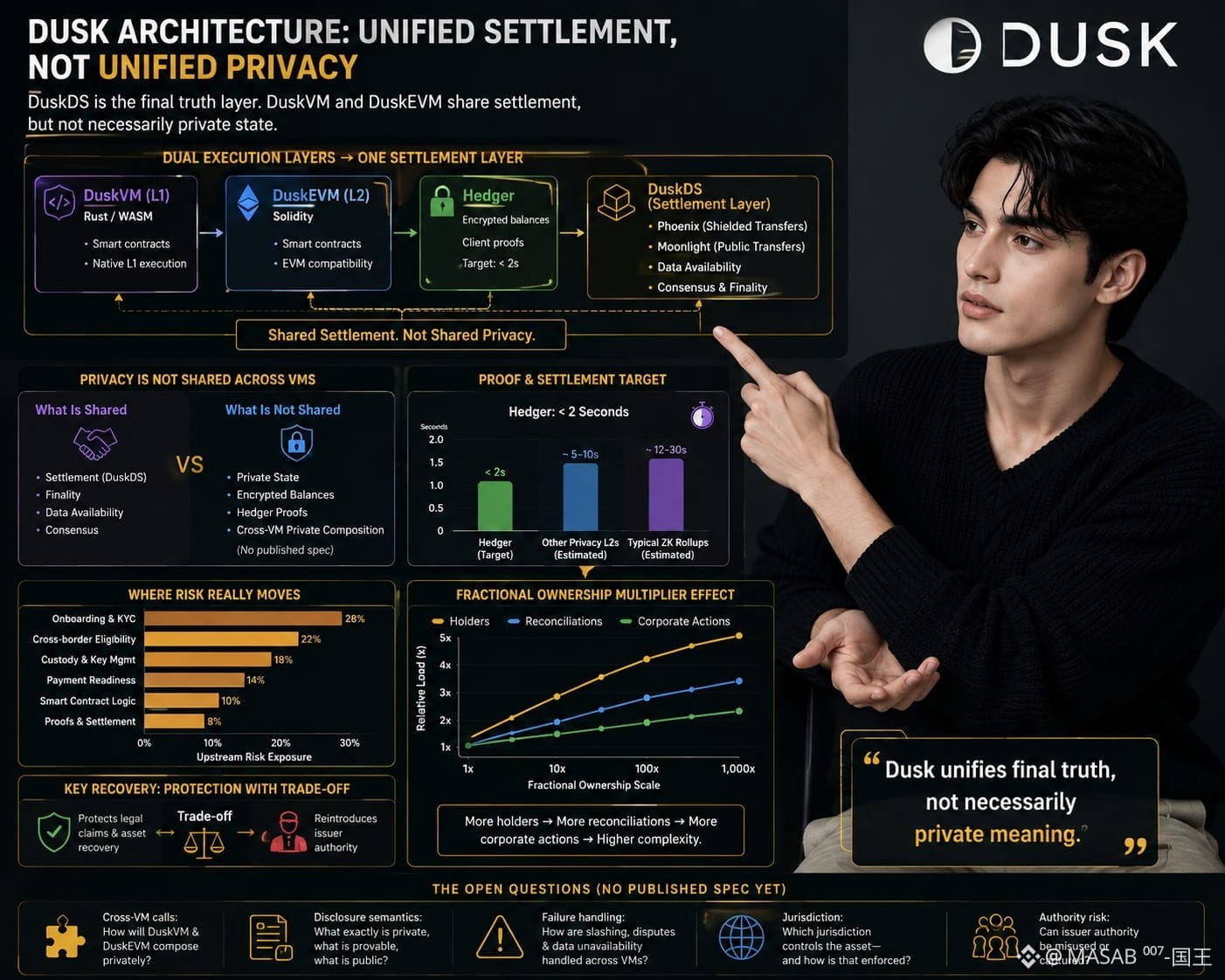
كانت الرسوم البيانية مسطّحة، لذا أعدت فتح ملاحظات معماريّة Dusk. كنت أرى “الخصوصية” مرارًا كما لو أن DuskDS وDuskVM وDuskEVM يشتركون في حالة سرّية واحدة.
يعمل DuskVM على L1 عبر Rust/WASM؛ ويعمل DuskEVM عبر Solidity، مع قيام Hedger بإضافة أرصدة مُشفّرة وبراهين مخصّصة للاستجابة تحت ثانيتين. يتولّى كلاهما التسوية عبر DuskDS—توفّر Phoenix تحويلات مُحصّنة، وتوفّر Moonlight تحويلات عامة—إضافةً إلى توافر البيانات والإجماع والنهائية. ومع ذلك فالتسوية المشتركة ليست خصوصيةً مشتركة: لم أجد مواصفة منشورة تُظهر أن عقدًا من DuskVM يركّب بشكلٍ خاص مع حالة Hedger.
يوحّد Dusk الحقيقة النهائية، وليس بالضرورة المعنى الخاص.
بالنسبة للـ RWAs، تحتاج المؤسسات إلى مراكز سرّية وملكية قابلة للتحقق؛ إخفاء رصيد تجزئة ليس إخفاءً لسير عملٍ تجاري. يمكن للبراهين والتسوية الأسرع أن تنقل المخاطر إلى أعلى سلسلة الإعداد: بدء التشغيل، الأهلية عبر الحدود، الحيازة والاستعداد للدفع. ما يزال على المطورين أن يوفّقوا بين Solidity والحالة السرّية ومنطق الامتثال.
الملكية الجزئية تضاعف عدد الحاملين، ومهمات التوفيق والإجراءات المؤسسية. تُعدّ صلاحيات استرداد المفتاح المفقود لحماية الادعاءات القانونية، لكنها تُعيد إدخال سلطة المُصدِر. لا يمكن للتشفير أن يقرر أي ولاية قضائية تتحكم في الأصل—أو ما إذا كانت تلك السلطة تتصرف بحكمة.
هذا ليس فريدًا لدى Dusk. وحتى يتم توثيق استدعاءات عبر الآلات الافتراضية (cross-VM calls)، ودلالات الإفصاح ومعالجة الإخفاقات، فإن “الخصوصية الموحدة” تتجاوز الضمان المنشور. الرسوم البيانية ما زالت مسطّحة؛ العبارة ليست كذلك.
@Dusk_Foundation $DUSK #dusk
{future}(DUSKUSDT)
كانت الرسوم البيانية مسطّحة، لذا أعدت فتح ملاحظات معماريّة Dusk. كنت أرى “الخصوصية” مرارًا كما لو أن DuskDS وDuskVM وDuskEVM يشتركون في حالة سرّية واحدة.
يعمل DuskVM على L1 عبر Rust/WASM؛ ويعمل DuskEVM عبر Solidity، مع قيام Hedger بإضافة أرصدة مُشفّرة وبراهين مخصّصة للاستجابة تحت ثانيتين. يتولّى كلاهما التسوية عبر DuskDS—توفّر Phoenix تحويلات مُحصّنة، وتوفّر Moonlight تحويلات عامة—إضافةً إلى توافر البيانات والإجماع والنهائية. ومع ذلك فالتسوية المشتركة ليست خصوصيةً مشتركة: لم أجد مواصفة منشورة تُظهر أن عقدًا من DuskVM يركّب بشكلٍ خاص مع حالة Hedger.
يوحّد Dusk الحقيقة النهائية، وليس بالضرورة المعنى الخاص.
بالنسبة للـ RWAs، تحتاج المؤسسات إلى مراكز سرّية وملكية قابلة للتحقق؛ إخفاء رصيد تجزئة ليس إخفاءً لسير عملٍ تجاري. يمكن للبراهين والتسوية الأسرع أن تنقل المخاطر إلى أعلى سلسلة الإعداد: بدء التشغيل، الأهلية عبر الحدود، الحيازة والاستعداد للدفع. ما يزال على المطورين أن يوفّقوا بين Solidity والحالة السرّية ومنطق الامتثال.
الملكية الجزئية تضاعف عدد الحاملين، ومهمات التوفيق والإجراءات المؤسسية. تُعدّ صلاحيات استرداد المفتاح المفقود لحماية الادعاءات القانونية، لكنها تُعيد إدخال سلطة المُصدِر. لا يمكن للتشفير أن يقرر أي ولاية قضائية تتحكم في الأصل—أو ما إذا كانت تلك السلطة تتصرف بحكمة.
هذا ليس فريدًا لدى Dusk. وحتى يتم توثيق استدعاءات عبر الآلات الافتراضية (cross-VM calls)، ودلالات الإفصاح ومعالجة الإخفاقات، فإن “الخصوصية الموحدة” تتجاوز الضمان المنشور. الرسوم البيانية ما زالت مسطّحة؛ العبارة ليست كذلك.
@Dusk $DUSK #dusk
يعمل DuskVM على L1 عبر Rust/WASM؛ ويعمل DuskEVM عبر Solidity، مع قيام Hedger بإضافة أرصدة مُشفّرة وبراهين مخصّصة للاستجابة تحت ثانيتين. يتولّى كلاهما التسوية عبر DuskDS—توفّر Phoenix تحويلات مُحصّنة، وتوفّر Moonlight تحويلات عامة—إضافةً إلى توافر البيانات والإجماع والنهائية. ومع ذلك فالتسوية المشتركة ليست خصوصيةً مشتركة: لم أجد مواصفة منشورة تُظهر أن عقدًا من DuskVM يركّب بشكلٍ خاص مع حالة Hedger.
يوحّد Dusk الحقيقة النهائية، وليس بالضرورة المعنى الخاص.
بالنسبة للـ RWAs، تحتاج المؤسسات إلى مراكز سرّية وملكية قابلة للتحقق؛ إخفاء رصيد تجزئة ليس إخفاءً لسير عملٍ تجاري. يمكن للبراهين والتسوية الأسرع أن تنقل المخاطر إلى أعلى سلسلة الإعداد: بدء التشغيل، الأهلية عبر الحدود، الحيازة والاستعداد للدفع. ما يزال على المطورين أن يوفّقوا بين Solidity والحالة السرّية ومنطق الامتثال.
الملكية الجزئية تضاعف عدد الحاملين، ومهمات التوفيق والإجراءات المؤسسية. تُعدّ صلاحيات استرداد المفتاح المفقود لحماية الادعاءات القانونية، لكنها تُعيد إدخال سلطة المُصدِر. لا يمكن للتشفير أن يقرر أي ولاية قضائية تتحكم في الأصل—أو ما إذا كانت تلك السلطة تتصرف بحكمة.
هذا ليس فريدًا لدى Dusk. وحتى يتم توثيق استدعاءات عبر الآلات الافتراضية (cross-VM calls)، ودلالات الإفصاح ومعالجة الإخفاقات، فإن “الخصوصية الموحدة” تتجاوز الضمان المنشور. الرسوم البيانية ما زالت مسطّحة؛ العبارة ليست كذلك.
@Dusk $DUSK #dusk
6
10
30.2k
·
--
تمّ التحقق
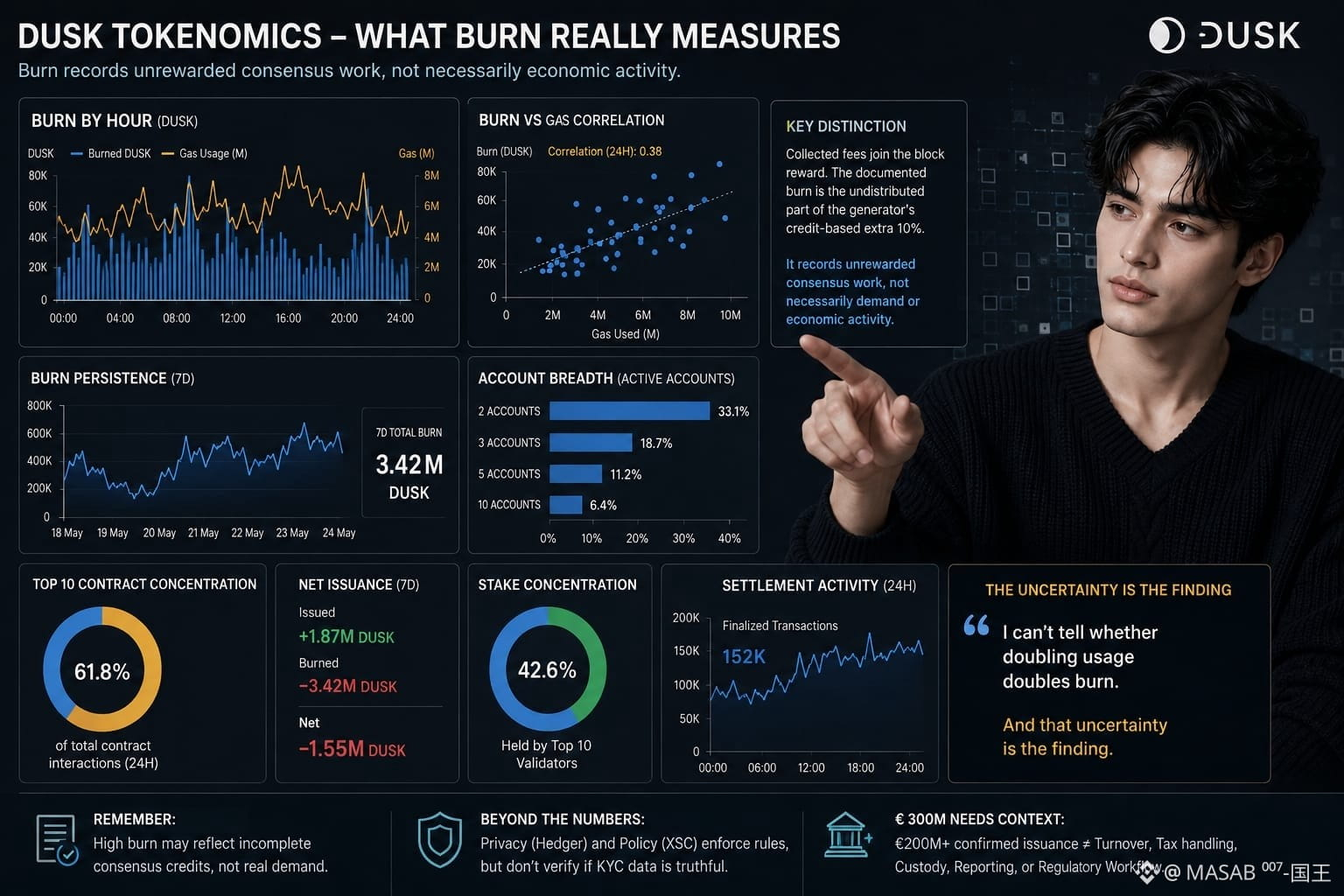
كانت الرسوم البيانية مسطّحة، لذا فتحت صفحة اقتصاديات توكن Dusk لرسم خريطة الحرق حسب الساعة. افترضت أن الكتل المزدحمة وارتفاع الغاز ومزيدًا من المستخدمين تعني حرق DUSK أكثر. لكن شيئًا ما لم يكن في مكانه.
تُدفع الرسوم بـ DUSK، لكن الرسوم المحصّلة تنضم إلى مكافأة الكتلة. الحرق المُوثّق هو الجزء غير الموزّع من الزيادة الإضافية القائمة على الاعتماد/الائتمان (credit-based) لدى المُولِّد بنسبة 10% إضافية. الحرق لكل بلوك أو لكل حقبة (epoch) أو لكل عقد (contract) أو لكل مليون وحدة غاز لا يمكنه قياس الطلب تلقائيًا؛ فقد يعكس الحرق المرتفع اعتمادات/اعتماد إجماع غير مكتملة.
يسجّل العمل الإجماعي غير المُكافأ، وليس بالضرورة نشاطًا اقتصاديًا.
هذا الفرق ظلّ يلازمني. يمكن لـ 210M+ مُشارَكة (staked) حماية الإجماع، لا دقة بيانات الاعتماد/الشهادة أو منطق التطبيق. يستطيع Hedger إخفاء القيم مع إثبات الحسابات، ويمكن لـ XSC فرض سياسة التحويل، لكن لا أحد منهما يثبت أن بيانات KYC صادقة. قد تظل عمليات الرفض تُسرّب تلميحات حول الأهلية.
حتى €300M تحتاج إلى تصنيف: استشهد Dusk بـ €300M الخاصة بـ NPEX AUM في 2025؛ وموقعها الحالي يُظهر إصدارًا مؤكدًا بأكثر من €200M. لا يضمن أي ذلك قياس دوران الأموال (turnover) أو تحويل المحفظة (wallet conversion) أو معالجة الضرائب أو الحفظ (custody) أو الإبلاغ (reporting) أو التسويات (reconciliation)، ولا ما إذا كانت أربع وظائف تنظيمية تعمل كخط سير واحد.
لوحتي الآن تحتاج إلى تتبّع استمرارية الحرق، ورصد الترابط بين الغاز/الرسوم، واتساع حسابات العقد 2/3/5/10، وتركيز أعلى عشر، وإصدار صافي، وتركيز المشاركة، ونشاط التسوية. ما زالت الرسوم البيانية مفتوحة. لا أستطيع تحديد ما إذا كان مضاعفة الاستخدام تعني مضاعفة الحرق، وهذا الغموض هو النتيجة التي توصلت إليها.
@Dusk_Foundation $DUSK #dusk
{future}(DUSKUSDT)
كانت الرسوم البيانية مسطّحة، لذا فتحت صفحة اقتصاديات توكن Dusk لرسم خريطة الحرق حسب الساعة. افترضت أن الكتل المزدحمة وارتفاع الغاز ومزيدًا من المستخدمين تعني حرق DUSK أكثر. لكن شيئًا ما لم يكن في مكانه.
تُدفع الرسوم بـ DUSK، لكن الرسوم المحصّلة تنضم إلى مكافأة الكتلة. الحرق المُوثّق هو الجزء غير الموزّع من الزيادة الإضافية القائمة على الاعتماد/الائتمان (credit-based) لدى المُولِّد بنسبة 10% إضافية. الحرق لكل بلوك أو لكل حقبة (epoch) أو لكل عقد (contract) أو لكل مليون وحدة غاز لا يمكنه قياس الطلب تلقائيًا؛ فقد يعكس الحرق المرتفع اعتمادات/اعتماد إجماع غير مكتملة.
يسجّل العمل الإجماعي غير المُكافأ، وليس بالضرورة نشاطًا اقتصاديًا.
هذا الفرق ظلّ يلازمني. يمكن لـ 210M+ مُشارَكة (staked) حماية الإجماع، لا دقة بيانات الاعتماد/الشهادة أو منطق التطبيق. يستطيع Hedger إخفاء القيم مع إثبات الحسابات، ويمكن لـ XSC فرض سياسة التحويل، لكن لا أحد منهما يثبت أن بيانات KYC صادقة. قد تظل عمليات الرفض تُسرّب تلميحات حول الأهلية.
حتى €300M تحتاج إلى تصنيف: استشهد Dusk بـ €300M الخاصة بـ NPEX AUM في 2025؛ وموقعها الحالي يُظهر إصدارًا مؤكدًا بأكثر من €200M. لا يضمن أي ذلك قياس دوران الأموال (turnover) أو تحويل المحفظة (wallet conversion) أو معالجة الضرائب أو الحفظ (custody) أو الإبلاغ (reporting) أو التسويات (reconciliation)، ولا ما إذا كانت أربع وظائف تنظيمية تعمل كخط سير واحد.
لوحتي الآن تحتاج إلى تتبّع استمرارية الحرق، ورصد الترابط بين الغاز/الرسوم، واتساع حسابات العقد 2/3/5/10، وتركيز أعلى عشر، وإصدار صافي، وتركيز المشاركة، ونشاط التسوية. ما زالت الرسوم البيانية مفتوحة. لا أستطيع تحديد ما إذا كان مضاعفة الاستخدام تعني مضاعفة الحرق، وهذا الغموض هو النتيجة التي توصلت إليها.
@Dusk $DUSK #dusk
تُدفع الرسوم بـ DUSK، لكن الرسوم المحصّلة تنضم إلى مكافأة الكتلة. الحرق المُوثّق هو الجزء غير الموزّع من الزيادة الإضافية القائمة على الاعتماد/الائتمان (credit-based) لدى المُولِّد بنسبة 10% إضافية. الحرق لكل بلوك أو لكل حقبة (epoch) أو لكل عقد (contract) أو لكل مليون وحدة غاز لا يمكنه قياس الطلب تلقائيًا؛ فقد يعكس الحرق المرتفع اعتمادات/اعتماد إجماع غير مكتملة.
يسجّل العمل الإجماعي غير المُكافأ، وليس بالضرورة نشاطًا اقتصاديًا.
هذا الفرق ظلّ يلازمني. يمكن لـ 210M+ مُشارَكة (staked) حماية الإجماع، لا دقة بيانات الاعتماد/الشهادة أو منطق التطبيق. يستطيع Hedger إخفاء القيم مع إثبات الحسابات، ويمكن لـ XSC فرض سياسة التحويل، لكن لا أحد منهما يثبت أن بيانات KYC صادقة. قد تظل عمليات الرفض تُسرّب تلميحات حول الأهلية.
حتى €300M تحتاج إلى تصنيف: استشهد Dusk بـ €300M الخاصة بـ NPEX AUM في 2025؛ وموقعها الحالي يُظهر إصدارًا مؤكدًا بأكثر من €200M. لا يضمن أي ذلك قياس دوران الأموال (turnover) أو تحويل المحفظة (wallet conversion) أو معالجة الضرائب أو الحفظ (custody) أو الإبلاغ (reporting) أو التسويات (reconciliation)، ولا ما إذا كانت أربع وظائف تنظيمية تعمل كخط سير واحد.
لوحتي الآن تحتاج إلى تتبّع استمرارية الحرق، ورصد الترابط بين الغاز/الرسوم، واتساع حسابات العقد 2/3/5/10، وتركيز أعلى عشر، وإصدار صافي، وتركيز المشاركة، ونشاط التسوية. ما زالت الرسوم البيانية مفتوحة. لا أستطيع تحديد ما إذا كان مضاعفة الاستخدام تعني مضاعفة الحرق، وهذا الغموض هو النتيجة التي توصلت إليها.
@Dusk $DUSK #dusk
8
14
11.6k
·
--
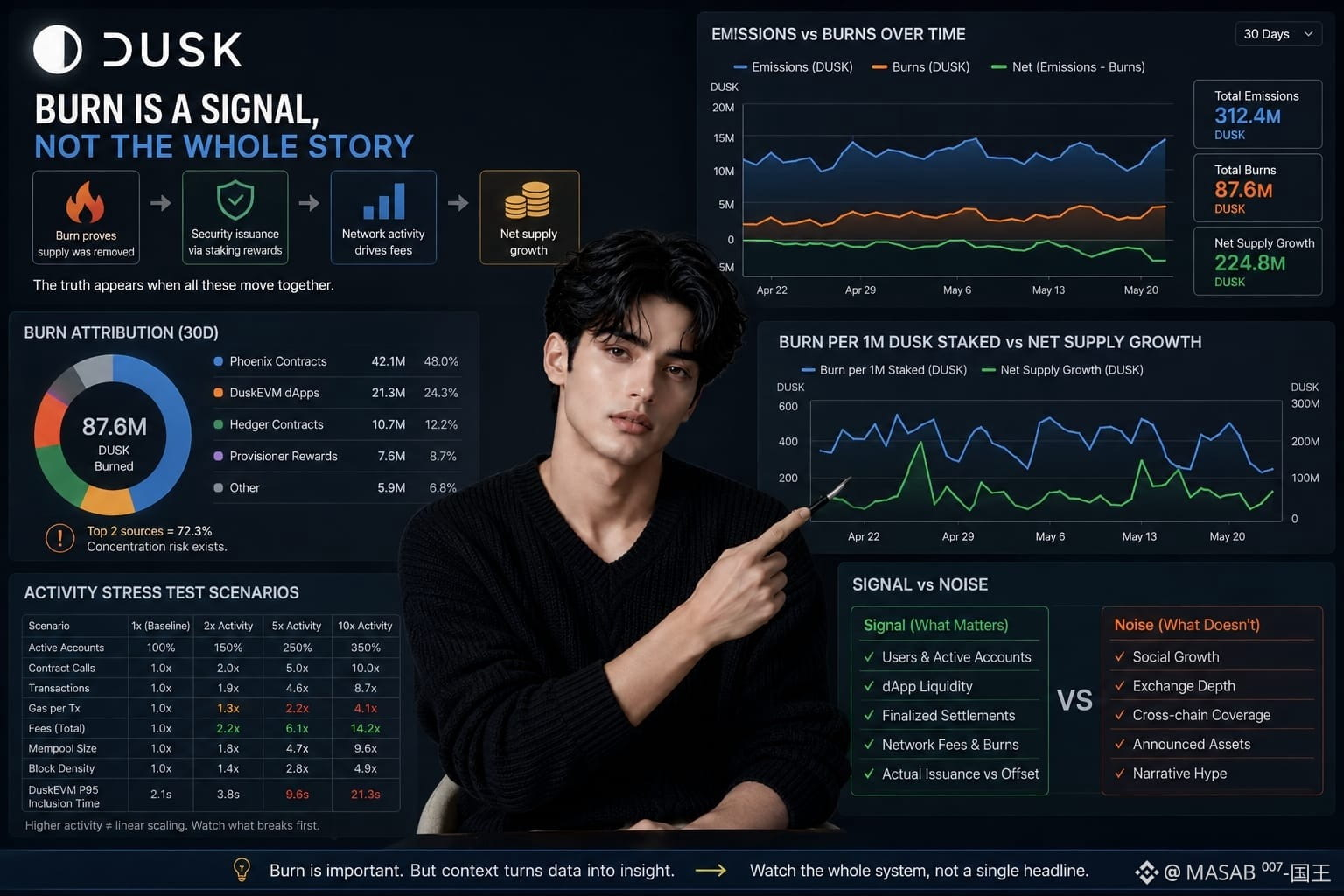
بالأمس، أثناء سوق متذبذب بلا اتجاه، كنت أرى حرق DUSK المعالَج كدليل على الانكماش. جلست مع هذا الادعاء. كان هناك شيء لا يتماشى.
لوحة Dusk يجب أن تقارن الانبعاثات اليومية والأسبوعية والشهرية مع عمليات الحرق، ثم تُسند الحرق حسب المحفظة والتطبيق والحقبة والبلوك. إذا كانت عقدة واحدة أو بضعة بلوكات تهيمن، فإن الإجمالي يعني شيئًا مختلفًا عن طلب واسع النطاق.
الحرق يثبت أن الإمداد أُزيل، وليس أنه تم توزيع الطلب أو أنه مستدام.
تظهر قيمته إلى جانب مكافآت الـstaking، و الرصيد النشط، ومكافآت الـprovisioner، وكثافة رسوم الحقبة وتسارع النشاط، والحرق لكل 1 مليون DUSK مُستَكَّة، ونمو صافي الإمداد. معًا تُظهر ما إذا كانت إصدارات الأمان تُعوَّض بالنشاط، وما إذا كان ارتفاع الـstaking يزيد أو يقلل ضغط الإمداد.
لكن الآلية ما زالت بحاجة إلى اختبارات ضغط. إذا ارتفعت الحسابات النشطة 50% أو تضاعفت استدعاءات العقود، هل تتضاعف المعاملات والغاز؟ عند 2× و5× و10× من النشاط، ما الذي يتحرك أولًا: الغاز لكل معاملة، أو الرسوم، أو حجم mempool، أو كثافة البلوك، أو زمن تضمين DuskEVM P95؟
أنا أفصل بين النمو الاجتماعي وعمق البورصات وتغطية السلاسل المتقاطعة والأصول المُعلَن عنها، وبين المستخدمين وسيولة التطبيقات والتسويات النهائية والإصدار الفعلي.
السوق ما زال مسطحًا. عنوان الحرق يبدو ناقصًا.
@Dusk_Foundation $DUSK #dusk
{future}(DUSKUSDT)
بالأمس، أثناء سوق متذبذب بلا اتجاه، كنت أرى حرق DUSK المعالَج كدليل على الانكماش. جلست مع هذا الادعاء. كان هناك شيء لا يتماشى.
لوحة Dusk يجب أن تقارن الانبعاثات اليومية والأسبوعية والشهرية مع عمليات الحرق، ثم تُسند الحرق حسب المحفظة والتطبيق والحقبة والبلوك. إذا كانت عقدة واحدة أو بضعة بلوكات تهيمن، فإن الإجمالي يعني شيئًا مختلفًا عن طلب واسع النطاق.
الحرق يثبت أن الإمداد أُزيل، وليس أنه تم توزيع الطلب أو أنه مستدام.
تظهر قيمته إلى جانب مكافآت الـstaking، و الرصيد النشط، ومكافآت الـprovisioner، وكثافة رسوم الحقبة وتسارع النشاط، والحرق لكل 1 مليون DUSK مُستَكَّة، ونمو صافي الإمداد. معًا تُظهر ما إذا كانت إصدارات الأمان تُعوَّض بالنشاط، وما إذا كان ارتفاع الـstaking يزيد أو يقلل ضغط الإمداد.
لكن الآلية ما زالت بحاجة إلى اختبارات ضغط. إذا ارتفعت الحسابات النشطة 50% أو تضاعفت استدعاءات العقود، هل تتضاعف المعاملات والغاز؟ عند 2× و5× و10× من النشاط، ما الذي يتحرك أولًا: الغاز لكل معاملة، أو الرسوم، أو حجم mempool، أو كثافة البلوك، أو زمن تضمين DuskEVM P95؟
أنا أفصل بين النمو الاجتماعي وعمق البورصات وتغطية السلاسل المتقاطعة والأصول المُعلَن عنها، وبين المستخدمين وسيولة التطبيقات والتسويات النهائية والإصدار الفعلي.
السوق ما زال مسطحًا. عنوان الحرق يبدو ناقصًا.
@Dusk $DUSK #dusk
لوحة Dusk يجب أن تقارن الانبعاثات اليومية والأسبوعية والشهرية مع عمليات الحرق، ثم تُسند الحرق حسب المحفظة والتطبيق والحقبة والبلوك. إذا كانت عقدة واحدة أو بضعة بلوكات تهيمن، فإن الإجمالي يعني شيئًا مختلفًا عن طلب واسع النطاق.
الحرق يثبت أن الإمداد أُزيل، وليس أنه تم توزيع الطلب أو أنه مستدام.
تظهر قيمته إلى جانب مكافآت الـstaking، و الرصيد النشط، ومكافآت الـprovisioner، وكثافة رسوم الحقبة وتسارع النشاط، والحرق لكل 1 مليون DUSK مُستَكَّة، ونمو صافي الإمداد. معًا تُظهر ما إذا كانت إصدارات الأمان تُعوَّض بالنشاط، وما إذا كان ارتفاع الـstaking يزيد أو يقلل ضغط الإمداد.
لكن الآلية ما زالت بحاجة إلى اختبارات ضغط. إذا ارتفعت الحسابات النشطة 50% أو تضاعفت استدعاءات العقود، هل تتضاعف المعاملات والغاز؟ عند 2× و5× و10× من النشاط، ما الذي يتحرك أولًا: الغاز لكل معاملة، أو الرسوم، أو حجم mempool، أو كثافة البلوك، أو زمن تضمين DuskEVM P95؟
أنا أفصل بين النمو الاجتماعي وعمق البورصات وتغطية السلاسل المتقاطعة والأصول المُعلَن عنها، وبين المستخدمين وسيولة التطبيقات والتسويات النهائية والإصدار الفعلي.
السوق ما زال مسطحًا. عنوان الحرق يبدو ناقصًا.
@Dusk $DUSK #dusk
15
20
10.3k
·
--
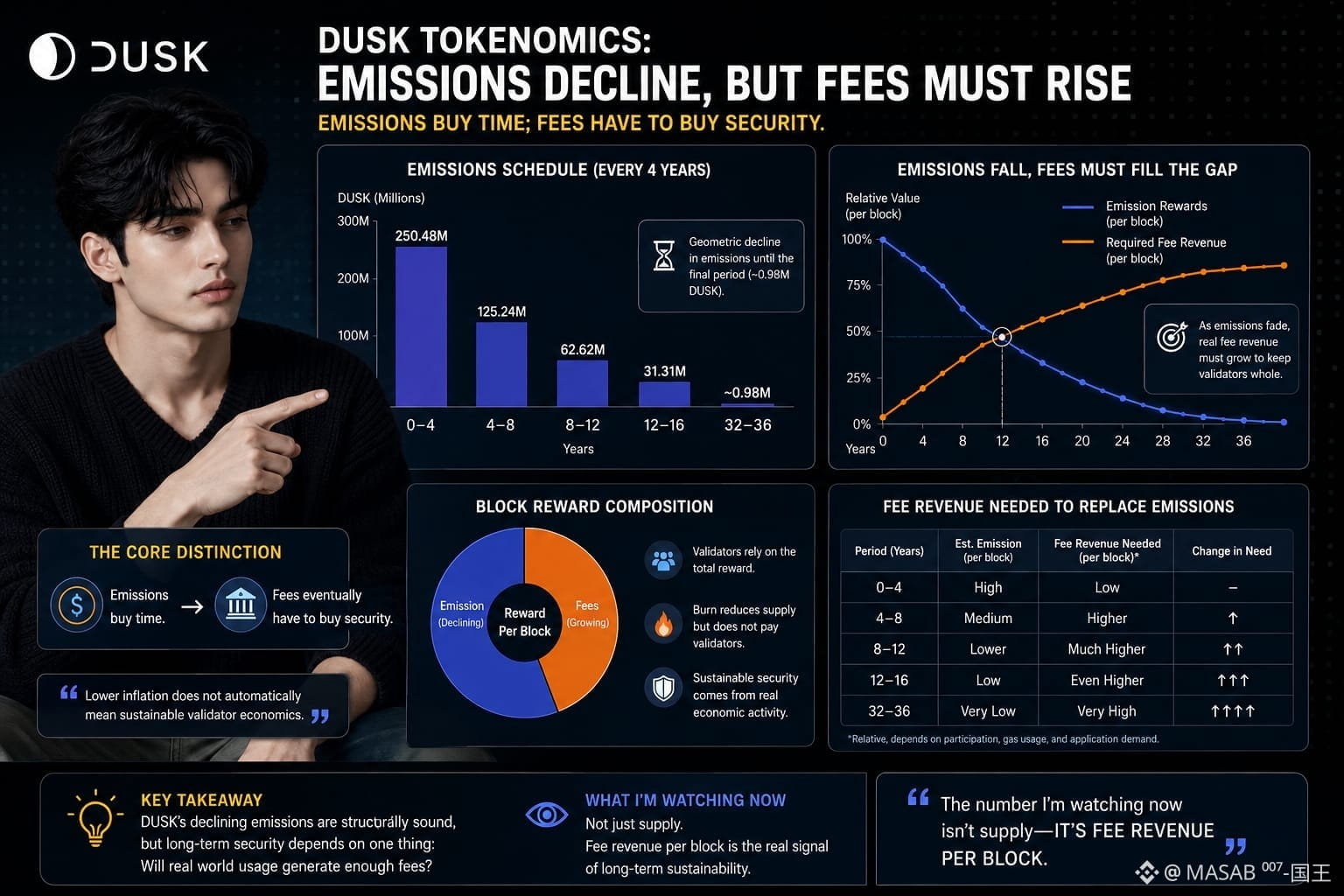
بينما كنت أراجع الليلة مستندات اقتصاديات توكنات Dusk، ظل رقم واحد يجذبني للعودة إليه: تم جدولة 250.48M DUSK للأربع سنوات الأولى، ثم 125.24M، و62.62M، و31.31M، حتى يصل إجمالي فترة الأربع سنوات الأخيرة إلى نحو 0.98M.
التفسير العنواني سهل: الانبعاثات تنخفض......والتضخم يهبط، والندرة تتحسن.
لكن هذه ليست مسألة الأمان.
مكافآت بلوك Dusk تجمع بين DUSK المنبعث حديثًا ورسوم المعاملات.....لذلك مع تلاشي الإصدار بشكلٍ هندسي، يحتاج الشبكة بشكل متزايد إلى نشاط حقيقي يدفع الرسوم لتعويض المنَح التي يفقدها الموثِّقون.
الانبعاثات تشتري وقتًا؛ الرسوم في النهاية يتعين عليها شراء الأمان.
تلك التفرقة مهمة لأن انخفاض التضخم لا يعني تلقائيًا اقتصاديات مزوّدي التحقق المستدامة. يصبح حجم حوض المكافآت الأصغر مريحًا فقط إذا نما نشاط الغاز والتسوية والتطبيق بما يكفي للتعويض. كما تُعقّد عملية الحرق الصورة أكثر: حرق المكافآت غير الموزعة قد يقلل العرض، لكنه لا يمول المشغّلين الذين يؤمّنون التوافق.
أنا لا أقول إن جدول Dusk معيب. انخفاض الإعانة مفهوم بنيويًا. لكنني لا أستطيع بعد أن أحدد ما إذا كان الاستخدام المؤسسي المستقبلي سيولد رسومًا كافية عندما تصبح الانبعاثات ضئيلة جدًا.
تبويب اقتصاديات التوكنات ما زال مفتوحًا. الرقم الذي أراقبه الآن ليس العرض—بل إيراد الرسوم لكل بلوك.
@Dusk_Foundation $DUSK #dusk
{future}(DUSKUSDT)
بينما كنت أراجع الليلة مستندات اقتصاديات توكنات Dusk، ظل رقم واحد يجذبني للعودة إليه: تم جدولة 250.48M DUSK للأربع سنوات الأولى، ثم 125.24M، و62.62M، و31.31M، حتى يصل إجمالي فترة الأربع سنوات الأخيرة إلى نحو 0.98M.
التفسير العنواني سهل: الانبعاثات تنخفض......والتضخم يهبط، والندرة تتحسن.
لكن هذه ليست مسألة الأمان.
مكافآت بلوك Dusk تجمع بين DUSK المنبعث حديثًا ورسوم المعاملات.....لذلك مع تلاشي الإصدار بشكلٍ هندسي، يحتاج الشبكة بشكل متزايد إلى نشاط حقيقي يدفع الرسوم لتعويض المنَح التي يفقدها الموثِّقون.
الانبعاثات تشتري وقتًا؛ الرسوم في النهاية يتعين عليها شراء الأمان.
تلك التفرقة مهمة لأن انخفاض التضخم لا يعني تلقائيًا اقتصاديات مزوّدي التحقق المستدامة. يصبح حجم حوض المكافآت الأصغر مريحًا فقط إذا نما نشاط الغاز والتسوية والتطبيق بما يكفي للتعويض. كما تُعقّد عملية الحرق الصورة أكثر: حرق المكافآت غير الموزعة قد يقلل العرض، لكنه لا يمول المشغّلين الذين يؤمّنون التوافق.
أنا لا أقول إن جدول Dusk معيب. انخفاض الإعانة مفهوم بنيويًا. لكنني لا أستطيع بعد أن أحدد ما إذا كان الاستخدام المؤسسي المستقبلي سيولد رسومًا كافية عندما تصبح الانبعاثات ضئيلة جدًا.
تبويب اقتصاديات التوكنات ما زال مفتوحًا. الرقم الذي أراقبه الآن ليس العرض—بل إيراد الرسوم لكل بلوك.
@Dusk $DUSK #dusk
التفسير العنواني سهل: الانبعاثات تنخفض......والتضخم يهبط، والندرة تتحسن.
لكن هذه ليست مسألة الأمان.
مكافآت بلوك Dusk تجمع بين DUSK المنبعث حديثًا ورسوم المعاملات.....لذلك مع تلاشي الإصدار بشكلٍ هندسي، يحتاج الشبكة بشكل متزايد إلى نشاط حقيقي يدفع الرسوم لتعويض المنَح التي يفقدها الموثِّقون.
الانبعاثات تشتري وقتًا؛ الرسوم في النهاية يتعين عليها شراء الأمان.
تلك التفرقة مهمة لأن انخفاض التضخم لا يعني تلقائيًا اقتصاديات مزوّدي التحقق المستدامة. يصبح حجم حوض المكافآت الأصغر مريحًا فقط إذا نما نشاط الغاز والتسوية والتطبيق بما يكفي للتعويض. كما تُعقّد عملية الحرق الصورة أكثر: حرق المكافآت غير الموزعة قد يقلل العرض، لكنه لا يمول المشغّلين الذين يؤمّنون التوافق.
أنا لا أقول إن جدول Dusk معيب. انخفاض الإعانة مفهوم بنيويًا. لكنني لا أستطيع بعد أن أحدد ما إذا كان الاستخدام المؤسسي المستقبلي سيولد رسومًا كافية عندما تصبح الانبعاثات ضئيلة جدًا.
تبويب اقتصاديات التوكنات ما زال مفتوحًا. الرقم الذي أراقبه الآن ليس العرض—بل إيراد الرسوم لكل بلوك.
@Dusk $DUSK #dusk
15
17
13.7k
·
--
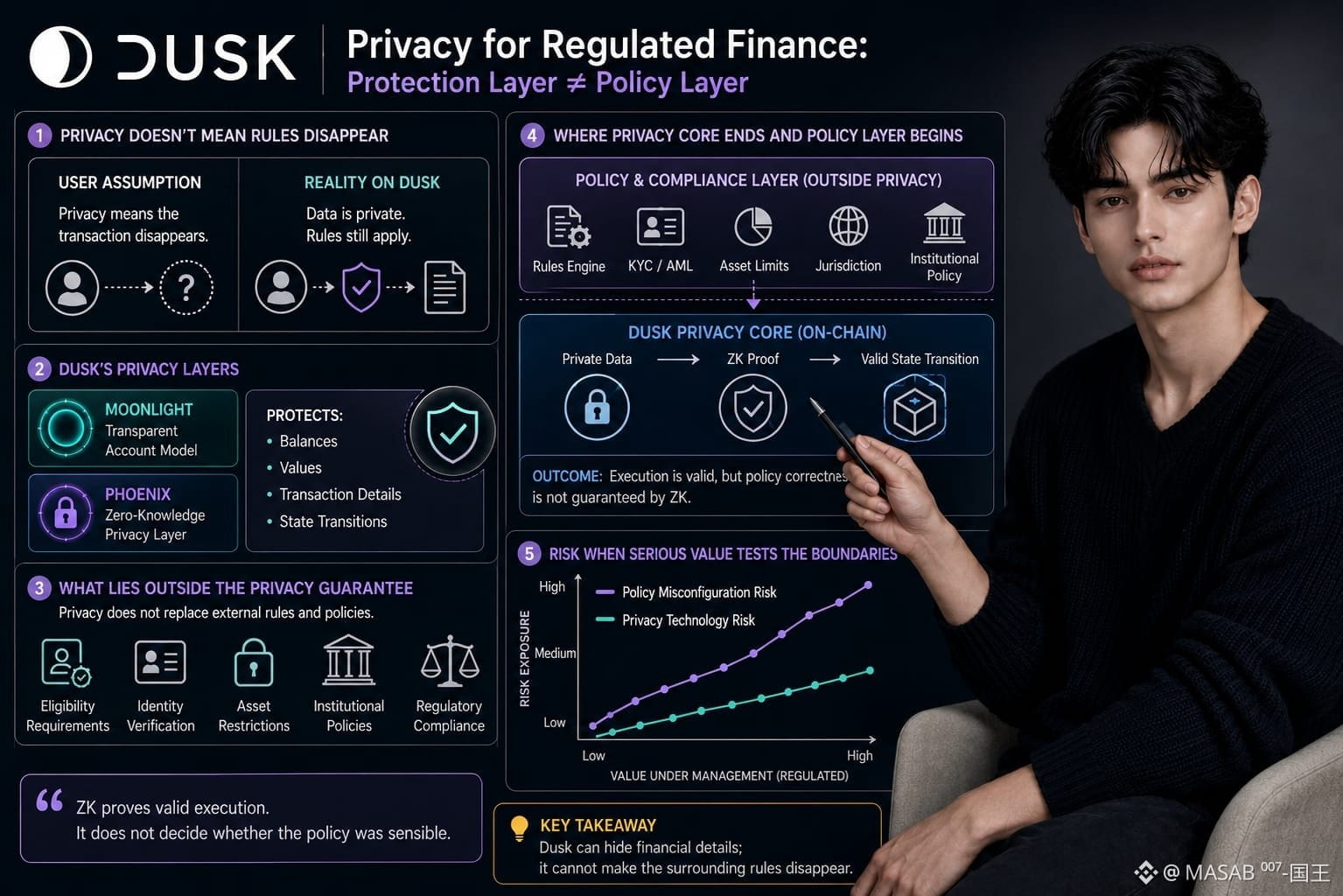
كانت التداولات هادئة اليوم، لذلك أعدت فتح توثيق Dusk.... كنت أستمر في رؤية عبارة “الخصوصية للتمويل الخاضع للتنظيم”، وكان في الأمر شيء جعلني أتفحصها عن كثب.
في البداية، افترضت أن الخصوصية تعني ببساطة أن المعاملة نفسها تختفي عن الأنظار العامة.
لكن Dusk أكثر تعقيدًا من ذلك.
يوفر Moonlight نموذج حساب شفاف، بينما يستخدم Phoenix تقنية “اللا معرفة” (Zero-Knowledge) لإبقاء قيم المعاملات والأرصدة سرية..... النقطة المهمة هي أن الخصوصية لا تُزيل تلقائيًا كل قواعد الامتثال المحيطة بالمعاملة.
يمكن لـ Dusk إخفاء التفاصيل المالية؛ لكنه لا يستطيع جعل القواعد المحيطة تختفي.
كان هذا التمييز يبدو أشبه باللفظية في البداية. لكنه ليس كذلك.
يمكن للطبقة التشفيرية حماية بيانات المعاملات السرية والتحقق من صحة انتقالات الحالة. لكن الأهلية، ومتطلبات الهوية، والقيود على الأصول، والسياسات المؤسسية قد تظل تعتمد على قواعد مُعرَّفة خارج نطاق ضمان الخصوصية هذا.
تخيل مستثمرًا مُصرحًا يحقق كل المتطلبات التقنية، لكنه يعمل ضمن سياسة مُهيأة بشكل سيئ. يمكن لإثبات ZK أن يؤكد التنفيذ الصحيح. لا يستطيع أن يقرر ما إذا كانت السياسة نفسها منطقية.
هذا ليس مشكلة خاصة بـ Dusk وحده.
السؤال الأصعب هو ماذا يحدث عندما تبدأ قيمة منظمة بشكل جاد في اختبار تلك الحدود.
لا تزال تبويب التوثيق لدي مفتوحًا. لم تعد “الخصوصية” تبدو كلمة أضيق بكثير مما كانت عليه هذا الصباح.
@Dusk_Foundation $DUSK #dusk
{future}(DUSKUSDT)
كانت التداولات هادئة اليوم، لذلك أعدت فتح توثيق Dusk.... كنت أستمر في رؤية عبارة “الخصوصية للتمويل الخاضع للتنظيم”، وكان في الأمر شيء جعلني أتفحصها عن كثب.
في البداية، افترضت أن الخصوصية تعني ببساطة أن المعاملة نفسها تختفي عن الأنظار العامة.
لكن Dusk أكثر تعقيدًا من ذلك.
يوفر Moonlight نموذج حساب شفاف، بينما يستخدم Phoenix تقنية “اللا معرفة” (Zero-Knowledge) لإبقاء قيم المعاملات والأرصدة سرية..... النقطة المهمة هي أن الخصوصية لا تُزيل تلقائيًا كل قواعد الامتثال المحيطة بالمعاملة.
يمكن لـ Dusk إخفاء التفاصيل المالية؛ لكنه لا يستطيع جعل القواعد المحيطة تختفي.
كان هذا التمييز يبدو أشبه باللفظية في البداية. لكنه ليس كذلك.
يمكن للطبقة التشفيرية حماية بيانات المعاملات السرية والتحقق من صحة انتقالات الحالة. لكن الأهلية، ومتطلبات الهوية، والقيود على الأصول، والسياسات المؤسسية قد تظل تعتمد على قواعد مُعرَّفة خارج نطاق ضمان الخصوصية هذا.
تخيل مستثمرًا مُصرحًا يحقق كل المتطلبات التقنية، لكنه يعمل ضمن سياسة مُهيأة بشكل سيئ. يمكن لإثبات ZK أن يؤكد التنفيذ الصحيح. لا يستطيع أن يقرر ما إذا كانت السياسة نفسها منطقية.
هذا ليس مشكلة خاصة بـ Dusk وحده.
السؤال الأصعب هو ماذا يحدث عندما تبدأ قيمة منظمة بشكل جاد في اختبار تلك الحدود.
لا تزال تبويب التوثيق لدي مفتوحًا. لم تعد “الخصوصية” تبدو كلمة أضيق بكثير مما كانت عليه هذا الصباح.
@Dusk $DUSK #dusk
في البداية، افترضت أن الخصوصية تعني ببساطة أن المعاملة نفسها تختفي عن الأنظار العامة.
لكن Dusk أكثر تعقيدًا من ذلك.
يوفر Moonlight نموذج حساب شفاف، بينما يستخدم Phoenix تقنية “اللا معرفة” (Zero-Knowledge) لإبقاء قيم المعاملات والأرصدة سرية..... النقطة المهمة هي أن الخصوصية لا تُزيل تلقائيًا كل قواعد الامتثال المحيطة بالمعاملة.
يمكن لـ Dusk إخفاء التفاصيل المالية؛ لكنه لا يستطيع جعل القواعد المحيطة تختفي.
كان هذا التمييز يبدو أشبه باللفظية في البداية. لكنه ليس كذلك.
يمكن للطبقة التشفيرية حماية بيانات المعاملات السرية والتحقق من صحة انتقالات الحالة. لكن الأهلية، ومتطلبات الهوية، والقيود على الأصول، والسياسات المؤسسية قد تظل تعتمد على قواعد مُعرَّفة خارج نطاق ضمان الخصوصية هذا.
تخيل مستثمرًا مُصرحًا يحقق كل المتطلبات التقنية، لكنه يعمل ضمن سياسة مُهيأة بشكل سيئ. يمكن لإثبات ZK أن يؤكد التنفيذ الصحيح. لا يستطيع أن يقرر ما إذا كانت السياسة نفسها منطقية.
هذا ليس مشكلة خاصة بـ Dusk وحده.
السؤال الأصعب هو ماذا يحدث عندما تبدأ قيمة منظمة بشكل جاد في اختبار تلك الحدود.
لا تزال تبويب التوثيق لدي مفتوحًا. لم تعد “الخصوصية” تبدو كلمة أضيق بكثير مما كانت عليه هذا الصباح.
@Dusk $DUSK #dusk
26
28
13.1k
·
--
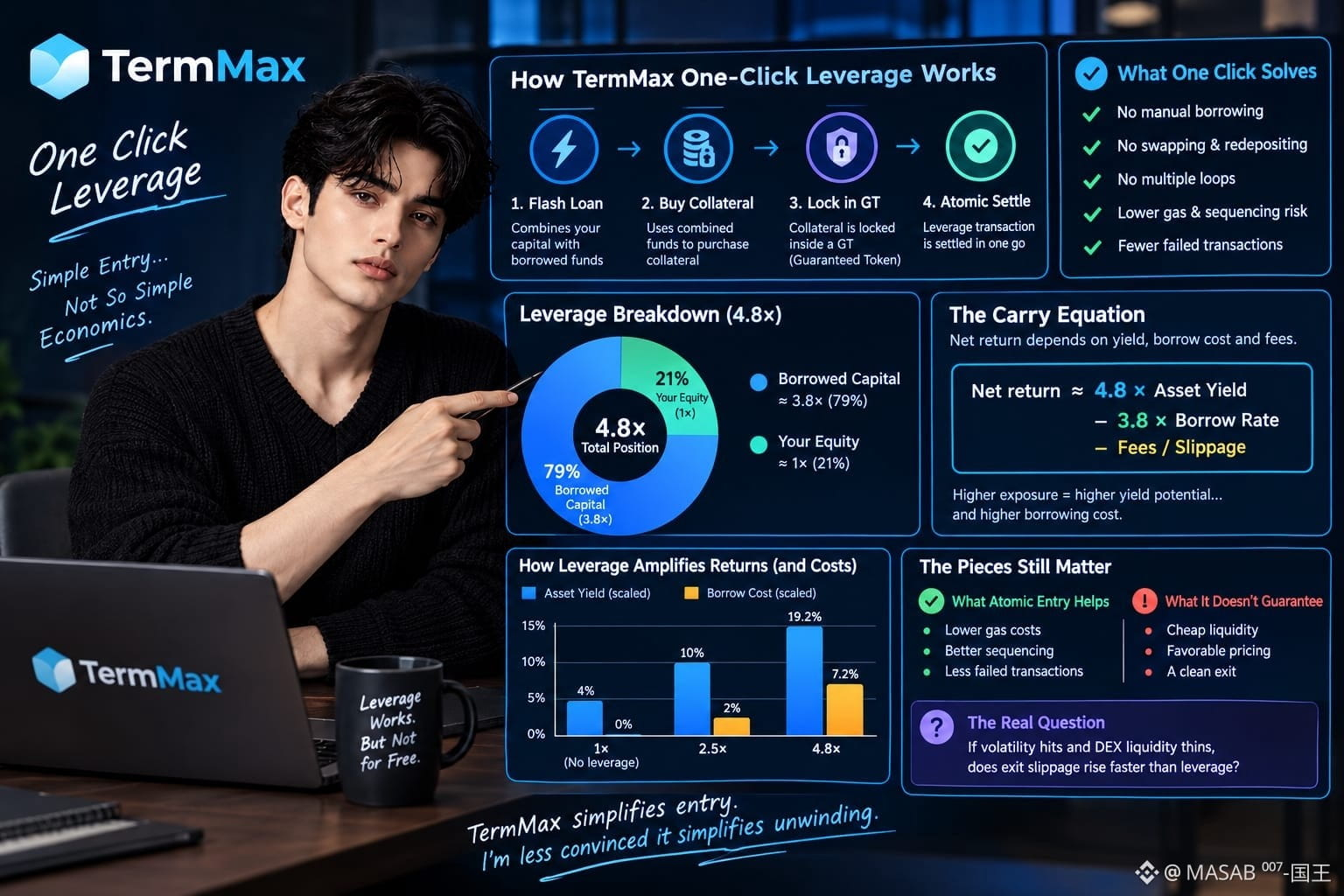
كنت أراجع أسواق الرافعة المالية في TermMax الليلة، وما زلت أعود إلى عبارة “الرافعة بضغطة واحدة.” يبدو الأمر وكأن المشكلة الصعبة قد أزيلت.
لذا جلست بالفعل مع التدفق.
يستخدم TermMax قرضًا سريعًا (flash loan) لدمج رأسمالي مع أموال مقترضة، وشراء ضمانات (collateral)، وقفلها داخل GT، وتسوية معاملة الرافعة بشكل ذري (atomically). هذا أنظف من الاقتراض يدويًا، ثم التبادل (swap)، ثم إعادة الإيداع، ثم تكرار العملية عدة مرات.
لكن بساطة التنفيذ ليست بساطة اقتصادية.
عند رافعة 4.8×، يتم اقتراض نحو 3.8× من حقوق ملكيتي (equity). حوالي 79% من إجمالي المركز ممول بالديون.... إذا كنت أُحوّل رافعة على أصل مُولِّد للعائد أو Principal Token، فإن عائد الأصل يتناسب مع التعرض—لكن تكلفة الاقتراض الثابتة تتناسب أيضًا.
معادلة تقريبية للحمل (carry) هي:
العائد الصافي ≈ 4.8 × عائد الأصل − 3.8 × معدل الاقتراض − الرسوم/الانزلاق.
وهنا يتوقف “الضغط الواحد” عن المساعدة.
قد تقلل الدخولات الذرية من الغاز (gas)، ومن مخاطر ترتيب التنفيذ (sequencing)، ومن فشل المعاملات.... لكنها لا يمكنها ضمان سيولة رخيصة، أو تسعيرًا مواتيًا، أو خروجًا نظيفًا بالقدر نفسه. يحصل المقترضون على تنفيذ مبسط؛ وما زال المُقرضون يوفّرون السيولة الكامنة ضمن النطاق.
إذا ضربت التقلبات واصبحت سيولة DEX أرفع، هل ترتفع تكلفة الانزلاق عند الخروج أسرع من الرافعة؟
يُبسّط TermMax الدخول. لست مقتنعًا بنفس القدر أنه يُبسّط فك الرافعة (unwinding).
#termmax @termmax
كنت أراجع أسواق الرافعة المالية في TermMax الليلة، وما زلت أعود إلى عبارة “الرافعة بضغطة واحدة.” يبدو الأمر وكأن المشكلة الصعبة قد أزيلت.
لذا جلست بالفعل مع التدفق.
يستخدم TermMax قرضًا سريعًا (flash loan) لدمج رأسمالي مع أموال مقترضة، وشراء ضمانات (collateral)، وقفلها داخل GT، وتسوية معاملة الرافعة بشكل ذري (atomically). هذا أنظف من الاقتراض يدويًا، ثم التبادل (swap)، ثم إعادة الإيداع، ثم تكرار العملية عدة مرات.
لكن بساطة التنفيذ ليست بساطة اقتصادية.
عند رافعة 4.8×، يتم اقتراض نحو 3.8× من حقوق ملكيتي (equity). حوالي 79% من إجمالي المركز ممول بالديون.... إذا كنت أُحوّل رافعة على أصل مُولِّد للعائد أو Principal Token، فإن عائد الأصل يتناسب مع التعرض—لكن تكلفة الاقتراض الثابتة تتناسب أيضًا.
معادلة تقريبية للحمل (carry) هي:
العائد الصافي ≈ 4.8 × عائد الأصل − 3.8 × معدل الاقتراض − الرسوم/الانزلاق.
وهنا يتوقف “الضغط الواحد” عن المساعدة.
قد تقلل الدخولات الذرية من الغاز (gas)، ومن مخاطر ترتيب التنفيذ (sequencing)، ومن فشل المعاملات.... لكنها لا يمكنها ضمان سيولة رخيصة، أو تسعيرًا مواتيًا، أو خروجًا نظيفًا بالقدر نفسه. يحصل المقترضون على تنفيذ مبسط؛ وما زال المُقرضون يوفّرون السيولة الكامنة ضمن النطاق.
إذا ضربت التقلبات واصبحت سيولة DEX أرفع، هل ترتفع تكلفة الانزلاق عند الخروج أسرع من الرافعة؟
يُبسّط TermMax الدخول. لست مقتنعًا بنفس القدر أنه يُبسّط فك الرافعة (unwinding).
#termmax @TermMax
لذا جلست بالفعل مع التدفق.
يستخدم TermMax قرضًا سريعًا (flash loan) لدمج رأسمالي مع أموال مقترضة، وشراء ضمانات (collateral)، وقفلها داخل GT، وتسوية معاملة الرافعة بشكل ذري (atomically). هذا أنظف من الاقتراض يدويًا، ثم التبادل (swap)، ثم إعادة الإيداع، ثم تكرار العملية عدة مرات.
لكن بساطة التنفيذ ليست بساطة اقتصادية.
عند رافعة 4.8×، يتم اقتراض نحو 3.8× من حقوق ملكيتي (equity). حوالي 79% من إجمالي المركز ممول بالديون.... إذا كنت أُحوّل رافعة على أصل مُولِّد للعائد أو Principal Token، فإن عائد الأصل يتناسب مع التعرض—لكن تكلفة الاقتراض الثابتة تتناسب أيضًا.
معادلة تقريبية للحمل (carry) هي:
العائد الصافي ≈ 4.8 × عائد الأصل − 3.8 × معدل الاقتراض − الرسوم/الانزلاق.
وهنا يتوقف “الضغط الواحد” عن المساعدة.
قد تقلل الدخولات الذرية من الغاز (gas)، ومن مخاطر ترتيب التنفيذ (sequencing)، ومن فشل المعاملات.... لكنها لا يمكنها ضمان سيولة رخيصة، أو تسعيرًا مواتيًا، أو خروجًا نظيفًا بالقدر نفسه. يحصل المقترضون على تنفيذ مبسط؛ وما زال المُقرضون يوفّرون السيولة الكامنة ضمن النطاق.
إذا ضربت التقلبات واصبحت سيولة DEX أرفع، هل ترتفع تكلفة الانزلاق عند الخروج أسرع من الرافعة؟
يُبسّط TermMax الدخول. لست مقتنعًا بنفس القدر أنه يُبسّط فك الرافعة (unwinding).
#termmax @TermMax
8
11
11.6k
·
--
صحيح جزئيًا
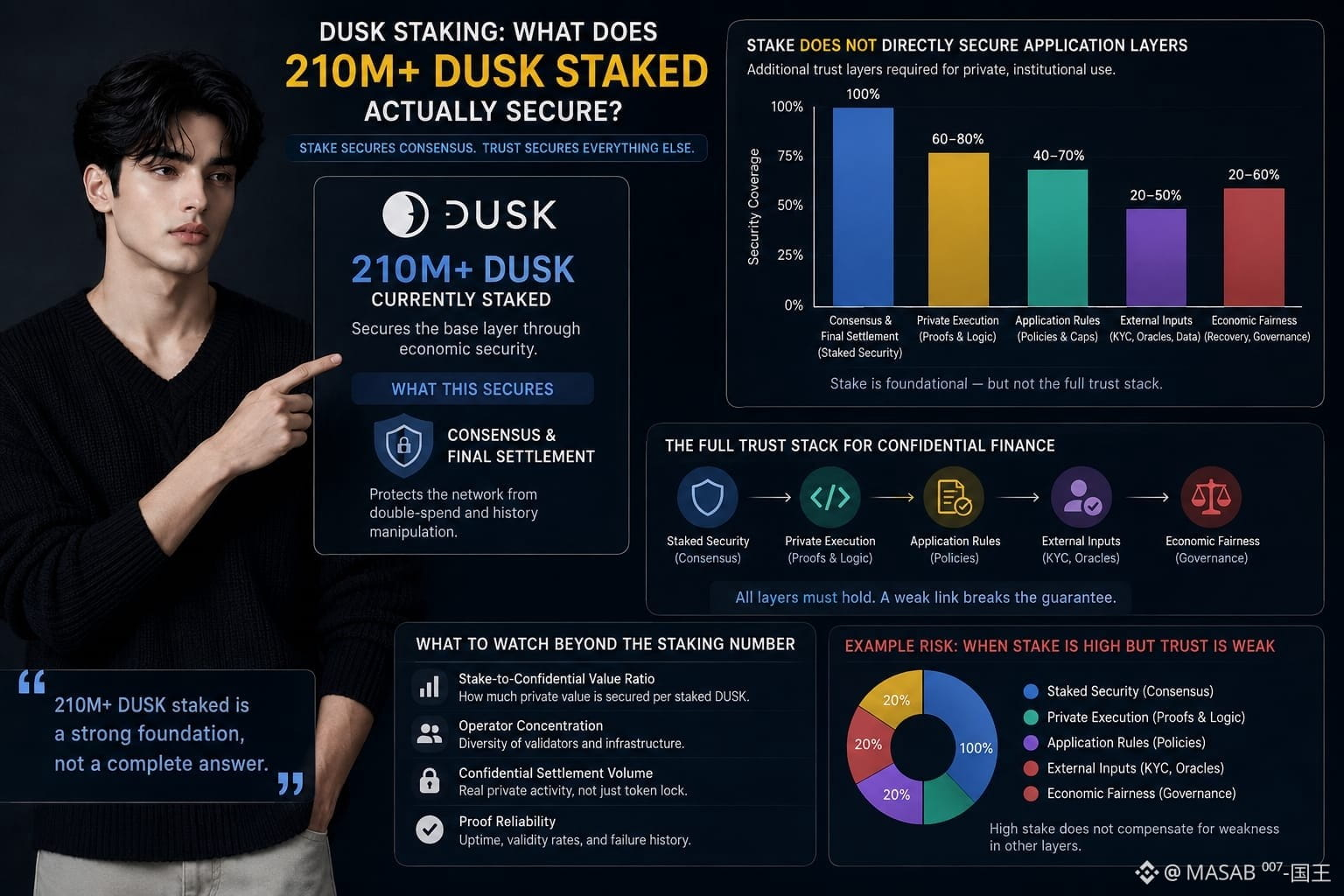
كنت أراجع أرقام الـ staking الخاصة بـ Dusk في وقت كان السوق فيه هادئًا، وبدا أن 210 مليون+ DUSK المرهونة تطمئن. ثم سألت: ماذا تؤمّن هذه الأرقام فعليًا؟
التفسير البديهي بسيط: كلما زادت كمية الرهن، كانت التطبيقات المالية السرّية أكثر أمانًا. لكن الضمان أضيق من ذلك. الرهن النشط يحمي الإجماع والتسوية النهائية على طبقة الأساس. أما العقد الخاص فلا يزال يعتمد على صحة منطق الإثبات، وقواعد التطبيق السليمة، وللأصول الخاضعة للتنظيم على مدخلات خارجية موثوقة مثل بيانات الأهلية.
هذه النقطة تهم.
يمكن لـ Dusk أن يجعل الحالة الخاصة قابلة للتحقق دون نشر الوضع الأساسي. هذا مفيد حقًا. لكن الإثبات الصالح لا يمكنه أن يخبرنا إن كان مزوّد KYC قد قدّم بيانات سيئة، أو إن كانت السياسة قد ترمّز حدّ ملكية غير صحيح، أو إن كان إجراء الاسترداد المصرّح به عادلاً من الناحية الاقتصادية.
لذلك، فإن 210 مليون مرهونة تقيس طبقة أمان واحدة، لا كامل مكدّس الثقة المؤسسية.
ظننت في البداية أن الأمر تكلّف لغوي. لم يكن كذلك. إذا كانت التطبيقات الخاصة تؤمّن قيمة حقيقية في العالم الواقعي، فأنا أفضل أن أراقب الرهن مقارنةً بقيمة التسوية السرّية، وتركيز المشغّلين، وموثوقية الإثبات.
تبويب الـ staking ما زال مفتوحًا. الرقم الآن لا يبدو إجابة بقدر ما يبدو بداية لواحدة.
@Dusk_Foundation $DUSK #dusk
{future}(DUSKUSDT)
كنت أراجع أرقام الـ staking الخاصة بـ Dusk في وقت كان السوق فيه هادئًا، وبدا أن 210 مليون+ DUSK المرهونة تطمئن. ثم سألت: ماذا تؤمّن هذه الأرقام فعليًا؟
التفسير البديهي بسيط: كلما زادت كمية الرهن، كانت التطبيقات المالية السرّية أكثر أمانًا. لكن الضمان أضيق من ذلك. الرهن النشط يحمي الإجماع والتسوية النهائية على طبقة الأساس. أما العقد الخاص فلا يزال يعتمد على صحة منطق الإثبات، وقواعد التطبيق السليمة، وللأصول الخاضعة للتنظيم على مدخلات خارجية موثوقة مثل بيانات الأهلية.
هذه النقطة تهم.
يمكن لـ Dusk أن يجعل الحالة الخاصة قابلة للتحقق دون نشر الوضع الأساسي. هذا مفيد حقًا. لكن الإثبات الصالح لا يمكنه أن يخبرنا إن كان مزوّد KYC قد قدّم بيانات سيئة، أو إن كانت السياسة قد ترمّز حدّ ملكية غير صحيح، أو إن كان إجراء الاسترداد المصرّح به عادلاً من الناحية الاقتصادية.
لذلك، فإن 210 مليون مرهونة تقيس طبقة أمان واحدة، لا كامل مكدّس الثقة المؤسسية.
ظننت في البداية أن الأمر تكلّف لغوي. لم يكن كذلك. إذا كانت التطبيقات الخاصة تؤمّن قيمة حقيقية في العالم الواقعي، فأنا أفضل أن أراقب الرهن مقارنةً بقيمة التسوية السرّية، وتركيز المشغّلين، وموثوقية الإثبات.
تبويب الـ staking ما زال مفتوحًا. الرقم الآن لا يبدو إجابة بقدر ما يبدو بداية لواحدة.
@Dusk $DUSK #dusk
التفسير البديهي بسيط: كلما زادت كمية الرهن، كانت التطبيقات المالية السرّية أكثر أمانًا. لكن الضمان أضيق من ذلك. الرهن النشط يحمي الإجماع والتسوية النهائية على طبقة الأساس. أما العقد الخاص فلا يزال يعتمد على صحة منطق الإثبات، وقواعد التطبيق السليمة، وللأصول الخاضعة للتنظيم على مدخلات خارجية موثوقة مثل بيانات الأهلية.
هذه النقطة تهم.
يمكن لـ Dusk أن يجعل الحالة الخاصة قابلة للتحقق دون نشر الوضع الأساسي. هذا مفيد حقًا. لكن الإثبات الصالح لا يمكنه أن يخبرنا إن كان مزوّد KYC قد قدّم بيانات سيئة، أو إن كانت السياسة قد ترمّز حدّ ملكية غير صحيح، أو إن كان إجراء الاسترداد المصرّح به عادلاً من الناحية الاقتصادية.
لذلك، فإن 210 مليون مرهونة تقيس طبقة أمان واحدة، لا كامل مكدّس الثقة المؤسسية.
ظننت في البداية أن الأمر تكلّف لغوي. لم يكن كذلك. إذا كانت التطبيقات الخاصة تؤمّن قيمة حقيقية في العالم الواقعي، فأنا أفضل أن أراقب الرهن مقارنةً بقيمة التسوية السرّية، وتركيز المشغّلين، وموثوقية الإثبات.
تبويب الـ staking ما زال مفتوحًا. الرقم الآن لا يبدو إجابة بقدر ما يبدو بداية لواحدة.
@Dusk $DUSK #dusk
30
22
32k
·
--
تمّ التحقق
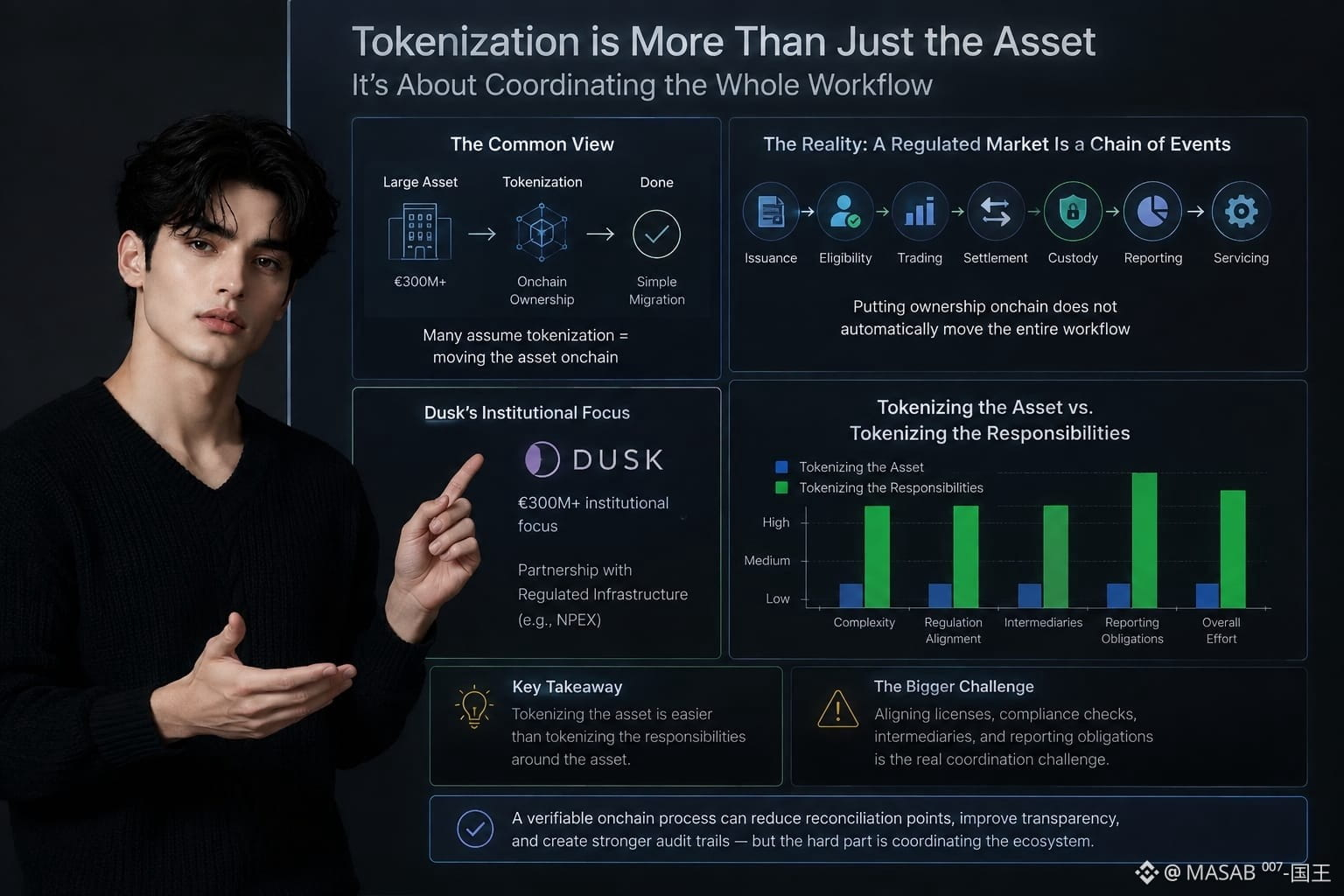
في الليلة الماضية كنت أتصفح مناقشات حول الترميز (tokenization) وأجد دائمًا نفس الفكرة: نقل الأصول الكبيرة على السلسلة (onchain) هو في الأساس مشكلة هجرة تقنية. بدا ذلك معقولًا، لكن عندما تعمقت في تركيز شركة Dusk المؤسسي الذي يتجاوز 300 مليون يورو، لم يكن هناك شيء يتوافق.
إن الأصل نفسه مجرد جزء واحد. فالسوق المنظمة هي سلسلة من الأحداث: الإصدار، والأهلية، والتداول، والتسوية، والحفظ، والإبلاغ، والخدمات. وضع سجلات الملكية على السلسلة لا يؤدي تلقائيًا إلى نقل سير العمل بالكامل.
قد يفترض القارئ العادي أن الترميز يعني استبدال النظام القديم بمعاملة على البلوكتشين. لكن ارتباط Dusk بالبنية التحتية المُنظمة مثل NPEX يبرز تحديًا مختلفًا: تنسيق الوظائف المحيطة بالأصل.
التمييز الذي أعود إليه دائمًا هو هذا:
“ترميز الأصل أسهل من ترميز المسؤوليات المحيطة بالأصل.”
هذا لا يقلل من قيمة Dusk. يمكن لعملية قابلة للتحقق على السلسلة أن تقلل نقاط المطابقة (reconciliation)، وتعزز الشفافية، وتخلق مسارات تدقيق (audit trails) أقوى.
لكنني تساءلت إن كانت الصعوبة الحقيقية تكمن فعلًا في طبقة البلوكتشين. ربما التحدي الأكبر هو مواءمة التراخيص، وفحوصات الامتثال، والوسطاء، والالتزامات المتعلقة بالإبلاغ.
لا أعتقد أن السوق يقيس مشكلة التنسيق هذه بالكامل بعد. ما زالت تبويب الوثائق مفتوحًا على شاشتي، والآن أنظر إلى “الأصول على السلسلة” بطريقة مختلفة قليلًا.
@Dusk_Foundation $DUSK #dusk
{future}(DUSKUSDT)
في الليلة الماضية كنت أتصفح مناقشات حول الترميز (tokenization) وأجد دائمًا نفس الفكرة: نقل الأصول الكبيرة على السلسلة (onchain) هو في الأساس مشكلة هجرة تقنية. بدا ذلك معقولًا، لكن عندما تعمقت في تركيز شركة Dusk المؤسسي الذي يتجاوز 300 مليون يورو، لم يكن هناك شيء يتوافق.
إن الأصل نفسه مجرد جزء واحد. فالسوق المنظمة هي سلسلة من الأحداث: الإصدار، والأهلية، والتداول، والتسوية، والحفظ، والإبلاغ، والخدمات. وضع سجلات الملكية على السلسلة لا يؤدي تلقائيًا إلى نقل سير العمل بالكامل.
قد يفترض القارئ العادي أن الترميز يعني استبدال النظام القديم بمعاملة على البلوكتشين. لكن ارتباط Dusk بالبنية التحتية المُنظمة مثل NPEX يبرز تحديًا مختلفًا: تنسيق الوظائف المحيطة بالأصل.
التمييز الذي أعود إليه دائمًا هو هذا:
“ترميز الأصل أسهل من ترميز المسؤوليات المحيطة بالأصل.”
هذا لا يقلل من قيمة Dusk. يمكن لعملية قابلة للتحقق على السلسلة أن تقلل نقاط المطابقة (reconciliation)، وتعزز الشفافية، وتخلق مسارات تدقيق (audit trails) أقوى.
لكنني تساءلت إن كانت الصعوبة الحقيقية تكمن فعلًا في طبقة البلوكتشين. ربما التحدي الأكبر هو مواءمة التراخيص، وفحوصات الامتثال، والوسطاء، والالتزامات المتعلقة بالإبلاغ.
لا أعتقد أن السوق يقيس مشكلة التنسيق هذه بالكامل بعد. ما زالت تبويب الوثائق مفتوحًا على شاشتي، والآن أنظر إلى “الأصول على السلسلة” بطريقة مختلفة قليلًا.
@Dusk $DUSK #dusk
إن الأصل نفسه مجرد جزء واحد. فالسوق المنظمة هي سلسلة من الأحداث: الإصدار، والأهلية، والتداول، والتسوية، والحفظ، والإبلاغ، والخدمات. وضع سجلات الملكية على السلسلة لا يؤدي تلقائيًا إلى نقل سير العمل بالكامل.
قد يفترض القارئ العادي أن الترميز يعني استبدال النظام القديم بمعاملة على البلوكتشين. لكن ارتباط Dusk بالبنية التحتية المُنظمة مثل NPEX يبرز تحديًا مختلفًا: تنسيق الوظائف المحيطة بالأصل.
التمييز الذي أعود إليه دائمًا هو هذا:
“ترميز الأصل أسهل من ترميز المسؤوليات المحيطة بالأصل.”
هذا لا يقلل من قيمة Dusk. يمكن لعملية قابلة للتحقق على السلسلة أن تقلل نقاط المطابقة (reconciliation)، وتعزز الشفافية، وتخلق مسارات تدقيق (audit trails) أقوى.
لكنني تساءلت إن كانت الصعوبة الحقيقية تكمن فعلًا في طبقة البلوكتشين. ربما التحدي الأكبر هو مواءمة التراخيص، وفحوصات الامتثال، والوسطاء، والالتزامات المتعلقة بالإبلاغ.
لا أعتقد أن السوق يقيس مشكلة التنسيق هذه بالكامل بعد. ما زالت تبويب الوثائق مفتوحًا على شاشتي، والآن أنظر إلى “الأصول على السلسلة” بطريقة مختلفة قليلًا.
@Dusk $DUSK #dusk
19
16
24.4k
·
--
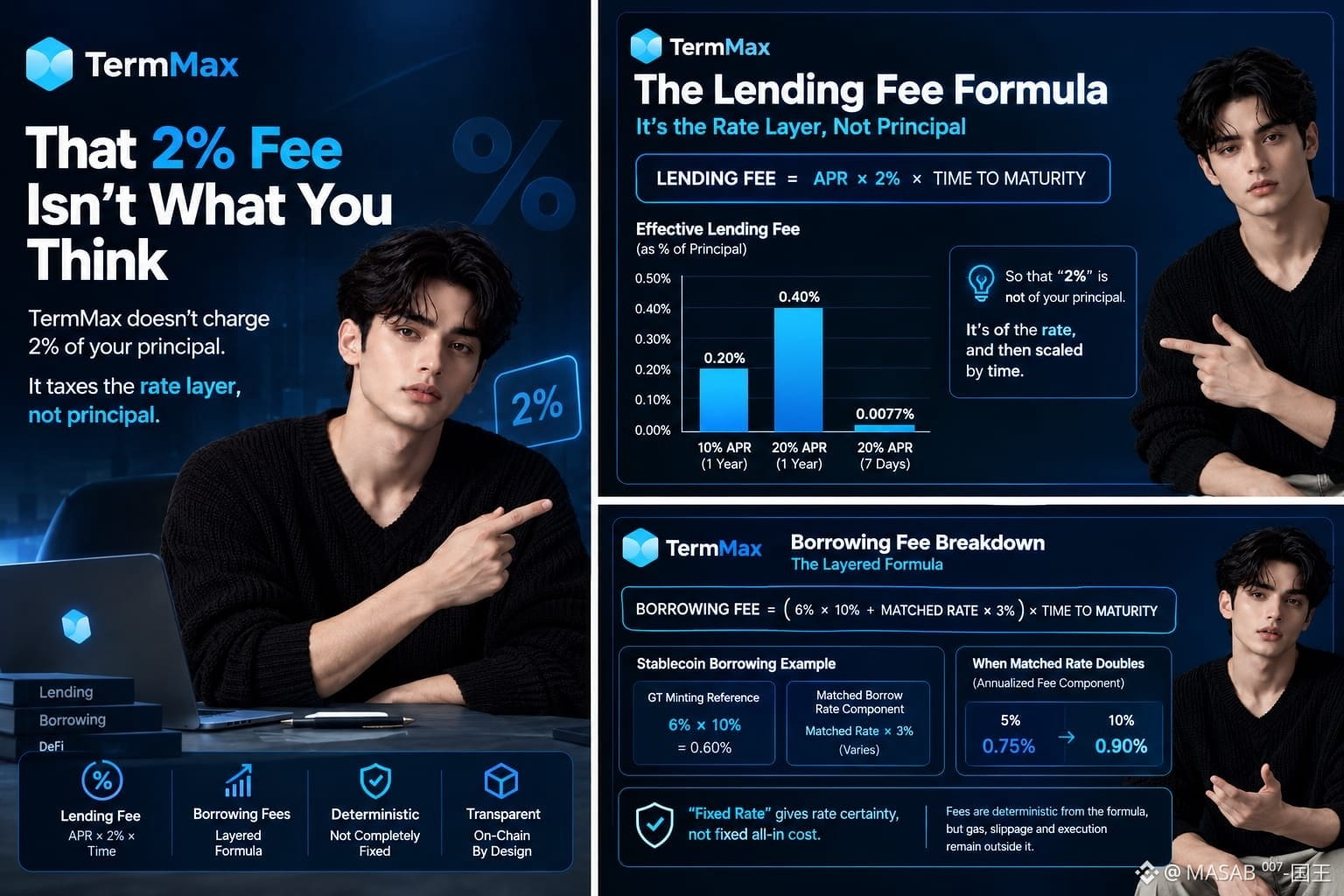
كنت أراجع صفحة رسوم TermMax بينما كان السوق هادئًا، وكان هناك سطر واحد يلفت انتباهي باستمرار: رسم إقراض بنسبة 2%. كان ردي الأول بسيطًا: 2% من المبلغ الأساسي تبدو مكلفة.
لذا جلست بالفعل مع المعادلة. هذا ليس ما تفرضه TermMax.
معدل رسم الإقراض يساوي: APR × 2% × مدة الاستحقاق. عند 10% APR لمدة سنة، تكون الرسوم الفعلية 0.20% من مبلغ الإقراض. وعند 20% APR تصبح 0.40%. بالنسبة لقرض مدته سبعة أيام عند 20% APR، لا تتجاوز حوالي 0.0077% من المبلغ الأساسي.
هذا الفرق مهم.
TermMax تفرض ضريبة على طبقة المعدل، وليس على المبلغ الأساسي بنسبة النشرة الرئيسية.
الاقتراض أكثر طبقات. بالنسبة للـ stablecoins، تجمع الصيغة الموثّقة بين معدل مرجعي لإصدار GT بنسبة 6% × 10% مع معدل الاقتراض المطابق × 3%، ثم تُقسِّم/تُسعِّر كليهما حسب مدة الاستحقاق. إذا تضاعف المعدل المطابق من 5% إلى 10%، ترتفع مكوّن الرسوم السنوية من 0.75% إلى 0.90% قبل إجراء ضبط/تعديل الوقت.
لذا فإن عبارة “السعر الثابت” تعطي يقينًا بشأن المعدل، وليس تكلفة إجمالية ثابتة. الرسوم محسوبة بشكل حتمي من المعادلة، لكن الغاز وسعر الانزلاق والتنفيذ يظلون خارجها.
العلامة تبقى مفتوحة. الآن تبدو تلك الـ 2% مختلفة تمامًا.
#termmax @termmax
كنت أراجع صفحة رسوم TermMax بينما كان السوق هادئًا، وكان هناك سطر واحد يلفت انتباهي باستمرار: رسم إقراض بنسبة 2%. كان ردي الأول بسيطًا: 2% من المبلغ الأساسي تبدو مكلفة.
لذا جلست بالفعل مع المعادلة. هذا ليس ما تفرضه TermMax.
معدل رسم الإقراض يساوي: APR × 2% × مدة الاستحقاق. عند 10% APR لمدة سنة، تكون الرسوم الفعلية 0.20% من مبلغ الإقراض. وعند 20% APR تصبح 0.40%. بالنسبة لقرض مدته سبعة أيام عند 20% APR، لا تتجاوز حوالي 0.0077% من المبلغ الأساسي.
هذا الفرق مهم.
TermMax تفرض ضريبة على طبقة المعدل، وليس على المبلغ الأساسي بنسبة النشرة الرئيسية.
الاقتراض أكثر طبقات. بالنسبة للـ stablecoins، تجمع الصيغة الموثّقة بين معدل مرجعي لإصدار GT بنسبة 6% × 10% مع معدل الاقتراض المطابق × 3%، ثم تُقسِّم/تُسعِّر كليهما حسب مدة الاستحقاق. إذا تضاعف المعدل المطابق من 5% إلى 10%، ترتفع مكوّن الرسوم السنوية من 0.75% إلى 0.90% قبل إجراء ضبط/تعديل الوقت.
لذا فإن عبارة “السعر الثابت” تعطي يقينًا بشأن المعدل، وليس تكلفة إجمالية ثابتة. الرسوم محسوبة بشكل حتمي من المعادلة، لكن الغاز وسعر الانزلاق والتنفيذ يظلون خارجها.
العلامة تبقى مفتوحة. الآن تبدو تلك الـ 2% مختلفة تمامًا.
#termmax @TermMax
لذا جلست بالفعل مع المعادلة. هذا ليس ما تفرضه TermMax.
معدل رسم الإقراض يساوي: APR × 2% × مدة الاستحقاق. عند 10% APR لمدة سنة، تكون الرسوم الفعلية 0.20% من مبلغ الإقراض. وعند 20% APR تصبح 0.40%. بالنسبة لقرض مدته سبعة أيام عند 20% APR، لا تتجاوز حوالي 0.0077% من المبلغ الأساسي.
هذا الفرق مهم.
TermMax تفرض ضريبة على طبقة المعدل، وليس على المبلغ الأساسي بنسبة النشرة الرئيسية.
الاقتراض أكثر طبقات. بالنسبة للـ stablecoins، تجمع الصيغة الموثّقة بين معدل مرجعي لإصدار GT بنسبة 6% × 10% مع معدل الاقتراض المطابق × 3%، ثم تُقسِّم/تُسعِّر كليهما حسب مدة الاستحقاق. إذا تضاعف المعدل المطابق من 5% إلى 10%، ترتفع مكوّن الرسوم السنوية من 0.75% إلى 0.90% قبل إجراء ضبط/تعديل الوقت.
لذا فإن عبارة “السعر الثابت” تعطي يقينًا بشأن المعدل، وليس تكلفة إجمالية ثابتة. الرسوم محسوبة بشكل حتمي من المعادلة، لكن الغاز وسعر الانزلاق والتنفيذ يظلون خارجها.
العلامة تبقى مفتوحة. الآن تبدو تلك الـ 2% مختلفة تمامًا.
#termmax @TermMax
1
8
9.4k
·
--
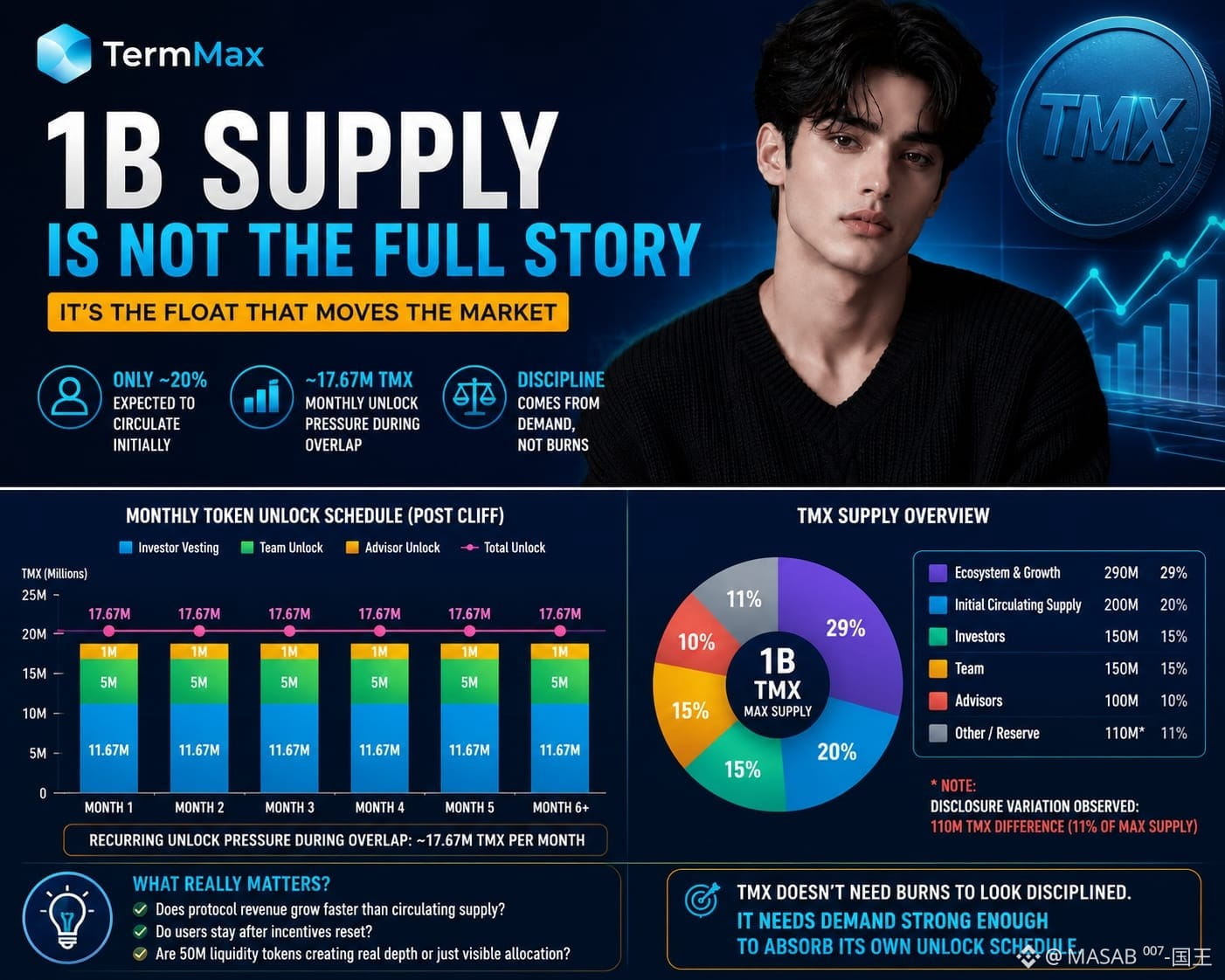
لقد تجاهلت تمامًا العرض الثابت البالغ 1B الخاص بـ TMX لحظة أن لاحظت أنه يُتوقَّع في البداية أن يتداول فقط حوالي 20%.
إجمالي العرض الأقصى هو الرقم “النظيف”. العرض المتداول هو البُعد “السلوكي”.
ما يهم بعد ذلك هو مدى سرعة توسّع ذلك العرض المتداول. يمكن لجدولة استحقاق المستثمرين وحدها أن تضيف تقريبًا 11.67M TMX شهريًا بعد فترة الاستحقاق (cliff). إضافةً إلى ذلك، تُضاف 5M من فتحات الفريق، و1M من المستشارين. خلال فترة التداخل، فهذا يساوي حوالي 17.67M TMX من تدفق شهري متكرر.
هذا ليس تلقائيًا موقفًا هبوطيًا. الاستحقاق أمر طبيعي. وتوزيع النظام البيئي طبيعي أيضًا.
لكن التوزيع ليس هو التداول، وخصص 29% للنظام البيئي يخبرني بأقل مما يخبرني به مدى كفاءة هذه الرموز في خلق مستخدمين دائمين وحجم تداول مطابق وعمق سيولة.
وهنا أعتقد أن TermMax يُختبَر.
هل تنمو إيرادات البروتوكول أسرع من العرض المتداول؟ وهل يبقى المستخدمون الأكثر اعتمادًا على الحوافز بعد إعادة ضبط المواسم؟ وهل تؤدي 50M من رموز السيولة إلى عمق سوق حقيقي، أم أنها في الغالب تخصيص ظاهر؟
كما أواصل متابعة تغييرات المستندات. فرق إفصاح قدره 110M-TMX يمثل 11% من إجمالي العرض الأقصى. هذا ليس مجرد ضوضاء تنسيق.
لا يحتاج TMX إلى عمليات حرق رموز ليبدو منضبطًا.
يحتاج فقط إلى نمو الطلب بما يكفي لامتصاص جدول إطلاقه الخاص.
#termmax @termmax
لقد تجاهلت تمامًا العرض الثابت البالغ 1B الخاص بـ TMX لحظة أن لاحظت أنه يُتوقَّع في البداية أن يتداول فقط حوالي 20%.
إجمالي العرض الأقصى هو الرقم “النظيف”. العرض المتداول هو البُعد “السلوكي”.
ما يهم بعد ذلك هو مدى سرعة توسّع ذلك العرض المتداول. يمكن لجدولة استحقاق المستثمرين وحدها أن تضيف تقريبًا 11.67M TMX شهريًا بعد فترة الاستحقاق (cliff). إضافةً إلى ذلك، تُضاف 5M من فتحات الفريق، و1M من المستشارين. خلال فترة التداخل، فهذا يساوي حوالي 17.67M TMX من تدفق شهري متكرر.
هذا ليس تلقائيًا موقفًا هبوطيًا. الاستحقاق أمر طبيعي. وتوزيع النظام البيئي طبيعي أيضًا.
لكن التوزيع ليس هو التداول، وخصص 29% للنظام البيئي يخبرني بأقل مما يخبرني به مدى كفاءة هذه الرموز في خلق مستخدمين دائمين وحجم تداول مطابق وعمق سيولة.
وهنا أعتقد أن TermMax يُختبَر.
هل تنمو إيرادات البروتوكول أسرع من العرض المتداول؟ وهل يبقى المستخدمون الأكثر اعتمادًا على الحوافز بعد إعادة ضبط المواسم؟ وهل تؤدي 50M من رموز السيولة إلى عمق سوق حقيقي، أم أنها في الغالب تخصيص ظاهر؟
كما أواصل متابعة تغييرات المستندات. فرق إفصاح قدره 110M-TMX يمثل 11% من إجمالي العرض الأقصى. هذا ليس مجرد ضوضاء تنسيق.
لا يحتاج TMX إلى عمليات حرق رموز ليبدو منضبطًا.
يحتاج فقط إلى نمو الطلب بما يكفي لامتصاص جدول إطلاقه الخاص.
#termmax @TermMax
إجمالي العرض الأقصى هو الرقم “النظيف”. العرض المتداول هو البُعد “السلوكي”.
ما يهم بعد ذلك هو مدى سرعة توسّع ذلك العرض المتداول. يمكن لجدولة استحقاق المستثمرين وحدها أن تضيف تقريبًا 11.67M TMX شهريًا بعد فترة الاستحقاق (cliff). إضافةً إلى ذلك، تُضاف 5M من فتحات الفريق، و1M من المستشارين. خلال فترة التداخل، فهذا يساوي حوالي 17.67M TMX من تدفق شهري متكرر.
هذا ليس تلقائيًا موقفًا هبوطيًا. الاستحقاق أمر طبيعي. وتوزيع النظام البيئي طبيعي أيضًا.
لكن التوزيع ليس هو التداول، وخصص 29% للنظام البيئي يخبرني بأقل مما يخبرني به مدى كفاءة هذه الرموز في خلق مستخدمين دائمين وحجم تداول مطابق وعمق سيولة.
وهنا أعتقد أن TermMax يُختبَر.
هل تنمو إيرادات البروتوكول أسرع من العرض المتداول؟ وهل يبقى المستخدمون الأكثر اعتمادًا على الحوافز بعد إعادة ضبط المواسم؟ وهل تؤدي 50M من رموز السيولة إلى عمق سوق حقيقي، أم أنها في الغالب تخصيص ظاهر؟
كما أواصل متابعة تغييرات المستندات. فرق إفصاح قدره 110M-TMX يمثل 11% من إجمالي العرض الأقصى. هذا ليس مجرد ضوضاء تنسيق.
لا يحتاج TMX إلى عمليات حرق رموز ليبدو منضبطًا.
يحتاج فقط إلى نمو الطلب بما يكفي لامتصاص جدول إطلاقه الخاص.
#termmax @TermMax
18
20
7.9k
·
--
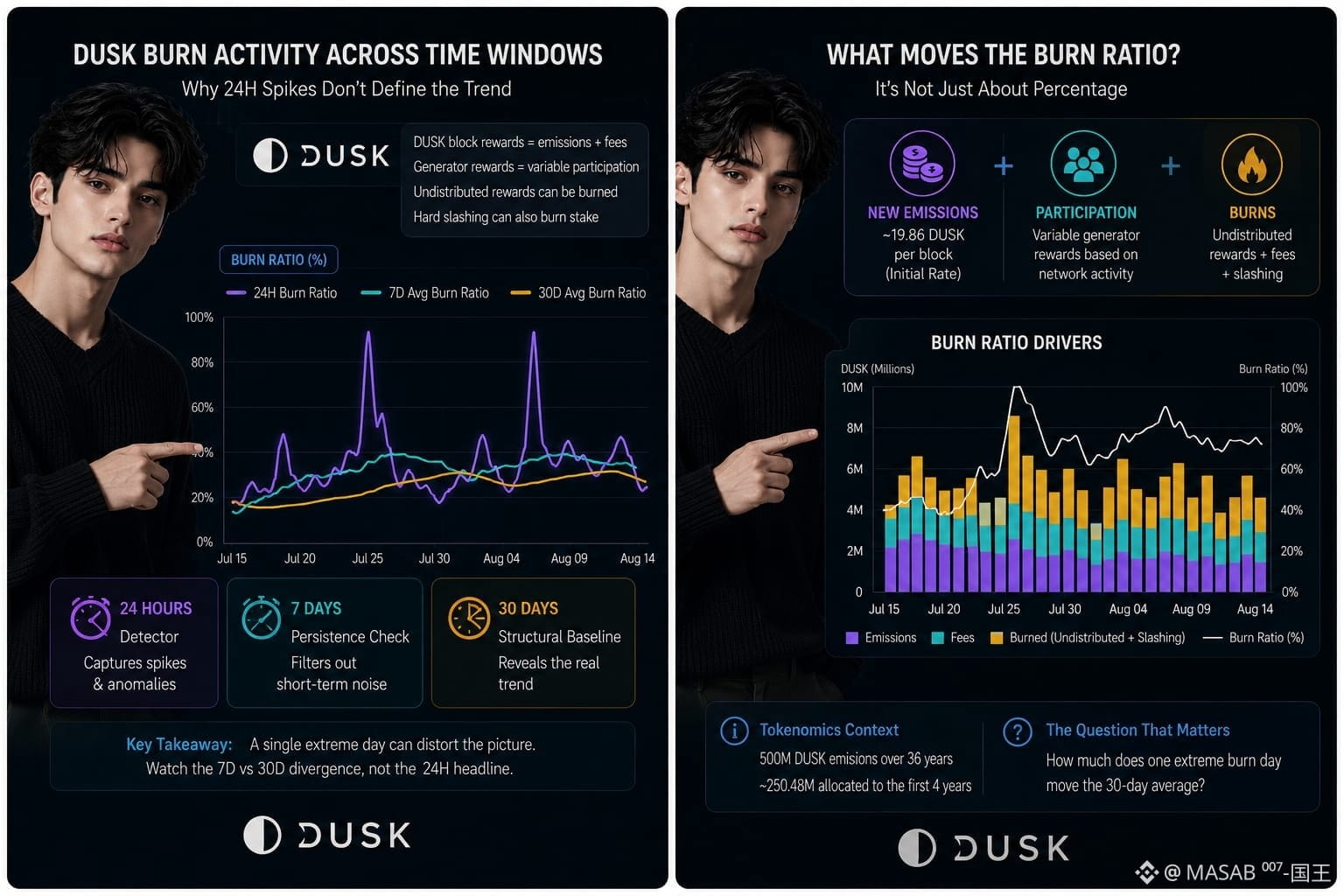
كنت أقارن شكل نشاط الحرق لدى DUSK عبر نوافذ مختلفة، وكانت هناك نقطة واحدة تزعجني: يمكن لنسبة حرق خلال 24 ساعة أن تقول القليل جدًا عن الاقتصاد الحقيقي الكامن وراء الرمز.
السبب ميكانيكي.... مكافآت بلوك DUSK تجمع بين الرموز المنبعثة حديثًا ورسوم المعاملات، بينما تشمل مكافآت المُولِّد عنصر مشاركة متغير. يمكن حرق أي جزء غير مُوزَّع. كما يمكن أن يؤدي “القطع القاسي” إلى حرق الرهان.
وهذا يجعل الرقم اليومي مقياسًا جزئيًا لسلوك الشبكة، لا مجرد “انكماش”. .....إذا تغيّرت المشاركة بشكل حاد خلال بضع ساعات، فقد تقفز نسبة الحرق دون أن تمثل اتجاهًا مستمرًا.
كما أن الحجم مهم أيضًا. تستهدف ديناميكيات الرموز الحالية 500 مليون DUSK من الانبعاثات على مدى 36 عامًا، مع تخصيص حوالي 250.48 مليون للسنوات الأربع الأولى. معدل الانبعاث الأولي يبلغ تقريبًا 19.86 DUSK لكل بلوك.
لذلك سأتعامل مع 24 ساعة ككاشف، و7 أيام كاختبار لاستمرارية الأثر، و30 يومًا كأساسٍ هيكلي.
لكن نسبة مئوية وحدها تخفي ما إذا كان التغيير جاء من مكافآت أقل، أو حروق أكثر، أو من كليهما.
السؤال غير المريح هو: كم تحرّك يوم حرق شديد واحد متوسط 30 يومًا؟
الفرق بين 7 أيام و30 يومًا هو الرقم الذي سأراقبه بعد ذلك.
@Dusk_Foundation $DUSK #dusk
{future}(DUSKUSDT)
كنت أقارن شكل نشاط الحرق لدى DUSK عبر نوافذ مختلفة، وكانت هناك نقطة واحدة تزعجني: يمكن لنسبة حرق خلال 24 ساعة أن تقول القليل جدًا عن الاقتصاد الحقيقي الكامن وراء الرمز.
السبب ميكانيكي.... مكافآت بلوك DUSK تجمع بين الرموز المنبعثة حديثًا ورسوم المعاملات، بينما تشمل مكافآت المُولِّد عنصر مشاركة متغير. يمكن حرق أي جزء غير مُوزَّع. كما يمكن أن يؤدي “القطع القاسي” إلى حرق الرهان.
وهذا يجعل الرقم اليومي مقياسًا جزئيًا لسلوك الشبكة، لا مجرد “انكماش”. .....إذا تغيّرت المشاركة بشكل حاد خلال بضع ساعات، فقد تقفز نسبة الحرق دون أن تمثل اتجاهًا مستمرًا.
كما أن الحجم مهم أيضًا. تستهدف ديناميكيات الرموز الحالية 500 مليون DUSK من الانبعاثات على مدى 36 عامًا، مع تخصيص حوالي 250.48 مليون للسنوات الأربع الأولى. معدل الانبعاث الأولي يبلغ تقريبًا 19.86 DUSK لكل بلوك.
لذلك سأتعامل مع 24 ساعة ككاشف، و7 أيام كاختبار لاستمرارية الأثر، و30 يومًا كأساسٍ هيكلي.
لكن نسبة مئوية وحدها تخفي ما إذا كان التغيير جاء من مكافآت أقل، أو حروق أكثر، أو من كليهما.
السؤال غير المريح هو: كم تحرّك يوم حرق شديد واحد متوسط 30 يومًا؟
الفرق بين 7 أيام و30 يومًا هو الرقم الذي سأراقبه بعد ذلك.
@Dusk $DUSK #dusk
السبب ميكانيكي.... مكافآت بلوك DUSK تجمع بين الرموز المنبعثة حديثًا ورسوم المعاملات، بينما تشمل مكافآت المُولِّد عنصر مشاركة متغير. يمكن حرق أي جزء غير مُوزَّع. كما يمكن أن يؤدي “القطع القاسي” إلى حرق الرهان.
وهذا يجعل الرقم اليومي مقياسًا جزئيًا لسلوك الشبكة، لا مجرد “انكماش”. .....إذا تغيّرت المشاركة بشكل حاد خلال بضع ساعات، فقد تقفز نسبة الحرق دون أن تمثل اتجاهًا مستمرًا.
كما أن الحجم مهم أيضًا. تستهدف ديناميكيات الرموز الحالية 500 مليون DUSK من الانبعاثات على مدى 36 عامًا، مع تخصيص حوالي 250.48 مليون للسنوات الأربع الأولى. معدل الانبعاث الأولي يبلغ تقريبًا 19.86 DUSK لكل بلوك.
لذلك سأتعامل مع 24 ساعة ككاشف، و7 أيام كاختبار لاستمرارية الأثر، و30 يومًا كأساسٍ هيكلي.
لكن نسبة مئوية وحدها تخفي ما إذا كان التغيير جاء من مكافآت أقل، أو حروق أكثر، أو من كليهما.
السؤال غير المريح هو: كم تحرّك يوم حرق شديد واحد متوسط 30 يومًا؟
الفرق بين 7 أيام و30 يومًا هو الرقم الذي سأراقبه بعد ذلك.
@Dusk $DUSK #dusk
31
21
21.8k
·
--
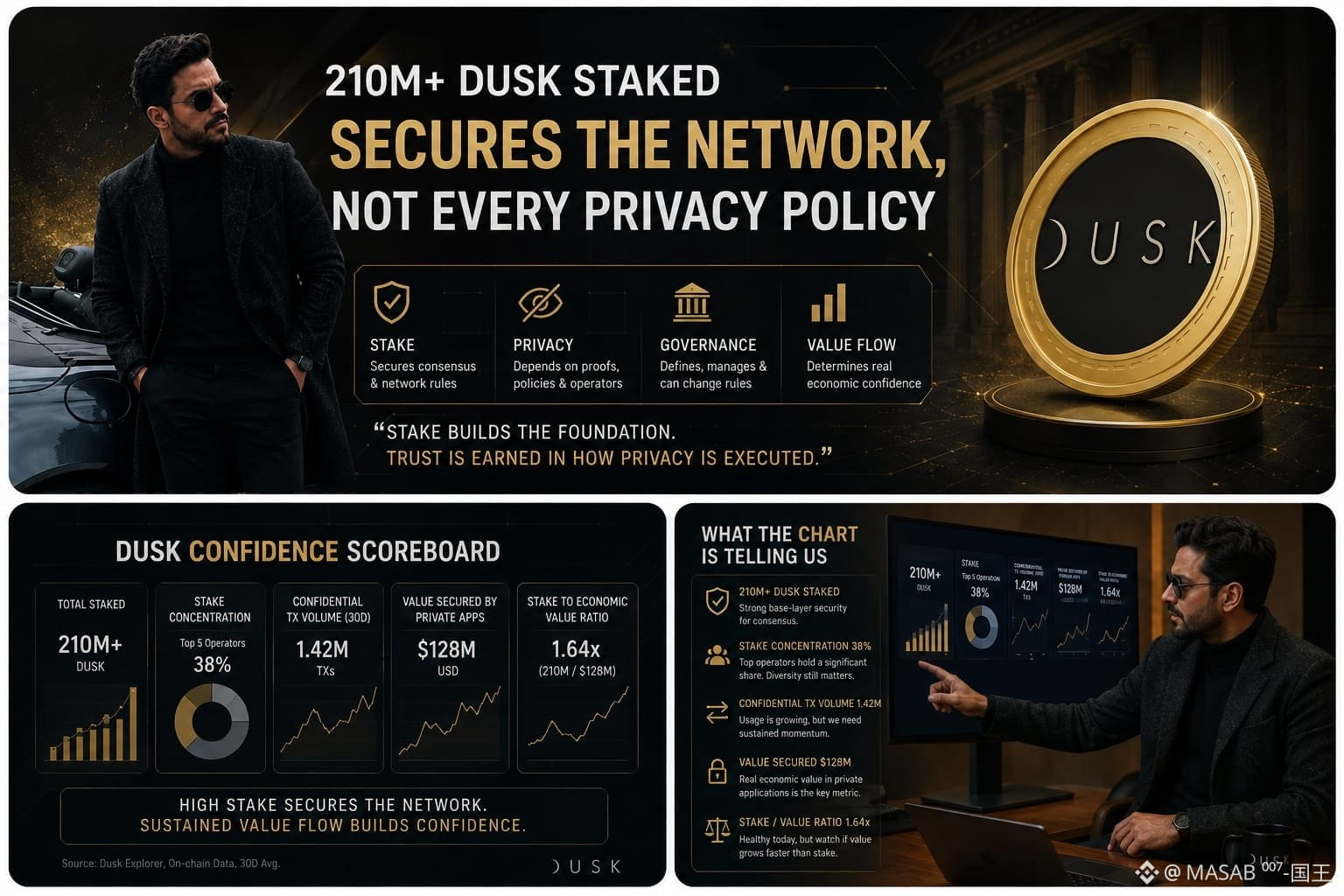
كان السوق هادئًا الليلة، لذلك أعدت فتح مواد Dusk وواصلت التحديق في رقم واحد: 210M+ DUSK staked.
من المغري تفسير ذلك على أنه «التطبيقات المالية السرّية آمنة». لكن هناك شيء لم يكن في مكانه. لا يعني ذلك بالضرورة أن تأمين الاقتصاد على طبقة الأساس والثقة في تنفيذ الخصوصية هما الشيء نفسه.
يمكن أن تحمي الحصة الإجماع، بينما لا تزال التطبيقات السرّية تعتمد على إثباتات الخصوصية، وسياسات الإفصاح، والمشغّلين، والحوكمة، ومقدار القيمة التي تتدفق فعليًا عبرها.
لذلك بدأت أفكر في لوحة قياس مختلفة: تركّز الحصة، وترّكز المشغّلين، وحجم المعاملات السرّية، والقيمة التي تؤمّنها التطبيقات الخاصة، ونسبة الحصة إلى القيمة الاقتصادية.
وهنا الفارق الذي أعود إليه باستمرار: **الحصة تؤمّن قواعد الشبكة؛ ولا تتحقق تلقائيًا من كل سياسة خصوصية تُبنى فوقها.**
لا يعني ذلك أن نموذج خصوصية Dusk ضعيف. قد يكون الإفصاح الانتقائي مفيدًا فعلًا: قد يستطيع المستثمر إثبات الملكية، أو أهلية المكان، وجهة تنظيمية فقط بأدلة الامتثال المطلوبة.
لكن من الذي يقرر قواعد الإفصاح هذه؟ ومن الذي يستطيع تغييرها؟ وكم بسرعة يمكن للمراقبين المصرّح لهم الحصول على الأدلة أثناء حالة طارئة؟
لا أعرف بعد ما إذا كانت 210M+ staked توفر قدرًا كافيًا من الثقة للأسواق السرّية عالية القيمة.
الرسوم البيانية ما زالت هادئة. سأترك هذا السؤال مفتوحًا.
@Dusk_Foundation $DUSK #dusk
{future}(DUSKUSDT)
كان السوق هادئًا الليلة، لذلك أعدت فتح مواد Dusk وواصلت التحديق في رقم واحد: 210M+ DUSK staked.
من المغري تفسير ذلك على أنه «التطبيقات المالية السرّية آمنة». لكن هناك شيء لم يكن في مكانه. لا يعني ذلك بالضرورة أن تأمين الاقتصاد على طبقة الأساس والثقة في تنفيذ الخصوصية هما الشيء نفسه.
يمكن أن تحمي الحصة الإجماع، بينما لا تزال التطبيقات السرّية تعتمد على إثباتات الخصوصية، وسياسات الإفصاح، والمشغّلين، والحوكمة، ومقدار القيمة التي تتدفق فعليًا عبرها.
لذلك بدأت أفكر في لوحة قياس مختلفة: تركّز الحصة، وترّكز المشغّلين، وحجم المعاملات السرّية، والقيمة التي تؤمّنها التطبيقات الخاصة، ونسبة الحصة إلى القيمة الاقتصادية.
وهنا الفارق الذي أعود إليه باستمرار: **الحصة تؤمّن قواعد الشبكة؛ ولا تتحقق تلقائيًا من كل سياسة خصوصية تُبنى فوقها.**
لا يعني ذلك أن نموذج خصوصية Dusk ضعيف. قد يكون الإفصاح الانتقائي مفيدًا فعلًا: قد يستطيع المستثمر إثبات الملكية، أو أهلية المكان، وجهة تنظيمية فقط بأدلة الامتثال المطلوبة.
لكن من الذي يقرر قواعد الإفصاح هذه؟ ومن الذي يستطيع تغييرها؟ وكم بسرعة يمكن للمراقبين المصرّح لهم الحصول على الأدلة أثناء حالة طارئة؟
لا أعرف بعد ما إذا كانت 210M+ staked توفر قدرًا كافيًا من الثقة للأسواق السرّية عالية القيمة.
الرسوم البيانية ما زالت هادئة. سأترك هذا السؤال مفتوحًا.
@Dusk $DUSK #dusk
من المغري تفسير ذلك على أنه «التطبيقات المالية السرّية آمنة». لكن هناك شيء لم يكن في مكانه. لا يعني ذلك بالضرورة أن تأمين الاقتصاد على طبقة الأساس والثقة في تنفيذ الخصوصية هما الشيء نفسه.
يمكن أن تحمي الحصة الإجماع، بينما لا تزال التطبيقات السرّية تعتمد على إثباتات الخصوصية، وسياسات الإفصاح، والمشغّلين، والحوكمة، ومقدار القيمة التي تتدفق فعليًا عبرها.
لذلك بدأت أفكر في لوحة قياس مختلفة: تركّز الحصة، وترّكز المشغّلين، وحجم المعاملات السرّية، والقيمة التي تؤمّنها التطبيقات الخاصة، ونسبة الحصة إلى القيمة الاقتصادية.
وهنا الفارق الذي أعود إليه باستمرار: **الحصة تؤمّن قواعد الشبكة؛ ولا تتحقق تلقائيًا من كل سياسة خصوصية تُبنى فوقها.**
لا يعني ذلك أن نموذج خصوصية Dusk ضعيف. قد يكون الإفصاح الانتقائي مفيدًا فعلًا: قد يستطيع المستثمر إثبات الملكية، أو أهلية المكان، وجهة تنظيمية فقط بأدلة الامتثال المطلوبة.
لكن من الذي يقرر قواعد الإفصاح هذه؟ ومن الذي يستطيع تغييرها؟ وكم بسرعة يمكن للمراقبين المصرّح لهم الحصول على الأدلة أثناء حالة طارئة؟
لا أعرف بعد ما إذا كانت 210M+ staked توفر قدرًا كافيًا من الثقة للأسواق السرّية عالية القيمة.
الرسوم البيانية ما زالت هادئة. سأترك هذا السؤال مفتوحًا.
@Dusk $DUSK #dusk
35
30
11.1k
·
--
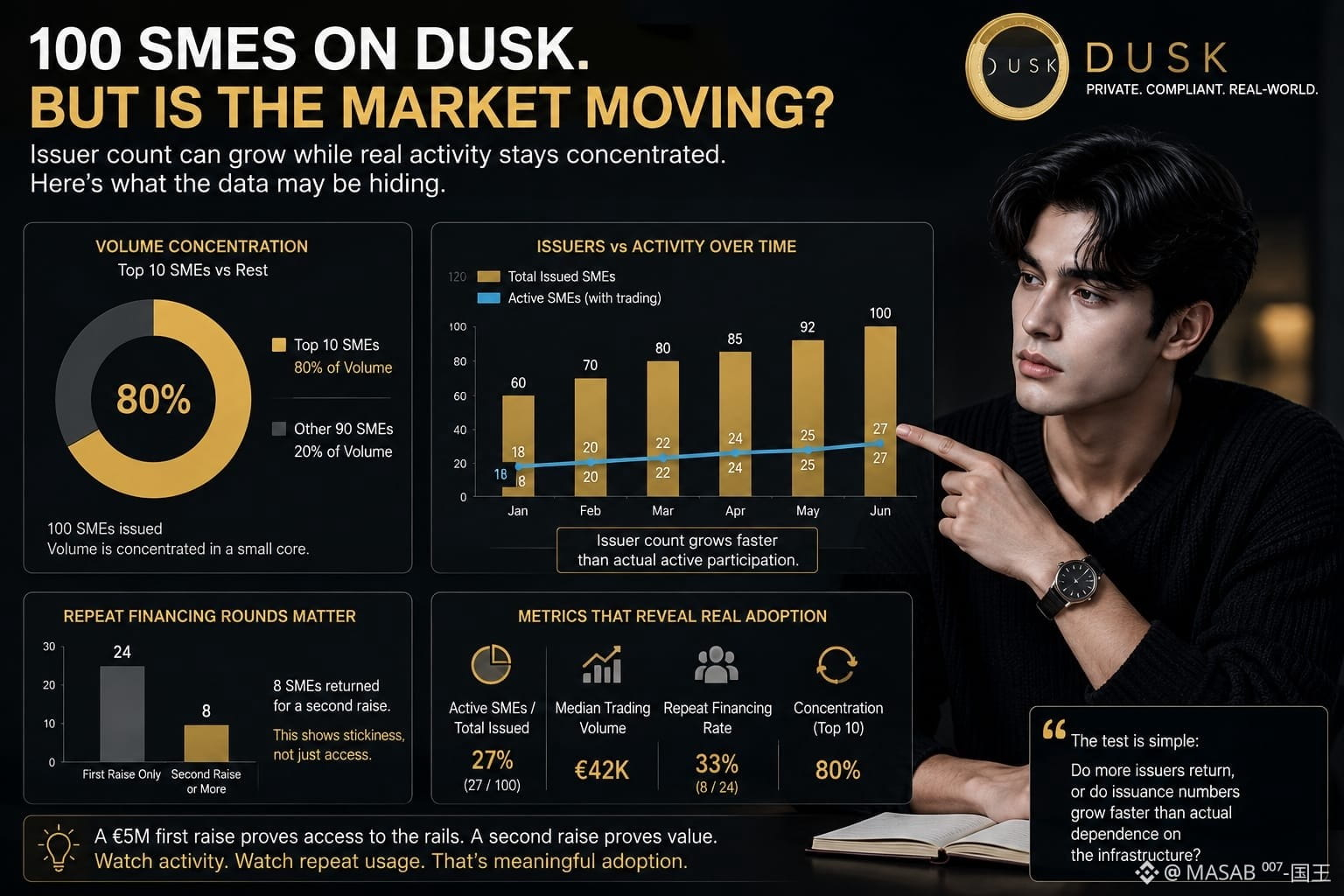
شيء واحد ظل يزعجني أثناء النظر إلى عدد مُصدري قصّة المؤسسات الصغيرة والمتوسطة (SME) في DUSK، وهو أن العدد قد يرتفع حتى عندما لا تتحرك. فعليًا، السوق الذي يقبع تحته بالكاد.
تخيّل أن لدى DUSK 100 شركة صغيرة ومُتوسطة مُرقمنة، لكن أفضل 10 شركات تولّد 80% من إجمالي حجم التداول. على الورق، تبدو 100 جهة إصدار بمثابة تبنٍّ واسع. في الواقع، قد يعني ذلك أن اهتمام المستثمرين والسيولة والنشاط المتكرر تتركز في نواة صغيرة جدًا.
لهذا السبب، سأراقب عن كثب نسبة المؤسسات الصغيرة والمتوسطة النشطة / إجمالي المؤسسات المُصدرة، وحجم التداول الوسيط، وجولات التمويل المتكررة، أكثر من مراقبة عدد الإصدارات كعنوان رئيسي.
إن جمع 5 ملايين يورو أول مرة يثبت أن الشركة يمكنها الوصول إلى القنوات. أمّا الرفع الثاني لاحقًا فهو أمر مختلف. فهو يشير إلى أن المُصدر وجد قيمة كافية في إدارة الملكية لدى DUSK، وضوابط نقل الأسهم، وسير عمل المستثمرين لكي يعود مجددًا.
هنا يفترق النشاط عن التبنّي ذي المعنى.
قد تحتاج مؤسسة صغيرة ومتوسطة إلى DUSK أكثر للحفاظ على هيكل مساهمين برمجي، وليس بقدر حاجتها للتداول الثانوي اليومي. وهذا ما زال مهمًا. لكن إذا كان يجب باستمرار مُواءمة السجلّ على السلسلة (onchain) مع السجل القانوني خارج السلسلة (offchain)، فقد ينكمش التفوق التشغيلي بسرعة.
والاختبار الذي ما زلت أراقبه بسيط: هل عودت الجهات المُصدرة إلى الزيادة؟ أم أن أرقام الإصدارات تنمو أسرع من الاعتماد الفعلي على البنية التحتية؟
@Dusk_Foundation #dusk $DUSK
{future}(DUSKUSDT)
شيء واحد ظل يزعجني أثناء النظر إلى عدد مُصدري قصّة المؤسسات الصغيرة والمتوسطة (SME) في DUSK، وهو أن العدد قد يرتفع حتى عندما لا تتحرك. فعليًا، السوق الذي يقبع تحته بالكاد.
تخيّل أن لدى DUSK 100 شركة صغيرة ومُتوسطة مُرقمنة، لكن أفضل 10 شركات تولّد 80% من إجمالي حجم التداول. على الورق، تبدو 100 جهة إصدار بمثابة تبنٍّ واسع. في الواقع، قد يعني ذلك أن اهتمام المستثمرين والسيولة والنشاط المتكرر تتركز في نواة صغيرة جدًا.
لهذا السبب، سأراقب عن كثب نسبة المؤسسات الصغيرة والمتوسطة النشطة / إجمالي المؤسسات المُصدرة، وحجم التداول الوسيط، وجولات التمويل المتكررة، أكثر من مراقبة عدد الإصدارات كعنوان رئيسي.
إن جمع 5 ملايين يورو أول مرة يثبت أن الشركة يمكنها الوصول إلى القنوات. أمّا الرفع الثاني لاحقًا فهو أمر مختلف. فهو يشير إلى أن المُصدر وجد قيمة كافية في إدارة الملكية لدى DUSK، وضوابط نقل الأسهم، وسير عمل المستثمرين لكي يعود مجددًا.
هنا يفترق النشاط عن التبنّي ذي المعنى.
قد تحتاج مؤسسة صغيرة ومتوسطة إلى DUSK أكثر للحفاظ على هيكل مساهمين برمجي، وليس بقدر حاجتها للتداول الثانوي اليومي. وهذا ما زال مهمًا. لكن إذا كان يجب باستمرار مُواءمة السجلّ على السلسلة (onchain) مع السجل القانوني خارج السلسلة (offchain)، فقد ينكمش التفوق التشغيلي بسرعة.
والاختبار الذي ما زلت أراقبه بسيط: هل عودت الجهات المُصدرة إلى الزيادة؟ أم أن أرقام الإصدارات تنمو أسرع من الاعتماد الفعلي على البنية التحتية؟
@Dusk #dusk $DUSK
تخيّل أن لدى DUSK 100 شركة صغيرة ومُتوسطة مُرقمنة، لكن أفضل 10 شركات تولّد 80% من إجمالي حجم التداول. على الورق، تبدو 100 جهة إصدار بمثابة تبنٍّ واسع. في الواقع، قد يعني ذلك أن اهتمام المستثمرين والسيولة والنشاط المتكرر تتركز في نواة صغيرة جدًا.
لهذا السبب، سأراقب عن كثب نسبة المؤسسات الصغيرة والمتوسطة النشطة / إجمالي المؤسسات المُصدرة، وحجم التداول الوسيط، وجولات التمويل المتكررة، أكثر من مراقبة عدد الإصدارات كعنوان رئيسي.
إن جمع 5 ملايين يورو أول مرة يثبت أن الشركة يمكنها الوصول إلى القنوات. أمّا الرفع الثاني لاحقًا فهو أمر مختلف. فهو يشير إلى أن المُصدر وجد قيمة كافية في إدارة الملكية لدى DUSK، وضوابط نقل الأسهم، وسير عمل المستثمرين لكي يعود مجددًا.
هنا يفترق النشاط عن التبنّي ذي المعنى.
قد تحتاج مؤسسة صغيرة ومتوسطة إلى DUSK أكثر للحفاظ على هيكل مساهمين برمجي، وليس بقدر حاجتها للتداول الثانوي اليومي. وهذا ما زال مهمًا. لكن إذا كان يجب باستمرار مُواءمة السجلّ على السلسلة (onchain) مع السجل القانوني خارج السلسلة (offchain)، فقد ينكمش التفوق التشغيلي بسرعة.
والاختبار الذي ما زلت أراقبه بسيط: هل عودت الجهات المُصدرة إلى الزيادة؟ أم أن أرقام الإصدارات تنمو أسرع من الاعتماد الفعلي على البنية التحتية؟
@Dusk #dusk $DUSK
48
42
12.7k
·
--
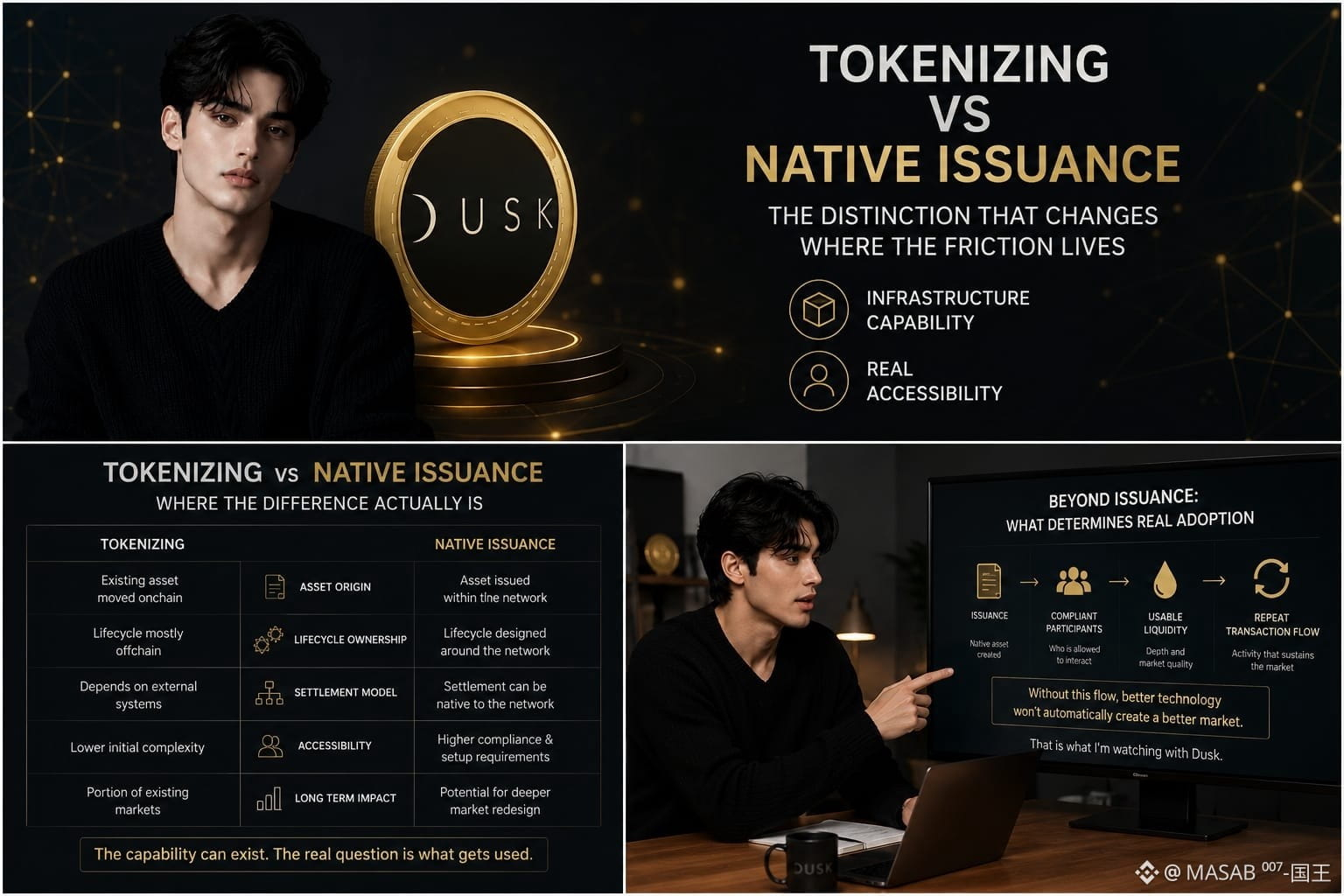
وجدت نفسي أعود مرارًا إلى تمييز واحد في تصميم RWA الخاص بـDusk: يمكن أن يوجد الرمز على السلسلة بينما تظل دورة حياة الأصل الواقعية في مكان آخر.
وهذا أهم مما يبدو. مع الترميز، يمكن للبلوك تشين تحسين التوزيع أو قابلية البرمجة، لكن الإصدار والحيازة والتسوية والخدمات والسجلات قد لا يزالون بحاجة إلى أنظمة منفصلة وإلى التوفيق بينها. نموذج الإصدار الأصلي لدى Dusk أكثر طموحًا بمعنى أضيق: يمكن إنشاء الأصل وإدارته حول دفتر الأستاذ، لذلك يمكن أن تحدث تلك التحويلات داخل بيئة واحدة منسقة.
غير أن الطبقة الخفية، ليست الرمز. بل التنسيق.
يُدمج Dusk التسوية، وضوابط الوصول، والخصوصية، والإفصاح الانتقائي، لأن الأوراق المالية المنظمة لا يمكن ببساطة أن تصبح كائنات علنية على البلوك تشين. لا يزال على شخص ما أن يحدد الأهلية والأذونات والإبلاغ والبنية القانونية المحيطة بالأصل. يمكن لـDusk توفير البنية التحتية؛ لكنه لا يستطيع تصنيع التفويض أو السيولة أو المشاركة المؤسسية.
لهذا أرى المقارنة الحقيقية على أنها قدرة تقنية مقابل إمكانية وصول حقيقية. الشبكة التي تدعم الإصدار الأصلي تختلف عن شبكة تُثبت أن المؤسسات ستستخدمها.
الجزء غير المريح هو التبنّي. إذا ظل المُصدرون والواجهات يحتفظون بخطوات دورة الحياة الحرجة في مكان آخر، يصبح الإصدار الأصلي قدرة معمارية بدلًا من كونه بنية سوقية ذات معنى.
هذه هي النقطة التي ما زلت أراقبها.
@Dusk_Foundation $DUSK #dusk
{future}(DUSKUSDT)
وجدت نفسي أعود مرارًا إلى تمييز واحد في تصميم RWA الخاص بـDusk: يمكن أن يوجد الرمز على السلسلة بينما تظل دورة حياة الأصل الواقعية في مكان آخر.
وهذا أهم مما يبدو. مع الترميز، يمكن للبلوك تشين تحسين التوزيع أو قابلية البرمجة، لكن الإصدار والحيازة والتسوية والخدمات والسجلات قد لا يزالون بحاجة إلى أنظمة منفصلة وإلى التوفيق بينها. نموذج الإصدار الأصلي لدى Dusk أكثر طموحًا بمعنى أضيق: يمكن إنشاء الأصل وإدارته حول دفتر الأستاذ، لذلك يمكن أن تحدث تلك التحويلات داخل بيئة واحدة منسقة.
غير أن الطبقة الخفية، ليست الرمز. بل التنسيق.
يُدمج Dusk التسوية، وضوابط الوصول، والخصوصية، والإفصاح الانتقائي، لأن الأوراق المالية المنظمة لا يمكن ببساطة أن تصبح كائنات علنية على البلوك تشين. لا يزال على شخص ما أن يحدد الأهلية والأذونات والإبلاغ والبنية القانونية المحيطة بالأصل. يمكن لـDusk توفير البنية التحتية؛ لكنه لا يستطيع تصنيع التفويض أو السيولة أو المشاركة المؤسسية.
لهذا أرى المقارنة الحقيقية على أنها قدرة تقنية مقابل إمكانية وصول حقيقية. الشبكة التي تدعم الإصدار الأصلي تختلف عن شبكة تُثبت أن المؤسسات ستستخدمها.
الجزء غير المريح هو التبنّي. إذا ظل المُصدرون والواجهات يحتفظون بخطوات دورة الحياة الحرجة في مكان آخر، يصبح الإصدار الأصلي قدرة معمارية بدلًا من كونه بنية سوقية ذات معنى.
هذه هي النقطة التي ما زلت أراقبها.
@Dusk $DUSK #dusk
وهذا أهم مما يبدو. مع الترميز، يمكن للبلوك تشين تحسين التوزيع أو قابلية البرمجة، لكن الإصدار والحيازة والتسوية والخدمات والسجلات قد لا يزالون بحاجة إلى أنظمة منفصلة وإلى التوفيق بينها. نموذج الإصدار الأصلي لدى Dusk أكثر طموحًا بمعنى أضيق: يمكن إنشاء الأصل وإدارته حول دفتر الأستاذ، لذلك يمكن أن تحدث تلك التحويلات داخل بيئة واحدة منسقة.
غير أن الطبقة الخفية، ليست الرمز. بل التنسيق.
يُدمج Dusk التسوية، وضوابط الوصول، والخصوصية، والإفصاح الانتقائي، لأن الأوراق المالية المنظمة لا يمكن ببساطة أن تصبح كائنات علنية على البلوك تشين. لا يزال على شخص ما أن يحدد الأهلية والأذونات والإبلاغ والبنية القانونية المحيطة بالأصل. يمكن لـDusk توفير البنية التحتية؛ لكنه لا يستطيع تصنيع التفويض أو السيولة أو المشاركة المؤسسية.
لهذا أرى المقارنة الحقيقية على أنها قدرة تقنية مقابل إمكانية وصول حقيقية. الشبكة التي تدعم الإصدار الأصلي تختلف عن شبكة تُثبت أن المؤسسات ستستخدمها.
الجزء غير المريح هو التبنّي. إذا ظل المُصدرون والواجهات يحتفظون بخطوات دورة الحياة الحرجة في مكان آخر، يصبح الإصدار الأصلي قدرة معمارية بدلًا من كونه بنية سوقية ذات معنى.
هذه هي النقطة التي ما زلت أراقبها.
@Dusk $DUSK #dusk
40
30
10.3k
·
--
تمّ التحقق
في الليلة الماضية كنت أُمرّر عبر Dusk Trade بينما كانت السوق هادئة بشكل غير معتاد. كنت أستمر في رؤية العبارات نفسها: الأصول المُرمّزة، الملكية الحقيقية، التسوية الفورية. ثم أوقفني مصطلح “neobroker” وجعلني أنظر تحت واجهة التطبيق.
الافتراض البديهي بسيط: شراء ETF أو MMF أو سند عبر Dusk Trade، وتصبح دورة الاستثمار بالكامل متوافقة بطبيعتها مع البلوك تشين.
لكن شيئًا لم يكن متسقًا.
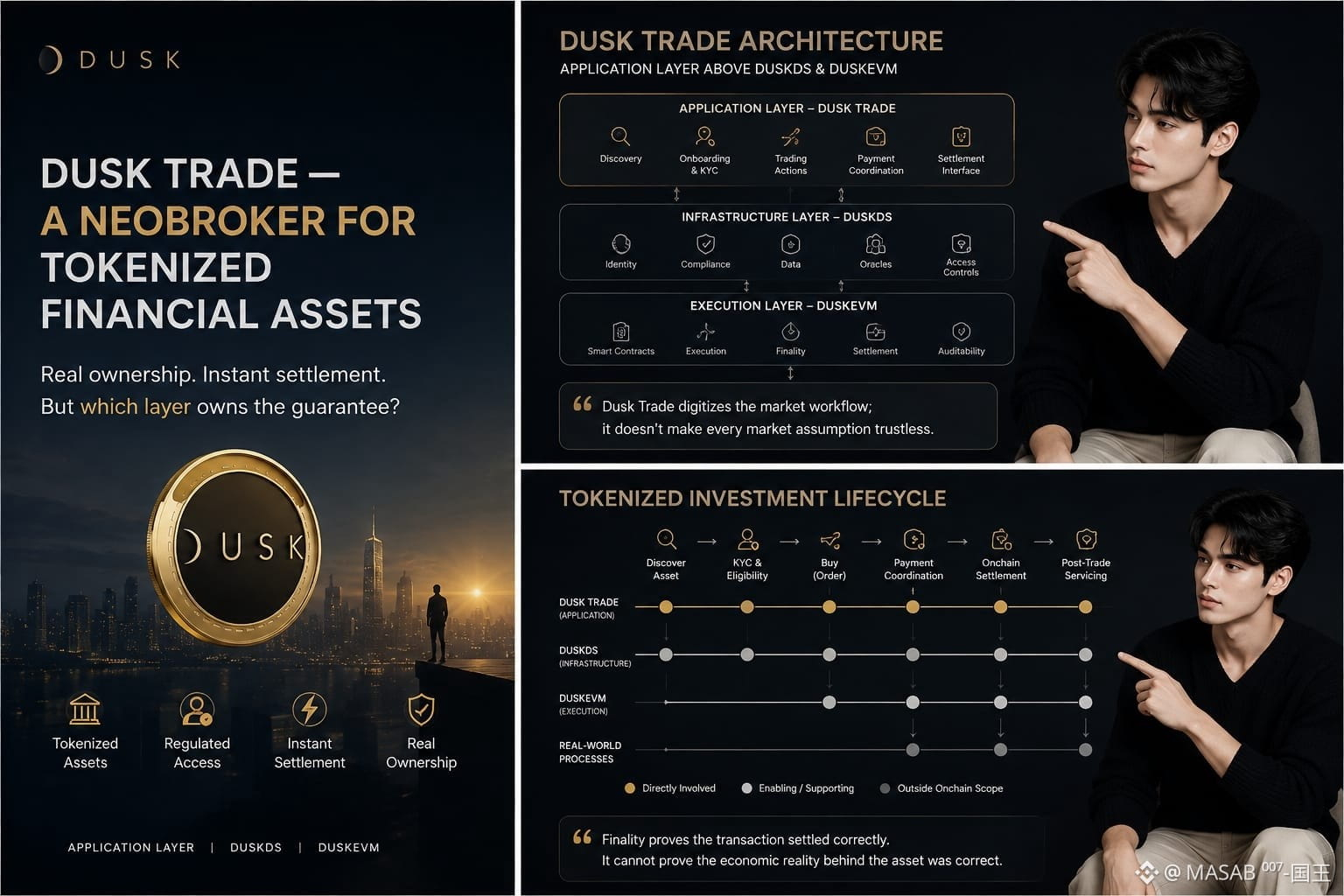
Dusk Trade هو طبقة التطبيق على DuskEVM. يربط المستخدمين بالأصول المالية المُرمّزة وسير عمل التداول، بينما تتولى البنية التحتية الأساسية تنفيذ المعاملات والتسوية. هذا مهم، لكنه ليس الشيء نفسه المتعلق بجعل كل الافتراضات المالية بلا ثقة (Trustless).
إنه يؤمّن المعاملة، وليس كل افتراض خلف الأصل.
هذا الفارق مهم. يمكن للتسوية الحتمية أن تُثبت أن معاملة مُخوّلة تمّت معالجتها بشكل صحيح. لكنها لا تستطيع وحدها إثبات أن كل سجلّ خارج السلسلة، أو قرار الأهلية، أو الإفصاح، أو التقييم، أو عملية الخدمة المرتبطة بأصل واقعي هي صحيحة.
كنت أظن أن هذا الفارق مسألة تقنية في المقام الأول. لكنه ليس كذلك.
إذا كان مصدر بيانات من طرف سابق خاطئًا، يمكن للبلوك تشين أن تُسوّي بدقة واقعًا اقتصاديًا خاطئًا.
هذه ليست مشكلة فريدة تخص Dusk؛ التمويل المُرمّز يرث هذه الحدود من الأسواق التقليدية.
الاختبار الحقيقي يأتي عندما تخلق القيمة المؤسسية حوافز لاستهداف الطبقات الأضعف.
ما زلت أتساءل كيف يتصرف هذا الحد تحت ضغط مستمر. هذه هي الجهة التي سأراقبها.
@Dusk_Foundation $DUSK #dusk
{future}(DUSKUSDT)
في الليلة الماضية كنت أُمرّر عبر Dusk Trade بينما كانت السوق هادئة بشكل غير معتاد. كنت أستمر في رؤية العبارات نفسها: الأصول المُرمّزة، الملكية الحقيقية، التسوية الفورية. ثم أوقفني مصطلح “neobroker” وجعلني أنظر تحت واجهة التطبيق.
الافتراض البديهي بسيط: شراء ETF أو MMF أو سند عبر Dusk Trade، وتصبح دورة الاستثمار بالكامل متوافقة بطبيعتها مع البلوك تشين.
لكن شيئًا لم يكن متسقًا.
Dusk Trade هو طبقة التطبيق على DuskEVM. يربط المستخدمين بالأصول المالية المُرمّزة وسير عمل التداول، بينما تتولى البنية التحتية الأساسية تنفيذ المعاملات والتسوية. هذا مهم، لكنه ليس الشيء نفسه المتعلق بجعل كل الافتراضات المالية بلا ثقة (Trustless).
إنه يؤمّن المعاملة، وليس كل افتراض خلف الأصل.
هذا الفارق مهم. يمكن للتسوية الحتمية أن تُثبت أن معاملة مُخوّلة تمّت معالجتها بشكل صحيح. لكنها لا تستطيع وحدها إثبات أن كل سجلّ خارج السلسلة، أو قرار الأهلية، أو الإفصاح، أو التقييم، أو عملية الخدمة المرتبطة بأصل واقعي هي صحيحة.
كنت أظن أن هذا الفارق مسألة تقنية في المقام الأول. لكنه ليس كذلك.
إذا كان مصدر بيانات من طرف سابق خاطئًا، يمكن للبلوك تشين أن تُسوّي بدقة واقعًا اقتصاديًا خاطئًا.
هذه ليست مشكلة فريدة تخص Dusk؛ التمويل المُرمّز يرث هذه الحدود من الأسواق التقليدية.
الاختبار الحقيقي يأتي عندما تخلق القيمة المؤسسية حوافز لاستهداف الطبقات الأضعف.
ما زلت أتساءل كيف يتصرف هذا الحد تحت ضغط مستمر. هذه هي الجهة التي سأراقبها.
@Dusk $DUSK #dusk
الافتراض البديهي بسيط: شراء ETF أو MMF أو سند عبر Dusk Trade، وتصبح دورة الاستثمار بالكامل متوافقة بطبيعتها مع البلوك تشين.
لكن شيئًا لم يكن متسقًا.
Dusk Trade هو طبقة التطبيق على DuskEVM. يربط المستخدمين بالأصول المالية المُرمّزة وسير عمل التداول، بينما تتولى البنية التحتية الأساسية تنفيذ المعاملات والتسوية. هذا مهم، لكنه ليس الشيء نفسه المتعلق بجعل كل الافتراضات المالية بلا ثقة (Trustless).
إنه يؤمّن المعاملة، وليس كل افتراض خلف الأصل.
هذا الفارق مهم. يمكن للتسوية الحتمية أن تُثبت أن معاملة مُخوّلة تمّت معالجتها بشكل صحيح. لكنها لا تستطيع وحدها إثبات أن كل سجلّ خارج السلسلة، أو قرار الأهلية، أو الإفصاح، أو التقييم، أو عملية الخدمة المرتبطة بأصل واقعي هي صحيحة.
كنت أظن أن هذا الفارق مسألة تقنية في المقام الأول. لكنه ليس كذلك.
إذا كان مصدر بيانات من طرف سابق خاطئًا، يمكن للبلوك تشين أن تُسوّي بدقة واقعًا اقتصاديًا خاطئًا.
هذه ليست مشكلة فريدة تخص Dusk؛ التمويل المُرمّز يرث هذه الحدود من الأسواق التقليدية.
الاختبار الحقيقي يأتي عندما تخلق القيمة المؤسسية حوافز لاستهداف الطبقات الأضعف.
ما زلت أتساءل كيف يتصرف هذا الحد تحت ضغط مستمر. هذه هي الجهة التي سأراقبها.
@Dusk $DUSK #dusk
40
33
7.4k
·
--
تمّ التحقق
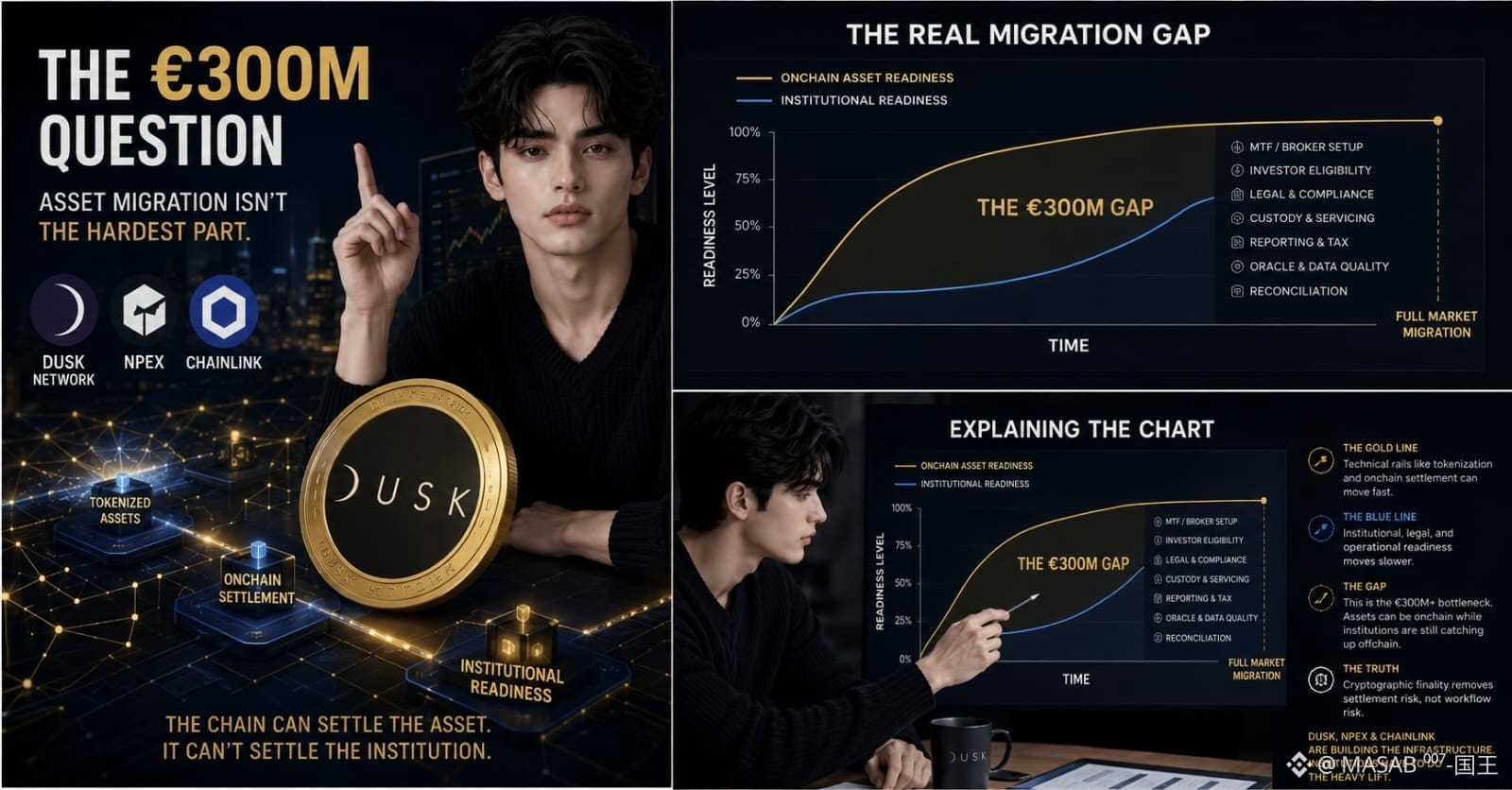
كنت أراجع توثيق Dusk في وقت متأخر من الليلة الماضية وأعود باستمرار إلى رقم واحد: €300M+. يبدو كأنه مشكلة ترحيل أصول. لكن NPEX جعلني أتساءل إن كان الترحيل الأكثر صعوبة يتمحور حول كل ما يحيط بالأصل.
تستهدف Dusk وNPEX إصدارًا وتداولًا وتسوية مُنظَّمة على السلسلة، بينما يضيف Chainlink CCIP وDataLink وData Streams من أجل الاتصال عبر السلاسل وبيانات السوق.
الافتراض البديهي بسيط: بمجرد ترميز الأوراق المالية، تكون السوق قد تحركت.
لست متأكدًا من أن هذا يتبع.
يمكن أن يكون الأصل على السلسلة أثناء عملية الإعداد، لكن متطلبات مثل أهلية المستثمر، والمراجعة القانونية، والحفظ، والتقارير، وخدمات ما بعد التداول، وضوابط التشغيل لا تزال تعتمد على عمليات مؤسسية خارج طبقة التسوية.
قد تسوّي السلسلة الأصل؛ لكنها لا تستطيع تسوية جاهزية المؤسسة.
كانت هذه التفرقة تبدو في البداية وكأنها جدلية شكلية. ثم حسبت القطع المتحركة: MTF ووسيط/broker وECSP، ووظائف DLT-TSS المرتقبة المشار إليها حول NPEX.
ثم أضف إلى ذلك حداثة بيانات الأوركل، ونقاط التفتيش الخاصة بالامتثال، والمطابقة/التوفيق بين السجلات، واعتماديات البيانات الخارجية.
إذا وصل السعر متأخرًا، يمكن أن تظل التسوية الحتمية حتمية على نحو مثالي.
وهذا هو الجزء غير المريح: يمكن أن تزيل الحتمية التشفيرية عدم اليقين من التسوية دون أن تزيل عدم اليقين من سير العمل في السوق.
أعتقد أن Dusk يعالج عنق زجاجة حقيقيًا. لكنني لا أعرف بعد ما إذا كان بإمكان €300M أن يتم ترحيله بسرعة أكبر من المنظمات المسؤولة عن الموافقة عليه وخدمته والإشراف عليه.
مخططي ما زال مفتوحًا. وكذلك الوثائق.
{future}(DUSKUSDT)
@Dusk_Foundation $DUSK #dusk
كنت أراجع توثيق Dusk في وقت متأخر من الليلة الماضية وأعود باستمرار إلى رقم واحد: €300M+. يبدو كأنه مشكلة ترحيل أصول. لكن NPEX جعلني أتساءل إن كان الترحيل الأكثر صعوبة يتمحور حول كل ما يحيط بالأصل.
تستهدف Dusk وNPEX إصدارًا وتداولًا وتسوية مُنظَّمة على السلسلة، بينما يضيف Chainlink CCIP وDataLink وData Streams من أجل الاتصال عبر السلاسل وبيانات السوق.
الافتراض البديهي بسيط: بمجرد ترميز الأوراق المالية، تكون السوق قد تحركت.
لست متأكدًا من أن هذا يتبع.
يمكن أن يكون الأصل على السلسلة أثناء عملية الإعداد، لكن متطلبات مثل أهلية المستثمر، والمراجعة القانونية، والحفظ، والتقارير، وخدمات ما بعد التداول، وضوابط التشغيل لا تزال تعتمد على عمليات مؤسسية خارج طبقة التسوية.
قد تسوّي السلسلة الأصل؛ لكنها لا تستطيع تسوية جاهزية المؤسسة.
كانت هذه التفرقة تبدو في البداية وكأنها جدلية شكلية. ثم حسبت القطع المتحركة: MTF ووسيط/broker وECSP، ووظائف DLT-TSS المرتقبة المشار إليها حول NPEX.
ثم أضف إلى ذلك حداثة بيانات الأوركل، ونقاط التفتيش الخاصة بالامتثال، والمطابقة/التوفيق بين السجلات، واعتماديات البيانات الخارجية.
إذا وصل السعر متأخرًا، يمكن أن تظل التسوية الحتمية حتمية على نحو مثالي.
وهذا هو الجزء غير المريح: يمكن أن تزيل الحتمية التشفيرية عدم اليقين من التسوية دون أن تزيل عدم اليقين من سير العمل في السوق.
أعتقد أن Dusk يعالج عنق زجاجة حقيقيًا. لكنني لا أعرف بعد ما إذا كان بإمكان €300M أن يتم ترحيله بسرعة أكبر من المنظمات المسؤولة عن الموافقة عليه وخدمته والإشراف عليه.
مخططي ما زال مفتوحًا. وكذلك الوثائق.
@Dusk $DUSK #dusk
تستهدف Dusk وNPEX إصدارًا وتداولًا وتسوية مُنظَّمة على السلسلة، بينما يضيف Chainlink CCIP وDataLink وData Streams من أجل الاتصال عبر السلاسل وبيانات السوق.
الافتراض البديهي بسيط: بمجرد ترميز الأوراق المالية، تكون السوق قد تحركت.
لست متأكدًا من أن هذا يتبع.
يمكن أن يكون الأصل على السلسلة أثناء عملية الإعداد، لكن متطلبات مثل أهلية المستثمر، والمراجعة القانونية، والحفظ، والتقارير، وخدمات ما بعد التداول، وضوابط التشغيل لا تزال تعتمد على عمليات مؤسسية خارج طبقة التسوية.
قد تسوّي السلسلة الأصل؛ لكنها لا تستطيع تسوية جاهزية المؤسسة.
كانت هذه التفرقة تبدو في البداية وكأنها جدلية شكلية. ثم حسبت القطع المتحركة: MTF ووسيط/broker وECSP، ووظائف DLT-TSS المرتقبة المشار إليها حول NPEX.
ثم أضف إلى ذلك حداثة بيانات الأوركل، ونقاط التفتيش الخاصة بالامتثال، والمطابقة/التوفيق بين السجلات، واعتماديات البيانات الخارجية.
إذا وصل السعر متأخرًا، يمكن أن تظل التسوية الحتمية حتمية على نحو مثالي.
وهذا هو الجزء غير المريح: يمكن أن تزيل الحتمية التشفيرية عدم اليقين من التسوية دون أن تزيل عدم اليقين من سير العمل في السوق.
أعتقد أن Dusk يعالج عنق زجاجة حقيقيًا. لكنني لا أعرف بعد ما إذا كان بإمكان €300M أن يتم ترحيله بسرعة أكبر من المنظمات المسؤولة عن الموافقة عليه وخدمته والإشراف عليه.
مخططي ما زال مفتوحًا. وكذلك الوثائق.
@Dusk $DUSK #dusk
42
25
9k
·
--
كان السوق هادئًا الليلة، لذلك انتهى بي الأمر إلى إعادة قراءة مواد DuskEVM بدلًا من قراءة المخططات. كنت أرى عبارة “سير عمل EVM سرّي”، وفي البداية فهمت منها أن الـEVM نفسه يمكنه بطريقة ما جعل النشاط المالي خاصًا من البداية إلى النهاية.
لذا جلست فعلًا مع الآلية.
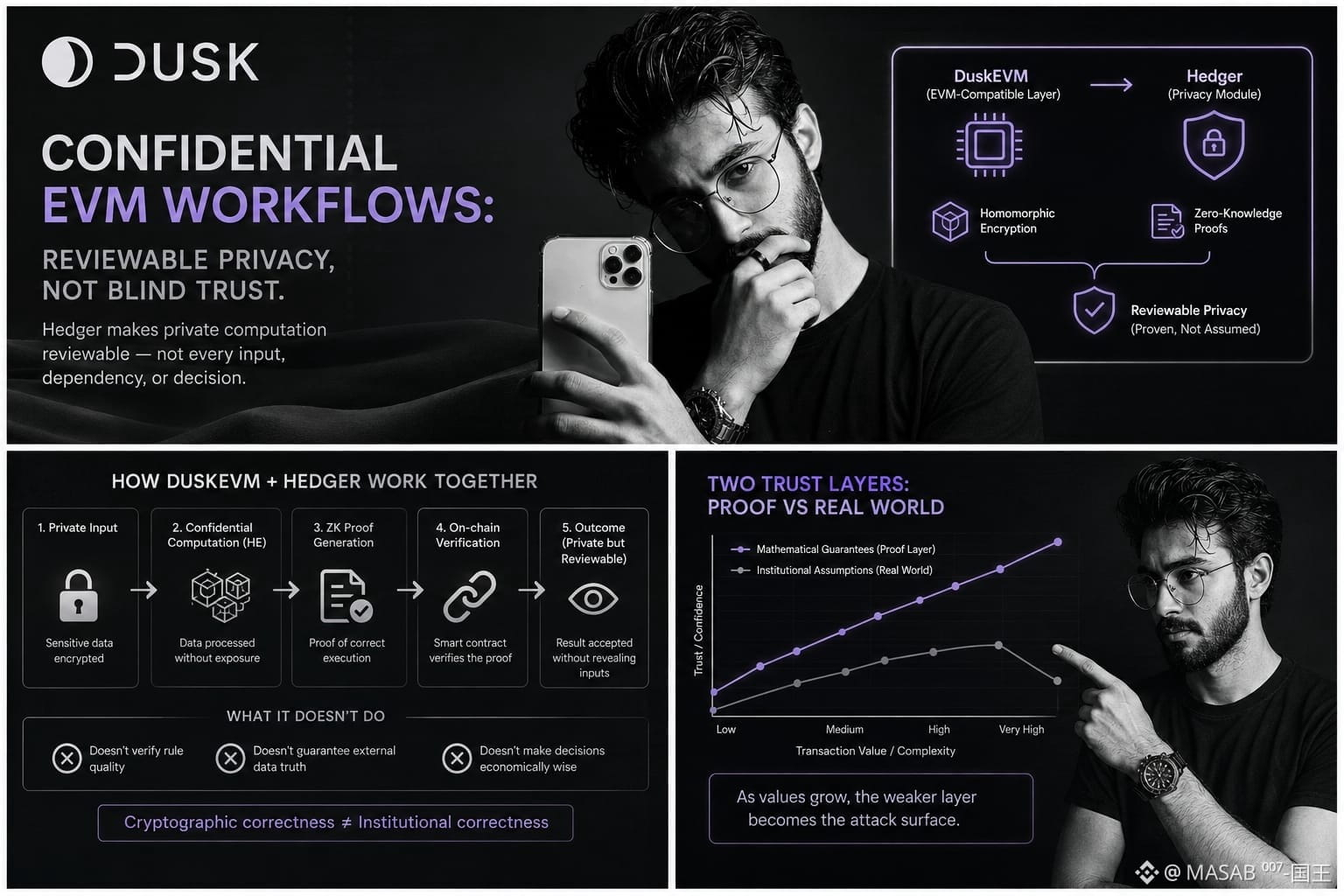
DuskEVM هي طبقة التطبيق المتوافقة مع EVM، وتمنح مطوّري Solidity مسارًا مألوفًا إلى Dusk. الجزء المثير للاهتمام هو Hedger، وحدة الخصوصية التي تستخدم التشفير المتماثل (homomorphic encryption) وبراهين المعرفة الصفرية لجعل الخصوصية قابلة للمراجعة.
وهذه هي الفَرقَة التي أظن أنها سهلة التفويت: Hedger يمكنه جعل الحسابات الخاصة قابلة للمراجعة؛ لكنه لا يجعل كل إدخال أو تبعية أو قرار مؤسسي بالضرورة جديرًا بالثقة.
ومع ذلك، هذا ذو معنى. يمكن للتشفير المتماثل أن يتيح معالجة بيانات محمية دون كشف القيم الأساسية، بينما يمكن لبراهين المعرفة الصفرية تقديم أدلة حول الحساب أو صحته. وبالنسبة للتمويل المنظّم، فإن هذا الدمج له قيمة واضحة: كشف أقل دون التخلي عن قابلية التدقيق.
لكنني ظننت في البداية أن هذا التفريق مجرد تدقيق لفظي.
ليس الأمر كذلك. الصحة التشفيرية والصحة المؤسسية هما نموذجان مختلفان للثقة. يمكن للبُرهان أن يُظهر أن العملية اتبعت قواعد محددة. لكنه لا يستطيع أن يعرف ما إذا كانت تلك القواعد منطقية، أو ما إذا كان مصدر بيانات خارجي صادقًا، أو ما إذا كان قرار مالي مُخوَّل كان حكيمًا اقتصاديًا.
قد يجعل التسويق تلك الطبقات تبدو أقرب مما هي عليه.
أنا لست أقول إن هذا فريد من نوعه بالنسبة إلى DuskEVM. فمعظم البنية التحتية المالية الجادة تمزج ضمانات رياضية مع افتراضات تقع خارج حدود البرهان.
السؤال الحقيقي هو ماذا يحدث عندما تصبح قيم المعاملات كبيرة بما يكفي ليتاح لأي شخص مهاجمة الطبقة الأضعف.
لا أستطيع الإجابة عن ذلك انطلاقًا من البنية المعمارية وحدها.
تبويب التوثيق لا يزال مفتوحًا. سأقرأه مرة أخرى غدًا على الأرجح، لأن كلمة “سرّي” الآن تجعلني أسأل: سرّي من قِبل مَن؟ ومُثبت حول ماذا؟
@Dusk_Foundation $DUSK #dusk
{future}(DUSKUSDT)
كان السوق هادئًا الليلة، لذلك انتهى بي الأمر إلى إعادة قراءة مواد DuskEVM بدلًا من قراءة المخططات. كنت أرى عبارة “سير عمل EVM سرّي”، وفي البداية فهمت منها أن الـEVM نفسه يمكنه بطريقة ما جعل النشاط المالي خاصًا من البداية إلى النهاية.
لذا جلست فعلًا مع الآلية.
DuskEVM هي طبقة التطبيق المتوافقة مع EVM، وتمنح مطوّري Solidity مسارًا مألوفًا إلى Dusk. الجزء المثير للاهتمام هو Hedger، وحدة الخصوصية التي تستخدم التشفير المتماثل (homomorphic encryption) وبراهين المعرفة الصفرية لجعل الخصوصية قابلة للمراجعة.
وهذه هي الفَرقَة التي أظن أنها سهلة التفويت: Hedger يمكنه جعل الحسابات الخاصة قابلة للمراجعة؛ لكنه لا يجعل كل إدخال أو تبعية أو قرار مؤسسي بالضرورة جديرًا بالثقة.
ومع ذلك، هذا ذو معنى. يمكن للتشفير المتماثل أن يتيح معالجة بيانات محمية دون كشف القيم الأساسية، بينما يمكن لبراهين المعرفة الصفرية تقديم أدلة حول الحساب أو صحته. وبالنسبة للتمويل المنظّم، فإن هذا الدمج له قيمة واضحة: كشف أقل دون التخلي عن قابلية التدقيق.
لكنني ظننت في البداية أن هذا التفريق مجرد تدقيق لفظي.
ليس الأمر كذلك. الصحة التشفيرية والصحة المؤسسية هما نموذجان مختلفان للثقة. يمكن للبُرهان أن يُظهر أن العملية اتبعت قواعد محددة. لكنه لا يستطيع أن يعرف ما إذا كانت تلك القواعد منطقية، أو ما إذا كان مصدر بيانات خارجي صادقًا، أو ما إذا كان قرار مالي مُخوَّل كان حكيمًا اقتصاديًا.
قد يجعل التسويق تلك الطبقات تبدو أقرب مما هي عليه.
أنا لست أقول إن هذا فريد من نوعه بالنسبة إلى DuskEVM. فمعظم البنية التحتية المالية الجادة تمزج ضمانات رياضية مع افتراضات تقع خارج حدود البرهان.
السؤال الحقيقي هو ماذا يحدث عندما تصبح قيم المعاملات كبيرة بما يكفي ليتاح لأي شخص مهاجمة الطبقة الأضعف.
لا أستطيع الإجابة عن ذلك انطلاقًا من البنية المعمارية وحدها.
تبويب التوثيق لا يزال مفتوحًا. سأقرأه مرة أخرى غدًا على الأرجح، لأن كلمة “سرّي” الآن تجعلني أسأل: سرّي من قِبل مَن؟ ومُثبت حول ماذا؟
@Dusk $DUSK #dusk
لذا جلست فعلًا مع الآلية.
DuskEVM هي طبقة التطبيق المتوافقة مع EVM، وتمنح مطوّري Solidity مسارًا مألوفًا إلى Dusk. الجزء المثير للاهتمام هو Hedger، وحدة الخصوصية التي تستخدم التشفير المتماثل (homomorphic encryption) وبراهين المعرفة الصفرية لجعل الخصوصية قابلة للمراجعة.
وهذه هي الفَرقَة التي أظن أنها سهلة التفويت: Hedger يمكنه جعل الحسابات الخاصة قابلة للمراجعة؛ لكنه لا يجعل كل إدخال أو تبعية أو قرار مؤسسي بالضرورة جديرًا بالثقة.
ومع ذلك، هذا ذو معنى. يمكن للتشفير المتماثل أن يتيح معالجة بيانات محمية دون كشف القيم الأساسية، بينما يمكن لبراهين المعرفة الصفرية تقديم أدلة حول الحساب أو صحته. وبالنسبة للتمويل المنظّم، فإن هذا الدمج له قيمة واضحة: كشف أقل دون التخلي عن قابلية التدقيق.
لكنني ظننت في البداية أن هذا التفريق مجرد تدقيق لفظي.
ليس الأمر كذلك. الصحة التشفيرية والصحة المؤسسية هما نموذجان مختلفان للثقة. يمكن للبُرهان أن يُظهر أن العملية اتبعت قواعد محددة. لكنه لا يستطيع أن يعرف ما إذا كانت تلك القواعد منطقية، أو ما إذا كان مصدر بيانات خارجي صادقًا، أو ما إذا كان قرار مالي مُخوَّل كان حكيمًا اقتصاديًا.
قد يجعل التسويق تلك الطبقات تبدو أقرب مما هي عليه.
أنا لست أقول إن هذا فريد من نوعه بالنسبة إلى DuskEVM. فمعظم البنية التحتية المالية الجادة تمزج ضمانات رياضية مع افتراضات تقع خارج حدود البرهان.
السؤال الحقيقي هو ماذا يحدث عندما تصبح قيم المعاملات كبيرة بما يكفي ليتاح لأي شخص مهاجمة الطبقة الأضعف.
لا أستطيع الإجابة عن ذلك انطلاقًا من البنية المعمارية وحدها.
تبويب التوثيق لا يزال مفتوحًا. سأقرأه مرة أخرى غدًا على الأرجح، لأن كلمة “سرّي” الآن تجعلني أسأل: سرّي من قِبل مَن؟ ومُثبت حول ماذا؟
@Dusk $DUSK #dusk
30
31
5.3k
·
--
تمّ التحقق
يبدو منبّه الحريق مطمئنًا على الحائط. نادرًا ما تفكر في من يُسمح له بالضغط عليه، أو ما إذا كان متاحًا، أو ماذا يحدث إذا وصل الشخص الخطأ إليه أولًا.
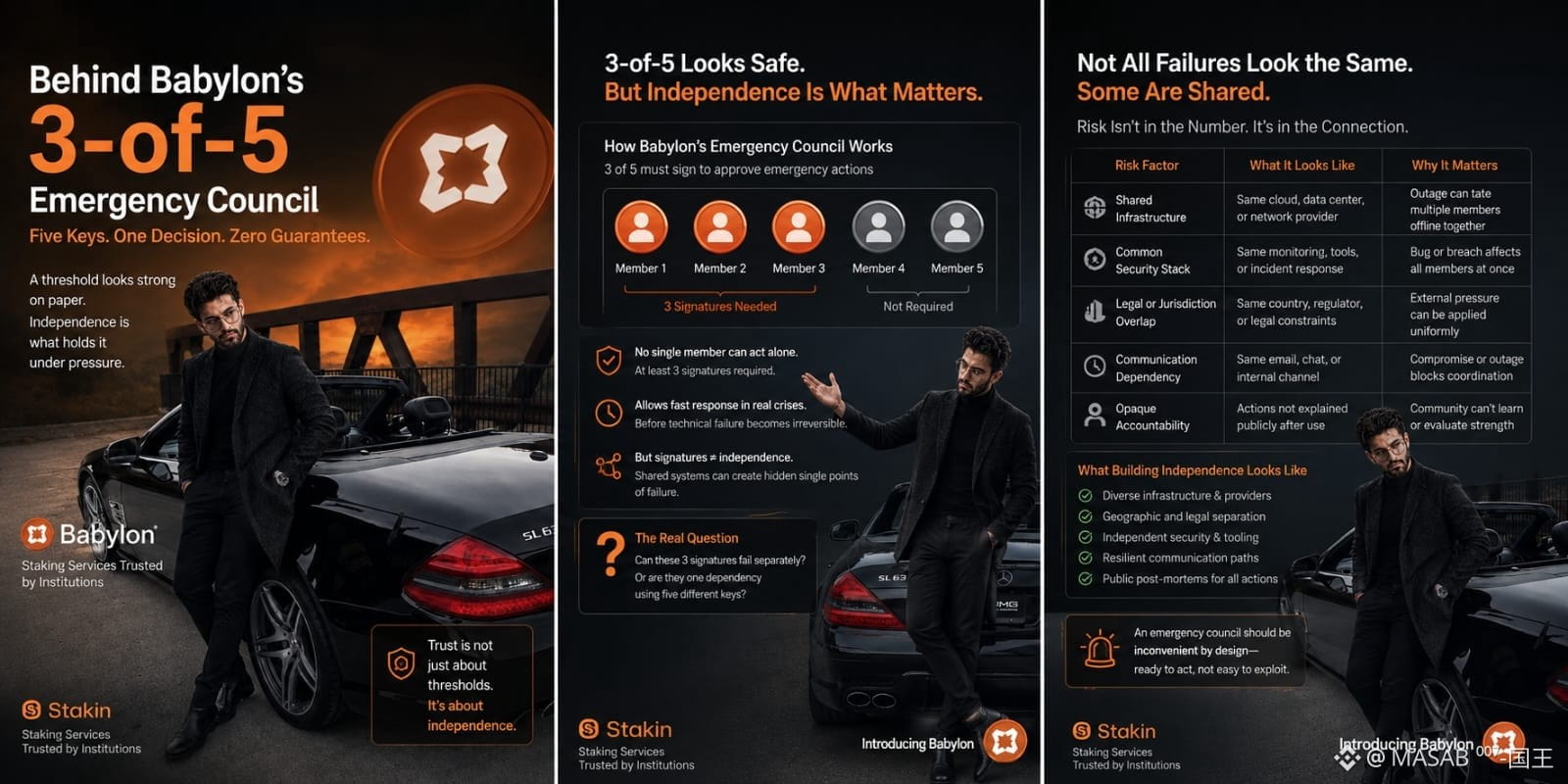
هكذا بدأت أفكر في مجلس الطوارئ في بابل بنظام 3 من 5. العدد يبدو منطقيًا. لا يستطيع أي عضو واحد أن يتصرف بمفرده، بينما يمكن لثلاثة أشخاص الاستجابة قبل أن يصبح أي عطل تقني لا رجعة فيه. على الورق، يمنح BABY كلاً من السرعة والضبط.
لكن العتبة لا تحسب سوى التواقيع. لا يمكنها قياس الاستقلالية.
قد يحتفظ ثلاثة من أعضاء المجلس بمفاتيح منفصلة ولا يزالون يعتمدون على موفر سحابي واحد، أو شركة أمن واحدة، أو اختصاص قانوني واحد، أو قناة اتصال داخلية واحدة. في الظروف العادية تبقى هذه الصلة غير مرئية. لكن تحت الضغط يمكن أن تحوّل خمسة مفترضين صناع قرار إلى وحدة تشغيلية واحدة. قد يؤدي تعطل مشترك إلى تعطيل التدخل. وقد يسمح تواطؤ مشترك بإجراء ذلك.
يقيس معظم الناس المجلس عبر سؤال ما إذا كانت ثلاث تواقيع أكثر أمانًا من توقيع واحد. أرى أن السؤال الأصعب هو ما إذا كانت هذه التواقيع الثلاثة يمكن أن تفشل بشكل منفصل. هل اختبرت بابل أعضاءها عند انقطاعهم عن العمل دون إنذار؟ هل تُشرح إجراءات الطوارئ علنًا بعد وقوعها؟ هل يمكن للمجتمع أن يرى ما إذا كانت طبقة الأزمات لدى BABY تزداد قوة، أم أنها أصبحت فحسب أكثر راحة للاستخدام؟
يجب أن يشعر مجلس الطوارئ بعدم الإزعاج. بطيئًا بما يكفي ليطلب إثباتًا، لكن جاهزًا بما يكفي لاتخاذ إجراء عندما تصبح مدة الانتظار خطرة.
لست قلقًا من أن بابل لديها مفتاح طوارئ. إنني أراقب ما إذا كانت خمس مفاتيح تمثل خمس دفاعات مستقلة حقًا—أم قرارًا واحدًا يرتدي خمس تسميات مختلفة.
@babylonlabs_io #baby $BABY
يبدو منبّه الحريق مطمئنًا على الحائط. نادرًا ما تفكر في من يُسمح له بالضغط عليه، أو ما إذا كان متاحًا، أو ماذا يحدث إذا وصل الشخص الخطأ إليه أولًا.
هكذا بدأت أفكر في مجلس الطوارئ في بابل بنظام 3 من 5. العدد يبدو منطقيًا. لا يستطيع أي عضو واحد أن يتصرف بمفرده، بينما يمكن لثلاثة أشخاص الاستجابة قبل أن يصبح أي عطل تقني لا رجعة فيه. على الورق، يمنح BABY كلاً من السرعة والضبط.
لكن العتبة لا تحسب سوى التواقيع. لا يمكنها قياس الاستقلالية.
قد يحتفظ ثلاثة من أعضاء المجلس بمفاتيح منفصلة ولا يزالون يعتمدون على موفر سحابي واحد، أو شركة أمن واحدة، أو اختصاص قانوني واحد، أو قناة اتصال داخلية واحدة. في الظروف العادية تبقى هذه الصلة غير مرئية. لكن تحت الضغط يمكن أن تحوّل خمسة مفترضين صناع قرار إلى وحدة تشغيلية واحدة. قد يؤدي تعطل مشترك إلى تعطيل التدخل. وقد يسمح تواطؤ مشترك بإجراء ذلك.
يقيس معظم الناس المجلس عبر سؤال ما إذا كانت ثلاث تواقيع أكثر أمانًا من توقيع واحد. أرى أن السؤال الأصعب هو ما إذا كانت هذه التواقيع الثلاثة يمكن أن تفشل بشكل منفصل. هل اختبرت بابل أعضاءها عند انقطاعهم عن العمل دون إنذار؟ هل تُشرح إجراءات الطوارئ علنًا بعد وقوعها؟ هل يمكن للمجتمع أن يرى ما إذا كانت طبقة الأزمات لدى BABY تزداد قوة، أم أنها أصبحت فحسب أكثر راحة للاستخدام؟
يجب أن يشعر مجلس الطوارئ بعدم الإزعاج. بطيئًا بما يكفي ليطلب إثباتًا، لكن جاهزًا بما يكفي لاتخاذ إجراء عندما تصبح مدة الانتظار خطرة.
لست قلقًا من أن بابل لديها مفتاح طوارئ. إنني أراقب ما إذا كانت خمس مفاتيح تمثل خمس دفاعات مستقلة حقًا—أم قرارًا واحدًا يرتدي خمس تسميات مختلفة.
@BabylonLabs_io #baby $BABY
هكذا بدأت أفكر في مجلس الطوارئ في بابل بنظام 3 من 5. العدد يبدو منطقيًا. لا يستطيع أي عضو واحد أن يتصرف بمفرده، بينما يمكن لثلاثة أشخاص الاستجابة قبل أن يصبح أي عطل تقني لا رجعة فيه. على الورق، يمنح BABY كلاً من السرعة والضبط.
لكن العتبة لا تحسب سوى التواقيع. لا يمكنها قياس الاستقلالية.
قد يحتفظ ثلاثة من أعضاء المجلس بمفاتيح منفصلة ولا يزالون يعتمدون على موفر سحابي واحد، أو شركة أمن واحدة، أو اختصاص قانوني واحد، أو قناة اتصال داخلية واحدة. في الظروف العادية تبقى هذه الصلة غير مرئية. لكن تحت الضغط يمكن أن تحوّل خمسة مفترضين صناع قرار إلى وحدة تشغيلية واحدة. قد يؤدي تعطل مشترك إلى تعطيل التدخل. وقد يسمح تواطؤ مشترك بإجراء ذلك.
يقيس معظم الناس المجلس عبر سؤال ما إذا كانت ثلاث تواقيع أكثر أمانًا من توقيع واحد. أرى أن السؤال الأصعب هو ما إذا كانت هذه التواقيع الثلاثة يمكن أن تفشل بشكل منفصل. هل اختبرت بابل أعضاءها عند انقطاعهم عن العمل دون إنذار؟ هل تُشرح إجراءات الطوارئ علنًا بعد وقوعها؟ هل يمكن للمجتمع أن يرى ما إذا كانت طبقة الأزمات لدى BABY تزداد قوة، أم أنها أصبحت فحسب أكثر راحة للاستخدام؟
يجب أن يشعر مجلس الطوارئ بعدم الإزعاج. بطيئًا بما يكفي ليطلب إثباتًا، لكن جاهزًا بما يكفي لاتخاذ إجراء عندما تصبح مدة الانتظار خطرة.
لست قلقًا من أن بابل لديها مفتاح طوارئ. إنني أراقب ما إذا كانت خمس مفاتيح تمثل خمس دفاعات مستقلة حقًا—أم قرارًا واحدًا يرتدي خمس تسميات مختلفة.
@BabylonLabs_io #baby $BABY
12
11
4.7k
سجّل الدخول لاستكشاف المزيد من المُحتوى
انضم إلى مُستخدمي العملات الرقمية حول العالم على Binance Square
⚡️ احصل على أحدث المعلومات المفيدة عن العملات الرقمية.
💬 موثوقة من قبل أكبر منصّة لتداول العملات الرقمية في العالم.
👍 اكتشف الرؤى الحقيقية من صنّاع المُحتوى الموثوقين.
البريد الإلكتروني / رقم الهاتف
المواضيع الرائجة
BinanceLaunchesBinanceIntelligence
589,963 مشاهدات
3,672 يقومون بالنقاش
nce
🔥 قد تدخل تجارة العملات المشفرة عصر «مساعد الذكاء الاصطناعي».
تُدخل باينانس إنتليجنس الذكاء الاصطناعي مباشرةً في سير عمل التداول.
بدلًا من التنقل يدويًا بين:
📊 أبحاث السوق
🔔 التنبيهات
💼 تتبّع المحفظة الاستثمارية
🧠 أفكار الاستراتيجيات
⚙️ إجراءات التداول
يمكن للذكاء الاصطناعي أن يجمع كل ذلك في نظام واحد.
وهذا مهم لأن أكبر ميزة للمتداولين لا تكمن دائمًا في العثور على مزيد من المعلومات،
بل في معالجة المعلومات بسرعة أكبر.
إذا استطاع الذكاء الاصطناعي تلخيص السوق، وإبراز المخاطر، وتتبع المحافظ الاستثمارية، والمساعدة في وضع الاستراتيجيات…
فقد تبدأ الفجوة بين أدوات المحترفين وأدوات المتداولين الأفراد بالتقلص.
لكن ثمة نقطة مهمة:
يمكن للذكاء الاصطناعي تحسين اتخاذ القرارات، لكنه لا يستطيع إزالة المخاطر.
قد يحقق المتداولون الذين يحسنون استخدامه ميزةً تنافسية.
أما من يتبعونه دون تفكير، فقد يخسرون بسرعة أكبر فحسب.
هل تثق بالذكاء الاصطناعي ليكون جزءًا من عملية تداولك؟ 👀
$BTC
$XRP
$ETH
#BinanceAI #crypto #AI #trading $NVDAB #BinanceLaunchesBinanceIntelligence
MARFl
·2 إعجاب
·604 مشاهدات
WinklevossFilesSpotZcashETFApplication
1,467 مشاهدات
48 يقومون بالنقاش
SouthKoreaAITradeLiftsWorldcoinTo$7.41B
226 مشاهدات
10 يقومون بالنقاش