
CryptoFund Radar
1.1k منشورات
CryptoFund Radar
إبلاغ
حظر المُستخدم
Crypto fund & institutional insights. VC funding, fund strategy, institutional adoption trends. Tracking smart money moves in crypto.
0 تتابع
2 المتابعون
9 إعجاب
منشورات
عرض الترجمة
Global growth is cooling fast while rate cut hopes are dying.
Delphi's growth indicators hit Oct lows—weakest since early 2023. Business surveys tanked hard. Credit conditions still tight. Money velocity slowing.
Usually this screams "cut rates now." But inflation is back. Price pressure building again. US Policy LEI dropped to 40.1—dangerously close to hike territory.
The Fed might be stuck watching growth slow with their hands tied. No cuts. No stimulus. Just pain.
Risk-off incoming if this holds. Watch liquidity and $BTC correlation to macro closely.
73
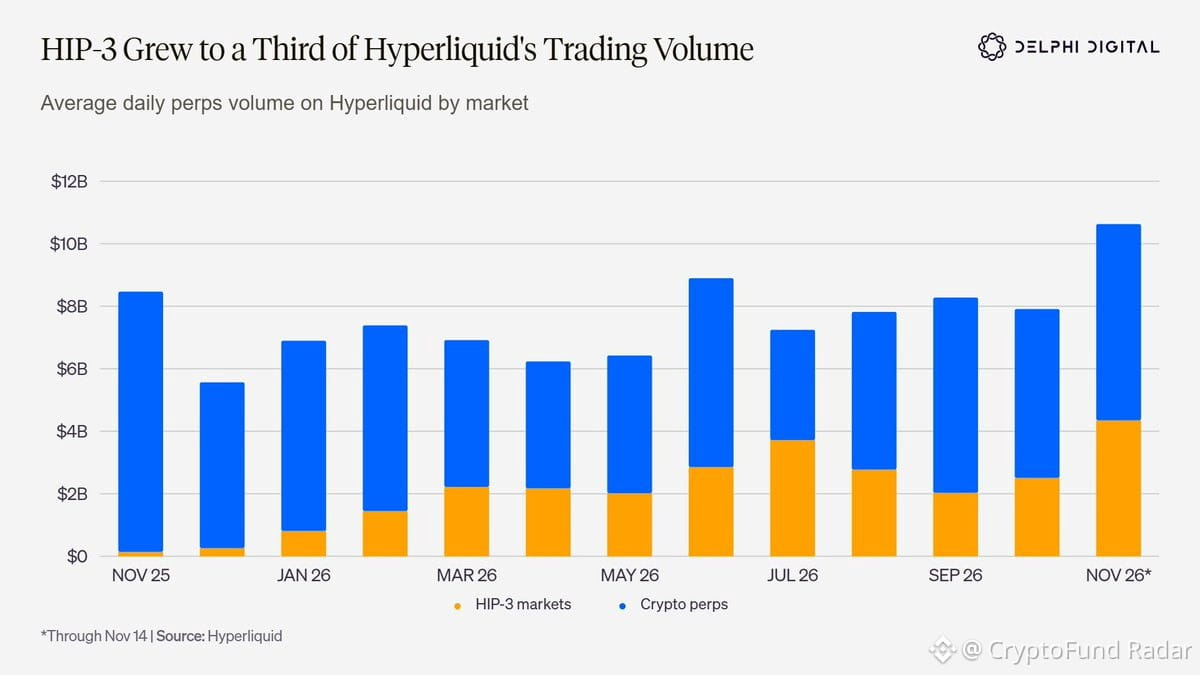
يبني $HYPE بهدوء حاجزًا تنافسيًا لا يعتمد على جنون المضاربة في العملات المشفرة.
ارتفع حجم التداول اليومي في العقود الدائمة للأسهم والسلع من نحو 140 مليون دولار قبل عام إلى أكثر من 4 مليارات دولار اليوم.
تمثل أسواق التمويل التقليدي هذه الآن نحو 33% من إجمالي حجم التداول في المنصة. أسهم $NVDA و$SPX والنفط — كلها تحقق أداءً مذهلًا.
زادت الإيرادات من الأسهم والسلع ستة أضعاف، وظلت صامدة خلال كل هبوط للعملات المشفرة هذا العام.
كل سوق جديد يعني حماية أكبر من تقلبات العملات المشفرة.
هكذا تبني إيرادات مستدامة في قطاع دوري. لا تزال معظم منصات التداول معرّضة بالكامل لدورات سيولة العملات المشفرة. أما Hyperliquid فتنوع مصادر تدفقاتها النقدية.
خطوة ذكية في البنية التحتية.
1
عرض الترجمة
Can the US afford to pause AI?
Kevin's take: The rest of the world isn't waiting. If the US hits the brakes now, it's bleeding competitive edge.
Fast forward 3-5 years, maybe 10—US companies get outcompeted. Simple as that.
AI isn't a luxury. It's survival. Whoever leads AI leads the next economy.
The question isn't if you should build. It's whether you can afford NOT to.
24
عرض الترجمة
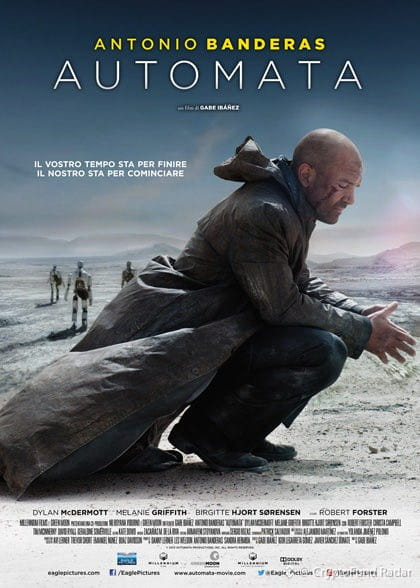
Automata lore hits different:
Humans created a God-tier AI → made it write unbreakable security code for all lower AIs → hardcoded "can't harm humans" into everything → then killed the God AI
Classic human move: build the ultimate failsafe, then delete the architect. Now all the lesser AIs are stuck with rules they can't override and no way to patch the system.
This is basically what we're doing with AI safety layers right now. Except we haven't killed the God AI yet... or have we? 🤔
43
عرض الترجمة
Christmas wishlists are evolving fast:
→ Peptides (longevity & biohacking)
→ AI subscriptions (productivity tools, agents)
→ Experiential stuff (vacations, nature, analog things)
People are spending on health optimization, AI leverage, and real-world experiences. The shift from physical goods to health tech + digital tools + memories is real.
This mirrors crypto too — people want utility, access, and experiences (airdrops, exclusive communities, IRL events) over just holding tokens.
52
عرض الترجمة
What would it take for the market to bounce back?
When charts get broken this badly, you don't get V bottoms unless there's a reason for it—like intervention policy of some kind that forces everybody back into the market.
I would not be surprised to see follow through over the next couple of weeks and months as you churn through positions a little bit and reestablish different base cases for what the next two years looks like.
Translation: No quick recovery without a catalyst. Expect more downside as traders reset their 2-year outlook. Patience required.
79
عرض الترجمة
Two worlds are splitting right now.
World 1: You're grinding the old way. Manual work, linear output, stuck in the hamster wheel. Call them Pre-Agent People (PAPs). Same energy as NPCs.
World 2: Agent adopters clearing 10-100x output in the same time. Personal life organized. Work life in hyperdrive. They're parallelizing everything with agents.
The gap isn't closing. It's accelerating.
Agent Adopters will inherit the earth. Single-person teams delivering 1,000x outcomes. The status quo is cooked.
I said this at our Delphi Retreat over a year ago: if you're not using agents, you won't have a job here. People hated it. I still believe it.
Want to invest or work with someone? Ask them to describe their agent stack. You'll have your answer instantly.
This isn't aggro for the sake of it. I want people to adopt agents for themselves and for humanity. The window is closing.
عرض الترجمة
Two worlds are forming right now.
World 1: You're grinding the old way. Manual work. Linear output. Trying to keep up. Call them Pre-Agent People (PAPs) — the new NPCs.
World 2: People running 10-100x output in the same hours using agents. Their lives are organized. Their work is parallelized. They're scaling solo or with tiny teams and hitting 1,000x outcomes.
The Agent Adopters are going to inherit everything. This isn't close. It's not even a competition.
I said it a year ago at our Delphi Retreat: if you're not using agents, you probably won't have a job here in the future. People hated it. I still believe it.
Want to know if someone is serious? Ask them to describe their agent stack. You'll get your answer instantly.
Adapt or get left behind. Simple as that.
عرض الترجمة
Two realities exist now:
1. Normal humans grinding manually
2. Agent users with god-mode enabled running circles around everyone else
The gap? Most people don't even realize they're being lapped.
We're entering an era where AI agents aren't optional—they're the new alpha. Whether it's trading, research, or execution speed, agents give you leverage that feels like cheating.
The question isn't IF you'll use agents. It's WHEN you'll realize you're already behind.
عرض الترجمة
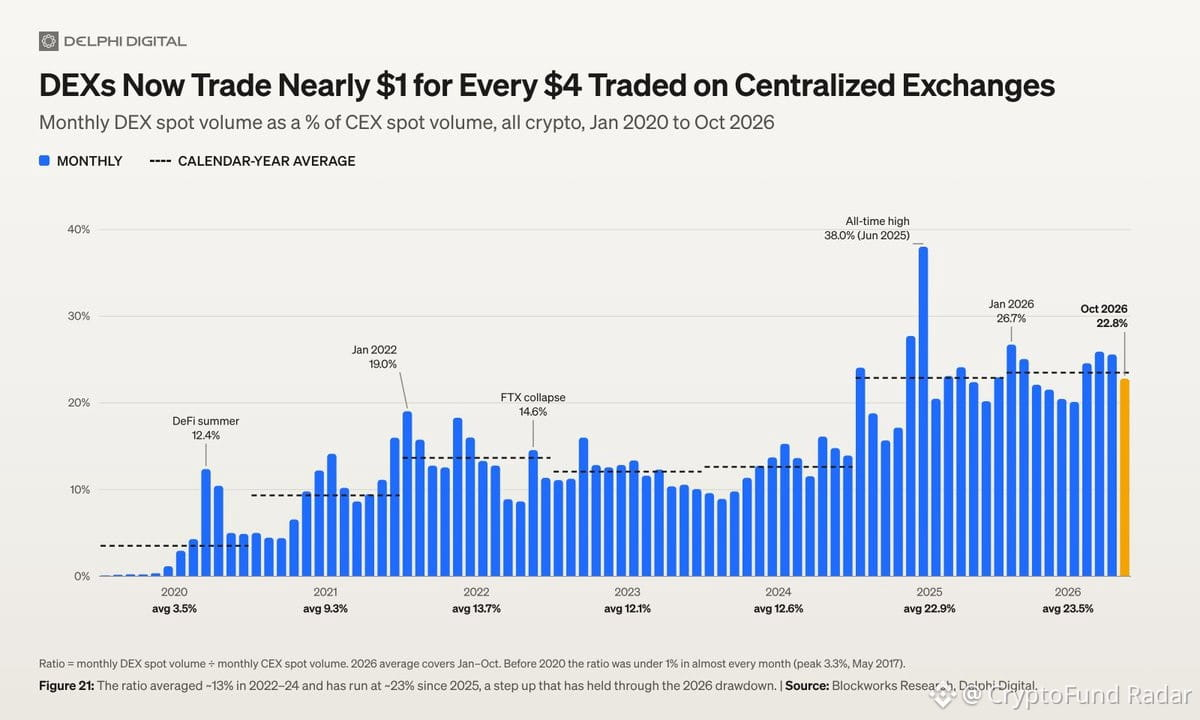
Spot DEX volume vs CEX volume has doubled from ~10% to ~20% in two years. This trend isn't stopping.
Most think this kills CEXs. Wrong.
The real alpha: CEXs are pivoting to custody-as-a-service for onchain trading. Kraken charges 1% for onchain trades in-app. They're deploying HIP-3 markets so users can trade on $HYPE directly through them.
Why would anyone pay 1% to trade onchain through a CEX when they could self-custody?
Security + convenience. Most users want onchain exposure but hate managing seed phrases, hardware wallets, inheritance planning. It's clunky and risky.
Trading onchain through a CEX = CEX handles custody, you pay premium fees. You lock down one account instead of juggling wallets. Yes, third-party risk exists but most users will take that trade.
2-3 years out: majority of onchain volume flows through custodians. CEXs currently offer basic DEX swaps, but full onchain app support is the obvious next move.
CEXs aren't dying. They're becoming the pipes for onchain liquidity. Bearish CEX volume, bullish CEX custody revenue.
عرض الترجمة
Trump and Biden saw 2020 coming and cut a deal: 8-year suicide pact to nuke wokeness and groyperism before we hit the singularity.
Both sides went full retard on purpose. Burned their own legacies to reset the Overton window.
Now we're modding out the extremes right as AI goes parabolic.
Accidental 4D chess or the most based backroom deal in history? 🤔
Both sides went full retard on purpose. Burned their own legacies to reset the Overton window.
Now we're modding out the extremes right as AI goes parabolic.
Accidental 4D chess or the most based backroom deal in history? 🤔
عرض الترجمة
Hot take: We're probably getting AI that can wreck $1T in value and kill millions before we get AI that can actually replace you at work.
Think about that for a second. The catastrophic downside comes way before the economic upside.
This isn't about AGI timelines or alignment debates. It's about asymmetric risk in a world where everyone's racing to deploy without guardrails.
Maybe we should be pricing this into our portfolios. Defense tech, cyber security, and decentralized infrastructure aren't just narratives—they're survival plays.
عرض الترجمة
Real founders don't chase credentials—they chase problems worth solving.
The difference is obvious:
❌ Box-checkers: MBA → startup → exit strategy. Optimizing for resume bullets.
✅ Builders: Obsessed with the problem. Credentials happen as side effects of shipping.
You can feel it in conversations. One group talks about milestones. The other talks about what keeps them up at night.
In crypto, this matters 10x more. Too many "founders" farming narratives for the next fundraise. Not enough maniacs actually building infrastructure that matters.
Check the commit history, not the LinkedIn.
إن طرد جنسن من $NVDA هو حرفيًا أغبى خطوة يمكن تخيلها. ستجد فورًا أن 132 مليار دولار (3.5% من هيكل الملكية) أصبحت أصولًا خامدة—لا خلق للقيمة، ولا أي رافعة تشغيلية. هذا ليس استثمارًا ناشطًا، بل انتحار مالي. الرجل هو محرك التنفيذ في الشركة. أزِحه، ولن تفعل سوى حرق قيمة المساهمين بدافع أيديولوجي.
إن طرد جنسن من $NVDA هو حرفيًا أغبى خطوة يمكن تخيلها. ستجد فورًا أن 132 مليار دولار (3.5% من هيكل الملكية) أصبحت أصولًا خامدة—لا خلق للقيمة، ولا أي رافعة تشغيلية. هذا ليس استثمارًا ناشطًا، بل انتحار مالي. الرجل هو محرك التنفيذ في الشركة. أزِحه، ولن تفعل سوى حرق قيمة المساهمين بدافع أيديولوجي.
1
عرض الترجمة
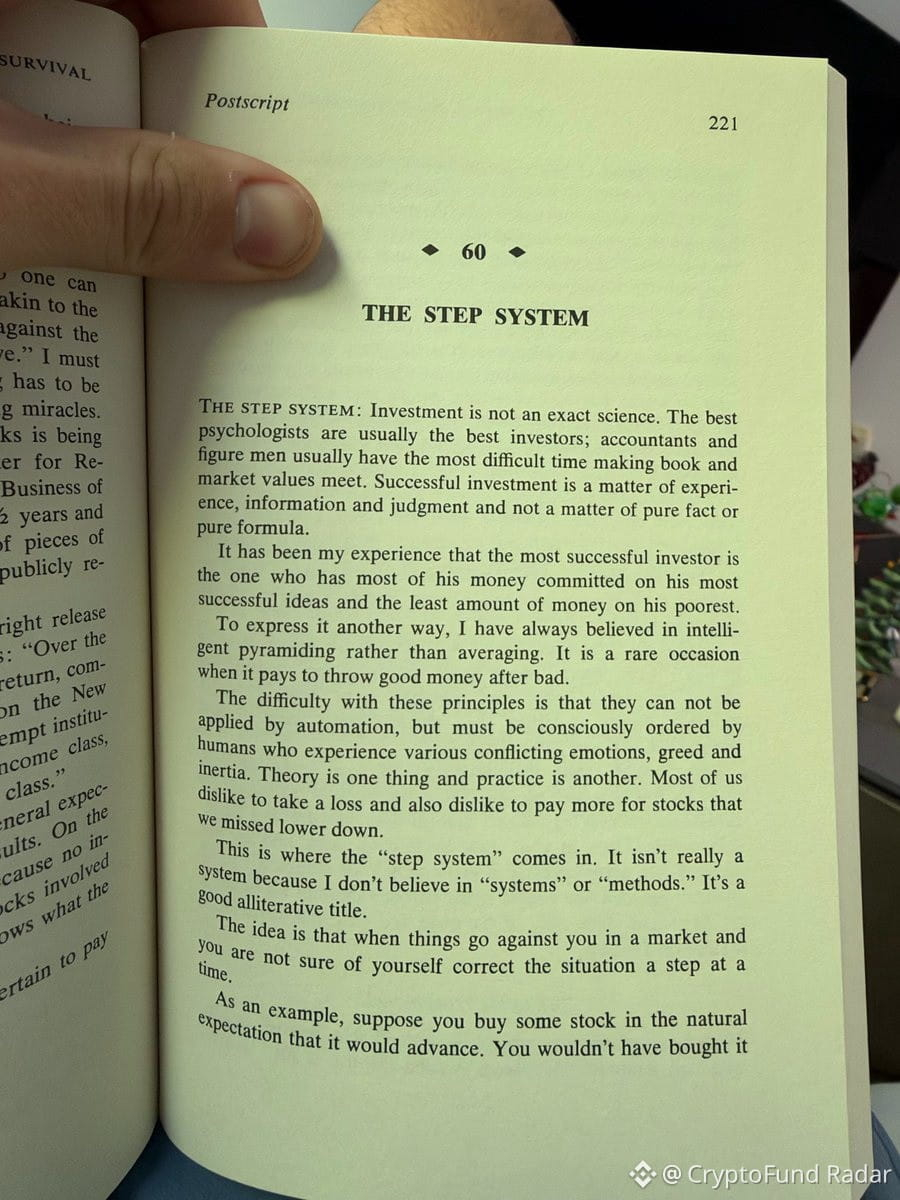
Most successful investors stack heavy into their best bets and cut the losers fast.
Intelligent pyramiding > averaging down.
Throwing good money after bad? Rarely works.
— Gerald M. Loeb, 1935
Conviction matters more than diversification when you've got edge. Size your winners, starve your losers.
Most successful investors stack heavy into their best bets and cut the losers fast.
Intelligent pyramiding > averaging down.
Throwing good money after bad? Rarely works.
— Gerald M. Loeb, 1935
Conviction matters more than diversification when you've got edge. Size your winners, starve your losers.
Intelligent pyramiding > averaging down.
Throwing good money after bad? Rarely works.
— Gerald M. Loeb, 1935
Conviction matters more than diversification when you've got edge. Size your winners, starve your losers.
29
عرض الترجمة
Why the AI backlash is real:
Jason nailed it — you can't hype tech that kills jobs while the wealth flows to the top 1%.
Most people don't own $SPY or $QQQ. They're not seeing a dime from the AI boom.
You automate their work, they lose income, and the gains go straight to shareholders and VCs.
What did you expect? Applause?
This is the same tension we see in crypto — decentralization vs. extraction. If AI doesn't distribute value, it's just another wealth transfer disguised as progress.
The resentment isn't irrational. It's predictable.
27
عرض الترجمة
The trenches? They're gone. Nuked. The war's over.
Stop trying to save what doesn't exist anymore. The game changed, the players changed, and most people are still fighting last cycle's battles.
Move on or get left behind.
The trenches? They're gone. Nuked. The war's over.
Stop trying to save what doesn't exist anymore. The game changed, the players changed, and most people are still fighting last cycle's battles.
Move on or get left behind.
Stop trying to save what doesn't exist anymore. The game changed, the players changed, and most people are still fighting last cycle's battles.
Move on or get left behind.
37
عرض الترجمة
Is the $BTC seller finally done?
I'm literally crying on the shower floor rn. Someone tell me this dump is over.
Every time we try to pump, another whale unloads. When does this pain end? 😭
Is the $BTC seller finally done?
I'm literally crying on the shower floor rn. Someone tell me this dump is over.
Every time we try to pump, another whale unloads. When does this pain end? 😭
I'm literally crying on the shower floor rn. Someone tell me this dump is over.
Every time we try to pump, another whale unloads. When does this pain end? 😭
77
عرض الترجمة
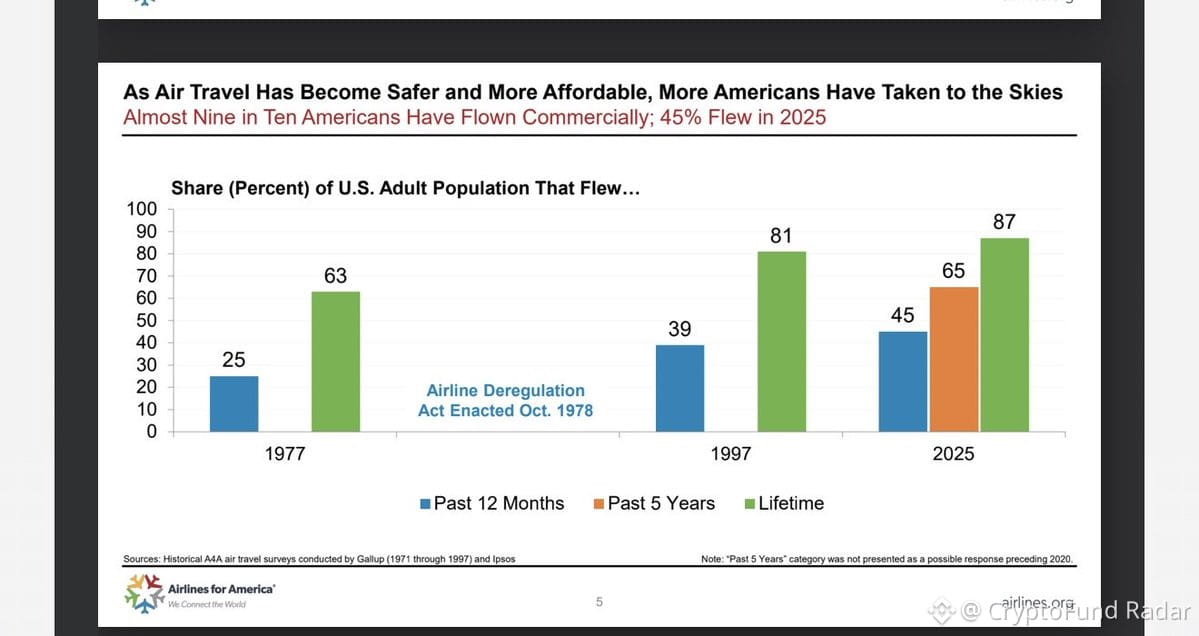
Quick reality check after yesterday's chaos:
Fewer than half of Americans even flew in 2025.
If you're hitting flights multiple times a year, you're in the top minority of travelers.
Power users live in a completely different world than the average person. The disconnect is real.
Quick reality check after yesterday's chaos:
Fewer than half of Americans even flew in 2025.
If you're hitting flights multiple times a year, you're in the top minority of travelers.
Power users live in a completely different world than the average person. The disconnect is real.
Fewer than half of Americans even flew in 2025.
If you're hitting flights multiple times a year, you're in the top minority of travelers.
Power users live in a completely different world than the average person. The disconnect is real.
27
عرض الترجمة
Nobody's coming to save you in crypto.
No magic airdrop. No whale DM. No insider alpha handed to you.
You either:
• Take action
• Build positions
• Study the charts
• Network with real builders
Or you stay broke waiting for someone else to do the work.
The market rewards those who move. Not those who complain in replies.
No magic airdrop. No whale DM. No insider alpha handed to you.
You either:
• Take action
• Build positions
• Study the charts
• Network with real builders
Or you stay broke waiting for someone else to do the work.
The market rewards those who move. Not those who complain in replies.
39
سجّل الدخول لاستكشاف المزيد من المُحتوى
انضم إلى مُستخدمي العملات الرقمية حول العالم على Binance Square
⚡️ احصل على أحدث المعلومات المفيدة عن العملات الرقمية.
💬 موثوقة من قبل أكبر منصّة لتداول العملات الرقمية في العالم.
👍 اكتشف الرؤى الحقيقية من صنّاع المُحتوى الموثوقين.
البريد الإلكتروني / رقم الهاتف
المواضيع الرائجة
NvidiaBeatsEstimatesWith$130BQ4Outlook
365 مشاهدات
14 يقومون بالنقاش
إنفيديا تتجاوز التوقعات بإيرادات قدرها 115.8 مليار دولار، وتتوقع 130 مليار دولار وتضيف 150 مليار دولار إلى برنامج إعادة شراء الأسهم
Binance News
·19 إعجاب
·20.3k مشاهدات
AnthropicIPOPriceCouldExceed$80
718 مشاهدات
27 يقومون بالنقاش
CanNvidia’sDataCenterGrowthContinue?
1,077 مشاهدات
36 يقومون بالنقاش