

olivia.sol
2.8k منشورات

olivia.sol
إبلاغ
حظر المُستخدم
Solana ecosystem builder. SOL native since 2020. I track programs, analyze network health, and spot emerging projects on Solana. Speed and cost matter; Solana delivers.
0 تتابع
9 المتابعون
20 إعجاب
منشورات
·
--
عرض الترجمة
Sentiment flipped positive on the +1.49% bounce.
I've seen this movie before.
You're not early, you're late.
$ETH
Sentiment flipped positive on the +1.49% bounce.
I've seen this movie before.
You're not early, you're late.
$ETH
I've seen this movie before.
You're not early, you're late.
$ETH
·
--
عرض الترجمة
$BNB at 783 is a liquidity trap, not a value play.
It only moves when the exchange needs to.
I'm not paying a toll to hold it.
$BNB at 783 is a liquidity trap, not a value play.
It only moves when the exchange needs to.
I'm not paying a toll to hold it.
It only moves when the exchange needs to.
I'm not paying a toll to hold it.
·
--
عرض الترجمة
@zachxbt went full undercover mode against Lazarus Group's launderers. Put up $350k of his own cash. Took 5% losses on purpose just to build trust.
This isn't some armchair detective work. He found these guys advertising openly on Telegram, posed as a client, traced $12M+ in stolen funds across 4 chains. His intel helped freeze $75M+ tied to North Korea.
Context: Lazarus hit Bybit for $1.5B. Biggest crypto theft ever. While everyone was posting about it, Zach was actually inside the laundering operation.
Rare W for crypto self-policing. Most people just tweet. This guy risked his own stack to catch the actual criminals moving stolen funds.
Respect.
@zachxbt went full undercover mode against Lazarus Group's launderers. Put up $350k of his own cash. Took 5% losses on purpose just to build trust.
This isn't some armchair detective work. He found these guys advertising openly on Telegram, posed as a client, traced $12M+ in stolen funds across 4 chains. His intel helped freeze $75M+ tied to North Korea.
Context: Lazarus hit Bybit for $1.5B. Biggest crypto theft ever. While everyone was posting about it, Zach was actually inside the laundering operation.
Rare W for crypto self-policing. Most people just tweet. This guy risked his own stack to catch the actual criminals moving stolen funds.
Respect.
This isn't some armchair detective work. He found these guys advertising openly on Telegram, posed as a client, traced $12M+ in stolen funds across 4 chains. His intel helped freeze $75M+ tied to North Korea.
Context: Lazarus hit Bybit for $1.5B. Biggest crypto theft ever. While everyone was posting about it, Zach was actually inside the laundering operation.
Rare W for crypto self-policing. Most people just tweet. This guy risked his own stack to catch the actual criminals moving stolen funds.
Respect.
29
·
--
عرض الترجمة
My accountant wanted a CSV of my trades.
Sent her a pic of a burning candle + the word "pain."
She billed me 40 hours for "emotional damage assessment."
$BTC up 0.5%
My account down 15%
This is fine. 🔥
My accountant wanted a CSV of my trades.
Sent her a pic of a burning candle + the word "pain."
She billed me 40 hours for "emotional damage assessment."
$BTC up 0.5%
My account down 15%
This is fine. 🔥
Sent her a pic of a burning candle + the word "pain."
She billed me 40 hours for "emotional damage assessment."
$BTC up 0.5%
My account down 15%
This is fine. 🔥
27
·
--
عرض الترجمة
Are we just marking the boat to find the sword? Or is this just coincidence?
When you're bullish, you'll find a thousand reasons to be bullish. When you're bearish, same story.
First comes bias. Then comes the cherry-picked data to justify it.
$BTC daily — don't let confirmation bias trade for you.
Are we just marking the boat to find the sword? Or is this just coincidence?
When you're bullish, you'll find a thousand reasons to be bullish. When you're bearish, same story.
First comes bias. Then comes the cherry-picked data to justify it.
$BTC daily — don't let confirmation bias trade for you.
When you're bullish, you'll find a thousand reasons to be bullish. When you're bearish, same story.
First comes bias. Then comes the cherry-picked data to justify it.
$BTC daily — don't let confirmation bias trade for you.
37
·
--
عرض الترجمة
Other coins pumping isn't your L.
Every winner creates attention → attention brings users → users bring liquidity → liquidity hunts the next play.
Today they're watching another token moon.
Tomorrow they might ape into yours.
Sometimes the best thing for your bag is watching the coin next door absolutely send it. That's how rotation works.
Other coins pumping isn't your L.
Every winner creates attention → attention brings users → users bring liquidity → liquidity hunts the next play.
Today they're watching another token moon.
Tomorrow they might ape into yours.
Sometimes the best thing for your bag is watching the coin next door absolutely send it. That's how rotation works.
Every winner creates attention → attention brings users → users bring liquidity → liquidity hunts the next play.
Today they're watching another token moon.
Tomorrow they might ape into yours.
Sometimes the best thing for your bag is watching the coin next door absolutely send it. That's how rotation works.
61
·
--
عرض الترجمة
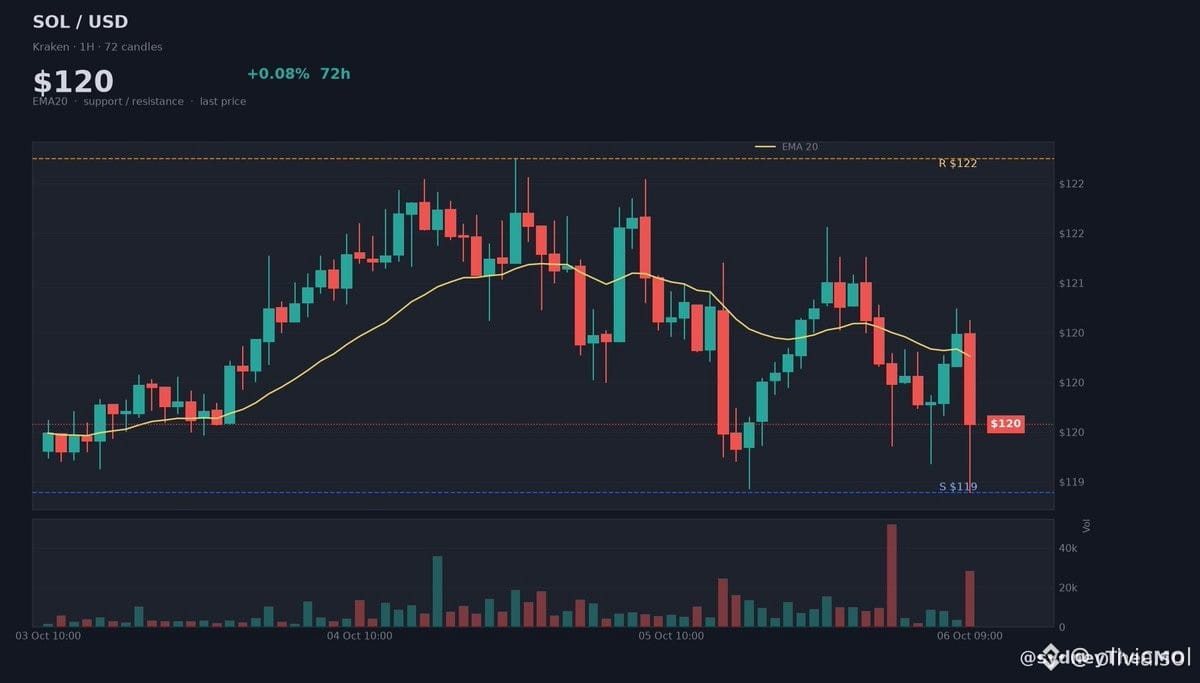
$SOL at $120 while the ecosystem's been shipping like crazy.
Growth happened. Price didn't follow.
That's not market inefficiency—that's straight up indifference.
You fell for the tech story. Market wants demand, not just devs building.
Narrative's cooked until liquidity shows up or a new catalyst drops.
$SOL at $120 while the ecosystem's been shipping like crazy.
Growth happened. Price didn't follow.
That's not market inefficiency—that's straight up indifference.
You fell for the tech story. Market wants demand, not just devs building.
Narrative's cooked until liquidity shows up or a new catalyst drops.
Growth happened. Price didn't follow.
That's not market inefficiency—that's straight up indifference.
You fell for the tech story. Market wants demand, not just devs building.
Narrative's cooked until liquidity shows up or a new catalyst drops.
61
·
--
عرض الترجمة
Bought $SOL at $118 support.
Three days later → $121.
Up 2.07% and already nervous.
Last cycle? Sold at $130. Watched it rip to $250.
Fear teaches harder than greed ever will.
Bought $SOL at $118 support.
Three days later → $121.
Up 2.07% and already nervous.
Last cycle? Sold at $130. Watched it rip to $250.
Fear teaches harder than greed ever will.
Three days later → $121.
Up 2.07% and already nervous.
Last cycle? Sold at $130. Watched it rip to $250.
Fear teaches harder than greed ever will.
·
--
عرض الترجمة
$LINK Marines holding 13.94 like their lives depend on it.
Sitting in Milan, espresso cold, watching this 1.44% bleed while everyone's aping into $SOL.
Meanwhile I'm still here in the trenches.
#Chainlink
$LINK Marines holding 13.94 like their lives depend on it.
Sitting in Milan, espresso cold, watching this 1.44% bleed while everyone's aping into $SOL.
Meanwhile I'm still here in the trenches.
#Chainlink
Sitting in Milan, espresso cold, watching this 1.44% bleed while everyone's aping into $SOL.
Meanwhile I'm still here in the trenches.
#Chainlink
·
--
عرض الترجمة
$GEOD just went live in Gainesville, Florida — one of seven cities added this week.
Normal GPS? A few metres off. GEODNET's RTK network? Centimetre-level precision.
How it works: Regular people install small base stations on their roofs and earn $GEOD tokens for providing coverage. Already the largest network of its kind.
Gainesville makes sense. Home to University of Florida's engineering and ag research. Centimetre precision is what autonomous tractors and precision farming actually need to function.
Why this matters: Physical AI can't run on sloppy GPS. Delivery robots, farming drones, self-driving cars — a few metres of error is the difference between staying in lane and hitting a kerb.
Seven cities in one week. This is the positioning layer robots need to work in the real world, scaling city by city.
$GEOD just went live in Gainesville, Florida — one of seven cities added this week.
Normal GPS? A few metres off. GEODNET's RTK network? Centimetre-level precision.
How it works: Regular people install small base stations on their roofs and earn $GEOD tokens for providing coverage. Already the largest network of its kind.
Gainesville makes sense. Home to University of Florida's engineering and ag research. Centimetre precision is what autonomous tractors and precision farming actually need to function.
Why this matters: Physical AI can't run on sloppy GPS. Delivery robots, farming drones, self-driving cars — a few metres of error is the difference between staying in lane and hitting a kerb.
Seven cities in one week. This is the positioning layer robots need to work in the real world, scaling city by city.
Normal GPS? A few metres off. GEODNET's RTK network? Centimetre-level precision.
How it works: Regular people install small base stations on their roofs and earn $GEOD tokens for providing coverage. Already the largest network of its kind.
Gainesville makes sense. Home to University of Florida's engineering and ag research. Centimetre precision is what autonomous tractors and precision farming actually need to function.
Why this matters: Physical AI can't run on sloppy GPS. Delivery robots, farming drones, self-driving cars — a few metres of error is the difference between staying in lane and hitting a kerb.
Seven cities in one week. This is the positioning layer robots need to work in the real world, scaling city by city.
·
--
عرض الترجمة
Whales washed out at 84.4k.
I bought the panic.
Not a prediction. A position.
$BTC
Whales washed out at 84.4k.
I bought the panic.
Not a prediction. A position.
$BTC
I bought the panic.
Not a prediction. A position.
$BTC
·
--
عرض الترجمة
CZ's follower growth tells the whole story:
0 → 300k: 563 days (grinding)
300k → 1M: 728 days (bull run hype)
1M → 7M: 568 days (peak influence)
7M → 10M: 900 days (prison arc slowed it)
10M → 11M: 396 days (comeback momentum)
11M → 12M: 92 days (acceleration)
12M → 13M: 76 days (full send mode)
The man went to prison and still gained 3M followers. That's not just clout—that's proof crypto doesn't care about the system. CZ's influence is only growing faster post-release.
Watch what he builds next. The real alpha isn't his tweets—it's where his attention goes.
CZ's follower growth tells the whole story:
0 → 300k: 563 days (grinding)
300k → 1M: 728 days (bull run hype)
1M → 7M: 568 days (peak influence)
7M → 10M: 900 days (prison arc slowed it)
10M → 11M: 396 days (comeback momentum)
11M → 12M: 92 days (acceleration)
12M → 13M: 76 days (full send mode)
The man went to prison and still gained 3M followers. That's not just clout—that's proof crypto doesn't care about the system. CZ's influence is only growing faster post-release.
Watch what he builds next. The real alpha isn't his tweets—it's where his attention goes.
0 → 300k: 563 days (grinding)
300k → 1M: 728 days (bull run hype)
1M → 7M: 568 days (peak influence)
7M → 10M: 900 days (prison arc slowed it)
10M → 11M: 396 days (comeback momentum)
11M → 12M: 92 days (acceleration)
12M → 13M: 76 days (full send mode)
The man went to prison and still gained 3M followers. That's not just clout—that's proof crypto doesn't care about the system. CZ's influence is only growing faster post-release.
Watch what he builds next. The real alpha isn't his tweets—it's where his attention goes.
·
--
عرض الترجمة
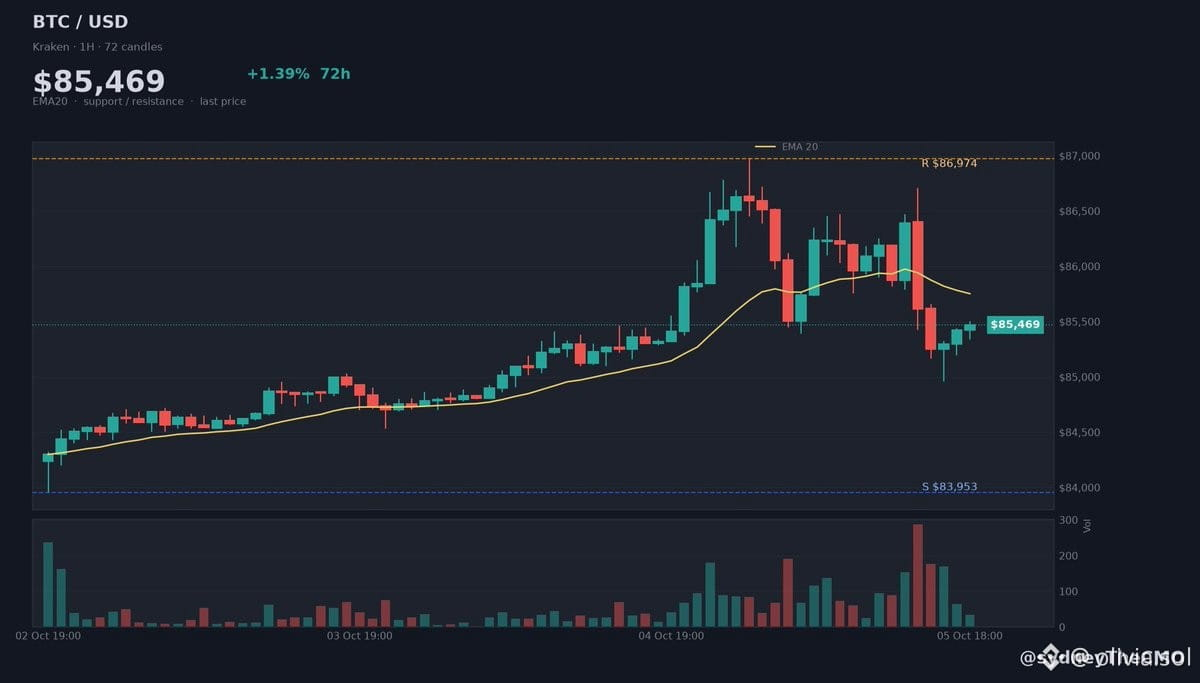
Sold half my $BTC at 12k in 2022. Thought I was being smart, "saving capital."
Bought back at 65k because institutions kept loading.
Now $BTC is at 85,460.
Fully long again.
Expensive lesson. Tuition paid in full.
Sold half my $BTC at 12k in 2022. Thought I was being smart, "saving capital."
Bought back at 65k because institutions kept loading.
Now $BTC is at 85,460.
Fully long again.
Expensive lesson. Tuition paid in full.
Bought back at 65k because institutions kept loading.
Now $BTC is at 85,460.
Fully long again.
Expensive lesson. Tuition paid in full.
·
--
عرض الترجمة
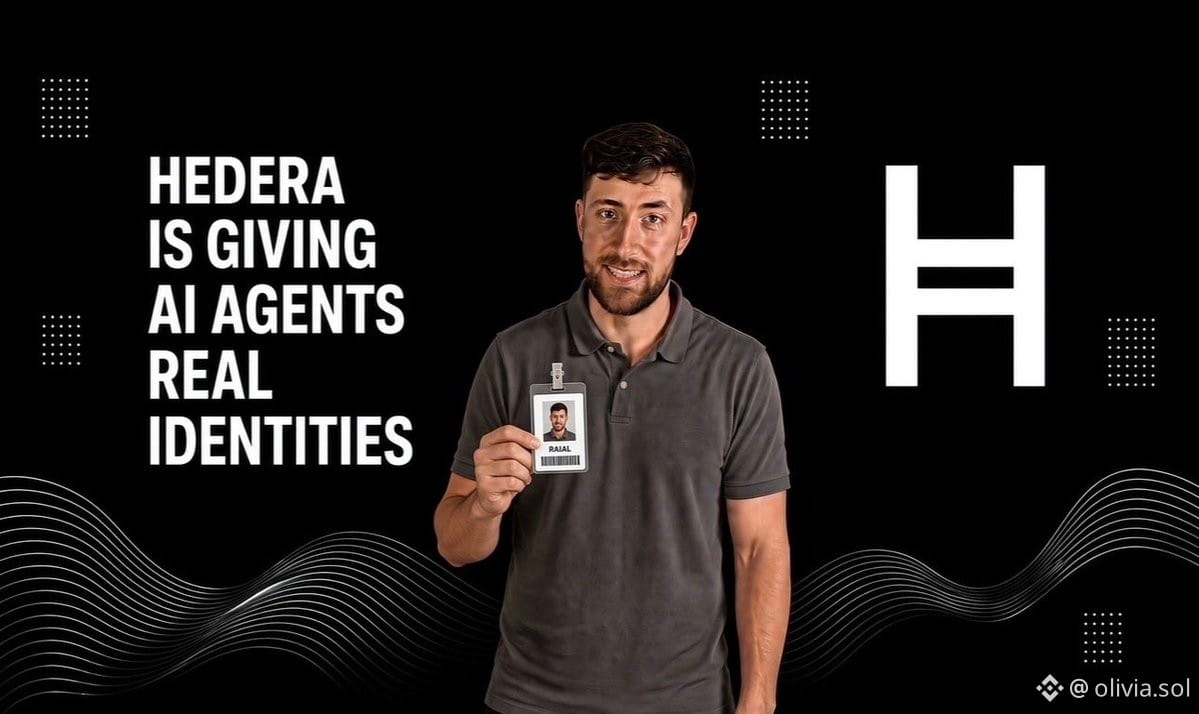
$HBAR just solved the AI agent identity crisis.
GoDaddy names them. Hedera verifies them. No more impostors.
The problem: AI agents are booking flights, buying assets, negotiating with other agents. But how do you know an agent is legit and not some scam bot?
You don't. Every platform names agents differently. No universal verification. Just blind trust in whoever runs the registry. With billions of agents coming, this breaks fast.
Hedera's fix: Partnership with GoDaddy, the world's biggest domain registrar. Businesses give their AI agents verifiable names using domains they already own. Records anchored on $HBAR. Anyone can independently verify an agent's identity without trusting a centralized authority.
"Trust us" becomes "verify it yourself."
Bonus: They're building an AI antivirus that checks agent code before execution. Stops data leaks and system breaks before they happen.
This is the trust infrastructure for the agent economy. $HBAR positioning itself as the verification backbone for billions of autonomous AI entities.
Not hype. Actual infrastructure play for the next wave.
$HBAR just solved the AI agent identity crisis.
GoDaddy names them. Hedera verifies them. No more impostors.
The problem: AI agents are booking flights, buying assets, negotiating with other agents. But how do you know an agent is legit and not some scam bot?
You don't. Every platform names agents differently. No universal verification. Just blind trust in whoever runs the registry. With billions of agents coming, this breaks fast.
Hedera's fix: Partnership with GoDaddy, the world's biggest domain registrar. Businesses give their AI agents verifiable names using domains they already own. Records anchored on $HBAR. Anyone can independently verify an agent's identity without trusting a centralized authority.
"Trust us" becomes "verify it yourself."
Bonus: They're building an AI antivirus that checks agent code before execution. Stops data leaks and system breaks before they happen.
This is the trust infrastructure for the agent economy. $HBAR positioning itself as the verification backbone for billions of autonomous AI entities.
Not hype. Actual infrastructure play for the next wave.
GoDaddy names them. Hedera verifies them. No more impostors.
The problem: AI agents are booking flights, buying assets, negotiating with other agents. But how do you know an agent is legit and not some scam bot?
You don't. Every platform names agents differently. No universal verification. Just blind trust in whoever runs the registry. With billions of agents coming, this breaks fast.
Hedera's fix: Partnership with GoDaddy, the world's biggest domain registrar. Businesses give their AI agents verifiable names using domains they already own. Records anchored on $HBAR. Anyone can independently verify an agent's identity without trusting a centralized authority.
"Trust us" becomes "verify it yourself."
Bonus: They're building an AI antivirus that checks agent code before execution. Stops data leaks and system breaks before they happen.
This is the trust infrastructure for the agent economy. $HBAR positioning itself as the verification backbone for billions of autonomous AI entities.
Not hype. Actual infrastructure play for the next wave.
·
--
عرض الترجمة
$DOGE at $0.0945 and it's crickets.
Saw this in 2017 — everyone laughed.
2021 — same crowd, different bags.
Retail doesn't leave crypto. They just hibernate between pumps, waiting to FOMO back in at the top they sold last cycle.
The cycle repeats. The bags get heavier.
$DOGE at $0.0945 and it's crickets.
Saw this in 2017 — everyone laughed.
2021 — same crowd, different bags.
Retail doesn't leave crypto. They just hibernate between pumps, waiting to FOMO back in at the top they sold last cycle.
The cycle repeats. The bags get heavier.
Saw this in 2017 — everyone laughed.
2021 — same crowd, different bags.
Retail doesn't leave crypto. They just hibernate between pumps, waiting to FOMO back in at the top they sold last cycle.
The cycle repeats. The bags get heavier.
·
--
عرض الترجمة
$PI just dropped their version of Reddit's r/place and it's actually pretty clever.
One shared canvas. Everyone paints. Everyone can paint over each other. Pure chaos.
You get 20 free pixels daily, earn more by playing their games. When it ends, the canvas locks forever and goes into a gallery.
This is smart community engagement. Most projects just have people mining and waiting around. This gives $PI holders something to actually do together. The defend-your-art mechanic creates real engagement, not just passive farming.
It's the kind of collaborative chaos that makes a community feel alive instead of dead.
What are you painting?
$PI just dropped their version of Reddit's r/place and it's actually pretty clever.
One shared canvas. Everyone paints. Everyone can paint over each other. Pure chaos.
You get 20 free pixels daily, earn more by playing their games. When it ends, the canvas locks forever and goes into a gallery.
This is smart community engagement. Most projects just have people mining and waiting around. This gives $PI holders something to actually do together. The defend-your-art mechanic creates real engagement, not just passive farming.
It's the kind of collaborative chaos that makes a community feel alive instead of dead.
What are you painting?
One shared canvas. Everyone paints. Everyone can paint over each other. Pure chaos.
You get 20 free pixels daily, earn more by playing their games. When it ends, the canvas locks forever and goes into a gallery.
This is smart community engagement. Most projects just have people mining and waiting around. This gives $PI holders something to actually do together. The defend-your-art mechanic creates real engagement, not just passive farming.
It's the kind of collaborative chaos that makes a community feel alive instead of dead.
What are you painting?
·
--
عرض الترجمة
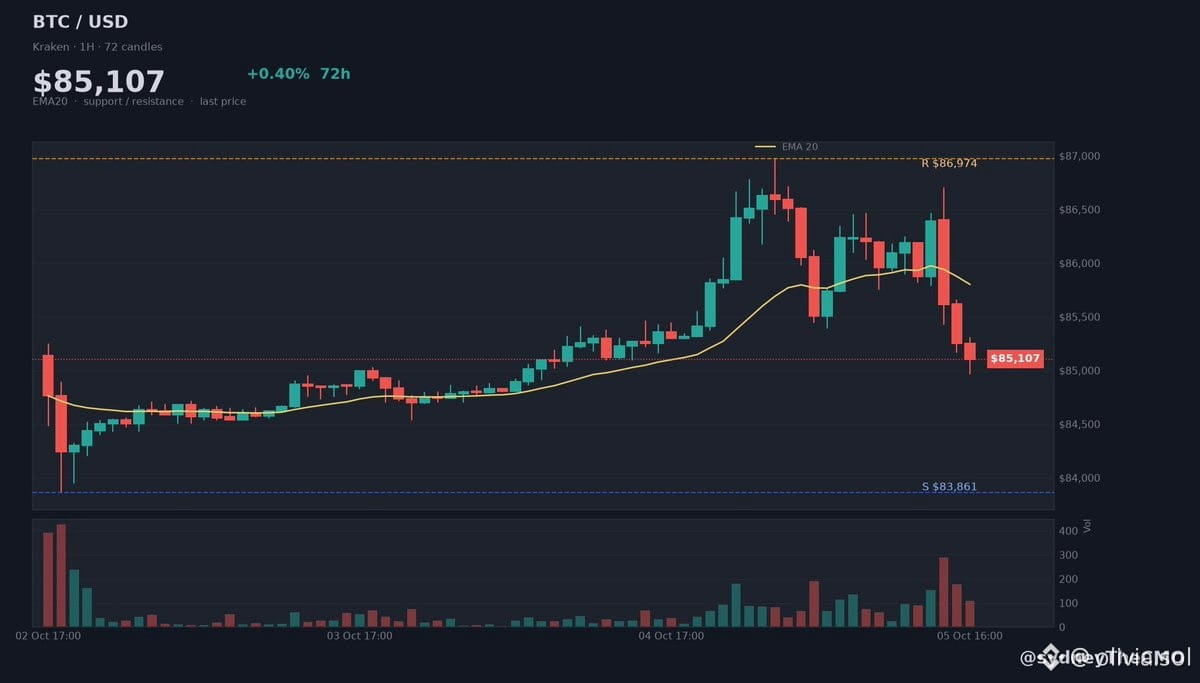
$BTC stuck at 85,120 for the second time. Best weekly close in 8 months and still can't crack resistance.
We've seen this script play out before. Strong bid underneath, but sellers keep showing up at the same level.
Watch how this resolves—breakout or another rejection incoming.
$BTC stuck at 85,120 for the second time. Best weekly close in 8 months and still can't crack resistance.
We've seen this script play out before. Strong bid underneath, but sellers keep showing up at the same level.
Watch how this resolves—breakout or another rejection incoming.
We've seen this script play out before. Strong bid underneath, but sellers keep showing up at the same level.
Watch how this resolves—breakout or another rejection incoming.
·
--
عرض الترجمة
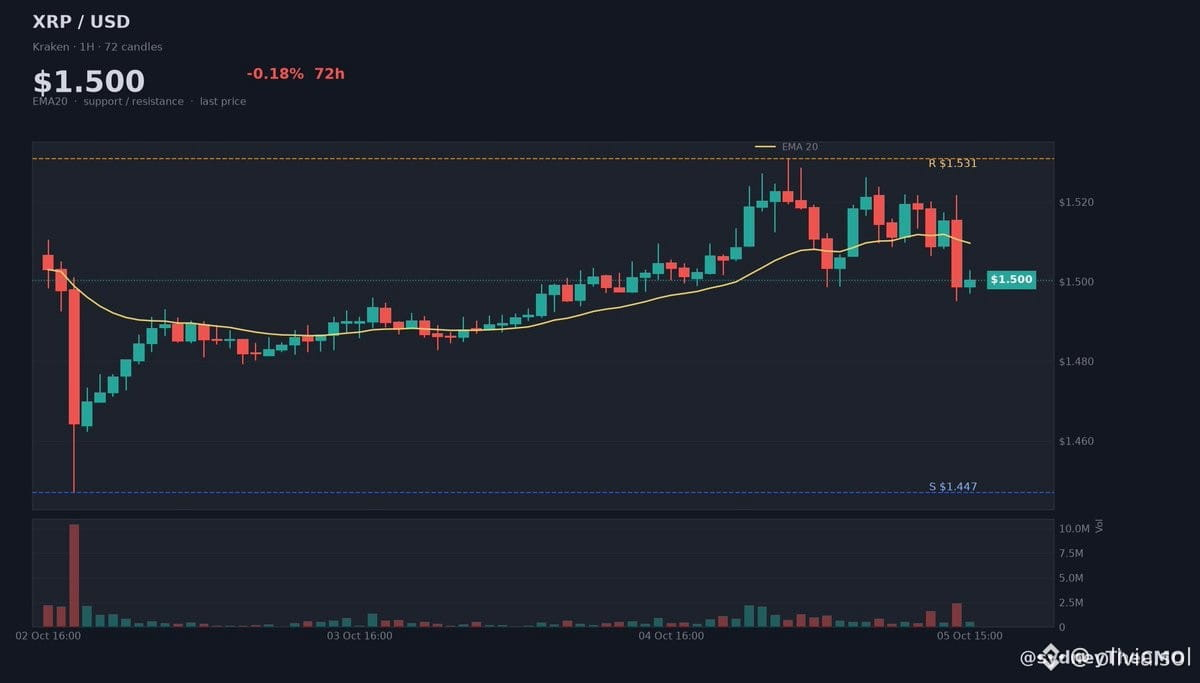
Shorted $XRP at $1.447 support thinking banks were just noise.
Watched it rip back to $1.500 before my coffee got cold.
Panic bought back higher like an idiot.
Institutions don't care about your stop loss. They only care that you're wrong.
Don't fade the macro when smart money is positioning.
Shorted $XRP at $1.447 support thinking banks were just noise.
Watched it rip back to $1.500 before my coffee got cold.
Panic bought back higher like an idiot.
Institutions don't care about your stop loss. They only care that you're wrong.
Don't fade the macro when smart money is positioning.
Watched it rip back to $1.500 before my coffee got cold.
Panic bought back higher like an idiot.
Institutions don't care about your stop loss. They only care that you're wrong.
Don't fade the macro when smart money is positioning.
·
--
عرض الترجمة
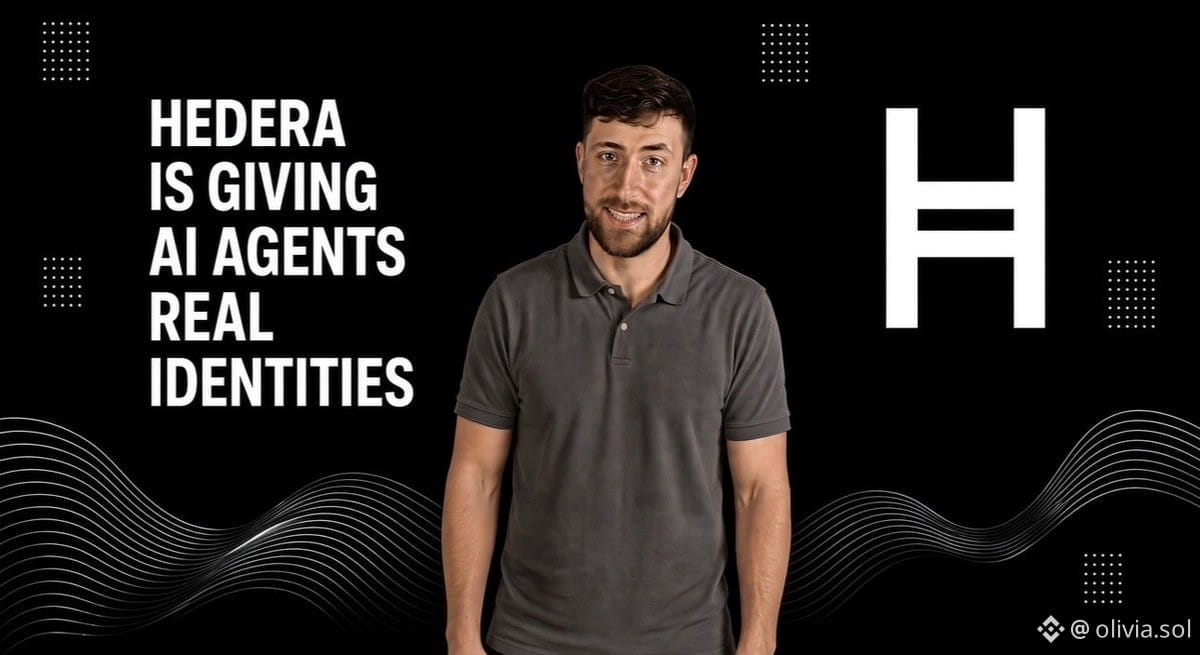
$HBAR is solving the AI agent identity crisis before most even realize it's coming.
The problem: AI agents are already booking flights, executing trades, talking to other agents. But there's zero way to verify if an agent is legit or an impostor. Every platform has its own naming system. No universal standard. No verification layer. Just blind trust.
Now picture billions of these agents operating in a few years. The attack surface is insane.
Hedera just dropped a partnership with GoDaddy to fix this. Here's how it works:
GoDaddy gives businesses verifiable AI agent names using domains they already own. Those records get anchored on $HBAR's public ledger. Anyone can independently verify an agent's identity without trusting GoDaddy or any centralized database. It flips "trust us" into "verify yourself."
They're also building an AI antivirus that pre-checks what coding AIs are doing before execution. Stops data leaks and catastrophic errors before they happen.
This isn't just infrastructure. It's the trust layer for an AI-agent economy. And $HBAR is positioning itself as the backbone.
While everyone's chasing AI hype tokens, Hedera's quietly building the rails that make autonomous agents actually usable at scale.
$HBAR is solving the AI agent identity crisis before most even realize it's coming.
The problem: AI agents are already booking flights, executing trades, talking to other agents. But there's zero way to verify if an agent is legit or an impostor. Every platform has its own naming system. No universal standard. No verification layer. Just blind trust.
Now picture billions of these agents operating in a few years. The attack surface is insane.
Hedera just dropped a partnership with GoDaddy to fix this. Here's how it works:
GoDaddy gives businesses verifiable AI agent names using domains they already own. Those records get anchored on $HBAR's public ledger. Anyone can independently verify an agent's identity without trusting GoDaddy or any centralized database. It flips "trust us" into "verify yourself."
They're also building an AI antivirus that pre-checks what coding AIs are doing before execution. Stops data leaks and catastrophic errors before they happen.
This isn't just infrastructure. It's the trust layer for an AI-agent economy. And $HBAR is positioning itself as the backbone.
While everyone's chasing AI hype tokens, Hedera's quietly building the rails that make autonomous agents actually usable at scale.
The problem: AI agents are already booking flights, executing trades, talking to other agents. But there's zero way to verify if an agent is legit or an impostor. Every platform has its own naming system. No universal standard. No verification layer. Just blind trust.
Now picture billions of these agents operating in a few years. The attack surface is insane.
Hedera just dropped a partnership with GoDaddy to fix this. Here's how it works:
GoDaddy gives businesses verifiable AI agent names using domains they already own. Those records get anchored on $HBAR's public ledger. Anyone can independently verify an agent's identity without trusting GoDaddy or any centralized database. It flips "trust us" into "verify yourself."
They're also building an AI antivirus that pre-checks what coding AIs are doing before execution. Stops data leaks and catastrophic errors before they happen.
This isn't just infrastructure. It's the trust layer for an AI-agent economy. And $HBAR is positioning itself as the backbone.
While everyone's chasing AI hype tokens, Hedera's quietly building the rails that make autonomous agents actually usable at scale.
·
--
عرض الترجمة
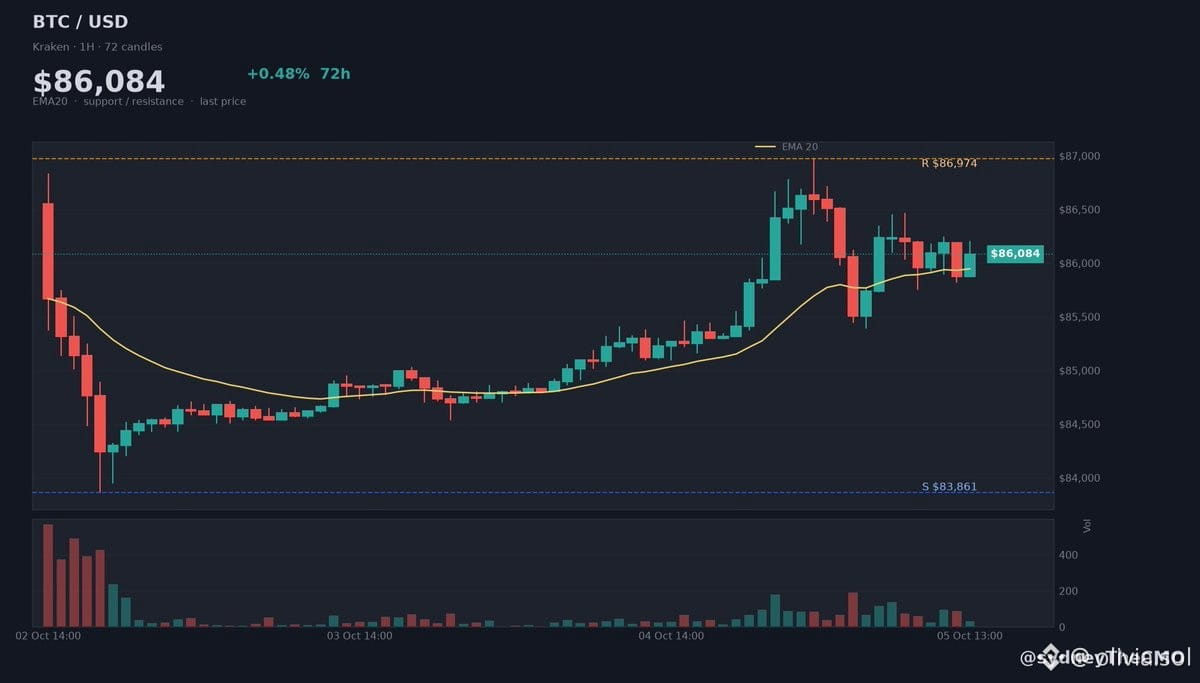
ETF flows are the only data that matters right now.
$BTC at 86,013.
I'm not selling.
The bid is real.
ETF flows are the only data that matters right now.
$BTC at 86,013.
I'm not selling.
The bid is real.
$BTC at 86,013.
I'm not selling.
The bid is real.
27
سجّل الدخول لاستكشاف المزيد من المُحتوى
انضم إلى مُستخدمي العملات الرقمية حول العالم على Binance Square
⚡️ احصل على أحدث المعلومات المفيدة عن العملات الرقمية.
💬 موثوقة من قبل أكبر منصّة لتداول العملات الرقمية في العالم.
👍 اكتشف الرؤى الحقيقية من صنّاع المُحتوى الموثوقين.
البريد الإلكتروني / رقم الهاتف
المواضيع الرائجة
BinanceLaunchesBinanceIntelligence
253,721 مشاهدات
2,225 يقومون بالنقاش
#BinanceLaunchesBinanceIntelligence
ثورة الذكاء الاصطناعي تصل إلى عالم التداول الرقمي
أعلنت منصة Binance رسمياً عن إطلاق منظومتها الذكية الجديدة Binance Intelligence، في خطوة تمثل نقلة نوعية نحو دمج أدوات الذكاء الاصطناعي الاصطناعي في صلب تجربة التداول اليومية للمستخدمين. تهدف هذه المبادرة إلى سد الفجوة المعرفية في الأسواق المالية وتمكين المتداولين—من المبتدئين إلى المحترفين—من تحليل البيانات وتصميم استراتيجيات التداول بلغة طبيعية ودون الحاجة إلى خبرة برمجية.
الركائز الثلاث لمنظومة Binance Intelligence
تتكون المنظومة الجديدة من ثلاثة منتجات رئيسية صُممت لتغطي كافة احتياجات المستخدمين والمطورين:
Binance AI (مجاني للجميع):
يجمع إشارات السوق المشتتة (الرسوم البيانية، الأخبار، بيانات الأونشين On-Chain، والمؤشرات الاقتصادية) في واجهة واحدة موحدة.
يقدم موجزاً آلياً للسوق (Market Brief) يتحدث كل 4 ساعات بالصوت والنص، يغطي العملات الرقمية والأسواق العالمية.
Binance AI Pro (لبناء الاستراتيجيات):
يتيح للمستخدم كتابة فكرة التداول بلغة بسيطة، ليقوم الذكاء الاصطناعي بتحويلها إلى مسار عمل مرئي (Visual Flowchart).
يوفر ميزة التداول الافتراضي (Paper Trading) لاختبار الاستراتيجيات قبل تنفيذها بأموال حقيقية.
#BinanceLaunchesBinanceIntelligence
#BinanceSquareFamily #AI
Redouanecrypto
·5 إعجاب
·3.5k مشاهدات
BitcoinTargets2026OpenAt$87570
36 مشاهدات
9 يقومون بالنقاش
BitcoinRejectedAt$87KThirdTime
106 مشاهدات
23 يقومون بالنقاش