


Tether's USDT is the main fuel of crypto trading, so when its supply shrinks, traders pay attention. CryptoQuant data shows USDT supply on Ethereum and TRON fell by $8.1 billion in the 60 days to 23 November, the biggest contraction since August 2022.
Quick Facts
USDT supply on Ethereum and TRON fell $8.1B, or 4.4%, in 60 days to 23 November.
Combined supply was $174.5B, about $12.9B below the record of $187.4B on 4 May 2026.
Almost all of the drop was on Ethereum.
Tether burned about $8B of USDT during the period.
01 Why USDT Supply Matters
New USDT is created when people deposit dollars with Tether, and destroyed when they redeem. Growing supply usually means fresh money is entering crypto. Shrinking supply means money is leaving the system or sitting on the sidelines.
02 The Numbers
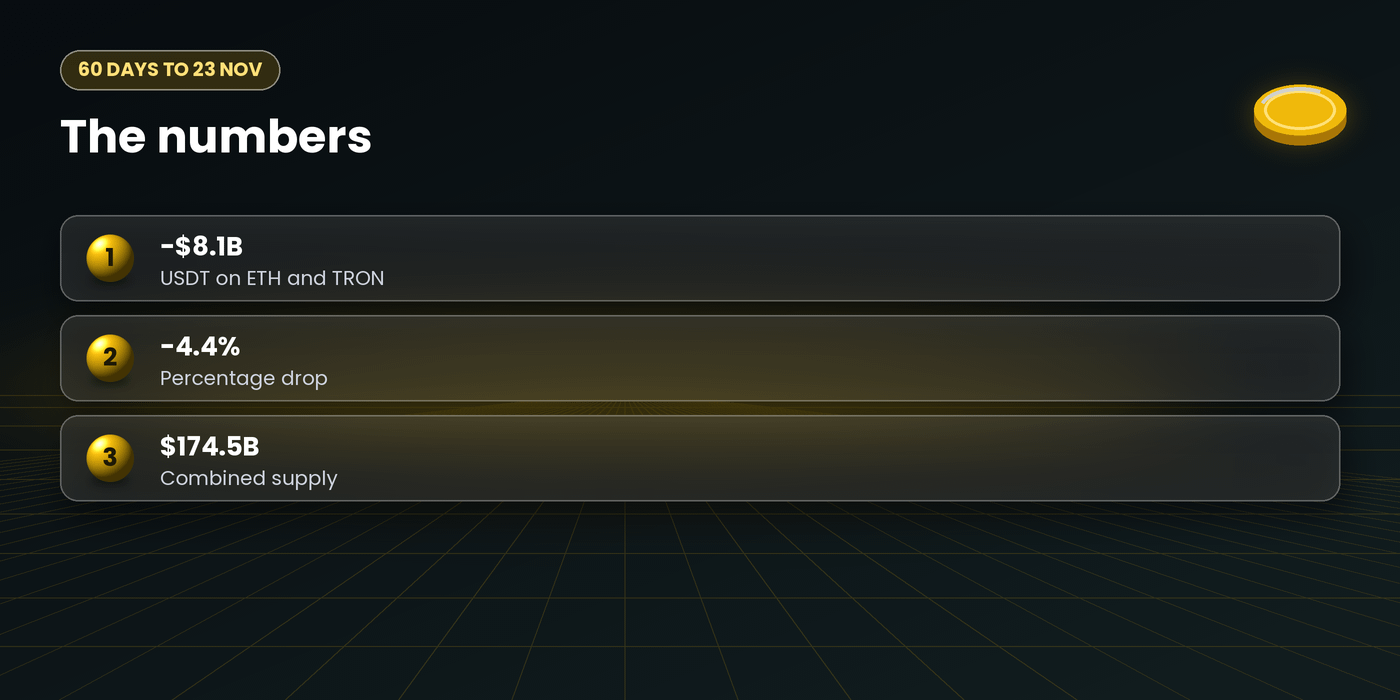
According to CryptoQuant:
USDT on Ethereum and TRON fell by $8.1B, or 4.4%, over 60 days.
Combined supply reached $174.5B on 23 November.
That is about $12.9B, or 6.9%, below the May 2026 record of $187.4B.
It is the largest 60-day drop since August 2022.
03 Ethereum Did Most of It
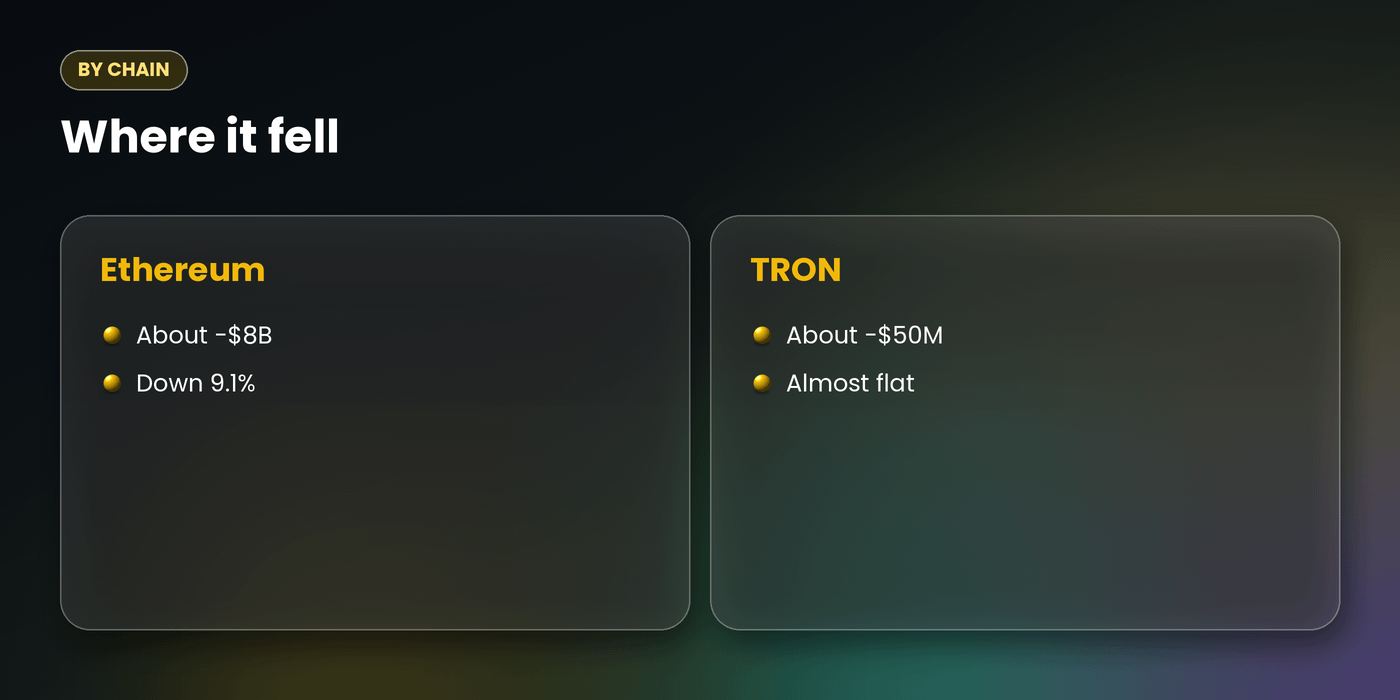
Ethereum's USDT supply fell by about $8 billion, or 9.1%, while TRON's barely moved, down about $50 million. Tether burned about $8 billion of USDT over the period, which points to large redemptions.
When large holders redeem, it can be because they want dollars in the bank while US interest rates are high.
04 Why It Matters for Bitcoin
CryptoQuant says a lasting Bitcoin recovery usually needs USDT supply to grow again. The last time liquidity left this fast, Bitcoin was in the later stages of a bear market. In past rallies, the opposite happened: USDT supply grew quickly as new money arrived.
05 How It Fits the Bigger Picture
This matches other data from November: USDT supply has been below its May record for months, US spot Bitcoin ETFs saw record outflows, and Fed rate hike expectations rose. Higher US interest rates make holding dollars in a bank more attractive than holding idle stablecoins.
06 What I Keep in Mind
Stablecoin supply is a useful liquidity signal, but not a timing tool. A shrinking supply does not mean USDT is in trouble; it means less money is parked in crypto right now. The sign to watch is when supply stops falling and starts to grow again.
Watching weekly changes is more useful than looking at one day.
Bottom Line
USDT supply fell $8.1B in 60 days, the steepest drop since 2022, mostly on Ethereum. It shows money leaving crypto for now, and a recovery would likely need that trend to reverse.
This article is for information only and is not financial advice.