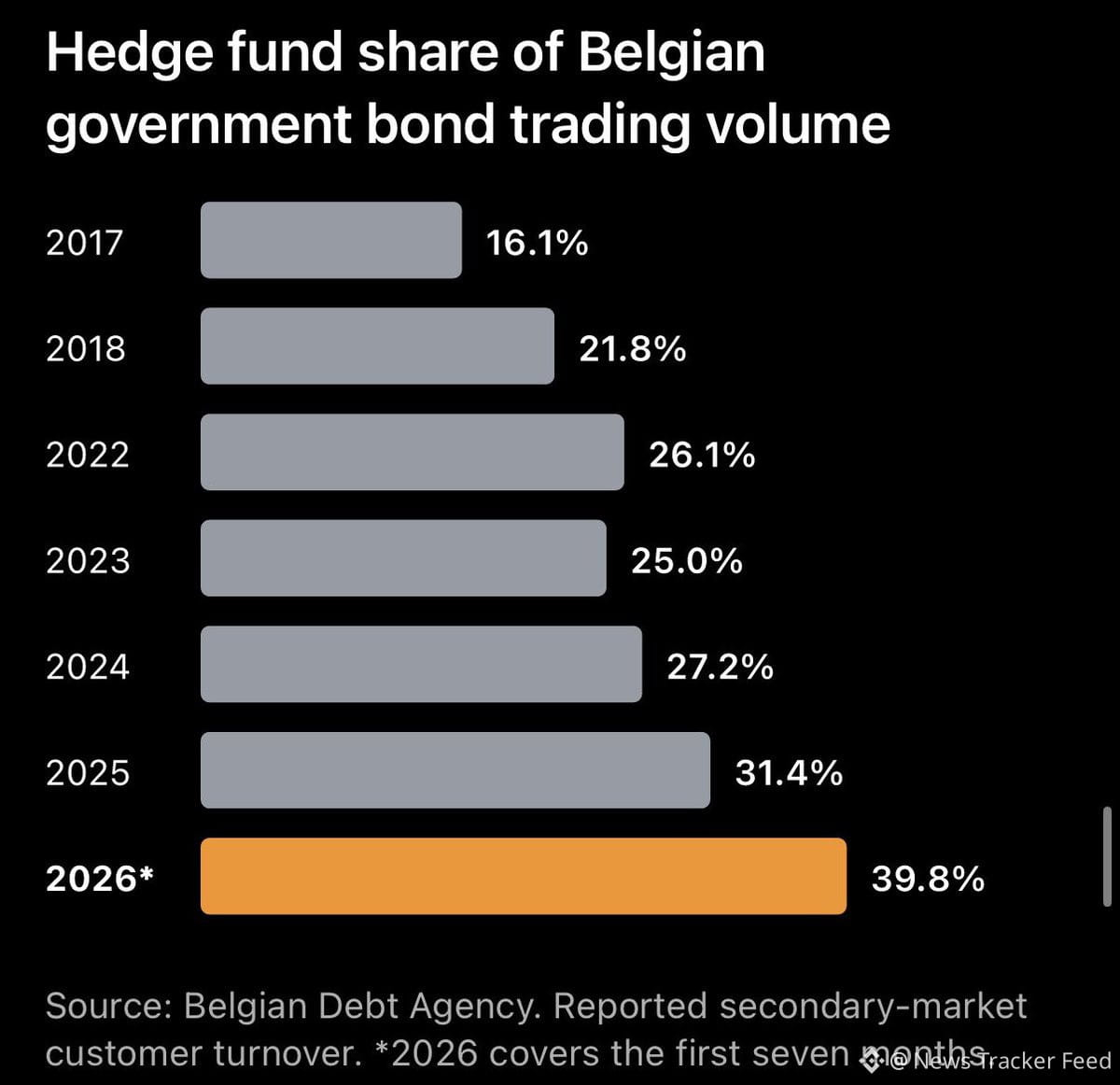
Belgium's government debt market is quietly shifting into riskier hands—and taxpayers may end up footing the bill.
Hedge funds now account for nearly 40% of trading volume in Belgian government bonds in early 2026, up from just 16% in 2017. Over 98% of that activity comes from outside the eurozone.
The concern: Many of these funds operate on extreme leverage—borrowing €950 million to control a €1 billion position with just €50 million of their own capital. In calm markets, they provide liquidity. In turbulence, they dump bonds fast, driving yields higher and making it more expensive for Belgium to borrow.
Every 1% increase in interest rates on €50 billion of debt costs Belgium an extra €500 million annually—money that could otherwise go to healthcare, infrastructure, or pensions.
The ECB's latest Financial Stability Review shows hedge funds hold €640 billion in financing positions backed by eurozone government bonds, up over 60% since early 2025. In March alone, they cut net borrowing by roughly €50 billion during market stress.
Hedge funds have been net sellers of Belgian bonds since 2023, even as the government keeps piling on debt. A crisis doesn't even need to start in Belgium—a U.S. hedge fund losing big on tech stocks could trigger a selloff that hits Belgian borrowing costs.
The endgame risk: The ECB may face a choice between fighting inflation and stabilizing bond markets. Instead of cutting spending, governments could respond with more debt, higher taxes, and inflation—leaving working families unable to afford homes or build wealth.