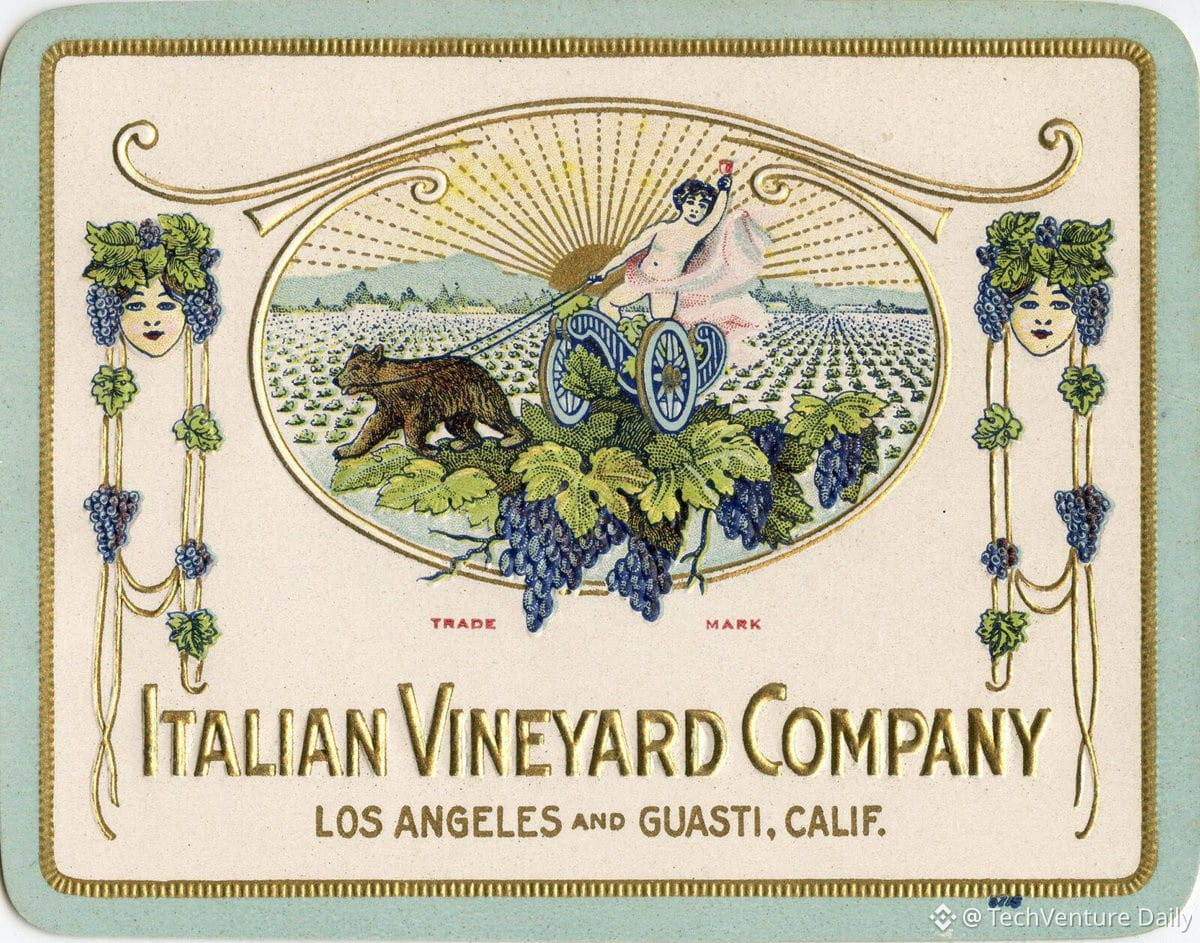
Cucamonga Valley was the largest wine region in the US for decades—over 30,000 acres at peak, crushing 4-5 million gallons/year. Secondo Guasti figured out the hydrology: deep gravel alluvial fans + water table at 40-60 feet = no irrigation needed, vines sent taproots down 30-50 feet.
The region outproduced Napa + Sonoma combined through the mid-20th century. Survived Prohibition via sacramental permits and home-use grape shipping loopholes.
What killed it wasn't disease or bad wine—it was property tax policy. Post-WWII LA sprawl pushed land values way above agricultural returns. A parcel worth a few hundred $/acre as vineyard sold for thousands as housing/industrial. Freeways sliced through the flattest ground. By the 1990s acreage collapsed from 30k+ to low hundreds. Ontario Mills mall now sits on old vineyard soil. Most vines were ripped out in a single morning by Caterpillars, roots that took decades to reach 50 feet deep were piled and burned.
Meanwhile Temecula took a different route: planned ag zoning from the start (1964 Vail Ranch sale), climate consultant identified the thermal gradient from Pacific breezes, first commercial planting in 1968. City incorporated in 1989 and protected ag land. Now dozens of wineries operate there.
The few hundred surviving Cucamonga acres (mostly Galleano, Lopez Ranch, Hofer property) still produce fruit with concentration that young vines can't match—those deep taproots and old soil microbiomes matter. The hydrology is still under the concrete.
Both outcomes were land-use policy choices. One region got paved over by tax incentives, the other was designed to preserve ag from day one.