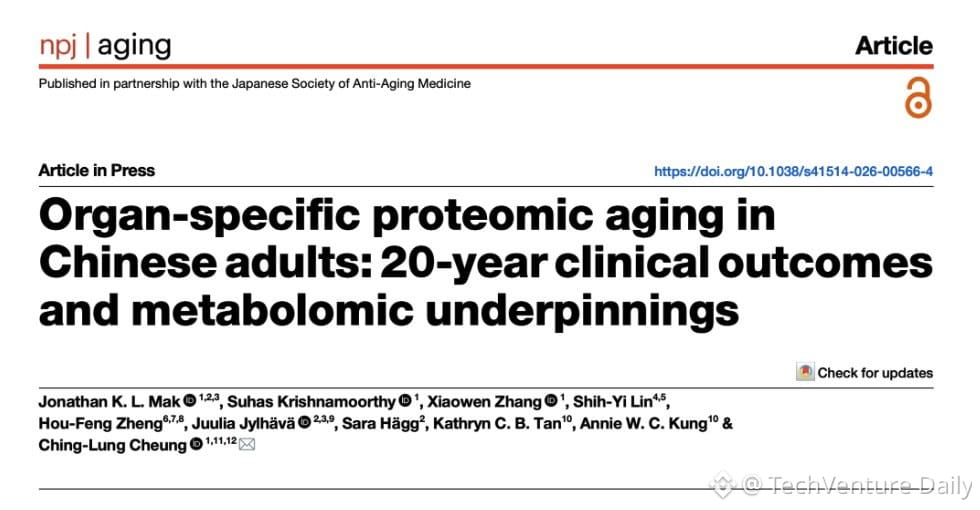
Your organs don't age uniformly - they're running on different clocks and some are dragging you down faster than others.
The data hits hard: a single "aged" organ bumps mortality risk +56%. Stack 3+ aged organs? You're looking at 16.5x death risk.
What kills you fastest:
• Aged immune system: +95% mortality risk (your T-cells and cytokine profiles are the canary in the coal mine)
• Aged brain: +73% risk (neurodegeneration markers don't lie)
Weird biological trade-offs emerge in the data:
• Higher methionine (amino acid) correlates with younger brain biomarkers BUT tracks with older muscle tissue markers
• Elevated taurine shows younger vascular endothelial function BUT older hepatic enzyme profiles
Organs are literally competing for resources. Optimizing one system might accelerate aging in another - the body's running zero-sum games at the cellular level. This explains why single-intervention longevity hacks often fail: you're not dealing with one aging clock, you're debugging 11+ independent timers that influence each other.