

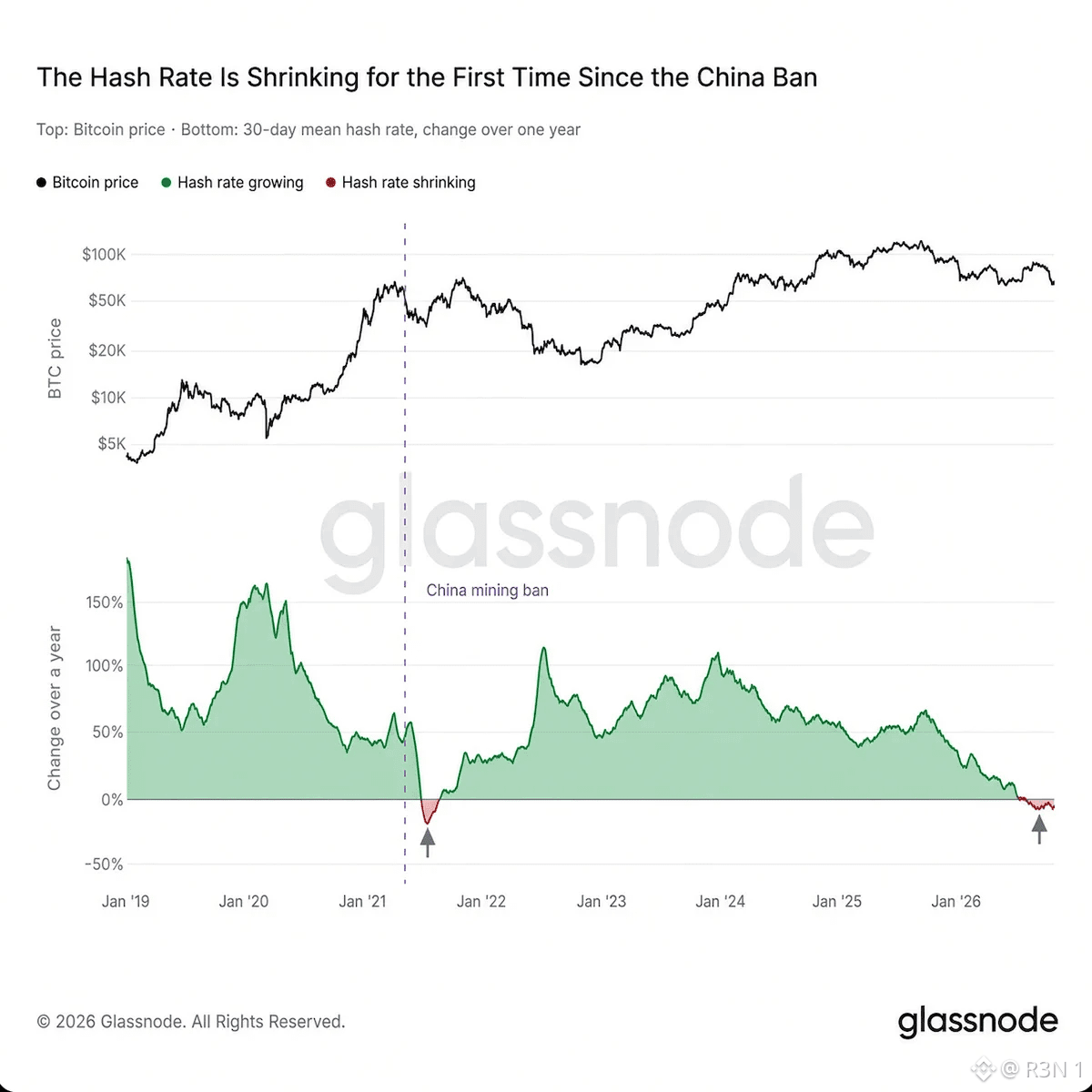
Bitcoin miners are starting to feel the pressure. Glassnode data shows Bitcoin's 30-day average hashrate is now 8% lower than it was a year ago, marking the first year-over-year decline since 2021. At the same time, miner hashprice, which measures revenue earned per unit of hashrate, has fallen to an all-time low. As profitability weakens, some operators are reportedly shutting down mining rigs. The drop is significant because Bitcoin's hashrate has historically trended upward over long periods. More computing power usually means more competition among miners and greater confidence in the network's future. This time, the pressure appears to be coming from economics. With Bitcoin trading far below previous highs, many miners are generating less revenue while still facing the same energy and operational costs. Older and less efficient machines are often the first to be switched off when margins become too thin. For the market, the situation cuts both ways. The bearish view is that weakening miner economics reflect broader stress across the Bitcoin ecosystem. If prices remain under pressure, more miners could be forced to reduce operations, adding to negative sentiment. The bullish view is that Bitcoin was built for periods like this. Lower hashrate eventually feeds into difficulty adjustments, helping the remaining miners become more profitable. Historically, some of the toughest periods for miners have also marked moments when weaker participants were pushed out of the market. Right now, miners are facing a simple challenge: survive long enough to reach the next cycle of growth. The question is whether this miner capitulation is nearing its end, or just getting started. #BTC Price Analysis# $BTC #Meme Alpha# #BNBChain# $SOL
انضم إلى مُستخدمي العملات الرقمية حول العالم على Binance Square
⚡️ احصل على أحدث المعلومات المفيدة عن العملات الرقمية.
💬 موثوقة من قبل أكبر منصّة لتداول العملات الرقمية في العالم.
👍 اكتشف الرؤى الحقيقية من صنّاع المُحتوى الموثوقين.
البريد الإلكتروني / رقم الهاتف