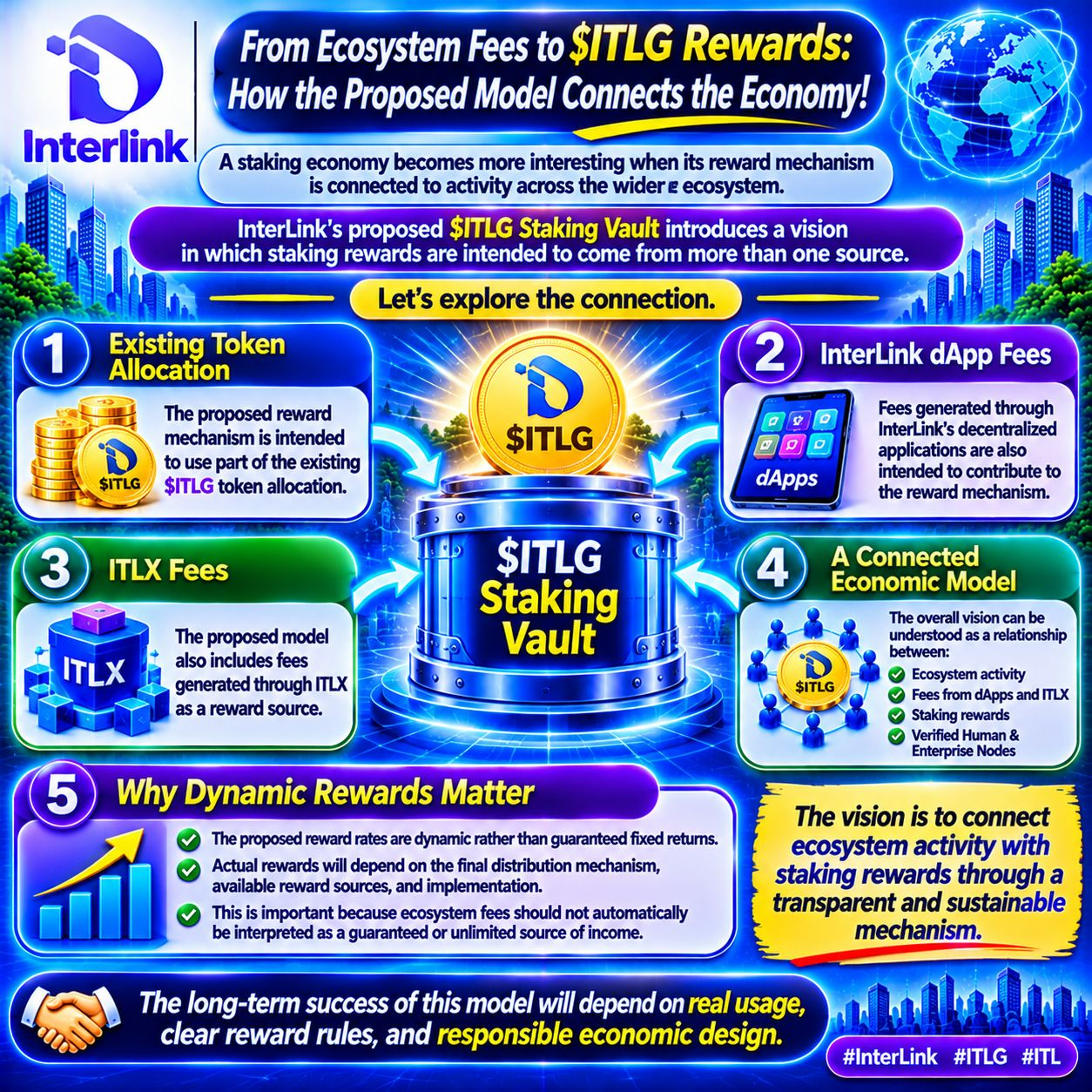
📊 𝗙𝗥𝗢𝗠 𝗘𝗖𝗢𝗦𝗬𝗦𝗧𝗘𝗠 𝗙𝗘𝗘𝗦 𝗧𝗢 $𝗜𝗧𝗟𝗚 𝗥𝗘𝗪𝗔𝗥𝗗𝗦: 𝗛𝗢𝗪 𝗧𝗛𝗘 𝗣𝗥𝗢𝗣𝗢𝗦𝗘𝗗 𝗠𝗢𝗗𝗘𝗟 𝗖𝗢𝗡𝗡𝗘𝗖𝗧𝗦 𝗧𝗛𝗘 𝗘𝗖𝗢𝗡𝗢𝗠𝗬! 🌐
A staking economy becomes more interesting when its reward mechanism is connected to activity across the wider ecosystem.
InterLink's proposed $ITLG Staking Vault introduces a vision in which staking rewards are intended to come from more than one source.
Let's explore the connection.
🪙 1. Existing Token Allocation
The proposed reward mechanism is intended to use part of the existing $ITLG token allocation.
This provides one planned source for distributing staking rewards to eligible participants.
🌐 2. InterLink dApp Fees
Fees generated through InterLink's decentralized applications are also intended to contribute to the reward mechanism.
This creates a potential connection between ecosystem usage and staking participation.
🏦 3. ITLX Fees
The proposed model also includes fees generated through ITLX as a reward source.
This could connect activity within the broader InterLink ecosystem with the staking economy.
🔄 4. A Connected Economic Model
The overall vision can be understood as a relationship between:
• Ecosystem activity.
• Fees generated through dApps and ITLX.
• The proposed staking reward mechanism.
• Verified Human Nodes and Enterprise Nodes.
📈 5. Why Dynamic Rewards Matter
The proposed reward rates are dynamic rather than guaranteed fixed returns.
Actual rewards will depend on the final distribution mechanism, available reward sources, and implementation.
This is important because ecosystem fees should not automatically be interpreted as a guaranteed or unlimited source of income.
The vision is to connect ecosystem activity with staking rewards through a transparent and sustainable mechanism.
The long-term success of this model will depend on real usage, clear reward.
#InterLink #ITLG #ITL