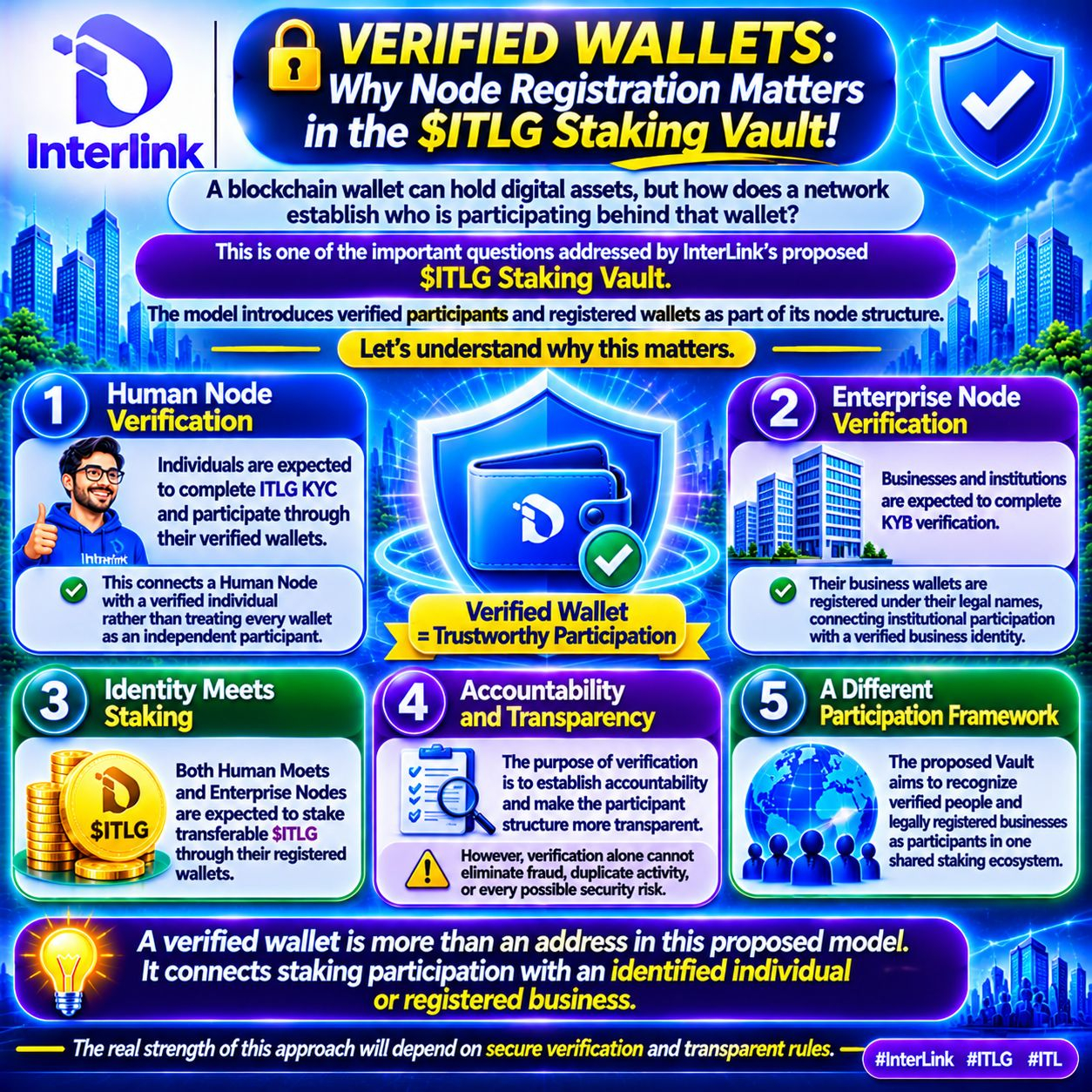
🔐 𝗩𝗘𝗥𝗜𝗙𝗜𝗘𝗗 𝗪𝗔𝗟𝗟𝗘𝗧𝗦: 𝗪𝗛𝗬 𝗡𝗢𝗗𝗘 𝗥𝗘𝗚𝗜𝗦𝗧𝗥𝗔𝗧𝗜𝗢𝗡 𝗠𝗔𝗧𝗧𝗘𝗥𝗦 𝗜𝗡 𝗧𝗛𝗘 $𝗜𝗧𝗟𝗚 𝗦𝗧𝗔𝗞𝗜𝗡𝗚 𝗩𝗔𝗨𝗟𝗧! 🛡️
A blockchain wallet can hold digital assets, but how does a network establish who is participating behind that wallet?
This is one of the important questions addressed by InterLink's proposed $ITLG Staking Vault.
The model introduces verified participants and registered wallets as part of its node structure.
Let's understand why this matters.
👤 1. Human Node Verification
Individuals are expected to complete ITLG KYC and participate through their verified wallets.
This connects a Human Node with a verified individual rather than treating every wallet as an independent participant.
🏢 2. Enterprise Node Verification
Businesses and institutions are expected to complete KYB verification.
Their business wallets are registered under their legal names, connecting institutional participation with a verified business identity.
🔗 3. Identity Meets Staking
Both Human Nodes and Enterprise Nodes are expected to stake transferable $ITLG through their registered wallets.
This creates a connection between participant verification and the proposed staking economy.
⚖️ 4. Accountability and Transparency
The purpose of verification is to establish accountability and make the participant structure more transparent.
However, verification alone cannot eliminate fraud, duplicate activity, or every possible security risk.
The quality of verification, wallet security, and final implementation will remain important.
🌍 5. A Different Participation Framework
The proposed Vault aims to recognize verified people and legally registered businesses as participants in one shared staking ecosystem.
This is an important part of InterLink's human-powered blockchain vision.
A verified wallet is more than an address in this proposed model.
#InterLink #ITLG #ITL