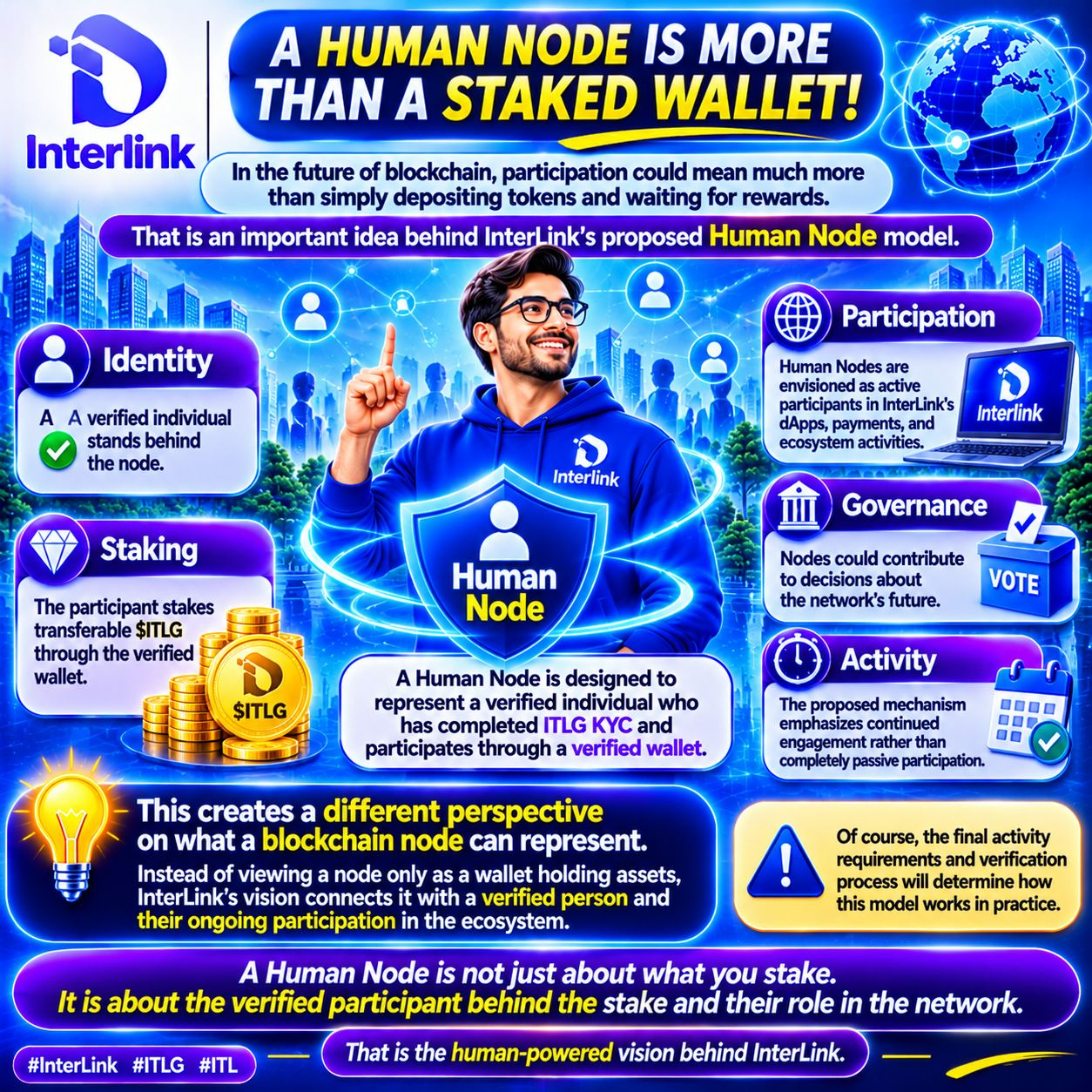
👤 𝗔 𝗛𝗨𝗠𝗔𝗡 𝗡𝗢𝗗𝗘 𝗜𝗦 𝗠𝗢𝗥𝗘 𝗧𝗛𝗔𝗡 𝗔 𝗦𝗧𝗔𝗞𝗘𝗗 𝗪𝗔𝗟𝗟𝗘𝗧! 🌐
In the future of blockchain, participation could mean much more than simply depositing tokens and waiting for rewards.
That is an important idea behind InterLink's proposed Human Node model.
A Human Node is designed to represent a verified individual who has completed ITLG KYC and participates through a verified wallet.
But the vision goes beyond staking.
👤 Identity: A verified individual stands behind the node.
💎 Staking: The participant stakes transferable $ITLG through the verified wallet.
🌍 Participation: Human Nodes are envisioned as active participants in InterLink's dApps, payments, and ecosystem activities.
🗳️ Governance: Nodes could contribute to decisions about the network's future.
⏳ Activity: The proposed mechanism emphasizes continued engagement rather than completely passive participation.
This creates a different perspective on what a blockchain node can represent.
Instead of viewing a node only as a wallet holding assets, InterLink's vision connects it with a verified person and their ongoing participation in the ecosystem.
Of course, the final activity requirements and verification process will determine how this model works in practice.
A Human Node is not just about what you stake. It is about the verified participant behind the stake and their role in the network.
That is the human-powered vision behind InterLink.
#InterLink #ITLG #ITL