

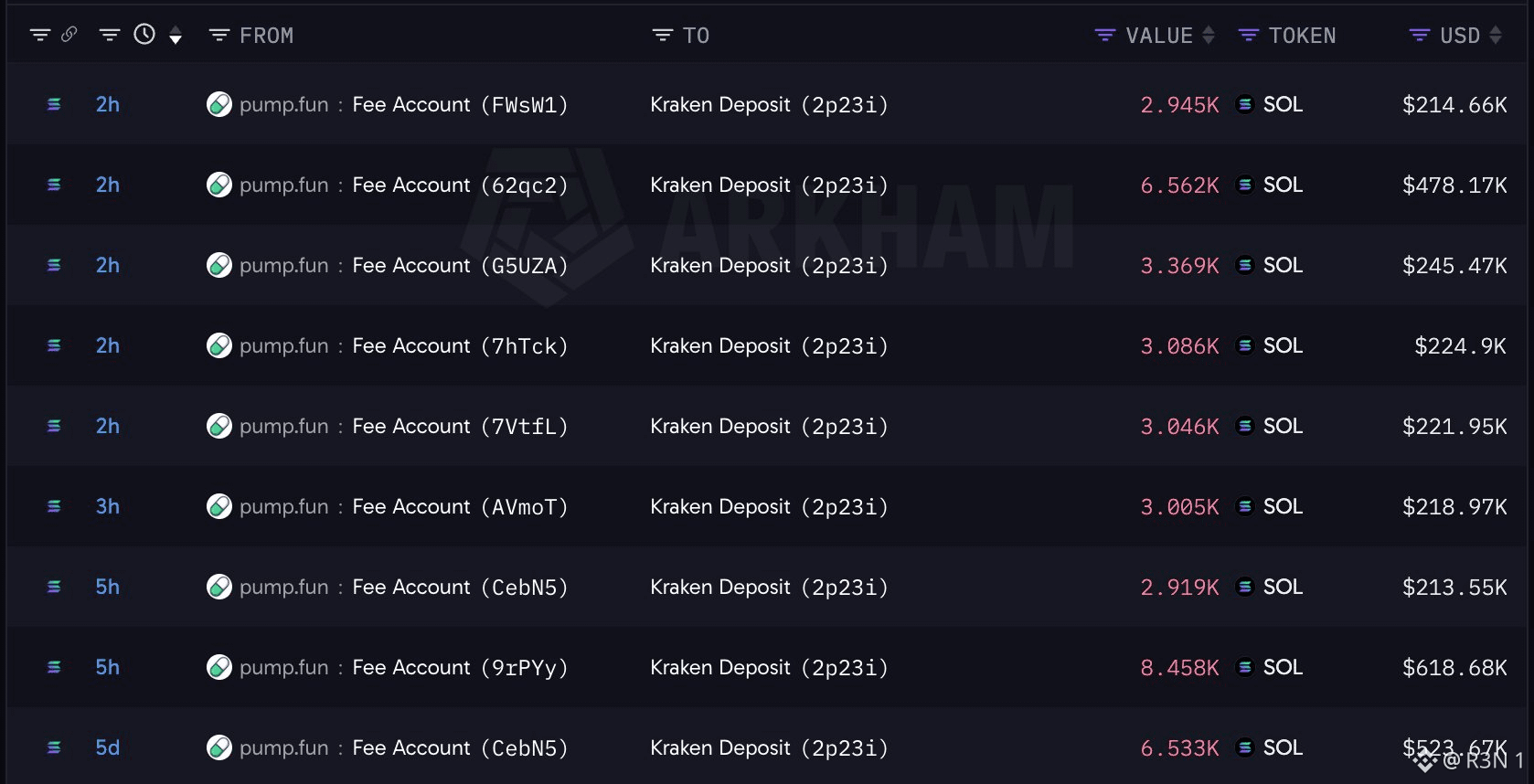
Pump.fun has sold about $890M of SOL. At today’s price, that same SOL would cost about half as much. According to the figures in your post, Pump.fun sold another 33,390 SOL (about $2.44M) two hours ago. In total, it has sold 5,651,889 SOL for about $890M, at an average price of $157.47. Whale Alert reported a similar total on Nov. 14, so the numbers are consistent. These are on-chain trackers’ calculations, not something Pump.fun published. Now compare that with the price today. SOL trades near $75. At that price, the same 5.65M SOL would be worth roughly $423M (my math). So the platform sold at about double today’s price. Whatever the reason, the timing worked out well for the seller. The reason is probably routine. Pump.fun earns fees in SOL, and selling lets a company turn that income into stable money for costs, buybacks, and reserves. It also runs a PUMP token buyback and burn program. But the platform hasn’t explained each sale, and trackers can’t see its plans. The feeling around it is mixed. It’s frustrating to watch a visible seller keep selling while prices fall, even when it’s small. This latest sale is about $2.4M, tiny next to the market’s daily volume, so it won’t move the price much on its own. It also echoes the Ethereum Foundation debate: a core team selling in a weak market looks bad even if the plan is steady. Both cases raise the same question of how much teams should explain. The risk is more sales while mood is low. The supportive case is that the amounts are small and the proceeds fund the business. A big seller isn’t a signal. An unexplained one just feels like one. $PUMP #BTC Price Analysis# #Meme Alpha# $BTC
انضم إلى مُستخدمي العملات الرقمية حول العالم على Binance Square
⚡️ احصل على أحدث المعلومات المفيدة عن العملات الرقمية.
💬 موثوقة من قبل أكبر منصّة لتداول العملات الرقمية في العالم.
👍 اكتشف الرؤى الحقيقية من صنّاع المُحتوى الموثوقين.
البريد الإلكتروني / رقم الهاتف