

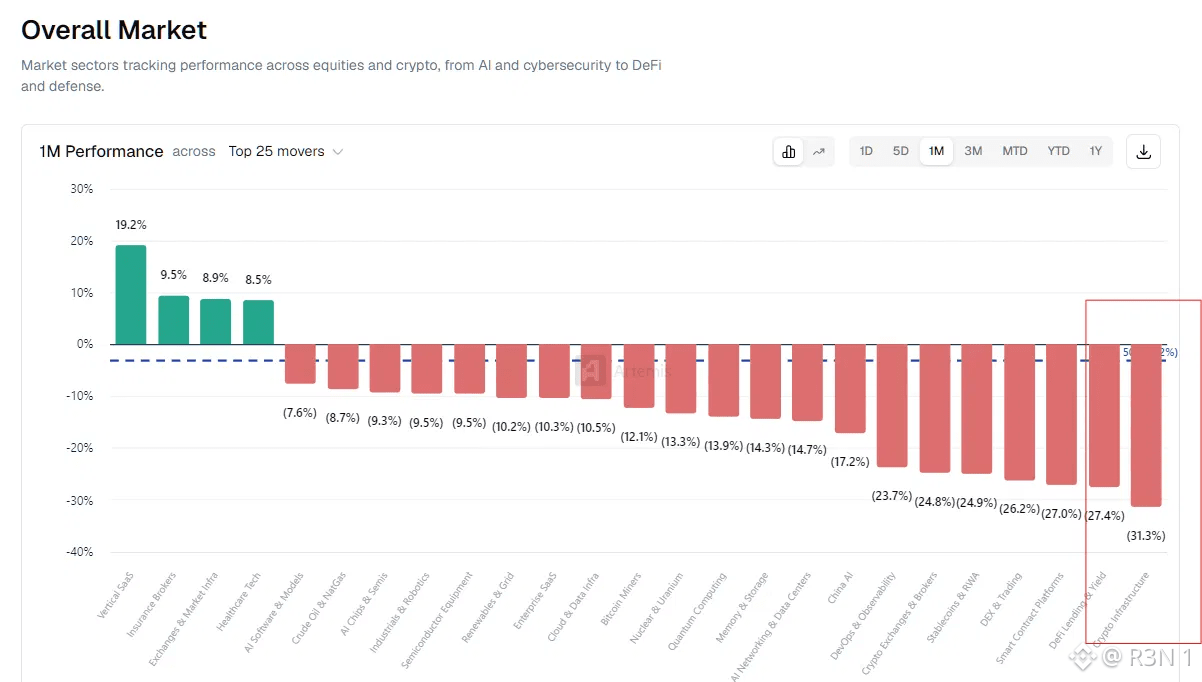
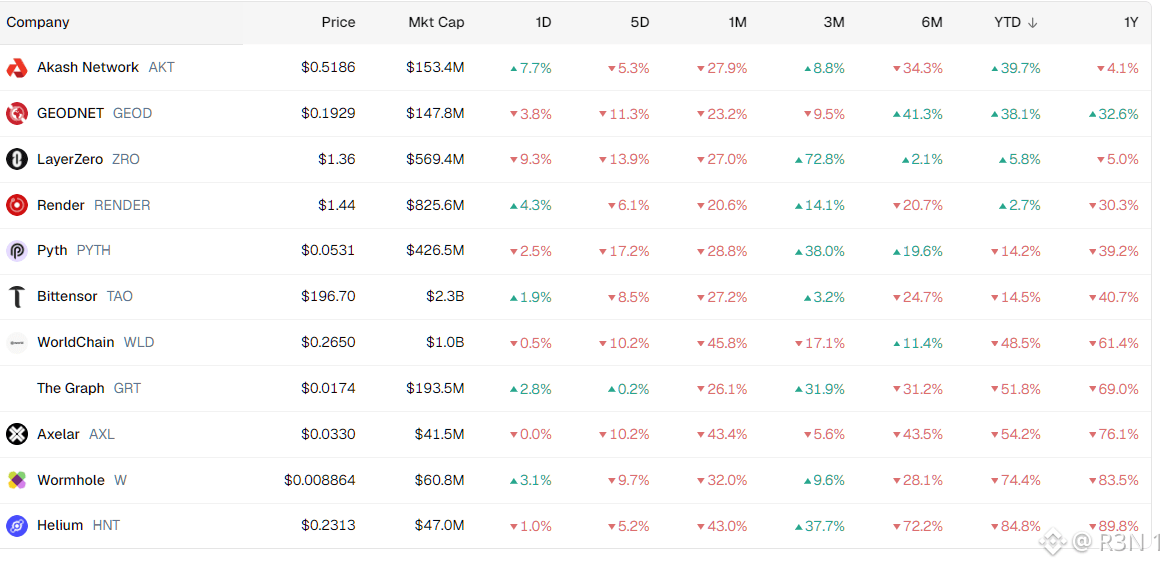
Artemis’s one-month sector chart is almost entirely red. Crypto infrastructure is the worst performer at -31.3%, followed by DeFi lending and yield (-27.4%), smart contract platforms (-27.0%), DEX and trading (-26.2%), stablecoins and RWA (-24.9%), and crypto exchanges and brokers (-24.8%). For comparison, AI chips and semiconductors fell around 9% to 10%. The winners are almost all traditional: vertical SaaS (+19.2%), insurance brokers (+9.5%), exchanges and market infrastructure (+8.9%), and healthcare tech (+8.5%). Money isn’t leaving risk entirely. It’s leaving crypto, and the chart labels crypto exchanges and traditional market infrastructure as separate groups with opposite results. The infrastructure token table shows the damage up close. Every token listed fell 20% to 46% over the month: WorldCoin -45.8%, Axelar -43.4%, Helium -43.0%, Wormhole -32.0%, Pyth -28.8%, Akash -27.9%, Bittensor -27.2%, LayerZero -27.0%, The Graph -26.1%, Geodnet -23.2%, and Render -20.6%. The long-term picture is more mixed. Year to date, Akash is up 39.7% and Geodnet 38.1%, while Helium is down 84.8% and Wormhole 74.4%. Three months ago, LayerZero was up 72.8%. A sector-wide drop hides very different stories. That’s the disconnect worth noticing. This month brought record stablecoin balances on TRON, tokenized stocks growing, and heavy trading volume on Hyperliquid. Usage keeps rising while prices fall, which suggests liquidity and risk appetite are driving the selling, not project-level failure. The risk is that thin liquidity makes small tokens fall harder than their fundamentals justify, and rebounds are just as sharp. The supportive case is that sector-wide selling tends to hit good and bad projects together, then diverge later. When everything falls together, price is telling you about the market. When things recover differently, it’s telling you about the projects. #BTC Price Analysis# $BTC #Altcoin Season# $ETH
انضم إلى مُستخدمي العملات الرقمية حول العالم على Binance Square
⚡️ احصل على أحدث المعلومات المفيدة عن العملات الرقمية.
💬 موثوقة من قبل أكبر منصّة لتداول العملات الرقمية في العالم.
👍 اكتشف الرؤى الحقيقية من صنّاع المُحتوى الموثوقين.
البريد الإلكتروني / رقم الهاتف