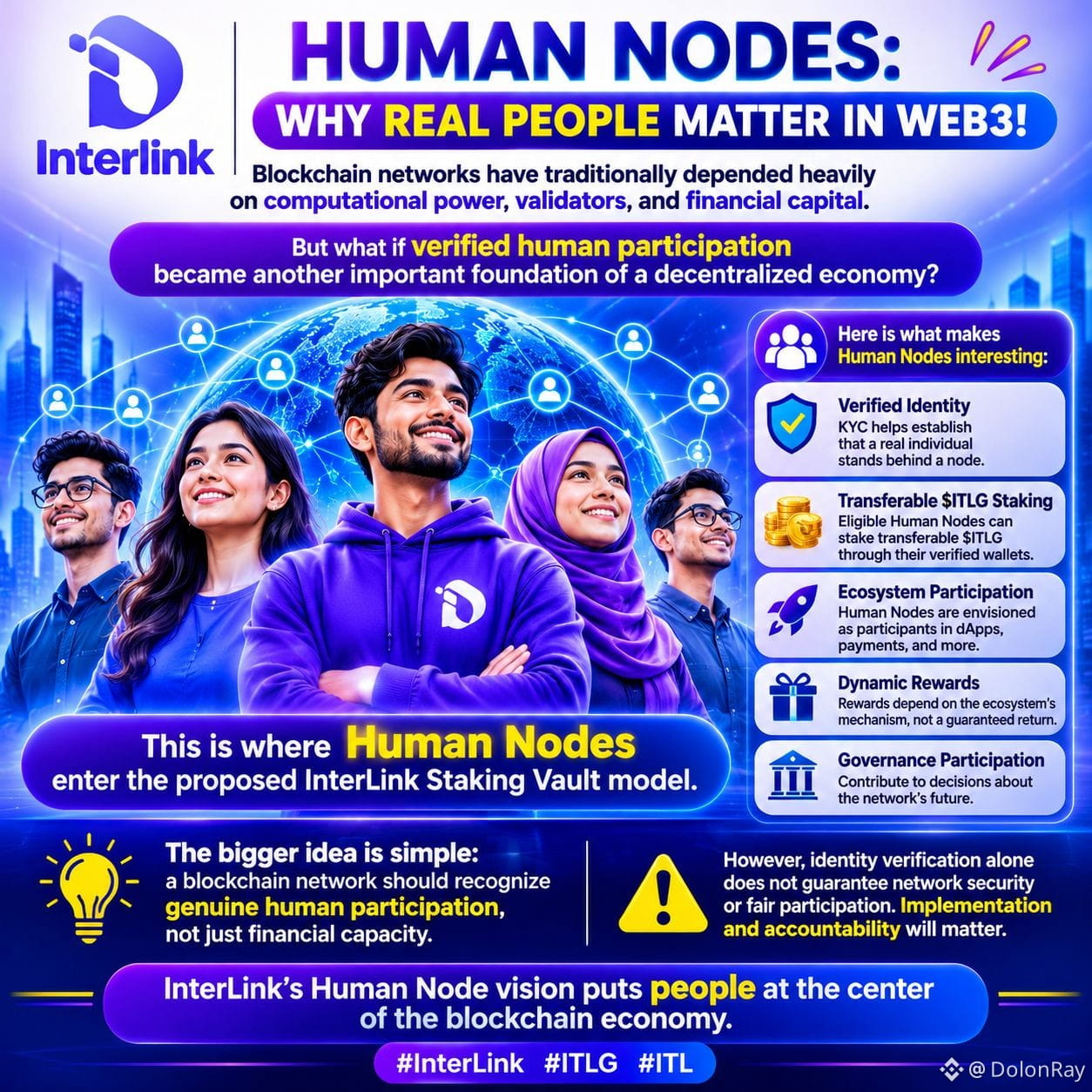
👤 𝗛𝗨𝗠𝗔𝗡 𝗡𝗢𝗗𝗘𝗦: 𝗪𝗛𝗬 𝗥𝗘𝗔𝗟 𝗣𝗘𝗢𝗣𝗟𝗘 𝗠𝗔𝗧𝗧𝗘𝗥 𝗜𝗡 𝗪𝗘𝗕𝟯! 🌐
Blockchain networks have traditionally depended heavily on computational power, validators, and financial capital.
But what if verified human participation became another important foundation of a decentralized economy?
This is where Human Nodes enter the proposed InterLink Staking Vault model.
A Human Node represents an individual Linker who has successfully completed ITLG KYC and participates through a verified wallet.
Here is what makes this concept interesting:
🔹 Verified Identity: KYC helps establish that a real individual stands behind a node.
🔹 Transferable $ITLG Staking: Eligible Human Nodes can stake transferable $ITLG through their verified wallets.
🔹 Ecosystem Participation: Human Nodes are envisioned as participants in dApps, payments, and other InterLink ecosystem activities.
🔹 Dynamic Rewards: Staking rewards are designed to depend on the ecosystem's reward mechanism rather than a guaranteed fixed return.
🔹 Governance Participation: Human Nodes are intended to contribute to decisions about the network's future.
The bigger idea is simple: a blockchain network should recognize genuine human participation, not just financial capacity.
However, identity verification alone does not guarantee network security or fair participation. Implementation and accountability will matter.
InterLink's Human Node vision puts people at the center of the blockchain economy.
#InterLink #ITLG #ITL