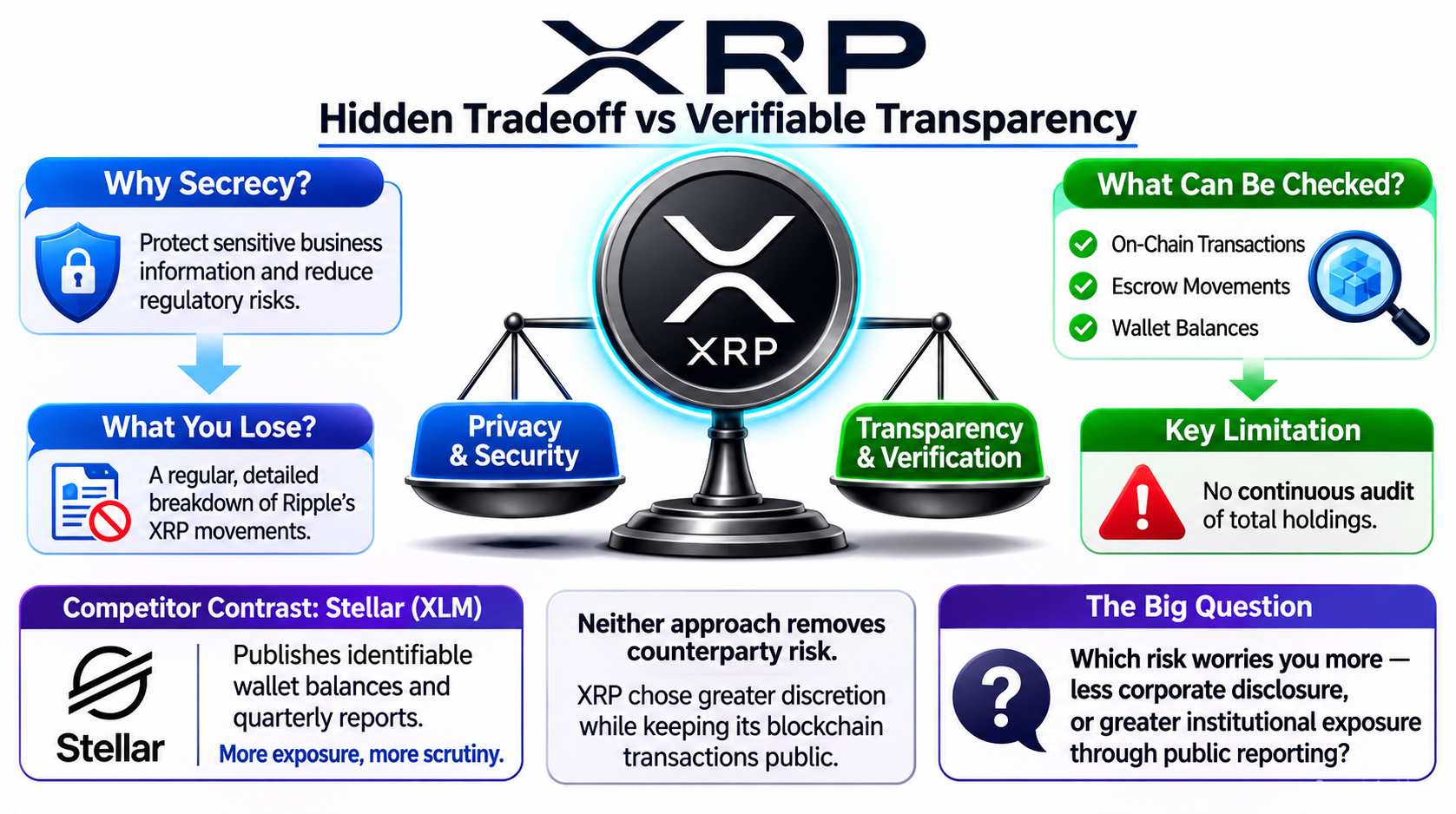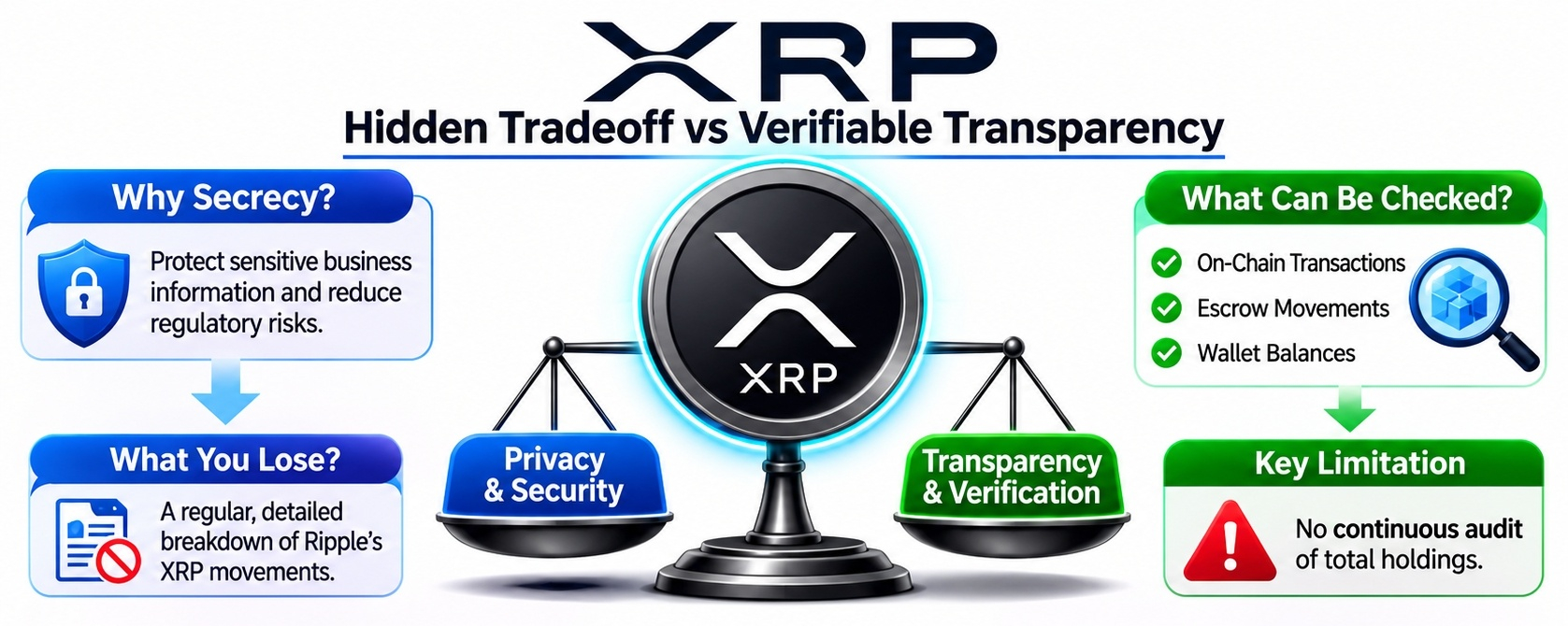

XRP operates on a public blockchain where transactions, wallet balances, and escrow movements can be independently inspected. But Ripple has stepped back from one important layer of transparency: its quarterly XRP Markets Report.
That's not an oversight. It's a stated choice.
Ripple explained that its transparency reports had sometimes been used against the company, particularly during its regulatory disputes. Protecting sensitive business information became a priority. But holders lose a regular consolidated explanation of Ripple's XRP movements, distributions, and market activity.
The XRP Ledger still provides verifiable on-chain information. Anyone can inspect transactions, monitor escrow releases, and verify wallet balances. Ripple also publishes its XRP holdings through its official website, with quarterly snapshots.
However, there is an important limitation: blockchain visibility is not the same as independent financial assurance. No named independent audit firm or continuous audit of Ripple's complete XRP holdings is identified in these disclosures. Off-chain arrangements and beneficial ownership cannot always be established from wallet balances alone.
Compare this with Stellar (XLM). Its foundation publishes identifiable wallet balances and quarterly reports detailing XLM distributions. That's more exposure, in exchange for more direct scrutiny of institutional holdings. Ripple +3
Neither approach removes counterparty risk. XRP relies on public ledger verification alongside Ripple's disclosures. Stellar offers additional institutional reporting, but still depends on trust in its foundation's decisions.
XRP chose greater discretion over corporate disclosures, while keeping its blockchain transactions public.
Which risk worries you more — less corporate disclosure, or greater institutional exposure through p