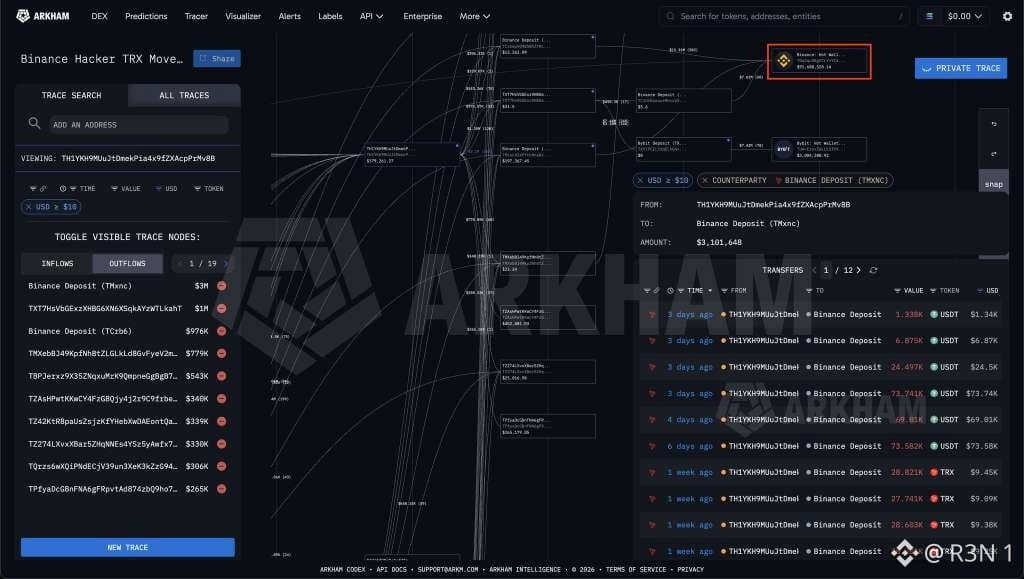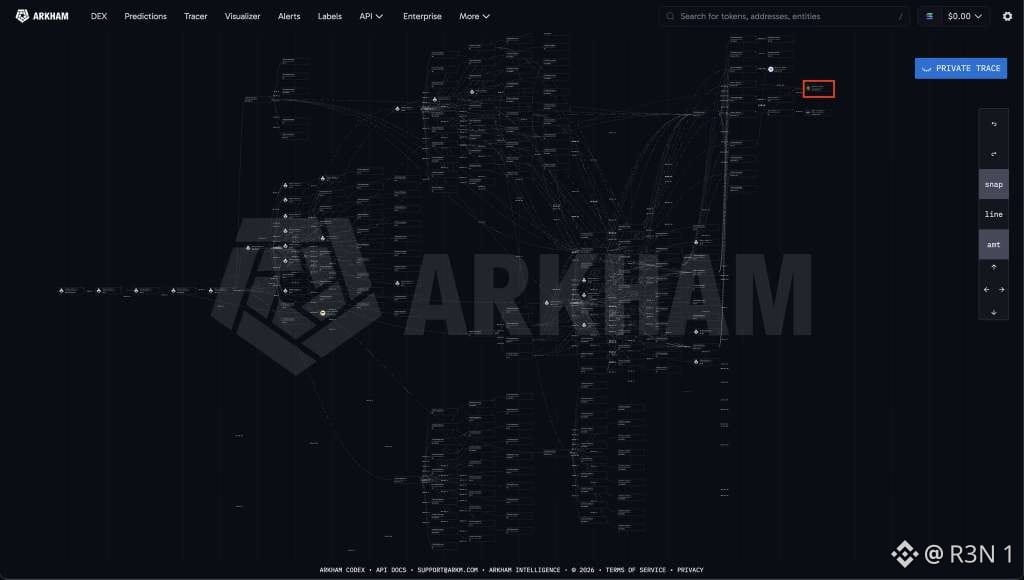
The hacker is trying to cash out through the front door. That may not be as clever as it sounds.
Arkham reports the Binance hacker moved about $4M into three Binance deposit addresses. Arkham believes they may belong to nested services, meaning third-party exchanges that use Binance for liquidity and custody.
Why would a thief use the exchange he robbed? Because spending is the hard part. Stolen crypto is easy to move and hard to turn into usable money. A nested service could offer a way to convert funds one step removed from the original victim.
Keep the scale in view. $4M is a sliver of a roughly $6.3B theft. Elliptic says about $3.24B still sits in related addresses and about $2.85B has been frozen or seized, while the laundering has touched roughly 12,000 wallets across 11 blockchains and over 40,000 transactions in under four days. It also thinks only a very small amount has been liquidated so far.
Nothing is confirmed about who controls the receiving addresses. Public fund-flow reports haven't added further context yet. Timelines love a plot twist, but a deposit isn't a verdict.
The risk is that nested services blur the endpoint and make tracing harder. The bullish possibility for investigators is that every deposit at a centralized venue leaves a record and a chance to freeze, as the $2.85B figure shows.
Moving stolen funds is easy. Spending them is where investigators get their best shot.
#BTC Price Analysis# $BTC #Altcoin Season# $BNB