


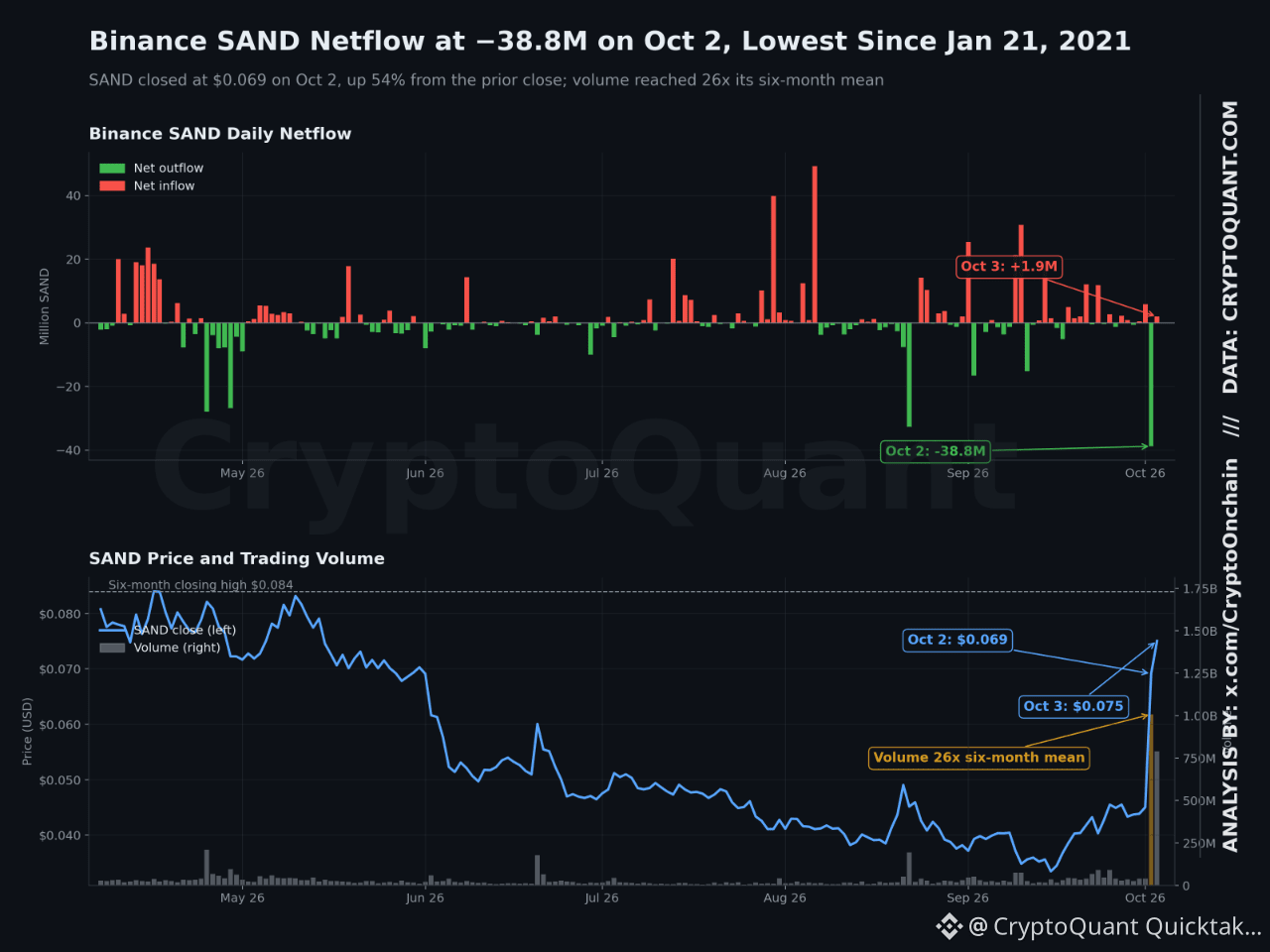
Binance SAND netflow was −38.8 million SAND on October 2, the lowest reading in the six-month window. SAND closed at $0.069 that day, up 53% from $0.045. Trading volume reached 1.01 billion on October 2, 26 times its six-month mean.
The six-month window contains zero-inflow days, so short-window inflow ratios are approximate. Minted and burned supply are excluded because both are zero. On October 3, netflow turned positive at +1.9 million SAND.
The move came on October 2, the scheduled release date for US September payrolls. BTC closed down 0.4% that day at $84,499, so SAND moved independently of the broader market. One candidate explanation, unverified: a token-specific catalyst drew traders to Binance on both sides of the book.
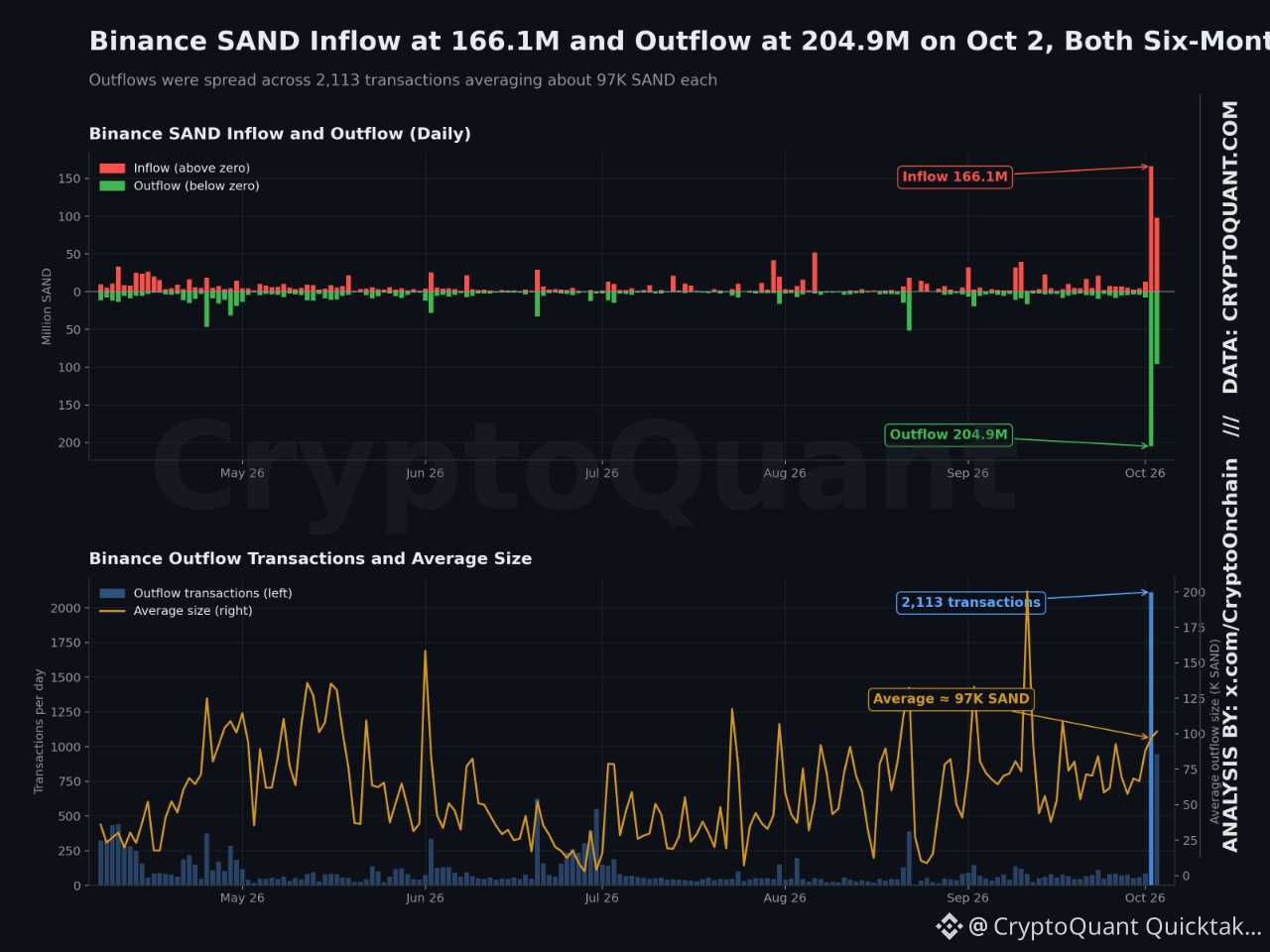
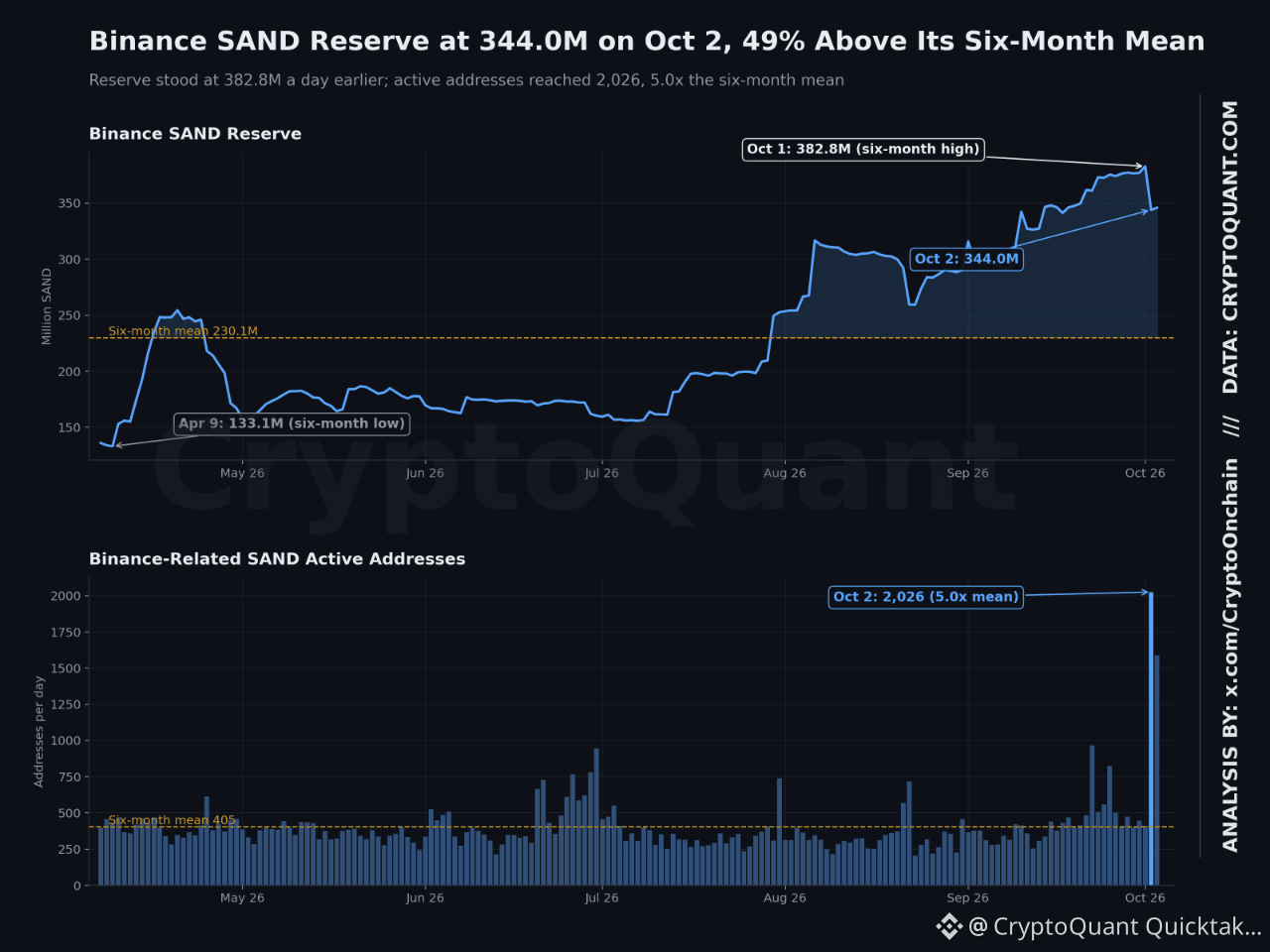
Both inflows and outflows set six-month highs on October 2, at 166.1 million and 204.9 million SAND. Outflows were spread across 2,113 transactions averaging about 97,000 SAND each. This suggests broad participation rather than a few large wallets. Active addresses rose to 2,026, five times the six-month mean, and 1.51 billion SAND moved on-chain.
Against the six-month baseline, the Binance reserve fell 10.1% to 343.9 million on October 2. A day earlier it stood at 382.8 million, its six-month high. The reserve remains about 50% above its six-month mean of 230.1 million, after climbing from a low of 133.1 million. Price at $0.075 is still below the $0.084 six-month closing high.
A volume shock paired with net exchange outflows creates conditions that historically preceded extended volatility. Reserves are still elevated, which suggests sell-side supply on Binance has not contracted meaningfully.
“For now, the clearest reading is that SAND drew heavy two-way traffic on Binance, and one day of outflows has not undone months of reserve buildup.”
Written by CryptoOnchain