The Hidden Market Behind a Cross-Chain Swap
Most users think about a cross-chain transaction like this:
Asset A → Bridge → Asset B
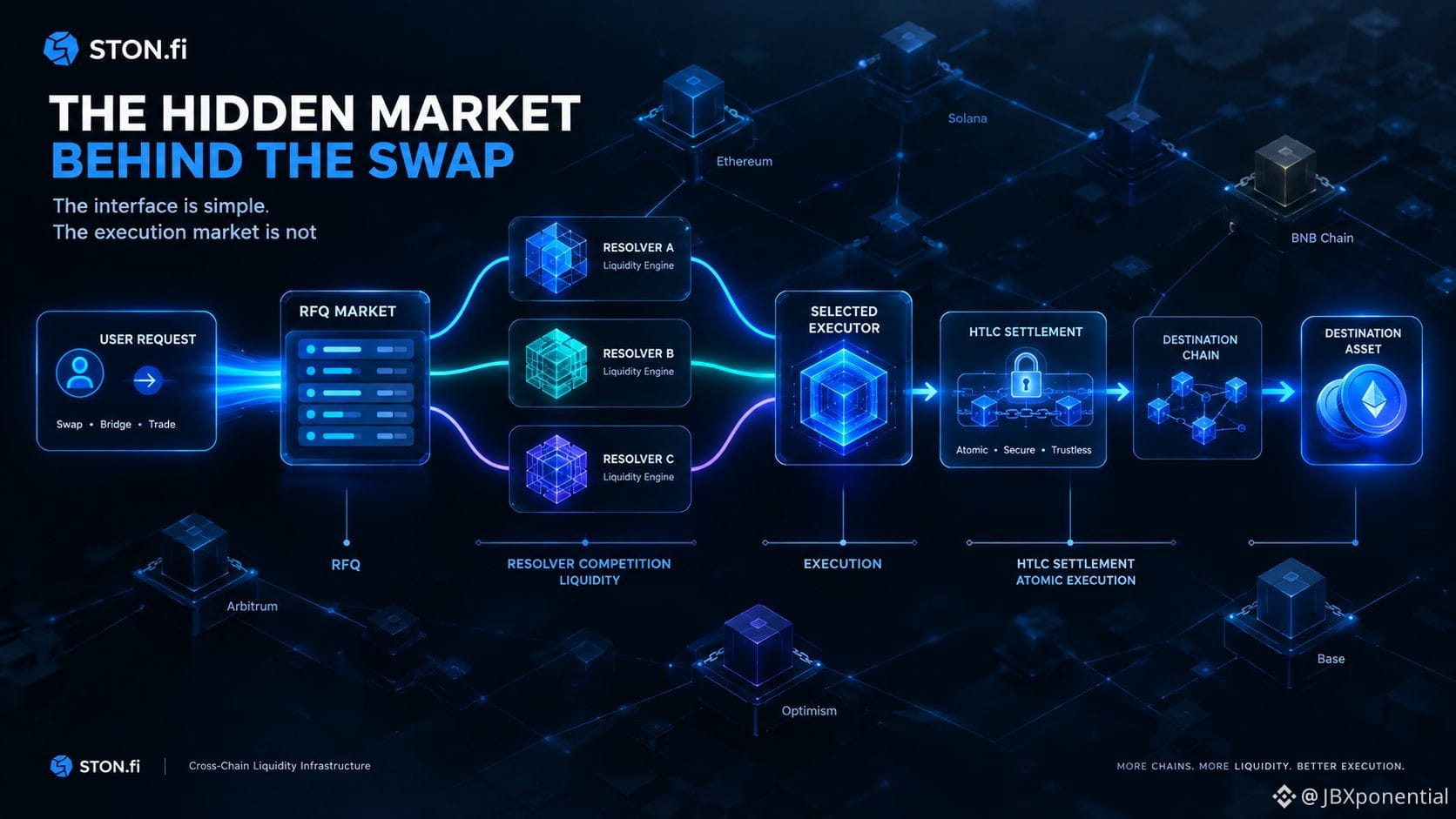
But resolver-based systems introduce a different architecture.
A user can submit a cross-chain request, resolvers compete to fill it, and the selected resolver participates in settlement using cryptographic conditions enforced through HTLCs.
That creates several layers worth studying:
1. RFQ layer
The user requests an executable quote.
2. Resolver layer
Liquidity providers compete to fulfil the request.
3. Execution layer
The resolver supplies the destination-side asset.
4. Settlement layer
The transaction follows predefined cryptographic conditions.
5. Recovery layer
Timelock mechanisms provide a path for refunds when the intended settlement does not complete.
This is why cross-chain infrastructure deserves more attention than simply asking:
“Which chain does this support?”
A better research question is:
“How does the system coordinate liquidity and settlement across chains?”
That is where much of the actual architecture lives.
STON.fi's current cross-chain implementation uses Omniston for this execution model.
@ston_fi #STON.fi $STON #Stonbassador #DeFi #TON #CrossChain #Omniston
Most users think about a cross-chain transaction like this:
Asset A → Bridge → Asset B
But resolver-based systems introduce a different architecture.
A user can submit a cross-chain request, resolvers compete to fill it, and the selected resolver participates in settlement using cryptographic conditions enforced through HTLCs.
That creates several layers worth studying:
1. RFQ layer
The user requests an executable quote.
2. Resolver layer
Liquidity providers compete to fulfil the request.
3. Execution layer
The resolver supplies the destination-side asset.
4. Settlement layer
The transaction follows predefined cryptographic conditions.
5. Recovery layer
Timelock mechanisms provide a path for refunds when the intended settlement does not complete.
This is why cross-chain infrastructure deserves more attention than simply asking:
“Which chain does this support?”
A better research question is:
“How does the system coordinate liquidity and settlement across chains?”
That is where much of the actual architecture lives.
STON.fi's current cross-chain implementation uses Omniston for this execution model.
@ston_fi #STON.fi $STON #Stonbassador #DeFi #TON #CrossChain #Omniston