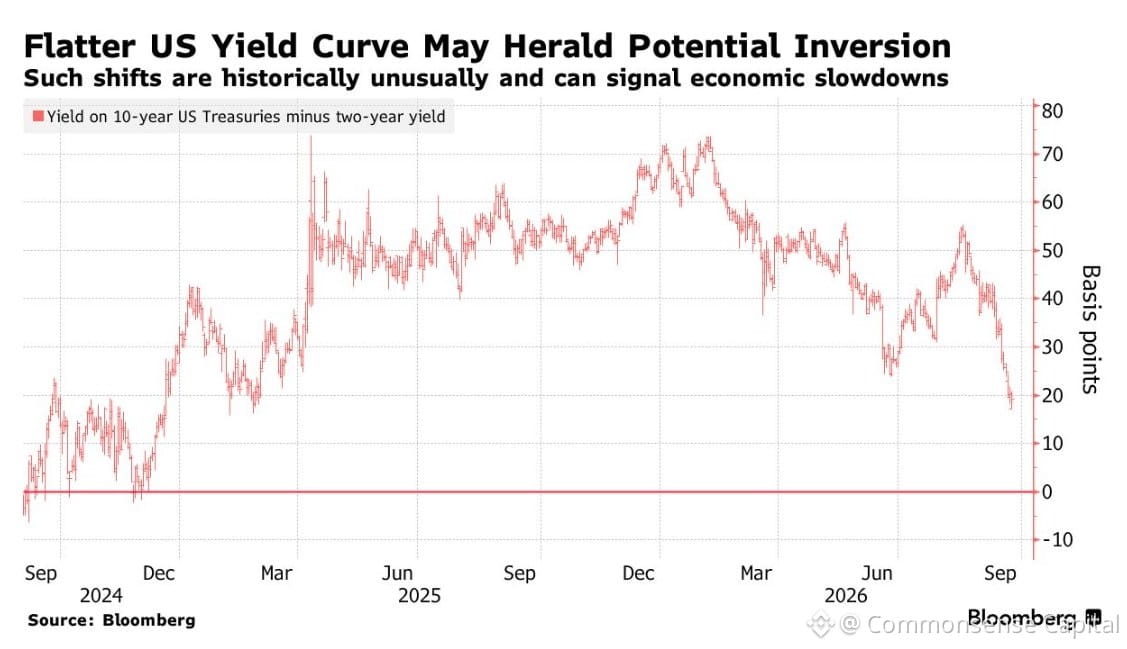
The yield curve might flip upside down soon — short-term rates higher than long-term rates.
This matters because an inverted curve has preceded every recession in modern history. It signals that bond markets expect slower growth (or a downturn) ahead, so investors demand less yield for locking up money long-term.
But here's the catch: inversions can persist for months before anything breaks. The curve inverted in 2006, and the crisis didn't hit until 2008. It's a warning light, not a countdown timer.
What it really tells you: the market thinks the Fed is tightening too much, or that growth is about to slow sharply. Either way, it's not a great setup for risk assets in the near term.
Don't panic, but don't ignore it either. If you're overextended or chasing yield in junk, this is your cue to reassess.
This matters because an inverted curve has preceded every recession in modern history. It signals that bond markets expect slower growth (or a downturn) ahead, so investors demand less yield for locking up money long-term.
But here's the catch: inversions can persist for months before anything breaks. The curve inverted in 2006, and the crisis didn't hit until 2008. It's a warning light, not a countdown timer.
What it really tells you: the market thinks the Fed is tightening too much, or that growth is about to slow sharply. Either way, it's not a great setup for risk assets in the near term.
Don't panic, but don't ignore it either. If you're overextended or chasing yield in junk, this is your cue to reassess.