
#hormuzstraitfightingreignites
عودة صراع مضيق هرمز — ماذا يعني ذلك للعملات المشفرة
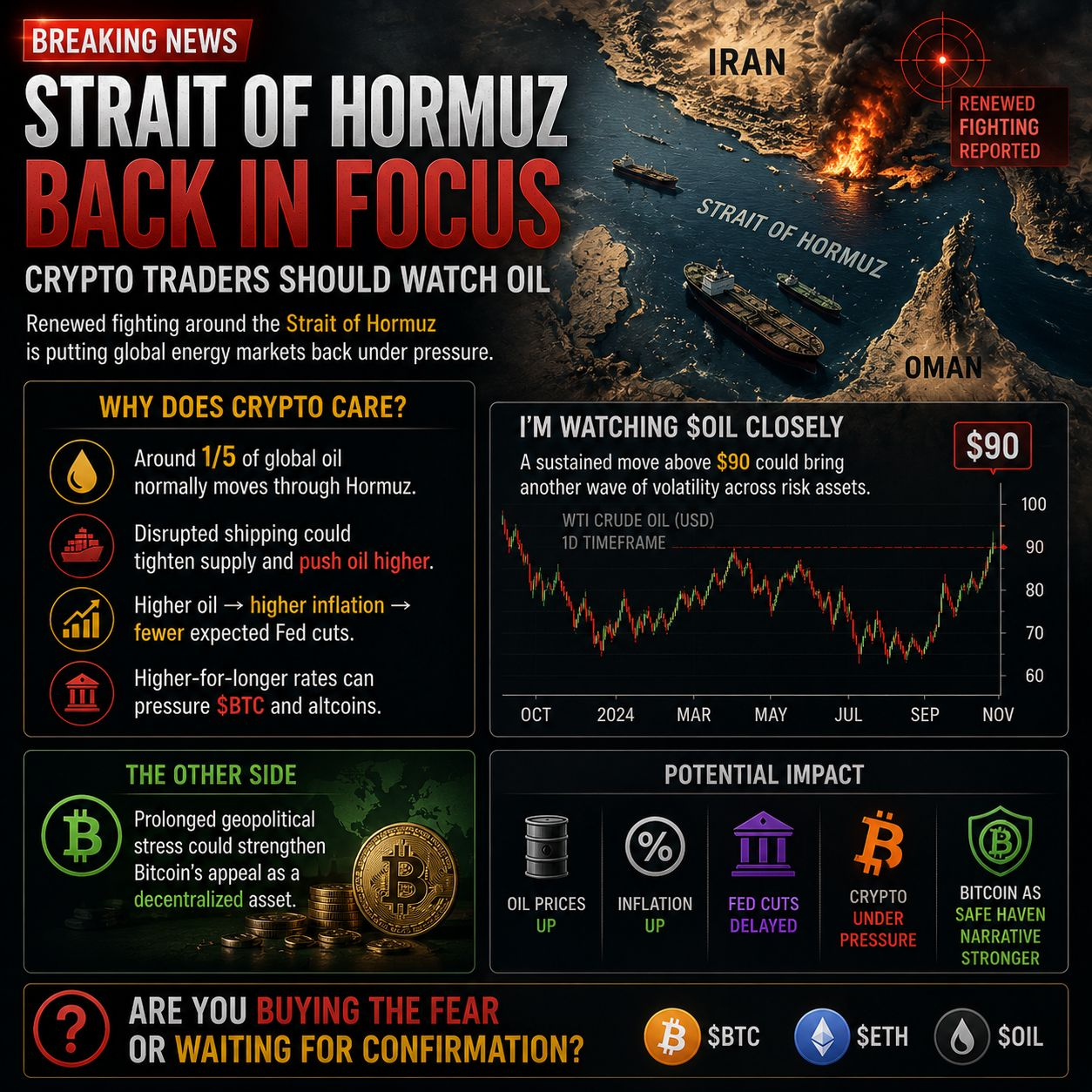
يصبح مضيق هرمز مرة أخرى محور اهتمام رئيسي لأسواق العالم، إذ يهدد اندلاع صراع متجدد أحد أهم طرق الطاقة في العالم.
عادةً ما يمر حوالي خُمس إمدادات النفط العالمية عبر المضيق، مما يجعل أي اضطراب فيه خطرًا بالغًا على أسواق الطاقة.
🛢️ لماذا يهم النفط
إذا استمرت أنشطة الشحن في التعطّل بشكل كبير، فقد ترتفع أسعار النفط الخام بشدة بينما يقوم المتداولون بتسعير إمدادات أكثر تقييدًا.
يمكن أن تؤدي أسعار النفط المرتفعة إلى تغذية التضخم العالمي، ما قد يجعل البنوك المركزية أكثر حذرًا بشأن خفض أسعار الفائدة.
وهذا يخلق بيئة صعبة للأصول ذات المخاطر مثل البيتكوين والبدائل (altcoins).
₿ ماذا يمكن أن يحدث للبيتكوين؟
على المدى القصير، قد تؤدي ارتفاع توقعات التضخم وتزايد تكاليف الطاقة إلى زيادة الضغط على البيتكوين (BTC) وبقية الأصول ذات المخاطر.
ومع ذلك، يمكن أيضًا أن تعزز الاضطرابات الجيوسياسية السردية طويلة الأجل حول البيتكوين كأصل لا مركزي خارج الأنظمة المالية التقليدية.
وهذا يجعل تفاعل السوق مثيرًا للاهتمام بشكل خاص.
👀 المستوى الذي يراقبه المتداولون
إحدى المجالات الرئيسية لمتابعتها هي نفط 90 دولارًا.
يمكن أن يؤدي استمرار التحرك فوق ذلك المستوى إلى زيادة التقلبات عبر الأسواق المالية وربما يضع ضغطًا إضافيًا على العملات الرقمية (crypto).
ينبغي على المتداولين أيضًا متابعة عوائد سندات الخزانة الأميركية، والدولار الأميركي، وتوقعات التضخم، وسياسة الاحتياطي الفيدرالي إلى جانب أسعار النفط الخام.
🔥 الخلاصة
إن مضيق هرمز ليس مجرد قصة عن النفط.
قد يؤدي الاضطراب المطوّل إلى خلق سلسلة من ردود الفعل:
ارتفاع النفط ↑ → ارتفاع التضخم ↑ → انخفاض توقعات خفض الفائدة ↓ → الأصول ذات المخاطر تحت الضغط
بالنسبة لمتداولي العملات الرقمية، قد تصبح سوق النفط بالتالي إشارة ماكرواً مهمة في الأسابيع المقبلة.
هل تشتري الخوف، أم تنتظر التأكيد؟
⚠️ ليست نصيحة مالية. قم بالبحث بنفسك (DYOR).



#oil #مضيق_هرمز #بيتكوين #أخبار_العملات_الرقمية #أسواق_الطاقة #جيوسياسة #BTC