
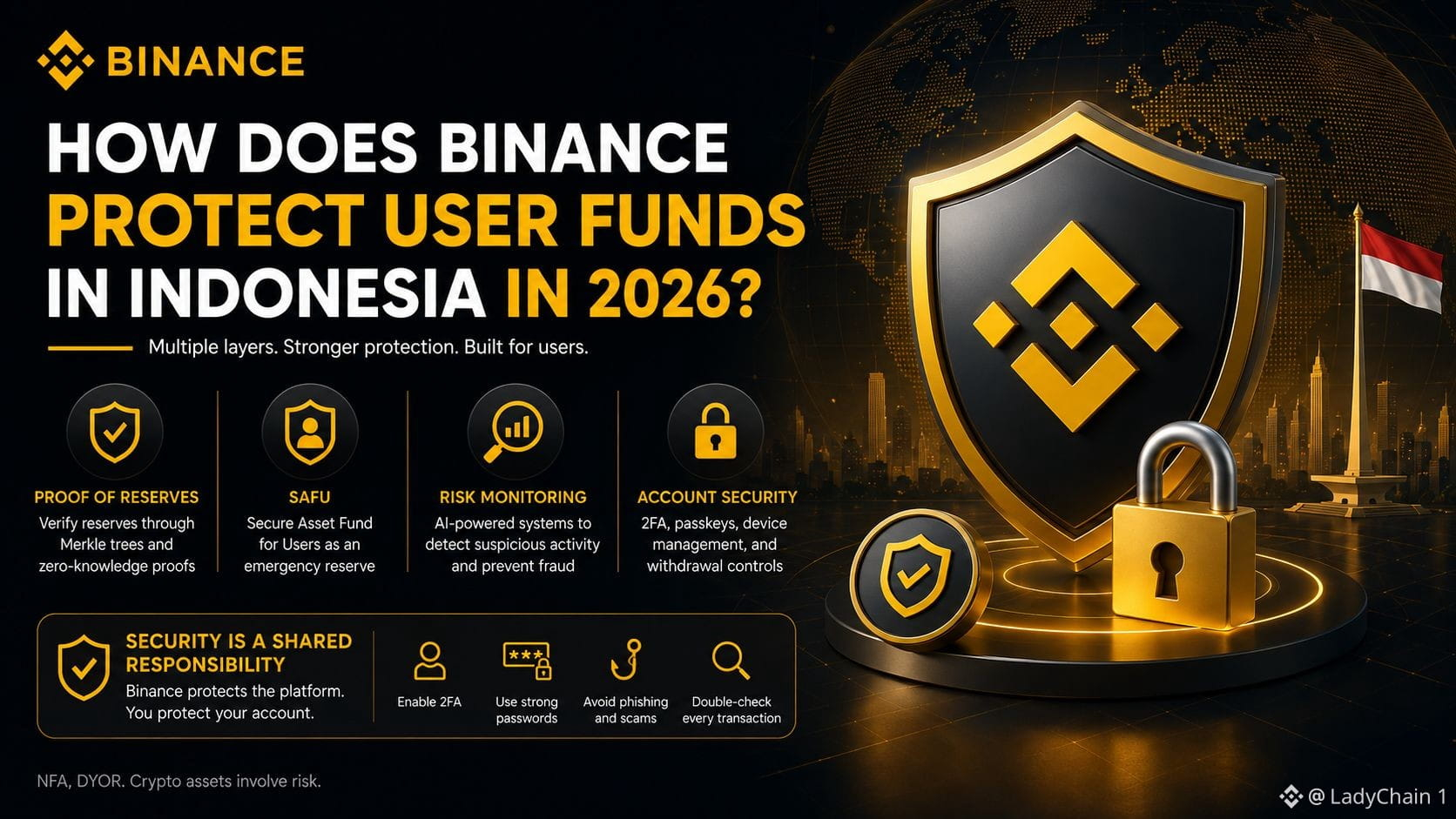
How Does Binance Protect User Funds in Indonesia in 2026? Binance protects user funds through multiple layers of security rather than relying on a single measure. For users in Indonesia, these include Proof of Reserves (PoR), the Secure Asset Fund for Users (SAFU), risk monitoring, and account security tools. Proof of Reserves Proof of Reserves provides additional transparency by allowing users to verify that their balances are included in Binance's reserve verification process. Binance uses cryptographic methods, including Merkle trees, to support this verification. However, PoR is not a guarantee against every possible risk. It is a point-in-time verification and should be viewed as one part of a broader security framework. SAFU The Secure Asset Fund for Users (SAFU) is an emergency reserve designed to provide an additional layer of protection during extreme platform-level incidents. It should not be interpreted as insurance against every possible type of loss. Risk Monitoring and Account Security Binance also uses systems designed to identify suspicious activity and potential fraud. However, platform-level security works alongside user responsibility. Users can strengthen their accounts by enabling: Two-factor authentication (2FA) Passkeys or security keys where available Device and login management Withdrawal security controls Users should also remain alert to phishing links, fake support accounts, and suspicious messages. Final Takeaway Binance's approach combines reserve transparency, emergency protection, risk monitoring, and account-level security tools. These measures are designed to help protect users, but no crypto platform can eliminate every risk. For users in Indonesia, understanding and actively using available security features is an important part of protecting their crypto assets. NFA, DYOR. Crypto assets involve risk.

نشر
إخلاء مسؤولية: يتضمن آراء جهات خارجية. لا تُعدّ نصيحة. يُمكن استخدام Binance AI دون أي ضمان. اطلع على الشروط والأحكام.