
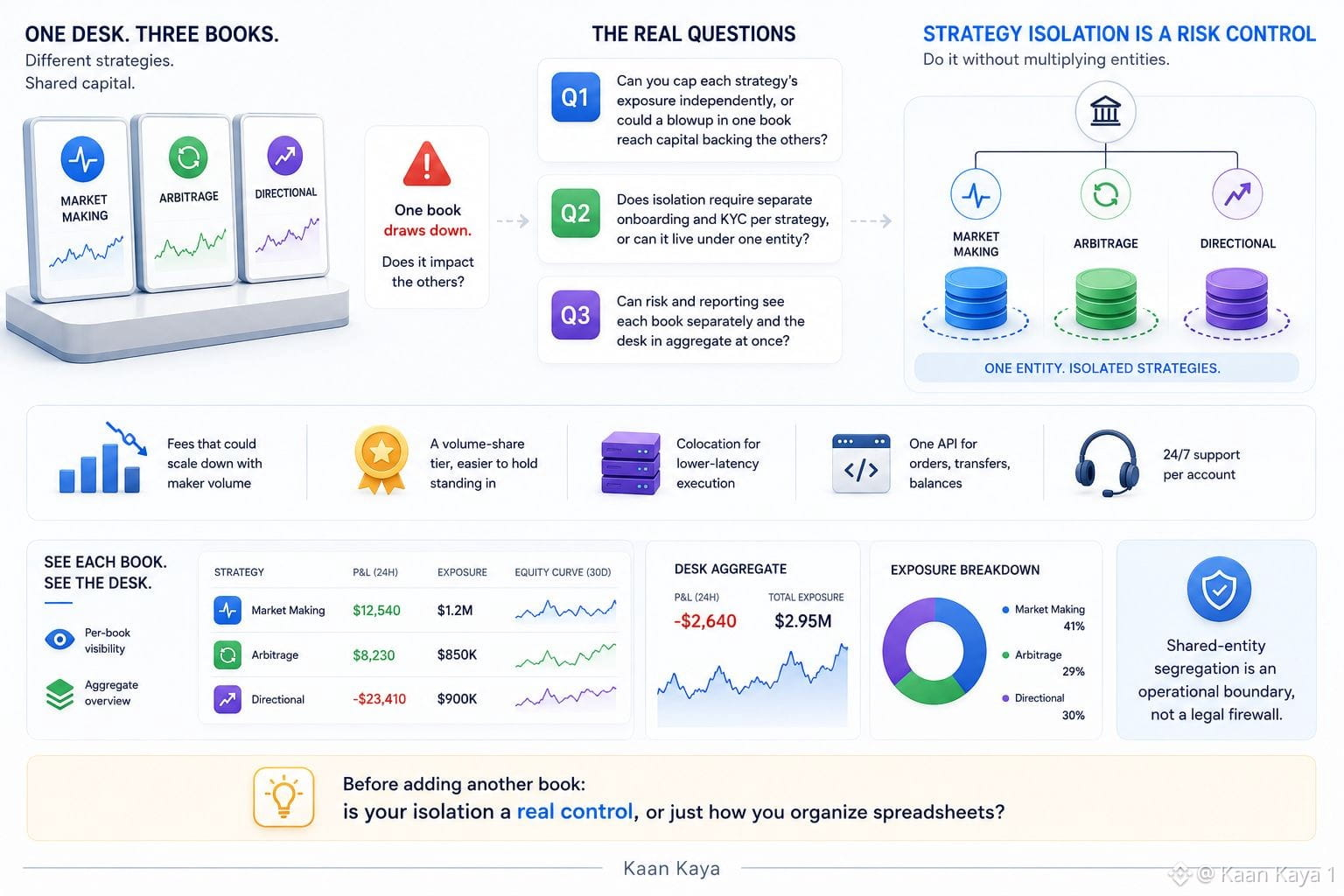
Is Your Strategy Isolation a Control or a Coincidence? 👀 A $BTC multi-strategy desk I know runs three books – market making, arbitrage, directional – from one entity. Fine, until one draws down and the CFO asks if the others got exposed. That exposes the real problem: running multiple strategies under one roof is a risk-isolation decision most desks make by accident, not design. 🔺 Q1: Can you cap each strategy's exposure independently, or could a blowup in one book reach capital backing the others? 🔺 Q2: Does isolation require separate onboarding and KYC per strategy, or can it live under one entity? 🔺 Q3: Can risk and reporting see each book separately and the desk in aggregate at once? Strategy isolation is a risk control: doing it without multiplying entities is the real win. One option worth considering: the WhiteBIT Market Making Program, where sub-accounts could segregate strategies under one set of documents. https://institutional.whitebit.com/market-making-program?utm_source=coinmarketcap&utm_medium=mmmmkk&utm_campaign=post Alongside that, a few things could come with it: fees that could scale down with maker volume, a volume-share tier that's easier to hold standing in, one API for orders, transfers, and balances, and 24/7 support per account. Shared-entity segregation is an operational boundary, not a legal firewall. Before adding another book: is your isolation a real control, or just how you organize spreadsheets? Disclaimer: This is not financial or investment advice. Do your own research before making any decisions. Use at your own risk. #BTC Price Analysis# #Bitcoin Price Prediction: What is Bitcoins next move?#

نشر
إخلاء مسؤولية: يتضمن آراء جهات خارجية. لا تُعدّ نصيحة. يُمكن استخدام Binance AI دون أي ضمان. اطلع على الشروط والأحكام.