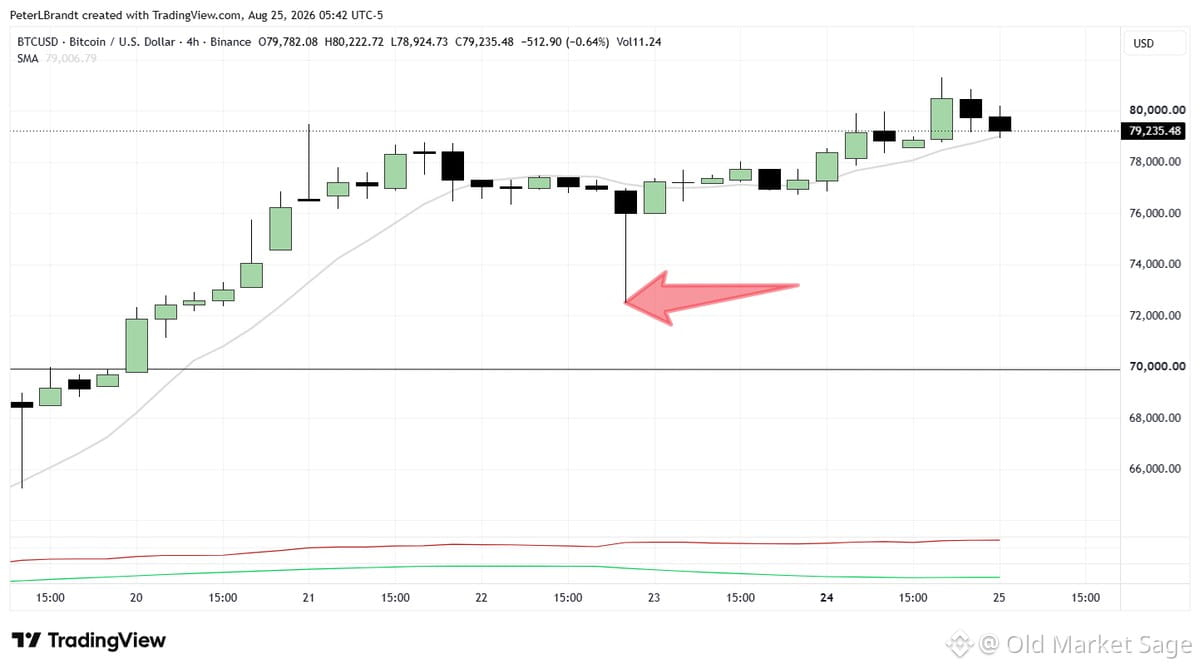
Binance just gave us another reminder that not all exchanges are created equal.
Back in August, they liquidated a bunch of retail traders in $BTC at prices $3,000 below where every other major exchange bottomed. Three thousand dollars. That's not slippage. That's not normal volatility. That's a structural issue.
This isn't new behavior. Binance has a long track record of these brutal, isolated stop-outs that don't happen anywhere else. If you're holding leveraged positions there, you're not just trading against the market—you're trading against the platform's quirks.
Exchange risk is real. Counterparty risk is real. Where you hold your positions matters as much as the positions themselves. Sometimes the biggest risk isn't the chart—it's the infrastructure beneath it.
Back in August, they liquidated a bunch of retail traders in $BTC at prices $3,000 below where every other major exchange bottomed. Three thousand dollars. That's not slippage. That's not normal volatility. That's a structural issue.
This isn't new behavior. Binance has a long track record of these brutal, isolated stop-outs that don't happen anywhere else. If you're holding leveraged positions there, you're not just trading against the market—you're trading against the platform's quirks.
Exchange risk is real. Counterparty risk is real. Where you hold your positions matters as much as the positions themselves. Sometimes the biggest risk isn't the chart—it's the infrastructure beneath it.