#dusk $DUSK @Dusk
was reading Dusk's bridge incident notice expecting the usual crypto hack template, panic, vague reassurances, silence. Instead, the wording was oddly specific about what didn't break.
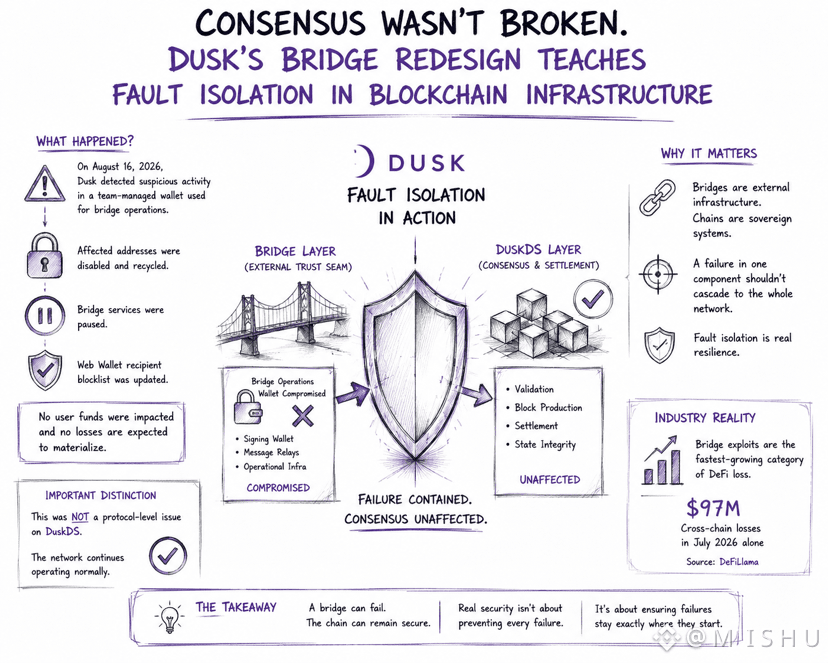
On August 16, 2026, the team detected suspicious activity tied to a team managed wallet used in bridge operations, disabled and recycled the affected addresses, paused bridge services, and added a Web Wallet recipient blocklist. Based on all available information, no user funds were impacted, and no losses are expected to materialize.
The line that actually mattered is this was not a protocol level issue on DuskDS, and the network continues operating normally. Consensus, settlement, the base layer, untouched. The failure was contained entirely to an operational wallet at the bridge boundary.
That's fault isolation working as designed, not luck. A bridge is an external trust seam bolted onto a chain; DuskDS validating blocks correctly the entire time is the actual proof the isolation held.
So.. bridge exploits are the fastest-growing category of DeFi loss this year, with July alone totaling $97M in cross chain losses industry wide and the recurring cause isn't broken cryptography, it's broken trust assumptions: a compromised signer, a forged message, a bypassed timelock.
If the base layer can stay untouched while the bridge fails, should "is the chain secure" and "is the bridge secure" ever be asked as the same question?
was reading Dusk's bridge incident notice expecting the usual crypto hack template, panic, vague reassurances, silence. Instead, the wording was oddly specific about what didn't break.
On August 16, 2026, the team detected suspicious activity tied to a team managed wallet used in bridge operations, disabled and recycled the affected addresses, paused bridge services, and added a Web Wallet recipient blocklist. Based on all available information, no user funds were impacted, and no losses are expected to materialize.
The line that actually mattered is this was not a protocol level issue on DuskDS, and the network continues operating normally. Consensus, settlement, the base layer, untouched. The failure was contained entirely to an operational wallet at the bridge boundary.
That's fault isolation working as designed, not luck. A bridge is an external trust seam bolted onto a chain; DuskDS validating blocks correctly the entire time is the actual proof the isolation held.
So.. bridge exploits are the fastest-growing category of DeFi loss this year, with July alone totaling $97M in cross chain losses industry wide and the recurring cause isn't broken cryptography, it's broken trust assumptions: a compromised signer, a forged message, a bypassed timelock.
If the base layer can stay untouched while the bridge fails, should "is the chain secure" and "is the bridge secure" ever be asked as the same question?