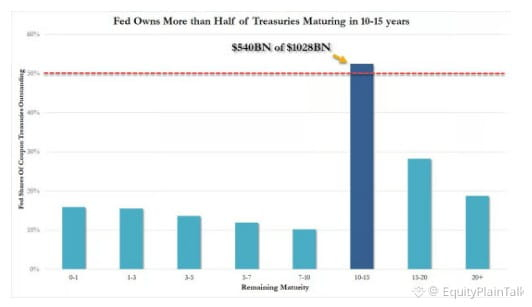
The Fed now holds over 50% of all U.S. Treasuries maturing in the next 10-15 years.
That's not just a statistic. That's the Fed becoming the dominant buyer in a massive chunk of the Treasury market.
What does this mean? When the Fed owns that much debt, it controls a huge part of the yield curve. It influences borrowing costs, mortgage rates, corporate debt pricing—basically everything tied to Treasury yields.
The problem: liquidity. When one player owns half the market, there's less room for price discovery. Fewer bonds trading hands means thinner markets, wider bid-ask spreads, and more volatility when the Fed eventually steps back.
And they will step back. QT is still happening, just slower. When the Fed starts letting these bonds roll off or sells them outright, who's buying? Foreign governments? Banks? Pension funds? At what price?
This setup matters for anyone holding bonds, rate-sensitive stocks, or trying to figure out where interest rates go next. The Fed isn't just a participant anymore. It's the market.
That's not just a statistic. That's the Fed becoming the dominant buyer in a massive chunk of the Treasury market.
What does this mean? When the Fed owns that much debt, it controls a huge part of the yield curve. It influences borrowing costs, mortgage rates, corporate debt pricing—basically everything tied to Treasury yields.
The problem: liquidity. When one player owns half the market, there's less room for price discovery. Fewer bonds trading hands means thinner markets, wider bid-ask spreads, and more volatility when the Fed eventually steps back.
And they will step back. QT is still happening, just slower. When the Fed starts letting these bonds roll off or sells them outright, who's buying? Foreign governments? Banks? Pension funds? At what price?
This setup matters for anyone holding bonds, rate-sensitive stocks, or trying to figure out where interest rates go next. The Fed isn't just a participant anymore. It's the market.