
I was reading through Dusk’s docs and one thing genuinely made me stop for a bit.
When people hear “privacy blockchain,” I think the natural assumption is that everything happening on the network is private. But Dusk doesn’t really work that way.
There are different ways to transact.
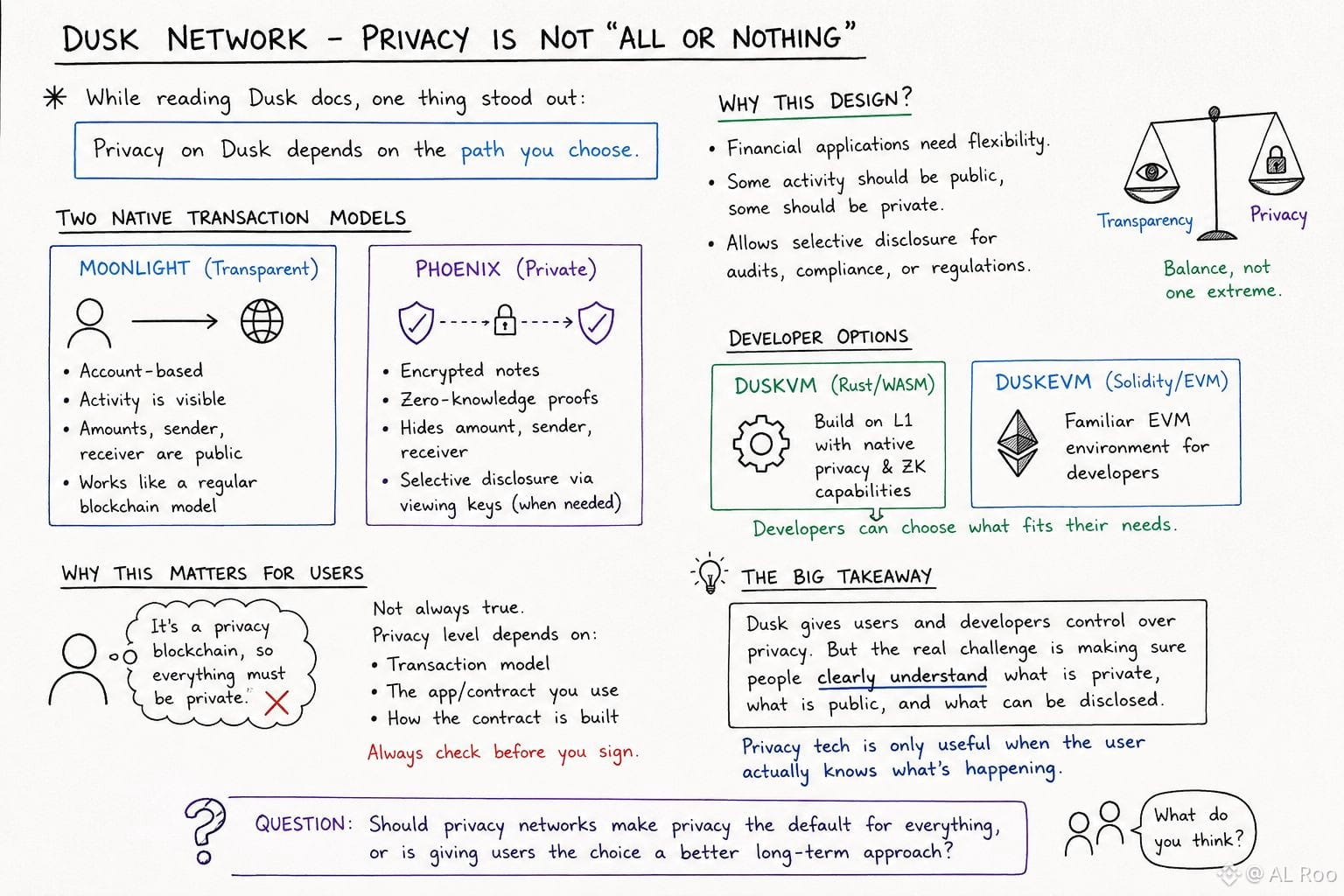
Moonlight is the more familiar, transparent account model. Phoenix works differently, using encrypted notes and zero-knowledge proofs to keep things like transaction amounts and the parties involved private.
At first I wondered why a privacy-focused network would even need a transparent option. But the more I thought about financial applications, the more it made sense.
Not every transaction needs to disappear from public view. Sometimes transparency is useful or even necessary. Other situations need privacy, while still allowing certain information to be disclosed when required.
The part I think could get tricky is simply communicating this to regular users.
Most people aren't going to read documentation before using a wallet or interacting with an app. If they see Dusk associated with privacy, they may assume their activity is automatically confidential without checking which transaction model they're actually using.
So for me, the interesting question isn't just whether Dusk's privacy technology works.
It's whether wallets and apps can make these differences clear enough that someone understands what is private and what isn't before clicking confirm.
That might sound like a small UX detail, but with financial privacy, expectations matter a lot.
I'm curious whether giving users this choice is ultimately better than making privacy the default for everything.
#dusk @Dusk $DUSK
When people hear “privacy blockchain,” I think the natural assumption is that everything happening on the network is private. But Dusk doesn’t really work that way.
There are different ways to transact.
Moonlight is the more familiar, transparent account model. Phoenix works differently, using encrypted notes and zero-knowledge proofs to keep things like transaction amounts and the parties involved private.
At first I wondered why a privacy-focused network would even need a transparent option. But the more I thought about financial applications, the more it made sense.
Not every transaction needs to disappear from public view. Sometimes transparency is useful or even necessary. Other situations need privacy, while still allowing certain information to be disclosed when required.
The part I think could get tricky is simply communicating this to regular users.
Most people aren't going to read documentation before using a wallet or interacting with an app. If they see Dusk associated with privacy, they may assume their activity is automatically confidential without checking which transaction model they're actually using.
So for me, the interesting question isn't just whether Dusk's privacy technology works.
It's whether wallets and apps can make these differences clear enough that someone understands what is private and what isn't before clicking confirm.
That might sound like a small UX detail, but with financial privacy, expectations matter a lot.
I'm curious whether giving users this choice is ultimately better than making privacy the default for everything.
#dusk @Dusk $DUSK