#dusk $DUSK @Dusk
النهائية المتدرجة: كيف يؤكد «Dusk» المعاملات
ليس كل بلوك يحتاج إلى القفز من “مقبول” إلى “نهائي بشكل دائم” في لحظة واحدة. يتبع «Dusk» نهجًا أكثر تدريجيًا عبر النهائية المتدرجة.
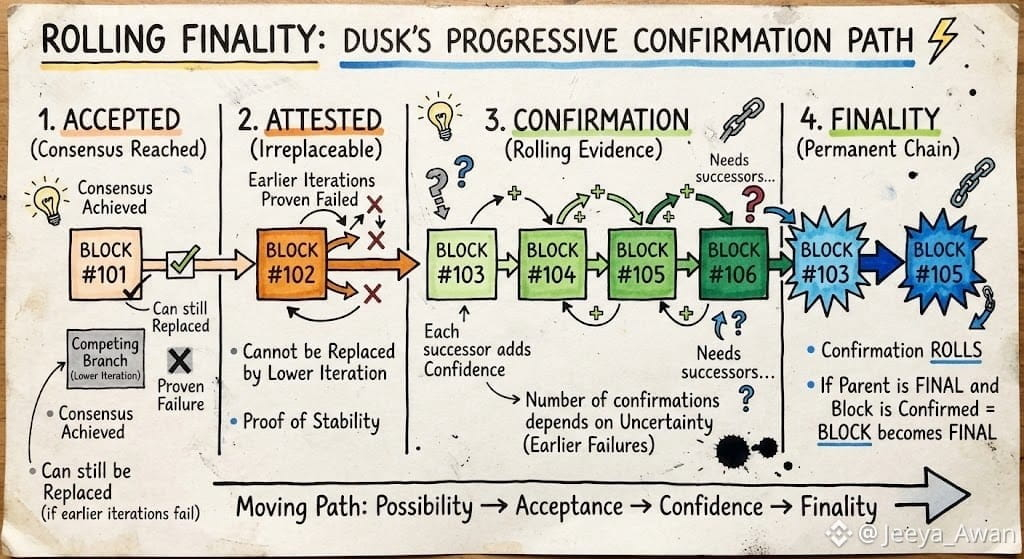
قد يتم قبول بلوك أولًا، أي تم التوصل إلى توافق عليه، لكن قد لا يزال بلوك منافس ذي تكرارات أقل قادرًا على استبداله. إذا كانت جميع التكرارات السابقة قد ثبت بالفعل فشلها، يصبح البلوك موثّقًا ولا يمكن استبداله ببديل ذي تكرارات أقل.
ثم تأتي مرحلة التأكيد. يضيف كل خلف مناسب دليلًا إضافيًا على أن القائمين على التنفيذ يبنون على السلسلة نفسها. بالنسبة للبلوك المقبول، يعتمد عدد الخلفاء المطلوبين على التكرارات السابقة غير المحسومة. كلما زادت حالة عدم اليقين، احتجنا إلى مزيد من التأكيدات.
وأخيرًا، تتدرج التأكيدات عبر السلسلة: بمجرد تأكيد بلوك وأن يكون والده نهائيًا، يمكن أن يصبح هو أيضًا نهائيًا.
الجزء المثير للاهتمام هو أن النهائية في «Dusk» لا تُعامل كـمؤقت بسيط أو بعدد تأكيدات ثابت. بل تتكيف مع تاريخ البلوك والدليل الذي يتم إنشاؤه عبر جولات التوافق اللاحقة.
وهذا يخلق مسارًا متحركًا من إمكانية → قبول → ثقة أقوى → نهائية.
النهائية المتدرجة: كيف يؤكد «Dusk» المعاملات
ليس كل بلوك يحتاج إلى القفز من “مقبول” إلى “نهائي بشكل دائم” في لحظة واحدة. يتبع «Dusk» نهجًا أكثر تدريجيًا عبر النهائية المتدرجة.
قد يتم قبول بلوك أولًا، أي تم التوصل إلى توافق عليه، لكن قد لا يزال بلوك منافس ذي تكرارات أقل قادرًا على استبداله. إذا كانت جميع التكرارات السابقة قد ثبت بالفعل فشلها، يصبح البلوك موثّقًا ولا يمكن استبداله ببديل ذي تكرارات أقل.
ثم تأتي مرحلة التأكيد. يضيف كل خلف مناسب دليلًا إضافيًا على أن القائمين على التنفيذ يبنون على السلسلة نفسها. بالنسبة للبلوك المقبول، يعتمد عدد الخلفاء المطلوبين على التكرارات السابقة غير المحسومة. كلما زادت حالة عدم اليقين، احتجنا إلى مزيد من التأكيدات.
وأخيرًا، تتدرج التأكيدات عبر السلسلة: بمجرد تأكيد بلوك وأن يكون والده نهائيًا، يمكن أن يصبح هو أيضًا نهائيًا.
الجزء المثير للاهتمام هو أن النهائية في «Dusk» لا تُعامل كـمؤقت بسيط أو بعدد تأكيدات ثابت. بل تتكيف مع تاريخ البلوك والدليل الذي يتم إنشاؤه عبر جولات التوافق اللاحقة.
وهذا يخلق مسارًا متحركًا من إمكانية → قبول → ثقة أقوى → نهائية.