
#dusk $DUSK @Dusk
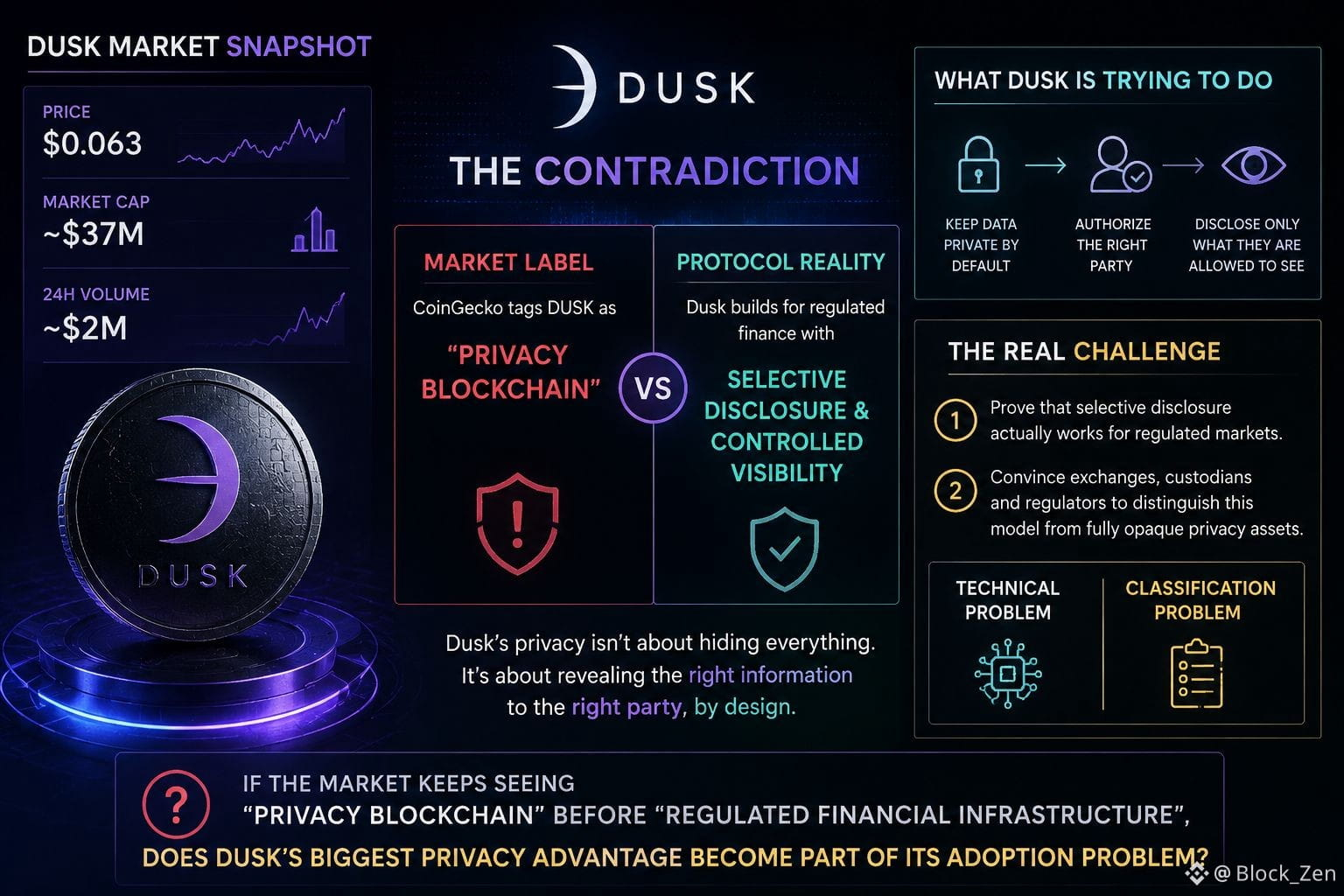
لقد كنت أراقب DUSK حول $0.063 مؤخرًا، وما زال السوق يعامله كأنه توكن صغير الحجم: حوالي 37M القيمة السوقية وحوالي 2M في حجم التداول اليومي.
لكن الجزء الأكثر إثارة للاهتمام بالنسبة لي ليس الحجم. بل هو التناقض.
ما زال CoinGecko يضع DUSK ضمن فئة «Privacy Blockchain»، بينما Dusk تبني حول الأصول الخاضعة للتنظيم، والإفصاح الانتقائي، والظهور المتحكم فيه.
يبدو ذلك كمسألة تصنيف بسيطة، حتى تنظر إلى ما يحاول البروتوكول فعله فعليًا.
لا يبدو أن Dusk تتعامل مع الخصوصية على أنها «لا أحد يستطيع رؤية أي شيء». تصميمها أقرب إلى: إخفاء المعلومات المالية الحساسة افتراضيًا، ثم السماح للجهة المُصدِرة أو المنصة أو المدقق أو المنظم برؤية المعلومات المحددة التي يحق لهم رؤيتها.
وهذا ما يولّد التناقض الذي أعود إليه باستمرار.
يحاول البروتوكول جعل الخصوصية متوافقة مع التنظيم، بينما يمكن أن تتحول تسمية الخصوصية نفسها إلى إشارة خطر تنظيمية.
لذا قد يتعين على Dusk إثبات أمرين في الوقت نفسه.
أولًا، أن الإفصاح الانتقائي يعمل فعلًا للأسواق المُنظّمة.
ثانيًا، أن البورصات والمؤتمنين مستعدون للتمييز بين هذا النموذج وبين أصول الخصوصية غير القابلة للاختراق بشكل كامل.
الأول مشكلة تقنية.
والثاني مشكلة تصنيف.
وبصراحة، أنا أكثر فضولًا بشأن الثاني.
إذا كان السوق يستمر في رؤية «Privacy blockchain» قبل أن يرى «regulated financial infrastructure»، فهل تصبح أكبر ميزة خصوصية لدى Dusk جزءًا من مشكلة اعتمادها؟
@Dusk #dusk $DUSK
l
لقد كنت أراقب DUSK حول $0.063 مؤخرًا، وما زال السوق يعامله كأنه توكن صغير الحجم: حوالي 37M القيمة السوقية وحوالي 2M في حجم التداول اليومي.
لكن الجزء الأكثر إثارة للاهتمام بالنسبة لي ليس الحجم. بل هو التناقض.
ما زال CoinGecko يضع DUSK ضمن فئة «Privacy Blockchain»، بينما Dusk تبني حول الأصول الخاضعة للتنظيم، والإفصاح الانتقائي، والظهور المتحكم فيه.
يبدو ذلك كمسألة تصنيف بسيطة، حتى تنظر إلى ما يحاول البروتوكول فعله فعليًا.
لا يبدو أن Dusk تتعامل مع الخصوصية على أنها «لا أحد يستطيع رؤية أي شيء». تصميمها أقرب إلى: إخفاء المعلومات المالية الحساسة افتراضيًا، ثم السماح للجهة المُصدِرة أو المنصة أو المدقق أو المنظم برؤية المعلومات المحددة التي يحق لهم رؤيتها.
وهذا ما يولّد التناقض الذي أعود إليه باستمرار.
يحاول البروتوكول جعل الخصوصية متوافقة مع التنظيم، بينما يمكن أن تتحول تسمية الخصوصية نفسها إلى إشارة خطر تنظيمية.
لذا قد يتعين على Dusk إثبات أمرين في الوقت نفسه.
أولًا، أن الإفصاح الانتقائي يعمل فعلًا للأسواق المُنظّمة.
ثانيًا، أن البورصات والمؤتمنين مستعدون للتمييز بين هذا النموذج وبين أصول الخصوصية غير القابلة للاختراق بشكل كامل.
الأول مشكلة تقنية.
والثاني مشكلة تصنيف.
وبصراحة، أنا أكثر فضولًا بشأن الثاني.
إذا كان السوق يستمر في رؤية «Privacy blockchain» قبل أن يرى «regulated financial infrastructure»، فهل تصبح أكبر ميزة خصوصية لدى Dusk جزءًا من مشكلة اعتمادها؟
@Dusk #dusk $DUSK
l